
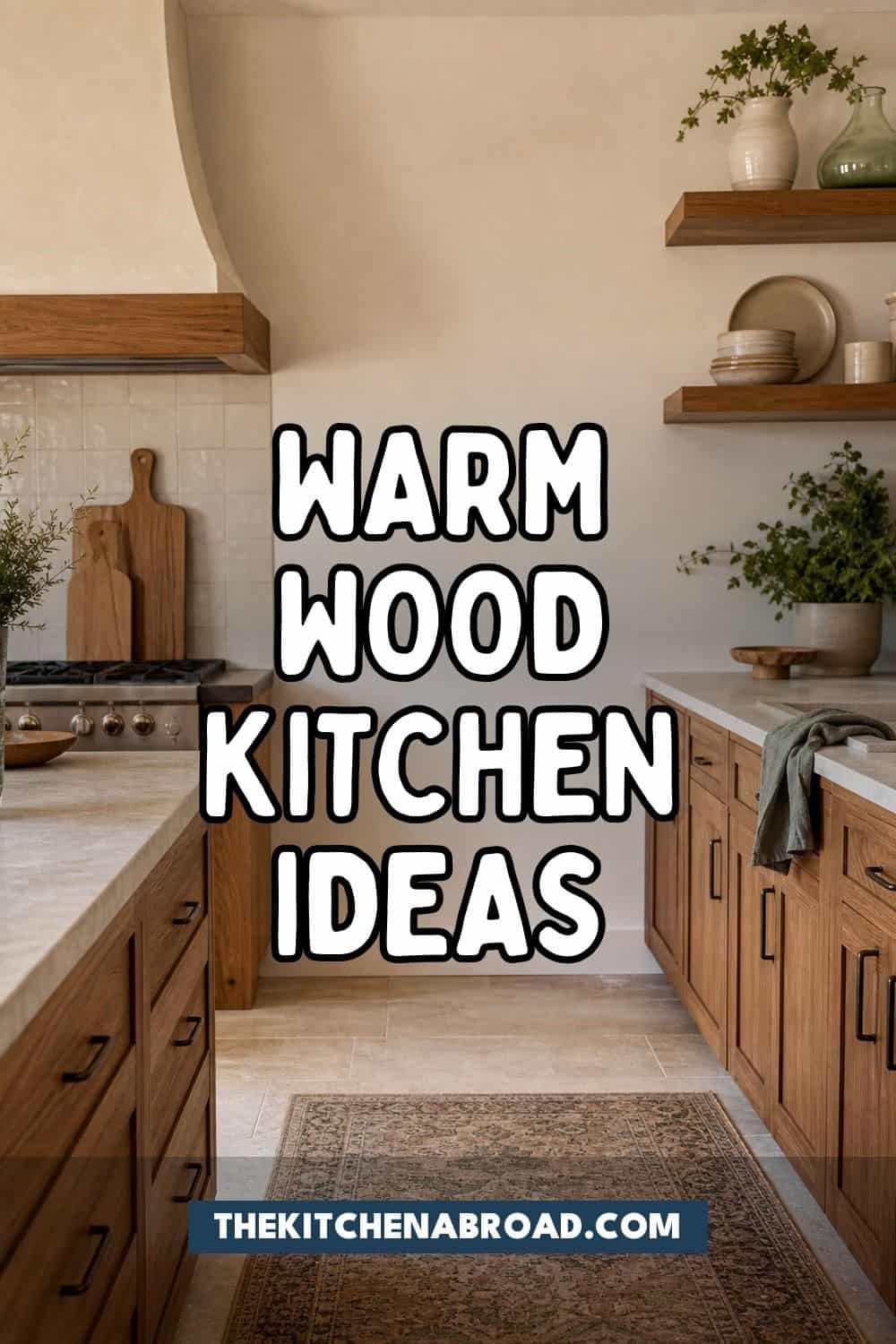
The best warm wood kitchen ideas use real grain, soft contrast, and practical finishes instead of making every surface match. Start with the wood tone you already have or want most, then balance it with cream tile, honed stone, warm lighting, soft black, brushed brass, green accents, and a few working wood pieces that make the kitchen easier to cook in.
Wood has a way of changing the whole mood of a kitchen. It can make a new white room feel less flat, calm down a stone-heavy space, or help older cabinets feel considered again without pretending the kitchen is brand new.
This guide focuses on wood choices that work in normal daily kitchens: cabinet tones, shelves, islands, counters, hardware, lighting, small accents, and care habits. The goal is warmth with breathing room, not a showroom full of matching brown finishes.
Top Recommended Products


You Might Also Like These Blog Posts
- Natural Wood Kitchen Ideas
- Walnut Kitchen Ideas
- Modern Organic Kitchen Ideas
- White Oak and Black Kitchen Ideas
- Open Shelving Kitchen Ideas
1. Mid-Tone Walnut Cabinet Sample
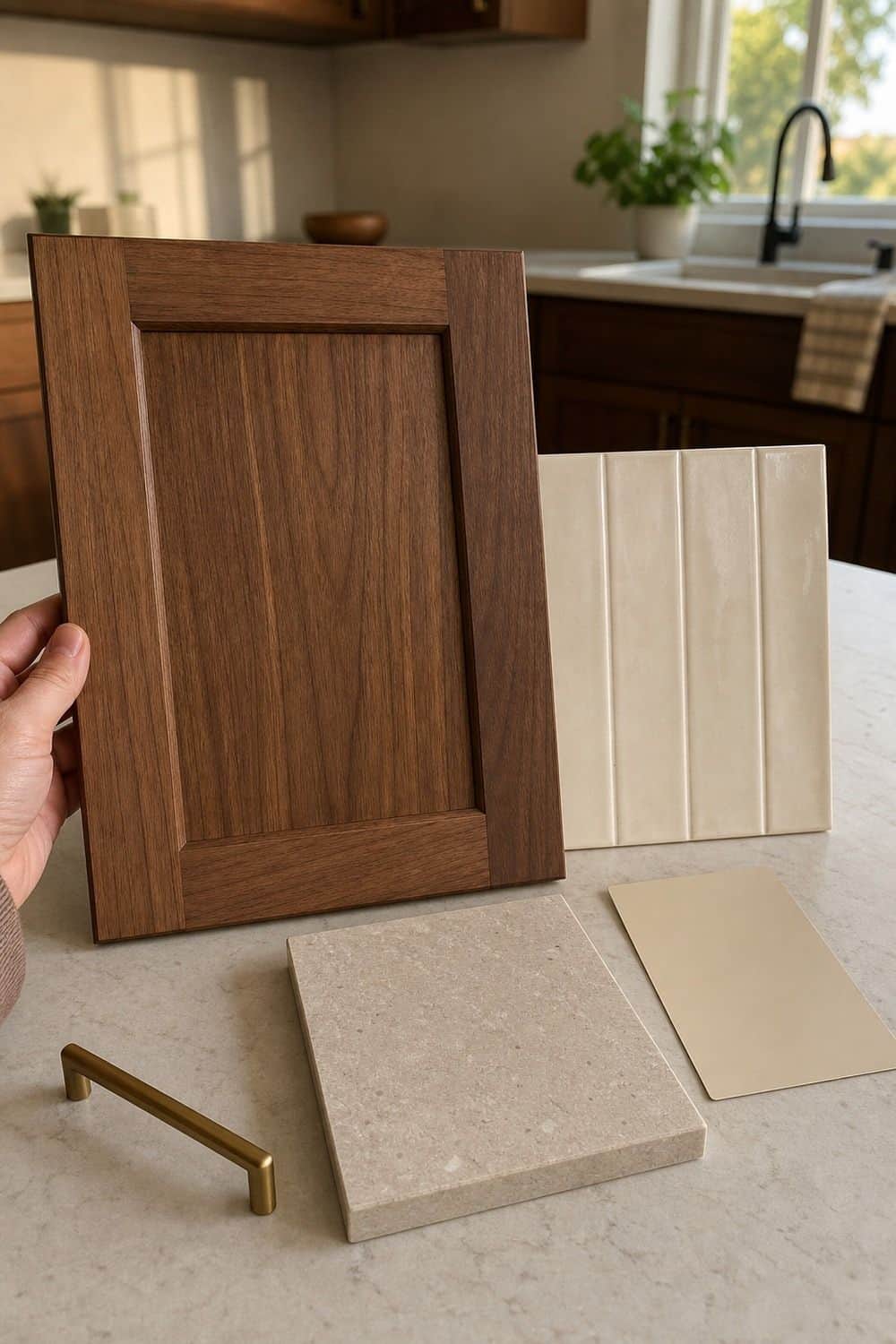
A mid-tone walnut sample is the easiest way to see whether you want rich wood cabinets or only a deeper accent. Hold it beside your counter, floor, backsplash, and wall color, then check it in morning and evening light. Walnut can lean chocolate, red-brown, or golden, and that undertone matters once it sits near stone and metal.
For a softer everyday kitchen, avoid the darkest sample unless the room has strong natural light. A medium walnut usually gives warmth, grain, and depth without making the cabinet wall feel heavy.
2. White Oak for a Lighter Warm Base
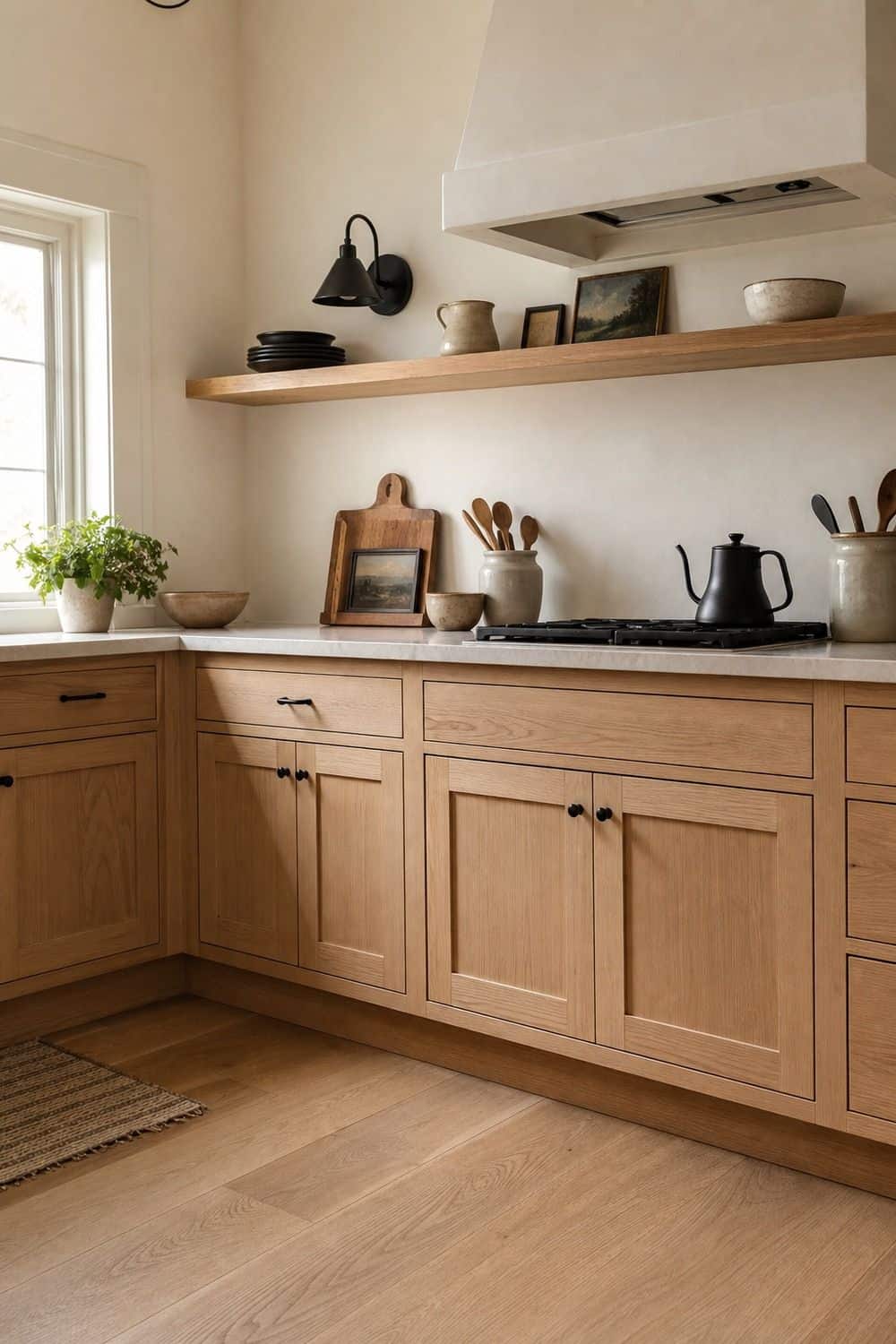
White oak is lovely when you want a kitchen that feels light but not cold. The most natural versions have visible grain and a gentle beige or honey cast, rather than a graywashed or yellow finish. Test the door sample beside the backsplash and floor before choosing the stain, because pale wood changes quickly near tile and stone.
White oak also works well when you want quiet cabinets and stronger contrast elsewhere. Pair it with soft black lights, cream counters, or warm white walls so the grain stays clear without shouting.
3. Hickory for Stronger Grain
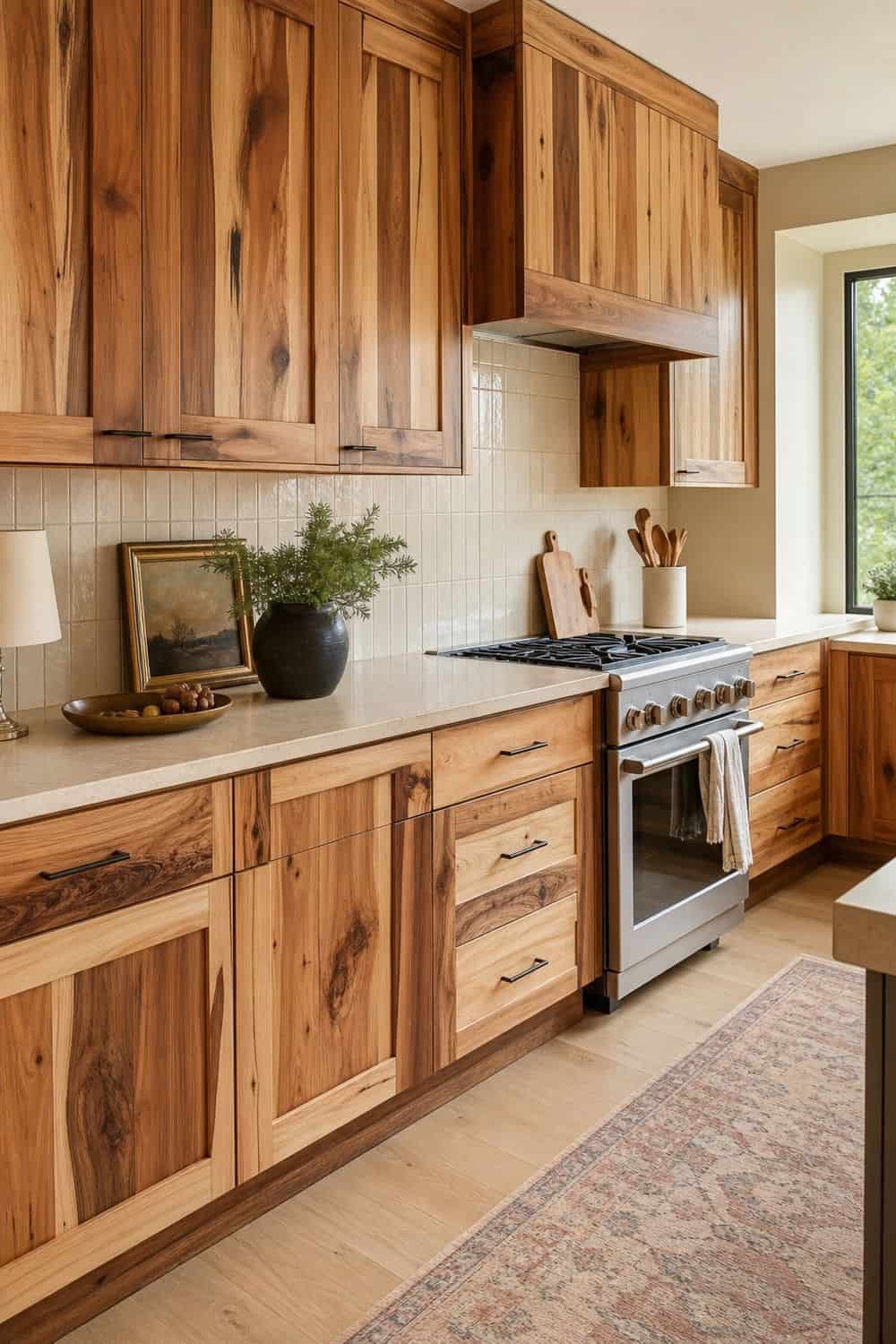
Hickory has more movement than oak or walnut, so it suits a kitchen where the cabinets are meant to be the main character. The grain can move from pale gold to deep brown across one door, which brings energy but also needs quieter neighbors.
Keep counters, backsplash tile, and cabinet pulls simple if you choose hickory. A flat-front or slim shaker door helps the wood feel fresh rather than cabin-like, and it is worth comparing several samples from the same supplier so you understand how much variation may show up in the final run.
4. Red Oak With a Modern Stain
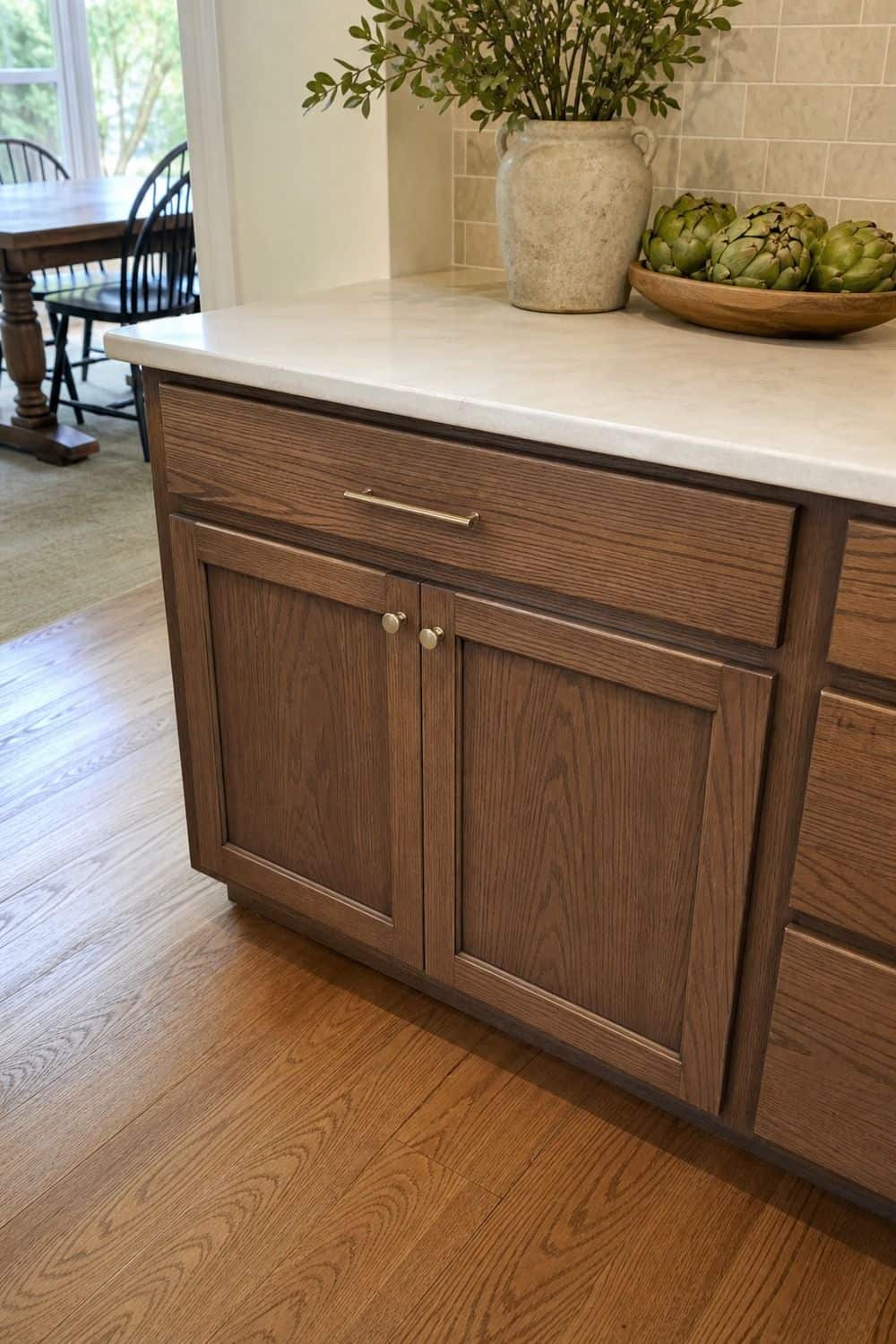
Red oak can look modern when the finish moves away from orange gloss and toward a calmer brown, taupe, or neutral mid-tone stain. The grain is familiar, so the stain choice decides whether it feels updated or stuck in an older decade.
Compare samples against existing floors first, especially if there is already oak underfoot. A stain that looks balanced on its own may turn too red or too yellow beside another wood surface. The best version softens the room without hiding the natural grain completely.
5. Dark Oak Lower Cabinets
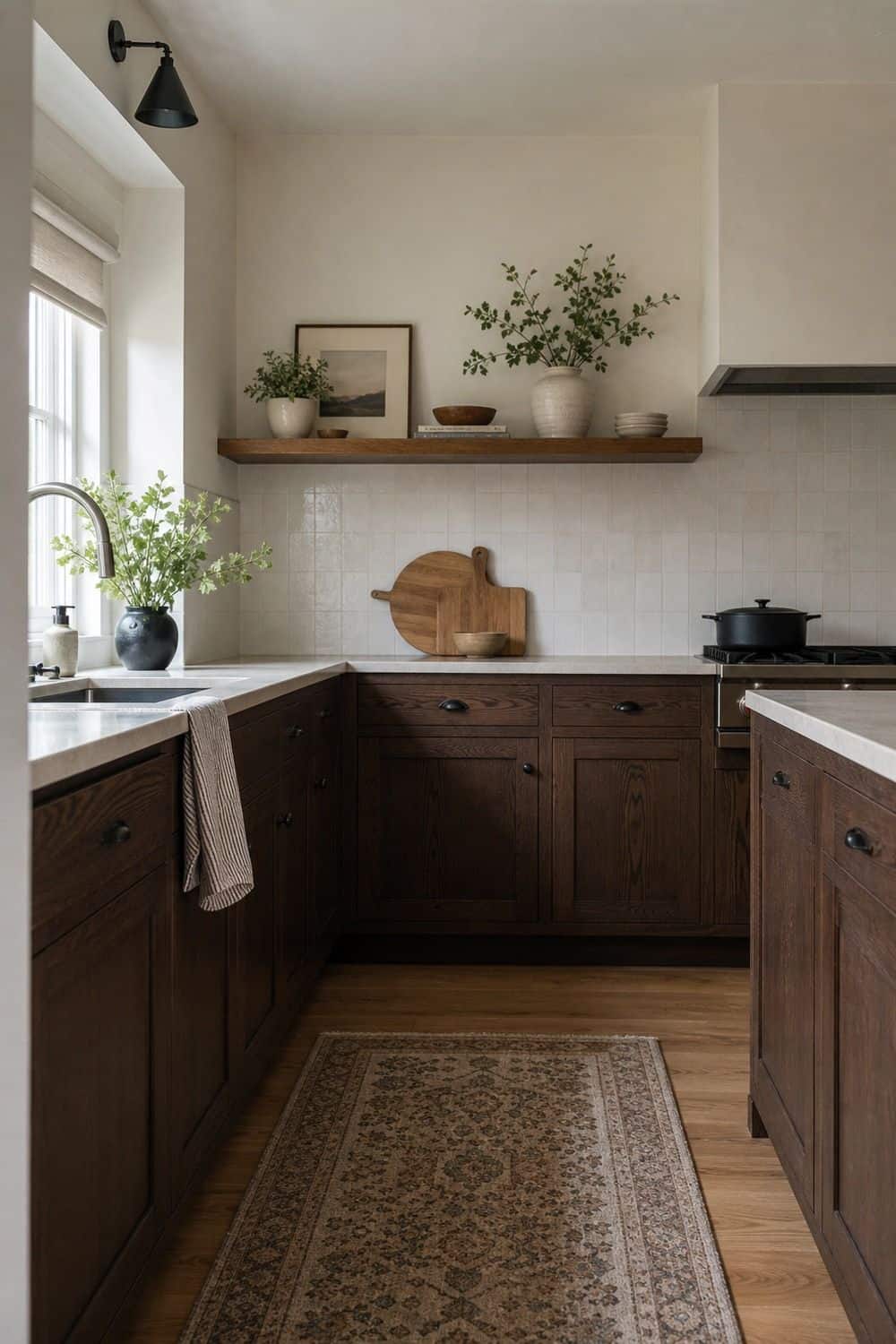
Dark-stained oak lowers can ground a kitchen without covering every wall in heavy wood. The visible grain keeps the color from reading like flat brown paint, while the lower placement gives the room weight where it already needs storage and durability.
Use lighter uppers, open shelving, or cream walls above the dark oak so the kitchen still breathes. This looks especially good with honed stone, warm white tile, and simple hardware that lets the lower cabinets feel substantial but not bulky.
6. Wood and Painted Cabinets Together
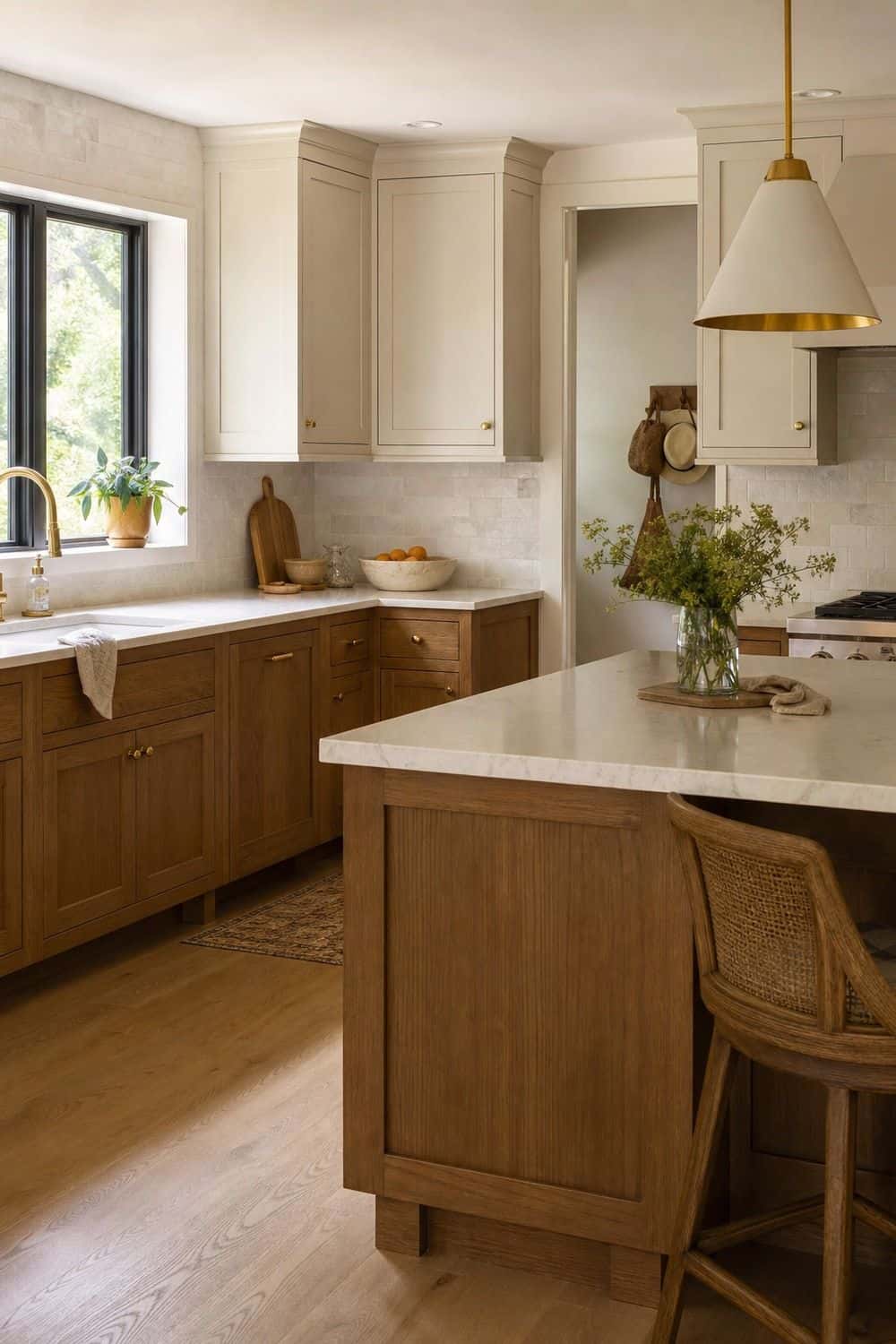
Painted cabinets can make wood feel more deliberate by giving the eye a quieter surface to rest on. Try cream uppers with wood lowers, a painted perimeter with a wood island, or a painted pantry wall beside wood shelves. The mix works best when each finish has a clear job.
Choose a paint color that has enough warmth to sit beside the wood without turning yellow. Soft cream, mushroom, olive, and warm white usually feel more natural than stark white, especially near oak or walnut.
7. Pale Oak Open Shelving
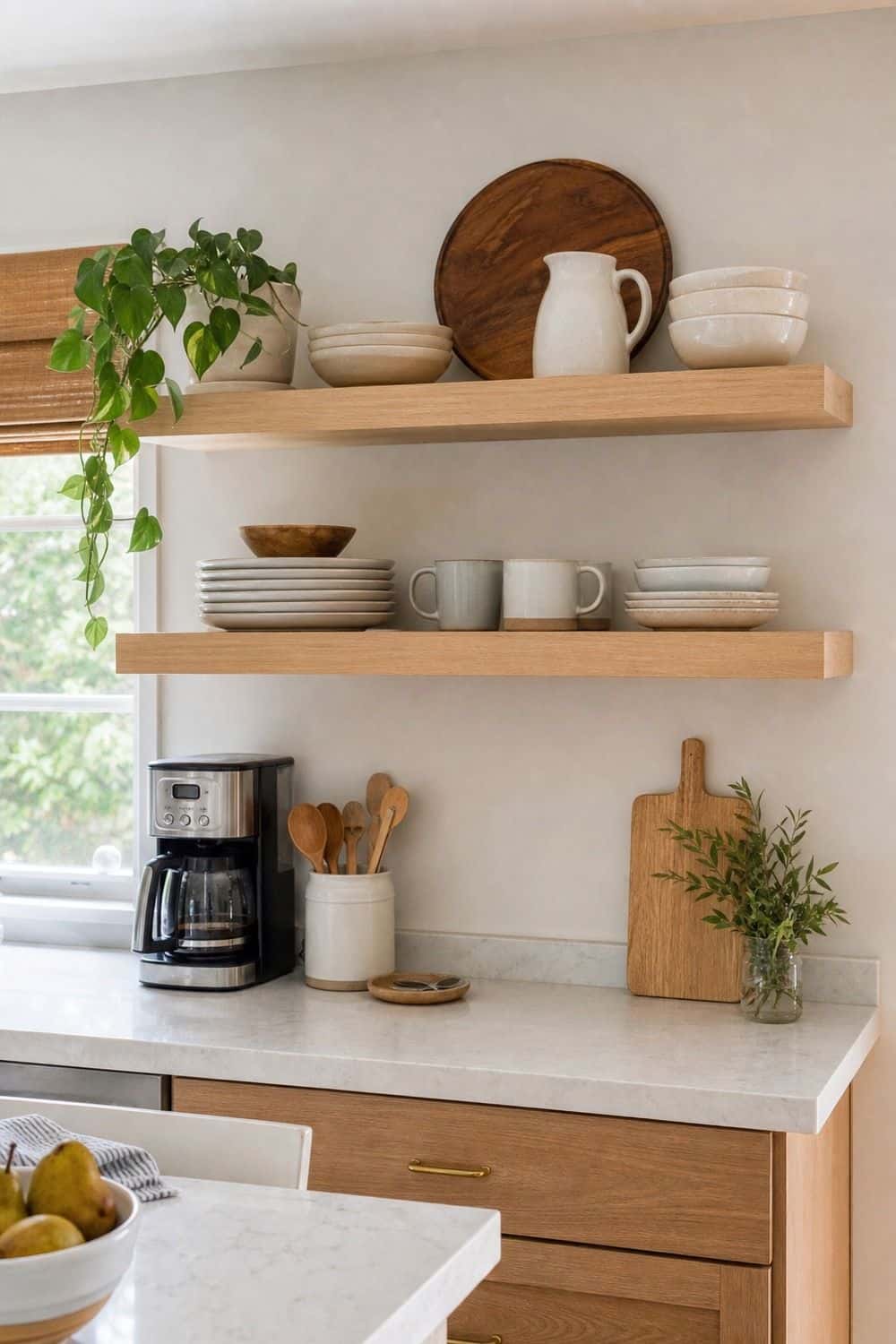
White oak floating shelves add warmth without committing to new cabinets. They look best when they are sized for real everyday dishes, not a crowded line of decorative pieces. Use them near a coffee area, dish wall, or breakfast nook where the wood can be seen and used.
Keep shelves away from the greasiest cooking zone unless you are ready to wipe them often. A few open shelves can repeat the warmth of a table, floor, or island while still leaving the main cabinet run clean and practical.
8. Walnut Shelf Interiors
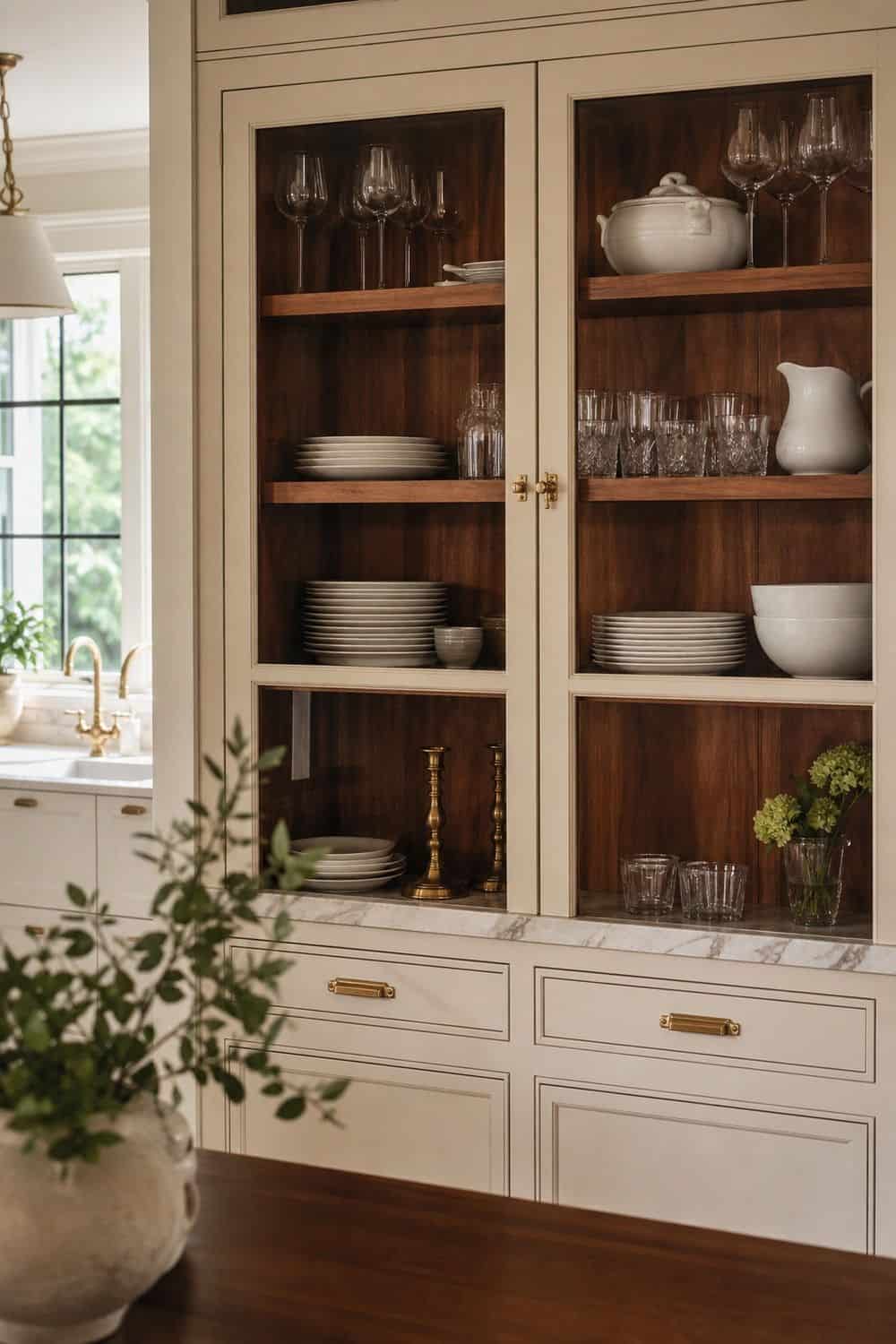
Walnut shelf interiors are a quieter route than full walnut cabinetry. The darker wood shows up inside glass cabinets, pantry niches, bar cabinets, or open cubbies, where it gives the kitchen depth without changing the entire room.
This detail is especially pretty behind white dishes, clear glassware, or brass latches. Because the wood is tucked inside a defined area, the outside cabinet color can stay cream, mushroom, green, or soft black while the interior gives a warmer surprise.
Use it where the inside view actually shows, not in a cabinet that stays closed all day. A glass-front hutch, open bar niche, or shallow pantry wall gives the walnut enough visibility to feel special without asking the whole kitchen to go dark.
9. Butcher Block Prep Section

A butcher block section can soften a stone-heavy kitchen and give you a friendly place for everyday prep. It usually works best on an island, baking counter, or short run away from the sink, where water will not sit along the edges.
Before choosing the wood, compare the sample beside your cabinet doors and flooring. Butcher block needs sealing, quick wipe-ups, and sensible cutting board habits, so use it where you will enjoy the warmth and keep the care routine realistic.
10. Freestanding Wood Kitchen Island
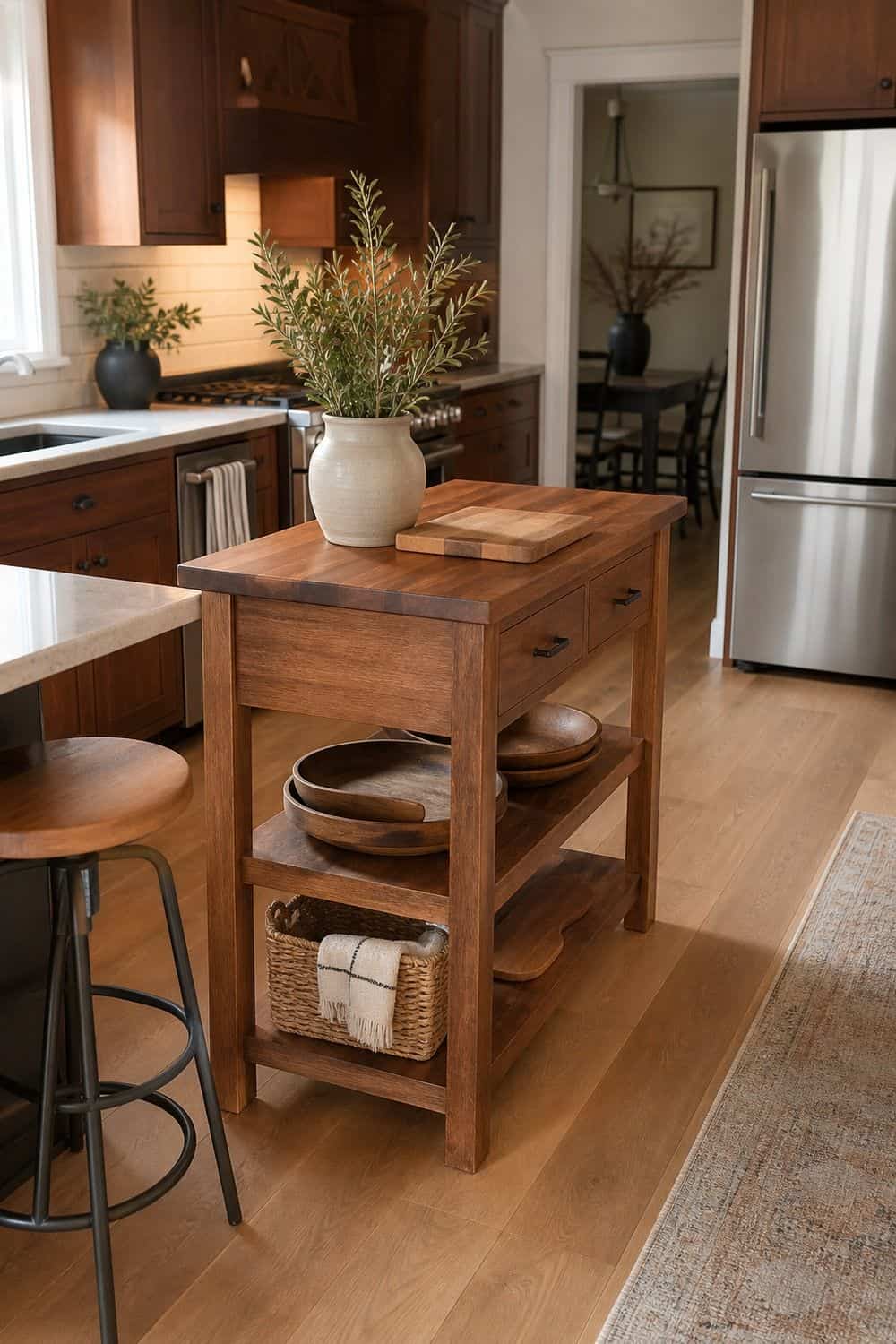
A freestanding wood island can add prep space, storage, and warmth without replacing cabinets. The piece should fit the working aisle first, then the style of the room. Check the height against your counters and make sure drawers or shelves open without blocking the main path.
The island wood does not need to match the cabinets exactly. It only needs to share an undertone with another element, such as stools, shelves, a breakfast table, or cutting boards, so it feels collected instead of random.
11. Wood Counter Stools With Simple Lines
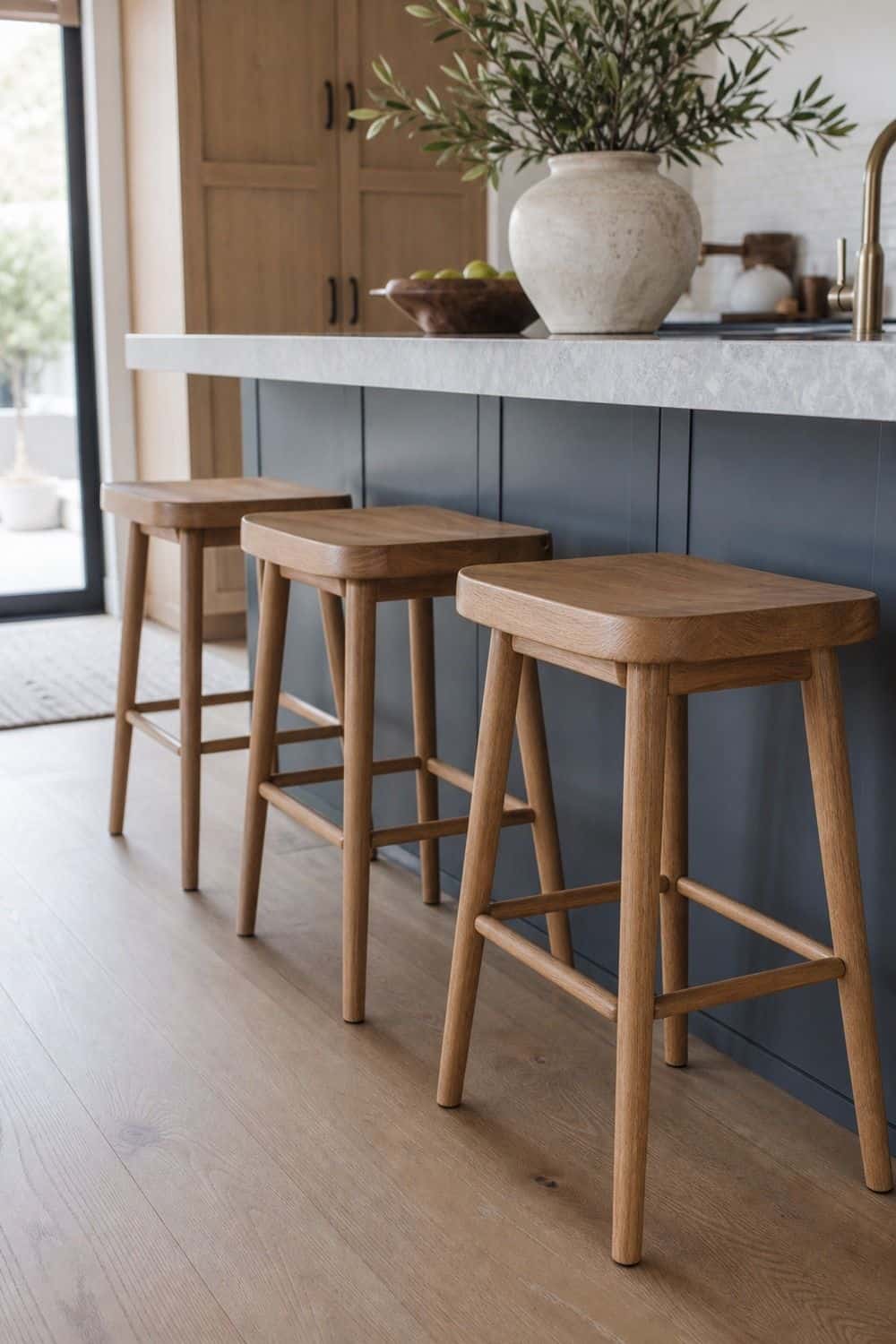
Wood counter stools can shift the mood of an island, especially in a kitchen with painted cabinets or cool stone counters. Choose a clean silhouette so the wood adds texture without making the seating area look bulky.
Measure seat height before choosing the finish, because counter stools and bar stools are not interchangeable. If your cabinets are wood, stools can be one shade lighter or darker rather than an exact match. That small contrast keeps the island from looking like a furniture set.
12. Wood Breakfast Table as the Anchor
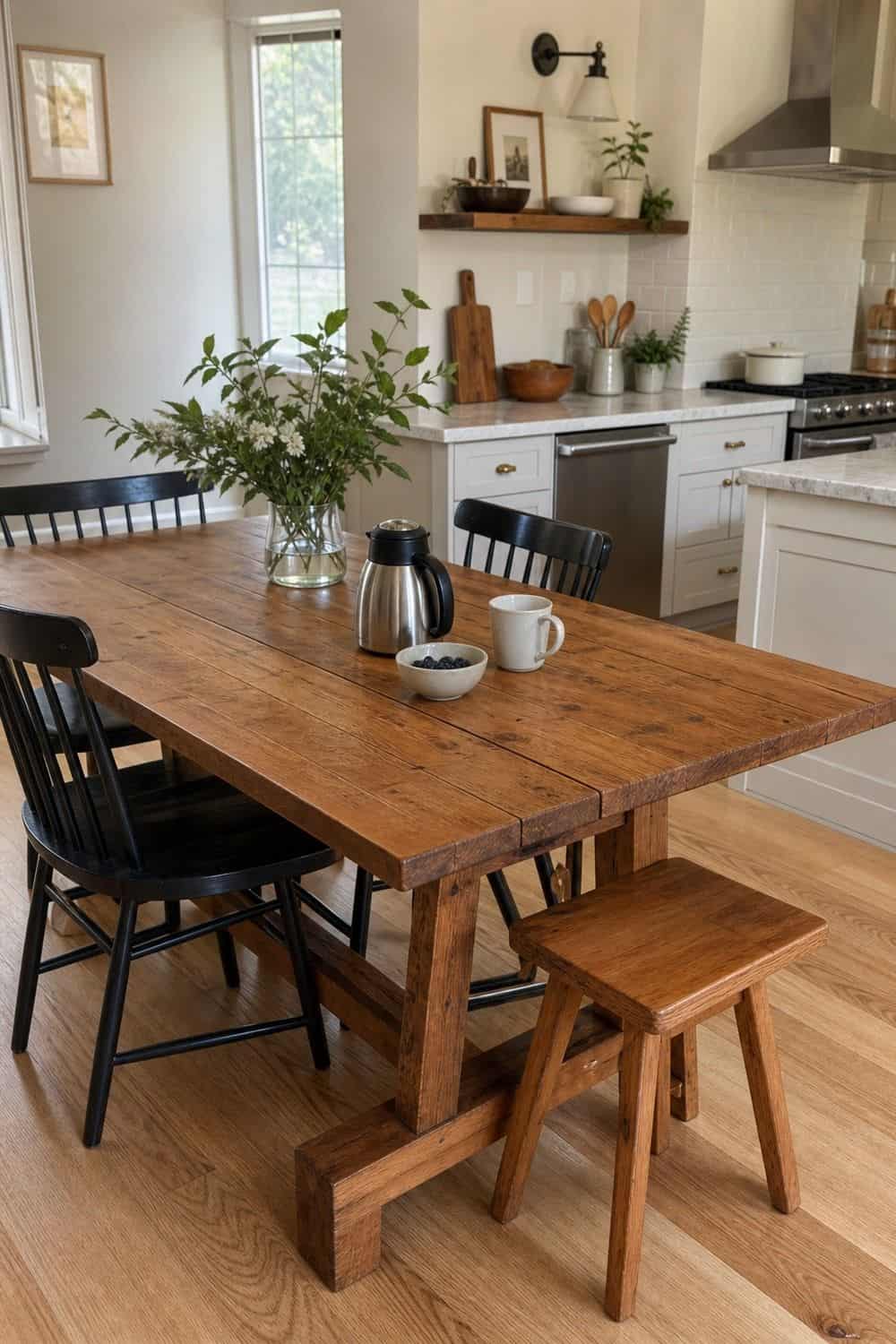
In an eat-in kitchen, the breakfast table often carries more visual weight than a small cabinet detail. A wood table can make a pale kitchen feel lived in, especially when the finish has visible grain and can handle daily meals.
Repeat the table tone once elsewhere so it does not feel stranded. That might be a shelf, frame, cutting board, or stool leg. Avoid matching every chair, shelf, and frame unless the rest of the room is very quiet. Leave enough visual space around the table so the wood reads as an anchor, not another crowded surface.
13. Warm Wood With Handmade Cream Tile
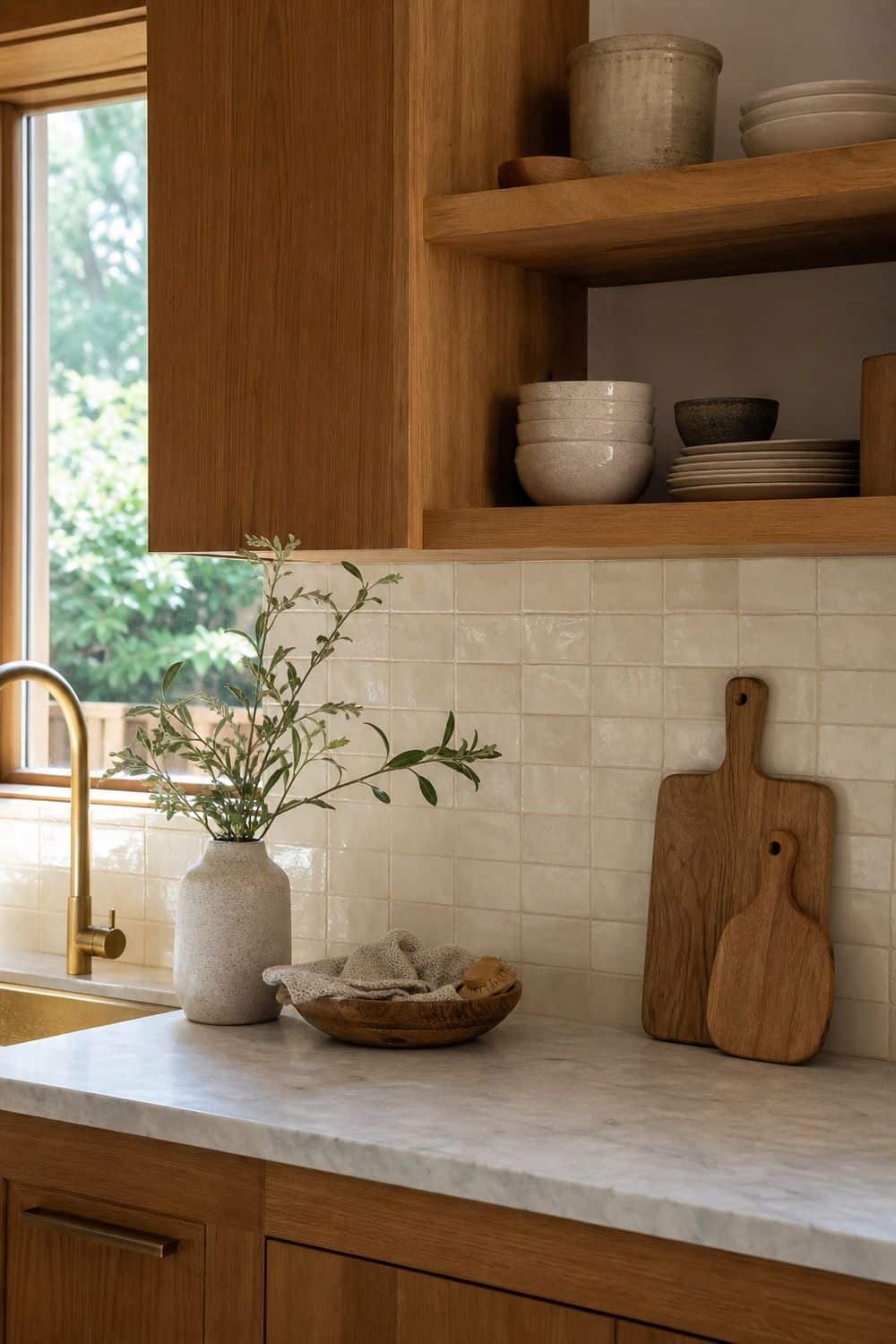
Handmade cream tile gives warm wood a softer backdrop than glossy white tile. Slight variation in the surface helps the wall feel alive while still staying easy to read behind cabinets and counters.
Choose grout that supports the tile instead of outlining every edge in a harsh grid. Cream tile works beautifully with walnut, white oak, and neutral red oak stains because it keeps the kitchen bright without making the wood look orange or overly rustic.
If the wood grain is busy, let the tile shape stay simple so the backsplash does not compete. A handmade square, narrow rectangle, or soft zellige-style surface gives you movement, but the color still stays calm enough to support the cabinets.
14. Honed Stone Beside Wood Grain
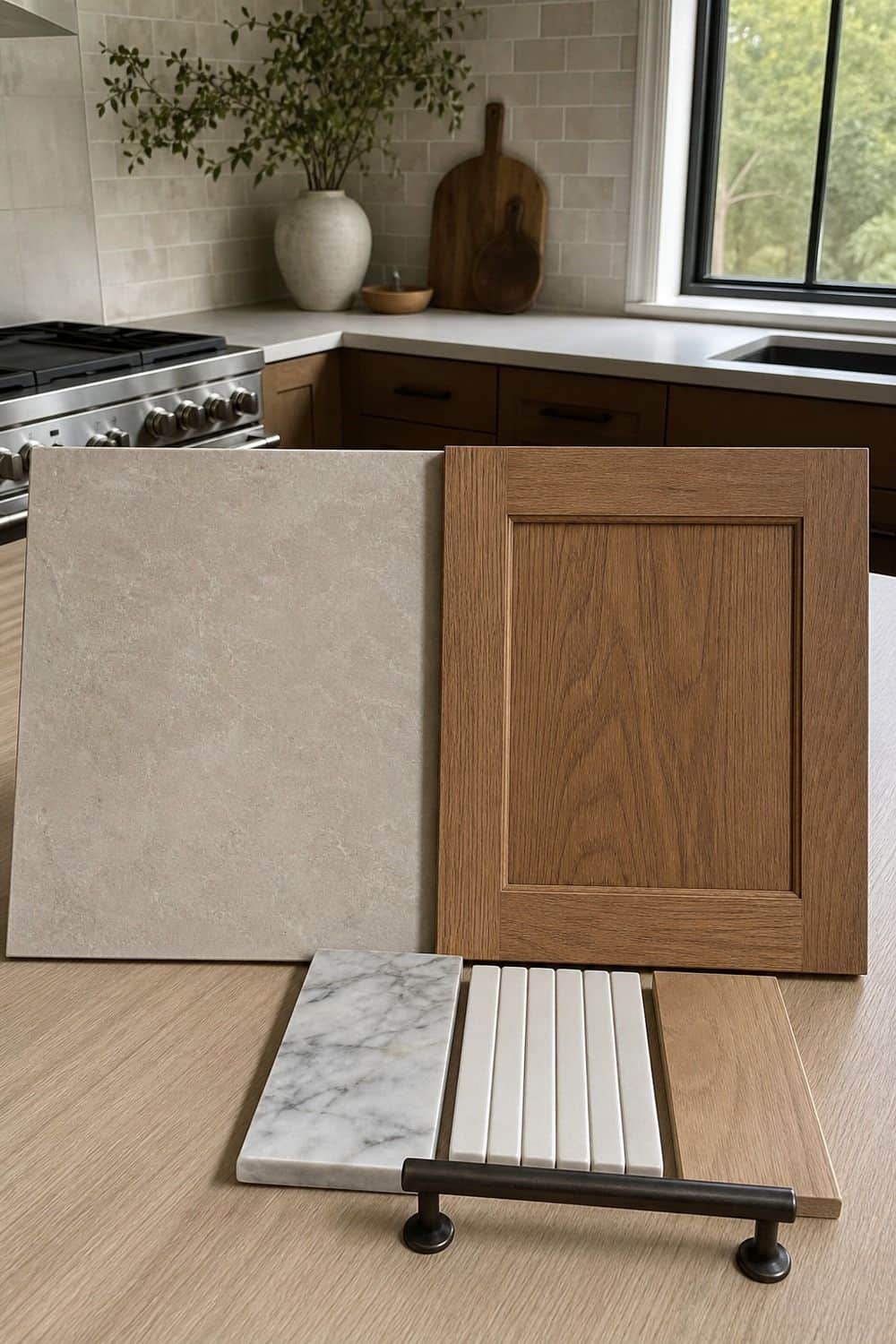
Honed stone is a strong partner for wood because it lowers shine and gives the grain a calmer surface beside it. Marble, quartzite, limestone-look slabs, and warm white quartz can all work when the undertones are checked carefully.
Lay stone samples beside your wood sample, hardware, and backsplash tile at the same time. A counter that looks neutral alone may turn blue, pink, or gray near wood, so the whole palette needs to be viewed together.
A quieter slab is usually easier to live with when the cabinet grain already has movement. If you love bolder veining, use it on an island or a shorter counter run where the stone can have a moment without fighting every cabinet door.
15. Warm Wood With Brushed Brass Pulls
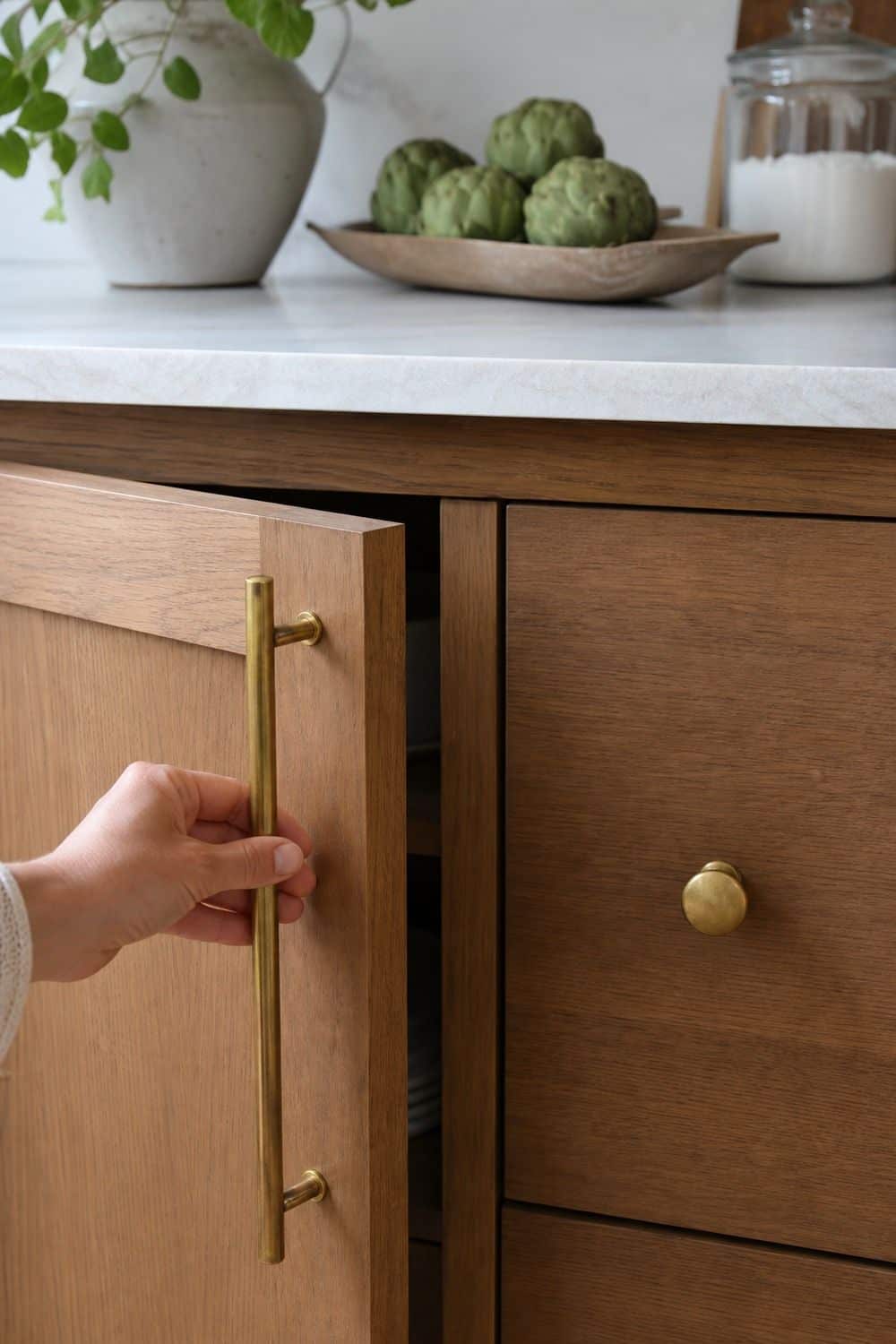
Brushed brass can make wood cabinets feel richer, but the finish needs restraint. Aged, satin, or brushed brass usually sits better beside walnut, oak, and hickory than a bright yellow metal.
Scale matters as much as finish. Long pulls can modernize flat-front doors, while smaller knobs may suit upper cabinets or a pantry. If the wood is already very golden, test brass carefully; soft black or polished nickel may give the grain cleaner definition.
One sample pull on one real door tells you more than a whole cart of pretty hardware photos. Open the cabinet a few times, step back toward the doorway, and make sure the metal still feels warm rather than flashy.
16. Soft Black Hardware on Wood Cabinets
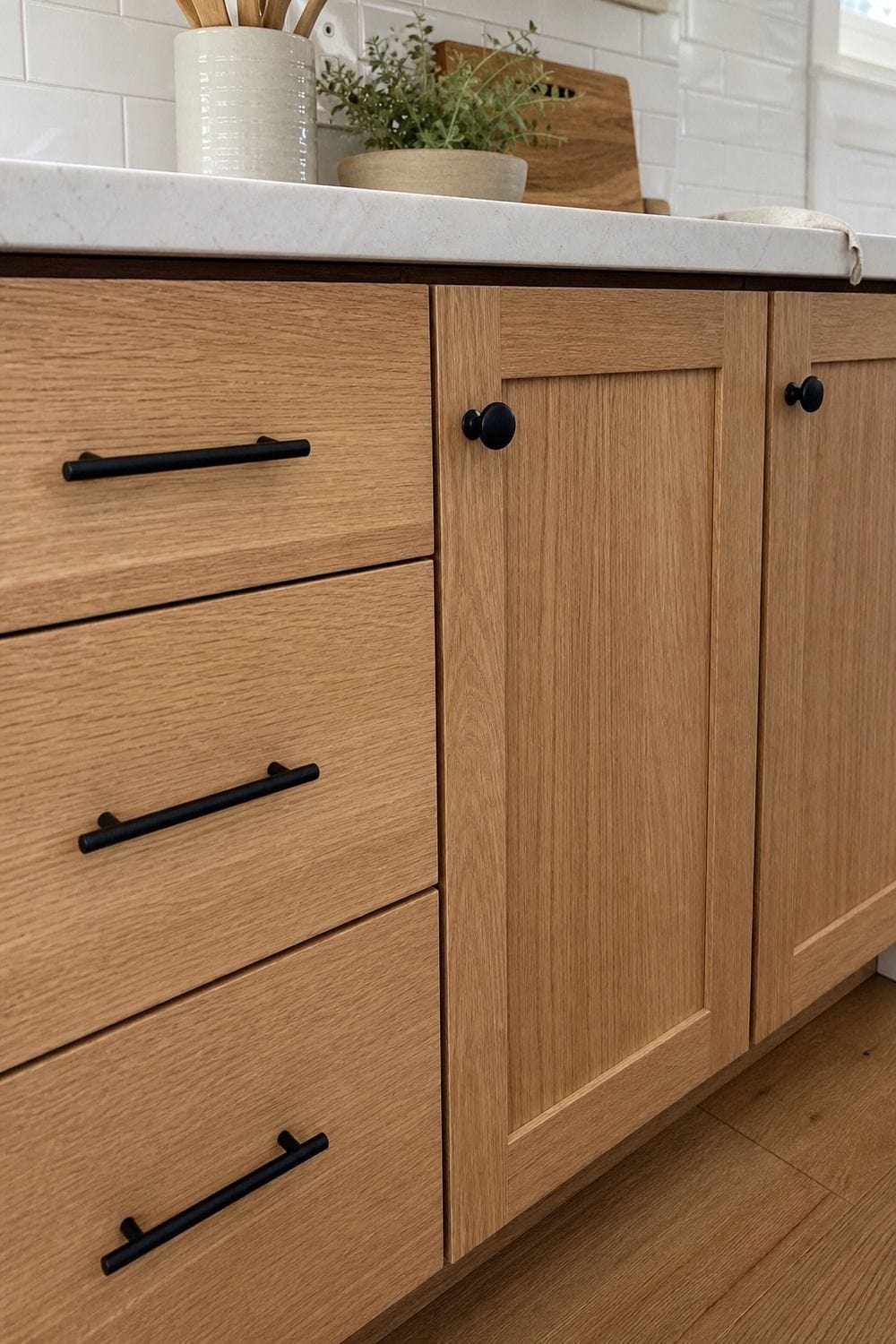
Soft black hardware is useful when wood cabinets need more definition. It outlines doors and drawers without adding another warm metal to a palette that may already lean golden. A slim pull, small round knob, or black latch can be enough.
Use it thoughtfully in small or dark kitchens, where too much black can feel heavy. Soft black pairs especially well with white oak, neutral red oak, and dark-stained oak where brass might disappear.
Keep the profile slim if the cabinet doors are already detailed or the grain is especially strong. A simple black pull can sharpen the room, but oversized hardware may start to chop up the wood and make the cabinets feel busier.
17. Warm Task Strips on Wood Grain
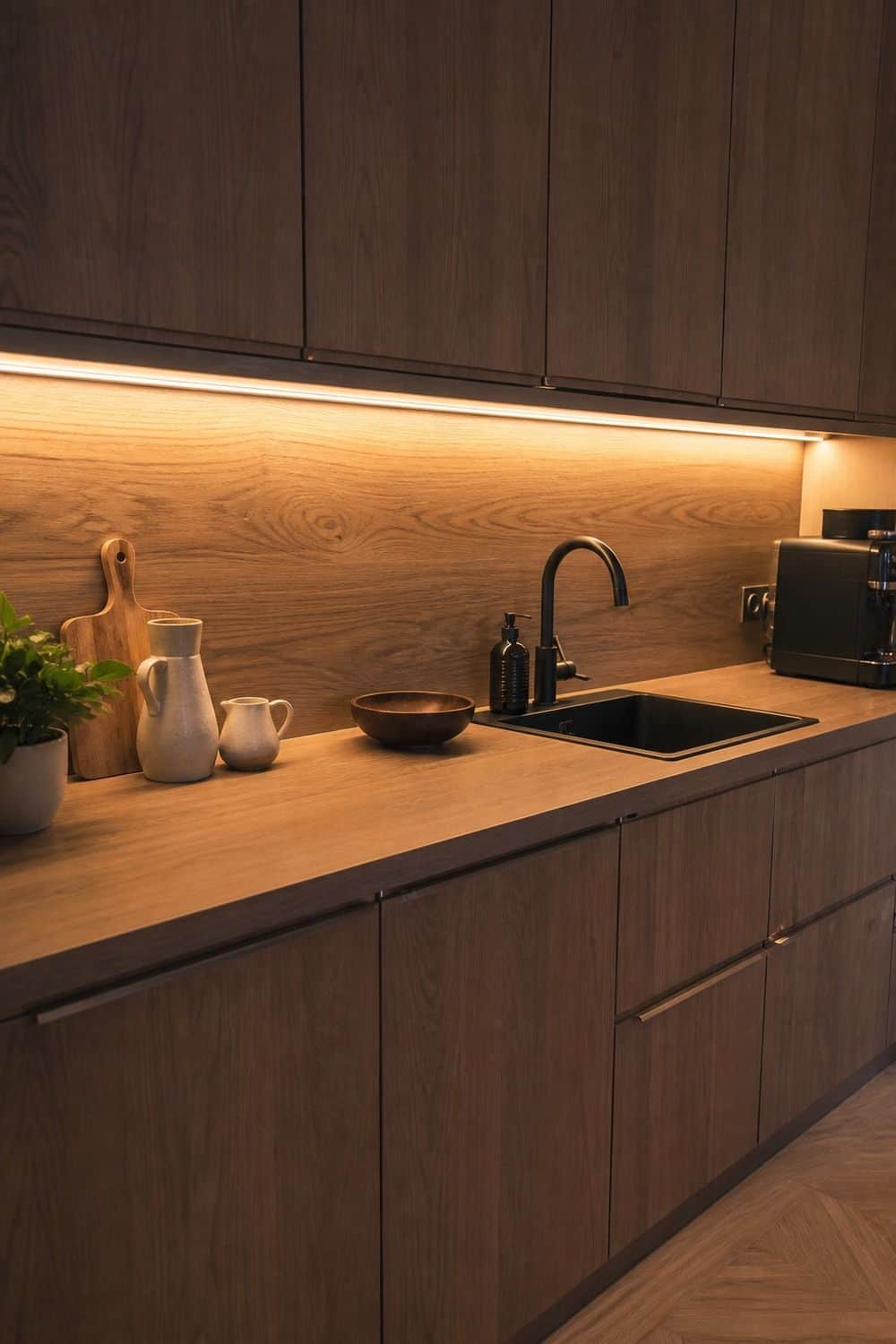
Lighting can make a good wood finish look rich or strangely flat. Warm under-cabinet strips help grain read clearly at prep counters, coffee areas, and sink runs, especially at night when overhead light can be harsh.
Avoid cold blue bulbs near oak, maple, and walnut because they can make the wood look dull or slightly green. Look for a warm, clean light temperature that helps both food prep and cabinet color.
This is a small change, but it can make older wood look calmer after sunset. It also helps you judge whether the cabinet color is really the problem, or whether the room simply needed better light on the working surfaces.
18. Tone Down Orange Oak With Greige Walls
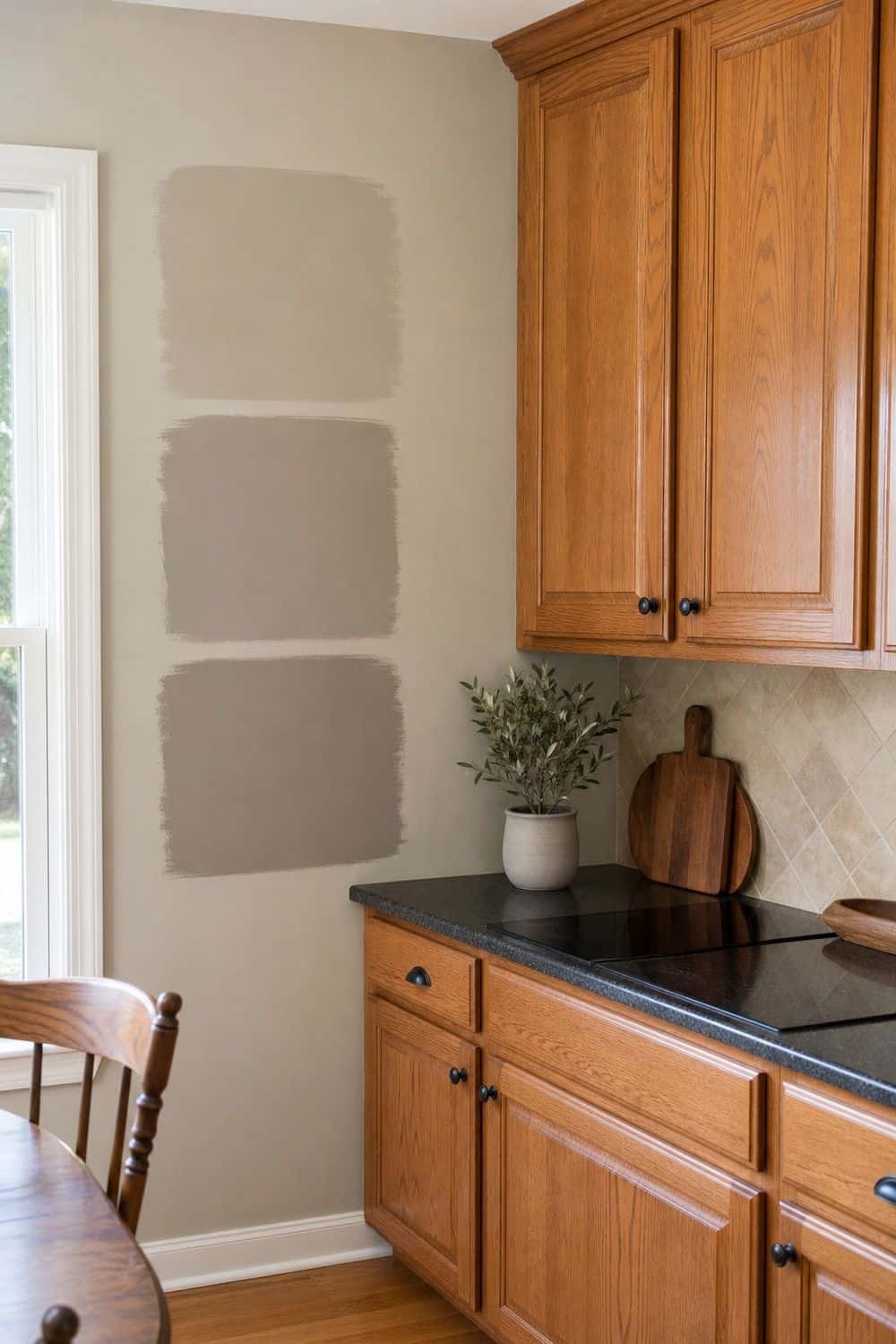
An orange oak kitchen update does not always begin with replacing the cabinets. Greige, taupe, mushroom, or a balanced warm neutral on the walls can reduce the orange cast and make older wood feel calmer.
Paint large samples near the cabinets before choosing a full wall color, because some neutrals turn purple, green, or too beige in kitchen light. The goal is a wall color that cools the orange slightly without making the wood look dirty.
Once the wall color settles down, hardware and lighting choices become much easier to judge. Treat the paint as the background correction first, then decide whether the cabinets still need new pulls, brighter counters, or a softer backsplash.
19. New Hardware for Orange Cabinets
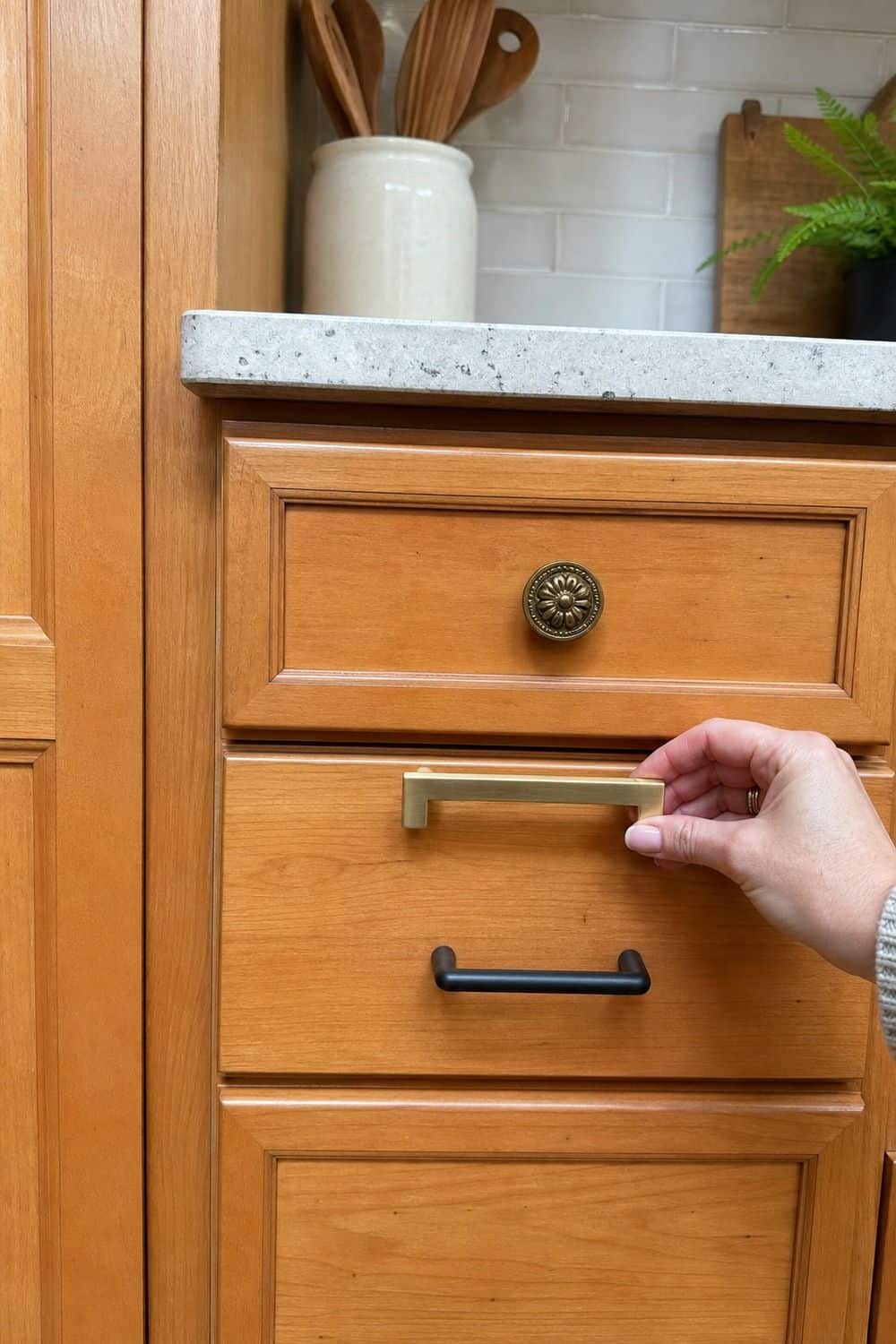
Hardware is a separate fix from paint because it changes the outline and age of the cabinets. Older orange oak or maple often looks fresher with clean pulls instead of ornate handles or shiny builder-grade knobs.
Soft black can add contrast, brushed nickel can cool a very orange finish, and aged brass can work when the wood is not too yellow. Bring home one pull before buying the full set, then check it against the cabinet in daylight and evening light.
20. Green Accent Near Warm Wood
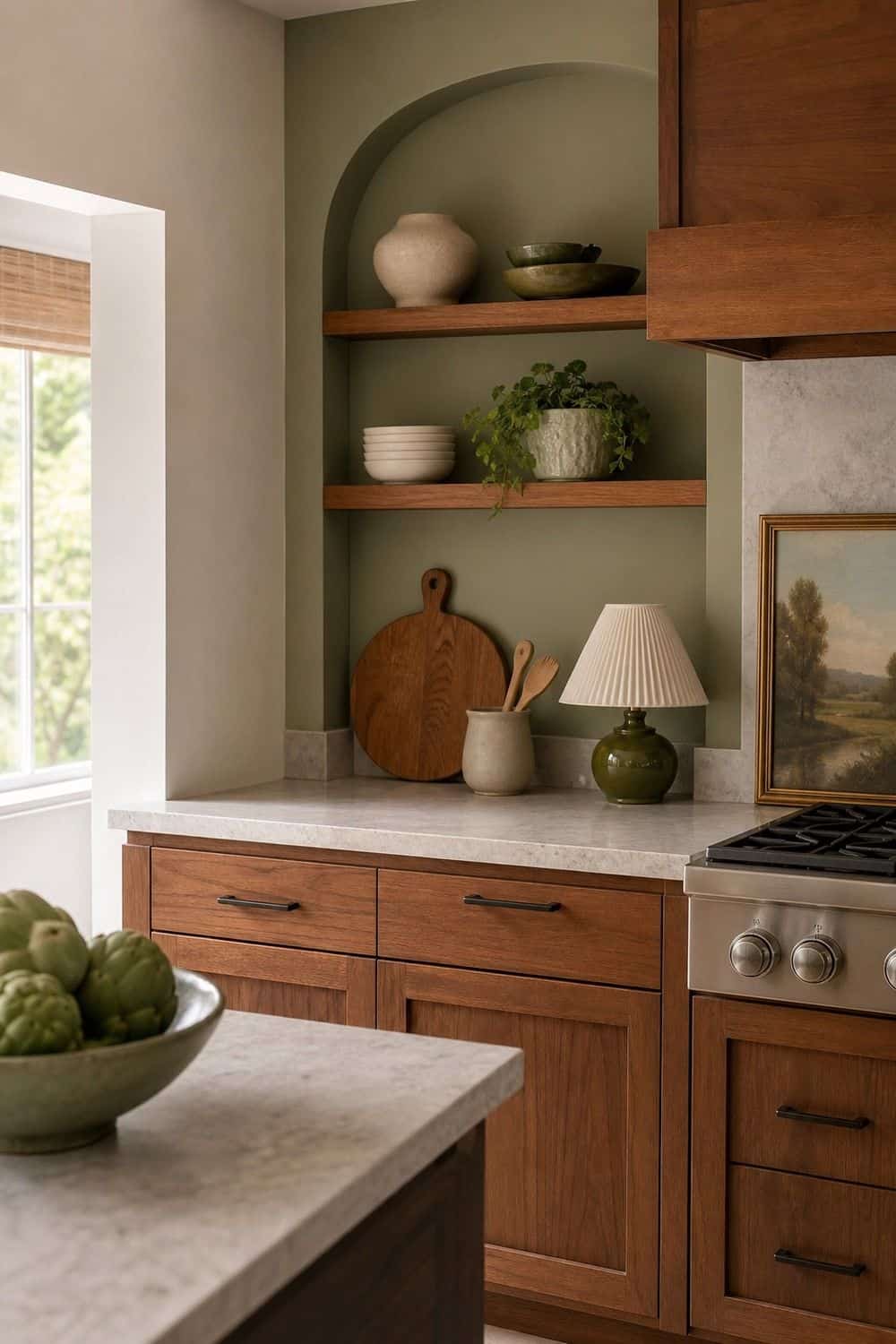
Olive, sage, and moss tones sit naturally beside warm wood because they echo garden color without making the kitchen feel themed. A small green accent can be enough if the wood already carries the main material story.
Try an olive bowl on open shelving, a small green lamp, a painted niche, or a few dish pieces near walnut or oak. Keep the rest of the counter quiet so the color feels connected rather than scattered.
If you already have plants nearby, repeat that green only once so the kitchen stays calm. The point is a quiet bridge between wood and life in the room, not a full color theme that competes with the grain.
21. Wood Cutting Boards as a Working Layer
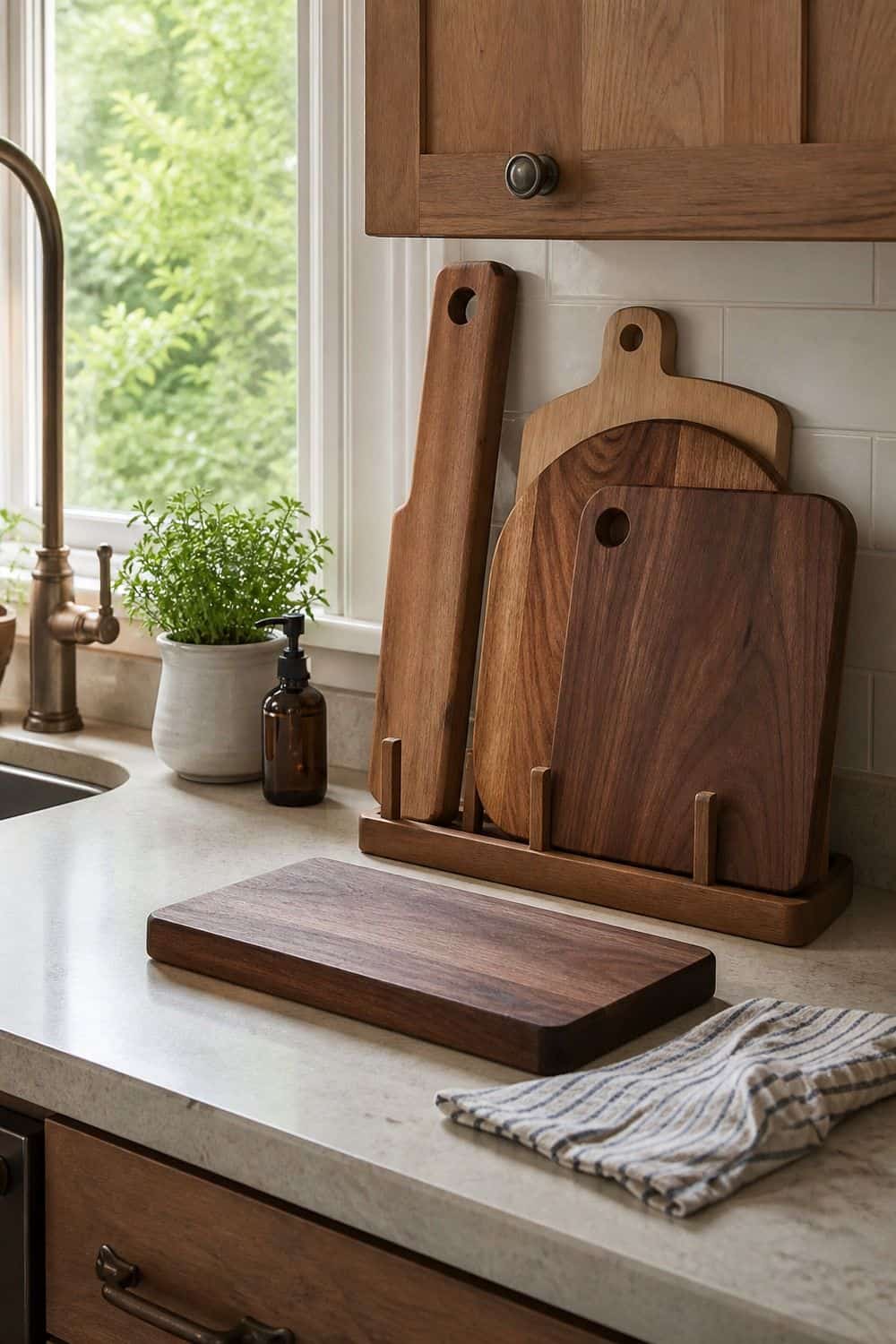
Cutting boards are one of the easiest ways to add wood that earns its place. A walnut board near the prep zone, a larger board for bread, or a narrow board for fruit can bring grain to the counter without becoming decoration only.
Keep only the boards you use often and store them where they can dry fully. If the cabinets are already wood, choose boards that relate to the tone but do not disappear into it. That small contrast keeps the layer visible.
22. Utensils in a Wood Crock
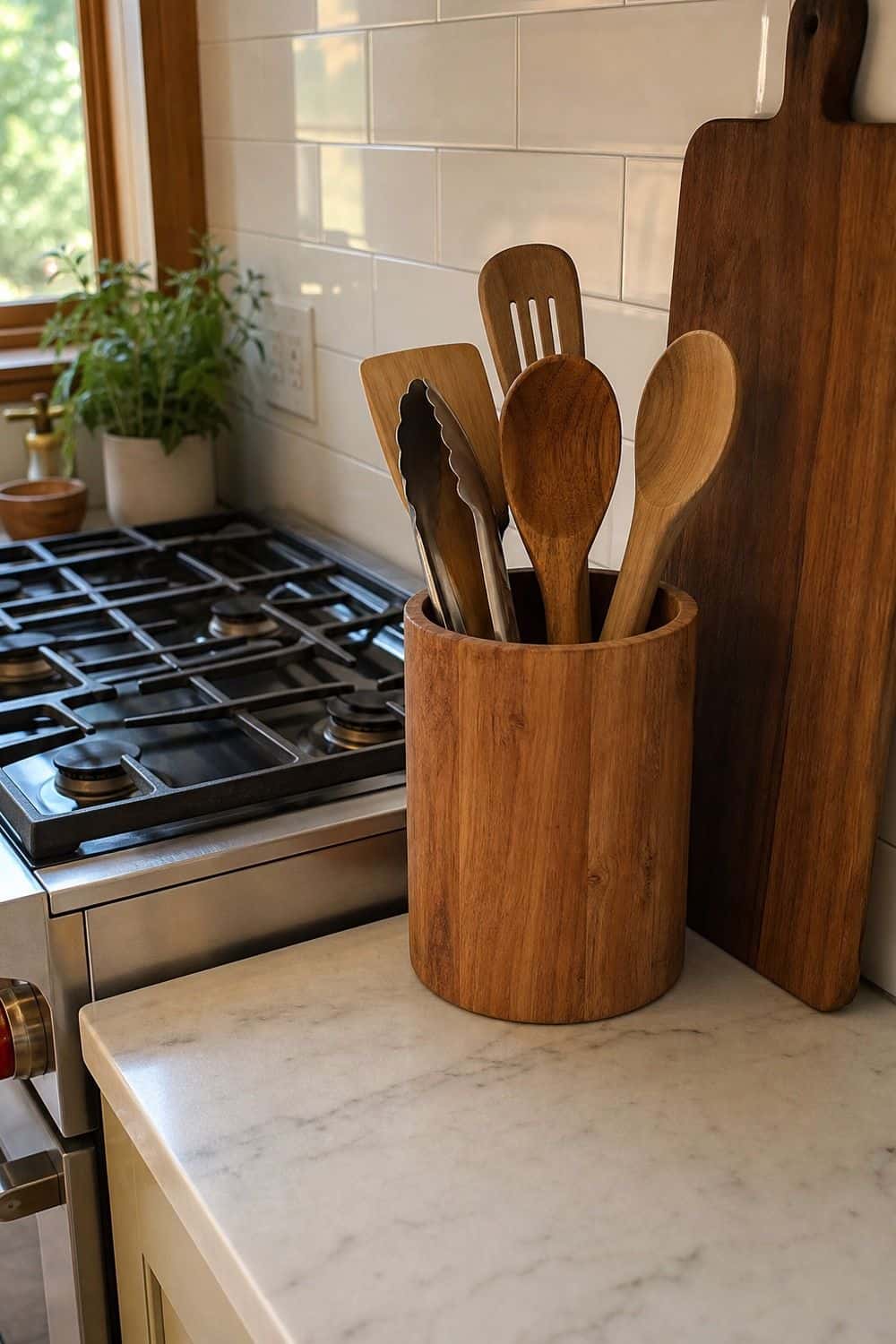
A wood utensil crock adds warmth exactly where many kitchens need it: beside the stove. It holds spoons, spatulas, and tongs while giving the cooking zone a softer material than metal or ceramic.
Choose a crock with enough weight that it does not tip when tall tools are inside. If the counter is small, keep only the utensils you reach for daily and store duplicates elsewhere. The wood should help the cooking zone feel calmer, not crowded.
A darker crock looks handsome beside pale counters, while lighter wood softens black or stone-heavy areas. Keep it close enough to the cooktop to be useful, but far enough from splatter that the finish is not constantly greasy.
23. Wood Picture Frame for Kitchen Art

A wood picture frame can repeat the warmth of shelves or a table on a wall that would otherwise feel blank. Fruit prints, recipe art, cafe-style sketches, or a small landscape can all work in a kitchen if the frame is easy to wipe.
Use one or two frames rather than building a busy gallery around cabinets, tile, and appliances. The frame tone should relate to another wood in the room, but it does not need to match exactly. Keep the art away from steamy corners or heavy splatter zones so the frame stays easy to clean.
24. Food-Safe Oil for Wood Surfaces
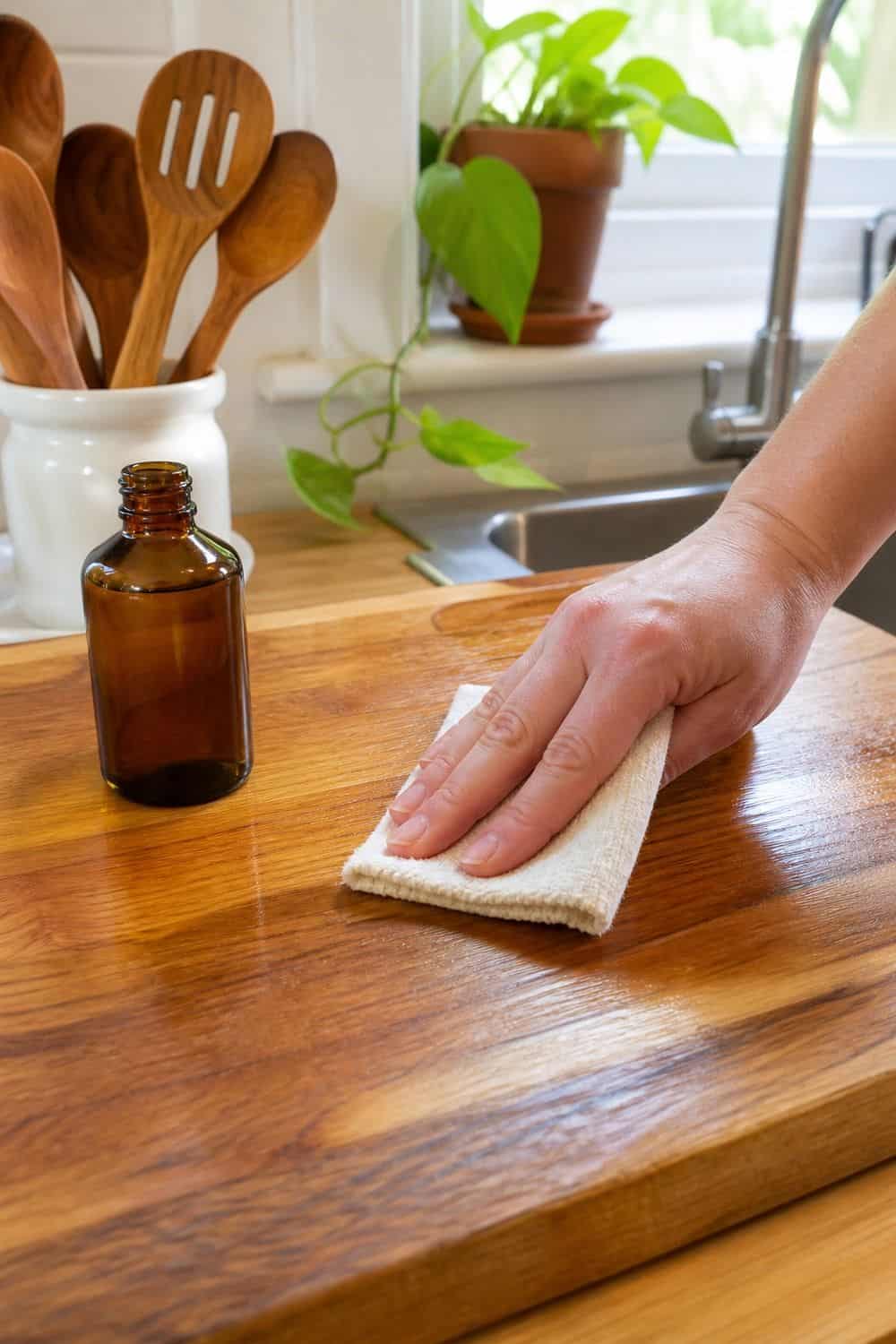
Wood in a kitchen has to handle water, grease, crumbs, and daily wiping. Food-safe oil helps maintain cutting boards, butcher block, wood utensils, and some accessories so they do not dry out or look chalky.
Follow the care instructions for the exact surface, especially on counters and boards used with food. Let pieces dry before putting them away, wipe spills quickly, and keep wood out of standing water so the warmth stays beautiful in real life.
Care is not glamorous, but it is what makes wood feel rich instead of tired. Keep the oil where you will remember it, and pair the habit with a regular kitchen reset instead of waiting until every board looks dry.
25. Fewer Matching Wood Sets

The strongest wood kitchens rarely match every piece exactly. Cabinets, floors, stools, shelves, frames, boards, and tables look better when the tones relate instead of forming one flat set.
Group woods by undertone first. Golden oak can sit with cream and aged brass, walnut can sit with stone and soft black, and white oak can bridge lighter pieces. Keep one dominant wood, then let smaller pieces echo it without copying it perfectly.
That loose relationship is what makes the kitchen feel collected, relaxed, and easier to update later. When every wood piece is allowed to be close without being identical, the room feels more personal and less like it came from one box.
Wood Tone and Finish Notes
Warm wood looks best when the undertones are chosen on purpose. Golden oak, neutral red oak, walnut, white oak, and hickory can all be beautiful, but they do not behave the same beside cream paint, stone, brass, black hardware, or green accents.
Bring samples into the actual kitchen whenever possible. Look at them flat on the counter, upright like a cabinet door, and beside the floor. A finish that feels gentle in a showroom can look darker, redder, or more yellow once it is surrounded by your real light.
Frequently Asked Questions
What wood tones make a kitchen feel warm but modern?
Mid-tone walnut, natural white oak, neutral red oak stains, and softly toned hickory can all feel warm and modern. The key is avoiding overly orange gloss, graywashed finishes, and exact matching across every surface. Balance the wood with cream, honed stone, warm lighting, and simple hardware.
How do you mix wood tones in a kitchen?
Choose one dominant wood first, then add smaller pieces that share a similar undertone. The woods do not need to match exactly, but they should feel related. For example, white oak can sit with lighter stools, walnut can sit with darker frames, and golden oak often works with cream and aged brass.
What colors look good with warm wood cabinets?
Cream, warm white, mushroom, greige, olive, sage, soft black, and muted stone colors usually work well with warm wood cabinets. The best choice depends on whether the wood leans golden, red, brown, or neutral, so paint and tile samples should be checked beside the actual cabinet finish.
How can older orange wood cabinets look fresher?
Older orange wood cabinets often look fresher with calmer wall color, simpler hardware, warmer task lighting, and less visual clutter around them. Greige, taupe, or mushroom walls can soften the orange cast, while soft black or brushed nickel hardware can make the cabinet lines feel cleaner.
Is butcher block practical in a kitchen?
Butcher block can be practical in the right spot, especially on an island, baking counter, or short prep section away from standing water. It needs sealing, quick wipe-ups, and regular care. If you want the warmth without constant maintenance, use butcher block as an accent rather than on every counter.
What hardware works best with warm wood?
Brushed brass, aged brass, soft black, and polished nickel can all work with warm wood. Brass adds richness, soft black adds definition, and nickel can cool down very orange wood. Test one pull against the actual cabinet before ordering a full set, because metal finishes shift beside wood grain.
How do you keep a wood kitchen from feeling too heavy?
Break up the wood with lighter walls, open space, cream tile, honed stone, simple hardware, and good lighting. If the cabinets are dark, keep upper areas lighter. If the grain is busy, choose quieter counters and backsplash materials so the room feels warm instead of crowded.
Can you add warm wood without replacing cabinets?
Yes. Add warm wood through floating shelves, counter stools, a breakfast table, cutting boards, a utensil crock, a framed print, or a freestanding island. Smaller wood layers work best when they repeat an undertone already in the room, so the kitchen feels connected rather than filled with random accents.
Final Thoughts
A warm wood kitchen works best when the grain has room to be noticed and the practical details still make sense. Choose one main wood story, repeat it gently, and let tile, stone, hardware, lighting, and everyday tools support it. The result feels natural, useful, and lived in instead of overly matched.
Last update on 2026-09-18 / Affiliate links / Images from Amazon Product Advertising API