
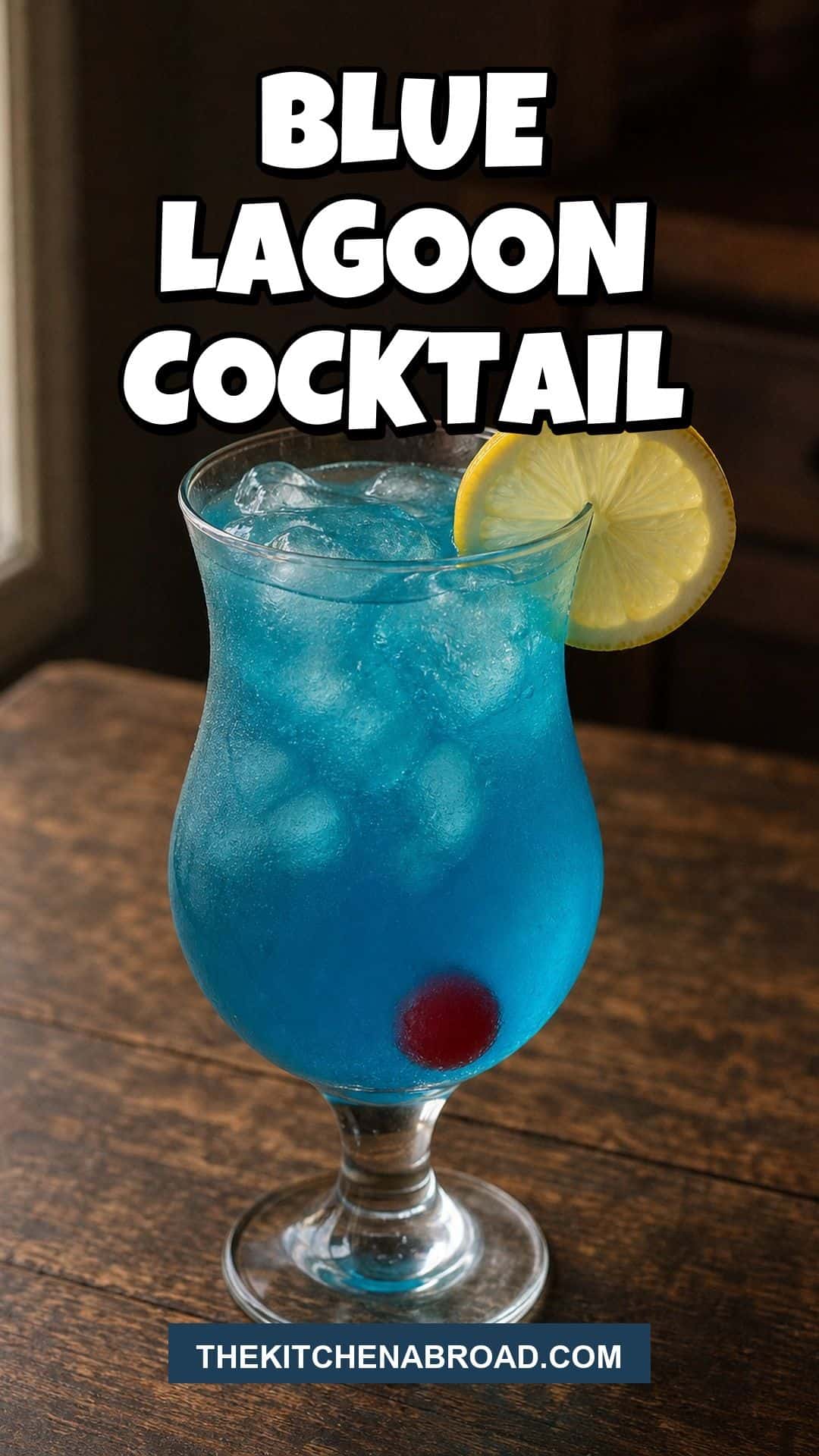
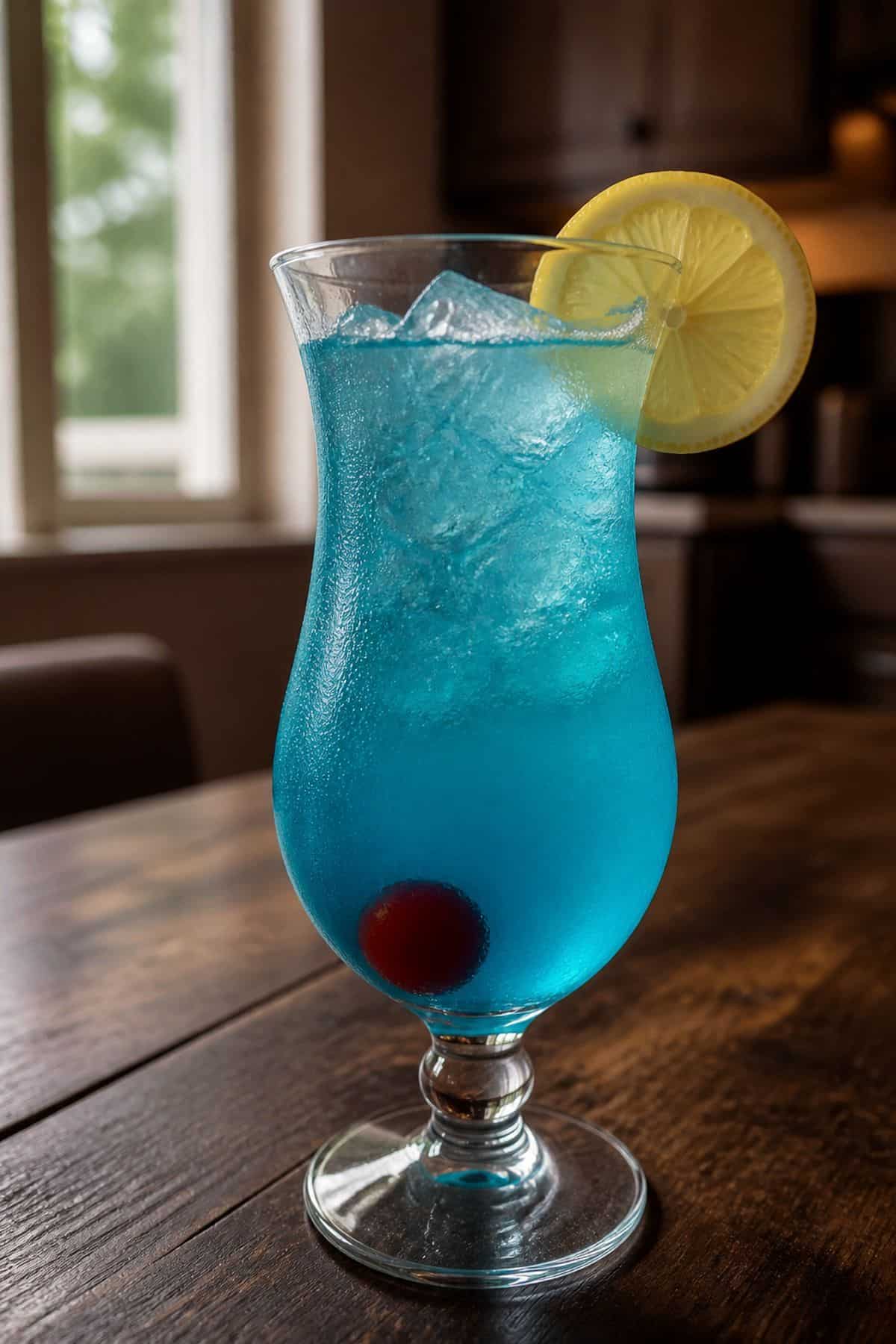
The blue lagoon is the 1972 Harry’s New York Bar Paris original by Andy MacElhone. Build 1 oz vodka, 1 oz Blue Curaçao, and 4 oz fresh lemonade over ice in a hurricane or highball glass. Stir gently, garnish with a lemon wheel and a maraschino cherry. The blue comes from Blue Curaçao, not food coloring. Total time: 3 minutes. Serves one.
The Blue Lagoon is the most recognizable blue cocktail on the planet, and almost nobody makes it the way Andy MacElhone built it in 1972. The original spec is three ingredients: vodka, Blue Curaçao, and lemonade. No food dye, no neon sour mix, no syrup pile. Get those three right and the drink does what it was always meant to do, which is taste like sweet citrus with a faint orange shimmer from the curaçao and look like a swimming pool in a glass.
Gear That Helps Here
A hurricane glass or tall highball, ice, and a jigger are all you need. The hurricane shape shows off the blue color best, and the wider opening gives you room for a generous lemon wheel.
A hand juicer is worth keeping on the counter if you make this often. Fresh lemonade out-tastes any bottled version, and a $15 juicer pays for itself in a week of summer entertaining. A jar of maraschino cherries lives in the fridge door for garnish duty.


Recommended Reads
Where the Blue Lagoon Came From
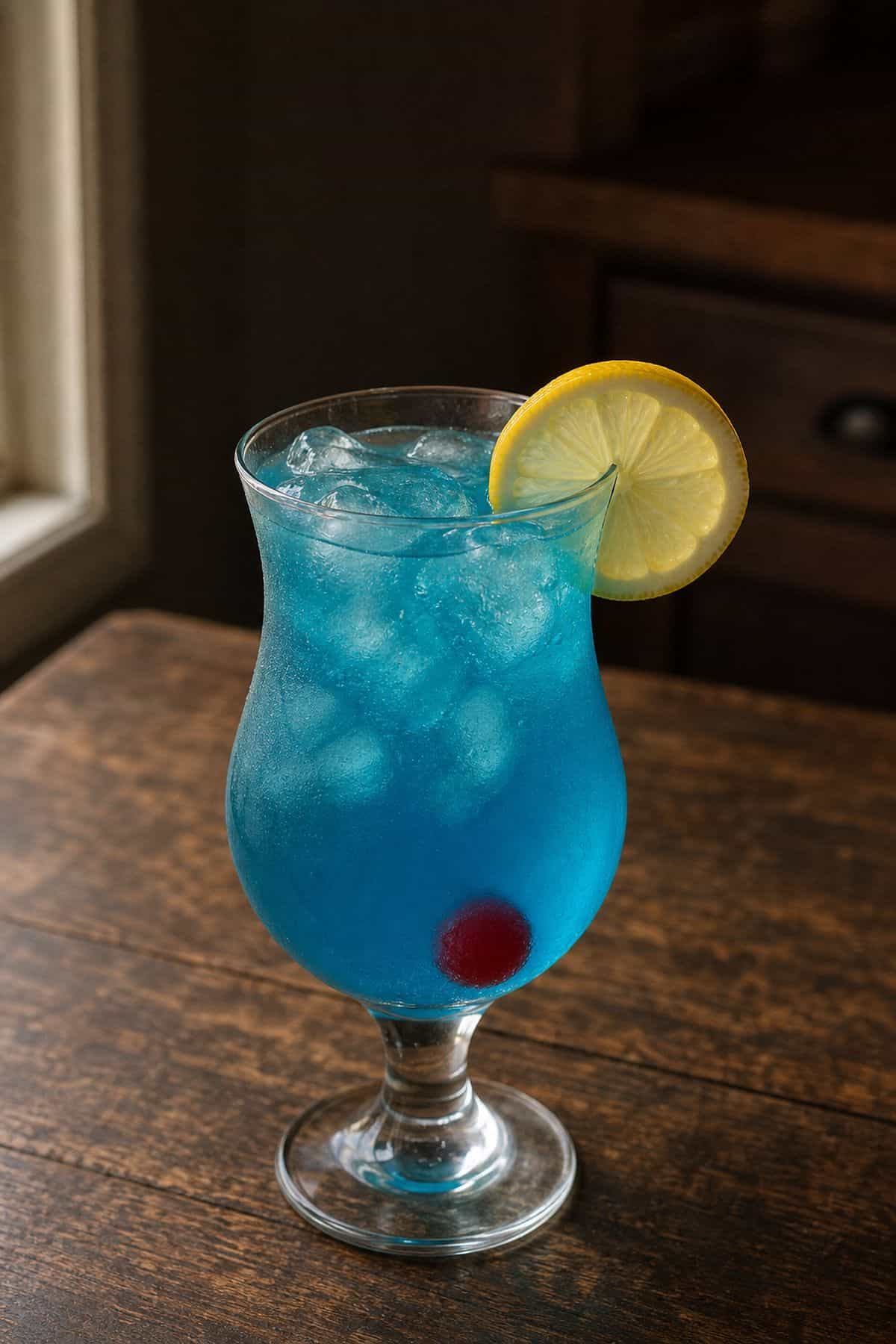
The Blue Lagoon was invented in 1972 at Harry’s New York Bar in Paris by Andy MacElhone, the second-generation owner of the bar that has been a Paris cocktail landmark since 1911. Andy was working at the same bar his father Harry had run for decades, and he built the drink as a showcase for a new blue spirit on the market: Blue Curaçao, the cobalt-tinted orange liqueur that had been around in clear form for a century but had recently been given its now-famous color.
The MacElhone family thread at Harry’s runs deeper than most cocktail histories admit. Andy’s father Harry created the French 75 at the same bar during World War I, a kicky champagne-and-gin cocktail named after the French 75mm field gun. The Blue Lagoon arrived more than fifty years later, but it carries the same house style: three or four ingredients, balanced, photogenic, easy to remember. Two generations of MacElhones gave the world two of its most recognizable cocktails, both invented behind the same wood bar a few blocks from the Paris Opera.
The 1980 Brooke Shields film of the same name boosted recognition of the cocktail throughout the decade, but the movie postdates the drink by eight years. By the time the film hit theaters, the Blue Lagoon was already on cocktail menus across Europe and was starting its rise as the defining tropical-blue drink of the 1980s and 90s.
A Few Notes on the Ingredients
Vodka does the heavy lifting as a neutral base. Any clean, well-made vodka works here, since the goal is not to taste the vodka but to give the citrus and curaçao a spine. A mid-shelf bottle is plenty; save the top-shelf vodka for a martini.
Blue Curaçao is where most home bartenders go wrong. Curaçao is an orange liqueur made from the dried peel of the laraha citrus fruit grown on the island of Curaçao. The blue version is the same orange-flavored liqueur tinted with food-safe coloring, and the quality varies wildly between brands. A solid bottle (Bols, Senior Curaçao of Curaçao, Marie Brizard) has real orange flavor and a cleaner finish than the cheap stuff, which can taste like blue dye and sugar with nothing behind it. Pay for the upgrade; you only need one bottle and it makes every blue cocktail you ever pour.
Lemonade is the third ingredient and the easiest place to improve the drink. Fresh-made lemonade (fresh lemon juice, water, simple syrup) is the original spec and tastes noticeably brighter than the bottled stuff. If you go bottled, pick a real-juice lemonade like Simply Lemonade or Newman’s Own; skip the sugar-water from-concentrate brands that lean cloying. One common myth worth busting: the blue color does not come from food coloring added to the lemonade. The blue is entirely from the Blue Curaçao. If your drink is coming out neon teal or radioactive turquoise, that is a sign you used too much curaçao or that your curaçao is over-dyed.
Recipe: Blue Lagoon
Prep time: 3 minutes | Total time: 3 minutes | Serves: 1
Ingredients
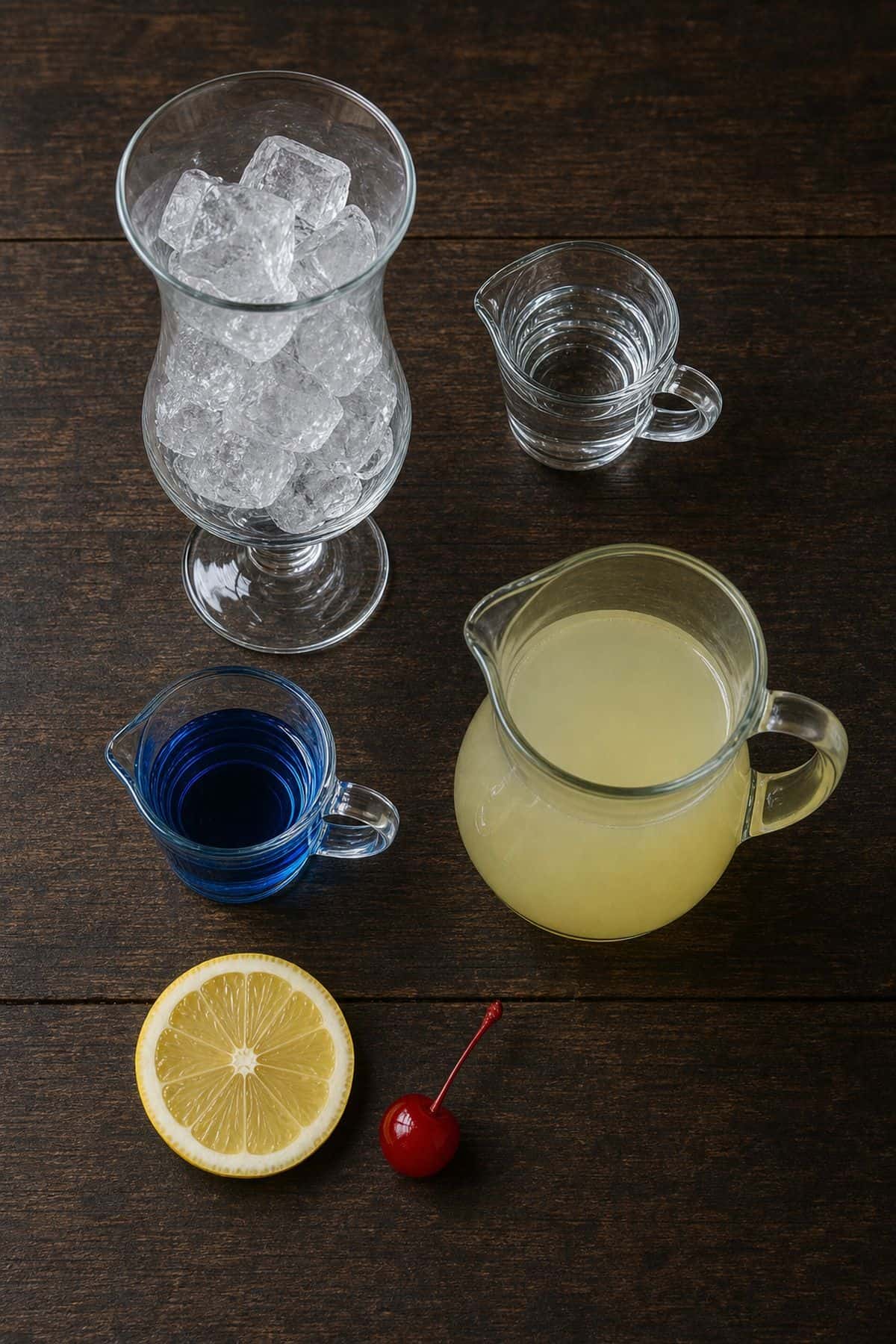
- 30 ml (1 oz) vodka
- 30 ml (1 oz) Blue Curaçao
- 120 ml (4 oz) fresh lemonade, chilled
- Ice cubes, enough to fill the glass
- 1 lemon wheel, for garnish
- 1 maraschino cherry, for garnish
Instructions
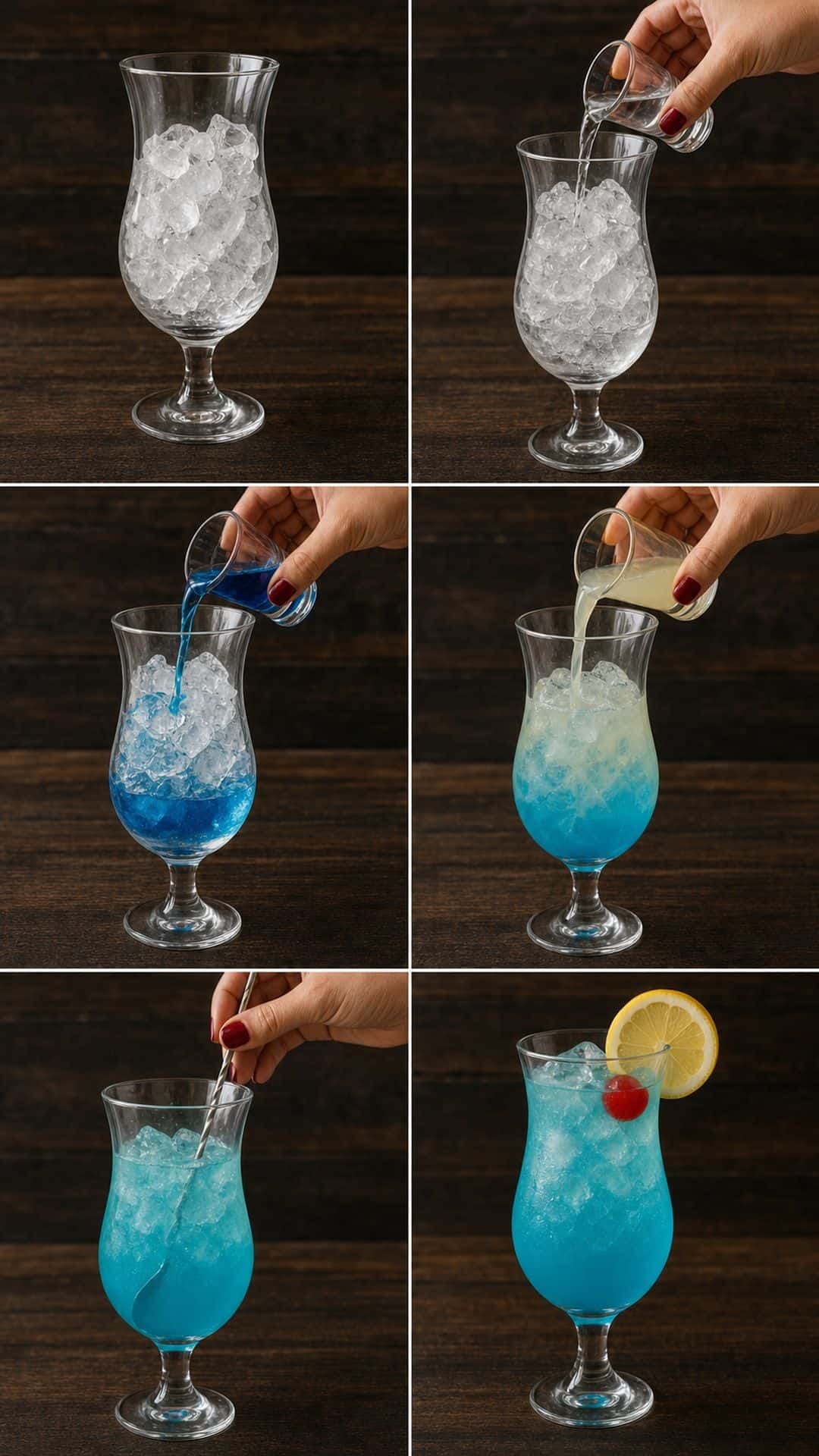
- Fill a hurricane glass or tall highball with ice. A chilled glass works best; if you have time, stash the glass in the freezer for 10 minutes before building.
- Pour 30 ml (1 oz) vodka over the ice.
- Pour 30 ml (1 oz) Blue Curaçao on top of the vodka. The curaçao is heavier than the vodka and will start to settle.
- Top with 120 ml (4 oz) fresh lemonade. Pour slowly so the layers stay distinct for a few seconds before they swirl together.
- Give the drink a single gentle stir with a bar spoon to combine. Do not over-stir; you want the color even but you do not need to dissolve the layers completely.
- Slide a lemon wheel onto the rim and drop a maraschino cherry into the glass. Serve immediately.
Notes
Make the lemonade the way you would for a porch pitcher: 1 cup fresh lemon juice (about 5 lemons), 1 cup simple syrup, and 4 cups cold water. Stir, taste, and tune the sweetness with more syrup or water. Use this lemonade for the cocktail; the rest keeps in the fridge for 3 days.
Build the drink at the moment of serving. The Blue Lagoon does not hold; the lemonade flattens and the color fades within fifteen minutes of sitting on ice. Mix the spirits and lemonade base ahead of time only if you are batching for a pitcher, and add ice to each glass when you pour.
The drink should be a clean, deep aquamarine, not a fluorescent neon. If yours is too dark, you used too much curaçao or too little lemonade; if too pale, the opposite.
Tips and Variations
Frozen Blender Version for Summer
Blend 1 oz vodka, 1 oz Blue Curaçao, 3 oz lemonade, and a heaping cup of ice in a blender until smooth and slushy. Pour into a hurricane glass and garnish the same way. The frozen version is the standard at beach bars and resort pools, and it is genuinely better in 90-degree heat than the built-on-ice original.
If the slush ends up too thick to drink through a straw, add a splash more lemonade and pulse to thin. If it is too watery, add five more ice cubes and blend again.
Mocktail With Blue Food Coloring and Lemon
The mocktail version skips the vodka and Blue Curaçao and replicates the color with a clean alternative. Mix 5 oz lemonade, 1 oz pineapple juice, and 1 drop of blue food coloring in a hurricane glass over ice. Stir, garnish with lemon and a cherry, and you have something that looks identical and tastes almost as good. The pineapple juice does the work the curaçao would do for body and a hint of tropical sweetness.
For kids, lean into the pineapple and skip the food coloring entirely; it tastes just as good without the blue. For pregnant guests or anyone skipping alcohol at a pool party, the mocktail with the dye in is a great visual match for the real drink.
Sparkling Top for a Lighter Pour
Sub half the lemonade for soda water or a splash of dry prosecco for a drier, fizzier take. The lighter pour is closer to what a French bartender today might serve, since the standard sweetness of American lemonade is heavier than European tastes. Use 2 oz lemonade plus 2 oz soda water; same spirits, same garnish.
The prosecco version is a fancy upgrade for brunch service and is the closest thing to a Blue Lagoon Spritz. Build the spirits and lemonade in the glass, then top with chilled prosecco at the moment of serving.
Tropical Version With Pineapple Juice
The tropical Blue Lagoon adds 1 oz pineapple juice to the build. This version is what most beach-resort menus pour, and it pushes the drink further toward piña colada territory while keeping the blue color. Use 1 oz vodka, 1 oz Blue Curaçao, 3 oz lemonade, and 1 oz pineapple juice in a hurricane glass over ice. Garnish with a pineapple wedge or a lemon wheel.
The pineapple version is the right call when serving a crowd that is not deep into classic cocktails. It tastes more familiar and goes down easier, especially in heat.
Batch Pitcher for a Pool Party
Scale the recipe by 8 for a standard pitcher: 8 oz vodka, 8 oz Blue Curaçao, and 32 oz (1 quart) fresh lemonade. Combine in a 2-quart pitcher, stir, and refrigerate until ready to serve. Do not add ice to the pitcher; it dilutes the drink and the color goes pale.
At service, pour over ice in individual glasses and garnish each one. The pitcher holds in the fridge for up to 4 hours before the lemonade starts to flatten. Make a second pitcher rather than letting one sit longer.
What to Serve It With
The Blue Lagoon is a summer-poolside drink, and the food pairings should follow. Light, salty, snackable food is the move. Salt-and-vinegar chips, shrimp cocktail, ceviche, watermelon and feta skewers, or a platter of crudités with a yogurt-herb dip. The drink is sweet and citrusy, so anything that brings salt or savory cuts the sweetness and resets the palate.
For a full pool-party menu, build around grilled food: marinated chicken skewers, blackened fish tacos, or grilled corn with lime and chile. The bright lemon in the cocktail pairs cleanly with anything that has citrus or smoke. Skip rich cream sauces and heavy braised dishes; they fight the drink.
Frequently Asked Questions
What does a Blue Lagoon cocktail taste like?
Sweet, citrusy, and lightly tropical. The lemonade is the loudest flavor; the Blue Curaçao adds a soft orange undertone and most of the sugar; the vodka stays in the background. The overall profile is closer to spiked lemonade than to a classic cocktail. The finish is clean and refreshing, with just enough sweetness to read as a dessert drink without crossing into syrup territory.
Can you make a Blue Lagoon without Blue Curaçao?
Technically yes, but the result is not a Blue Lagoon. The Blue Curaçao is the entire identity of the drink (the color, the orange notes, the sweetness profile). If you sub triple sec or another orange liqueur, you get a clear orange-lemon vodka cocktail; closer to a vodka sour. If you want the visual without the curaçao flavor, the mocktail variation above with pineapple juice and one drop of blue food coloring is the better workaround.
Who invented the Blue Lagoon cocktail?
Andy MacElhone created the Blue Lagoon at Harry’s New York Bar in Paris in 1972. Andy’s father, Harry MacElhone, owned the same bar and is credited with creating the French 75 cocktail there during World War I. Harry’s New York Bar has been operating in central Paris since 1911 and remains one of the most historically important cocktail bars in Europe. The Blue Lagoon was originally built to showcase Blue Curaçao, which had recently been introduced in its blue-tinted form.
Is the Blue Lagoon a strong drink?
No, it is on the lighter side for a cocktail. With 1 oz vodka (40% ABV) and 1 oz Blue Curaçao (around 15-20% ABV) cut by 4 oz of non-alcoholic lemonade, the finished drink lands around 10-12% ABV. That puts it roughly on par with a glass of wine. For a stronger pour, bump the vodka to 1.5 oz and pull the lemonade back to 3 oz.
What kind of glass do you serve a Blue Lagoon in?
A hurricane glass is the classic choice; the wide curved shape shows off the color and gives room for a generous lemon wheel and cherry. A tall highball or Collins glass works just as well at home. The drink does not get poured into a coupe or a martini glass; the build-over-ice style needs a tall vessel.
Key Takeaways
- The 1972 Andy MacElhone original at Harry’s New York Bar Paris is 1 oz vodka, 1 oz Blue Curaçao, 4 oz lemonade.
- The blue color is from Blue Curaçao, not food coloring; if your drink is neon teal, your curaçao is over-dyed.
- Fresh lemonade beats bottled every time; if you must go bottled, pick Simply Lemonade or Newman’s Own.
- Build over ice in a hurricane or highball glass, garnish with a lemon wheel and a maraschino cherry, serve immediately.
- The MacElhone family also created the French 75 at the same bar (Harry MacElhone, World War I).
Final Thoughts
The Blue Lagoon gets dismissed as a tacky resort drink, but the 1972 original is a clean three-ingredient cocktail built by a Paris bartender whose father had already given the world one of its most famous champagne cocktails. The bones are good. Treat the spec with respect.
The fixes for a great Blue Lagoon at home are short: buy a decent Blue Curaçao, make fresh lemonade, and keep the build simple. No food dye, no neon. Just vodka, curaçao, lemonade, and ice in a hurricane glass.
Make this for a summer pool party, a backyard cookout, or a Friday night when you want something blue in the glass and a small reminder that good cocktails can come from very ordinary bottles.
Blue Lagoon
The blue lagoon is the 1972 Harry's New York Bar Paris original by Andy MacElhone. Build 1 oz vodka, 1 oz Blue Curaçao, and 4 oz fresh lemonade over ice in a hurricane or highball glass. Stir gently, garnish with a lemon wheel and a maraschino cherry.
Ingredients
- 30 ml (1 oz) vodka
- 30 ml (1 oz) Blue Curaçao
- 120 ml (4 oz) fresh lemonade, chilled
- Ice cubes, enough to fill the glass
- 1 lemon wheel, for garnish
- 1 maraschino cherry, for garnish
Instructions
- Fill a hurricane glass or tall highball with ice. A chilled glass works best; if you have time, stash the glass in the freezer for 10 minutes before building.
- Pour 30 ml (1 oz) vodka over the ice.
- Pour 30 ml (1 oz) Blue Curaçao on top of the vodka. The curaçao is heavier than the vodka and will start to settle.
- Top with 120 ml (4 oz) fresh lemonade. Pour slowly so the layers stay distinct for a few seconds before they swirl together.
- Give the drink a single gentle stir with a bar spoon to combine. Do not over-stir; you want the color even but you do not need to dissolve the layers completely.
- Slide a lemon wheel onto the rim and drop a maraschino cherry into the glass. Serve immediately.
Notes
Make the lemonade the way you would for a porch pitcher: 1 cup fresh lemon juice (about 5 lemons), 1 cup simple syrup, and 4 cups cold water. Stir, taste, and tune the sweetness with more syrup or water. Use this lemonade for the cocktail; the rest keeps in the fridge for 3 days.
Build the drink at the moment of serving. The Blue Lagoon does not hold; the lemonade flattens and the color fades within fifteen minutes of sitting on ice. Mix the spirits and lemonade base ahead of time only if you are batching for a pitcher, and add ice to each glass when you pour.
Last update on 2026-08-11 / Affiliate links / Images from Amazon Product Advertising API