
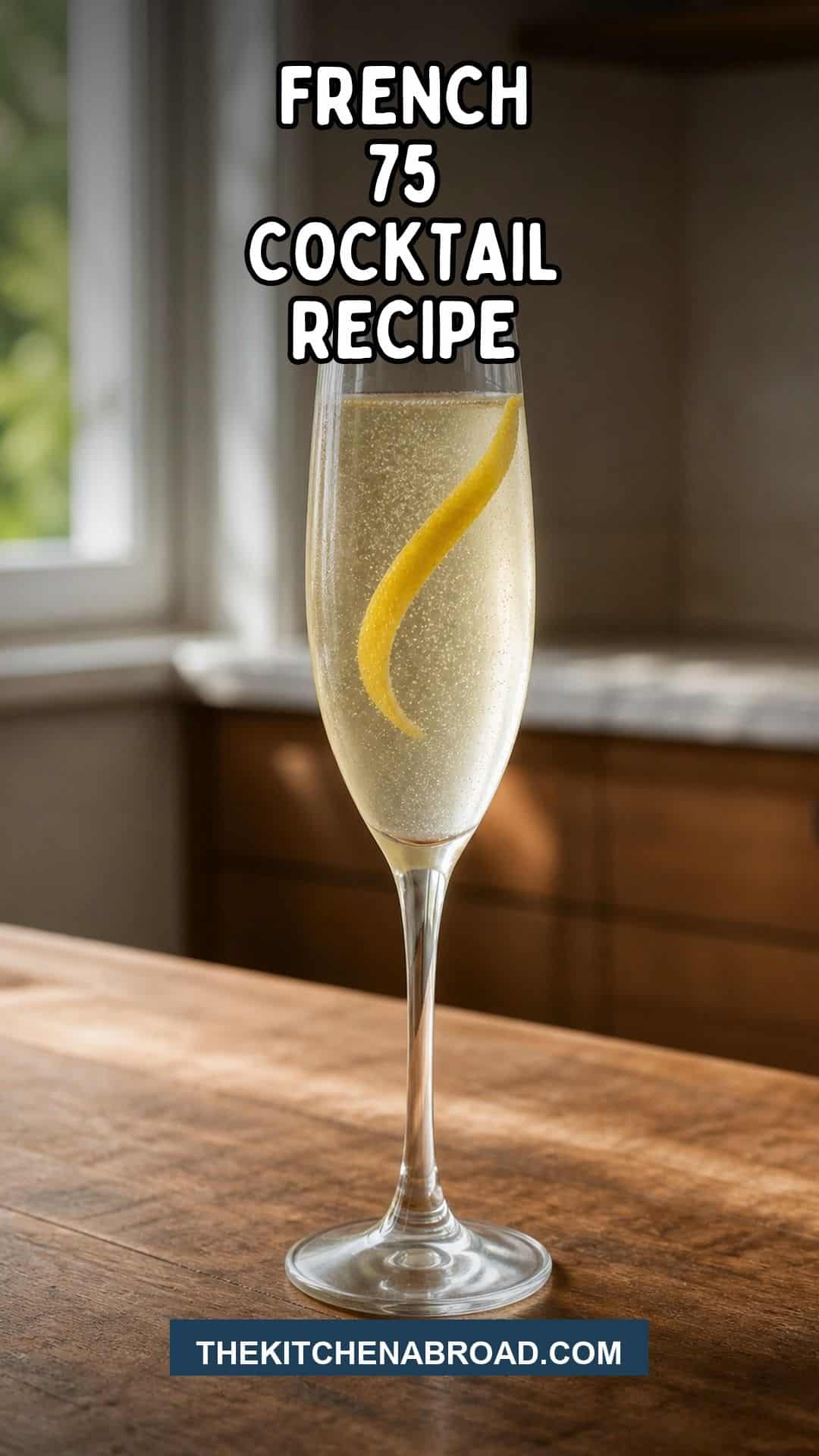
A French 75 is a four-ingredient sparkling cocktail of London Dry gin, fresh lemon juice, simple syrup, and brut Champagne. Shake the gin, lemon, and syrup with ice, strain into a chilled flute, and top with cold Champagne. Garnish with a lemon twist. The whole build takes under two minutes and serves one.
The French 75 was popularized in 1920s Paris at Harry’s New York Bar, where bartender Harry MacElhone is most often credited with codifying the four-ingredient spec that landed in The Savoy Cocktail Book in 1930. The drink was named after the French Army’s 75mm field gun, which fired fifteen rounds a minute through the First World War and apparently kicked about as hard as the cocktail. The version below uses 1 oz of gin, half an ounce each of fresh lemon and simple syrup, and 3 oz of cold brut Champagne in a chilled flute. Pour for brunch, wedding tables, or any moment that calls for a sparkling cocktail you can build at the counter without a special kit.
Gear That Helps Here
A two-piece Boston shaker or a Hawthorne strainer over a tin makes the gin-lemon-syrup mix easy to chill and pour cleanly. A small hand juicer pulls the lemons in seconds without bitter pith oils in the glass.
Stemmed flutes hold the bubbles longest, but a vintage coupe works for the Savoy-era look. Whichever glass you use, chill it in the freezer for fifteen minutes before pouring.


Recommended Reads
- Best Halloween Cocktail Ideas
- Empress Gin Cocktail
- Best Fall Cocktails
- Manhattan Cocktail
- Cosmopolitan Cocktail
Where the French 75 Came From
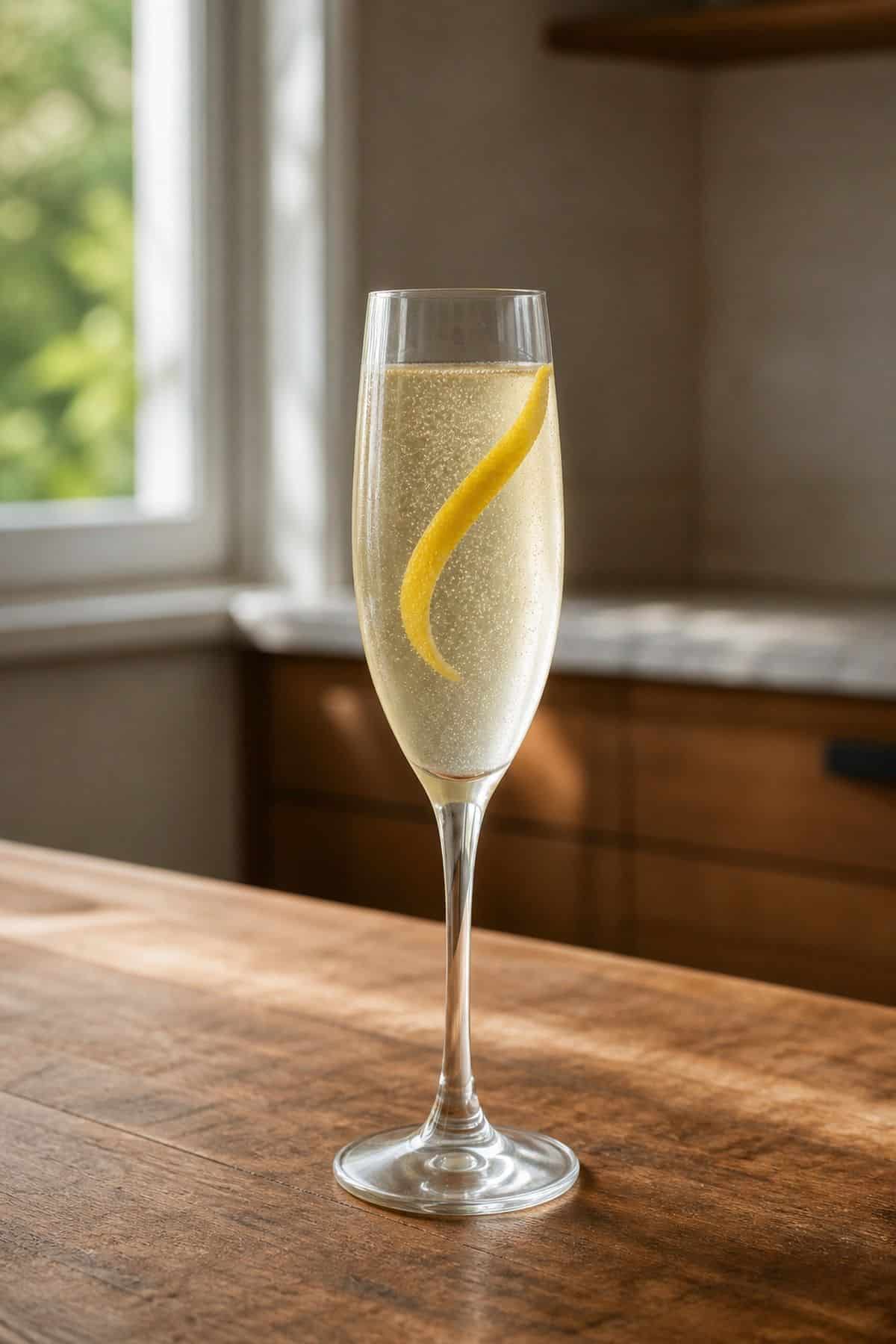
The most-cited origin story places the French 75 at Harry’s New York Bar in Paris between 1915 and 1925. Harry MacElhone, the Scottish-born bartender who ran the bar through the 1920s, is the man most accounts credit with the gin-lemon-syrup-Champagne build. The drink was apparently named after the Canon de 75 modele 1897, the French Army’s 75mm field gun that fired fifteen rounds a minute and saw heavy use through the First World War. Soldiers and bartenders both seemed to agree the cocktail kicked about as hard as the artillery.
The spec was codified in 1930 when Harry Craddock published The Savoy Cocktail Book in London, listing the four-ingredient gin version that became the canonical recipe most bartenders still pour today. There is a contested earlier attribution in New Orleans, where the Sazerac Bar served a cognac-based French 75 that some cocktail historians argue predates the Paris version. The cognac variant is still poured at Arnaud’s French 75 Bar in the French Quarter and is sometimes called the French 76 or French 125 depending on who is making it.
The gin version won the broader fight. By the post-Prohibition years it was the de facto celebration cocktail in American hotel bars, on cruise-ship menus, and at wedding receptions. The reason is partly practical: gin, lemon, simple syrup, and Champagne are pantry-stable ingredients in any working bar, and the cocktail scales cleanly to a pitcher. Pour it once and you understand why it stuck.
A Few Notes on the Ingredients
The gin question is the first one most people ask. London Dry is the canonical pick because the juniper-forward profile cuts cleanly against the Champagne acidity. Tanqueray, Beefeater, and Bombay Sapphire all work; Tanqueray is the most-used in the Savoy-tradition bars I have seen. A New Orleans-style French 75 uses cognac instead of gin, which produces a softer, more honeyed drink. Both are correct; they are just different cocktails wearing the same name.
The Champagne is the second variable people overthink. Brut is non-negotiable; extra-dry and demi-sec push the cocktail into cloying territory because the simple syrup is already doing the sweetening work. Veuve Clicquot Yellow Label is the standard reference for a reason, but a $40 bottle of brut Champagne is overkill if you are mixing it with gin and lemon. A solid brut Cava (Segura Viudas, Freixenet) or brut Crémant from the Loire pours just as well and most blind drinkers will not notice the swap. Prosecco works in a pinch but the fruitier profile shifts the cocktail away from the Savoy spec.
Fresh lemon juice is the third non-negotiable. Bottled lemon juice is oxidized and bitter and will flatten the drink. Roll the lemon hard against the counter before halving, juice it directly into the shaker, and discard the seeds. A 1:1 simple syrup (equal weights sugar and water, dissolved over low heat and cooled) is the standard sweetener. Keep a bottle in the fridge for two weeks. The half-ounce ratio gives a balanced sour profile against the lemon; cut it to a quarter ounce if you prefer a drier cocktail.
Recipe: French 75
Prep time: 2 minutes | Shake time: 15 seconds | Total time: 3 minutes | Serves: 1
Ingredients
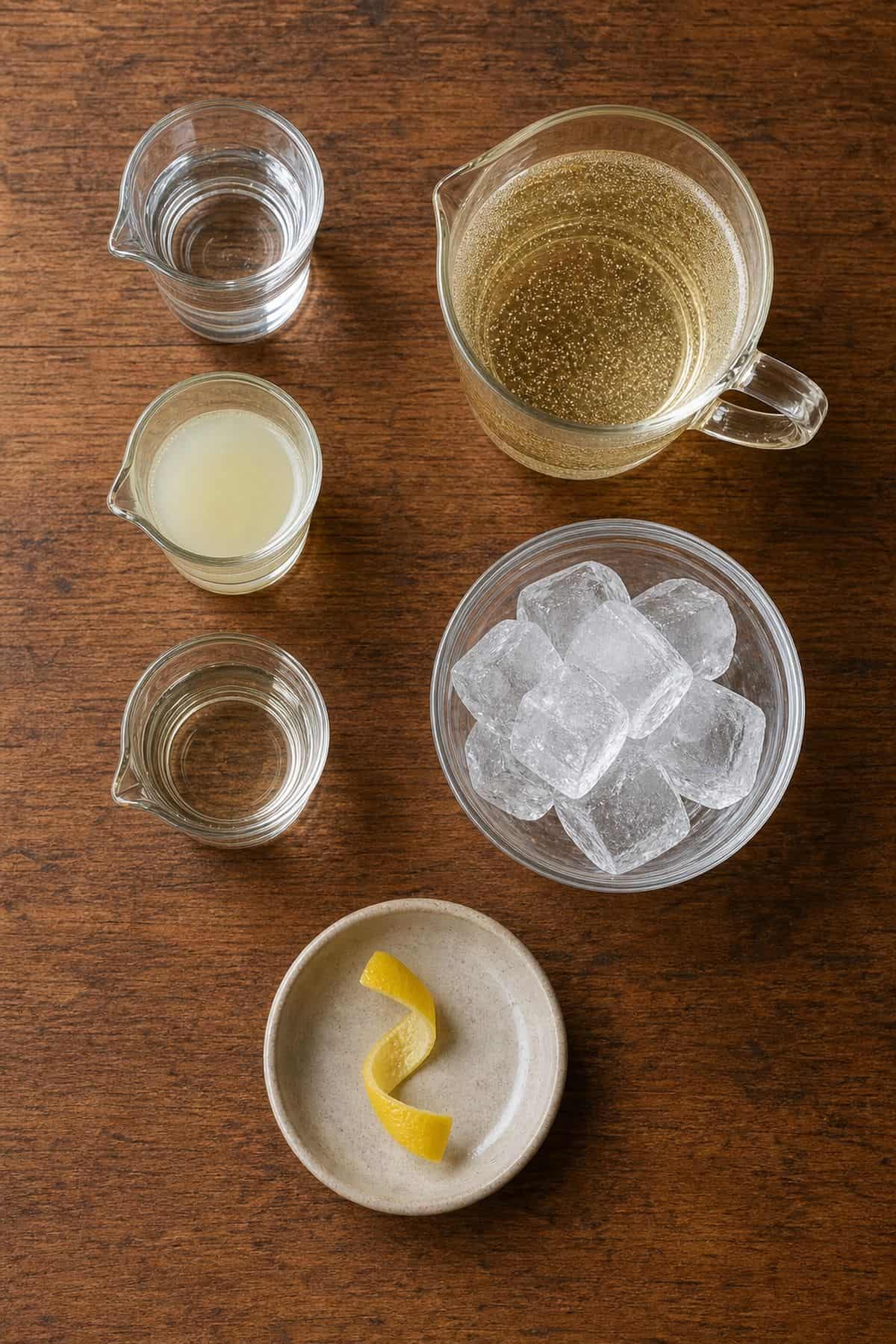
- 30 ml (1 oz) London Dry gin
- 15 ml (1/2 oz) fresh lemon juice
- 15 ml (1/2 oz) simple syrup (1:1 sugar and water)
- 90 ml (3 oz) brut Champagne, well chilled
- 1 lemon twist, for garnish
- Ice, for shaking
Instructions
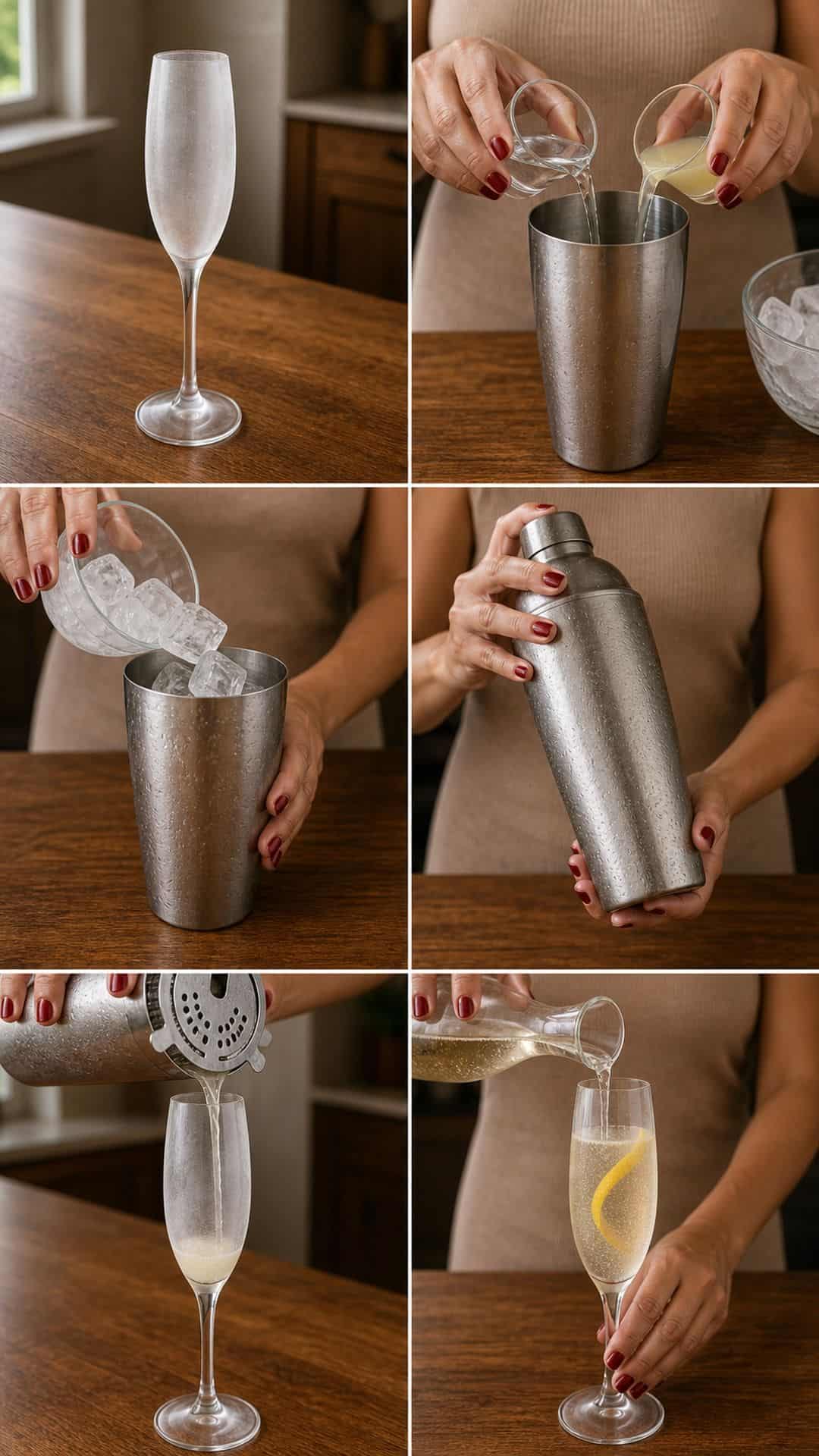
- Chill a Champagne flute in the freezer for at least 15 minutes before pouring. A cold glass keeps the bubbles longer once the Champagne hits.
- Add 30 ml (1 oz) London Dry gin, 15 ml (1/2 oz) fresh lemon juice, and 15 ml (1/2 oz) simple syrup to a cocktail shaker. Fill the shaker two-thirds full with ice.
- Seal the shaker and shake hard for about 15 seconds. You want the tin to frost over and the mix to be ice-cold. Hard shaking is the difference between a bright, aerated cocktail and a flat one.
- Strain the shaken mixture into the chilled flute using a Hawthorne strainer. Pour slowly down the side of the glass to limit foaming.
- Top with 90 ml (3 oz) cold brut Champagne. Tilt the glass and pour gently to hold the carbonation. Do not stir; the bubbles will lift the cocktail on their own.
- Express a lemon twist over the surface by pinching the peel skin-side down to release the citrus oils. Drop the twist into the glass and serve immediately.
Notes
The Champagne must be cold. Warm Champagne foams aggressively, dilutes too fast, and reads as flat within a minute. Keep the bottle in the fridge for at least four hours before pouring, or ice it for thirty minutes if you are working fast.
Use a stemmed flute or a coupe; never a rocks glass. The cocktail is meant to be sipped at the temperature it leaves the shaker, and a stem keeps your hand off the bowl. A coupe gives the wider surface area of the Savoy-era look; a flute holds the carbonation longer.
Do not skip the lemon-twist expression. The oils from a freshly squeezed peel are most of what your nose picks up on the first sip, and a twist is the small move that separates a home pour from a hotel-bar pour.
Tips and Variations
The New Orleans Cognac Version
Sub the gin for 30 ml (1 oz) VS or VSOP cognac and keep everything else the same. This is the Arnaud’s French 75 Bar pour and the one most New Orleans bartenders will argue is the original. The cocktail reads softer and more honeyed than the gin version, with a longer finish.
Pierre Ferrand 1840 or Hennessy VS both work. Save the older cognacs for sipping; a young brandy holds up better against the Champagne and lemon.
Blood-Orange French 75 for Halloween Season
Swap the lemon juice for 15 ml (1/2 oz) fresh blood-orange juice plus a small squeeze of lemon for acidity, and use a vanilla simple syrup instead of plain. The color shifts to a deep ruby and the flavor reads spiced and autumnal. This is the version covered in the Halloween cocktail roundup if you want the full seasonal context.
Garnish with a thin slice of blood orange on the rim. The drink is striking on a tray and the spec scales easily to a pitcher for a party.
A Raspberry French 75 for Summer
Muddle three fresh raspberries in the shaker before adding the gin, lemon, and syrup. Shake and double-strain through a fine mesh sieve to catch the seeds. The cocktail picks up a pale pink color and a soft berry note that pairs well with brunch food.
Frozen raspberries work if fresh are out of season; thaw them first so the cocktail does not over-chill in the shaker.
Swapping Champagne for Sparkling Rose or Cava
A brut sparkling rose pushes the cocktail slightly drier and gives it a pale pink tone that reads as wedding-appropriate. Brut Cava (Spanish) and Crémant (French, non-Champagne region) both pour well at a third of the Champagne price.
Stay away from Asti or any sweet sparkling wine. The simple syrup is already sweetening the cocktail and a sweet sparkler pushes it past the line.
Batching for a Crowd (Serves 8)
For a pitcher version, combine 240 ml (8 oz) London Dry gin, 120 ml (4 oz) fresh lemon juice, and 120 ml (4 oz) simple syrup in a pitcher. Stir, cover, and refrigerate up to four hours ahead. To serve, pour 60 ml (2 oz) of the chilled gin mix into each flute and top with 90 ml (3 oz) cold brut Champagne. Garnish each glass with a lemon twist.
Do not mix the Champagne into the pitcher itself; it will go flat in under an hour. Build each glass to order at the bar cart and keep the bottle in an ice bucket nearby.
What to Serve It With
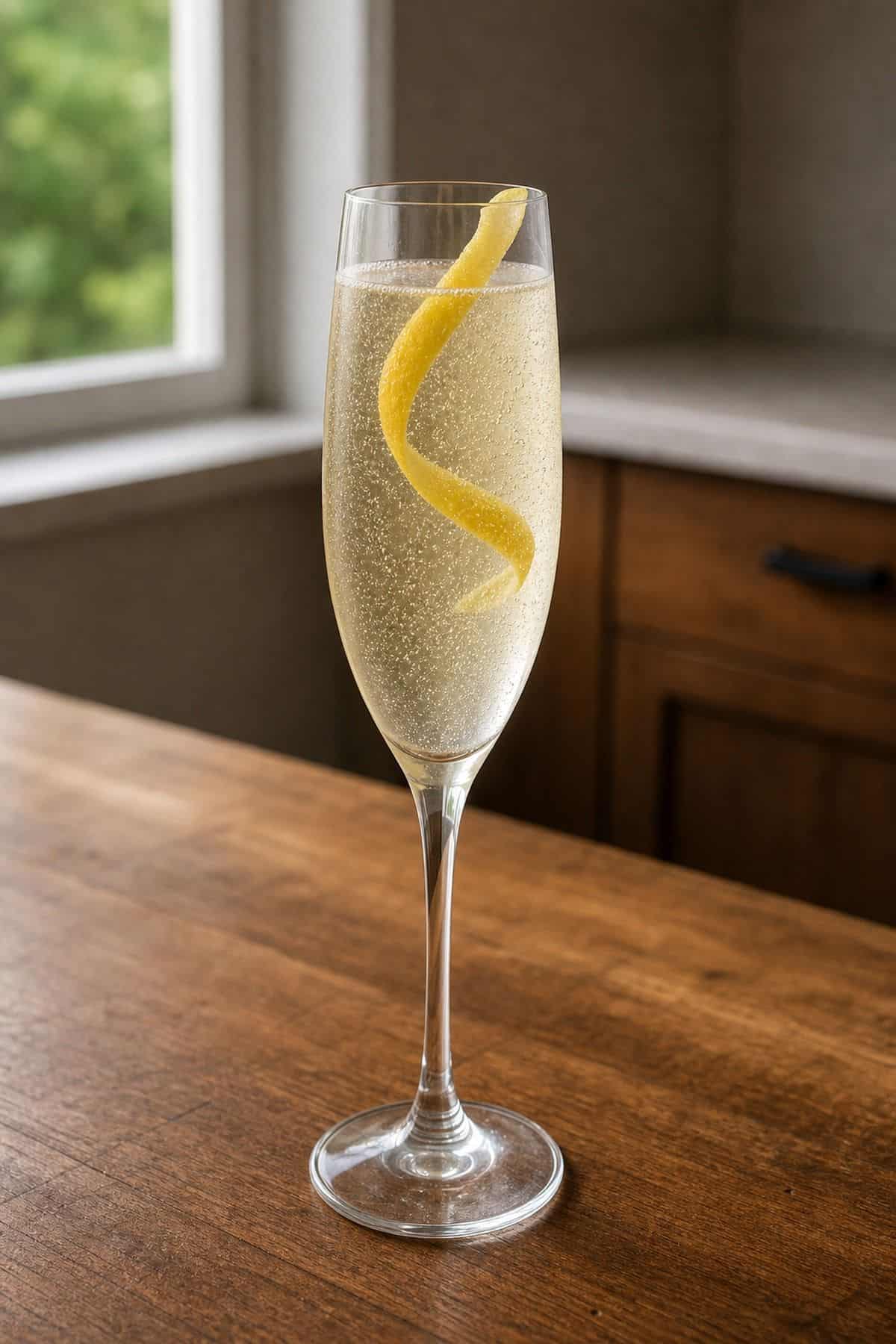
The French 75 is one of the most flexible food cocktails out there. It cuts through rich brunch food (eggs Benedict, quiche, smoked salmon bagels) and it sits cleanly alongside seafood, especially raw oysters with a mignonette. The acidity in the lemon and the dry Champagne play the same role a glass of Muscadet or Sancerre would.
It is also the de facto wedding-toast cocktail for a reason. Lighter and more interesting than a flute of straight Champagne, but still celebratory. Pour at receptions, anniversary dinners, New Year’s Eve, or any kitchen counter on a Saturday afternoon when somebody just got good news.
Frequently Asked Questions
Why is it called a French 75?
The cocktail was named after the Canon de 75 modele 1897, the French Army’s 75mm field gun used heavily through the First World War. The drink supposedly hits with the same force as the artillery. Harry MacElhone is most often credited with popularizing the name at Harry’s New York Bar in Paris in the 1920s.
Is the French 75 made with gin or cognac?
Both are historically valid. The Savoy Cocktail Book (1930) codified the gin version, which is the more common pour today. The cognac version was poured at the Sazerac Bar in New Orleans around the same period and is still served at Arnaud’s French 75 Bar. The cognac build is sometimes called a French 76 or French 125.
What kind of Champagne is best for a French 75?
Any brut Champagne works. Veuve Clicquot Yellow Label is the most-cited reference, but a brut Cava or brut Crémant pours just as well at a third of the price. Avoid extra-dry, demi-sec, or any sweet sparkling wine; the simple syrup is already doing the sweetening.
Should I use a flute or a coupe?
Either is correct. Flutes hold the carbonation longer because the narrower opening limits surface area. Coupes give the wider Savoy-era look and a fuller aromatic experience. Pick the glass that fits the table.
Can I batch a French 75 for a party?
Yes. Pre-mix the gin, lemon, and simple syrup in a pitcher and refrigerate up to four hours ahead. Pour 60 ml (2 oz) into each flute and top with 90 ml (3 oz) cold brut Champagne to order. Do not add the Champagne to the pitcher; it goes flat within an hour.
Key Takeaways
- Shake 1 oz gin, 1/2 oz fresh lemon, and 1/2 oz simple syrup with ice; strain into a chilled flute; top with 3 oz cold brut Champagne.
- London Dry gin (Tanqueray, Beefeater, Bombay Sapphire) is the canonical pick; cognac is the New Orleans variant.
- Brut Champagne only; brut Cava or Crémant works as a budget swap.
- Fresh lemon juice is non-negotiable. Bottled lemon flattens the drink.
- For a crowd, batch the gin-lemon-syrup mix and top each glass with Champagne to order.
Final Thoughts
The French 75 is the rare cocktail that earns its reputation. Four pantry ingredients, two minutes of work, and a flute that reads as a moment regardless of what is going on around the table.
The seasonal riffs are where the recipe gets fun. The blood-orange version covered in the Halloween cocktail roundup uses the same Savoy-era spec with a fall color swap and a vanilla syrup, which is a small tweak that reads as a completely different drink on a party tray.
Make this for brunch, weddings, New Year’s, or any Saturday counter pour. Keep a bottle of brut Champagne in the fridge, a lemon in the bowl, and a jar of simple syrup on the shelf, and you are about thirty seconds from a cocktail that has been on hotel-bar menus for a hundred years.
French 75
A French 75 is a four-ingredient sparkling cocktail of London Dry gin, fresh lemon juice, simple syrup, and brut Champagne. Shake the gin, lemon, and syrup with ice, strain into a chilled flute, and top with cold Champagne. Garnish with a lemon twist.
Ingredients
- 30 ml (1 oz) London Dry gin
- 15 ml (1/2 oz) fresh lemon juice
- 15 ml (1/2 oz) simple syrup (1:1 sugar and water)
- 90 ml (3 oz) brut Champagne, well chilled
- 1 lemon twist, for garnish
- Ice, for shaking
Instructions
- Chill a Champagne flute in the freezer for at least 15 minutes before pouring. A cold glass keeps the bubbles longer once the Champagne hits.
- Add 30 ml (1 oz) London Dry gin, 15 ml (1/2 oz) fresh lemon juice, and 15 ml (1/2 oz) simple syrup to a cocktail shaker. Fill the shaker two-thirds full with ice.
- Seal the shaker and shake hard for about 15 seconds. You want the tin to frost over and the mix to be ice-cold. Hard shaking is the difference between a bright, aerated cocktail and a flat one.
- Strain the shaken mixture into the chilled flute using a Hawthorne strainer. Pour slowly down the side of the glass to limit foaming.
- Top with 90 ml (3 oz) cold brut Champagne. Tilt the glass and pour gently to hold the carbonation. Do not stir; the bubbles will lift the cocktail on their own.
- Express a lemon twist over the surface by pinching the peel skin-side down to release the citrus oils. Drop the twist into the glass and serve immediately.
Notes
The Champagne must be cold. Warm Champagne foams aggressively, dilutes too fast, and reads as flat within a minute. Keep the bottle in the fridge for at least four hours before pouring, or ice it for thirty minutes if you are working fast.
Use a stemmed flute or a coupe; never a rocks glass. The cocktail is meant to be sipped at the temperature it leaves the shaker, and a stem keeps your hand off the bowl. A coupe gives the wider surface area of the Savoy-era look; a flute holds the carbonation longer.
Last update on 2026-10-03 / Affiliate links / Images from Amazon Product Advertising API