
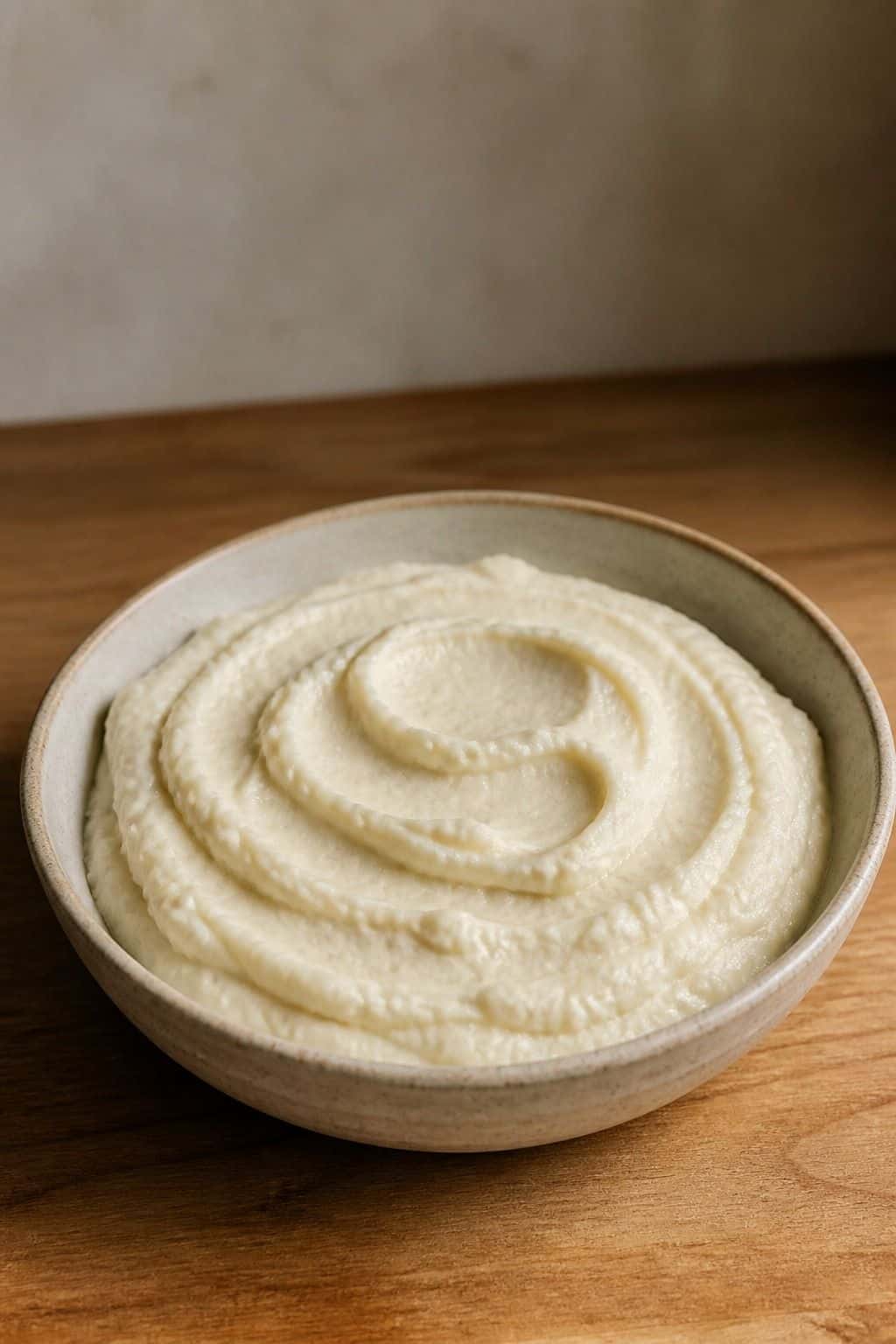
Celeriac puree is the silky, ivory-white French bistro side made by simmering peeled celery root in milk, water, and cream until tender, then blending it hot with cold butter and pushing it through a fine sieve. The result pours off a spoon in a slow ribbon. The technique takes about thirty minutes once the root is peeled, and the dairy simmer is what keeps the puree pale and flavorful.
The ugliest vegetable in the produce aisle makes the most elegant puree in French cooking. Celeriac looks like something a soil scientist would study, but underneath the gnarled skin sits a flesh that turns ribbon-silky once it meets butter and a fine sieve. The recipe below is the bistro version, with a milk-and-cream simmer that does most of the flavor work before the blender ever turns on.

Tools You’ll Want
A heavy chef’s knife for getting through the skin, a wide saucepan for the dairy simmer, a high-speed blender or food processor, and a fine-mesh sieve or drum sieve for the final pass. The tamis is the upgrade that takes a good puree to a restaurant-grade one, though a regular fine sieve and a flexible spatula get most of the way there.


Recommended Reads
- How to Cook Celeriac
- Celeriac Steak That Will Make You Forget About Meat
- Roast Celeriac With Caramelized Edges and a Creamy Center
- Celeriac Salad That Proves Raw Is Sometimes Better
- Cod in Parsley Sauce, the Classic Pairing Above It
How to Peel a Celeriac
This is where most beginners give up. A vegetable peeler cannot get through celeriac skin, and most of the surface is covered in soil pockets and rootlets that need to be carved off, not shaved. The correct move is to use a heavy chef’s knife as a peeler.
Set the celeriac on a stable cutting board. Slice off the top and the bottom so you have two flat surfaces. Stand the root upright on one of those flat sides and run the knife down the length of it, following the curve, removing the skin in long strips along with any pockets of soil hidden in the crevices. Trim until you have a creamy white surface with no brown showing anywhere. Discard the trim and dice the flesh into roughly 2 cm (3/4 inch) cubes. A medium celeriac yields about 600 g (1 1/3 lb) of trimmed flesh.
Why the Milk Simmer Matters
Boiling celeriac in plain water gives you waterlogged celeriac. The fix is simmering it in a mix of whole milk, water, and a small amount of cream. The dairy keeps the flesh from turning gray, draws out a subtle sweetness from the root, and adds richness from the inside out before any butter touches the puree. The liquid gets reserved at the end and used to thin the puree to the consistency you want.
The ratio is roughly equal parts whole milk and water with a splash of heavy cream, enough to barely cover the diced root in the pan. A pinch of salt, a couple of crushed garlic cloves, and a bay leaf go in at the start. Simmer gently for fifteen to twenty minutes until a knife slides into a cube without any resistance, then drain into a bowl and save the liquid.
Recipe: Celeriac Puree

Ingredients
- 1 large celeriac, about 1 kg (2.2 lb) whole. Yields roughly 600 g (1 1/3 lb) once trimmed. Look for one that feels heavy for its size with no soft spots.
- 480 ml (2 cups) whole milk. The simmer base. Skim milk does not work here; the fat is part of the flavor.
- 480 ml (2 cups) water. Keeps the milk from breaking and dilutes the dairy enough that the celeriac flavor shines through.
- 120 ml (1/2 cup) heavy cream, for the simmer and the finish.
- 2 cloves garlic, crushed; discarded before blending.
- 1 bay leaf, discarded with the garlic.
- 60 g (4 tablespoons) unsalted butter, cold and cubed. Emulsifies the puree into silk.
- Sea salt, to taste. Start with 1 teaspoon in the simmer, adjust at the end.
- White pepper, a pinch. Black pepper works but leaves specks.
Instructions
- Combine the diced celeriac, milk, water, cream, crushed garlic, bay leaf, and salt in a wide saucepan. Bring to a gentle simmer over medium heat, then reduce to low and cook uncovered for fifteen to twenty minutes, stirring occasionally. The celeriac is done when a knife slides through a cube with no resistance and the dairy has begun to thicken slightly.
- Drain the celeriac through a sieve set over a bowl, reserving the cooking liquid. Discard the garlic and bay leaf. Transfer the celeriac to a high-speed blender or food processor while still hot.
- Add the cold butter cubes and a small splash of the reserved cooking liquid, about 60 ml (1/4 cup) to start. Blend on high for thirty seconds, then add more cooking liquid a tablespoon at a time until the puree pours off the spoon in a slow ribbon. Too thick and it will plop, too thin and it will run. The consistency is right when a spoonful held above the bowl forms a falling ribbon that holds its shape for a second before merging.
- Taste and adjust salt. If you want restaurant-grade silk, push the blended puree through a fine-mesh sieve or tamis with a flexible spatula. This step removes any remaining fibers and leaves the puree completely smooth. Finish with a pinch of white pepper and serve immediately.
- Yield: about 4 servings as a side. Active time: 15 minutes peeling, 20 minutes simmering, 10 minutes blending and finishing.
Tips and Variations
For an Even Silkier Texture
Push the puree through a drum sieve (tamis) instead of a regular fine-mesh sieve. The flat surface lets you work a flexible spatula in long sweeping motions, which extracts the smoothest possible texture. This is the step that separates a home celeriac puree from a Gramercy Tavern celeriac puree.
Adding a Floral Note
Add a strip of lemon peel to the simmer alongside the bay leaf. The lemon does not turn the puree citrusy, but it brightens the celeriac’s natural earthiness and keeps the dish from feeling heavy under richer proteins.
Make Ahead and Reheat
The puree keeps for three days covered in the refrigerator. Reheat it in a saucepan over low heat with a splash of cream or the reserved cooking liquid, whisking until it loosens back to a pourable consistency. Do not reheat in the microwave; the texture turns grainy.
A Brown Butter Drizzle
Spoon the puree onto a warm plate, make a small well with the back of the spoon, and pour a tablespoon of brown butter into it just before serving. The nutty butter against the white puree is the move you see in any decent French bistro.
What to Serve It Under
Celeriac puree was made to sit under seared scallops, duck breast, pan-roasted lamb chops, or venison. The earthy sweetness of the root pulls richer proteins into balance, and the silk texture catches a sauce beautifully.
The British classic pairing is underneath a piece of fish in a creamy sauce, which is exactly what happens when you serve it under our cod in parsley sauce. For a vegetarian plate, spoon it under a thick wedge of seared celeriac steak with a brown butter drizzle and crispy capers. As a holiday side, it works opposite mashed potatoes, with the celeriac handling the lighter half of the plate.
Frequently Asked Questions
How do you peel celeriac?
Use a heavy chef’s knife, not a vegetable peeler. Slice off the top and bottom for two flat surfaces, stand the celeriac upright, and run the knife down the curved sides to remove the skin and any soil pockets. Trim until the surface is creamy white with no brown showing. Dice the flesh into 2 cm (3/4 inch) cubes for even cooking.
What does celeriac puree taste like?
Celeriac puree tastes like a refined cross between mashed potatoes and a celery stalk, with the starchy comfort of the former and the herbal brightness of the latter. The dairy simmer rounds off any bitterness and adds a subtle sweetness. Most people who try it call it more elegant than mashed potatoes and lighter than parsnip puree.
Why is my celeriac puree bitter?
Bitterness usually comes from celeriac that is old or from trim that was not deep enough. The skin and the layer just under it carry most of the off flavors, so trim past any brown or fibrous patches until the flesh looks clean and white. A second cause is simmering in plain water instead of a milk-water mix; the dairy is what tames the root’s sharper notes.
Can you make celeriac puree ahead of time?
Yes. The puree keeps for three days covered in the refrigerator and reheats well in a saucepan over low heat with a splash of cream or the reserved cooking liquid. Whisk steadily as it warms back to a pourable consistency. Avoid the microwave, which turns the texture grainy.
Is celeriac puree healthier than mashed potatoes?
Celeriac has about a third of the carbohydrates of potato by weight, with more fiber and a similar amount of potassium. The version above still uses butter and cream, so it is not a low-calorie side, but it is naturally gluten-free and reads as lighter on the plate. For a leaner version, swap the cream for additional milk and reduce the butter by half.
What can I use instead of celeriac in puree?
Parsnip puree is the closest analog and uses the same technique. Cauliflower works for a lower-carb version, though the flavor is gentler. A mix of celeriac and yukon gold potato (about 70/30) produces a hybrid puree that tastes refined but eats like comfort food, and it forgives a slightly rougher trim job on the celeriac.
Key Takeaways
- Peel celeriac with a chef’s knife, not a peeler; carve flat top and bottom, then run the knife down the curved sides.
- Simmer in a mix of whole milk, water, and a splash of cream to keep the puree white and pull sweetness from the root.
- Blend hot with cold butter and a small amount of the reserved cooking liquid; thin to a slow ribbon off the spoon.
- Push the blended puree through a tamis or fine-mesh sieve for restaurant-grade silk.
- Keeps three days refrigerated; reheat over low heat with a splash of cream, never in the microwave.
Final Thoughts
Celeriac puree is the side that quietly upgrades a plate. The peeling is awkward the first time, the simmer takes care of itself, and the sieve pass turns a good puree into something a guest will ask about. Once the technique is in your hands, you reach for it instead of mashed potatoes whenever there is a sauce on the plate worth catching.
Pair it with scallops on a Friday, with duck breast on a Saturday, or with a piece of cod in parsley sauce on a Tuesday when the weather turns. The recipe scales up cleanly for a holiday table, and the make-ahead resilience means you can clear the active cooking off the day-of timeline.
Celeriac Puree
Celeriac puree is the silky, ivory-white French bistro side made by simmering peeled celery root in milk, water, and cream until tender, then blending it hot with cold butter and pushing it through a fine sieve. The result pours off a spoon in a slow ribbon.
Ingredients
- 1 large celeriac, about 1 kg (2.2 lb) whole
- 480 ml (2 cups) whole milk
- 480 ml (2 cups) water
- 120 ml (1/2 cup) heavy cream, for the simmer and the finish
- 2 cloves garlic, crushed; discarded before blending
- 1 bay leaf, discarded with the garlic
- 60 g (4 tablespoons) unsalted butter, cold and cubed
- Sea salt, to taste
- White pepper, a pinch
Instructions
- Combine the diced celeriac, milk, water, cream, crushed garlic, bay leaf, and salt in a wide saucepan. Bring to a gentle simmer over medium heat, then reduce to low and cook uncovered for fifteen to twenty minutes, stirring occasionally.
- Drain the celeriac through a sieve set over a bowl, reserving the cooking liquid. Discard the garlic and bay leaf. Transfer the celeriac to a high-speed blender or food processor while still hot.
- Add the cold butter cubes and a small splash of the reserved cooking liquid, about 60 ml (1/4 cup) to start. Blend on high for thirty seconds, then add more cooking liquid a tablespoon at a time until the puree pours off the spoon in a slow ribbon.
- Taste and adjust salt. If you want restaurant-grade silk, push the blended puree through a fine-mesh sieve or tamis with a flexible spatula. This step removes any remaining fibers and leaves the puree completely smooth.
- Yield: about 4 servings as a side. Active time: 15 minutes peeling, 20 minutes simmering, 10 minutes blending and finishing.
Last update on 2026-08-08 / Affiliate links / Images from Amazon Product Advertising API