

Rinse 300 g (1½ cups) of jasmine rice until the water runs nearly clear, toss it in a tablespoon of coconut oil, then cook it on the white rice setting with a scant cup of full-fat canned coconut milk, a scant cup of water and a little salt. Leave the lid shut for 10 minutes after the cooker clicks off. You get fluffy, fragrant coconut rice for 4 to 6 people in about 35 minutes.
Gummy coconut rice is almost never the rice cooker’s fault.
It’s usually one of three things. The rice wasn’t rinsed, so loose surface starch glued the grains together. The coconut milk was the light kind or the carton from the fridge aisle, so the rice came out watery and smelled of nothing. Or someone opened the lid the second the machine clicked, and the top layer never finished steaming.
This coconut rice in a rice cooker method deals with all three, and each fix takes under a minute. You rinse, you coat the grains in coconut oil, you use the right can and the right amount of liquid, and then you leave it alone.


Why does coconut rice get gummy or mushy?
Starch and too much liquid, mostly. Jasmine rice comes out of the bag dusted with loose starch from milling and handling. Cook it straight and that starch thickens the cooking liquid into glue. Coconut milk makes it worse, because the fat and proteins already give the liquid body.
So rinse properly. Put the rice in the inner pot, cover it with cold water, swirl with your fingers for about 10 seconds, and pour it off through a fine sieve. Do that 3 to 4 times. The water doesn’t need to run perfectly clear, just stop looking milky.
Then toss the drained rice in a tablespoon of melted coconut oil for a minute. A thin coat of fat on each grain helps keep them separate, and the warm oil brings out a faint toasty smell. Use the sauté or warm setting if your cooker has one, or a skillet over medium heat. Don’t let the grains brown.
The last mistake is impatience. A rice cooker switches off when the free liquid at the bottom is gone, and the grains on top are still a little damp at that point. Ten minutes with the lid shut lets the steam spread evenly through the pot.
Which coconut milk and rice should you buy?
Full-fat, unsweetened, canned coconut milk. Check the label: coconut extract and water, and not much else. Thai brands like Aroy-D and Chaokoh are reliable and easy to find in Asian shops. Shake the can hard before opening, because the cream separates from the water as it sits.
Skip light coconut milk, which is thinned with water and won’t coat the rice. Skip coconut cream too, since it’s so rich it settles into a heavy layer at the bottom. And the sweetened coconut drink sold next to the oat milk doesn’t belong anywhere near this pot.
For the rice, use Thai jasmine. Bags of Thai Hom Mali carry a certification mark, and that’s the floral, slightly sticky jasmine you want. Generic long-grain rice cooks fine in coconut milk but tastes flat. Basmati works if it’s what you have, with a nuttier, drier result, and there’s a separate guide to basmati rice in a rice cooker if you want it on its own.
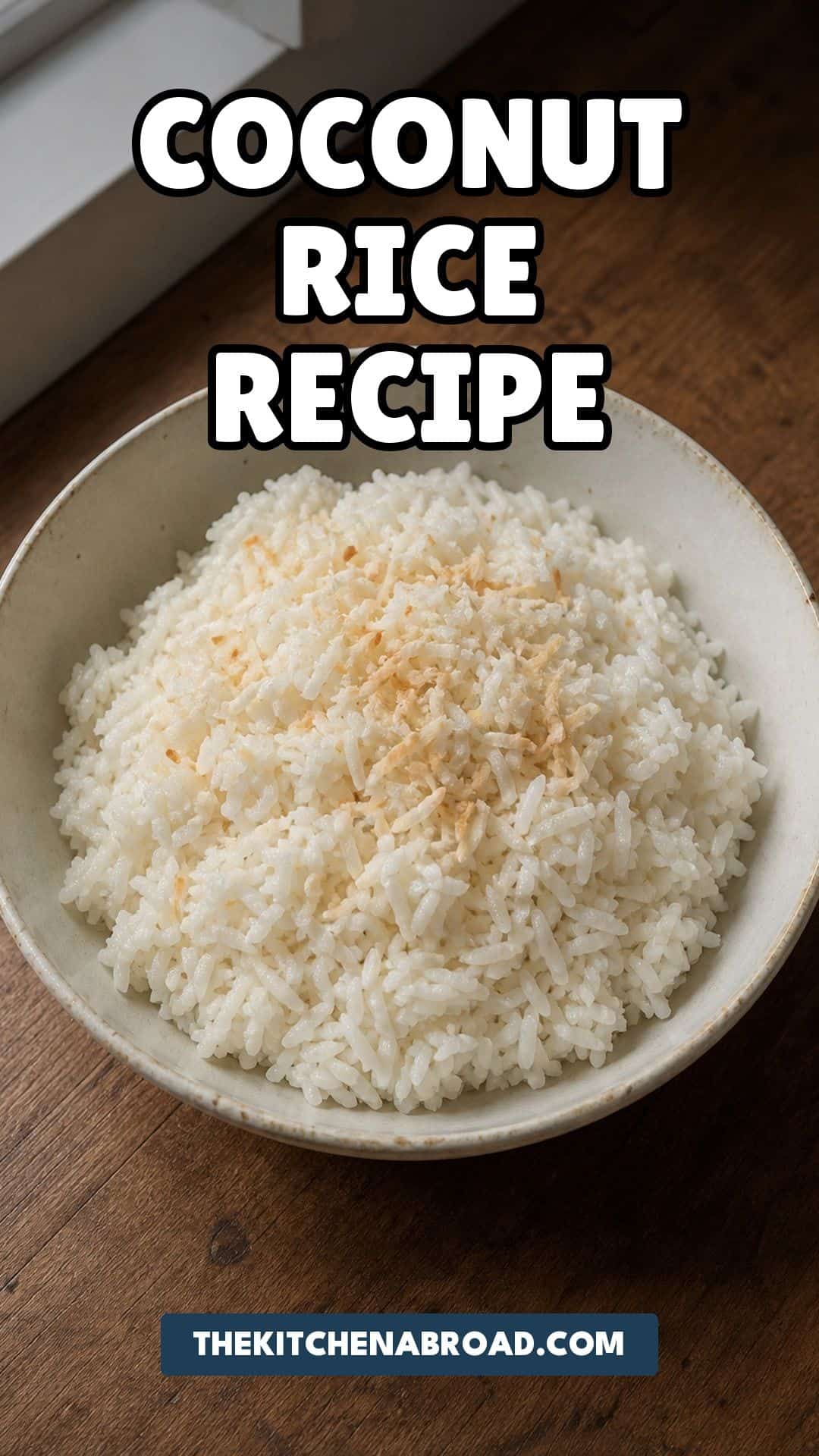
How much liquid does coconut rice need in a rice cooker?
About 1¼ parts liquid to 1 part rice, half of it coconut milk and half water. For this recipe that’s 300 g (1½ cups) of rice with a scant cup of each.
Stovetop recipes usually ask for 1½ parts liquid, because steam escapes from a pot on the hob. A rice cooker keeps that steam in, so it needs less. Pour in the stovetop amount and you get soft, wet rice.
Why not all coconut milk? It catches. The milk solids sink and scorch on the hot base of the pot before the rice is done, and the texture goes heavy. Half and half gives you plenty of coconut flavour with none of that.
Coconut rice recipe (rice cooker)
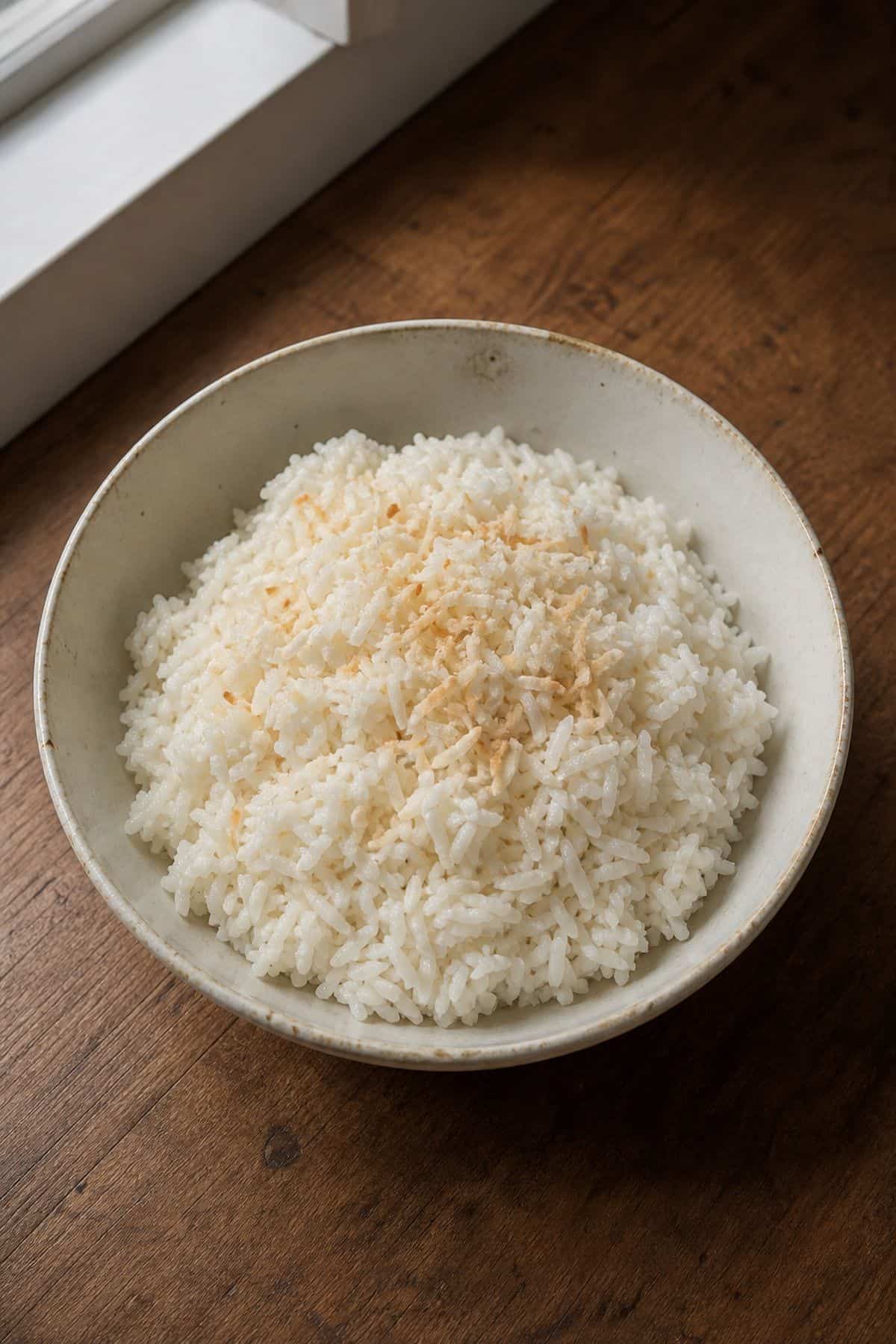
Prep time: 5 minutes | Cook time: 20 minutes | Rest time: 10 minutes | Total time: 35 minutes | Servings: 4 to 6 as a side
Ingredients
- 300 g (1½ cups) Thai jasmine rice (Hom Mali certified preferred)
- 1 tbsp (14 g) coconut oil, melted
- 235 ml (1 cup, scant) full-fat unsweetened canned coconut milk (Aroy-D or Chaokoh)
- 235 ml (1 cup, scant) water
- 1 scant tsp fine sea salt
Optional:
- ½ tsp granulated sugar
- 1 pandan leaf or 1 kaffir lime leaf, tied in a knot
- ¼ cup toasted unsweetened shredded coconut for garnish
Instructions
- Measure the rice into the inner pot. Cover with cold water, swirl with your fingers for 10 seconds and drain through a fine sieve. Repeat 3 to 4 times, until the water is no longer milky. Drain well.
- Put the pot back in the cooker and switch on the sauté or warm setting. No sauté function? Do the next step in a skillet over medium heat and tip the rice back into the pot afterwards.
- Add the coconut oil and stir for 60 seconds, until every grain is coated, looks slightly translucent and smells faintly toasty. Don’t let it brown.
- Add the coconut milk, water, salt and the sugar if using. Stir once. Tuck in the knotted pandan or lime leaf if using.
- Close the lid and start the white rice setting, or the jasmine setting if your cooker has one.
- When the cooker clicks off, usually after about 20 minutes, leave the lid closed for 10 minutes.
- Open the lid, take out the leaf, and fluff the rice with a paddle by lifting from the bottom and folding it over.
- Serve straight away, scattered with toasted coconut if you like.
Notes
If the rice still looks gummy, you probably under-rinsed or added extra liquid. Cut back to the exact amounts above next time and give it the full four rinses.
How do you flavour coconut rice?
Leaves and stalks go in before cooking and come out before serving. A knotted pandan leaf gives a sweet, grassy smell. A kaffir lime leaf or a 10 cm (4 inch) piece of lemongrass, bashed with the back of a knife, pushes it toward citrus and suits Thai curries.
For a crunchy topping, toast ¼ cup unsweetened shredded coconut in a dry pan over medium-low heat for about 3 minutes, stirring the whole time, until golden. It burns fast once it colours, so tip it onto a plate straight away.
The half teaspoon of sugar is optional. A lot of Southeast Asian coconut rice has a gentle sweetness, and it’s lovely with salty, spicy food. For a neutral side, leave it out.
Coconut rice wants food with heat and acid next to it. Green, red or massaman curry, grilled prawns or fish, satay, or a stir-fry like this Thai chicken with cashew nuts. A spoon of homemade sambal oelek on the side makes a bowl of plain coconut rice feel like dinner.
How long does coconut rice keep?
Three days in the fridge, in a sealed container. Cool it quickly and get it into the fridge within two hours of cooking, which is in line with the USDA advice on leftovers. Cooked rice left out on the counter overnight goes in the bin.
To reheat, add a splash of water or coconut milk and warm it covered over low heat, or microwave it with a damp paper towel over the bowl. It comes back soft and fragrant.
Day-old coconut rice also makes good fried rice. Break up the cold clumps with your hands first and give it a minute longer in the pan than plain rice, since the coconut fat makes it a little stickier. The method in this brown rice fried rice works with it.
Coconut rice questions people ask
Can I use regular long-grain rice instead of jasmine?
Yes, regular long-grain rice works, but it lacks the floral smell that makes coconut rice taste Thai. Basmati is the better substitute; avoid sticky rice and short-grain rice for this recipe.
What is the right ratio of coconut milk to water for coconut rice?
Use half coconut milk and half water, at about 1¼ parts total liquid to 1 part rice in a rice cooker. For 1½ cups of rice, that is a scant cup of coconut milk and a scant cup of water.
Can I cook coconut rice on the stovetop?
Yes, use the same ingredients with about 1½ parts liquid to 1 part rice. Bring it to a boil, cover tightly, simmer on low for 18 minutes, then rest it covered off the heat for 10 minutes.
Why is my coconut rice mushy?
Mushy coconut rice usually means too much liquid, rice that was not rinsed enough, or stirring and lifting the lid during cooking. Stick to the 1¼ ratio, rinse 3 to 4 times and leave the lid shut.
Can I make coconut rice ahead of time?
Yes, cooked coconut rice keeps for 3 days in a sealed container in the fridge. Reheat it covered over low heat with a splash of water or coconut milk.
Key takeaways
- Rinse jasmine rice 3 to 4 times until the water stops looking milky.
- Coat the drained grains in coconut oil for a minute before adding liquid.
- Use full-fat unsweetened canned coconut milk, half and half with water.
- In a rice cooker, use about 1¼ parts liquid to 1 part rice.
- Keep the lid shut for 10 minutes after the cooker clicks off.
Make it the base for a weeknight curry night
Cook a full batch on Sunday and you have rice for three dinners. Start with the cashew chicken above for the first night, then turn what’s left into fried rice by Wednesday.
Coconut Rice Recipe (In a Rice Cooker)
Coconut rice in a rice cooker is fragrant Thai jasmine rice rinsed clean, toasted briefly in coconut oil, then cooked in a 1:1.25 mix of full-fat unsweetened coconut milk and water, finished with a 10-minute off-heat steam rest.
Ingredients
- 300 g (1½ cups) Thai jasmine rice (Hom Mali certified preferred)
- 1 tbsp (14 g) coconut oil, melted
- 235 ml (1 cup, scant) full-fat unsweetened canned coconut milk (Aroy-D or Chaokoh)
- 235 ml (1 cup, scant) water
- 1 scant tsp fine sea salt
- ½ tsp granulated sugar
- 1 pandan leaf or 1 kaffir lime leaf, tied in a knot
- ¼ cup toasted unsweetened shredded coconut for garnish
Instructions
- Measure the rice into the inner pot of your rice cooker. Fill with cold water, swirl with your fingers for 10 seconds, and drain through a fine mesh strainer. Repeat 3 to 4 times until the rinse water runs mostly clear. Drain very well.
- Return the rinsed rice to the inner pot. Set the inner pot on the rice cooker base. Press the "warm" or "sauté" setting if your cooker has one (this is for the toast step).
- Add the coconut oil to the rice and stir for 60 seconds to coat each grain. The rice should look slightly translucent and smell faintly toasty. Do not let it brown.
- Add the coconut milk, water, salt, and optional sugar. Stir once to combine. Tuck in the pandan or kaffir lime leaf if using.
- Close the rice cooker lid. Press the white rice setting (or jasmine setting if your cooker has one).
- When the cooker clicks off (about 20 minutes for most machines), do not open the lid. Let the rice rest covered for exactly 10 minutes. The residual steam finishes the top layer of rice.
- Open the lid. Remove the pandan or kaffir lime leaf if used. Fluff the rice gently with a bamboo rice paddle, lifting from the bottom and folding the rice to redistribute the steam-cooked grains with the bottom layer.
- Serve immediately, sprinkled with toasted shredded coconut if using.
Notes
The rinse step is non-negotiable. Three to four rinses minimum. Skipping this step is the single biggest reason coconut rice turns gummy and stuck-together. The water does not need to be perfectly clear, just no longer milky white.
Coconut milk type matters. Full-fat unsweetened canned coconut milk only. Light coconut milk, coconut cream, and coconut beverage from the dairy aisle are all wrong products for this dish. The label should list coconut extract and water as the only ingredients.
Last update on 2026-10-03 / Affiliate links / Images from Amazon Product Advertising API
