
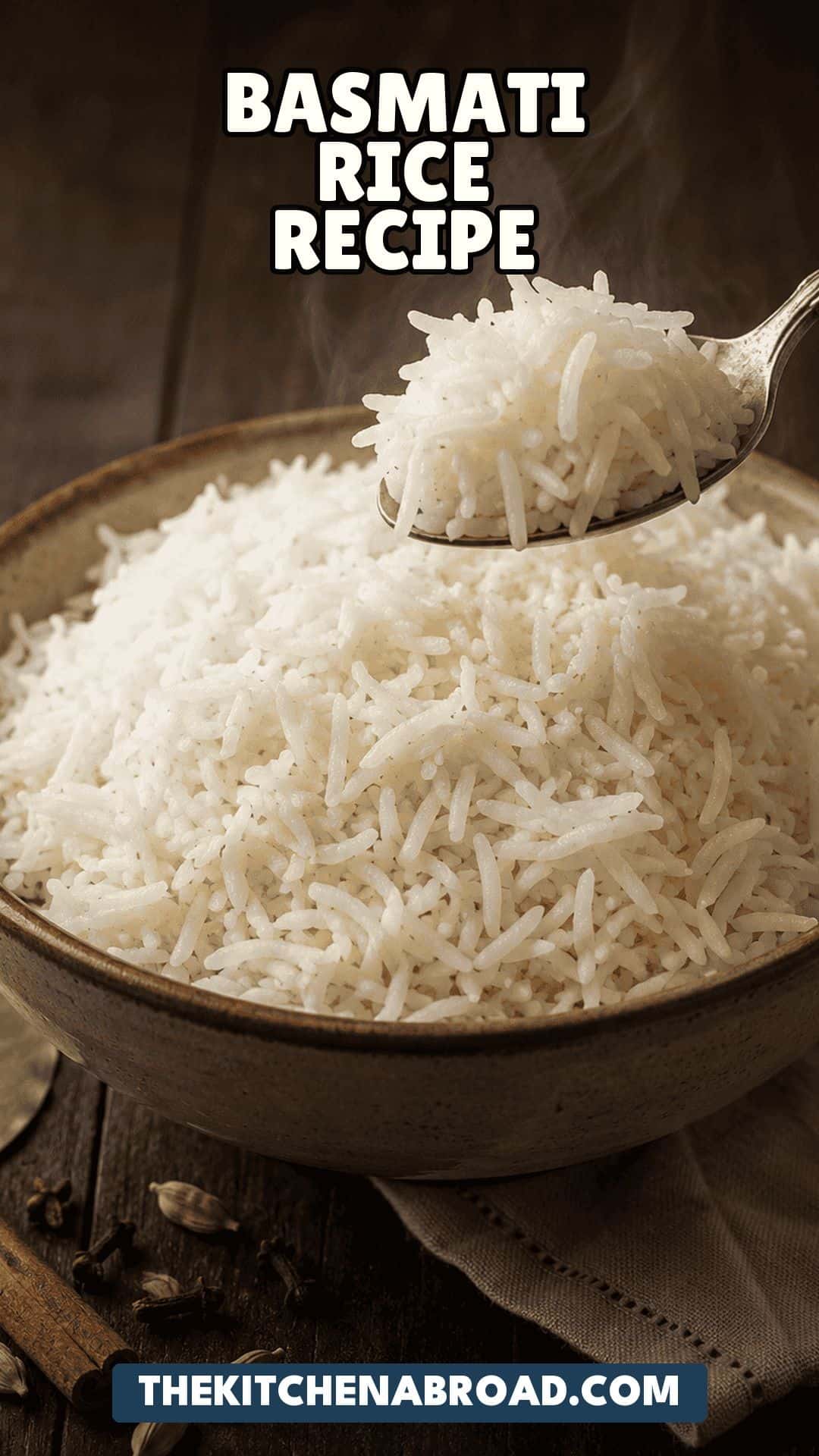
Basmati rice in a rice cooker is long-grain Indian basmati rinsed clean of surface starch, soaked for 20 minutes, drained, then cooked at a 1:1.25 rice-to-water ratio with a little salt and a teaspoon of neutral oil. Total time about 35 minutes from rinse to fluff, serves 4 to 6 as a side.
People who think they do not like basmati have almost certainly never had it cooked properly. The fix is short. Rinse five times. Soak twenty minutes. Then a 1:1.25 water ratio in the rice cooker with a teaspoon of ghee, and the grains come out long, separated, and faintly perfumed in the way Tilda meant when they put “aged” on the bag.
What You’ll Need to Make This Recipe
A reliable rice cooker is the foundation, and Zojirushi remains the gold standard for consistent results. The basmati itself matters more than the cooker, and authentic Indian basmati (Tilda, Royal, India Gate, Daawat) makes a real difference over generic store-brand long-grain labeled as basmati. A fine mesh strainer is the rinsing tool that does the job properly. A large mixing bowl gives the rice room to soak without spillage. A wooden or bamboo rice paddle for fluffing without breaking the cooked grains. These five pieces of equipment cover every step from bag to plate.


Recommended Reads
- Coconut Rice Recipe (In a Rice Cooker)
- Brown Rice Fried Rice Recipe (Healthy, 15 Minutes)
- Greek Pasta Salad Recipe
- Gochujang Pasta Recipe (Creamy, Spicy, 20 Minutes)
- Nakkikastike Recipe: Finnish Hot Dog Sauce in Creamy Mustard Gravy
Why This Basmati Method Works
The rinse step is doing chemistry, not just cleaning. Basmati rice arrives from the mill coated in a layer of loose surface starch (mostly amylopectin) that breaks down during cooking into a gluey paste. Four or five rinses in cold water removes most of that surface coating, and what you are left with is a grain that cooks into separated kernels instead of a single sticky block. Stop rinsing only when the water comes off the rice looking faintly milky instead of opaque white. One or two rinses is not enough. The bag instructions that say “rinse once” are wrong for basmati specifically, even if they work for everyday long-grain.
The 20-minute soak is what unlocks the elongation. Soaking pre-hydrates the inner starches of the grain so that when the rice hits boiling water inside the rice cooker, the grain swells outward (lengthwise) instead of bursting apart. Skip the soak and the grain hydrates unevenly during cooking, which causes the outside to overcook while the inside stays firm. Twenty minutes is the sweet spot. Less than fifteen minutes is too short. More than thirty minutes makes the grain fragile and prone to breaking during the cook.
The 1:1.25 ratio is the rice cooker specific. Stovetop basmati typically calls for 1:1.5 (more water because steam escapes during simmering). Rice cookers seal moisture in, so they need less. A 1:1.25 ratio gives you firmer separated grains, which is what basmati should be. A 1:1.5 ratio in a rice cooker gives you a softer, slightly mushy result that some people prefer but loses the texture this grain is bred to deliver. Stick with 1:1.25 unless you have a clear preference for softer rice.
Basmati Rice Ingredients, Briefly
Indian basmati rice. Tilda, Royal, India Gate, or Daawat are all reliable brands sold in the international or grain aisle of most grocery stores. Look for the words “aged basmati” on the bag if available, since aging the grain for one to two years before bagging actually improves cooking performance (drier grain, less breakage). Pakistani basmati (Tilda Pakistani lines, Lal Qilla) is also excellent and slightly more aromatic.
Cold tap water for rinsing and soaking. Filtered water if your tap water is heavily chlorinated. The rinse water and soak water do not need to be cold from the fridge, just from the tap.
Filtered water for the cook. The actual cooking water (the 1.25 part of the ratio) is where filtered water matters most. The rice ends up tasting like the water it cooked in, so off-tasting tap water will translate directly into the finished rice.
Fine sea salt. A half teaspoon for the cook. The salt seasons the rice from the inside, which is the only way to season rice properly. Adding salt after the cook never gets past the grain surface.
Neutral oil or ghee. One teaspoon of grapeseed, sunflower, or vegetable oil, or one teaspoon of melted ghee, added to the cook water. The oil coats the grains during cooking and helps prevent them from sticking to each other. Ghee adds a faint buttery aroma that pairs well with Indian and Middle Eastern mains.
Optional whole spices. A 2-inch cinnamon stick, 3 cardamom pods (lightly crushed), 2 cloves, or a bay leaf can be added to the cook water for an aromatic rice that pairs with biryani-adjacent dishes. Remove the whole spices before serving. Skip the spices entirely for a neutral rice that goes with any cuisine.
Tips and Variations
The rinse-to-clear discipline. Pour the rice into a fine mesh strainer set over a bowl, run cold water through it, and swish with your hand for 10 seconds. Lift the strainer, dump the cloudy water, return to the bowl, and repeat. Most home cooks stop at 2 rinses. Basmati wants 4 to 5. The water never gets perfectly clear, but it does shift from opaque white to faintly milky, and that is the visual cue to stop.
The 20-minute soak makes the grain longer. After rinsing, transfer the rice to a large mixing bowl and cover with fresh cold water by an inch. Set a timer for 20 minutes. The grains will visibly plump and lengthen by the end. Drain through the same fine mesh strainer and let the rice sit for 2 minutes to release excess water before adding to the cooker.
Aromatic biryani-style basmati. Add a 2-inch cinnamon stick, 3 lightly crushed green cardamom pods, 2 whole cloves, and a bay leaf to the cook water. The rice picks up a warm-spice profile that pairs beautifully with curries, kebabs, or chickpea stews. Remove the whole spices before serving.
Saffron-tinted variation. Bloom a pinch of saffron threads in 2 tablespoons of warm water for 10 minutes. Stir the saffron water into the cooked rice during the fluff step. The rice picks up a golden-yellow color and a delicate floral aroma, perfect for Persian or Indian-inspired meals.
What to serve with basmati rice. Any curry (Indian, Thai, or Caribbean), grilled chicken or lamb, kebabs, dal (lentil stew), chickpea curry, biryani-style layered dishes, or as a base for grain bowls with roasted vegetables and tahini. Basmati is the right rice for almost any saucy main, since the separated grains absorb sauce without going mushy.
Storage and reheat. Basmati keeps for 3 to 4 days refrigerated in an airtight container. Reheat with a tablespoon of water sprinkled over the rice in a covered pan over low heat, or microwave with a damp paper towel over the bowl for 90 seconds. Day-old basmati also fries up beautifully into rice pilaf or fried rice.
Recipe: Basmati Rice (In a Rice Cooker)
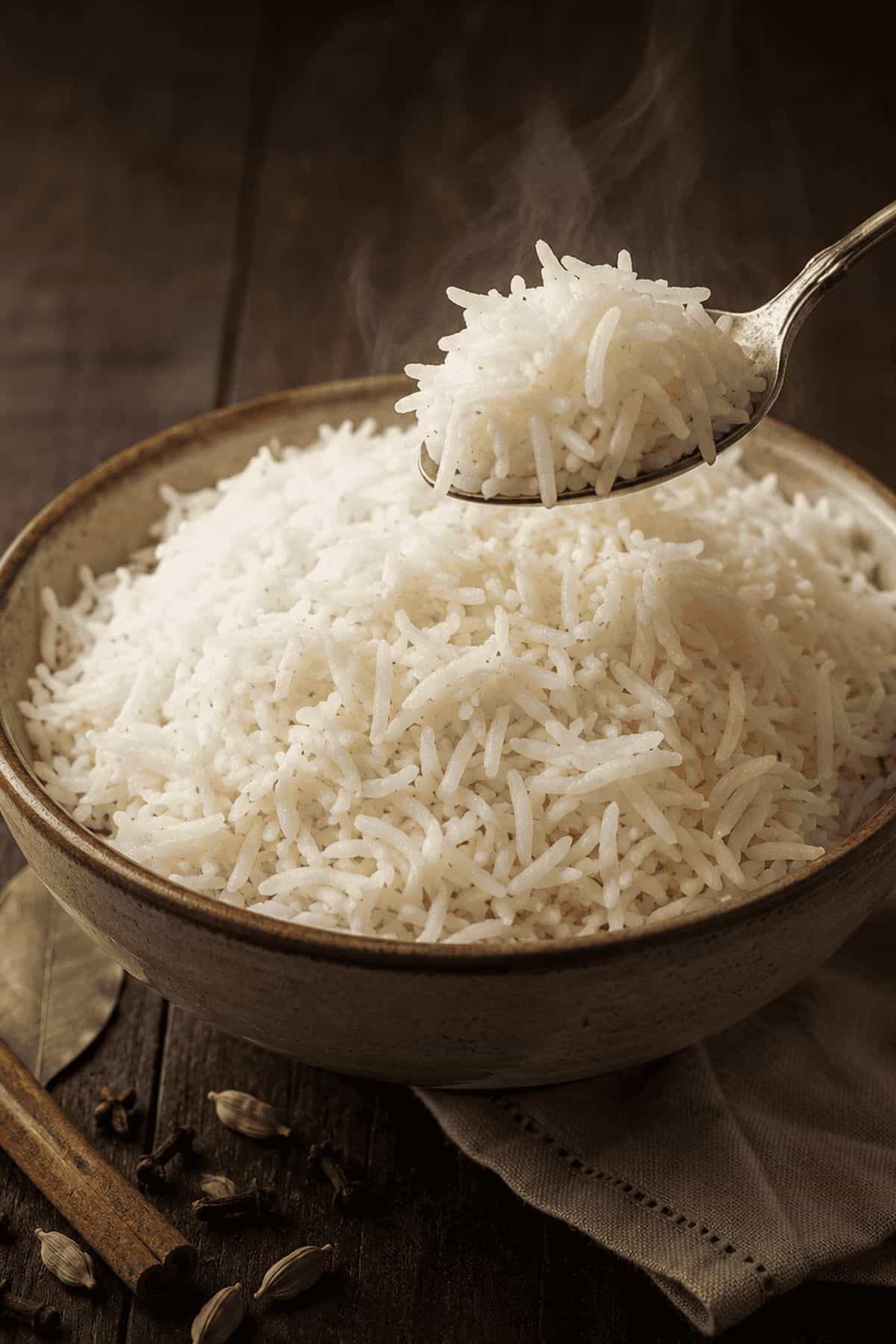
Prep Time: 5 minutes | Soak Time: 20 minutes | Cook Time: 18 minutes | Rest Time: 10 minutes | Total Time: 53 minutes | Servings: 4 to 6 as a side
Ingredients
- 300 g (1½ cups) Indian or Pakistani basmati rice (Tilda, Royal, or India Gate)
- 440 ml (1¾ cups + 2 tbsp) filtered water (for the cook)
- ½ tsp fine sea salt
- 1 tsp neutral oil or melted ghee
Optional whole spices:
- 2-inch (5 cm) cinnamon stick
- 3 green cardamom pods, lightly crushed
- 2 whole cloves
- 1 bay leaf
Instructions
- Pour the basmati rice into a fine mesh strainer set over a large bowl. Run cold water through the rice and swish gently with your hand for 10 seconds. Lift the strainer, dump the cloudy water, return the strainer to the bowl, and repeat. Rinse 4 to 5 times total, until the water comes off the rice looking faintly milky instead of opaque white.
- Transfer the rinsed rice to a large mixing bowl. Cover with fresh cold water by 1 inch (about 2.5 cm). Let soak for 20 minutes. The grains will plump and lengthen visibly by the end.
- Drain the soaked rice through the fine mesh strainer. Let sit for 2 minutes to release excess water.
- Transfer the drained rice to the inner pot of the rice cooker. Add 440 ml (1¾ cups + 2 tbsp) of fresh filtered water, the salt, and the neutral oil or ghee. Stir once to distribute. If using whole spices, tuck them into the rice.
- Close the rice cooker lid. Press the white rice setting (or basmati setting if your cooker has one).
- When the cooker clicks off (about 18 minutes for most machines), do not open the lid. Let the rice rest covered for exactly 10 minutes. The residual steam finishes the top layer of grains.
- Open the lid. Remove the whole spices if used. Fluff the rice gently with a wooden or bamboo rice paddle, lifting from the bottom and folding to redistribute. Avoid stirring vigorously, which breaks the long grains.
- Serve immediately alongside curries, grilled meats, or as a base for grain bowls.
Notes
The rinse-then-soak combination is the technique. Either step alone gives you better basmati than the bag instructions. Both together give you the rice you have eaten in restaurants. Skip neither.
The 1:1.25 ratio is rice-cooker-specific. Stovetop basmati uses 1:1.5. Pressure cooker basmati uses 1:1. Each method needs a different water amount because each retains or loses moisture differently during the cook.
The 10-minute post-cook rest matters. Opening the lid the second the cooker clicks off leaves the top layer of rice slightly underdone. The rest finishes those grains using residual steam.
Storage. Basmati rice keeps refrigerated in an airtight container for 3 to 4 days. Reheat with a tablespoon of water in a covered pan over low heat, or in the microwave with a damp paper towel over the bowl. Day-old basmati makes excellent fried rice or pilaf.
Frequently Asked Questions
Do I really need to soak basmati rice before cooking?
For best results, yes. The 20-minute soak pre-hydrates the grain and allows it to elongate properly during cooking instead of breaking apart. You can skip the soak in a pinch (use the same 1:1.25 ratio and same method), but the cooked rice will be shorter, slightly stickier, and lose the visibly distinct-grain texture that makes basmati worth buying. Soak when you can.
What is the right water to rice ratio for basmati in a rice cooker?
1:1.25, meaning 1 cup rice to 1¼ cups water. For 1.5 cups (300 g) of rice, that means 440 ml (about 1¾ cups + 2 tablespoons) of water. This ratio gives you firmer separated grains. If you prefer softer rice, increase to 1:1.5, but be aware that softer basmati loses the distinct-grain texture the variety is known for.
Can I cook basmati rice without a rice cooker?
Yes. Rinse and soak the same way. Combine the drained rice with water at a 1:1.5 ratio (more water than a rice cooker needs because steam escapes from a stovetop pot). Bring to a boil over medium-high heat, then reduce heat to the lowest setting, cover tightly, and simmer for 15 minutes. Rest covered off heat for 10 minutes. Fluff and serve.
Why is my basmati rice sticky or mushy?
Three causes. The rice was not rinsed enough (surface starch was not removed). Too much water was used (stick to 1:1.25 in a rice cooker). Or the rice was stirred during the cook, which breaks the grains and releases starch. Do not lift the lid or stir while the cooker is running.
How long does cooked basmati rice keep?
Refrigerated in an airtight container, cooked basmati keeps for 3 to 4 days. Reheat with a splash of water in a covered pan over low heat, or microwave with a damp paper towel over the bowl. Day-old basmati also fries up beautifully into rice pilaf or fried rice and can be frozen in portion-sized containers for up to 2 months.
What is the difference between basmati and jasmine rice?
Both are aromatic long-grain rice varieties, but they differ in origin and behavior. Basmati comes from the Himalayan foothills of India and Pakistan, has a popcorn-like aroma, and elongates to nearly twice its raw length when cooked. Jasmine comes from Thailand, has a floral aroma, and stays closer to its raw length but turns slightly stickier when cooked. Basmati pairs better with curries and biryani; jasmine pairs better with Thai and Southeast Asian dishes.
Key Takeaways
- Rinse basmati 4 to 5 times in cold water until the rinse water runs faintly milky. The biggest fix for sticky or mushy basmati.
- Soak the rinsed rice in fresh cold water for 20 minutes. This pre-hydrates the grain and allows it to elongate during the cook.
- Use a 1:1.25 rice-to-water ratio in a rice cooker. Less water than stovetop because the rice cooker seals moisture in.
- Add a half teaspoon of salt and a teaspoon of neutral oil or ghee to the cook water. The salt seasons from inside, the oil keeps grains separate.
- Rest the rice covered for 10 minutes after the cooker clicks off. Lifting the lid early leaves the top layer underdone.
Final Thoughts
Basmati is one of those ingredients where the difference between adequate and excellent comes down to three small steps that take an extra twenty-five minutes total. Rinse properly. Soak the grain. Use the right water ratio. The rest of the cook happens on its own inside the rice cooker, and the finished rice is the kind of side that quietly upgrades a curry night or a weeknight grain bowl without any extra effort once you have the technique down.
Make a batch on Sunday and the rice is ready for three nights of dinners. Reheats well, fries up beautifully on day three, and the smell of basmati steaming in the kitchen is reason enough to bother with the rinse-and-soak.
Basmati Rice Recipe (In a Rice Cooker)
Basmati rice in a rice cooker is long-grain Indian basmati rinsed clean of surface starch, soaked for 20 minutes, drained, then cooked at a 1:1.25 rice-to-water ratio with a little salt and a teaspoon of neutral oil.
Ingredients
- 300 g (1½ cups) Indian or Pakistani basmati rice (Tilda, Royal, or India Gate)
- 440 ml (1¾ cups + 2 tbsp) filtered water (for the cook)
- ½ tsp fine sea salt
- 1 tsp neutral oil or melted ghee
- 2-inch (5 cm) cinnamon stick
- 3 green cardamom pods, lightly crushed
- 2 whole cloves
- 1 bay leaf
Instructions
- Pour the basmati rice into a fine mesh strainer set over a large bowl. Run cold water through the rice and swish gently with your hand for 10 seconds. Lift the strainer, dump the cloudy water, return the strainer to the bowl, and repeat.
- Transfer the rinsed rice to a large mixing bowl. Cover with fresh cold water by 1 inch (about 2.5 cm). Let soak for 20 minutes. The grains will plump and lengthen visibly by the end.
- Drain the soaked rice through the fine mesh strainer. Let sit for 2 minutes to release excess water.
- Transfer the drained rice to the inner pot of the rice cooker. Add 440 ml (1¾ cups + 2 tbsp) of fresh filtered water, the salt, and the neutral oil or ghee. Stir once to distribute. If using whole spices, tuck them into the rice.
- Close the rice cooker lid. Press the white rice setting (or basmati setting if your cooker has one).
- When the cooker clicks off (about 18 minutes for most machines), do not open the lid. Let the rice rest covered for exactly 10 minutes. The residual steam finishes the top layer of grains.
- Open the lid. Remove the whole spices if used. Fluff the rice gently with a wooden or bamboo rice paddle, lifting from the bottom and folding to redistribute. Avoid stirring vigorously, which breaks the long grains.
- Serve immediately alongside curries, grilled meats, or as a base for grain bowls.
Notes
The rinse-then-soak combination is the technique. Either step alone gives you better basmati than the bag instructions. Both together give you the rice you have eaten in restaurants. Skip neither.
The 1:1.25 ratio is rice-cooker-specific. Stovetop basmati uses 1:1.5. Pressure cooker basmati uses 1:1. Each method needs a different water amount because each retains or loses moisture differently during the cook.
Last update on 2026-08-08 / Affiliate links / Images from Amazon Product Advertising API