
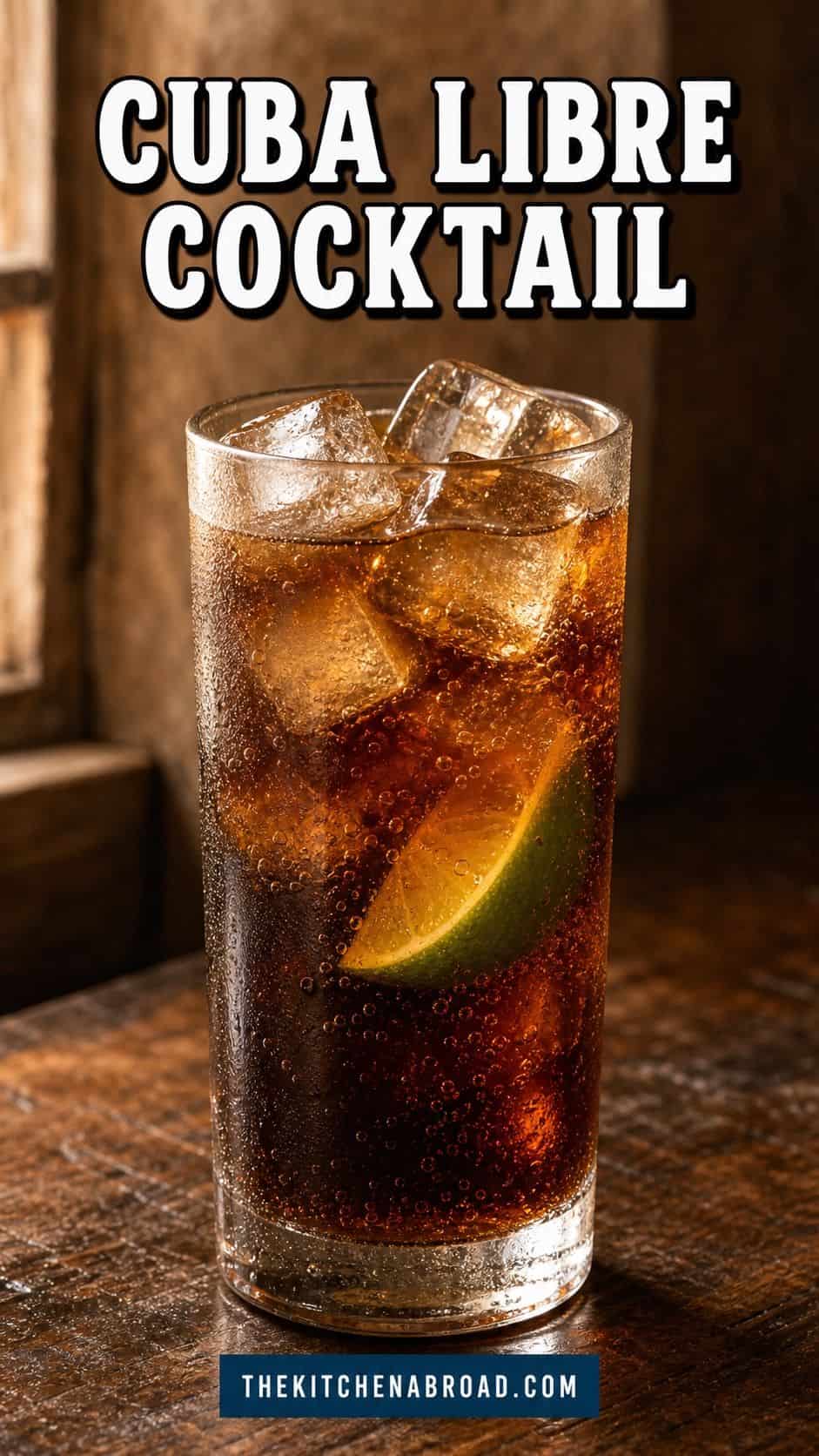
A Cuba Libre is 2 oz light rum, the juice of half a fresh lime, and 4 to 6 oz cold cola, built over ice in a highball glass with a lime wedge dropped in. The lime is what makes it a Cuba Libre and not a rum and Coke. The drink was first poured at the American Bar in Havana in 1900, when a US Army Signal Corps captain raised his glass and toasted “¡Por Cuba Libre!” to a free Cuba. Build it, do not shake it, and use Mexican Coke if you can find it.
Picture a highball glass with a lime wedge floating at the rim, half-dissolved into the cola underneath. That image is what most people mean when they say Cuba Libre, and it is the image Hemingway carried out of Havana in the 1930s. The actual spec is shorter than the legend. Two ounces of light rum, the juice of half a lime, cold Coca-Cola to fill, a wedge dropped in. The lime is the part that gets edited out when bars get lazy, and once it is gone, the drink is no longer a Cuba Libre. It is a rum and Coke, which is a different drink with a quieter history.
What You’ll Need to Make This Drink
A tall highball glass, a paring knife, and a citrus squeezer or your hand. That is the whole gear list.
A jigger helps with the pour if you are batching or want to keep the 2 oz spec honest. A long bar spoon for a gentle stir at the end keeps the cola from going flat.


Recommended Reads
- Long Island Iced Tea Cocktail
- Best Fall Cocktails
- Manhattan Cocktail
- Old Fashioned Cocktail
- Best Halloween Cocktail Ideas
Where the Cuba Libre Came From
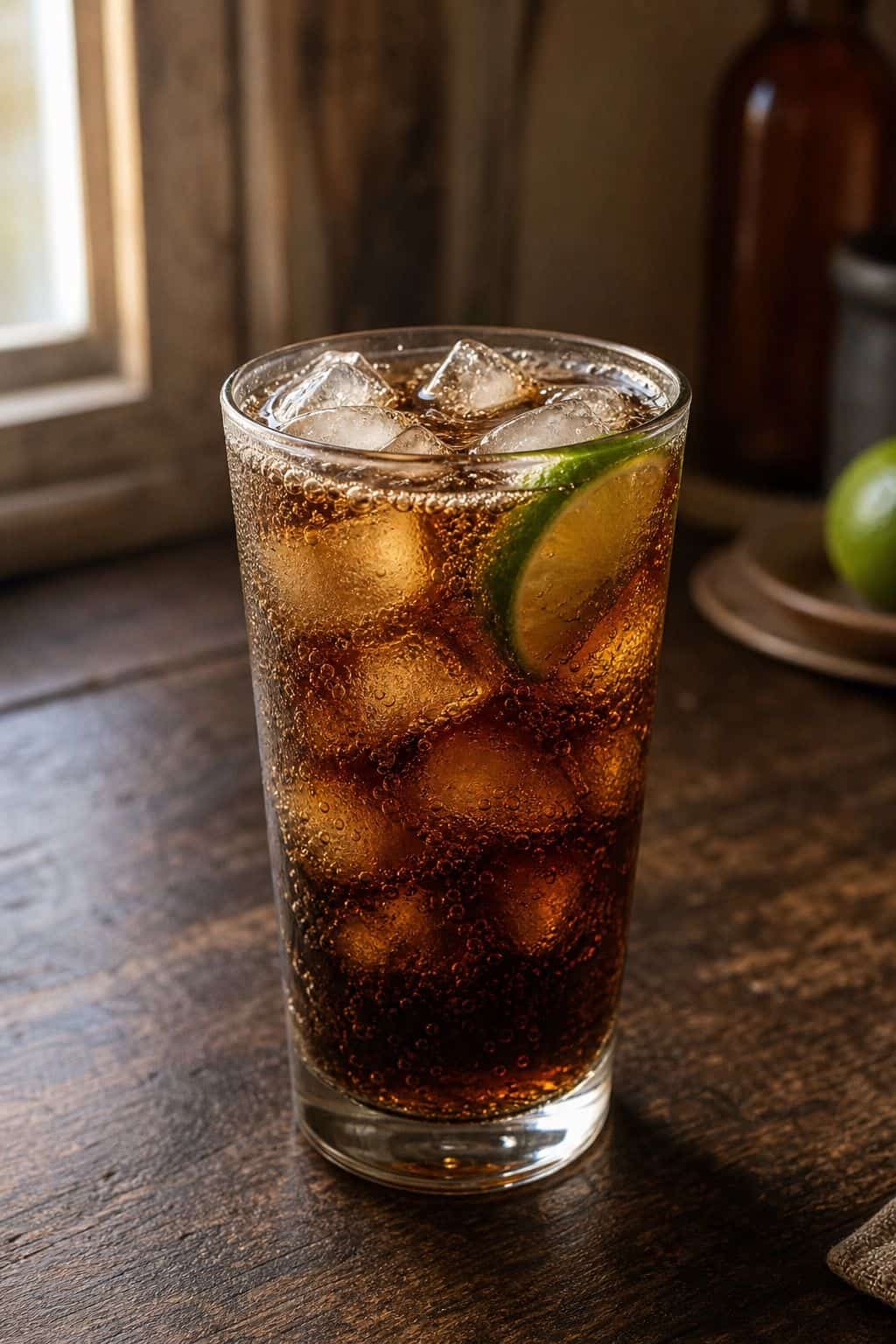
The story takes place in Havana in 1900, two years after the Spanish-American War ended Spanish colonial rule. Coca-Cola had just arrived on the island, brought over by American soldiers who had been stationed in Cuba during the conflict. At the American Bar inside the Hotel Inglaterra, a captain in the US Army Signal Corps named Russell ordered a glass of Bacardi white rum, asked for cola to be poured over it, and squeezed in a lime. He raised the glass and toasted “¡Por Cuba Libre!” (to a free Cuba). The phrase had been the rallying cry of the Cuban independence movement for thirty years.
The bartender wrote the order down. The next round of soldiers asked for the same thing. By the end of the year, the drink had a name and the name had a politics attached to it. The cola was American, the rum was Cuban, and the lime was the local ingredient that tied the two together. The whole drink was a one-glass version of the alliance that had just rewritten the island’s future.
The drink left Havana with returning soldiers and travelers, picked up speed through the 1920s and 1930s as Americans flocked to Cuba during Prohibition, and got a permanent boost from the Andrews Sisters’ 1945 hit “Rum and Coca-Cola.” That song made the rum-and-cola pour world-famous but quietly dropped the lime from the popular memory. By the time most US bars started pouring it in the 1950s and 1960s, the lime was optional. It was not. The lime is the drink.
A Few Notes on the Ingredients
The rum should be light and dry. Cuban tradition points to Bacardi, which was a Cuban company for almost a hundred years before the 1960 nationalization pushed the family to Puerto Rico. Havana Club 3-year is the modern Cuban-made benchmark and the bottle most Havana bars still pour. Brugal from the Dominican Republic and Flor de Caña from Nicaragua are clean substitutes if you cannot find either. Gold or dark rum changes the drink into something else, richer, sweeter, more molasses-forward. That version has its own merits but it is not the classic spec.
The cola matters more than people admit. Mexican Coca-Cola, sold in the glass bottles, is made with cane sugar instead of high-fructose corn syrup. It tastes cleaner, less syrupy, and matches the dry rum better than standard US-bottled Coke. If you cannot find the Mexican bottles, regular Coke works. Just keep the bottle cold and open it right before you build the drink so it does not lose carbonation on the way to the glass.
The lime has to be fresh. Bottled lime juice tastes flat and slightly metallic and turns the drink one-dimensional. Half a fresh lime, squeezed directly into the glass, gives you the acidity and the aromatic oil from the peel that lift the cola off the sweetness floor. Drop the spent wedge into the drink afterwards. It keeps releasing oil as the ice melts and it is part of the visual.
Recipe: Cuba Libre
Prep time: 2 minutes | Build time: 1 minute | Total time: 3 minutes | Serves: 1
Ingredients
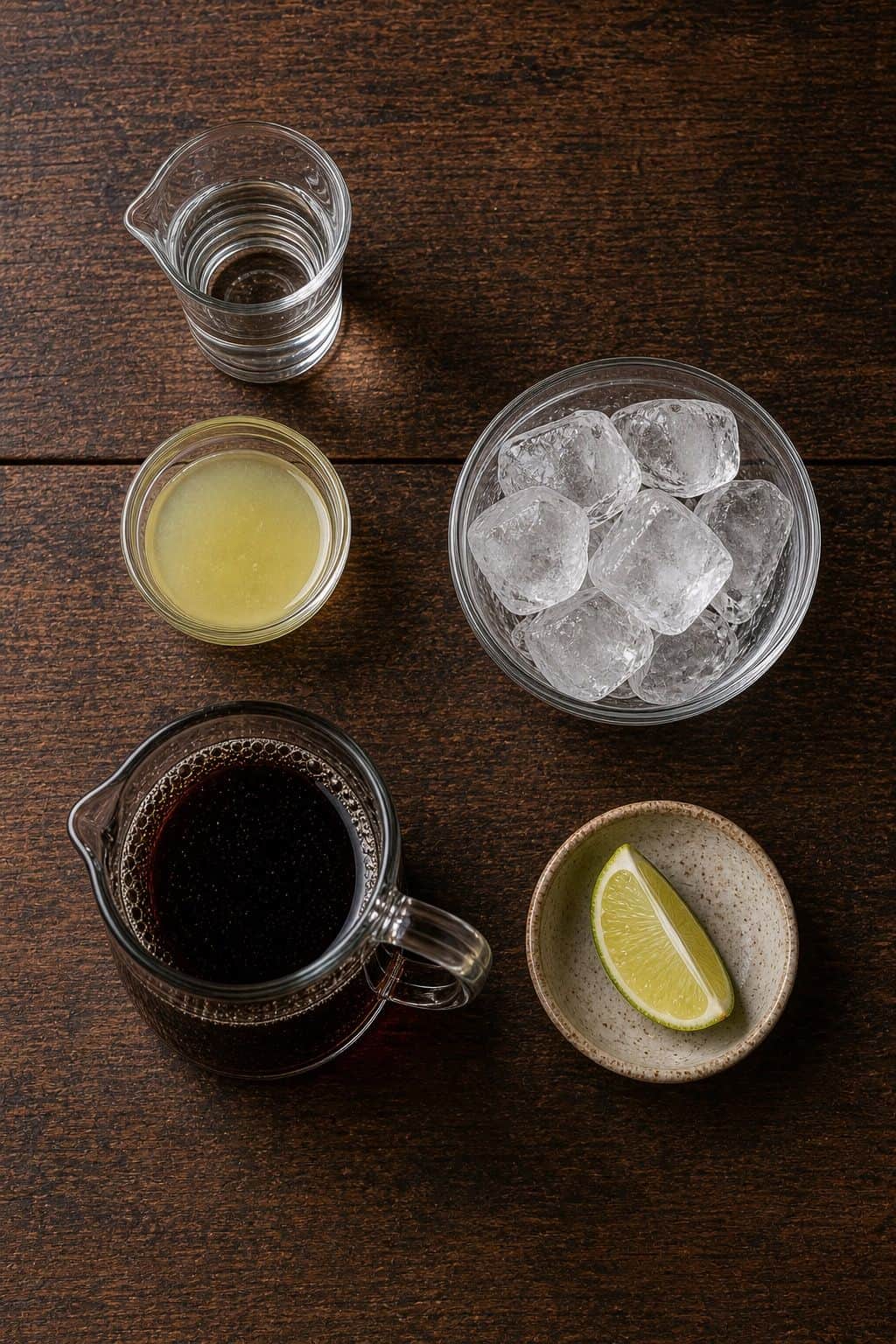
- 60 ml (2 oz) light rum, Bacardi or Havana Club 3-year preferred
- 15 ml (0.5 oz) fresh lime juice, from half a lime
- 120 to 180 ml (4 to 6 oz) cold Coca-Cola, Mexican glass-bottle preferred
- 1 lime wedge, for garnish
- Ice cubes, enough to fill the glass
Instructions
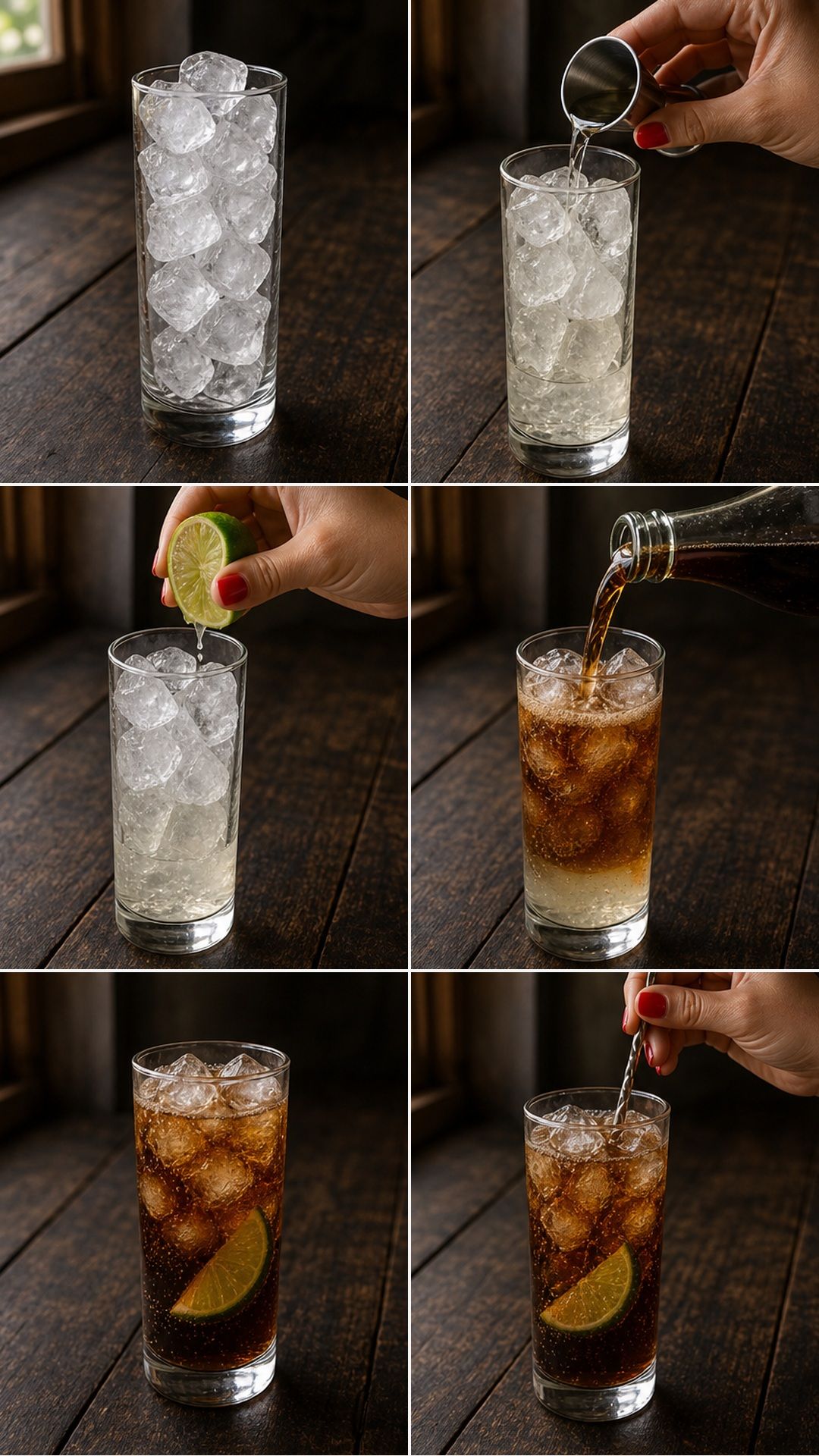
- Fill a tall highball glass to the top with fresh ice cubes. A cold glass is critical; if the glass is room temperature, the cola goes flat in seconds. Chill the glass in the freezer for 10 minutes ahead if you have time.
- Pour 60 ml (2 oz) light rum over the ice. The rum goes in first so it lands at the bottom and the cola hits it on the pour.
- Squeeze 15 ml (0.5 oz) fresh lime juice from half a lime directly into the glass. Use the back of a spoon or a small squeezer; do not muddle.
- Top with 120 to 180 ml (4 to 6 oz) cold Coca-Cola. Pour slowly and at an angle to preserve the carbonation. Stop when the cola reaches the rim.
- Drop the spent lime half into the glass, or cut a fresh wedge and slide it down the inside of the glass. The peel oil rises through the cola and gives you the aromatic top note.
- Give the drink one slow stir with a long bar spoon to combine without knocking out the bubbles. Serve immediately.
Notes
Do not shake this drink. Shaking flattens the cola and turns the drink into a fizz-less sour. The build-in-glass method is the only way to keep the carbonation alive from the first sip to the last.
The 4 to 6 oz cola range is a personal-preference call. Four ounces gives you a drier, more rum-forward drink; six ounces softens the alcohol and reads as more refreshing. Start at five and adjust to taste.
If the cola is going flat too fast, you are using warm cola or a warm glass. Both have to be cold. Keeping a stash of Mexican Coke bottles in the back of the fridge is the simplest fix.
Tips and Variations
The Difference Between a Cuba Libre and a Rum and Coke
One ingredient: the lime. A rum and Coke is just rum and cola, no garnish required. A Cuba Libre is the same base plus fresh lime juice and a lime wedge dropped in. The lime is non-negotiable and it changes the drink fundamentally. The acidity cuts the cola’s sugar, the peel oil adds aroma, and the wedge keeps releasing flavor as the ice melts.
If you order a Cuba Libre at a bar and it arrives without lime, send it back or squeeze one in yourself. That is the only correction worth making at the bar without feeling rude.
The Diet Cuba Libre Question
Diet Coke works fine and trims the sugar load, but you lose the syrupy weight that balances the rum’s heat. The drink reads as thinner and slightly more acidic, and the lime hits harder. Coke Zero sits closer to the original mouthfeel than Diet Coke and is the better swap if you want the lower-sugar version.
Add an extra quarter ounce of lime when you go diet. The cola is less sweet so the drink needs less acid to balance.
The Mojito-Adjacent Muddled Mint Version
Drop 4 fresh mint leaves into the bottom of the glass and press them gently with the back of a spoon before adding ice. The mint oil joins the lime peel oil and you get a drink that sits halfway between a Cuba Libre and a mojito. It is not traditional but it is delicious on a hot afternoon.
Do not over-muddle. Bruising the mint, not crushing it, is the move. Crushed mint releases chlorophyll bitterness that fights the cola.
A Pitcher Build for Hosting
For a 6-serving pitcher, combine 360 ml (12 oz) light rum with 90 ml (3 oz) fresh lime juice in a pitcher with ice. Top with 720 to 1080 ml (24 to 36 oz) cold cola right before serving, not before, or the carbonation dies in the pitcher. Stir gently once and pour over ice in highball glasses with a lime wedge in each.
Pre-batch the rum and lime ahead of time and keep it cold in the fridge. Add the cola at the table. This keeps the drink as fresh as a single-glass build for a crowd of six.
The Dark Rum Variation Is a Different Drink
Swap the light rum for a dark or aged rum (Mount Gay XO, Plantation OFTD, Zacapa 23) and you get a richer, more molasses-heavy drink that some bartenders call a Cuba Libre Anejo. The cola gets pushed into the background and the rum takes the lead. It is closer to a sipper than a thirst-quencher and pairs well with cigars and cold weather.
This is not the classic spec. Call it what you want but understand it is a different drink with a different intent. The 1900 Havana original used light Bacardi, full stop.
What to Serve It With
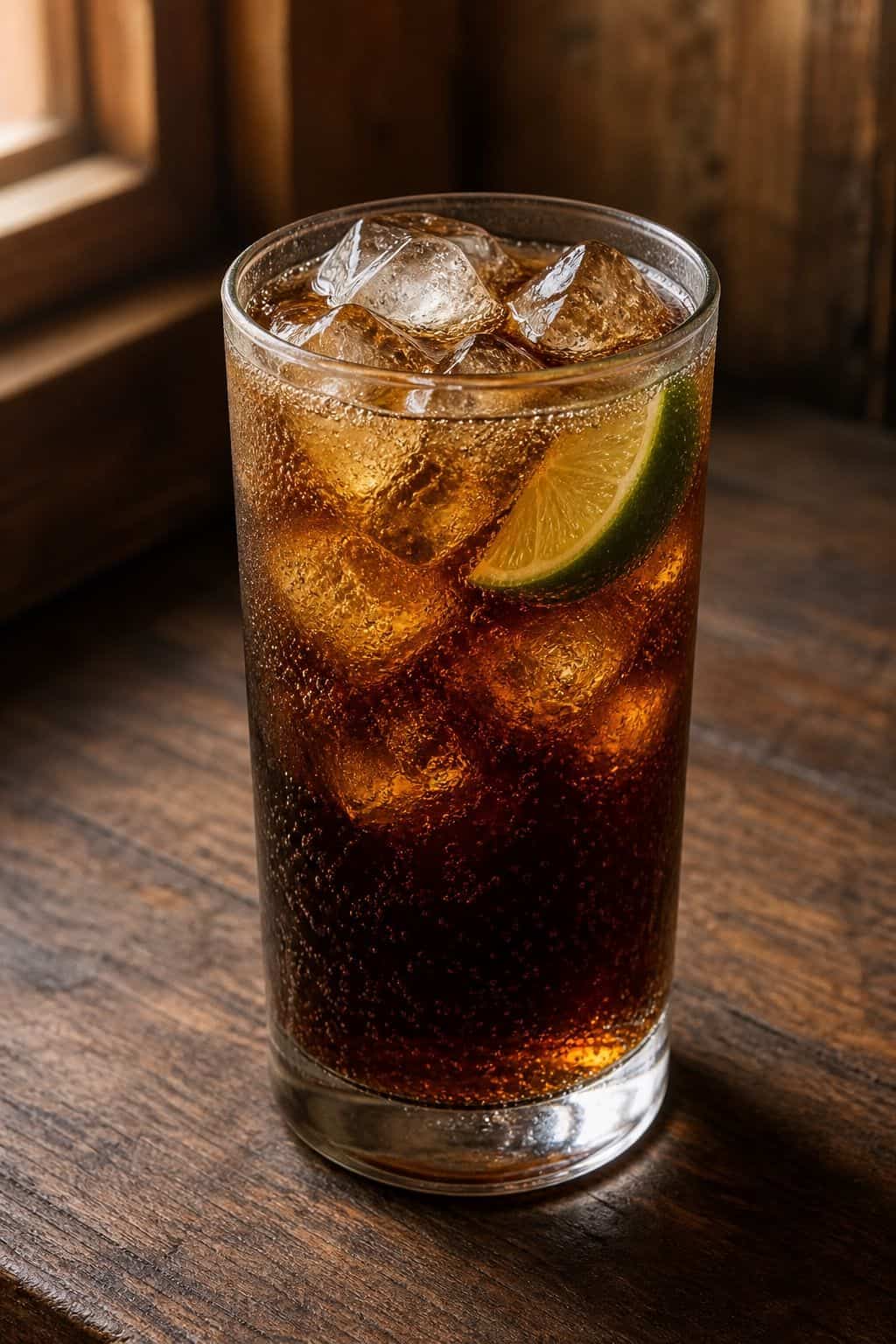
The Cuba Libre is a hot-weather drink built for grilled food, salty snacks, and long sit-down meals. Ropa vieja, the Cuban shredded-beef stew, is the canonical pairing. Black beans and rice, fried plantains, picadillo, or a Cuban sandwich also work cleanly. For lighter plates, ceviche or grilled shrimp with garlic does well. The lime in the glass picks up the lime on the plate. At a backyard cookout, it sits comfortably alongside burgers, hot dogs, and barbecued ribs. Save the wine for dinners that need pacing; the Cuba Libre is built for the second hour of an afternoon party.
Frequently Asked Questions
What is the difference between a Cuba Libre and a rum and Coke?
The lime. A rum and Coke is rum plus cola over ice. A Cuba Libre is rum plus cola plus fresh lime juice and a lime wedge. The lime is the distinguishing ingredient and the reason the drink got its own name in 1900 Havana.
Why is it called Cuba Libre?
“Cuba Libre” was the rallying cry of the Cuban independence movement starting in the 1860s. When a US Army Signal Corps captain in Havana raised a glass of rum and cola in 1900 and toasted “¡Por Cuba Libre!” (to a free Cuba), the name stuck to the drink. The phrase had been a political slogan for decades before it became a bar order.
What rum should I use?
A light, dry white rum. Bacardi Superior is the historic Cuban choice (the company moved its operations to Puerto Rico in 1960). Havana Club 3-year is the Cuban-made benchmark and what most Havana bars pour today. Brugal Extra Dry from the Dominican Republic or Flor de Caña 4 from Nicaragua are excellent substitutes.
Does the lime really matter that much?
Yes. Fresh lime juice gives the drink the acidity that balances the cola’s sweetness, and the peel oil from the wedge adds the aroma that lifts the whole glass. Without the lime, the drink reads one-dimensional and overly sweet. Bottled lime juice does not work; it tastes flat and slightly metallic.
What Coke is best for a Cuba Libre?
Mexican Coca-Cola in the glass bottle, made with cane sugar instead of high-fructose corn syrup. It tastes cleaner and matches the dry rum better. Regular US-bottled Coke works fine as a substitute. Just keep the bottle cold and open it right before you build the drink so the carbonation stays intact.
Key Takeaways
- The spec is 2 oz light rum, the juice of half a lime, and 4 to 6 oz cold cola, built over ice in a highball glass.
- The lime is what separates a Cuba Libre from a rum and Coke. Skip it and you have a different drink.
- The drink originated in 1900 Havana when a US Army Signal Corps captain toasted “¡Por Cuba Libre!” at the American Bar.
- Use light rum (Bacardi or Havana Club 3-year) and Mexican Coke in glass bottles when possible.
- Build, do not shake. Shaking kills the carbonation and ruins the drink.
Final Thoughts
The Cuba Libre is a three-ingredient drink that gets misremembered as a two-ingredient drink, and the missing ingredient is the one that gives it a name. Rum, cola, lime, in that order, over ice, with the wedge dropped in. Anything less is a rum and Coke, which is fine but is not what was poured in Havana in 1900.
Build it in a cold glass with cold cola and you have a drink that holds up through an entire long afternoon. The carbonation stays alive, the rum stays present, and the lime keeps releasing oil as the wedge bobs around the ice.
Pour it at a backyard cookout, after a long day, or any time the bottle of light rum has been sitting in the cabinet unused. The toast is built into the name. Raise the glass and say it out loud.
Cuba Libre
A Cuba Libre is 2 oz light rum, the juice of half a fresh lime, and 4 to 6 oz cold cola, built over ice in a highball glass with a lime wedge dropped in. The lime is what makes it a Cuba Libre and not a rum and Coke.
Ingredients
- 60 ml (2 oz) light rum, Bacardi or Havana Club 3-year preferred
- 15 ml (0.5 oz) fresh lime juice, from half a lime
- 120 to 180 ml (4 to 6 oz) cold Coca-Cola, Mexican glass-bottle preferred
- 1 lime wedge, for garnish
- Ice cubes, enough to fill the glass
Instructions
- Fill a tall highball glass to the top with fresh ice cubes. A cold glass is critical; if the glass is room temperature, the cola goes flat in seconds. Chill the glass in the freezer for 10 minutes ahead if you have time.
- Pour 60 ml (2 oz) light rum over the ice. The rum goes in first so it lands at the bottom and the cola hits it on the pour.
- Squeeze 15 ml (0.5 oz) fresh lime juice from half a lime directly into the glass. Use the back of a spoon or a small squeezer; do not muddle.
- Top with 120 to 180 ml (4 to 6 oz) cold Coca-Cola. Pour slowly and at an angle to preserve the carbonation. Stop when the cola reaches the rim.
- Drop the spent lime half into the glass, or cut a fresh wedge and slide it down the inside of the glass. The peel oil rises through the cola and gives you the aromatic top note.
- Give the drink one slow stir with a long bar spoon to combine without knocking out the bubbles. Serve immediately.
Notes
Do not shake this drink. Shaking flattens the cola and turns the drink into a fizz-less sour. The build-in-glass method is the only way to keep the carbonation alive from the first sip to the last.
The 4 to 6 oz cola range is a personal-preference call. Four ounces gives you a drier, more rum-forward drink; six ounces softens the alcohol and reads as more refreshing. Start at five and adjust to taste.
Last update on 2026-08-10 / Affiliate links / Images from Amazon Product Advertising API