

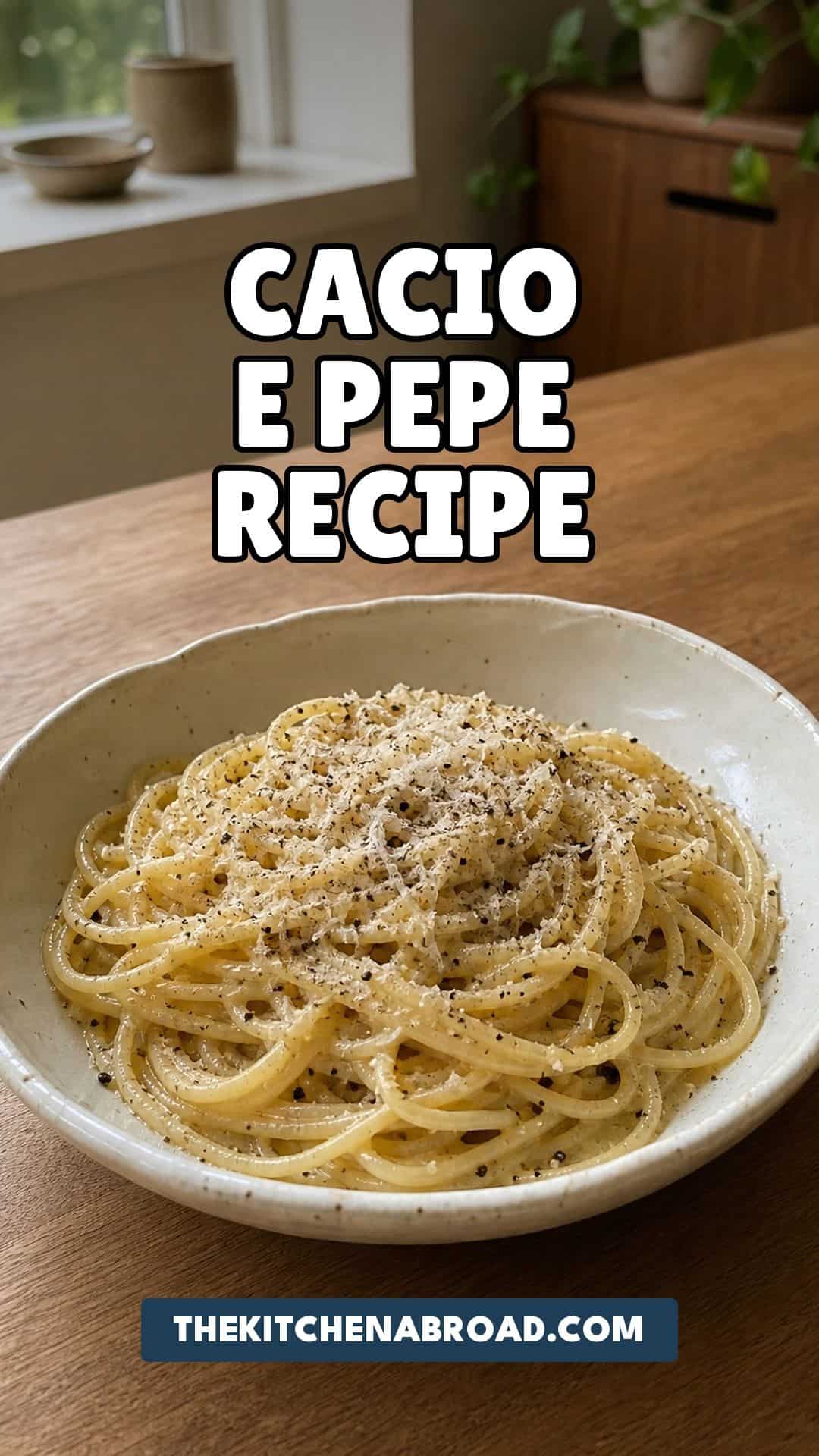
Cacio e pepe needs only spaghetti, Pecorino Romano and black pepper, plus the starchy water the pasta cooks in. Stir the grated cheese into a paste with a little pasta water, then toss it with the pasta off the heat so it melts into a glossy sauce instead of clumping. No cream, no butter, about 20 minutes.
Three ingredients is a lie. Cacio e pepe has a fourth, and it is the one you pour down the sink: the cloudy, starchy water the pasta boiled in. Treat it as an ingredient and this easy cacio e pepe recipe comes out silky. Treat it as waste and you get pepper-flecked spaghetti tangled in rubbery strings of cheese.
The other thing that goes wrong is heat. Below is why the sauce breaks, how to stop it, and a method built around a cheese paste that forgives a lot.
You need a large frying pan or wide sauté pan for tossing, a fine grater for the cheese, and a pepper mill that can crack coarsely. A smaller pasta pot than usual helps, for reasons you will see in a minute.


Why does cacio e pepe turn into clumps?
Because the cheese got too hot, or there was not enough starch to hold it together. Usually both.
Pecorino Romano is a hard, salty, aged sheep’s milk cheese. Hit it with a pan that is too hot and its proteins tighten into rubbery lumps while the fat leaks out around them. That is the stringy, greasy mess. The fix is simple: take the pan off the burner before the cheese goes in, and cool things down with a splash of pasta water first.
Starch is the glue. The starch that leaches out of pasta coats the cheese and the fat and keeps them evenly dispersed, so the sauce stays smooth. A group of physicists even studied this; their 2025 paper on the phase behavior of cacio e pepe sauce found that the sauce clumps when there is too little starch relative to the cheese. Home cooks get there the easy way. Cook the pasta in less water than usual, in a smaller pot, and stir it often so more starch ends up in the water.
Keep at least 200 ml of that water before you drain. You will use more than you think.
Pecorino Romano or Parmesan?
Pecorino Romano is the traditional cheese, and it gives the dish its sharp, salty bite. It is also the less forgiving one to melt. Parmigiano-Reggiano is a cow’s milk cheese with a milder, nuttier flavor that melts more smoothly.
If you are new to the dish, a 50/50 mix of the two is a sensible start. You keep most of the Pecorino tang and the sauce comes together more easily. Once you have done it a few times, go all Pecorino.
Either way, buy a wedge and grate it yourself, finely, right before cooking. Bagged pre-grated cheese is coated with anti-caking agents, and those stop it melting into a smooth sauce no matter how good your technique is.
How much pepper, and how coarse?
More than feels right. Pepper is half the name, so two teaspoons for 300 g of pasta is not excessive. Crack it coarsely, in a mortar or on the widest setting of your grinder, so you get little bursts of heat rather than a gray dusting.
Toasting it in the dry pan for a minute or so before anything else goes in takes the raw edge off and fills the kitchen with that warm, almost floral pepper smell. It also means the pepper is already in the pan where the sauce will be built.
Cacio e pepe recipe
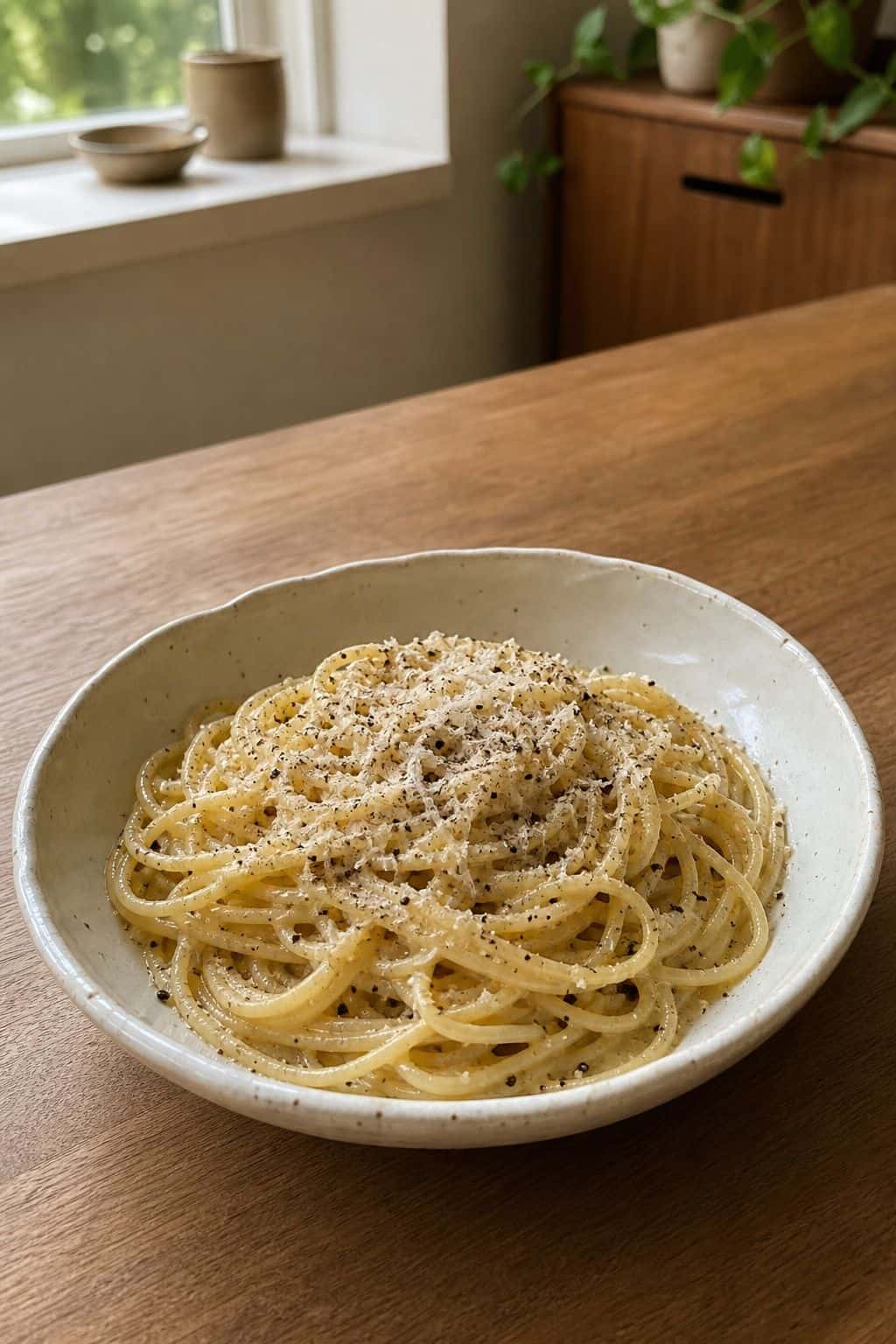
Prep time: 5 minutes. Cook time: about 15 minutes. Total time: about 20 minutes. Serves 2 to 3.
Ingredients
- 300 g (10 oz) spaghetti or tonnarelli
- 100 g (1 cup) Pecorino Romano, finely grated (or 50/50 with Parmesan)
- 2 teaspoons coarsely cracked black pepper
- 200 ml (3/4 cup) reserved pasta water, with extra ready
- Salt for the pasta water (go light, Pecorino is very salty)
Instructions
- Toast the cracked pepper in a large dry pan over medium heat for 60 to 90 seconds, until fragrant. Take the pan off the heat and let it cool slightly.
- Cook the pasta in a smaller pot than usual, with less water and only a little salt. Stop 2 minutes before al dente. Scoop out 200 ml of the pasta water, then drain.
- While the pasta cooks, stir the grated Pecorino with 3 to 4 tablespoons of hot pasta water into a thick paste. Set it aside.
- Put the pepper pan back on low heat, add 60 ml of pasta water and let it bubble. Add the drained pasta and toss hard for 60 seconds so every strand is coated in peppery water.
- Take the pan off the heat completely. Add the cheese paste and toss fast, adding pasta water a tablespoon at a time. Keep going for 1 to 2 minutes, until the sauce turns glossy and clings to every strand.
- Too thick? Add more pasta water. Too loose? Toss for another 30 seconds on low heat. Serve straight away with extra Pecorino and pepper.
Notes
The cheese paste is the safety net. Loosening the Pecorino with water first means it warms up gently instead of hitting hot pasta cold, so it melts instead of seizing. If the sauce still splits and turns greasy, add a splash of cooler pasta water off the heat and toss hard; dropping the temperature gives it a chance to come back together.
Which pasta shape works best?
Tonnarelli, the square-edged fresh spaghetti also called spaghetti alla chitarra, is the Roman favorite, and its edges grip the sauce. Ordinary dried spaghetti is just as good at home and much easier to find. Rigatoni works if you want something chunkier. Skip flat ribbons like fettuccine; the sauce slides off them.
As for add-ins: butter, cream and garlic all turn this into a different dish. Lovely dishes, but different ones. If you want garlic, a plate of aglio e olio is the Roman pasta built around it. The one addition I would allow is a small drizzle of good olive oil stirred into the cheese paste, which makes the sauce a bit more stable without changing the flavor much.
Can you keep or reheat cacio e pepe?
Not really. In the fridge the pasta drinks up the sauce and the cheese tightens, so the next day you have a cold, stiff block. If you must reheat, use a pan over very low heat with a generous splash of water and keep tossing. It will be edible, though nothing like the first time.
Cook only what you will eat. If you need something for lunches later in the week, pick a dish made to sit in the fridge; these cold lunch meal prep ideas are built for exactly that.
Cacio e pepe questions
Why does my cacio e pepe sauce break?
Cacio e pepe breaks when the cheese meets a pan that is too hot or water that has too little starch. The proteins clump and the fat separates. Add the cheese off the heat, mix it into a paste with pasta water first, and cook the pasta in less water so it gets starchier.
Can you use pre-grated cheese?
No, pre-grated cheese will not melt into a smooth cacio e pepe sauce. Bagged grated cheese contains anti-caking agents such as cellulose that keep it grainy. Grate a wedge of Pecorino finely just before cooking.
Can you make cacio e pepe with Parmesan?
Yes, you can use Parmesan, either on its own or mixed 50/50 with Pecorino Romano. Parmesan melts more easily but tastes milder and nuttier. All-Pecorino is the traditional version and has a sharper, saltier bite.
Does cacio e pepe have butter or cream?
Traditional cacio e pepe has no butter or cream. The creamy texture comes from cheese emulsified with starchy pasta water. Some restaurant versions add butter for insurance, but the dish does not need it if you control the heat.
What do you serve with cacio e pepe?
Serve cacio e pepe with something fresh and sharp, because the pasta is rich and salty. A green salad with lemon dressing, roasted broccolini or a plate of sliced tomatoes all work. Keep everything else plain and let the pasta carry the meal.
Key takeaways
- The starchy pasta water is the fourth ingredient; cook in less water and save at least 200 ml.
- Mix the Pecorino into a paste with pasta water before it meets the pasta.
- Add the cheese off the heat; heat is the main reason the sauce clumps.
- Grate the cheese yourself and crack the pepper coarsely.
- Eat it straight away; it does not reheat well.
Make it twice this week
The first time, you are learning what glossy looks like. The second time, you will know when to add another spoonful of water without thinking about it. Once the pasta-water trick clicks, use it again in a garlic lemon Parmesan broccolini pasta, which builds its sauce the same way with no cream at all.
Easy Cacio e Pepe Recipe (Creamy, Classic, No Cream)
Cacio e pepe is a Roman pasta dish made with just three ingredients: spaghetti, Pecorino Romano cheese, and black pepper. The technique is everything.
Ingredients
- 300g (10 oz) spaghetti or tonnarelli
- 100g (1 cup) Pecorino Romano, finely grated (or 50/50 with Parmesan)
- 2 teaspoons coarsely cracked black pepper
- 200ml (3/4 cup) reserved pasta water (have extra ready)
- Salt for pasta water (use less than usual since Pecorino is very salty)
Instructions
- Toast the cracked black pepper in a large dry pan over medium heat for 60 to 90 seconds until fragrant. Remove from heat and let the pan cool slightly.
- Cook pasta in a smaller pot with slightly less water than usual and light salt. Cook until 2 minutes before al dente. Reserve 200ml pasta water before draining.
- While pasta finishes cooking, mix the grated Pecorino with 3 to 4 tablespoons of pasta water to form a thick paste. Set aside.
- Return the pan with toasted pepper to low heat. Add 60ml of pasta water and let it bubble. Add the drained pasta and toss vigorously for 60 seconds to coat with the peppered water.
- Remove the pan from heat completely. Add the cheese paste and toss rapidly while adding pasta water a tablespoon at a time. The heat from the pasta and pan is enough to melt the cheese off direct heat.
- If the sauce looks too thick, add more pasta water. If too thin, toss for another 30 seconds on low heat. Serve immediately with extra Pecorino and cracked pepper.
Notes
The pasta water paste technique (mixing cheese with water first before adding to the pan) is the most reliable approach for home cooks. It pre-tempers the cheese, preventing thermal shock when it hits the warm pasta. The pasta water added to the pan before the cheese paste is what allows the sauce to form: the starch creates the binding matrix before the cheese proteins are introduced. If the sauce breaks or becomes greasy, add a splash of cold pasta water and toss vigorously off the heat; the cold water lowers the temperature quickly and gives the emulsion a chance to reform. For a pasta that uses a similar starch-emulsification principle but with the addition of garlic, lemon, and a vegetable, see the garlic lemon parmesan broccolini pasta . Both recipes demonstrate how pasta water can replace cream as a sauce base.
Last update on 2026-10-03 / Affiliate links / Images from Amazon Product Advertising API
