
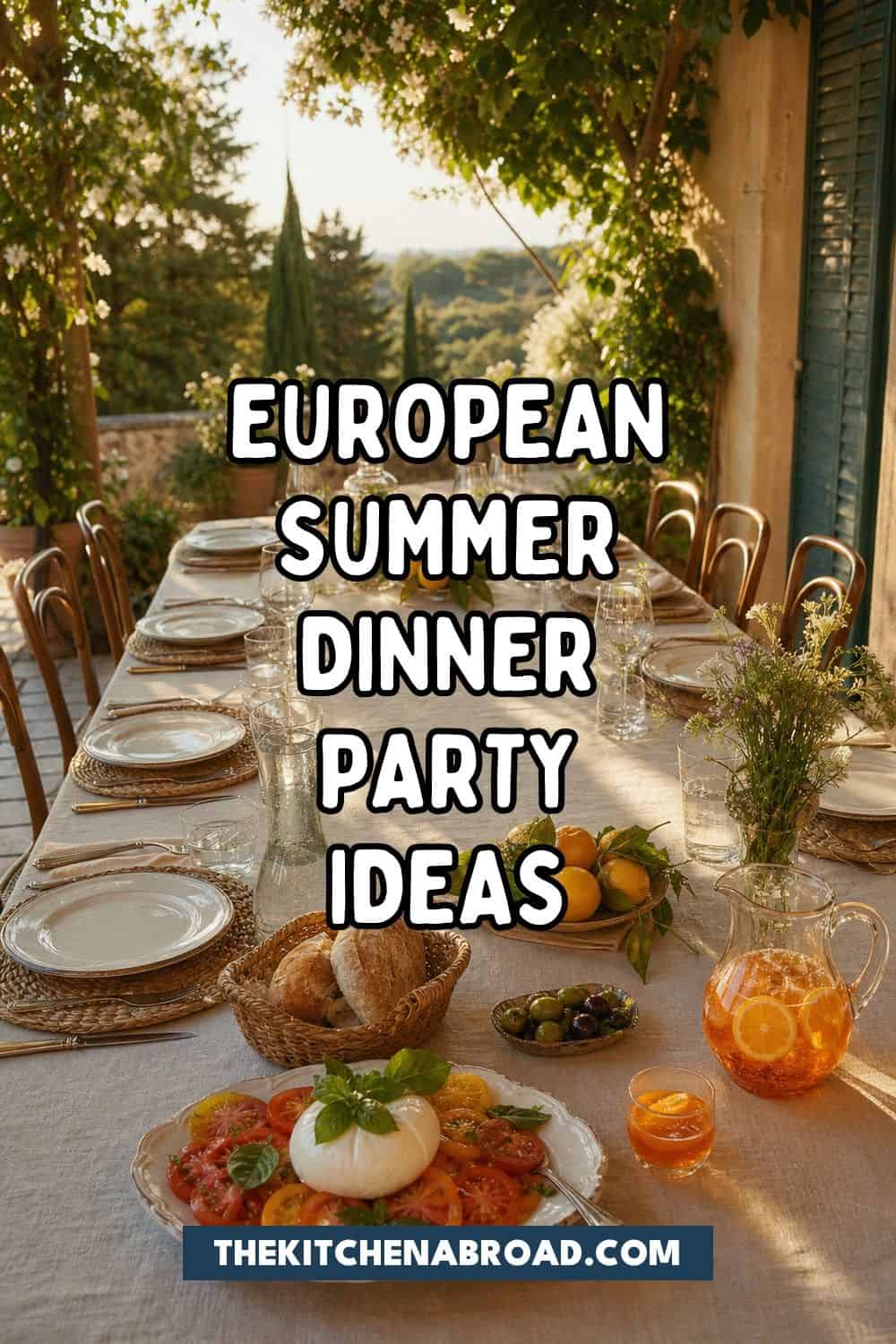
The easiest European summer dinner party starts with aperitivo, a tomato or burrata starter, bread, olives, one main like pasta or galette, a fruit-forward salad or dessert, carafes of water and wine, and a long linen table with low produce and candles. Keep the inspiration broad, sunlit, and specific without pretending one menu represents all of Europe.
A European summer dinner party should feel like the kind of evening that stretches a little: cold drinks, market produce, bread on the table, easy shared dishes, and candlelight once the sun slips down.
The strongest European summer dinner party ideas are built for relaxed home hosting, with aperitivo, tomatoes, burrata, peaches, pasta, seafood, chilled soup, carafes, linen, and practical table flow that still leaves space for conversation.
Top Recommended Products


You Might Also Like These Blog Posts
- European Summer Tablescape Ideas
- Cocktail Buffet Ideas
- Zero-Proof Bar Ideas
- Garden Party Food Ideas
- Mediterranean Dinner Party Ideas
1. Aperitivo Tray to Start the Evening
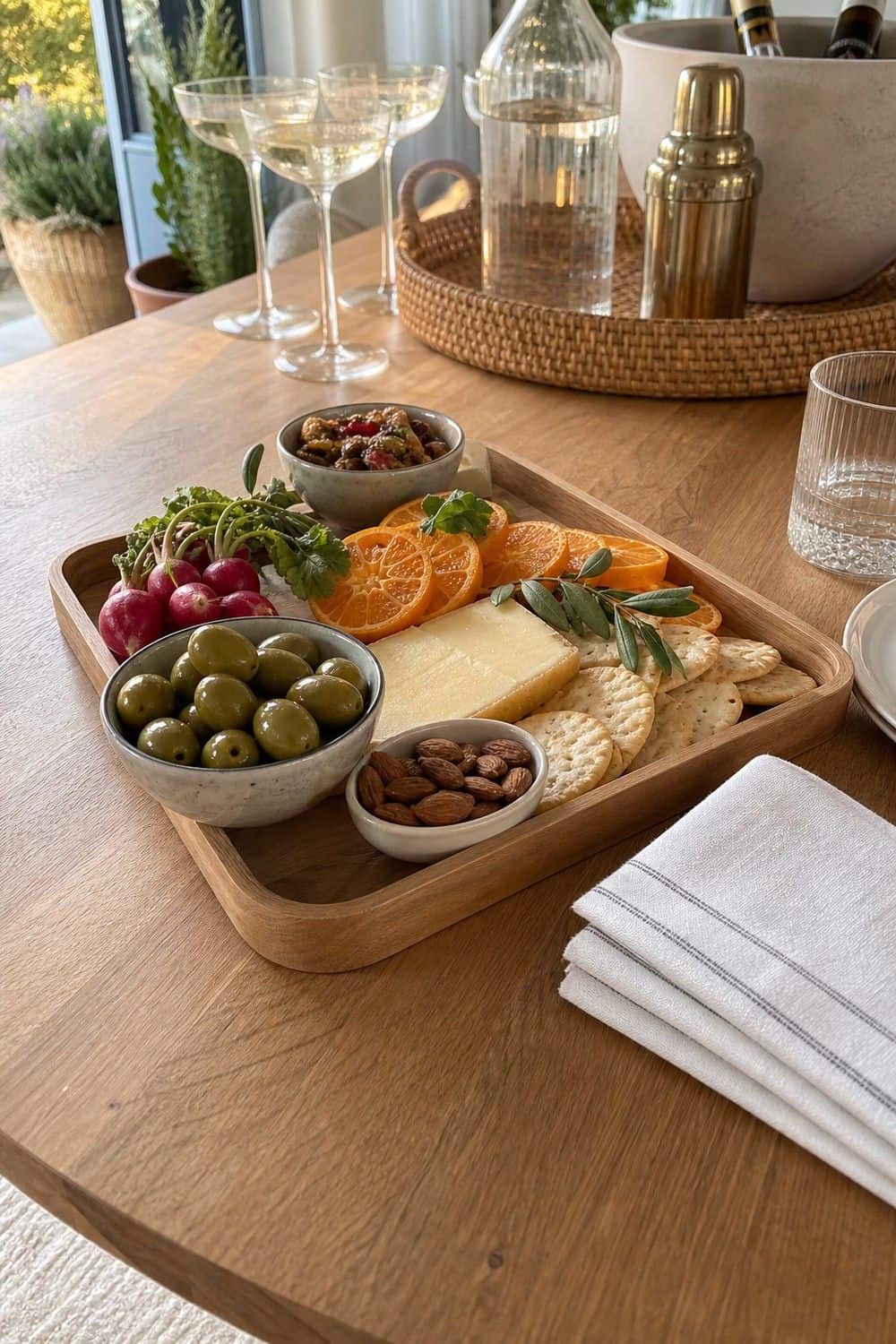
An aperitivo tray gives guests something easy to nibble while drinks are poured and the table settles. Keep it small: olives, cheese, crackers, nuts, citrus slices, radishes, or a few savory bites. It should wake up the appetite, not replace the meal before dinner starts.
Put the tray near the drinks or at one end of the table with small napkins nearby. This first little moment tells everyone the evening is relaxed, but it also buys the host time to finish the last easy details.
2. Pitcher of Summer Spritzes
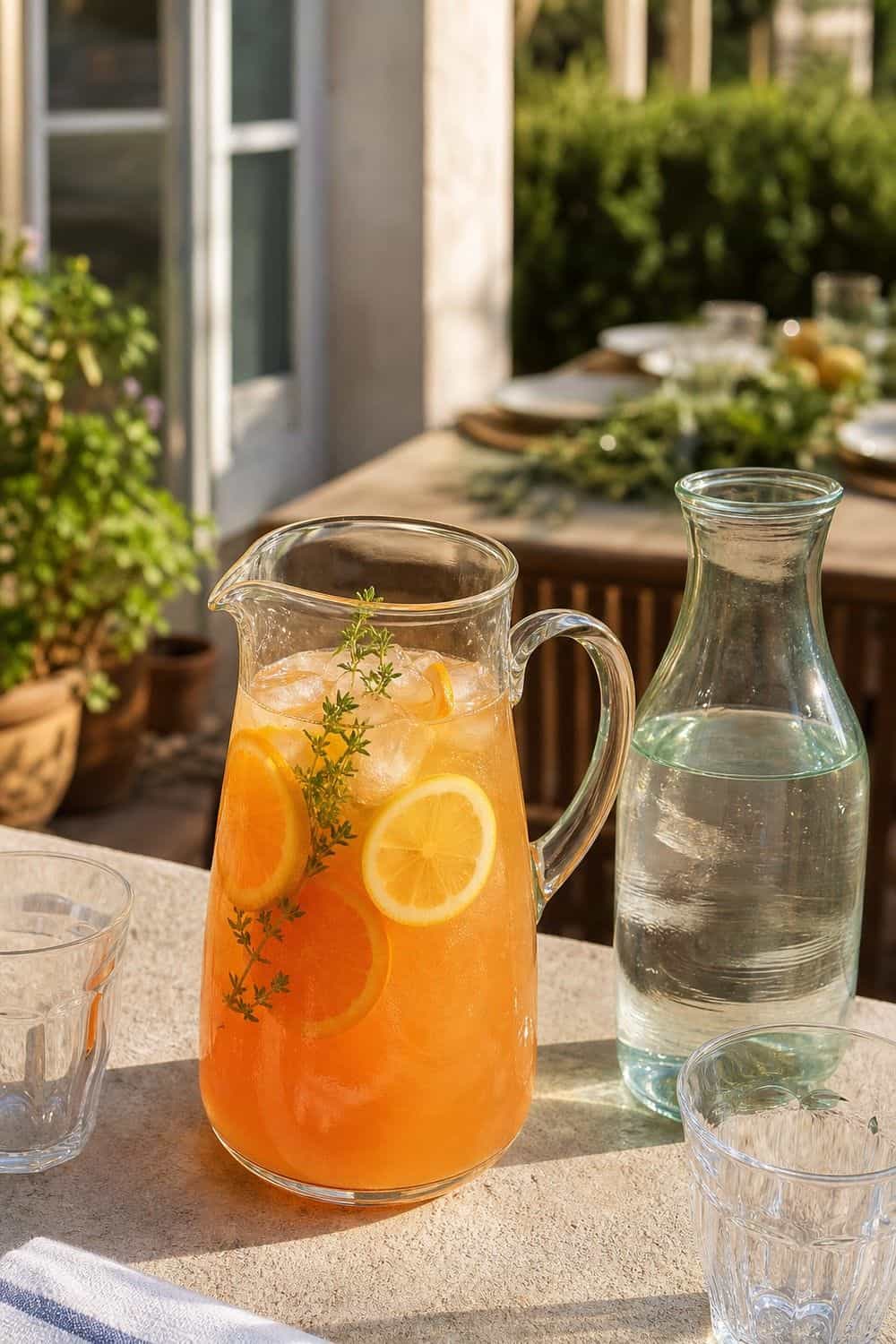
A pitcher of spritzes feels festive without making the host shake individual drinks all evening. Mix the base ahead if the recipe allows, then add sparkling elements and ice closer to serving so the drink stays bright.
Orange slices, lemon wheels, herbs, or a few berries can make the pitcher look summery without turning it into a fruit salad. Keep water beside it from the start.
A spritz is light and bubbly, but a long dinner still needs easy refills of plain water so the table feels generous, not overly cocktail-focused.
3. Zero-Proof Citrus Spritz
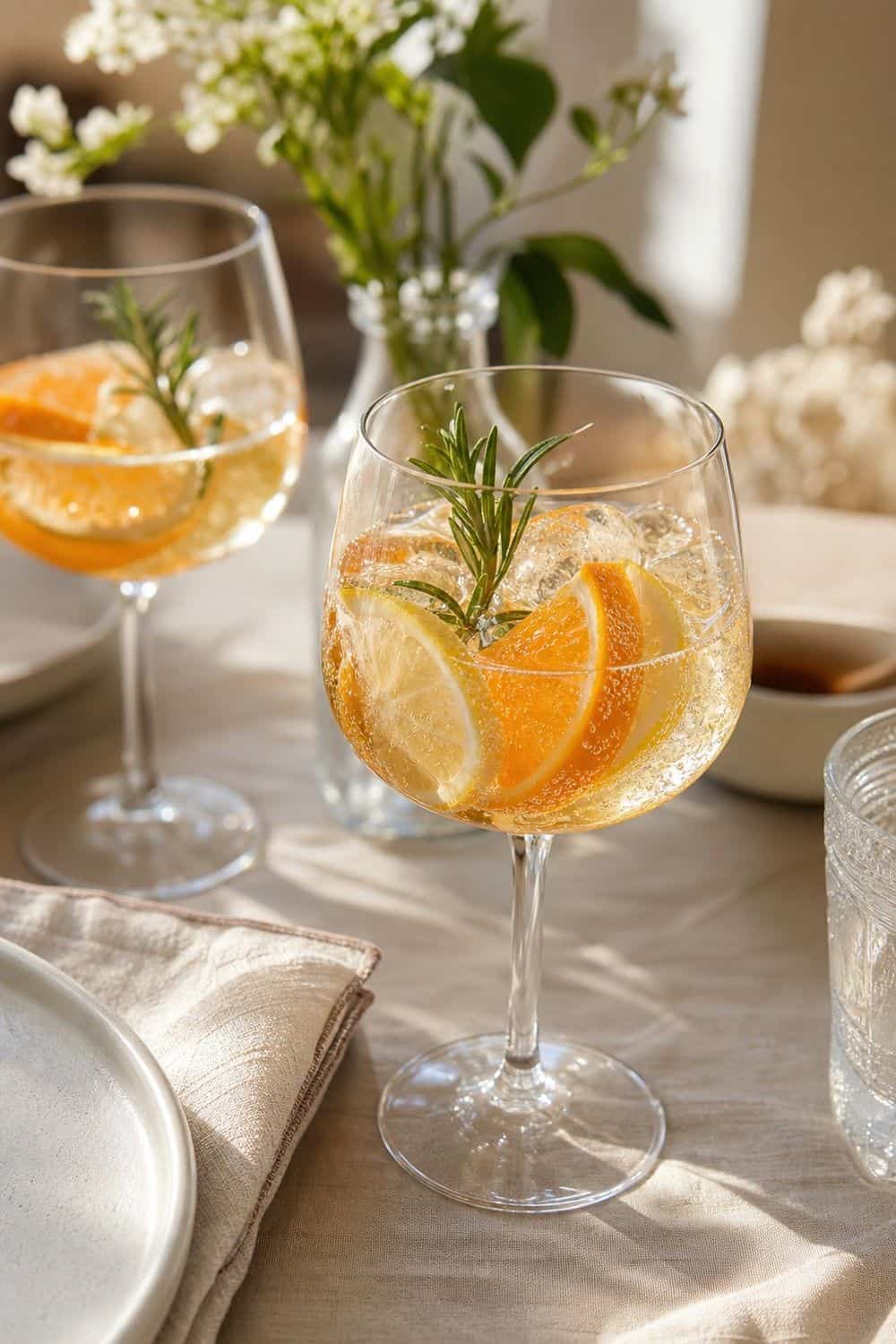
Give the zero-proof drink the same care as the wine or cocktail, because it makes the whole table feel more generous. Use citrus, sparkling water, bitter orange syrup, herb syrup, or a zero-proof aperitif.
Serve it in the same style of glassware as the spritzes so nobody feels like they received the plain backup option at the table, especially if everyone is toasting together.
Lemon, orange, mint, basil, or rosemary can make the glass feel grown-up and refreshing. The goal is a real drink, not an apology in a tumbler with ice.
4. Water and Wine in Simple Carafes
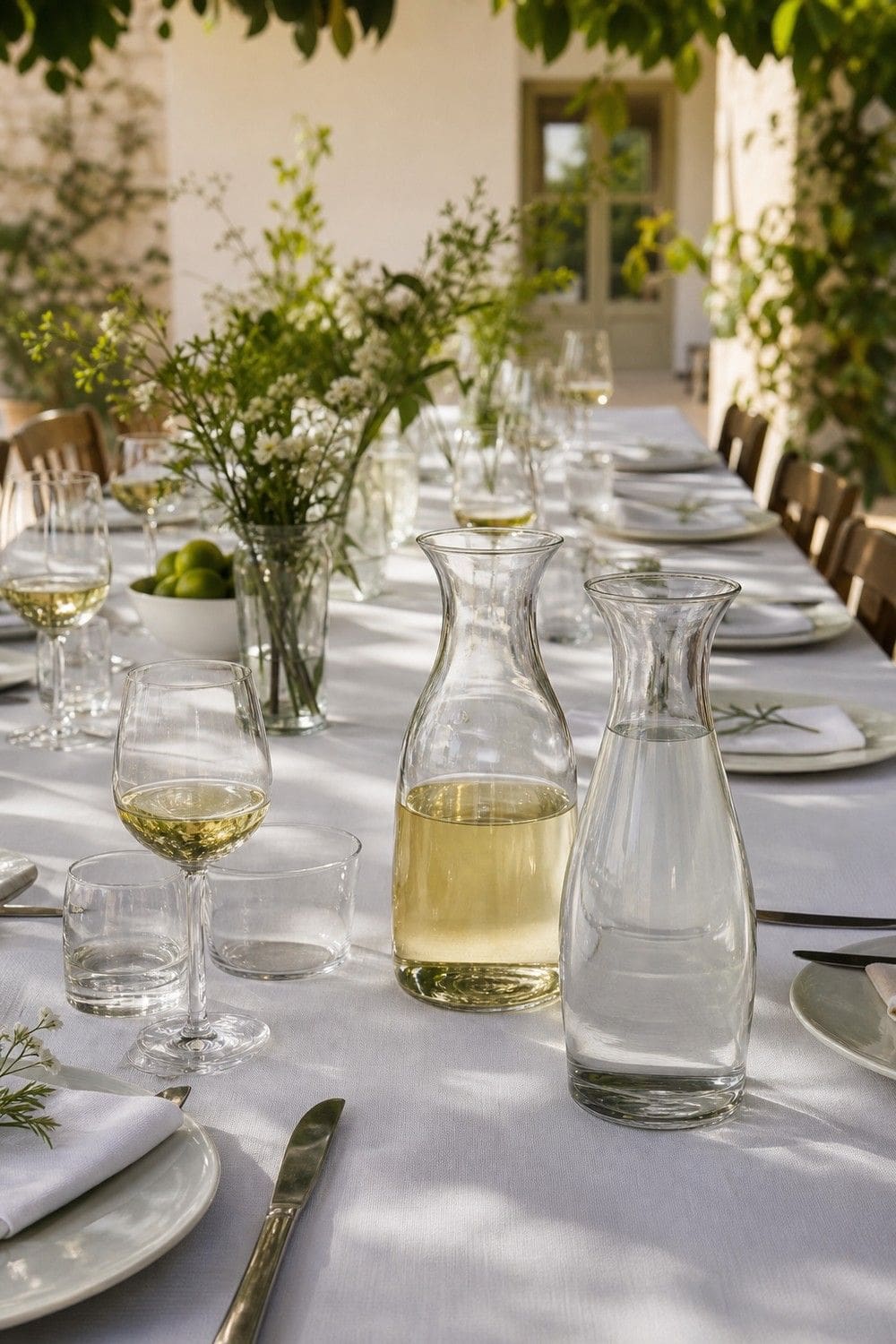
Carafes keep the table relaxed and reduce bottle clutter, especially on a long outdoor table. Fill one with water before guests sit down, then use another for wine, lemonade, or a chilled nonalcoholic drink. Place them where people can pour without stretching across candles or platters.
If the group is larger, use two water carafes so both ends of the table feel looked after. This is a small hosting detail, but it keeps conversation moving because guests are not constantly waiting for someone to pass a bottle.
5. Long Linen Tablecloth
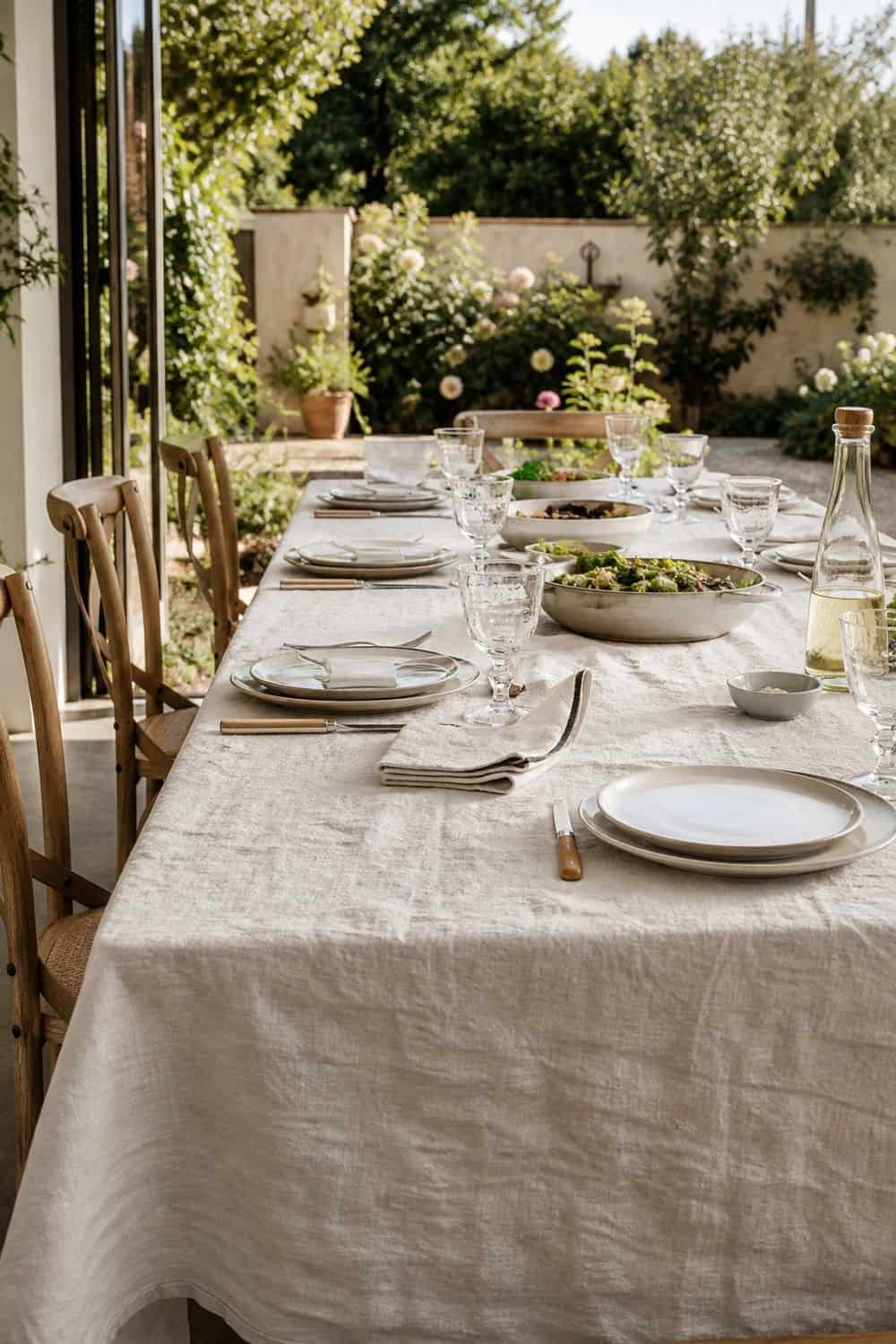
A linen tablecloth gives the whole dinner that sunlit, gathered feeling. White, oatmeal, faded blue, tomato red, or a quiet stripe can all work depending on the food and glassware. Let the wrinkles relax instead of chasing a perfectly pressed surface; linen looks better when it feels lived-in.
Check the table width before adding big centerpieces or too many serving pieces. The cloth should soften the table, not hide the fact that everyone still needs room for plates, glasses, elbows, and shared dishes.
6. Striped Napkins for a Summer Cafe Feel
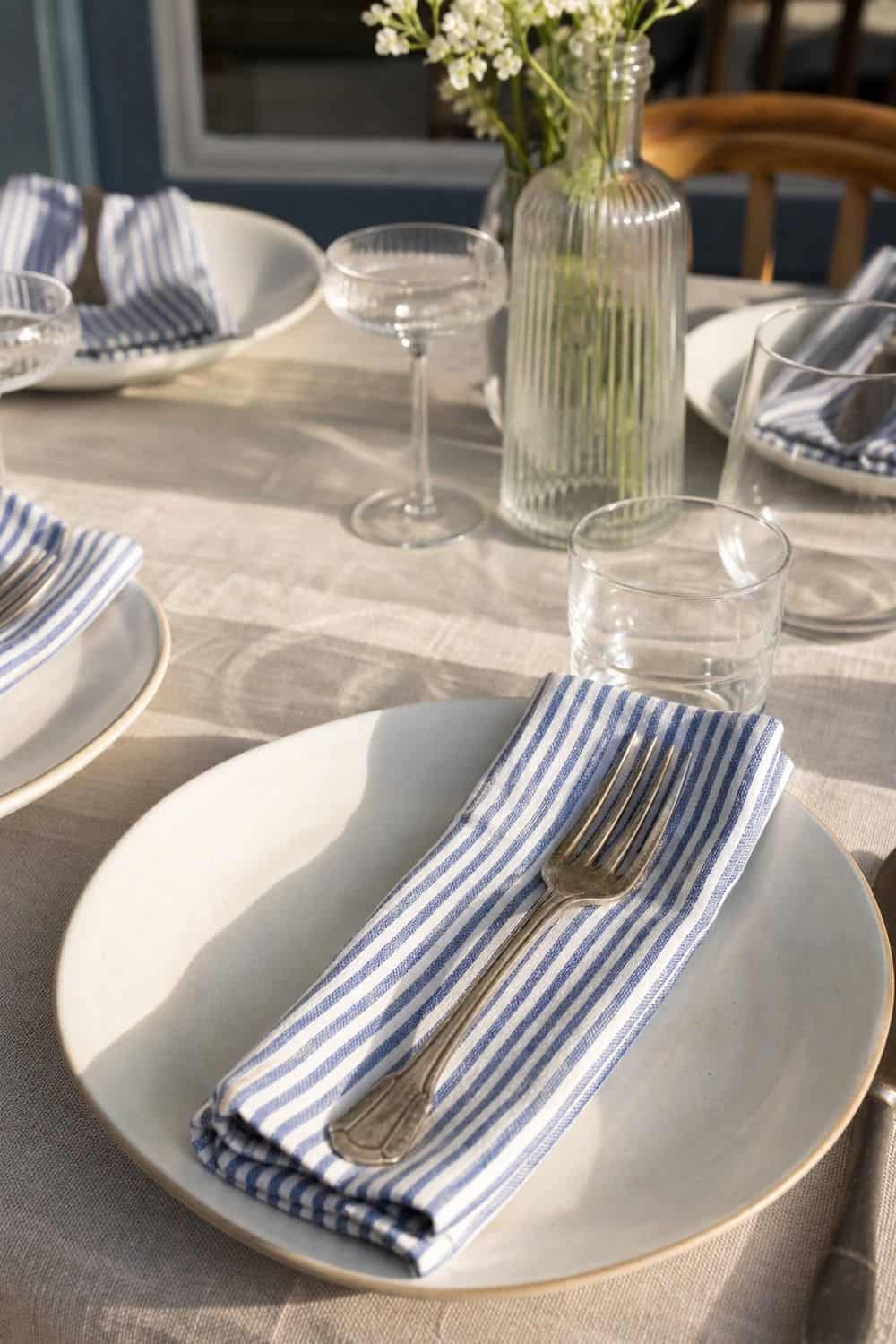
Striped napkins are an easy European cafe cue without forcing the whole table into a theme. Blue, red, green, or tan stripes can add rhythm against plain plates and a linen tablecloth. Tie them loosely, fold them under the fork, or place them casually on the plate. If the napkins are patterned, keep the plates and flowers quieter so the table does not feel busy. You can alternate two stripe colors if the palette is simple, but repeating one set is often enough to make the table feel pulled together.
7. Vintage-Style Wine Glasses
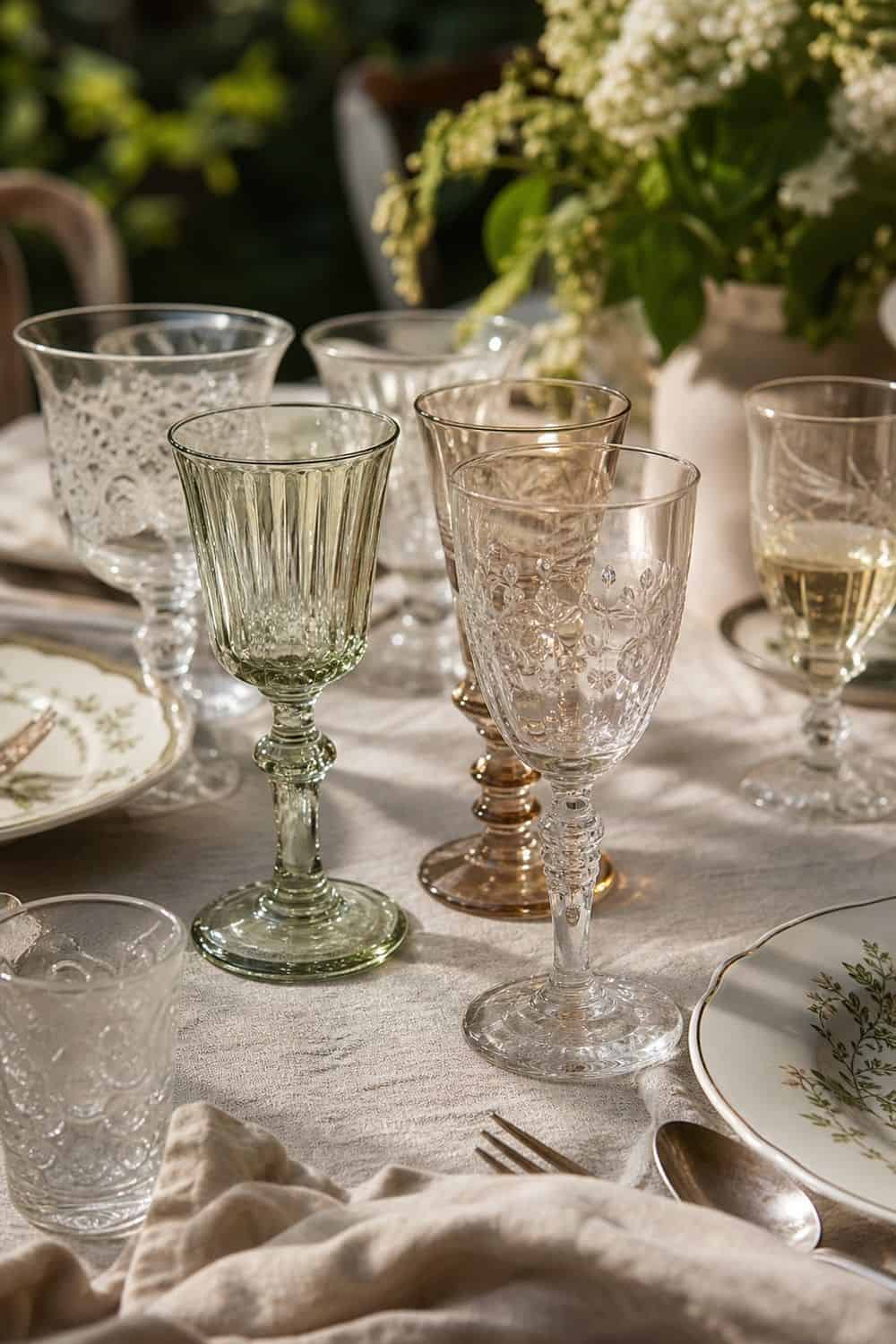
Characterful wine glasses add charm to a summer table, whether they are clear, lightly colored, etched, or a little mismatched. Use them for wine, spritzes, or sparkling water if the shape feels comfortable. For outdoor dining, choose glasses with enough weight in the base so they do not tip at the first breeze. A mixed set can look charming when the heights and colors still feel related. The glassware should help the table feel collected, not fragile enough that guests are nervous to pick it up.
8. Tomato and Burrata Platter
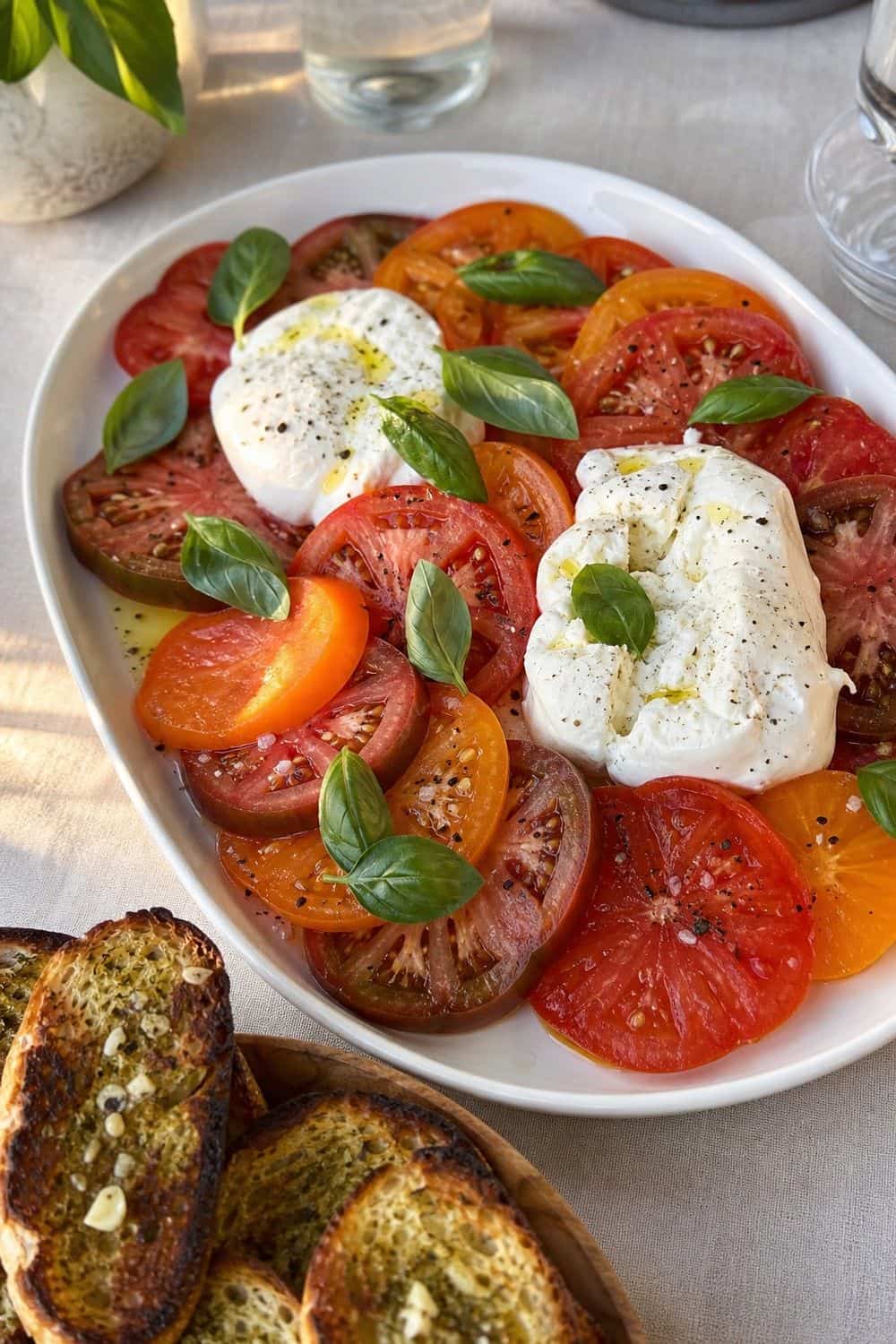
Tomatoes and burrata make the perfect low-cook summer starter when the produce is truly good. Slice the tomatoes shortly before serving, add burrata, basil, olive oil, salt, pepper, and maybe garlic toasts or crusty bread.
Keep the platter wide and shallow so the tomatoes do not drown in their own juices. Bring it out close to eating time, especially in the heat, so the cheese stays fresh and the basil still looks alive.
This is simple food, so the timing matters more than extra decoration. Let the tomatoes, olive oil, and good bread do most of the work.
9. Peaches With Burrata or Panzanella
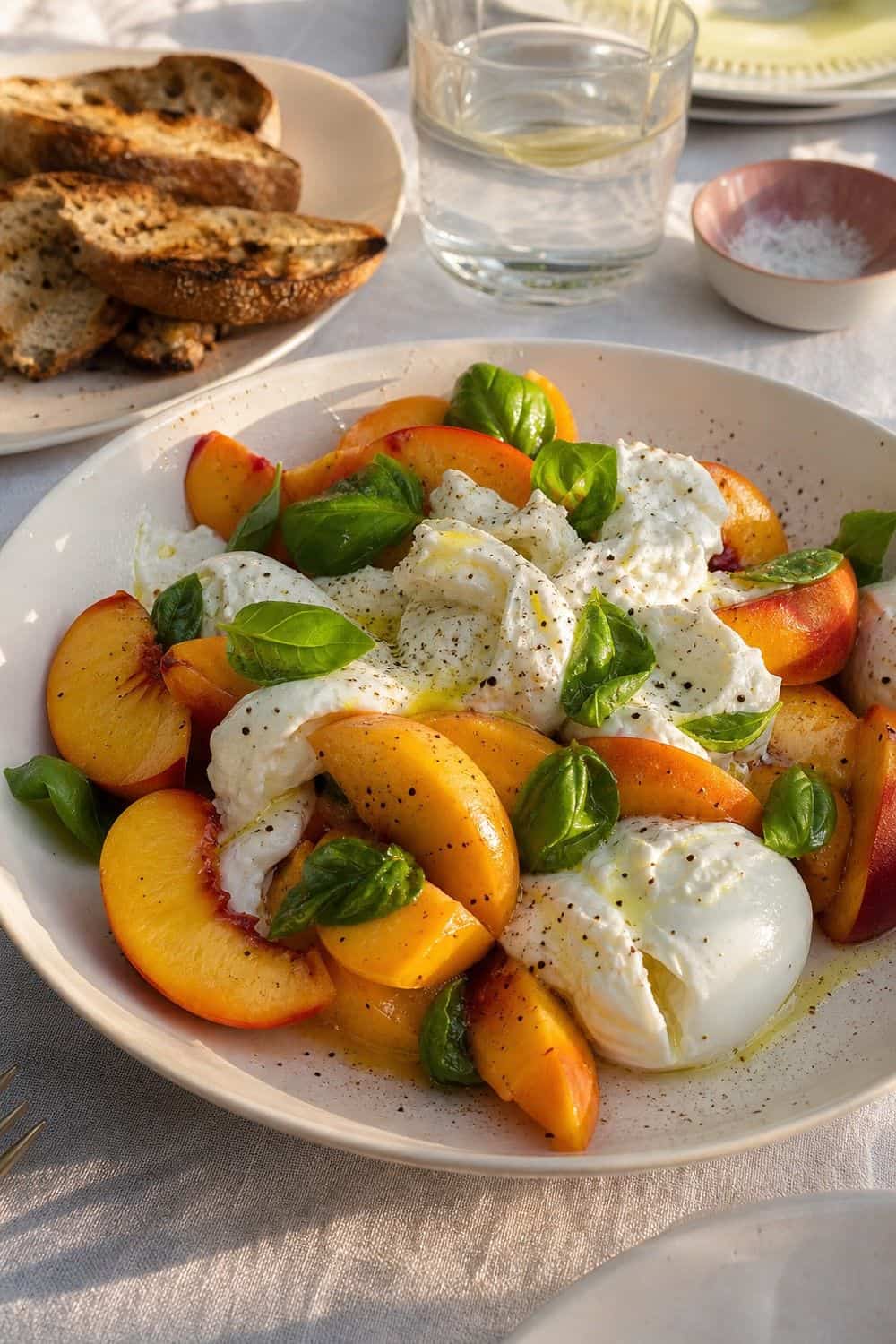
Peaches bring that late-summer sweetness that makes a table feel generous without much cooking. Pair them with burrata, basil, olive oil, and black pepper, or turn them into a panzanella with torn bread and tomatoes.
If the salad needs to sit for a while, keep toasted bread separate until serving so it does not collapse. This dish needs fruit ripe enough to perfume the table. A big bowl or platter lets the colors spread out instead of becoming a soft pile.
10. Zucchini or Tomato Galette

A zucchini, tomato, onion, goat cheese, ricotta, or herb galette can act like the relaxed centerpiece of the meal. It feels more dinner-party worthy than a snack board, but it can still be made ahead and served warm or at room temperature.
Slice it before the table fills up with glasses and bowls, then pass it with salad, bread, or olives. A galette is forgiving in the best way: rustic edges look right, and peak summer vegetables do most of the work.
11. One Big Bowl of Summer Pasta
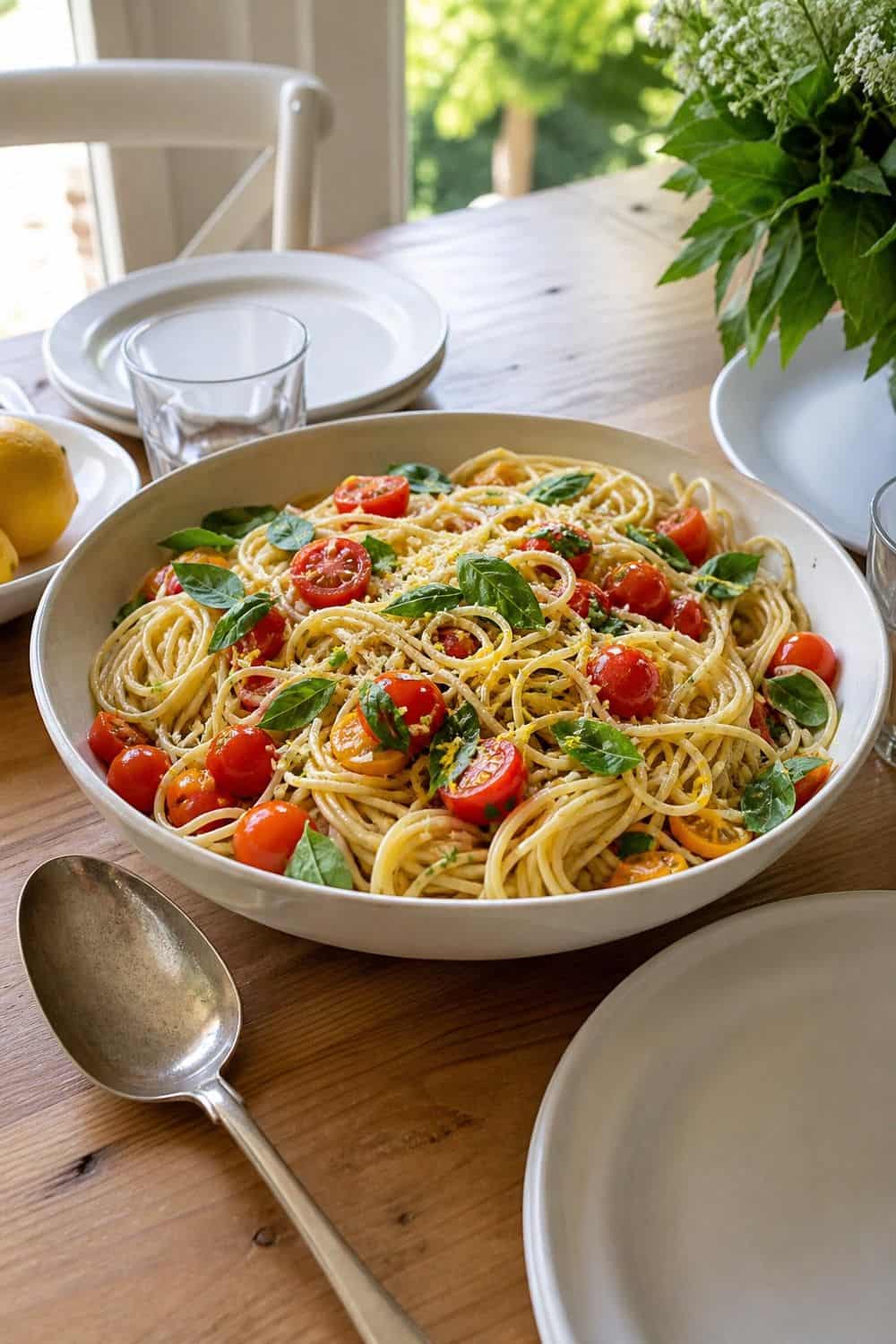
A big bowl of pasta is a natural shared main for a long summer table. Tomato basil pasta, lemon zucchini pasta, pesto pasta, or seafood pasta can all work if the sauce is light enough for warm weather. Choose a serving bowl with room to toss, and keep a real serving spoon beside it so guests are not improvising with a dinner fork. Pasta is best when it feels abundant but not heavy. Add herbs, olive oil, or lemon at the end so the bowl still feels bright.
12. Small Olive Bowls Around the Table
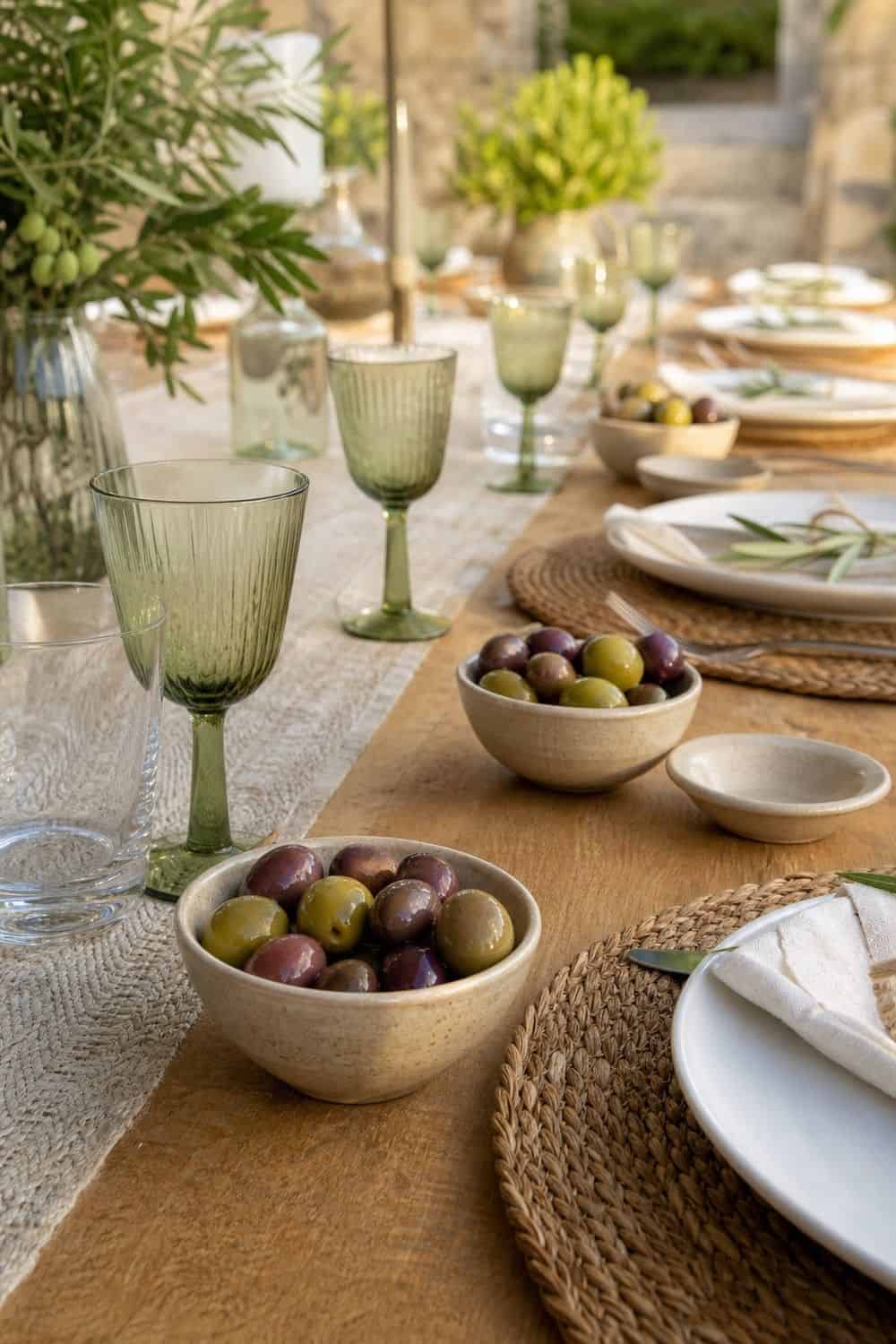
Small olive bowls are better than one large bowl that has to travel up and down the table all night. Put a few bowls near different clusters of guests so everyone can snack without interrupting conversation. If the olives have pits, add a tiny plate or empty bowl nearby so people are not stuck wondering what to do. This also lets you offer two varieties without making the table feel overcomplicated. Olives are salty, easy, and very useful, especially while drinks are being poured.
13. Cheese With a Small Knife Set
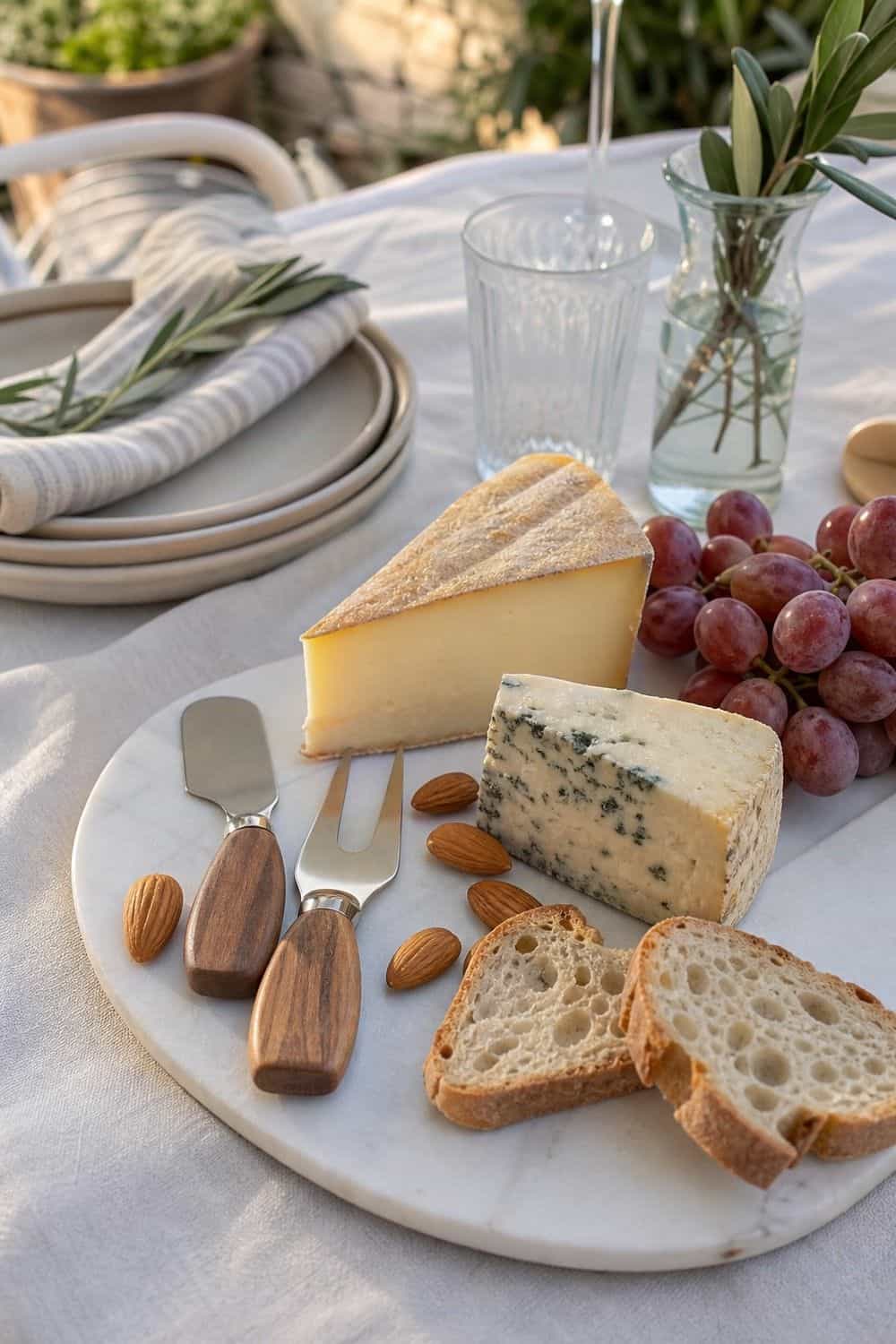
A modest cheese course can sit beautifully between the main dish and dessert. Choose one or two cheeses, then add bread, crackers, fruit, honey, or nuts if the table needs a little more. Use the right knife for soft and firmer cheese so guests can serve themselves cleanly. This does not need to become a giant board; a small plate with good cheese is often more elegant. Keep it shaded or bring it out later if the evening is hot, because soft cheese loses its charm quickly in direct sun.
14. Bread in a Linen-Lined Basket
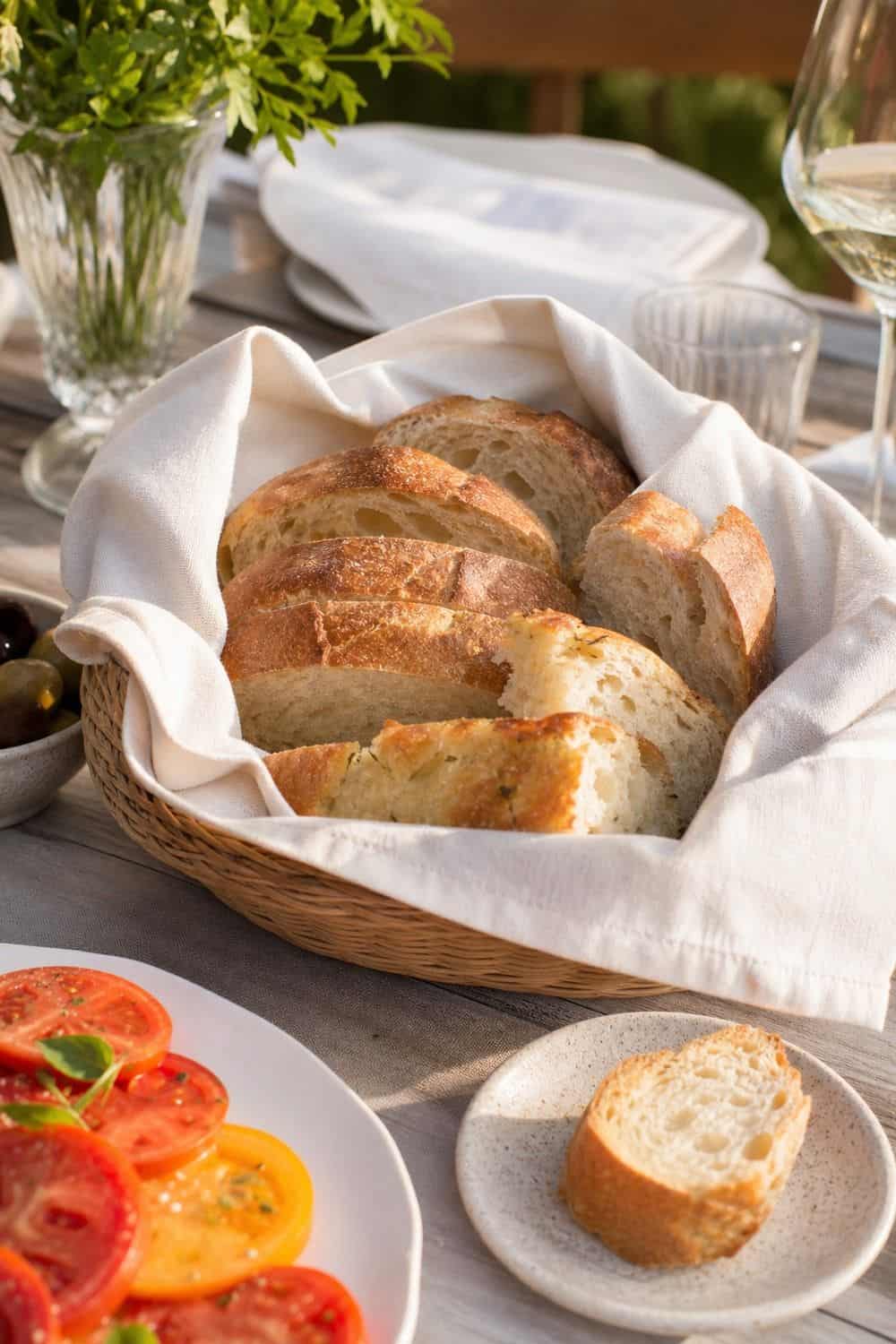
Bread helps the whole dinner feel grounded. Use baguette, focaccia, sourdough, flatbread, or a country loaf, then tuck it into a linen-lined basket so it stays tidy and easy to pass.
Place the basket where guests can reach it without leaning over hot food or candles. If the bread is crusty, a small plate for crumbs is a kind little detail. Bread also supports the tomato platter, cheese, olives, pasta sauce, and anything with good olive oil. Refill the basket quietly instead of starting with too much bread on a hot table.
15. Seafood Salad Kept Cold Over Ice
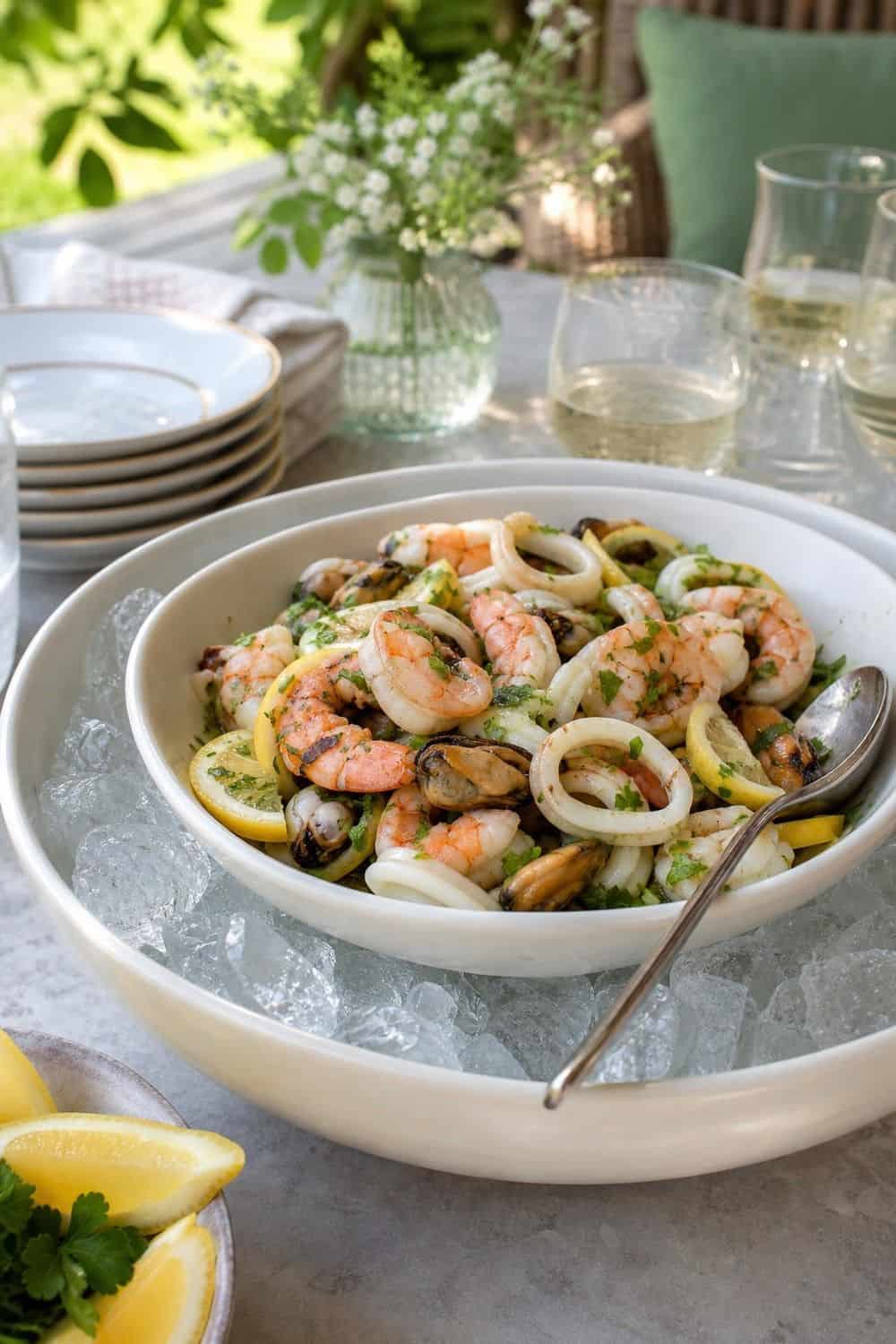
A chilled seafood salad can feel wonderfully summery, but it needs a proper serving plan. Shrimp, calamari, mussels, or a simple seafood mix should stay cold until close to mealtime.
Use a chilled tray, a bowl nested over ice, or smaller refills from the refrigerator instead of letting one big bowl sit out. Add lemon, herbs, cucumber, or olive oil for brightness. If the weather is very hot, keep the portion smaller and refill only when needed. A small serving spoon also keeps hands out of the chilled dish.
16. Chilled Soup in Small Cups

Chilled soup is a lovely no-cook or low-cook starter for hot weather. Gazpacho, salmorejo, cucumber soup, or chilled tomato soup can be served in small cups before pasta, galette, or seafood. Keep the portions modest so the soup refreshes guests instead of becoming a heavy first course. Small cups are easier than big bowls on a crowded table, and they can be filled just before serving. Add a little olive oil, herbs, or cracked pepper on top if the soup needs a finish.
17. Market Basket as Produce Decor
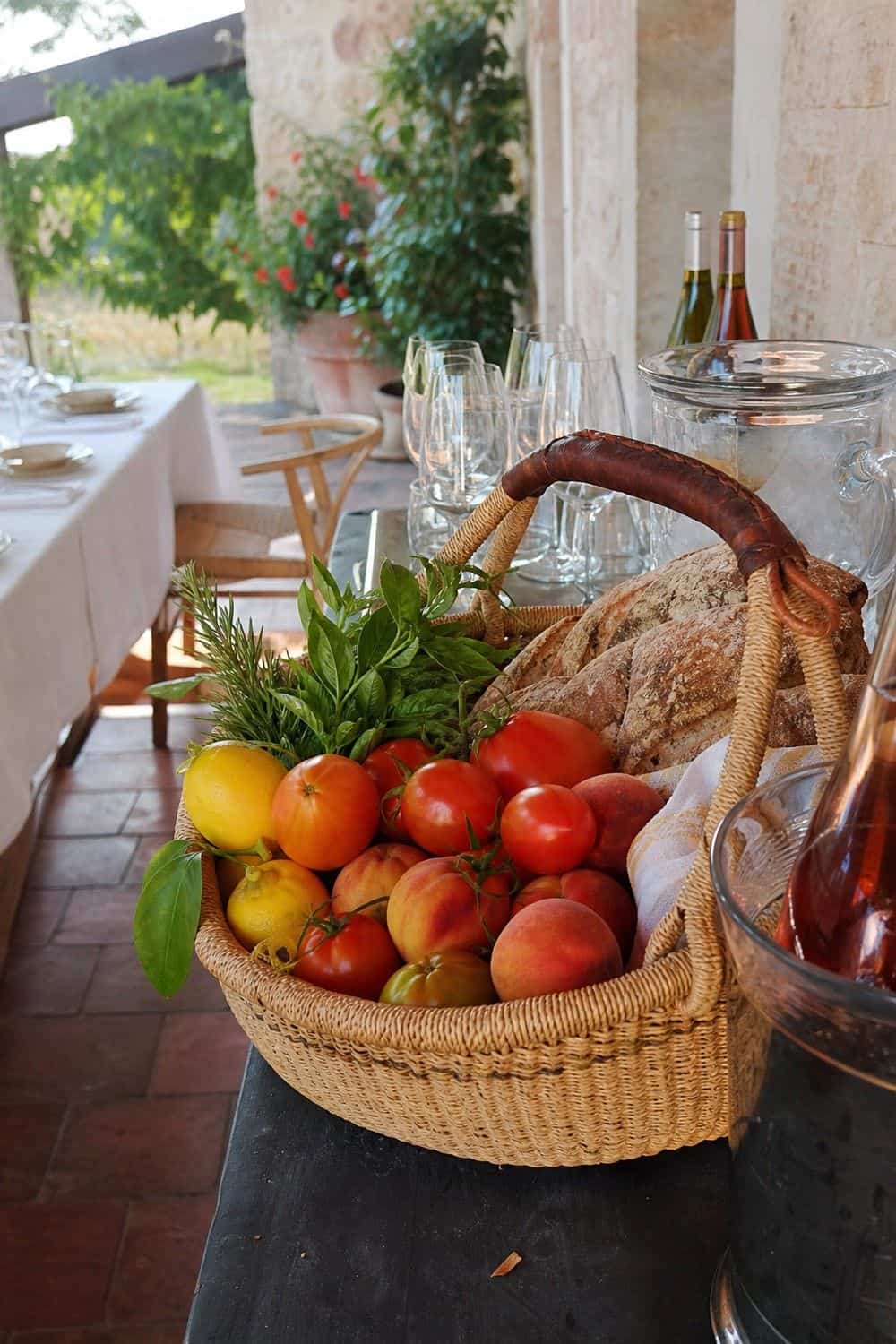
A market basket filled with tomatoes, citrus, peaches, bread, or herbs can set the mood without adding objects that have no purpose. Keep it at the table end, on a sideboard, or near the drink area so it does not block serving dishes.
The produce should connect to the menu: tomatoes for the platter, citrus for drinks, peaches for dessert, herbs for garnish. This keeps the styling from feeling wasteful. A basket also makes the table feel like it began at the market, which is exactly the mood you want.
18. Herb Pots Down the Table

Small herb pots bring edible greenery to the table in a way flowers cannot always manage. Basil, mint, rosemary, oregano, or thyme all make sense for a summer dinner, especially if those flavors appear in the food or drinks. Use saucers under terracotta pots and keep soil away from plates. If guests are meant to use the herbs, snip a few sprigs into a small bowl before dinner instead of making everyone reach into the plant. The pots should add scent and color without interrupting the meal.
19. Citrus as a Low Centerpiece
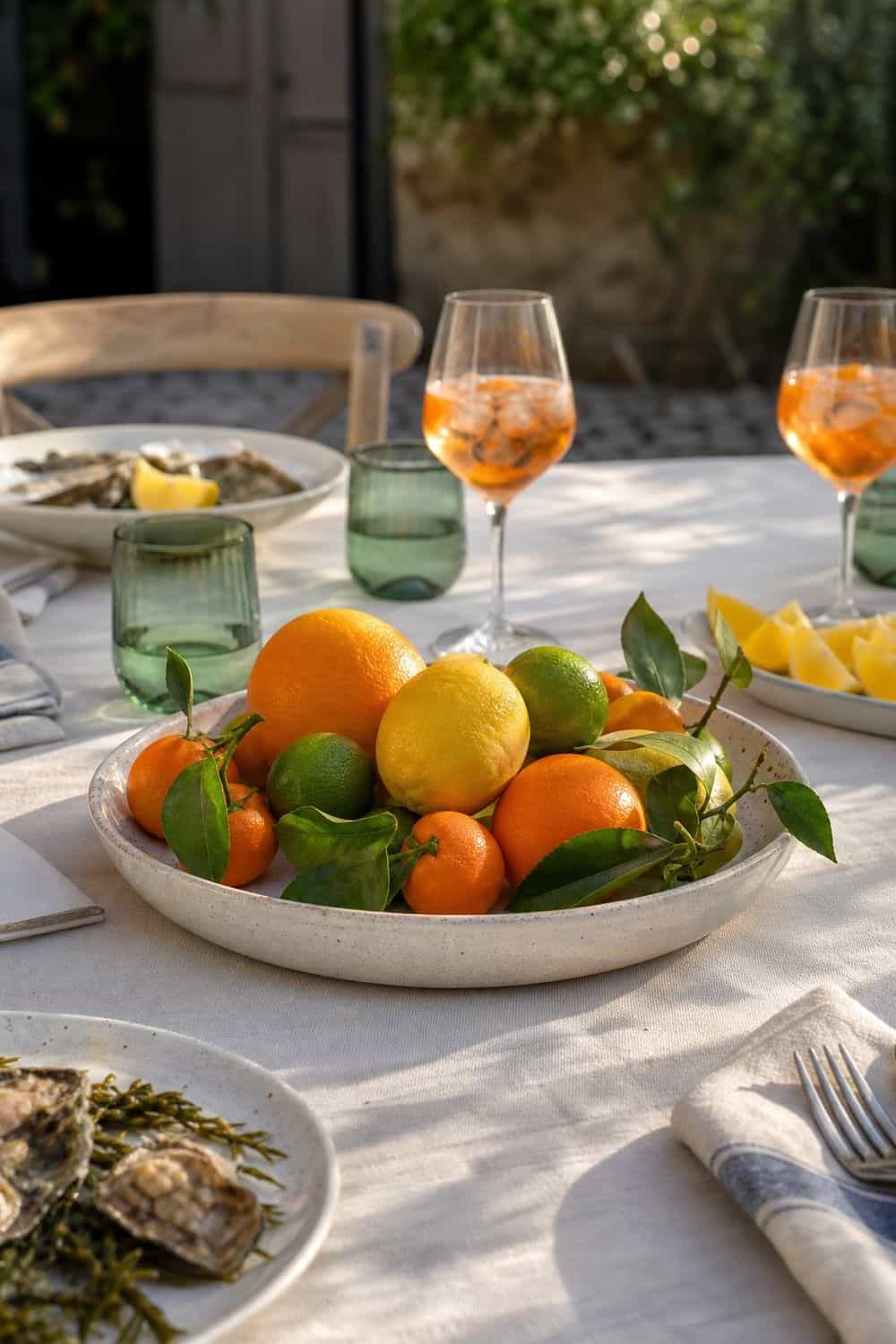
Oranges, lemons, mandarins, or limes in a low ceramic bowl can brighten the table without blocking anyone’s view. The key is making the citrus feel connected to the meal. Use it in spritzes, sparkling water, seafood salad, chilled soup, or dessert so it does not sit there as unused decoration. Keep the bowl low and not too full; a few beautiful pieces are enough. Citrus gives color, scent, and a little practical promise, which is much better than a centerpiece guests have to work around.
20. Outdoor-Safe Reusable Plates
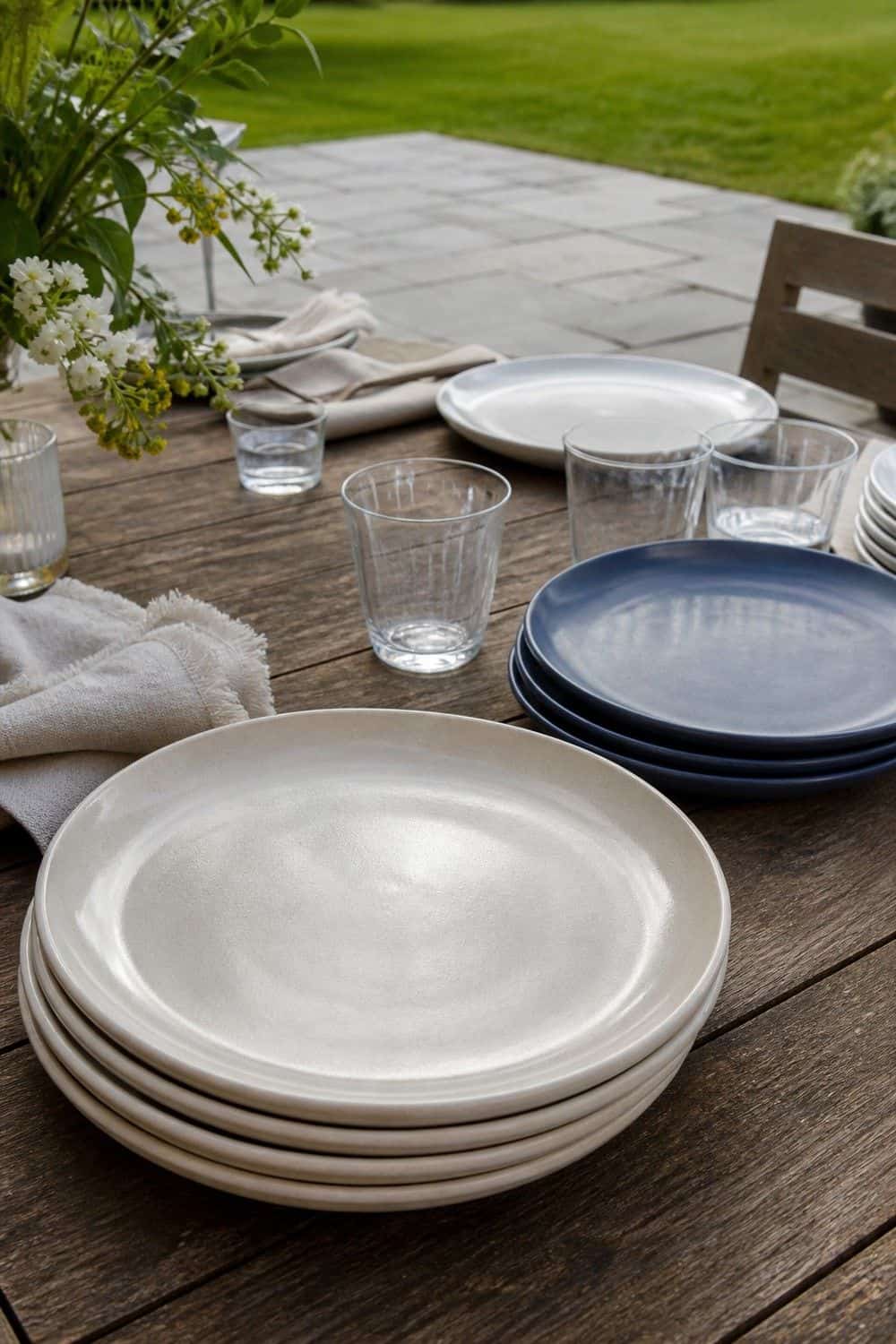
If dinner is outside, sturdy reusable plates are a better choice than flimsy disposable ones. Melamine, enamel-style plates, or durable outdoor options can still look polished with linen, glassware, and real serving dishes. Check the care instructions, weight, and dishwasher guidance before choosing a set.
Choose simple colors that work with your tablecloth and napkins so the plates do not dominate the food. Good reusable plates make a patio dinner feel considered while still being practical for grass, stone, wind, and guests moving around.
21. Citronella Candles Away From Food

Citronella can be useful for outdoor hosting, but it does not belong right beside burrata, peaches, wine, or bread. If the scent is strong, place candles around the patio perimeter rather than in the middle of the table.
Use unscented candles for the dining surface and keep any pest-control candles stable, low, and away from trailing linens. This keeps the food smelling like food and still helps the outdoor space feel cared for. Practical does not have to mean sitting next to a candle that overpowers dinner.
22. Taper Candles After Sunset
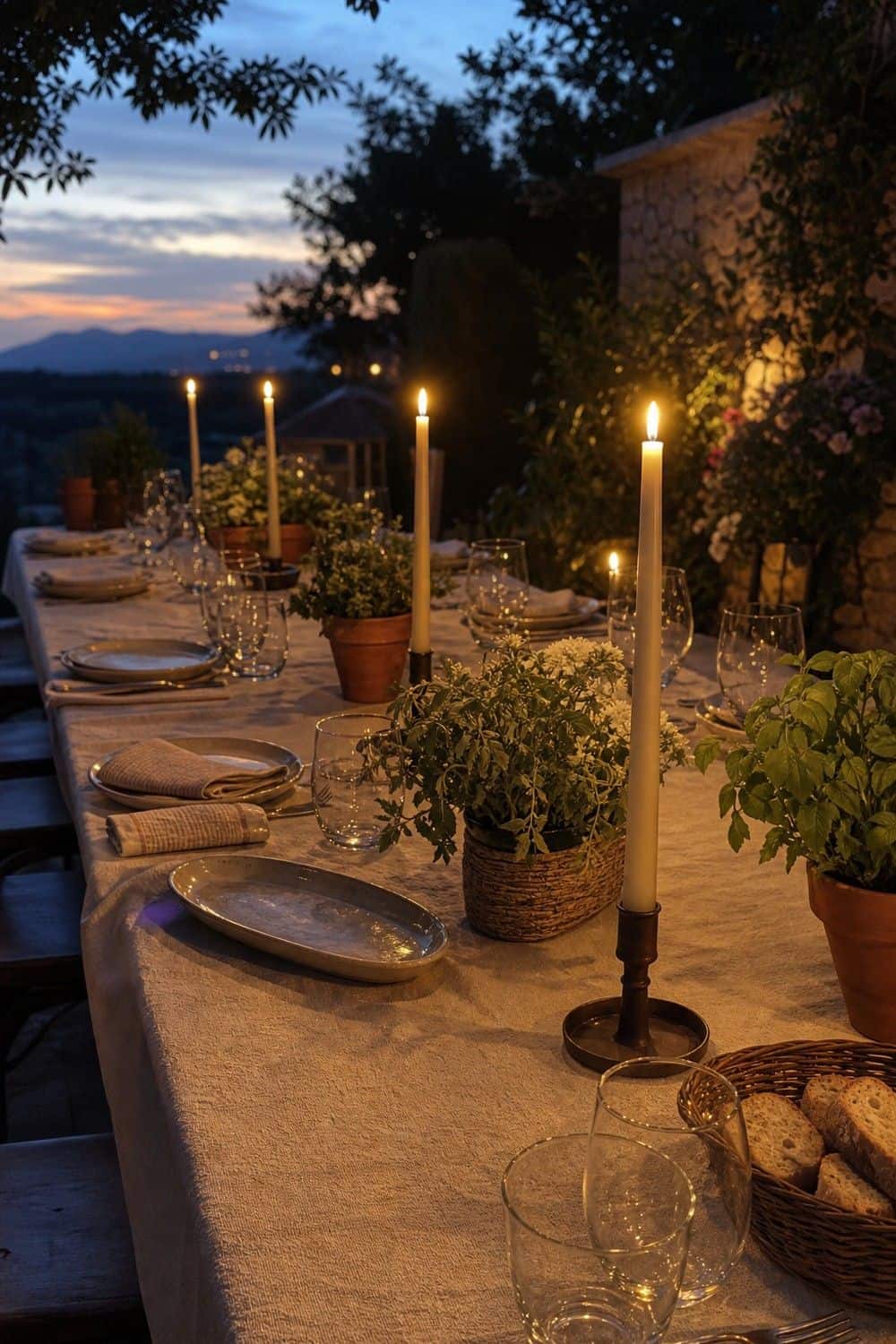
Taper candles can shift the table from sunlit aperitivo to slow evening dinner. Use stable holders, unscented candles, and wind protection if the table is outside.
Wait until the sun drops before lighting them so they feel like part of the evening, not daytime clutter. Keep flames away from linen, napkins, herb pots, and bread baskets. A few candles in the right spots are more useful than a dramatic line that makes people reach around fire for the salad. Leave space for someone to pass a platter comfortably.
23. Dessert on a Sideboard

Dessert does not need to sit on the table from the beginning. Keep a fruit tart, berries, olive oil cake, gelato toppings, or peaches on a sideboard until dinner plates are cleared. This gives the long table room for starters, mains, bread, drinks, and conversation without making everything feel crowded. A footed stand or simple tray can make dessert feel ready without putting it in the way. When you bring it out later, it feels like a new moment instead of one more platter guests have been dodging all night.
24. Espresso or Herbal Tea at the End

Espresso, decaf, herbal tea, or mint tea gives the dinner a gentle ending after fruit, cheese, or dessert. Clear the main plates first, then bring small cups, spoons, and maybe a little chocolate or biscotti to the table. This keeps the final course from feeling rushed. If the meal has been outside, coffee can also move guests into a cooler corner, balcony, or sitting area. The closing drink does not need to be elaborate; it just gives everyone a comfortable reason to linger a bit longer.
25. Three Strong Dishes Instead of Too Many Platters
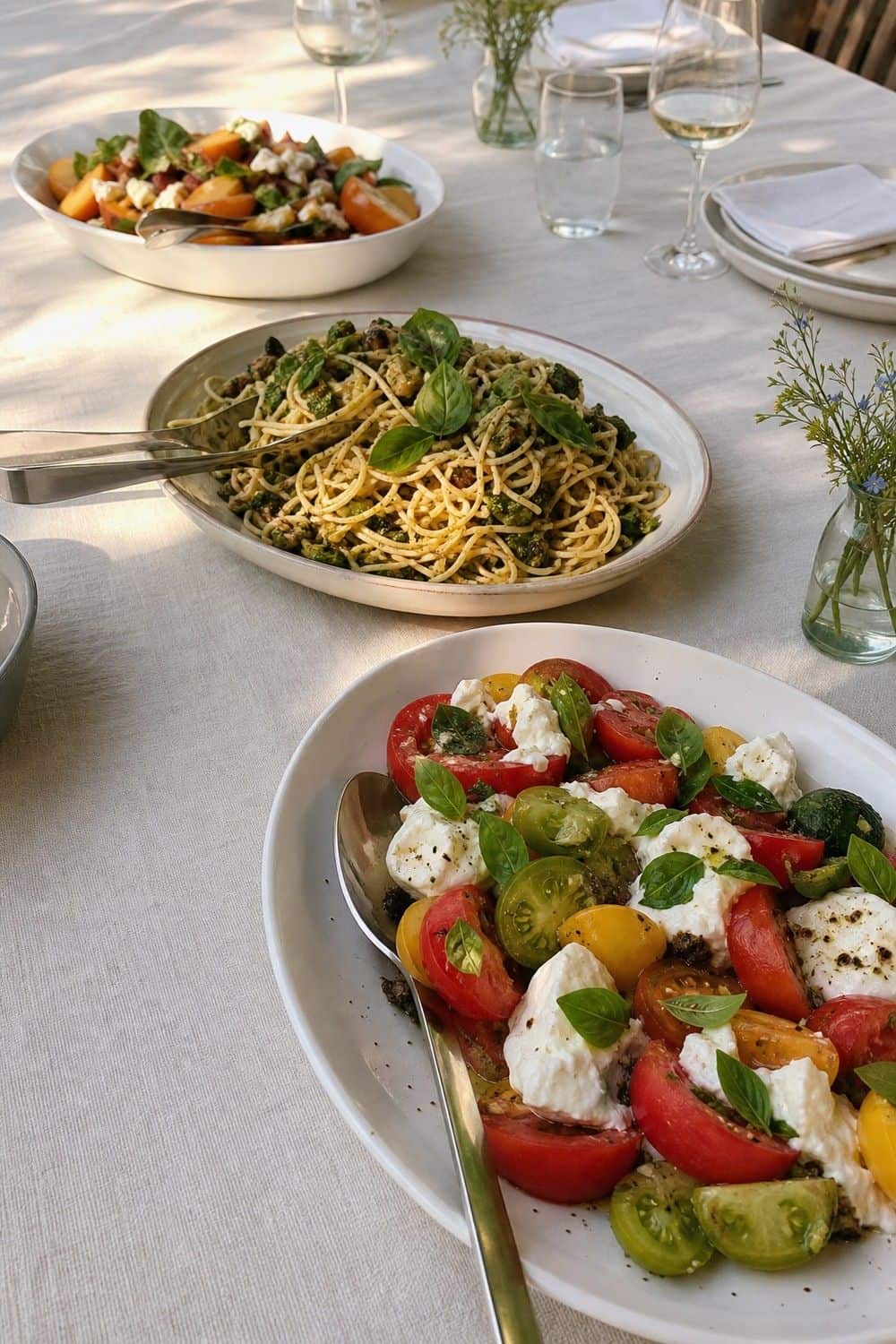
The most relaxed European-summer-inspired dinners usually have restraint. Aperitivo, one shared main, one salad or vegetable, bread, drinks, and a fruit dessert can be plenty. You do not need eight platters if three of them are strong, seasonal, and easy to serve. Give every dish its own serving spoon or tongs so the table flows smoothly. Too many half-finished dishes can make the meal feel scattered and leave the host with a mountain of leftovers. A confident short menu often feels more generous than an overloaded one.
European Summer Dinner Party Menu Directions
This style can lean Italian with aperitivo and pasta, French with a market basket and galette, Spanish with chilled soup, Greek with mezze, or broadly Mediterranean with seafood, herbs, citrus, and olives. Choose one direction for the meal so the table feels cohesive instead of borrowing every idea at once.
Long-Table Setup and Drink Flow
For a long summer table, keep the center low, repeat carafes and small bowls along the length, and move dessert or extra drinks to a sideboard. Put water out early, keep cold dishes cold, and light candles only when they help the evening rather than crowding the food.
Frequently Asked Questions
What is a European summer dinner party?
A European summer dinner party is a relaxed warm-weather meal inspired by aperitivo, market produce, linen tables, simple shared dishes, cold drinks, and long evening pacing. It should feel specific and seasonal without pretending Europe has only one dinner style.
What do you serve at a European summer dinner party?
Good options include tomatoes, burrata, olives, bread, cheese, pasta, galette, seafood salad, chilled soup, peaches, citrus, and a simple fruit dessert. Choose a few strong dishes instead of crowding the table with too many plates.
How do you decorate a European summer table?
Use linen, vintage-style glassware, carafes, small olive bowls, citrus, herb pots, a market basket, and candles after sunset. Keep centerpieces low and useful so guests can pass food, pour drinks, and talk across the table.
What is aperitivo for a dinner party?
Aperitivo is a relaxed pre-dinner drink and snack moment. It can include spritzes, zero-proof drinks, olives, cheese, crackers, bread, nuts, citrus, or small bites. Keep it light so guests still want the main meal.
How do I host a European summer dinner without cooking all day?
Use one low-cook starter, one shared main, one salad or vegetable, bread, olives, cheese, and a fruit-based dessert. Make the drink setup and table ahead so the final hour is mostly assembly and chilling, not heavy cooking.
What is a good zero-proof drink for this dinner?
A citrus spritz with zero-proof aperitif, sparkling water, orange, lemon, herbs, or bitter syrup works beautifully. Serve it in the same glassware as the cocktails so it feels like a proper drink, not a last-minute substitute.
How do I keep outdoor summer food safe?
Keep dairy, seafood, and chilled dishes cold until close to serving, then move leftovers back inside quickly. Use smaller bowls with refills instead of letting one large platter sit warm through the whole evening.
How many dishes do I need for a European summer dinner?
Three strong dishes plus bread, olives, drinks, and dessert can be enough for a relaxed long-table meal. A confident short menu usually feels better than too many half-finished platters competing for space.
Final Thoughts
A European summer dinner party feels best when it is abundant but not crowded. Start with cold drinks, good produce, bread, one simple main, and a table that lets people reach what they need. That is the charm of the whole evening: easy food, warm light, and enough space to linger.
Last update on 2026-09-18 / Affiliate links / Images from Amazon Product Advertising API