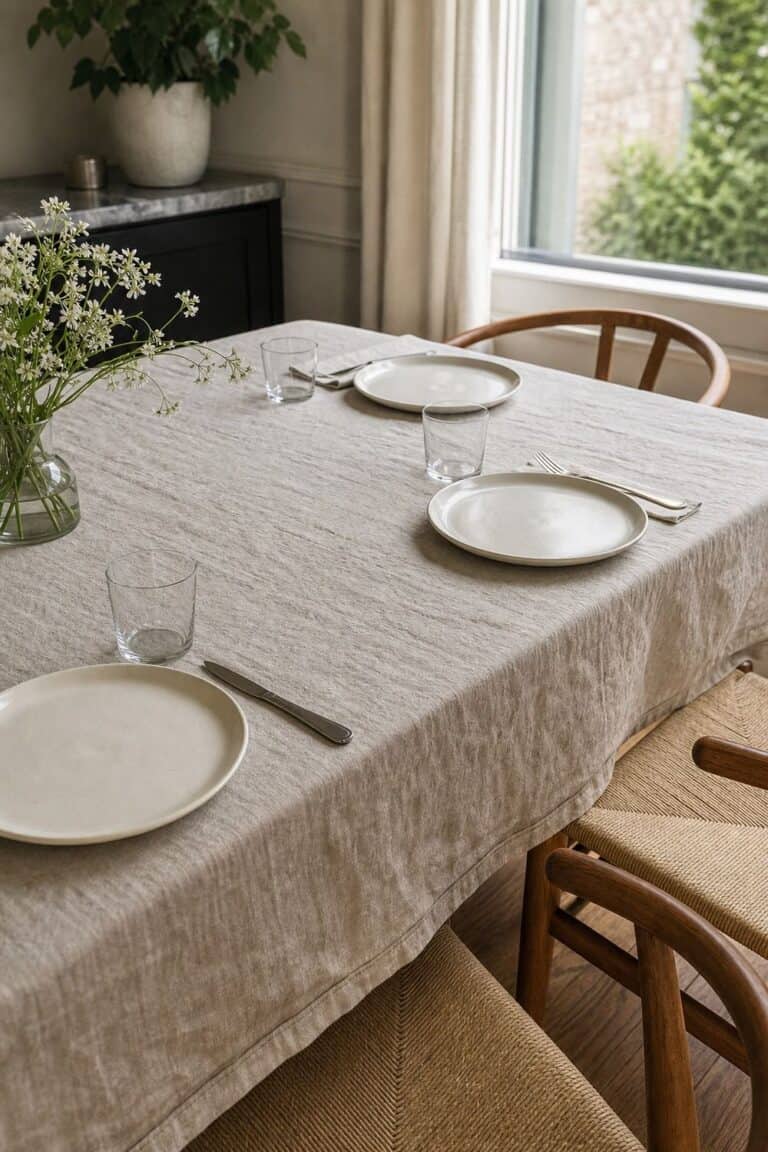
The best patio dinner party ideas start with a table that fits the space, comfortable seating, reusable outdoor dinnerware, low centerpieces, warm lighting, a side table for drinks and refills, and a relaxed family-style menu. Keep the dining table easy to eat from, move extras to a cart or side table, and choose decor that handles wind, low light, and conversation. A patio dinner feels special when the table looks finished but still leaves room for real food.
A patio dinner party works best when the outdoor table feels like a real place to gather, not a crowded display that happens to have plates on it. The shape of the table, the way guests sit, the lighting overhead, and the menu format all change how relaxed the evening feels.
Think of the patio as one easy outdoor dining room: a table with room for plates, somewhere nearby for drinks and refills, lighting that flatters the food, and a menu that does not need constant attention. The best details feel relaxed because they help dinner move along, from the first glass of lemonade to the last plate of dessert.
You Might Also Like These Blog Posts
- Summer Patio Dinner Hosting Ideas
- European Summer Dinner Party Ideas
- Garden Party Food Ideas
- Warm Neutral Tablescape Ideas
- Zero-Proof Bar Ideas
1. Choose a Round Patio Table for Easy Conversation
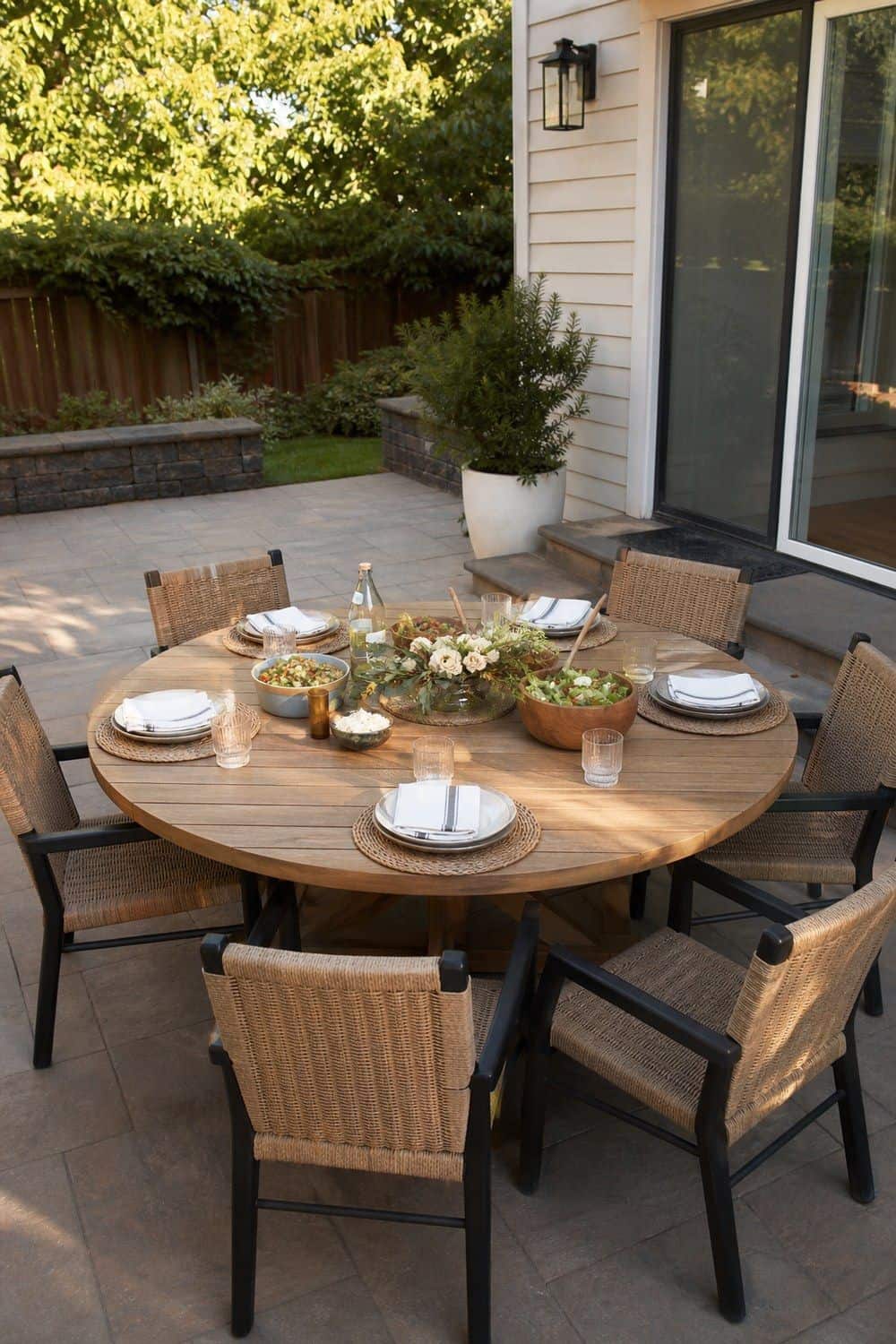
Round tables make patio dinners feel more conversational because nobody is stranded at the far end. Guests can see each other, serving bowls are easier to reach, and the table naturally feels less formal than a long rectangular setup.
For four to six guests, choose a size that leaves enough chair clearance around the patio edge, door swing, and main walkway. A round table is especially useful on square patios and small terraces where corners would make the layout feel tight. Keep the centerpiece low and let the table shape do most of the hosting work.
2. Use Bench Seating on a Narrow Patio
Bench seating can solve the awkward side of a narrow patio where individual chairs would block the walkway. It tucks under the table when dinner is over, seats an extra guest when needed, and gives the table a relaxed, shared feel.
Add a thin outdoor cushion if the bench is hard, but avoid anything so plush that guests slide around during dinner. Keep one side of the table open with chairs so people can get in and out easily. This works well for small patio dinner party layouts where every inch has to earn its place.
If guests will be serving themselves, leave the bench on the quieter side of the table so people are not climbing over each other for refills.

3. Define the Dining Area With an Outdoor Rug
Outdoor rugs make the dining area feel like a room, especially on concrete, decking, or plain pavers. The rug visually gathers the table, chairs, and side pieces so the patio dinner party feels designed instead of borrowed from the kitchen.
Choose a rug large enough that chairs can stay on it when pulled out, or use a smaller rug only under the table if the patio is tight. Flatweave outdoor rugs are easier around dining chairs than thick textures. Patterns also hide crumbs better than solid pale colors.
Skip high-pile rugs under dining chairs. They catch crumbs, fight chair legs, and make the table harder to reset after guests leave.

4. Pick a Reusable Outdoor Dinnerware Set
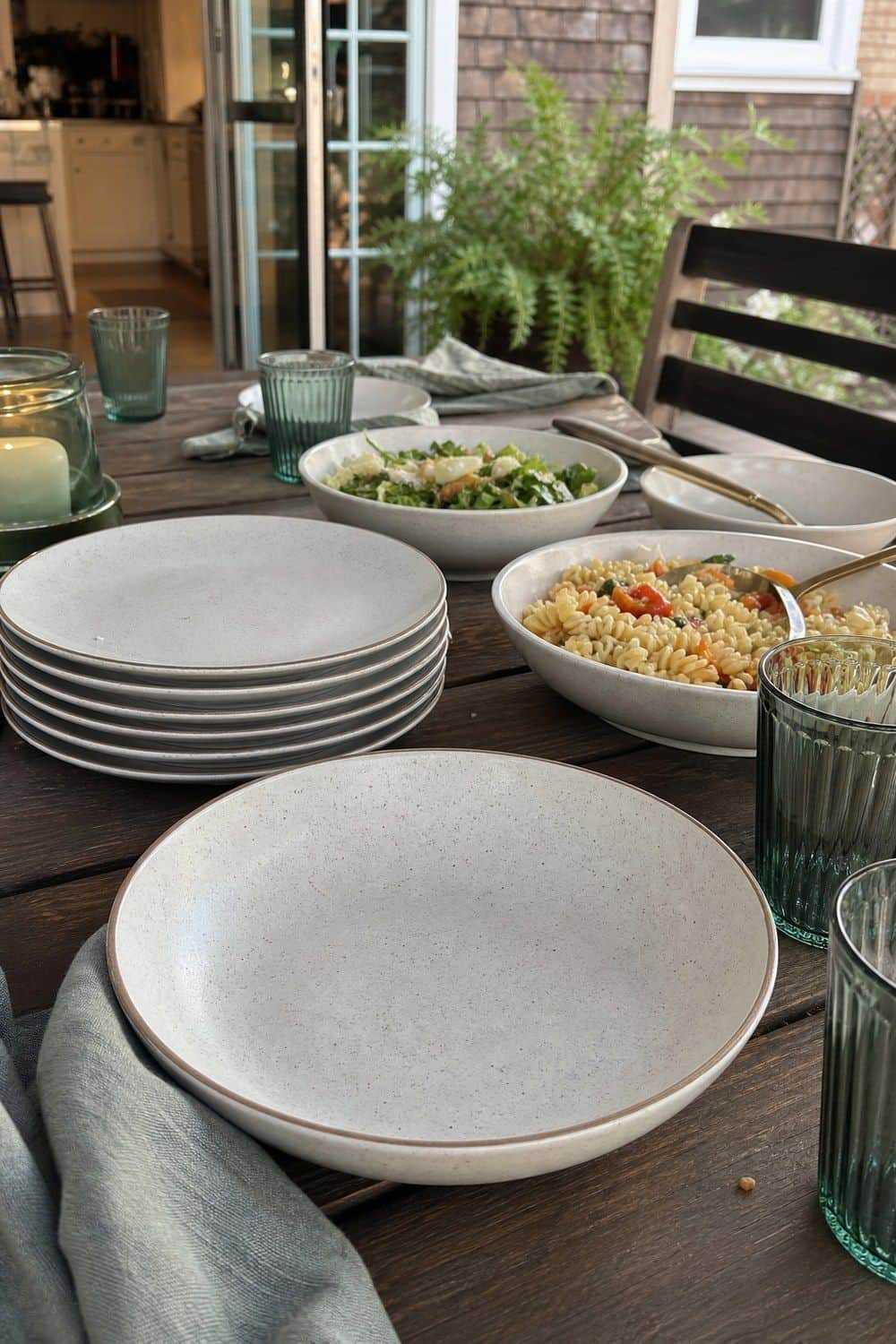
Reusable outdoor dinnerware helps the table feel like dinner without the worry of fragile pieces. Melamine, enamel, bamboo-style pieces, and sturdy everyday plates all look more relaxed and finished than flimsy disposable options. Pick plates and bowls that match the menu, not just the color story. Pasta bowls, salad plates, and shallow dinner bowls are often more useful outside than a formal place setting. The table can still look special, but guests should feel comfortable passing food, standing up, and moving between the patio and kitchen.
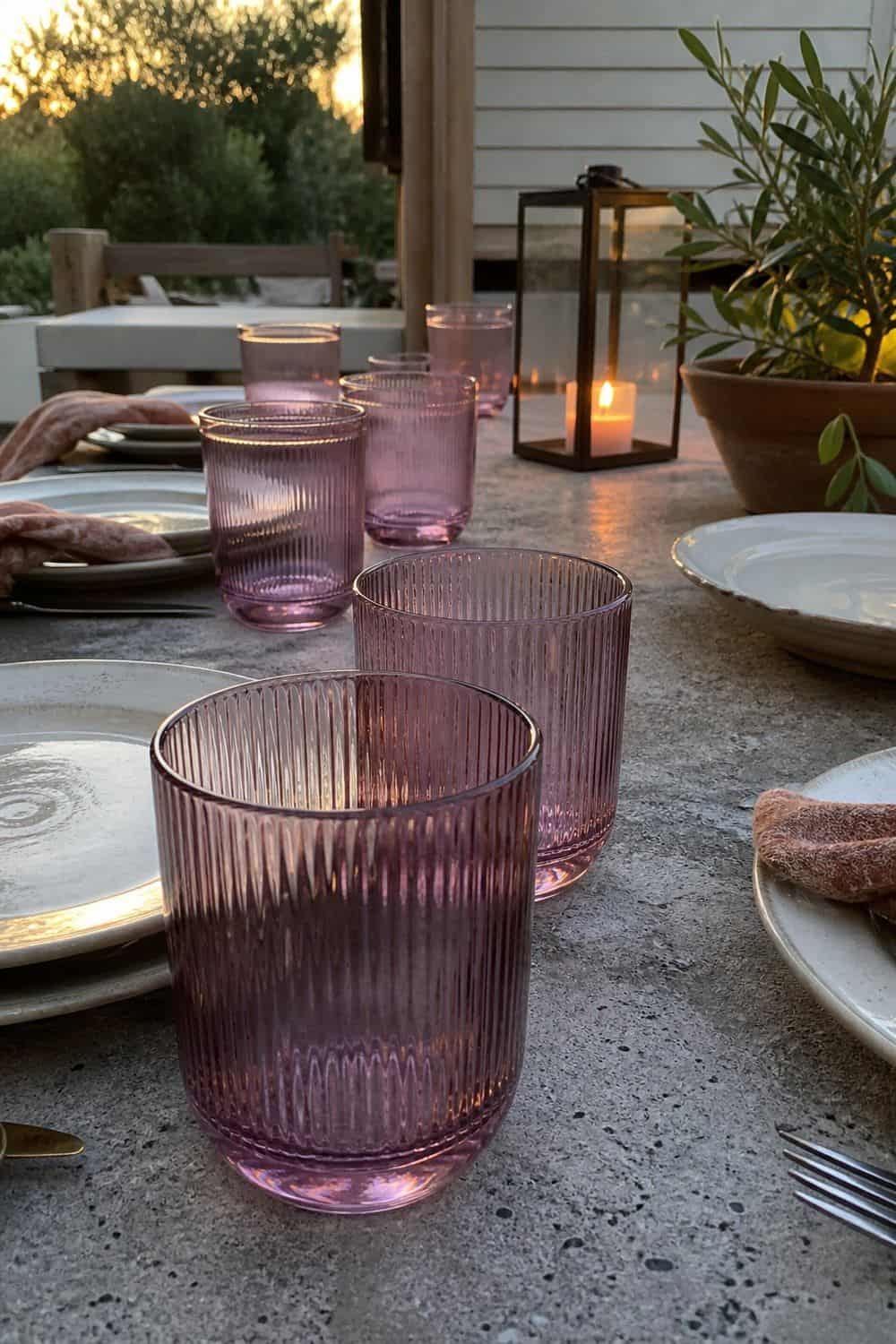
5. Add Colored Acrylic Glasses for Soft Light
Colored acrylic glasses catch sunset, lantern glow, and string lights without adding the risk of broken glass on stone or concrete. Amber, smoke, green, pale pink, or blue glasses can make the table feel collected with very little extra decor. Choose one color family so the setting feels considered rather than random. Stemless shapes are better on small tables, while taller wine-style glasses can work when the surface has more room. Use the same glasses for water, spritzes, wine, or zero-proof drinks to keep the table relaxed.
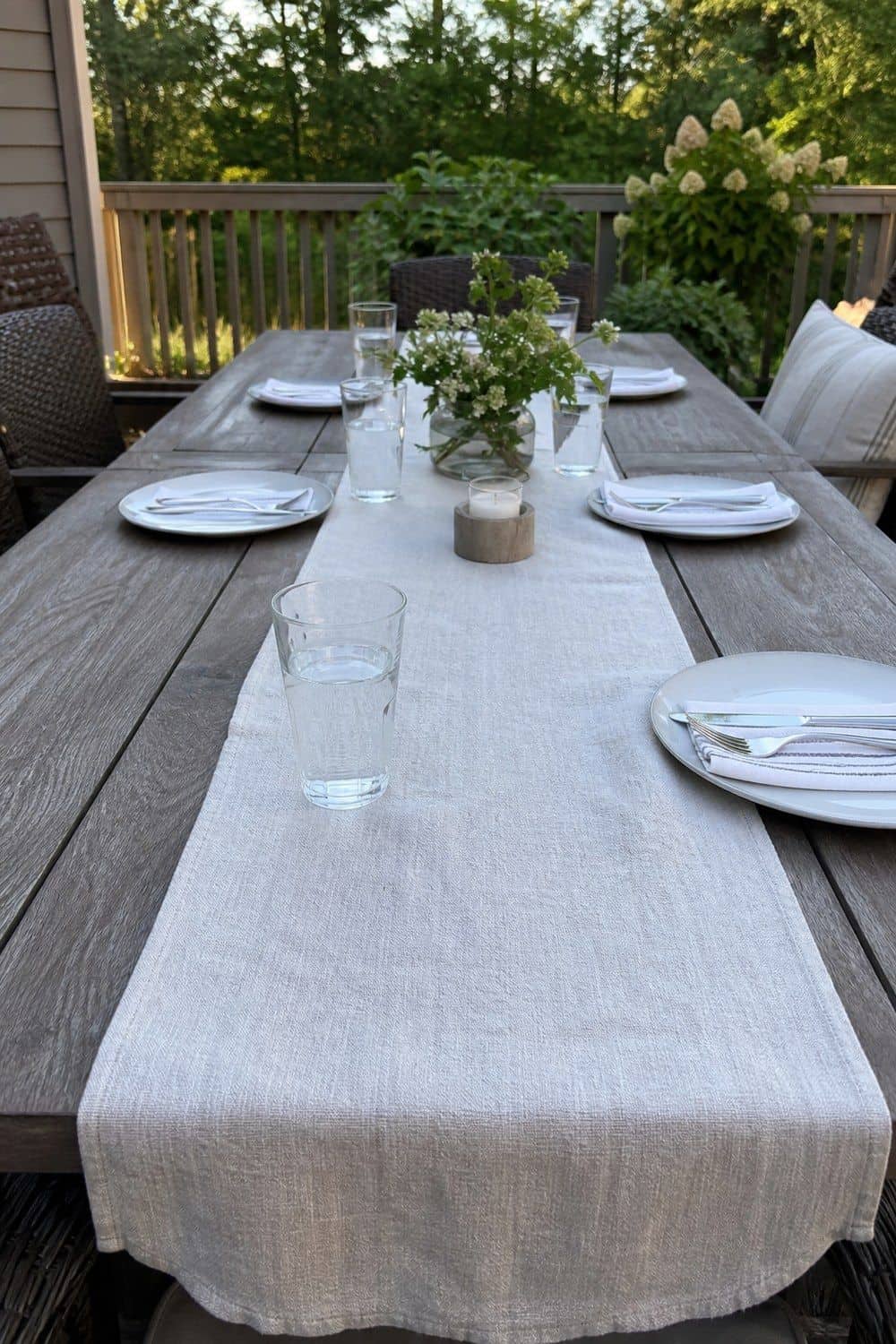
6. Layer a Linen Runner Over a Bare Patio Table
Runners add softness without hiding the patio table completely. This is useful when you have a wood, metal, stone, or tile table that already brings texture to the outdoor dining area.
Use linen-look outdoor fabric, washable cotton, or a simple textured runner down the center. It gives the plates, glasses, and centerpiece a visual line while leaving the edges easier for elbows and passing dishes. If a full tablecloth feels too formal or too vulnerable to wind, a runner is a calmer middle ground.
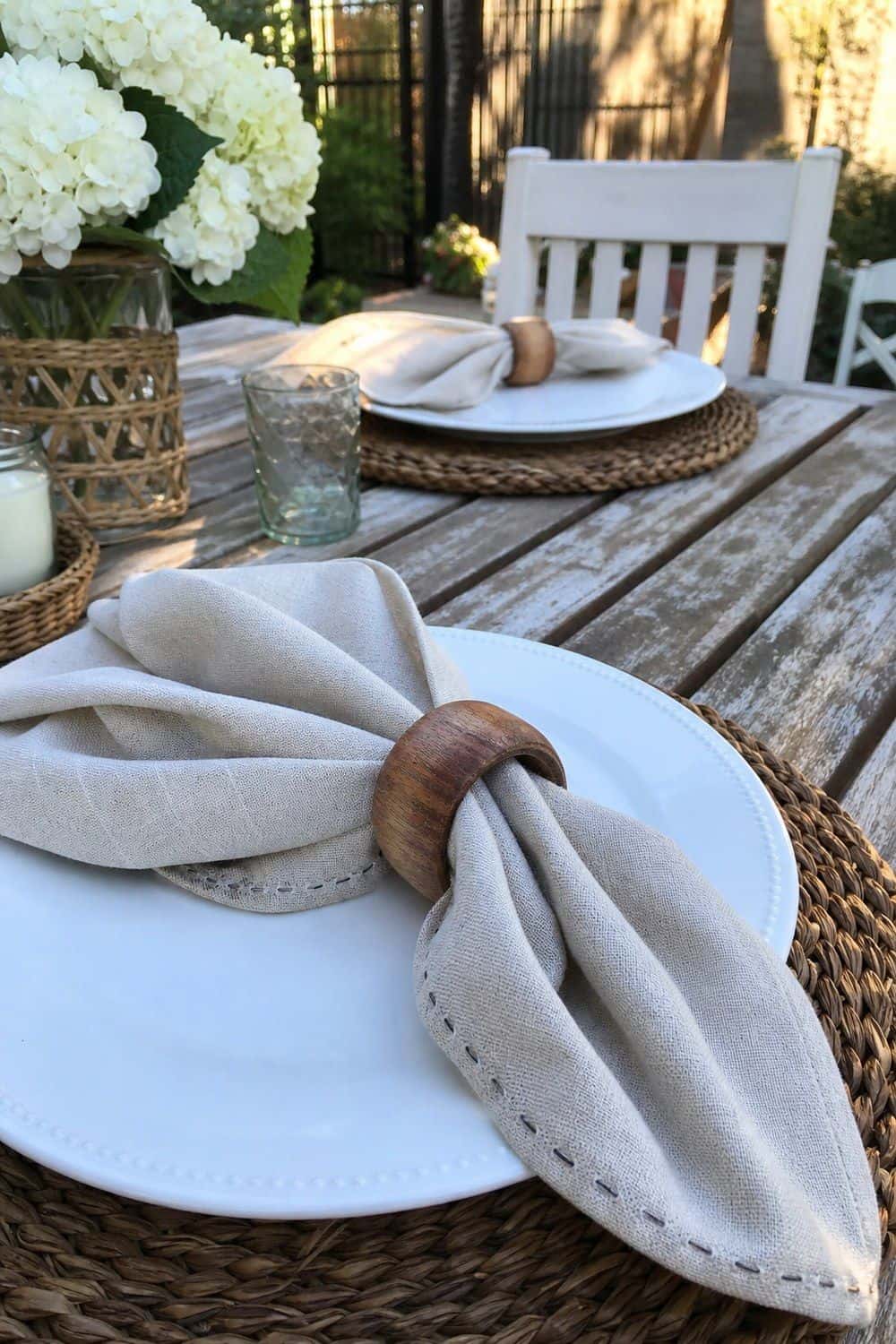
7. Clip Napkins With Simple Napkin Rings
Cloth napkins look lovely outside, but they need a little help when the breeze picks up. Napkin rings, ribbon, twine, or small clips keep each place setting together until guests sit down.
This is also a low-effort way to make the patio table feel finished. A plain napkin with a simple ring can look more relaxed than a complicated fold, and it will not blow into the salad bowl. Use rings that are heavy enough to matter, especially on uncovered patios.
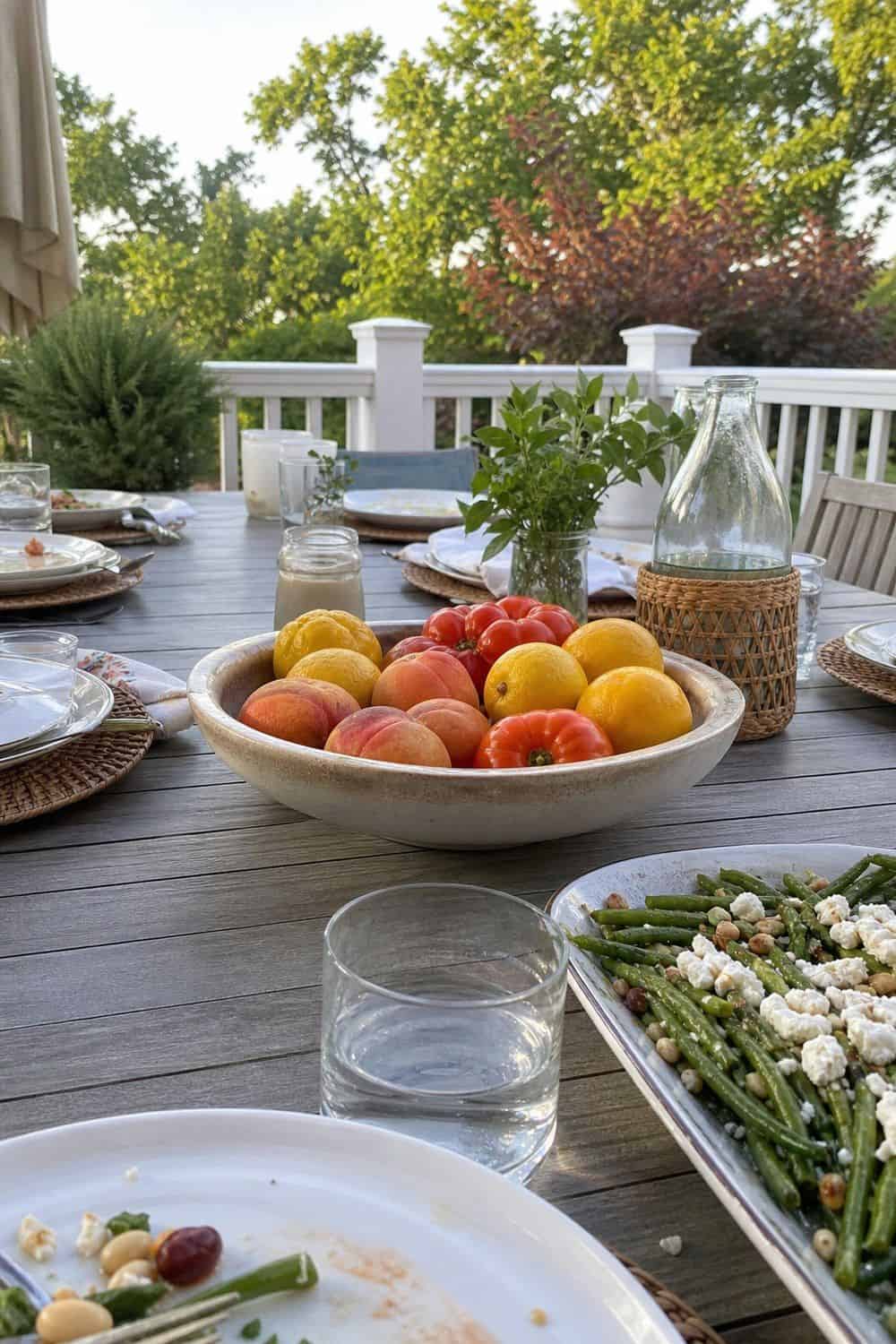
8. Anchor the Table With a Low Fruit Bowl
Low fruit bowls give the table a focal point without blocking faces or competing with serving dishes. Lemons, peaches, figs, tomatoes, oranges, or limes can bring color that feels tied to the meal. Choose a bowl with some weight so it stays steady outside, then keep it low enough for conversation and compact enough for real platters. Fruit that can tolerate the weather works best; soft berries are happier in dessert than sitting out as the centerpiece all evening, especially on humid nights.
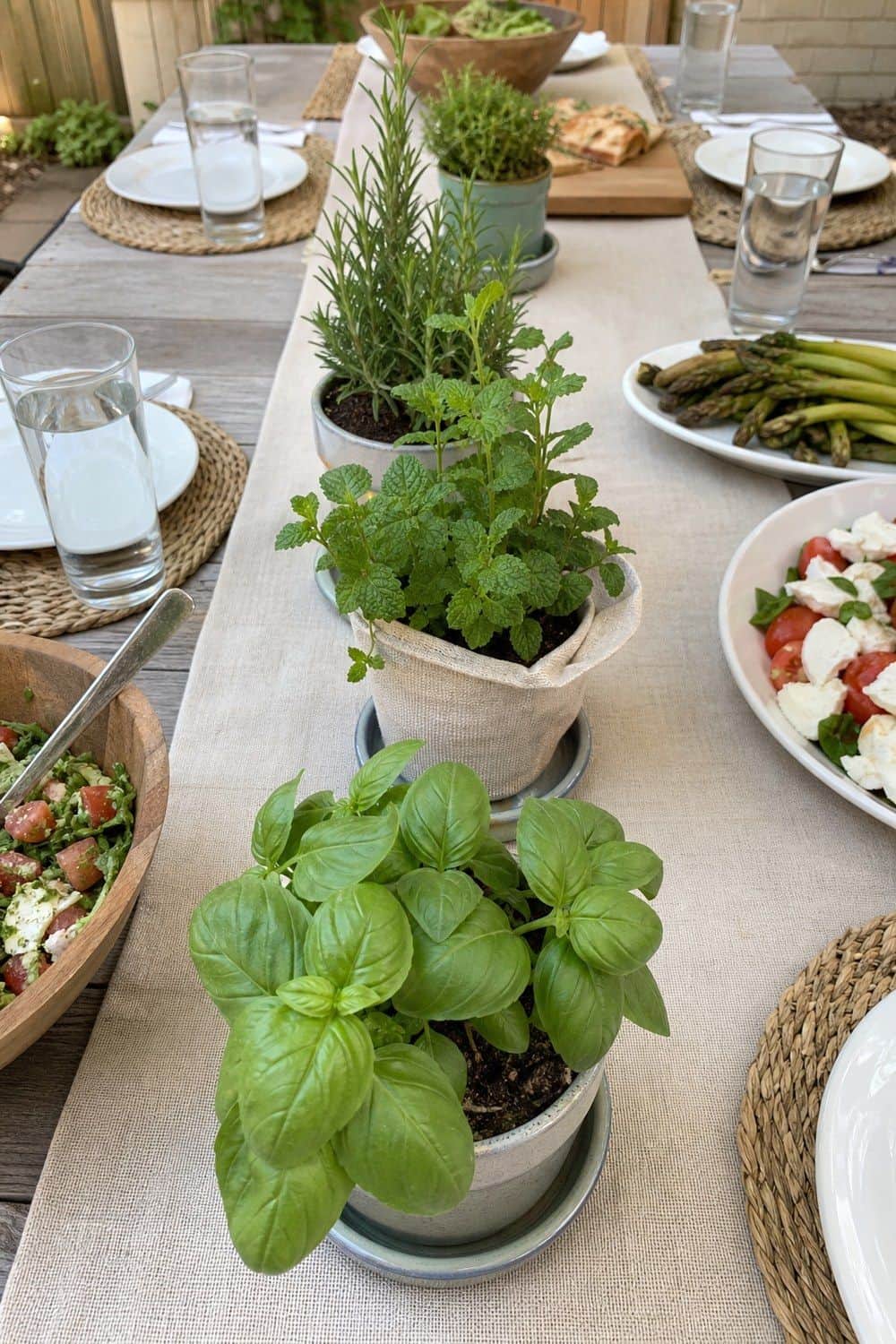
9. Use Potted Herbs Down the Center
Small herb pots add life to the table and can double as garnish. Basil suits tomato salads and pasta, mint works for drinks, rosemary feels sturdy beside grilled food, and thyme or oregano can echo a Mediterranean menu.
Keep the pots small, stable, and spaced between dishes instead of packed tightly down the center. If soil near plates bothers you, wrap the pots in linen or set them on small saucers. The table gets fragrance and texture without a tall floral arrangement taking over.
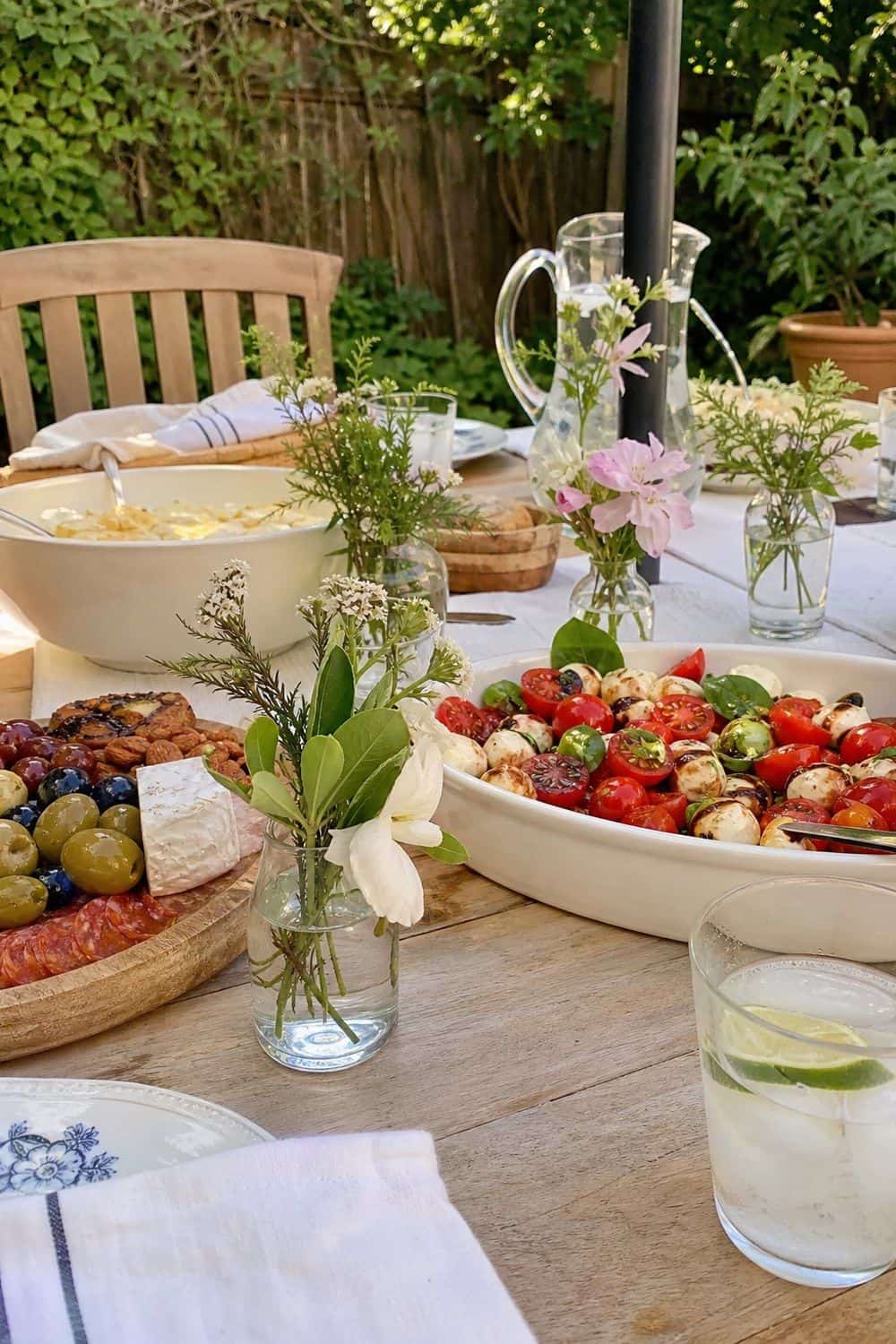
10. Place Bud Vases Between Serving Dishes
Bud vases are easier outdoors than one large arrangement because you can tuck them around platters, bowls, and pitchers. They add shape and color without making the table hard to use, and each little vase can move if a serving dish needs more room.
Use sturdy stems, herbs, small garden flowers, or clipped greenery that will not wilt instantly in evening air. Leave open space for serving boards, glasses, and elbows. A few small vases can make an al fresco table setting feel special while still respecting the food.
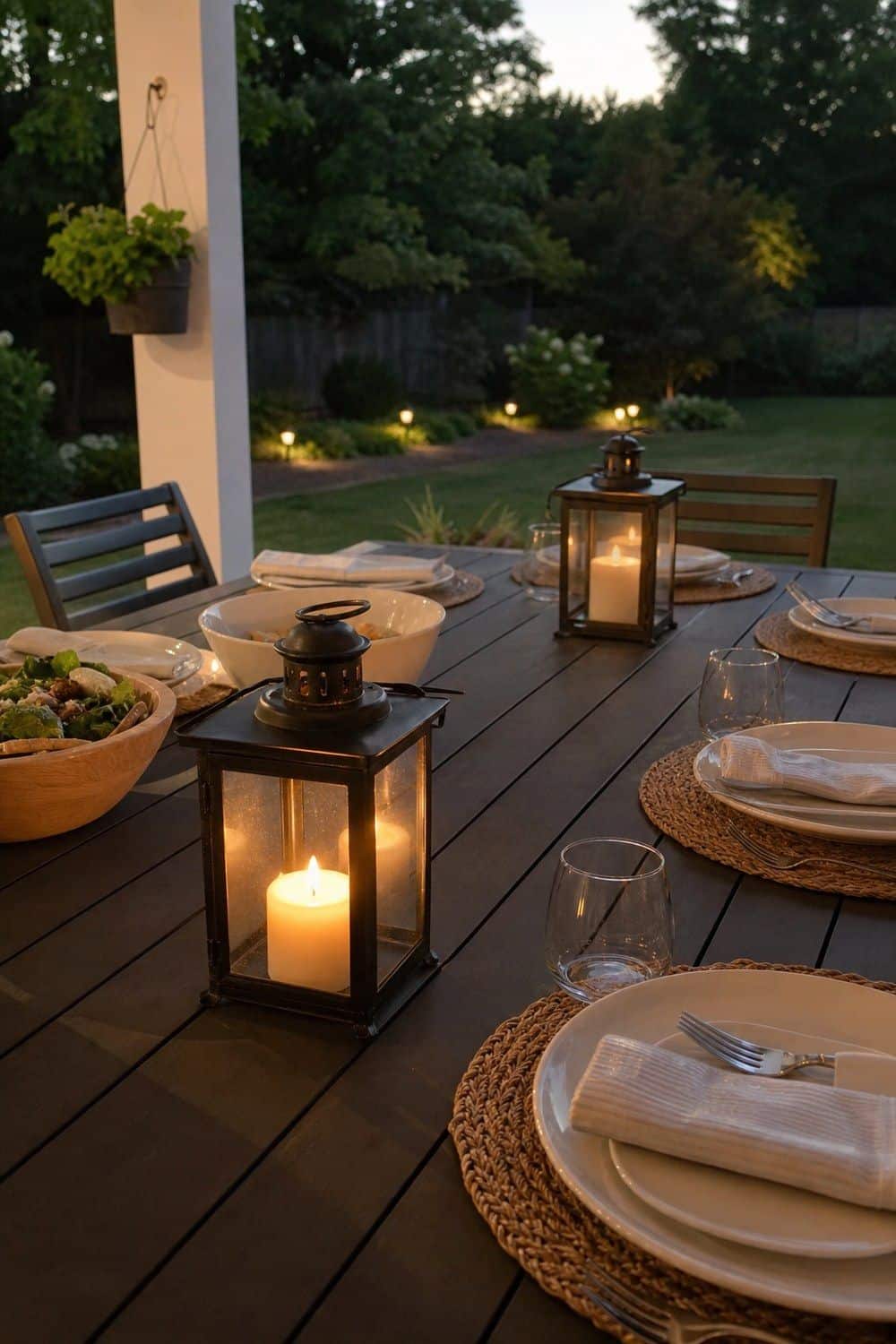
11. Use Lanterns Instead of Tall Candlesticks
Lanterns are more forgiving outdoors than slim candlesticks. They protect flames or LED candles from wind, sit lower on the table, and feel stable beside plates and glasses. They also bring a softer glow to faces than one bright overhead light.
Use one or two low lanterns rather than filling the table with little lights. Place them away from serving bowls and anywhere people will reach across the table. If the patio is breezy, LED candles inside lanterns give the glow without the constant relighting.
12. Hang Warm String Lights Over the Table
Warm string lights define the patio dining area and make the table feel like an outdoor room after sunset. They are especially helpful when the patio has no overhead fixture or sits at the edge of the yard.
Use warm white bulbs rather than harsh blue-white light, and test them earlier in the day. Hang them from a pergola, fence, railing, wall, or poles so the glow frames the table. Turn them on before the patio gets fully dark so the shift into evening feels natural.

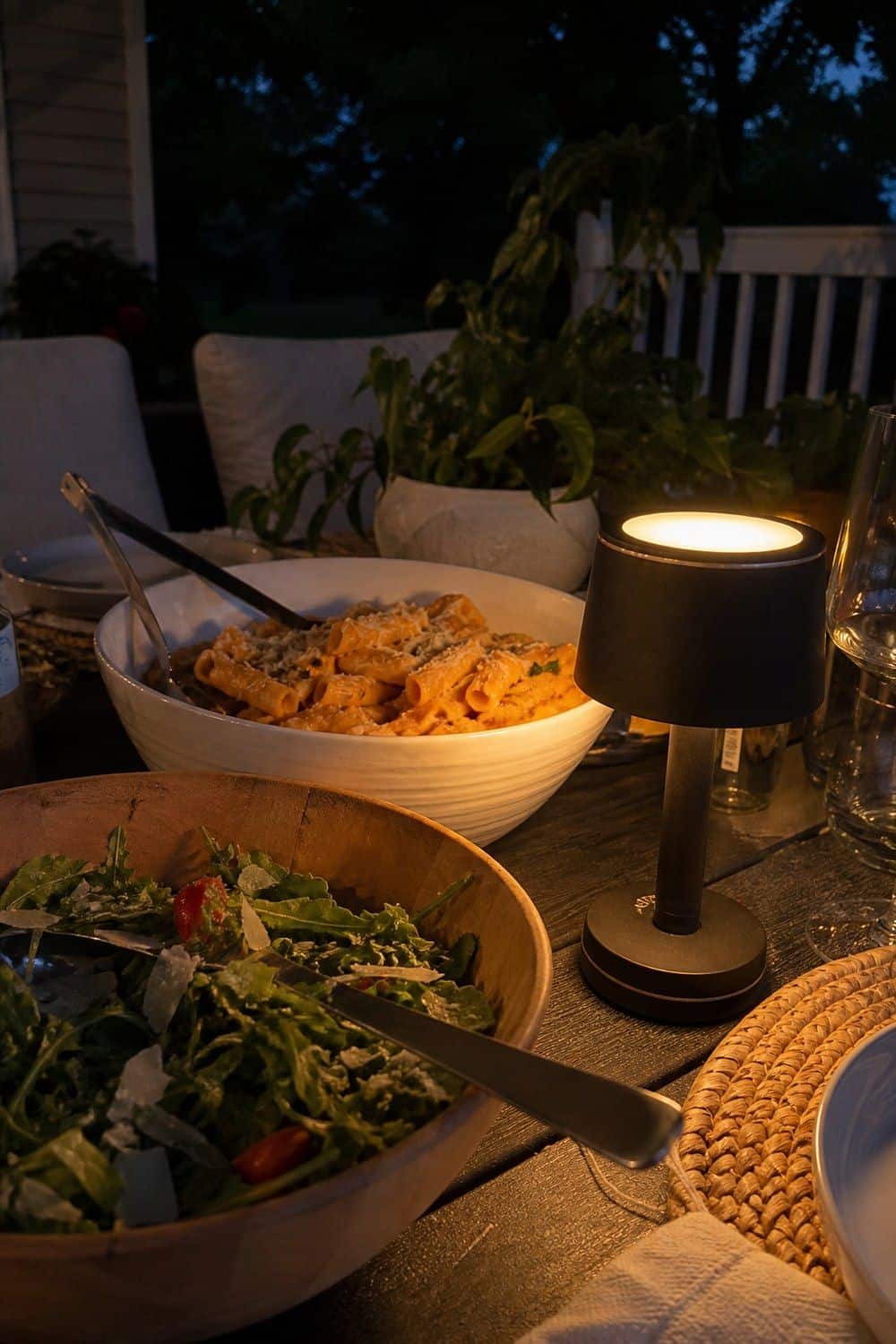
13. Add a Rechargeable Lamp for the Food
Atmosphere lighting is not always enough for eating. A small rechargeable lamp helps guests see serving spoons, pasta, salad toppings, drink labels, and dessert once the sun drops, especially if the table sits under a pergola or tree canopy.
Choose a low lamp with a steady base and a warm setting. Put it near the food rather than in the middle of every place setting. This keeps the table useful without turning on a bright outdoor floodlight that flattens the whole mood.
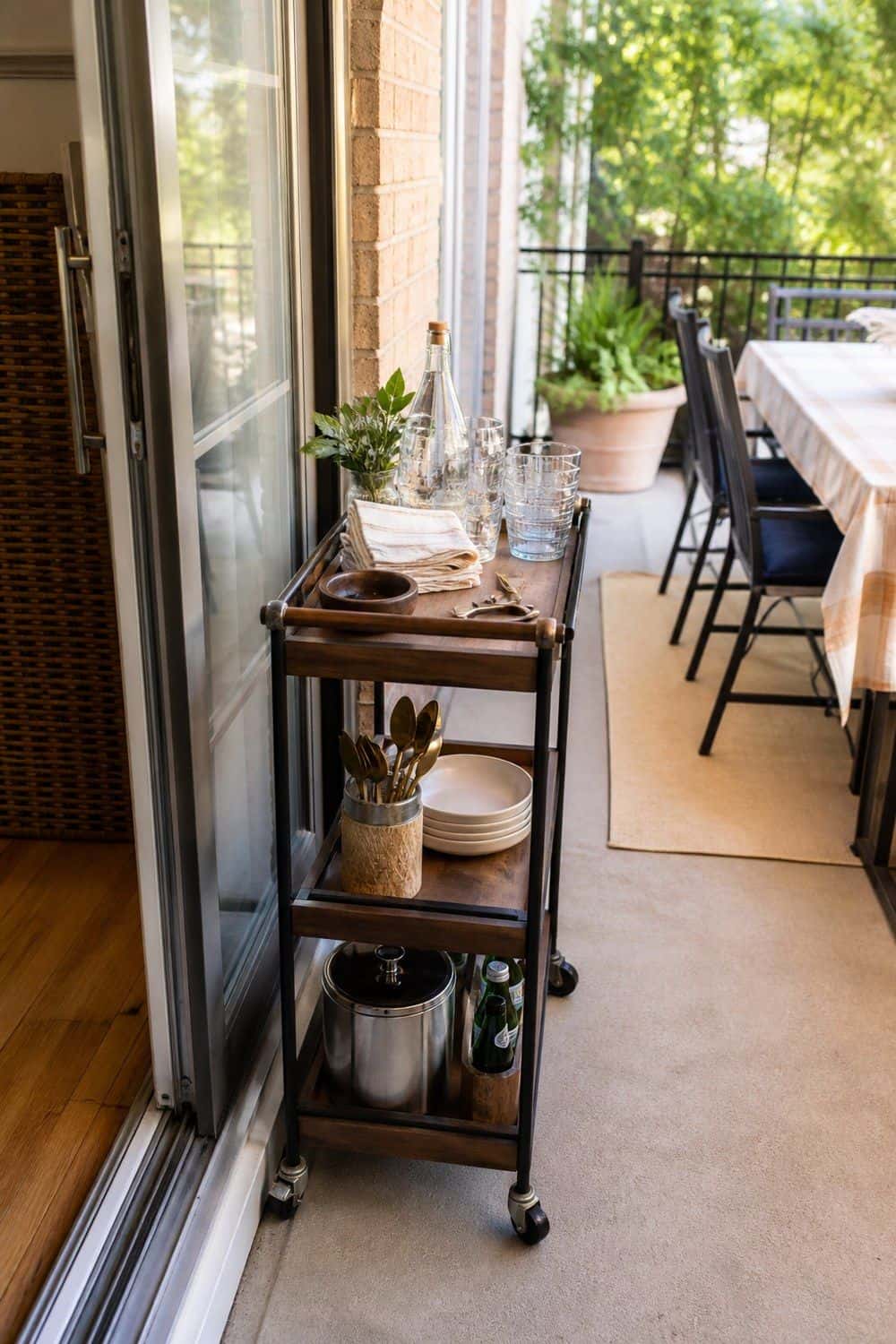
14. Put a Bar Cart Beside the Patio Door
A bar cart can be the bridge between kitchen and patio. It holds water, glasses, extra napkins, a bottle opener, serving spoons, dessert plates, or backup drinks so the dinner table stays open.
Place it near the patio door but not directly in the walking path. Guests can refill drinks without hovering over the food, and the host can bring out one organized cart instead of five small handfuls. On a small patio, a narrow cart can replace a full buffet surface.
15. Serve Dinner Family-Style on Two Large Boards
Two large boards can make dinner feel abundant without filling the table with many small dishes. Use one for sliced grilled chicken, flatbread, vegetables, or antipasto pieces and another for bread, dips, fruit, or salad components. This format is easier to pass than a crowded collection of bowls. It also lets guests build plates casually and keeps the party at the table longer. Add serving tongs or spoons to each board so people are not reaching with forks from their place settings.

16. Build a Patio Pasta Bowl Dinner
A pasta bowl dinner is relaxed, filling, and easy to serve outside. Pesto pasta, tomato mozzarella pasta, lemony shrimp pasta, grilled vegetable pasta, or a room-temperature pasta salad can all work for a patio dinner party.
Serve one big bowl with a smaller bowl of herbs, grated cheese, lemon wedges, or chili flakes nearby. Pasta does not need the same table space as multiple entrees, and it gives guests a clear main dish without making the menu feel stiff or fussy.

17. Host a Mezze-Style Patio Table
Mezze-style dinners suit a slow outdoor table because guests can keep reaching, building plates, and talking. Hummus, labneh, olives, cucumbers, tomatoes, flatbread, grilled meat, falafel, roasted vegetables, and herbs all fit the format.
Use one large platter or a few grouped dishes instead of scattering tiny bowls everywhere. Keep dips shaded until serving and bring out refills from the kitchen when needed. This is one of the easiest outdoor dinner party menu formats for a table that wants to feel generous but not formal.
Set the dips and bread near the center, then place vegetables and proteins closer to the edges so guests can reach without stretching over candles or glasses.

18. Offer a Pitcher Cocktail and a Zero-Proof Pitcher
Two pitchers keep drinks inclusive and low-maintenance. Make one cocktail or spritz pitcher and one zero-proof option, such as lemonade, iced tea, agua fresca, cucumber mint water, or a citrus soda mix.
Label the pitchers clearly and keep them on the bar cart or side table, not in the middle of the plates. Add ice separately if the drinks will sit for a while. Guests can serve themselves, and the host does not spend dinner taking drink orders one glass at a time.

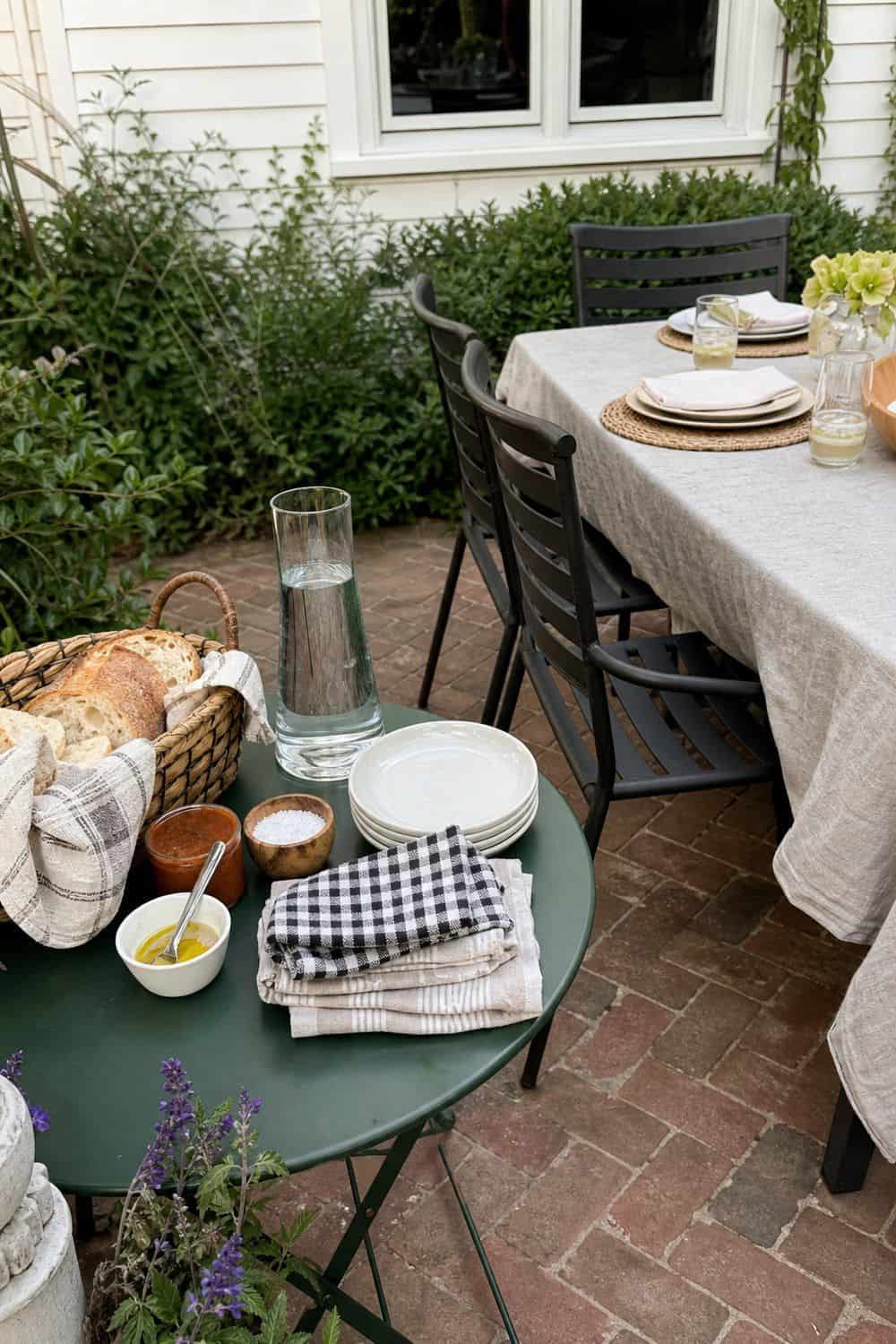
19. Use a Side Table for Bread, Condiments, and Refills
Side tables protect the dining table from becoming a storage surface. Bread, olive oil, sauces, extra napkins, backup plates, refills, and a water pitcher can all sit nearby without crowding dinner plates.
This matters most on a small patio dinner party setup where the table is doing too many jobs. Choose a folding table if you only need it for hosting, or use a plant stand, bench, or compact cart. The best side table is close enough to reach but not blocking chairs.
20. Add Cushions That Can Handle Outdoor Crumbs
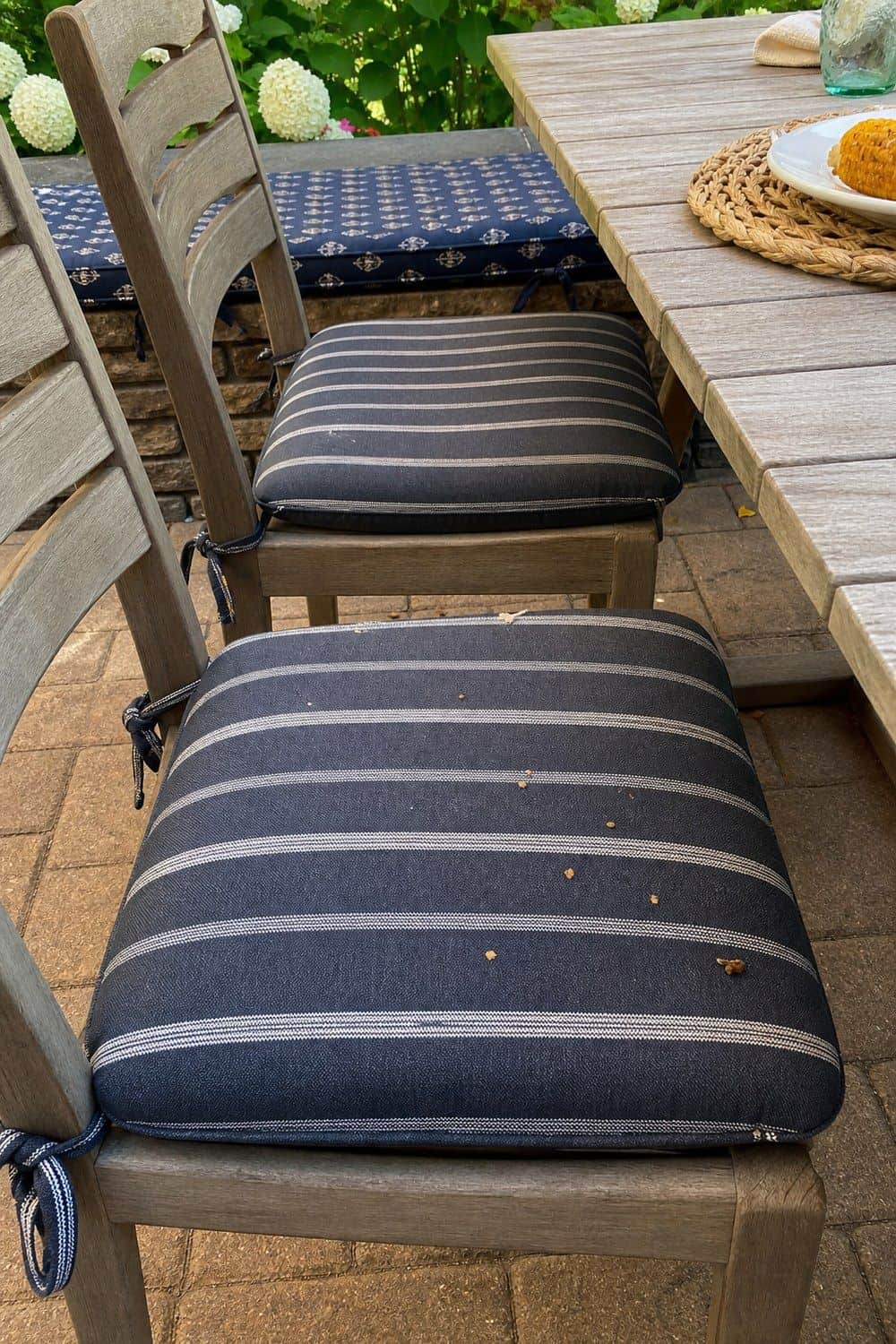
Comfort is part of the table design. Guests stay longer when chairs feel good through the main course, dessert, and the slow after-dinner conversation, so the cushions matter as much as the centerpiece.
Use washable outdoor cushions, bench pads, or slim seat cushions that can handle crumbs, sauce, and the occasional splash of wine. Darker colors, stripes, or small patterns are more forgiving than pale solids. Tie-on cushions are helpful if the patio gets breezy or chairs are moved often.
21. Keep Lightweight Throws Nearby After Sunset
Patio dinner parties are not only for the hottest part of summer. A basket of lightweight throws makes the table feel comfortable in late spring, early fall, breezy evenings, or any night that cools down after dessert.
Place the basket near the seating area rather than on the table. Washable throws or shawls are best because they will pick up outdoor dust and food crumbs over time. This small comfort detail lets guests linger without asking whether it is time to move inside.

22. Use Planters to Soften the Patio Edge
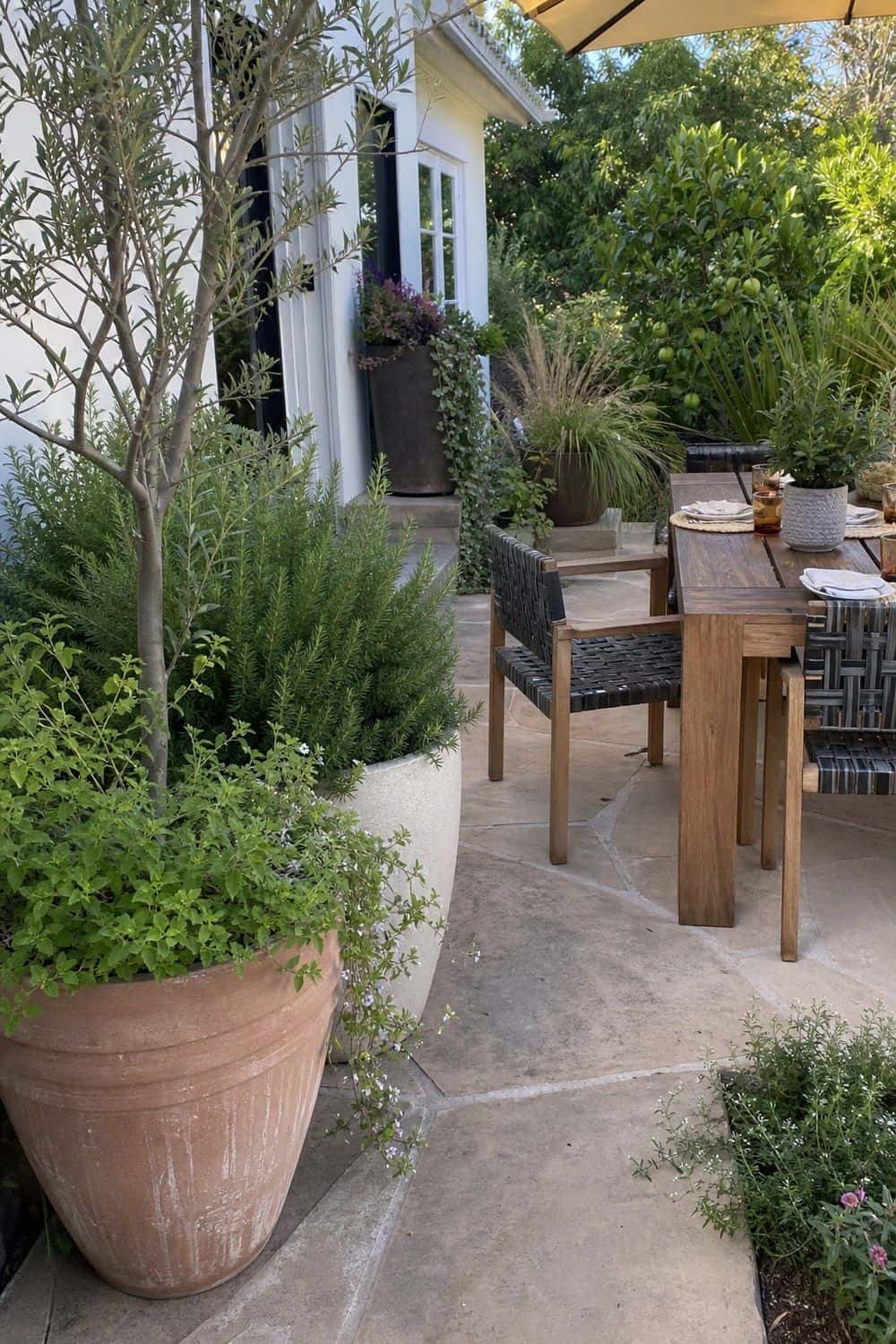
Tall planters can make a patio dinner feel enclosed without building a wall or changing the space permanently. They soften hard edges, frame the table, and create a calmer backdrop for food and conversation. Use grasses, herbs, citrus, olive-style trees, flowering plants, or trailing greenery depending on the light, then keep the planters along the edges instead of squeezing them behind chairs. The table should feel nestled, not trapped, with enough room for guests to pull out their seats comfortably.
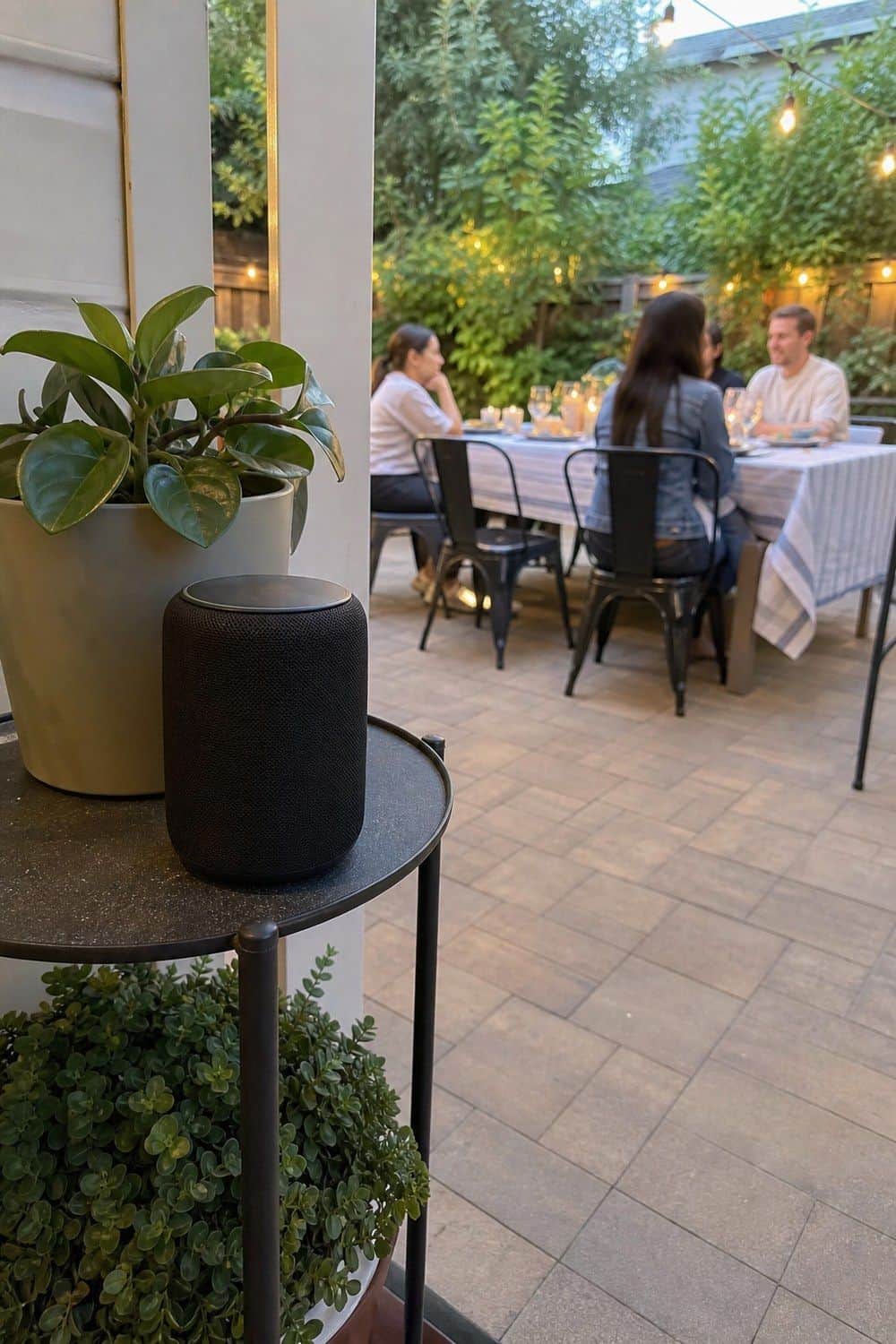
23. Set a Small Speaker Away From the Table
Music should support the conversation, not compete with it. Place a small speaker away from the table but close enough to soften the background, then build a low-volume playlist ahead of time so you are not managing music from the table. A corner, shelf, plant stand, or bar cart can work better than the dining surface. If guests have to raise their voices or talk over the chorus during dinner, the speaker is too close or turned up too high.
24. Put Step Lights Near Walkways
Patio dinner parties often continue after dark, so the path to the kitchen, bathroom, gate, or steps needs gentle light. Step lights help guests move around without turning the patio into a brightly lit utility space.
Place lights near threshold edges, stair treads, narrow walkways, and any spot where guests might carry a plate or drink. Solar lights are useful when outlets are limited, but test them before the party. Safety lighting can still look quiet and atmospheric when it is low and warm.

25. End With a Patio Dish Tub
One dish tub near the patio door gives the end of the night a plan without making cleanup part of the table. Plates, glasses, napkins, serving spoons, and empty bowls can land there instead of piling up around the centerpiece. Set it slightly out of sight but easy to find, then carry everything back to the kitchen in one or two trips. If guests offer to help, they immediately know where dishes belong. For larger dinners, add a second container for cans and bottles.

How to Keep the Patio Table Relaxed and Usable
A relaxed outdoor table works because every item has a job. The dining table should hold plates, glasses, napkins, low lighting, one low centerpiece, and the food guests are actively sharing. Drinks, extra bread, refills, condiments, dessert plates, and cleanup supplies can move to a side table or bar cart.
For the menu, choose one format that fits the table: two family-style boards, a big pasta bowl, a mezze spread, or a grilled platter with salad and bread. Add cushions, throws, planters, and warm lights to make the patio feel like an outdoor room, but stop before the table loses space for serving and conversation.
FAQs About Patio Dinner Party Ideas
How do you host a patio dinner party?
Start with the table size and seating, then choose outdoor-safe dinnerware, a simple family-style menu, a drink station, warm lighting, and a cleanup tub near the door. Keep the table easy to eat from and move extras to a side table or bar cart.
What do you serve at a patio dinner party?
Good patio dinner party food includes pasta bowls, mezze platters, grilled chicken, salads, flatbread, roasted vegetables, bread, dips, pitcher drinks, and easy desserts. Choose dishes that can be served family-style and still taste good if dinner moves slowly.
How do you decorate an outdoor dinner table?
Use a runner, reusable dinnerware, colored glasses, cloth napkins, a low fruit bowl, herbs, bud vases, and lanterns. Keep decor low and steady so guests can see each other and still have room for serving dishes.
What lighting is best for a patio dinner?
Warm string lights create atmosphere, rechargeable lamps help guests see food, lanterns add wind-safe glow, and step lights make walkways safer after dark. Layering these lights usually works better than relying on one harsh overhead fixture.
How do I host a dinner party on a small patio?
Use a round table, bench seating, a side table for extras, and a bar cart for drinks. Keep centerpieces low, plate some food in the kitchen if needed, and choose one menu format so the table does not get crowded with too many dishes.
What should you avoid on an outdoor dining table?
Avoid fragile glass, tall top-heavy flowers, overly scented candles, too many small decor pieces, and anything that leaves no room for food. Outdoor tables need stability, low sight lines, and enough open space for plates and serving bowls.
How do I make a patio dinner comfortable?
Add comfortable cushions, lightweight throws, warm lighting, clear walkways, and a drink station guests can reach easily. A relaxed menu also helps because the host is not constantly leaving the table to finish complicated food.
How can I make an outdoor table look relaxed but special?
Layer a runner, reusable plates, colored glasses, cloth napkins, one low centerpiece, and lanterns. Use natural materials and warm light, but keep the layout simple enough for guests to pass food, refill drinks, and talk comfortably.
Final Thoughts
The best patio dinner party ideas make the outdoor table feel relaxed, useful, and a little special without crowding the meal. Choose the right table shape, use comfortable seating, layer outdoor-safe pieces, keep centerpieces low, add warm lighting, move extras to a side table, and serve food in a format that invites guests to linger. Once the table supports conversation and dinner at the same time, the whole patio feels easier to enjoy.