The best European summer tablescape ideas start with washed linen, rattan or ceramic layers, citrus or tomatoes, glass carafes, bread and olives, low flowers or herbs, and simple lighting for sunset. Keep the table generous but usable by planning for wind, shade, drink refills, shared plates, and enough space for platters.
A sunlit outdoor table can feel European without turning into a travel theme. The strongest version borrows useful cues from Mediterranean lunches, Italian aperitivo, French seaside stripes, garden herbs, and market produce, then keeps the table grounded in real food service.
Think in layers that help the meal: linen for softness, chargers for texture, carafes for refills, low bowls for produce, small plates for starters, and lighting that works when lunch drifts into evening.

You Might Also Like These Blog Posts
- European Summer Dinner Party Ideas
- Tablescape Ideas
- Garden Party Food Ideas
- Mediterranean Dinner Party Ideas
- Zero-Proof Bar Ideas
1. Sun-Washed Linen Tablecloth

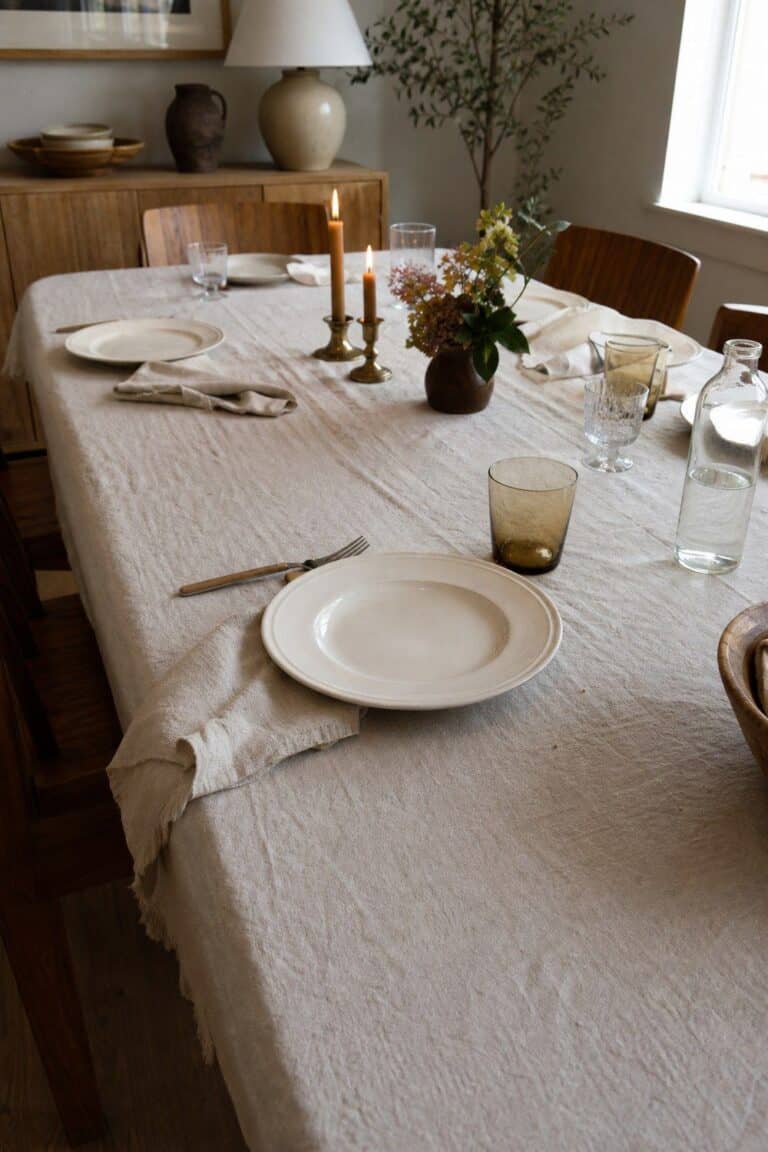
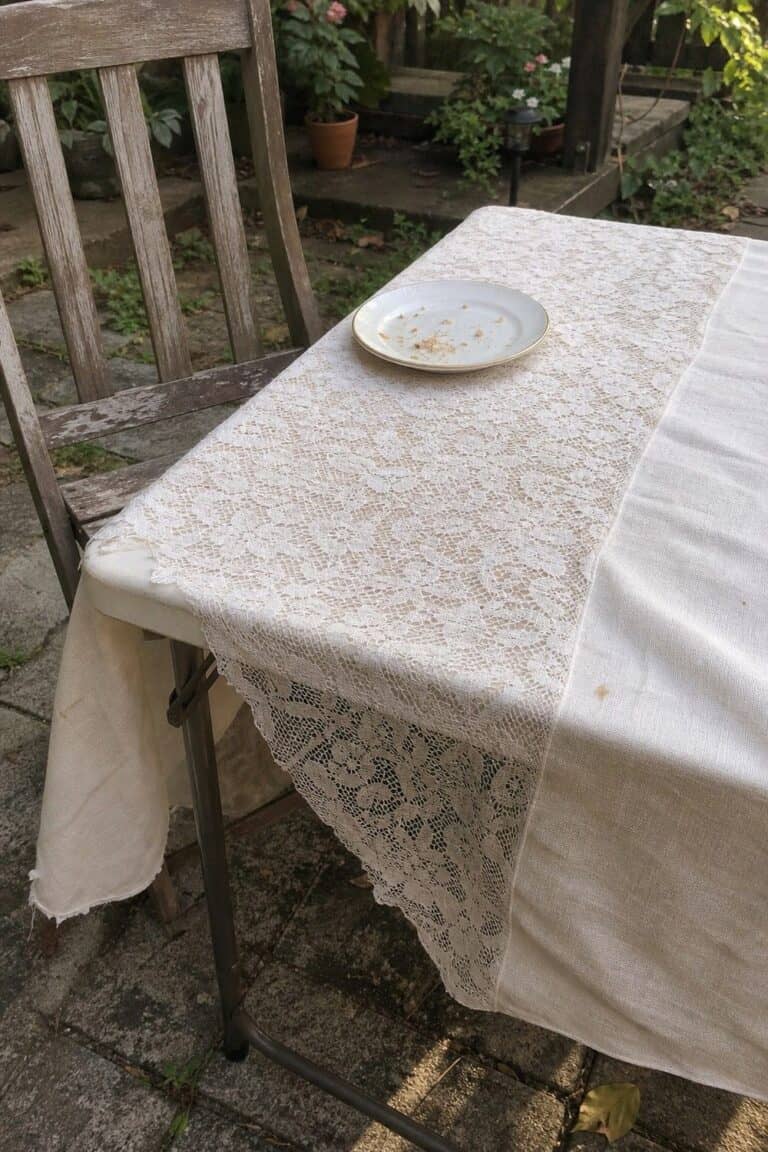
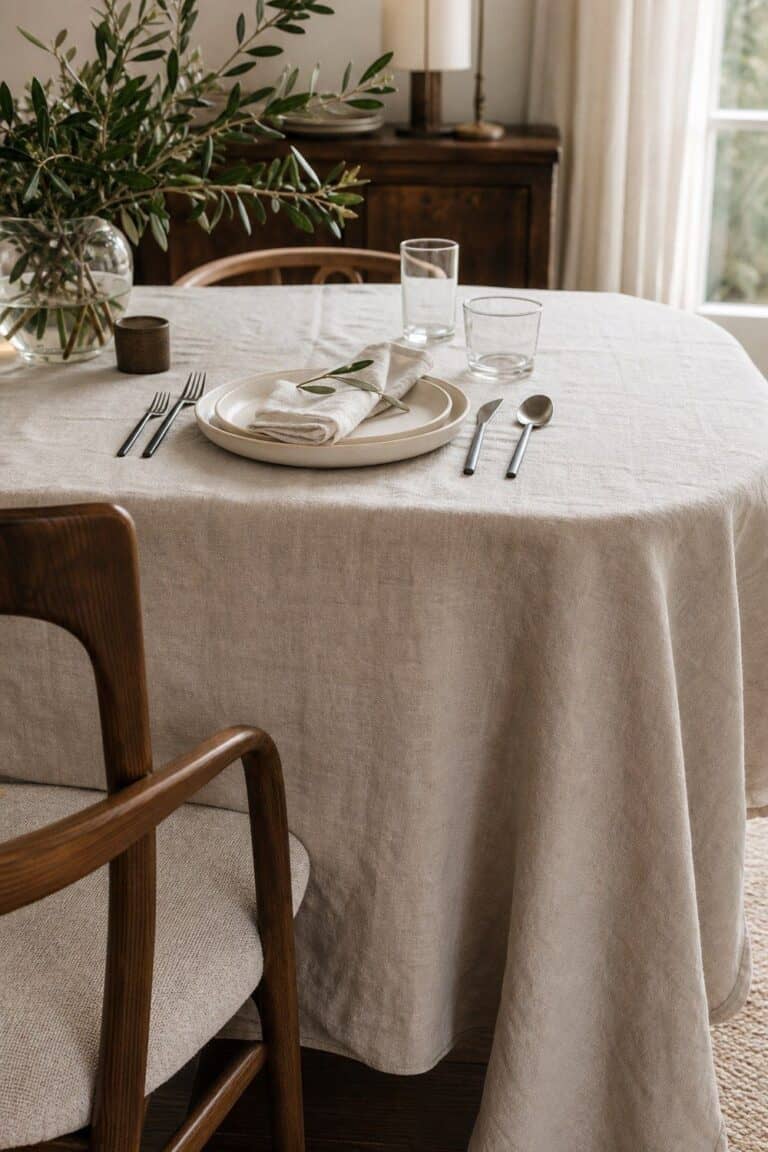
Sun-washed linen gives an outdoor table softness without making it feel formal. Choose white, flax, faded blue, or a narrow stripe, then let the cloth fall a little naturally instead of chasing every wrinkle.
The relaxed texture suits a long lunch with bread, tomatoes, carafes, and bare arms on the table. If the meal is outside, add clips or weights before the wind reminds you. Pretty linen is lovely, but linen that stays put is the detail everyone actually enjoys.
2. Rattan Chargers Under Simple Plates

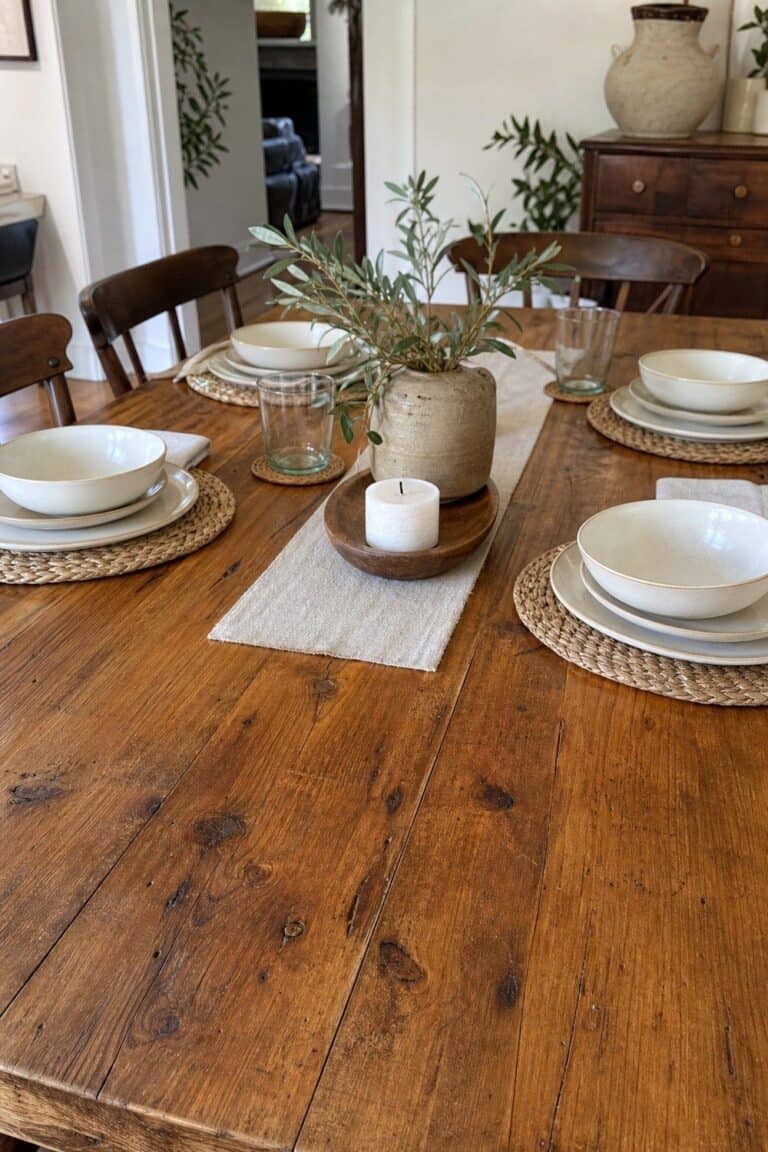
Rattan chargers bring a beach-house, market-lunch texture to simple plates, especially when the rest of the table is mostly linen, glass, fruit, and ceramics. They make plain white dinnerware feel more relaxed without adding another bowl or centerpiece.
The woven edge also gives each place setting a bit of structure, which helps outdoors when the table has casual food, passing plates, and loose linen.
Keep the plates themselves simple if the chargers are bold or thick. You want the charger to frame the setting, not compete with patterned napkins, colored glasses, and whatever bowls of food are coming out of the busy kitchen next.
3. Blue-and-White Patterned Plates

Blue-and-white plates give the table a coastal European cue without needing anchors, shells, or anything too themed. A border, stripe, splatter, or small botanical pattern is enough for a relaxed summer lunch.
They look especially good with white linen, lemons, glass carafes, and olive oil on the table. If you use patterned dinner plates, keep the napkins, serving bowls, and centerpiece quieter so the table still feels airy. The best version feels like a seaside lunch, not a matching set trying too hard.
4. Terracotta Plates for Warmth
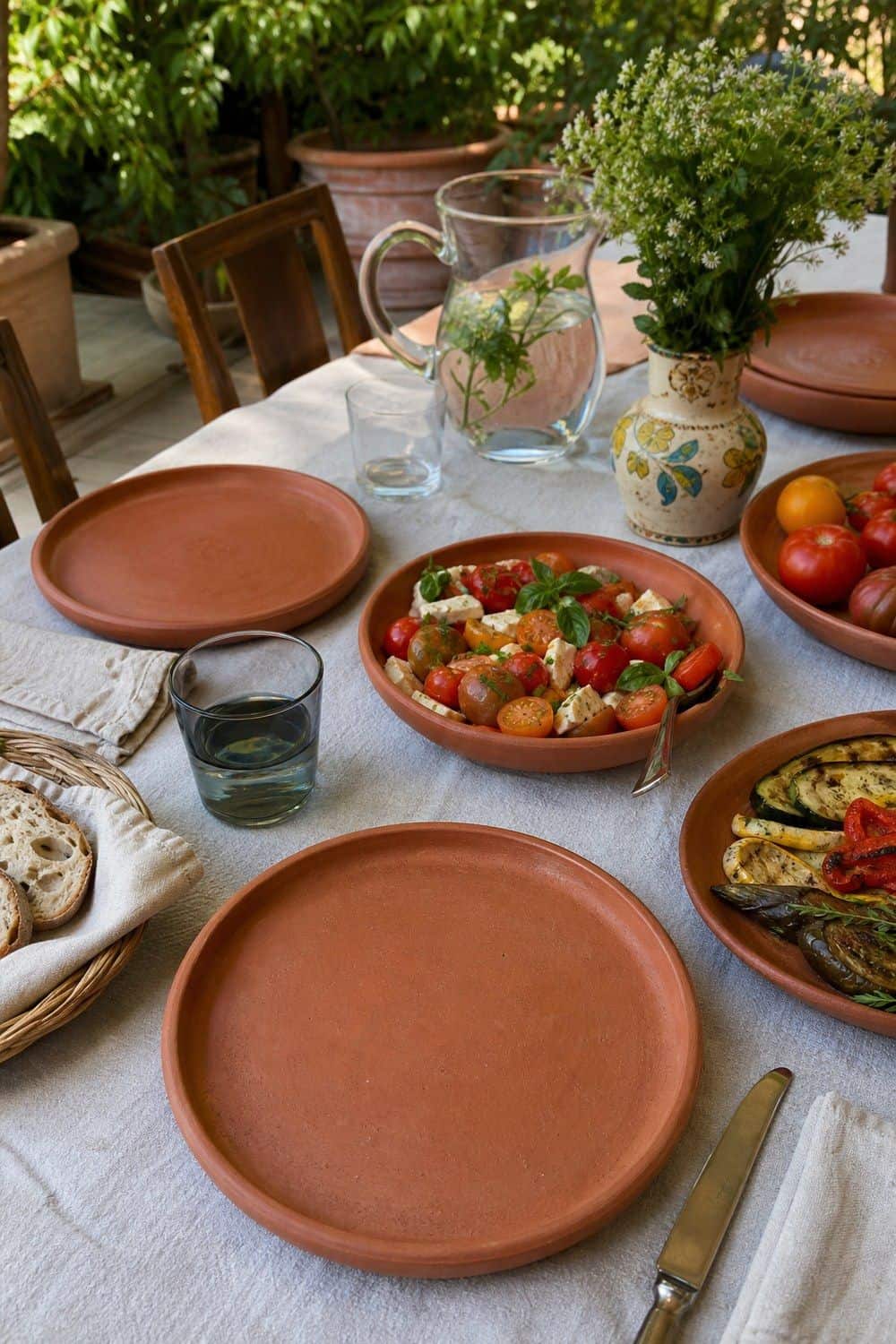
Terracotta plates bring that sun-baked warmth that feels right for a Mediterranean-style summer meal. They are especially good with tomatoes, herbs, grilled vegetables, bread, and simple salads because the food colors look alive against the earthy plate, and the table feels less formal right away. Use terracotta as the warm note and let other pieces stay lighter. White linen, clear glass, and rattan keep the table from getting heavy, while one blue or green accent can make the clay color feel even fresher.
5. Striped Linen Napkins
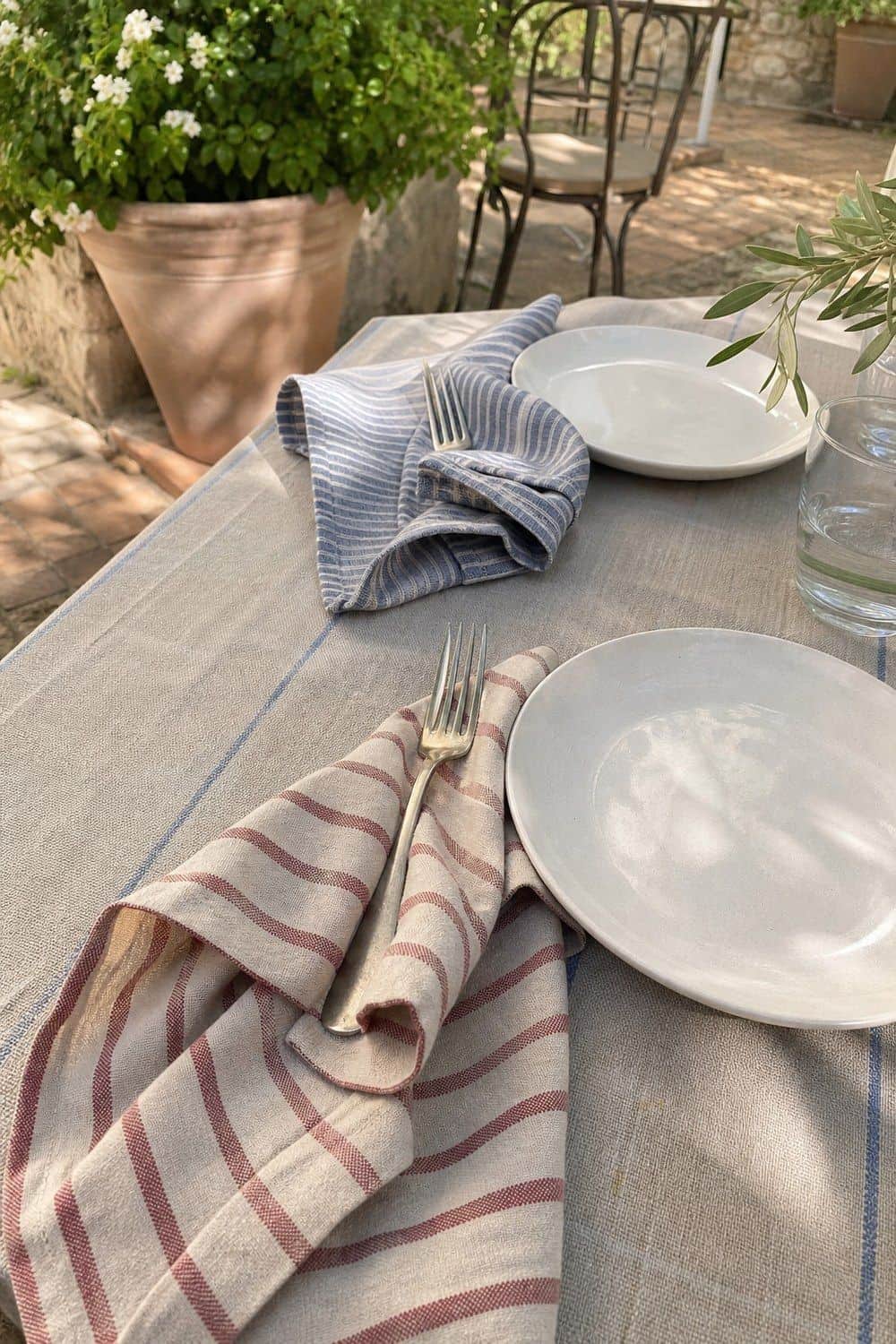
Striped linen napkins are an easy way to suggest a seaside cafe without turning the table into a theme. Blue, tomato red, sage, or sand-colored stripes all work, depending on the plates and food. Fold them loosely beside the plate or tuck them under forks so the stripe shows in a casual line, not a stiff triangle. If the plates are already patterned, keep the stripe narrow; if the dishes are plain, a wider stripe can carry more of the summer mood.
6. Bamboo-Handled Flatware

Bamboo-handled flatware gives the table a relaxed outdoor feeling without making it look disposable. It works beautifully with rattan chargers, linen napkins, citrus, terracotta, and colored bistro glasses on a casual summer table.
The key is to keep the rest of the place setting unfussy so the bamboo feels like a natural material choice rather than a novelty. If your table already has lots of color, choose a simple flatware shape; if the table is pale, the bamboo handles can be the warm detail.
7. Low Bowl of Lemons
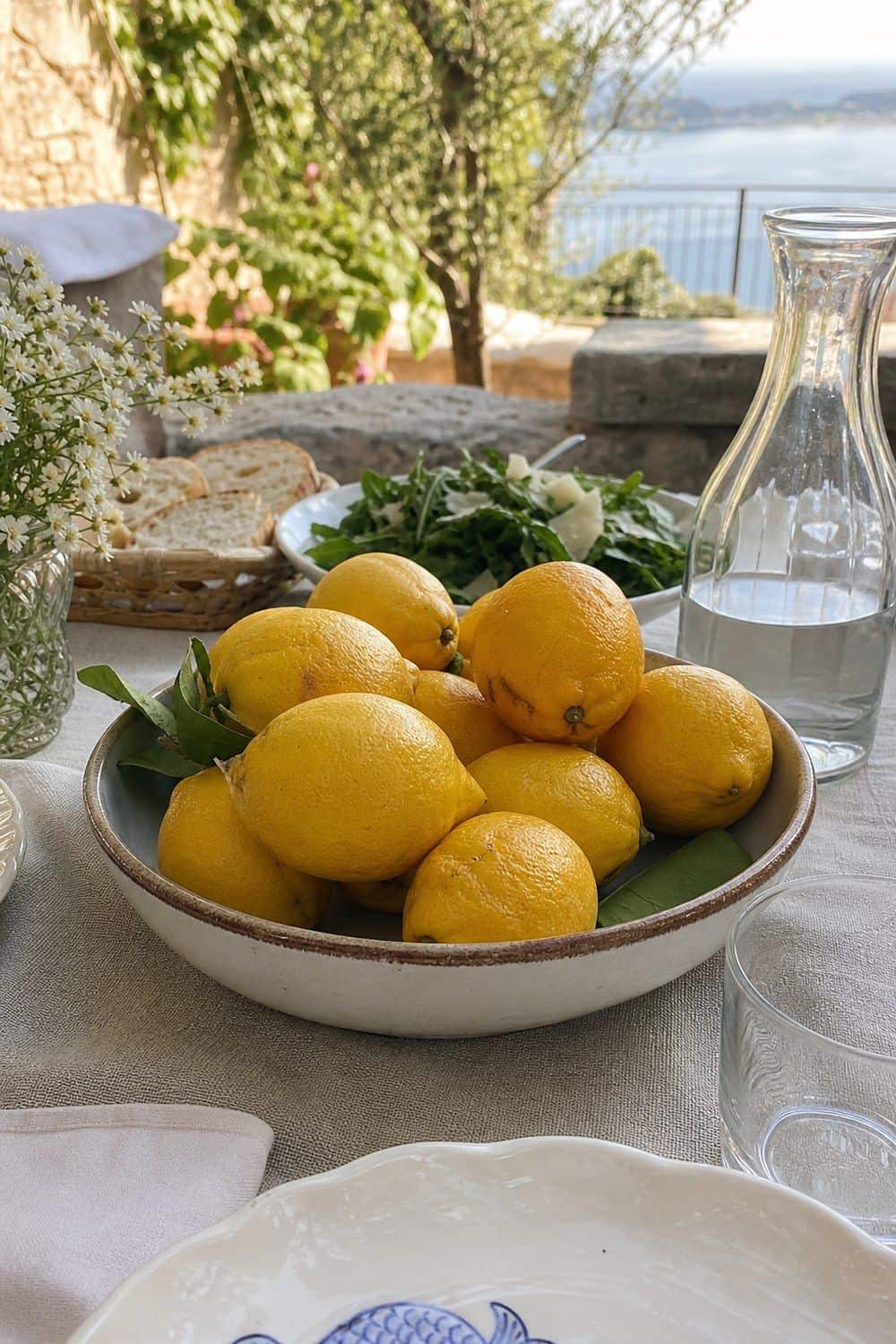
A citrus bowl is one of the most useful summer centerpieces because it looks fresh, stays low, and belongs with the food. Use a ceramic, glass, or woven bowl and keep the fruit loose rather than stacked into a perfect tower. The lemons can echo lemonade, seafood, salad dressing, or dessert, which makes the table feel connected to the menu. Add a few leaves if you have them, but stop before the bowl blocks platters or conversations across the table.
8. Tomatoes as a Market-Table Accent
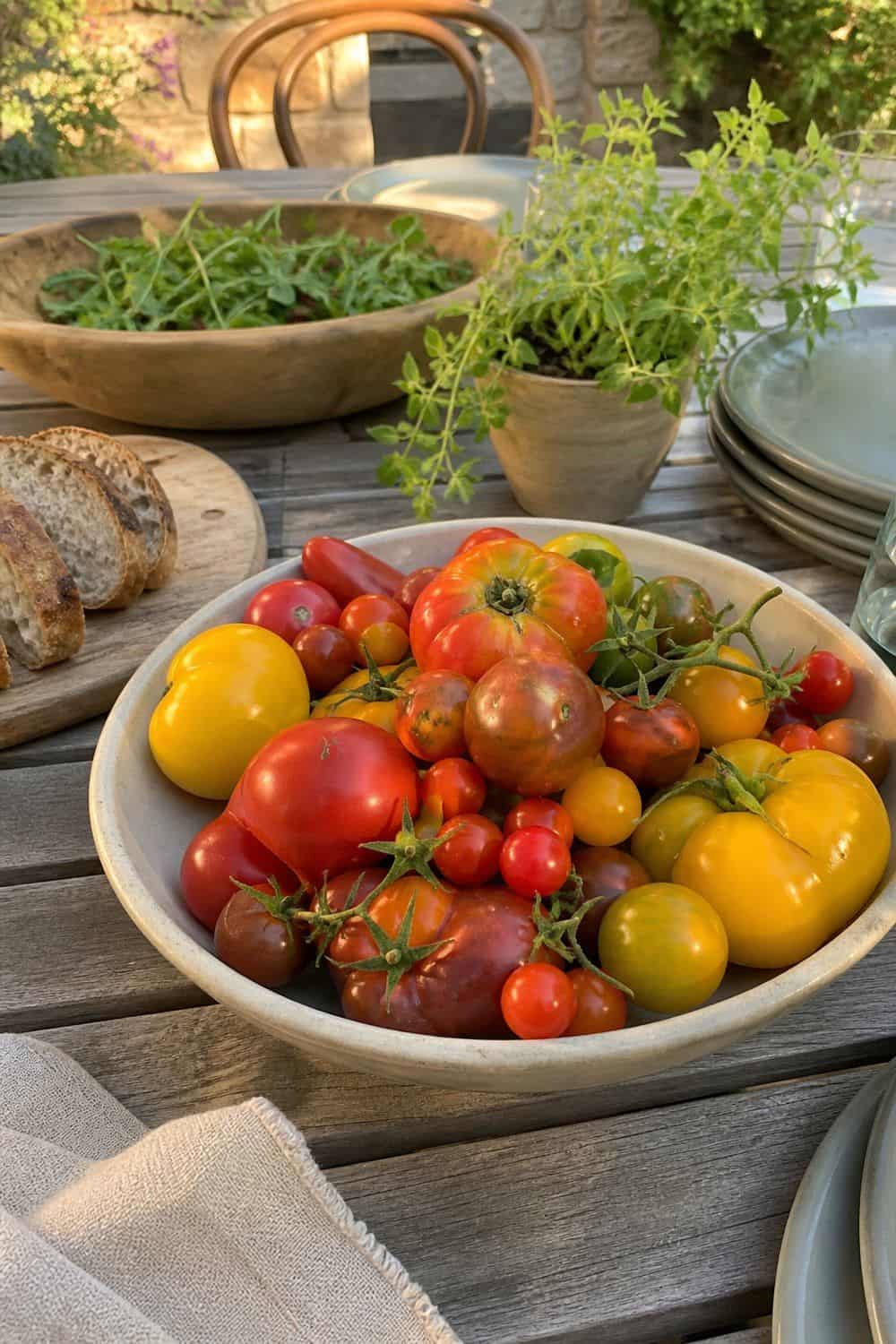
Tomatoes can make a summer table feel like it came from a morning market. Put cherry tomatoes, heirlooms, or vine tomatoes in a shallow bowl near the bread or salad, then let their color do the decorating. The detail feels strongest when the tomatoes are actually part of the meal, even if they are just served with salt, olive oil, and basil. The look is generous and edible, not staged, which is exactly the charm of a European summer table outside.
9. Olive Bowls Near Bread
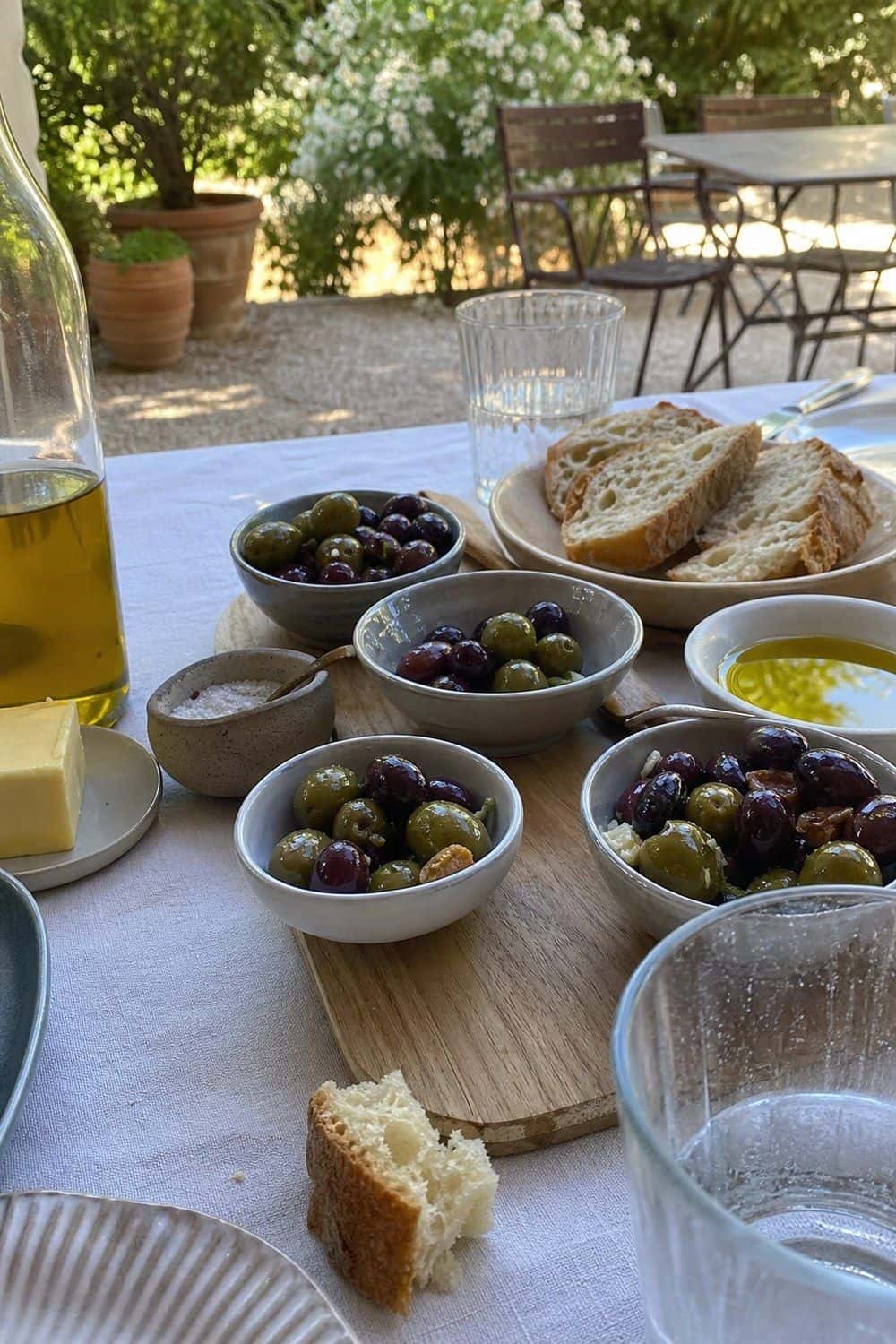
Small olive bowls make the table feel ready before the main food arrives. Place them near bread, butter, olive oil, or starter plates so guests can nibble without reaching across candles or carafes.
A few small bowls work better than one giant bowl on a long table because they are easier to pass and less likely to crowd the center.
Choose bowls with enough weight that they will not slide around outside. If you serve olives with pits, add a tiny empty dish nearby so people are not left looking for somewhere polite to put them.
10. Wicker Bread Basket

Bread in a wicker basket makes the meal feel generous before anything else lands. Line the basket with a linen napkin so crumbs stay mostly contained and the bread looks like part of the table instead of an afterthought. Keep it near olive oil, butter, olives, or tomato starters so the first few minutes of the meal feel easy and hospitable. For a narrow table, a basket is better than a large board because it can be passed, lifted, or moved when platters arrive.
11. Glass Carafes for Water

Glass carafes make water feel like part of the table rather than a plastic bottle tucked at the edge. Fill them before guests sit down and place at least two on a longer table so no one has to pass one heavy pitcher back and forth.
Clear glass keeps the table light, while a ribbed or recycled-glass carafe adds just enough texture. Add lemon slices, mint, cucumber, or nothing at all; the main point is keeping refills within reach on a hot day.
12. Spritz Pitcher on a Tray
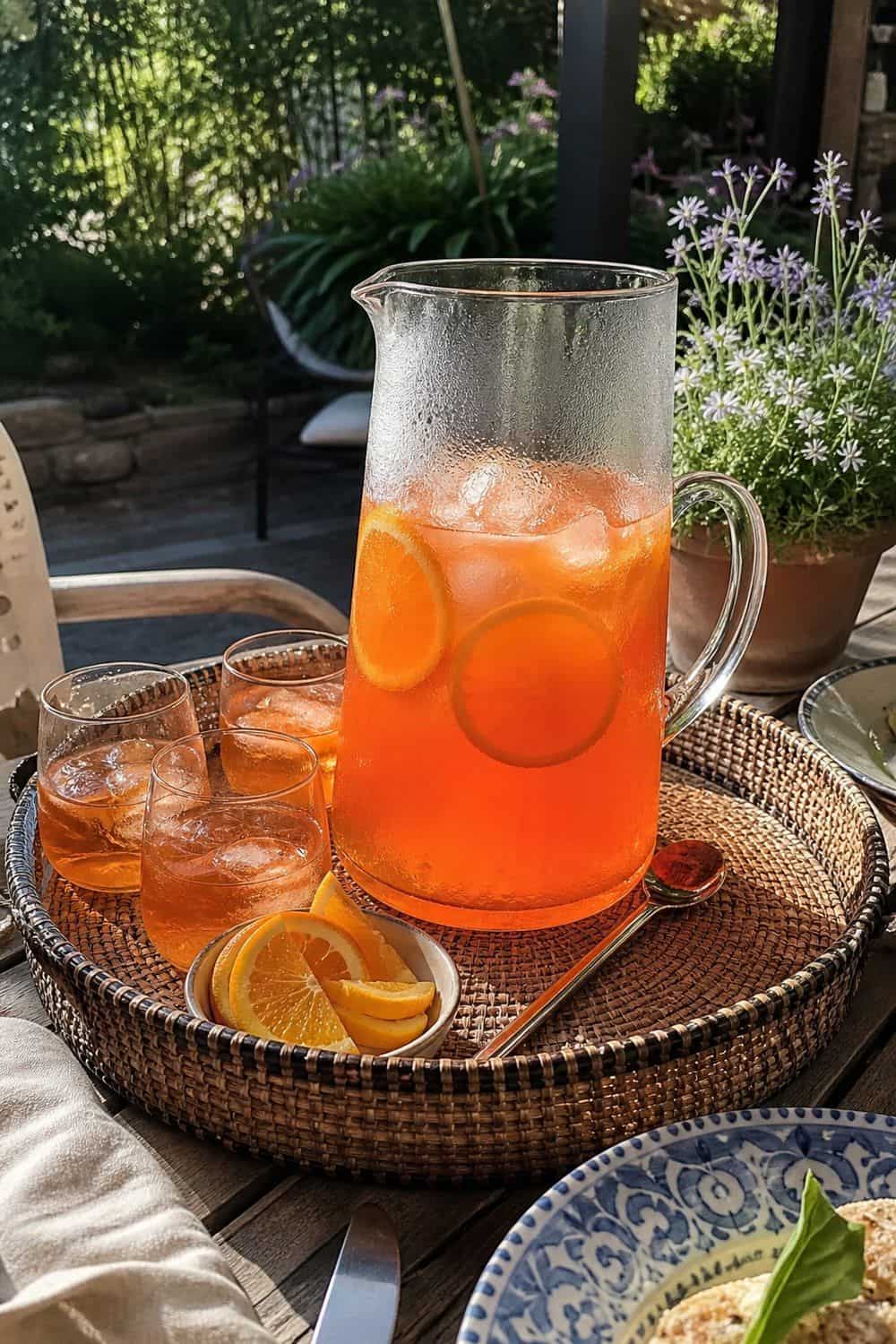
A spritz pitcher feels festive and relaxed, which is exactly the mood for a European summer meal. Set it on a tray with glasses, citrus slices, and a small spoon or stirrer so the drink has a clear home instead of floating in the middle of the plates. If you are serving a zero-proof version, make it just as pretty with bitter orange soda, sparkling water, herbs, or fruit. The pitcher should invite refills without taking over the table or blocking shared dishes.
13. Colored Cafe-Style Glasses
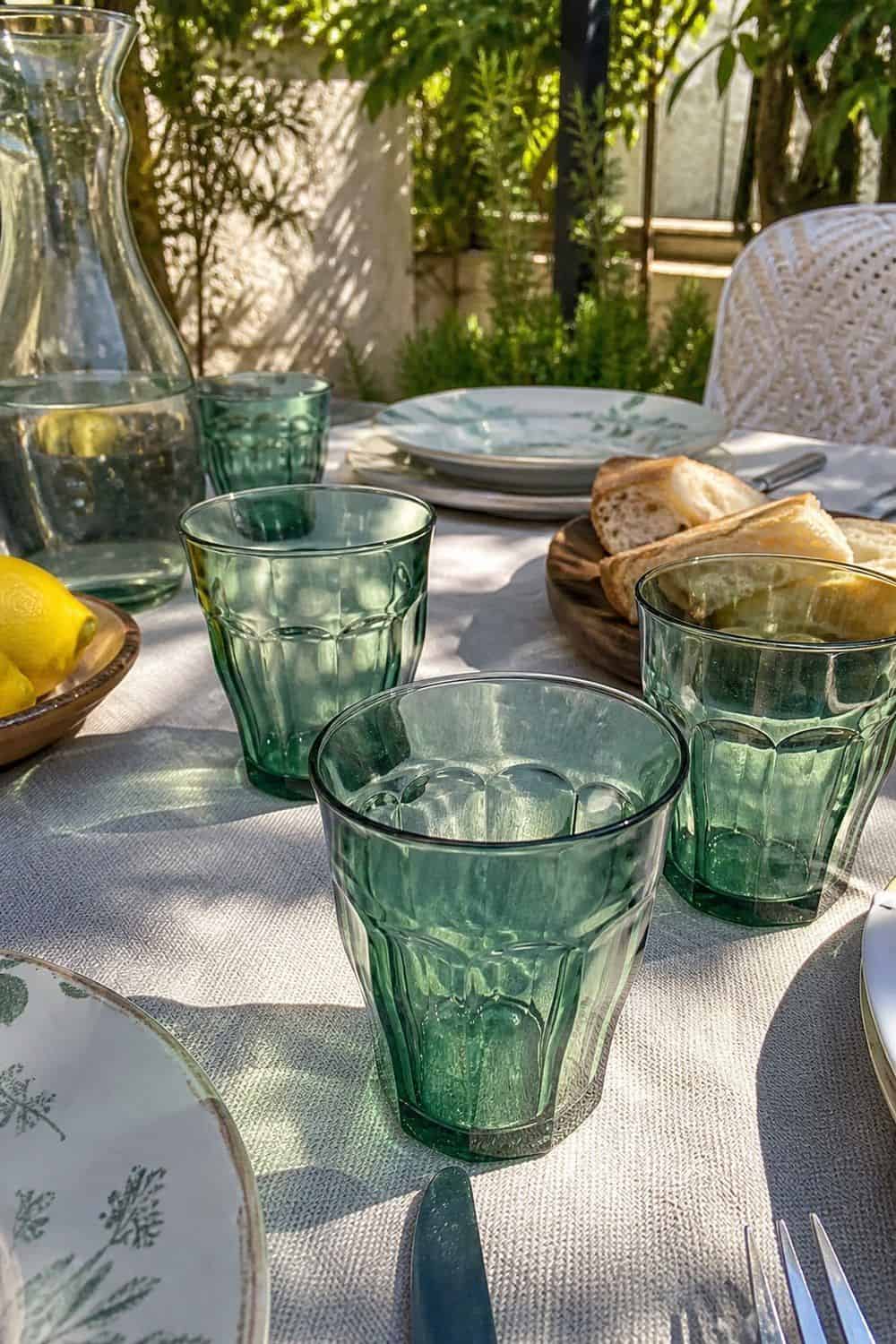
Colored bistro glasses bring that casual cafe feeling in a way that still works for real dinner. Amber, green, blue, or smoky glass can make a plain setting feel sunlit and collected. Choose one color family if the table already has patterned plates, or mix two soft colors if the rest of the table is mostly white and natural. Keep the shapes simple so they stack, wash, and actually get used after the party is over all summer long at home.
14. Low Bud Vases With One Flower Type

Small bud vases are better than one tall arrangement when the meal is outdoors. Choose one flower type, such as chamomile, cosmos, daisies, tiny roses, or lavender, and repeat it down the table in low glass or ceramic vases so the look feels deliberate but light.
One flower keeps the table calm even when the plates, fruit, and drinks add color. Leave space between vases for bread, salad servers, and water glasses, because the flowers should soften the table rather than claim the whole center.
15. Table Greenery From Potted Herbs

Potted herbs make an outdoor table feel alive and useful. Basil, rosemary, thyme, mint, or oregano can sit in small terracotta pots, metal cups, or simple saucers, then move back to the kitchen after the meal. Keep the pots clean and low, and avoid anything so fragrant that it competes with wine or dessert. If the herbs match the menu, guests can tear a little basil over tomatoes or add mint to water, which is the kind of practical charm this table loves.
16. Blue Bottle for Olive Oil
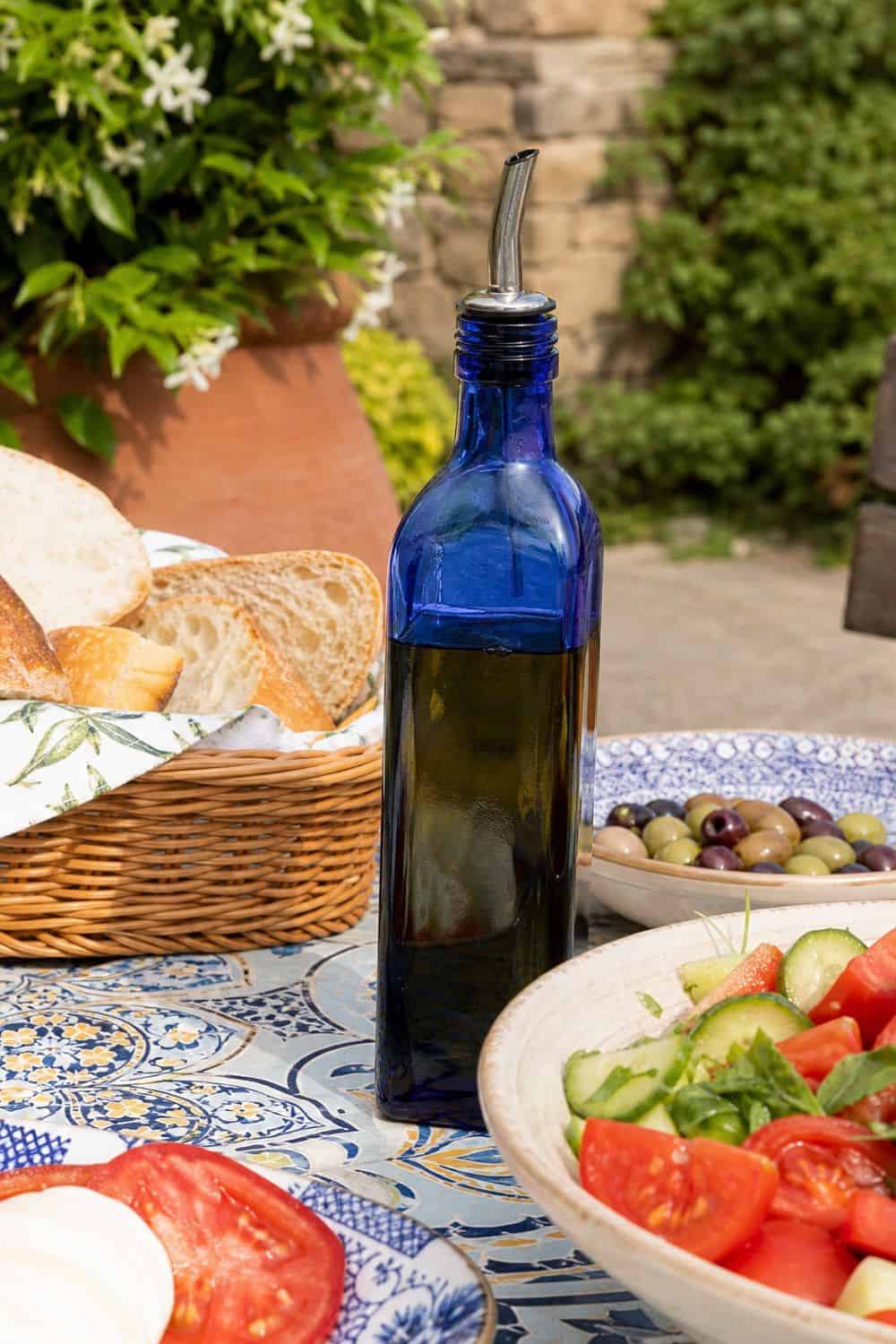
A blue glass olive oil bottle gives the table color and function at the same time. It looks especially good near bread, tomatoes, olives, and a simple salad bowl, where guests can actually use it during the meal.
Choose a bottle with a clean pour spout so the tablecloth does not end up spotted before the first course is finished. If blue feels too strong, green glass or clear glass with a simple label can do the same job more quietly.
17. Wide Ceramic Salad Bowl

A large ceramic salad bowl can be both centerpiece and serving piece, which is ideal for a table that needs to stay useful. Fill it with panzanella, tomato salad, greens, beans, potatoes, or stone fruit and herbs, then let the color carry the center of the table. Choose a bowl wide enough for serving tongs and stable enough for outdoor use. If the bowl is heavy, place it before guests sit down so no one has to pass it awkwardly over glasses.
18. Small Plates for Shared Starters
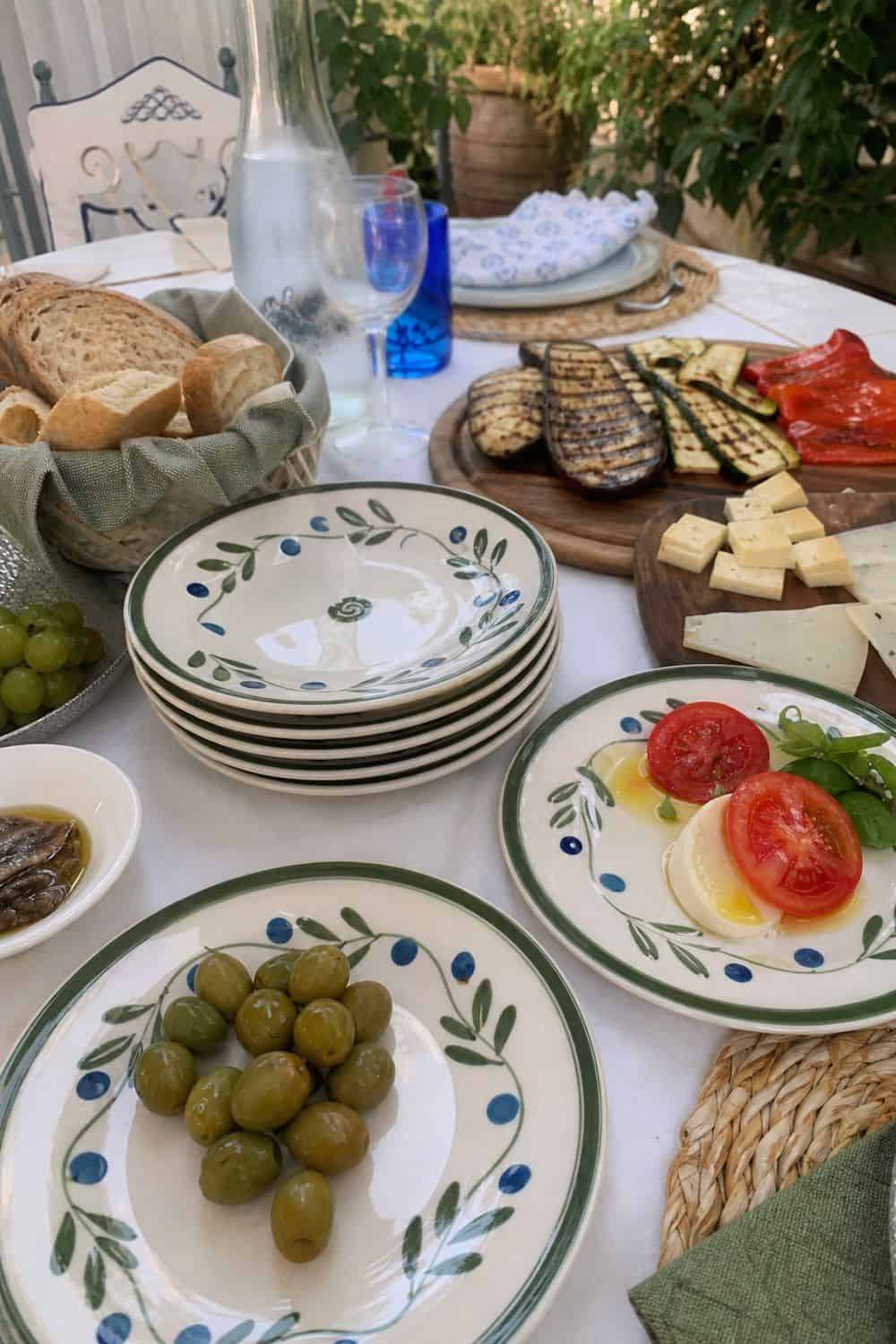
European summer meals often begin with little things: olives, bread, tomatoes, cheese, grilled vegetables, anchovies, fruit, or small bites from the market. Set small plates near each place setting or in a stack at one end so guests can help themselves without balancing food on dinner plates too early.
The plates do not have to match perfectly. A mix of white, blue, terracotta, or hand-painted small plates can feel collected as long as the table has one steady color thread.
19. Low and Weighted Centerpieces

Outdoor centerpieces need to stay low and steady. Use bowls of fruit, small herb pots, low flowers, lanterns, or heavy ceramic pieces instead of tall stems that catch wind and block faces. Sit down and check the sightline before the meal starts.
Weight matters outside. A low bowl with lemons is easier to live with than a light vase that tips every time someone reaches for bread, and a sturdy lantern feels calmer than a skinny candleholder in a breeze.
20. Weights for Breezy Tablecloths
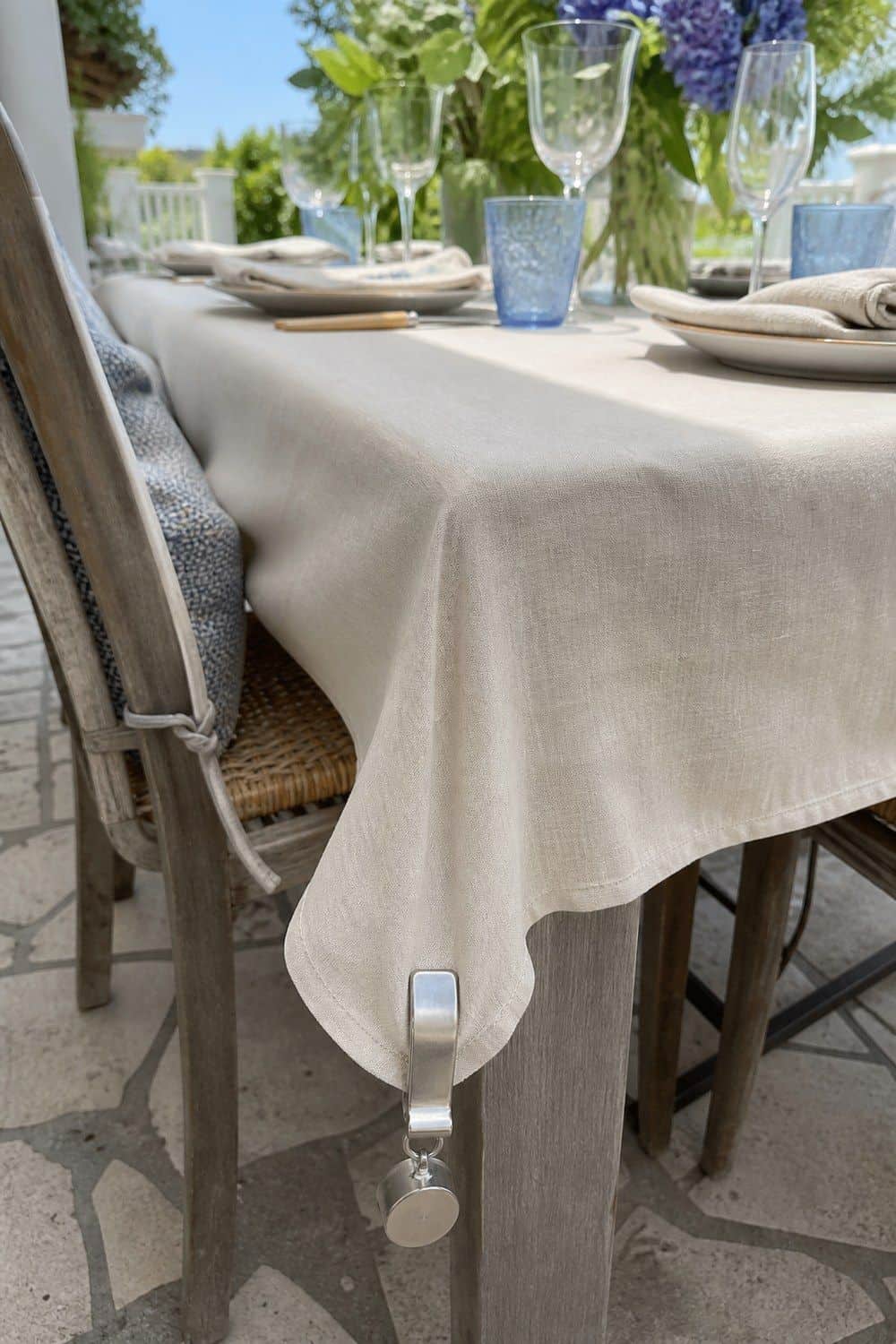
Tablecloth weights are not glamorous, but they can save the whole meal outside. Clip them to the corners or use discreet weighted pieces along the sides before plates and glasses go down. They are especially helpful with linen, which looks beautiful but can lift in a breeze and send glasses wobbling. If you do not like visible clips, tuck heavier serving pieces near the corners or use a runner instead of a full cloth. The point is a table that feels relaxed because it is not flapping into everyone’s lap.
21. After-Sunset Lanterns

Lanterns help a summer lunch stretch into evening without making the table feel fussy. Place them at the ends of the table, on a sideboard, or between low serving pieces where the glow adds atmosphere but does not block food.
Battery candles are useful when children, wind, or dry greenery are part of the setting. If you use real flame, keep it away from napkins, herbs, and loose tablecloth edges. The light should feel soft, not like a centerpiece obstacle course.
22. Dinner Tapers Without Scent
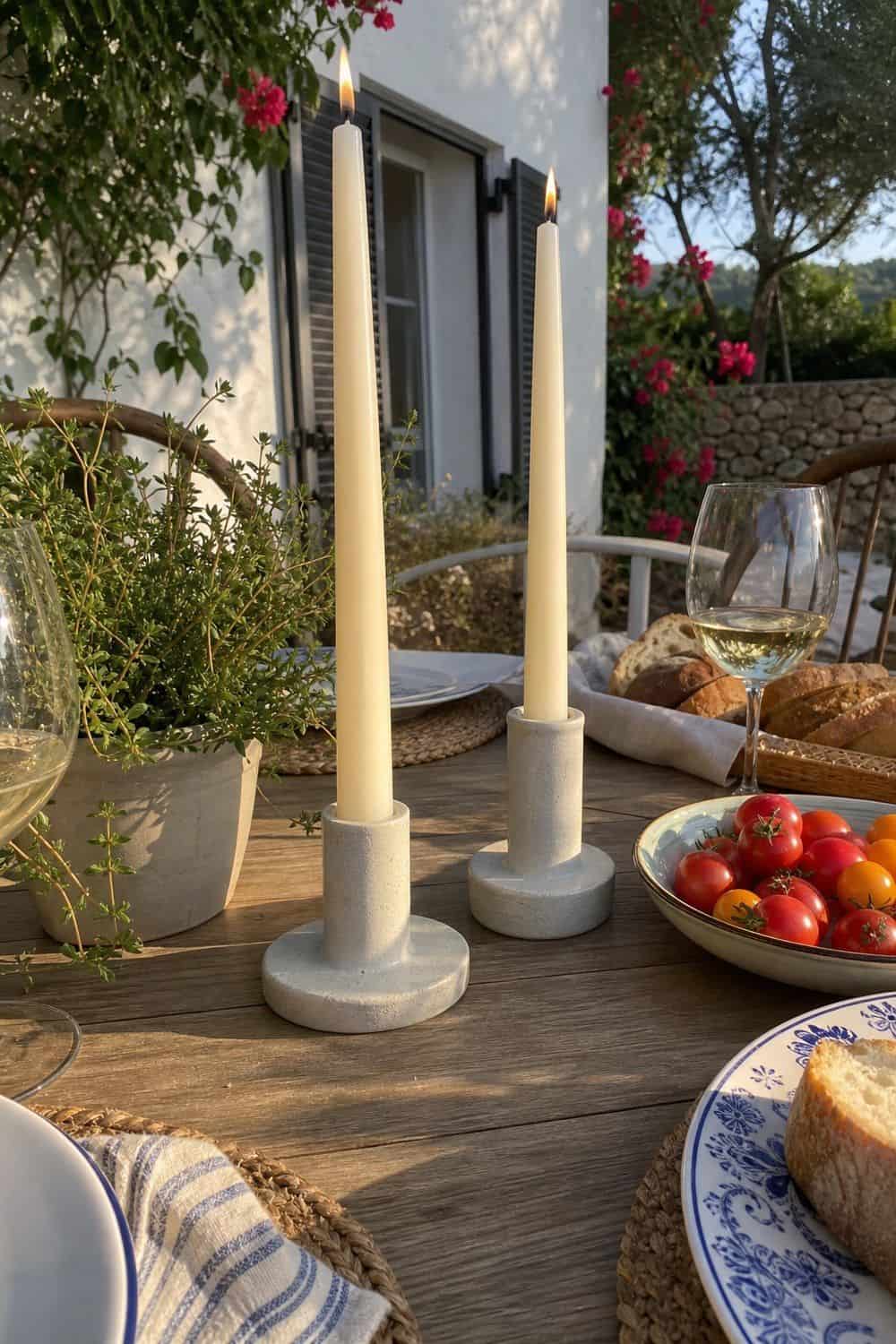
Unscented tapers are the safest choice when food is the point of the table. Fragrance can fight with tomatoes, herbs, grilled fish, wine, fruit, and dessert, even if the candle smells lovely in the store. Choose ivory, sand, blue, or terracotta tapers and keep the holders stable.
On a windy night, skip tapers and use lanterns instead. A European summer table should feel romantic, but not so delicate that everyone spends dinner protecting the candles instead of eating and talking.
23. Extra Bottles on a Side Tray
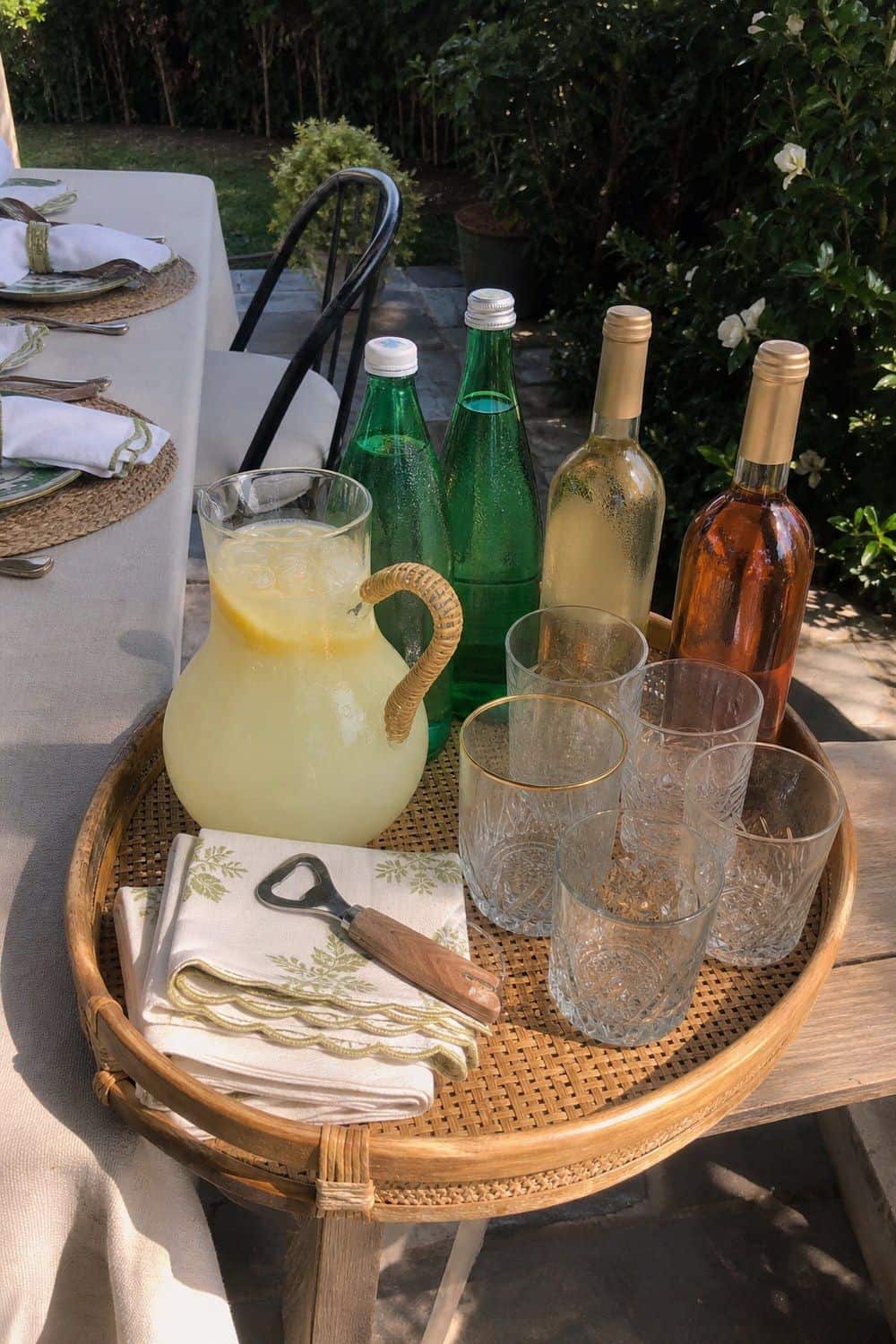
A side tray keeps extra bottles from crowding the main table. Use it for sparkling water, wine, lemonade, extra glasses, bottle openers, napkins, or whatever will be needed once people settle in. Put the tray close enough for refills but not in the middle of the plates.
This one small move makes the table feel calmer. Guests can help themselves, the carafes have somewhere to return, and the center stays open for bread, salad, and platters during the meal outside.
24. One Regional Cue Instead of Many
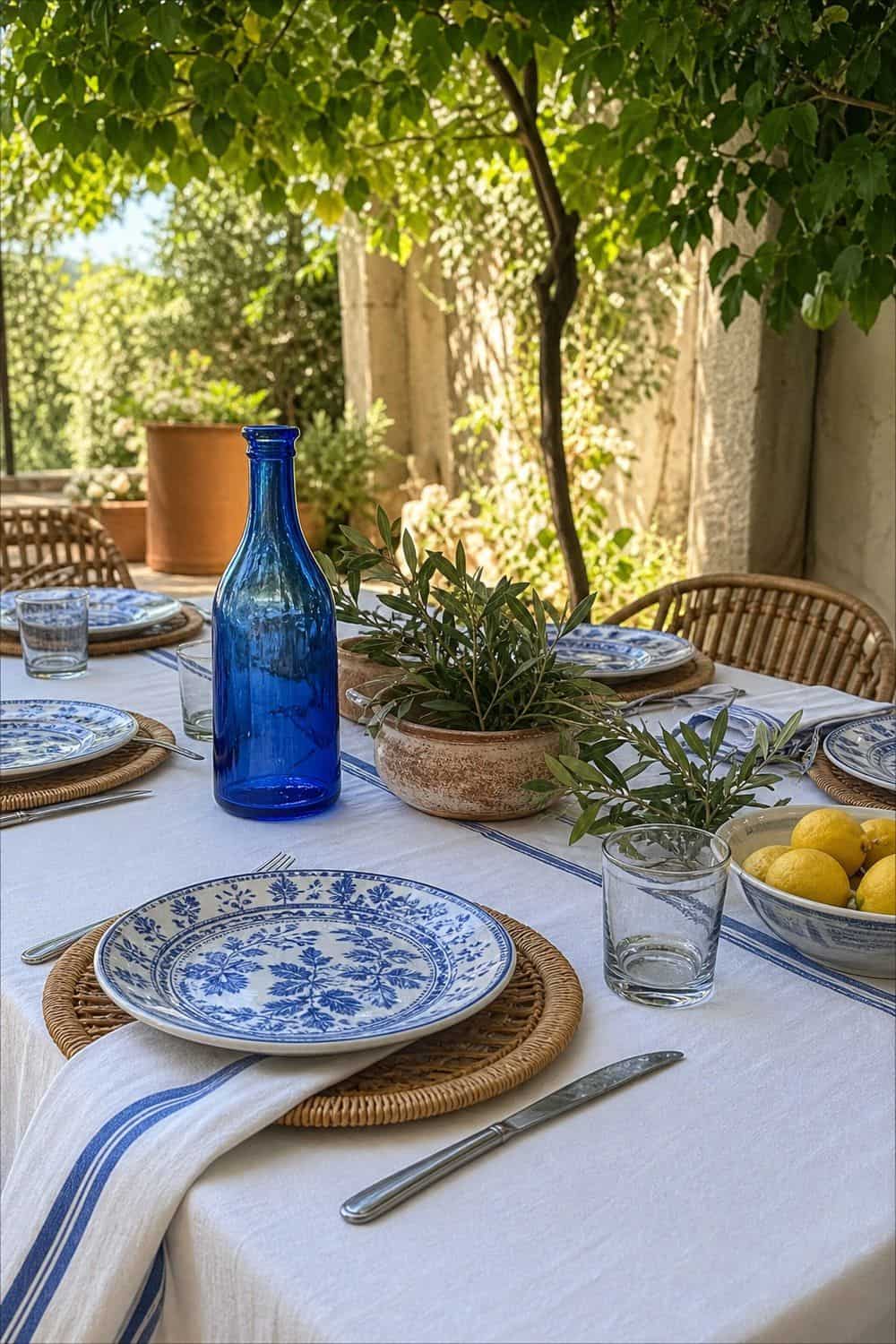
A European summer table feels more natural when it repeats one cue instead of borrowing every motif at once. Choose citrus, blue-and-white plates, rattan, terracotta, striped linen, olive branches, or colored glass, then let that idea echo in two or three places. Too many cues can make the table feel like a souvenir shelf, which is usually the opposite of relaxed summer hosting. One clear thread feels more editorial and much easier to host around, especially once the real food arrives.
25. Open Space for Passing Platters

The best outdoor table is the one people can actually eat from. Leave open space for salad bowls, bread baskets, water carafes, shared starters, and the main platter before you decide the centerpiece is finished.
A table can still look abundant with breathing room. In fact, it usually feels more European when the food, drinks, and conversation have room to move.
When in doubt, remove one decorative piece and make room for the dish everyone will reach for first, even if that means the table looks a little less styled.
European Summer Palette and Food Cues
A reliable palette includes white linen, blue, terracotta, lemon yellow, tomato red, olive green, wicker, bamboo, and sun-warmed neutrals. Let food do some of the visual work: lemons, tomatoes, herbs, bread, salads, olive oil, stone fruit, and chilled drinks all belong on the table.
For aperitivo, focus on olives, bread, small plates, a spritz pitcher, water carafes, and shared starters. For lunch or dinner, add a salad bowl, a main platter, shade, and lighting if the meal will continue after sunset.
Outdoor Practicality for a Summer Table
Outdoor tables need wind-aware pieces, shade, stable centerpieces, reusable outdoor-safe plates, tablecloth weights, and easy water access. Low bowls, terracotta pots, lanterns, carafes, and side trays usually work better than tall arrangements or fragile decor.
The restraint rule is simple: choose one regional cue and keep the rest useful. A table can feel sunlit and transportive without becoming crowded or themed.
Frequently Asked Questions
What is a European summer tablescape?
It is a relaxed, sunlit table built from linen, rattan, ceramics, citrus, herbs, carafes, shared plates, and easy outdoor service. It should feel specific and useful rather than like a generic travel theme.
How do you set a European summer table?
Start with linen, add rattan chargers or ceramic plates, use carafes, bread, olives, tomatoes, low flowers, and practical outdoor lighting. Leave room for platters and drink refills.
What colors work for a European summer tablescape?
White, cream, blue, terracotta, lemon yellow, tomato red, olive green, amber, natural rattan, bamboo, and warm neutrals all work well. Pick one lead cue so the table stays relaxed.
What should go in the center of an outdoor summer table?
Use low bowls of citrus, tomatoes, herbs, bud vases, terracotta pots, or a large salad bowl. Avoid tall flowers that block conversation or blow around in wind.
How do you keep an outdoor tablescape practical?
Use tablecloth weights, low centerpieces, reachable water, stable lanterns, side trays, and enough space for platters. Outdoor tables need to handle wind, shade, refills, and shared food.
What food fits a European summer table?
Bread, olives, tomatoes, caprese, panzanella, grilled fish, fruit, simple salads, spritzes, lemonade, and chilled desserts all fit well. Let some of the food become part of the tablescape.
How do you avoid making a European tablescape look themed?
Choose one cue, such as citrus, blue-and-white plates, rattan, tomatoes, or stripes, then keep the rest of the table relaxed and useful. Avoid mixing every motif at once.
Can a European summer tablescape be budget-friendly?
Yes. Use washed linen, thrifted glassware, grocery-store citrus, herbs in pots, simple plates, and one reusable serving tray. A focused table often looks better than a crowded one.
Final Thoughts
The strongest European summer tablescape ideas combine linen, rattan, ceramics, citrus, herbs, carafes, shared plates, and outdoor practicality. The table should feel sunlit and generous, but still ready for bread, salads, drinks, and passing platters.
Choose one regional cue, keep the center low, plan for wind and shade, and let the food carry part of the beauty.