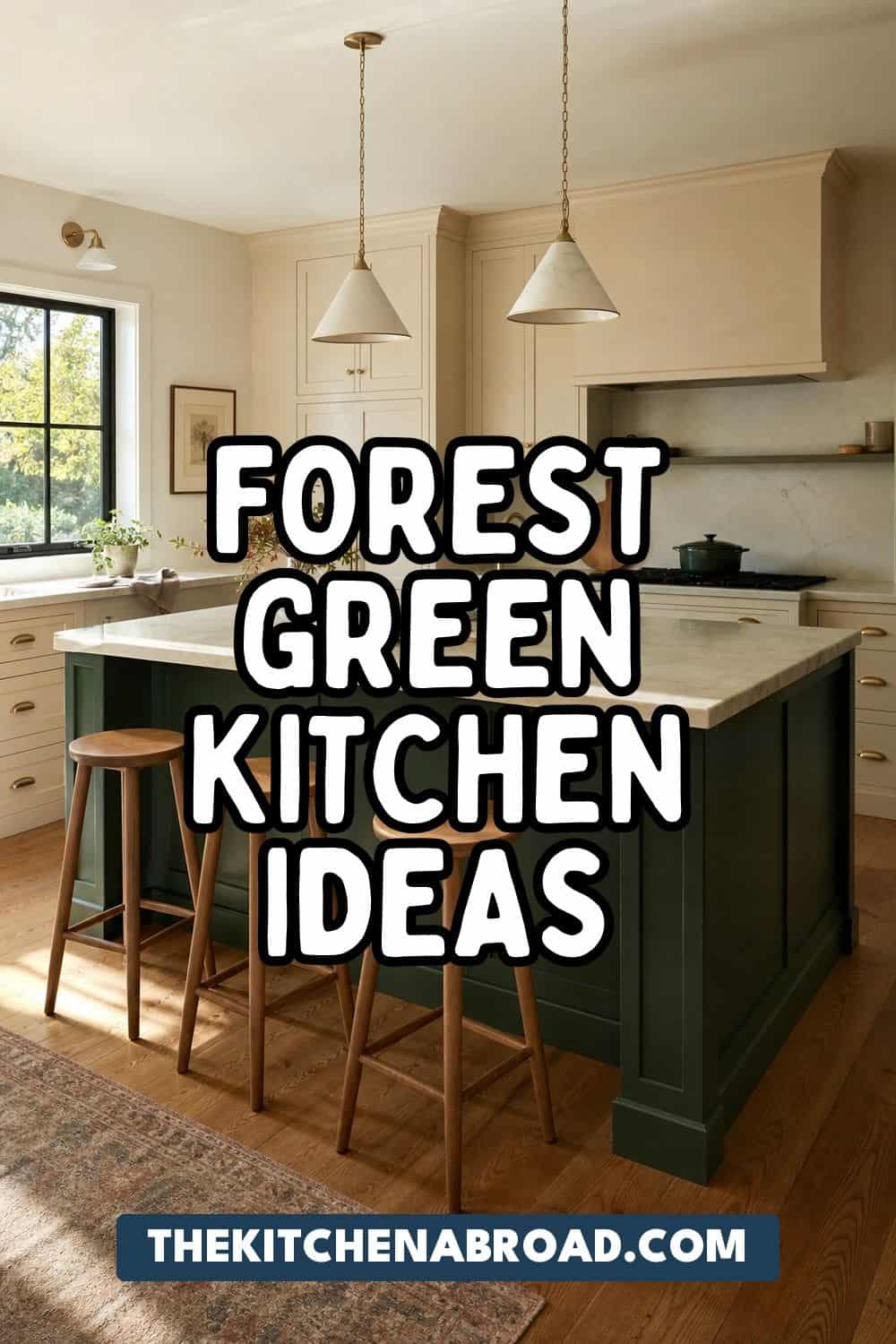
Forest green kitchen ideas work best when the color feels deep, natural, and supported by warm materials. Start with one main green moment, such as cabinets, an island, tile, a pantry nook, or a few visible accents, then balance it with oak, walnut, brass, marble, cream, linen, and warm lighting. Forest green should make the kitchen feel grounded and beautiful without taking away clear prep space or everyday function.
Forest green has a different mood from bright green, sage, or olive. It feels darker, woodier, and more settled, which is why it works so well in kitchens with natural materials and warm light.
These forest green kitchen ideas are about using that depth carefully. Some are bigger choices, like cabinets or tile, while others are small layers you can test through textiles, hardware, art, and shelves.
You Might Also Like These Blog Posts
- 25 Moody Kitchen Ideas for a Beautiful Kitchen
- 25 Dark Green Kitchen Ideas for a Beautiful Kitchen
- 25 Walnut Kitchen Ideas for a Beautiful Kitchen
- 25 Cozy Kitchen Ideas for a Cozy Home
- 25 Warm Modern Kitchen Ideas for a Cozy Home
1. Forest Green Cabinets as the Main Color
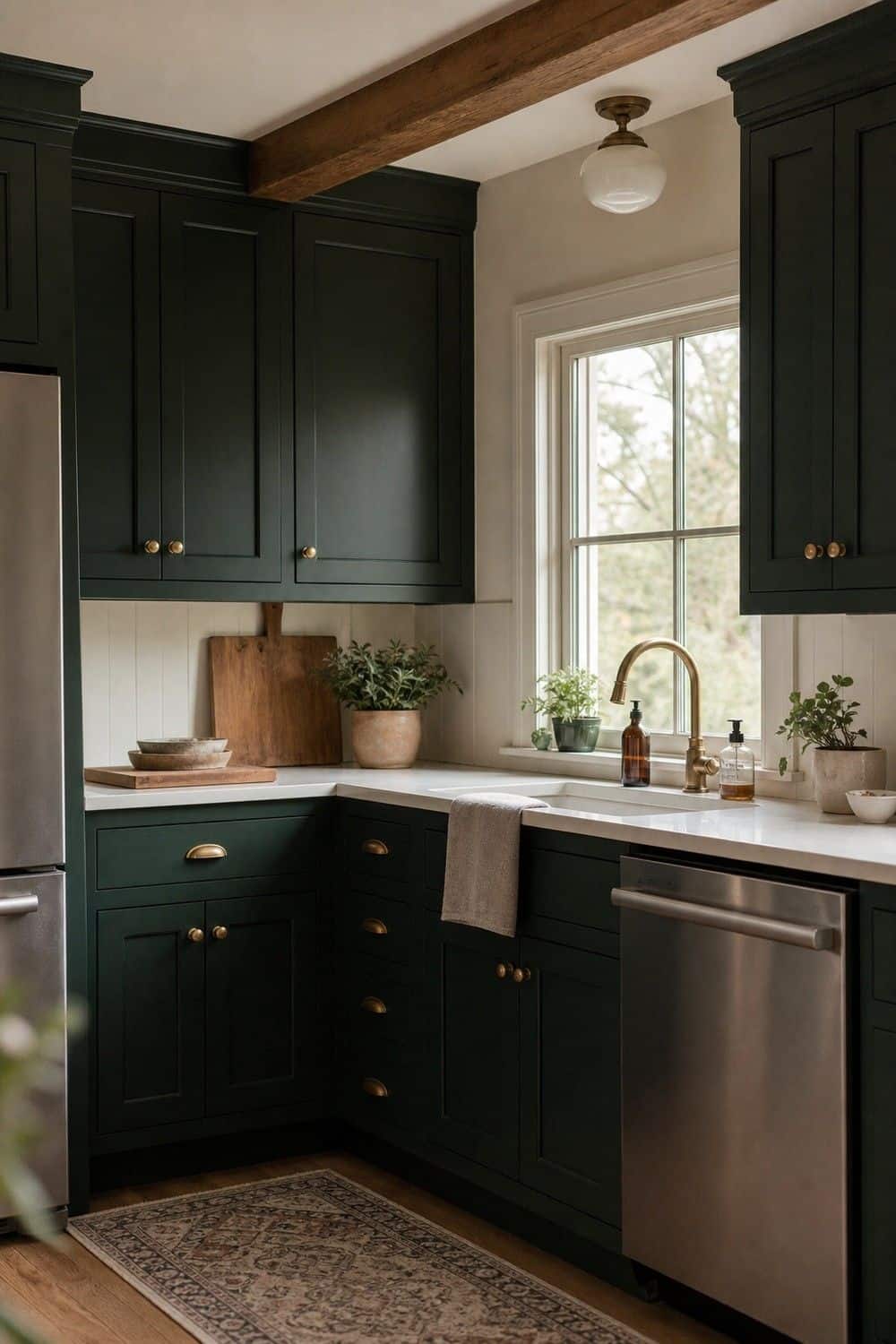
Forest green cabinets create a grounded kitchen that feels rich without needing a loud palette. The color works especially well on shaker doors, inset cabinets, or simple flat fronts where the shade can carry the mood without extra ornament.
Check the paint beside your counter, flooring, and backsplash in both morning and evening light. Forest green can look almost black in low light and brighter near a window. Cream walls, oak shelves, brass pulls, and warm bulbs keep the cabinets from feeling too heavy during everyday cooking.
2. Brass Pulls Beside Forest Green
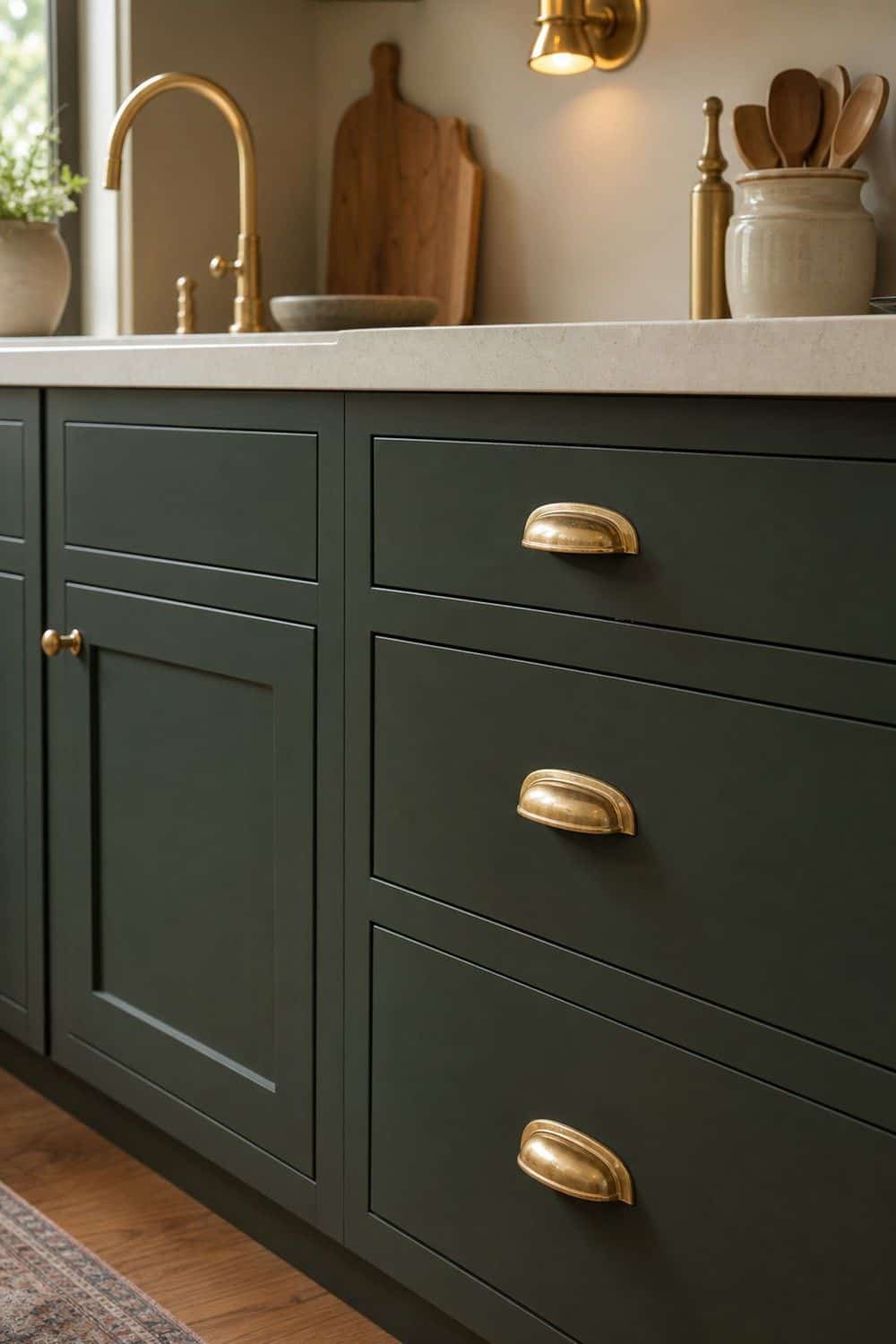
Brass pulls warm up forest green cabinets and make the color feel more classic. Aged brass, antique brass, or satin brass usually looks softer than a bright polished finish, especially beside deep green paint. Choose the scale based on the cabinet style: slim pulls for modern fronts, rounded knobs for a cottage look, or cup pulls for a more traditional kitchen. Repeat the brass once through a light, rail, frame, or faucet so the hardware feels connected instead of random or overly matched.
3. Oak Shelves Against Forest Green

Oak shelves bring forest green back toward nature, which is where the color feels most believable. Use them for dishes, glasses, cookbooks, mugs, or small bowls rather than a crowded display of unrelated objects.
The oak tone matters. Pale oak keeps the kitchen airy, while deeper oak makes the room moodier. If the shelves sit against forest green walls or tile, leave some open space between stacks so the green can show through. A few cream dishes or clear glasses will keep the shelf from looking too dense.
4. A Cream Runner to Soften the Floor

A cream runner softens forest green cabinets and keeps the kitchen from feeling too dark underfoot. It works well in front of a sink, along a galley walkway, or between an island and range where the floor needs warmth.
Choose a washable runner with subtle texture or pattern, because kitchens are not gentle rooms. Cream looks better than stark white with forest green, especially when the palette includes brass, oak, walnut, or marble. Keep nearby towels and mats calmer so the runner does not compete with the cabinetry.
5. Green Ceramics on Open Shelves

Green ceramics add tonal depth without painting another surface. A moss bowl, olive crock, forest vase, or muted green mug can make open shelves and counters feel layered beside darker cabinets. Use ceramic pieces where they have a job: holding utensils, fruit, herbs, coffee spoons, or everyday dishes near the places you actually use them. Mixing several greens works when the undertones feel related, but too many shiny pieces can flatten the look. Matte, handmade, or softly glazed ceramics usually feel more natural in this palette.
6. Marble Beside Forest Green

Stone with movement gives forest green the light and movement it needs. Creamy marble softens the color, while veining in gray, brown, or green can bridge cabinets, shelves, and hardware beautifully. Use marble on counters, a backsplash, a serving board, or a small shelf. The undertone is the detail to watch. Cool white marble can make forest green feel sharper, while warm stone makes it feel older and softer. If the room already feels busy, choose gentler veining instead of a high-contrast slab.
7. Warm Lighting for Deep Green Finishes

Layered warm lighting keeps forest green from turning flat at night. Under-cabinet strips, pendants, sconces, picture lights, or one small counter lamp can bring out the depth of painted cabinets and green tile.
Use consistent warm bulbs so the kitchen does not look cozy in one corner and cold in another. Task lighting still matters around knives, sinks, and the stove. The best lighting plan makes the green feel atmospheric while keeping the room bright enough for chopping, cleanup, coffee, and weeknight dishes.
8. Black Knobs for Quiet Contrast
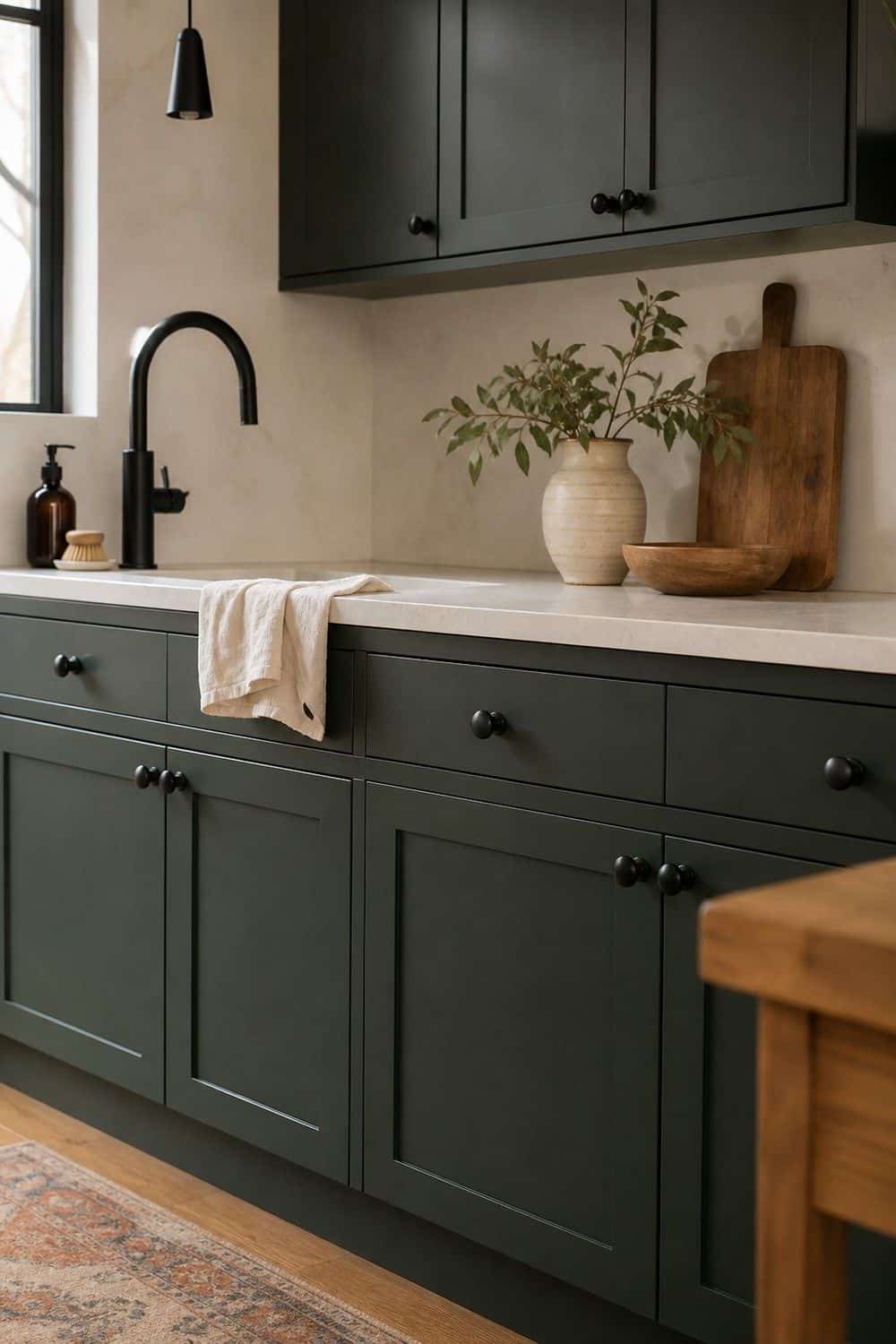
Black knobs create a quieter contrast than brass. They work well when you want forest green cabinets to feel understated, tailored, or a little more modern. Matte black is usually easier to live with than glossy black, which can look harsh beside deep paint. Repeat the black in one nearby detail, such as a faucet, pendant, stool leg, or frame. Keep the rest of the palette warm with wood, cream, or stone so the green and black do not make the room feel cold.
9. Linen Curtains for Softer Edges
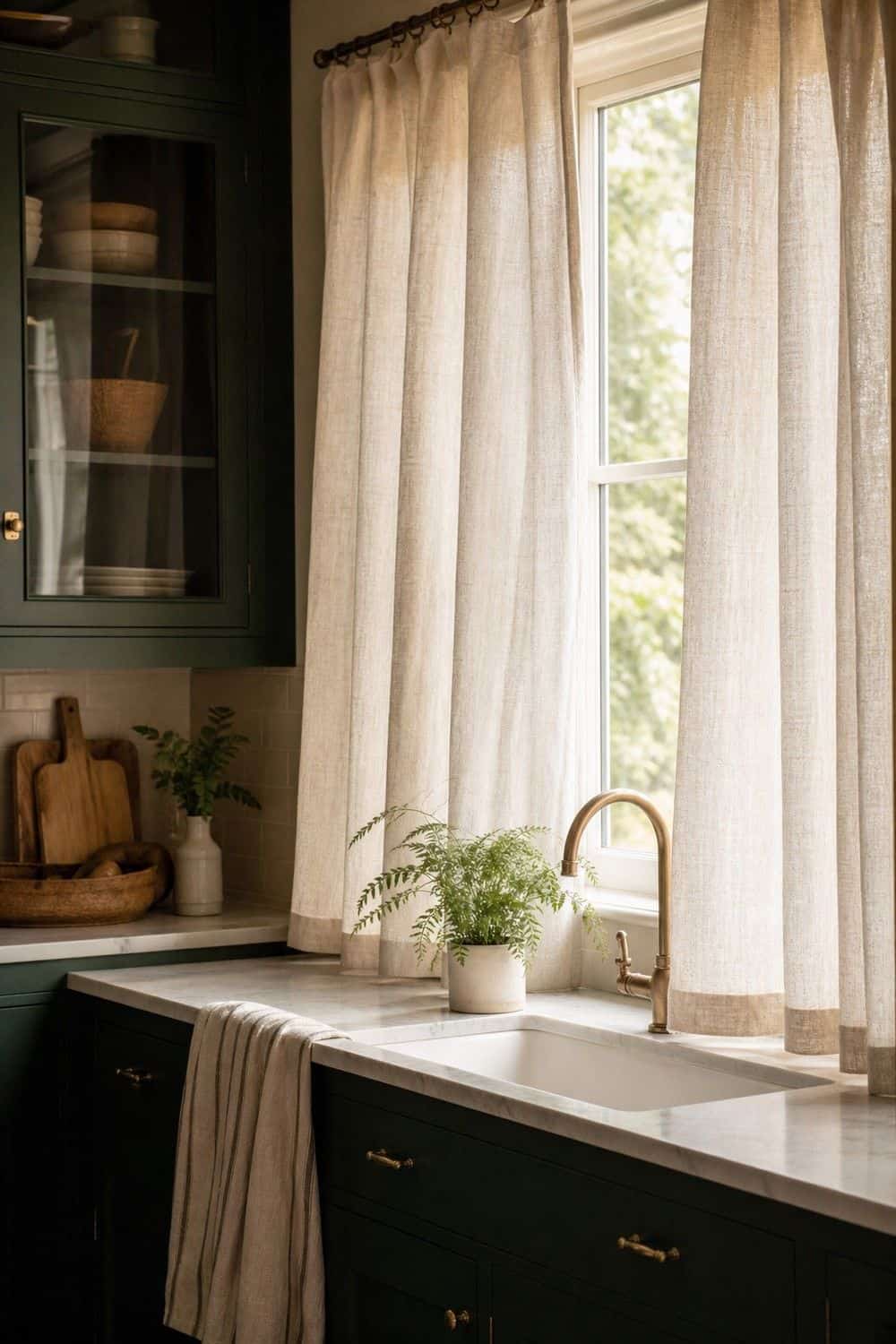
Linen curtains soften forest green by adding movement and a natural fabric note. They are especially pretty at a sink window, breakfast nook, or glass door where dark cabinetry needs a little lightness. Choose flax, oatmeal, warm white, or muted cream rather than bright white. The fabric should filter light without making the kitchen dim. Keep curtains away from burners, wet sink edges, and heavy splatter zones. Linen works best when it feels relaxed and useful, not fussy, precious, or hard to wash.
10. Walnut Boards Against Deep Green

Walnut boards deepen a forest green kitchen in a very practical way. Lean one against a backsplash, keep one on the island, or stack a few on open shelving where the wood can warm up painted cabinets and stone.
The boards should still be easy to reach for prep or serving. If they block the counter, they become clutter instead of texture. Walnut looks especially good with cream walls, brass hardware, marble, black accents, and oak shelves because it adds a darker natural note.
11. The Island as the Main Green Moment

A forest green island gives the kitchen a strong center without painting every cabinet. It can anchor cream perimeter cabinets, warm wood shelves, marble counters, or brass lighting in a way that feels considered and still easy to live with. Keep the island top clear enough for real use. Forest green already brings visual weight, so it does not need a crowd of trays, bowls, and decor on top. If stools sit nearby, choose wood, leather, cream, or black so the island remains the main color moment.
12. Green Zellige With Handmade Texture

Green zellige tile adds texture because each piece catches light differently. In forest green, it can make a backsplash feel handmade, tonal, and richer than a flat painted wall. Look at samples in daylight and evening light before choosing a shade. Some green tile goes teal, some goes olive, and some becomes nearly black at night. Use it behind a range, around a sink, in a bar nook, or as a full backsplash if the rest of the kitchen is calm. Quiet grout lets the tile variation show.
13. Sage Accents Within the Green Family
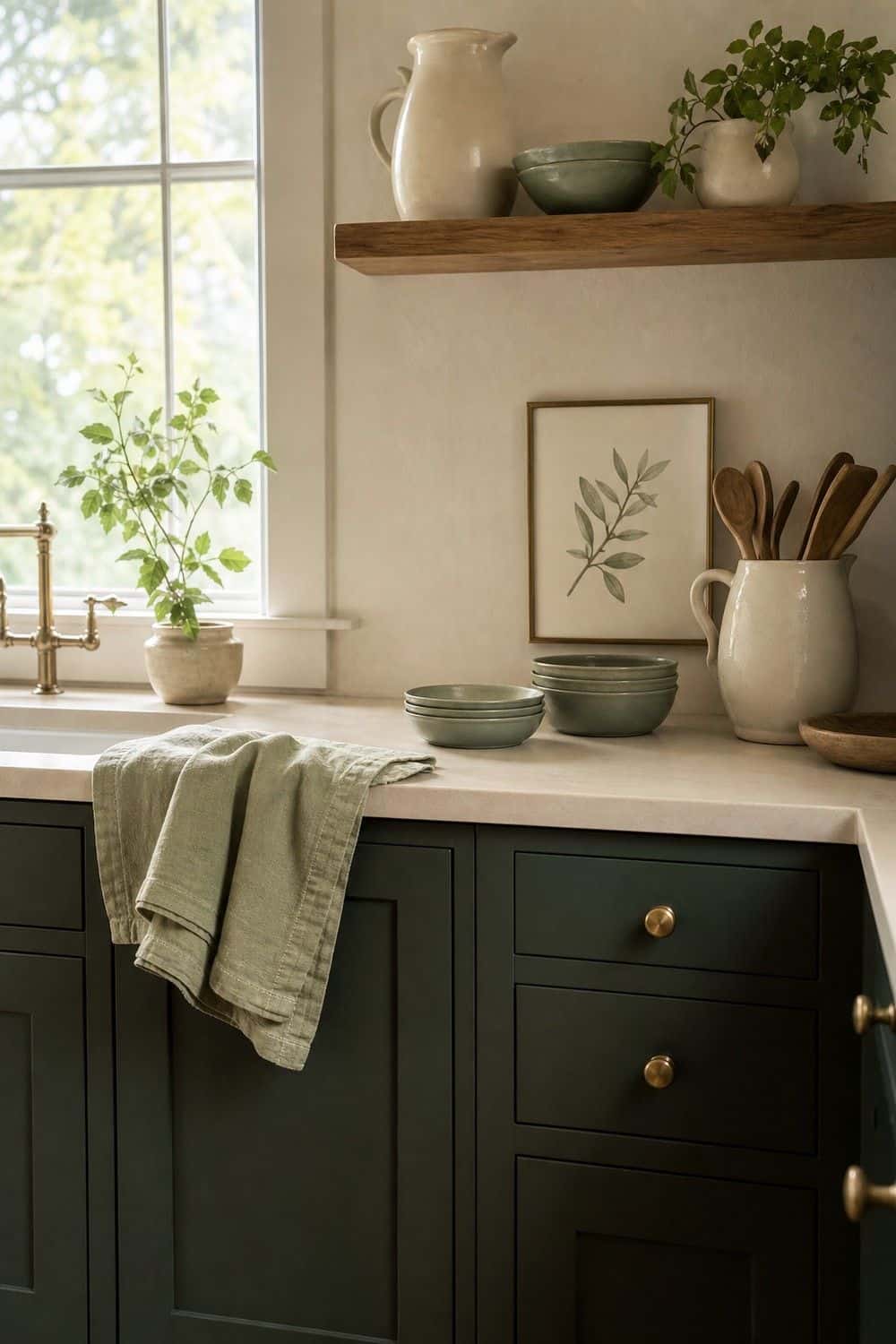
Sage accents soften forest green without leaving the green family. Use sage in towels, dishes, art, plants, or a small runner when the darker green needs a little air around it. The combination works because forest green carries depth and sage brings relief. Keep the undertones compatible so the room does not feel mismatched. Warm sage usually sits better beside brass, oak, walnut, and cream than a cool gray-green. This is an easy way to build a tonal green palette without adding a new bold color.
14. Moss Green Textiles for a Tonal Layer

Moss green textiles are a gentle way to layer forest tones. Towels, a runner, cafe curtains, seat cushions, or napkins can make the palette feel natural without another painted surface. Choose washable pieces with texture, because fabric near a kitchen sink or stove has to work. Moss pairs beautifully with cream, terracotta, oak, walnut, and aged brass. If the cabinets are already forest green, keep the moss slightly lighter or softer so it reads as a layer rather than a failed match.
15. Cream Walls Around Deep Green

Cream walls give forest green room to breathe. They soften the contrast around dark cabinets, green tile, wood shelves, and black hardware while keeping the kitchen warm enough for everyday meals.
Choose a cream that works with the counter and floor. Too yellow can make the green look muddy, while icy white can make it look severe. A warm off-white usually feels calmer. If the kitchen seems too heavy, lightening the walls may help more than adding another decorative accent or changing the cabinets.
16. Wood Stools for Natural Warmth

Wood stools make a forest green island feel relaxed and usable. Oak, walnut, ash, or medium stained wood can all work, depending on whether you want the room to feel lighter, moodier, or more rustic. Keep the stool shape simple if the island color is strong. Curved backs, woven seats, or slim legs can add texture without crowding the view. If the kitchen gets daily breakfast, homework, or snack traffic, choose a finish that can handle scuffs. Natural wood makes the green feel less formal.
17. A Forest Green Pantry Moment

A pantry cabinet or pantry nook is a perfect place for forest green because it feels enclosed and purposeful. Paint the cabinet doors, line the back of open shelves, or use green storage pieces inside a breakfast station. Tall cabinetry can handle depth when the surrounding walls, counters, or shelves give the room some relief. Use this idea for dry goods, small appliances, coffee supplies, serving pieces, or baking storage. Add warm light inside the pantry if the green makes the space feel too shadowed.
18. Botanical Art That Belongs With the Palette

Botanical art connects forest green to leaves, herbs, and garden color without adding more counter objects. A framed fern, branch study, still life, or muted landscape can soften a painted cabinet wall or coffee corner. Hang art away from steam, oil, and sink splash, or choose a frame that can be wiped. Let the art echo the room rather than introduce a completely different palette. One good print near shelves or a pantry door often feels better than several tiny pieces competing for attention.
19. Terracotta Beside Forest Green
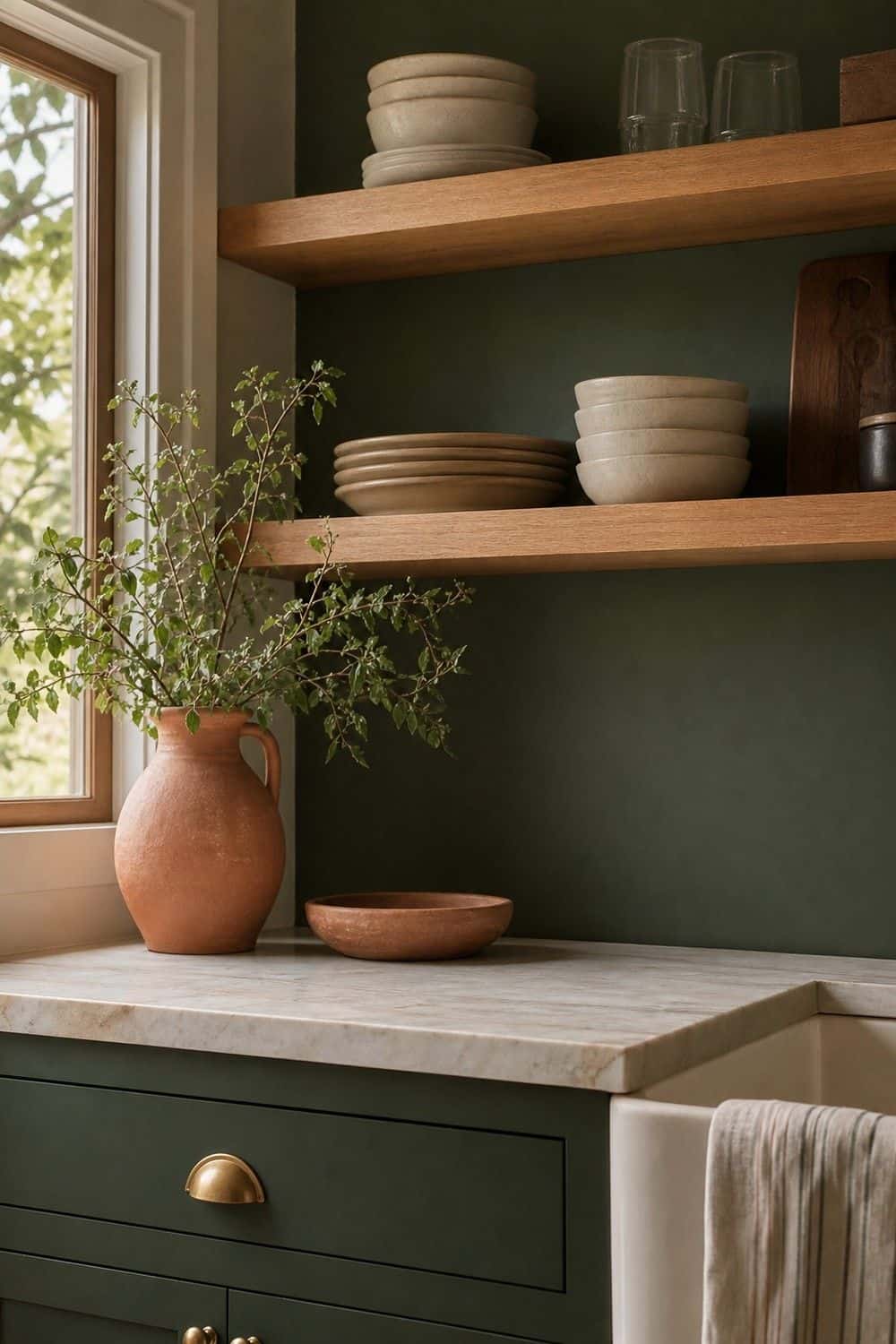
A clay-toned accent warms forest green with an earthy note. Try terracotta through a small pot, vase, bowl, tile accent, or art detail rather than covering the whole kitchen in another strong color.
The combination works because green feels leafy and terracotta feels sunbaked. Keep cream, wood, or marble nearby so the palette does not become too dark. Terracotta is especially pretty with oak shelves, linen curtains, and brass pulls. Use it sparingly so the forest green still leads the room.
20. Copper Accents for Warm Reflection
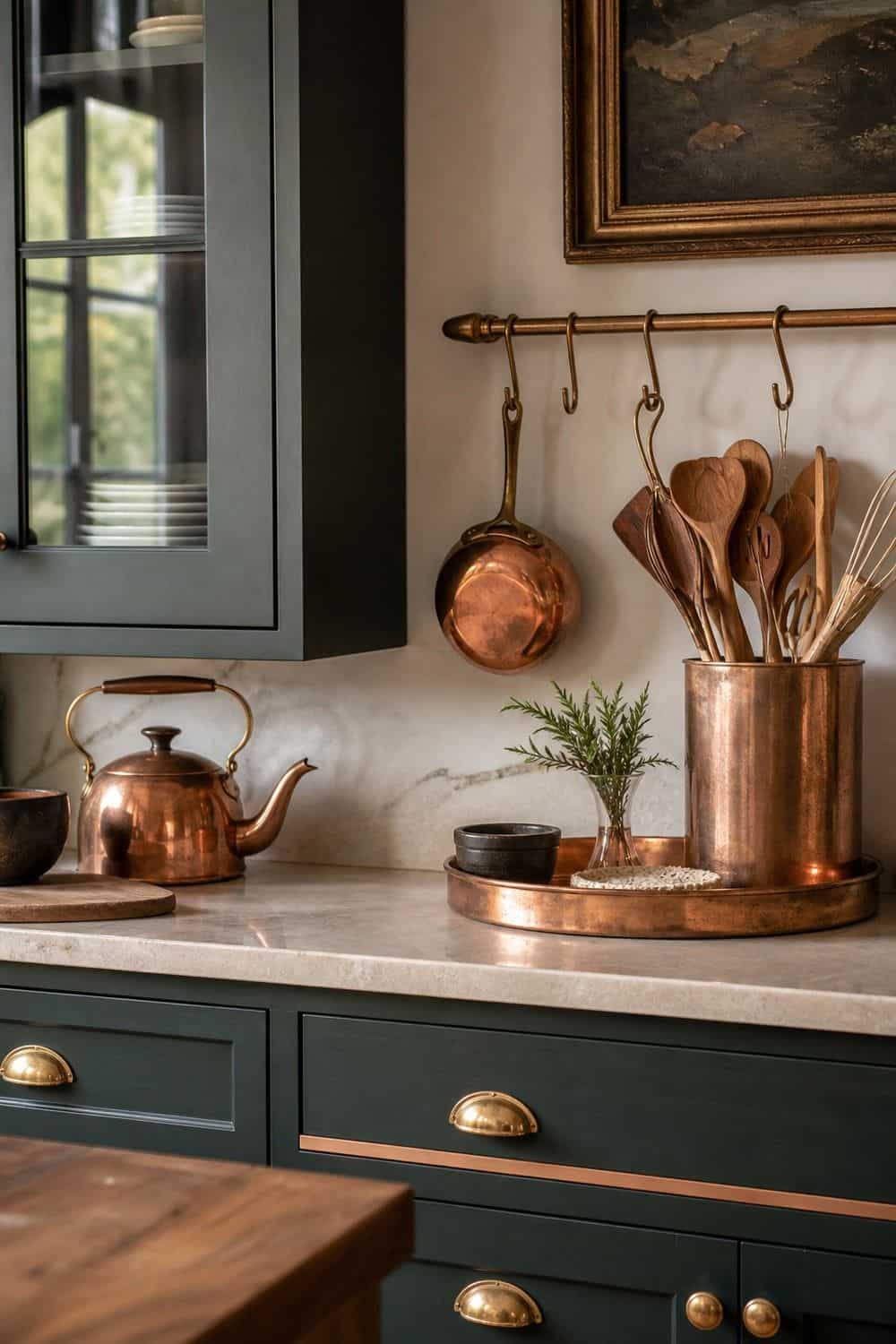
Copper accents bring a warmer glow than brass and can make forest green feel rustic, old-world, or collected. A copper pot rail, kettle, small lamp, tray, or utensil cup is usually enough.
Let the copper patina naturally if you like a lived-in look, or polish it if the kitchen leans more refined. Too many copper pieces can look busy beside deep green, so keep the rest of the metals simple. Copper works best when it has a practical role, not when it is scattered only for shine.
21. Balanced Color in Compact Layouts
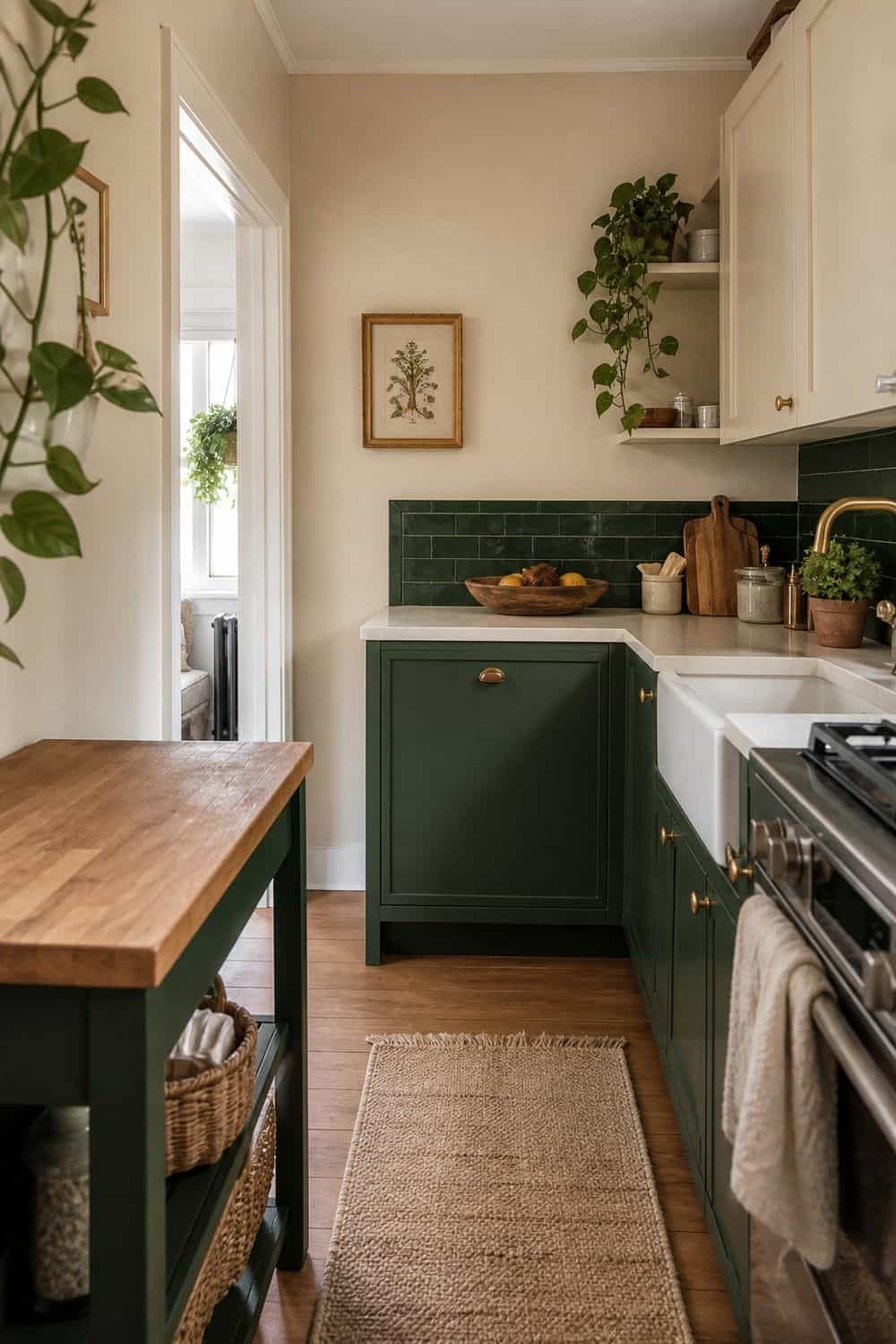
A compact kitchen can use forest green beautifully when the color has a boundary. Try lower cabinets, a small island, one pantry cabinet, a runner, open shelf accents, or a backsplash area instead of wrapping every surface in deep green.
Let vertical details carry more of the mood when counter space is limited. Shelves, lighting, hardware, art, and fabric can add depth while the prep surface stays clear. Cream walls, glass, pale stone, and warm bulbs help the room feel open. The goal is richness without crowding the cooking path.
22. Removable Style Layers for Flexibility

Removable layers let you try forest green in the room before choosing cabinets or tile. Start with a cream-and-green runner, moss towels, botanical art, green ceramics, brass pulls, oak shelves, or one small lamp. Choose pieces that still help the kitchen work. Towels dry dishes, bowls hold fruit, shelves store glasses, and lamps soften evening light. A tray or board can keep the color easy to move when cooking starts. When the color lives in useful layers, the kitchen can shift with the season without feeling like a temporary display or a half-finished makeover.
23. Depth Instead of Flat Green
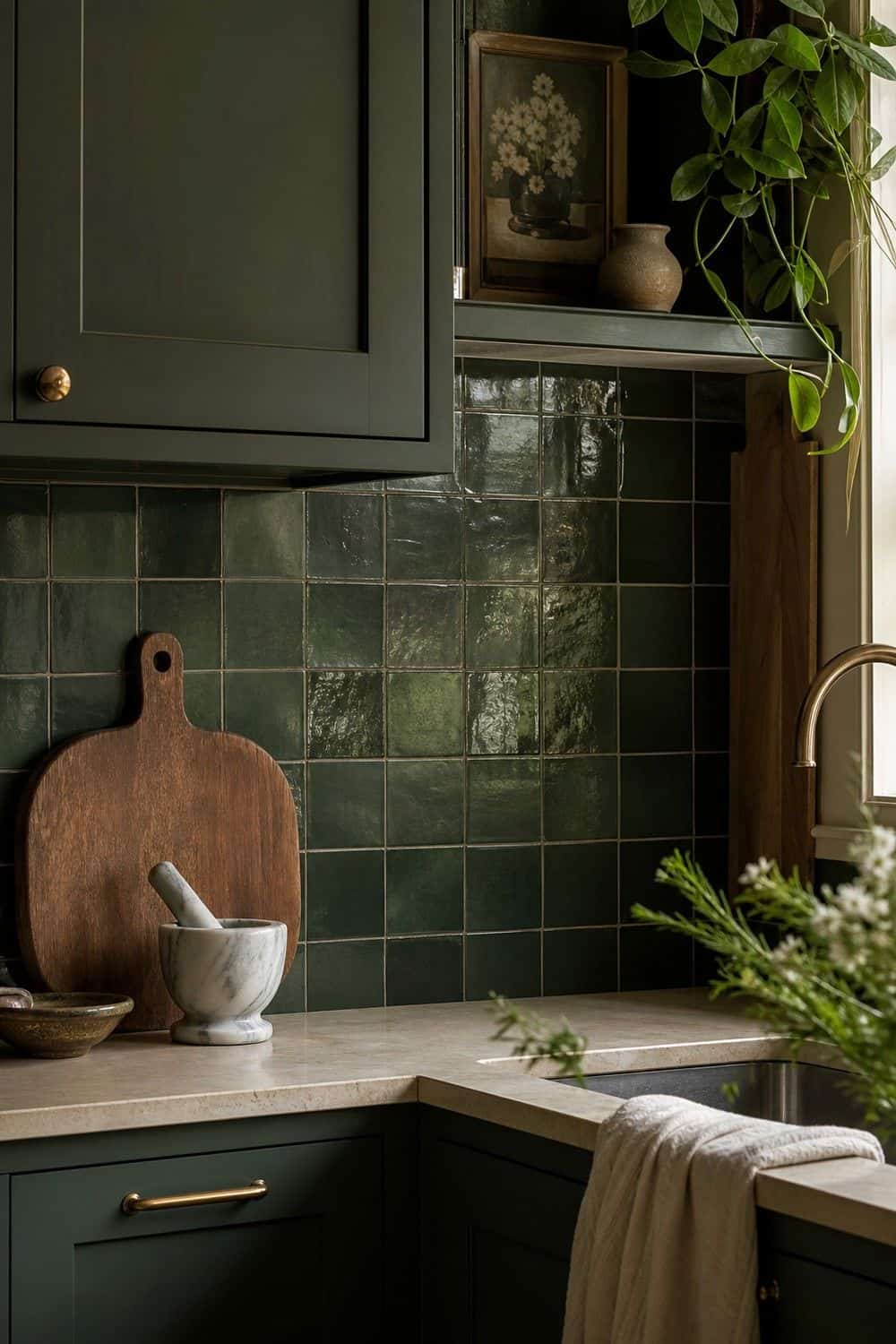
Forest green can look flat when every surface has the same finish. Break it up with texture: visible wood grain, honed stone, linen, handmade tile, matte ceramics, ribbed glass, or aged metal.
Lighting also matters. A beautiful green can become dull under cool bulbs or in a shadowed corner. Add warm task light and a few lighter materials nearby before deciding the paint is wrong. Forest green looks best when it has depth and movement, not when it becomes one dark block.
24. Softer Whites Around Forest Green

Harsh white can make forest green feel colder than it needs to be. If the cabinets or tile look severe, the surrounding white may be too stark for the depth of the green.
Try cream, warm white, pale stone, linen, or light oak instead. Softer neutrals let forest green feel natural and grounded. This is especially important under evening light, when bright white can turn bluish and make the green look muddy. A warmer backdrop usually makes the whole kitchen feel calmer.
25. A Natural Finish for Forest Green Kitchens

The best forest green kitchen ideas usually feel connected to natural materials. Wood, stone, clay, linen, brass, plants, and warm light all help the color feel rooted instead of trendy.
Before adding more decor, look at how the kitchen works during a normal meal. If the counters are crowded or the palette feels heavy, remove a piece before buying another. Forest green is strongest when it has breathing room, practical surfaces, and materials that make sense around food, water, and daily cooking.
Frequently Asked Questions
What makes a kitchen forest green?
A forest green kitchen uses a deep, nature-connected green that feels darker and richer than sage but usually warmer than blue-green teal. It works best with oak, walnut, cream, marble, brass, linen, warm lighting, and practical surfaces that keep the room usable.
How do I keep forest green kitchen ideas practical?
Put the strongest green where it can handle daily use, such as cabinets, an island, tile, a pantry cabinet, or washable textiles. Keep the main prep counter clear, choose wipeable finishes near cooking zones, and add enough warm task light for chopping and cleanup.
Can forest green work in a compact kitchen layout?
Yes, but the color needs a clear boundary. Use forest green on lowers, an island, one cabinet wall, a pantry moment, or removable accents, then balance it with cream walls, pale stone, glass, warm bulbs, and open counter space.
What colors go well with forest green in a kitchen?
Forest green pairs beautifully with cream, warm white, oak, walnut, brass, black, marble, terracotta, sage, moss, and soft linen tones. The easiest palette is one deep green, one warm wood, one light neutral, and one metal finish.
What should I avoid with forest green kitchen decor?
Avoid cold lighting, harsh white walls, too many unrelated greens, glossy novelty pieces, and counters filled with decorative objects. Forest green already has depth, so the surrounding materials should support the color instead of competing with it.
Final Thoughts
Forest green kitchen ideas work best when the color feels grounded, useful, and connected to the rest of the room. Choose one strong green moment, support it with wood, cream, stone, brass, linen, and warm light, then leave enough open space for the kitchen to cook, gather, and breathe every day.