
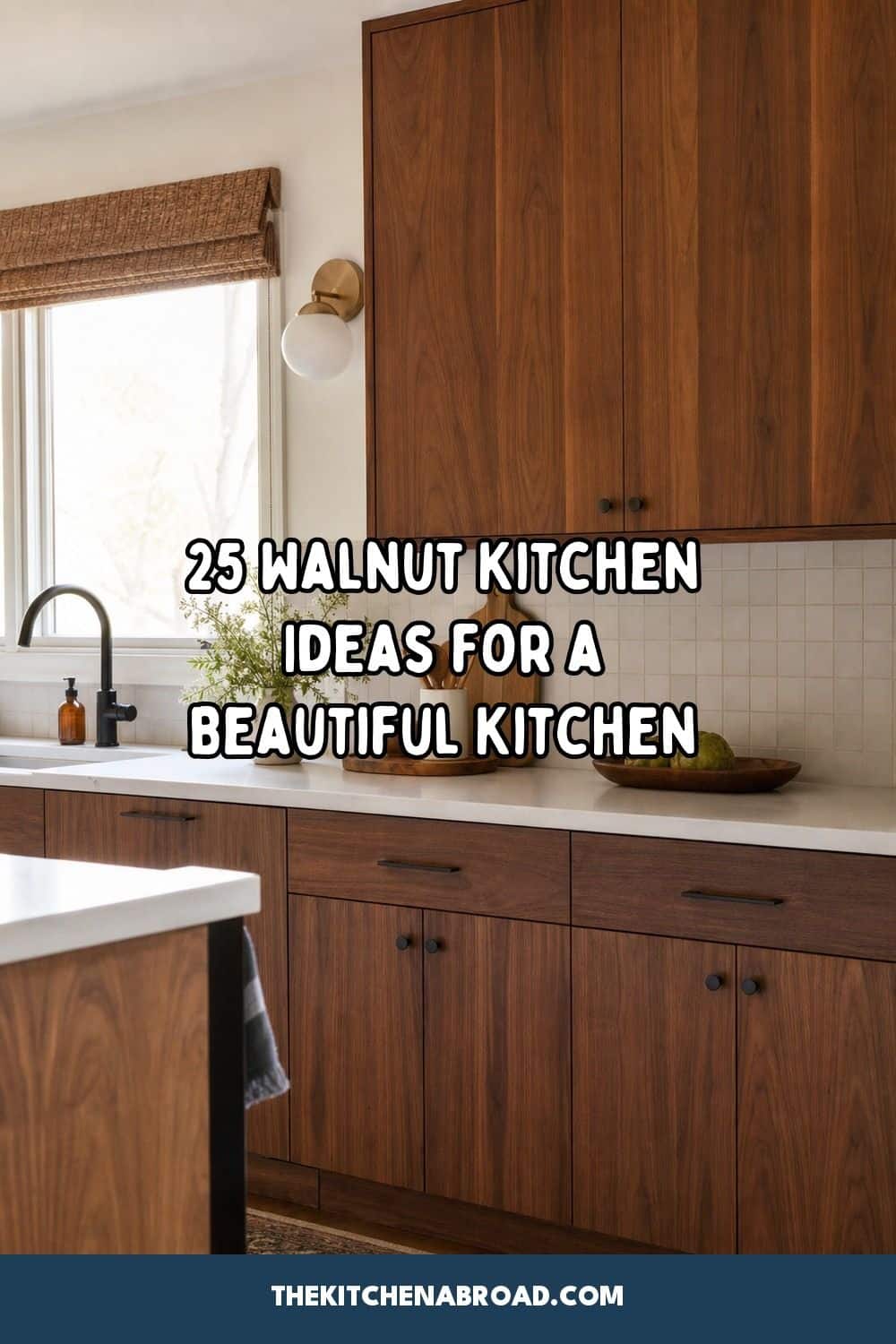
The best walnut kitchen ideas use warm, useful kitchen-specific layers instead of clutter. Begin with one focused zone, then add texture, color, practical storage, and a few design or personal details that still leave room to cook. Counters, shelves, islands, and coffee corners should feel styled but easy to clean.
Walnut has a way of warming up a kitchen without shouting for attention. The challenge is using that depth carefully so the room feels rich, not heavy or crowded.
This guide focuses on walnut kitchen ideas that work in real homes: cabinetry, shelves, hardware, counters, lighting, textiles, and small styling moves that keep the wood tone practical and balanced.
Top Recommended Products


You Might Also Like These Blog Posts
- 25 Moody Kitchen Ideas for a Beautiful Kitchen
- 25 Dark Green Kitchen Ideas for a Beautiful Kitchen
- 25 Jewel Tone Kitchen Ideas for a Beautiful Kitchen
- 25 Cozy Kitchen Ideas for a Cozy Home
- 25 Fall Kitchen Decor Ideas for a Cozy Kitchen
1. Walnut Cabinets as the Kitchen Anchor
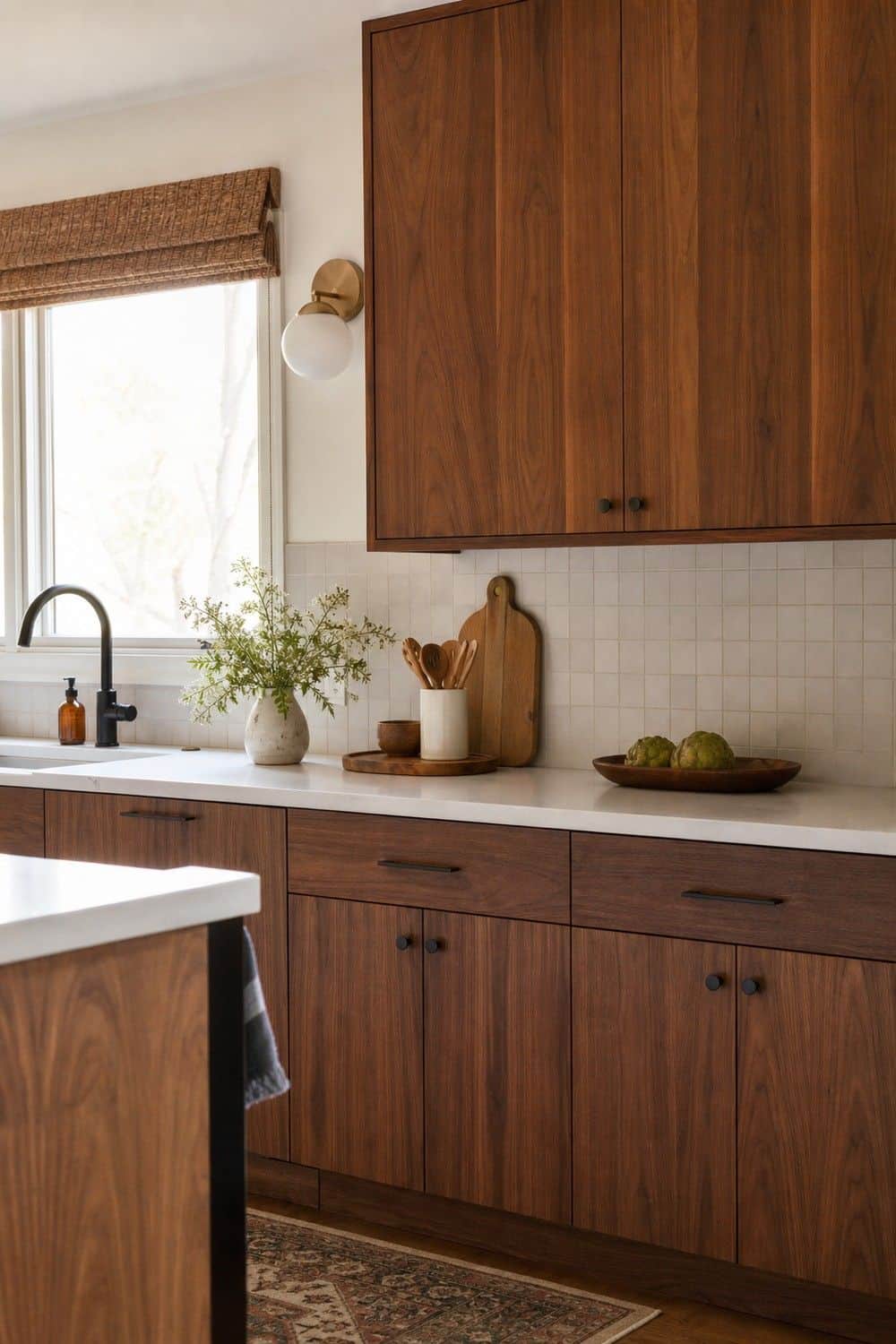
Walnut cabinets bring instant warmth, so they work best when the rest of the kitchen gives them room to breathe. Pair the grain with quiet counters, simple hardware, and walls that reflect light instead of swallowing it. Flat fronts feel modern, while inset or shaker doors make walnut softer and more traditional. If full walnut cabinetry feels too heavy, use it on lowers or one cabinet wall and keep uppers lighter. The goal is depth, not a room that feels wrapped in dark wood.
2. Walnut Shelves Where They Feel Useful
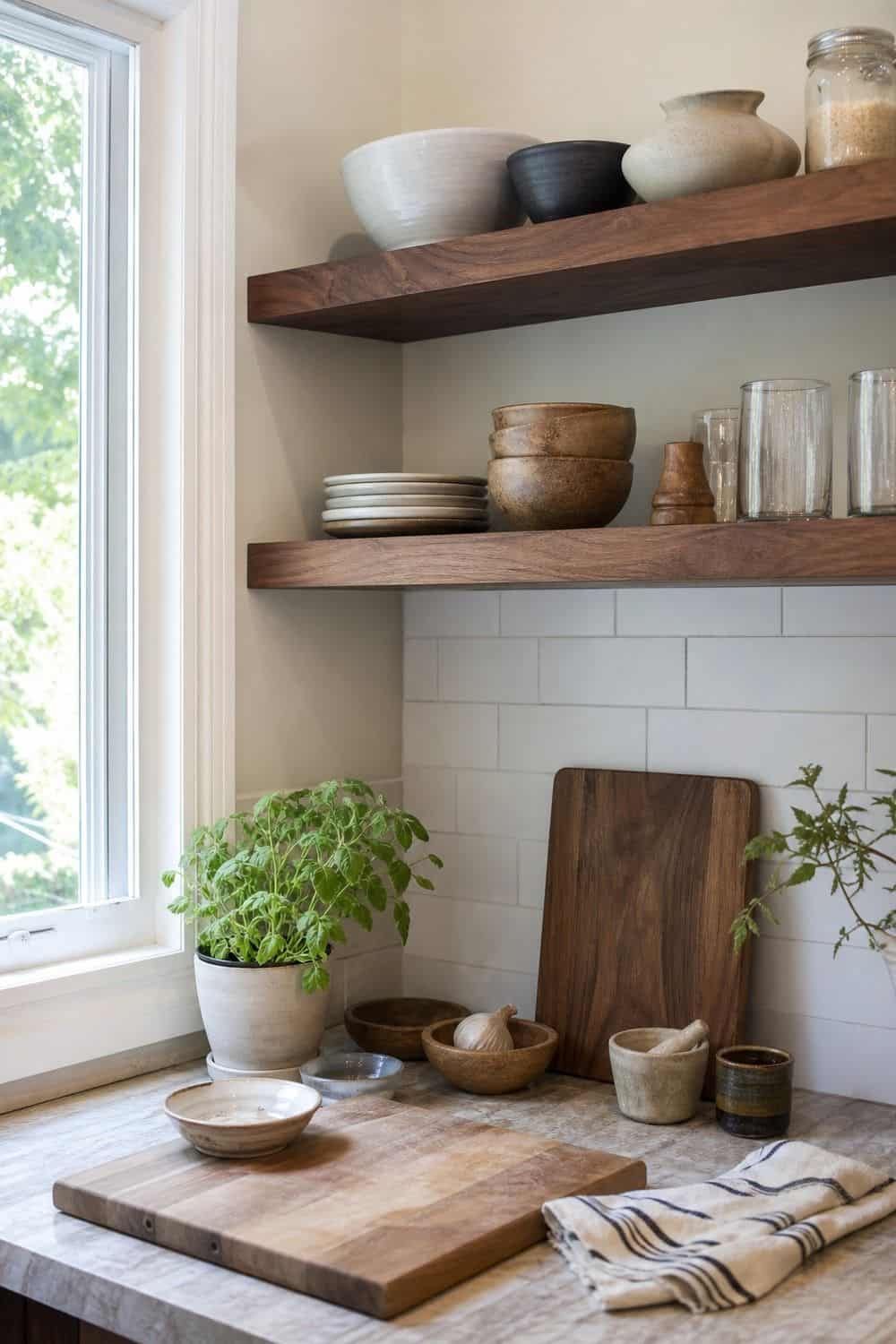
Floating shelves are a gentler way to bring walnut into the kitchen without changing every cabinet. They look beautiful with everyday pieces: cream bowls, clear glassware, cookbooks, stoneware mugs, or a small lamp tucked near the end. Keep the styling looser than you would on painted shelves because the grain already adds movement. Leave a little open space around stacks of dishes so the shelf still feels usable. Hidden brackets or slim metal supports usually let the walnut stay center stage.
3. Walnut Boards in Everyday Reach
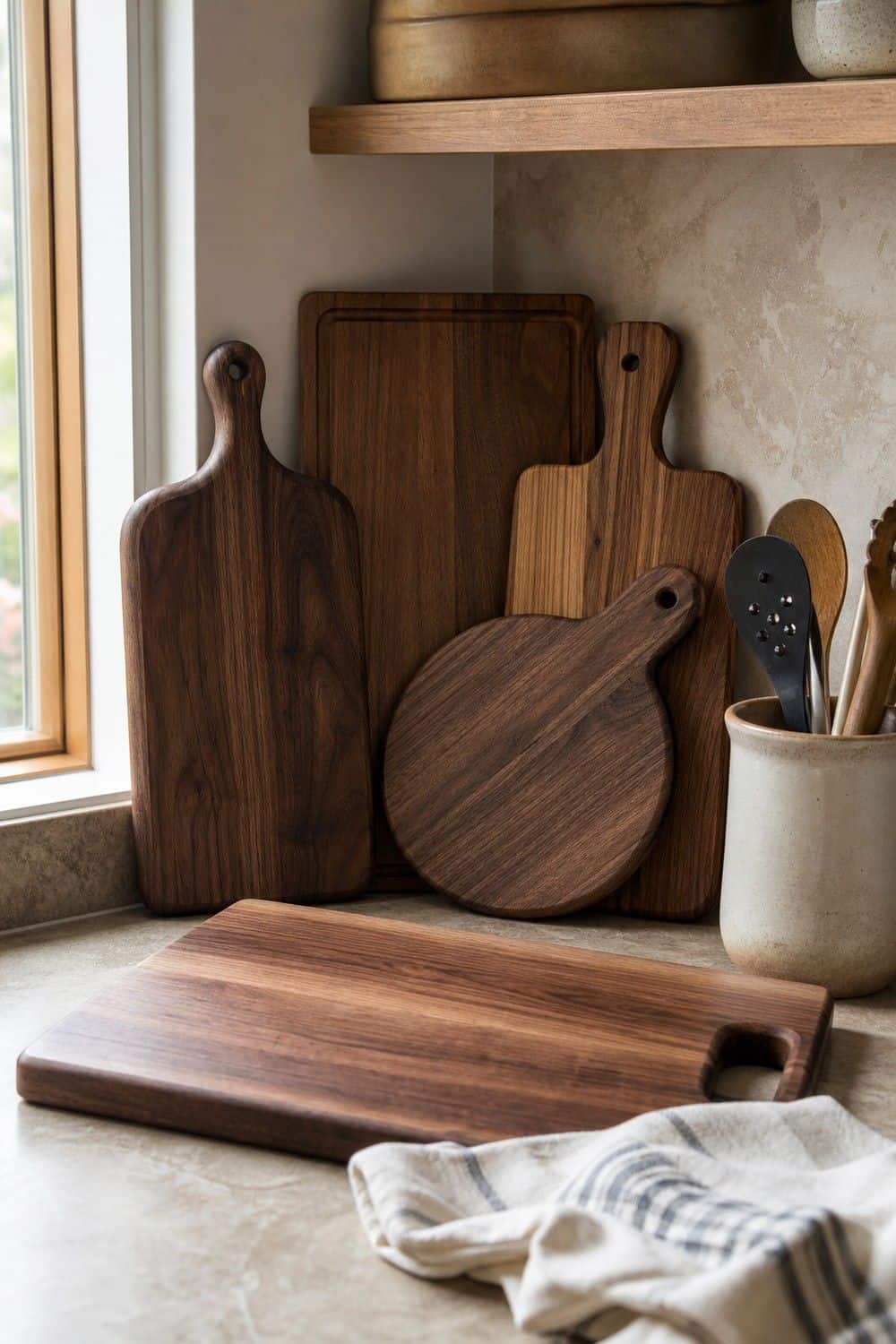
A small stack of walnut cutting boards adds warmth without a renovation, especially against stone, tile, or painted cabinets. Lean one or two near the backsplash, then keep the rest of the counter clear enough for actual chopping and cooking.
Mix sizes instead of stacking a whole collection. A tall board behind a smaller paddle board feels layered, while too many boards can look like storage overflow. If they sit near the stove, move them far enough from heat, oil, and splatter to keep the wood aging well.
4. Brass Pulls Beside Warm Walnut
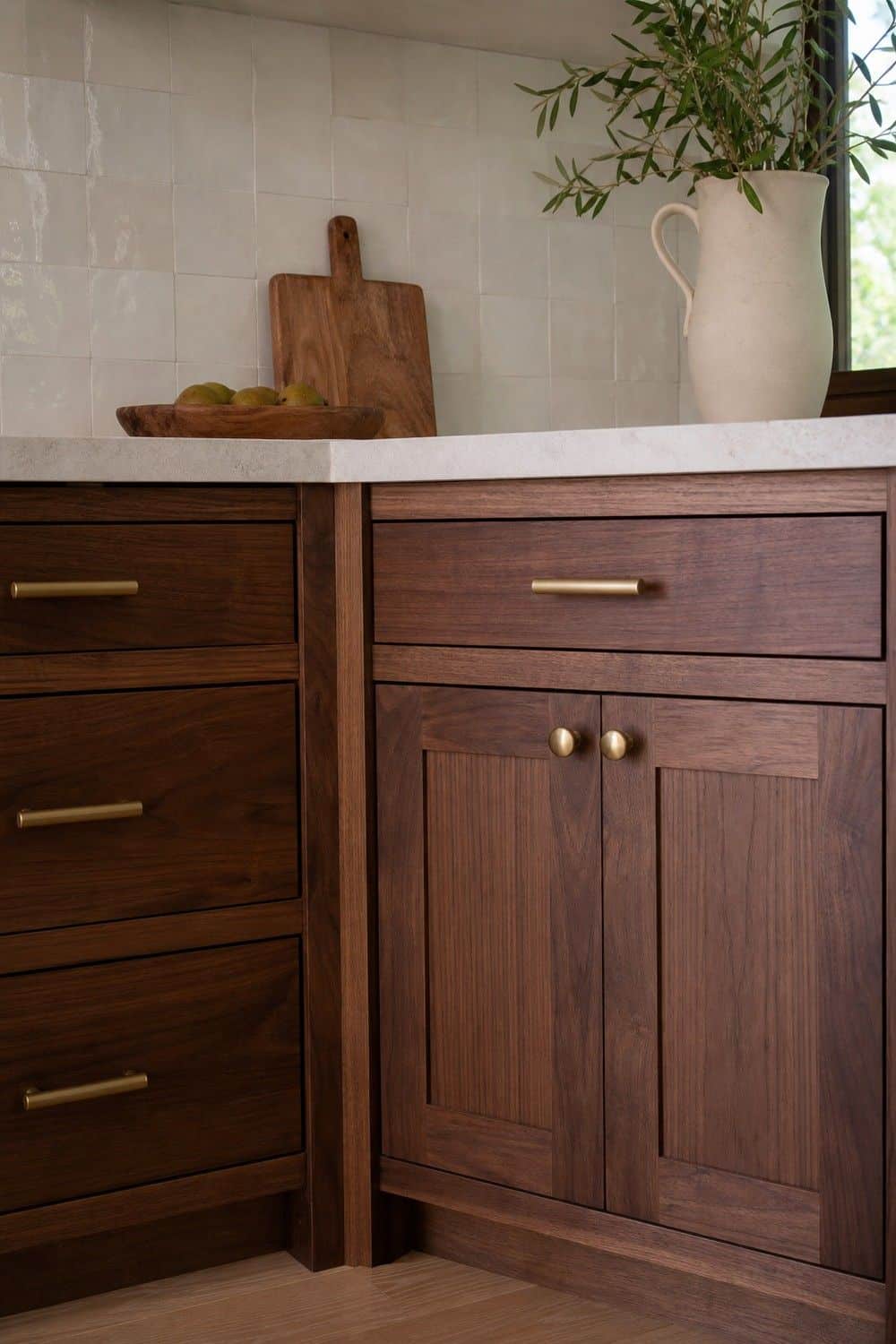
Aged brass pulls bring out the honey and chocolate notes in walnut without making the kitchen feel shiny. Look for soft brass, unlacquered brass, antique brass, or satin finishes rather than bright yellow hardware. Hardware scale matters. Long pulls sharpen flat-panel cabinets, while smaller knobs make walnut feel more classic. If hinges, faucets, or lighting are visible nearby, they do not need to match exactly, but they should sit in the same warm family so the kitchen feels considered and quietly pulled together.
5. A Cream Runner to Soften Walnut
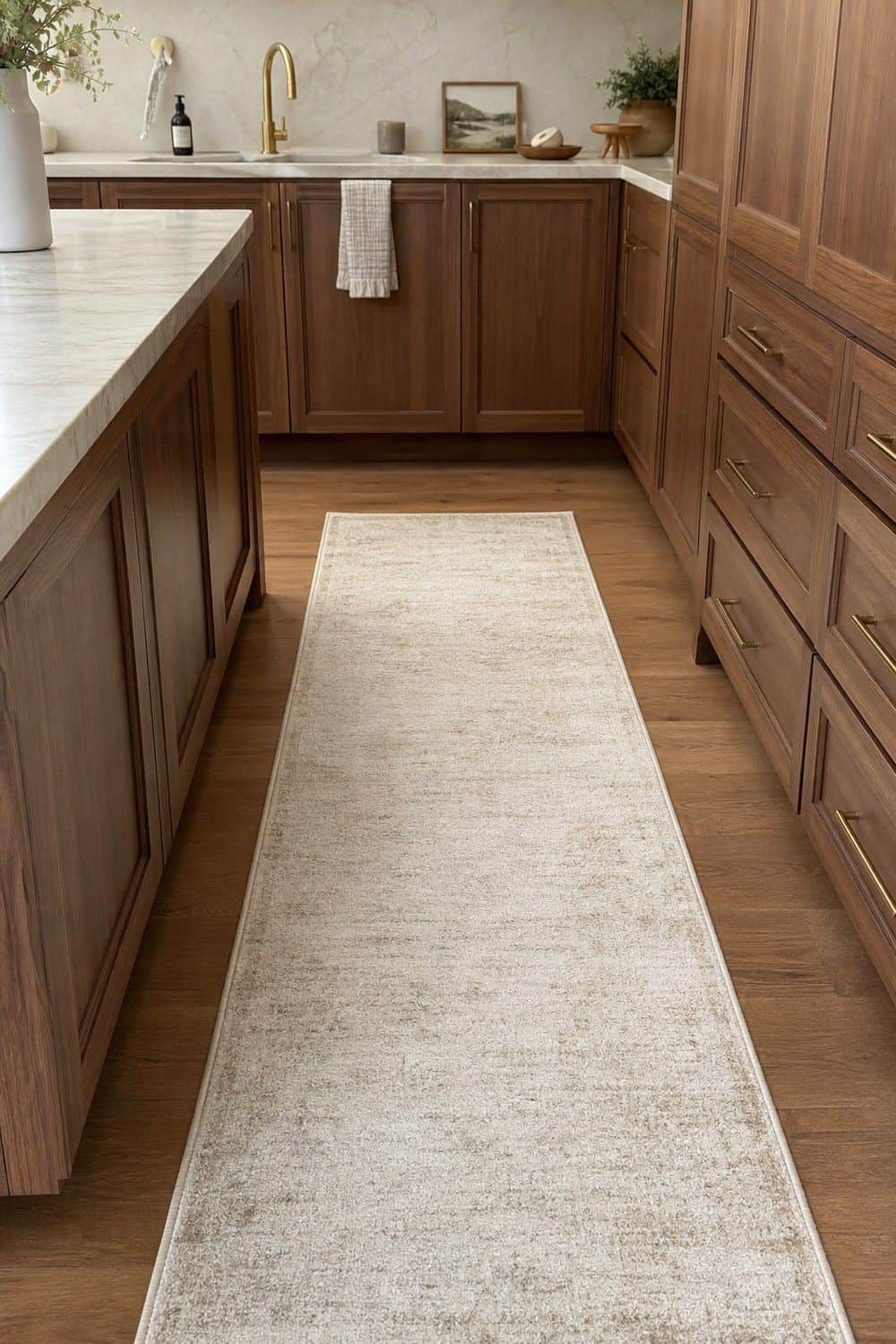
A cream runner breaks up walnut floors, islands, or lower cabinets with a softer surface underfoot. It also keeps a dark wood kitchen from feeling too solid, especially through the center walkway or in front of the sink.
Choose washable fabric if the runner sits where coffee, water, or cooking splashes happen. Warm cream, oatmeal, and muted pattern usually flatter walnut better than icy gray. A subtle stripe or worn vintage pattern can hide daily marks while still brightening the wood. The runner should lighten the room without becoming another high-maintenance piece.
6. Veined Stone Beside Walnut
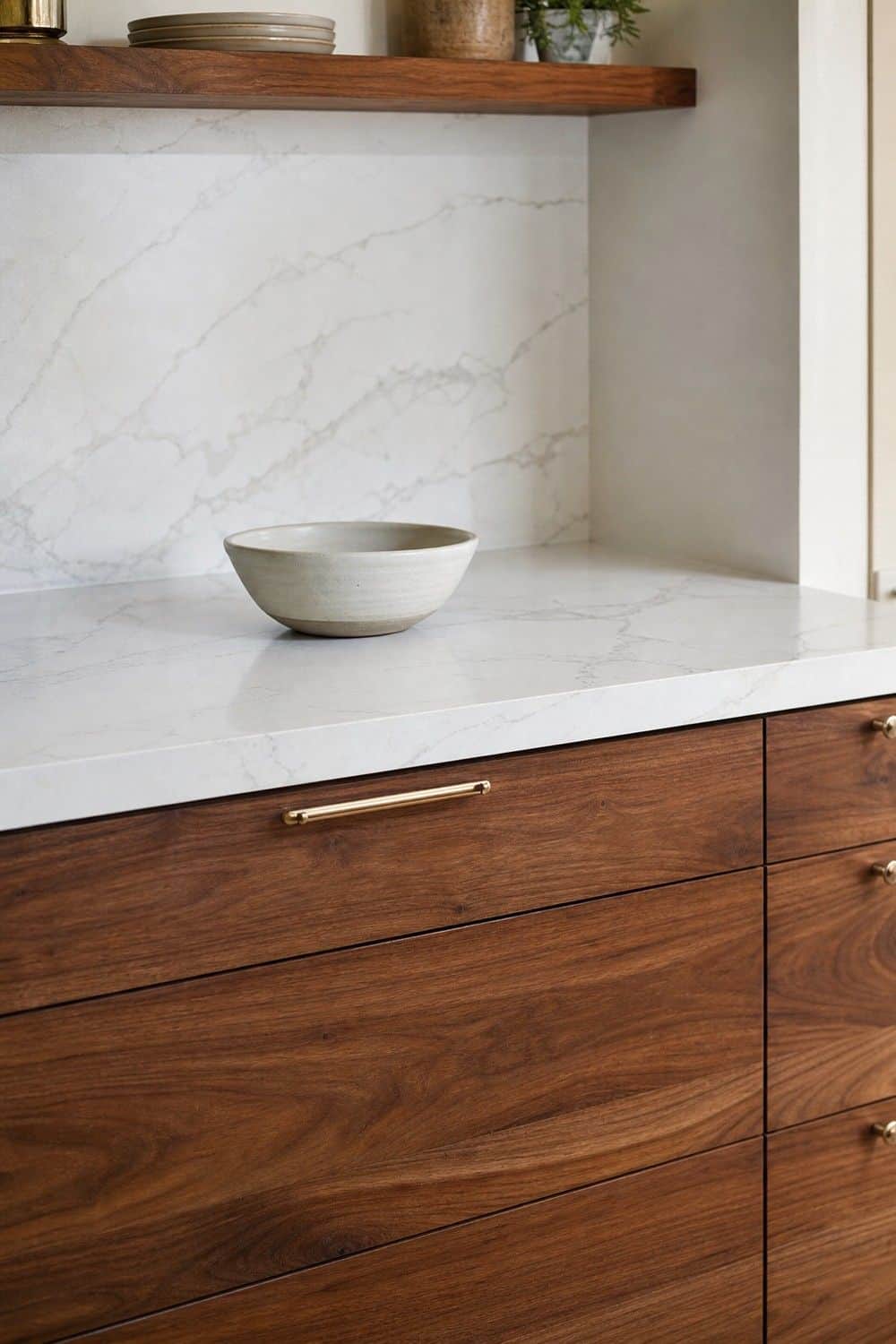
Marble gives walnut a crisp counterpoint because veining interrupts the heaviness of dark grain. It works as a countertop, backsplash, small serving board, pastry slab, or tray on a coffee bar when the rest of the palette stays simple. Watch the undertone before pairing the two. Creamy marble makes walnut feel old-world and warm, while cooler stone can push the kitchen more modern. If full marble is not practical, a marble board or small tray can still bring that polished contrast to a walnut shelf or counter.
7. Black Sink Hardware With a Softer Edge
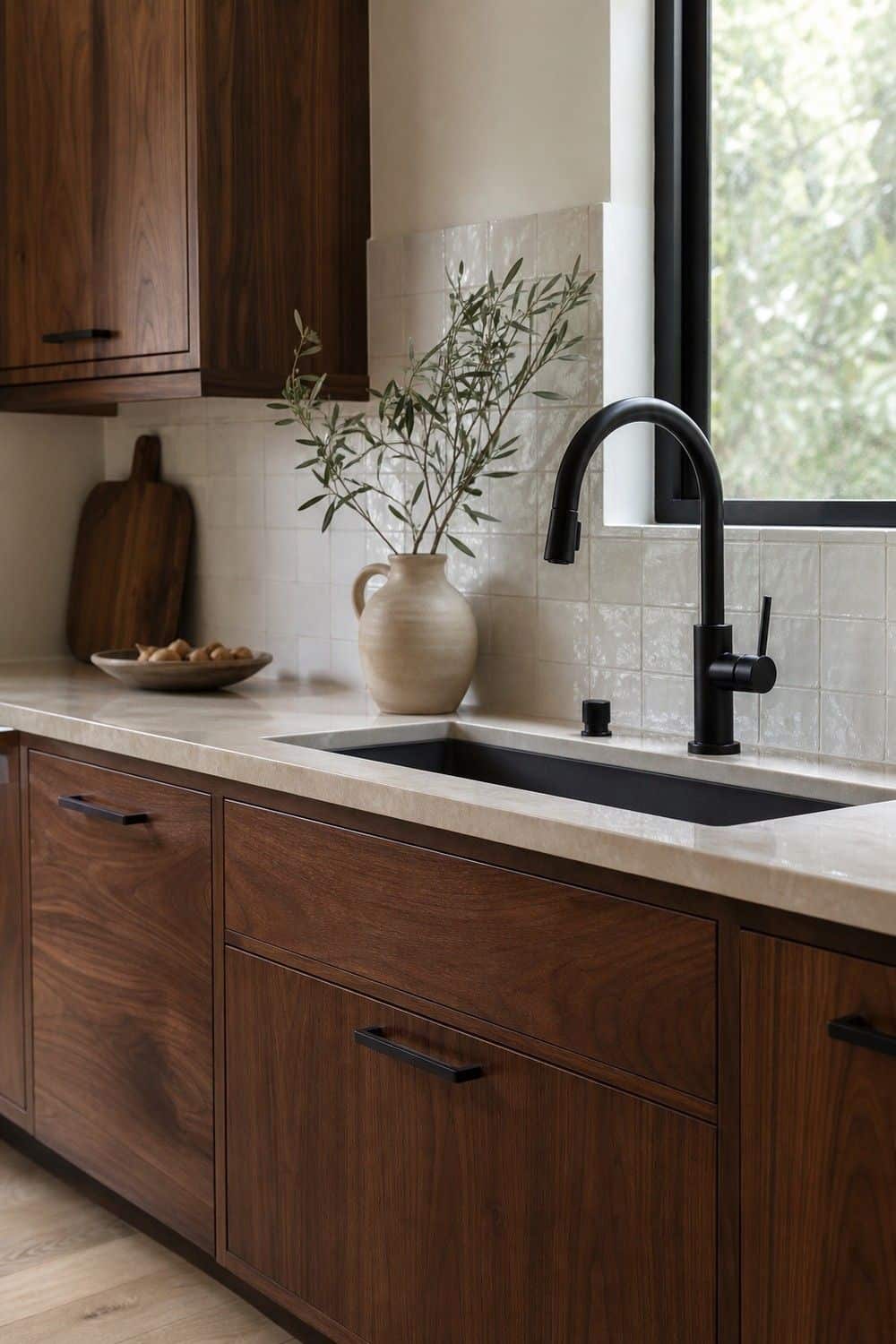
A soft black faucet can ground a walnut kitchen without adding another warm metal. It looks especially good with light stone, cream tile, and simple cabinet fronts because the black line gives the sink area definition.
Choose matte, satin, or softly textured black rather than a glossy finish that catches every glare. Repeat black once or twice through a pendant, frame, stool, or pepper mill so the faucet feels connected instead of isolated. Keep nearby soap bottles simple so the sink does not become busy.
8. Zellige Tile for Handmade Texture
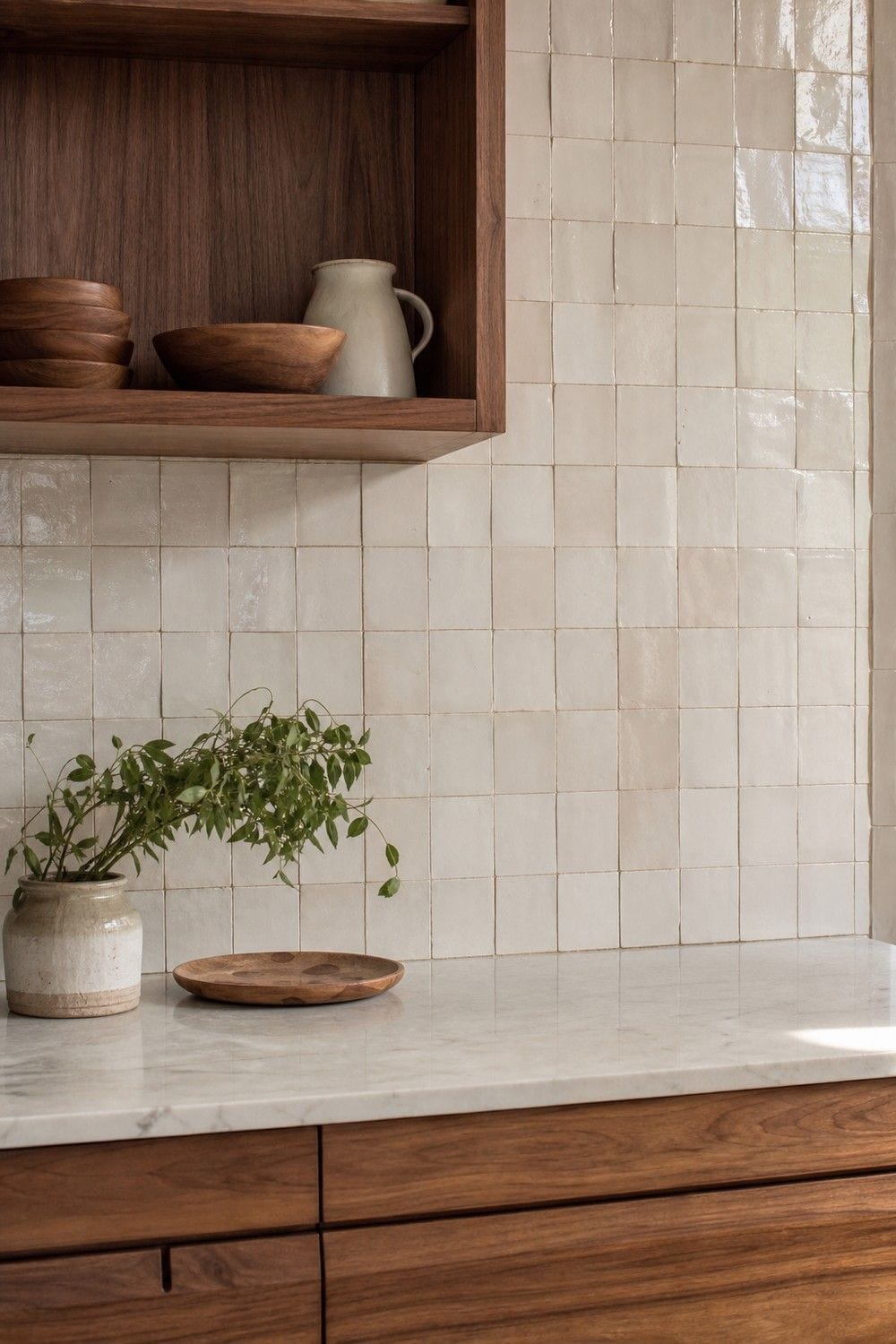
Zellige tile adds shimmer and irregularity beside walnut, which keeps dark wood from feeling flat. Cream, ivory, pale taupe, soft green, or smoky gray tile can all work depending on the walnut undertone.
The handmade surface already has movement, so keep the cabinet lines simple nearby. Grout changes the mood too: pale grout keeps the wall calm, while darker grout adds definition and can become busy against strong grain. Use the combination where light can actually catch the tile, such as behind open shelves or near a window.
9. Warm Lighting for Walnut Grain
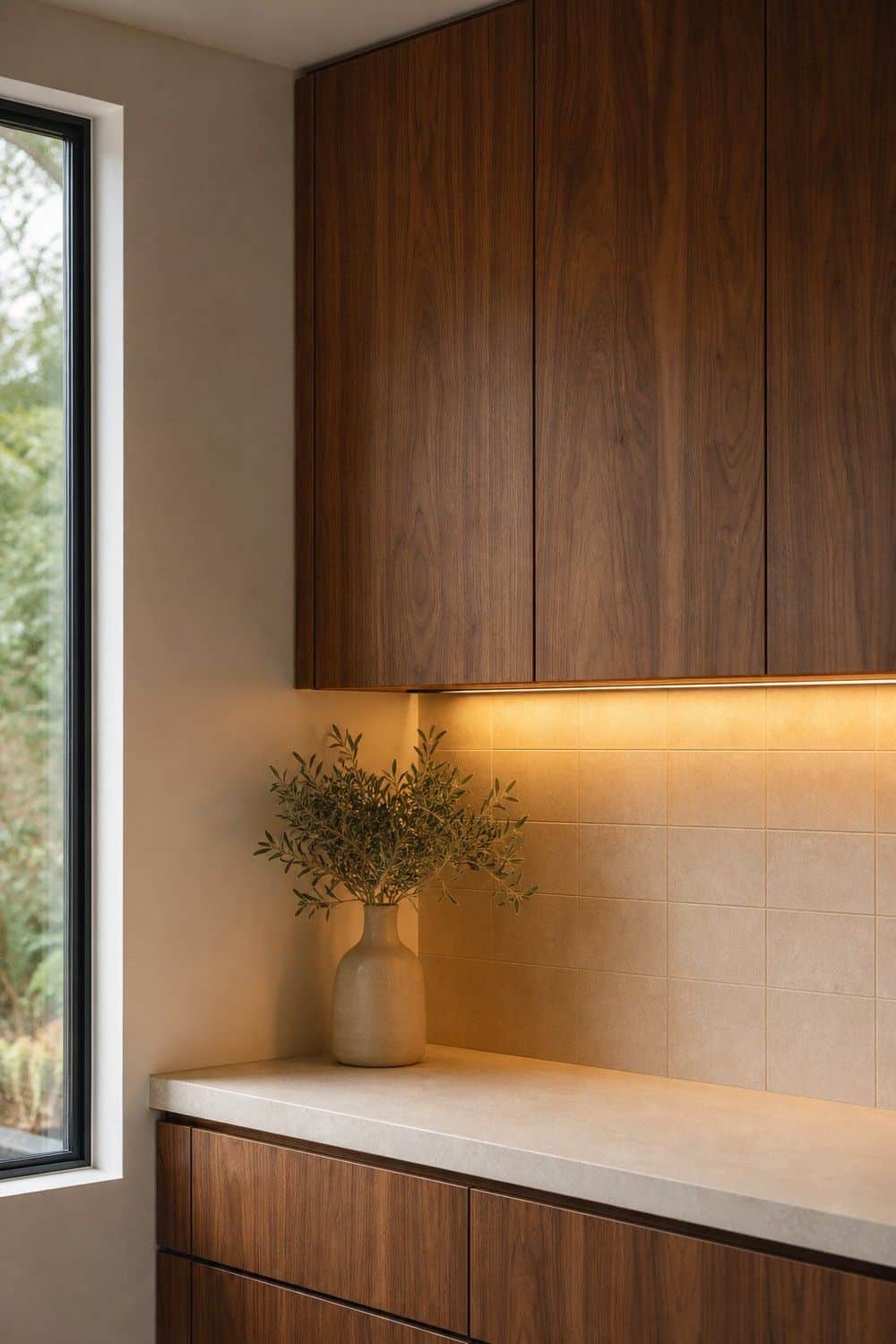
Layered warm lighting is one of the easiest ways to make walnut look expensive instead of dull. Cool bulbs can flatten the grain, while warm white light brings out amber, chocolate, and honey tones.
Use layered lighting rather than one harsh overhead fixture. Under-cabinet lights help walnut counters and shelves stay practical, while pendants or a small counter lamp can soften the room at night. Check bulb temperature before judging paint, tile, or hardware beside the wood, because walnut changes dramatically after sunset.
10. Wood Stools With Similar Warmth

Wood stools can sit beautifully beside a walnut island when the tones relate without pretending to match. A slightly lighter oak, black-stained wood, or woven seat can keep the island from becoming one heavy block. Pay attention to the legs and seat shape. Slim silhouettes feel lighter around dark wood, while chunky stools can crowd the island visually. If the island already has strong grain, choose stools with quieter texture so people notice the walnut first and the seating still feels comfortable.
11. A Walnut Island
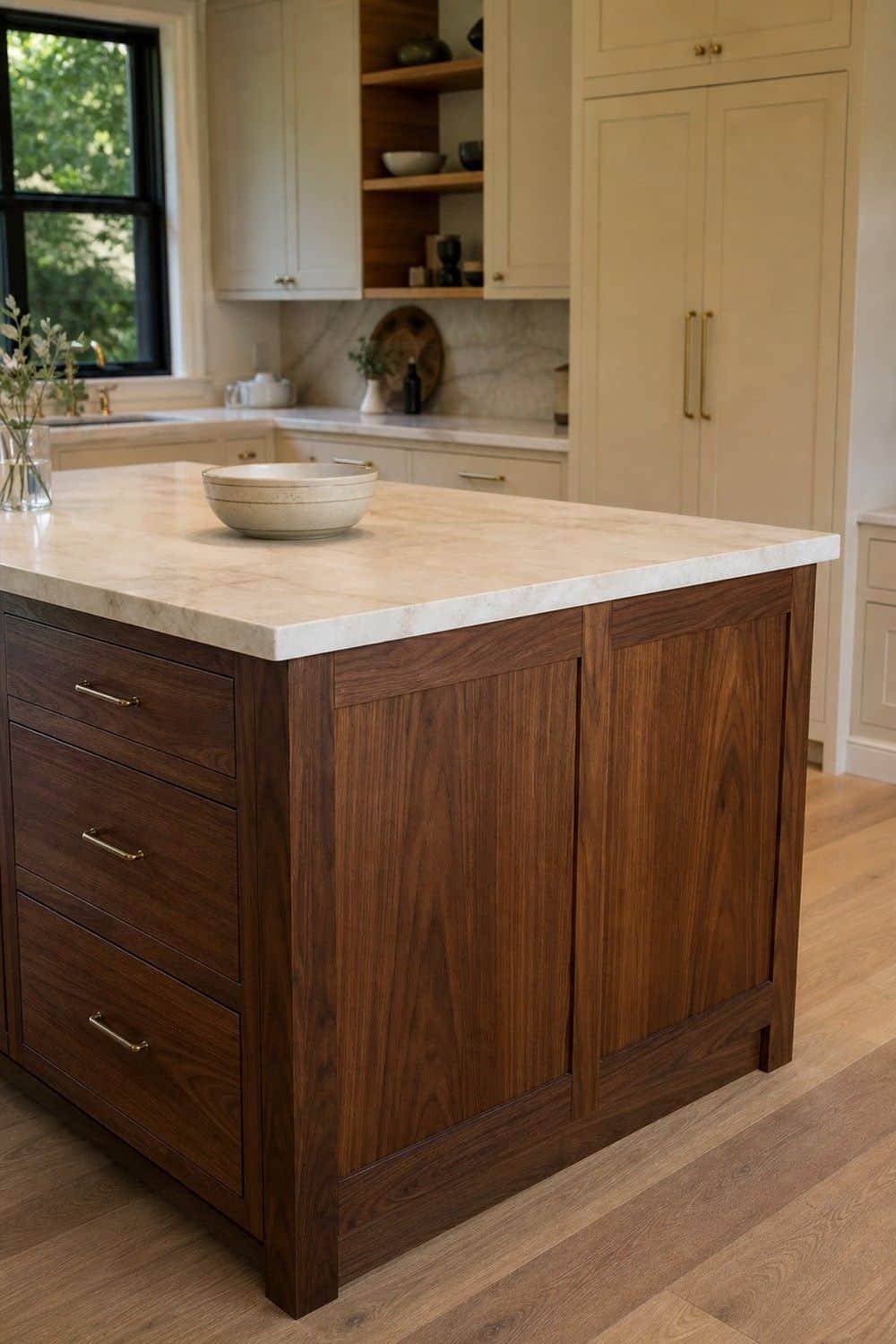
A walnut island can anchor the whole kitchen, especially when the perimeter cabinets are painted, white, cream, or soft green. Let the island be the warm center instead of repeating dark wood on every surface.
Keep the top practical for how the island is used. Pale stone brightens the wood, butcher block makes it warmer, and a durable quartz can handle daily cooking. Leave breathing room around pendants, stools, and hardware so the island feels substantial rather than crowded, especially if guests gather there while you cook.
12. Walnut Pantry Doors
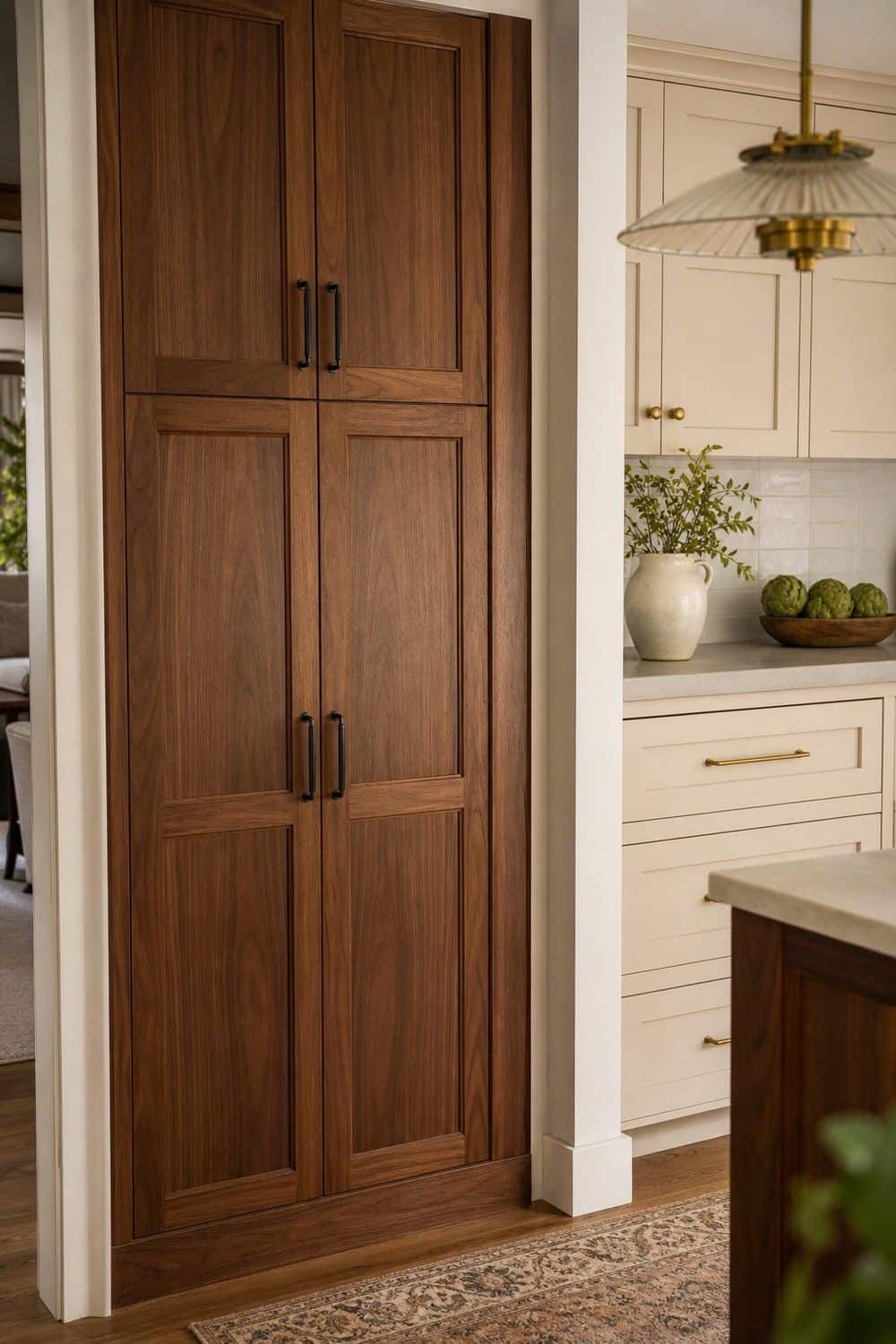
Pantry doors are a smaller, contained way to use walnut without committing to full cabinetry. They work well on a tall pantry wall, appliance garage, breakfast cabinet, or hidden storage area where the vertical grain can become a quiet feature.
Keep nearby door fronts simple so the pantry does not compete with everything else. If the walnut doors are large, add lighter flooring, pale counters, or glass nearby to keep the wall from feeling too dense. Good hardware matters here because pantry doors are touched constantly.
13. Walnut With Green Cabinets
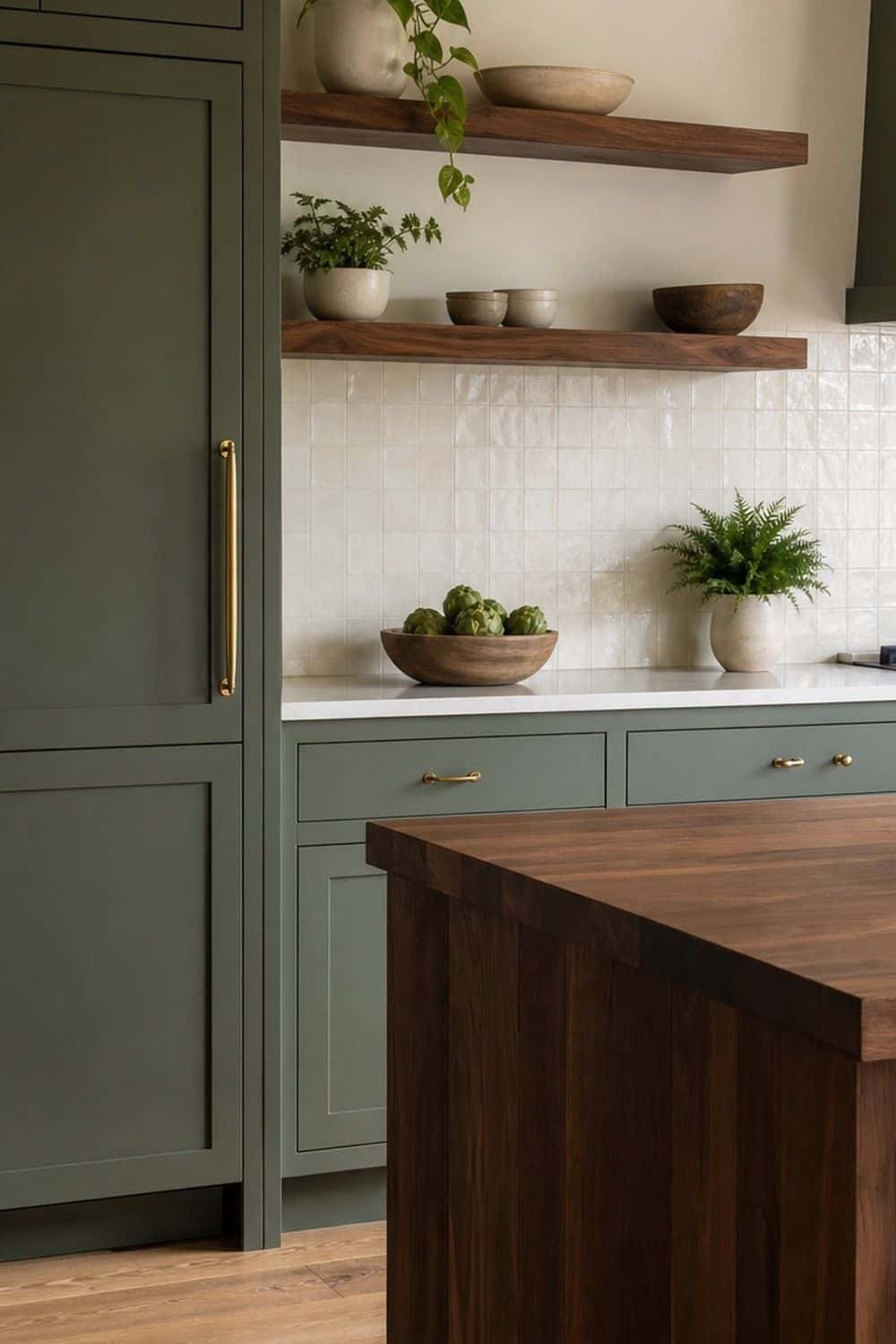
Green cabinets and walnut can feel earthy and elegant when the green is muted. Olive, sage, forest, or gray-green tones support the wood grain without turning the kitchen into a high-contrast color story. Use green where it gives the walnut a little lift: painted uppers, a pantry wall, an island, or a backsplash-adjacent cabinet run. Brass, cream stone, and warm white walls can bridge the two materials. Avoid neon or blue-heavy greens if the walnut already leans cool or gray.
14. Warm White Around Walnut
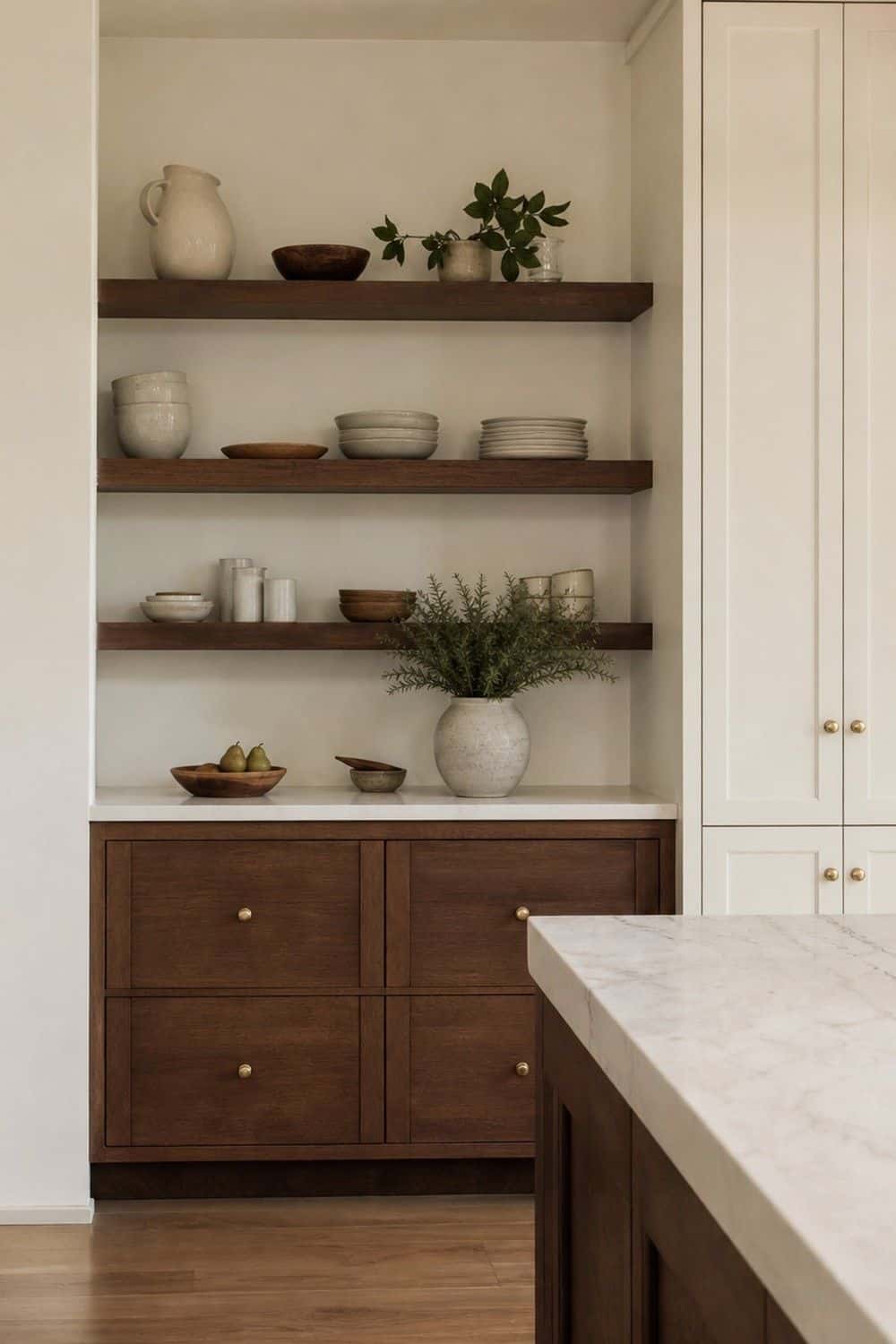
A warm white backdrop is one of the safest partners for walnut because it reflects light while keeping the room soft. Creamy walls, off-white tile, or pale counters let the grain stay rich without making the kitchen feel shadowed.
Skip blue-white finishes unless you want a sharper, more modern contrast. Walnut usually looks more relaxed beside ivory, plaster, mushroom, or warm stone tones. Add black or brass in small amounts if the palette starts to feel too quiet, and test whites beside the wood before painting every wall.
15. Stoneware Dishes on Walnut Shelves
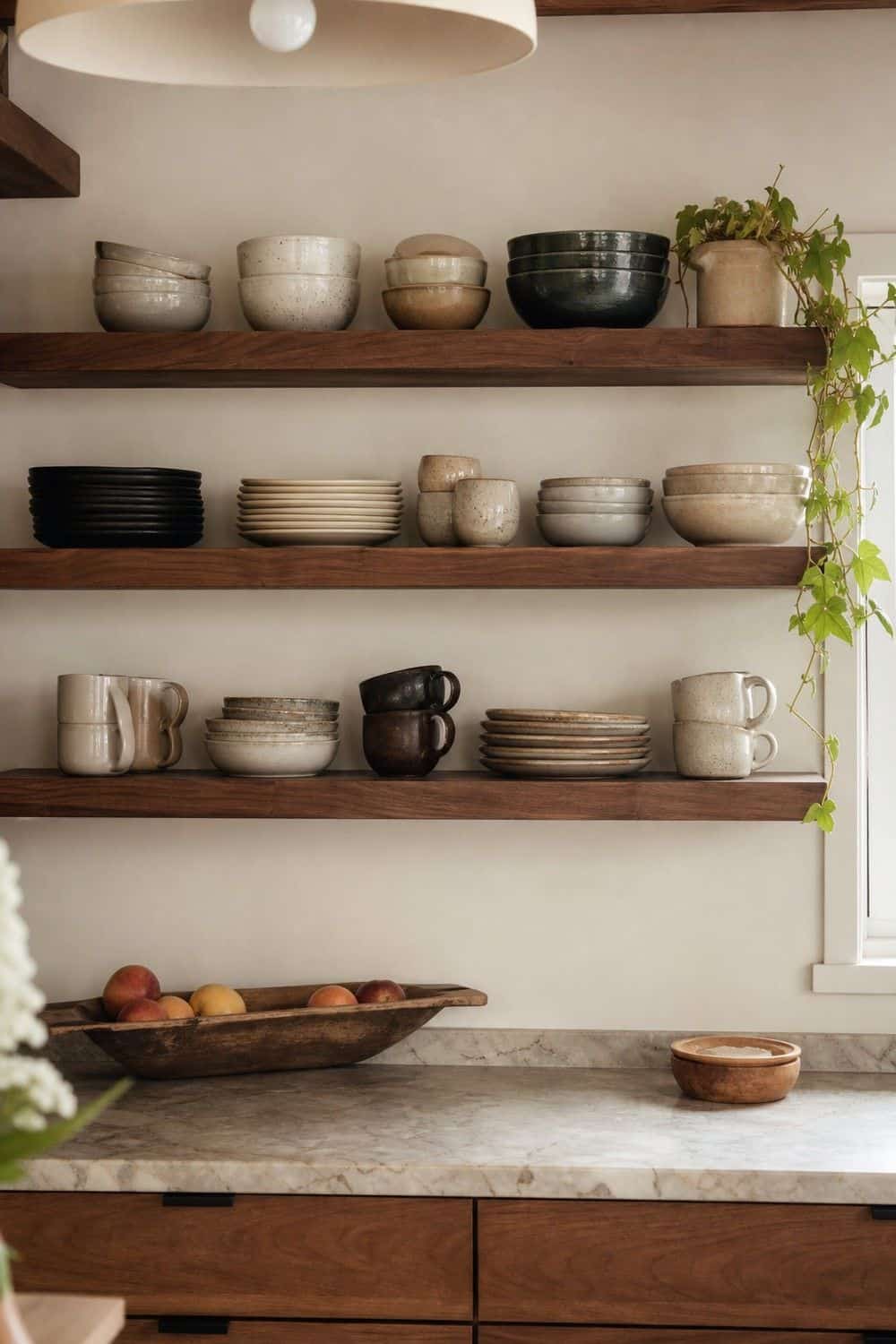
Stoneware dishes soften walnut shelves and cabinets because they add matte texture instead of shine. Cream, oatmeal, charcoal, clay, and muted green pieces look especially good against rich wood. Use dishes you actually reach for so the shelves still function like a kitchen. A row of bowls, a stack of plates, and a few mugs can be enough. Too many decorative objects can hide the grain and make walnut shelves feel more styled than useful, so let the dishes do some of the decorating.
16. Fluted Walnut for Quiet Texture
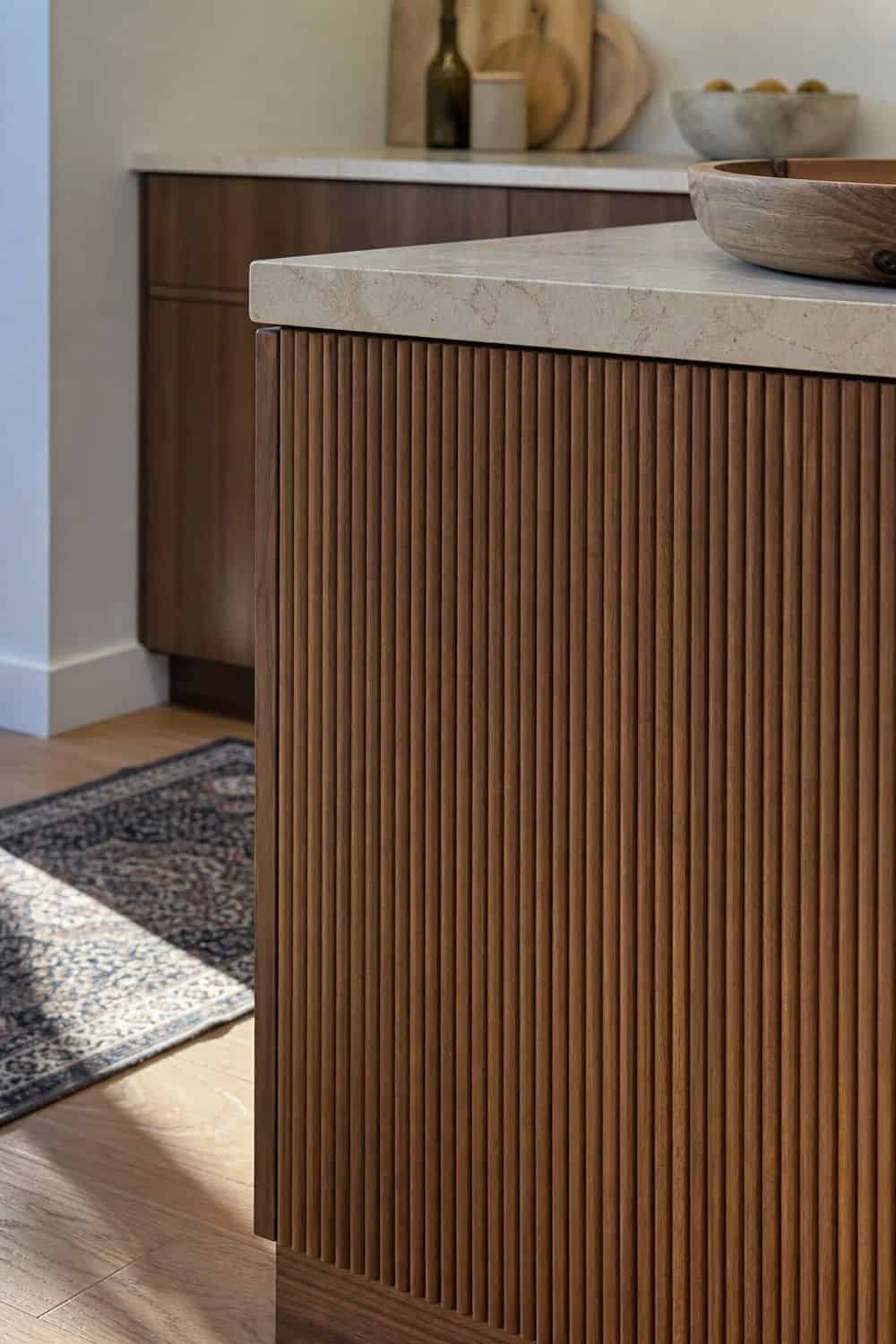
Fluted walnut adds texture without needing extra color. It works on an island front, cabinet doors, a pantry panel, or a bar area where the grooves can catch light as people move through the kitchen. Use it selectively because fluting is already a statement. A fluted island with simple perimeter cabinets feels special; fluting on every surface can become visually loud. Keep nearby hardware clean and let the vertical lines do most of the work, especially on an island where the texture is already easy to see.
17. Coffee Supplies Gathered With Walnut Warmth

A walnut coffee bar feels cozy because the wood suits mugs, beans, spoons, and warm morning light. Use a small counter stretch, cabinet niche, or shelf area rather than spreading coffee supplies across the kitchen.
Keep the setup practical: mugs, filters, pods, tea, sugar, and spoons should be easy to reach and easy to wipe around. A marble tray, brass scoop, cream canister, or tiny lamp can make the station feel finished without cluttering the machine, grinder, or water reservoir.
18. Walnut Open Shelves

Open shelves in walnut look best when they hold a mix of useful kitchen pieces and a little negative space. Everyday bowls, glasses, plates, and cookbooks belong there more naturally than random decor.
Because walnut is visually strong, fewer objects usually look better. Group similar pieces, vary height gently, and leave enough room to remove a bowl without bumping everything else. If the shelves sit near a range, choose items that can handle a bit of kitchen dust and regular cleaning.
19. Leather Seating Beside Walnut

Leather seating brings another warm natural material into a walnut kitchen. Cognac, tobacco, black, or deep olive leather can work well on stools or a breakfast nook bench, depending on the cabinet tone. Keep the seat shape simple if the walnut grain is strong. Smooth leather and slim frames feel more tailored, while heavy tufting or bulky legs can make the room feel dense. Wipeable leather is especially useful around islands where coffee, snacks, and weeknight dinners happen, and it softens the hard edge of stone counters.
20. Black Accents Around Walnut
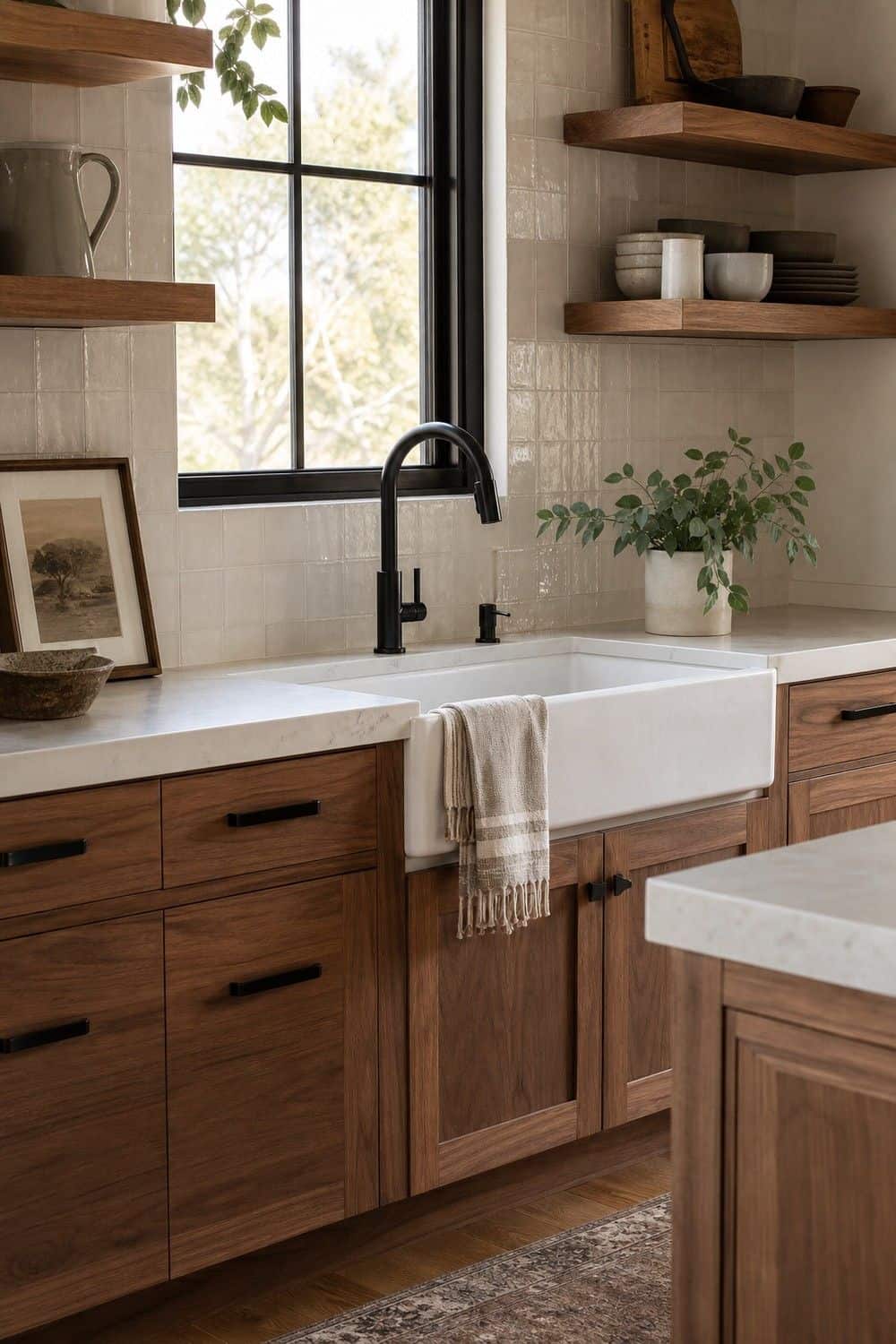
Black accents give walnut a clean edge when the room needs contrast. A black faucet, pendant, tray, frame, pepper mill, or stool leg can make the wood feel more modern without overpowering it. Use black as punctuation, not as a second dominant material. Too much black beside dark walnut can flatten the room. Balance each dark accent with light stone, cream walls, glass, or warm metal so the kitchen still feels open and usable, not overly severe or visually flat.
21. Compact Walnut Choices
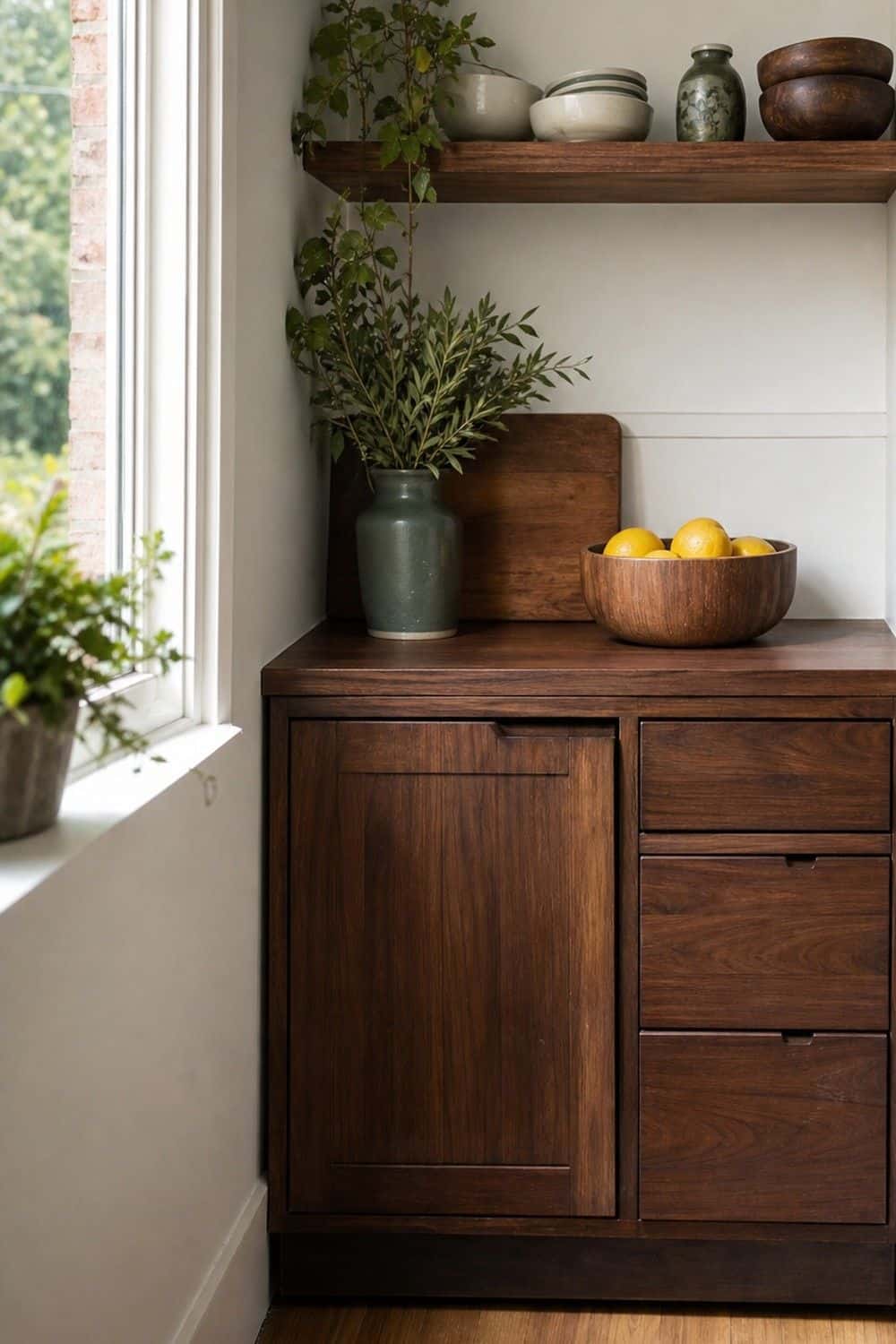
When counter space is limited, one strong walnut feature is usually better than several small pieces. A shelf, island front, cutting board stack, or pantry panel can bring warmth without crowding the work surface.
Keep walnut moments vertical, movable, or built into storage when the kitchen has tight walkways. Pale counters, glass, warm white walls, and simple hardware help the wood feel lighter. Avoid lining every counter edge with boards and bowls just to repeat the material; one clear walnut note will read stronger.
22. Budget Walnut Accents
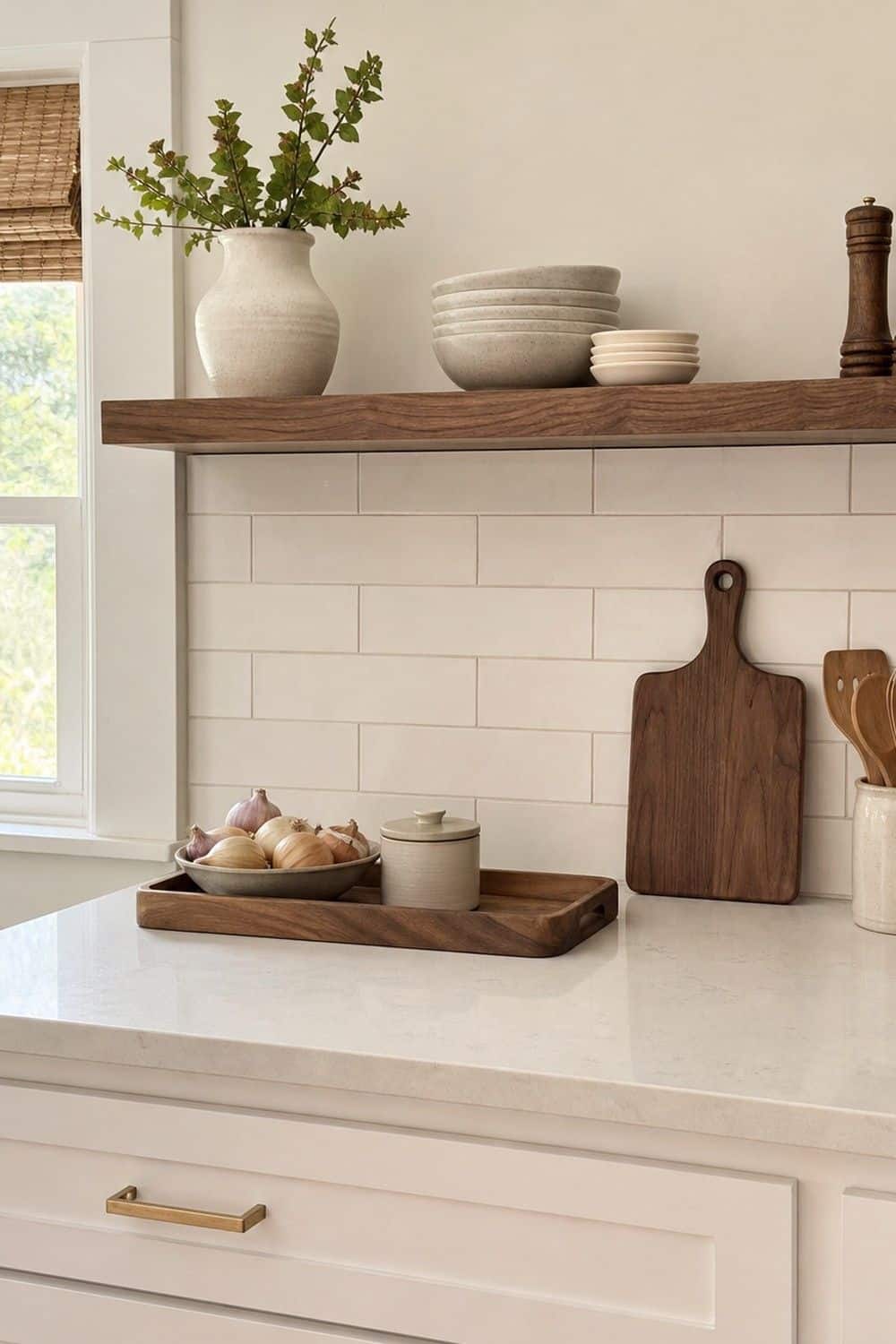
Walnut can work on a budget when it appears in smaller pieces. Cutting boards, floating shelves, stools, cabinet pulls, trays, picture frames, and utensil holders can bring the tone in without custom cabinetry. Choose fewer pieces with better grain instead of buying every dark wood accessory at once. A real walnut board near cream tile often looks more convincing than a dozen mismatched faux-wood items. Repeat the tone once or twice so it feels connected, then stop before every accessory starts looking like part of a matching set.
23. Breathing Room Around Matching Wood
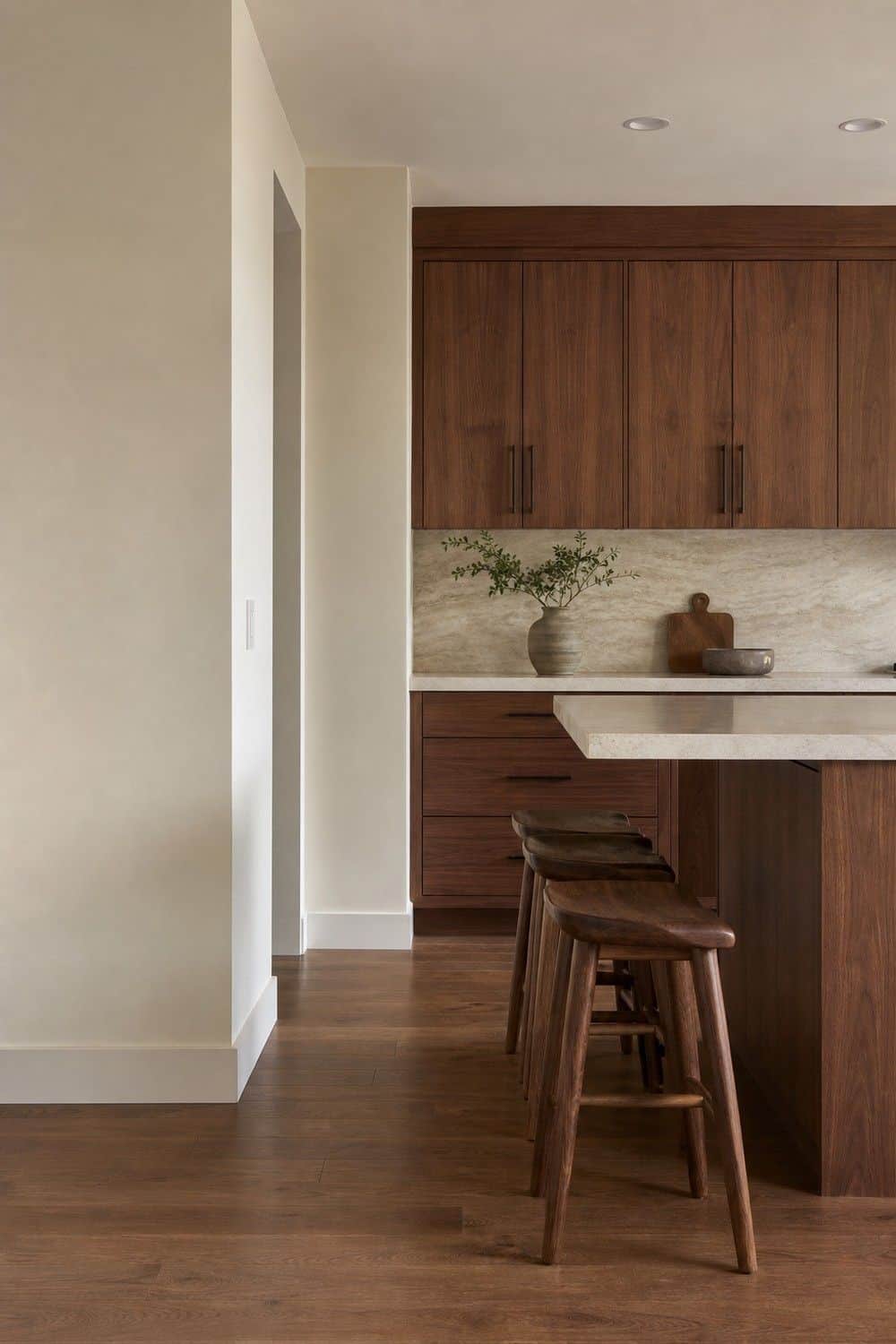
Too much matching walnut can make a kitchen feel heavy, especially when cabinets, floors, stools, and shelves are all the same dark tone. Break up the wood with pale counters, open wall space, glass, stone, or textiles. Variety matters more than perfect matching. A lighter stool, cream runner, marble board, or brass pull can keep the kitchen layered. Let walnut be the warm thread through the room, not a blanket over every surface, and keep at least one area visually light.
24. Orange Undertones in Walnut Finishes
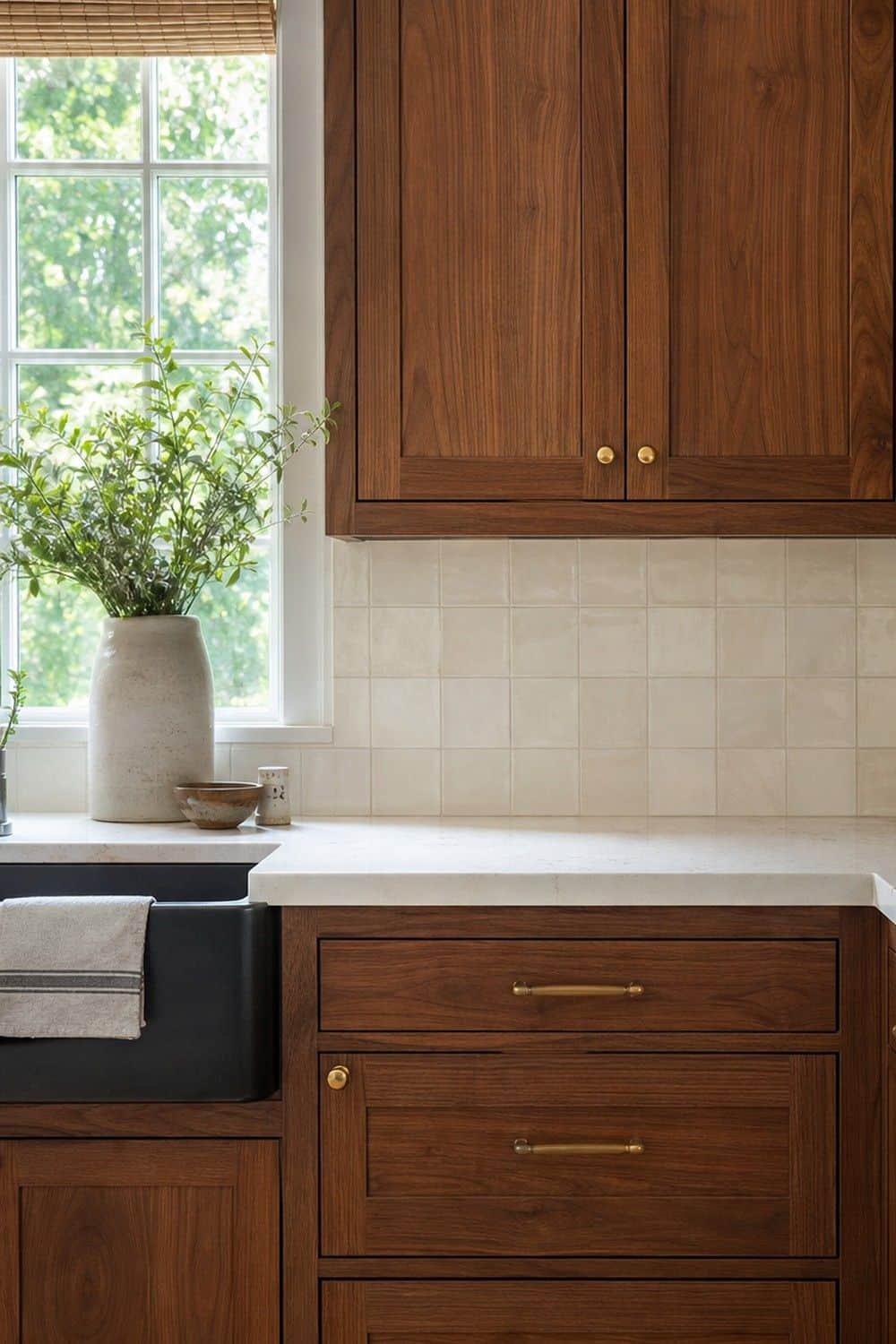
Walnut can lean red, orange, gray, or chocolate depending on the finish and lighting. If the wood starts looking orange, check nearby bulbs, paint, flooring, and metal finishes before assuming the walnut is the problem. Warm white bulbs usually flatter walnut, but very yellow light can exaggerate orange tones. Pair orange-leaning walnut with cream, black, green, stone, or aged brass rather than more orange wood. Test samples in the kitchen at different times of day, especially beside the floor and the countertop you already have.
25. Visible Walnut Grain as the Finish
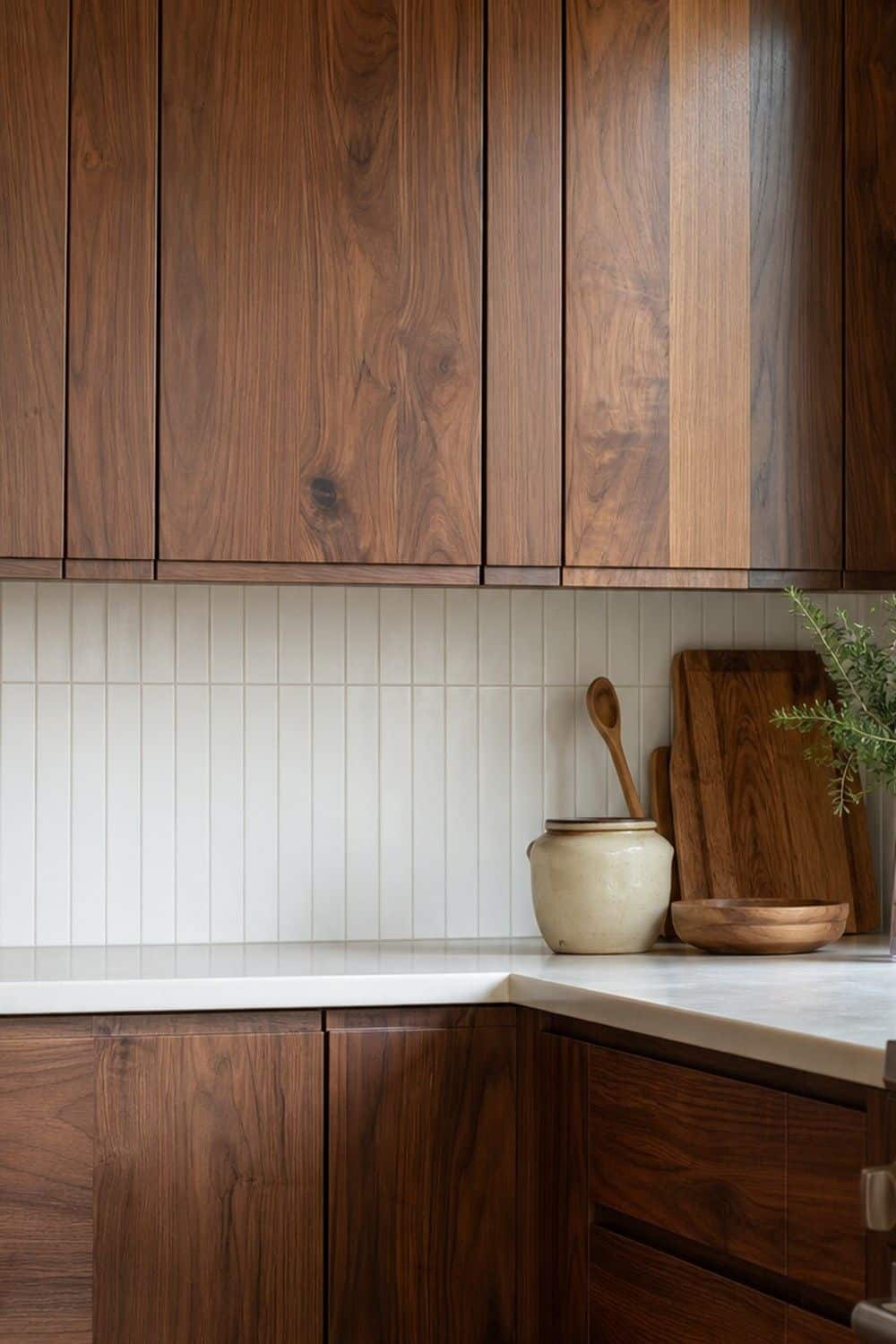
The grain is the reason walnut feels special, so avoid covering every walnut surface with decor. Let cabinet fronts, shelves, and boards have enough open space for the movement in the wood to show. Choose simple neighboring pieces when the grain is dramatic. Plain stoneware, clear glass, soft linen, and quiet hardware let walnut stay warm without becoming busy. A little restraint makes the kitchen feel more natural, more expensive, and easier to live with every day, especially around open shelves and island fronts.
Frequently Asked Questions
How do I begin with walnut kitchen ideas?
Begin with one walnut feature instead of trying to change every surface. Cabinets, shelves, an island front, stools, or a board stack can set the tone, then lighter counters, simple hardware, and warm lighting keep the room balanced.
How do I keep the kitchen practical?
Keep walnut pieces away from constant water, oil, and heat unless they are finished for heavy use. Boards, trays, and open shelves should be easy to wipe, easy to move, and placed where they support the kitchen rather than crowding prep space.
How do I make a walnut kitchen feel cohesive?
Repeat walnut in two or three useful places, such as shelves, boards, stools, or an island front, then keep the surrounding finishes calm. Cream, stone, brass, black, and muted green can connect the room without fighting the grain.
How do I use walnut without making the kitchen feel heavy?
Use walnut in one or two clear places, then balance it with pale counters, warm white walls, glass, stone, or brass. If the room already has dark floors or heavy cabinetry, choose walnut shelves, boards, or an island front instead of wrapping every surface in wood.
What should I avoid?
Avoid matching every wood surface, choosing very orange finishes without testing the light, or covering walnut grain with too many accessories. Walnut looks best when it has contrast, breathing room, and a few practical pieces that support cooking.
Final Thoughts
The best walnut kitchen ideas work because they respect the kitchen as a room that has to cook, clean, store, and gather. Choose a few strong details, repeat them with intention, and leave enough open space for the room to stay useful every day.
Last update on 2026-09-18 / Affiliate links / Images from Amazon Product Advertising API