
The best fridge organization ideas reduce food waste by making perishable food visible, storing it in the right temperature zone, and giving leftovers a clear place to go. Start with a quick cleanout, keep raw meat low and contained, use the crisper drawers properly, add an eye-level eat-first bin, and reset the fridge once a week before old food disappears behind new groceries.
A good refrigerator system should help you cook what you already bought. If the top shelf is packed with mystery containers, the drawers are full of random cans, and the door is holding milk next to half-empty sauces, food gets forgotten long before it gets used.
This approach is built around less food waste, not a perfect restock video. The goal is to make zones clear, protect food safety, keep produce fresh longer, and give your household obvious cues for what needs to be eaten next.

Top Recommended Products


You Might Also Like These Blog Posts
- 20 Aesthetic Fridge Ideas for a Cleaner, Prettier Fridge
- 20 Healthy Fridge Prep Ideas That Make Life Easier
- How to Do a Weekly Fridge Cleanout
- 20 Use-It-Up Fridge Meal Ideas That Make Life Easier
- How to Store Leftovers Without Wasting Food
Fridge Organization Ideas That Actually Reduce Food Waste
1. Pre-Grocery Cleanout for a Fresher Start
A five-minute check before shopping prevents the most common fridge problem: buying food you already have while older food spoils in the back. Pull out anything expired, wipe obvious spills, and move older yogurt, produce, sauces, and leftovers toward the front before you make the grocery list. This is also when you find half-used lemons, open broth, wilting herbs, or containers that can shape dinner that night. A quick reset makes the next grocery trip more accurate and gives fresh food a cleaner landing spot.

2. Map the Fridge by Temperature Zones
Every shelf does not store food the same way. Upper shelves work well for ready-to-eat foods, the middle shelves are steadier for dairy and eggs, lower shelves are safer for raw proteins, drawers help control produce moisture, and the door is better for condiments than fragile perishables. Use a refrigerator thermometer if you are not sure your fridge is holding at or below 40 degrees F. Once the temperature map makes sense, refrigerator organization ideas become less about matching containers and more about putting food where it lasts and stays safe.
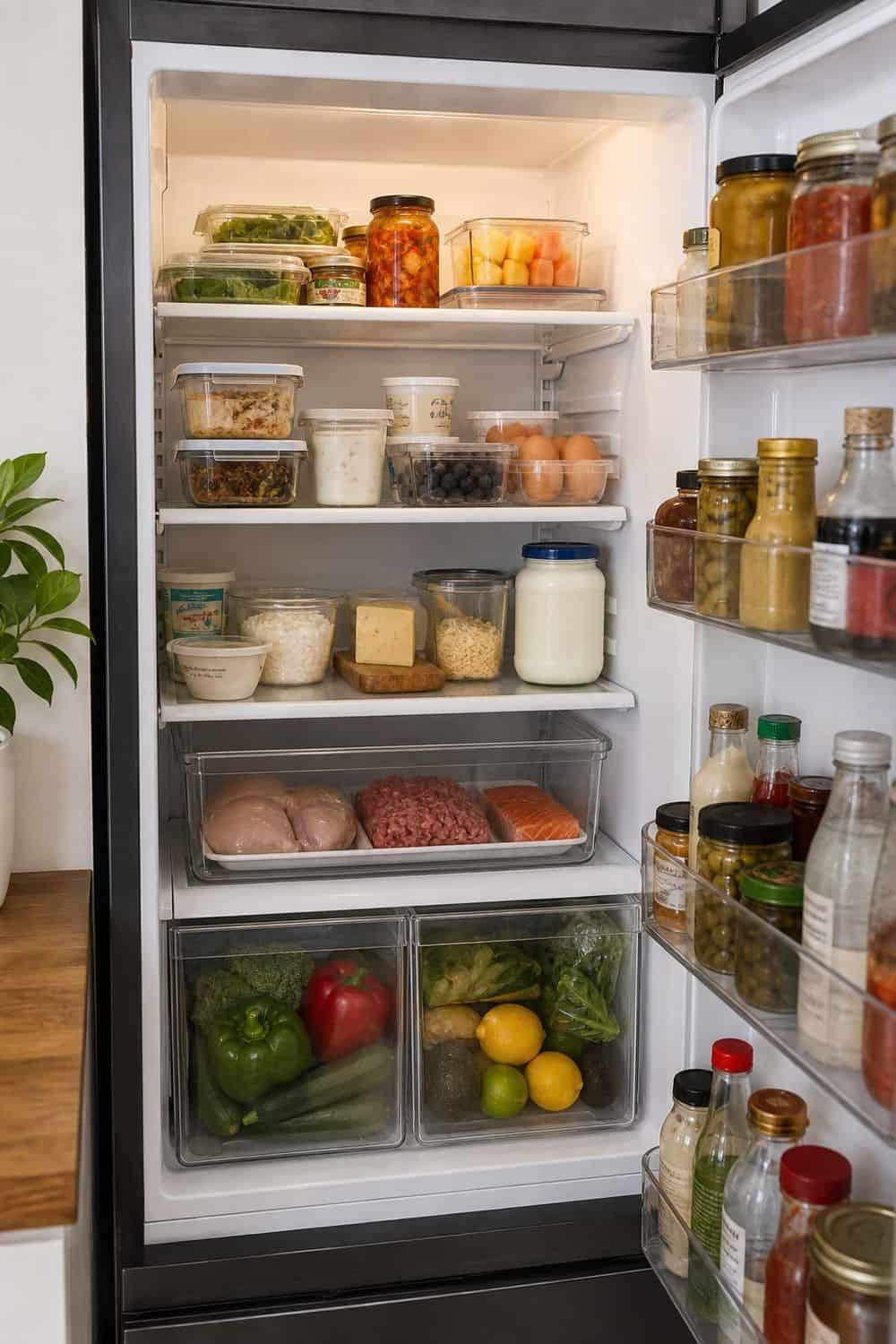
3. Ready-to-Eat Food on the Upper Shelves
Cooked food, leftovers, yogurt cups, deli items, washed fruit, and grab-and-go snacks belong where they are easy to see and safely above raw meat. Upper shelves make sense because these foods are already ready to eat, so they should not sit below anything that could leak. Try keeping one upper shelf for fast meals and another for snacks or breakfast items. When people open the fridge hungry, the easiest food to choose should be the food that needs to be eaten soon.
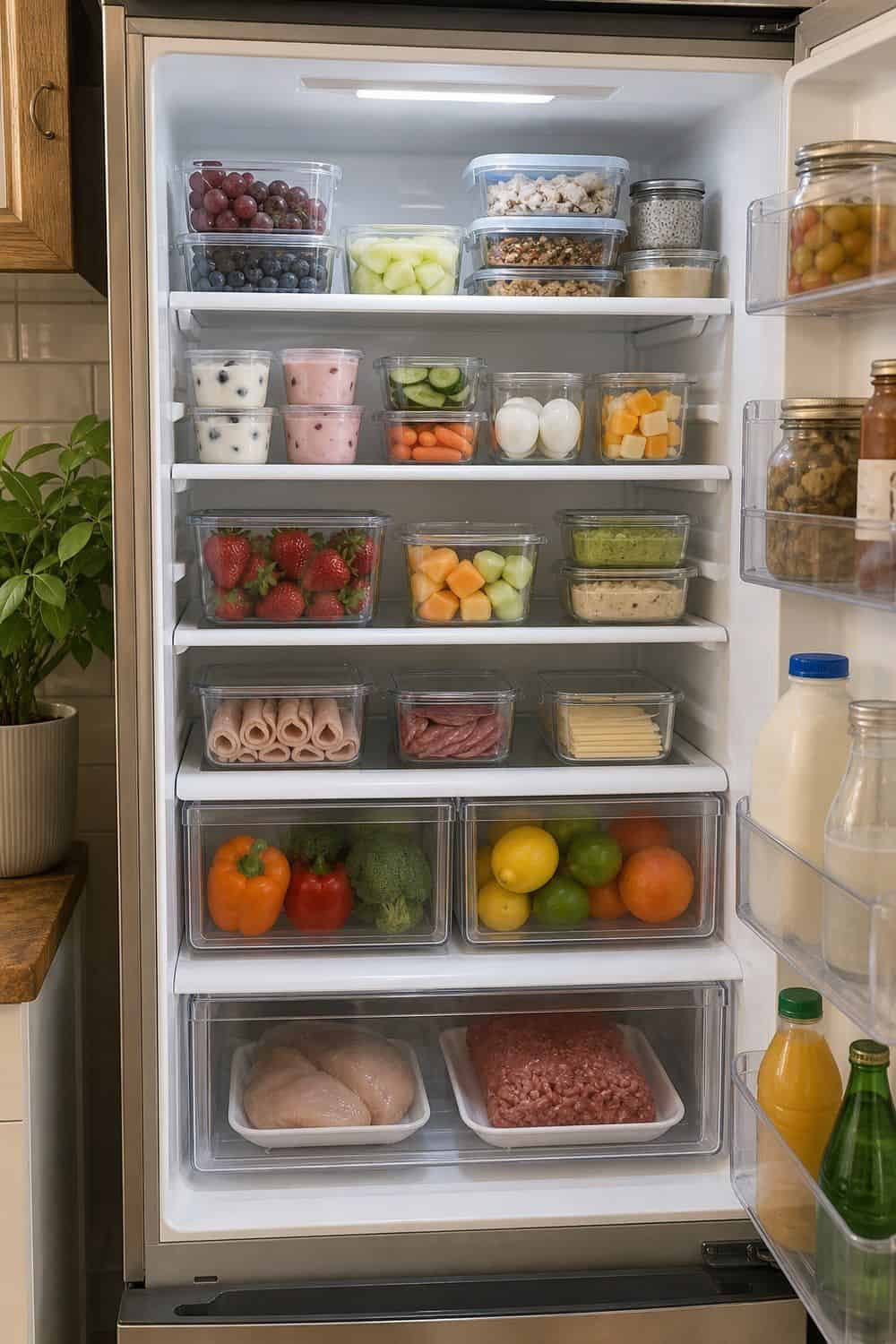
4. Dairy on a Stable Middle Shelf
Milk, yogurt, cheese, eggs, cream, and butter usually do better on a steady middle shelf than in the door. The door warms up every time it opens, which can be rough on dairy that needs a more consistent temperature.
Group dairy loosely so dates are easy to check before someone opens a duplicate. A shallow bin can help with yogurt cups or cheese, but avoid packing the shelf so tightly that the oldest carton disappears behind newer groceries during a busy breakfast rush.

5. Raw Meat in a Low, Contained Bin
Raw meat, poultry, seafood, and thawing packages should sit low in the fridge, ideally inside a washable bin or tray. If a package leaks, the spill stays contained instead of dripping onto cooked food, produce, or open containers. This is one of the most important refrigerator food safety habits because contaminated food often has to be thrown away. Keep the bin easy to remove, clean it right away after leaks, and avoid stacking raw proteins above anything ready to eat.

6. Door Storage for Condiments and Stable Drinks
The fridge door is convenient, but it is also the warmest and least stable area. Use it for condiments, jams, pickles, sauces, sturdy drinks, and items preserved with vinegar, salt, or sugar rather than milk, eggs, or delicate dairy. Group bottles by type so one old mustard or salad dressing does not hide behind three newer ones. When the door is treated as condiment storage instead of a catchall, it becomes easier to use opened jars before buying another version.

7. High Humidity for Greens and Herbs
High humidity helps foods that wilt, especially lettuce, spinach, herbs, broccoli, carrots, and leafy vegetables. If your crisper has a slider, this setting holds more moisture in the drawer so delicate produce does not dry out too quickly.
Do not pack the drawer so full that air cannot move or soft greens get crushed under heavier produce. Keep herbs and tender greens visible near the top, and remove slimy pieces before they affect the rest of the drawer during the week.

8. Low Humidity for Produce That Rots Faster
Low humidity gives certain produce more airflow, which helps with foods that tend to rot faster when moisture is trapped. Peppers, mushrooms, apples, pears, grapes, and some fruits often need a drier drawer than leafy greens.
A plain rule helps: foods that wilt usually like high humidity, while foods that rot faster often need low humidity. Keep ripening fruit away from delicate greens when possible so one produce type does not shorten the life of another before you cook it.
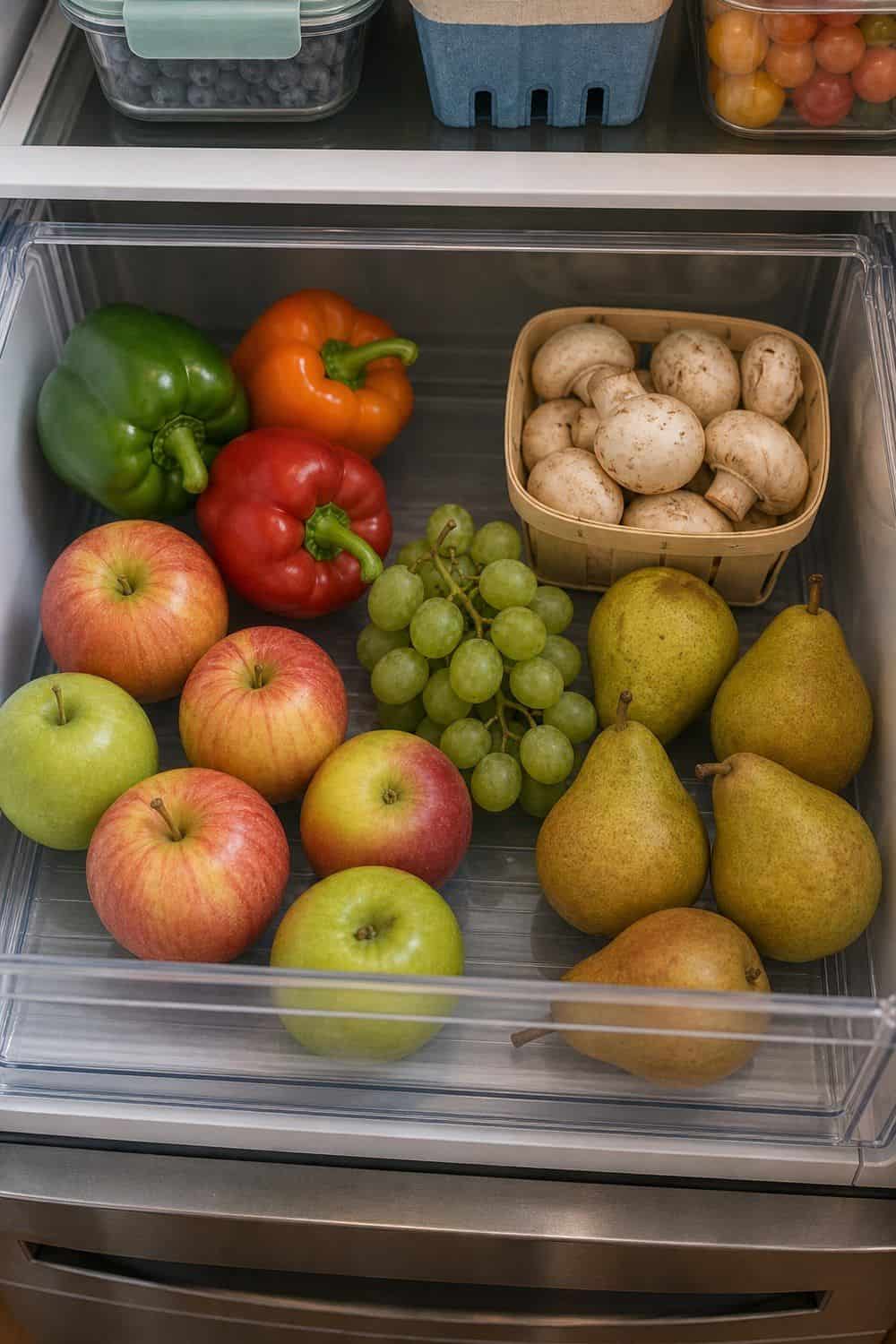
9. Crisper Drawers With a Real Produce Job
Crisper drawers are tempting places to stash cans, extra drinks, tortillas, or odd packages, but that usually pushes produce onto shelves where it dries out or gets buried. Give drawers a clear job before you buy more organizers.
Most fridges work best when drawers hold produce, with a separate low bin for raw meat if your layout needs it. Drawer dividers can help separate fruit, greens, herbs, and heavier vegetables without turning the drawer into a hidden junk drawer again.
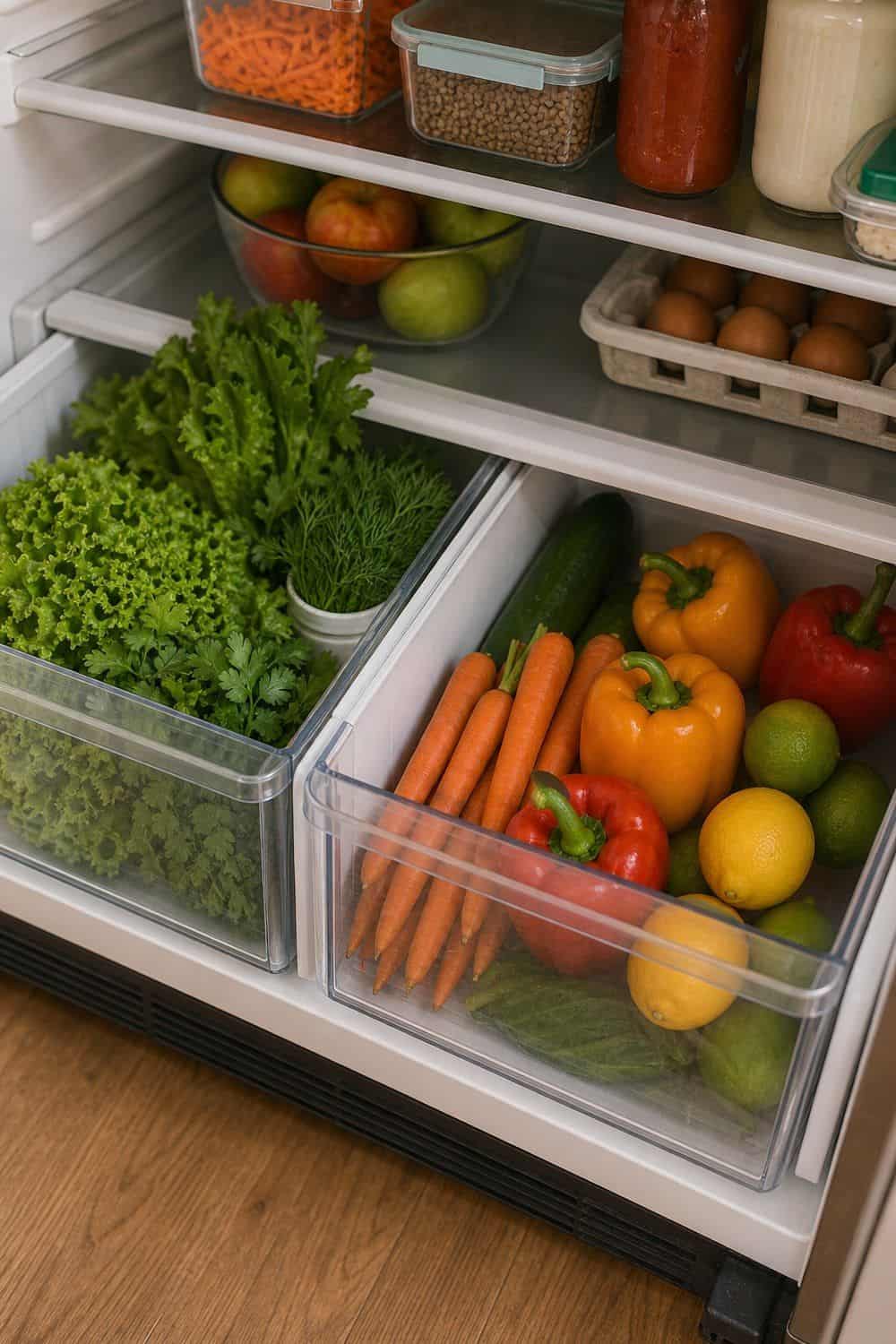
10. Eye-Level Eat-First Bin
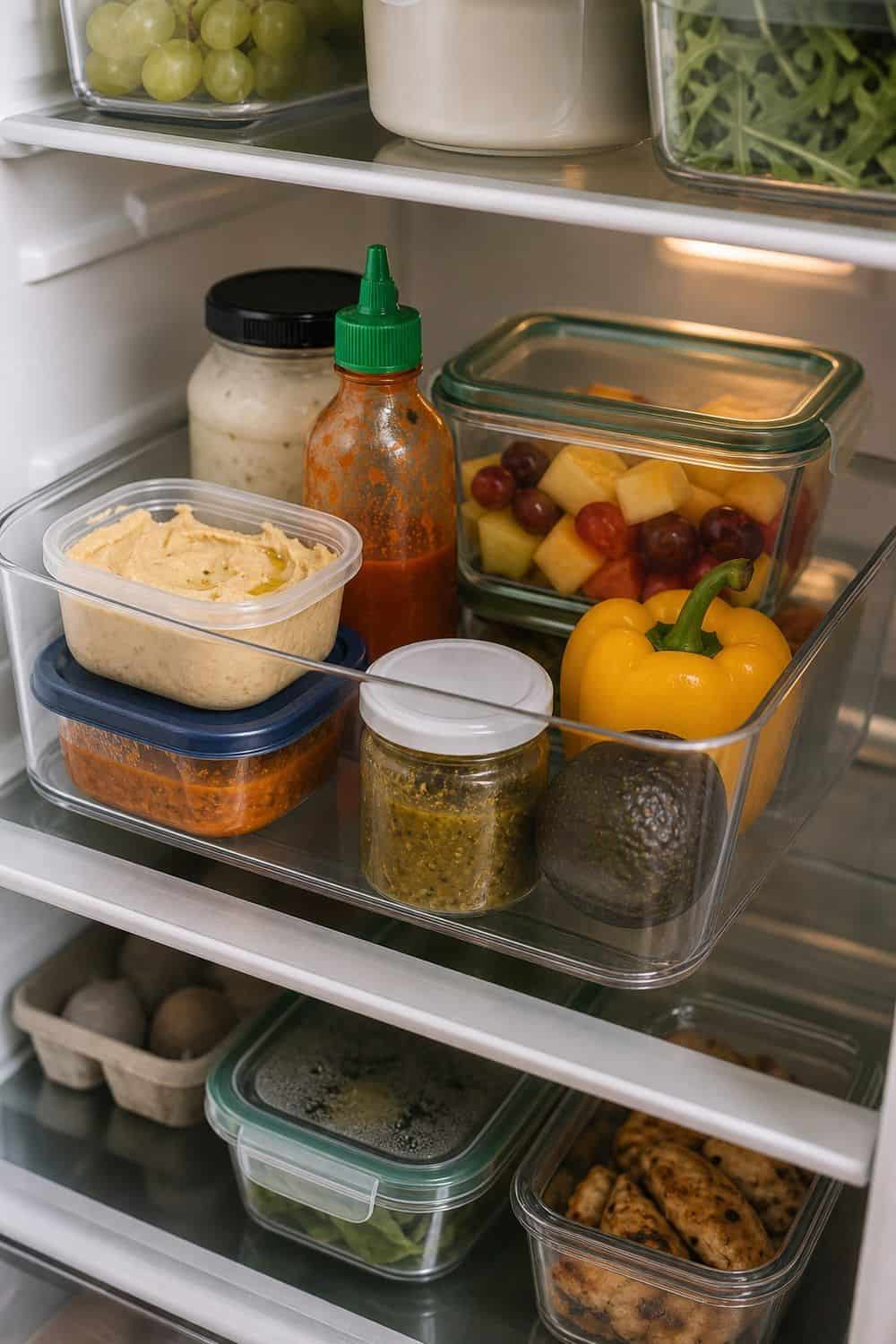
An eat-first fridge bin gives your household one obvious place to look before opening something new. Use it for leftovers, opened hummus, cut fruit, produce that needs attention, half-used sauces, or anything that should be eaten in the next few days. Eye-level placement interrupts the habit of reaching for newer food first. Keep the bin small enough that items do not pile up, and empty it into lunches, snack plates, or a use-it-up dinner once or twice a week.
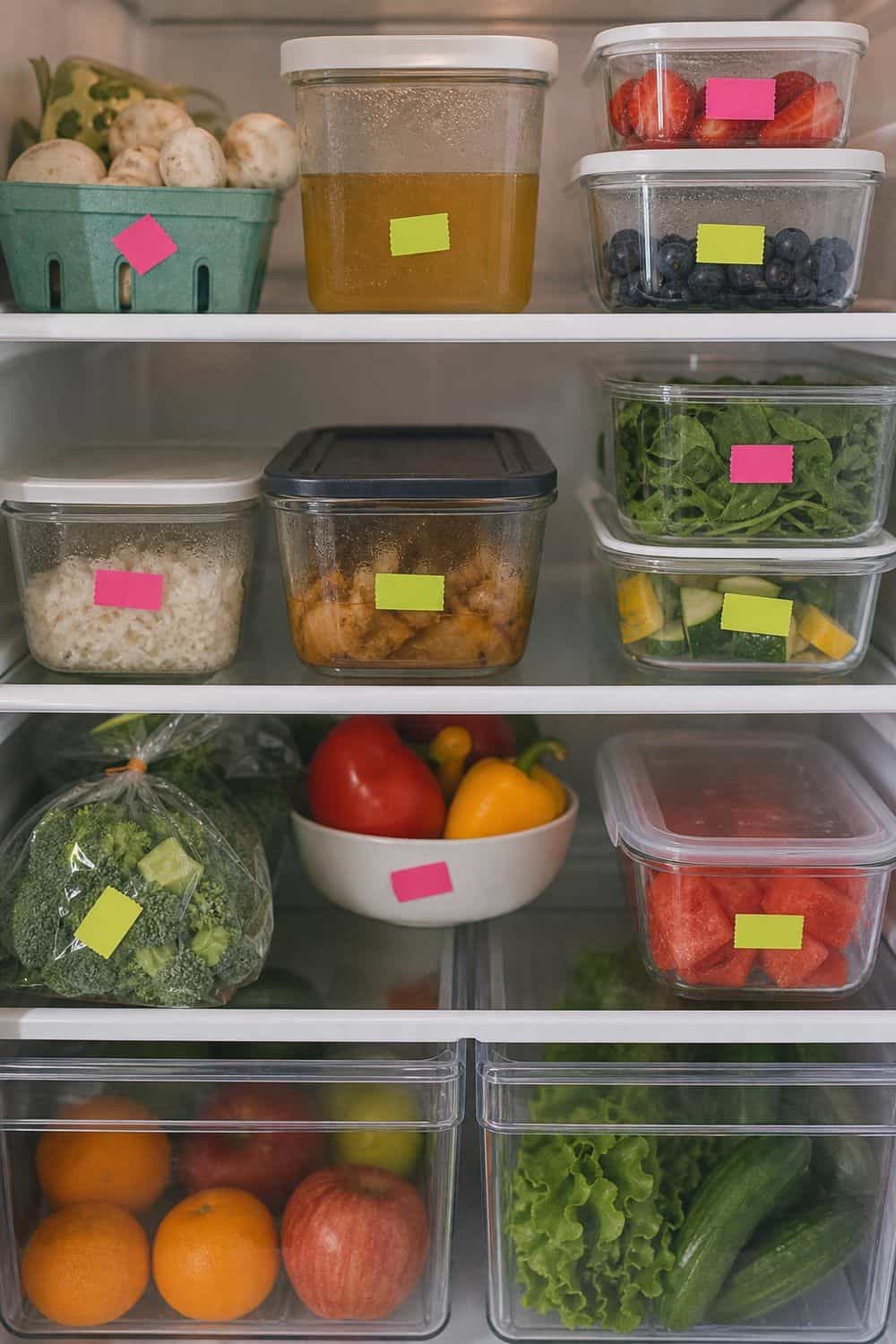
11. Dated Labels for Leftovers
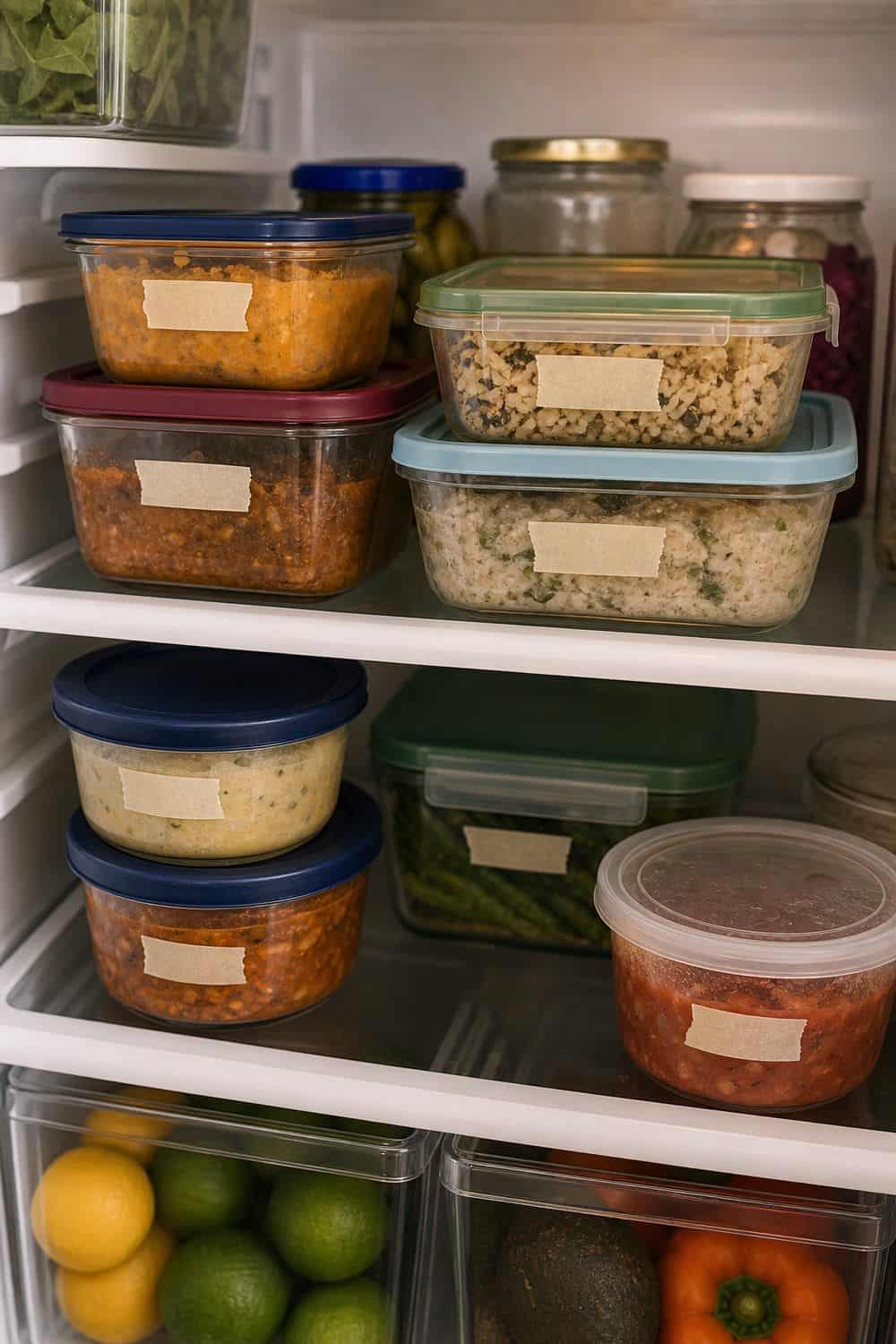
Leftover labels do not need to be fancy. Write the food name and the date it was cooked or opened so no one has to guess what is inside a cloudy container. That small label turns leftovers from mystery food into a planned option. Dating containers also helps you decide what belongs in the eat-first bin. Use removable labels, masking tape, or a washable marker, then keep labeled leftovers near the front instead of stacking them behind unopened groceries after dinner cleanup.
12. Clear Bins for Category Zones
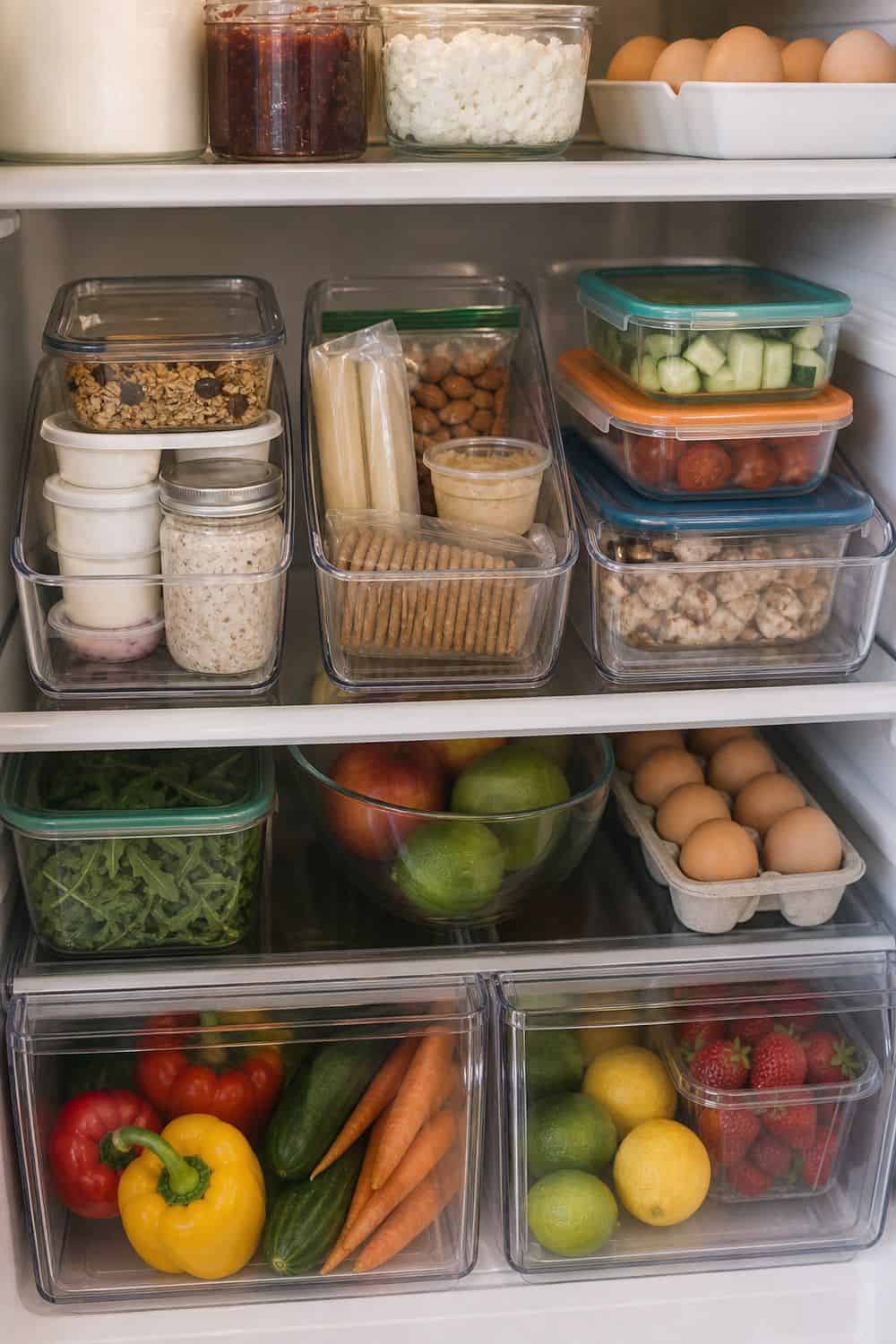
Clear bins work best when they solve a real category problem. A breakfast bin, snack bin, dairy overflow bin, lunch prep bin, or condiment overflow bin can keep small items from sliding to the back and becoming invisible. Measure the shelf depth before buying anything, and leave enough open shelf space for leftovers and larger groceries. The point of clear fridge bins is to pull a whole category forward, not to turn every item into a container-within-a-container puzzle after every shopping trip.
13. Breathing Room Between Containers
A fridge can be over-organized just as easily as it can be messy. Too many stacked containers can hide leftovers, block tall items, and make it annoying to put groceries away after a normal shopping trip. Choose a few containers for recurring categories, then leave flexible shelf space for soup pots, pizza boxes, meal prep trays, or produce that does not fit the usual week. Visibility is more useful than filling every inch with matching bins after each grocery trip, especially when dinner leftovers need room.

14. Small Condiments on a Turntable
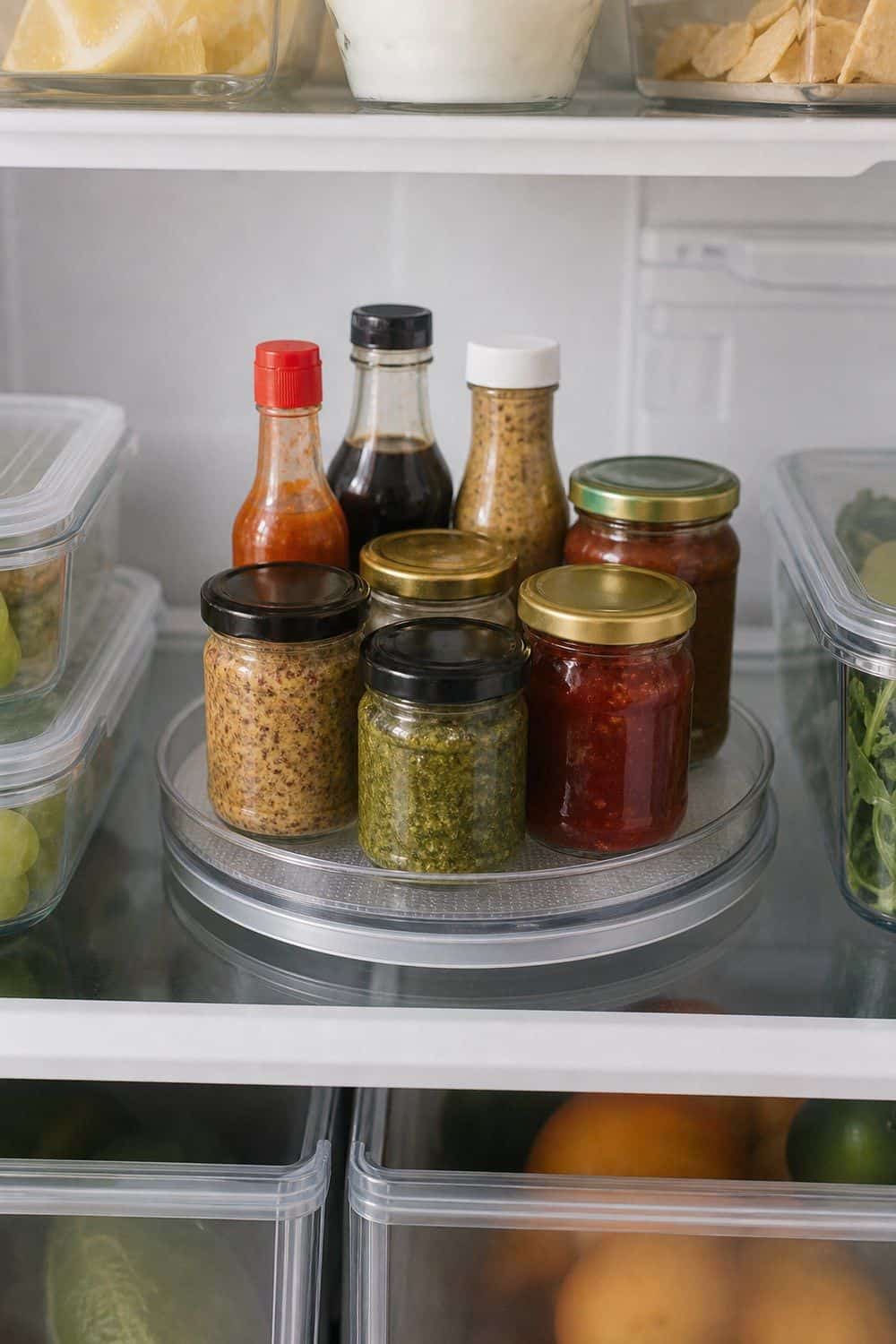
Small jars are the first things to vanish at the back of a shelf. A refrigerator lazy susan can make mustard, pesto, jam, pickles, curry paste, hot sauce, and small sauce bottles easier to rotate and check.
Keep the turntable focused on one category, such as small condiments or open jars used for quick meals. If every random bottle lands there, it becomes another cluttered spot and the food-waste benefit disappears before dinner prep when you need sauce quickly for bowls, wraps, or marinades.
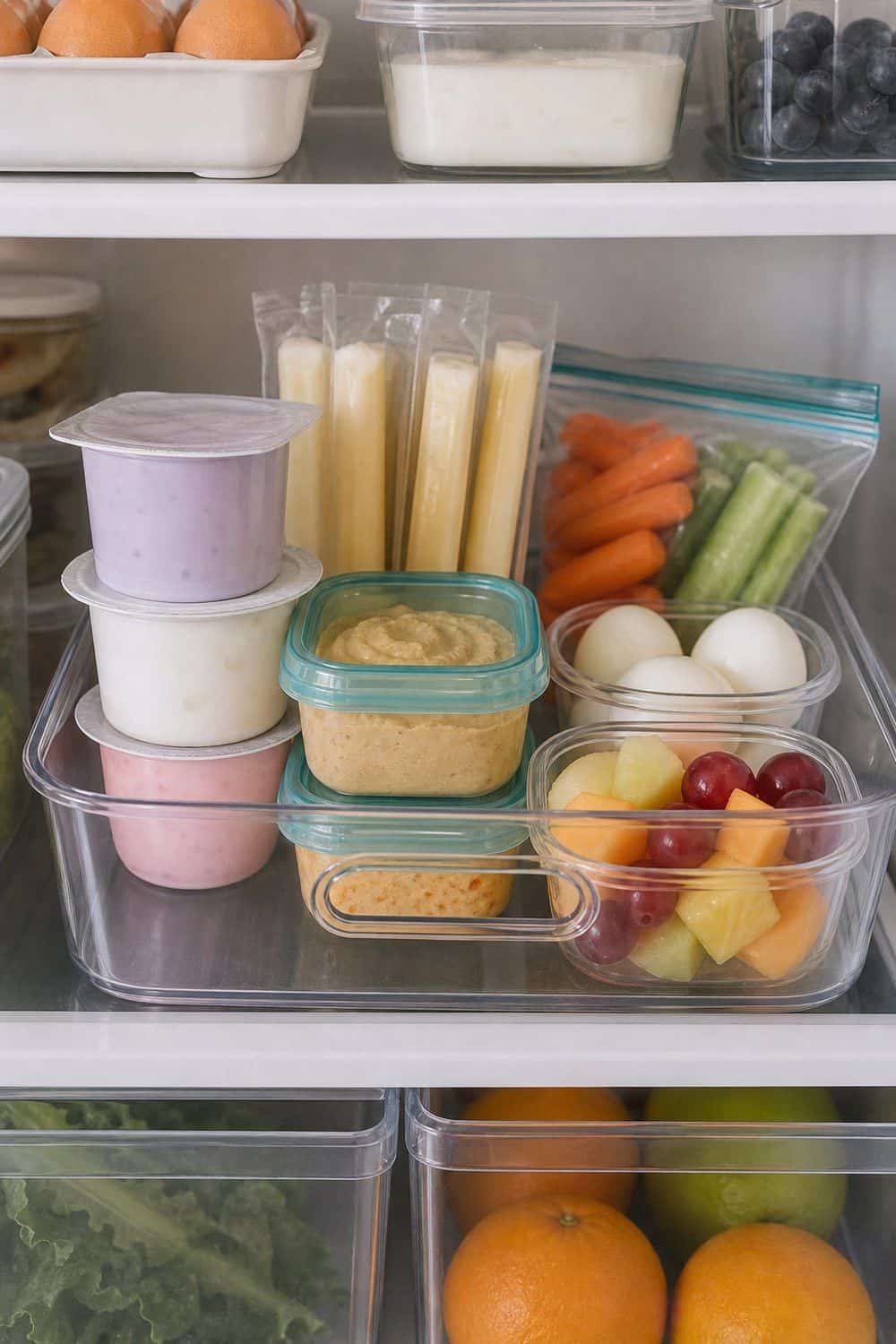
15. Lunchbox and Snack Zone
Weekday packing gets easier when lunch add-ins are grouped together. Use one shelf section or bin for yogurt cups, cheese sticks, hummus, boiled eggs, cut fruit, snack vegetables, and small containers that can become lunch quickly.
This zone helps reduce waste because single-serve items and cut produce are easy to forget when they are scattered. Check it before school mornings, work lunches, and grocery trips so half-used snack foods do not keep multiplying in separate corners of the fridge behind larger containers.
16. Morning Zone for Breakfast Foods
Breakfast foods often live in five different places, which makes it easy to buy more berries, yogurt, cream cheese, eggs, or butter while older items sit open. Group the morning staples you use most into one visible section. A shallow drawer organizer or low bin can hold smaller items like jam, oat jars, smoothie add-ins, or leftover pancakes. Keep bulky items beside the bin rather than forcing everything inside, so the zone stays useful after a real grocery run with milk, juice, and eggs.

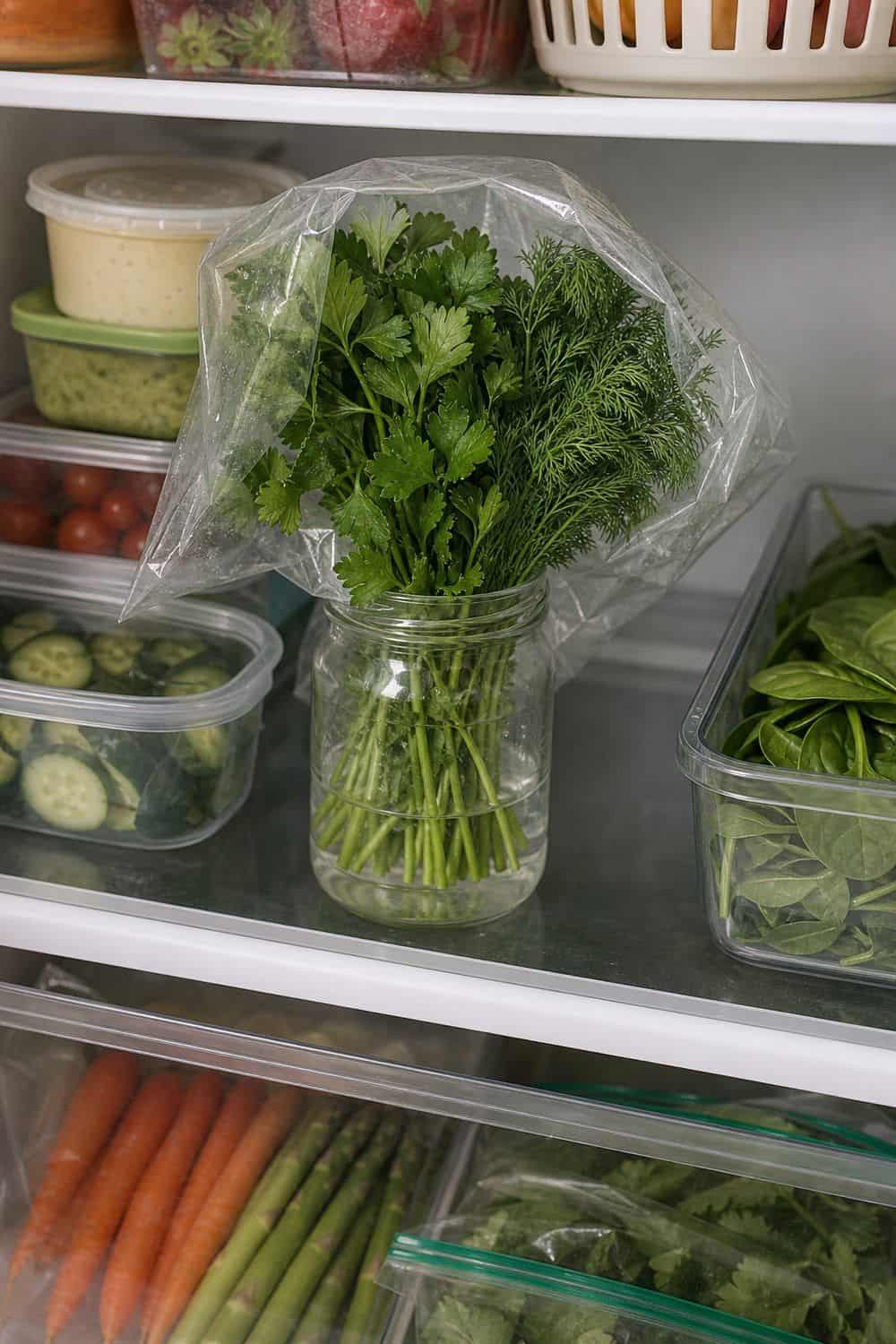
17. Visible Herb Storage
Fresh herbs often rot because they stay hidden in damp plastic bags. Move them into a visible setup, such as a herb saver, a jar with a loose bag over the top, or a clear spot in the high-humidity drawer. Choose the method that fits how quickly you cook with herbs. Cilantro, parsley, dill, and basil all need attention, but the larger habit is the same: keep herbs upright or easy to see so they get used in sauces, salads, eggs, and leftovers.
18. Cheese and Deli Items Together
Flat packages disappear easily, especially sliced cheese, deli meats, tofu packs, tortillas, smoked salmon, and small wrapped cheeses. Give these items one drawer, bin, or shelf edge so open packages are obvious before anyone starts a new one.
This zone should stay cool and uncrowded because many deli items are highly perishable. Put opened packages at the front, check them during your weekly reset, and avoid mixing them with jars or produce that make the drawer harder to scan quickly.

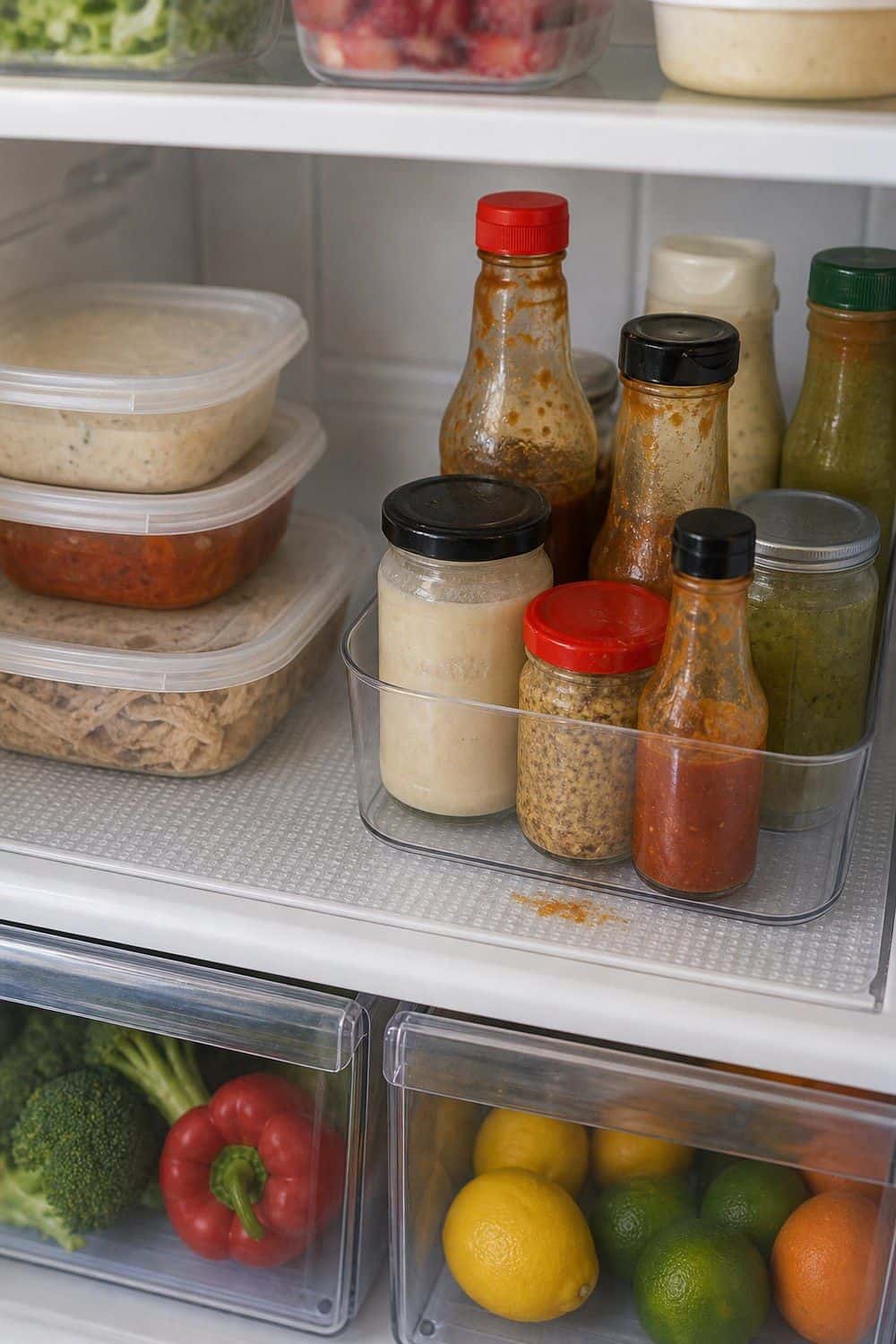
19. Liners Where Spills Happen Most
Shelf liners are most useful in the messy areas, not necessarily across the whole fridge. Try them under condiment bottles, in crisper drawers, or beneath leftover containers if those spots are where sticky spills usually happen.
When cleanup is quick, you are more likely to do the weekly reset instead of ignoring dried sauce or produce moisture. Liners still need to be washed, and spills from raw meat should be cleaned right away rather than waiting for reset day, especially near produce.
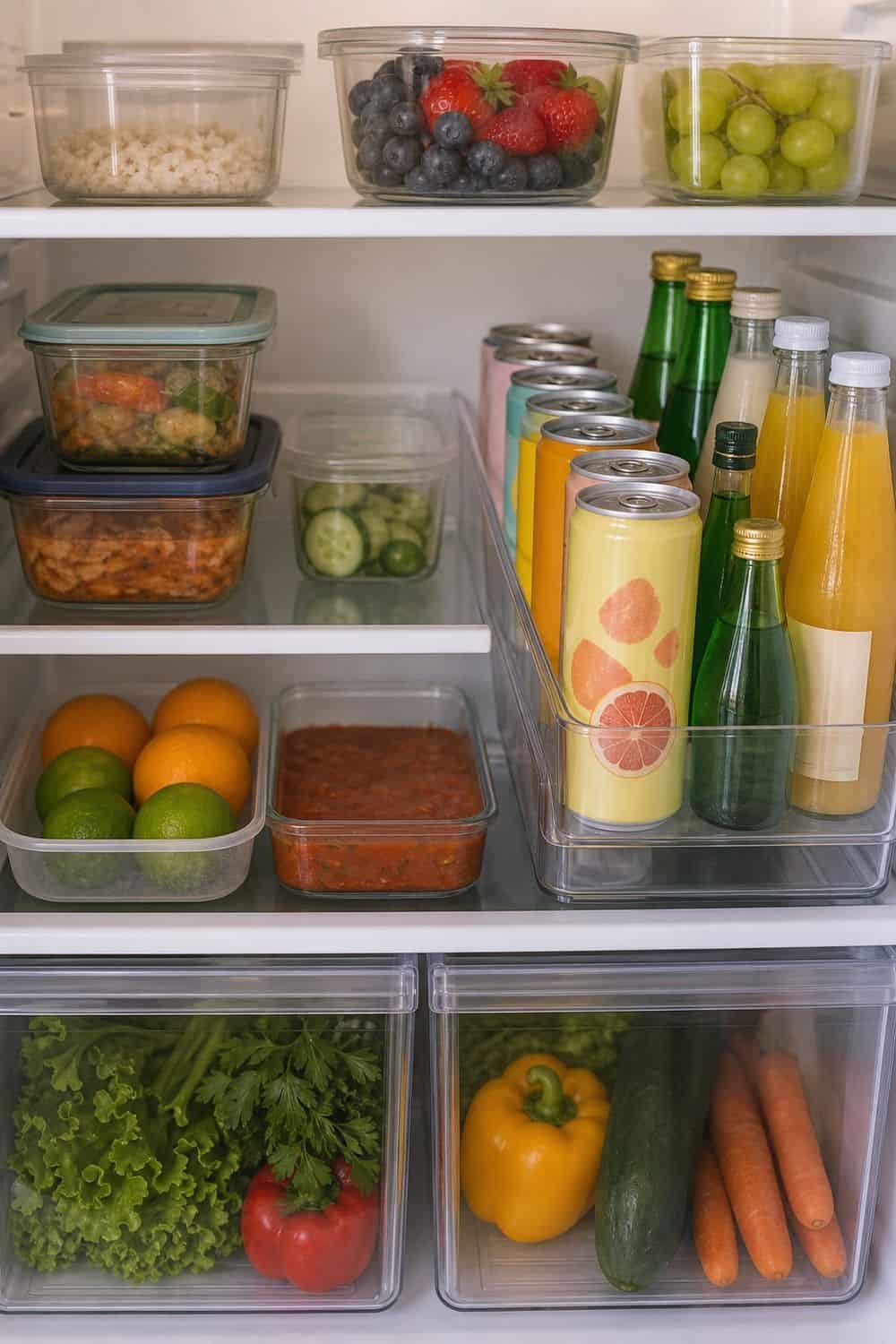
20. Drinks Without Losing Food Space
Drinks can crowd out perishables fast, especially cans, sparkling water, juice, coffee bottles, and extra cartons. Give drinks one row, one door section, or one organizer instead of letting them spread across shelves meant for food.
Crowded drink shelves hide leftovers and produce faster than most people notice. Keep meal prep, dairy, and eat-first foods protected from drink overflow, then restock drinks only when the assigned space is low instead of refilling every open gap after shopping or weekend errands.
21. Bright Tape for Food That Needs Attention
A bright piece of tape can do what a complicated tracking system cannot: catch your eye. Put it on opened broth, cut fruit, cooked rice, produce that needs roasting, or leftovers that should move into lunch soon.
Use this cue sparingly so it still means something. If everything gets a label, nothing stands out. A few attention markers can guide the household toward food that is still good but likely to be forgotten behind newer groceries or weekend leftovers in larger containers.
22. Small Leftover Container Stack
Leftovers are more likely to be saved neatly when clean containers are easy to grab. Keep a small stack of glass leftover containers or matching lids nearby, then label food before it goes into the fridge.
The stack should be small, not a full storage cabinet inside the refrigerator. A few ready containers support leftover storage after dinner, while too many empties steal space from the food you are trying to use during the week after cooking, packing lunches, or reheating dinner.

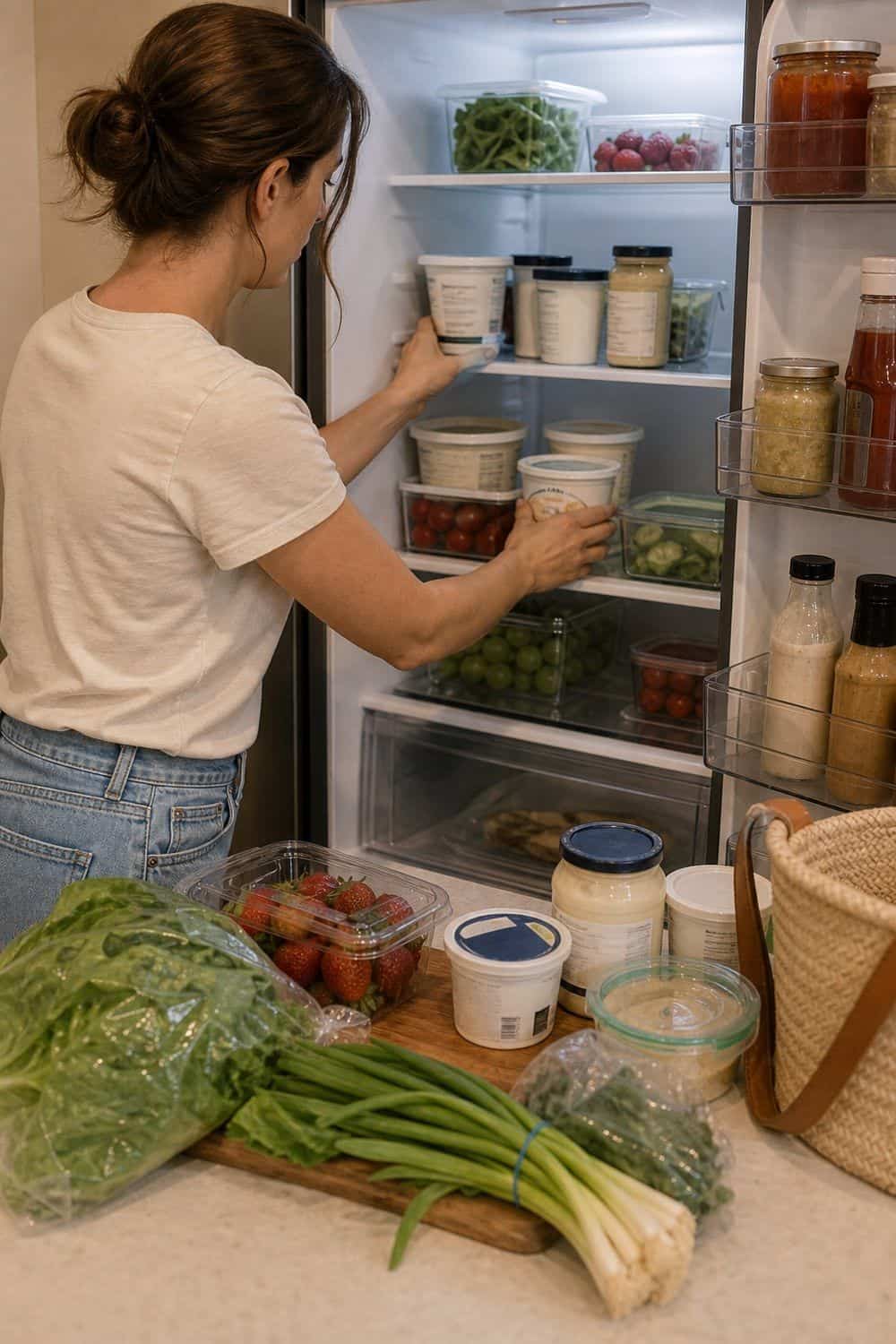
23. Date Checks While Unloading Groceries
Grocery unloading is the best time to practice first-in-first-out. Put newer yogurt, dairy, sauces, and condiments behind older ones, then move anything already open toward the front so it gets used first.
Check what you already have before adding missing staples to a grocery list pad. This habit prevents duplicate buying, especially with eggs, butter, cheese, broth, and condiments that are easy to replace out of habit when the fridge looks crowded before unloading bags onto the counter after shopping.
24. Weekly Leftover Meal Night
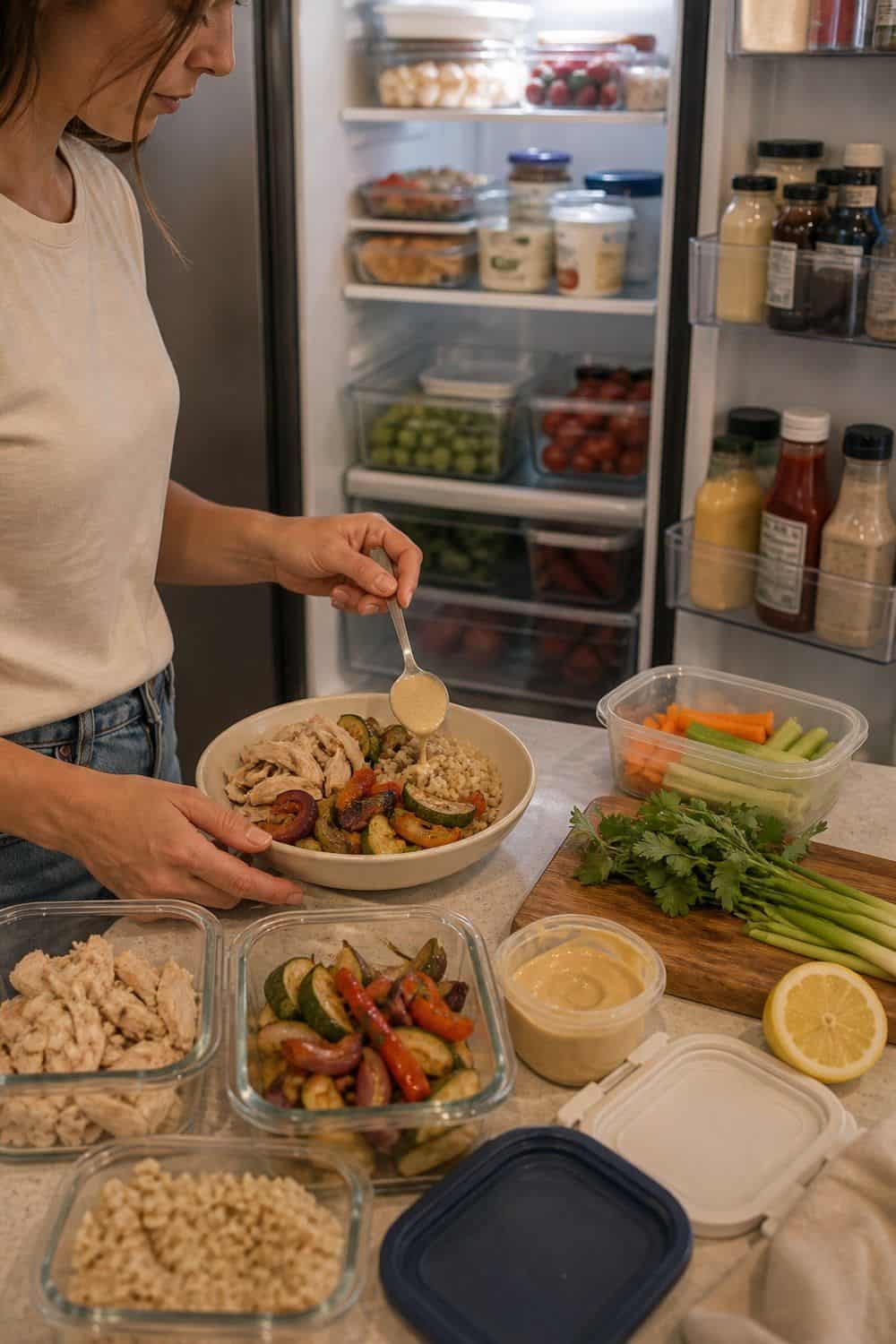
An organized fridge only reduces waste if the food gets eaten. Plan one lunch or dinner each week around the eat-first bin, cooked grains, open sauces, leftover proteins, cut vegetables, and produce that needs a plan.
This does not have to become a recipe night. It can be rice bowls, omelets, snack plates, soup add-ins, quesadillas, salads, or a tray of roasted vegetables. The point is to turn visible food into a meal before the next grocery trip adds more perishables.
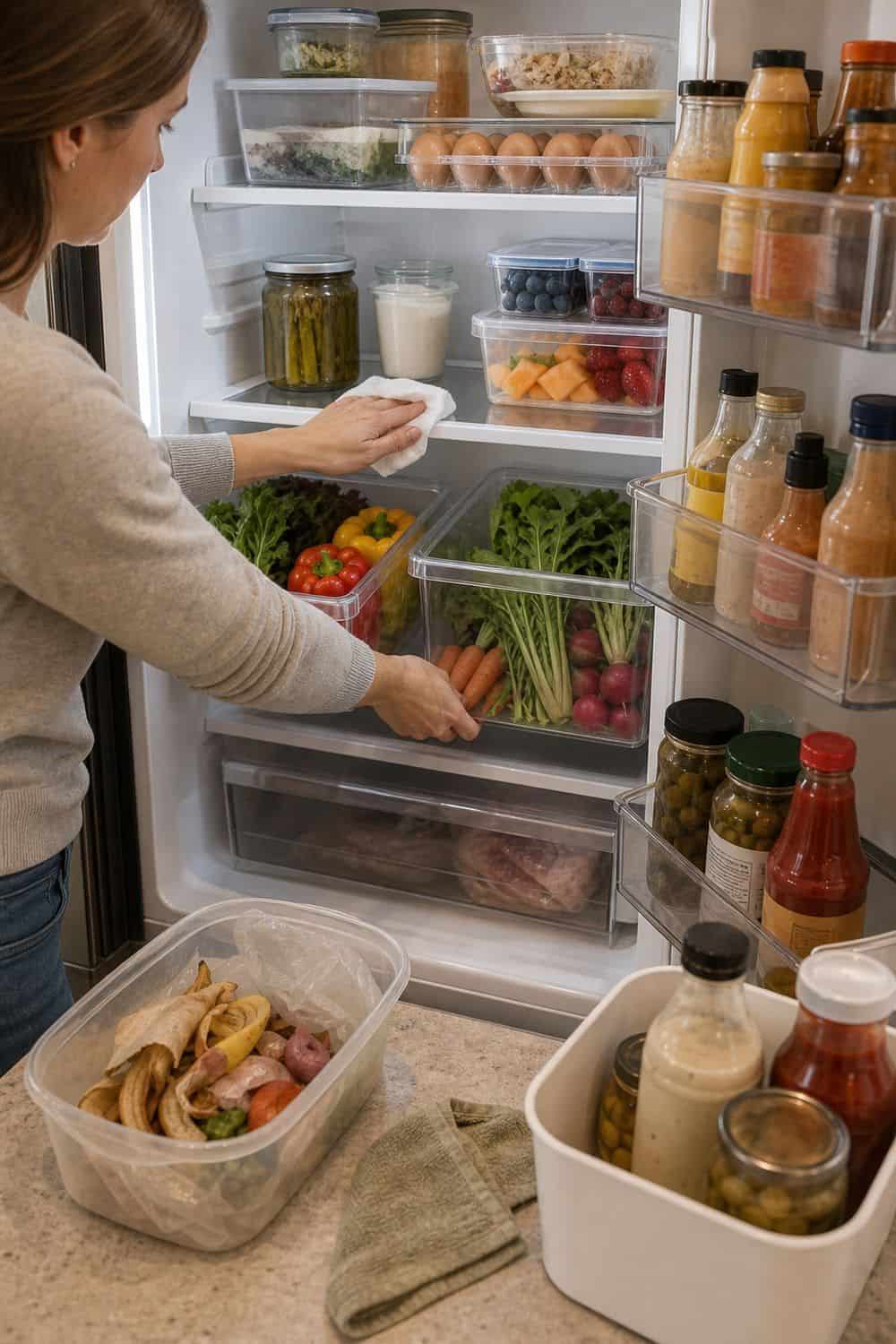
25. Ten-Minute Weekly Fridge Reset
A weekly ten-minute reset keeps the whole system from slowly falling apart. Toss spoiled food, wipe one shelf or drawer, move older items forward, check the crisper drawers, combine duplicates if safe, and return condiments to their section.
End by choosing one use-it-up meal or snack plan from what you found. This small routine makes fridge organization easier to repeat because it works with normal groceries, leftovers, and busy weeks instead of expecting the fridge to stay perfect after every shop.
Other Fridge Organization Tips to Keep Food Fresh
A reliable fridge map starts at the top and works down. Keep ready-to-eat foods high, dairy on a stable middle shelf, raw proteins low and contained, produce in the right crisper drawer, and condiments in the door. That shelf order protects food safety while making everyday meals easier to find.
Crisper drawer organization is especially important if produce is where your household wastes the most money. Use high humidity for foods that wilt, low humidity for foods that rot faster, and avoid stuffing the drawers so full that delicate produce gets crushed or forgotten.
For the best anti-waste routine, connect the system to real habits: an eat-first bin, dated leftovers, a pre-grocery cleanout, first-in-first-out unloading, and one weekly use-it-up meal. Clear bins and labels help, but only when they keep food visible and leave room for the groceries you actually buy.
Frequently Asked Questions
What is the best way to organize a fridge?
The best way is to organize from top to bottom by food safety and temperature. Put ready-to-eat foods and leftovers on upper shelves, dairy on a stable middle shelf, raw meat low and contained, produce in crisper drawers, and condiments or stable drinks in the door. Then add small visibility tools, such as clear bins and date labels, only where they solve a real problem.
How do I organize my fridge to reduce food waste?
To organize fridge space for less waste, make food visible and give older food priority. Use an eye-level eat-first bin, label leftovers with dates, check the fridge before grocery shopping, and use the right crisper settings for produce. A weekly reset also helps because it moves older food forward before new groceries hide it.
Where should raw meat go in the fridge?
Raw meat should go on a low shelf in a contained bin or tray. This placement helps prevent leaks from dripping onto ready-to-eat foods, cooked leftovers, produce, or open packages. If the packaging leaks, remove the bin and wash it promptly before returning food to that area.
What should go in crisper drawers?
Crisper drawers should usually hold produce, separated by moisture needs when possible. High humidity works for foods that wilt, such as greens, herbs, broccoli, and carrots. Low humidity is better for produce that needs more airflow, such as peppers, mushrooms, apples, pears, and grapes. Avoid using crisper drawers as random storage for cans or extra packages.
Should milk go in the fridge door?
Milk is usually better on a stable middle shelf than in the fridge door. The door warms up more often because it is opened repeatedly, so it is a better place for condiments, jams, sauces, and stable drinks. Keeping milk on a shelf also makes it easier to rotate older cartons forward.
Are clear fridge bins worth it?
Clear fridge bins are worth it when they create useful category zones, such as breakfast, snacks, dairy, lunch prep, or condiment overflow. They are less helpful when there are so many that the fridge loses flexible space. Measure first, choose a few categories, and keep bins clear enough that food is still visible.
How often should I clean out my fridge?
A quick weekly fridge reset is usually enough for maintenance, with a smaller check before big grocery trips. Toss spoiled food, wipe fresh spills, move older food forward, and check produce drawers. Do a deeper cleaning whenever there are odors, sticky shelves, leaking packages, or drawer buildup.
How do I keep leftovers from being forgotten?
Use clear containers, label each one with the food name and date, and keep the most urgent leftovers in an eye-level eat-first bin. Planning one leftover lunch or dinner each week also helps. The system works best when leftovers are visible before anyone opens something new.
Final Thoughts
The best fridge organization ideas are the ones that make food easier to see, safer to store, and more likely to be used before the next grocery run. With clear shelf zones, smarter crisper drawer habits, dated leftovers, and a small weekly reset, the fridge starts working like a quiet anti-waste system instead of a place where good food disappears.
Last update on 2026-09-18 / Affiliate links / Images from Amazon Product Advertising API