

The easiest way to store herbs is to match the method to the herb type. Tender herbs like parsley and cilantro usually stay freshest upright in water in the fridge, basil usually belongs at room temperature in water, woody herbs like rosemary and thyme do better loosely wrapped, and washed herbs must be dried thoroughly before storage. If herbs turn slimy, moldy, foul-smelling, badly blackened, or leaking, discard them instead of trying to rescue them.
Fresh herbs are small, but they can waste a surprising amount of money when they collapse into a wet bunch two days after shopping. The fix is not one universal container or one fridge zone. Herbs behave differently depending on their stems, leaves, moisture, and cold sensitivity.
If you want to know how to store herbs so they stay fresh, start with a simple decision tree: tender bouquet herbs, basil on the counter, woody herbs wrapped, washed herbs fully dried, and extra herbs preserved before they cross into spoilage. That keeps the advice herb-specific instead of turning it into a vague produce routine.

Top Recommended Products


You Might Also Like These Blog Posts
- How to Store Tomatoes
- Healthy Fridge Prep
- 20 Herb Storage Ideas
- Use-It-Up Fridge Meal Ideas
- Summer Fruit Storage
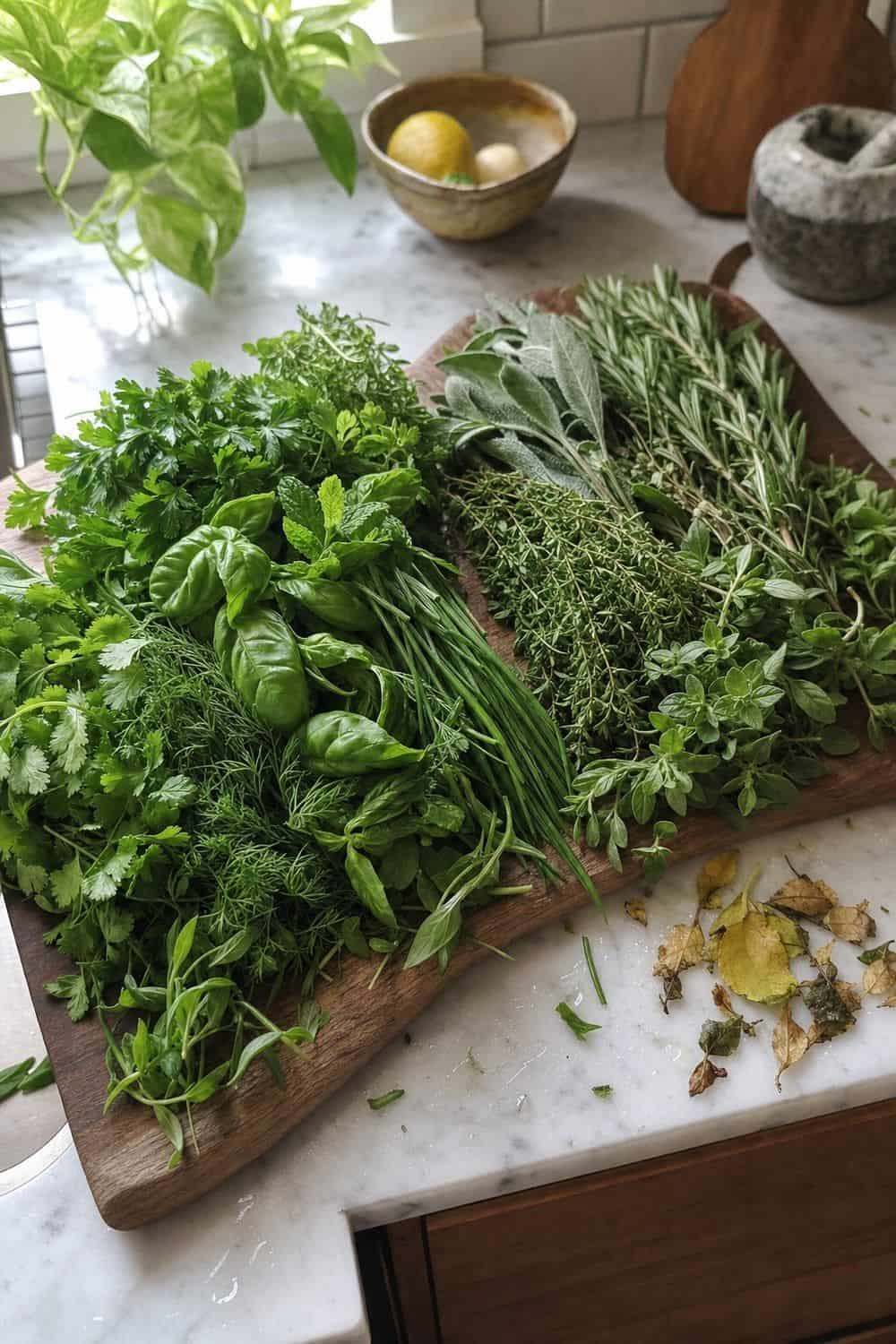
1. Sort Herbs Into Tender and Woody Groups
Herb storage starts with sorting, because soft herbs and woody herbs do not fail in the same way. Parsley, cilantro, dill, mint, chives, tarragon, basil, and chervil have tender stems or delicate leaves that need moisture control and gentle handling. Rosemary, thyme, sage, oregano, and marjoram have firmer stems and can usually handle a looser wrap.
Once the herbs are sorted, remove crushed, yellowing, slimy, or leaking pieces before they touch the rest of the bunch. Basil needs its own counter storage rule because refrigerator cold can blacken the leaves.
2. Trim the Stems Before Bouquet Storage
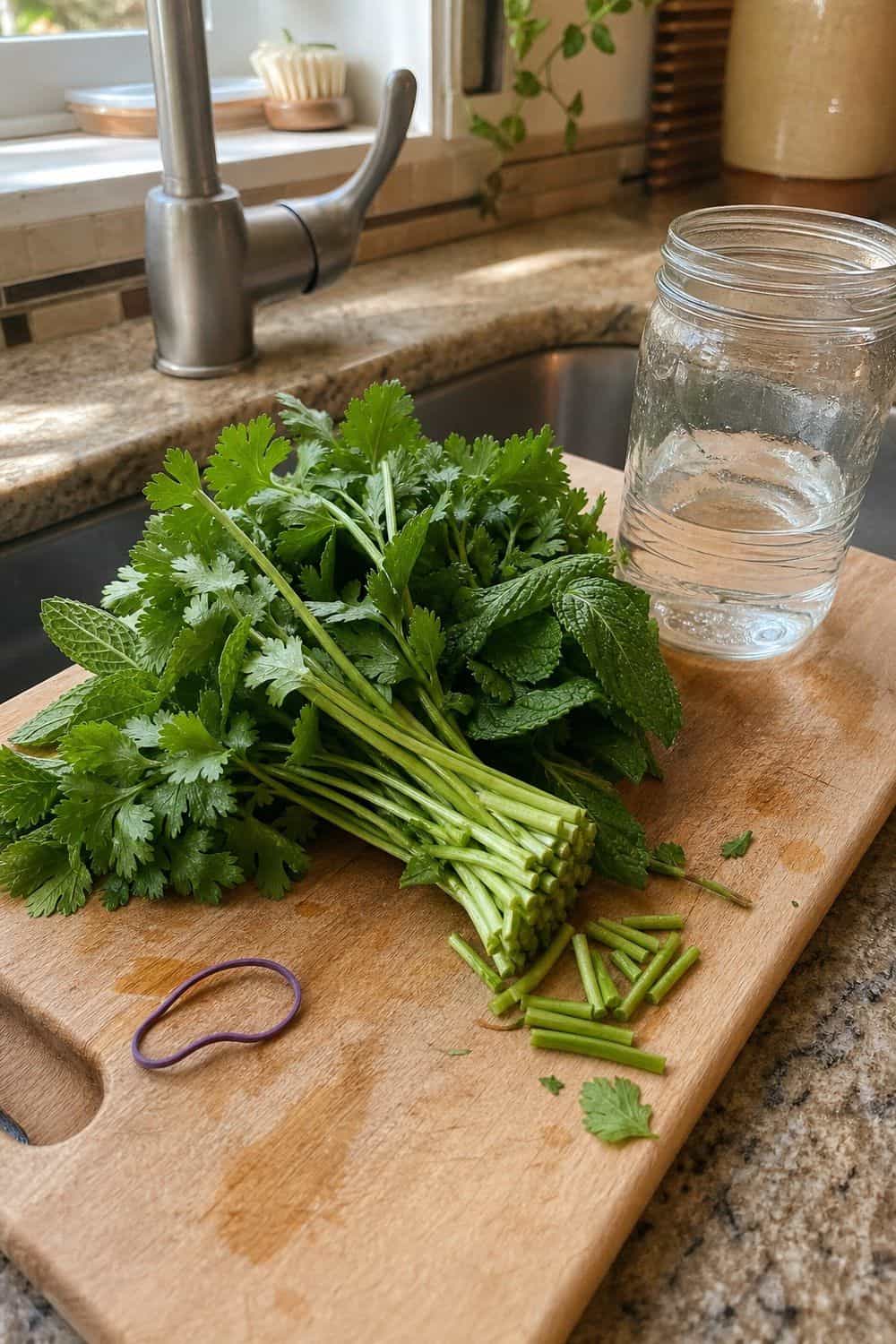
Parsley, cilantro, mint, and similar tender herbs stay fresher when the stem ends can drink cleanly. Trim a small amount from the bottom before placing them in water, especially if the ends look dry, browned, or sealed over from the grocery store. Remove rubber bands or tight twist ties if they are crushing stems. A quick trim and a looser bunch are enough to help water move through the stems without wasting the leafy tops you plan to cook with.
3. Store Parsley and Cilantro Upright in Water
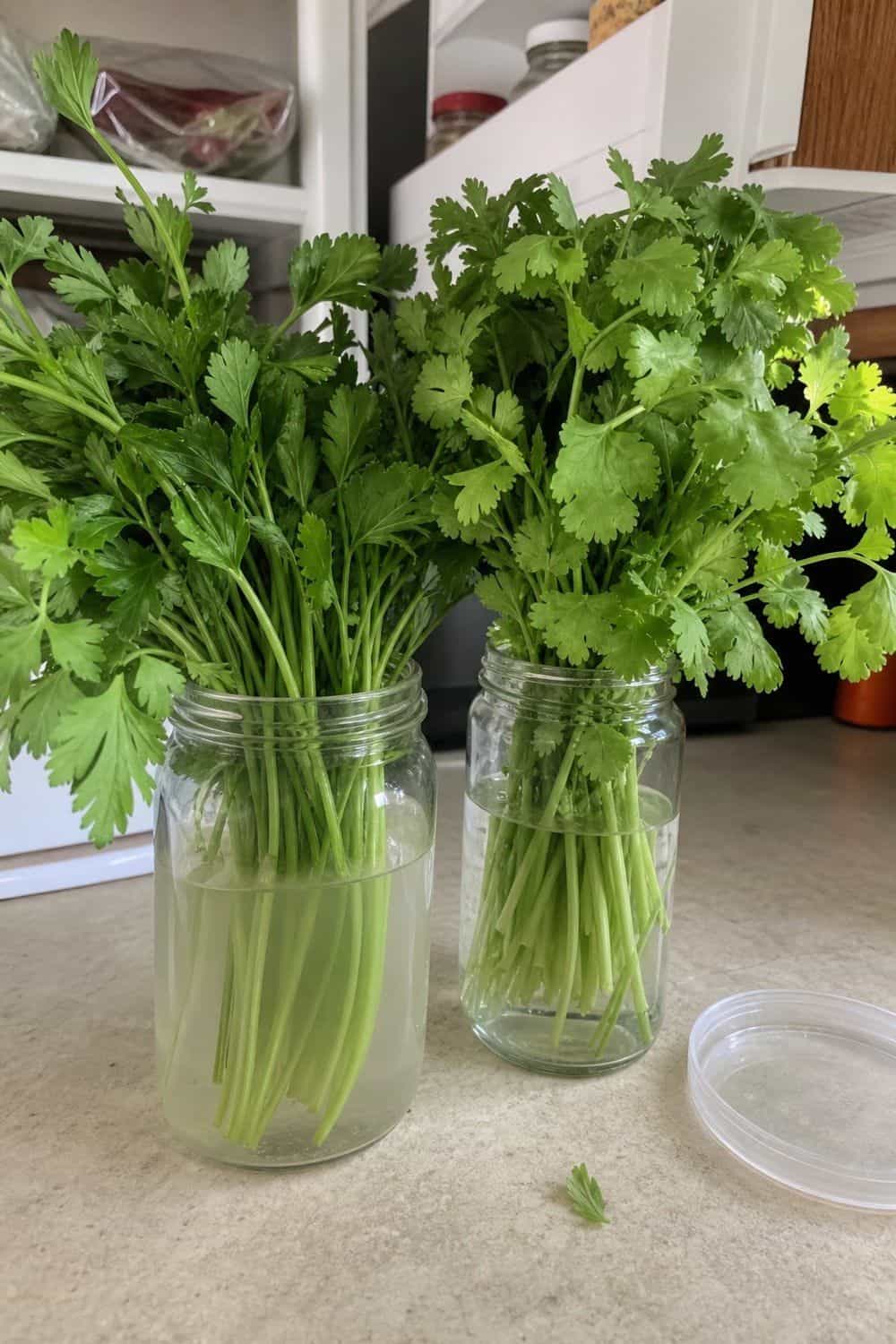
Parsley and cilantro usually do well with the cut-flower method. Place trimmed stems in a jar with a small amount of water, keeping the leaves mostly above the waterline. If the bunch is crowded, loosen it so air can move around the leaves instead of trapping moisture in the center.
Most herbs stored this way belong in the refrigerator. Add a loose cover if the leaves dry out, but do not press plastic tightly against them. Change cloudy water and remove wilted leaves before they soften into the rest of the jar.
4. Keep Basil on the Counter
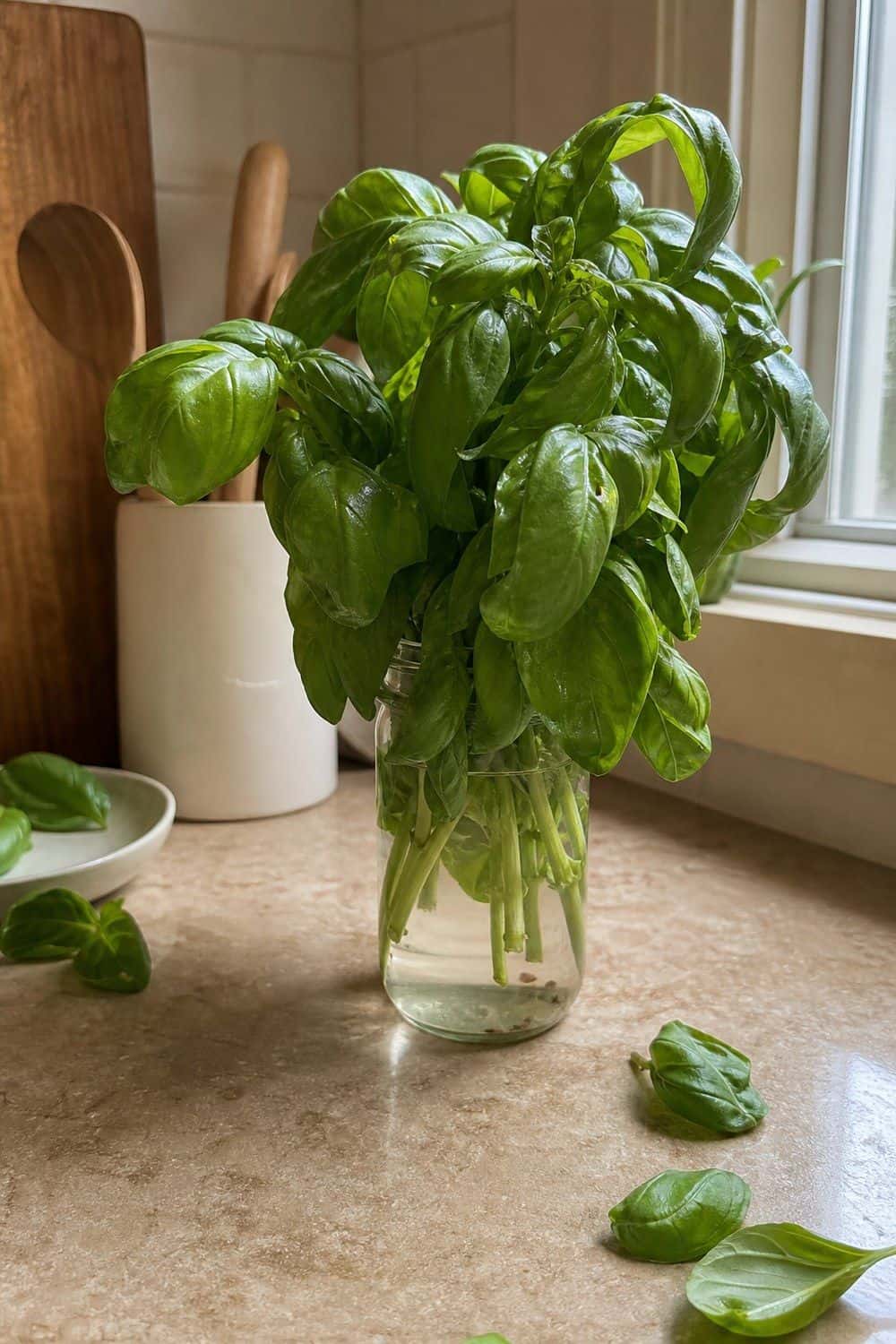
Basil is the major exception to the tender-herb fridge rule. Refrigerator cold can make the leaves turn black, wilt, and lose aroma quickly, so treat basil like a countertop bouquet. Trim the stems, place them in water, and keep the bunch away from direct sun, stove heat, and strong drafts. Check the water daily if the bunch is large. If the leaves start softening, use them for pesto, herb oil, tomato sauce, soup, or compound butter before the whole bunch fades.
5. Wrap Woody Herbs Loosely
Rosemary, thyme, sage, oregano, and marjoram do not usually need a water jar. Their firmer stems store better when they are protected from drying out but not sealed against heavy moisture. Wrap them loosely in a dry or barely damp towel, then tuck the bundle into a bag or container. Keep the herbs away from strong-smelling foods when possible. If the sprigs dry slightly but still smell clean and herbal, they can still be useful for soups, roasts, beans, and sauces.

6. Keep Dill and Tarragon From Getting Crushed
Dill, tarragon, and chervil need gentler handling than sturdier leafy herbs. Their fine stems can bruise, mat down, or turn limp when they are buried under heavier groceries. Give them a shallow container or towel-lined tray instead of stuffing them into a packed drawer.
If they are damp, dry them carefully before closing the container. Use these herbs earlier in the week when possible, and turn small tired amounts into yogurt sauce, eggs, soup, or dressing instead of returning them to the fridge again.

7. Wash Herbs Right Before Use When Possible
Herbs should be rinsed before eating, but the timing matters. If you wash a full bunch and put it away wet, the leaves can turn slimy faster. Rinse only the herbs you are about to use whenever you can. For sandy herbs, swish them gently in cool water so grit falls away, then lift the herbs out instead of pouring the grit back over the leaves.
Avoid soap, bleach, or commercial produce wash. Clean running water is the right tool for fresh herbs. If you wash herbs ahead for meal prep, plan a drying surface before rinsing so the leaves do not sit in a wet pile.

8. Dry Washed Herbs Thoroughly
Drying is what makes washing ahead either helpful or harmful. Parsley, cilantro, mint, and sturdier leafy herbs can handle a gentle spin to remove surface water, as long as the spinner is not packed so tightly that leaves bruise or stay wet in the middle. After spinning, check the stems and inner leaves. If they still feel wet, spread the herbs briefly on a clean towel before storing. Store only when the leaves feel dry to the touch, not cool and damp.

9. Use Towels for Small Herb Bundles
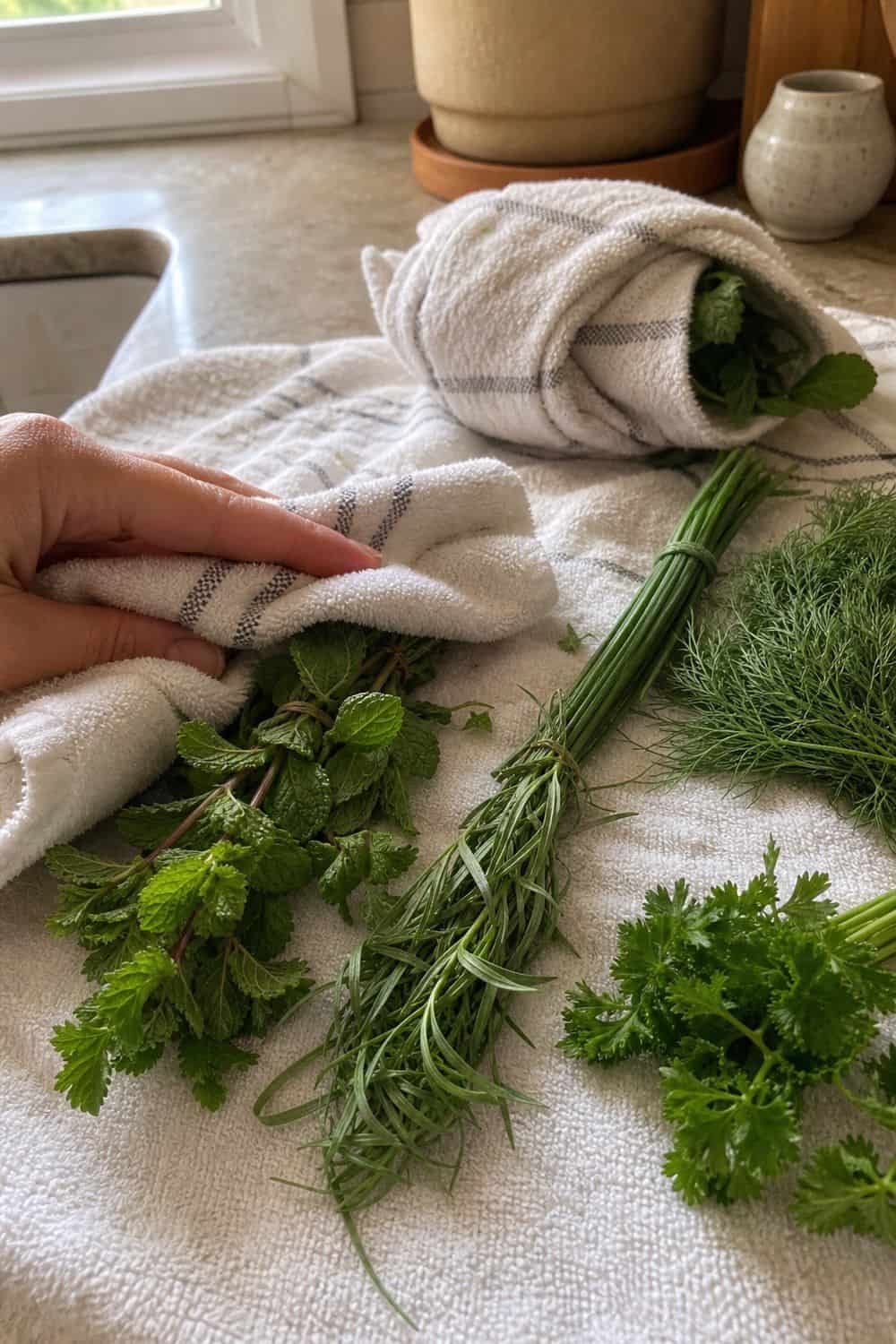
A towel is often better than a spinner when the bunch is small, delicate, or already partly used. Lay the herbs on a clean towel, roll or pat gently, and let the fabric pull away surface moisture without bruising the leaves. This works well for small handfuls of mint, tarragon, chives, dill, and parsley.
If you wrap herbs for storage, use a barely damp towel for woody herbs and a fully dry towel for herbs that were just washed. That small distinction helps because delicate leaves do not need extra water trapped against them.
10. Freeze Extra Herbs Before They Turn Dark
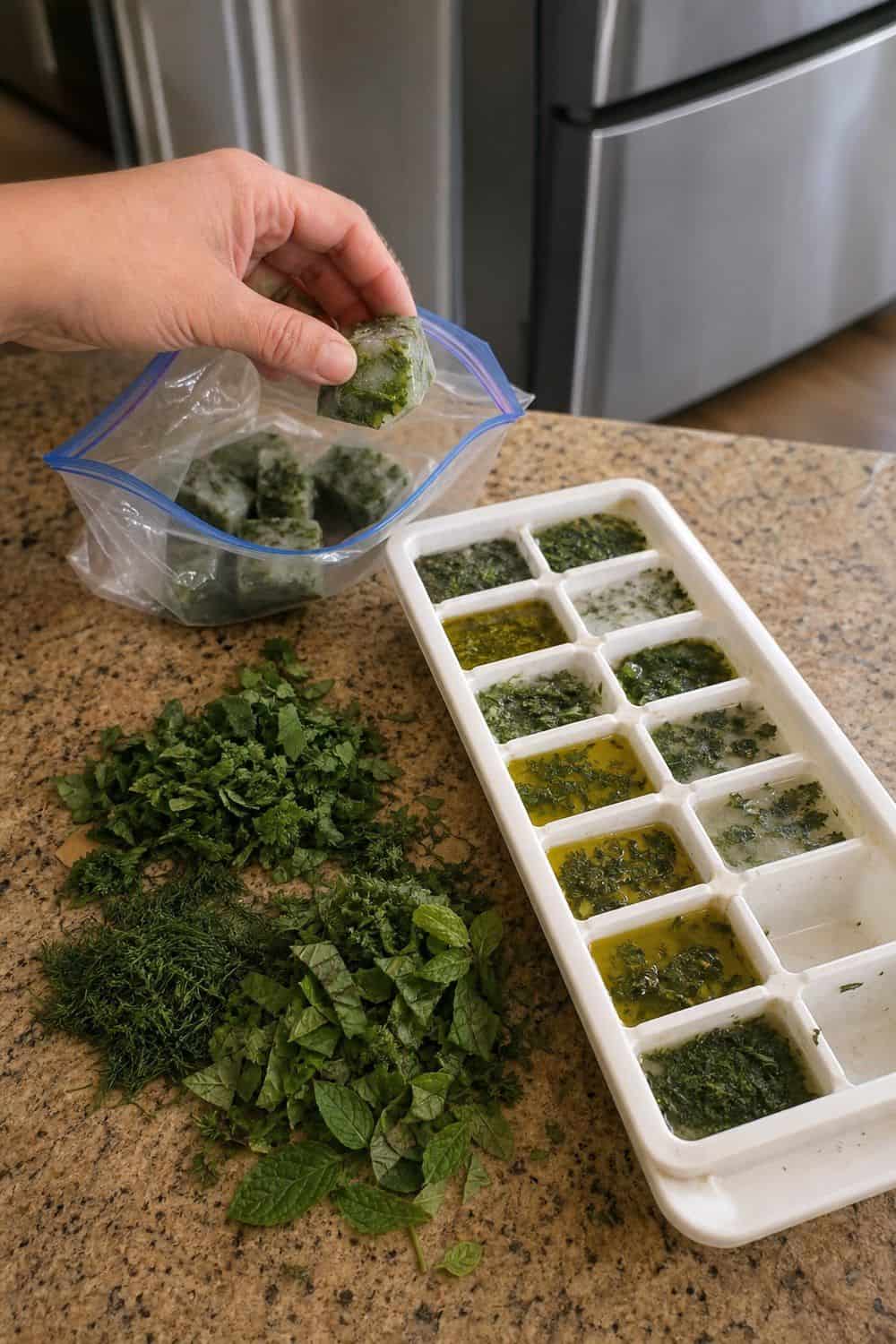
Freezing is a rescue plan for herbs you cannot use while they are still fresh. Chop parsley, cilantro, basil, dill, or mint and freeze them with water, olive oil, or broth depending on how you plan to cook with them. Frozen herbs are usually better in soups, sauces, stews, dressings, marinades, or pesto-style mixtures than as fresh garnish. Label the cubes with the herb and liquid, then move them into a bag once frozen so the tray is free for another batch.
11. Dry Woody Herbs for Pantry Use
Woody herbs are the best candidates for drying when you have more than you can use fresh. Rosemary, thyme, oregano, sage, and bay-style herbs can keep useful flavor after drying, especially if they are dried before they wilt or mold. Use small bundles or spread sprigs on a rack in a dry, ventilated spot.
Avoid trapping damp herbs in a closed container before they are fully dry. Once dry, strip leaves from tough stems if that makes them easier to use, and store them in a labeled jar away from heat and light.

12. Know When Herbs Are Past Saving
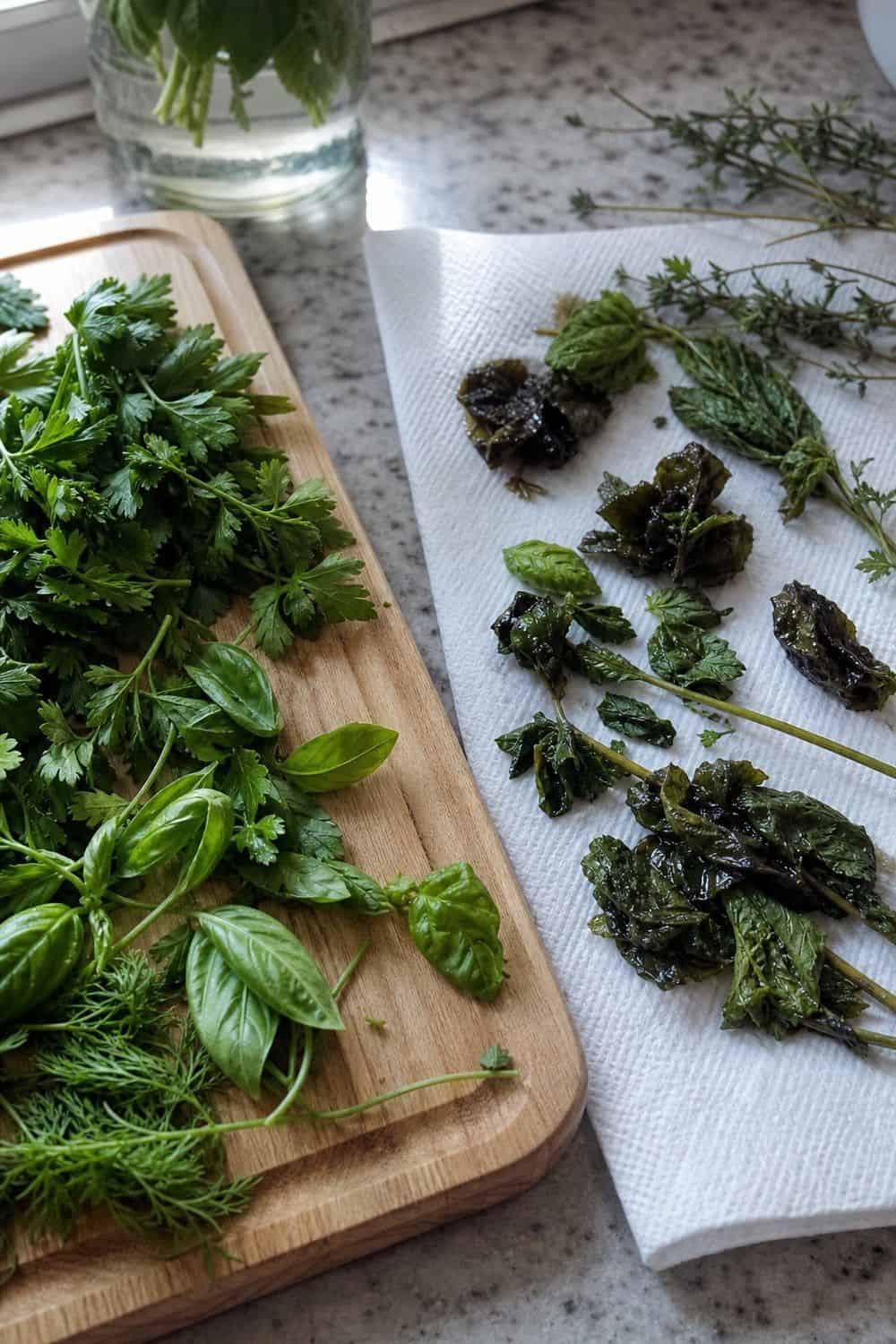
Slightly wilted herbs can often still be used in pesto, herb oil, compound butter, soup garnish, sauce, stock, or a quick cooked dish where perfect leaf shape does not matter. Use the cleanest pieces first and remove damaged stems before chopping. Spoiled herbs are different: discard anything slimy, moldy, foul-smelling, badly blackened, leaking, or collapsing into wet clumps. If the smell, texture, or appearance makes you pause, let that be the boundary. Storage can buy time, but it cannot make unsafe herbs safe again.
Herb Storage Basics to Remember
Fresh herbs last longer when you store them by behavior. Tender herbs like parsley and cilantro usually need trimmed stems and water in the refrigerator. Basil is the important exception and usually does better at room temperature in water. Woody herbs like rosemary and thyme usually prefer loose wrapped storage rather than a jar.
Wash timing matters too. Rinse herbs before use when possible, and if you wash ahead, dry them completely before storing. Change cloudy jar water, remove wilted leaves before they affect the bunch, and preserve extras before they turn dark or slimy.
FAQs About How to Store Herbs
What is the best way to store fresh herbs?
The best way to store fresh herbs is by type. Store tender herbs like parsley and cilantro upright in water in the fridge, keep basil in water at room temperature, and wrap woody herbs like rosemary and thyme loosely so they do not dry out or get wet and slimy.
Should fresh herbs be stored in the fridge?
Many fresh herbs should be stored in the fridge, including parsley, cilantro, mint, dill, and many woody herbs. Basil is the major exception because cold refrigerator temperatures can make it blacken and lose quality.
How do you store parsley and cilantro?
Trim the stems, place parsley or cilantro upright in a jar with a small amount of water, loosely cover the leaves if needed, and refrigerate. Change the water when it looks cloudy and remove wilted leaves from the bunch.
How do you store basil so it does not turn black?
Store basil at room temperature with the stems in water, away from direct sun and heat. Avoid putting basil in the refrigerator unless you are prepared for possible cold damage, blackening, and texture loss.
Should you wash herbs before storing them?
It is usually best to wash herbs right before using them. If you wash herbs before storage, dry them thoroughly first because wet leaves can turn slimy faster. Do not use soap, bleach, or produce wash on fresh herbs.
How do you dry herbs after washing?
Use a salad spinner for sturdy leafy herbs like parsley, cilantro, and mint, then finish with a clean towel if needed. For delicate herbs like dill or tarragon, gently pat or roll them in a towel instead of spinning aggressively.
Can you freeze fresh herbs?
Yes, fresh herbs can be frozen, especially when chopped into cubes with water, olive oil, or broth. Frozen herbs work best in cooked dishes, sauces, soups, stews, and dressings rather than as fresh garnish.
How do you know when fresh herbs are bad?
Fresh herbs are past saving when they are slimy, moldy, foul-smelling, badly blackened, leaking, or collapsing into wet clumps. Slight wilting can often be used quickly, but spoilage signs mean the herbs should be discarded.
Final Thoughts on How to Store Herbs
Learning how to store herbs is mostly about matching the method to the bunch in front of you. Give parsley and cilantro water, keep basil out of the cold, wrap woody herbs loosely, dry washed herbs well, and freeze or dry extras before they spoil. A few small decisions at storage time can turn fresh herbs from fragile groceries into ingredients you actually get to use.
Last update on 2026-10-04 / Affiliate links / Images from Amazon Product Advertising API
