
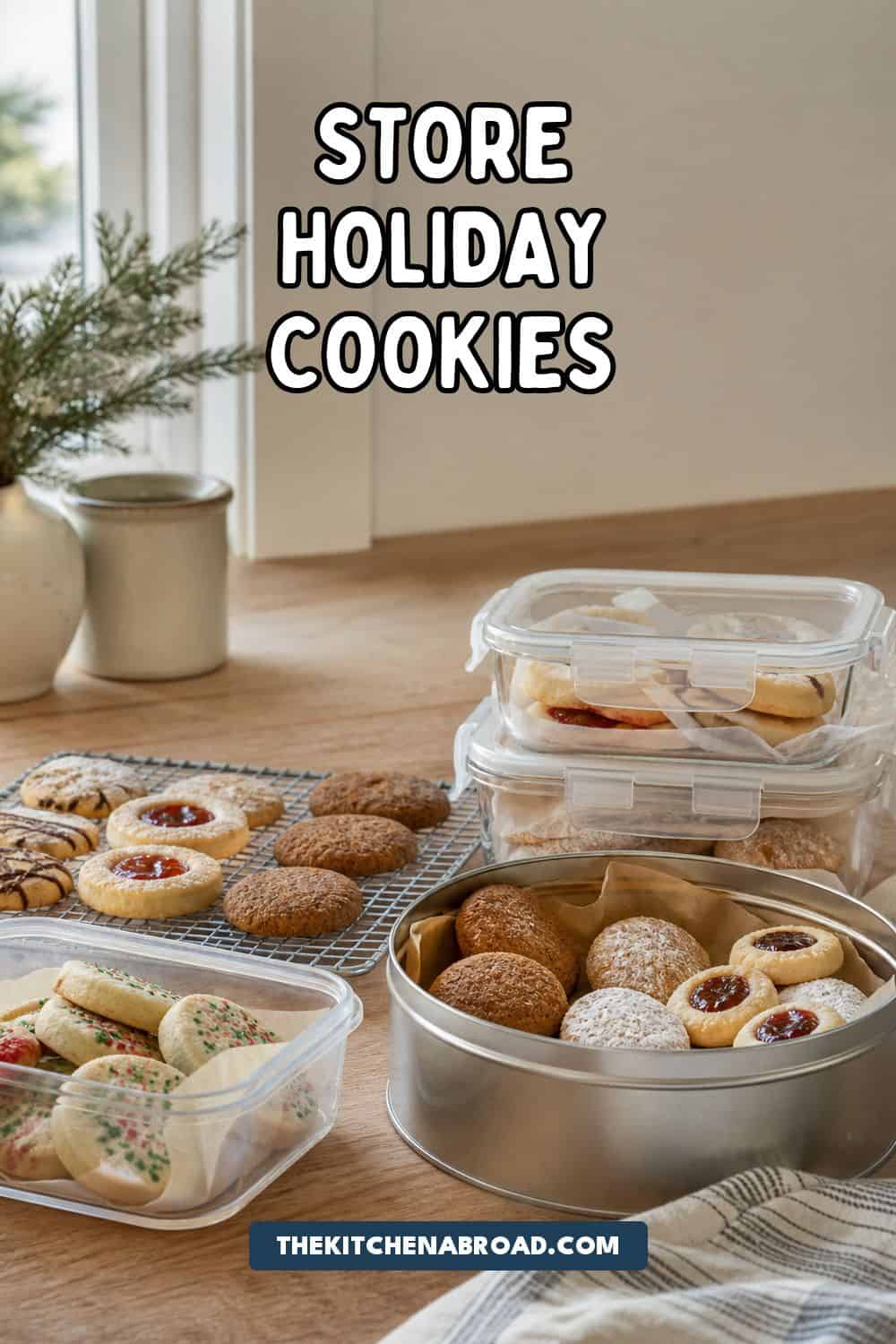
Holiday cookies stay freshest when they are cooled completely, sorted by texture, stored in the right container, and separated with parchment before stacking. The best way to handle how to store holiday cookies is to keep soft cookies airtight, protect crisp cookies from moisture, refrigerate only cookies with perishable fillings, and freeze or thaw baked cookies carefully when you are working ahead.
A big holiday baking day can leave the kitchen covered with cooling racks, sugar cookies, shortbread, molasses cookies, thumbprints, frosted cutouts, and bars that all need different care. Learning how to store holiday cookies is less about finding one perfect container and more about protecting the texture each cookie is supposed to have.
The key is to treat soft, crisp, decorated, filled, frozen, and gift-bound cookies as separate storage jobs. A chewy molasses cookie needs moisture protection, a biscotti needs dryness, and a cream cheese frosted cookie needs food-safety judgment before it joins the holiday tin.
Top Recommended Products


You Might Also Like These Blog Posts
- Holiday Cookie Box Ideas
- Cookie Dough Freezer Prep
- Holiday Freezer Prep
- Food Storage Labels
- Meal Prep Containers
How to Store Holiday Cookies by Texture and Timing
Full Cooling Before Cookies Go Into Storage
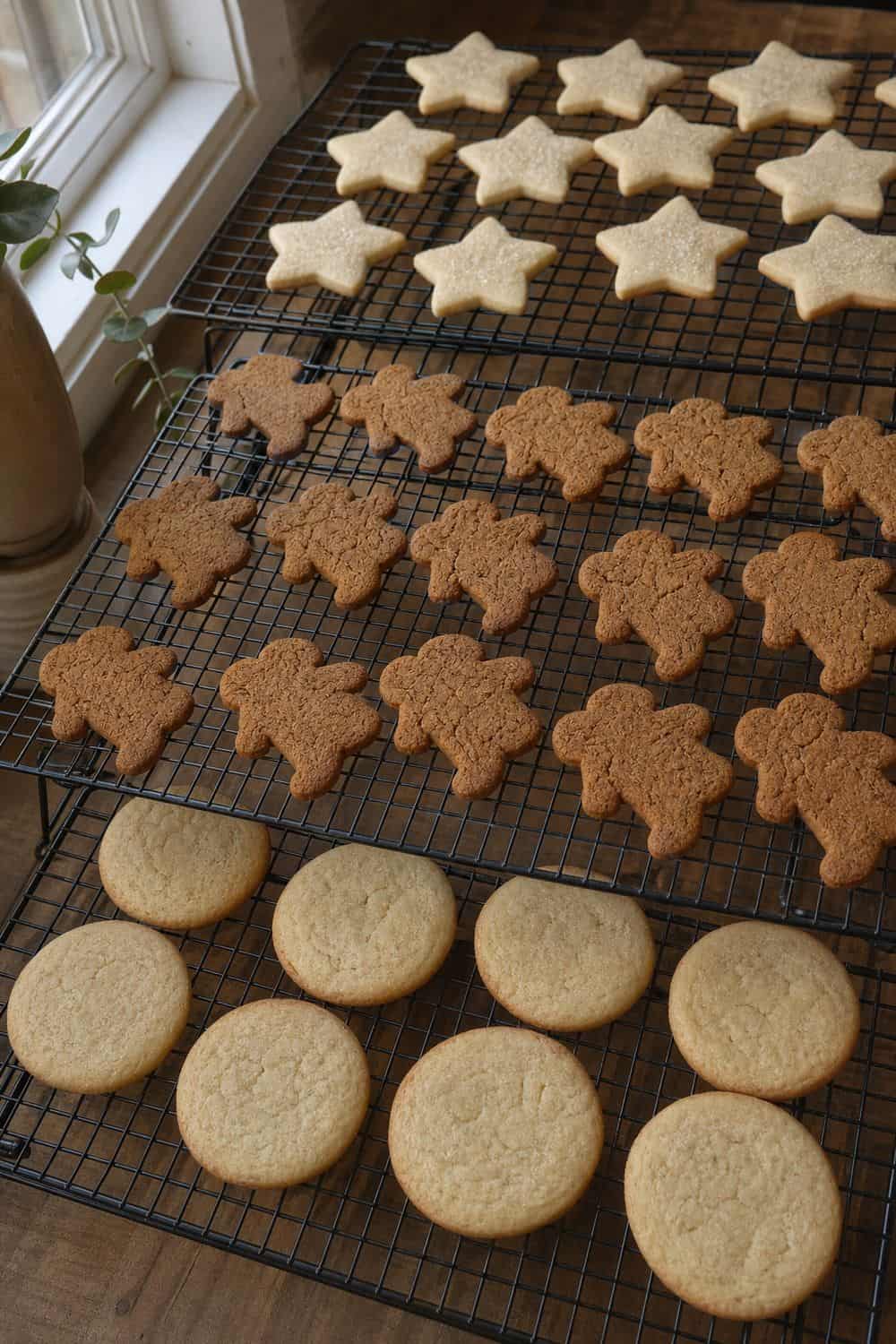
Warm cookies release steam, and that steam turns into condensation once the cookies are covered. That moisture can make shortbread and biscotti lose their snap, while soft cookies can become sticky on top or gummy around the edges. Wire cooling racks are useful after a crowded holiday bake because air can move around the cookies instead of trapping heat underneath them. Let each batch cool all the way through before packing it, especially thick bars, molasses cookies, and iced cutouts. Avoid sliding warm cookies into tins just to clear counter space, because the container will hold that trapped steam against the whole batch.
Texture Sorting Before the Cookie Tins Fill Up
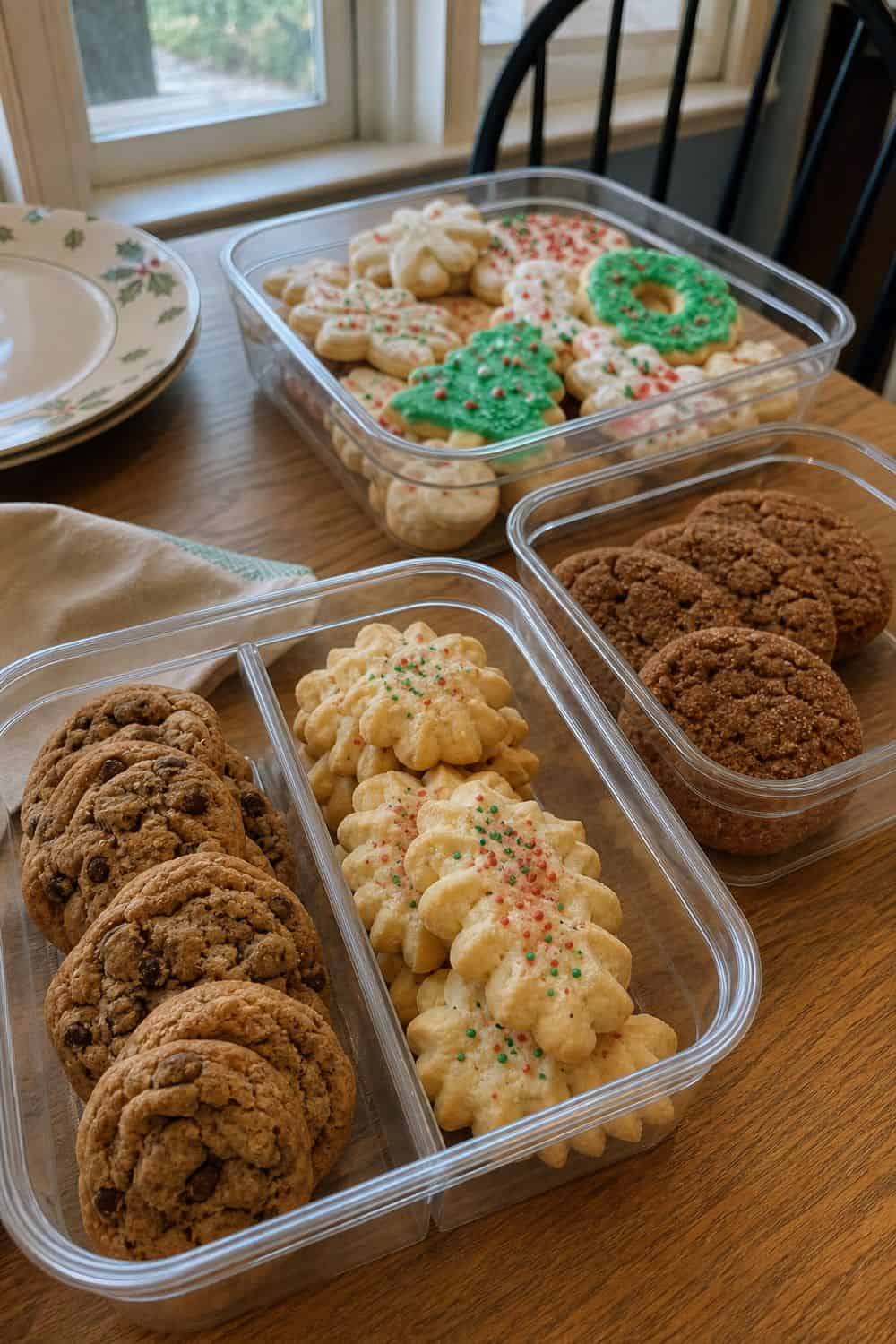
Mixed holiday trays are lovely for serving, but they are risky for storage. Soft cookies give off moisture, crisp cookies absorb it, and peppermint or gingerbread can scent everything nearby. Sort chewy, crisp, sandy, frosted, filled, powdered, and strongly flavored cookies before they go into containers. A divided cookie storage container helps keep categories separated without turning the counter into a row of half-open bags.
This sorting step protects both texture and flavor. Do not pack snickerdoodles, biscotti, thumbprints, and mint chocolate cookies together overnight unless you are comfortable with softer biscotti and minty butter cookies by morning.
Airtight Storage for Soft Holiday Cookies
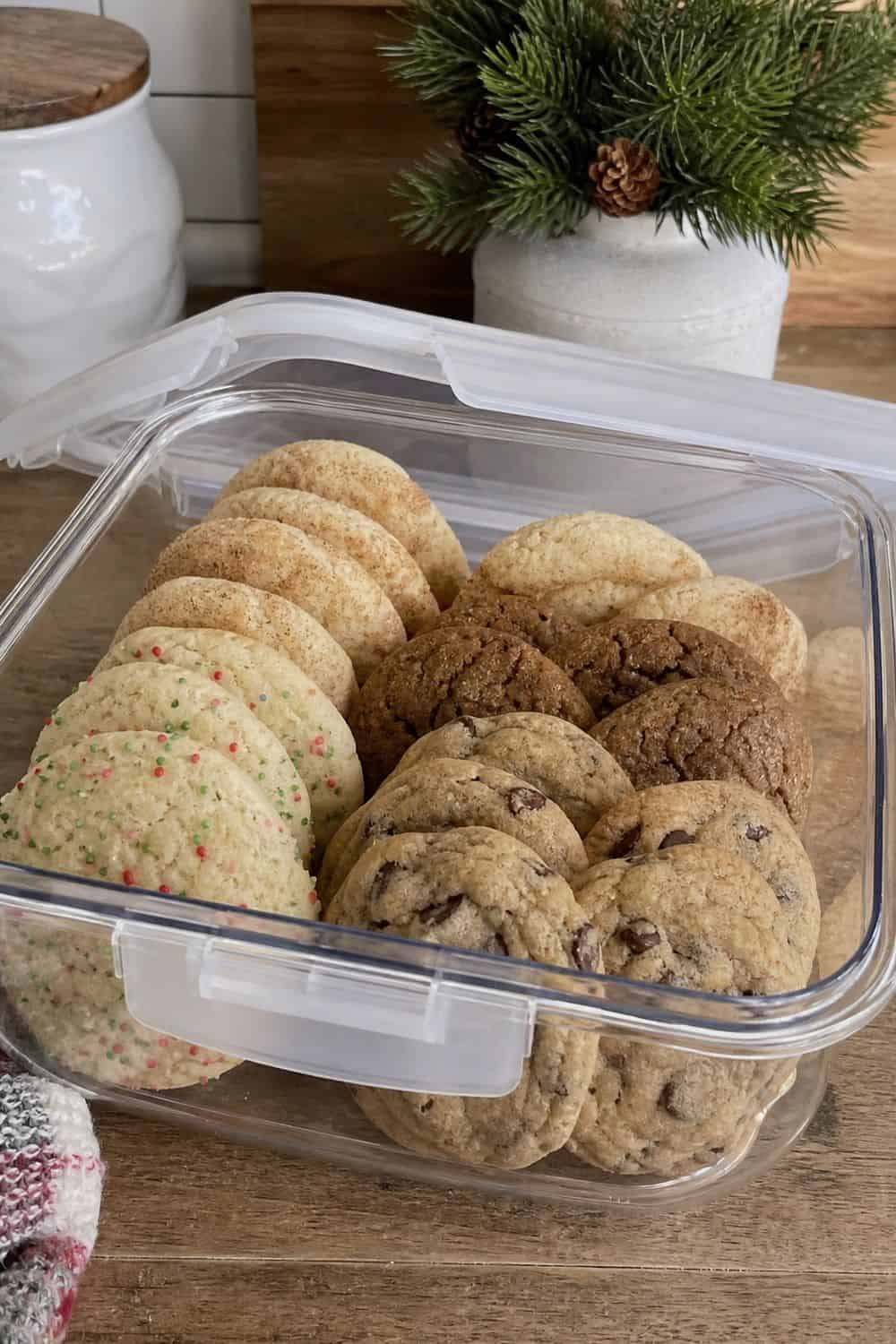
Soft cookies need protection from air because exposed edges dry out quickly. Chocolate chip cookies, snickerdoodles, soft sugar cookies, peanut butter cookies, ginger molasses cookies, and brownie-style cookies usually keep their tender bite longer in an airtight cookie container. Let them cool first, then stack with parchment if the tops are sugary, delicate, or slightly tacky. A small bread slice can help some soft cookies stay tender, but use that trick only with cookies that actually benefit from added moisture. Do not put bread in with crisp cookies, powdered cookies, or decorated cutouts where extra dampness can cause damage.
Breathing Room for Crisp Holiday Cookies
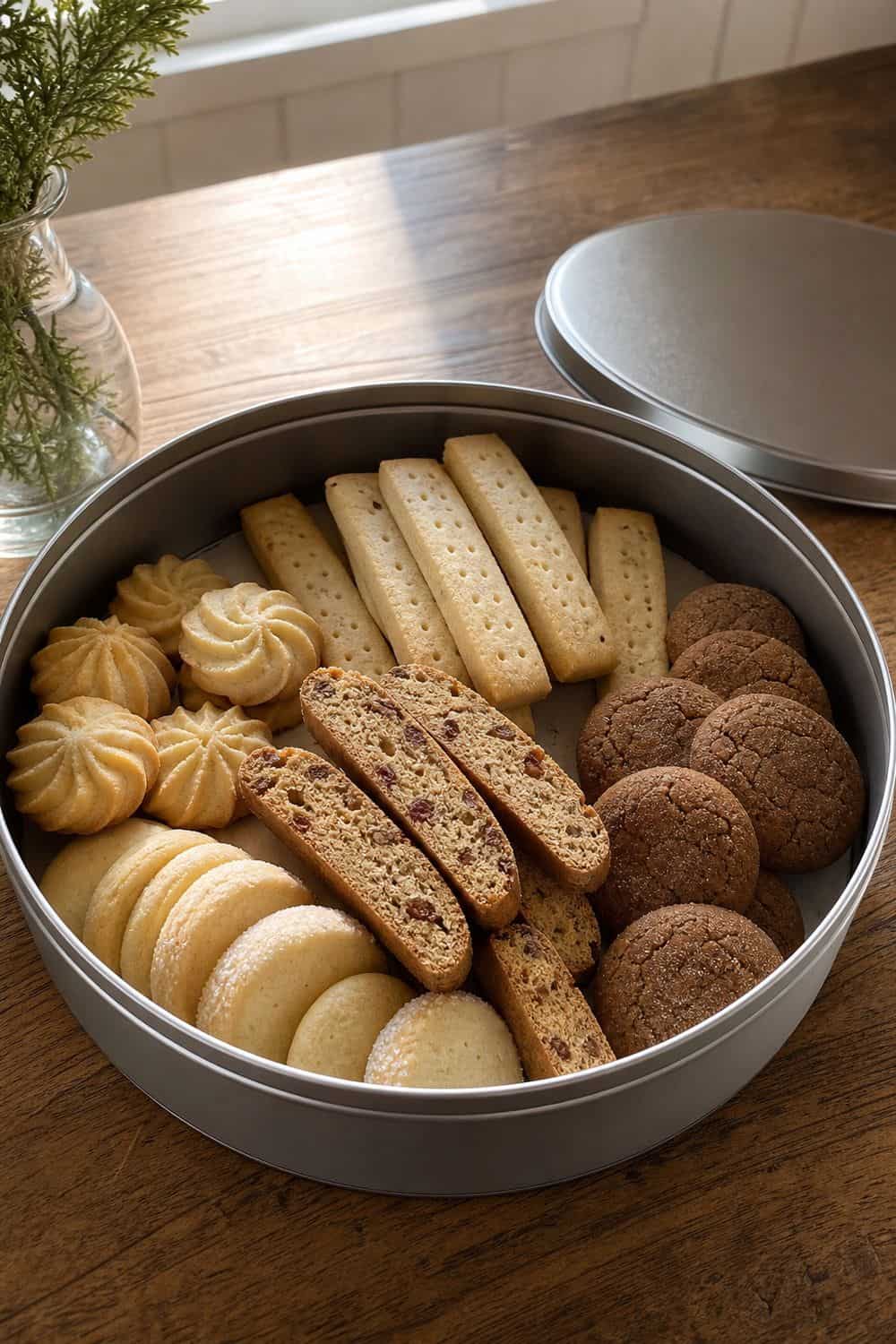
Crisp cookies need a drier environment than chewy cookies. Shortbread, biscotti, gingersnaps, spritz, butter cookies, pizzelle, and crisp sugar cookies can soften when sealed with moisture-heavy cookies or packed before they are fully cool. A metal cookie tin can be a better fit than a tightly sealed plastic container when the goal is to protect crisp edges and sandy texture. Give fragile pieces enough room so they do not grind together, and keep them away from soft bars or frosted cookies. If a crisp batch starts to soften, check whether moisture or mixed storage is the real problem before blaming the recipe.
Parchment Layers Between Delicate Cookies
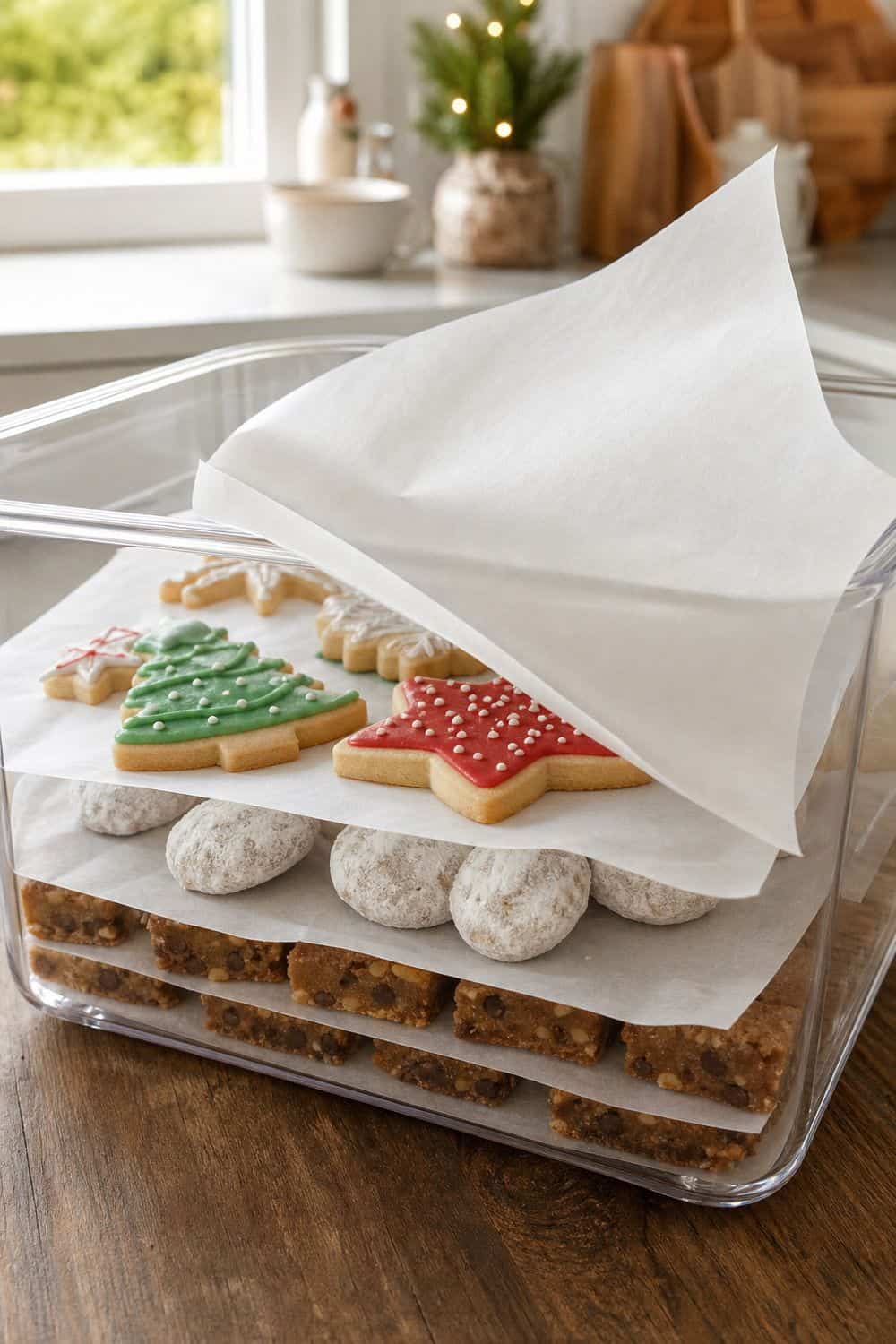
Layering cookies without a divider can smear icing, transfer powdered sugar, bend delicate corners, and glue sticky bars together. Parchment paper sheets give each layer a clean barrier and make it easier to lift cookies out without scraping the tops. This is especially helpful for iced sugar cookies, powdered snowballs, bar cookies, thumbprints, and delicate holiday shapes. Cut sheets to fit the tin or container instead of bunching up oversized pieces, since wrinkles can press into frosting or decorations. Avoid waxed paper near any cookie that might still be warm, because the coating can soften or leave a residue.
Set Icing Before Decorated Cookies Are Packed
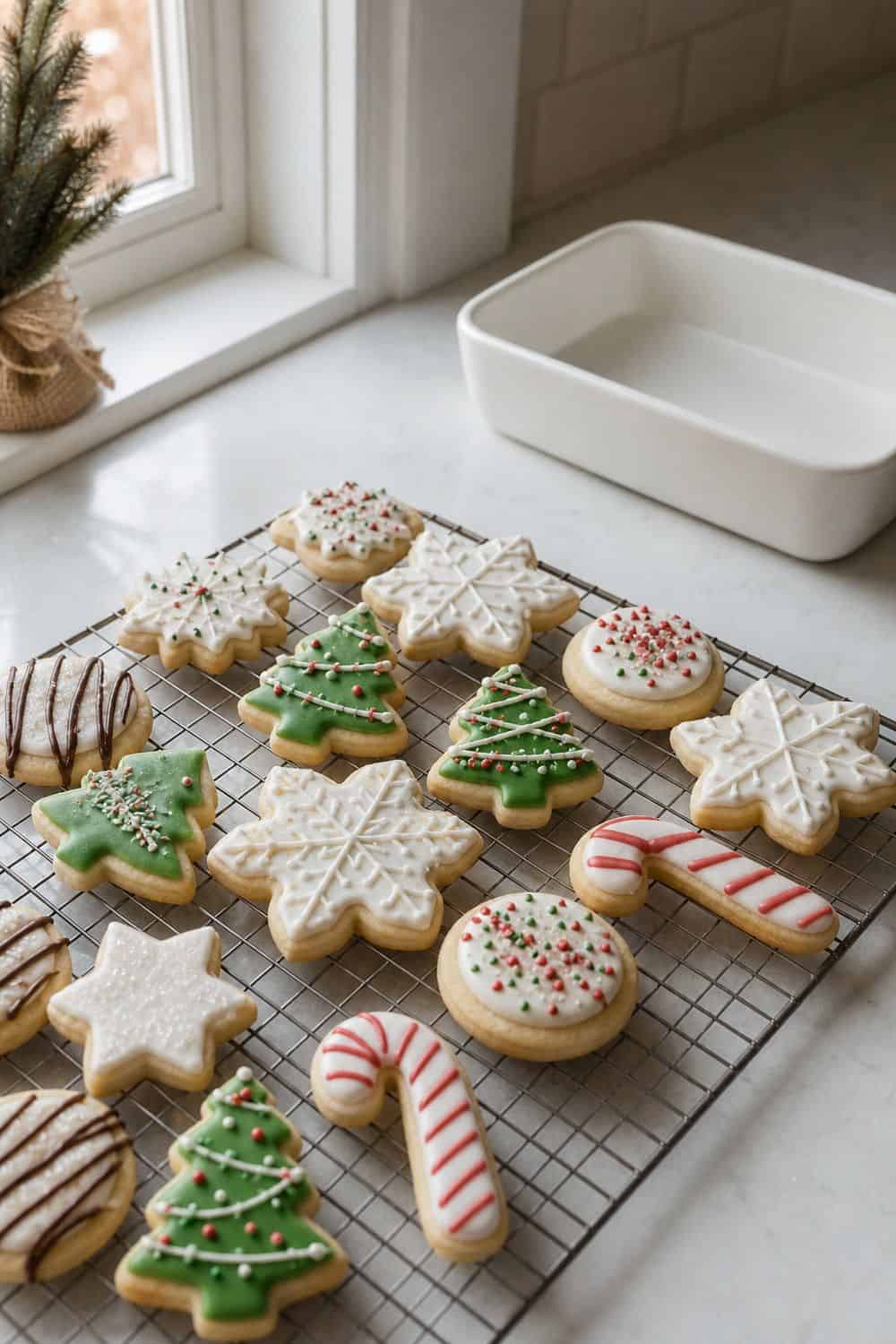
Decorated cookies need patience before storage. Royal icing, glaze, chocolate drizzle, sanding sugar, and sprinkles should be fully set before cookies are stacked or covered. A cookie decorating drying rack helps finished cookies sit in a single layer while the surface firms, which keeps decorations from sticking to parchment or taking an imprint from the cookie above.
Once the decorations are dry, store the cookies in shallow layers with parchment between them. If appearance is important for gifting or a party platter, freeze plain baked cookies first and decorate after thawing rather than risking cloudy glaze or damaged details.
Single-Layer Space for Filled and Sandwich Cookies
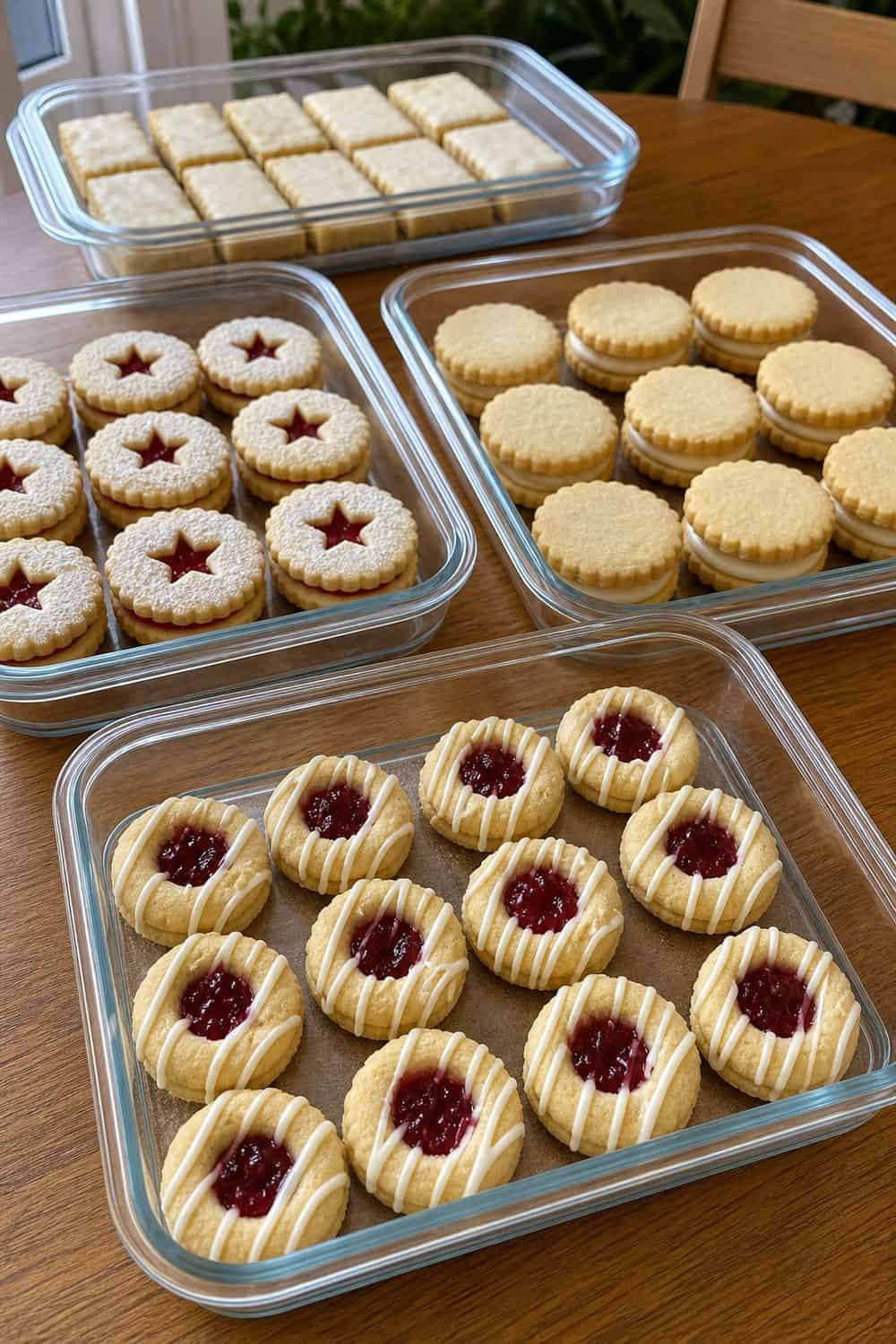
Filled cookies need more space than plain drop cookies because pressure can push the filling out or make the top cookie slide. Jam thumbprints, linzer cookies, sandwich cookies, whoopie pies, frosted soft cookies, and sticky glazed bars are safer in shallow cookie containers where they can sit in a single layer. That keeps the filling centered and protects soft tops from dents.
If you must stack them, use parchment and keep the layers light. Check the filling before deciding on room-temperature storage, because cream cheese, whipped cream, custard, fresh fruit, or other perishable ingredients change the storage rule completely.
Refrigerator Storage for Perishable Fillings
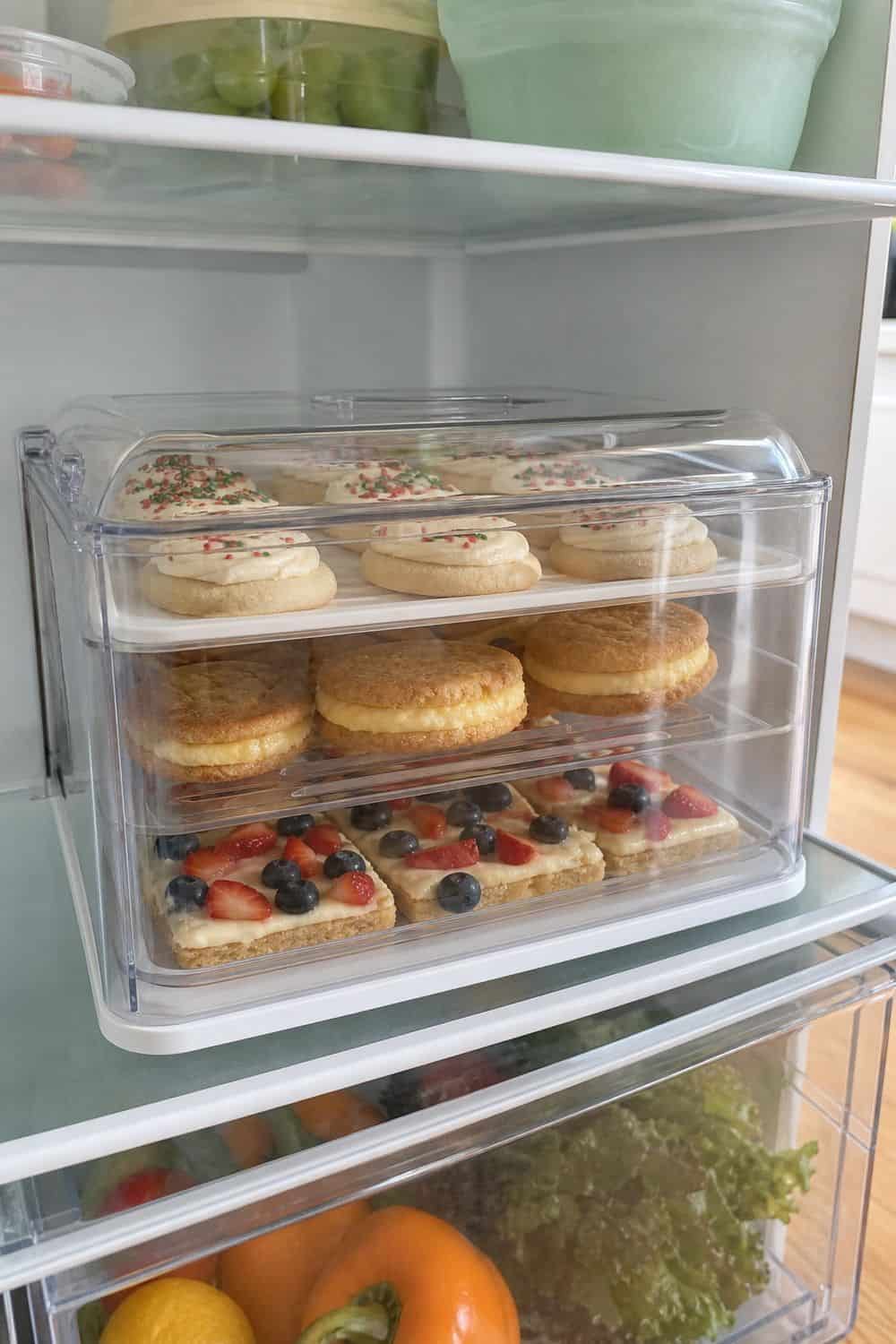
Plain shortbread and butter cookies can usually sit in a cool, dry place, but cookies with cream cheese frosting, whipped cream, custard, fresh fruit, or similar perishable fillings should not be treated the same way. Use a refrigerator dessert container to protect them from drying air, fridge odors, and contact with other foods. If they have been out for about two hours, move them back to the refrigerator.
Refrigeration can make many cookies firmer or drier, so keep these separate from shelf-stable cookies and bring them out shortly before serving. Follow the recipe’s storage note when a filling or frosting is unusual.
Separate Containers for Strong Holiday Flavors
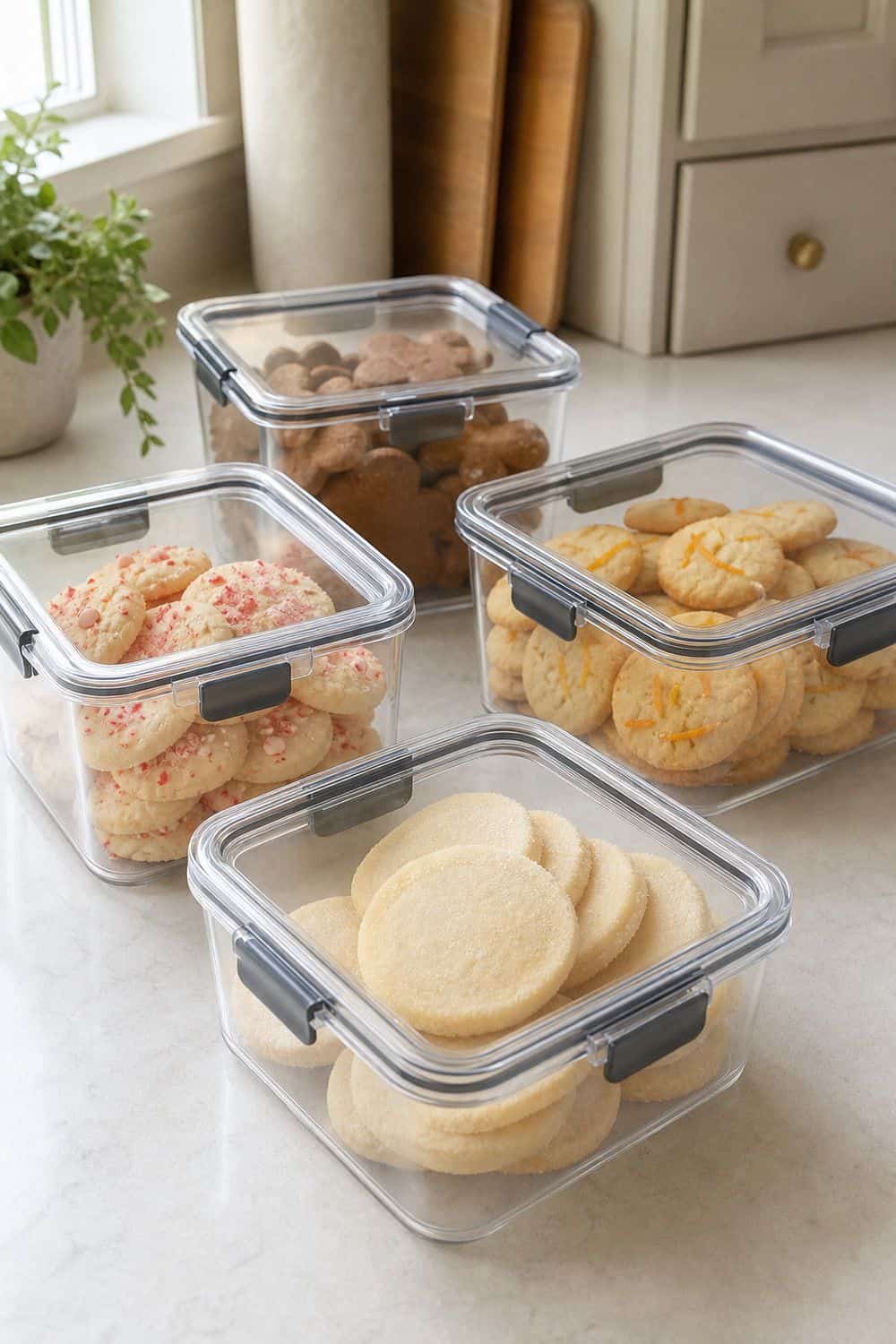
Holiday cookie tins often mix peppermint, gingerbread, almond, orange, rum, coffee, and heavily spiced cookies with delicate butter cookies. Those aromas can move through a closed container and change the flavor of milder cookies by the next day. Odor proof food containers are helpful when one batch has a strong scent that should stay contained. Store mint cookies away from vanilla sugar cookies, and keep spiced molasses or gingerbread separate from buttery spritz or shortbread. This is also useful in the freezer, where exposed cookies can pick up stale or savory smells from nearby foods.
Freezer Storage for Plain Baked Cookies
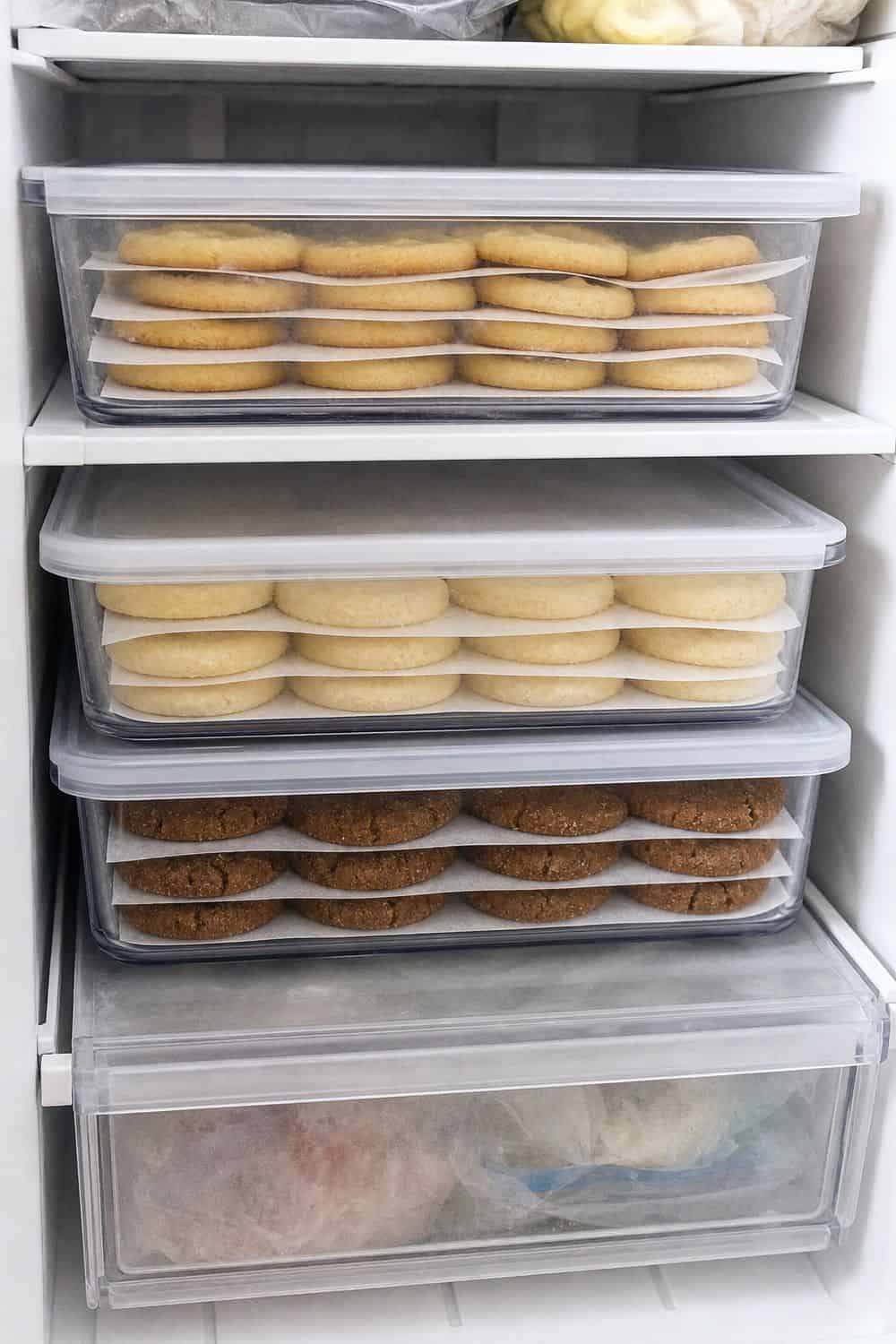
Freezing is useful when holiday baking starts weeks before the cookies will be served. Fully cool baked cookies, layer them with parchment, and place them in freezer safe cookie containers so they are protected from air, breakage, and freezer odors. Plain baked cookies usually freeze more neatly than cookies with delicate icing, fresh toppings, or decorations that may cloud or bleed after thawing.
Shortbread, sturdy sugar cookies, gingersnaps, biscotti, and many bars can be good candidates. Keep this method for finished baked cookies, not raw dough, and label the container before it disappears into the crowded holiday freezer.
Gentle Wrapping for Fragile Freezer Cookies
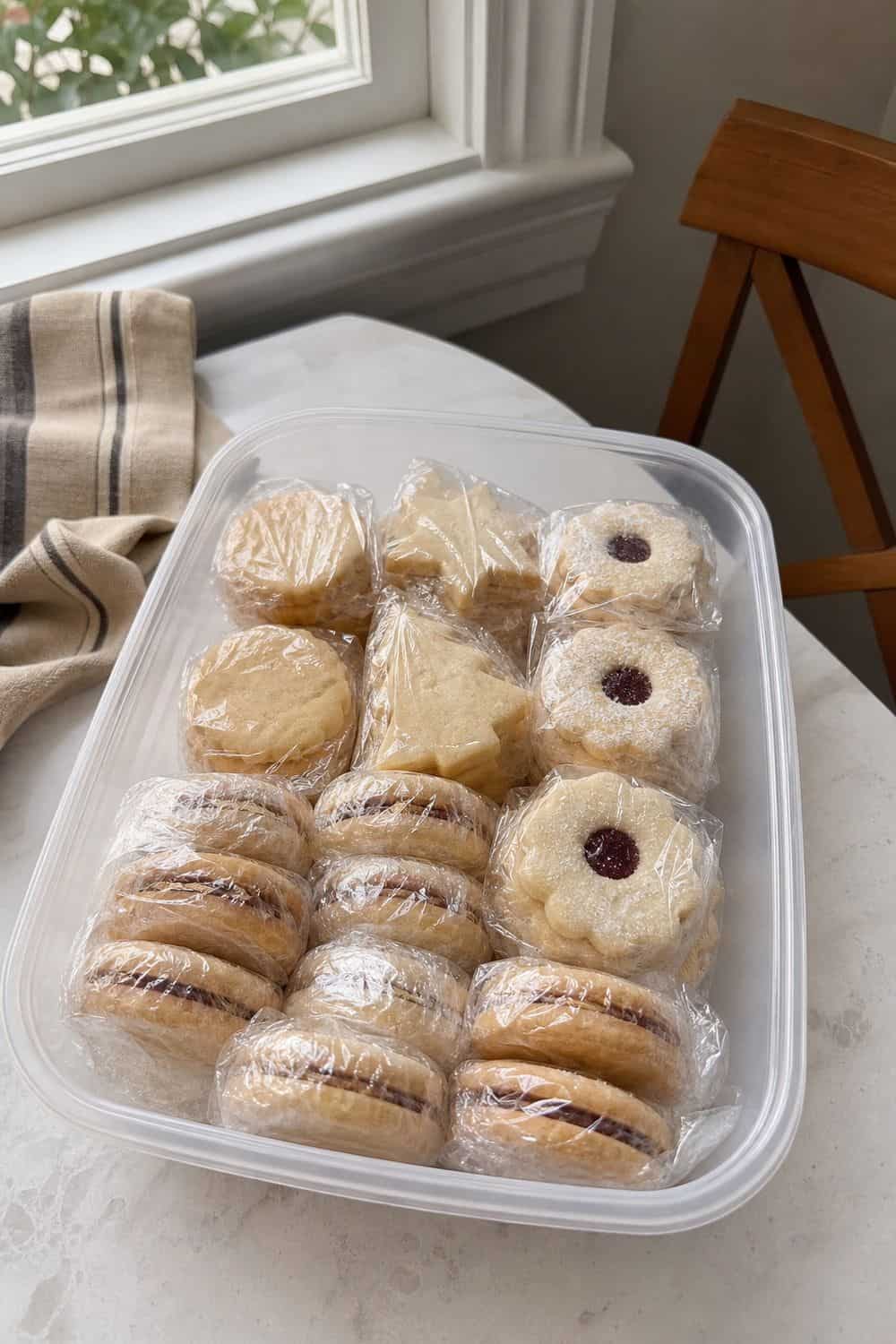
Fragile cookies need an extra layer before they go into the freezer. Delicate cutouts, small shortbread shapes, sandwich cookies, bars, and cookies that absorb odors can be wrapped individually or in small stacks before being placed in a larger container. Plastic wrap for cookies helps reduce air exposure and keeps pieces from rubbing against each other during freezer shuffling.
Wrap gently so the cookie shape is protected rather than compressed. Do not use this as a substitute for a sturdy outer container, because wrapped cookies can still break if they are tossed into a crowded freezer bag with heavier items.
Clear Labels for Cookie Type and Date
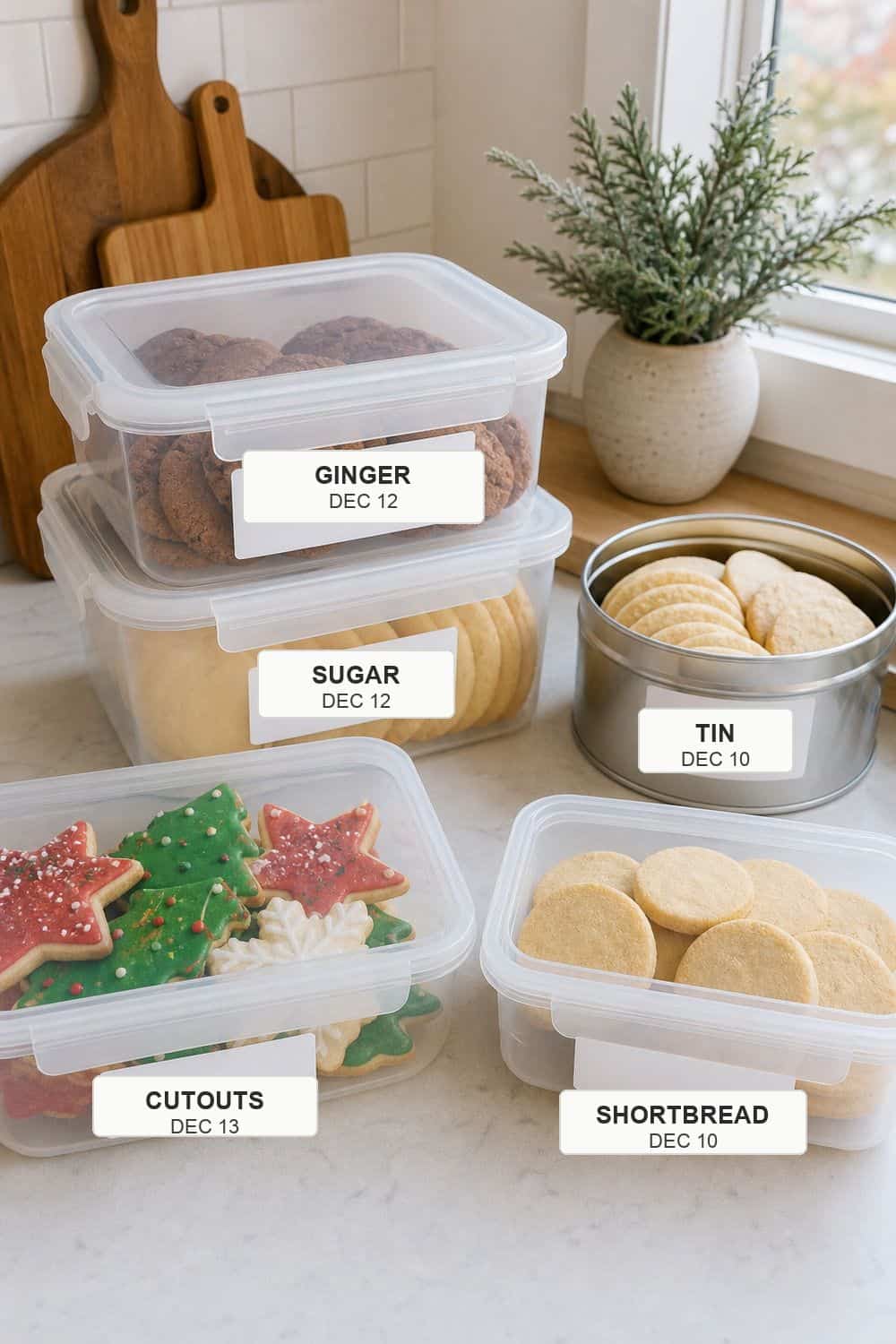
Labels keep holiday cookies from becoming mystery layers in tins and freezer containers. Use freezer labels for the cookie name, date baked or frozen, whether the cookies are decorated, and any serving note such as thaw uncovered or add powdered sugar after thawing. This is helpful when several pale butter cookies or chocolate cookies look almost identical once they are packed.
A label helps you use older batches first, but it does not make questionable cookies safe. If cookies smell off, show mold, have a perishable filling that sat out too long, or have lost their texture completely, do not try to rescue them.
Uncovered Thawing for Frozen Holiday Cookies
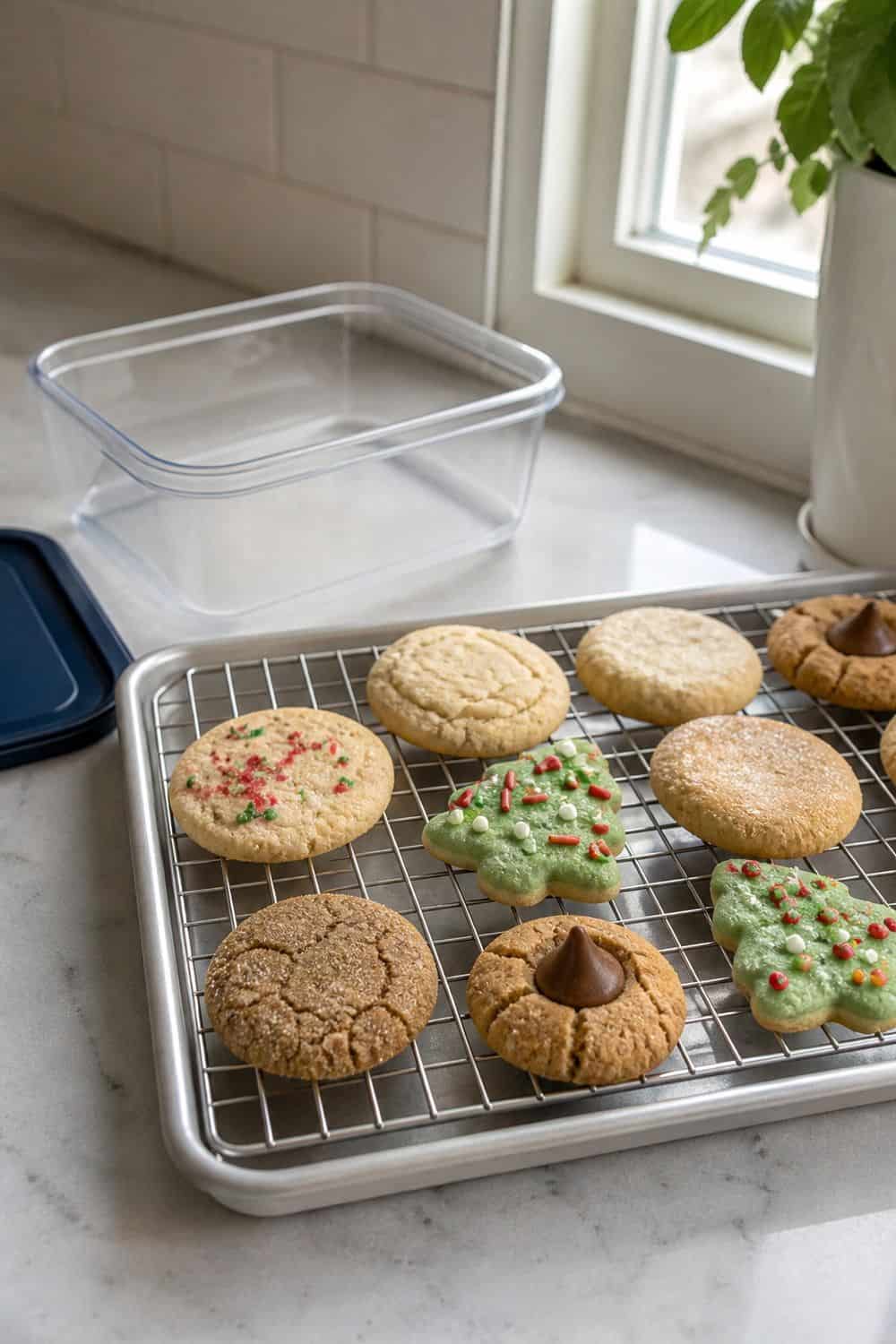
Condensation is the main thawing problem. When frozen cookies warm up inside a sealed container, moisture can collect on the surface and make powdered, crisp, or decorated cookies damp. Move cookies to a cooling rack with tray, plate, or parchment-lined sheet and let them come to room temperature in a single layer when texture or appearance matters.
Keep the thawing area away from steam, hot dishes, or a busy sink. Add fresh powdered sugar, drizzle, or fragile decorations after thawing if the finish is likely to suffer in the freezer during long storage.
If the cookies are for a platter, thaw one test piece first so you can see whether the surface stays dry before opening the rest of the batch for guests, especially with powdered or iced cookies.
Protected Cookie Packing for Local Gifts
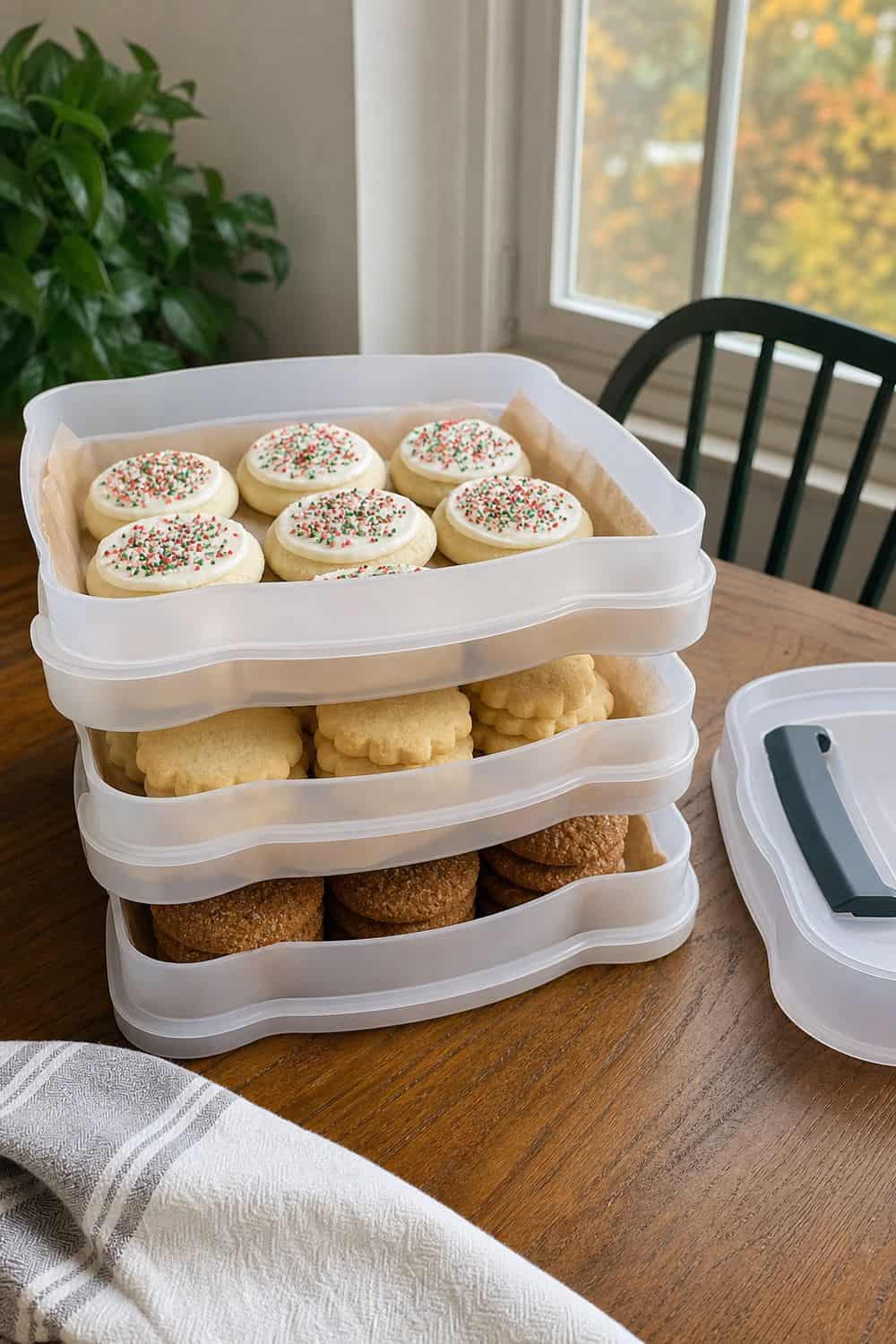
Cookies headed to school, work, cookie swaps, neighbors, or family gatherings need storage that protects them during the trip. A stackable cookie carrier can separate textures, keep layers level, and prevent the top lid from pressing into frosted or sticky cookies. Pack heavier bars and sturdy shortbread on the bottom, then use parchment between layers if cookies could rub or transfer sugar.
Avoid overfilling the carrier just to fit one more batch. Crisp cookies need space, frosted cookies need shallow layers, and strongly flavored cookies should not ride tightly packed beside delicate butter cookies for hours in a warm car.
For a cookie swap, keep one texture per layer when possible so guests receive cookies that still look and taste close to the way you packed them at home before leaving for the party table.
Texture-Specific Fixes for Stale Cookies
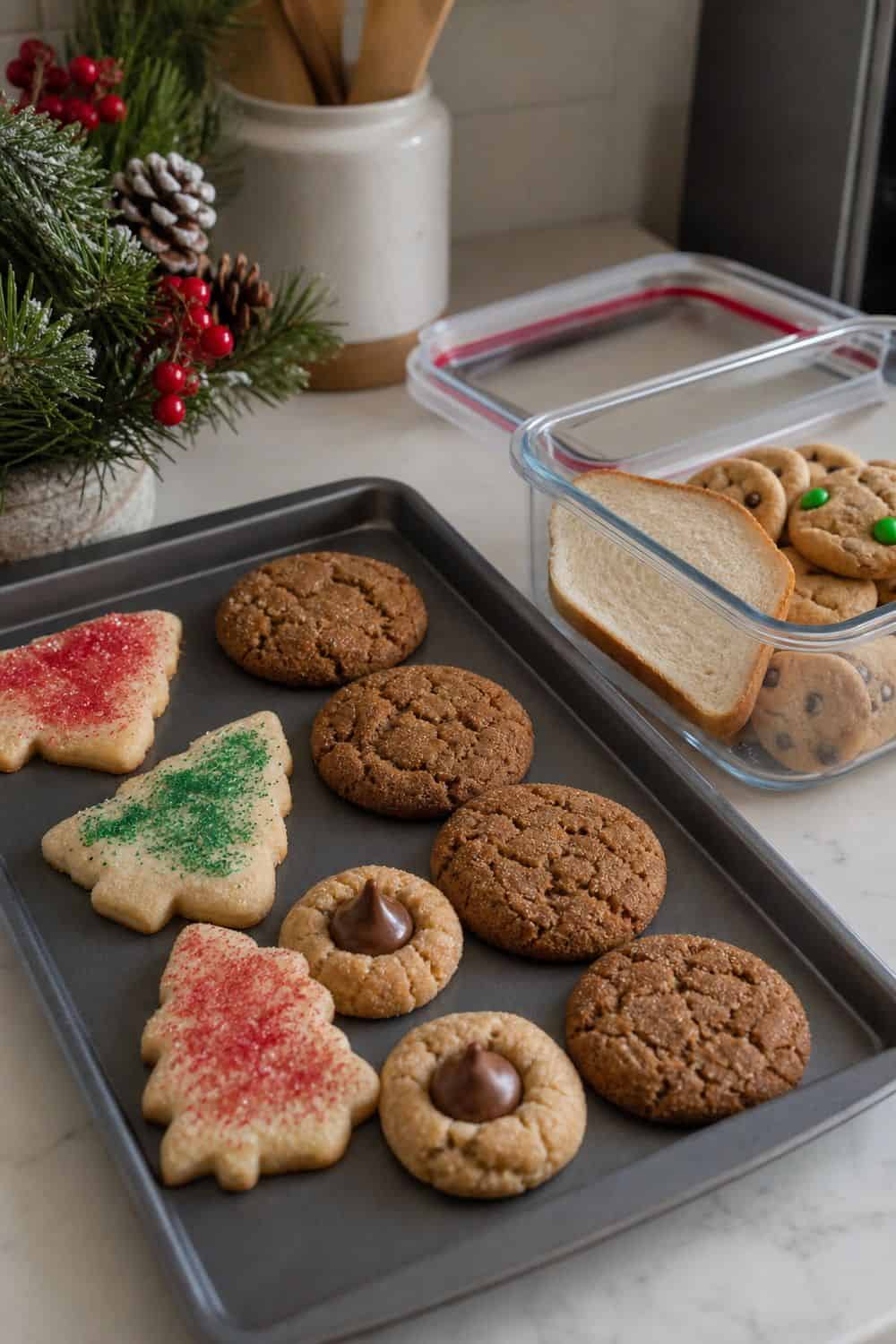
Texture recovery depends on the cookie. Soft cookies may perk up in an airtight container with a small piece of bread for a short time, while crisp cookies can often be refreshed briefly on a small baking sheet in a low oven. Use the method that matches the texture you want back, not the same fix for every cookie in the tin.
Do not refresh cookies with unsafe fillings, mold, off smells, or obvious spoilage. For decorated cookies, test one piece first because heat can melt chocolate, soften icing, or make sugar colors bleed onto the cookie surface.
Refresh only the cookies you plan to serve soon, since repeated heating and cooling can make a tired batch taste even flatter the next day.
Holiday Cookie Storage Timing Notes
Room-temperature storage is usually best for plain shelf-stable cookies when the kitchen is cool and dry. Sturdy cookies such as shortbread, biscotti, gingersnaps, spritz, and many sugar cookies can often be baked earlier than filled or frosted cookies, while soft cookies and perishable cookies are better closer to serving.
The refrigerator is not the default answer for every holiday cookie because cold air can dry out many plain cookies. Use it when food safety calls for it, especially with cream cheese, custard, whipped cream, fresh fruit, or other perishable fillings, and rely on freezing plain baked cookies when the baking schedule starts well ahead of the holiday.
Frequently Asked Questions About How to Store Holiday Cookies
What is the best way to store holiday cookies?
The best method is to cool cookies completely, sort them by texture and flavor, then store each type in a container that protects its texture. Soft cookies usually need airtight storage, crisp cookies need less moisture, decorated cookies need set icing, and filled cookies may need refrigeration.
Should soft and crisp cookies be stored together?
No. Soft cookies release moisture that can make crisp cookies lose their snap. Store chewy cookies, bars, and soft frosted cookies away from biscotti, shortbread, gingersnaps, pizzelle, spritz, and other cookies that should stay dry and crisp.
How do you keep soft cookies from drying out?
Cool soft cookies completely, then store them in an airtight container. A small bread slice can help some chewy cookies stay tender, but it should not be used with crisp cookies, decorated cookies, or cookies that could become sticky from extra moisture.
How do you keep crisp cookies crisp?
Keep crisp cookies away from soft cookies, steam, and excess moisture. Store them only after they are fully cool, use a tin or container that does not trap too much dampness, and refresh suitable crisp cookies briefly in a low oven if they soften.
Can you freeze baked holiday cookies?
Yes, many baked holiday cookies freeze well when they are fully cooled, layered with parchment, sealed against air, and labeled. Plain baked cookies usually freeze more predictably than heavily decorated cookies or cookies with delicate fresh fillings.
Should decorated cookies be frozen before or after icing?
If appearance matters, freeze plain baked cookies and decorate them after thawing. Some fully set decorated cookies can freeze, but icing, glaze, colors, and sprinkles may change, so test one cookie before freezing a full decorated batch.
Do cookies with cream cheese frosting need to be refrigerated?
Yes, cookies with cream cheese frosting should be refrigerated, along with cookies that contain whipped cream, custard, fresh fruit, or other perishable fillings. Keep them covered in the refrigerator and bring them out shortly before serving.
How do you thaw frozen cookies without making them soggy?
Remove frozen cookies from the sealed container and let them thaw in a single layer on a rack, plate, or parchment-lined tray. This reduces trapped condensation, which is especially important for crisp cookies, powdered cookies, and decorated cookies.
How long do holiday cookies stay fresh?
Freshness depends on the recipe, texture, filling, container, and room conditions. Plain sturdy cookies usually keep better than delicate or filled cookies, but unusual frostings and perishable fillings should follow the recipe’s storage instructions rather than a general timeline.
Final Thoughts
Knowing how to store holiday cookies helps every batch keep the texture it was meant to have, whether that means tender molasses cookies, crisp shortbread, glossy decorated cutouts, or freezer-ready sugar cookies. Cool them fully, sort them with purpose, protect layers, respect perishable fillings, and thaw frozen cookies carefully so the holiday baking work still tastes fresh when it reaches the table.
Last update on 2026-09-18 / Affiliate links / Images from Amazon Product Advertising API