

Use jumbo lump crab and as little binder as you can get away with: one egg, 2 tablespoons of mayo and 2 tablespoons of crushed saltines per pound. Shape 16 small cakes, chill them for 30 minutes, sear in butter for about 90 seconds a side, then give them 8 minutes at 200°C (400°F). A quick remoulade and lemon wedges finish the plate.
Most crab cakes fail in two places. Too much filler, and a cake that slumps the second it touches the pan. This mini crab cakes recipe fixes both with a Maryland-style binder you barely taste and a sear-then-bake finish taken straight from banquet service, where a tray of appetizers has to stay hot until the last guest grabs one.
One pound of crab makes 16 one-bite cakes, enough for eight people as a starter. You’ll want a heavy skillet, a sheet pan and, ideally, a small cookie scoop so every cake is the same size and cooks in the same window.


What makes a Maryland crab cake different?
Maryland cooks judge a crab cake by how much crab they can see. The Chesapeake Bay style uses blue crab, light seasoning and just enough binder to hold the lumps together. Old Bay, the celery salt and paprika blend that came out of Baltimore in 1939, is the expected seasoning. Leave it out and anyone from the bay will notice.
Crushed saltines are the traditional binder. They’re mildly salty, they soften into the egg and mayo, and they vanish into the cake instead of coating it. The ratio scales cleanly: one egg, two tablespoons of mayo and two tablespoons of crushed crackers per pound of crab, whether you shape six dinner-size cakes or sixteen minis.
Going small actually makes the method easier. Mini cakes chill faster, sear evenly and heat through in the oven before the crust has a chance to dry out.
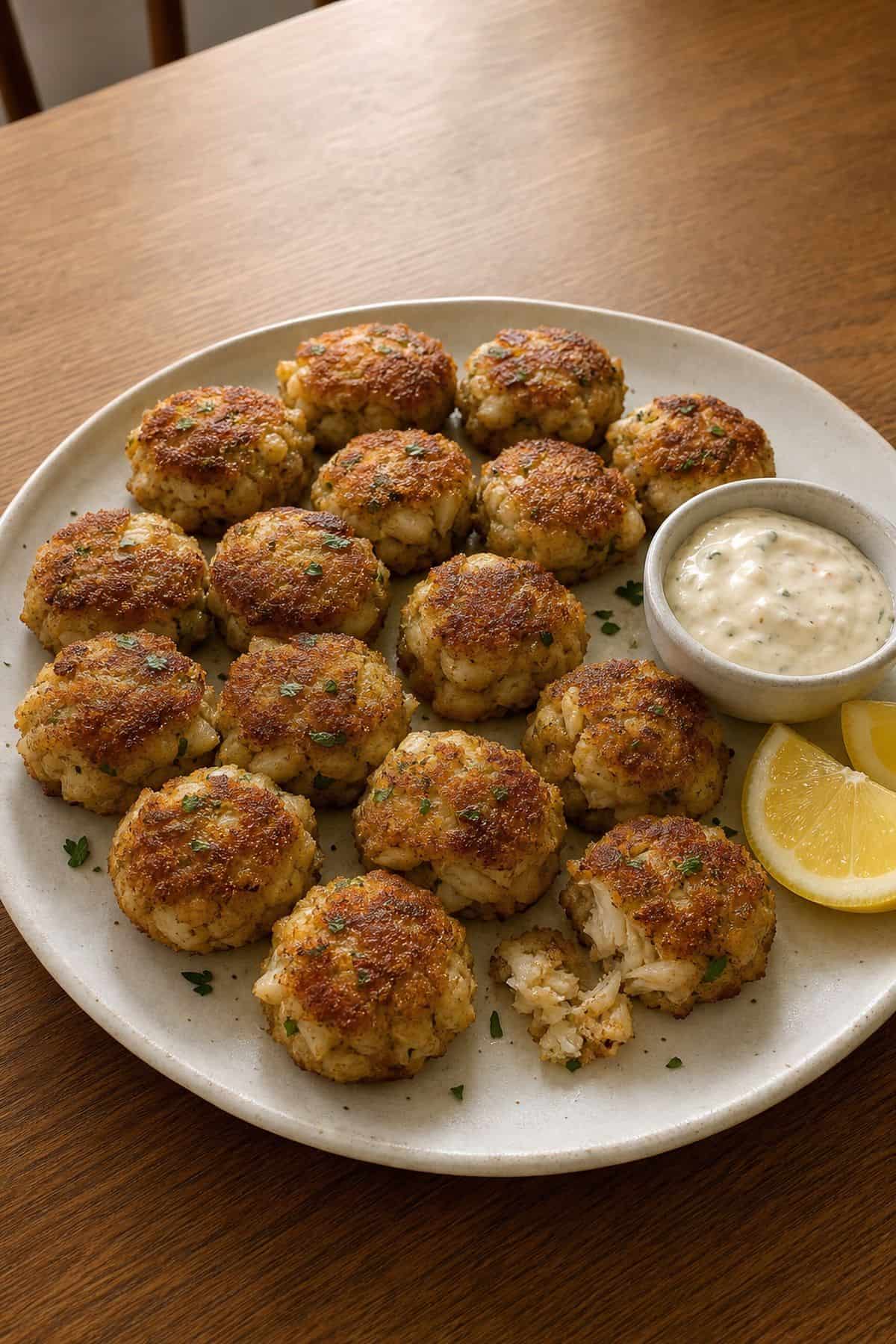
Which crab meat should you buy?
Jumbo lump or lump. That’s the decision that matters most in this whole recipe. Those are the big white pieces from the body of the blue crab, and they’re what give each bite its sweet, flaky chunks.
Backfin is smaller and flakier, so save it for soups, dips and casseroles. Claw meat is darker and stronger, great in a bisque, muddy in a delicate cake. Pasteurized crab sold chilled in 450 g (16 oz) tubs at the seafood counter works well. Shelf-stable canned crab is too wet and stringy for this.
Whatever you buy, spread it on a tray and run your fingertips through it. Even good lump crab hides the odd shard of shell. Feel for it rather than tearing the pieces open to look.
How do you keep mini crab cakes from falling apart?
Rest them first. After shaping, the cakes go into the fridge uncovered for 30 minutes so the crushed crackers can soak up the egg and mayo. Skip this and they look perfect on the tray, then collapse in the butter.
Fold gently. Lift the mixture from the bottom of the bowl with a flexible spatula and stop the moment the crab is coated. Overworked crab turns pasty and weeps in the pan.
Then give them room. Sear six to eight at a time in a 30 cm (12 inch) skillet and flip each one with a thin offset spatula in a single confident move. A crowded pan loses heat, the butter stops sizzling, and you end up steaming crab instead of browning it.
Why sear first and bake second?
When you cook appetizers for 200 people, nothing gets fried to order. You sear for color, hold the pieces on a tray, then run the whole tray through the oven so everything comes out hot at once. Same idea at home, smaller scale.
The 90-second butter sear builds the golden crust. The 8 minutes at 200°C (400°F) heats the center without more frying, and the crust darkens a little more while it’s in there. Baked-only cakes come out pale and soft. Fried-only cakes look great for five minutes, then cool unevenly on the platter.
Cooking a handful for yourself and eating them right away? Skip the oven and pan-fry for 2 minutes per side. For anything that sits on a party table for 20 minutes, use the oven.
Saltines, Old Bay and a fast remoulade
Use plain square saltines, never flavored or whole wheat. Crush them in a zip-top bag with a rolling pin, or pulse for about 10 seconds in a food processor, until the crumbs are roughly lentil-sized. Panko is the common swap and I’d leave it on the shelf here. It stays crisp, and the cake ends up tasting breaded.
Go easy on the Old Bay. Three quarters of a teaspoon per pound seasons the crab without burying its sweetness in celery salt. No Old Bay in the cupboard? Mix ½ teaspoon paprika, ¼ teaspoon celery salt, ⅛ teaspoon black pepper and ⅛ teaspoon ground bay leaf. It gets you close, though the real blend has a mustardy edge that’s hard to copy.
The remoulade is mayo, Dijon, chopped cornichons, capers, lemon and a little tarragon. Make it before anything else. It takes five minutes and tastes noticeably better after 15 in the fridge, so it can sit there while the cakes chill. Only have dill pickles? Use them. Gherkins, cornichons and dill pickles are close enough that any of them gives the sauce its sharp crunch.

Mini crab cakes recipe
- Prep time: 20 minutes
- Cook time: 14 minutes (sear plus oven)
- Total time: 34 minutes active, 1 hour with the 30-minute rest
- Servings: 8 (16 mini cakes)
For the crab cakes
- 450 g (1 lb) jumbo lump or lump blue crab meat, picked over for shells
- 1 large egg, beaten
- 30 g (2 tablespoons) full-fat mayonnaise
- 15 ml (1 tablespoon) Dijon mustard
- 5 ml (1 teaspoon) Worcestershire sauce
- 15 ml (1 tablespoon) fresh lemon juice
- 30 g (2 tablespoons / about 5 crackers) crushed saltine crackers
- ¾ teaspoon Old Bay Seasoning
- 2 tablespoons finely chopped fresh parsley
- ½ teaspoon Dijon-style hot sauce or Tabasco, optional
- 30 g (2 tablespoons) unsalted butter, for searing
- 15 ml (1 tablespoon) neutral oil, for searing
- Lemon wedges, for serving
For the remoulade
- 180 g (¾ cup) full-fat mayonnaise
- 15 g (1 tablespoon) Dijon mustard
- 2 tablespoons finely chopped cornichons or dill pickle
- 1 tablespoon capers, drained and chopped
- 15 ml (1 tablespoon) fresh lemon juice
- 1 teaspoon finely chopped fresh tarragon or parsley
- Pinch fine sea salt
- Pinch black pepper
Instructions
- Make the remoulade. Whisk the 180 g (¾ cup) mayonnaise with 15 g (1 tablespoon) Dijon, 2 tablespoons cornichons, 1 tablespoon capers, 15 ml (1 tablespoon) lemon juice, 1 teaspoon tarragon and a pinch each of salt and pepper. Cover and refrigerate.
- Spread the 450 g (1 lb) crab meat in a single layer on a sheet pan. Pick through it with your fingers for shell and cartilage, keeping the lumps whole.
- In a large bowl, whisk the beaten egg, 30 g (2 tablespoons) mayonnaise, 15 ml (1 tablespoon) Dijon, 5 ml (1 teaspoon) Worcestershire, 15 ml (1 tablespoon) lemon juice, ¾ teaspoon Old Bay, 2 tablespoons parsley and the hot sauce, if using. It should look like a pale yellow custard.
- Add the crab and scatter the 30 g (2 tablespoons) crushed saltines over the top. Fold with a flexible spatula, lifting from the bottom, just until the crab is evenly coated.
- Line a half sheet pan with parchment. Use a 1.5 tablespoon cookie scoop or two soup spoons to portion 16 mounds, 2.5 cm (1 inch) apart. Press each into a disc about 4 cm (1.5 inches) wide and 2 cm (¾ inch) tall. Refrigerate, uncovered, for 30 minutes.
- About 10 minutes into the rest, heat the oven to 200°C (400°F). When it’s hot, set a 30 cm (12 inch) cast-iron skillet over medium-high heat and add 30 g (2 tablespoons) butter and 15 ml (1 tablespoon) oil. Wait until the butter foams but hasn’t browned.
- Sear the cakes in batches of 6 to 8 for 90 seconds, until a deep golden crust forms. Flip with a thin offset spatula and sear the second side for 60 seconds. Return them to the lined sheet pan.
- Bake all the seared cakes for 8 minutes, until hot through and 65°C (150°F) in the center on an instant-read thermometer.
- Move to a warm platter with the remoulade in the middle and lemon wedges around the edge. Serve right away, while the crust is crisp.
Notes
Make ahead: shaped, uncooked cakes keep for 24 hours in the fridge, covered on the parchment-lined pan. To freeze, set them flat on the pan until firm, then bag them with parchment between layers for up to a month. Cook from frozen, adding 4 minutes to the oven time.
Scaling: keep the ratio of 1 egg, 2 tablespoons mayo and 2 tablespoons crushed saltines per pound of crab, plus ¾ teaspoon Old Bay. Half a pound makes 8 mini cakes; two pounds make 32.
What to serve with mini crab cakes
Crab is sweet and rich, and the remoulade adds more fat along with its acid. So pour something cold with citrus or bubbles. A French 75 is the classic match because the lemon in the glass repeats the lemon on the plate. A very dry martini works too, and if you’d rather open a bottle, a chilled Muscadet or a flinty white Burgundy stands up to the mayo.
On the table, the cakes sit happily next to olives, cured meats and something pickled, the kind of spread in these aperitivo hour ideas. Plan two per guest as a starter and four if they’re the main appetizer.
For a December party, put them on a platter beside a winter food board and let people graze. In summer, they’re a warm, crisp counterpoint to a cold wine night snack board.
Mini crab cake questions
Can you make mini crab cakes ahead of time?
Yes, shape them up to 24 hours ahead and keep them covered in the fridge, uncooked. The extra chill does no harm and actually helps them hold. Sear and bake just before guests arrive.
What is the best binder for crab cakes?
Crushed saltine crackers, with one egg and 2 tablespoons of mayonnaise per pound of crab. Saltines soften into the egg and disappear, while panko and breadcrumbs stay noticeable and make the cake taste breaded.
Can you cook crab cakes from frozen?
Yes, sear frozen uncooked cakes as usual and add 4 minutes to the oven time. Freeze them flat on a sheet pan first so they hold their shape, then store them in a bag for up to a month.
How do you reheat leftover crab cakes?
Reheat them on a sheet pan at 175°C (350°F) for about 8 minutes. Food safety guidance says leftovers should reach 74°C (165°F), per the FoodSafety.gov temperature chart, so check the center with a thermometer. Avoid the microwave, which turns the crust soggy.
Why did my crab cakes fall apart?
Usually because they skipped the 30-minute chill or got stirred too hard. The crackers need time to absorb the egg and mayo, and overmixing breaks the lumps into shreds that won’t hold. A crowded, lukewarm pan makes it worse.
What sauce goes with crab cakes?
Remoulade is the classic, a mayo and Dijon sauce sharpened with cornichons, capers and lemon. Tartar sauce or plain lemon mayo also work if you’re short on time.
Key takeaways
- Buy jumbo lump or lump blue crab; backfin and claw meat suit soups and dips better.
- Binder ratio per pound of crab: 1 egg, 2 tablespoons mayo, 2 tablespoons crushed saltines.
- Chill the shaped cakes for 30 minutes so they hold in the pan.
- Sear 90 seconds and 60 seconds in butter, then bake 8 minutes at 200°C (400°F).
- Shaped cakes keep 24 hours in the fridge or a month in the freezer.
Start with the sauce, then the scoop
Make the remoulade first, shape all 16 cakes with the scoop, and use the 30-minute chill to set out platters and pour drinks. By the time the doorbell goes, you’re 12 minutes from serving. If you’re planning a bigger spread around them, pick two or three cold dishes that need zero stove time so the skillet stays free for the crab.
Mini Crab Cakes
Mini crab cakes built the Maryland way use a binder ratio of one large egg, 2 tablespoons mayonnaise, and 2 tablespoons crushed saltines per pound of jumbo lump crab.
Ingredients
- 450 g (1 lb) jumbo lump or lump blue crab meat, picked over for shells
- 1 large egg, beaten
- 30 g (2 tablespoons) full-fat mayonnaise
- 15 ml (1 tablespoon) Dijon mustard
- 5 ml (1 teaspoon) Worcestershire sauce
- 15 ml (1 tablespoon) fresh lemon juice
- 30 g (2 tablespoons / about 5 crackers) crushed saltine crackers
- ¾ teaspoon Old Bay Seasoning
- 2 tablespoons finely chopped fresh parsley
- ½ teaspoon Dijon-style hot sauce or Tabasco, optional
- 30 g (2 tablespoons) unsalted butter, for searing
- 15 ml (1 tablespoon) neutral oil, for searing
- Lemon wedges, for serving
- 180 g (¾ cup) full-fat mayonnaise
- 15 g (1 tablespoon) Dijon mustard
- 2 tablespoons finely chopped cornichons or dill pickle
- 1 tablespoon capers, drained and chopped
- 1 teaspoon finely chopped fresh tarragon or parsley
- Pinch fine sea salt
- Pinch black pepper
Instructions
- Make the remoulade first so it has time to rest.
- Spread the 450 g (1 lb) crab meat onto a sheet pan in a single layer. Pick through gently with your fingers to find any small bits of shell or cartilage. Resist the urge to break up the lump pieces; you want them whole in the final cake.
- In a large mixing bowl, whisk together 1 beaten egg, 30 g (2 tablespoons) mayonnaise, 15 ml (1 tablespoon) Dijon, 5 ml (1 teaspoon) Worcestershire, 15 ml (1 tablespoon) lemon juice, ¾ teaspoon Old Bay, 2 tablespoons chopped parsley, and the optional hot.
- Add the crab meat to the bowl and scatter the 30 g (2 tablespoons) crushed saltines across the top. Fold gently with a flexible spatula, lifting from the bottom of the bowl to coat the crab without breaking up the lump pieces.
- Line a half sheet pan with parchment. Using a 1.5 tablespoon cookie scoop or two soup spoons, portion the crab mixture into 16 mounds spaced 2.5 cm (1 inch) apart on the sheet pan.
- About 10 minutes into the rest, heat the oven to 200°C (400°F). Once the oven is up to temperature, heat a 30 cm (12 inch) cast-iron skillet over medium-high heat.
- Working in batches of 6 to 8 cakes (do not crowd the pan), sear the cakes for 90 seconds on the first side until a deep golden crust forms. Flip carefully with a thin offset spatula and sear the second side for 60 seconds.
- Once all the cakes are seared, slide the sheet pan into the 200°C (400°F) oven. Bake for 8 minutes, until the cakes are heated through and the internal temperature reaches 65°C (150°F) on a thermometer.
- Transfer the cakes to a warm serving platter. Set a small bowl of remoulade in the center, scatter lemon wedges around the edges, and serve immediately while the crust is at its crispest.
Notes
The 30-minute rest in the fridge is the difference between cakes that hold and cakes that fall apart in the skillet. The cracker binder needs time to absorb the egg and mayo; skipping the rest produces cakes that look right on the sheet pan and collapse the moment they hit the butter.
Sear-then-bake is the bistro move. Cakes that bake only without a sear are pale and steamed, no matter how long they bake. Cakes that fry only develop crust but the interior reheats unevenly. The two-step finish gives you a deep crust plus a heated-through interior.
Last update on 2026-10-03 / Affiliate links / Images from Amazon Product Advertising API
