
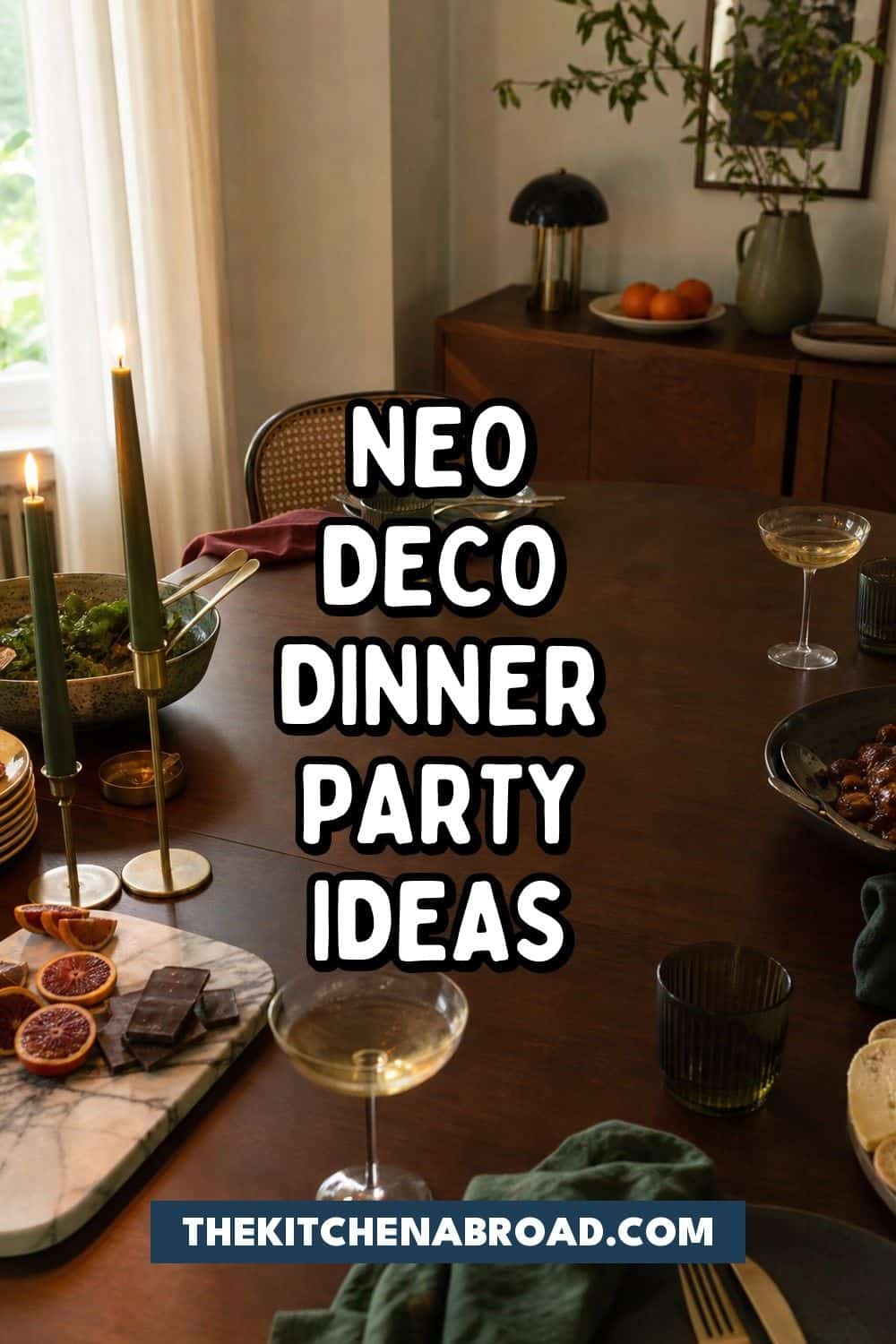
Neo deco dinner party ideas should feel rich, modern, and easy to host, not like a costume theme. Choose two jewel tones, add one dark wood or marble serving piece, batch one drink, serve a make-ahead main, keep candlelight low, and create a clear sideboard flow for food, water, dessert, and cleanup.
A modern Deco dinner party is really about mood and flow. The table can have smoked glass, marble, brass, dark wood, and jewel tones, but the menu still needs to move smoothly from welcome drinks to appetizers, dinner, dessert, coffee, and cleanup.
The best neo deco dinner party ideas use a few strong style cues and then protect guest comfort. That means make-ahead food, water that is easy to find, low decor, labeled dishes, a relaxed drink station, and enough open space for plates and conversation.
Top Recommended Products


You Might Also Like These Blog Posts
- 25 Holiday Dinner Party Ideas for Easy Hosting
- 25 Holiday Cocktail Buffet Hosting Ideas for Easy Hosting
- 25 Small Dinner Party Ideas for Easy Hosting
- 25 Casual Dinner Party Menu Ideas for Easy Hosting
- 25 Neo Deco Tablescape Ideas for Easy Hosting
Neo Deco Dinner Party Ideas for Easy Hosting
1. Dark-Wood Welcome Board at the First Stop
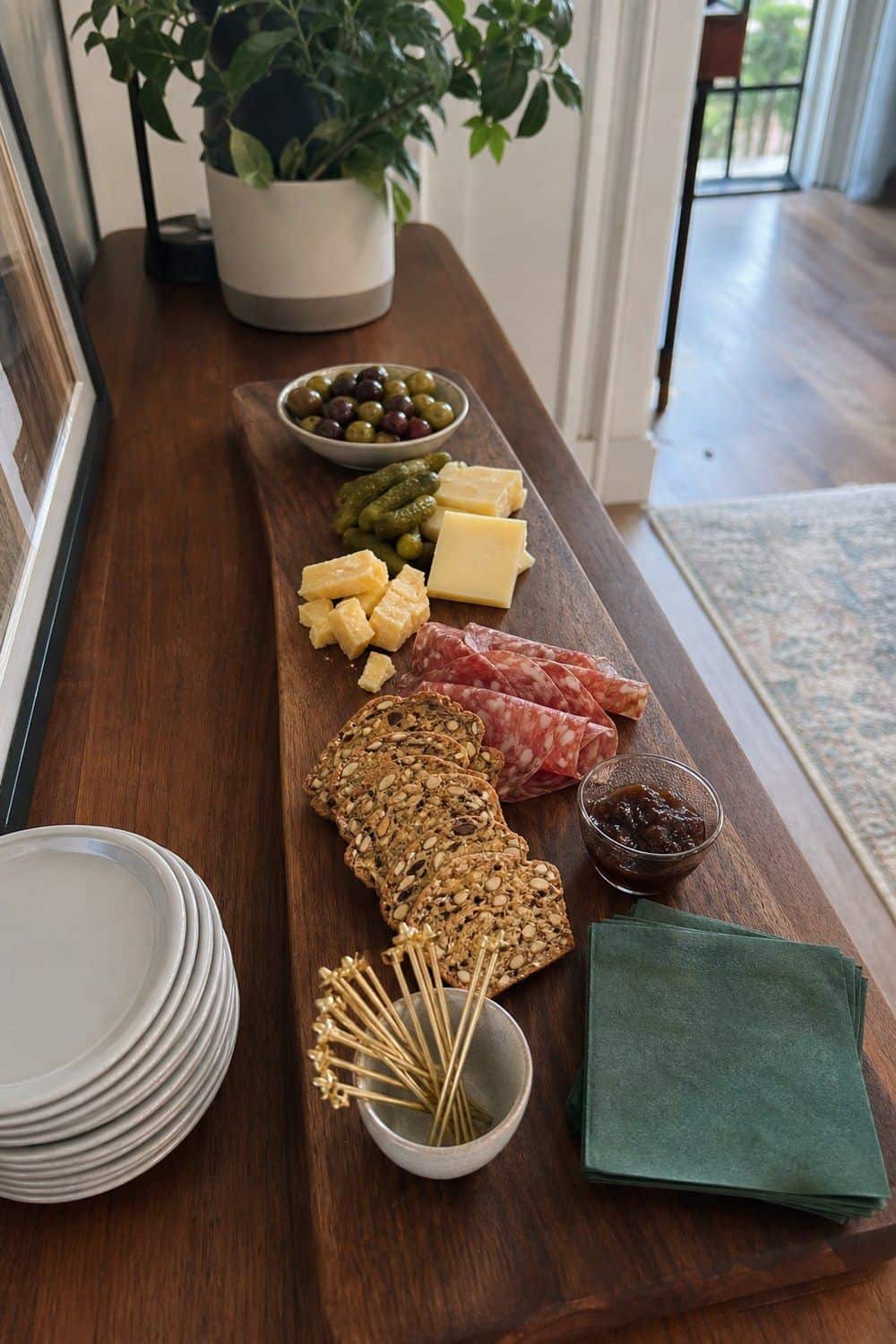
A walnut serving board gives guests something generous to nibble as soon as they arrive and sets the Neo Deco mood through material, not props. Add olives, cornichons, aged cheddar, salami folds, seeded crackers, and one glossy condiment such as fig jam or mustard. Keep the board loose enough that guests can cut cheese, lift crackers, and find space for small plates instead of digging through a crowded pile. Place cocktail picks and napkins at one end so serving feels tidy.
2. Two Jewel Tones With One Grounding Neutral
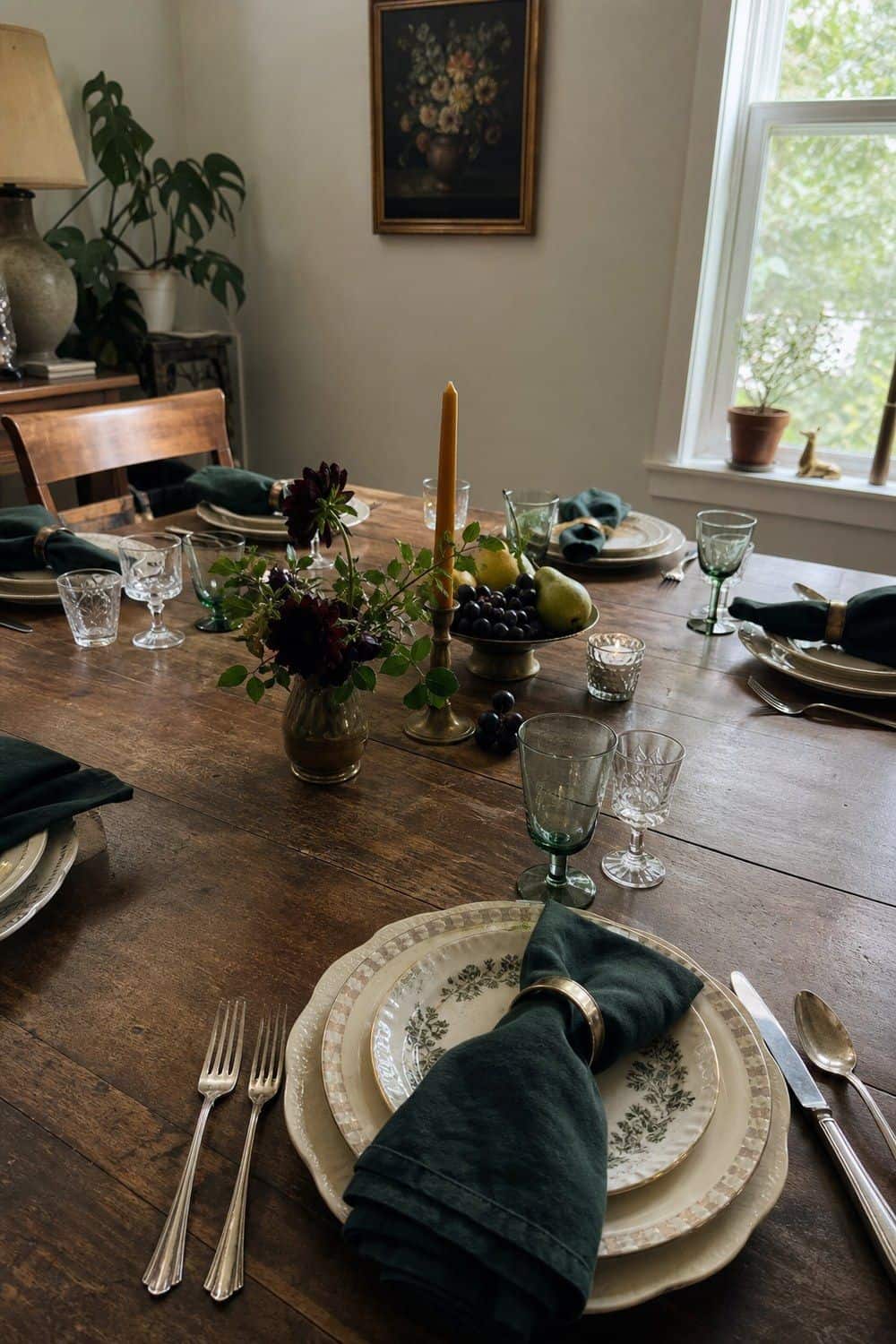
Emerald green cloth napkins can set the whole palette without turning the room into a theme. Choose one deep color such as emerald, oxblood, or cobalt, then pair it with cream, black, or warm brown and one metal finish. Repeat the color through napkins, fruit, flowers, or labels. Skip the urge to use every Deco color at once, because the food and glassware will add their own visual weight. A tight palette helps thrifted pieces feel deliberate and easy to mix.
3. Batched French 75-Style Spritz for Arrival
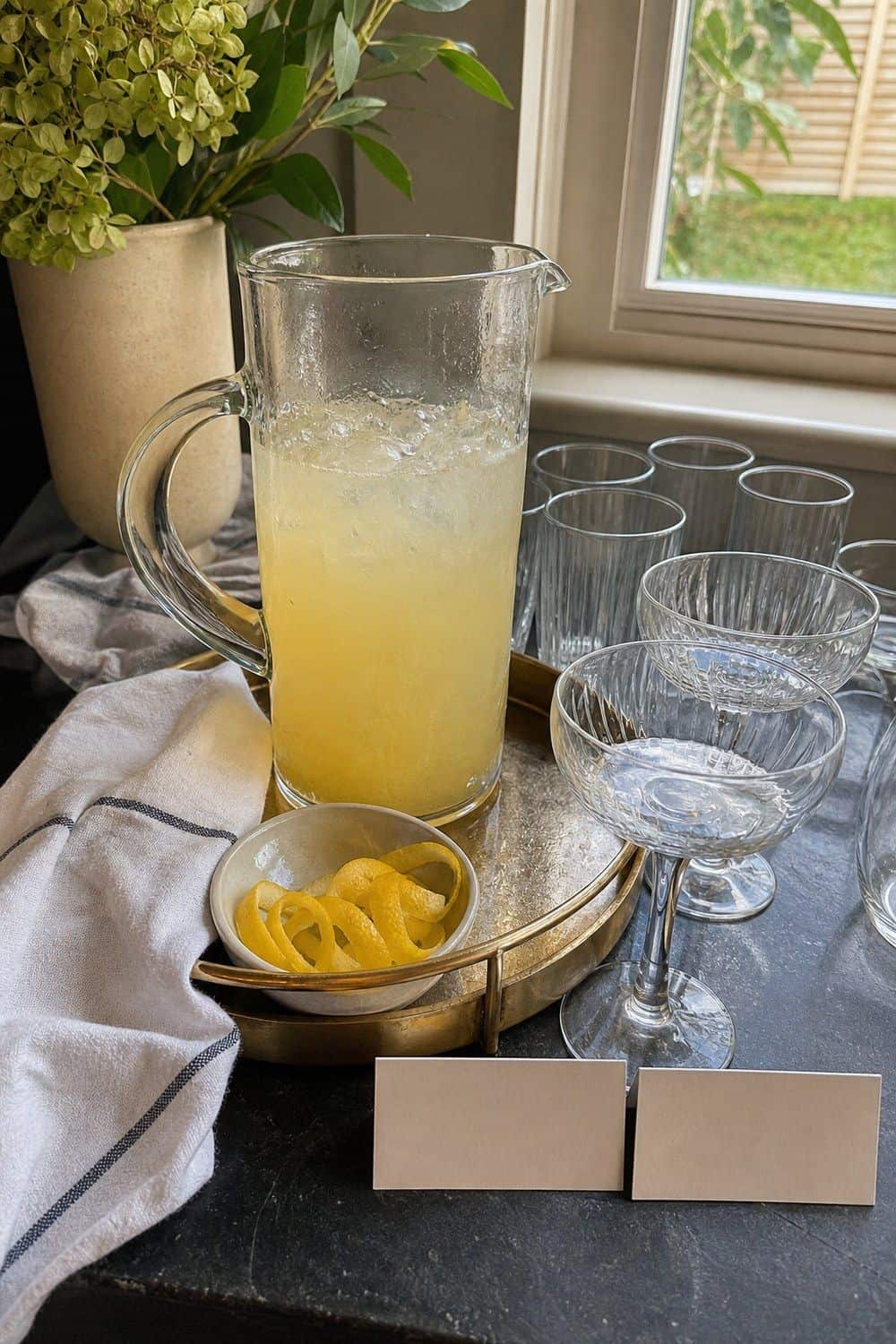
A glass cocktail pitcher keeps the host from making individual drinks while greeting guests. Batch lemon juice, simple syrup, and gin ahead, then top each glass with sparkling wine or seltzer as people arrive. For a zero-proof version, use lemon, syrup, bitters-style syrup, and sparkling water. Keep the pitcher on a tray with a towel, citrus twists, and water glasses so refills stay calm instead of becoming a bar line. Label both versions clearly for guests before pouring the first round.
4. Coupe Glasses for One Welcome Pour
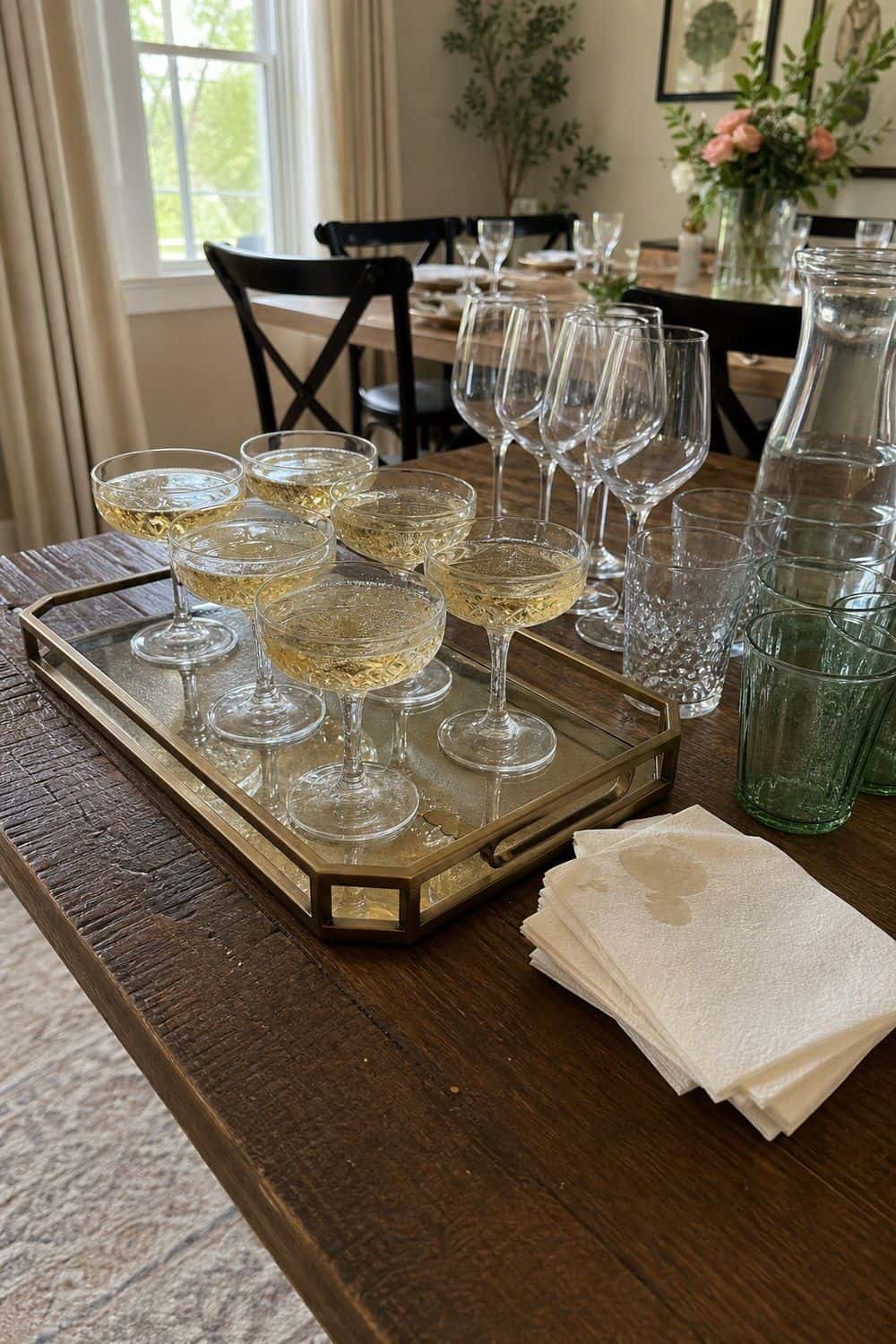
Coupe cocktail glasses bring the Deco reference quickly, but they do not need to carry the whole night. Use them for the first pour, then move guests to wine glasses, tumblers, or water glasses once dinner begins. Keep pours small because shallow glasses spill easily when people are standing. A stable tray matters more than a dramatic pyramid of coupes, especially when the host is still answering the door. Leave extra napkins beside the tray for quick spills and sticky stems.
5. Marble Under Cheese, Chocolate, or Citrus
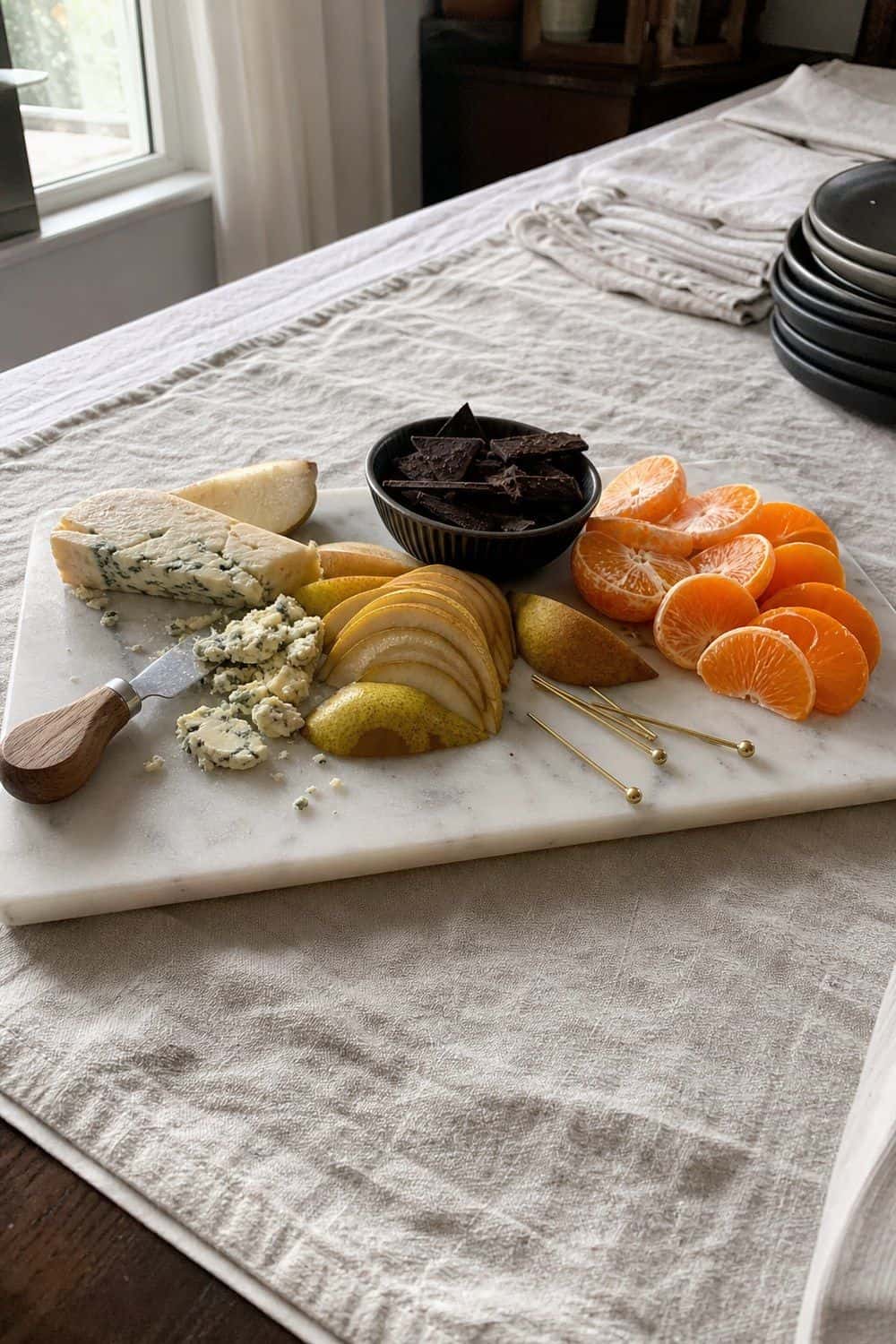
A marble cheese board gives polished contrast against matte linen and dark wood, but it should hold food rather than sit empty as decor. Use it for blue cheese and pears, chocolate shards and citrus, or store-bought petit fours. Add a cheese knife, small tongs, or cocktail picks so the board is easy to use. Heavy stone earns its place when guests can serve themselves without moving it. Keep it away from table edges and elbows during mingling before dinner.
6. Low Candlelight in a Narrow Line
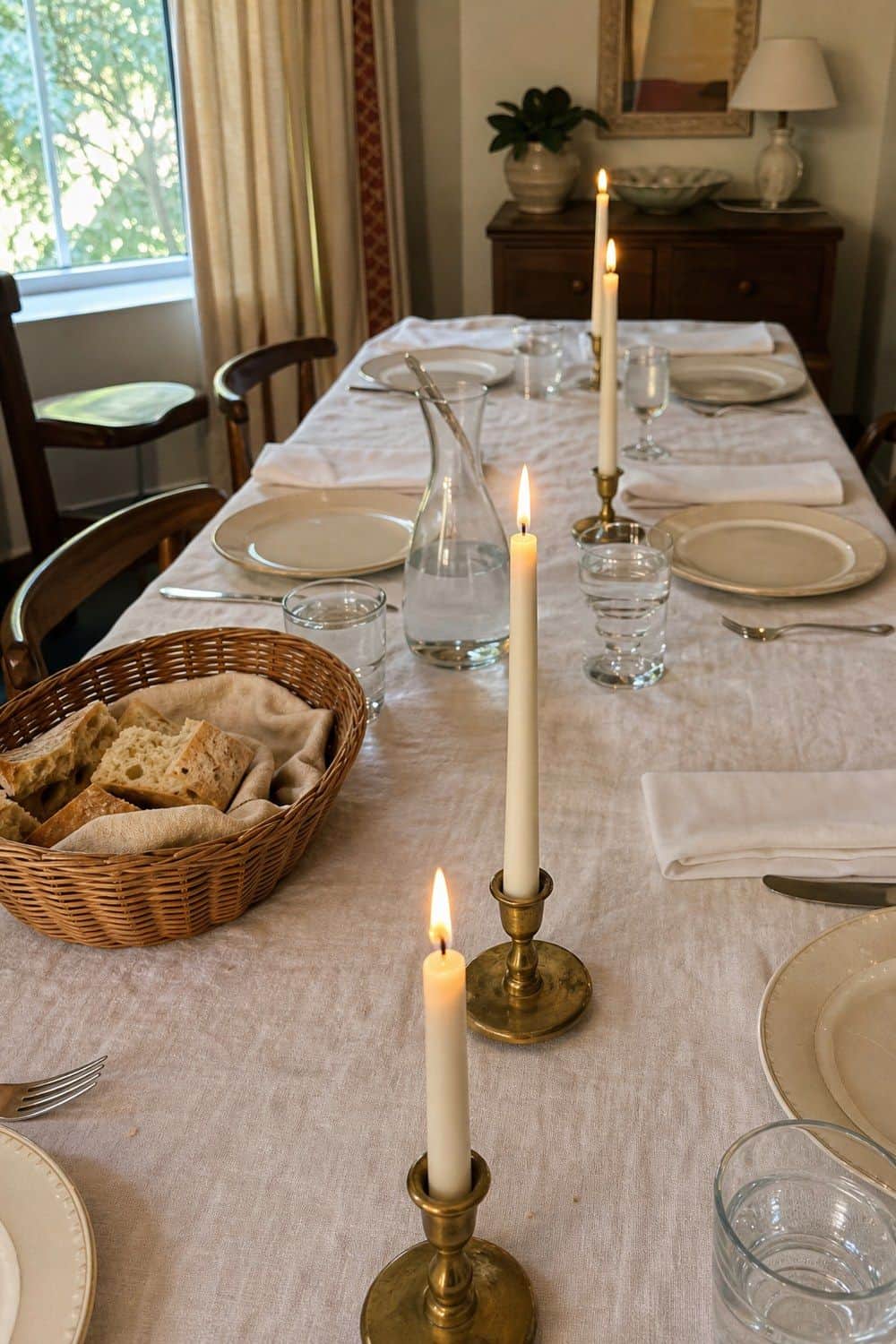
Brass taper candle holders give the room glow without building a bulky centerpiece. Keep the holders low or slim, use unscented candles, trim the wicks, and leave open space for elbows, napkins, and serving platters. A narrow line down the table feels more current than one large arrangement. Test the flame placement with a bread basket or salad bowl before guests arrive so nothing has to be rearranged mid-meal. Keep matches off the main table once lit safely away from linens.
7. Sideboard Lamps for Sculptural Mood
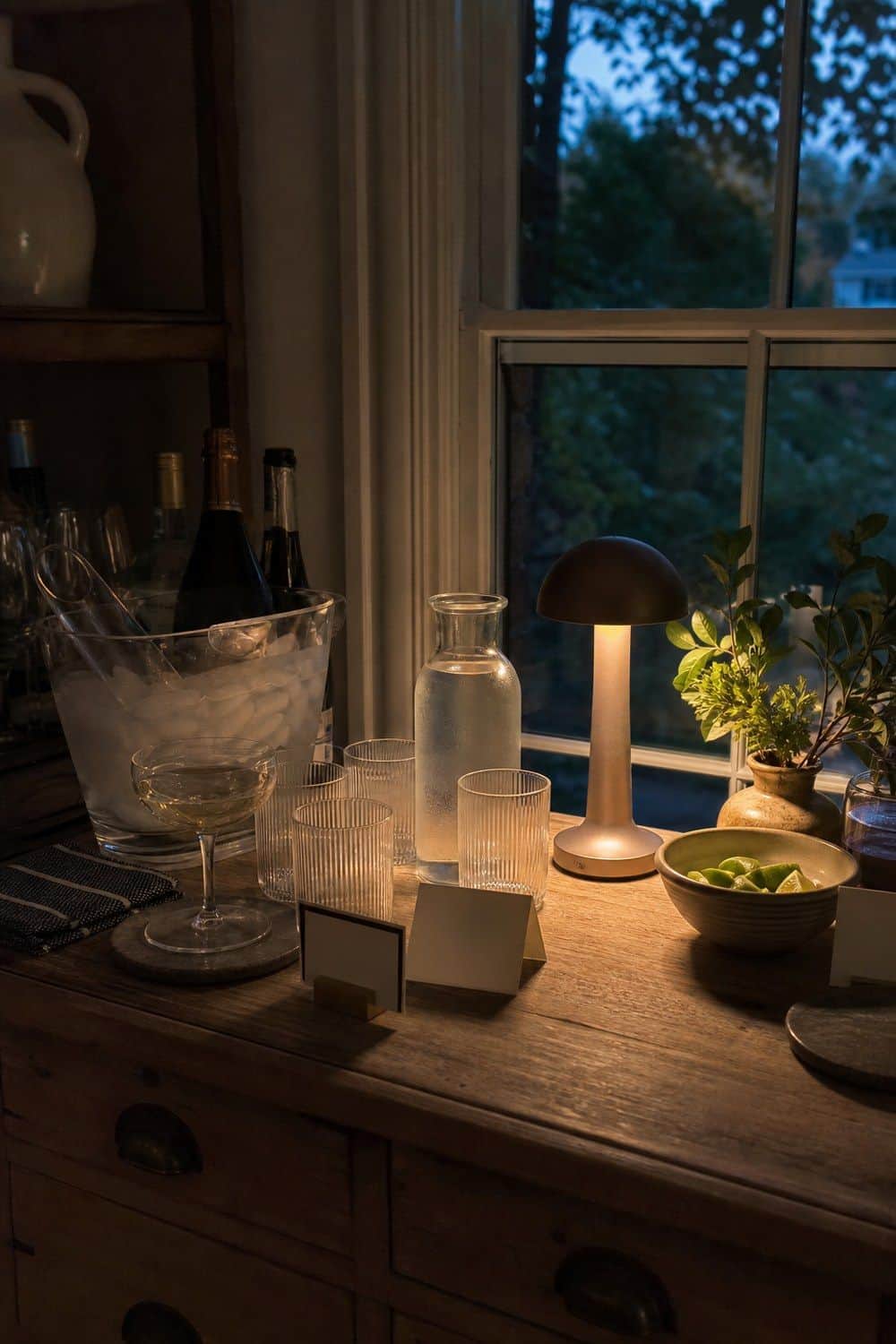
A rechargeable table lamp belongs on the drink station, dessert counter, or sideboard rather than in the middle of plates. It adds sculptural light and helps guests find refills without turning on harsh overhead fixtures. Charge it early, test the brightness after sunset, and keep it away from hot platters. One small lamp can make the whole room feel softer while still keeping the food area visible. Use the lowest setting that still shows labels clearly for serving drinks after dark.
8. One Braised Main That Carries Dinner
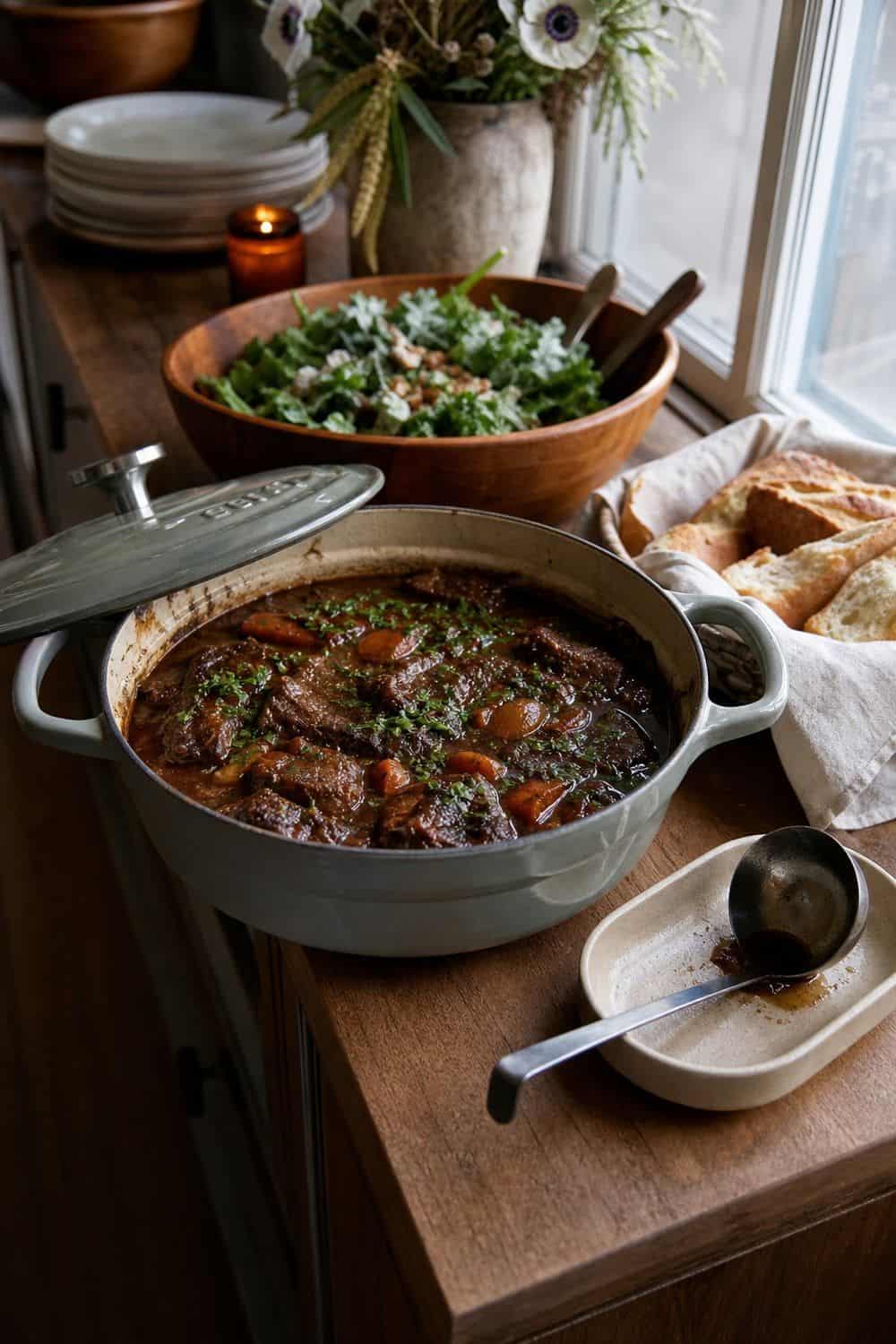
An enameled cast iron braiser makes a Neo Deco dinner feel generous without requiring frantic last-minute cooking. Short ribs, mushroom bourguignon, wine-braised chicken, or a vegetarian bean and fennel braise can be cooked ahead and held warm. Keep the lid on until serving so the sauce does not reduce too far. Pair the braise with bread and salad, then let the pot become part of the buffet. Add a ladle rest to protect linens and counters from glossy sauce drips.
9. Bitter Salad Beside the Rich Main
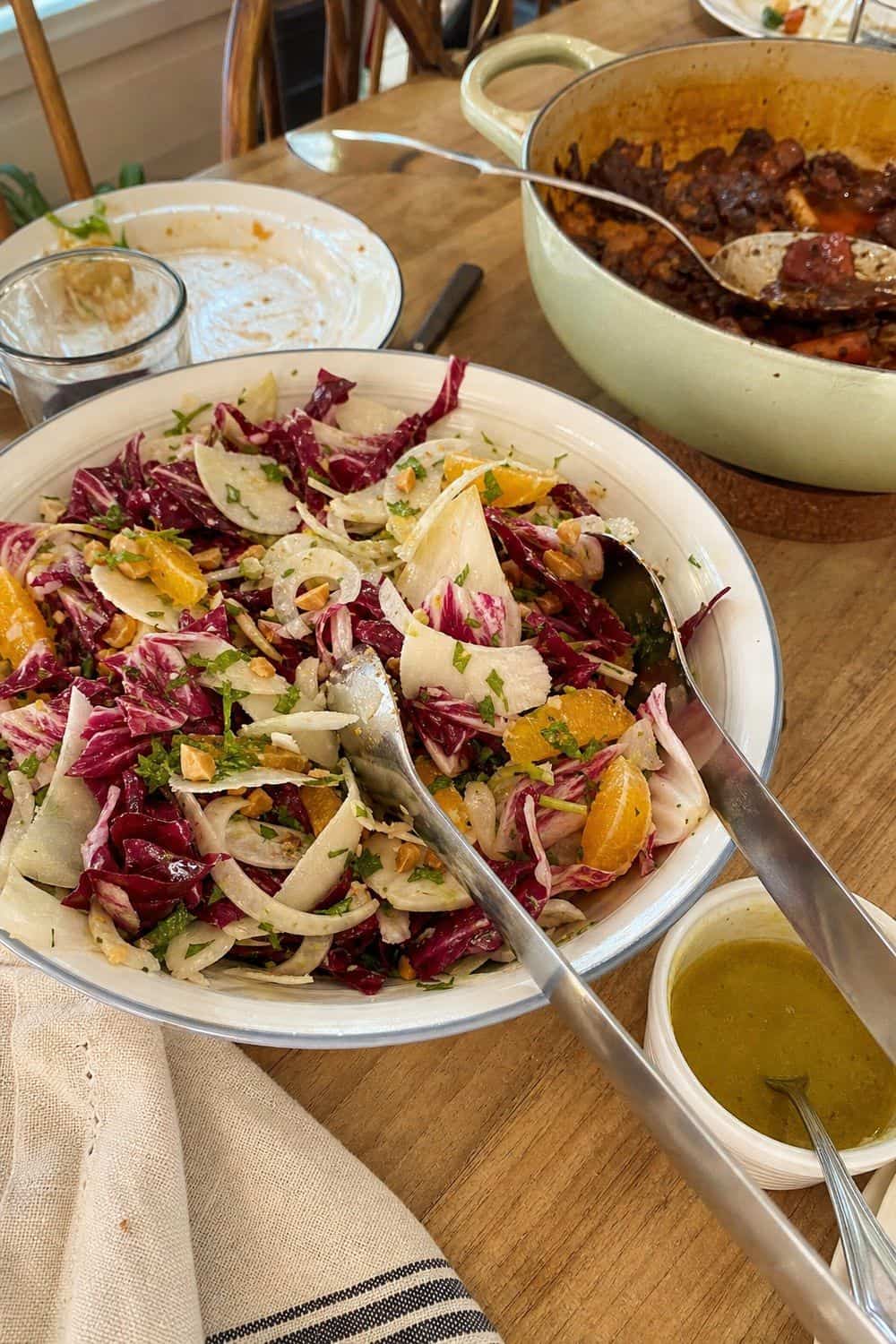
Stainless steel salad tongs belong directly in a crisp salad bowl so guests do not borrow the wrong spoon. Use radicchio, endive, fennel, citrus, herbs, parmesan, or toasted nuts to cut through a rich braise. Dress the salad at the last minute so it stays bright. This side gives the menu contrast, keeps the table from feeling too heavy, and adds color without another decorative centerpiece. Keep extra dressing off to the side in a small cup for seconds later.
10. Chrome Bar Cart With a Real Flow
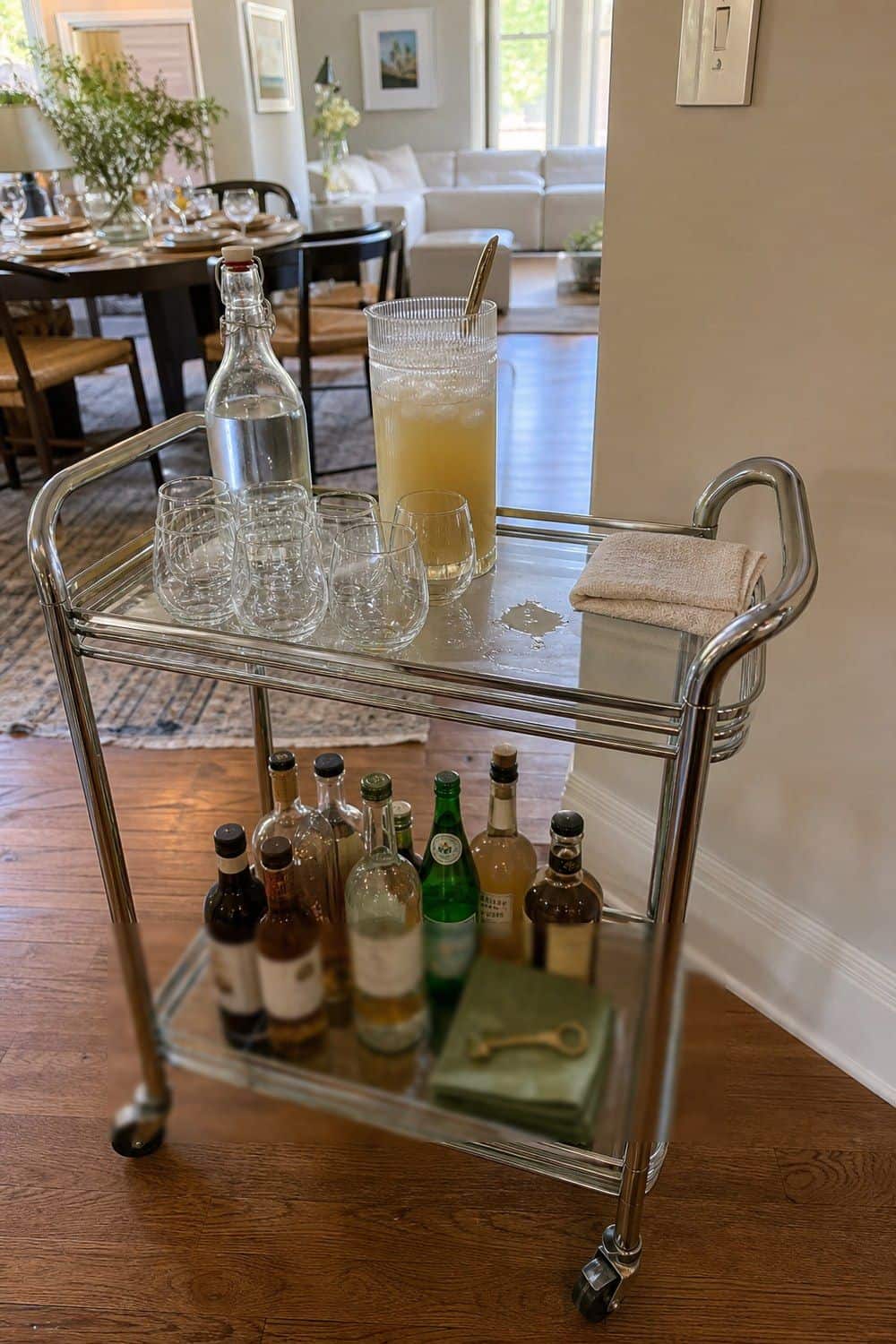
A chrome bar cart should solve drink traffic, not become a full liquor display. Put glasses, water, and the batched drink on top, then keep bottles, zero-proof options, napkins, and an opener below. This keeps guests from gathering in the kitchen every time they need a refill. Leave one clear landing spot on the cart so someone can set down a glass while pouring or adding citrus. Wipe spills before they get sticky under glassware, especially after the first round of refills.
11. Smoked Glass Water Within Easy Reach
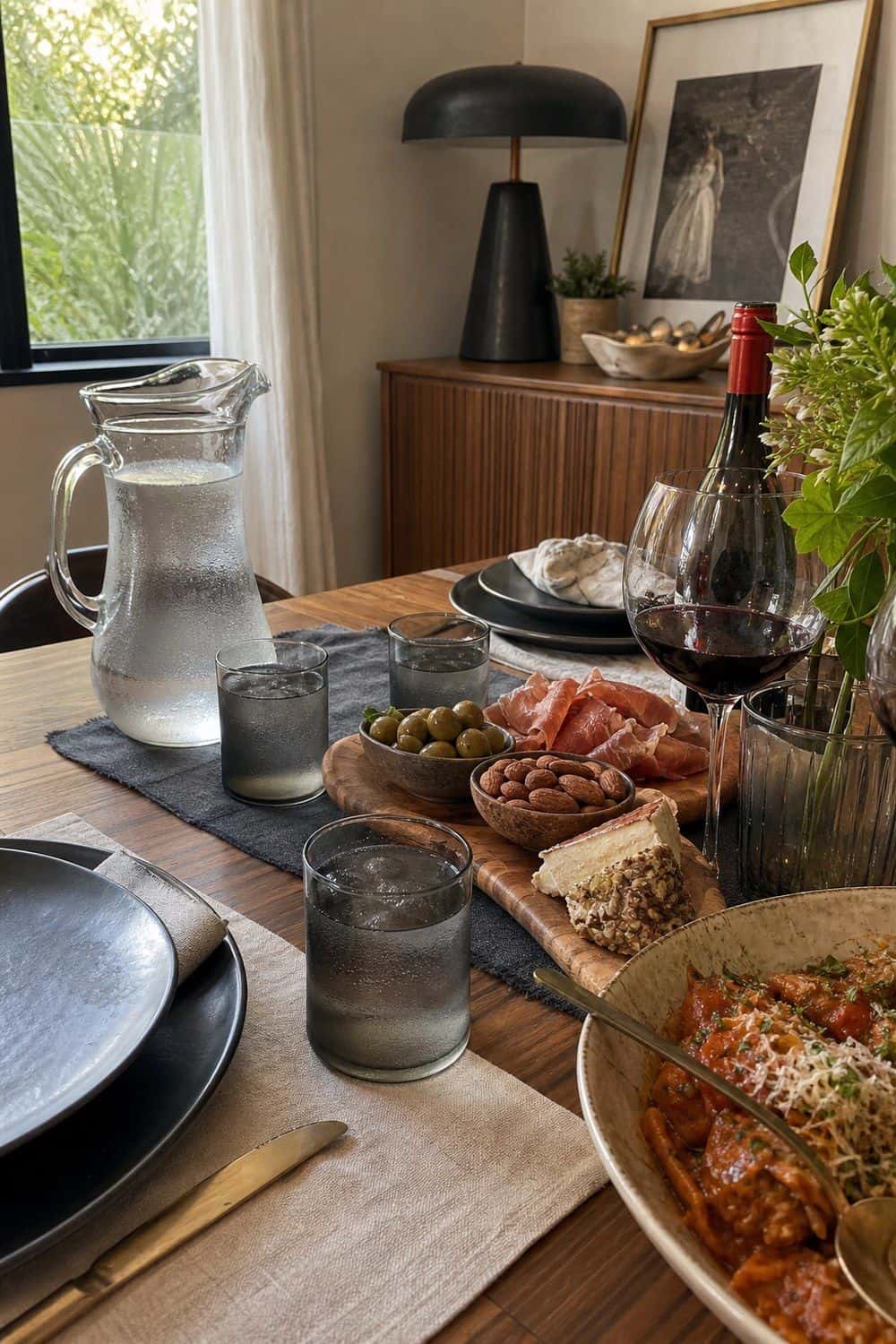
Smoked glass tumblers support the moody look while handling the most important drink at the party. Set water before guests arrive, keep a refill pitcher on the table or sideboard, and make sure the glasses are not hidden behind flowers. A stylish dinner still needs hydration, especially with salty snacks, wine, and rich food. This detail prevents the common mistake of styling cocktails while forgetting basic comfort. Refill them before the main course lands so guests are not looking for water once plates are hot and saucy.
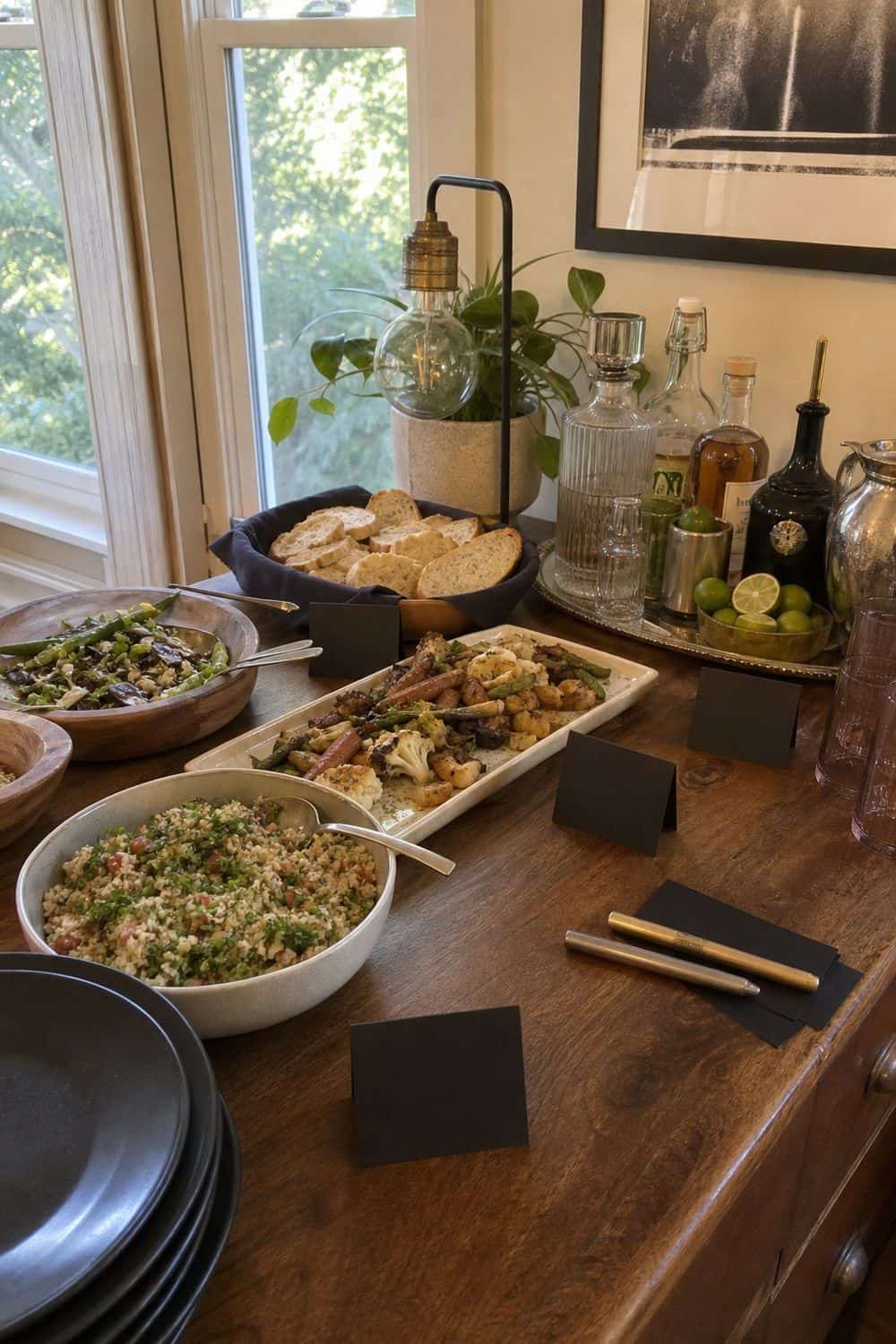
12. Black Cards for Dish Names and Notes
Black place cards can label dishes without making the party feel formally assigned. Use them for dish names, vegetarian notes, spice level, nuts, gluten reminders, or zero-proof drink labels. The contrast looks Deco, but the job is practical: guests can serve themselves without whispering questions over the buffet. Use readable handwriting or simple printing, and place each card where it will not be splashed by sauce. Metallic ink is optional, not required for clarity at the table or bar cart.
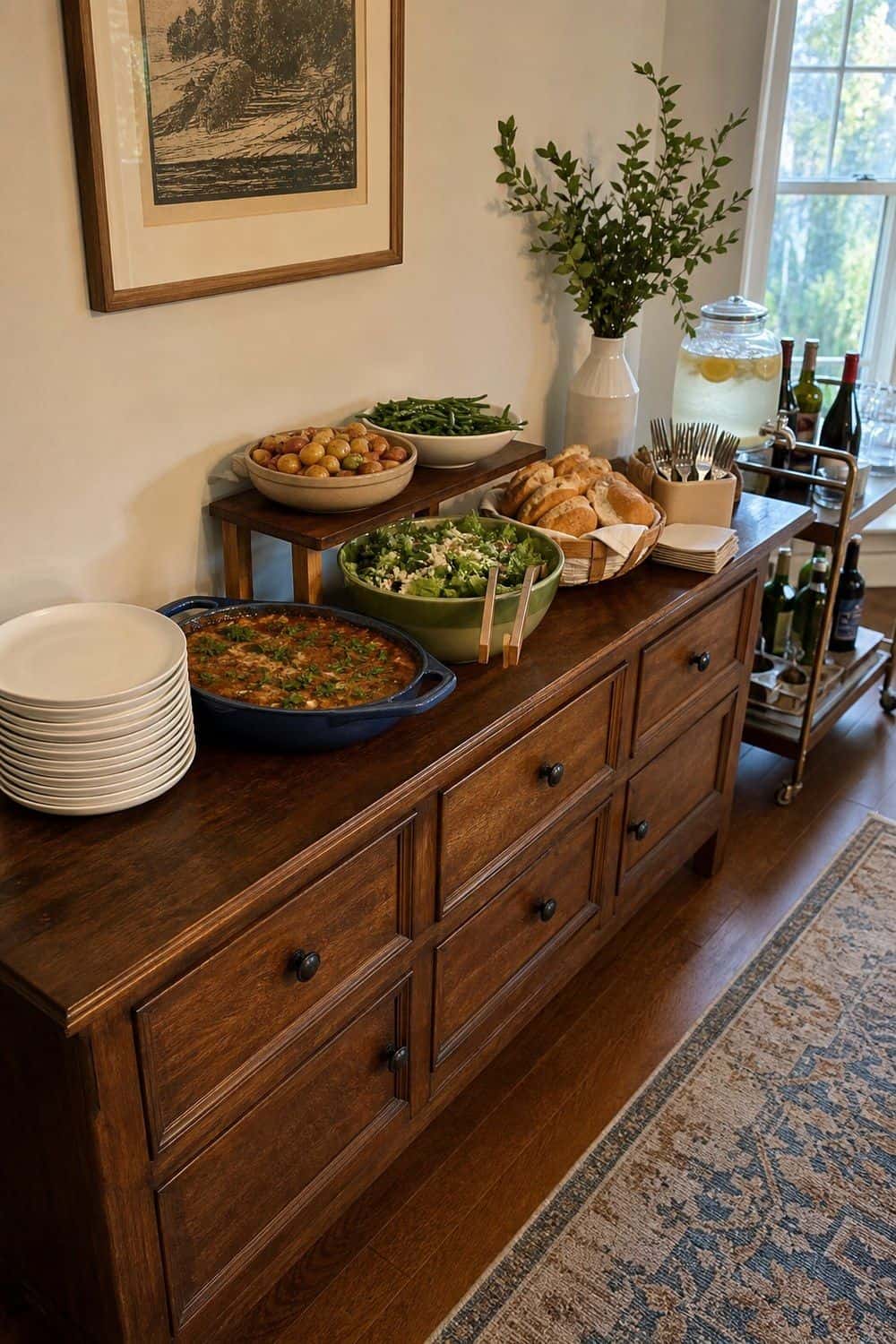
13. Sideboard Flow From Plates to Bread
A buffet riser stand can help the sideboard work in a clear left-to-right order: plates, main, sides, salad, bread, utensils, and napkins. Use risers only when they make a dish easier to see or free space beneath. Keep drinks out of the same traffic lane as hot food, because a crowded pour spot slows everyone down. Build a self-serve path guests can understand immediately before the braiser comes out and everyone starts looking for plates or forks.
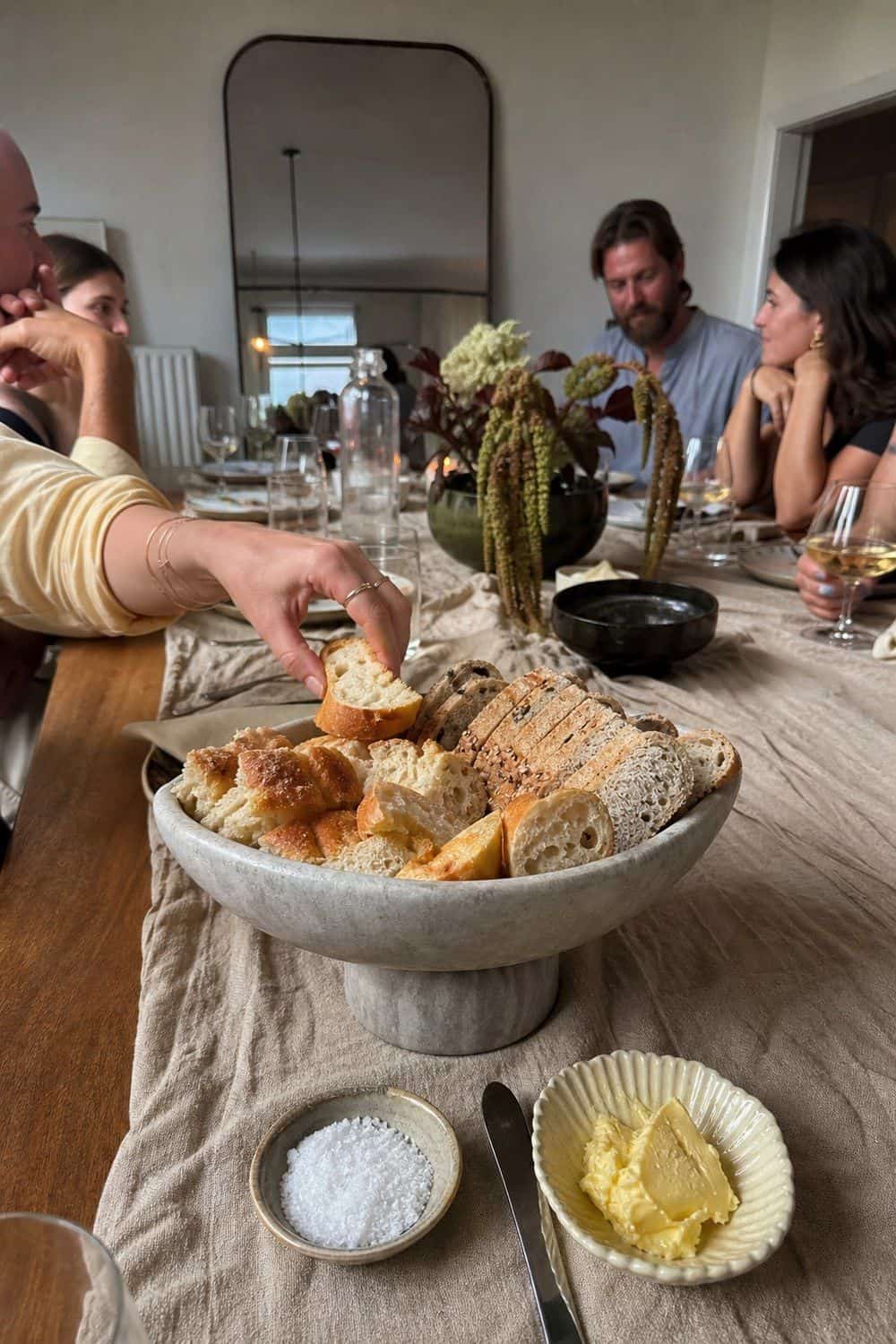
14. Sculptural Bread Bowl as Useful Height
A pedestal serving bowl adds height without relying on tall flowers. Fill it with sliced baguette, seeded loaf, focaccia, or rolls, then set soft butter and flaky salt close enough to reach. Bread is not just a filler detail; it helps guests settle in, stretches a rich main, and gives the welcome board more structure. Keep the bowl stable and low enough that it does not block faces.
Place the bowl where guests can reach it from both sides without lifting it. If the table is narrow, move bread to the sideboard and use a smaller basket for seconds later during the meal.
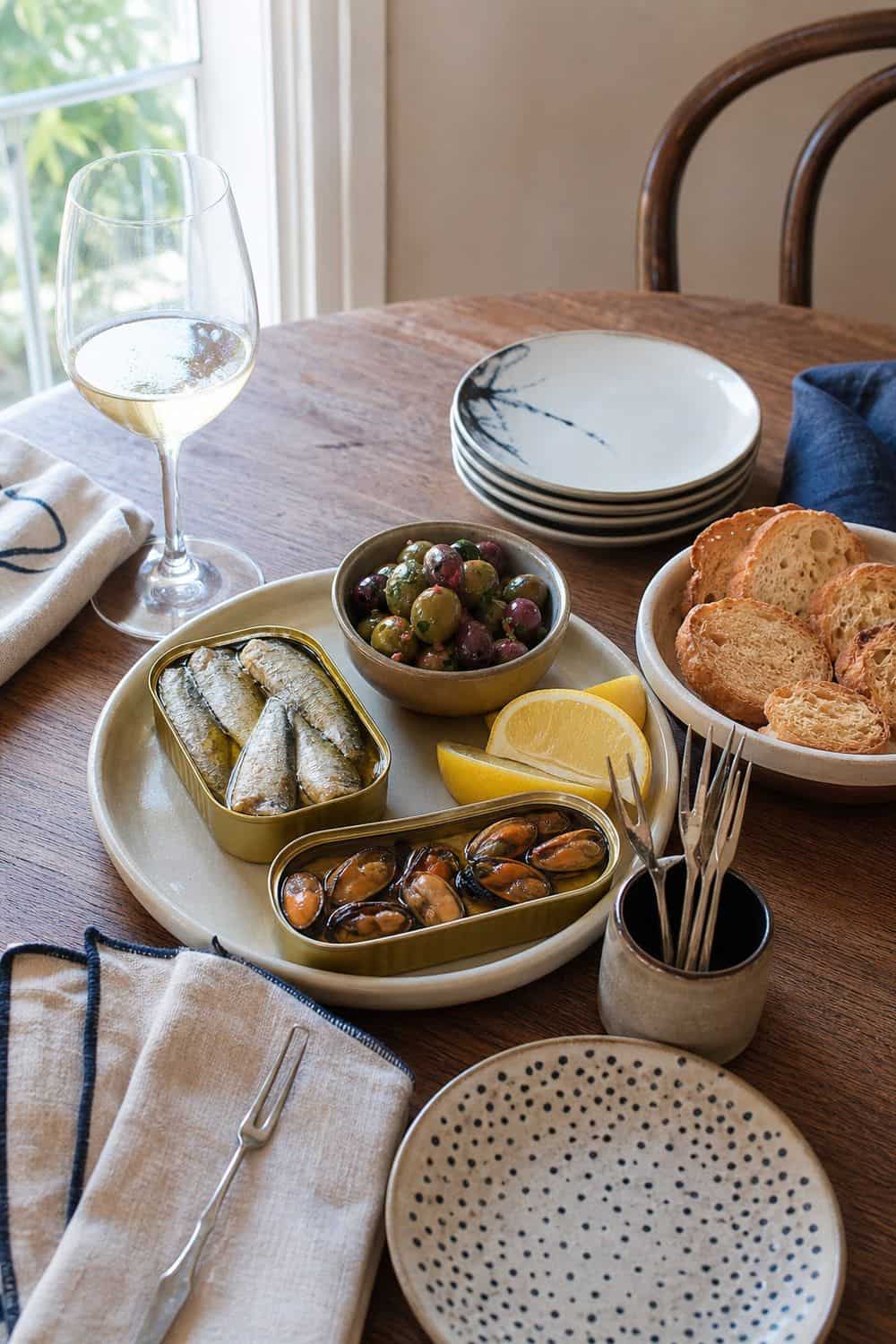
15. Tinned Fish or Olive Snack Plate
Small appetizer forks keep a briny snack plate neat and easy to share. Offer sardines, smoked mussels, marinated olives, lemon, butter, and crisp bread for a wine-bar-style starter, but keep it optional for guests who prefer milder flavors. Add small plates and napkins so oil does not trail across the table. This is a low-cook move that feels grown-up without asking the host to fry or bake anything.
Keep the tins on a tray or small plate so oil stays contained and crackers stay dry. Lemon wedges and butter make the snack feel finished instead of simply opened from the pantry for guests.
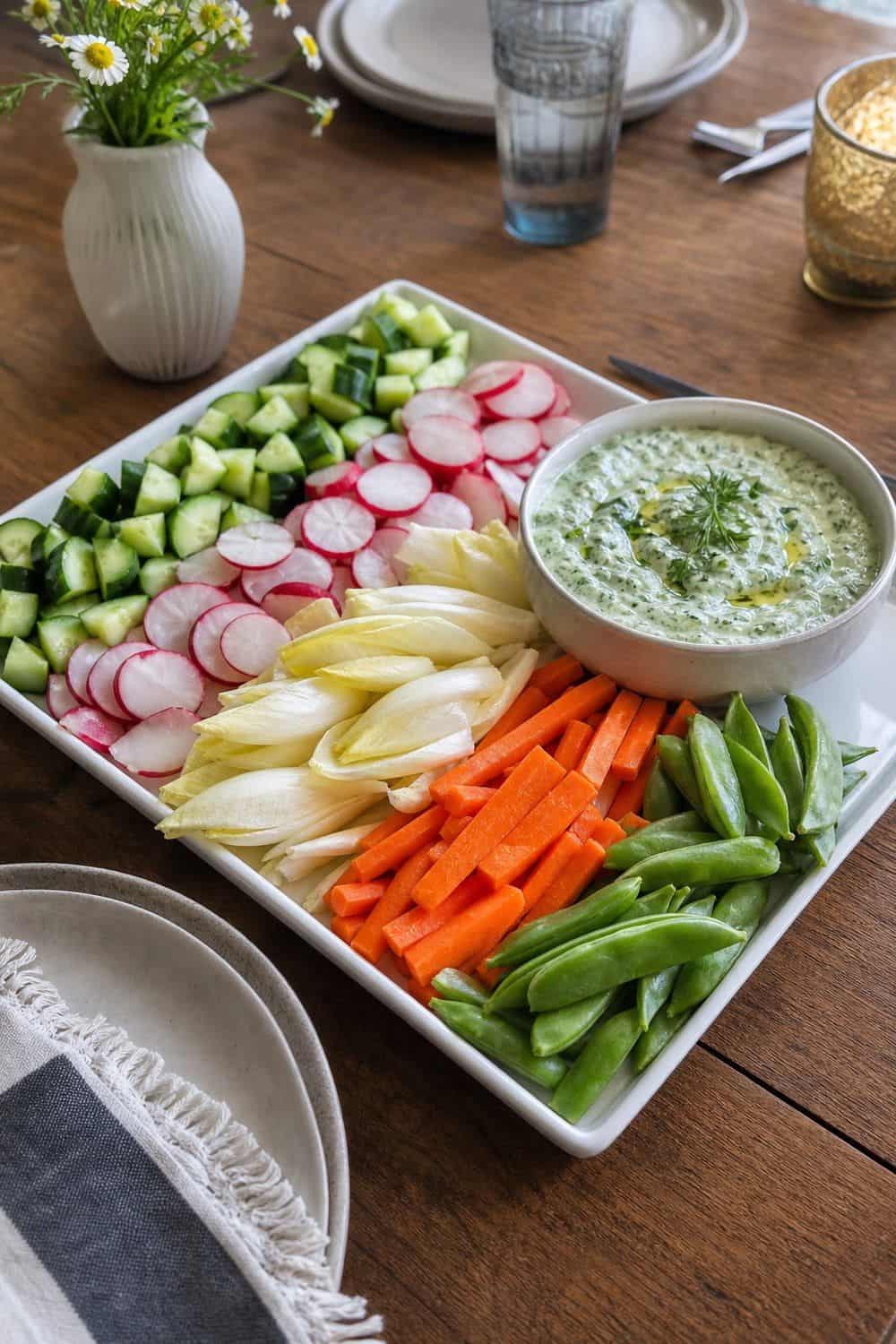
16. Geometric Crudite With Real Bite Sizes
A rectangular serving platter lets the crudite look graphic without becoming fragile. Arrange rows of cucumbers, radishes, endive, carrots, and snap peas around green goddess, whipped feta, or herby yogurt dip. Cut vegetables into pieces people can grab cleanly in one motion. Tall towers may photograph well, but they collapse as soon as guests start serving themselves, which is the wrong kind of drama for an easy dinner.
Keep the dip in a low bowl so vegetables stay visible and easy to lift without dragging across the platter. A geometric layout should make serving clearer, not turn the appetizer into a puzzle before dinner.
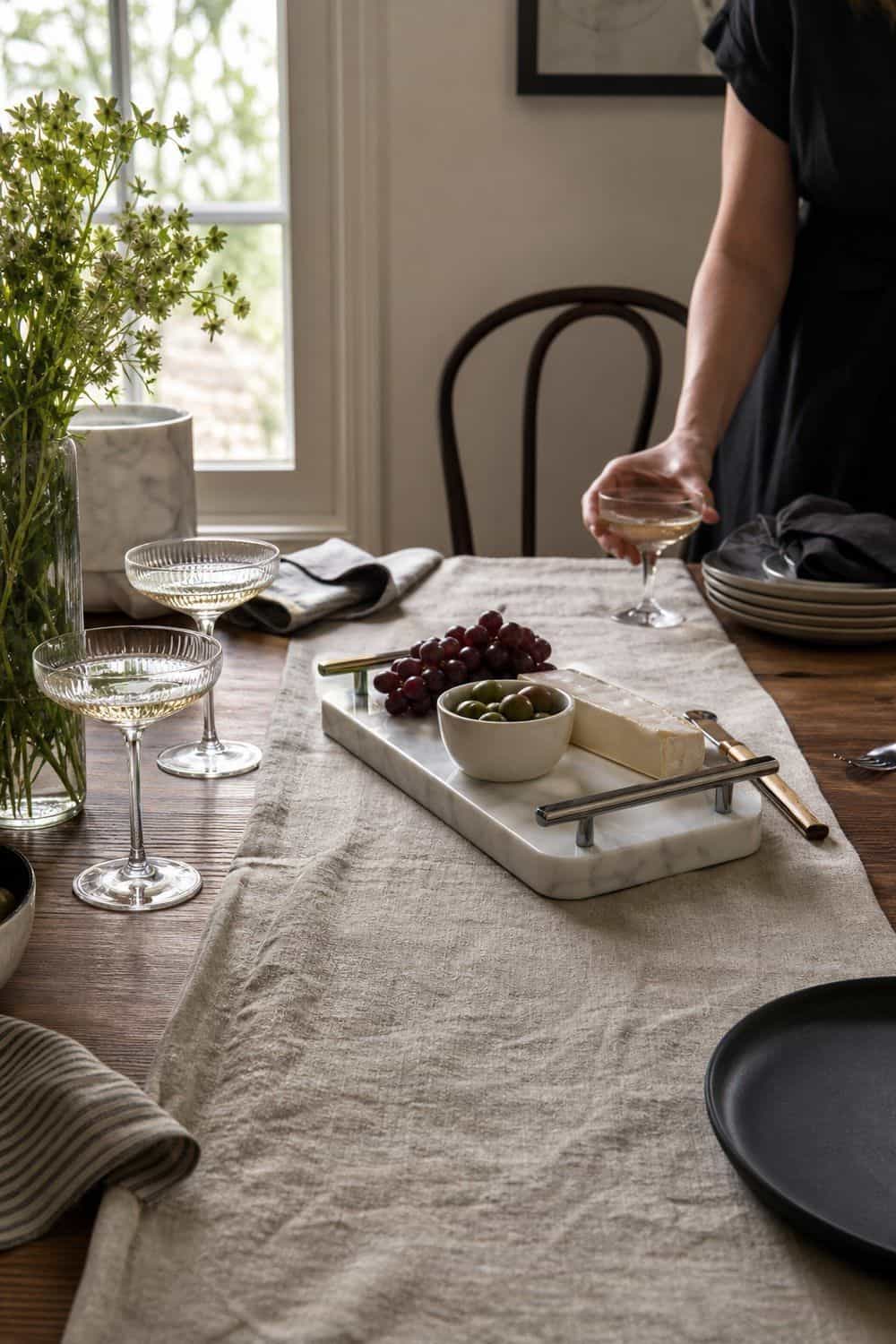
17. Matte Linen With One Glossy Accent
A linen table runner keeps the room livable while marble, chrome, glass, or lacquer adds shine. The contrast is what makes Neo Deco feel modern instead of cheap or overly themed. Choose one glossy detail near the food or drink area, then let the linen soften everything around it. If the tablecloth, plates, candles, glassware, and tray all shine, the food has nowhere calm to land.
Use linen to separate glossy pieces from each other and soften the whole surface before food arrives at the table. That pause helps smoked glass, marble, and metal look selected rather than piled together for effect.
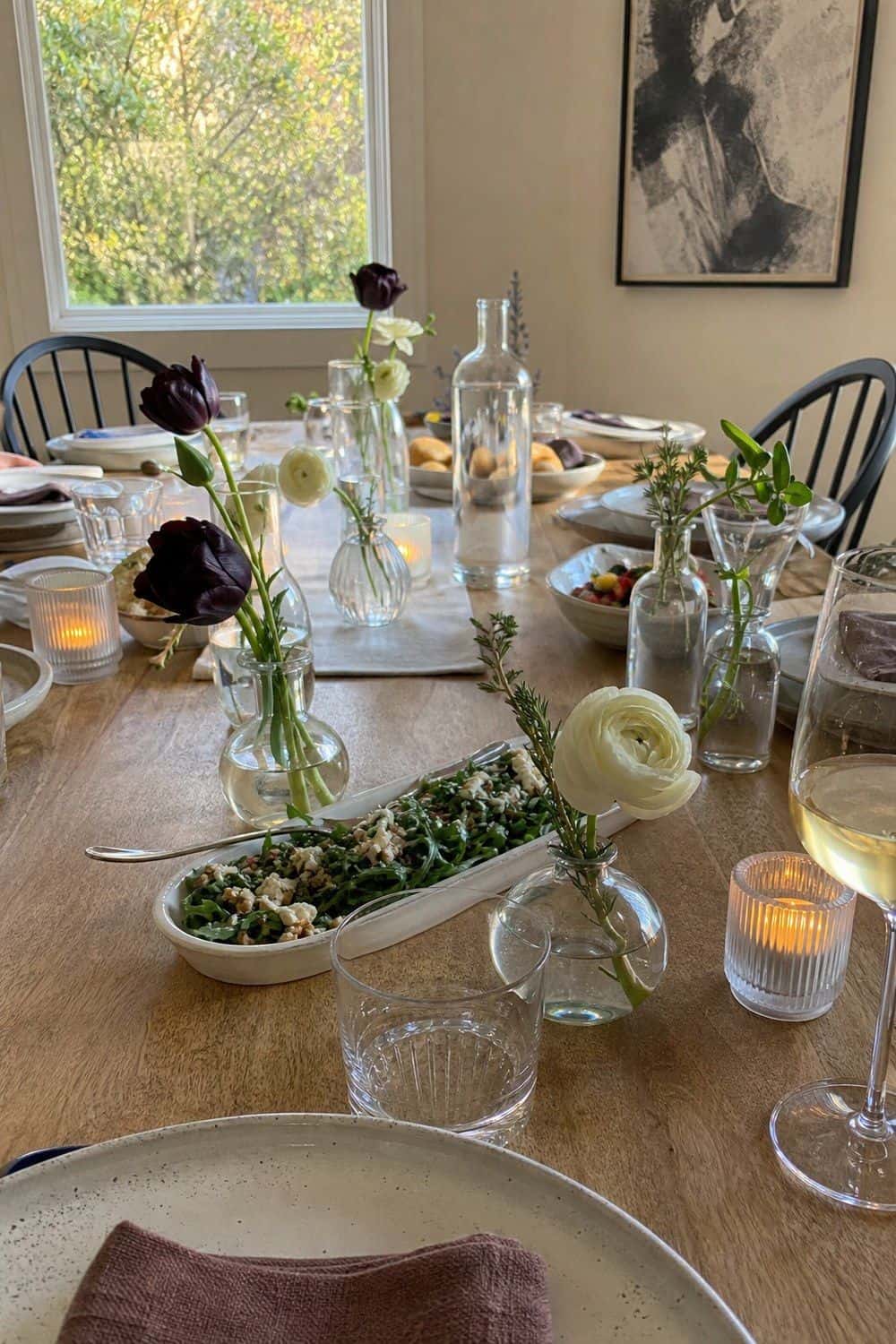
18. Bud Vases That Leave Sightlines Open
Glass bud vases give rhythm down the table without creating a tall centerpiece. Use dark tulips, white ranunculus, single roses, herbs, or bare branches trimmed short enough for conversation. Scatter the vases lightly and leave space for platters, water, and candles. The point is a repeated floral note, not a floral wall. If guests have to lean around stems to talk, the arrangement is too high.
Check each vase from a seated angle before the doorbell rings and before candles are lit along the center line. A stem that looks elegant from above may still block faces across the table once guests sit.
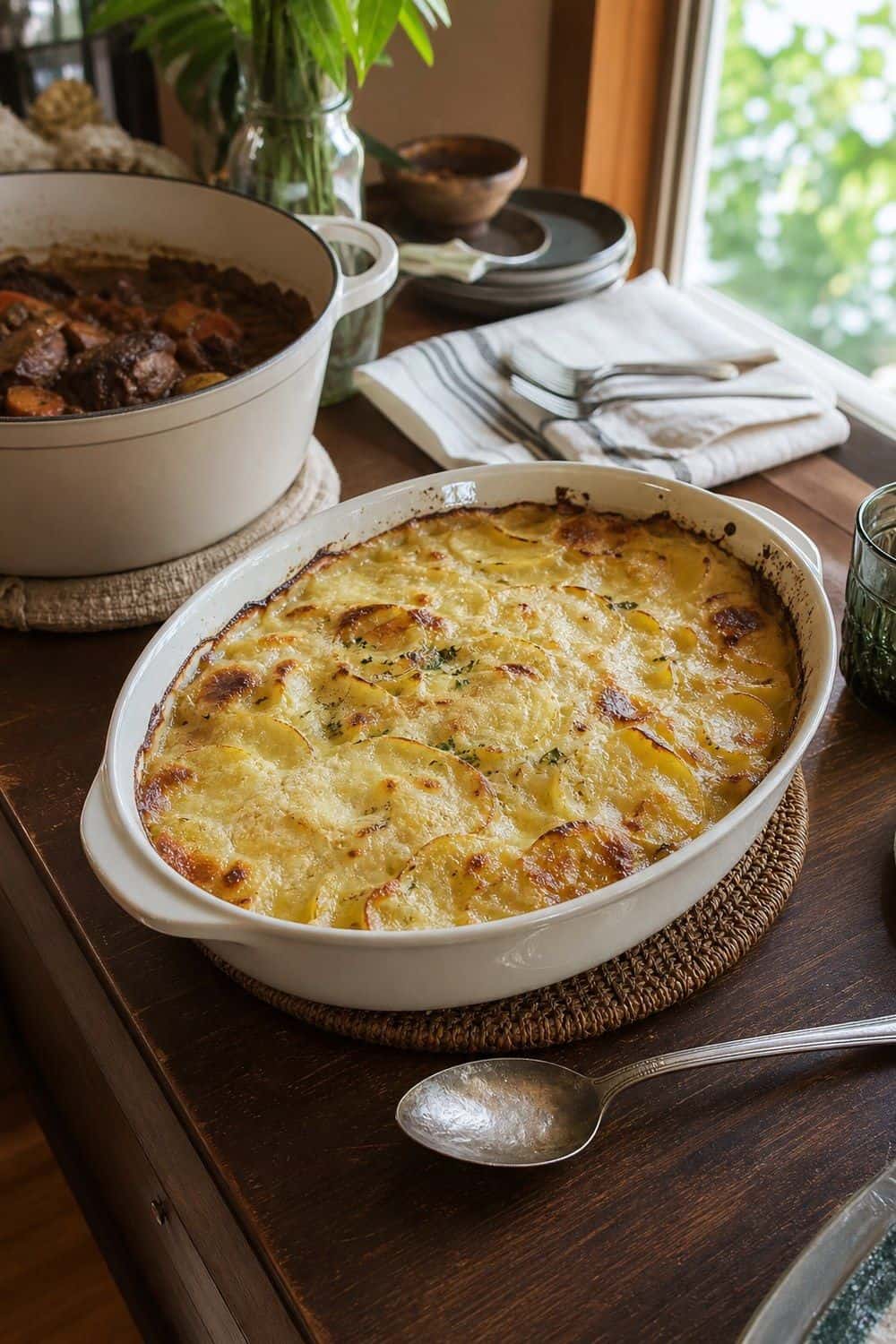
19. Warm Gratin Side in a Generous Dish
A ceramic oval baking dish makes a potato gratin, roasted mushroom bake, baked polenta, or cauliflower gratin look abundant and easy to serve. This kind of side holds warmth well and feels right beside a braised main. Place it on the buffet with a sturdy spoon and a trivet, not balanced at the edge of a crowded table. Check timing so the top stays appealing instead of drying out.
If the dish comes from the oven, let it settle before serving and add a trivet under the ceramic dish. A brief rest makes portions cleaner and keeps guests from meeting bubbling-hot sauce at the buffet.
20. Chocolate and Citrus Instead of Baking Panic
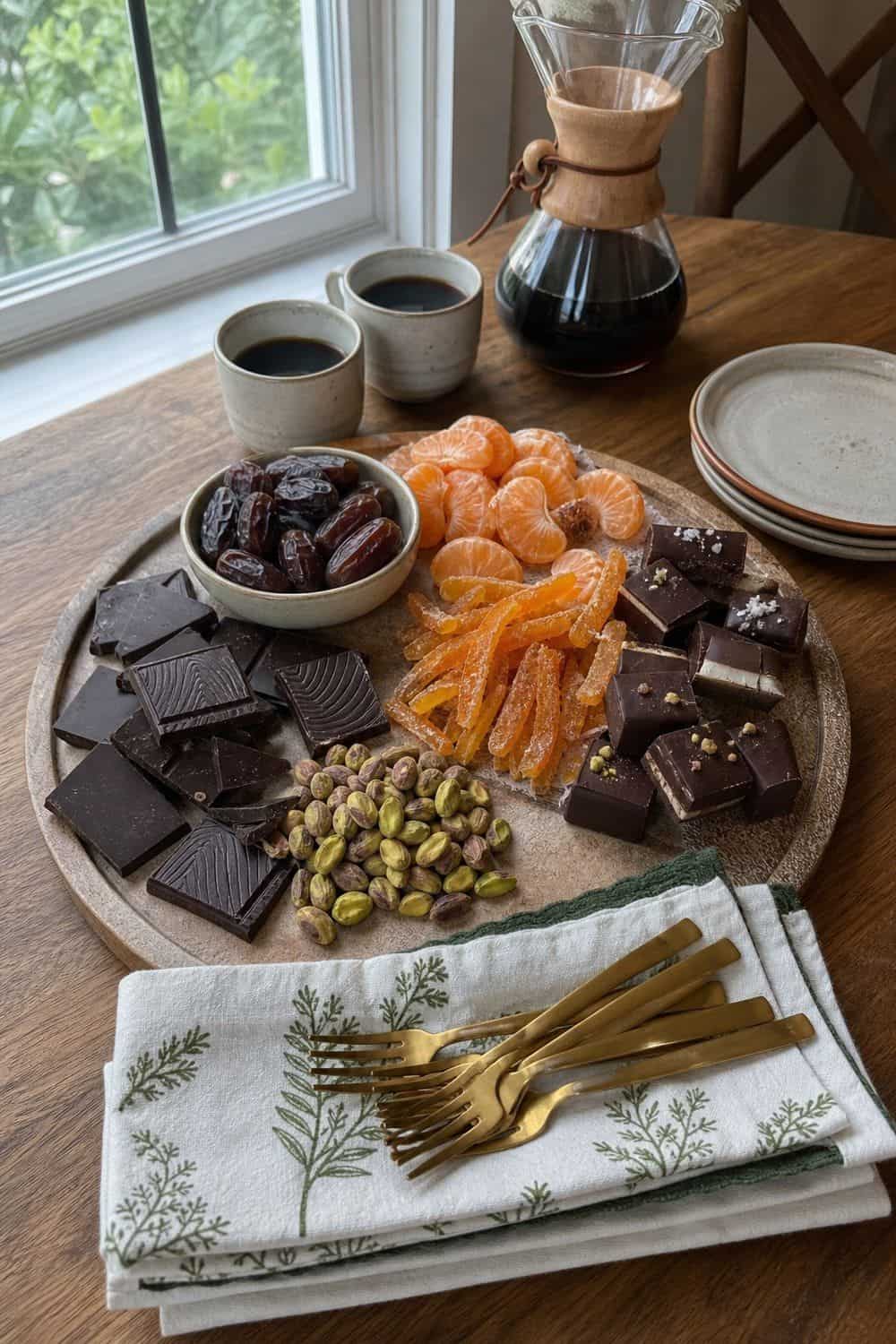
Gold dessert forks can make a low-effort finish feel styled. Serve dark chocolate, clementines, candied orange peel, dates, pistachios, or store-bought petit fours on a board or tray. This gives the table a Deco mood without a last-minute baking project. Add small napkins or forks so guests can graze after dinner while coffee is poured, and keep dessert pieces bite-size enough for standing conversation.
Choose one citrus note to keep dessert bright after a rich meal and repeat it on the tray with napkins and forks. Orange peel, clementine segments, or lemony cookies are enough beside dark chocolate and coffee.
21. Tiny Coffee Station After Plates Clear
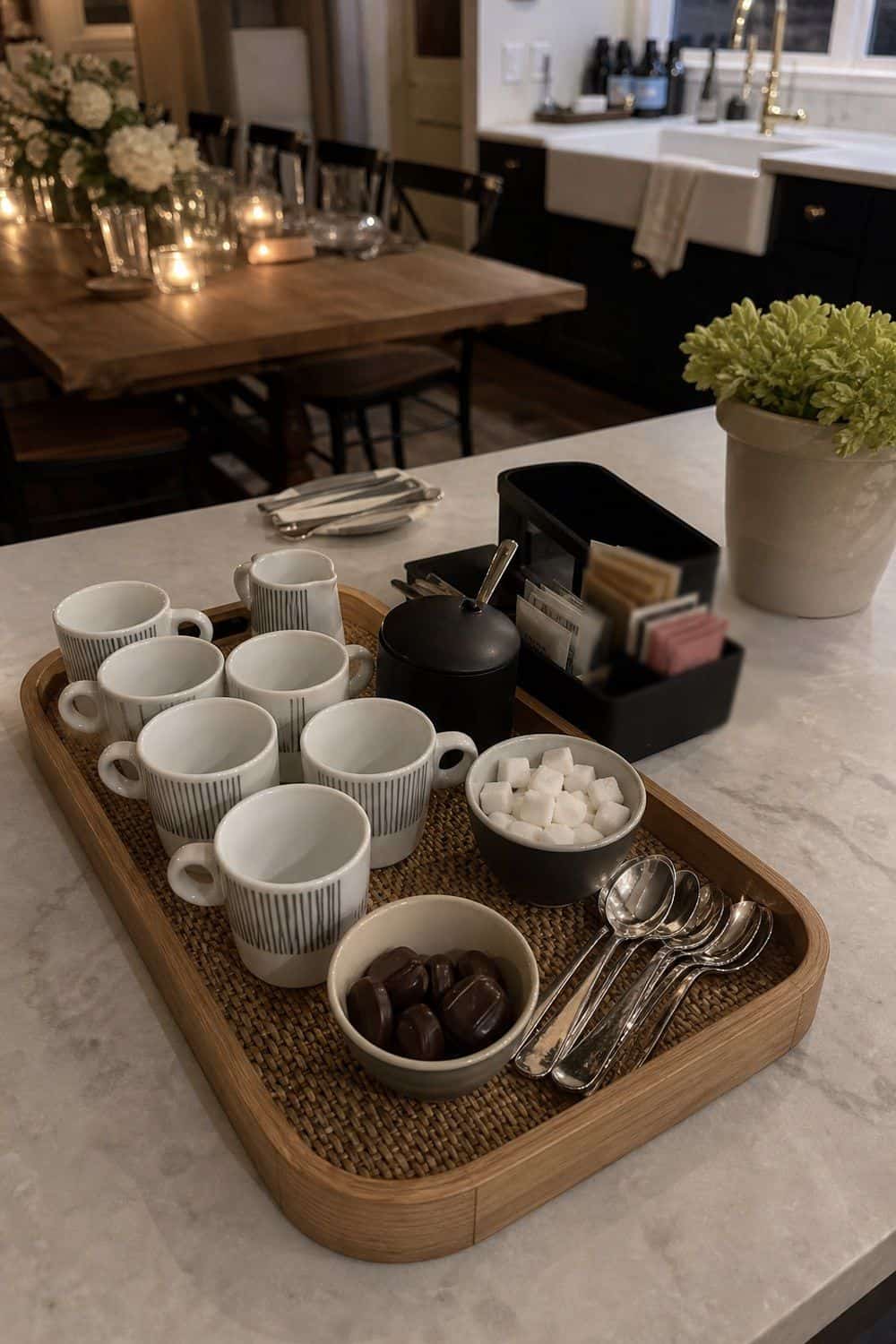
An espresso cup set helps the party shift from dinner to lingering without turning cleanup into the only activity. Put cups, sugar, cream, decaf tea, and a small chocolate bowl on a tray after plates are cleared. This gives guests a reason to stay relaxed while the first dishes soak. Keep the coffee station separate from the dirty dish area so the end of the meal still feels cared for.
Set out decaf or tea even if most guests drink espresso after dinner and add spoons on the tray with sugar. The thoughtful option is often what makes people linger comfortably instead of leaving quickly.
22. One Vintage-Style Bar Piece With a Job
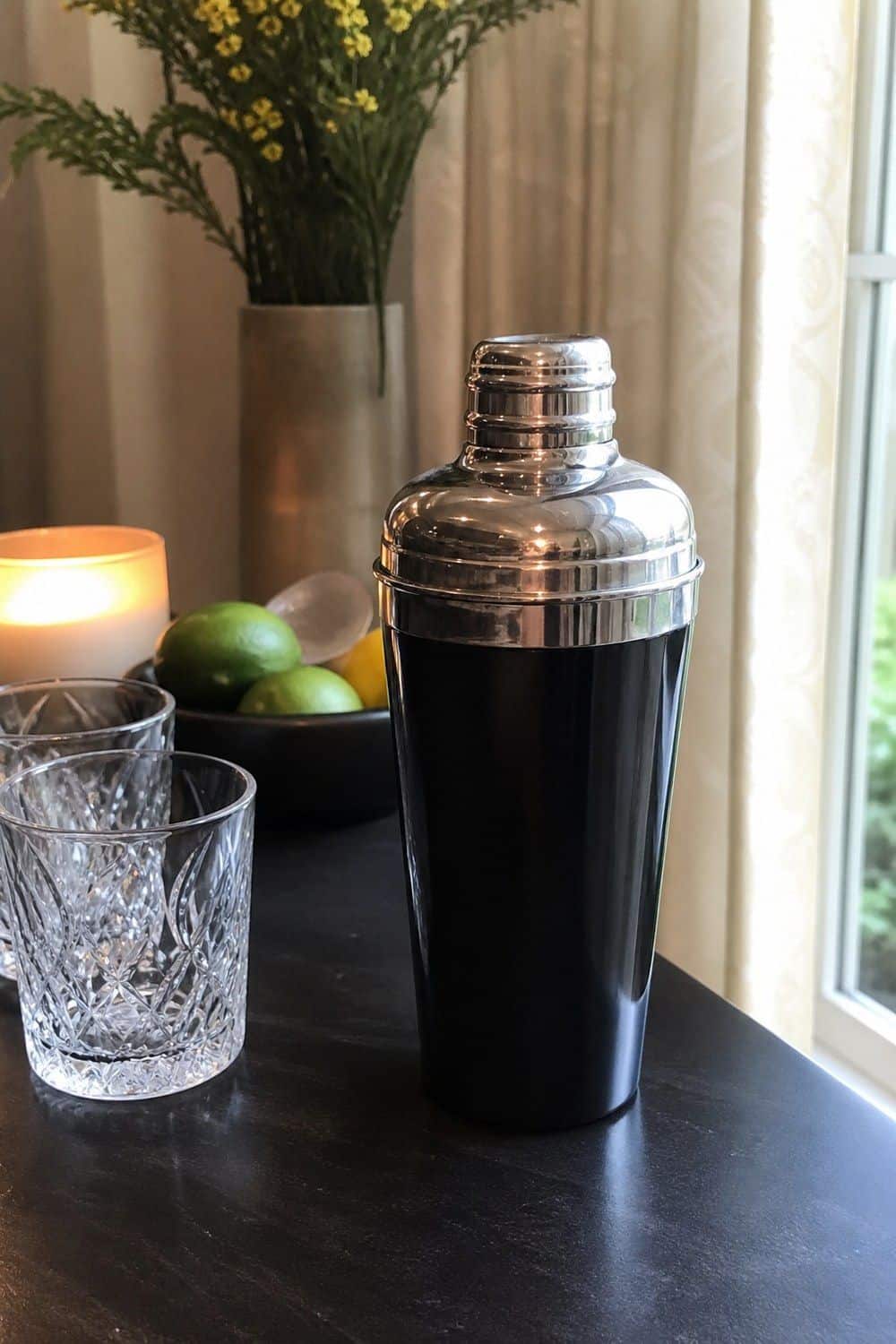
A vintage style cocktail shaker, ice bucket, tray, or decanter can add Deco character, but one piece is enough. Choose the object that actually helps the party: the shaker mixes a welcome drink, the bucket holds ice, the tray gathers glasses, or the decanter serves water. Too many vintage props make the room feel staged. One useful piece looks collected and keeps the hosting flow grounded.
Put the piece where it will be used, not where it merely photographs well on the bar or sideboard during setup. Function keeps the style from drifting into a theme display for the room during drinks.
23. Counter-Based Setup for Smaller Homes
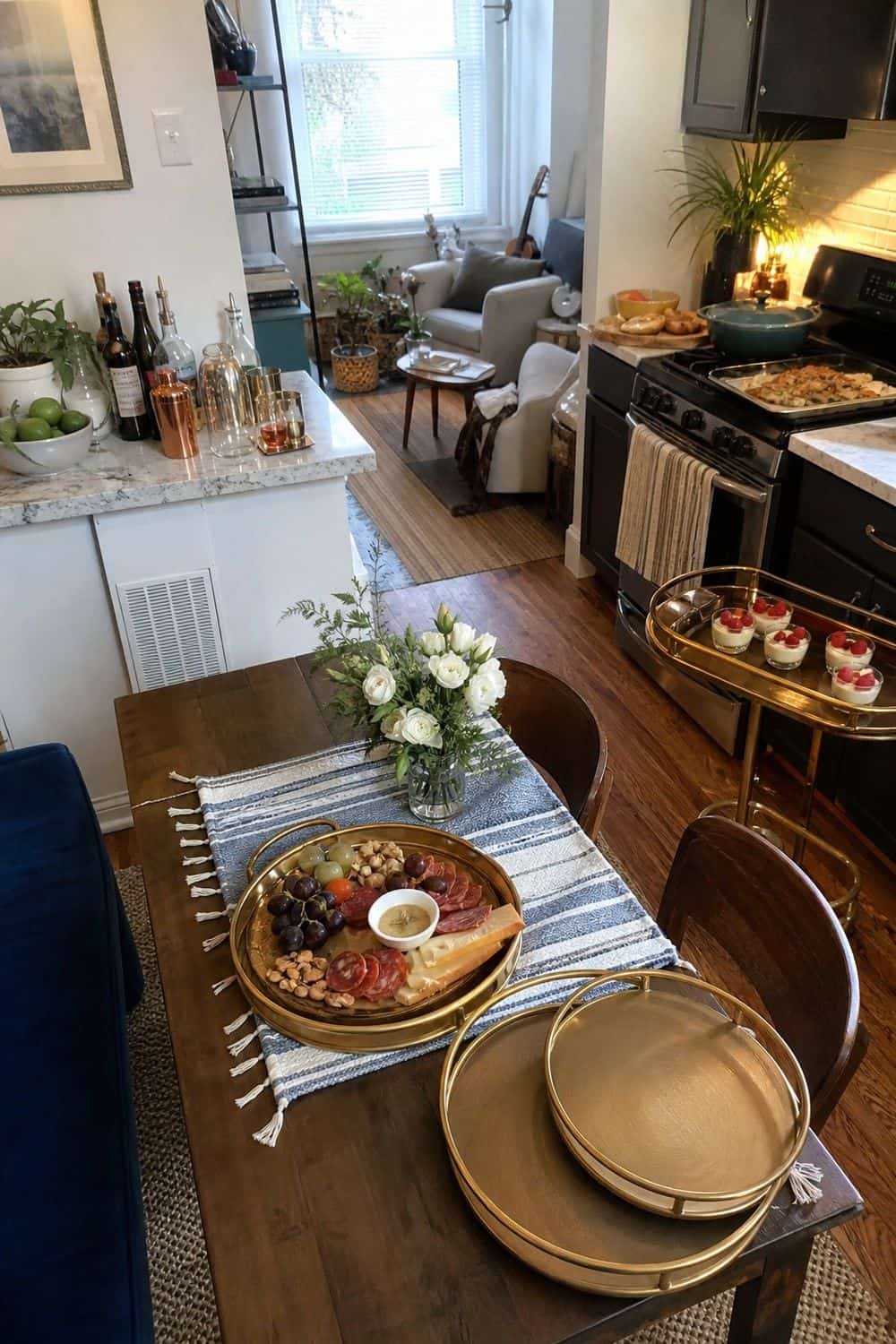
Nesting serving trays make a smaller dining area easier to host from. Put appetizers on a coffee table tray, drinks on the counter, dinner on the stove or side counter, and dessert on a tray that can move later. The dining table does not need to hold every course all night. Trays create chapters, which keeps the party moving without covering every available surface in dishes.
Stack the empty trays together between courses so they do not become clutter on counters or chairs after serving. The setup should make a smaller room feel flexible, not crowded by dishes or glasses everywhere.
24. Table and Sauce Finished Before the Doorbell
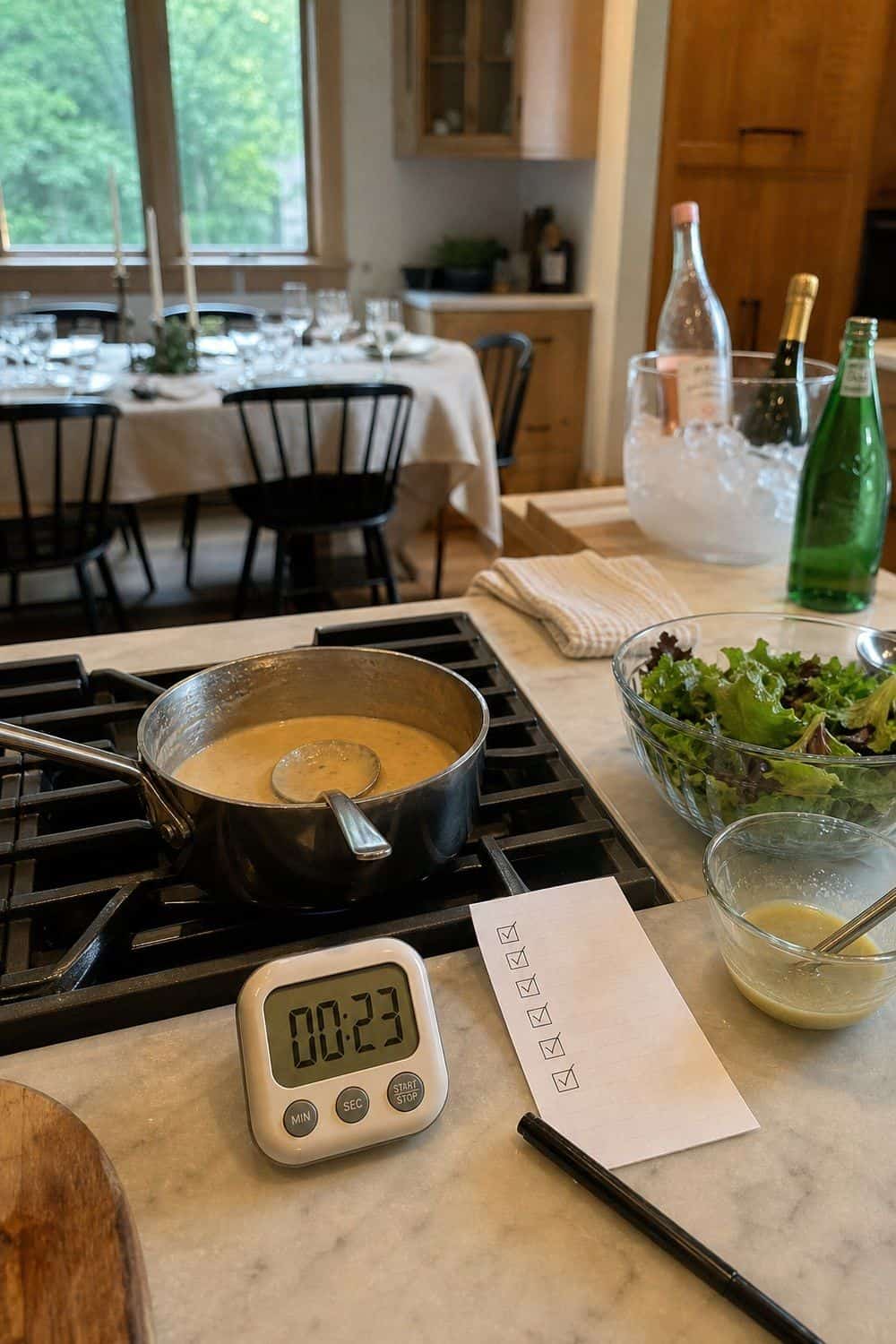
A kitchen timer is useful when the last hour needs structure. Set linens and glasses first, chill drinks, finish sauces, warm the main, and save salad dressing for the end. The point is calm timing, not gadget shopping. Avoid leaving table setup for the final 20 minutes, because that is when candles, water, labels, and serving spoons get forgotten. A relaxed host makes the room feel easier.
Write the last-hour order on a small note if needed and keep it by the timer near the stove. A visible checklist is better than trying to remember sauce, candles, and salad at once.
25. Glasses and Leftovers on One Landing Tray
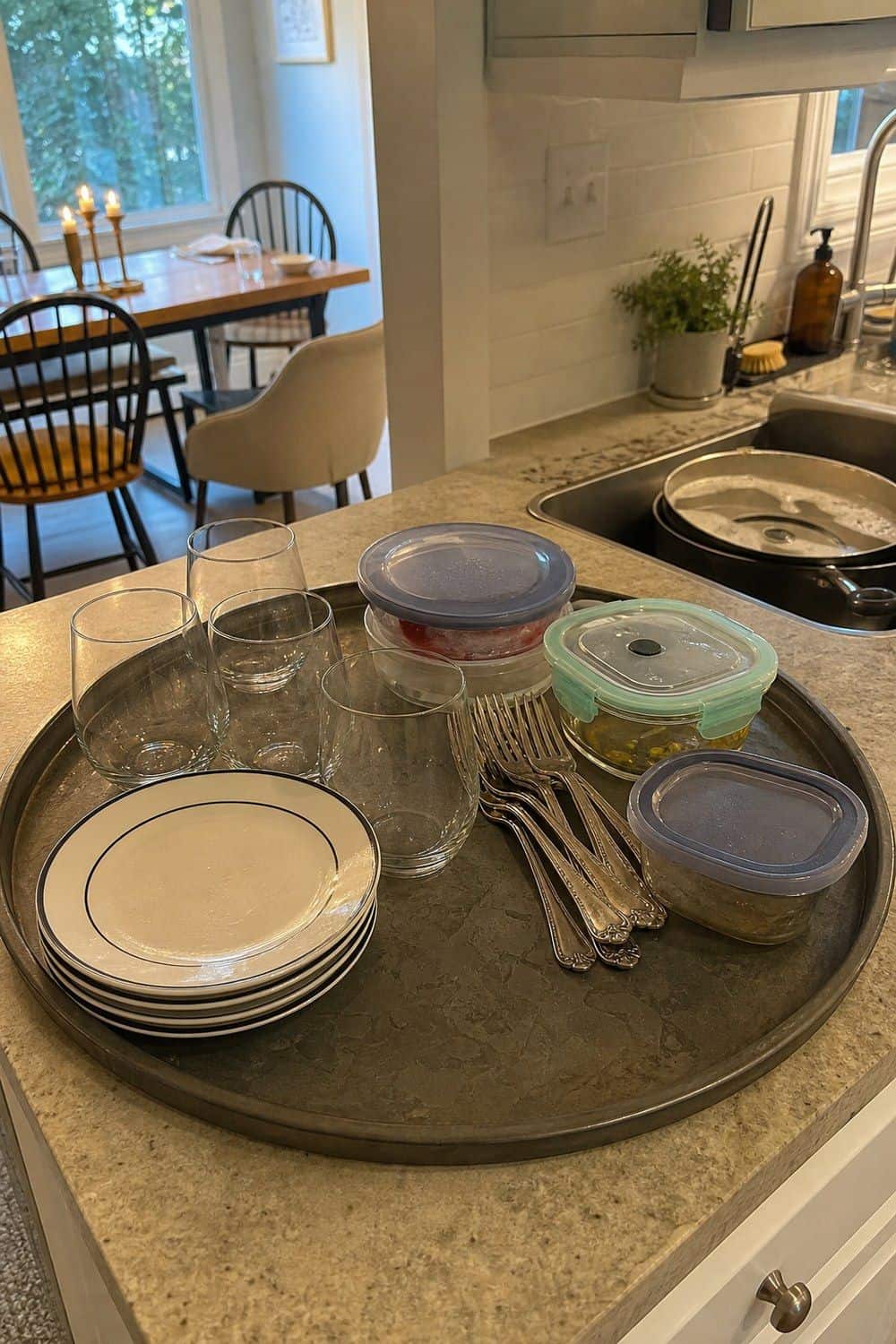
A large serving tray near the kitchen gives empty glasses, dessert plates, and used forks a landing spot before the counters turn chaotic. Set out small containers for leftovers before dessert, then let the first dishes soak while guests finish coffee or chocolate. Easy cleanup keeps the host present instead of disappearing into the sink. It also prevents the next morning from becoming the hidden cost of a good party.
Keep the tray out of the main serving path so it does not read as dirty dishes during dinner. It should appear when clearing begins after the main plates and salad bowl leave the table.
How to Keep a Neo Deco Dinner Party Practical
A Neo Deco dinner party feels current when the look is restrained. Use dark wood, marble, chrome, smoked glass, velvet, linen, and jewel tones in small doses, then let the menu and hosting flow do the real work.
Make the food plan generous but calm: one welcome board, one batched drink, one make-ahead main, one crisp salad, one warm side, bread, and an easy chocolate or citrus dessert. That structure gives the party shape without trapping the host at the stove.
For smaller homes, counter service, or no formal dining room, keep the table mostly clear. Use trays, sideboards, drink stations, and labeled dishes so guests can move naturally without crowding the kitchen or the table.
Frequently Asked Questions
What is a Neo Deco dinner party?
A Neo Deco dinner party is a modern, restrained Art Deco-inspired gathering with rich colors, dark wood, marble, smoked glass, candlelight, batch drinks, and practical hosting flow. It should feel moody and stylish without becoming a costume theme.
How do I make a dinner party look Art Deco without being too themed?
Use one or two Deco cues, such as coupes, marble, chrome, jewel-tone napkins, smoked glass, or low candlelight. Avoid costumes, props, and too many shiny details at once.
What food should I serve at a Neo Deco dinner party?
Serve a make-ahead braised main, crisp bitter salad, warm side, easy bread, and a low-effort chocolate or citrus dessert. Add a welcome board or no-cook snack plate so guests have something to eat right away.
What drinks fit a Neo Deco dinner party?
A French 75-style spritz, martini-style welcome drink, sparkling water, zero-proof spritz, and after-dinner coffee all fit the mood. Batch the first drink so the host is not stuck making cocktails all night.
How do I set a Neo Deco table?
Use matte linens, low candles, smoked glass, small bud vases, one glossy accent, and enough open space for plates and serving dishes. Keep centerpieces low enough for conversation.
Can I host a Neo Deco dinner party in a smaller home?
Yes. Use the counter as a buffet, a tray for appetizers, a compact drink station, and a mostly clear dining table. Trays help move courses without cluttering the room all night.
What can I make ahead for a Neo Deco dinner party?
You can make braised mains, sauces, dessert boards, drink bases, labels, table settings, and chopped salad components ahead. Dress the salad last and warm the main before guests arrive.
What should I avoid at a Neo Deco dinner party?
Avoid tall centerpieces, too many last-minute dishes, only alcoholic drinks, crowded bar areas, unlabeled food, and shiny decor that feels cheap. Guest comfort should guide every styling choice.
Final Thoughts
Neo deco dinner party ideas are strongest when the style supports the hosting. Choose a focused palette, use one or two Deco materials, batch the drinks, cook a main that can wait, and keep the table clear enough for food, water, and conversation.
When the serving flow, drink station, labels, and cleanup tray are planned early, the whole evening feels more relaxed and more memorable.
Last update on 2026-09-18 / Affiliate links / Images from Amazon Product Advertising API