
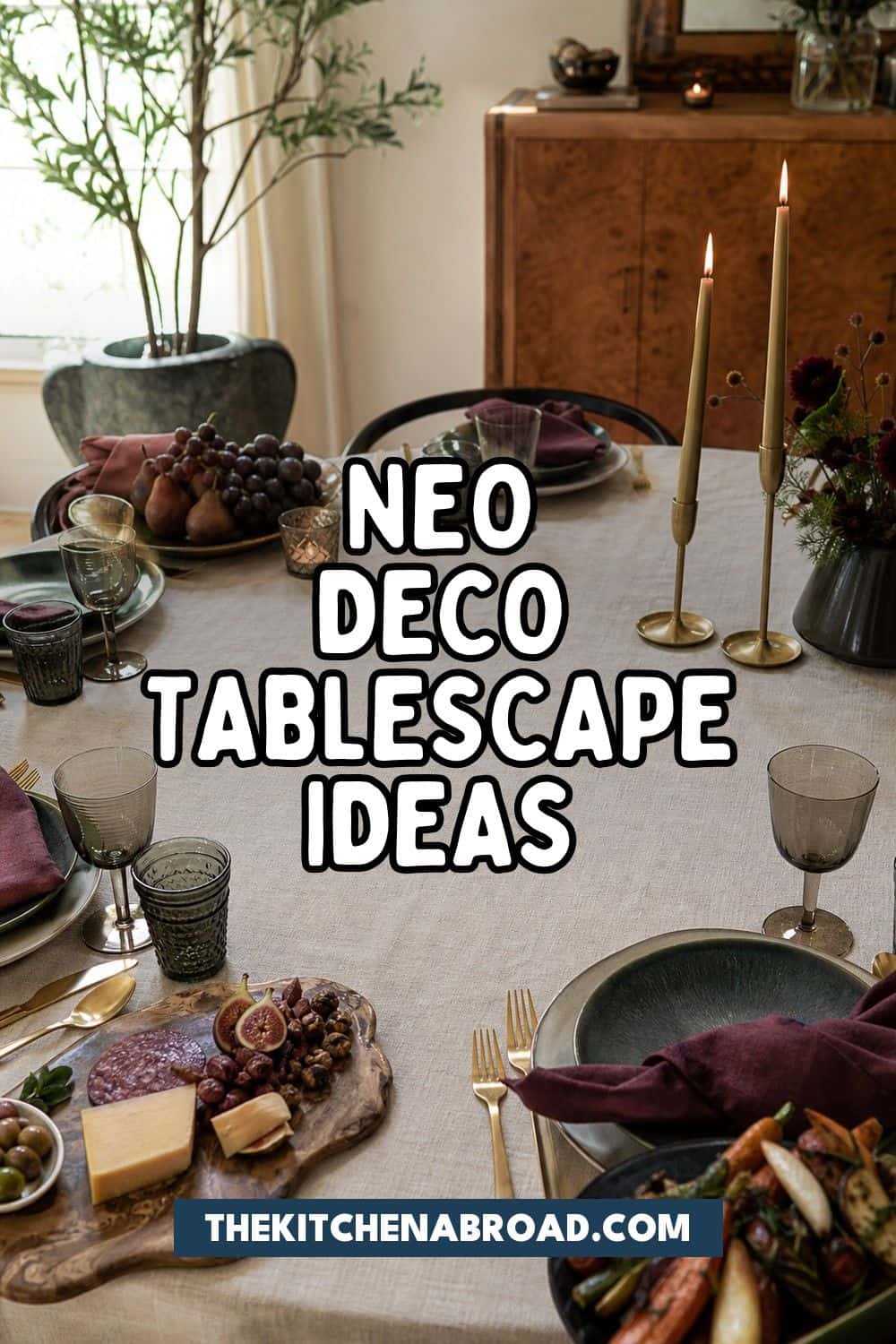
Neo Deco tablescape ideas feel modern when the table uses one jewel tone, matte linen, one repeated metal finish, smoked glass, low decor, and enough room around every plate. Keep the style practical by serving food from boards or trays, keeping centerpieces below conversation height, and using water, condiments, and cleanup pieces as part of the table plan.
A Neo Deco table borrows the richness of Art Deco without turning dinner into a theme party. Think dark wood, marble, smoked glass, brass or chrome, sculptural shapes, and jewel tones, then refine those ideas until the table still has space for food, drinks, elbows, and conversation.
This table style is built for real hosting: one strong color, one metallic finish, one geometric detail, low light, and materials that feel collected instead of overly arranged. The result is a table that looks moody and current without blocking guests once dinner starts.
Top Recommended Products
![Utopia Home [24 Pack, Hunter Green] Cloth Napkins 17x17 in, 100% Polyester](https://www.thekitchenabroad.com/wp-content/plugins/aawp/public/image.php?url=YUhSMGNITTZMeTl0TG0xbFpHbGhMV0Z0WVhwdmJpNWpiMjB2YVcxaFoyVnpMMGt2TkRFMFZVWnpWWFEwZVV3dVgxTk1NVFl3WHk1cWNHYz18MTc4OTkzNTkwNA= "25 Neo Deco Tablescape Ideas for Easy Hosting")


You Might Also Like These Blog Posts
- Neo Deco Dinner Party Ideas
- Cozy Holiday Tablescape Ideas
- Opera Aesthetic Tablescape Ideas
- Holiday Dinner Party Ideas
- Neo Deco Bar Cart Ideas
Neo Deco Tablescape Ideas for Easy Hosting
1. One Jewel Tone That Leads the Table
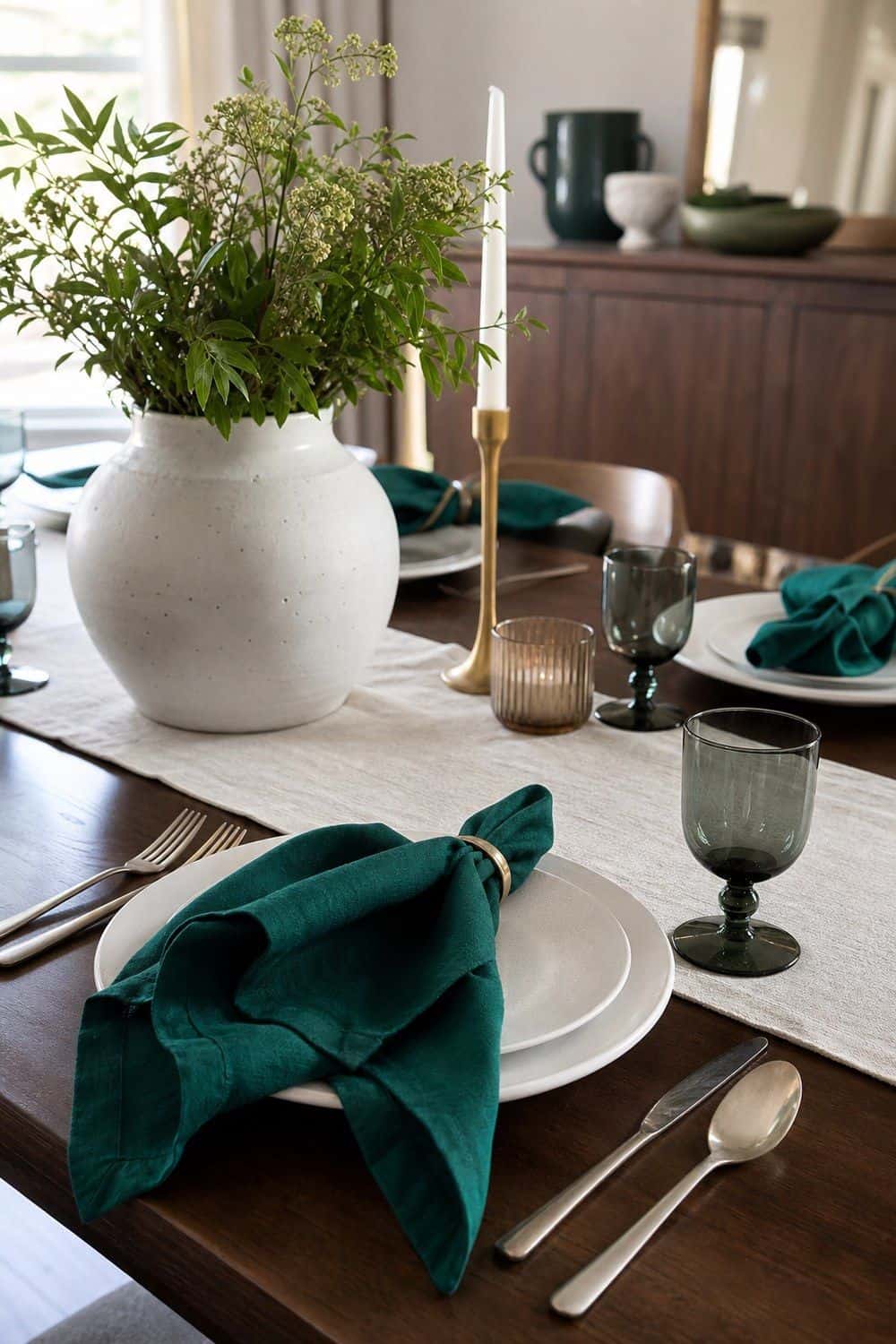
Emerald green cloth napkins can lead the whole table without making every object green. Choose one saturated color, such as emerald, oxblood, cobalt, smoky rose, ochre, or olive, then let it appear in two or three places only. Napkins, fruit, menu cards, or a single glassware detail are enough. The table feels richer when the jewel tone has room to stand against linen, dark wood, stone, and candlelight, especially once white plates, silverware, and food add their own color naturally.
2. Dark Wood Where Plates Need Warmth
Walnut charger plates bring warmth under white dinner plates and keep marble, chrome, and smoked glass from feeling cold. They belong on tables with enough width for flatware, water glasses, and elbows. If the charger pushes the fork too close to the table edge, use walnut somewhere else instead. A bread board, small dessert board, or sideboard tray gives the same dark wood cue without crowding each place setting or narrowing the guest’s eating space at the chair edge during courses.

3. A Marble Slab That Actually Serves Food
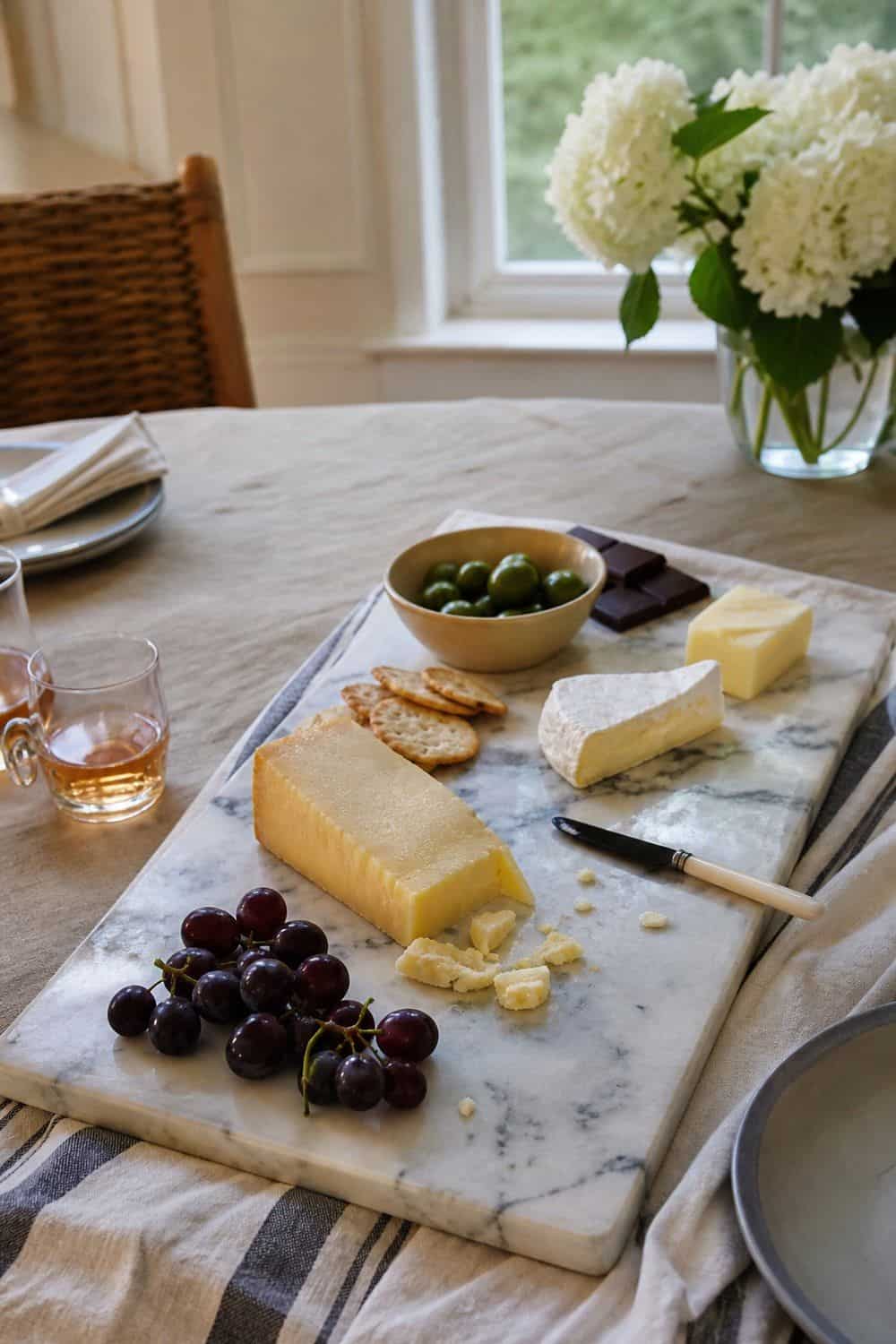
A marble serving slab looks sharp on linen, but it should earn its footprint by holding something useful. Use it for cheese, fruit, chocolate, butter, salt bowls, or small bites that guests can reach easily. Heavy stone is awkward when it becomes pure decoration, especially on a smaller table. Leave open space on both sides so plates can move, glasses can be refilled, and the slab feels like part of the meal rather than a barrier between guests and shared dishes.
4. Smoked Water Goblets for the First Pour
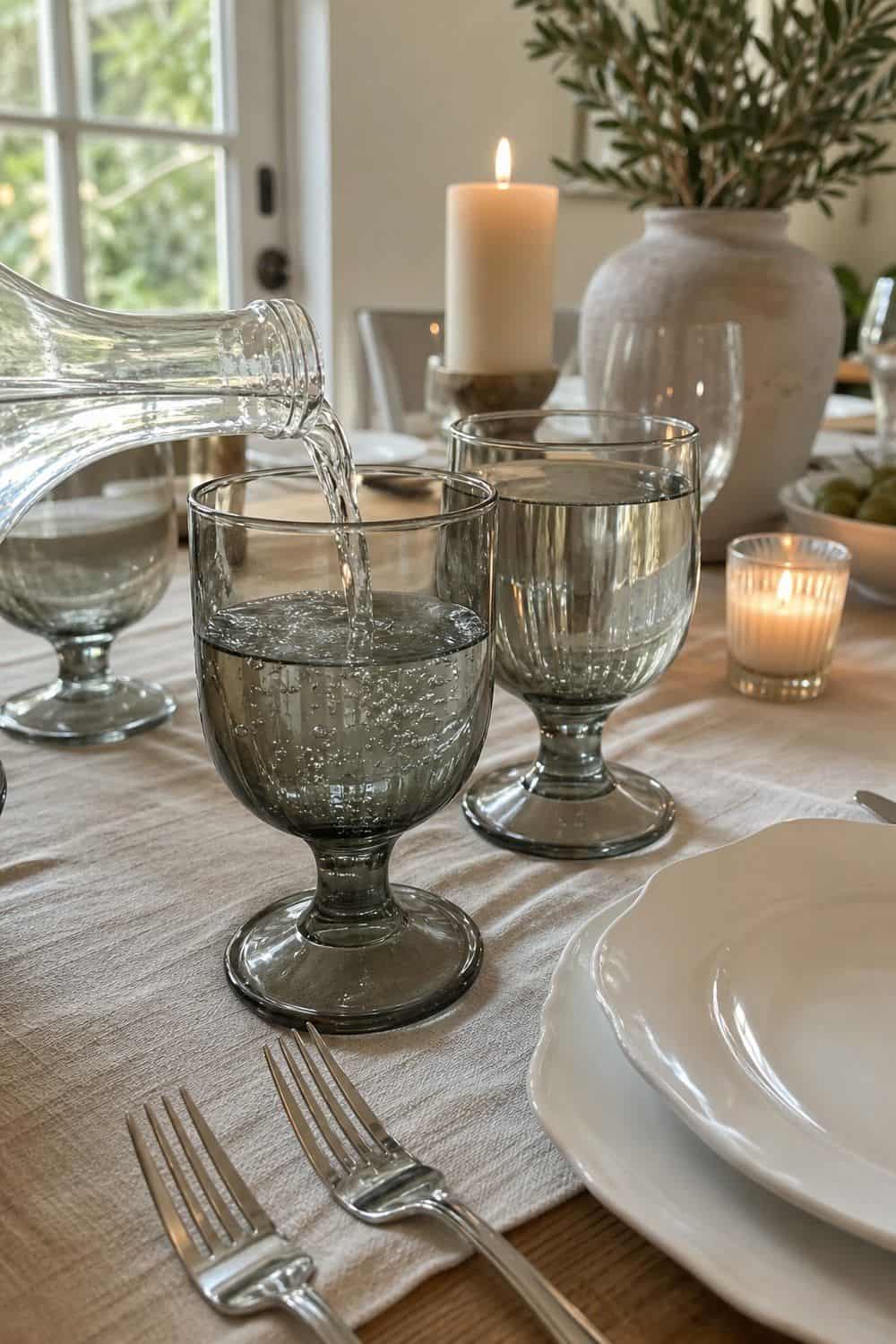
Smoked glass goblets are a useful Neo Deco cue because every guest needs water. Set them before dinner, fill them shortly before people sit down, and add wine glasses only if the menu calls for them. The smoky finish catches candlelight beside marble, brass, chrome, and dark wood. Keep each goblet close enough to reach comfortably and naturally, with no vase, candle, or fruit bowl forcing guests to stretch across the place setting or over hot food and sauce bowls mid-meal.
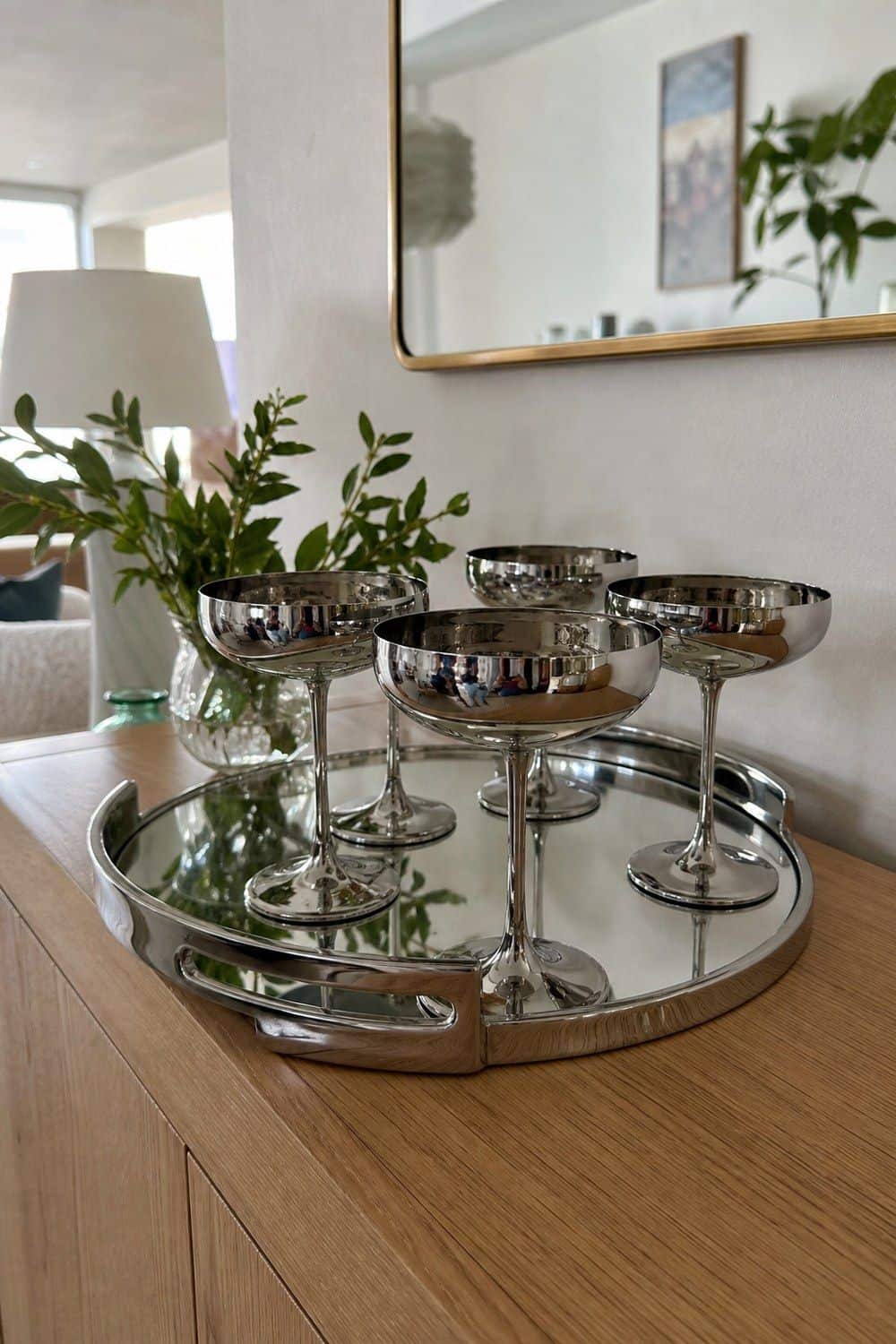
5. Chrome Coupes Waiting on the Sideboard
Chrome coupe glasses have more presence on a sideboard than squeezed between dinner plates. Stage them on a tray for a welcome pour, dessert cocktail, sparkling water spritz, or zero-proof drink. The polished finish still catches candlelight, but the dining table stays clear for water, flatware, and food. Set out only the number you need plus a few extras, so the tray looks ready rather than packed like storage or a bar shelf after a party ends in the kitchen.
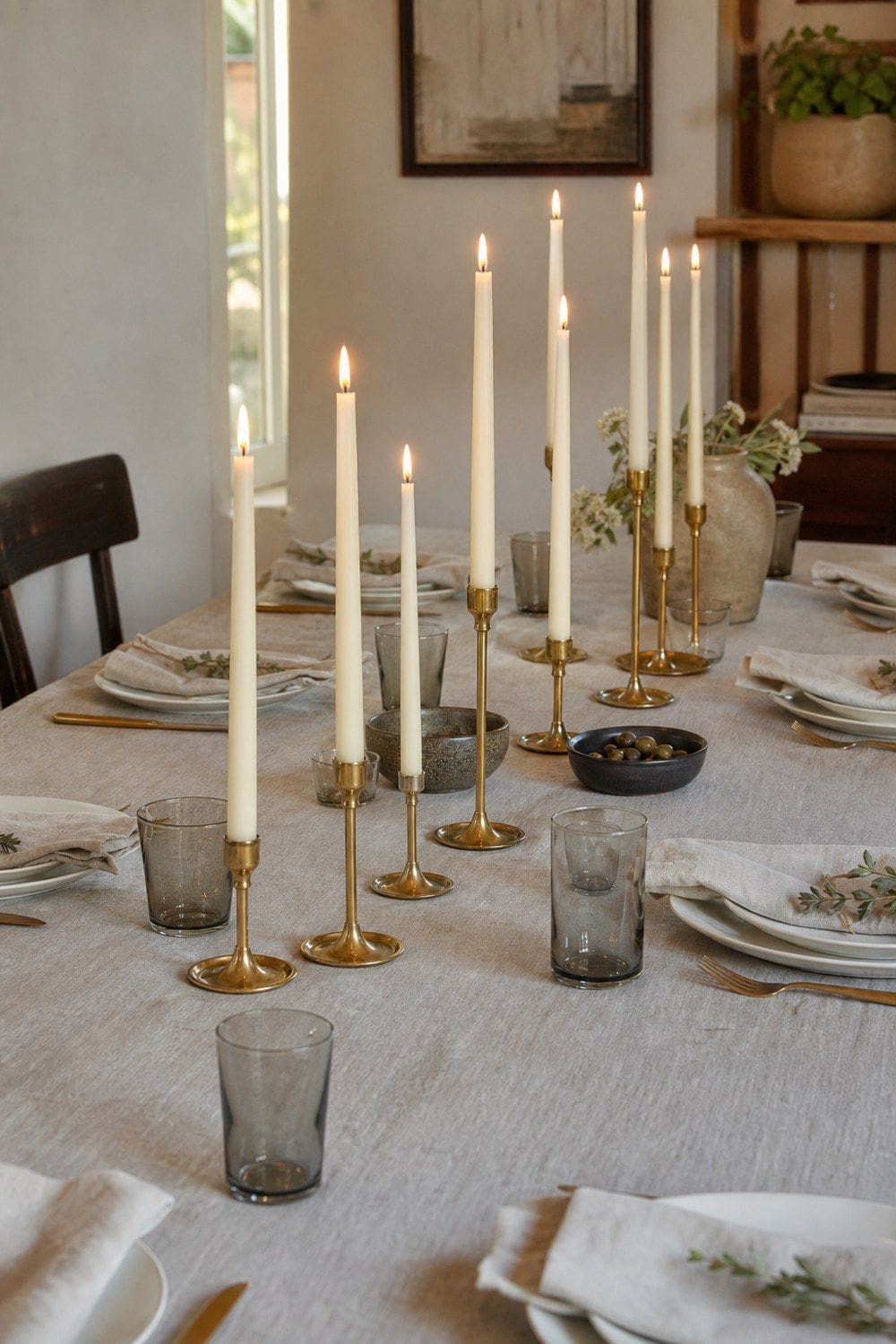
6. Brass Tapers in a Low Center Line
Brass taper candle holders create a long, low glow without the bulk of a central arrangement. Use unscented tapers, stable holders, trimmed wicks, and enough space between flames and napkins. Brass looks strongest against linen and smoked glass when the holders are slim, not novelty-shaped. Keep the line tight to the runner, then test the table with a platter in hand so serving dishes still have a clean path around glassware, place cards, folded napkins, and bread plates safely nearby.
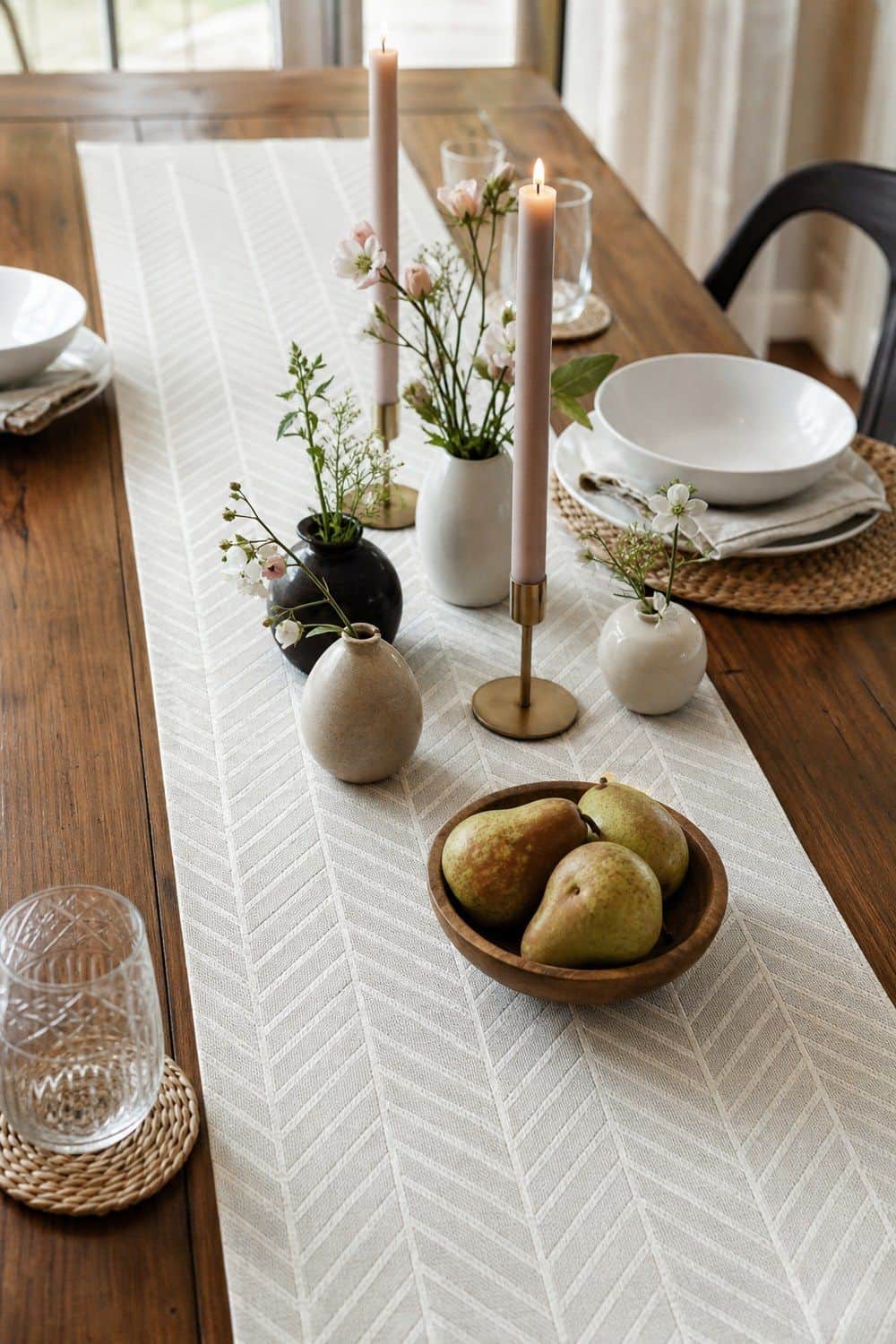
7. A Geometric Runner as the Boundary
A geometric runner can carry the Art Deco reference without putting pattern under every fork. Look for quiet chevrons, fan shapes, stripes, or linear motifs, then let the runner define the center decor zone. Candles, small vases, fruit, and trays stay inside that strip. If the runner is busy, keep plates, napkins, and menu cards plain. One geometric moment is easier to read than a table full of competing motifs, especially in low candlelight with smoked glass at each seat.
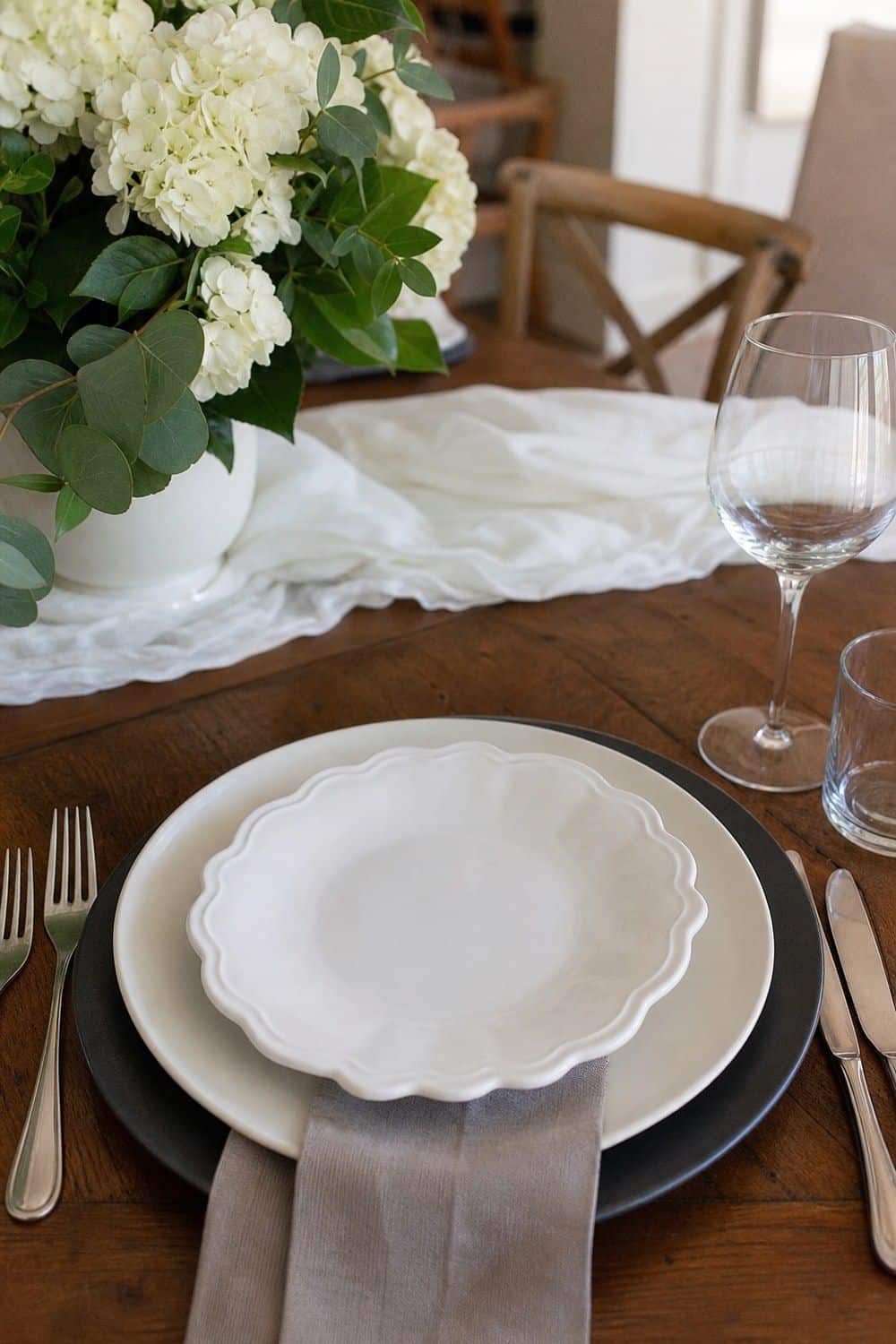
8. Scalloped Plates for a Softer Deco Edge
Scalloped salad plates bring in a curved Deco detail without making the whole setting ornate. Pair them with plain dinner plates so the stack has shape but still feels calm. The scalloped edge can sit over a dark charger, linen napkin, or simple white plate, depending on table width. Before adding the extra layer, set the flatware and glassware first. If everything shifts outward, the plate detail is too expensive in space for a seated meal with courses and drinks.
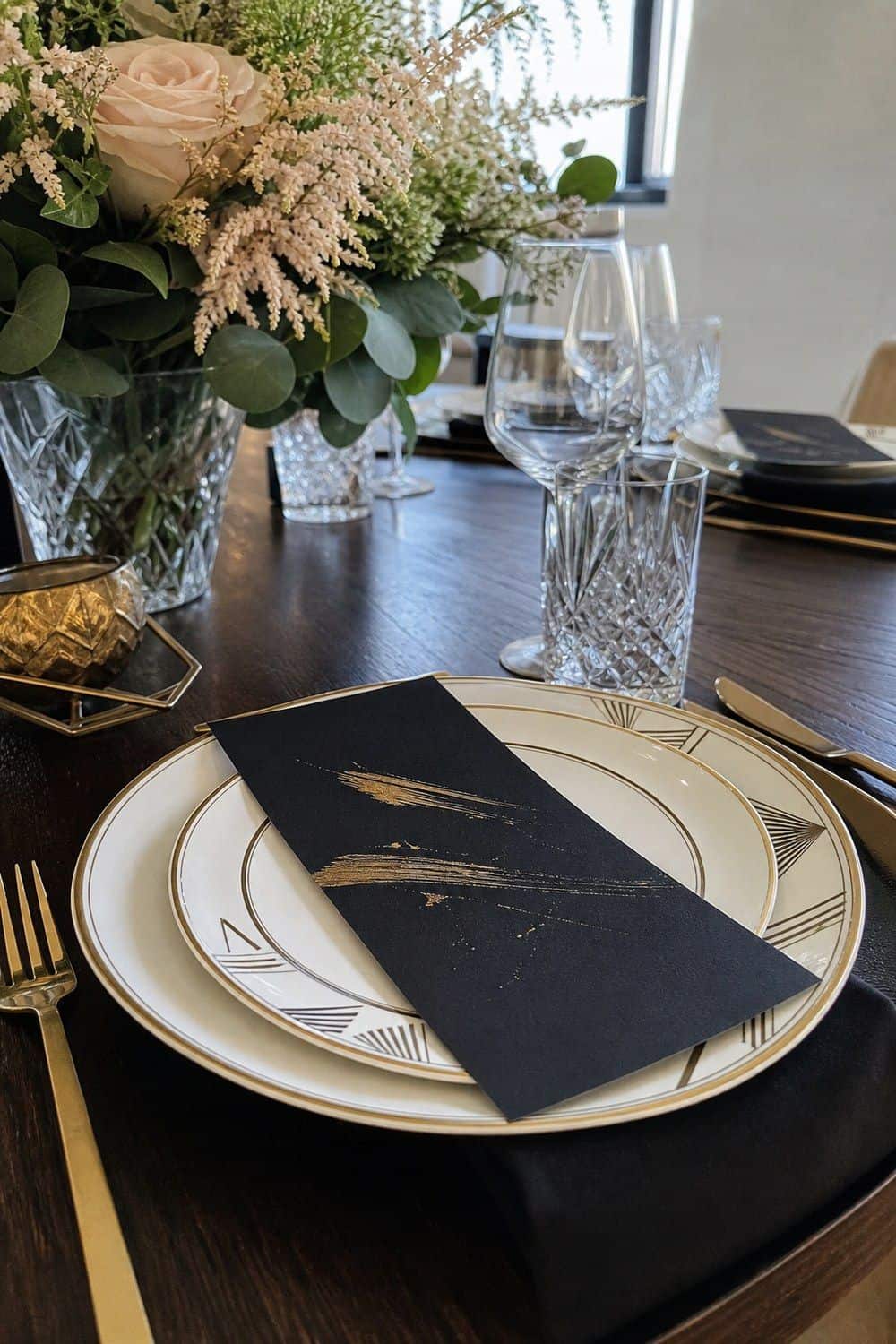
9. Black Menu Cards Guests Can Read
Black menu cards with metallic ink give the table contrast and help guests understand the meal. Use them for dish names, allergens, vegetarian notes, or a short welcome line. Readability matters more than decorative lettering, especially once the room is dim. Choose a simple font, print larger than you think, and place the card where it will not be covered by a napkin, charger, or water goblet after guests unfold their linens at the seat setting before eating dinner together.
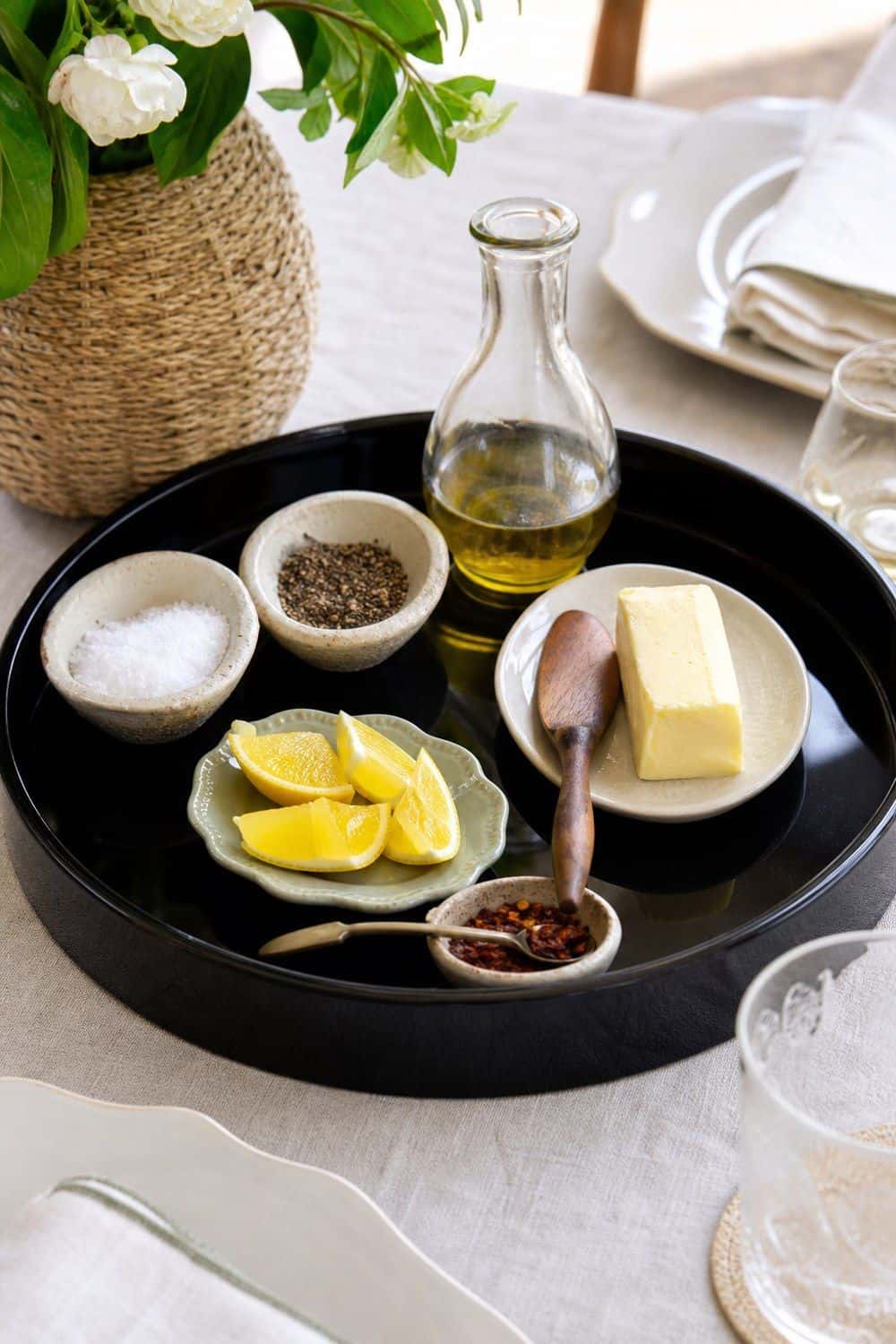
10. Condiments Gathered on One Lacquer Tray
A black lacquer tray gives gloss and order at the same time. Use it for salt, pepper, butter, chili flakes, lemon wedges, or small sauce bowls so tiny items do not scatter between plates. This is the most useful kind of shine because guests actually reach for it. Keep the tray small enough to pass, and give it a clear home near the center instead of letting condiments drift around the candles, menus, and glasses loosely between courses or plates.
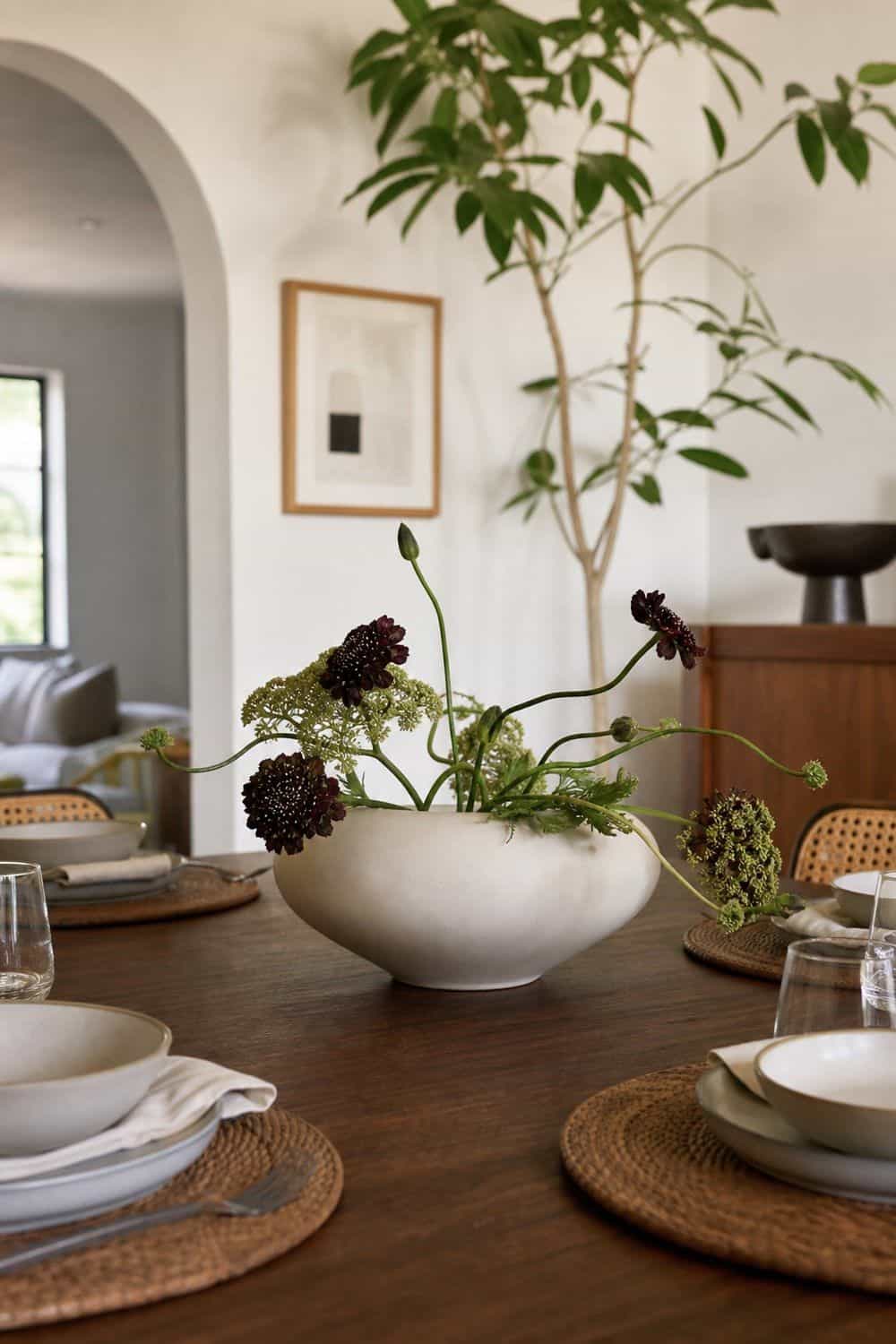
11. Low Florals With Sculptural Shape
A low ceramic vase keeps flowers below conversation height while still giving the table shape. Try anthurium, tulips, ranunculus, branches, or one sculptural stem instead of a tall mixed arrangement. Sit down and check the sightline across the table before guests arrive. If the flowers block faces, move the vase to the sideboard or split the stems into smaller vessels. The floral moment should add movement, not become a screen between place settings, shared food platters, or candlelight at dinner.
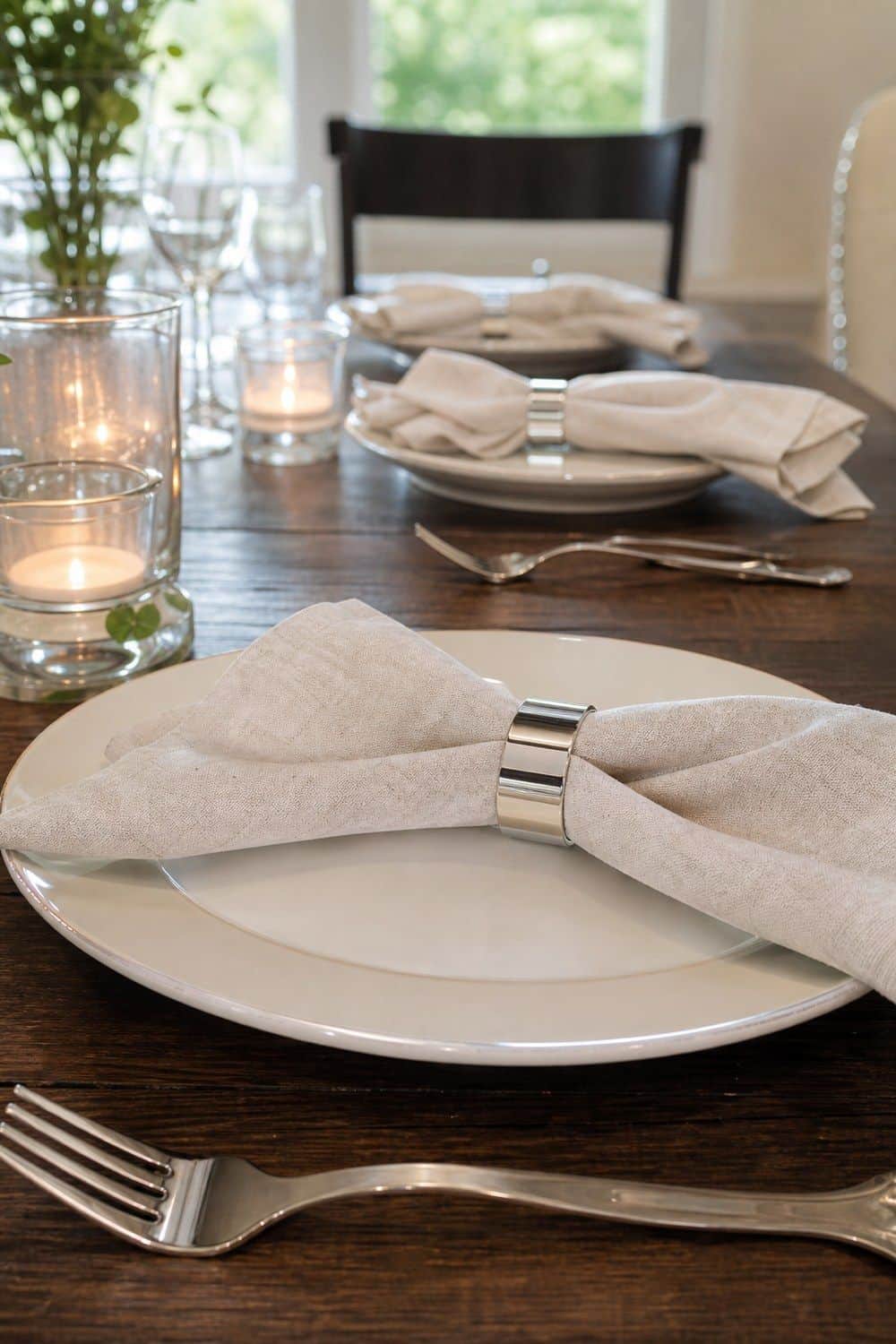
12. Napkin Rings as the Only Seat-Side Shine
Chrome napkin rings are a compact way to repeat the metal finish without adding more objects to the center. Pair them with plain linen napkins so the shine stays focused. The fold should open easily when food arrives, so avoid knots that trap the ring or knock over the menu card. If the table already has chrome coupes or a mirrored tray, napkin rings may be the only metal each seat needs beside the plate, fork, and glassware at dinner.
13. Burl Wood for Bread or Dessert
A burl wood serving board adds the collected side of Neo Deco while giving bread, cheese, or small dessert bites a clear place. It fits especially well when the main setting is linen, marble, and smoked glass, because the wood keeps the table from feeling too sleek. If walnut chargers are already in use, place the board on the sideboard instead. The wood should support serving, not repeat itself at every seat or compete with chargers for attention visually across the table.

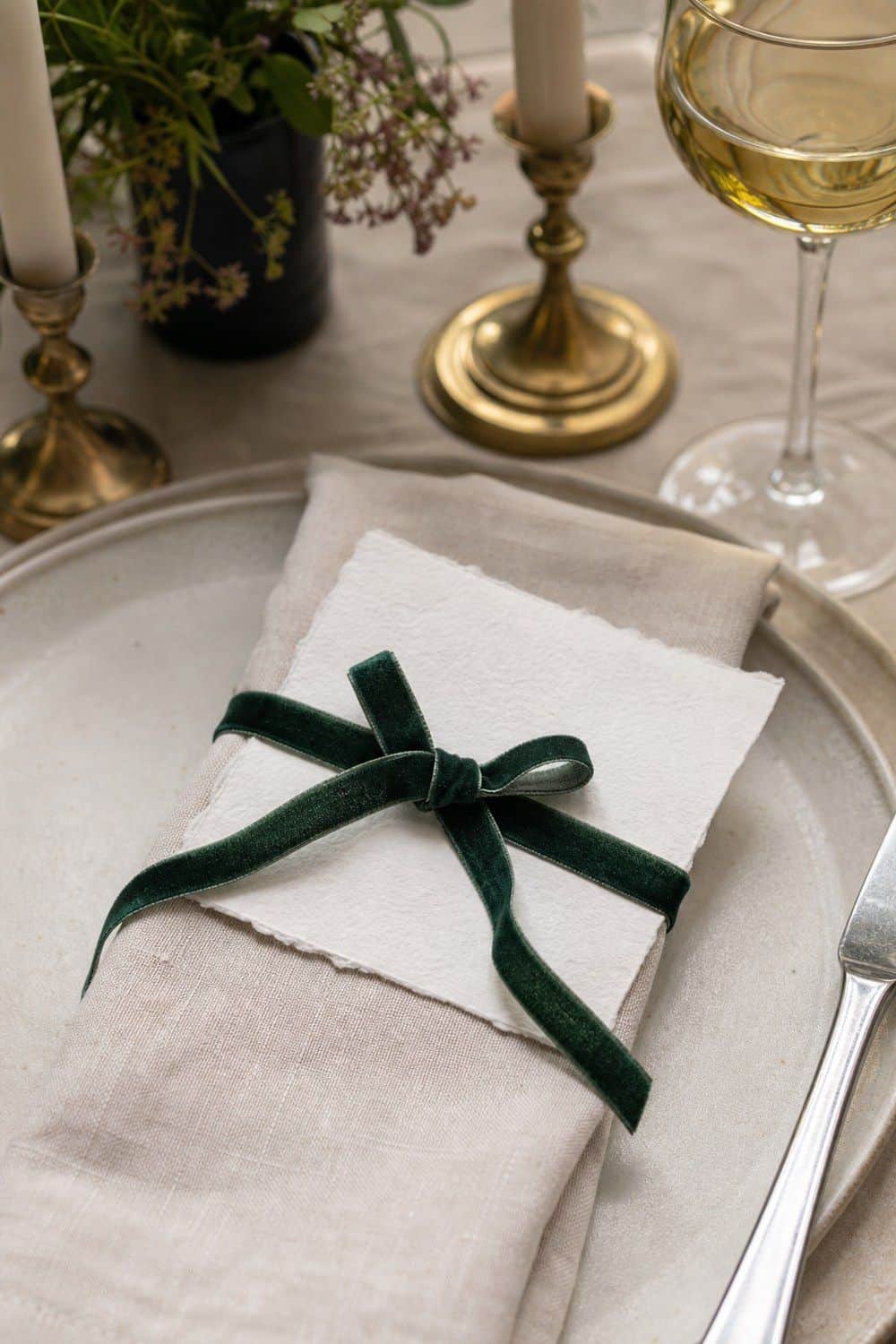
14. Velvet Ribbon in One Small Moment
A velvet ribbon roll can add tactile richness without turning the whole table into a velvet theme. Tie menu cards, napkins, or tiny favor boxes with a narrow strip in emerald, oxblood, black, or smoky rose. Keep the knot loose enough to remove with one hand.
Ribbon is strongest as a small texture note. If every glass, card, and favor has a bow, the table starts to feel gift-wrapped instead of tailored. Choose the item that needs softness most, then leave the other surfaces clean.
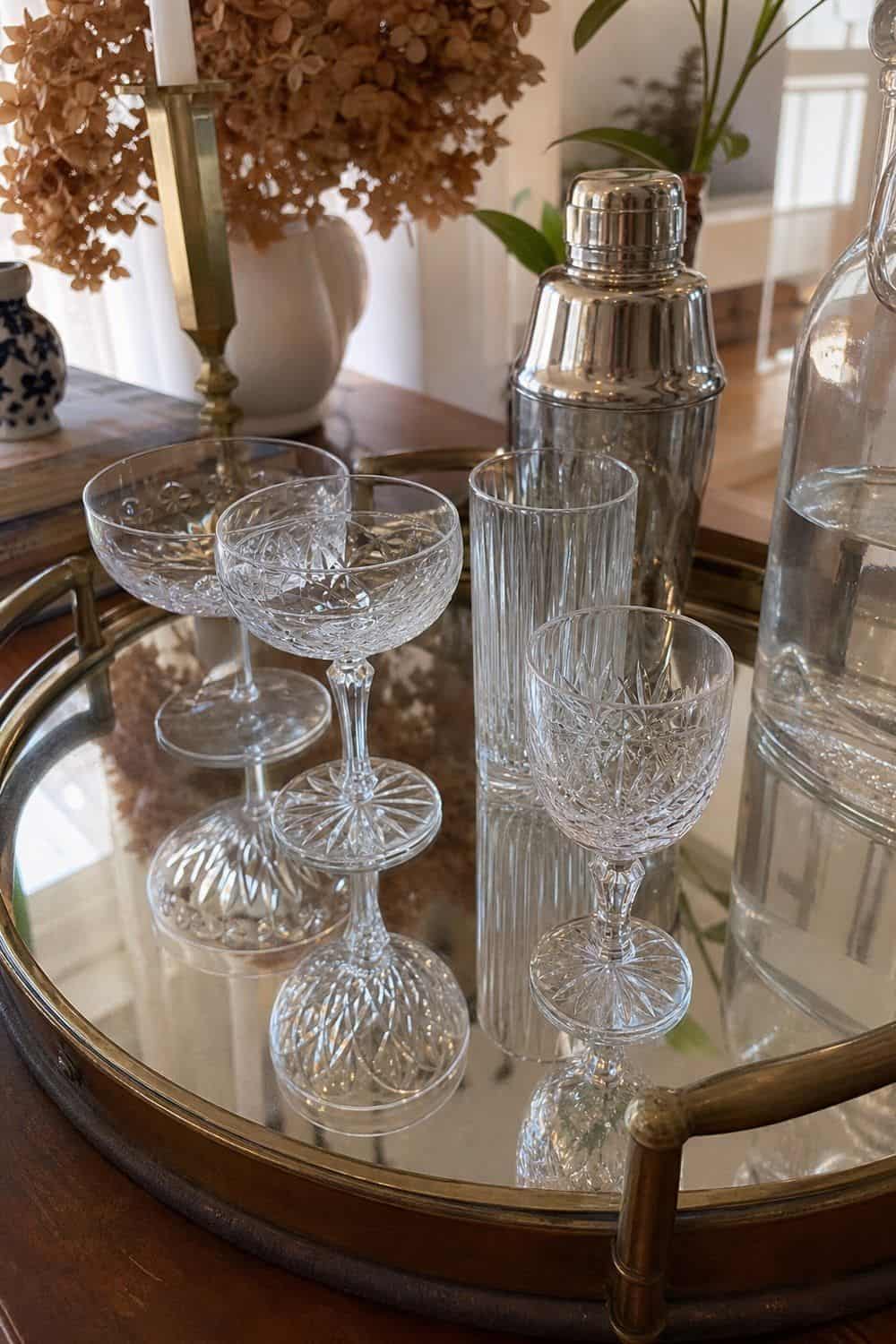
15. Vintage Glassware Reflected Off a Tray
A mirrored serving tray is ideal for extra water glasses, coupes, or after-dinner drinks on the sideboard. It captures the reflective Neo Deco look without crowding the dining table. Polish the tray before guests arrive so fingerprints do not catch candlelight more than the glassware.
Leave space beside the tray for pouring, lifting, and returning glasses. A tray that fills the whole sideboard creates the same crowding problem you were trying to avoid on the table, just in a different place.
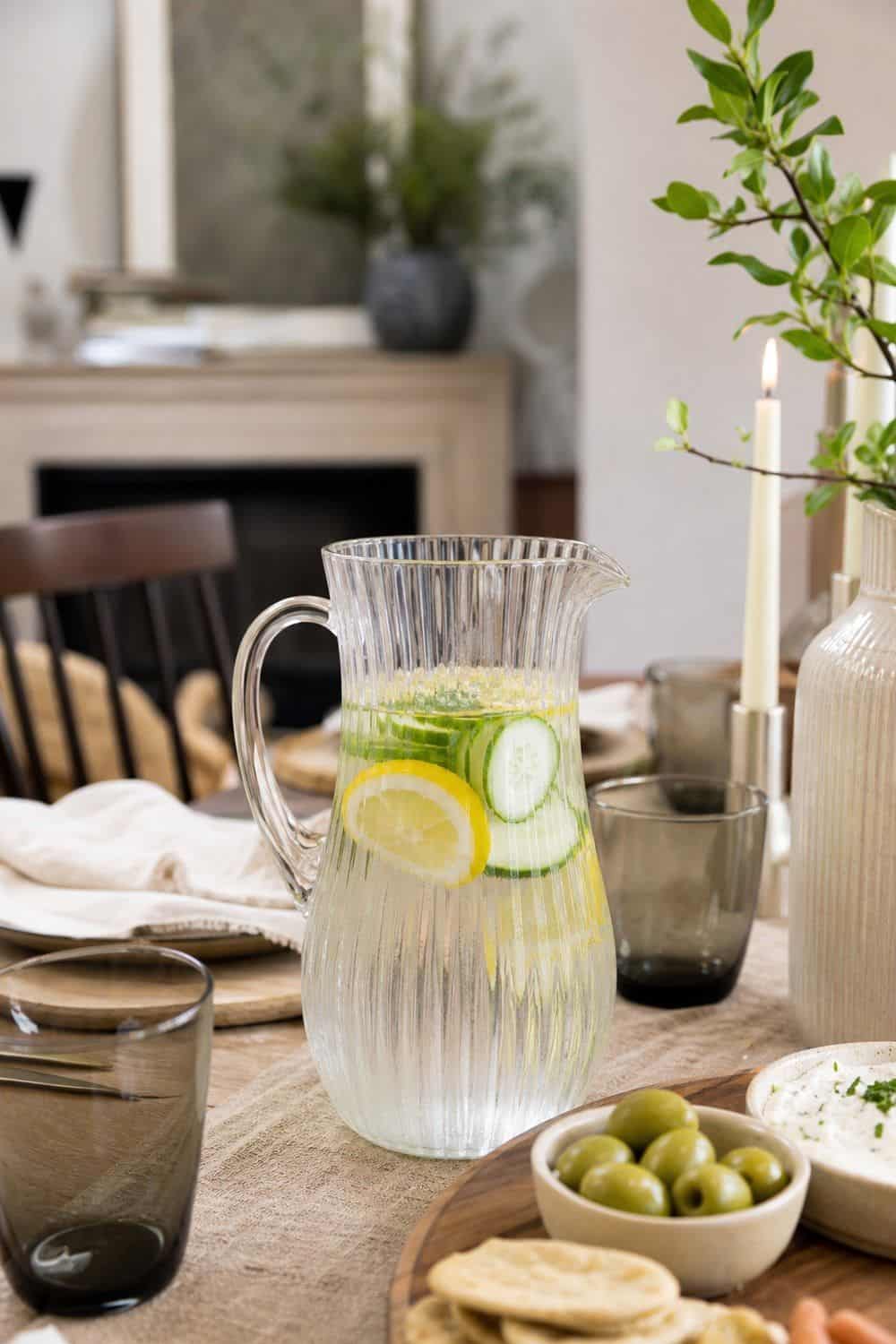
16. A Fluted Pitcher That Keeps Water Moving
A fluted glass pitcher brings Deco texture to the table while making water easy to refill. Fill it with chilled water, citrus slices, cucumber, or plain sparkling water, then place it where guests can reach it without crossing over candles. The pitcher should feel like part of the setting, not a forgotten utility piece.
Check the level before dessert or another round of drinks begins. A beautiful pitcher still needs a host’s eye, especially when the menu includes salty snacks, wine, or rich dishes that make water disappear quickly.
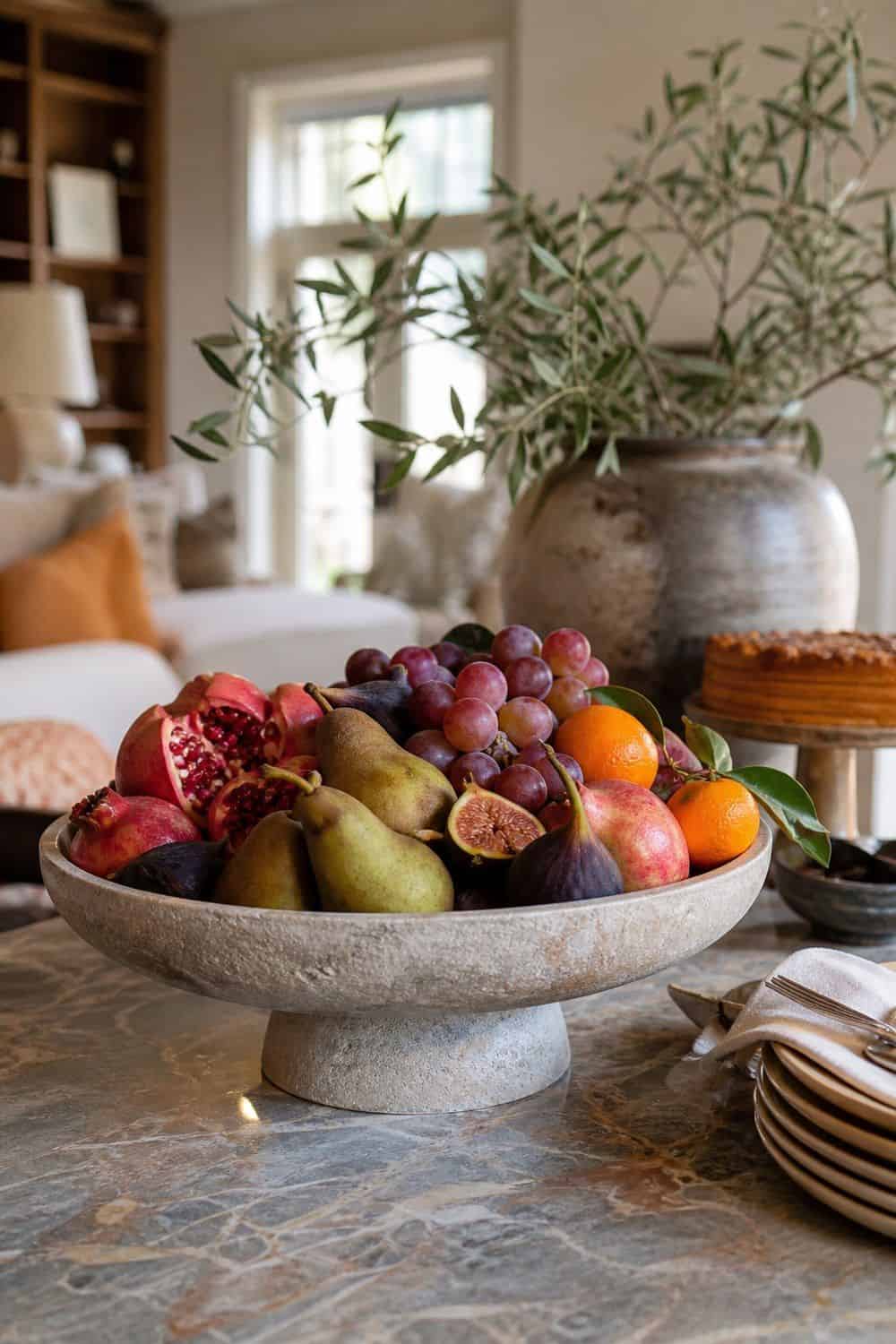
17. Stone Fruit Bowl With a Dessert Plan
A stone pedestal bowl creates a sculptural moment with food instead of fake decor. Fill it with pears, figs, grapes, citrus, or pomegranates so the color supports the jewel-tone palette. Keep the bowl low enough for conversation, or move it slightly off-center if the pedestal has height.
Choose fruit that can move into dessert, a cheese board, or a late drink garnish. Avoid stacking it so high that pieces roll toward plates. The bowl should look abundant but still leave room for serving spoons and glasses.
18. Matte Linen Against Glossy Glass
A natural linen tablecloth keeps the table from becoming too glossy when you add smoked glasses, brass candles, marble, and chrome. The formula is simple: linen base, smoked glassware, one metal finish, and one stone or wood piece. Matte texture gives all the polished pieces somewhere calm to land.
Avoid glossy everything. If the tablecloth, plates, glasses, tray, and candles all shine at once, the eye has nowhere to rest. Linen gives the setting a softer pause and makes the reflective pieces feel more deliberate.

19. One Art Deco Pattern Away From the Plates
Art Deco cocktail napkins are a good place for a fan, arch, or chevron motif because they can live at the drink station instead of every plate. One pattern reads deliberate; five patterns read chaotic. Let the dinner table stay mostly solid, then place the patterned napkins beside coupes, a bar cart, or dessert drinks.
This keeps the motif visible without turning the table into a printed backdrop. If the runner already has pattern, skip patterned napkins and use plain cloth instead. The style reads cleaner when the motif appears in one planned location.

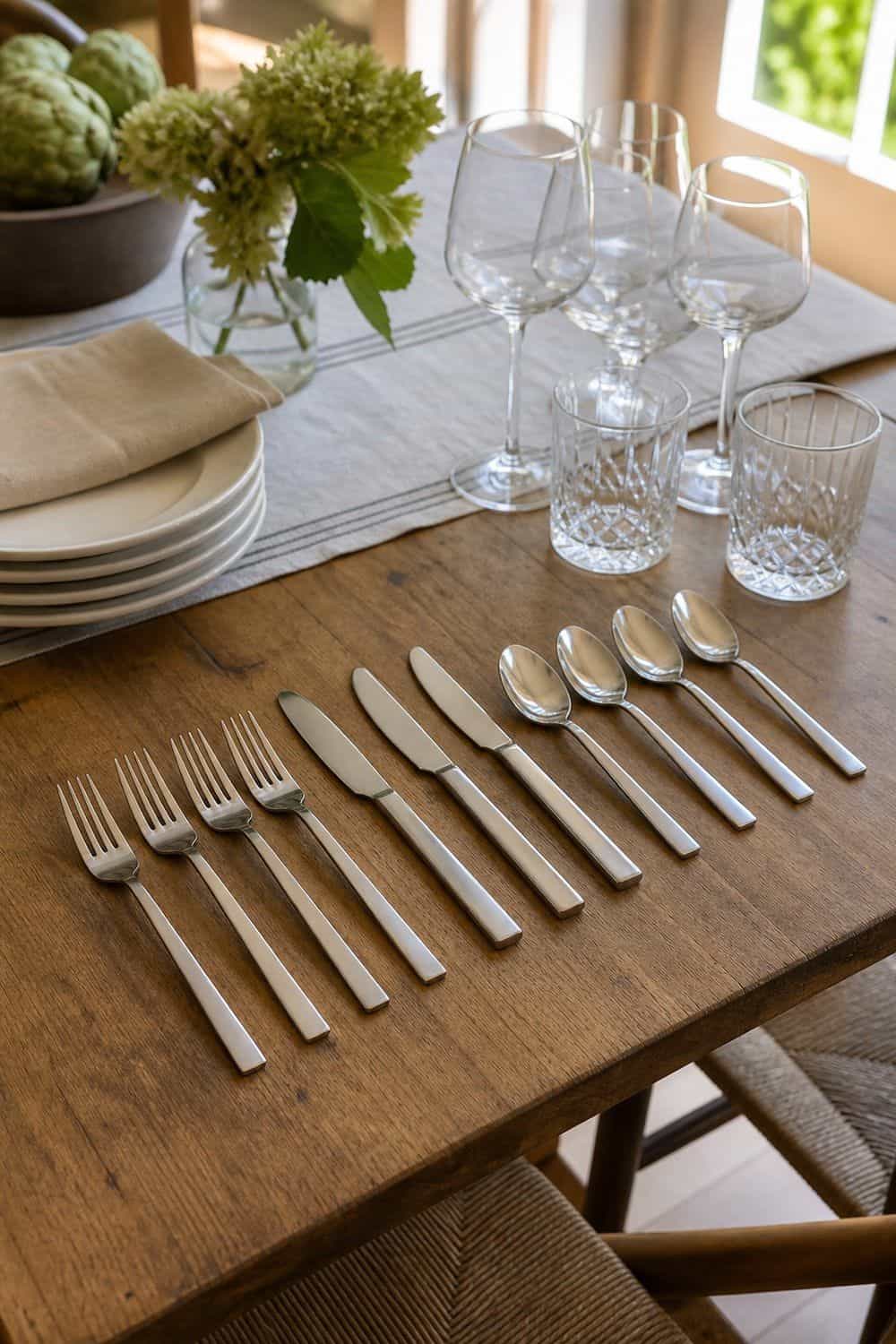
20. Flatware Lines That Do the Styling
A stainless steel flatware set can make the table feel geometric without adding another decorative object. Align forks, keep knives straight, set spoons parallel, and place glassware cleanly in the upper-right area. That order supports the Neo Deco mood through spacing and repetition rather than another centerpiece.
Polish flatware ahead of time and set it before candles are lit. Bent lines, mismatched angles, and water spots stand out more on a table built around clean shapes. The place setting itself becomes part of the design.
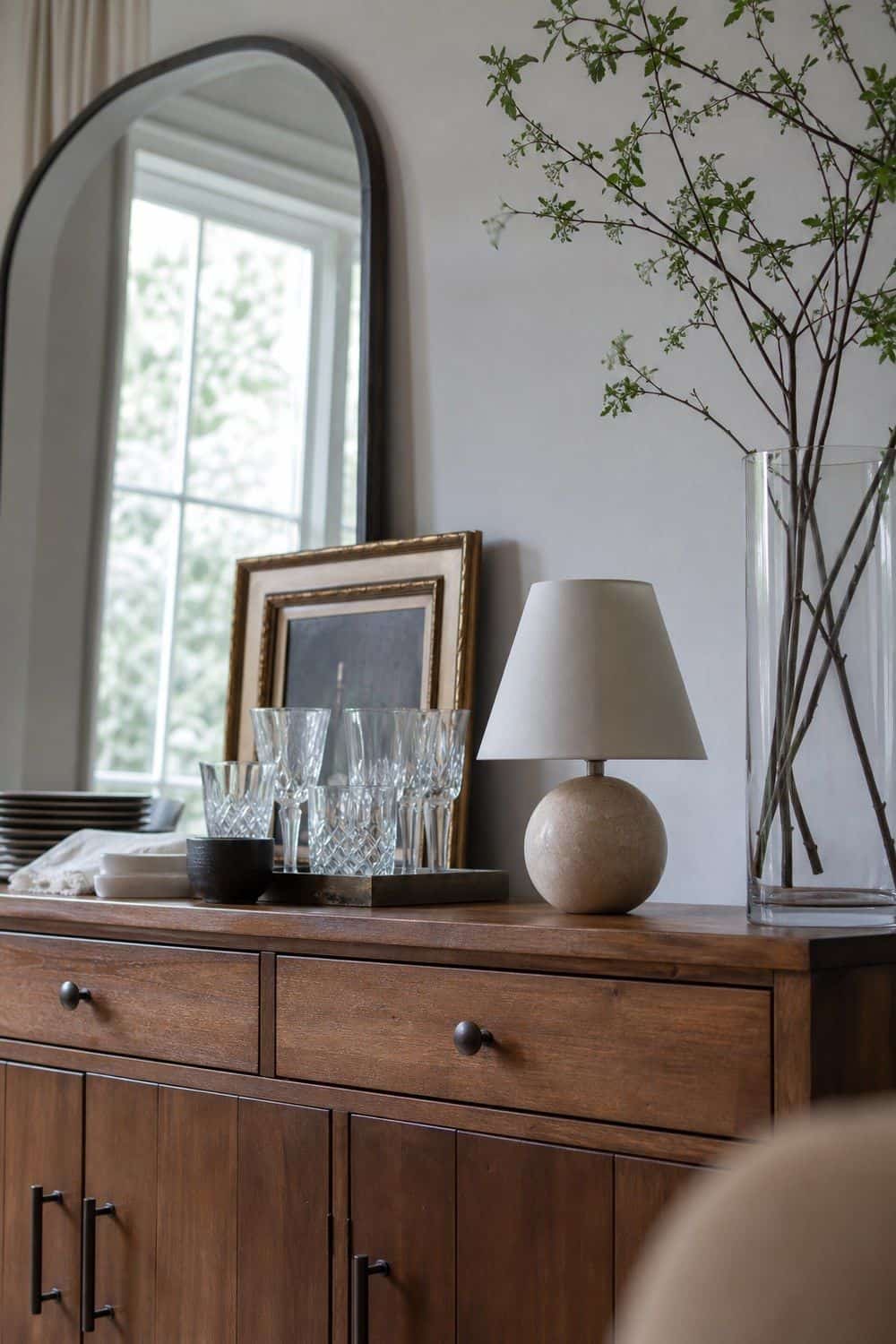
21. Sideboard Lamp Light Instead of Overhead Glare
A rechargeable sculptural table lamp belongs on the sideboard, console, or buffet, not in the middle of plates. It adds the sculptural lighting cue Neo Deco likes and gives the room a softer glow than overhead lighting. Place it near glassware, dessert, or the drink tray so the reflection has a purpose.
Charge the lamp early and test the brightness after sunset. If it throws shadows across food, move it behind the sideboard display or lower the setting. Lighting should flatter the table while keeping serving paths clear.
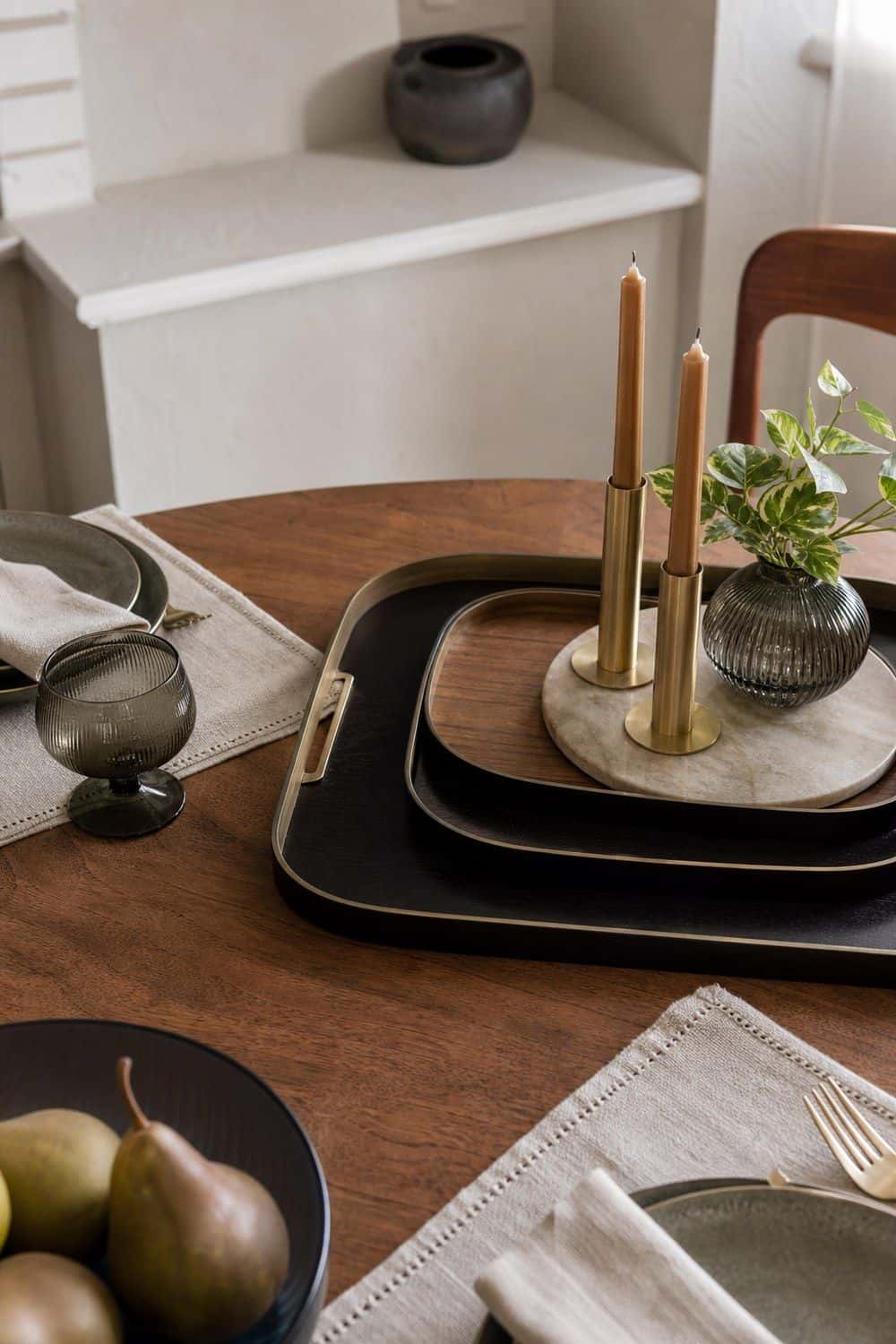
22. Small-Table Neo Deco With Breathing Room
Nesting serving trays help a small dining table hold the look without holding every dish. Use linen placemats, smoked glasses, two brass tapers, one marble or wood board, and trays for food off the table. A smaller surface needs fewer strong pieces, not miniature versions of every idea.
Keep the center open enough for plates, hands, and water glasses. If a guest has to move decor to cut food, remove one object from the surface. Breathing room is what keeps a compact table looking deliberate.
23. Oxblood Fruit Over Plastic Holiday Decor
A dark ceramic fruit bowl filled with pomegranates, red grapes, cherries, plums, or blood oranges gives the table deep color without plastic ornaments or fake fruit. Natural food decor fits hosting because it can shift to dessert, drinks, or a sideboard snack later. Choose fruit that matches the season and the menu.
Keep the bowl low and wipe any juice, dust, or sticker residue before placing it on the table. Real fruit has enough shine and color on its own. The table feels more refined when the decorative pieces are also edible.

24. A Dish-Drop Tray That Protects the Mood
A large metal serving tray near the kitchen or sideboard gives empty glasses, dessert plates, and used napkins somewhere to land. The metal can echo chrome or polished nickel without becoming another centerpiece. This small cleanup station keeps the table elegant after the first course instead of letting dishes collect around candles.
Set the tray out before guests sit down, not after the table is already crowded. A planned landing spot also helps people clear a plate without disappearing into the kitchen. The mood lasts longer when cleanup has a place.

25. The Seated Check Before Guests Arrive
A taper candle snuffer is helpful at the end of the meal, but the bigger habit is the seated check before dinner. Sit down, reach for water, look across the table, rest cutlery, and imagine passing bread. If any movement feels blocked, remove one shiny object before the table is photographed or served.
Neo Deco should feel rich, not crowded. Snuff candles safely after the meal, then clear the tray before wax, crumbs, or glassware take over the setting. The final table check is not about removing style; it is about protecting comfort.

How to Keep a Neo Deco Table Practical
Neo Deco differs from traditional Art Deco because it is more modern, restrained, tonal, and livable. Use dark wood, marble, chrome, brass, smoked glass, velvet, and linen in a controlled way, then let food, water, trays, and serving boards become part of the tablescape.
Keep centerpieces low, candles unscented and stable, and glassware reachable. For small tables, apartments, sideboards, and buffets, use one jewel tone, one geometric motif, and off-table serving trays so the look stays strong without stealing dinner space.
Frequently Asked Questions
What are Neo Deco tablescape ideas?
They are modern Art Deco-inspired table-setting choices using jewel tones, dark wood, marble, chrome, brass, smoked glass, geometric details, and practical spacing. The style should feel rich and current without blocking food, glasses, or conversation.
How do I make a table look Neo Deco?
Choose one jewel tone, one metallic finish, smoked glass, dark wood or marble, low candlelight, and a single geometric motif. Keep the rest of the table restrained so plates, water, and serving pieces still fit.
What colors work for a Neo Deco tablescape?
Emerald, oxblood, cobalt, ochre, olive, tobacco, smoky rose, cream, black, brass, and chrome all fit the mood. Choose one main jewel tone and repeat it in napkins, fruit, glassware, or cards.
What should I avoid on a Neo Deco table?
Avoid too many shiny pieces, tall centerpieces, mixed patterns, crowded plates, fake decor, scented candles, and unreadable menu cards. Neo Deco should look deliberate, not like every Art Deco cue was used at once.
Can Neo Deco work on a small dining table?
Yes. Keep the setup restrained with linen placemats, two candles, one board or marble slab, smoked glasses, and off-table serving trays. Small tables need fewer objects and clearer space around each plate.
What products help create a Neo Deco table?
Useful pieces include smoked glass goblets, brass candle holders, a marble serving slab, walnut chargers, a linen tablecloth, a mirrored tray, and one set of jewel-tone napkins. Choose pieces that also support serving or spacing.
How do I keep a dramatic tablescape practical?
Use a runner boundary, low florals, sideboard drink service, water pitchers, serving boards, and enough room around every plate. Check sightlines and reach before guests sit down.
Is Neo Deco the same as Gatsby style?
No. Neo Deco is more modern and restrained, using rich materials and sculptural details without costume-party props. It can include Art Deco references, but the final table should feel livable and current.
Final Thoughts
Neo deco tablescape ideas are strongest when every stylish choice also helps the table function. Choose one jewel tone, repeat one metal finish, add smoked glass and useful stone or wood pieces, keep decor low, and leave enough space for guests to eat, pour water, pass food, and linger comfortably.
Last update on 2026-09-18 / Affiliate links / Images from Amazon Product Advertising API