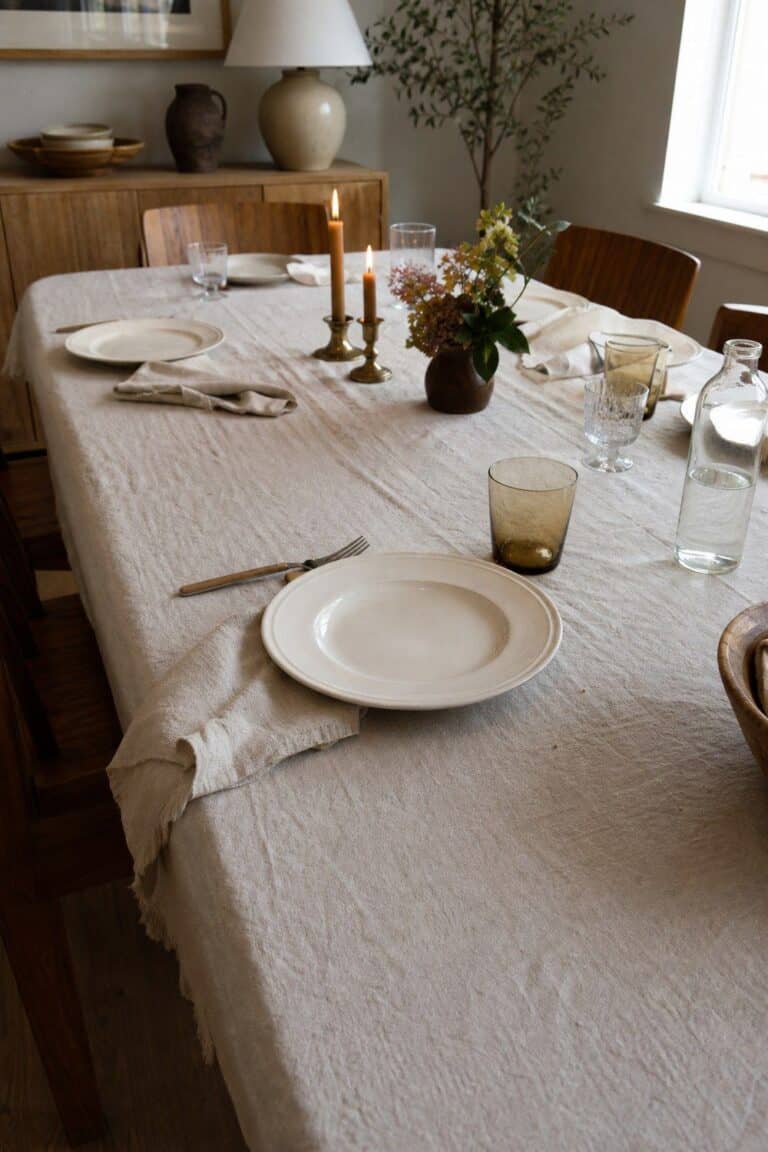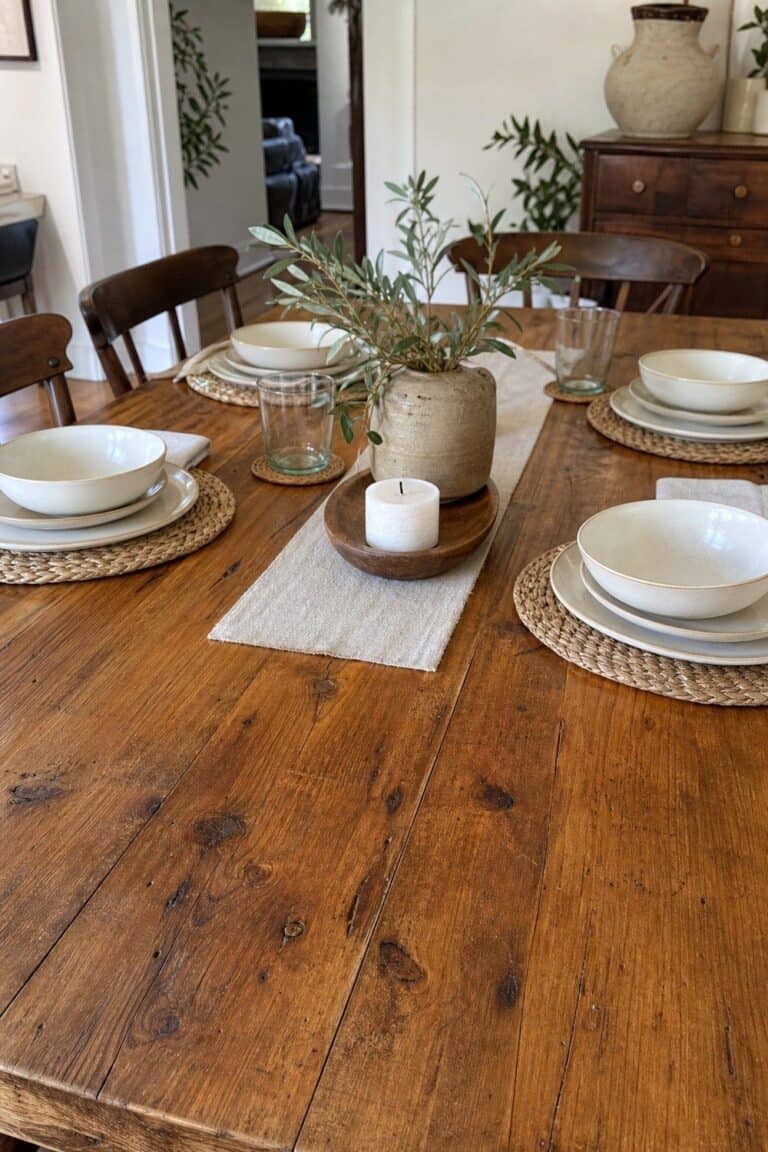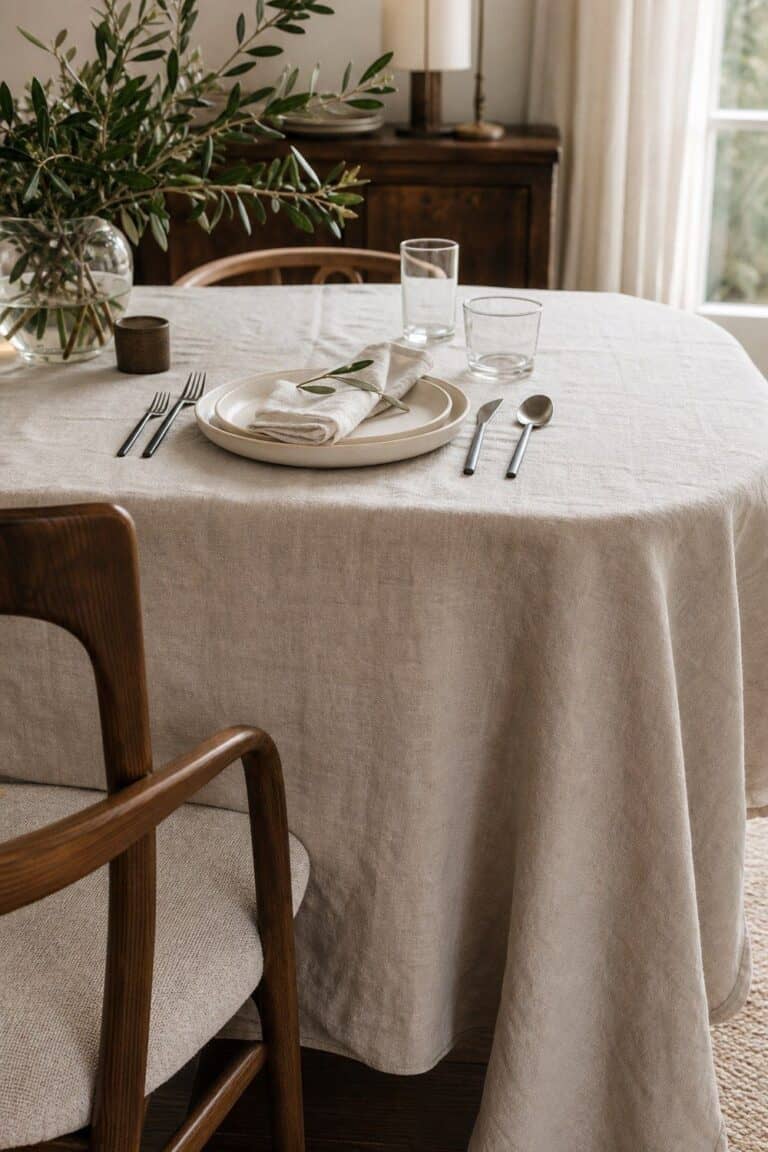
Opera aesthetic tablescape ideas work when the table feels theatrical but still comfortable for dinner. Choose a velvet or jewel-tone base, add one candelabra or low candle cluster, use crystal-style water glasses, keep florals low, move tall decor to the sideboard, and check sightlines from an actual seat.
An opera-inspired table can bring in velvet, burgundy, candlelight, crystal-style glassware, red roses, gold accents, and dramatic menu cards without turning dinner into a stage set. The trick is choosing pieces that create mood while still leaving room for plates, water, serving dishes, and conversation.
This guide keeps the drama grounded in real hosting. The best opera aesthetic tablescape ideas use height, shine, fabric, flowers, and candlelight carefully, then move anything too tall, scented, messy, or fragile away from the eating surface before the plates come out.
Top Recommended Products


You Might Also Like These Blog Posts
- Opera Aesthetic Dinner Party
- Neo Deco Tablescape Ideas
- Cozy Holiday Tablescape Ideas
- Holiday Dinner Party Ideas
- Holiday Cocktail Buffet Hosting Ideas
Opera Aesthetic Tablescape Ideas for Easy Hosting
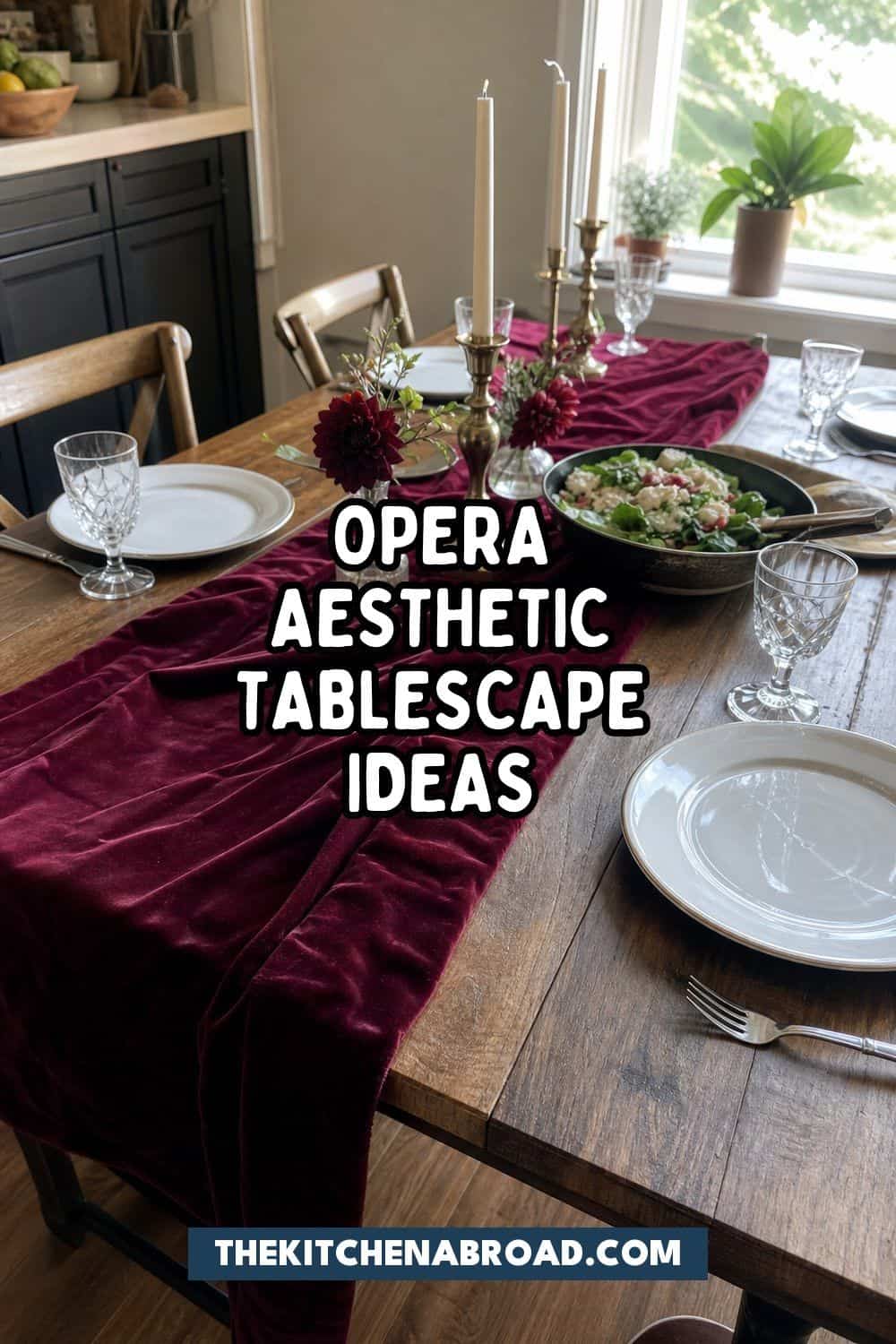
1. Burgundy Velvet Runner as the Opening Layer
A burgundy velvet table runner gives the table its opera-curtain cue without covering every inch in delicate fabric. It works down the center of a dining table or buffet, while plates and glasses can still sit on a flatter surface. Keep candles, hot dishes, and saucy platters away from the velvet, because crumbs, wax, and spills show quickly on plush fabric. If the meal is messy, use the runner for arrival and dessert, then clear it before the main course.
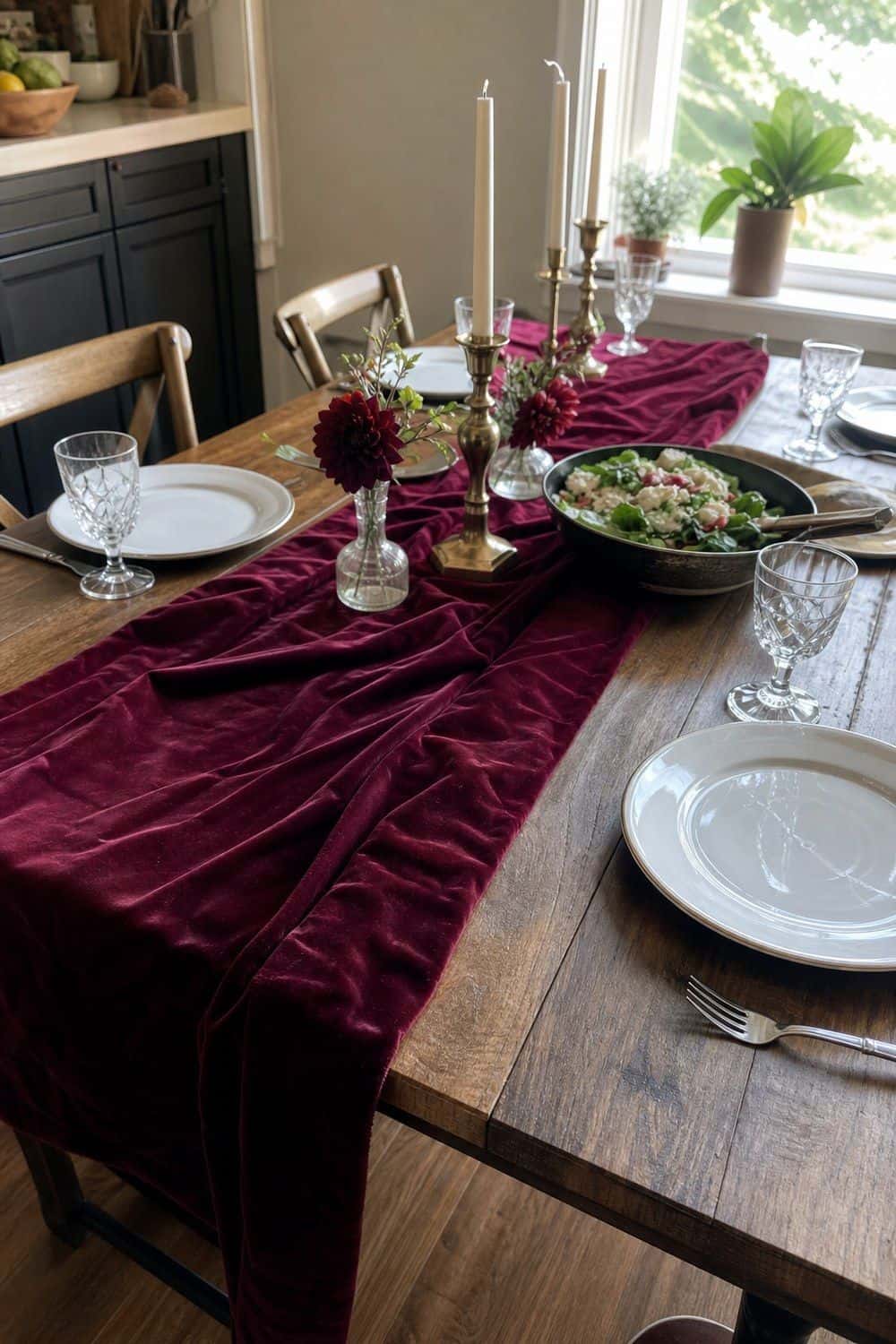
2. One Gold Candelabra as the Main Drama
A gold candelabra centerpiece can carry the opera-house mood with one strong shape instead of many small decorations. Put it on the sideboard if it is tall, or test it in the center only after sitting at the table and checking faces across from you. The candelabra should add glow and height, not block conversation or make anyone lean around flames. Keep the base stable, leave space around plates, and shift it to the buffet if the table starts to feel crowded.

3. Burgundy or Black Unscented Tapers
Burgundy taper candles bring rich color to the table while staying easy to repeat along a runner or sideboard. Choose unscented candles so the food, wine, and dessert are not fighting perfume at the table.
Stable holders matter more than extra height, especially around napkins, sleeves, and passing plates. Trim the wicks, space flames away from flowers and fabric, and keep a snuffer on the sideboard.
The candlelight should feel moody, not like another hosting hazard to monitor. If the table is narrow, use fewer tapers and let the color repeat through napkins or flowers instead.
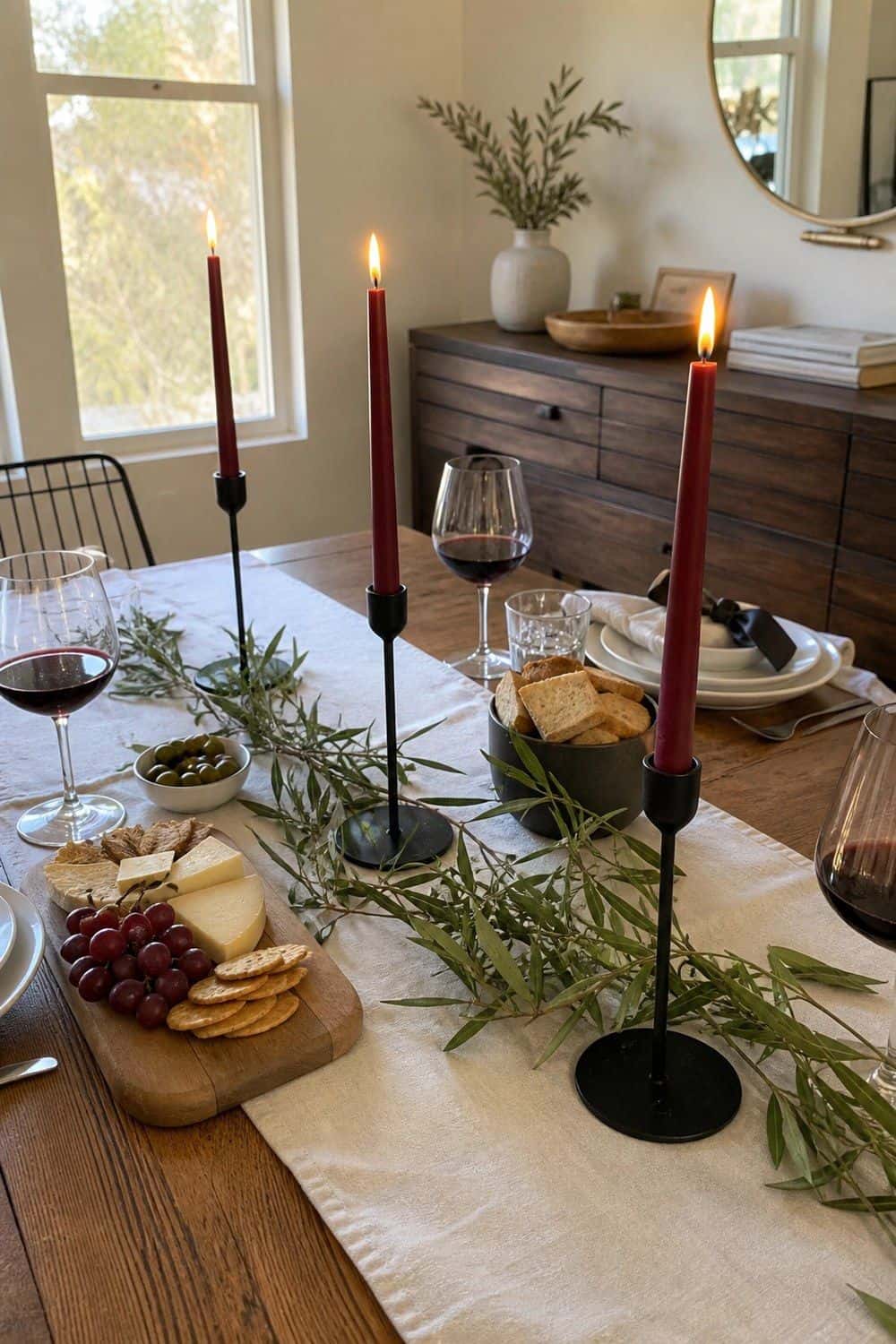
4. Crystal-Style Water Goblets
Crystal water goblets reference chandelier sparkle without needing a chandelier over the table. Set them above the dinner knife or slightly to the right of each place setting, then fill them while the table is being finished so water already belongs to the scene. The cut-glass texture catches candlelight, but the real function is comfort. Do not reserve the prettiest glassware only for cocktails; water deserves a clear place on a dramatic table too, especially with candles, wine, and rich food.

5. Red Roses in Low Bud Vases
Glass bud vases let red roses, carnations, ranunculus, or dark tulips feel romantic without becoming a tall floral wall. Use several low vases along the table instead of one bulky bouquet in the center.
Diners should see over them easily, reach water glasses, and pass bread or sides without knocking stems around. Trim stems short enough that blooms sit below eye level and away from plate rims.
If the flowers lean, shed, or touch plates, move them to the sideboard and keep only the smallest vase on the table for color between place settings.

6. Dried Amaranthus on the Table Ends
Dried amaranthus stems add curtain-like movement at the table ends, especially with burgundy, plum, or deep red tones. Let the trailing texture sit on the ends, sideboard, or a low arrangement rather than across plates. A little is enough; too much can look like a prop and shed into food. Keep the strands away from candle flames and serving utensils, then shake loose bits outside the dining room so the drama stays on the stems, not in the napkins or bread basket.
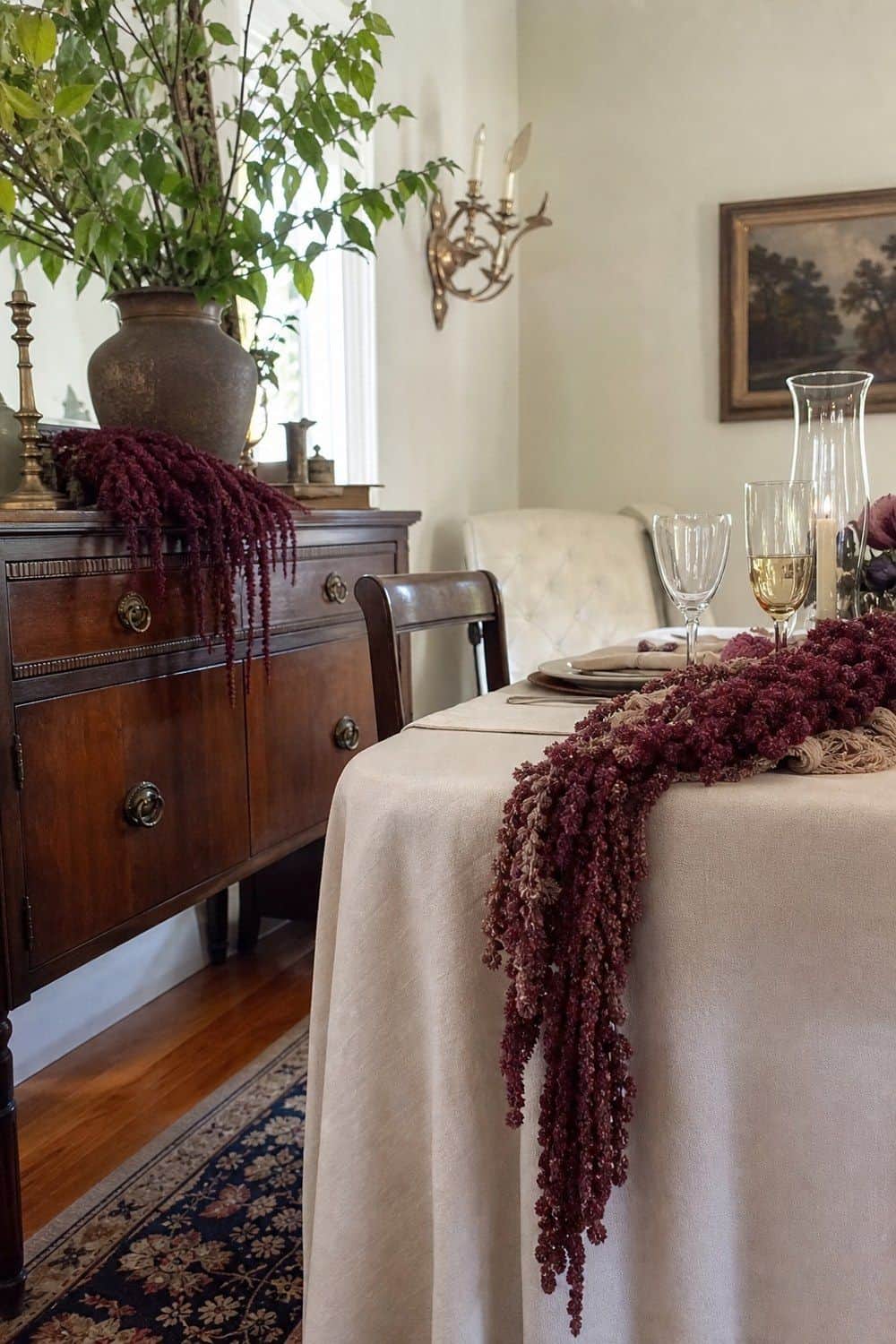
7. Tablecloth Draped Like a Theatre Curtain
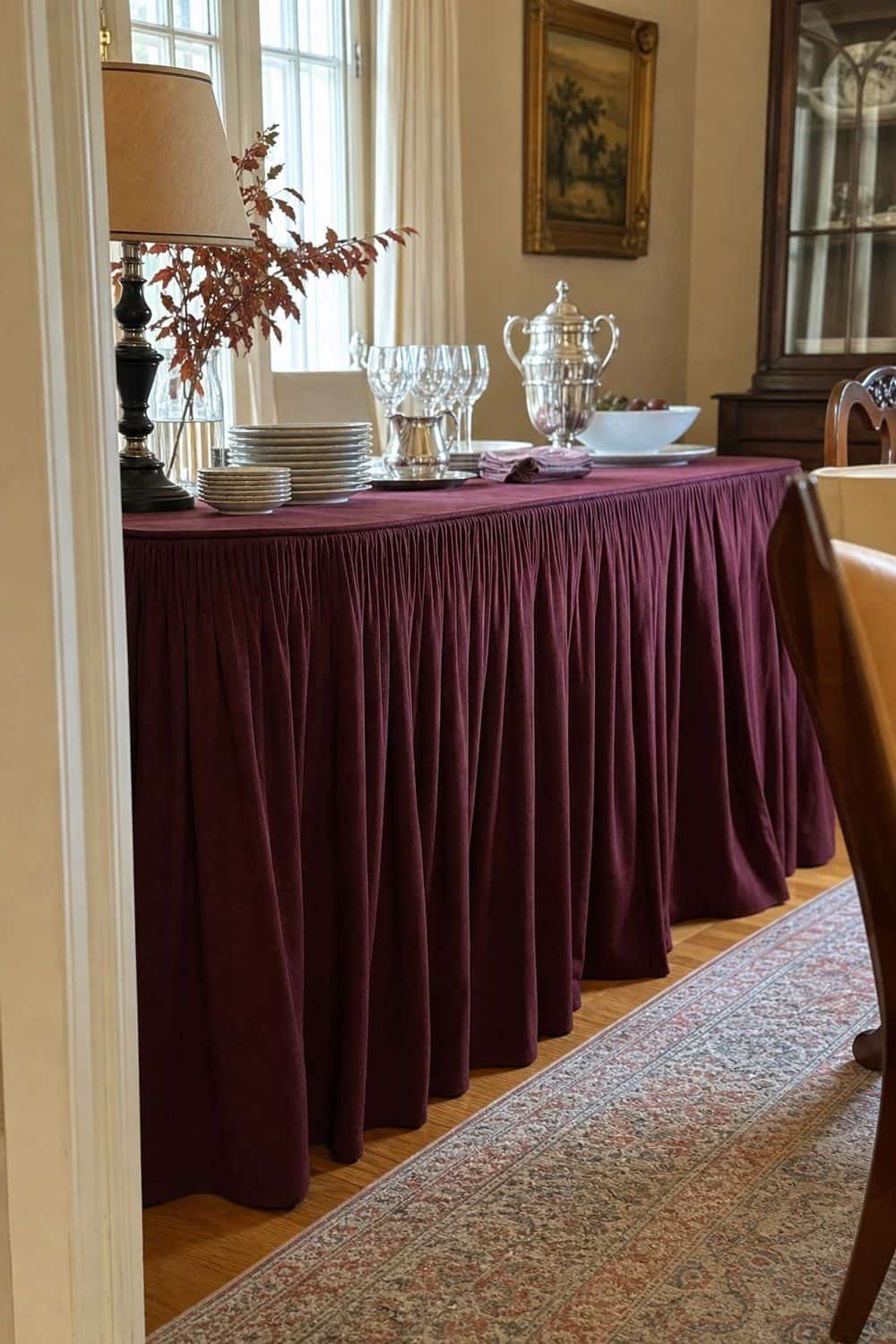
A pleated table skirt, extra-long cloth, or tucked fabric on the buffet can give the room a theatre-curtain effect without making the dining surface unstable. Use the dramatic fabric where guests are not balancing wine glasses, knives, and hot plates. The top of the table should stay flat enough for chargers, glasses, and serving pieces. Check that fabric does not pool near chair legs or walkways, because no tablescape is worth a guest tripping during dinner or catching a heel.
8. Ornate Napkin Rings With Plain Napkins
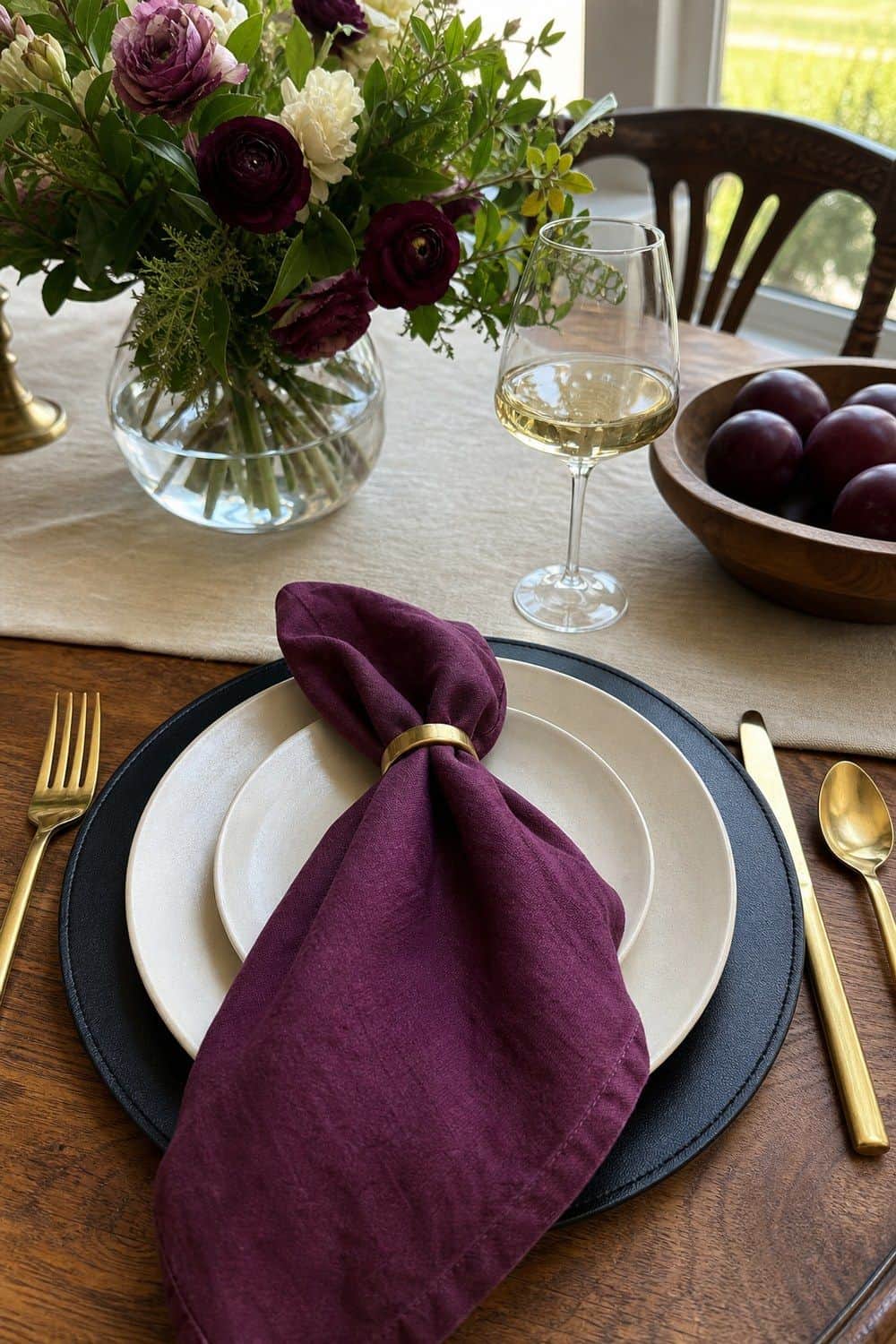
Gold napkin rings can carry the ornate opera detail while the napkins stay simple. Burgundy, black, cream, or plum cloth napkins work well because they add color without making every place setting compete. Keep the fold easy to undo, since the napkin still needs to work once food arrives. If the ring catches on lace, beads, or thick fabric, simplify the fold so the setting opens cleanly and does not scatter menus, forks, or bread plates. A smooth release feels more elegant than a complicated fold.

9. Black Chargers Under Light Plates
Black charger plates create stage-like contrast under cream, white, or pale patterned plates. They give each place setting a bold frame and help the gold, crystal, and burgundy details feel grounded. Measure the table first, because chargers can crowd elbows on a narrow table. If spacing feels tight, skip the charger and use a folded napkin, menu card, or small place detail for contrast instead of forcing oversized pieces beside full glassware, bread plates, and shared dishes. Comfort should decide the scale.

10. Gold Flatware for the Gilded Note
A gold flatware set gives the table a repeated metallic note without requiring gold objects everywhere else. Set it early so the finish looks deliberate against black chargers, cream plates, or plum napkins. Polish visible water spots, since candlelight can make dull marks stand out. Keep plates simple when the flatware is ornate, and avoid adding several other gold accents in the same small place setting beside each plate, menu card, goblet, and napkin ring. One clear metallic rhythm is enough.

11. Opera Program-Style Menu Cards
Blank menu cards can become tiny opera programs with course names like Overture, Main Act, Intermission, and Curtain Call if that fits your menu. The playful structure gives guests a theme cue and also tells them what is coming. Use the cards for allergens, vegetarian notes, or spice warnings when needed. Keep the font readable in candlelight, because a clever menu loses its charm if everyone has to lift it toward a lamp to read dinner details between courses and candles.

12. Mirrored Tray for Extra Glassware
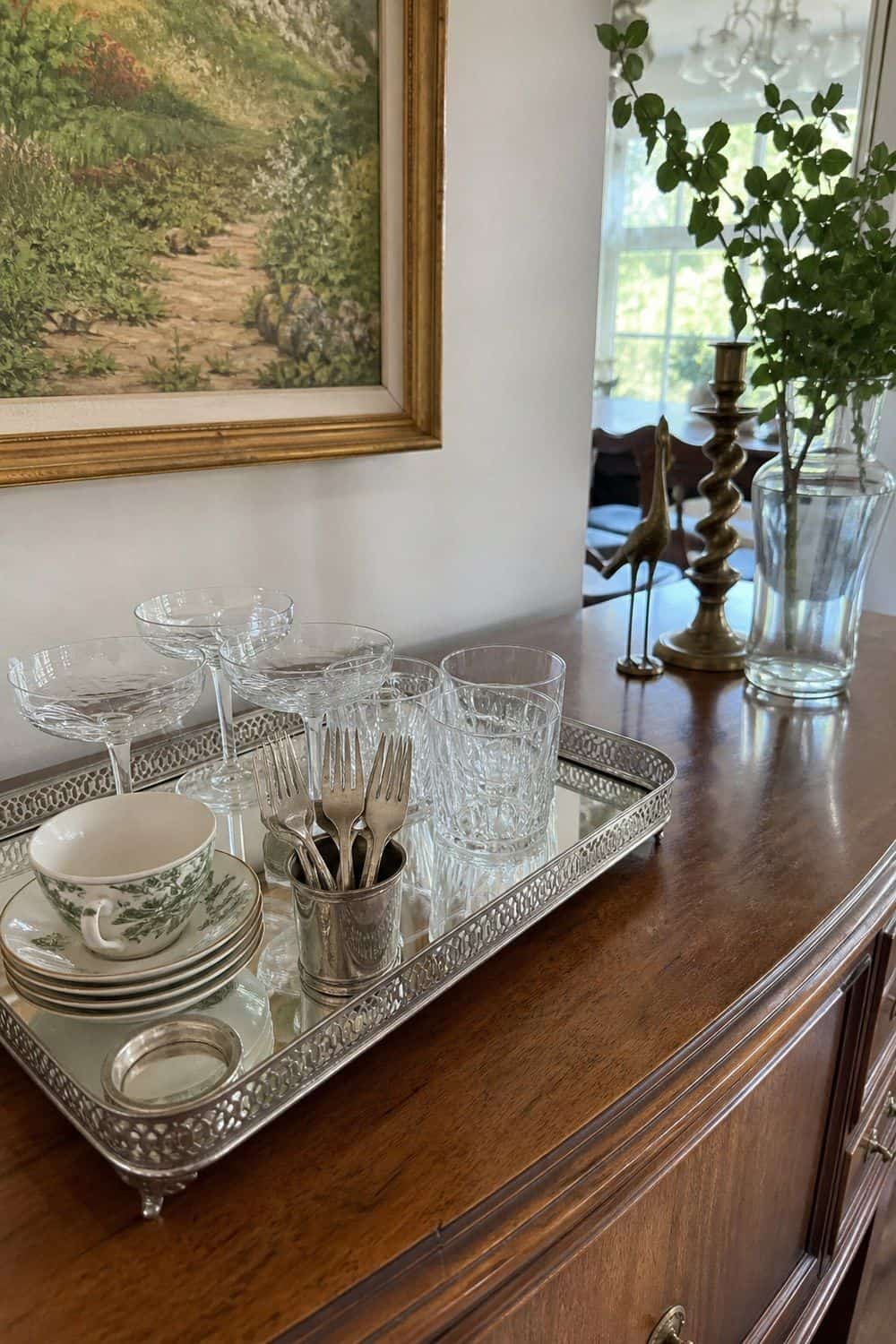
A mirrored serving tray belongs on the sideboard, not in the middle of a crowded dining table. Use it for extra coupes, water glasses, dessert forks, or after-dinner cups so the table stays clear. The reflection adds glamour and repeats the candlelight without adding more pieces between seats. Leave one open patch beside the tray for a pitcher, cake plate, or hot dish, because a reflective surface is only helpful when it still leaves room to set something down safely.
13. Low Bowl With Pomegranates or Plums
A low black serving bowl filled with pomegranates, plums, figs, red grapes, or blood oranges gives deep color without fake props. Fruit feels dramatic, edible, and easy to move when dinner needs more space. Keep the bowl low so conversation can pass over it, and avoid stacking fruit so high that pieces roll toward plates. After dinner, the same fruit can shift to dessert, cocktails, or a sideboard display with the cake stand and glasses for color and texture after plates clear.

14. Dessert on a Black Cake Stand
A black cake stand makes dessert part of the room’s drama without crowding the dinner plates. Use it on the sideboard for chocolate cake, petit fours, macarons, or opera-cake-inspired squares. The height feels theatrical, but guests can still eat dinner without leaning around dessert.
Keep the stand stable and away from table edges. If dessert needs refrigeration, bring it out closer to serving time rather than letting cream, ganache, or fruit soften under candle warmth while the main course is still on the table.

15. Low Sparkle From Glass Votives
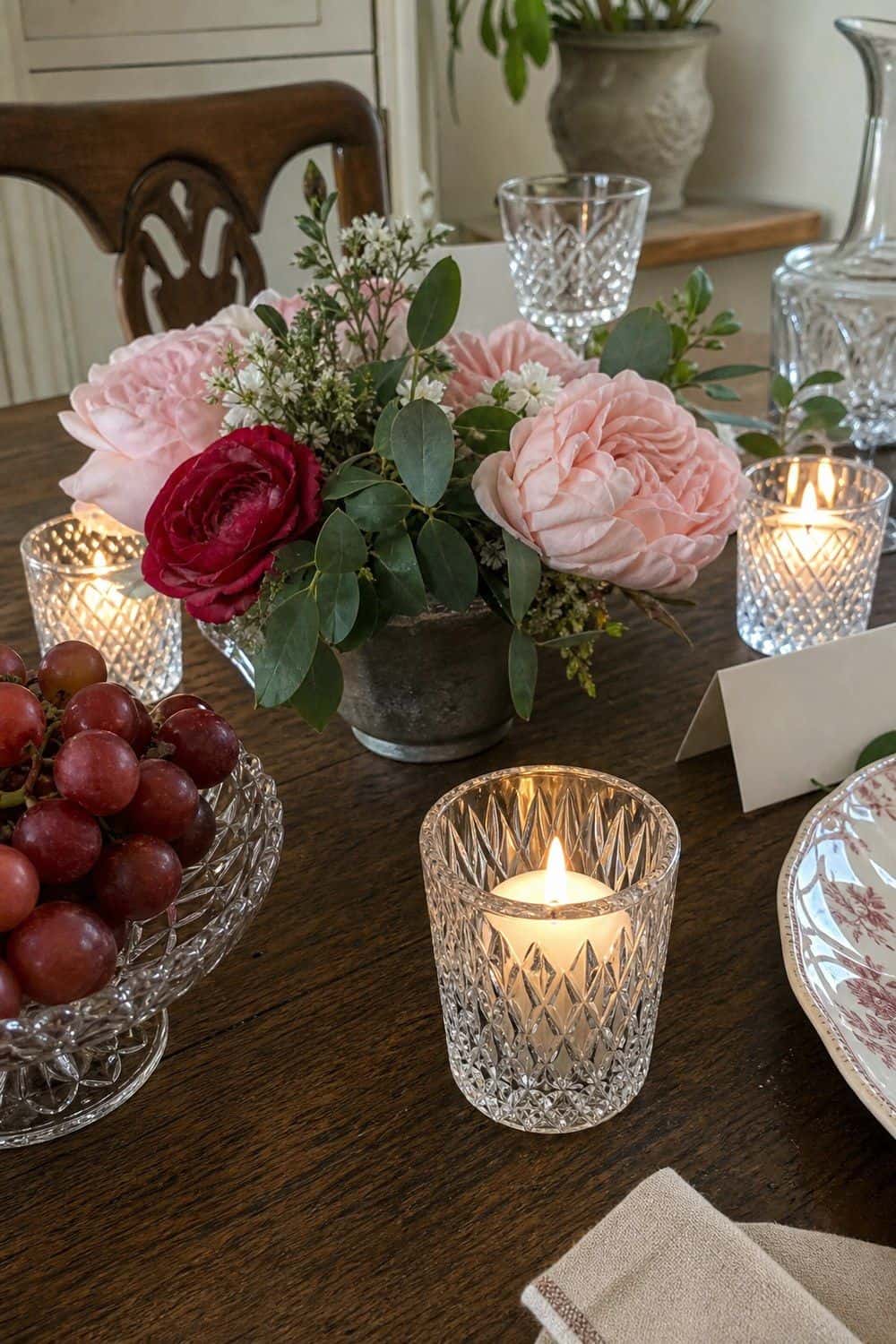
Cut glass votive holders add low sparkle between flowers, fruit, or place cards, especially when a candelabra is too tall for the dining table. Use unscented candles and keep the holders spaced so heat does not sit against petals, paper, or velvet. The glow should support the meal, not create a maze of flames.
Skip glitter, confetti, and tiny loose gems around the votives. They may catch light in photos, but they also cling to plates, napkins, and cleanup cloths when the table is cleared after dessert.
16. Single Masquerade Place Detail
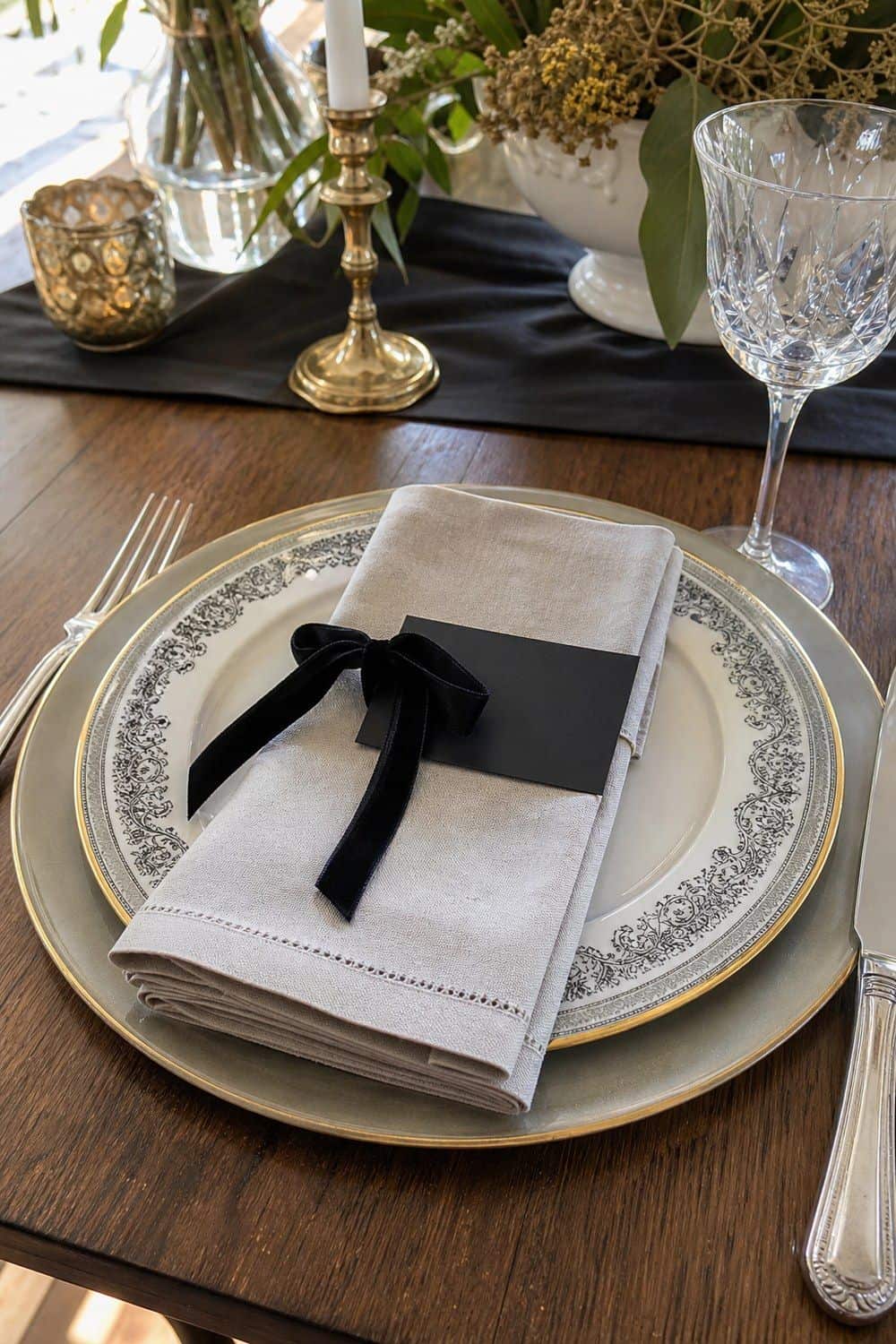
Black place cards can give a subtle masquerade nod without putting masks at every seat. Use a small black card, velvet ribbon, or menu motif, then make it useful with names, allergens, or dietary notes. The point is a hint of theatre, not a costume-party table.
Keep the detail flat enough that it does not interfere with plates or napkins. If the table already has ornate rings and candles, this is a good place to stay restrained, readable, and easy to move when the first course arrives.
17. Plum or Emerald Accent Napkin
Plum cloth napkins add jewel-tone depth without asking every object to be colorful. Burgundy, emerald, sapphire, or teal can work, but choose one accent alongside black, cream, and gold. That restraint keeps the table moody and cohesive rather than chaotic.
Repeat the color once in flowers, fruit, or a menu card if the table needs balance. Avoid mixing every jewel tone in the same setting unless the rest of the table is very plain and quiet around the plates and candles.
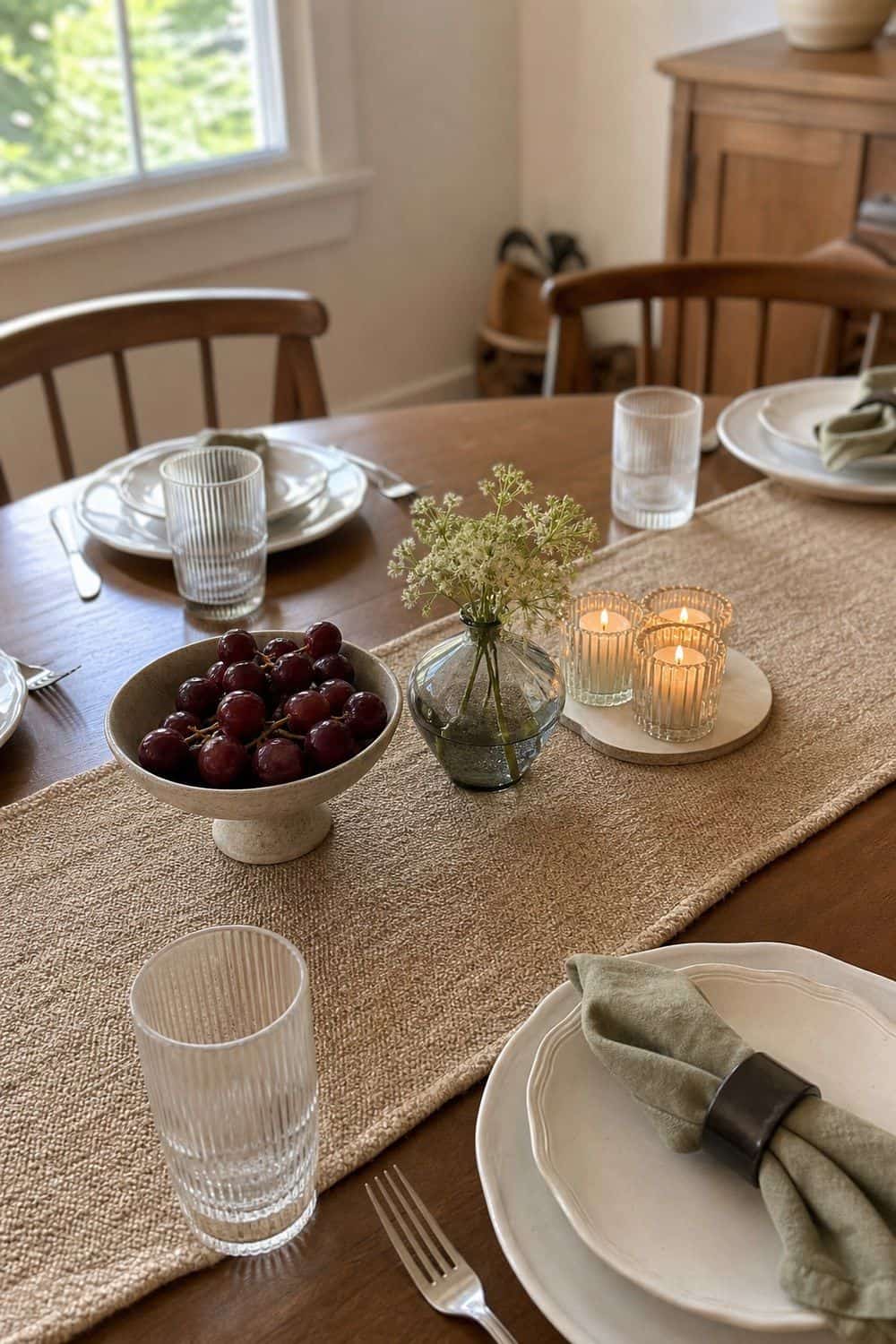
18. Rule-of-Three Centerpiece Group
Small pedestal bowls can help create a low rule-of-three centerpiece: one fruit bowl, one bud vase, and one candle cluster. Odd-number groupings feel composed without covering the whole runner. Keep the pieces at different textures rather than wildly different heights.
Test the group with plates and glasses in place. If someone would need to move a bowl to reach a fork, water glass, or bread plate, the composition is too large for a seated meal with courses and dessert.
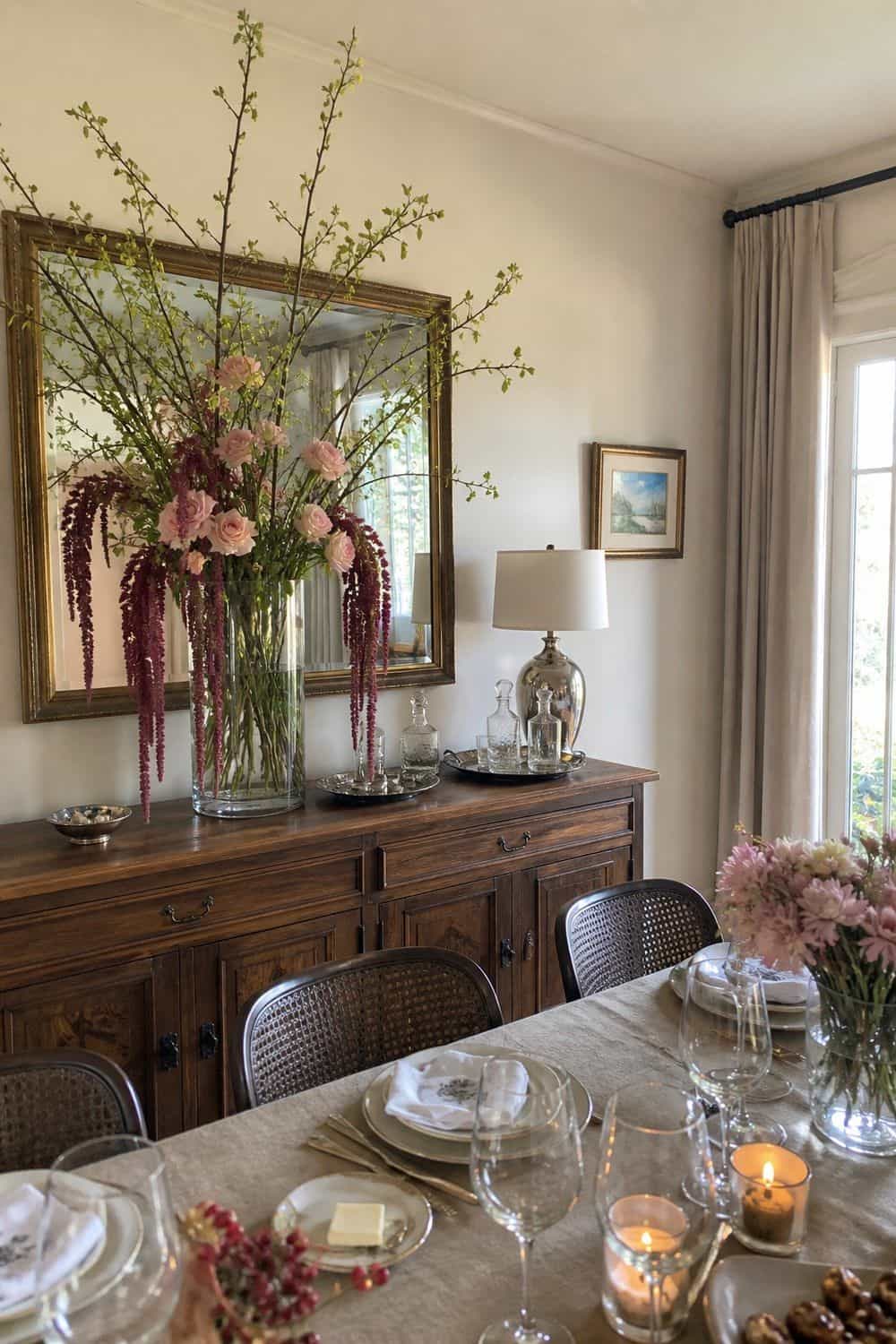
19. Tall Drama Moved to the Sideboard
A tall glass vase is perfect for branches, roses, or amaranthus when the dining table cannot handle the height. Place the dramatic arrangement on a sideboard, entry console, or buffet where it frames the room without blocking faces across the table. This keeps the opera feeling present while preserving sightlines and plate space.
Leave the table itself lower and more usable. The room can still feel grand when the tallest branches frame the buffet, while the eating surface stays open for plates, glasses, bread, and conversation.
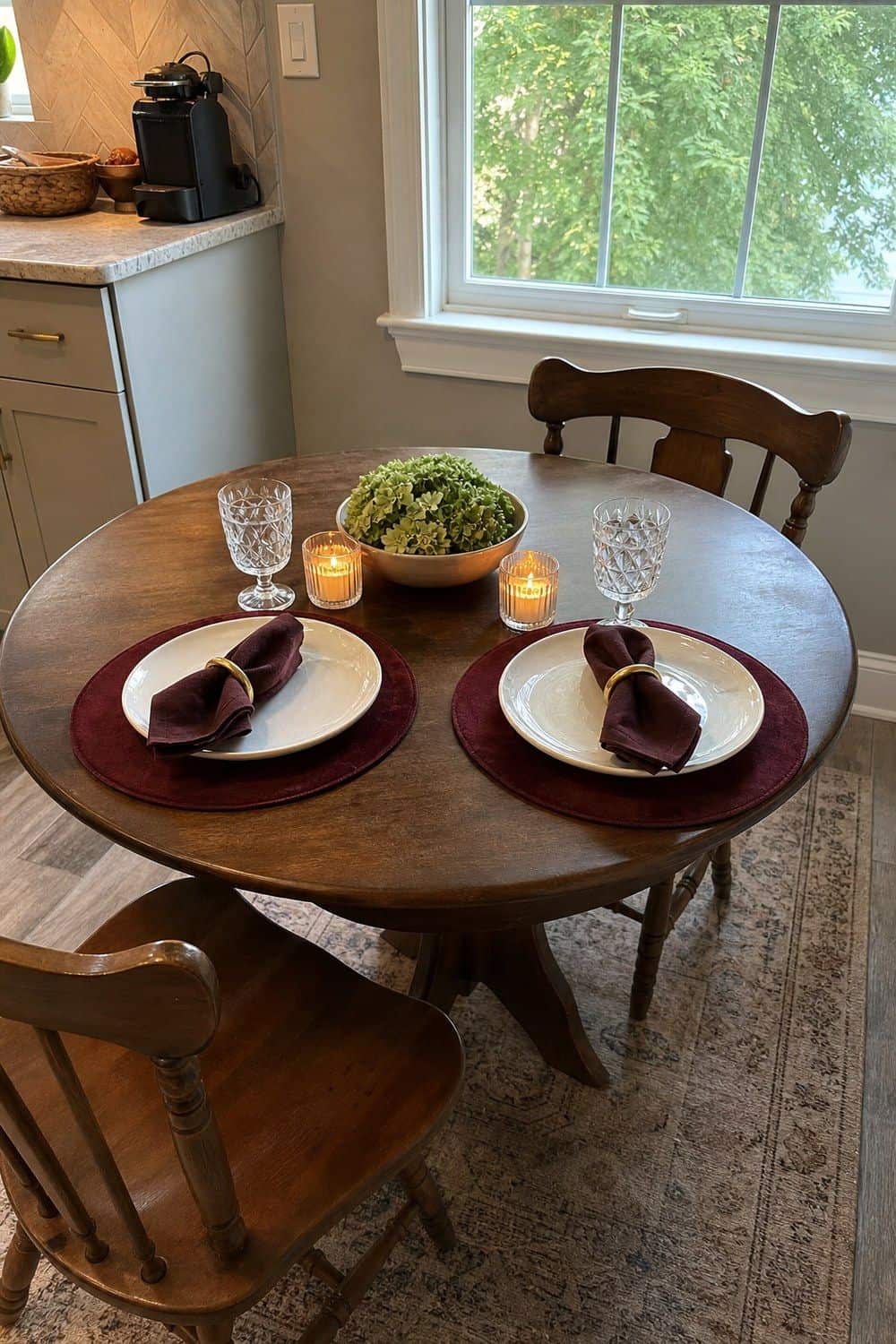
20. Small Round-Table Version
Round velvet placemats are a better small-table foundation than a runner packed with objects. Use one low bowl, two votives, crystal-style water glasses, and food served from the counter or sideboard. A round table needs one clear focal point, not a line of decorations.
Keep chairs easy to pull out and avoid fabric that hangs into laps. Small tables can feel dramatic with color and candlelight alone when the center stays usable for plates, water glasses, and one shared dish.
21. Serving Dishes Outside the Main Drama Zone
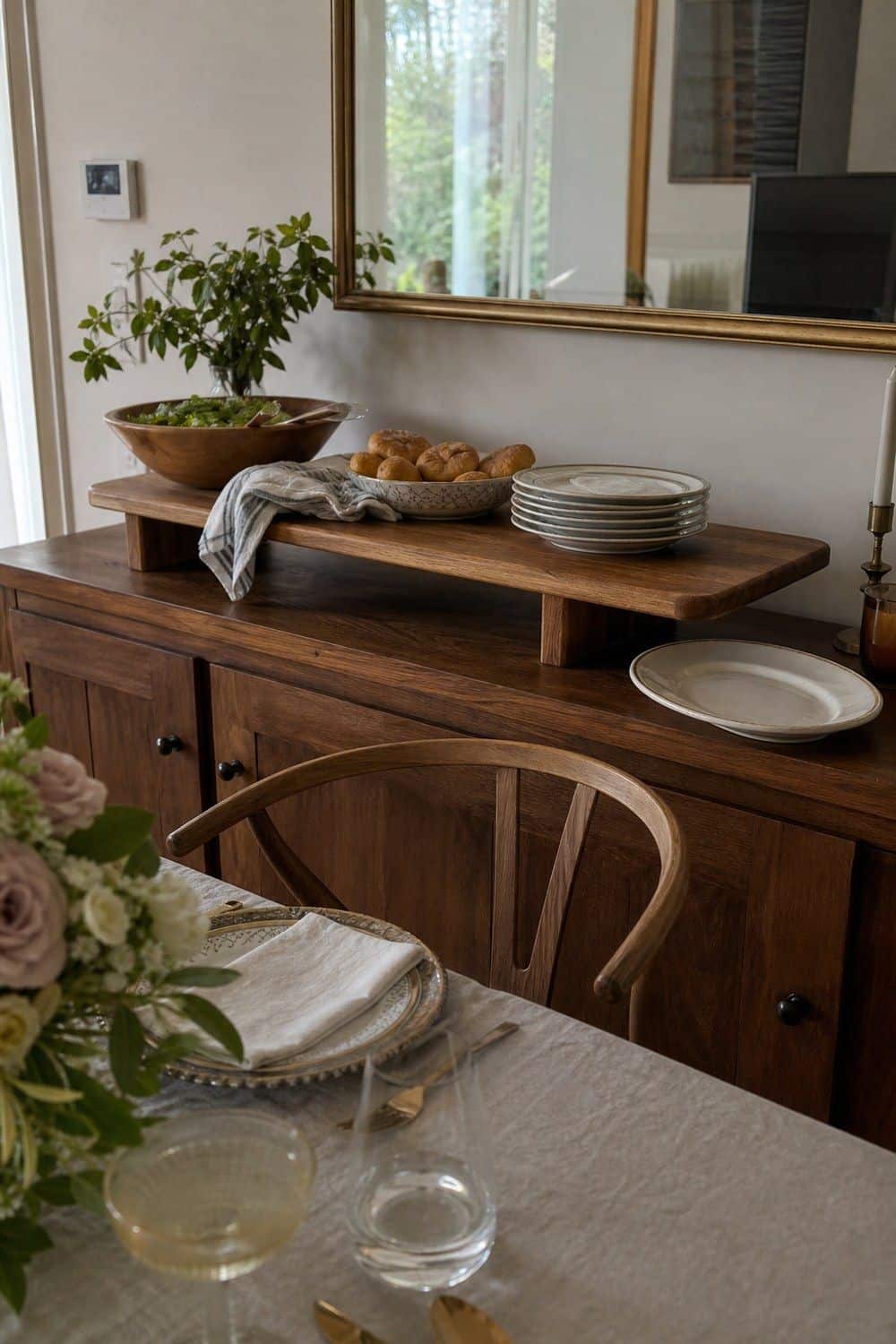
A wood buffet riser gives bread, salad, extra plates, or dessert a place away from the centerpiece. This keeps the dramatic table from becoming impossible once hot food appears. Use the sideboard for practical serving pieces and let the table hold plates, glasses, candles, and low decor.
Plan a clear landing spot for the main course while the table is being set. If every surface is styled, the host ends up holding a hot dish with nowhere safe to put it.
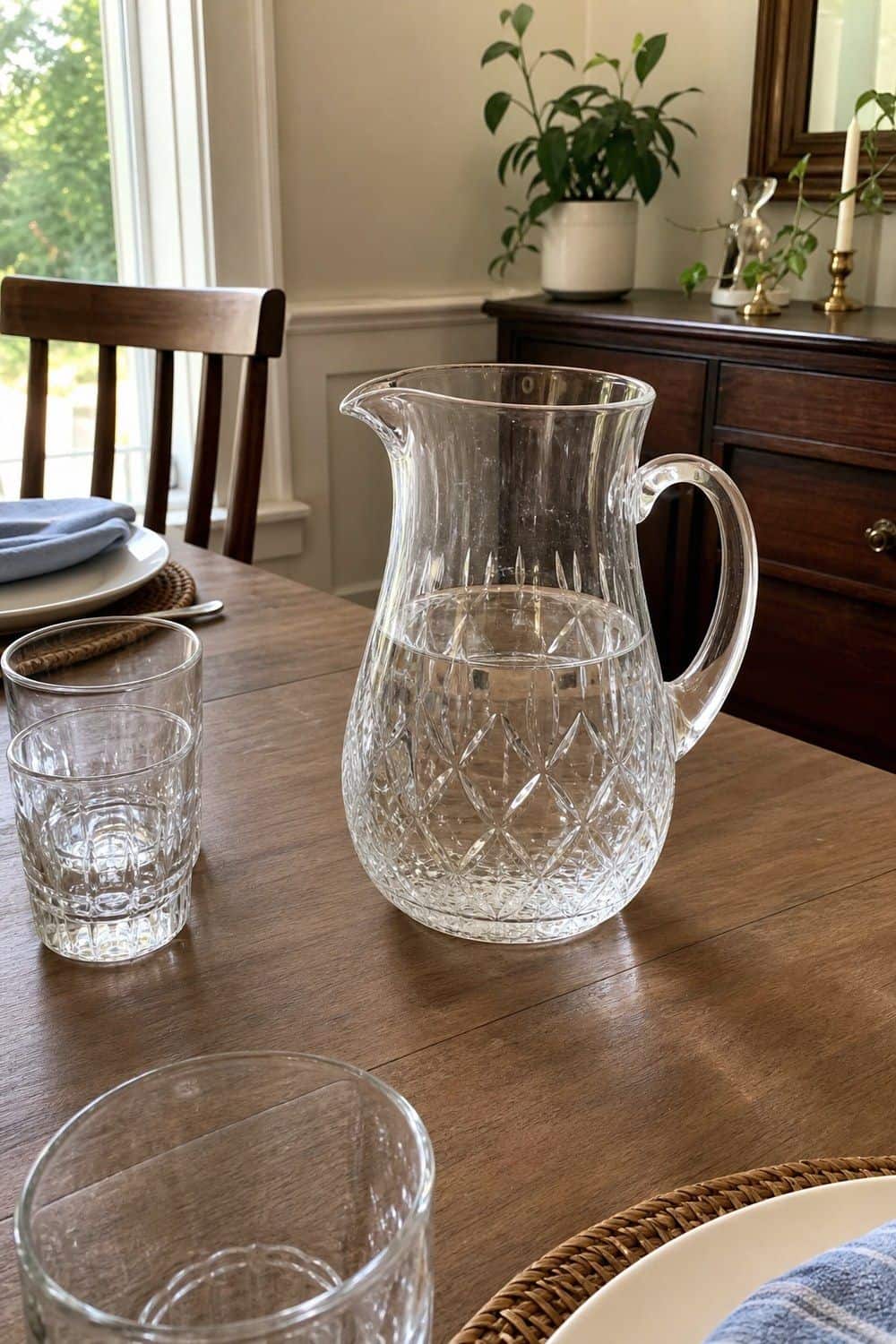
22. Crystal Pitcher for Water
A crystal glass pitcher makes water feel like part of the tablescape instead of an afterthought. Place it within reach but away from candle flames, trailing flowers, or fragile glass clusters. Plain water, citrus water, or sparkling water can all fit the mood if the pitcher is easy to lift.
Refill before the main course and again before dessert. Beautiful water service still needs to be practical, especially when candles, wine, salty snacks, and rich food are all part of the evening.
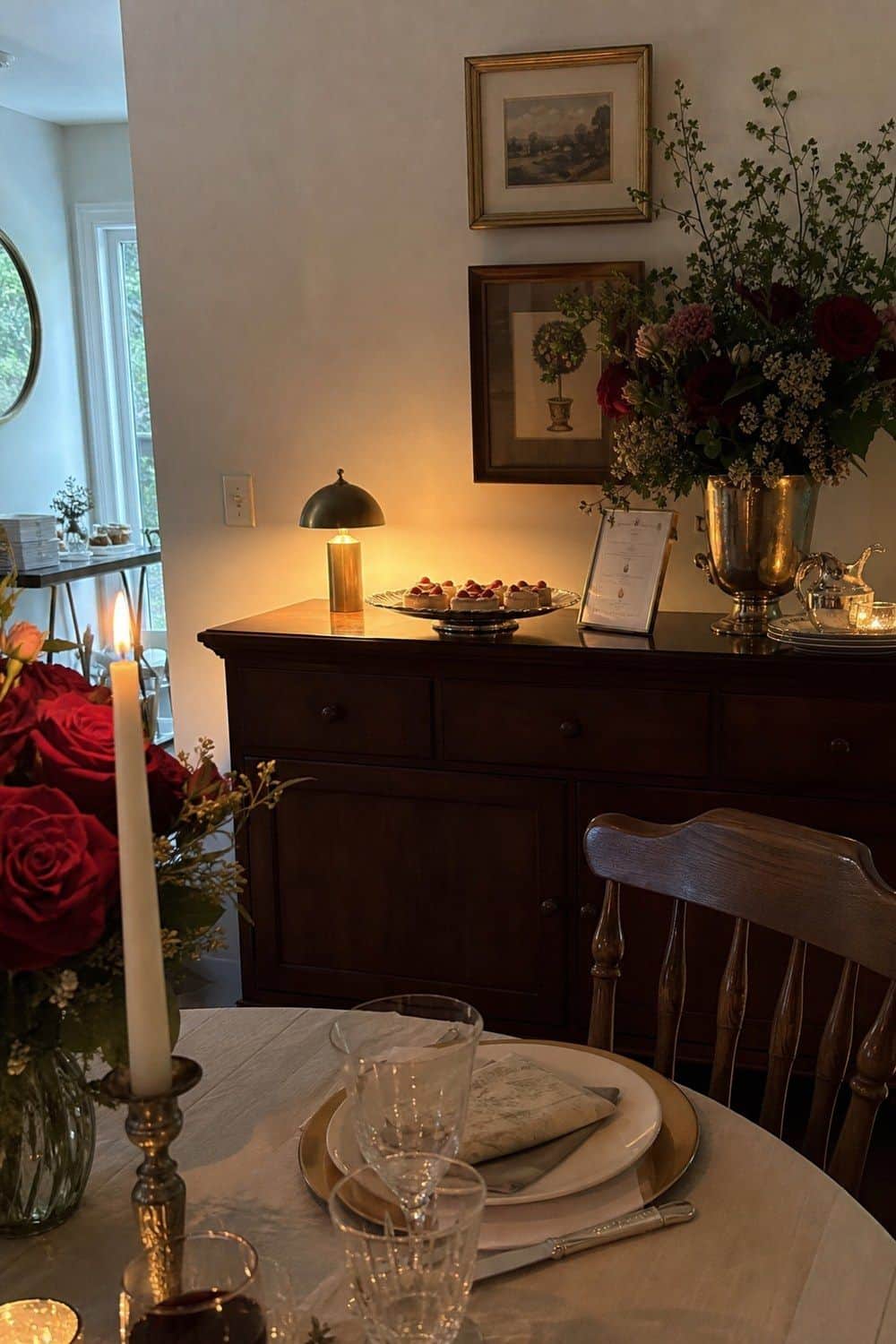
23. Sideboard Lamp Glow
A rechargeable table lamp on the sideboard can mimic the glow of an opera lounge without adding more objects to the eating surface. Use it to light menu cards, dessert, or the tall floral arrangement. Warm side lighting makes the whole room feel richer than overhead lighting alone.
Charge the lamp earlier in the day and test the dimmer after sunset. If the light competes with candlelight or shines into someone’s eyes, move it behind the display so it washes the wall instead of the plates.
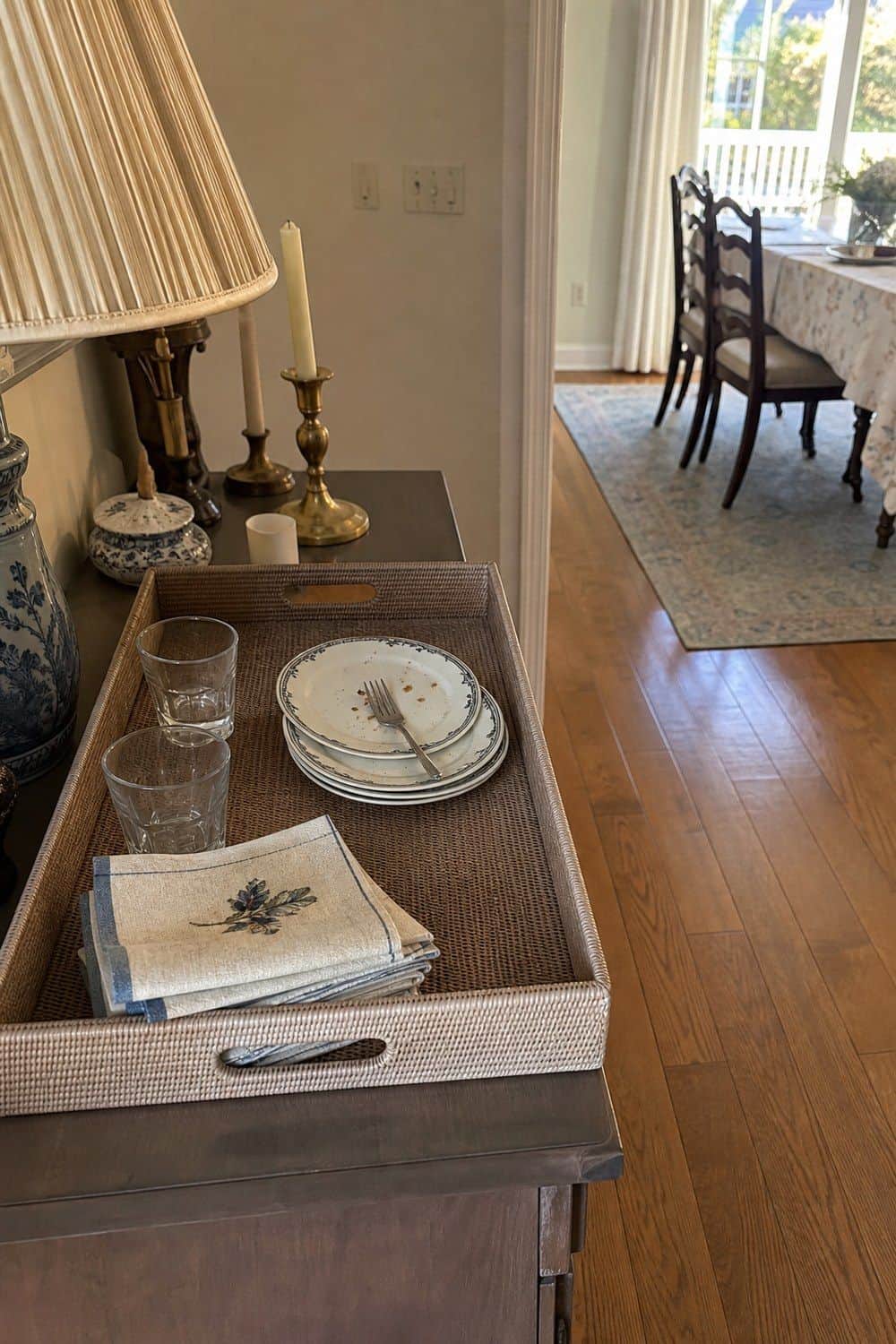
24. Dish Tray Ready Near the Sideboard
A large serving tray near the kitchen or sideboard gives empty glasses, used dessert plates, and napkins somewhere to go. Dramatic tables look better when cleanup has a quiet path. The tray keeps the host from stacking dishes around candles and flowers once the table starts filling up.
Choose a spot that can be reached without walking through the cooking area. A practical dish tray protects the mood because the table does not slowly turn into clutter as glasses, forks, and dessert plates finish their job.
25. Candle and Sightline Check Before Dinner
A candle snuffer is useful for ending the meal safely, but the bigger step is the seated check while the table is still adjustable. Sit down at a place setting, look across the table, and check flame distance.
Reach for water, notice anything wobbly, fragrant, or too tall, and test whether bread or a serving spoon could pass through the center. Remove pieces that interrupt the meal, even if they looked good while styling.
This final check keeps the opera aesthetic from becoming inconvenient. The table should feel dramatic at first glance and comfortable once people are reaching for water, cutting food, passing bread, and talking across candlelight.

How to Keep an Opera Aesthetic Table Practical
An opera aesthetic table is easier to host from when the drama has assigned places. Velvet, roses, crystal-style glass, gold accents, and candlelight can live on the table, but tall branches, extra glassware, dessert displays, water refills, and serving dishes often belong on a sideboard.
Keep centerpieces low, candles unscented, surfaces stable, and cleanup planned. For a small round table, use one focal point, two low candles, jewel-tone napkins, and a counter or buffet for food so the place settings still have room to breathe.
Frequently Asked Questions About Opera Aesthetic Tablescape Ideas
What are opera aesthetic tablescape ideas?
They are dramatic table-setting ideas inspired by opera houses, velvet curtains, candlelight, crystal-style glassware, jewel tones, roses, and gold accents. The strongest versions keep the table usable with low centerpieces, stable candles, water, and clear serving space.
How do I make a table look opera aesthetic?
Use burgundy or plum velvet, unscented candles, crystal-style glasses, low roses, gold details, menu cards, and a sideboard for taller drama. Keep the dining center low enough for conversation and food service.
What colors work for an opera aesthetic table?
Burgundy, plum, emerald, sapphire, black, cream, gold, and crystal-clear accents all fit the mood. Choose one or two jewel tones rather than using every rich color in the same place setting.
What should I avoid on an opera aesthetic tablescape?
Avoid scented candles, tall centerpieces that block faces, glitter, confetti, too many small props, unstable decor, and no room for serving dishes. Dramatic styling should not make dinner harder to serve or enjoy.
Can I use a candelabra on a dinner table?
Yes, if it is stable and does not block sightlines. Sit at the table while setting it and check the view across the plates. If the candelabra is too tall, move it to the sideboard and use low votives or tapers on the table.
How do I make a small table feel dramatic?
Use velvet placemats, one low centerpiece, two unscented candles, crystal-style water glasses, and food served from the counter. A small table needs a single focal point and enough room for plates.
What flowers fit an opera aesthetic table?
Red roses, dark tulips, ranunculus, carnations, and amaranthus all fit the look. Use low bud vases or sideboard arrangements so flowers add romance without blocking conversation or touching food.
How do I keep a dramatic table practical?
Keep the centerpiece low, leave a clear runner zone, put water within reach, use a sideboard for serving, and stage a dish tray for cleanup. Remove anything that smells strong, wobbles, sheds, or blocks conversation.
Final Thoughts
Opera aesthetic tablescape ideas are most successful when the table feels rich, candlelit, and romantic without making dinner awkward. Use velvet, crystal-style glassware, gold accents, low flowers, and sideboard drama with restraint, then check sightlines, scent, water access, and cleanup before the first course.
Last update on 2026-11-07 / Affiliate links / Images from Amazon Product Advertising API