
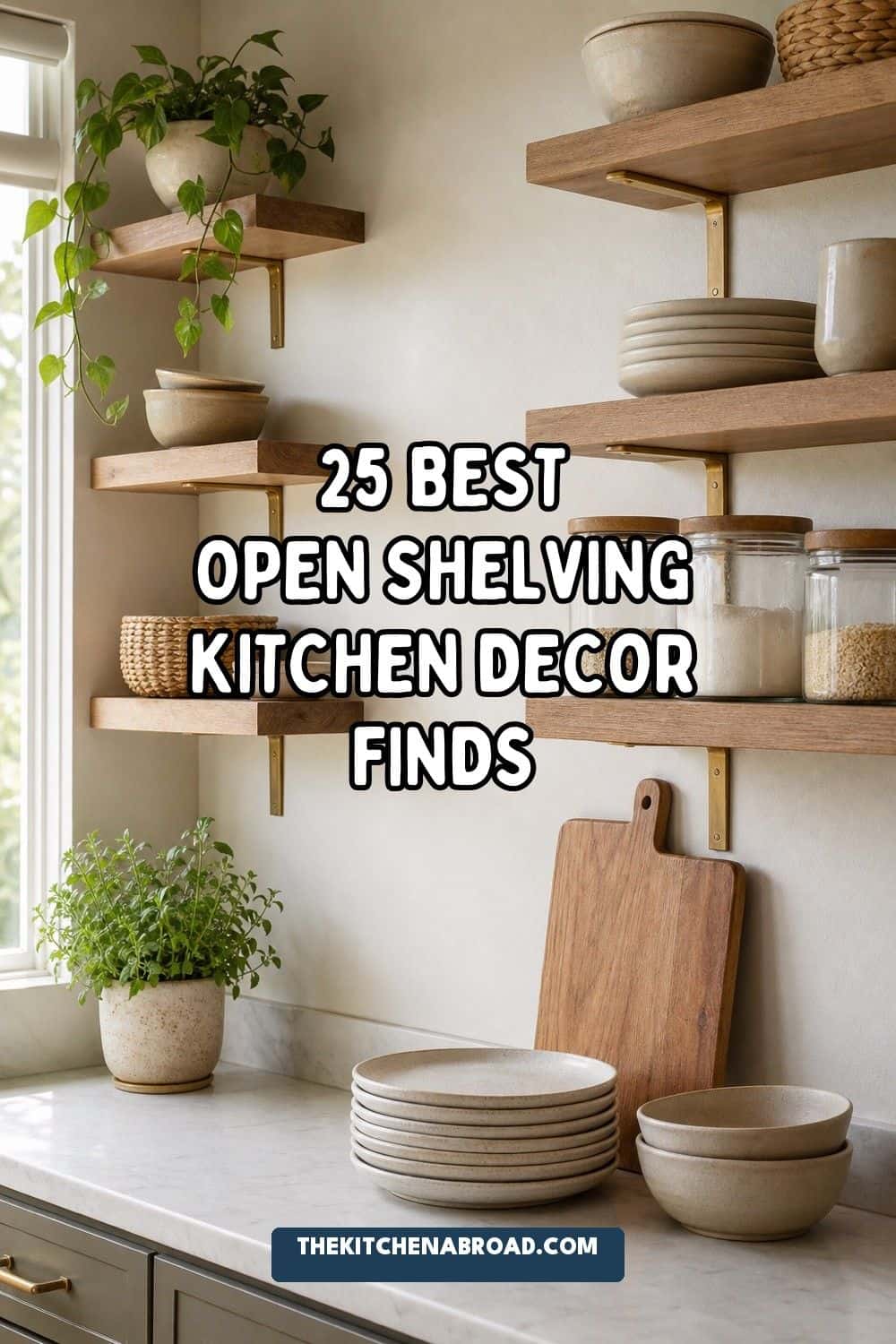
The best open shelving kitchen decor finds are useful pieces that look good enough to leave out every day: stackable plates, ceramic bowls, glass canisters, baskets, serving boards, shelf lighting, and a few quiet decorative accents. Focus on items with real kitchen jobs so the shelves feel styled, not crowded with objects that need constant dusting.
Open kitchen shelves work best when the pieces on them earn their spot. A shelf full of random extras can look busy fast, but a few repeated materials, useful dishes, clear storage pieces, and warm natural textures can make the same space feel calm and intentional.
If you are shopping for the best open shelving kitchen decor finds, think less about filling every inch and more about what you want to see, grab, and clean often. The right pieces should help with daily meals, dry goods, coffee, serving, or lighting while still leaving enough breathing room for open shelf styling to feel easy.
Top Recommended Products


You Might Also Like These Blog Posts
- Open Shelving Kitchen Ideas
- Open Shelving Kitchen Organization
- Kitchen Organization Products
- Modern Organic Kitchen Decor Finds
- European Kitchen Decor Finds
1. Stackable Stoneware Plates for Everyday Display
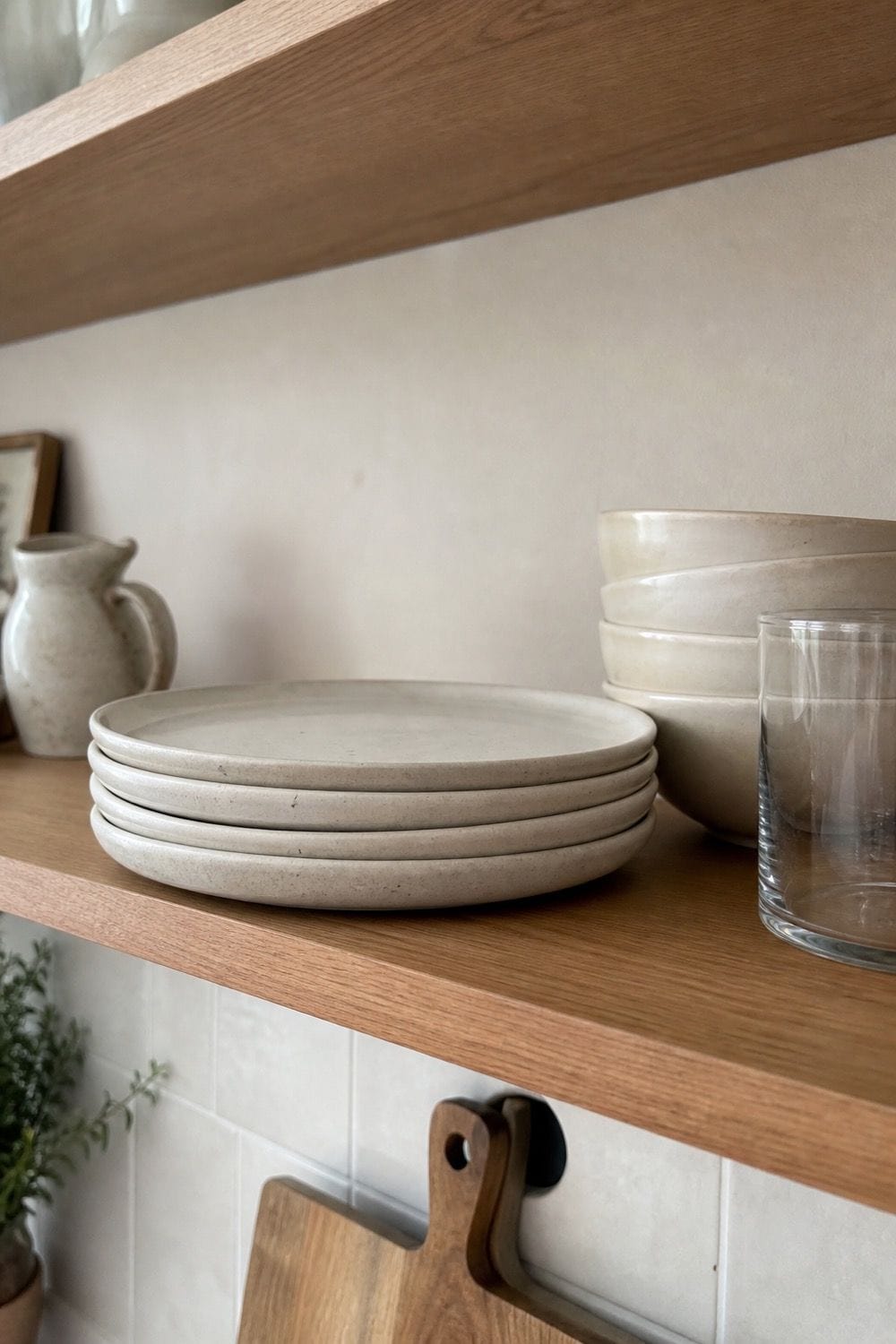
Daily plates are one of the safest places to start because repetition makes open shelves look cleaner. A matching stack of stoneware reads as display, even when it is simply where you keep breakfast, lunch, and dinner plates. Choose plates with a low, steady profile so the stack does not lean or become awkward to pull down. Soft white, oatmeal, charcoal, sage, or warm gray finishes usually work better than loud patterns if the shelves already hold jars, cookbooks, and glassware.
Avoid buying a set that is too tall for the shelf clearance or too heavy for daily reach. Open shelf dishes should feel display-worthy, but they still need to be easy to lift, wipe around, and put away after the dishwasher.
2. Matte Ceramic Bowls for Soft Shelf Texture
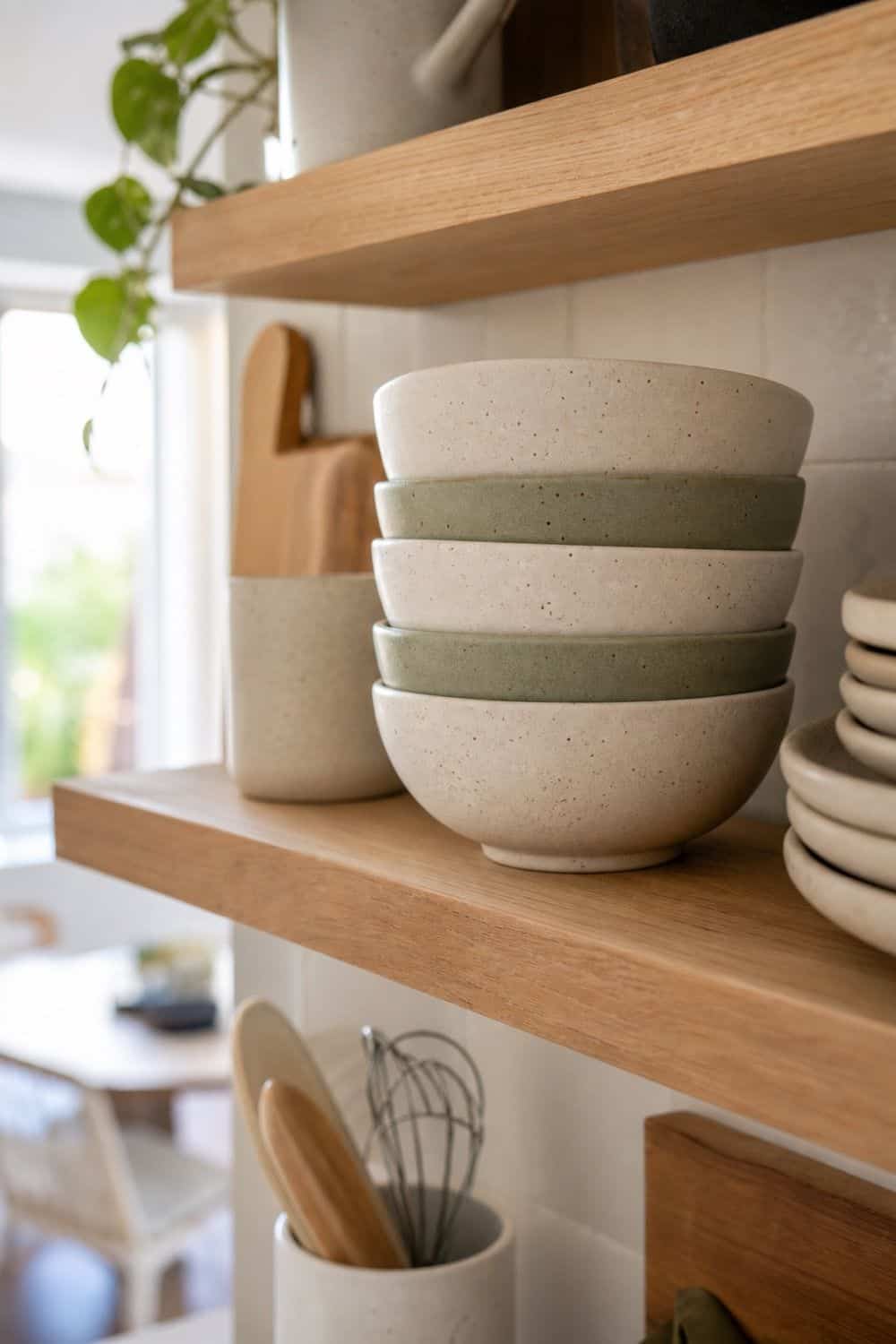
Curved bowl stacks break up the flat lines of plates, books, and canisters. Matte ceramic bowls are especially useful on open shelving because the finish feels softer than glossy dinnerware and helps the shelf look collected rather than showroom-perfect. Use them where you actually reach for bowls: near breakfast supplies, soup mugs, snack plates, or a small serving zone. A stack of four to six bowls is usually enough for visual weight without turning the shelf into overflow dish storage.
Look for a bowl depth that suits your meals, not only the silhouette. Very shallow bowls can look lovely but may not hold cereal, soup, or grain bowls well, while oversized bowls can swallow shelf space that would be better used for glassware or dry goods.
3. Clear Glass Canisters for Pretty Dry Goods
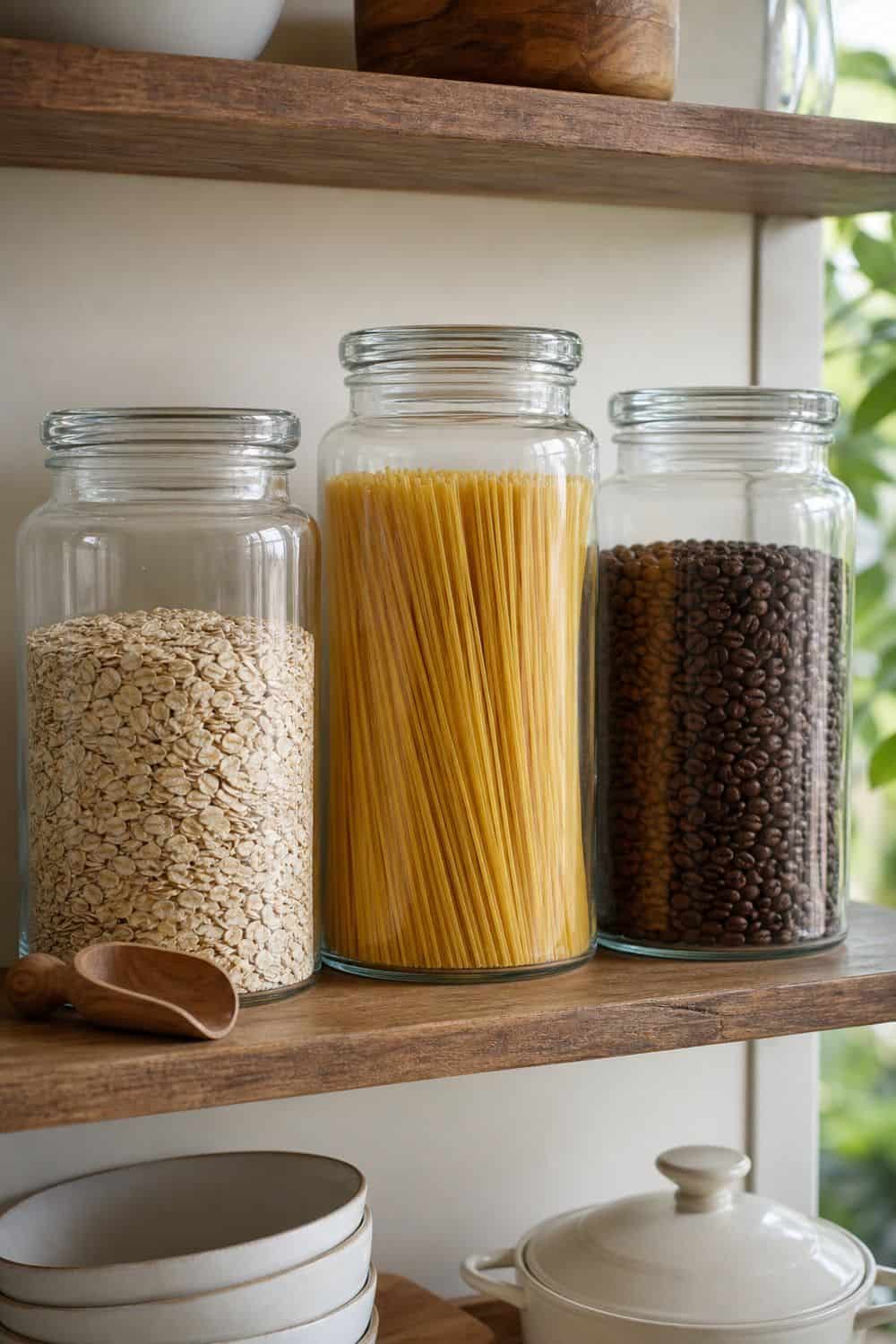
Visible dry goods can look beautiful when the contents are tidy and used often. Glass canisters work well for oats, pasta, rice, beans, granola, tea bags, flour, sugar, or cookies near your cooking or breakfast zone. The best sets have lids that seal well, openings wide enough for scoops, and sizes that fit the packages you buy. If one canister only holds half a bag of rice, the leftover package becomes another storage problem.
Think about what the shelf faces from across the room. Long pasta, rolled oats, coffee beans, and neutral baking staples usually look calmer than half-used colorful candy, mismatched snack bags, or anything that leaves dusty residue on the glass.
- Use matching shapes for calm shelves.
- Label the back or bottom if you want a cleaner front view.
- Skip decanting foods that look messy, expire quickly, or are rarely used.
4. Ribbed Glass Jars for Subtle Texture
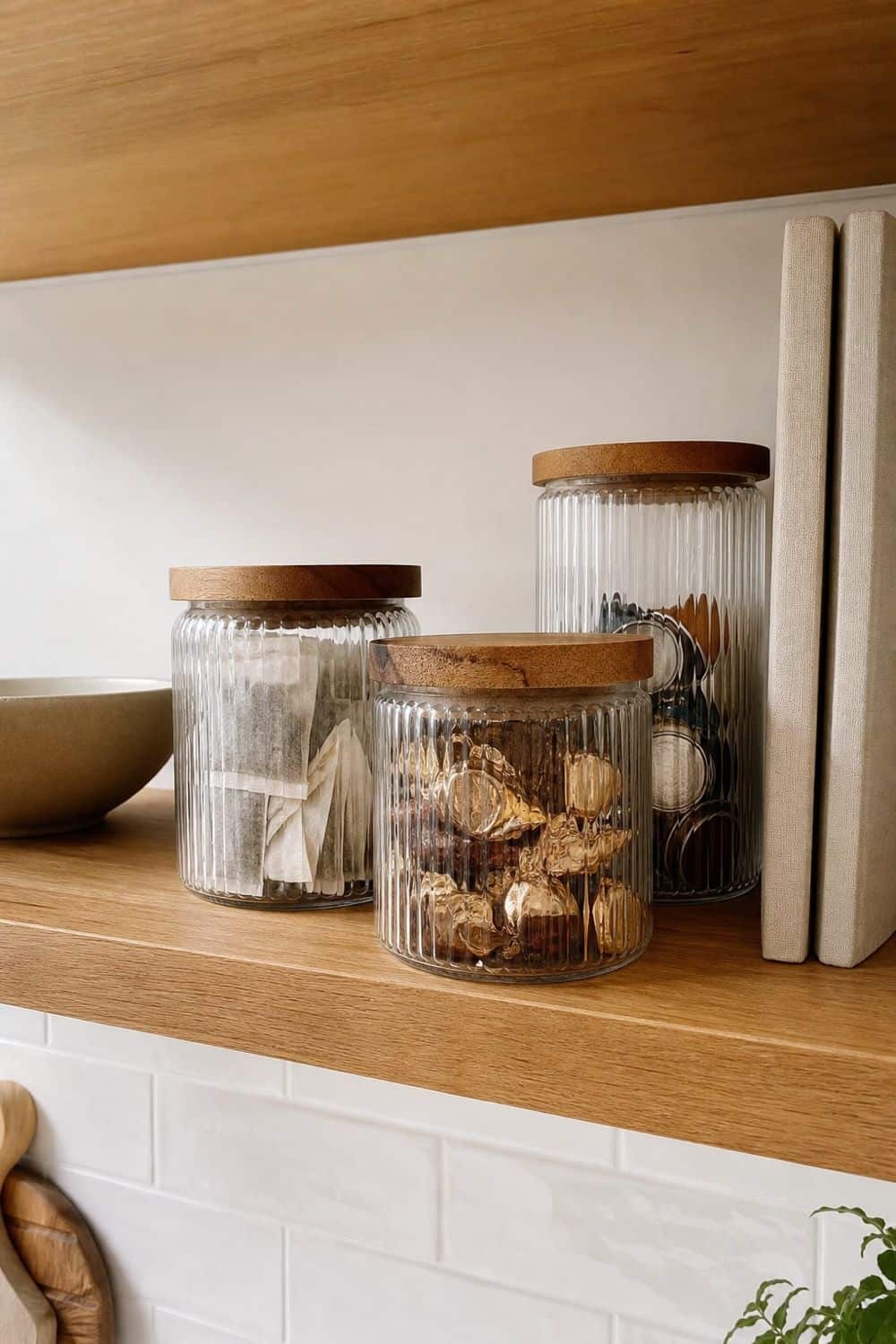
Textured glass gives shelf storage a little softness when clear canisters feel too stark. The ribbed finish still lets you see what is inside, but it blurs the view enough to hide uneven tea bags, wrapped treats, coffee pods, or snack refills. Place ribbed jars in small groups rather than lining a whole shelf with them. Two or three jars beside bowls or cookbooks can add rhythm, while a full row may start to feel like a shop display instead of a working kitchen.
Check the lid style before buying. Wood, bamboo, or metal lids can change the whole mood of the shelf, and a loose decorative lid is fine for wrapped snacks but not ideal for flour, sugar, or anything that needs a tighter seal.
5. Glass Jars With Wood Lids for Warm Storage
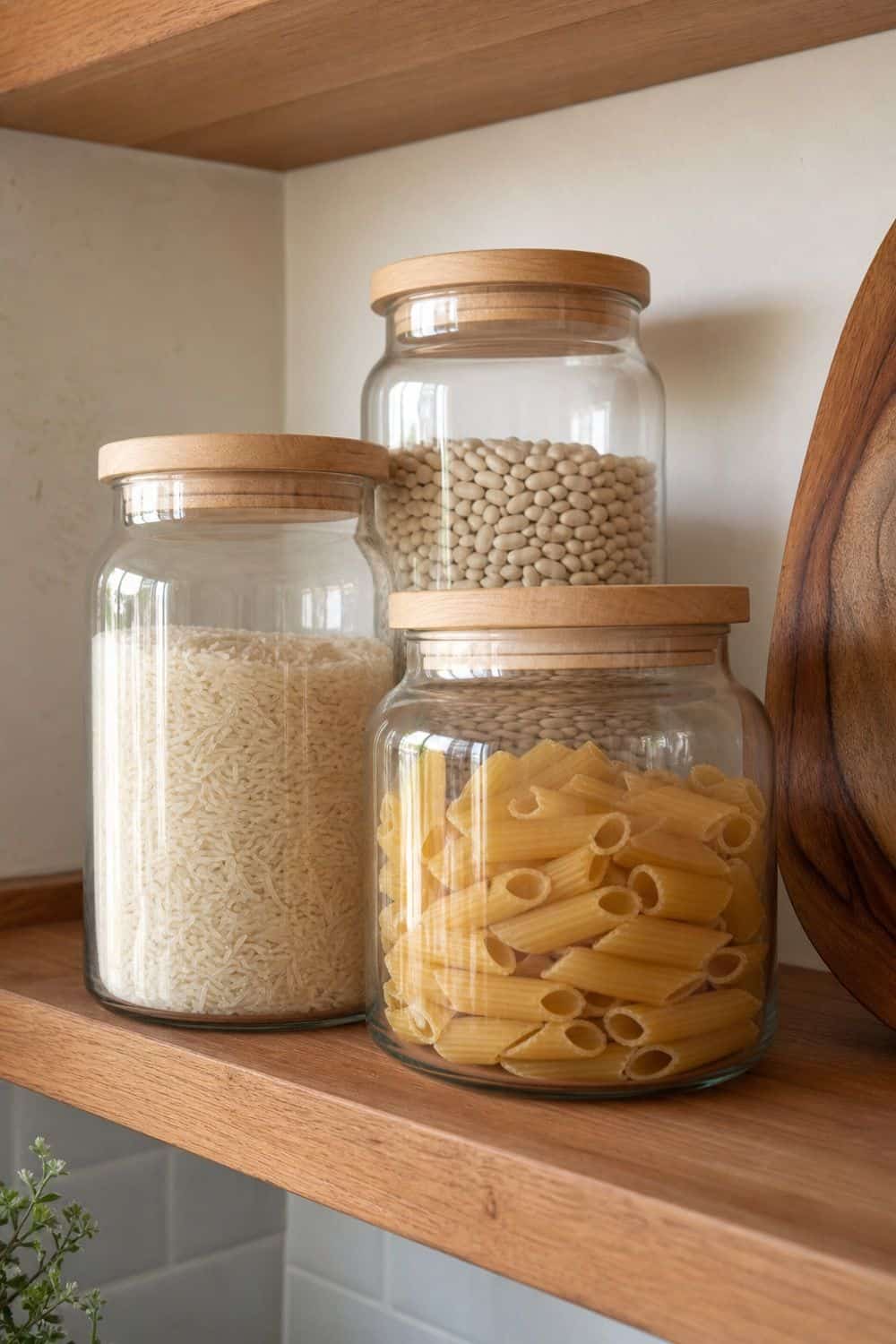
Wood lids keep clear storage from looking too clinical. They connect glass jars to cutting boards, wood shelves, woven baskets, and other natural pieces, which helps open shelving feel warmer and less like pantry storage moved into view. Use these jars for dry staples that are attractive enough to see and steady enough to refill: beans, rice, pasta, cereal, nuts, oats, or baking staples. Keep oily snacks, strong-smelling foods, and anything that stains in more practical closed storage if the jar will sit near light or heat.
A good buying check is whether the lid can be cleaned easily and whether replacement seals are available. Open shelves collect dust faster than closed cabinets, so fussy lids with deep grooves can become annoying even when they look good on day one.
6. Woven Storage Baskets for Less Attractive Items
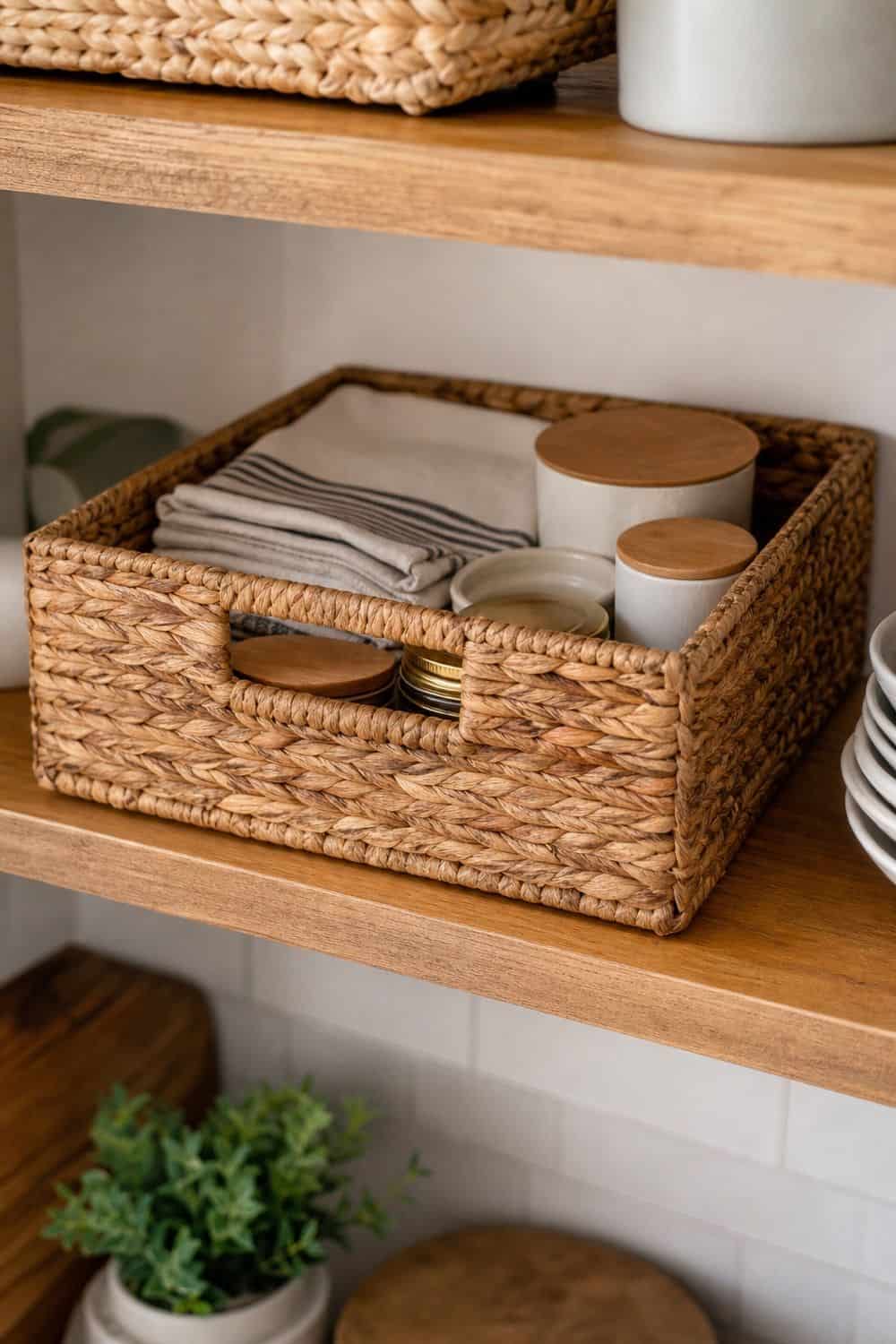
Packets, extra napkins, small tools, lids, and backstock snacks rarely improve a shelf when they sit loose. A woven basket keeps those pieces nearby without turning the display into packaging clutter.
Pick baskets that are shallow enough to pull down safely and structured enough to keep their shape when filled. Floppy baskets look tired quickly on open shelving, especially with heavy items or daily handling.
Match the basket size to the shelf instead of buying the deepest option available. A slightly shallower basket leaves a visible shelf edge and feels lighter. Near cooking areas, choose a weave that can be vacuumed or wiped easily, since loose, fuzzy, or pale baskets can trap dust and grease.
- Use one basket for napkins or tea towels.
- Use another for snack packets or small pantry overflow.
- Avoid baskets for oily, sticky, or hard-to-clean items.
7. Wire Storage Baskets for Airy Shelf Storage
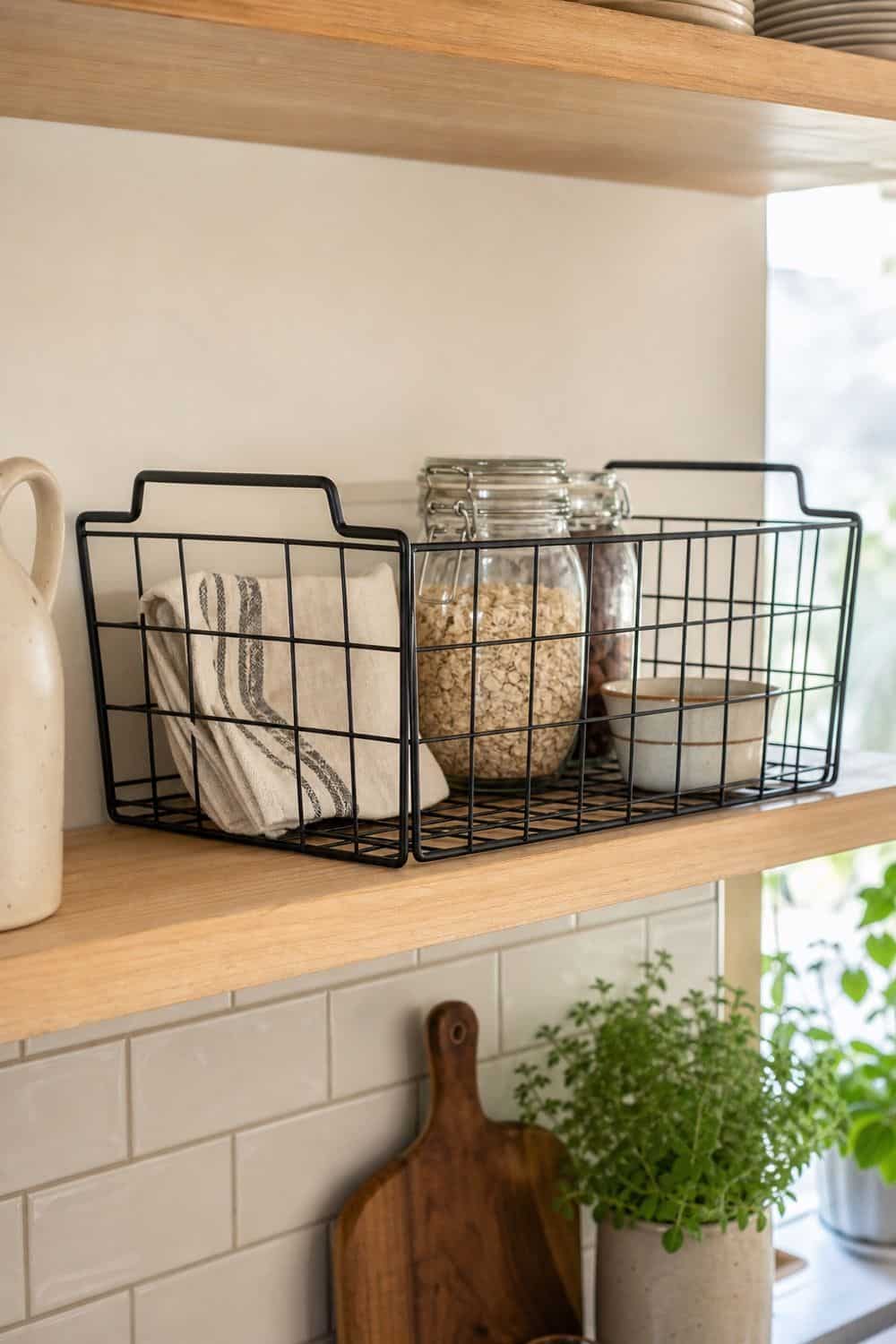
Airier storage is helpful when the contents are already neat enough to show. Wire baskets can hold linens, fruit, jars, coffee supplies, small plates, or produce while keeping the shelf from feeling as visually solid as a row of closed bins.
The caution is that wire does not hide much. Use it for a tidy category with repeated shapes, not for loose packets, tangled cords, or mismatched odds and ends that will still read as mess through the sides. Measure shelf depth before choosing a basket with handles. Handles are useful when you pull the basket down, but they can waste vertical space or bump the shelf above if the clearance is tight. Finish matters, too.
8. Wooden Serving Board for Leaning Shelf Decor

A leaning board adds height without becoming a random prop, because it can come down for bread, cheese, fruit, snacks, or a casual dinner spread. That dual purpose is exactly what makes it a strong open shelf kitchen accessory.
Place the board behind shorter bowls or canisters so it creates a backdrop, then leave a bit of space around the handle or edge. If the board is wedged tightly behind everything else, it becomes decor only and stops being useful.
Choose a finish that can handle real kitchen use. Very raw wood may stain near food prep, while overly glossy boards can look less natural beside stoneware and glass. A medium wood tone is often the easiest to pair with open shelving decor.
9. Marble Serving Board for Stone Contrast

Stone gives open shelves a cooler, heavier note, which can be useful when everything else is wood, wicker, and cream ceramic. A marble board works as a pastry plate, cheese board, fruit base, or quiet backdrop behind smaller objects.
Balance marble with warmer pieces nearby so the shelf does not start to feel cold. It looks especially good beside wooden boards, linen napkins, matte bowls, or amber glass because those materials soften the polished surface.
Weight matters here. A thick marble board can be awkward on a high shelf and may not be right for lightweight brackets. Keep heavier stone pieces on lower, well-supported shelves where they are easier to lift with two hands. If you want the stone mainly for display, choose a smaller board with a clean edge rather than a giant slab.
10. Ceramic Pitcher Vase for Shelf Height
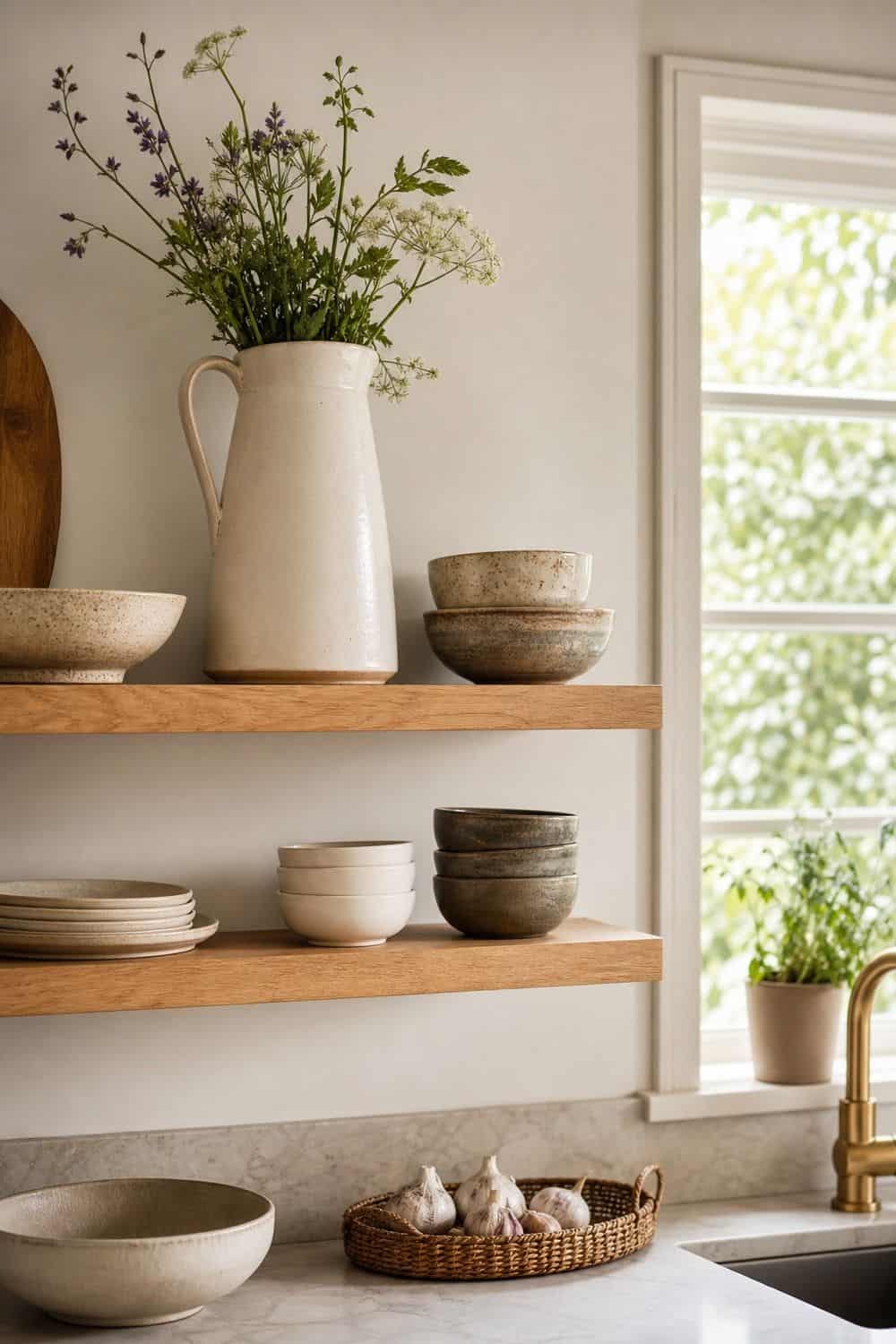
Vertical pieces keep shelves from becoming flat rows of stacks. A ceramic pitcher vase can hold flowers, herbs, branches, wooden spoons, or nothing at all, which makes it more flexible than a decorative object with only one job.
Place a pitcher near one end of a shelf or beside lower dishes so it anchors the display without blocking access. If it is used for fresh stems, make sure it is easy to lift down and refill without dripping water over plates or cookbooks.
Look for a stable base and a finish that works with your dishes. A tall, narrow pitcher may tip easily on a busy shelf, while a very wide one can steal space from everyday items you need more often.
11. Small Ceramic Vase for Open Shelf Gaps
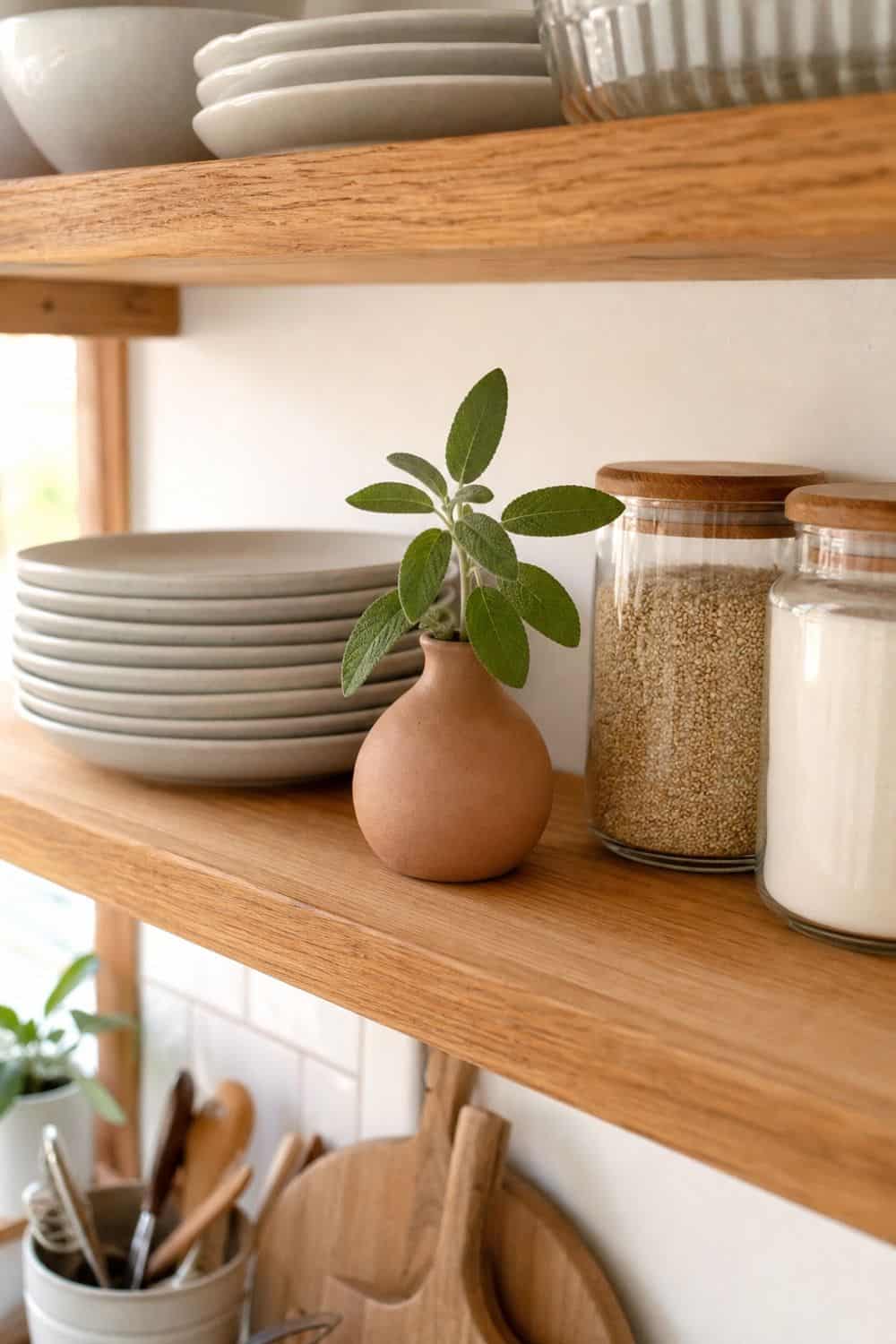
Not every empty spot needs to be filled, but a single small vase can soften an awkward gap between plates, jars, or books. The key is choosing one quiet shape instead of collecting several tiny pieces that make the shelf harder to dust.
Use it with one stem, a few herb cuttings, dried flowers, or as a simple sculptural piece. Matte white, clay, speckled stoneware, or muted green finishes usually blend well with open shelf dishes and kitchen shelf decor. Avoid placing delicate vases near the edge of a shelf you use constantly. Small decor should never make it harder to grab a mug, plate, or canister without knocking something over. Scale is the buying detail that matters most.
12. Potted Herb Planter for Living Greenery
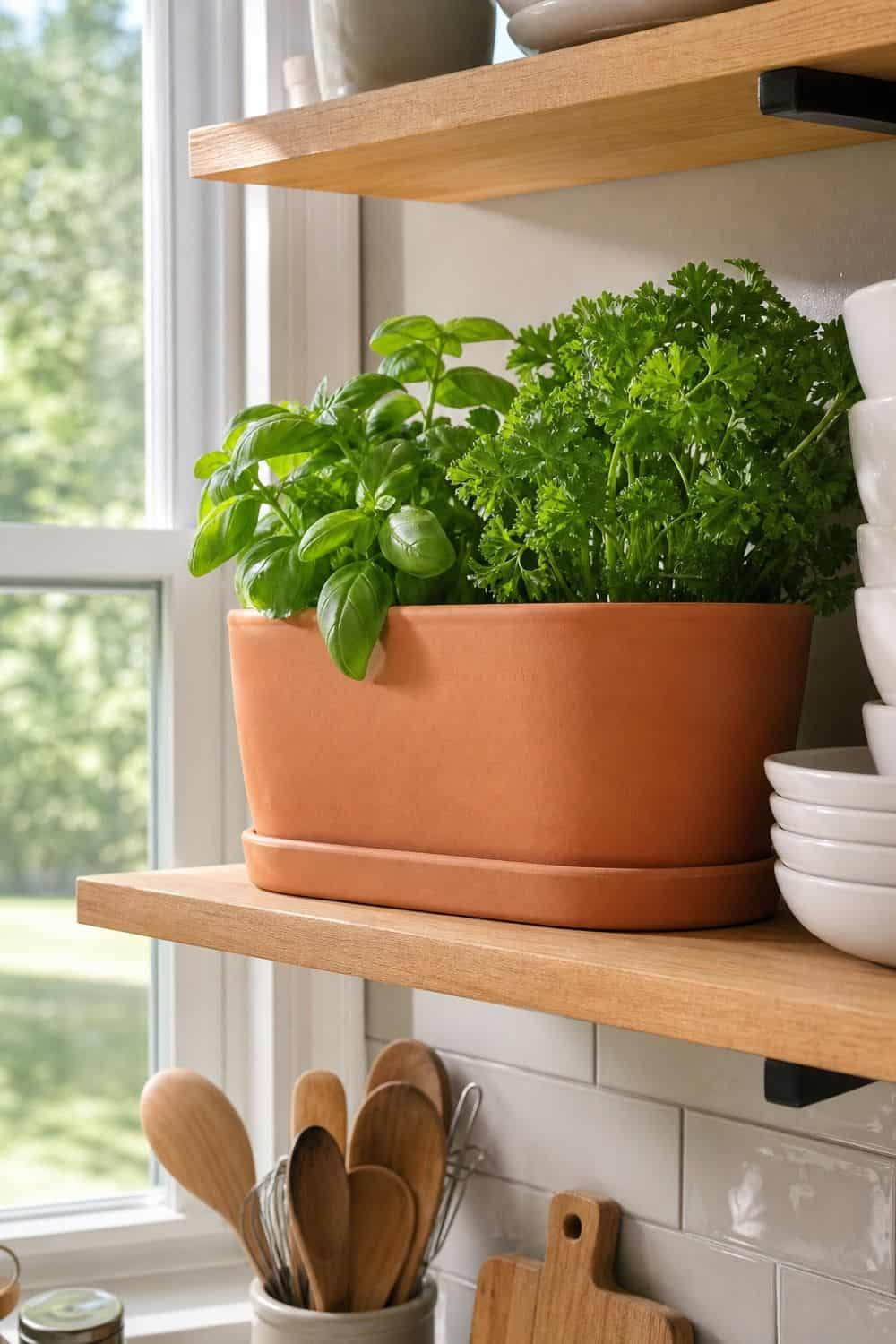
Living greenery feels right in a kitchen when it is useful. A small herb planter can bring basil, parsley, mint, chives, or rosemary onto a bright shelf where herbs are easy to snip.
This only works if the shelf gets enough light and the planter can drain safely. A pretty pot without drainage can lead to soggy roots, while an overwatered planter can damage wood shelves or leave marks around dishes.
Choose a planter that is stable, washable, and not too heavy once watered. Herbs near a stove may dry quickly, while herbs near a sink or window usually fit better. If the shelf is above food prep, keep loose soil away from dishes. A neat liner matters more than an overly decorative pot.
- Keep herbs within comfortable reach.
- Use a saucer or liner under the pot.
- Choose faux greenery instead if the shelf is dark or hard to water.
13. Faux Olive Branches for Low-Maintenance Greenery

Sparse branches add height and movement without the upkeep of a plant. Faux olive stems are best when they look restrained, slightly irregular, and natural enough to blend with wood boards, stoneware, and glass jars.
Use them in a pitcher, crock, or taller vase on a shelf that needs vertical balance. Two or three stems often look better than a packed arrangement, especially in a kitchen where open shelves already hold useful objects.
Skip overly shiny leaves or branches that shed. Faux greenery collects dust, so it should be easy to lift down and wipe, not so delicate that cleaning it becomes a project. The best faux stems leave space around the shelves instead of spreading across everything. If the branches block plates, lights, or the cabinet door nearby, trim the arrangement or move it to a taller corner shelf.
14. Cookbook Stand for Displaying One Favorite Book

One open cookbook can add personality without making the shelf feel decorative for decoration’s sake. A stand also gives the book a real job when you are cooking from a recipe, reading a menu page, or keeping a tablet off the counter.
Set the stand where it does not block the items you grab daily. It works best on a wider shelf, a lower open shelf near prep space, or a display area that can spare a little depth. Choose a sturdy stand that supports the weight of your largest cookbook. Very lightweight stands can slide forward when pages are turned, and oversized stands can make open kitchen shelf styling look crowded before anything else is added. A wipeable finish is helpful if the stand will move between shelf and counter.
15. Neutral Cookbooks for Shelf Styling

Cookbooks bring height, color, and story to open shelves, but they should still reflect how you cook. A few neutral-spined books can quiet the shelf while adding useful reference material for dinners, baking, drinks, or seasonal meals.
Stack two books under a small vase, stand a few upright with bookends, or place one beside a serving board. Keep the grouping limited so the shelf does not become a bookcase that happens to be in the kitchen.
Do not buy cookbooks only for cover color if you will never open them. Open shelving works best when the visible objects have a reason to be there, and a cookbook you actually use will always feel more natural than a purely staged stack.
16. Framed Kitchen Art for Back-of-Shelf Layers
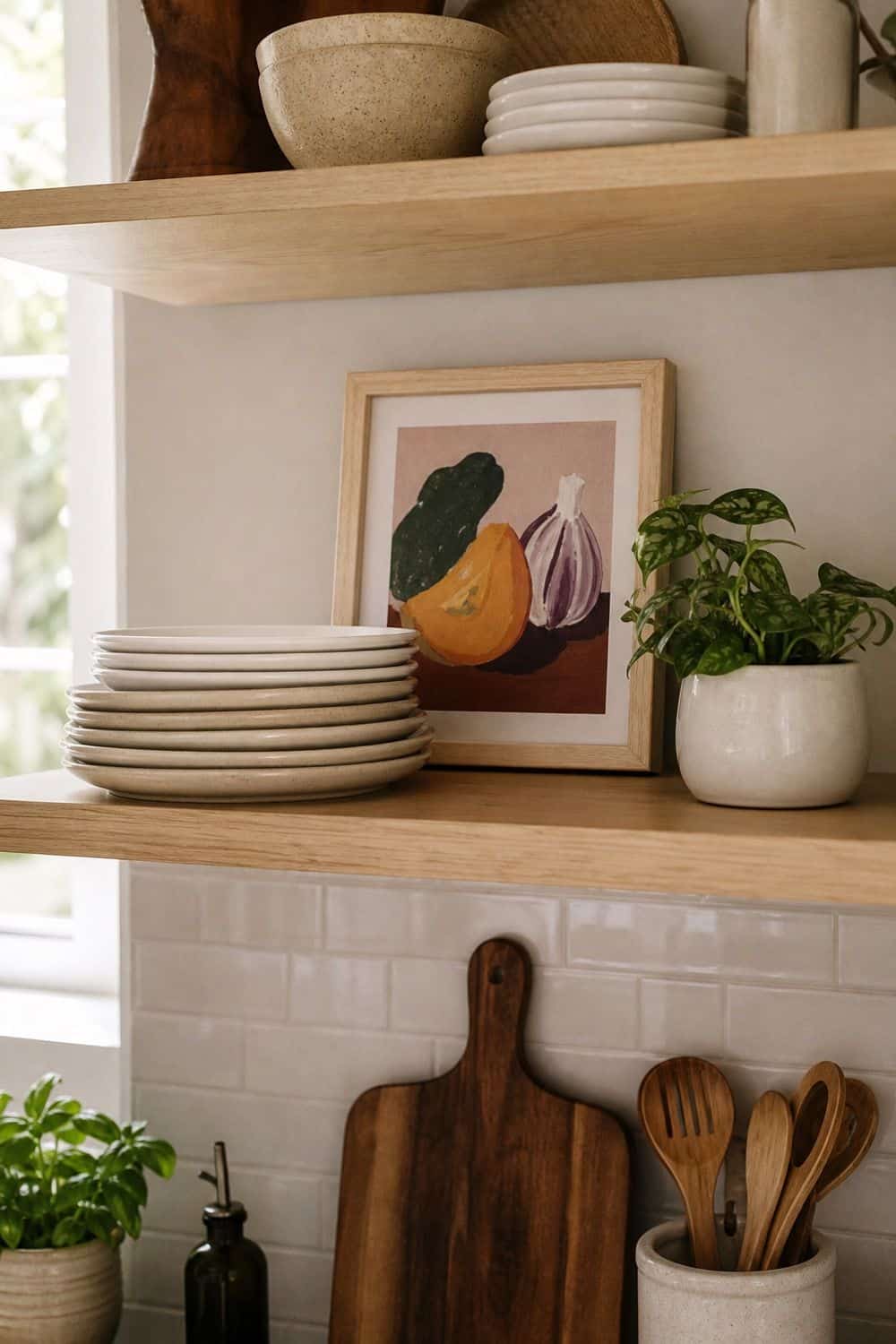
Art can sit behind bowls, plates, jars, or a small plant to create depth without using counter space. Food prints, simple line drawings, cafe-style art, botanical sketches, and soft abstracts all work when the scale is right.
Choose a frame that can handle kitchen conditions. Wood or metal frames are usually easier to wipe than ornate finishes with tiny grooves, and glass should be cleaned regularly if the shelf is near cooking steam or splatter.
Keep the art low enough that it does not fight with the shelf above. A small framed piece tucked behind a plate stack often looks more refined than a large print that crowds the whole opening. Color should connect to something nearby, even subtly. A black frame can echo cabinet pulls, a brass frame can relate to hardware, and a pale wood frame can soften a shelf full of white dishes and glass.
17. Plate Stand for a Favorite Serving Plate

Upright display is useful when every shelf line starts to look horizontal. A plate stand lets one platter, vintage dish, seasonal plate, or handmade ceramic piece become a focal point without needing a full collection.
Place it behind lower objects or near the end of a shelf where it will not be bumped constantly. The stand should hold the plate securely at a slight angle, not so upright that it feels unstable or so far back that the dish disappears.
Measure both the plate and shelf depth before buying. A stand that works on a sideboard may be too deep for narrow open shelves, especially once plates, bowls, or jars sit in front of it. For a busy kitchen, choose a simple stand that almost disappears behind the plate.
18. Tiered Plate Rack for Open Shelves
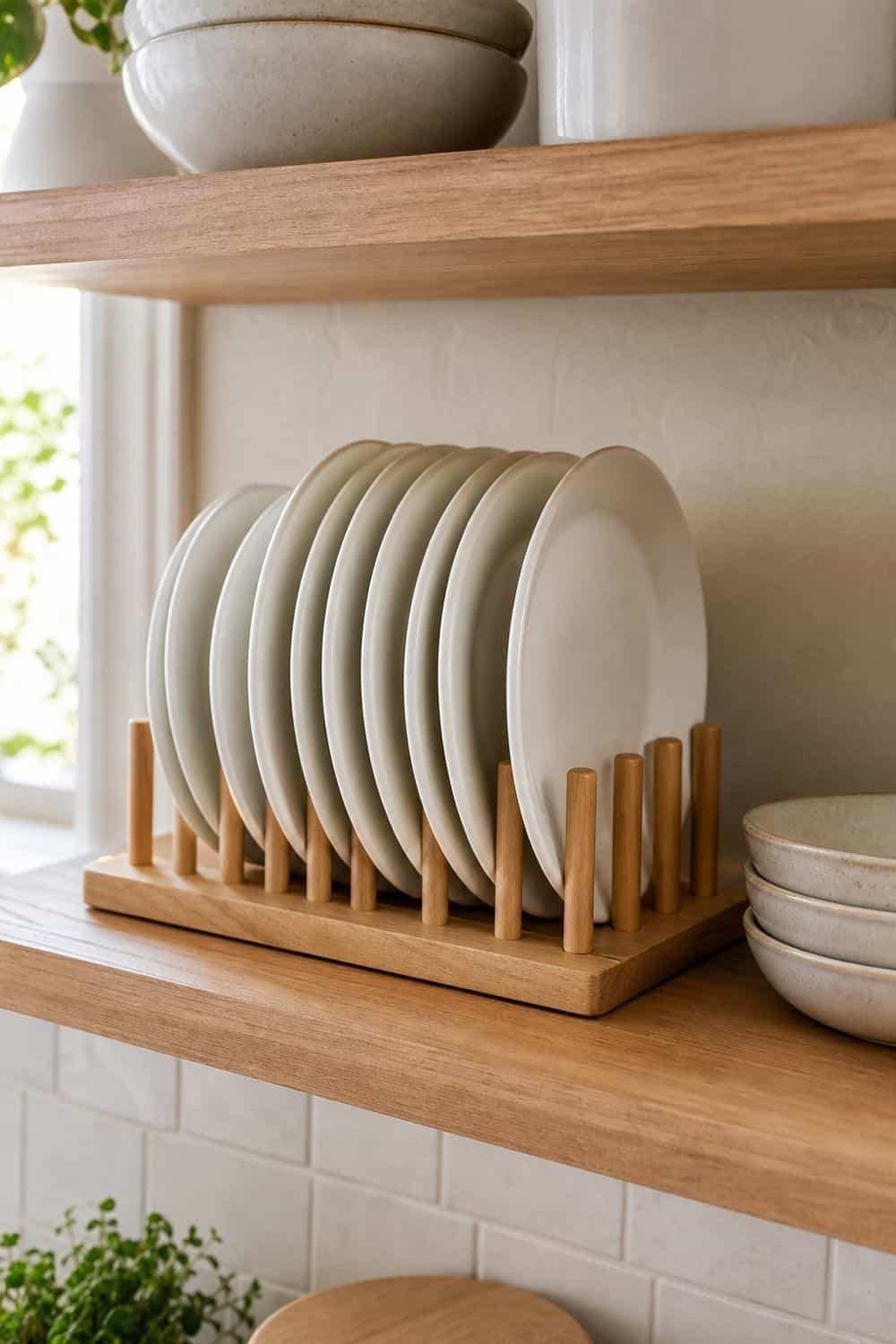
Vertical plate storage can make dishes easier to see and reach, especially if you use open shelves instead of upper cabinets. A tiered rack works for plates, saucers, shallow bowls, or a few serving pieces that deserve more separation.
The rack needs enough shelf height to breathe. If dishes press against the shelf above, the display looks crowded and becomes harder to use than a normal stack. Look for a finish that relates to your shelf hardware or dish color.
A wood rack warms up white plates, while a slim metal rack feels cleaner near glass canisters and under-shelf lighting. Check that the slots fit your plates. Deep dinner plates, handmade rims, and serving pieces may need different spacing than a standard saucer rack.
- Use a rack for dishes you rotate often.
- Keep heavy pieces on lower shelves.
- Avoid filling every slot if the rack starts to look packed.
19. Mug Display Rack for Everyday Cups
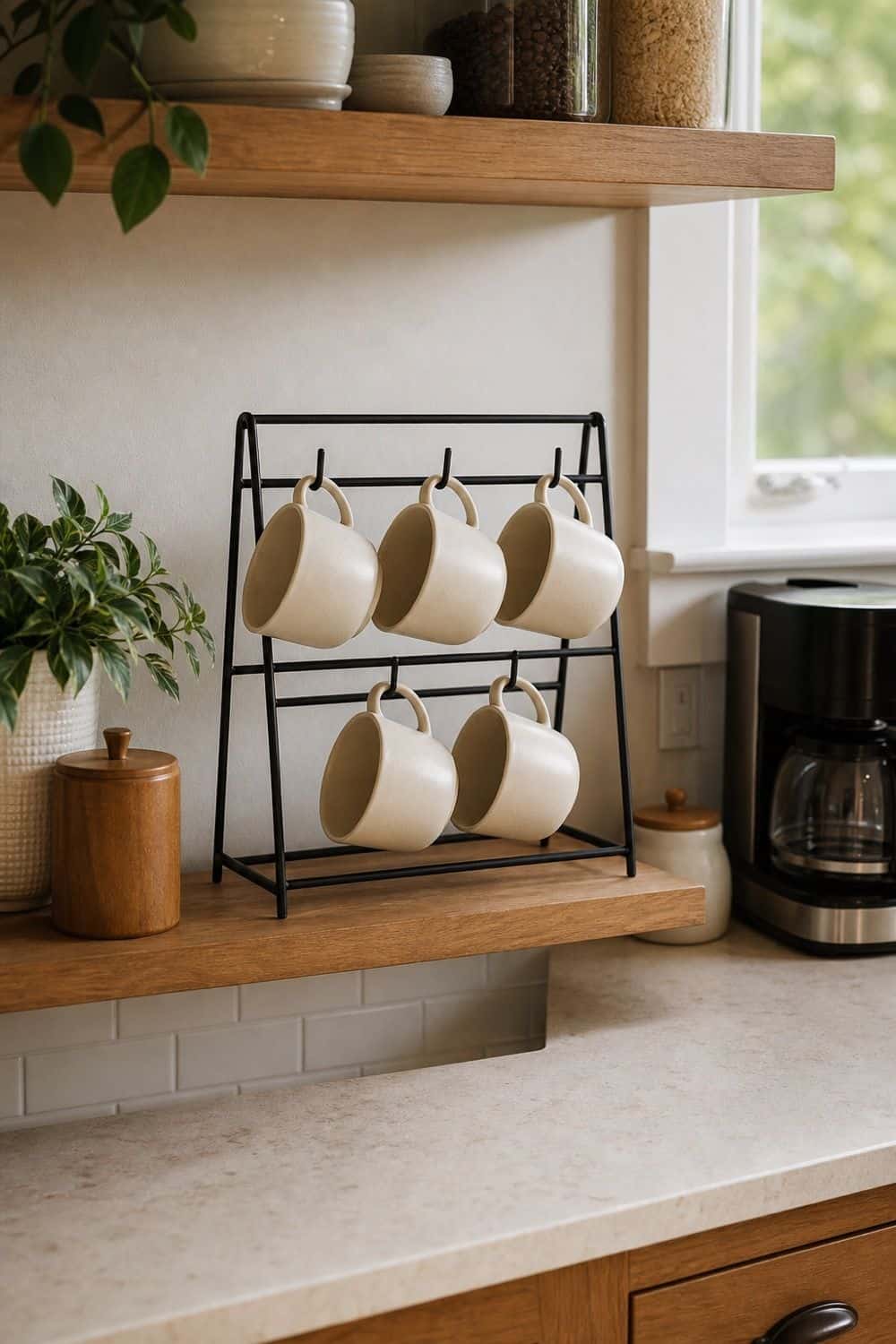
Coffee mugs can look charming on open shelves until the collection grows into a jumble. A display rack gives them a clear boundary and keeps handles from tangling when someone is trying to grab a cup half-awake.
Use it for the mugs you reach for most, not every souvenir cup in the kitchen. Four to six repeated mugs usually look cleaner than a rack packed with different sizes, colors, and slogans. Check the hook spacing and shelf clearance before buying.
Some racks need room for mugs to hang below the shelf, while others sit on the shelf itself and may need extra depth so cups do not feel close to the edge. If the rack will sit near a coffee maker, leave landing space for making the drink. A pretty mug display becomes frustrating if it blocks filters, beans, syrups, or the tray where cups wait.
20. Stemless Wine Glasses for Easy Shelf Display
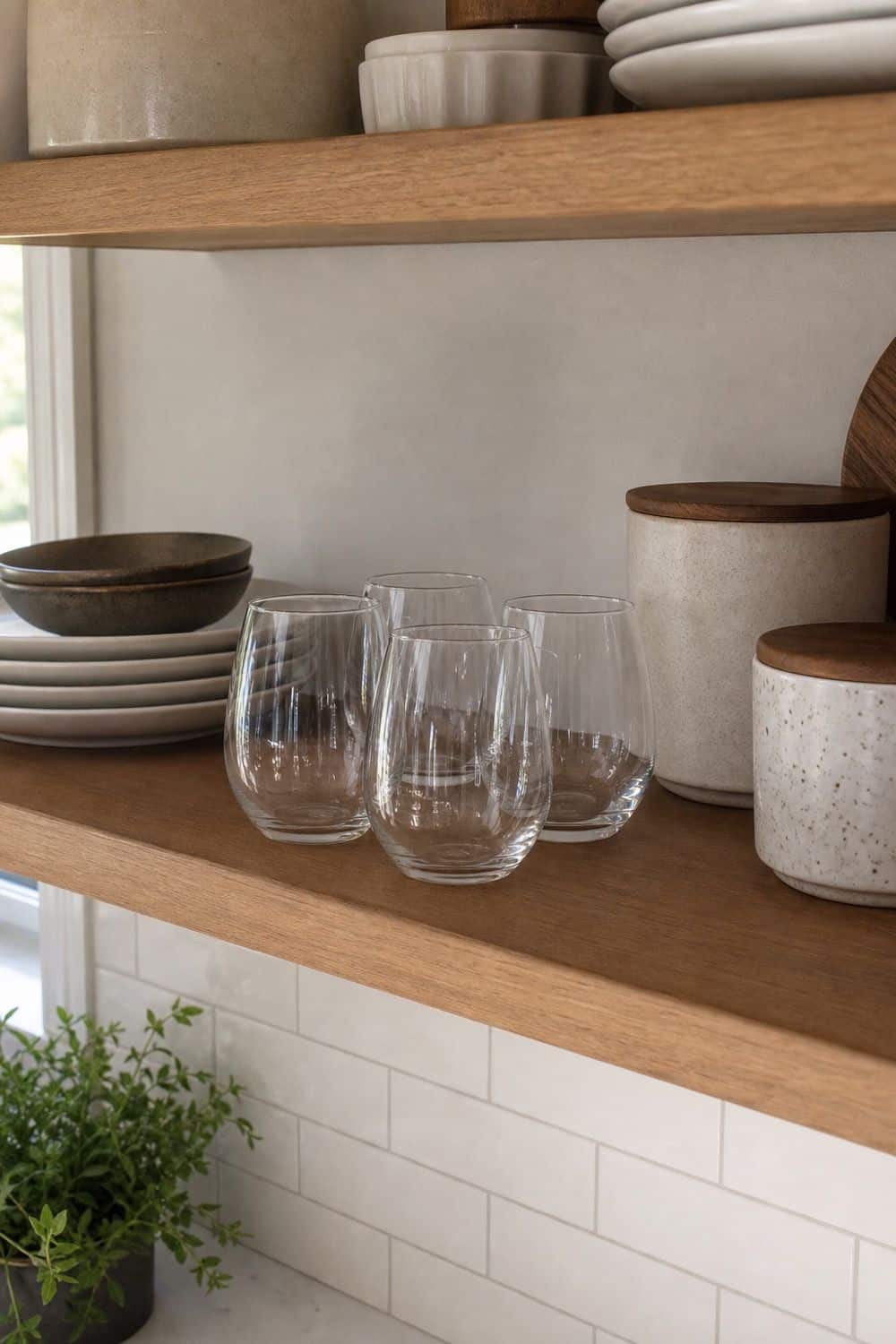
Stable glassware is easier to live with on open shelves than delicate stemware, especially in a busy kitchen. Stemless wine glasses can work for wine, water, juice, spritzes, mocktails, or small desserts, so they earn their display space.
Keep the set grouped neatly and avoid mixing too many glass shapes on the same shelf. Clear glass catches light beautifully, but a cluttered row of different heights can make kitchen display shelves feel restless.
Place everyday glasses on a lower shelf and special-occasion glassware higher up. If the glasses are hard to reach or easy to knock over, they are better in a cabinet than exposed on an open shelf. Choose a glass thickness that fits your household. Very thin glass can look elegant, but a slightly sturdier stemless set often makes more sense on shelves used by kids, guests, or anyone reaching around plates and jars.
21. Cake Stand With Dome for Protected Shelf Display
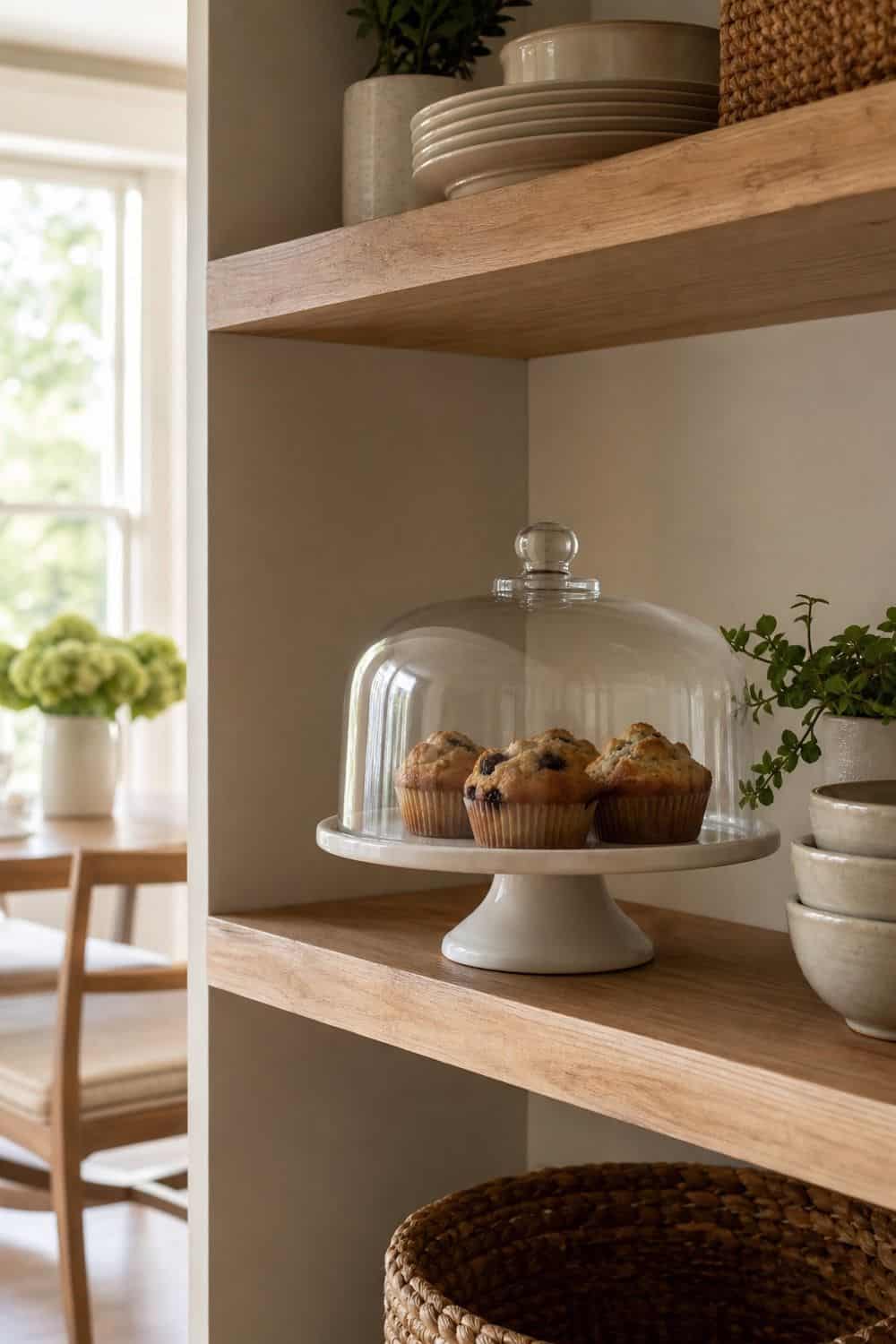
A domed stand can turn muffins, cookies, cake, pastries, fruit, or seasonal treats into part of the kitchen display while keeping them covered. It is one of the few decorative pieces that can genuinely change how a shelf is used.
Depth and reach matter more than the look. A cake stand should sit on a shelf deep enough for the base and dome, with enough room to lift the cover without bumping the shelf above.
Use this on a lower shelf, side shelf, or breakfast area rather than a high display shelf. Glass domes can be heavy and slippery, and a protected food display only helps if people can access it safely. For a smaller kitchen, a low cake stand with a clear dome is usually easier to style than a tall pedestal. It protects food without blocking sightlines or making the shelf feel top-heavy.
22. Wood Salt and Pepper Mills for Shelf Warmth
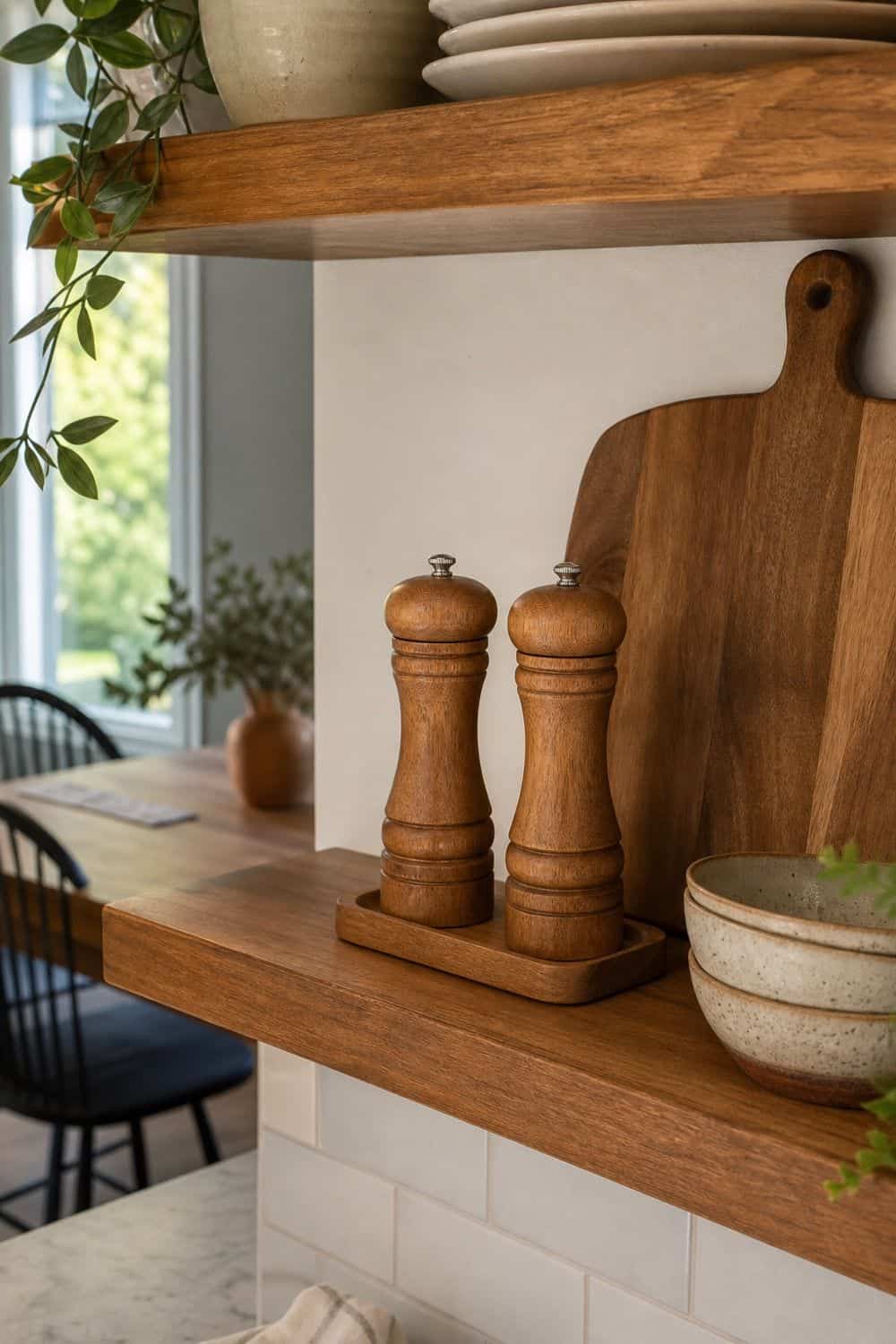
Matching mills add height and a warm material note while staying genuinely useful. They make sense on open shelves near a dining nook, prep zone, or serving area where seasoning is actually part of the daily routine.
Wood tones can help connect shelves to cutting boards, baskets, stools, or a wood table. Choose a finish that repeats something already in the kitchen instead of introducing one lonely color that has no relationship to the rest of the room.
Look for mills that feel comfortable to hold and refill. A tall pair can look elegant, but if the grinders are awkward or leave pepper dust on the shelf constantly, they may be better kept near the stove or table instead. Keep them on a small tray if the shelf surface stains easily.
23. Brass Shelf Brackets for a Decor Upgrade
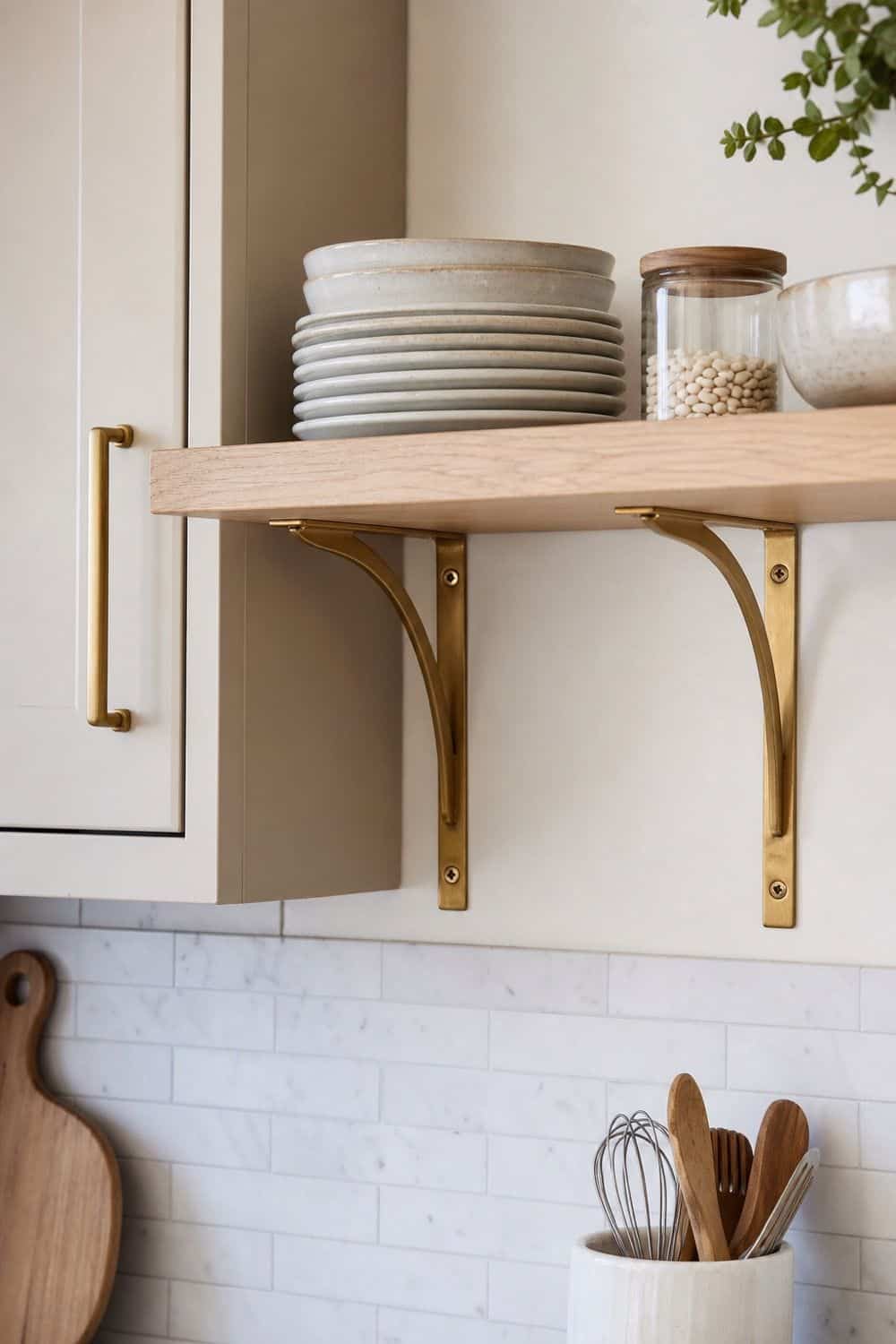
Hardware can be part of the decor when the shelves themselves are visible. Brass brackets bring a warm metal detail to wood, painted, or marble-look shelves and can make a basic shelf feel more finished.
This is one find where strength matters as much as style. Check bracket depth, weight rating, wall type, screw quality, and whether the bracket size actually supports the shelf you plan to use. If you are refreshing existing shelves, match the brass tone to nearby cabinet hardware, lighting, or faucet finishes when possible.
Too many competing metal colors in a small shelf area can look accidental rather than layered. Do not treat brackets as decoration only. Open shelves may hold dishes, glass, and stone boards, so installation should match the wall condition and expected load before the styling layer starts.
24. Under Shelf Lighting for Styled Shelves
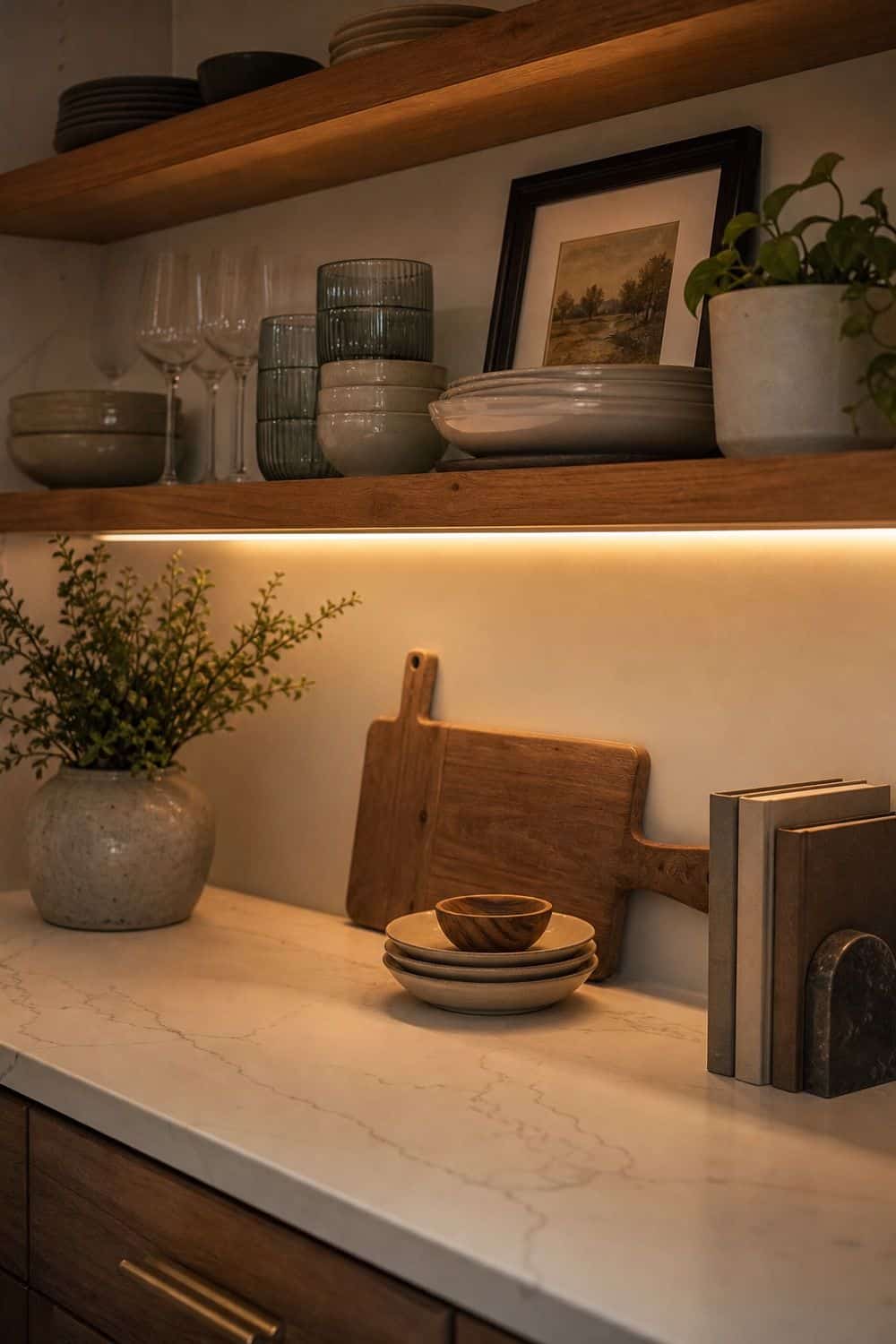
Lighting changes open shelving more than another vase ever could. A warm strip, puck, or slim under-shelf light can brighten dishes, glassware, art, and the counter below so the shelves feel intentional instead of shadowy.
Choose a warm color temperature and a low-profile design that does not become the main thing you notice. Visible cords, harsh blue-white light, or bulky fixtures can make open shelving decor feel less refined. Think about how the lights turn on and where they will be used.
A motion sensor may be useful over a coffee zone, while dimmable lighting can be better for display shelves that stay softly lit in the evening. Test placement before attaching anything permanently. Light should fall on the shelf or counter, not shine into seated eyes or create harsh shadows behind bowls and canisters.
25. Slim Decorative Bookends for Cookbooks and Boards

Upright cookbooks, slim trays, and serving boards need support if they are going to look relaxed instead of ready to slide over. Low-profile bookends keep the grouping controlled without taking over the shelf.
Look for bookends with enough weight to hold what you actually display. Stone, metal, or heavy ceramic options usually work better than lightweight decorative pieces when they need to support a stack of cookbooks.
Keep the shape quiet if the shelf already has canisters, glass, art, and greenery. The bookends should frame the useful pieces, not become another tiny decor moment competing for attention.
FAQ
What should I put on open kitchen shelves?
Put daily-use dishes, bowls, glassware, canisters, baskets, serving boards, cookbooks, small art, herbs, and a few display pieces on open kitchen shelves. The best items are useful, easy to clean, and attractive enough to see every day.
How do I decorate open shelves without clutter?
Repeat materials, limit tiny objects, group similar pieces together, and leave open space around the items you use most. Baskets are helpful for less attractive items, but avoid filling every shelf with closed storage or the display can feel heavy.
What open shelving decor is worth buying first?
Start with display-worthy basics you will use often, such as stackable plates, ceramic bowls, clear canisters, woven baskets, and a wooden serving board. Those pieces improve the shelf visually while helping with meals, storage, or serving.
Are open shelves still in style?
Open shelves are still in style when they are useful and not overcrowded. The strongest look is less about filling a wall with shelves and more about warm materials, natural texture, good lighting, and pieces that make daily kitchen life easier.
How do I make open shelves look intentional?
Use repeated colors, a mix of heights, and a few materials that relate to the rest of the kitchen. Stoneware, glass, wood, baskets, brass, and greenery can work together if each piece has a reason to be on the shelf.
What dishes look best on open shelves?
Simple stoneware plates, matte ceramic bowls, shallow serving pieces, and repeated mug sets usually look best. Choose dishes with clean shapes and colors you like enough to see every day, then keep the stacks pared back.
How do I keep open shelves easy to clean?
Display fewer pieces, avoid lots of tiny objects, and keep daily-use items where they are handled and washed often. Choose wipeable finishes for frames, jars, boards, and lighting, and avoid delicate decor near steam or cooking splatter.
What decor works on small kitchen shelves?
Small shelves work best with scaled-down pieces: a short plate stack, a pair of bowls, one canister, a slim board, a small vase, or a few cookbooks with bookends. Leave negative space so the shelf does not look packed.
Final Thoughts
The best open shelving kitchen decor finds make your shelves easier to use, not just prettier to photograph. Choose pieces with real kitchen jobs, repeat materials where you can, hide the less attractive necessities, and let a little empty space do some of the styling work.
A calm open shelf usually comes from everyday plates, useful bowls, clear storage, warm boards, a small amount of greenery, and lighting that makes the whole area feel finished. Once the shelf is useful first, the decor feels natural instead of forced.
Last update on 2026-09-17 / Affiliate links / Images from Amazon Product Advertising API