
Open shelving kitchen organization works best when shelves hold attractive items you use often, while bulky, messy, dusty, or rarely used things stay behind closed doors. Use low shelves for daily plates, grouped bowls, mug hooks, clear jars for high-turnover staples, baskets for packaged foods, shelf risers, secure brackets, and a weekly dust, oil, and fingerprints reset.
Open kitchen shelves can make a room feel lighter and more personal, but they are not effortless storage. Everything is visible, so the shelves have to be pared back, reachable, sturdy, and easy to clean.
Good Open shelving kitchen organization is less about styling every inch and more about choosing what belongs in the open. Daily dishes, mugs, simple jars, baskets, and a few useful display pieces can work beautifully. Small appliances, paper goods, bulky cookware, and random seasonal items usually make shelves harder to live with.

Top Recommended Products


You Might Also Like These Blog Posts
- 25 Natural Wood Kitchen Organization Ideas
- 25 Pantry Organization Ideas That Actually Work
- 25 Cottage Kitchen Organization Ideas for Cozy Storage
- 25 Kitchen Organization Ideas for a More Functional Kitchen
- 25 Small Kitchen Organization Ideas That Save Space
1. Shelf Reset Before Styling

Before styling open shelves, take everything down and decide what the shelves are actually meant to hold. Daily dishes, mugs, glasses, sealed jars, and one or two display pieces usually earn the spot. Random decor, duplicate mugs, and things you never reach for should go elsewhere. Open shelving looks best when it starts with fewer objects, not better arranging. Leave some open space from the beginning so the shelf can handle real life: a washed bowl, a new jar, or the mug that comes out every morning.
2. Lowest Shelf for Daily Plates
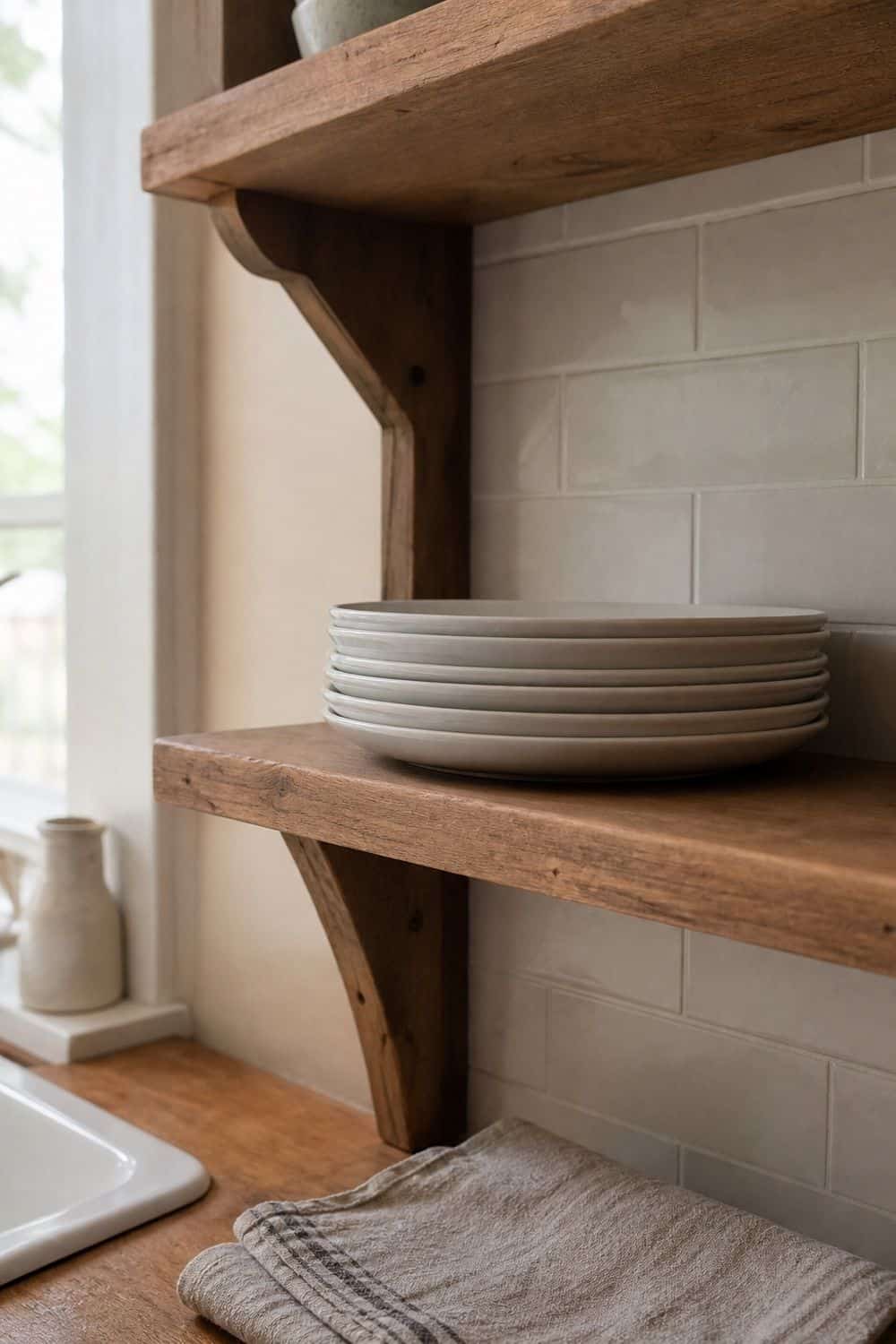
Plates belong on the lowest open shelf if they are part of the everyday rhythm. That keeps them easy to unload from the dishwasher, set on the table, and put away without reaching over your head.
Keep the stack modest, especially if the shelf is narrow or the plates are heavy. A stack that wobbles or needs two hands is too tall for daily open storage.
Special dishes that come out twice a year can live behind doors. Open shelves should reward frequent use, because dishes that move often do not sit long enough to collect much dust.
3. Bowl Groups by Size and Use
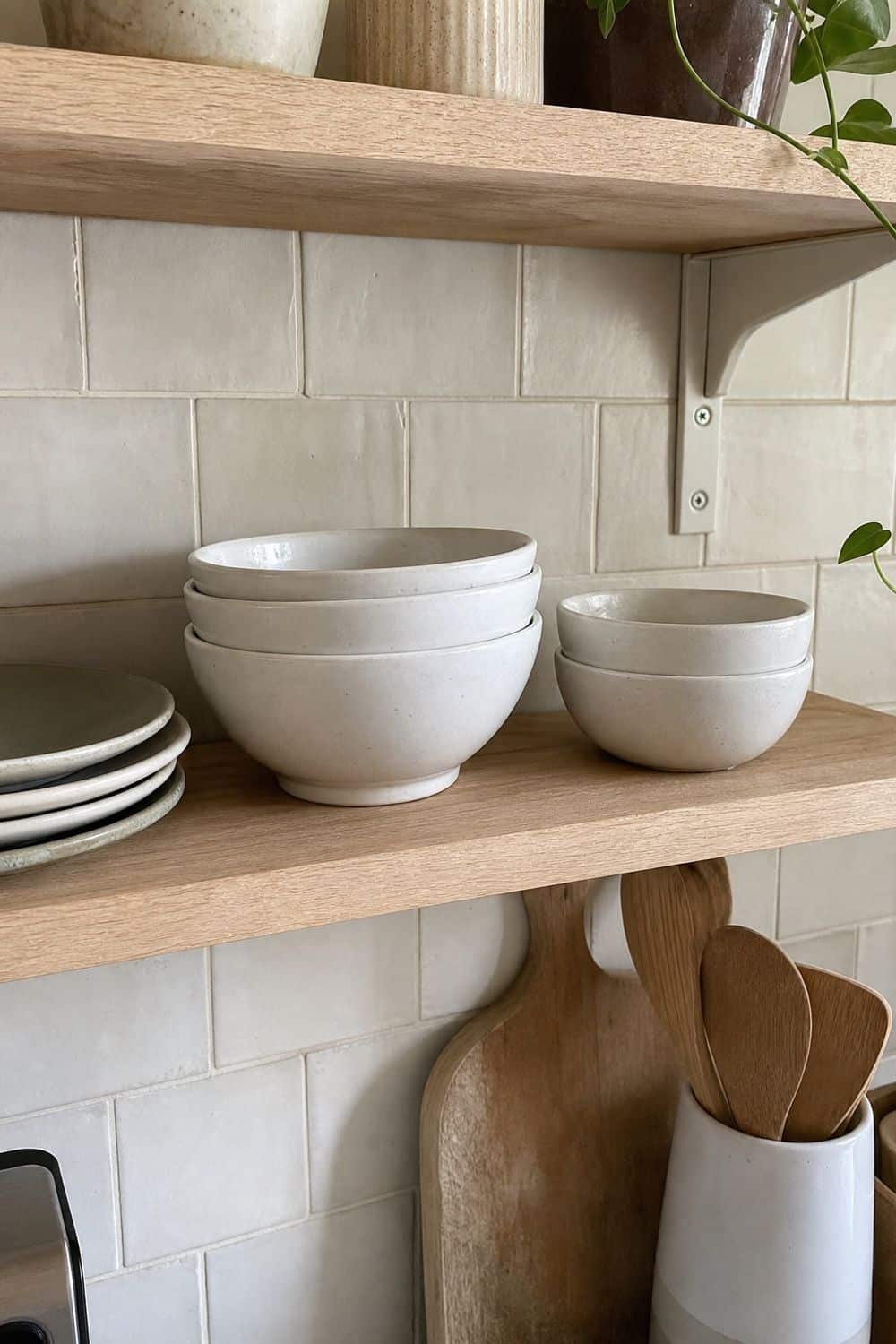
Bowls can look messy fast because mixing bowls, cereal bowls, prep bowls, and serving bowls all have different heights. Keep one everyday stack on the shelf and move the oversized pieces somewhere sturdier.
Nest only the bowls that lift out easily. A stack that needs both hands and a prayer is too tall for open storage, especially above shoulder height.
Group bowls near plates or breakfast supplies, depending on how the kitchen works. The most common bowl should be easy to grab without shifting the whole display.
4. Under-Shelf Mug Hooks
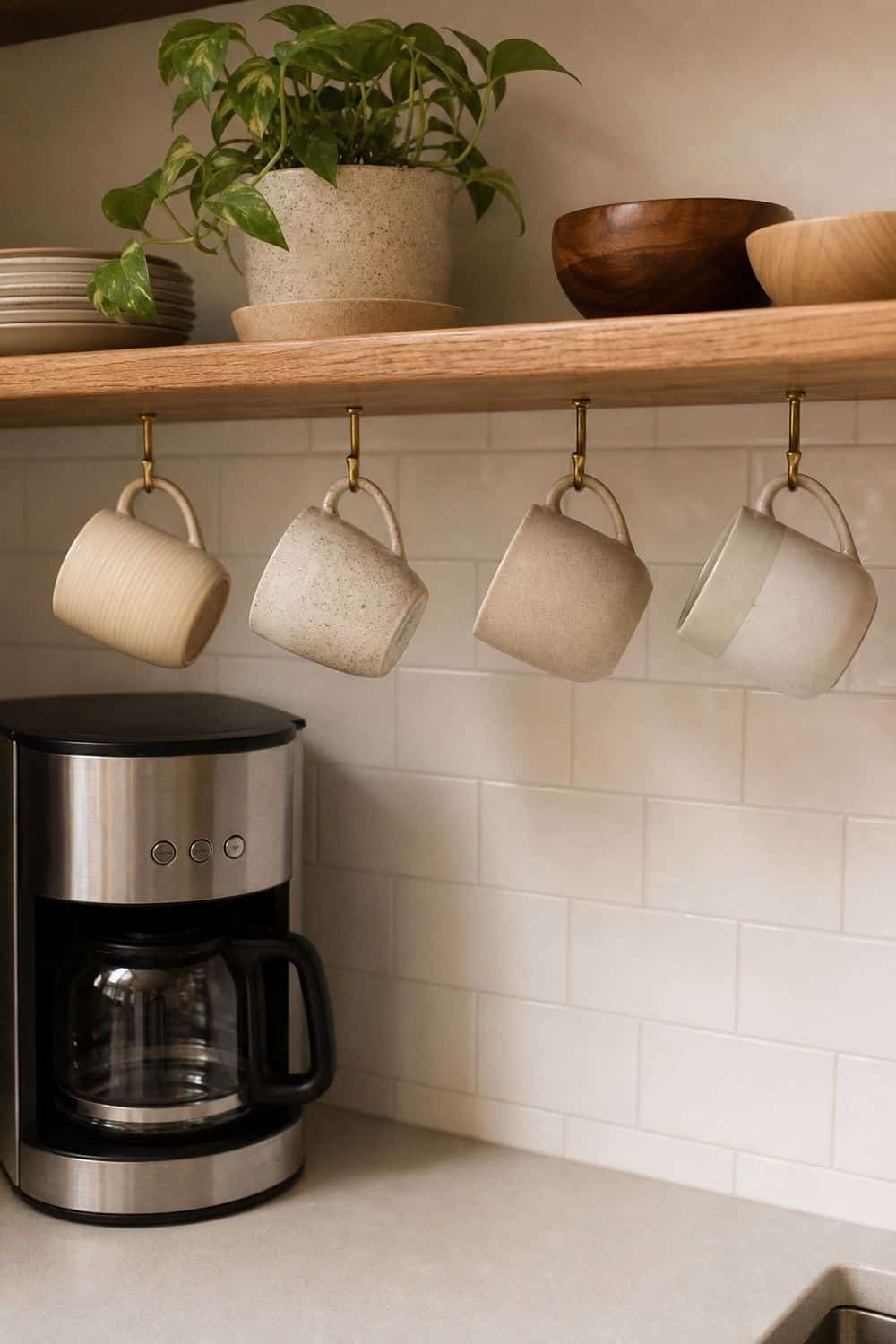
Mug hooks can free shelf surface and make a coffee corner feel charming, but they need room to swing. Install them under the lowest shelf only if the mugs will not hit the backsplash, kettle, or each other. Keep the row short and choose mugs you use often, not every souvenir cup in the cabinet.
This works best above a coffee machine or tea setup, where the movement is natural. If guests have to hunt for the mugs, the hooks are probably in the wrong place.
5. Morning Shelf for Coffee and Tea

A coffee and tea shelf works when it holds the pieces that make the morning easier: mugs, filters, tea tins, sugar, maybe a small jar of spoons. Keep the machine, kettle, or grinder on the counter below so the shelf supports the routine instead of scattering it across the kitchen. Avoid turning this shelf into a cafe display with ten syrups and more mugs than anyone uses. A calm, reachable setup feels much better at 7 a.m. than a crowded shelf that has to be restyled after every cup.
6. Clear Jars for Pantry Staples
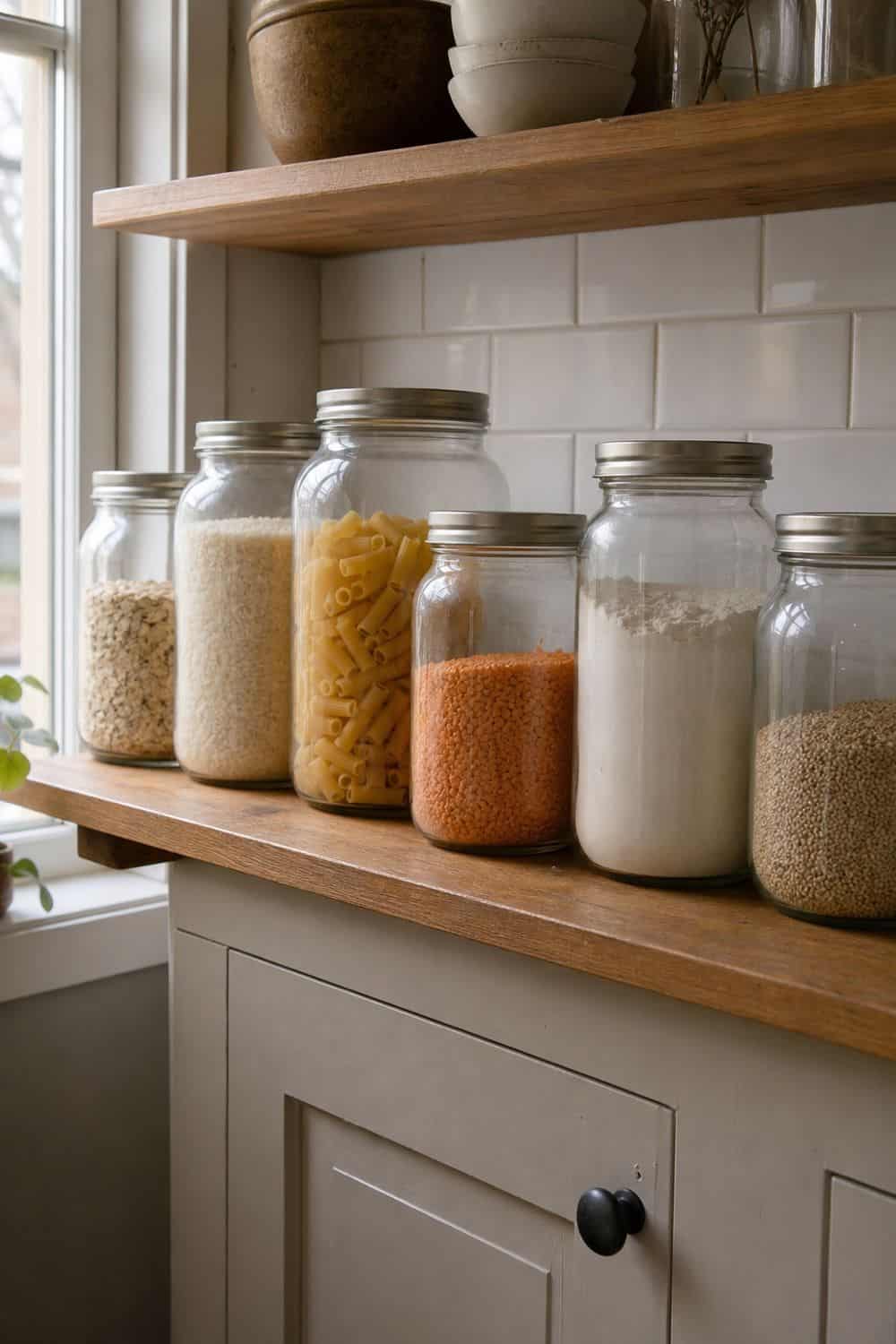
Clear jars are useful on open shelves when the ingredient is attractive, stable, and used often. Flour, sugar, rice, oats, pasta, lentils, coffee, and tea can work beautifully if the jars seal well.
Labels matter more than perfect matching. You should be able to tell flour from powdered sugar quickly, especially if someone else cooks in the kitchen too.
The refill plan matters. If the extra pasta bag has nowhere to go, the shelf will look tidy while the cabinet underneath becomes chaos. Keep backstock in one closed zone.
7. Shallow Baskets for Packages
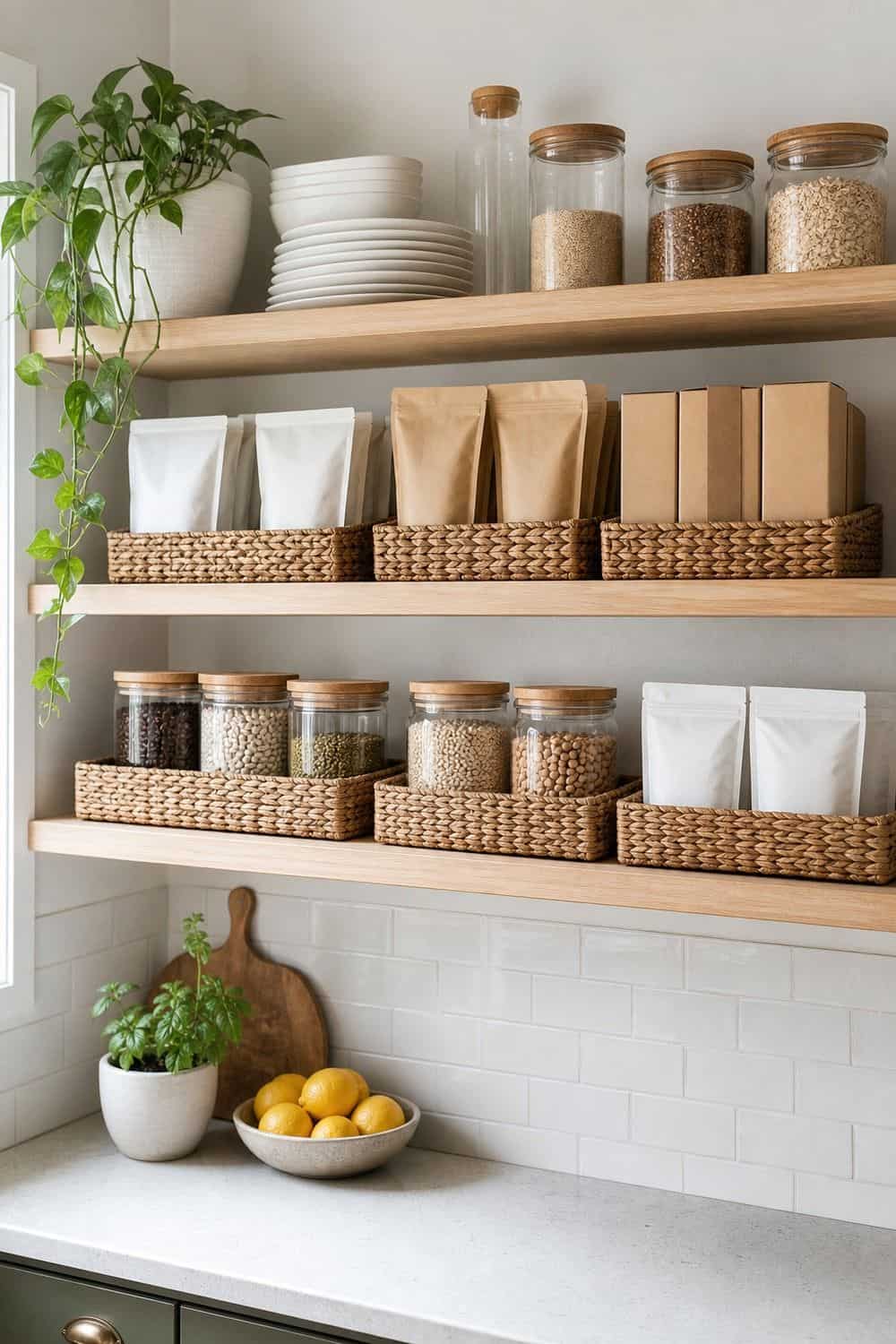
Baskets can soften packaged food on open shelves, but they should hide only categories you actually maintain. Use one basket for snacks, wraps, tea boxes, or breakfast packets, then keep the rest behind closed doors. A basket that swallows random packaging will become a mystery box within a week.
Choose shallow baskets when possible so the contents are visible from above. Deep baskets look calm from the room, but they are where expired crackers and duplicate seasoning packets go to vanish.
8. Shelf Risers for Short Pieces
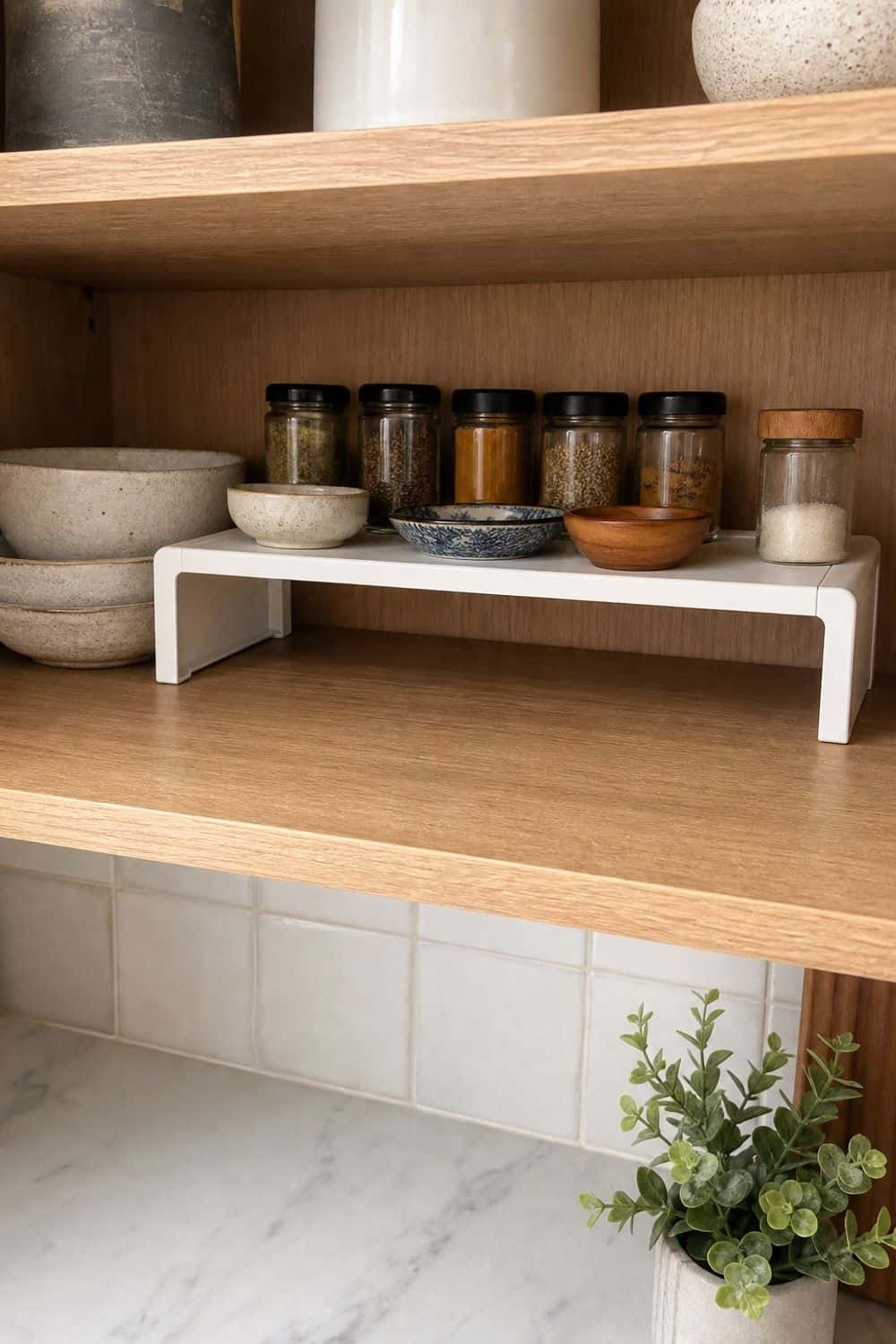
Shelf risers help when short items disappear behind taller ones. Use one for mugs, small bowls, spice jars, or short pantry jars so the back row can still be seen.
Keep the riser sturdy and washable, especially near cooking zones where residue settles faster. A flimsy riser makes the shelf feel more fragile than organized.
The best riser does not fill the whole shelf. Leave enough flat space for pieces that need to slide in and out without bumping the tier.
9. Turntable for Oils and Vinegar
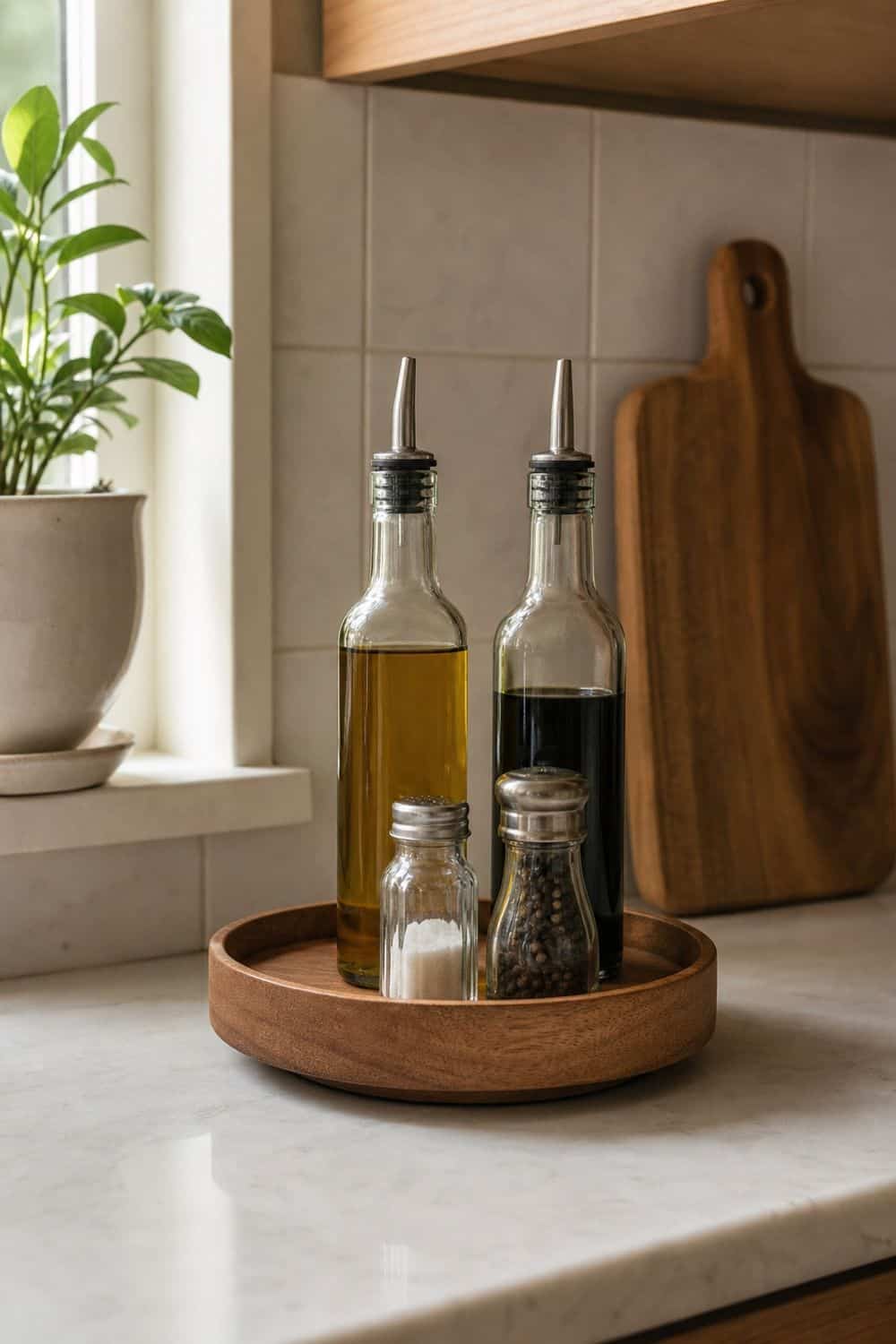
A small lazy Susan can make oils, vinegar, salt, pepper, and finishing sauces easier to reach on an open shelf or counter ledge. Choose one with a lip if the bottles are narrow, and keep the group small enough that it still turns smoothly. This is not the place for every marinade and backup bottle.
Place it away from the hottest, greasiest part of the range if possible. Oils look lovely out in the open, but they should still be easy to wipe around.
10. Short Row of Cookbooks

Cookbooks bring warmth to open shelves, but a long row can feel heavy and awkward. Keep a short group of books you truly open, with the tallest or sturdiest book acting like a natural bookend.
Move sentimental books or rarely used volumes to a different shelf if they make the kitchen feel crowded. The working kitchen shelf should hold the books that help you cook.
Grease and steam matter here, too. A cookbook shelf belongs away from the splatter zone unless you are comfortable wiping covers and dusting the tops regularly after cooking.
11. One Wooden Serving Piece

One wooden bowl, tray, or serving board can warm up open shelving without turning it into a display case. Choose a piece you actually use for fruit, bread, salads, snacks, or serving, then let it have breathing room. Wood looks best when it contrasts with dishes and glass rather than competing with five other decorative pieces.
Store heavier wooden items low enough to lift safely. If the piece is mostly decorative and always dusty, it may be better on a dining shelf than in the kitchen work zone.
12. Small Appliances Behind Closed Storage

Small appliances usually make open shelves feel crowded, even when the appliance itself is useful. Toasters, blenders, mixers, air fryers, and food processors need cords, clearance, and a landing spot, so they are usually happier in a cabinet, appliance garage, cart, or lower shelf behind a door. Keep open shelves for pieces that are easy to lift, clean, and return. If an appliance is used daily, it may deserve counter space; if it is used rarely, it should not become the visual anchor of the wall.
13. Closed Storage for Bulky Cookware

Bulky cookware can overwhelm open shelves both visually and physically. Dutch ovens, stacks of pans, baking dishes, and lids are heavy, awkward, and not especially graceful when they are lined up at eye level. Store them in lower cabinets, deep drawers, or a dedicated pot area where the weight is safer.
If you love one beautiful pan or pot, display just that one and give it enough space. The exception can look lovely; the whole cookware collection usually looks like work.
14. Paper Goods Out of Sight

Paper towels, napkins, paper plates, disposable cups, and backup pantry packaging rarely improve an open shelf. They tend to look temporary, and they collect kitchen dust more easily than dishes or jars.
Keep paper goods in a drawer, basket behind a door, pantry shelf, or nearby closet if space is tight. Backups do not need to advertise themselves.
If you need napkins on an open shelf for daily meals, use one small holder and refill it lightly. The shelf should not reveal every extra package you own.
15. Closed Bins for Seasonal Pieces
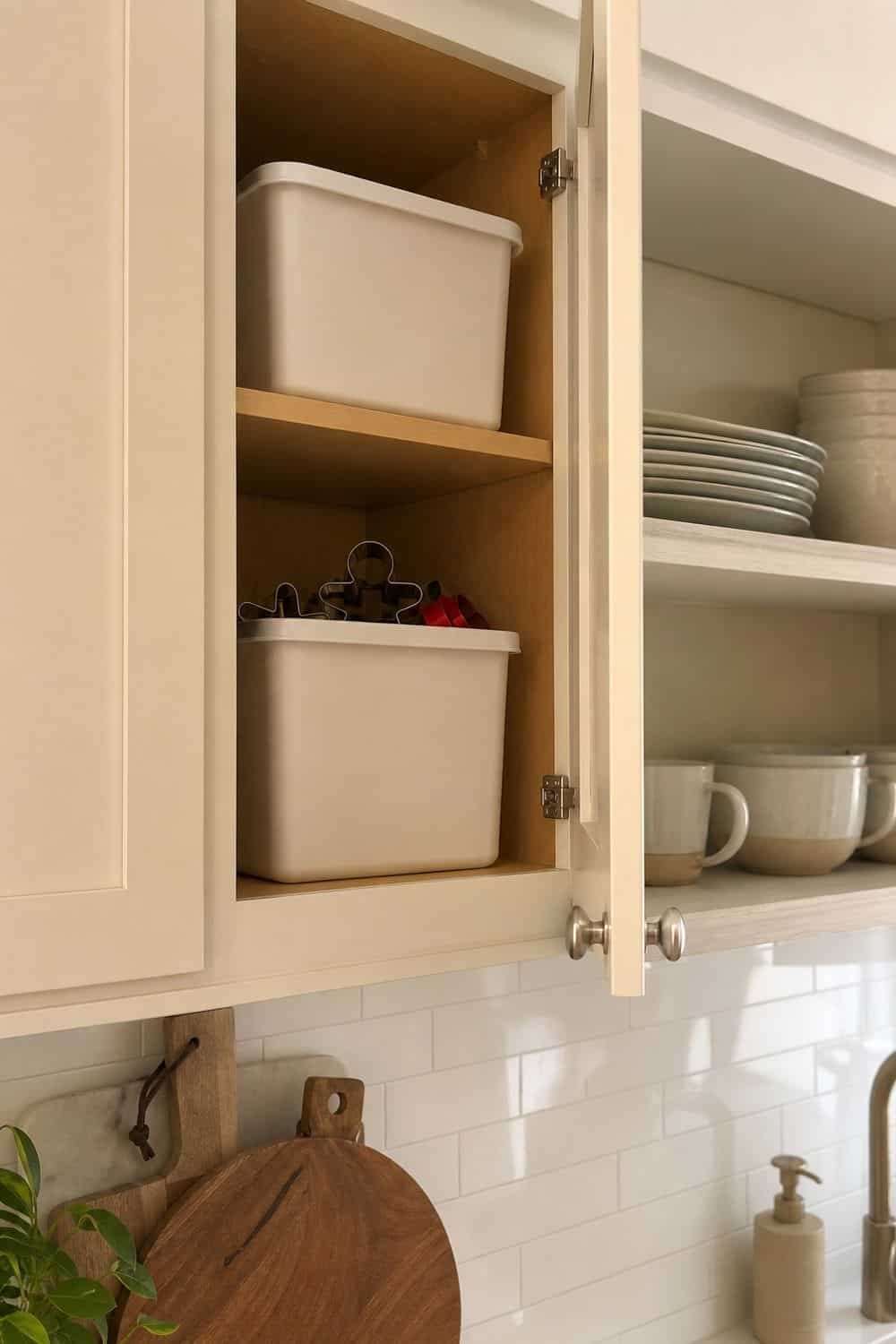
Seasonal cookie cutters, holiday mugs, specialty linens, extra place cards, and once-a-year serving pieces do not need open-shelf space. Put them in closed bins with clear labels, then store those bins high, low, or outside the main kitchen path. Open shelves should support the current season of cooking, not every possible hosting plan. If you like rotating a few seasonal pieces onto the shelf, keep the swap small: one mug, one small bowl, or one pretty tin is enough to make the kitchen feel fresh.
16. Low Plant or Herb Moment
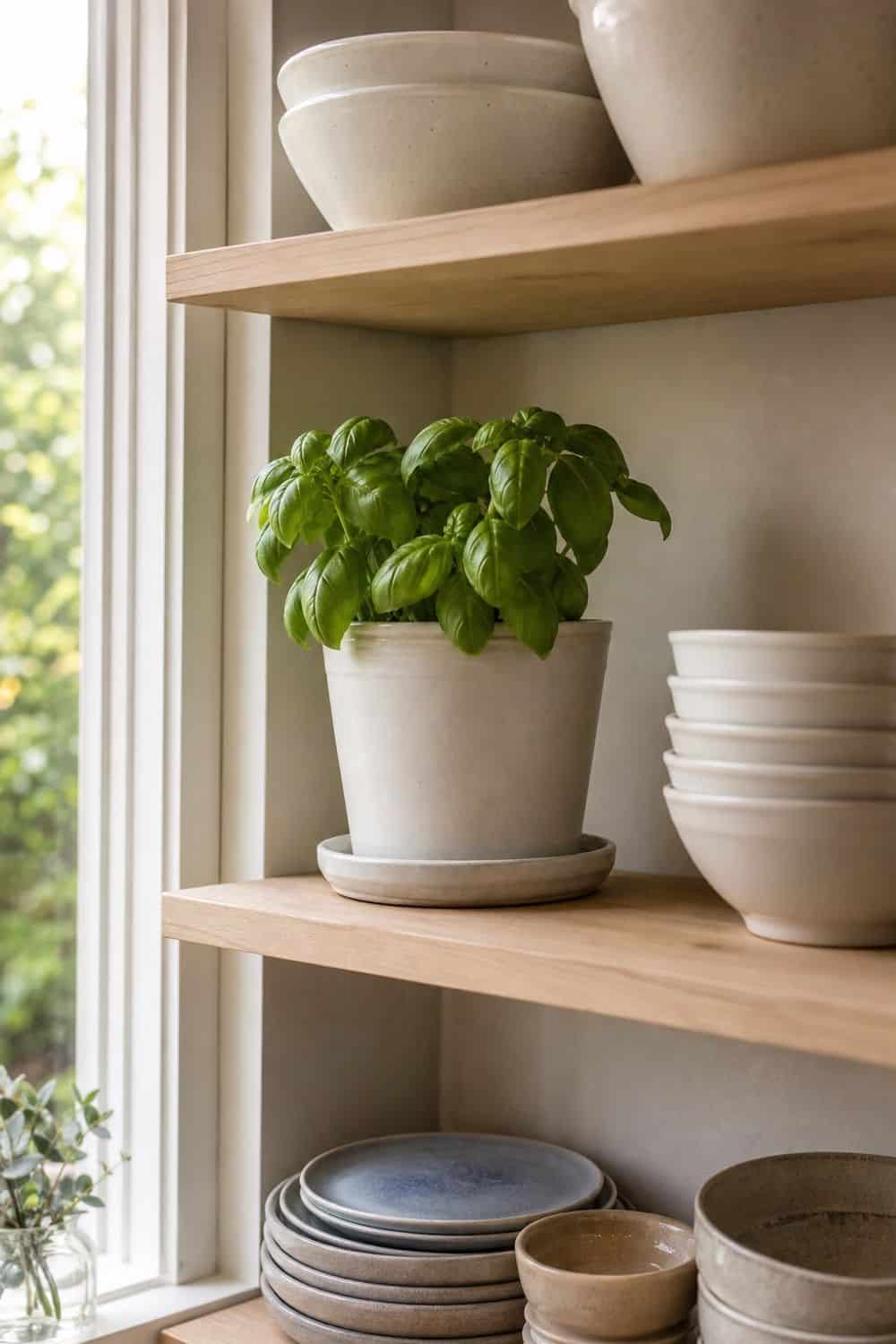
A short plant or herb pot can soften dishes and jars on open shelves, but scale matters. Choose something that fits below the shelf above, will not trail into plates, and can be watered without moving half the display. Herbs are lovely near a bright window; low-maintenance greenery works better in dim corners.
Use a saucer or cachepot so water never marks the shelf. If the plant drops leaves into bowls or blocks the things you reach for, move it to the counter or windowsill.
17. Matching Glasses With Daily Use
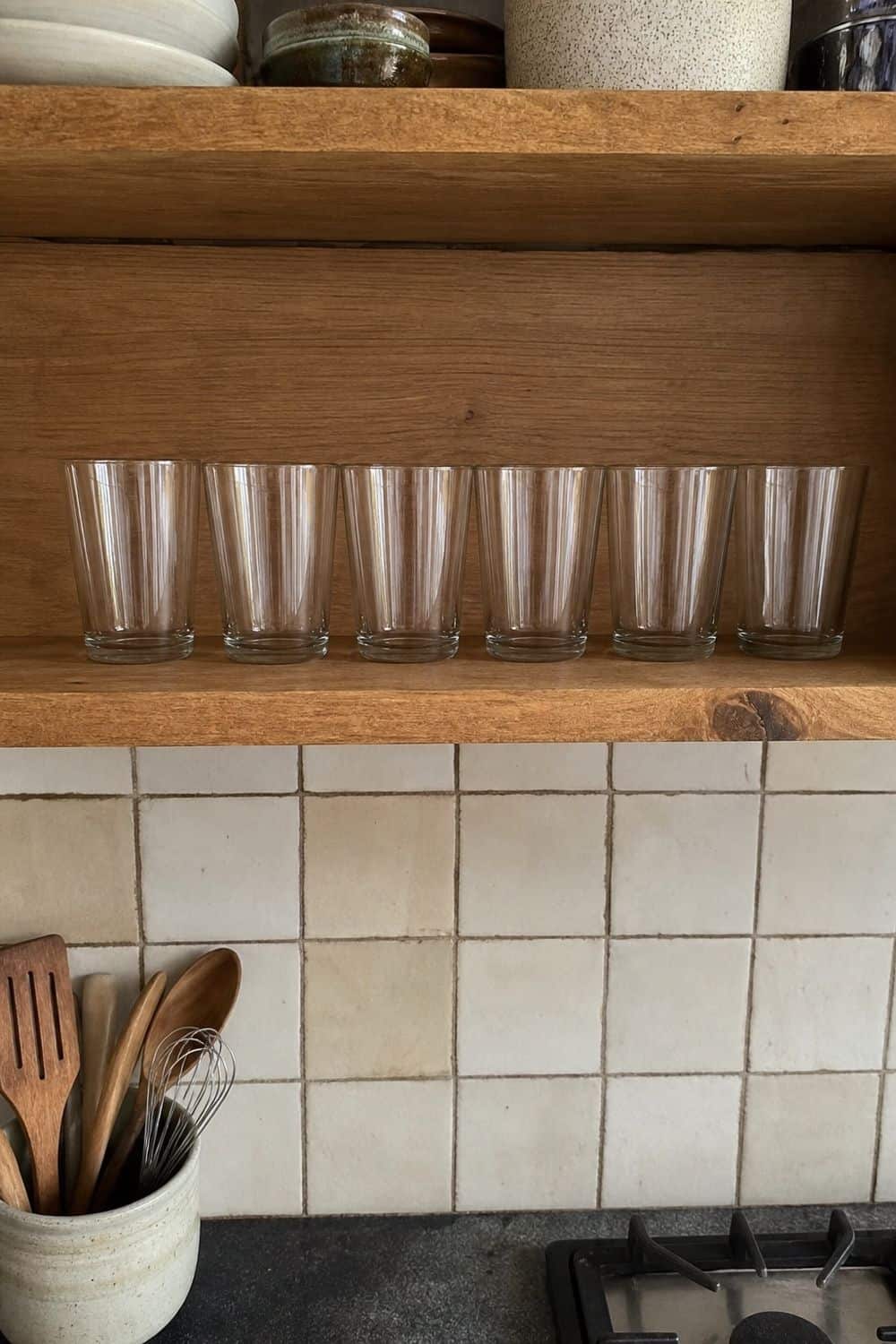
Matching glasses look clean on open shelves when they are part of daily life. Keep one simple set within easy reach and store specialty coupes, wine glasses, or fragile pieces behind doors unless you use them constantly.
Clear glass can read busy when too many shapes sit together, so repetition helps. The shelf will look calmer with one everyday set than with five almost-matching styles.
Do not stack glasses so high that the top one feels risky. A smaller group that gets washed often will stay cleaner and feel easier to live with.
18. Shallow Shelf Depth

Shallow shelves are usually better than deep ones in a visible kitchen because you can see the whole row. Plates, mugs, jars, and cookbooks stay honest when nothing can hide behind them.
Deep shelves invite a second layer, and that second layer quickly becomes clutter. If you need deep storage, a closed cabinet or pantry shelf usually handles it better.
Before installing, hold your largest everyday plate or jar against the wall and check the depth. You want enough room for the item to sit securely.
19. Real-Weight Shelf Support

Open shelves have to be strong before they are pretty. Dishes, jars, glassware, and cookbooks get heavy quickly, so use proper brackets, studs, anchors, and weight ratings instead of guessing. If the wall is tile, plaster, or older drywall, installation matters even more.
Think about weight after washing, too. A shelf that holds dry plates might still feel wrong if everyone stacks wet dishes or heavy jars on it in a hurry. When in doubt, overbuild the support and keep the heaviest items low.
20. Breathing Room Between Stacks
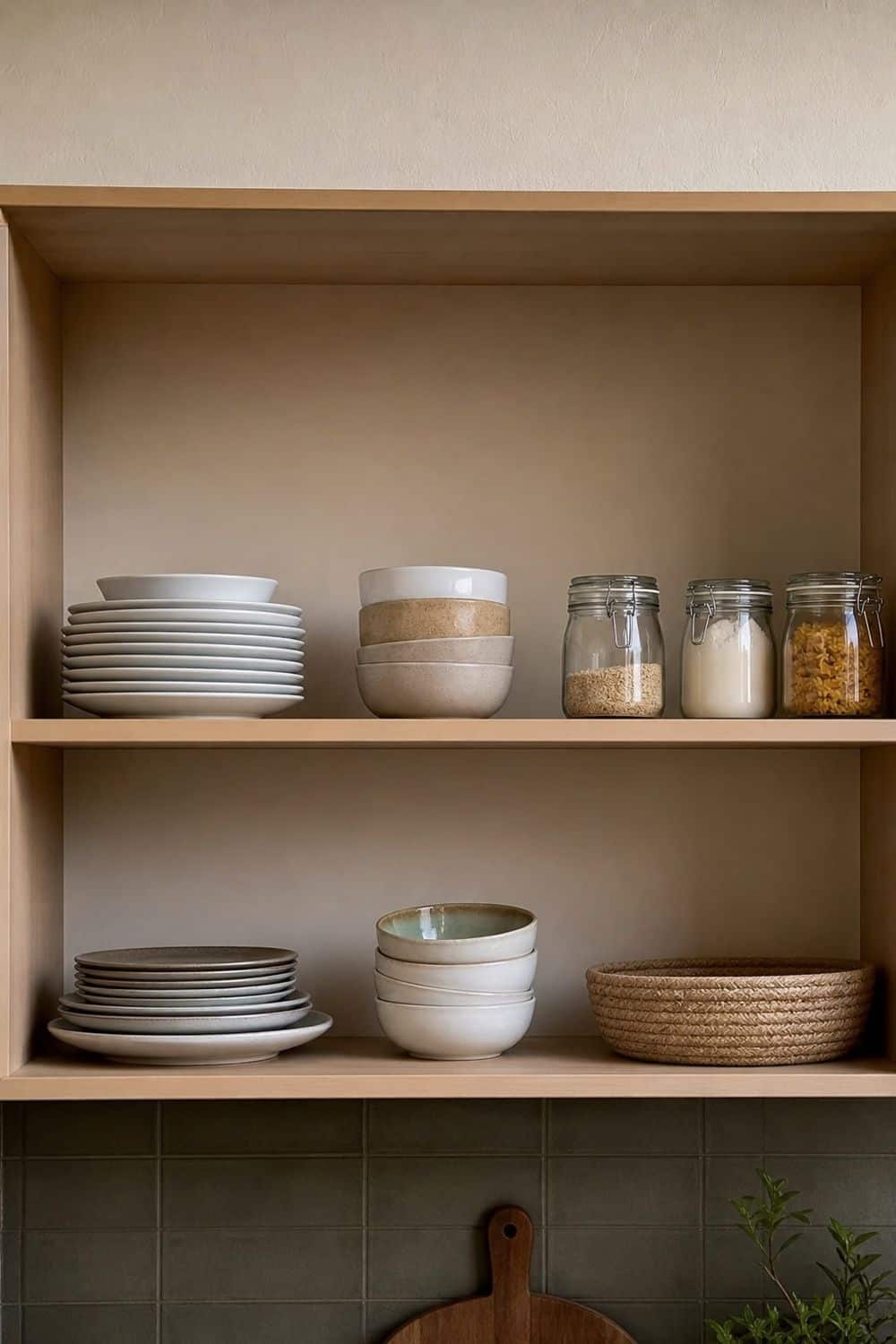
Open shelves need gaps because everything is visible at once. Leave space between plate stacks, bowls, jars, and baskets so the shelf feels calm and pieces are easy to grab.
Crowding every inch may technically create storage, but it also makes the wall look tense. A small gap can make ordinary dishes feel more considered.
The easiest test is unloading dishes. If you have to rearrange the shelf every time clean plates come out of the dishwasher, remove one extra thing.
21. Weekly Shelf Wipe-Down

Open shelves collect whatever the kitchen is doing: steam, flour, oil mist, and fingerprints. A weekly wipe keeps the shelf from becoming a bigger chore later.
Use a damp cloth for the shelf surface, check the bottoms of jars, and rinse dishes that have sat unused for a while. The closer the shelf is to cooking, the more honest you need to be about upkeep.
If you hate wiping, keep open shelving short and far from the busiest cooking area. A smaller shelf that stays clean is better than a dramatic wall you resent.
22. Shelves Away From the Greasiest Zone
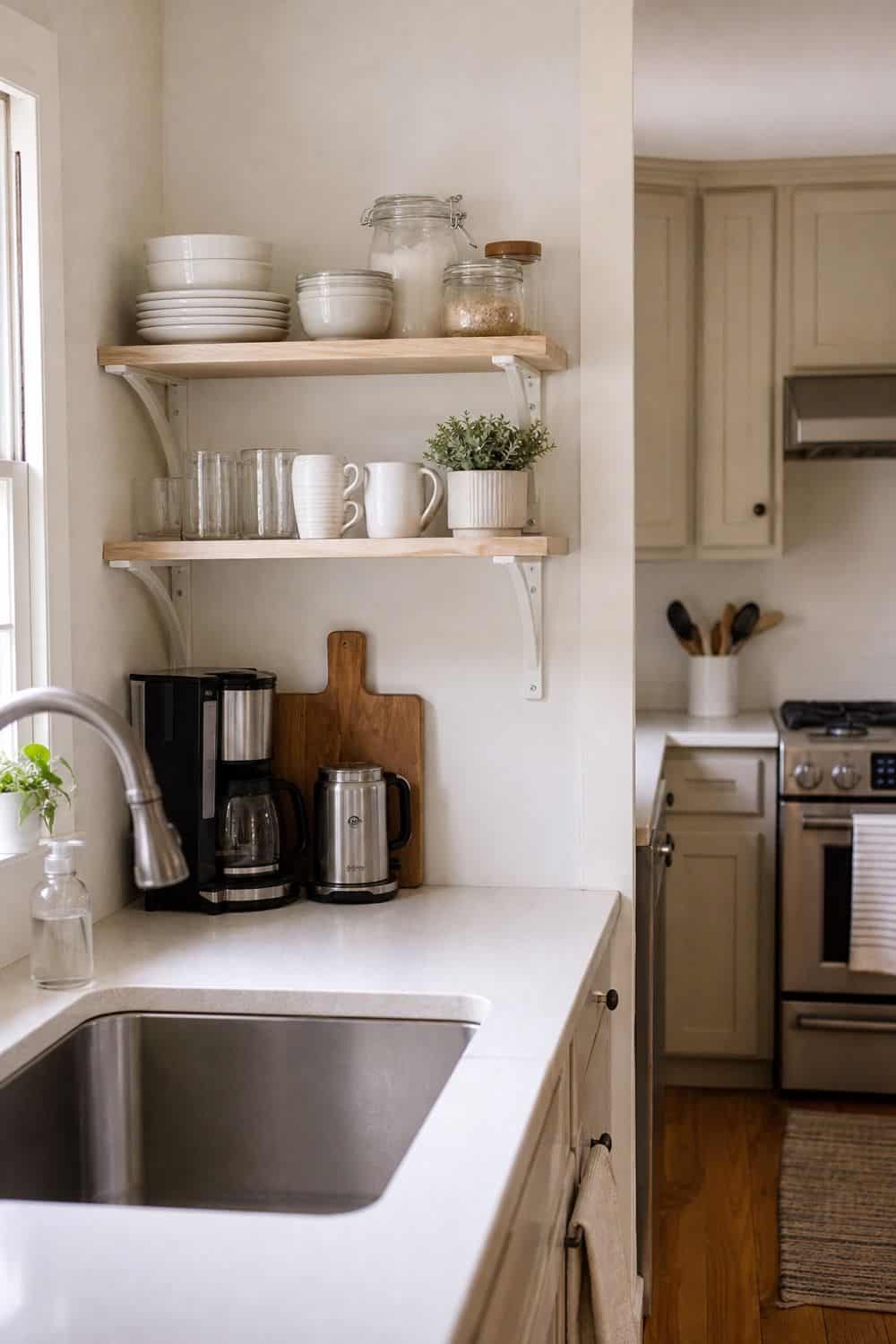
Shelves beside the range look beautiful in photos, but they get dirty faster than shelves near the dishwasher, sink wall, coffee station, or dining edge. If you cook with oil often, avoid placing everyday dishes directly in the splatter path. Grease on plates is not charming; it is just another thing to wash.
Use the range area for a wipeable ledge, a small rail, or closed storage if the wall needs function. Save open shelves for spots where they can stay clean enough for daily use.
23. Balance With Closed Storage

Open shelving works best when it is not asked to solve the whole kitchen. Use shelves for the pieces that look good and move often, then let closed cabinets hold appliances, packages, backups, cleaning supplies, and bulky cookware. That balance is what keeps open storage from looking like pantry overflow.
If a kitchen has very little closed storage, keep the open shelf run shorter. A small, useful shelf can make the room feel lighter, while too many shelves can expose every storage problem at once.
24. Awkward Nook Shelves
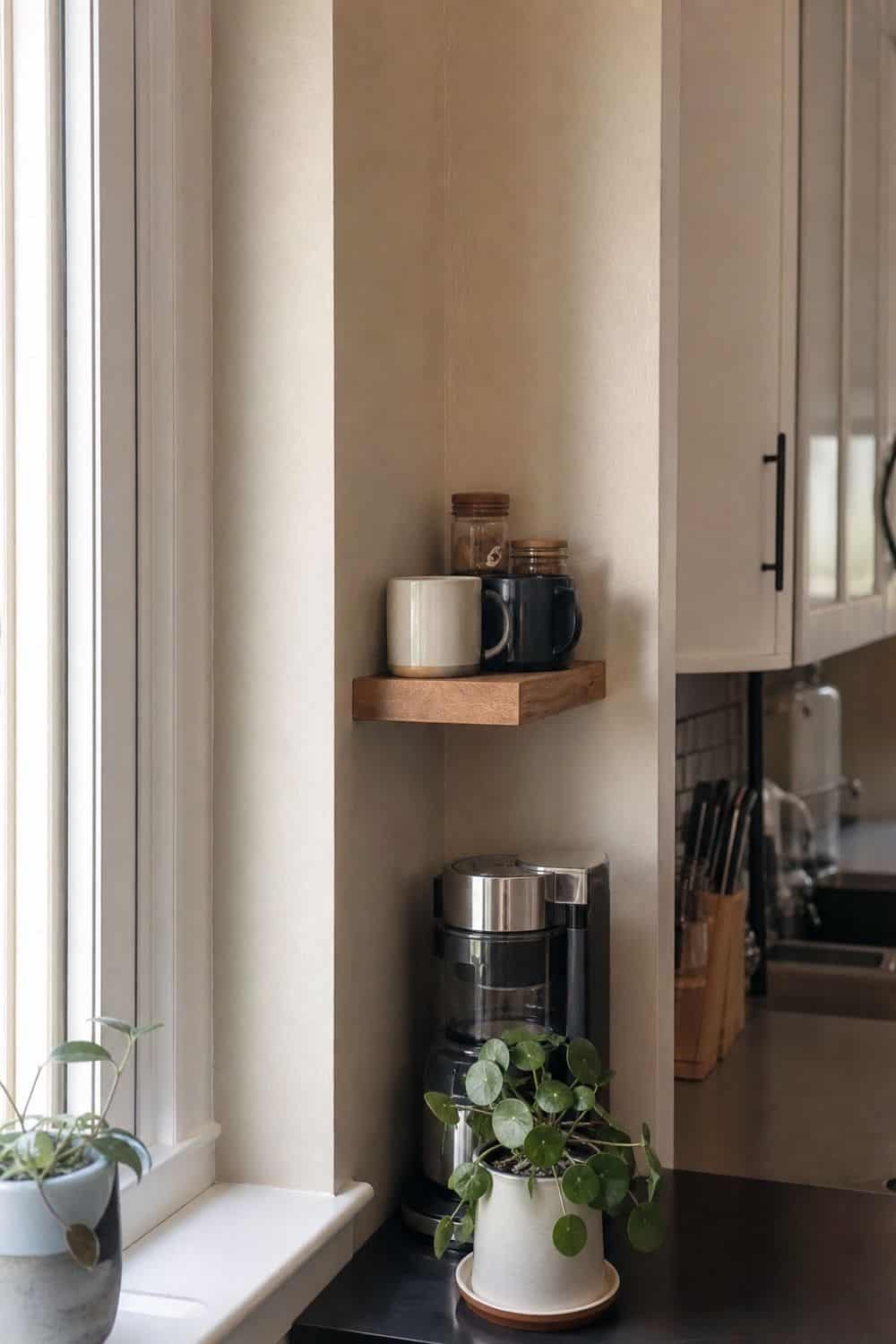
Awkward nooks can be perfect for a short shelf because they are often too small for a full cabinet. Use the space for cookbooks, mugs, a few jars, a plant, or a tiny coffee setup, depending on what the nook sits near. Keep the shelf shallow so it does not create a shoulder-bumping corner.
The nook should still have a job. If it becomes a place for random extras, it will look messy faster than a normal cabinet because every odd item is on display.
25. Open-Shelf Exit Plan

Open shelving is not a promise you have to keep forever. If the shelves collect dust, show too much clutter, or make the kitchen feel busier than before, reduce the exposed storage.
One short shelf for daily mugs may work better than three long shelves of dishes and jars. Smaller can feel more generous when it gives the room back some breathing space.
You can also shift to glass-front cabinets, fluted doors, or closed uppers if hidden storage suits the room better. The best plan is the one that makes cooking easier.
What Not to Store on Open Kitchen Shelves
Avoid small appliances, bulky cookware, cleaning supplies, paper goods, most packaged food, random seasonal decor, and anything used so rarely that it will only collect dust. Open shelves should not become a display version of the pantry overflow.
Open shelves also need a cleaning schedule. Wipe shelves, brackets, dish stacks, jars, baskets, and plant pots regularly. The closer shelves are to the range, the more often they need attention.
Most working kitchens do best with a limited amount of open shelving. One or two purposeful shelf moments can feel lighter than wall-to-wall exposed storage. If you like the look but not the upkeep, consider glass-front cabinets, fluted doors, shallow pantry shelves, or one small shelf near coffee or dishes.
Plan shelves before filling them. Check depth, anchors, brackets, weight ratings, reach height, and distance from the stove. The prettiest shelf is not useful if it is too deep, too high, or too weak for real dishes.
Frequently Asked Questions
How do you organize open kitchen shelves?
Organize open kitchen shelves by zone: daily dishes, mugs, jars, baskets, cookbooks, and a few useful display pieces. Leave space between stacks and keep bulky or unattractive items in closed storage.
What should you put on open kitchen shelves?
Daily plates, bowls, mugs, simple glasses, jars of high-use staples, baskets, cookbooks, and one or two useful serving pieces usually work well on open shelves.
What should not go on open kitchen shelves?
Avoid small appliances, bulky cookware, cleaning supplies, paper goods, most packaged food, random decor, and rarely used pieces that will collect dust.
Do open kitchen shelves get dusty?
Yes, open shelves get dusty and can also collect grease. They work best for items used often and wiped regularly.
Are open shelves still in style?
Open shelves are still used, but in a more restrained way. Smaller, purposeful shelf moments paired with closed storage usually work better than wall-to-wall open shelving.
How deep should open kitchen shelves be?
Open shelves should be deep enough for the items they hold but shallow enough that everything stays visible. Plates, bowls, jars, and cookbooks may each need different depths.
How do you make open shelves look less cluttered?
Repeat materials, limit colors, group by function, use baskets, leave gaps, and remove items that are rarely used or visually busy.
Are open pantry shelves practical?
Open pantry shelves can work for high-use staples in jars or baskets, but packaged foods and backstock usually need baskets or closed storage to stay tidy.
Final Thoughts
Open shelving kitchen organization works when the shelves are treated as active storage, not a place to display every attractive object in the kitchen. Keep the best shelf space for daily items, use baskets and risers where they solve a real problem, and leave enough air around each group.
The most livable open shelves are honest about dust, grease, weight, and visual clutter. Pair them with closed storage, pare back often, and keep an exit plan if the upkeep becomes more work than the look is worth.
Last update on 2026-09-17 / Affiliate links / Images from Amazon Product Advertising API