
The best open shelving kitchen ideas balance display with daily use. Use open shelves for items you reach for often, like plates, bowls, mugs, glasses, sealed jars, cookbooks, and one or two pretty accents. Keep bulky appliances, packaged food, cleaning supplies, paper goods, and rarely used pieces behind closed doors so the shelves stay useful instead of dusty.
Open shelves can make a kitchen feel lighter and more personal, but they are not magic storage. They are most useful when every shelf has a clear job and the items on it are easy to grab, clean, and put back.
The strongest open shelving kitchen ideas focus on the part that matters in real life: where shelves should go, what belongs on them, what should stay hidden, and how to keep the whole thing from turning into a cluttered display wall.

Top Recommended Products


You Might Also Like These Blog Posts
- Open Shelving Kitchen Organization
- Hidden Kitchen Storage
- Small Kitchen Organization
- Galley Kitchen Ideas
- Budget Kitchen Ideas
1. Start With One Short Floating Shelf Run

One short shelf run is usually more useful than tearing out every upper cabinet and hoping the kitchen still behaves. Try a single stretch above a coffee zone, sink wall, empty side wall, or breakfast nook before adding more open storage. This lets you notice dust, reach, weight, and how much visual display you actually enjoy.
Keep the first run simple: daily mugs, a small stack of bowls, a jar or two, and a little breathing room. If that stays easy for a month, you can decide whether another shelf makes sense.
2. Shallow Shelves for Everyday Plates
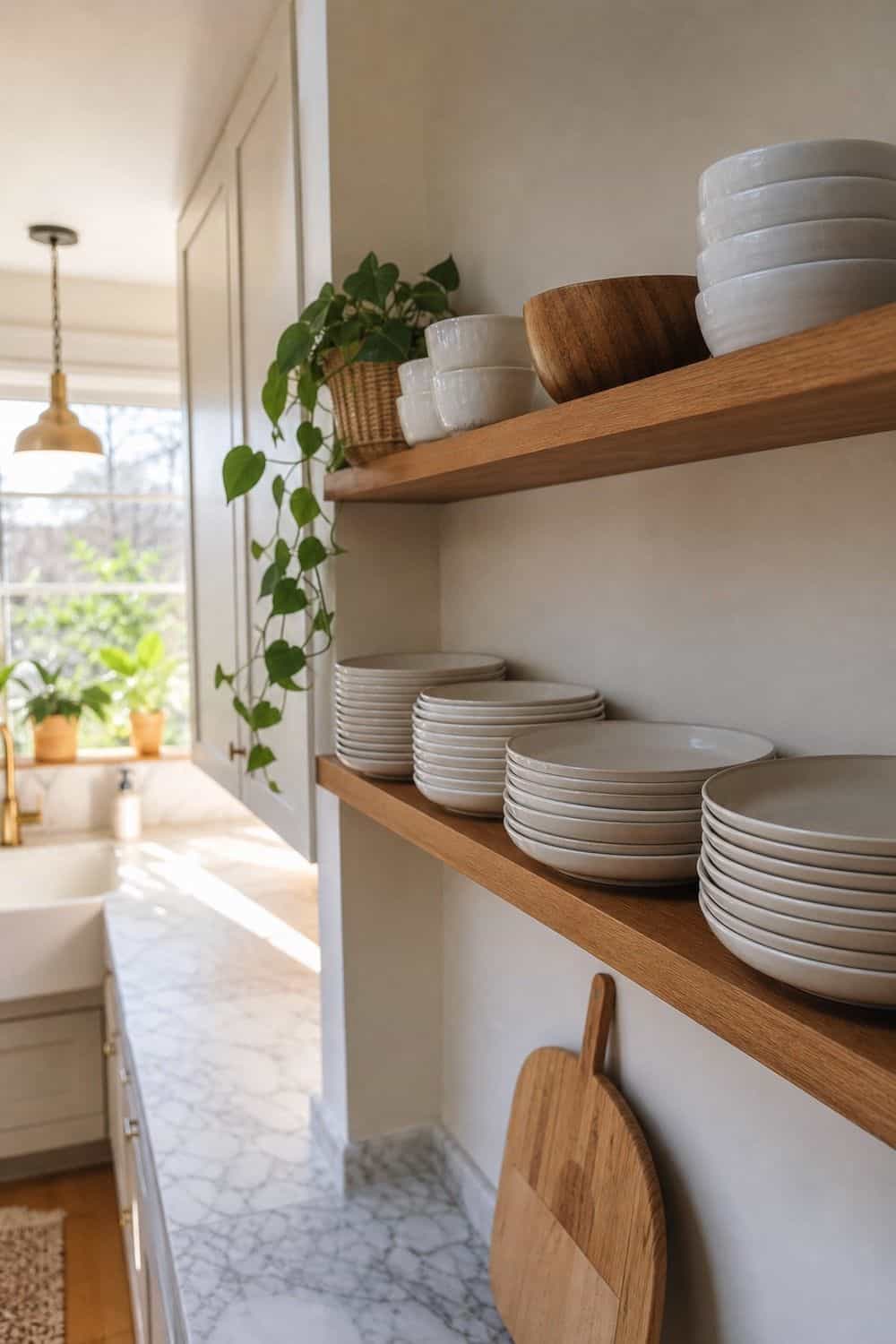
Shallow shelves are friendlier in a working kitchen because they keep plates visible without jutting too far into the room. Measure your largest dinner plate before buying anything, then leave enough depth for the plate to sit securely.
This is especially helpful near a narrow aisle or sink wall where elbows, cabinet doors, and appliance handles already compete for space. A shelf that is just deep enough feels lighter than a bulky ledge.
Shallow shelves also discourage over-stacking, which is quietly the whole point. You want the dishes to feel easy to grab, not perched in a tower.
3. Heavy-Duty Brackets for Real Dish Weight
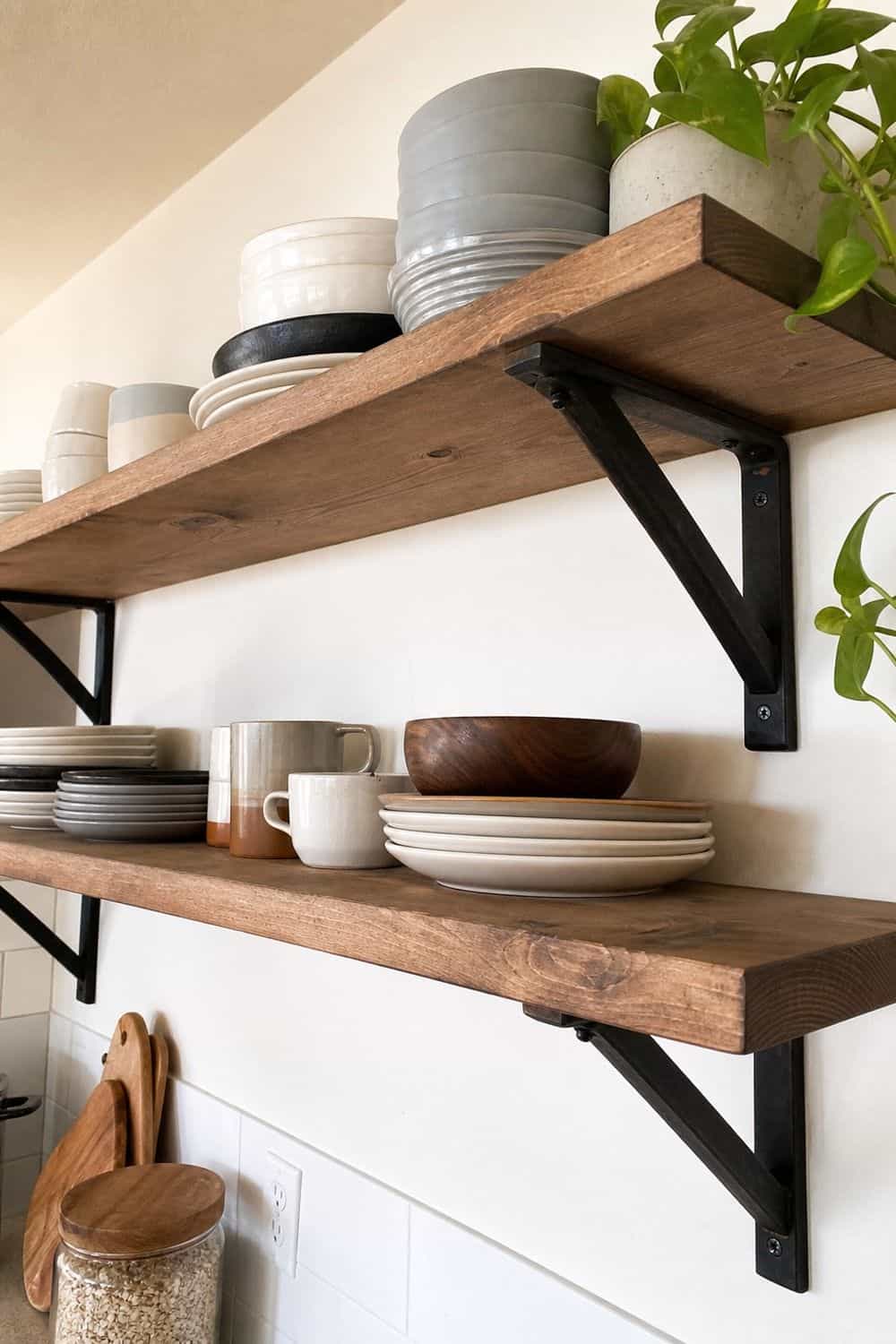
Kitchen shelves carry real weight, especially if you plan to store plates, bowls, jars, or stacks of mugs. Treat the support like part of the design, not an afterthought. Look for brackets rated for the load, place them into studs whenever possible, and pay attention to bracket spacing so the shelf does not sag in the middle.
If the wall is awkward, tiled, old, or hard to identify, it is worth getting help before drilling. Pretty shelves stop feeling pretty the second you worry about dishes sliding forward.
4. Brass Brackets for a Warm Detail

Brass brackets can make open kitchen shelves feel warmer, especially if the room already has warm hardware, a brass faucet, or soft gold lighting. Let the brackets be the detail rather than asking every object on the shelf to compete.
Keep the shelf contents calm: white dishes, clear jars, wood boards, or a few warm ceramic pieces. That gives the metal room to glow without turning the shelf into a finish sampler.
If your kitchen has cooler chrome or black hardware, brass can still work, but repeat it once nearby so it looks chosen rather than random. A small warm echo goes a long way.
5. Shelves Away From the Greasiest Range Wall
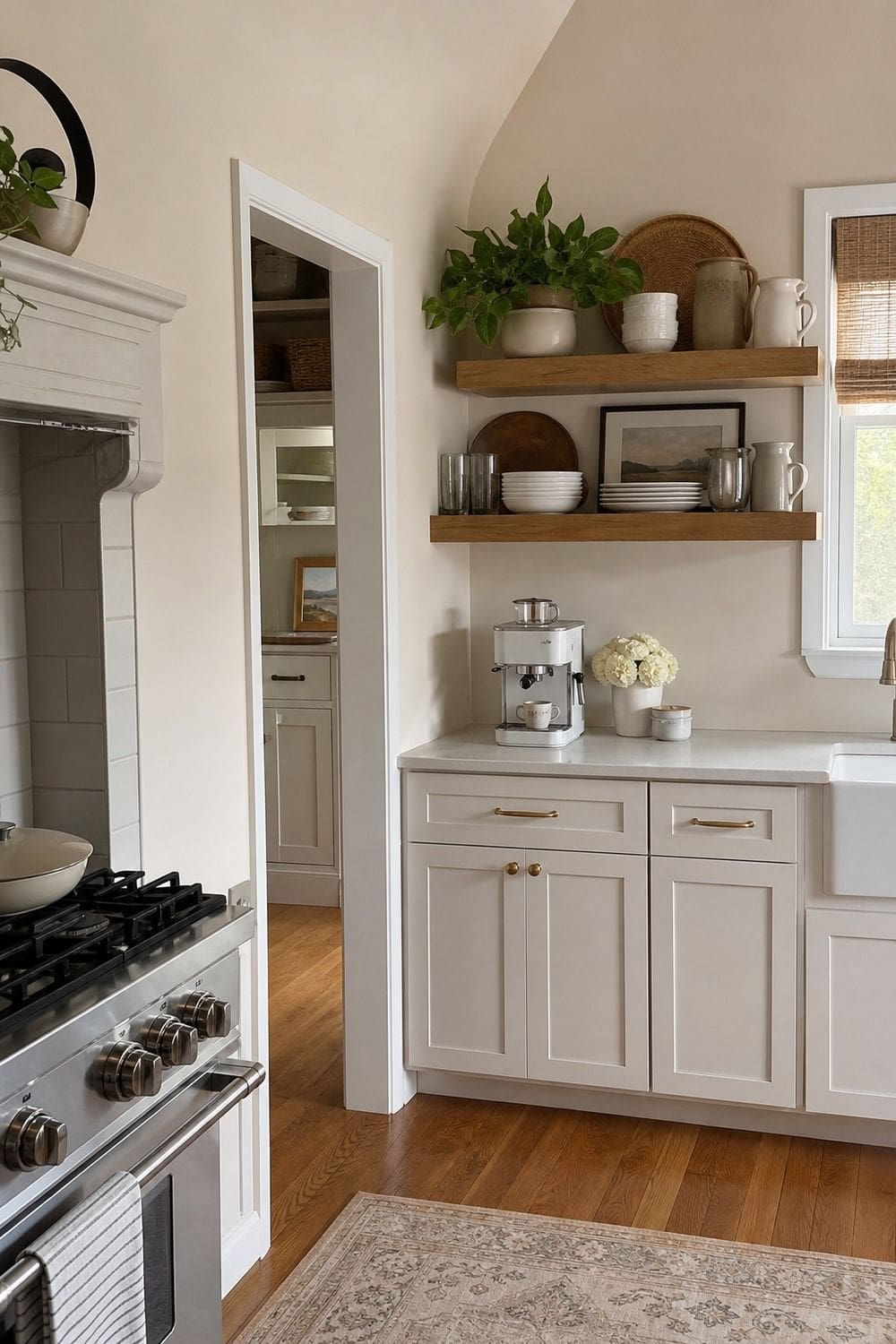
Open shelves beside a hard-working range collect grease faster than shelves near dishes, coffee, or a sink wall. If you fry often, cook with oil, or use high heat most nights, be honest about how much wiping you want to do. A shelf near the range can still work for oils, salt, or sturdy bowls, but it should not hold delicate glassware or rarely used decor that will sit through months of residue. For an easier setup, place open shelves where they support daily reach without living directly in the splatter zone.
6. Store Daily White Dishes on the Main Shelf

Everyday white dishes are open-shelf classics because they repeat color, stack neatly, and get washed often enough to avoid that forgotten dusty look. Put the plates and bowls you actually use on the main shelf, not the special pieces that only come out twice a year.
Keep the stacks low enough to lift comfortably with one hand, and place heavier bowls lower if you have more than one shelf. This gives the wall a calm rhythm while still making dinner setup faster. It is display, but it is useful display.
7. Stack Nesting Bowls by Size

Nesting bowls bring shape to open shelves without creating a cluttered line of random objects. Stack them by size, keep the heaviest bowl on the bottom, and avoid mixing every color and pattern you own in one pile. A slightly varied ceramic set can look lovely if the tones relate to each other, but a chaotic stack will read messy from across the room. Leave a little room above the tallest bowl so you can lift it out without scraping the shelf. Open shelving should make the simple grab easier, not more delicate.
8. Display Colored Glassware You Actually Use

Colored glassware can make open shelves feel collected and personal, but it only earns the space if you use the glasses regularly. Amber, green, smoke, or pale blue glasses hide tiny water marks better than crystal-clear special occasion pieces that sit untouched. Keep the group tight, usually six or eight glasses, and avoid mixing too many shapes unless the rest of the shelf is very quiet. Place glassware away from the greasiest cooking zone and near the place where you pour drinks. That keeps the color charming and the routine practical.
9. Put Dry Goods in Sealed Glass Jars

Glass jars can look beautiful on open shelves when they hold staples that turn over quickly, like oats, rice, pasta, coffee, flour, sugar, or granola. The key is using airtight jars, simple labels, and only the foods you reach for often.
Half-empty bags, torn boxes, and mystery packets should stay in closed storage because they make the shelf feel unfinished and can invite pests. Keep heavier jars low and leave space to lift them down safely. A few useful jars look considered; a whole wall of decanted everything can become another chore.
10. Keep Cookbooks Upright With Bookends

Cookbooks are perfect for open shelves when they are books you actually cook from, not a decorative stack you have to dust around. Stand a few upright with sturdy bookends so they create height between dishes and jars.
Keep them away from direct splatter and steam, especially if the shelf sits near the stove or kettle. A small group of favorite books can make the kitchen feel lived-in without crowding the wall.
If a cookbook has not been opened in years, it probably deserves a different home than the main display shelf. Save this spot for the books with sauce stains, favorite recipes, and pages you reach for on an ordinary weeknight.
11. Lean One Small Framed Print Behind Dishes

One small framed print can give open shelf kitchen decor a little depth, especially tucked behind bowls, plates, or a low stack of linens. Keep it small enough that it does not block daily items or turn into a fragile obstacle every time you unload the dishwasher.
Food sketches, a vintage-style print, a simple landscape, or a family photo can all work if the colors sit nicely with the dishes. The trick is stopping at one. A row of tiny frames usually creates dusting work and makes the shelf feel like a mantel instead of kitchen storage.
12. One Herb Pot at the Shelf End
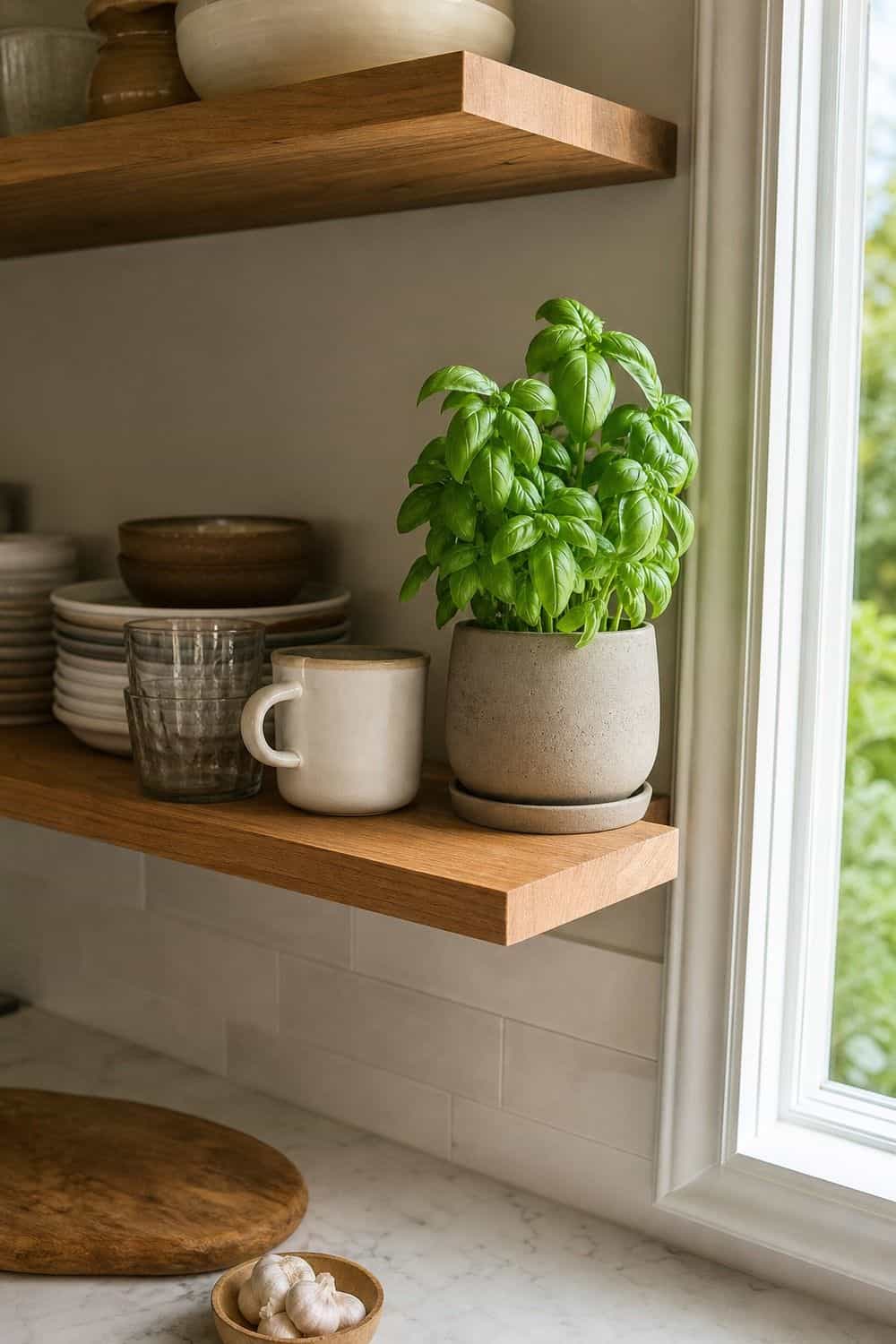
A single herb pot at the end of a shelf can soften the wall and make the kitchen feel alive, as long as the placement is sensible. Choose basil, mint, thyme, rosemary, or another herb that gets enough light in that spot, then use a saucer so water never drips onto dishes below. Keep soil away from clean plates and glasses, and do not place a plant where you have to move it every time you grab a bowl. One healthy herb pot looks fresh; several struggling pots can make the shelf feel neglected.
13. Hang Mug Hooks Under the Lowest Shelf
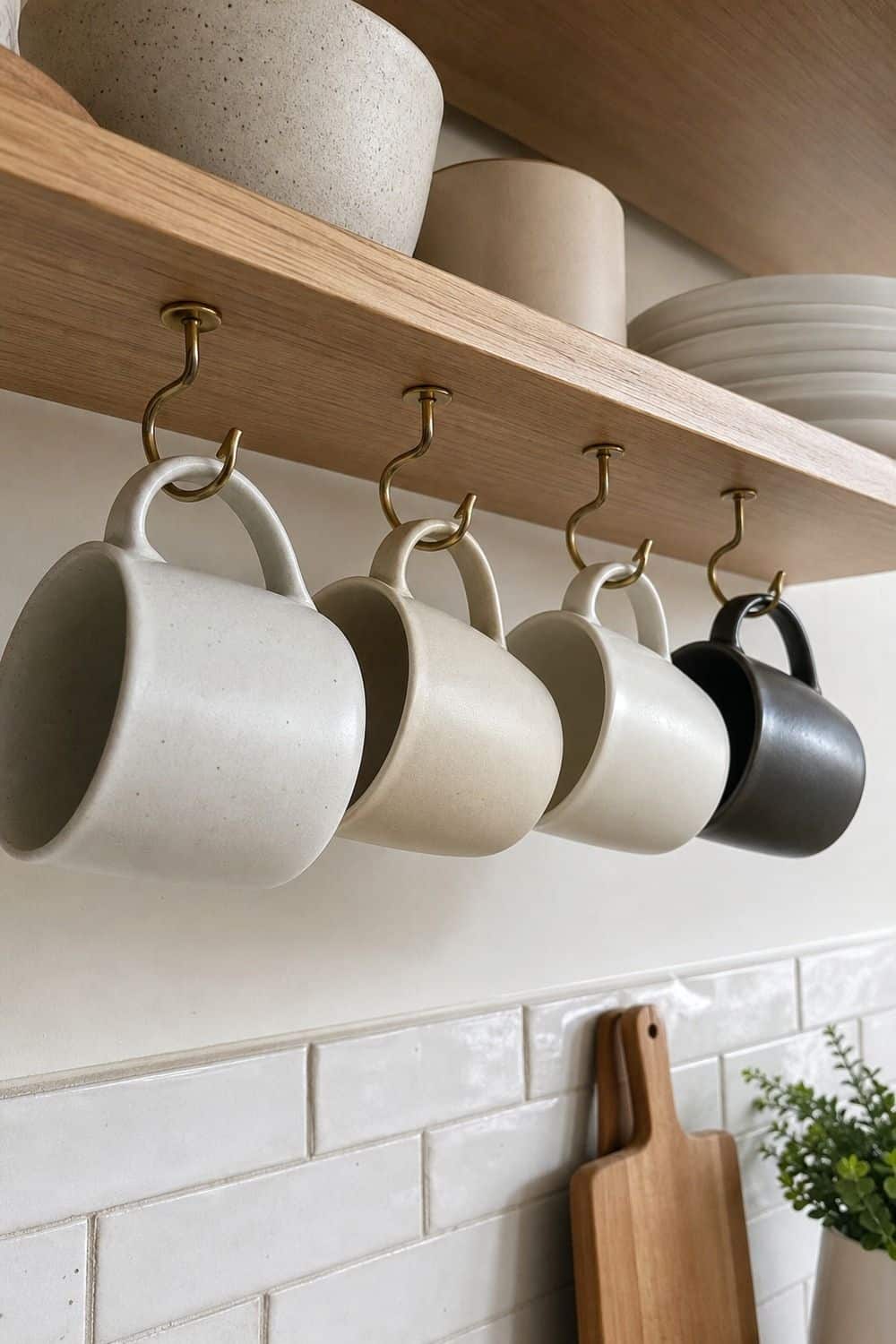
Mug hooks can make the underside of a shelf work harder, but only if the shelf is secure and the mugs have enough space to hang cleanly. Measure the handle width and leave room between hooks so the mugs do not clink every time someone grabs one.
This works best above a coffee maker, near a breakfast shelf, or under a cabinet where the mugs are already part of the morning routine. Keep the collection tight. A few favorite mugs look cozy; every souvenir mug you own can make the shelf feel crowded and heavy.
14. Rail Below Shelves for Cooking Tools

A rail below open shelves can hold measuring cups, small towels, lightweight utensils, or a few tools you use constantly. Place it near the work zone it supports, not across the whole wall just because there is space.
The rail should clear the counter below so tools do not swing into a cutting board, kettle, or coffee setup. Keep the hanging pieces simple and similar in finish if the shelf above is already busy. Rails are brilliant when they shorten a reach, but they start to look messy when they become overflow for every stray utensil.
15. Build a Coffee Mug Shelf Above the Machine
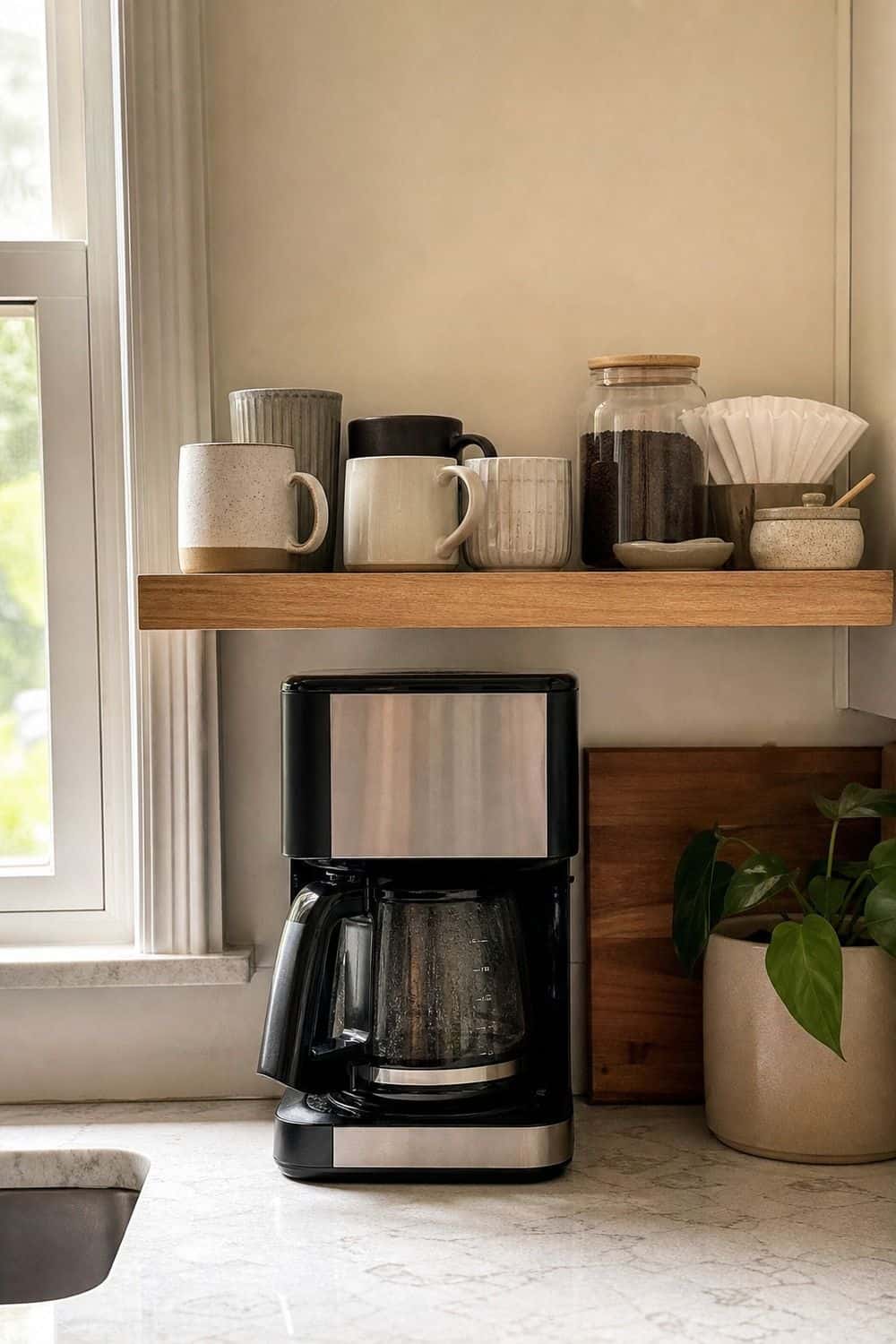
A small shelf above the coffee maker can make mornings feel smoother without taking over the whole kitchen. Use it for the mugs you reach for most, a sealed coffee jar, filters, sugar, or a tiny spoon rest. Keep the shelf narrow enough that it does not crowd the machine or block the water reservoir. If you already have mug hooks underneath, leave the top surface simpler so the zone does not feel stuffed. The best coffee shelf feels like a tiny station: everything you need is close, and nothing extra is fighting for attention.
16. Put Everyday Shelves Near the Dishwasher

Open shelves near the dishwasher make daily dish put-away beautifully simple. Plates, bowls, and glasses can move straight from the rack to the shelf without crossing the kitchen, which is exactly the kind of small habit that keeps a space tidy.
This placement works especially well for the dishes used at breakfast, snacks, and weeknight dinners. If stacks wobble, use a plate rack or small divider only where it truly helps.
Avoid loading this zone with decor, because the whole point is speed. The easier it is to reset after unloading, the better the shelf will look at breakfast, dinner, and the ordinary in-between moments.
17. Use Corner Shelves for Awkward Dead Space

Corner shelves can rescue a strange side wall, breakfast nook, or bit of dead space that is too small for a full cabinet. Keep them light in purpose: mugs, small bowls, cookbooks, a plant, or a little art usually works better than heavy cookware. Corners are already visually busy, so leave more empty space than you think you need. If the shelf wraps around two walls, make sure the corner is still easy to wipe. This is a sweet spot for personality, but it should never become the place where forgotten odds and ends gather.
18. Black Metal Shelves for Modern Contrast

Black metal shelves can give a kitchen sharper contrast, especially with white tile, pale cabinets, warm wood, or stone counters. Because the frame already has a strong outline, keep the contents lighter: cream dishes, clear jars, wood boards, or soft-toned glass.
Too many dark objects on black shelves can make the wall feel heavy and closed in. This style works nicely in modern, industrial, or mixed-material kitchens, but it still needs the same practical rules as wood shelves. Use the shelves for things you reach for, not just objects that match the finish.
19. Use a Stone Ledge for Oils and Salt

A slim stone ledge can be lovely near a prep zone when it holds the few things you reach for constantly: olive oil, salt, pepper, a tiny bowl, or a small spoon rest. Keep it shallow so bottles do not become a cluttered second counter. Marble, quartz, or stone-look ledges feel polished, but they still need practical placement away from the worst splatter. If oil drips often, use a small tray or wipeable dish under the bottle. This idea works best as a narrow working ledge, not a full pantry display.
20. Shelf Lighting for Evening Visibility
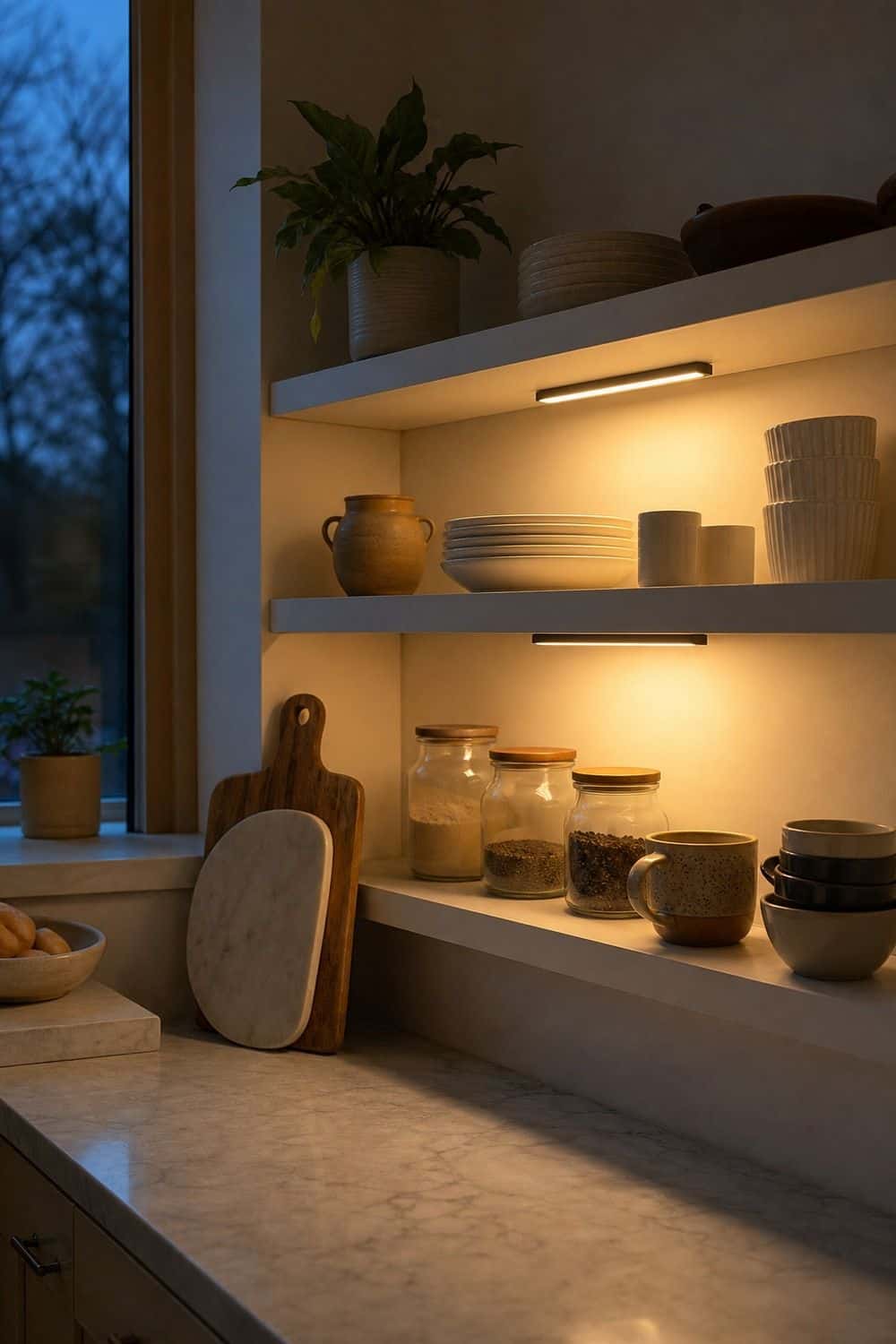
Shelf lighting keeps open shelves from disappearing into shadow at night, especially if the kitchen relies on overhead light. A small picture light, rechargeable sconce, or under-shelf strip can make dishes, jars, and cookbooks easier to see without rewiring the room.
Choose warm light that flatters the kitchen instead of a harsh blue tone that makes everything feel clinical. Place the light where it helps the shelf run, coffee zone, or display wall, not where it shines straight into someone’s eyes. Good lighting makes open shelving feel clear after dinner, not just pretty at noon.
21. Baskets Only for Light Linens
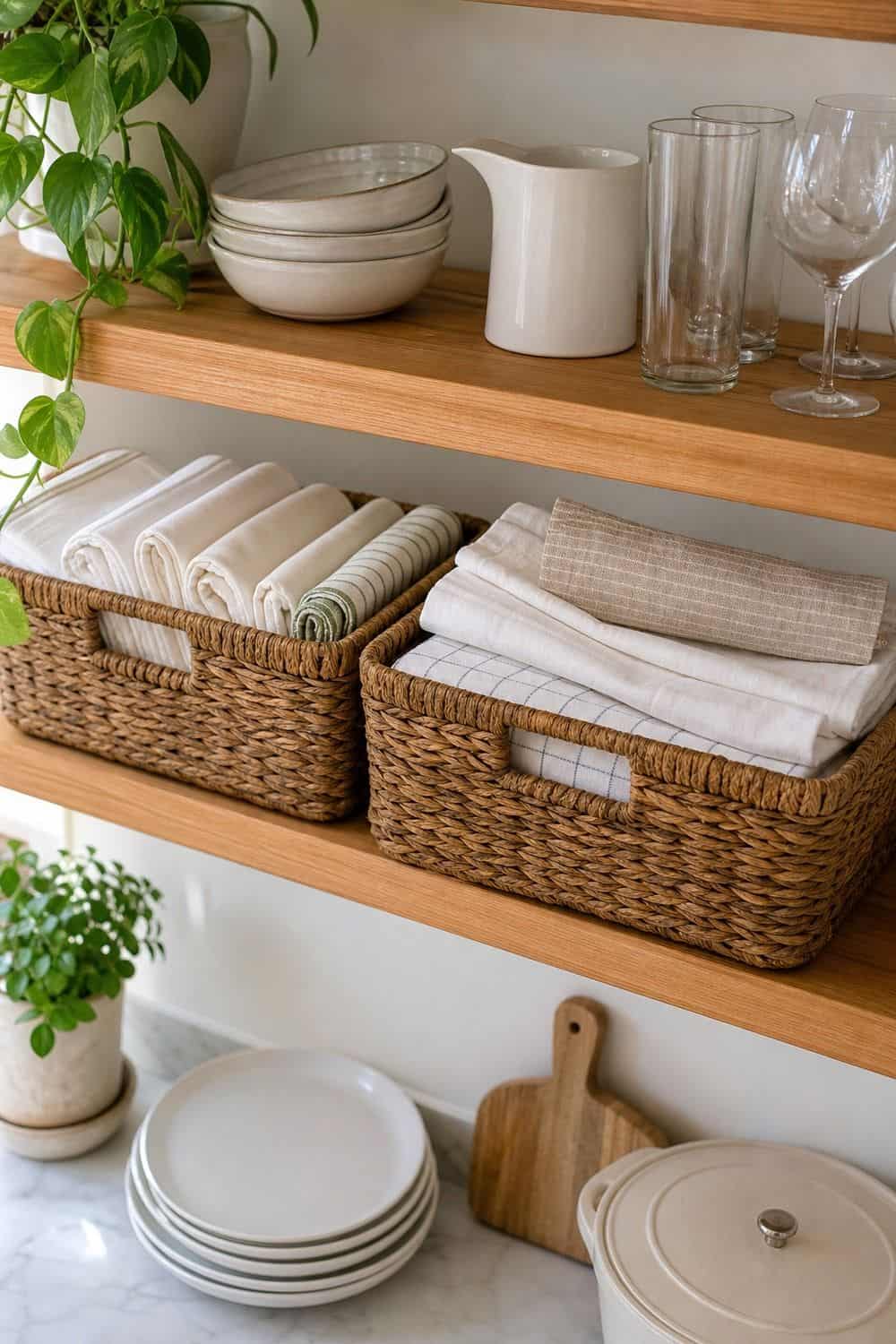
Baskets can soften open shelves, but they also hide clutter and collect dust if you use too many. Keep them for lightweight linens, napkins, tea towels, or maybe a small group of cloth produce bags. Avoid using baskets for heavy pantry overflow, random gadgets, or things you will forget because they are tucked out of sight. One or two small seagrass or woven baskets can look warm beside dishes and jars. More than that often starts to feel like a storage shortcut. If you cannot name what is inside without checking, the basket probably belongs somewhere closed.
22. Small Appliances Behind Closed Doors
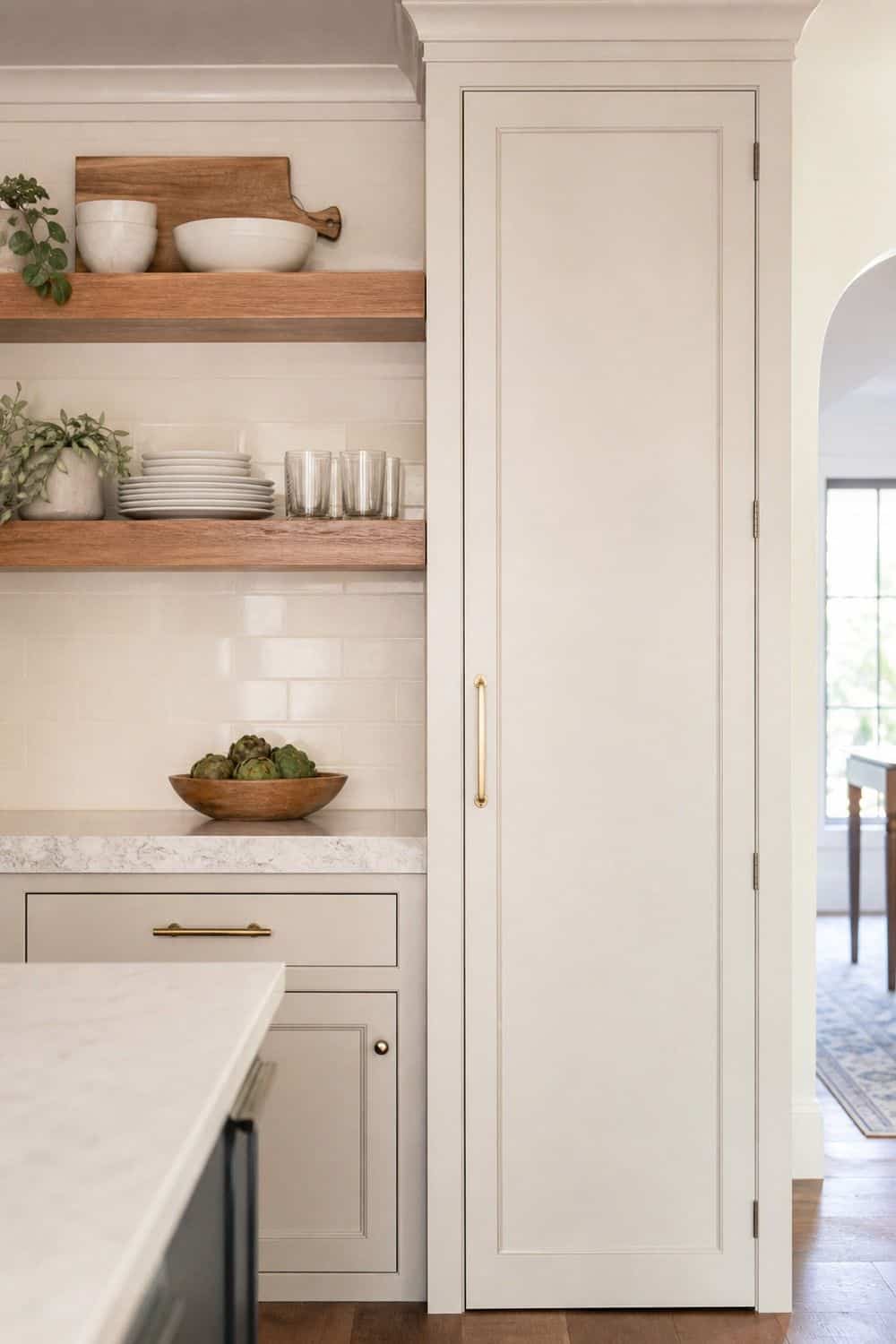
Small appliances usually look bulkier on open shelves than people expect. Blenders, toasters, mixers, air fryers, and processors collect dust, interrupt the shelf line, and can be awkward or unsafe to lift down from above shoulder height. Store them in a cabinet, appliance garage, pantry cabinet, or lower shelf only if they are used daily and easy to move. Open shelving is better for lighter pieces that look good and wash often. Let closed storage do the heavy lifting here. Your shelves will feel calmer when they are not trying to display every machine in the kitchen.
23. Store Packaged Food in Closed Storage
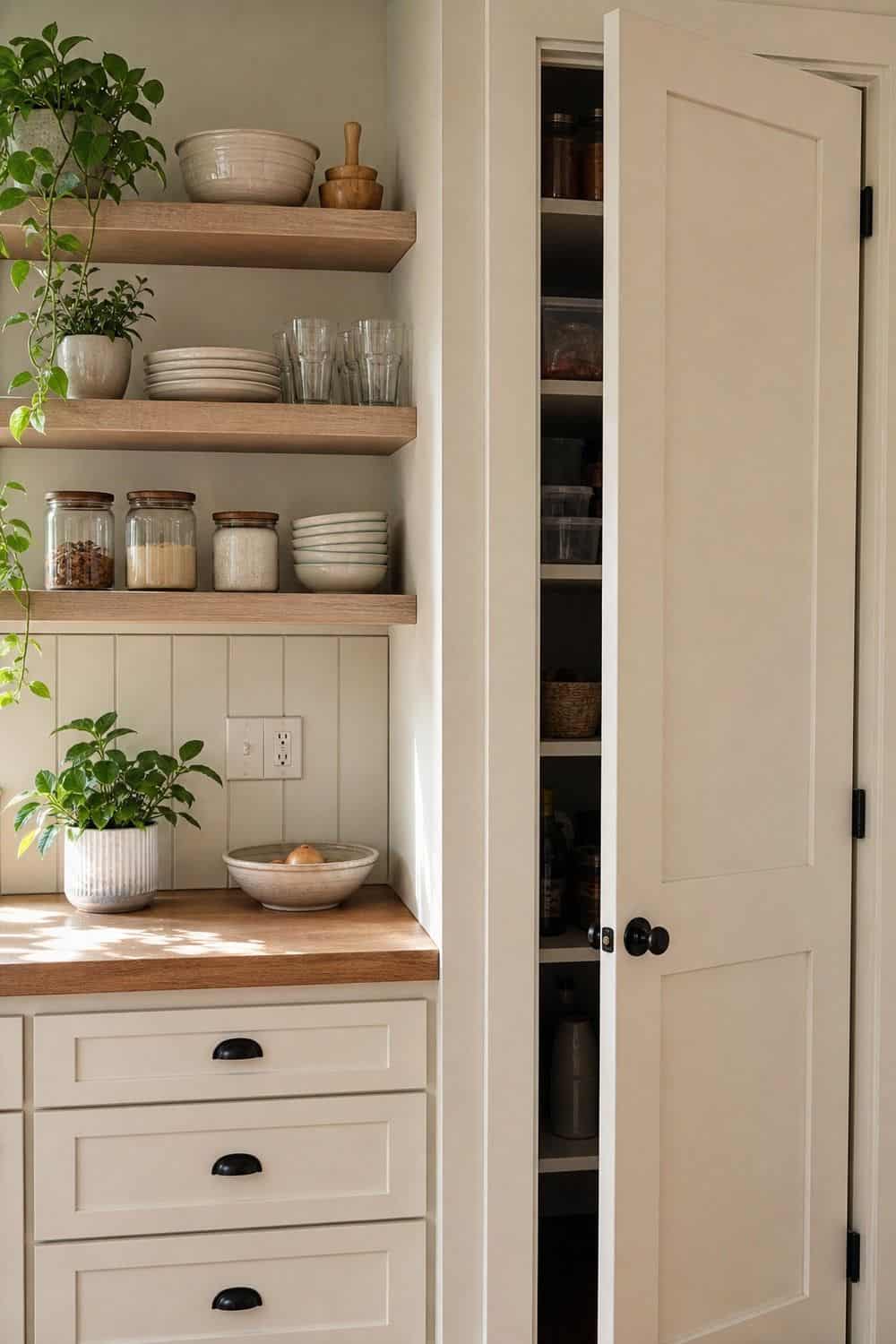
Packaged food is almost never the thing that makes open shelves look better. Cereal boxes, chip bags, paper goods, half-open crackers, and mismatched packets turn a display shelf into a visual pantry very quickly. Keep those items in closed cabinets, pantry bins, drawers, or a dedicated food zone where the packaging does not dominate the room.
If you want dry goods on display, decant only the staples that move quickly and seal properly. This keeps the shelf cleaner, calmer, and less inviting to pests. Pretty shelving still needs practical food boundaries.
24. Clean Shelves With a Damp Cloth Weekly
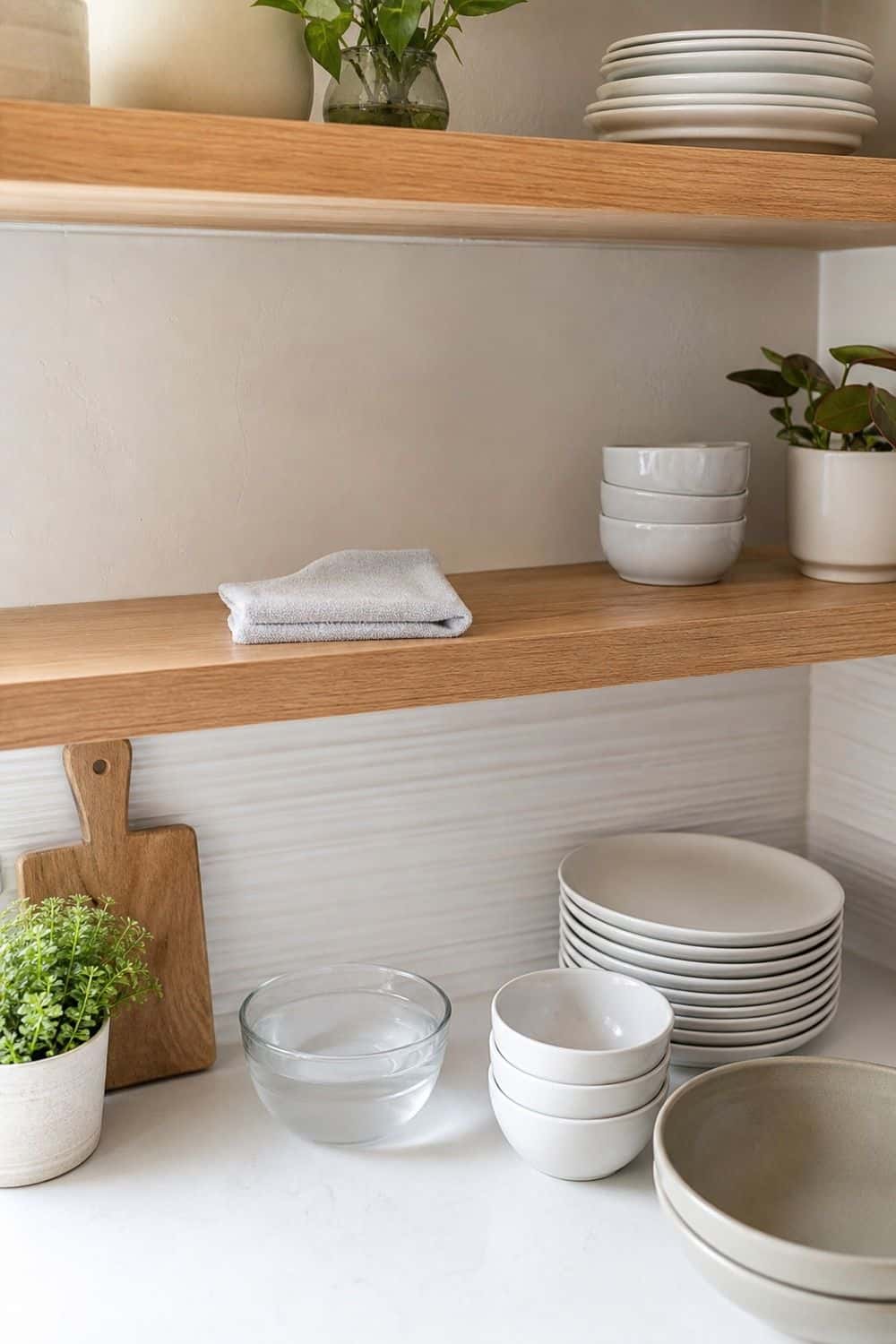
Open shelves need a simple cleaning rhythm, especially in a kitchen where dust and cooking film can settle together. Once a week, lift the items, wipe the shelf surface, check the underside, and clean the dishes or jars that feel sticky.
Shelves near cooking may need more attention, while shelves near the dishwasher or coffee zone may stay cleaner. A damp microfiber cloth usually handles everyday dust, and a gentle degreaser can help near oil splatter. The routine is not glamorous, but it is what keeps open shelves feeling fresh instead of decorative and forgotten.
25. Simplify Before Adding Another Shelf
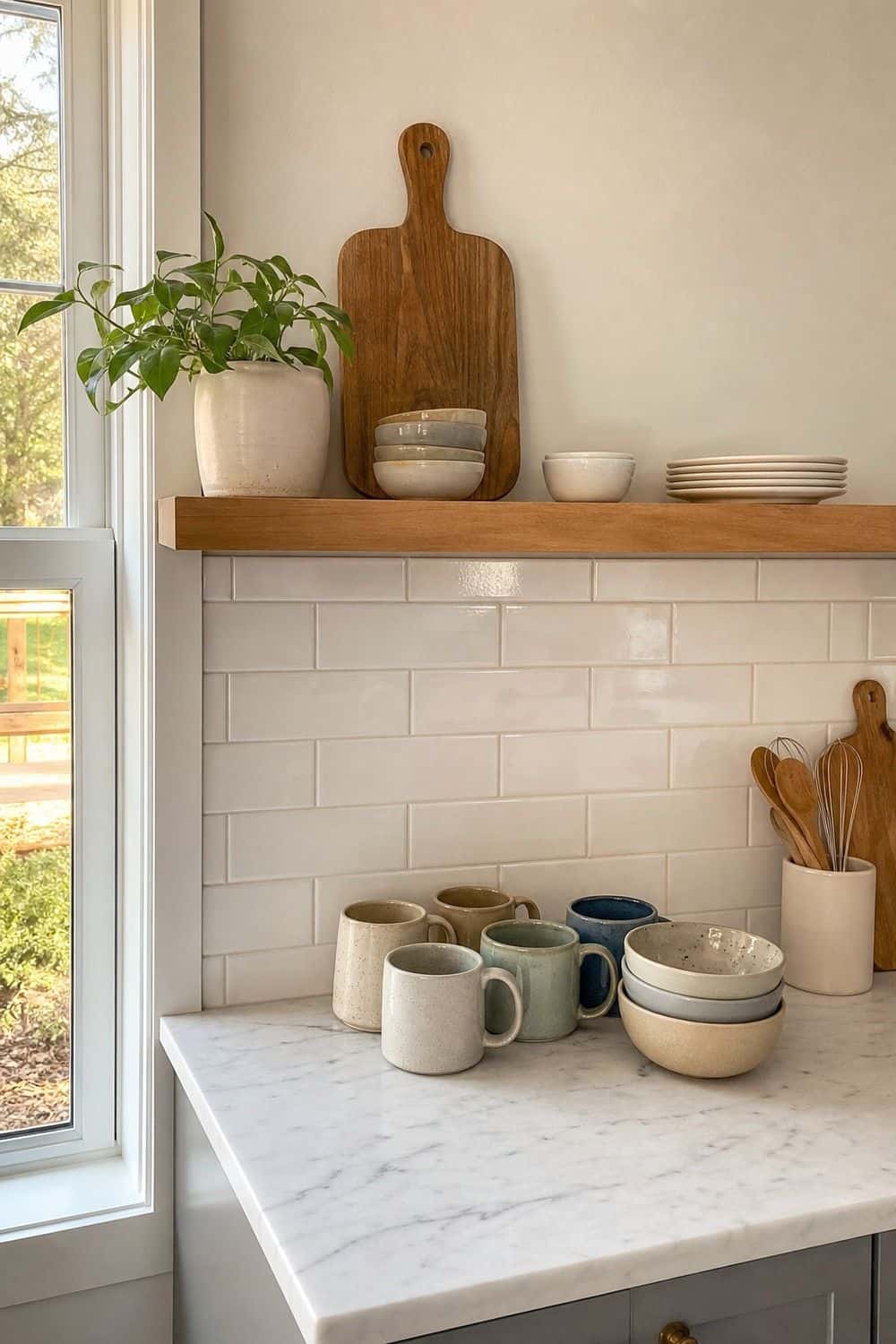
Before adding another shelf, simplify the one you already have. Remove anything dusty, awkward, rarely used, too heavy, or visually noisy, then live with the cleaner version for a little while. If the shelf still feels useful and you can name the job the next shelf will do, add it with measurements and support in mind. If you only want another shelf because the first one filled up, that is a storage warning, not a design invitation. Open shelving should solve display or access, not quietly replace every cabinet in the kitchen.
Frequently Asked Questions
Are open shelves practical in kitchens?
Open shelves can be practical when they hold things you use often and wash regularly, such as plates, bowls, glasses, mugs, jars, and cookbooks. They become less practical when they are asked to hold appliances, packaged food, bulky cookware, or rarely used decorative pieces.
What should I put on open kitchen shelves?
The best open kitchen shelves usually hold everyday dishes, bowls, mugs, useful glassware, sealed jars, cookbooks, cutting boards, one small plant, or one framed print. Choose items that repeat color, serve a real purpose, and are easy to wipe or wash.
What should not go on open shelves in a kitchen?
Skip small appliances, bulky cookware, packaged food, cleaning supplies, paper goods, seasonal clutter, and rarely used glassware. Those pieces usually gather dust, look messy, or make the shelf harder to use. Closed cabinets are better for the practical things that do not need to be displayed.
Do open shelves get greasy?
Yes, open shelves can get greasy, especially near a range or heavy cooking zone. Place shelves away from the greasiest wall when possible, and wipe them regularly with a damp cloth. If a shelf sits near oil splatter, keep only sturdy, easy-to-clean items there.
Are open shelves good for small kitchens?
Open shelves can help a small kitchen feel lighter when they are used in one short run, a corner, or a coffee zone. They should not replace all closed storage, though. Small kitchens still need hidden space for appliances, packaged food, and anything that would make the wall look crowded.
How do you keep open shelves from looking cluttered?
Repeat colors, group similar items, leave empty space, and store only pieces you use often. Keep the shelf jobs clear: dishes in one area, mugs near coffee, jars near prep, and decorative pieces used sparingly. When the shelf starts feeling busy, remove before you add.
Are open shelves cheaper than cabinets?
Open shelves can cost less than upper cabinets, but they still need strong supports, careful installation, and regular cleaning. A shelf that is too weak, too deep, or poorly placed can become frustrating quickly. Budget for brackets, anchors, shelf material, and the time it takes to maintain them.
Where should open shelves go in a kitchen?
Good spots include near the dishwasher, above a coffee zone, on a sink wall, in an empty corner, or on a side wall that needs lighter storage. Avoid the greasiest range area unless you are comfortable cleaning often and storing only wipeable pieces there.
Final Thoughts
Open shelving works when it feels like a thoughtful helper, not a performance. Start small, use strong support, keep everyday pieces within reach, and let closed cabinets handle the messy things. That balance gives you shelves that look beautiful because they actually belong in the rhythm of the kitchen.
Last update on 2026-09-17 / Affiliate links / Images from Amazon Product Advertising API