
The best small kitchen organization ideas start with owning less, clearing one prep surface, improving cabinet and drawer access, and storing appliances by how often they are used. Shelf risers, pull-out cabinet organizers, drawer dividers, vertical pan racks, wall storage, slim rolling carts, freestanding pantry cabinets, over-sink racks, and a short daily reset all help a compact kitchen save space.
A small kitchen does not fail because it lacks one perfect organizer. It usually fails because too many tools, appliances, pantry items, and papers are competing for the same few cabinets, drawers, and counters.
Strong small kitchen organization ideas start with priority. The counter needs a work surface, daily tools need the easiest reach, pantry overflow needs a real home, and appliances need to be stored by frequency instead of wishful thinking.
Top Recommended Products


You Might Also Like These Blog Posts
- Kitchen Organization Products
- Kitchen Drawer Organizers
- Budget Kitchen Organization
- Minimalist Kitchen Organization
- IKEA Kitchen Organization
1. Declutter Duplicate Tools Before Buying Organizers
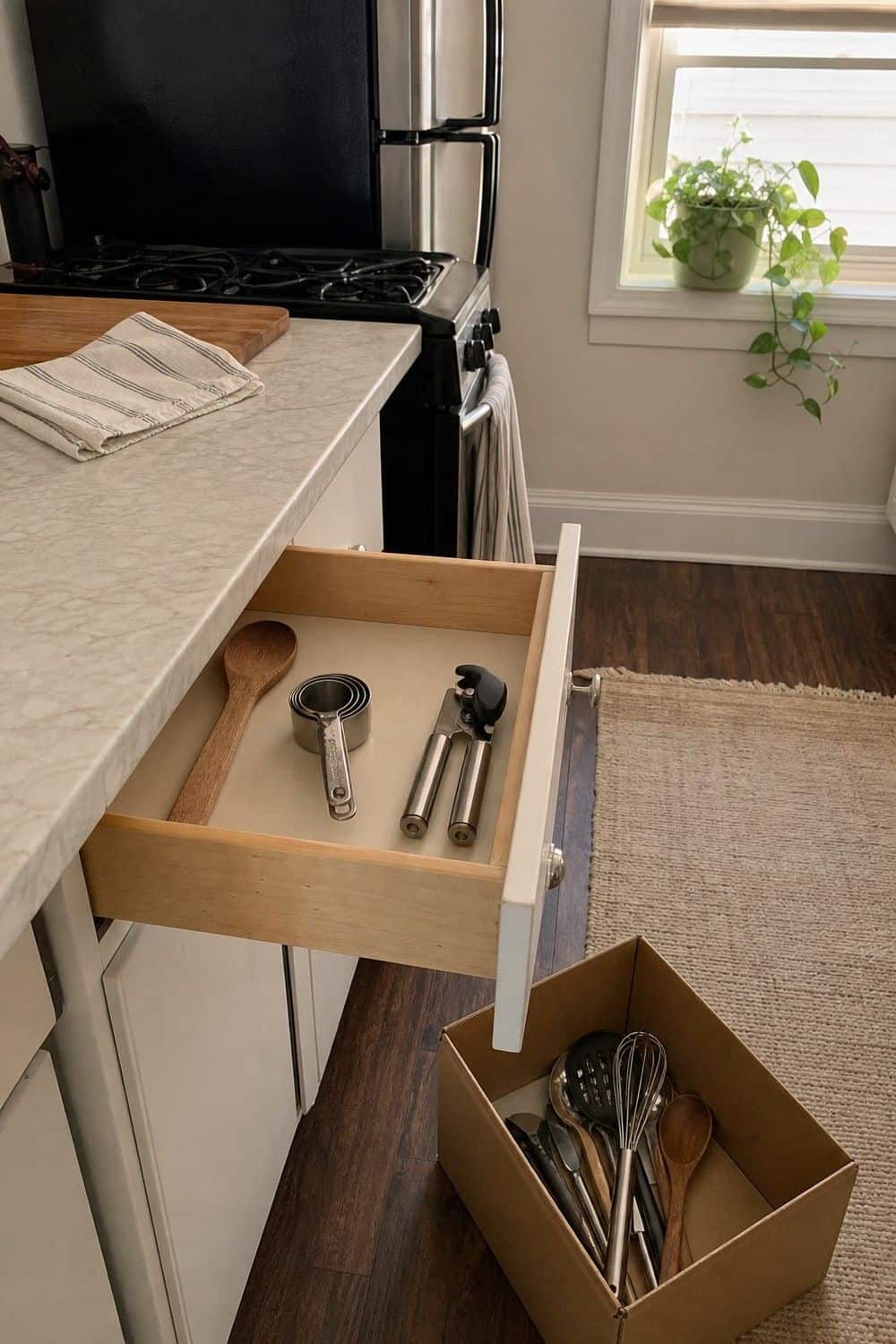
Start by removing duplicate tools before buying any organizer. In a small kitchen, two peelers, five spatulas, and extra mugs take up the same prime space that daily cooking needs. Keep the best version of each tool, move occasional pieces to a higher shelf, and donate anything that only survives because it has always been there. This makes every later storage choice smaller and cheaper because you are organizing the kitchen you actually use, not the overflow you forgot to clear out.
2. Assign a Home Based on How Often You Use It
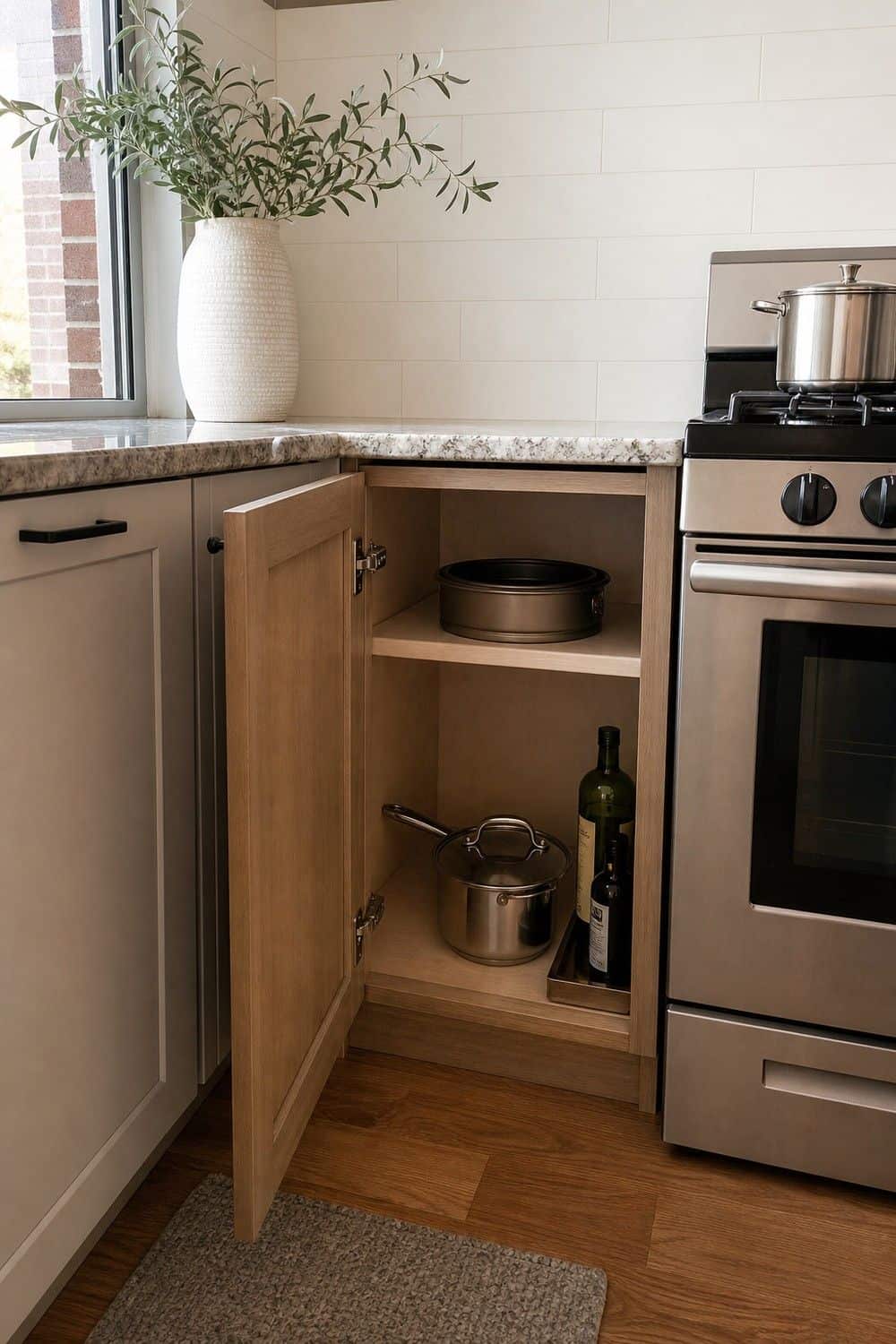
Give every item a home based on how often it is used. Daily pieces belong between shoulder and knee height, close to the task they support: knives near prep, mugs near coffee, pans near the stove, and food containers near leftovers. Occasional serving pieces can move higher or deeper instead of interrupting the daily reach.
This one decision keeps a small kitchen from becoming a constant shuffle. The busiest items should not require bending, stacking, or moving three other things first.
3. Keep One Prep Surface Clear
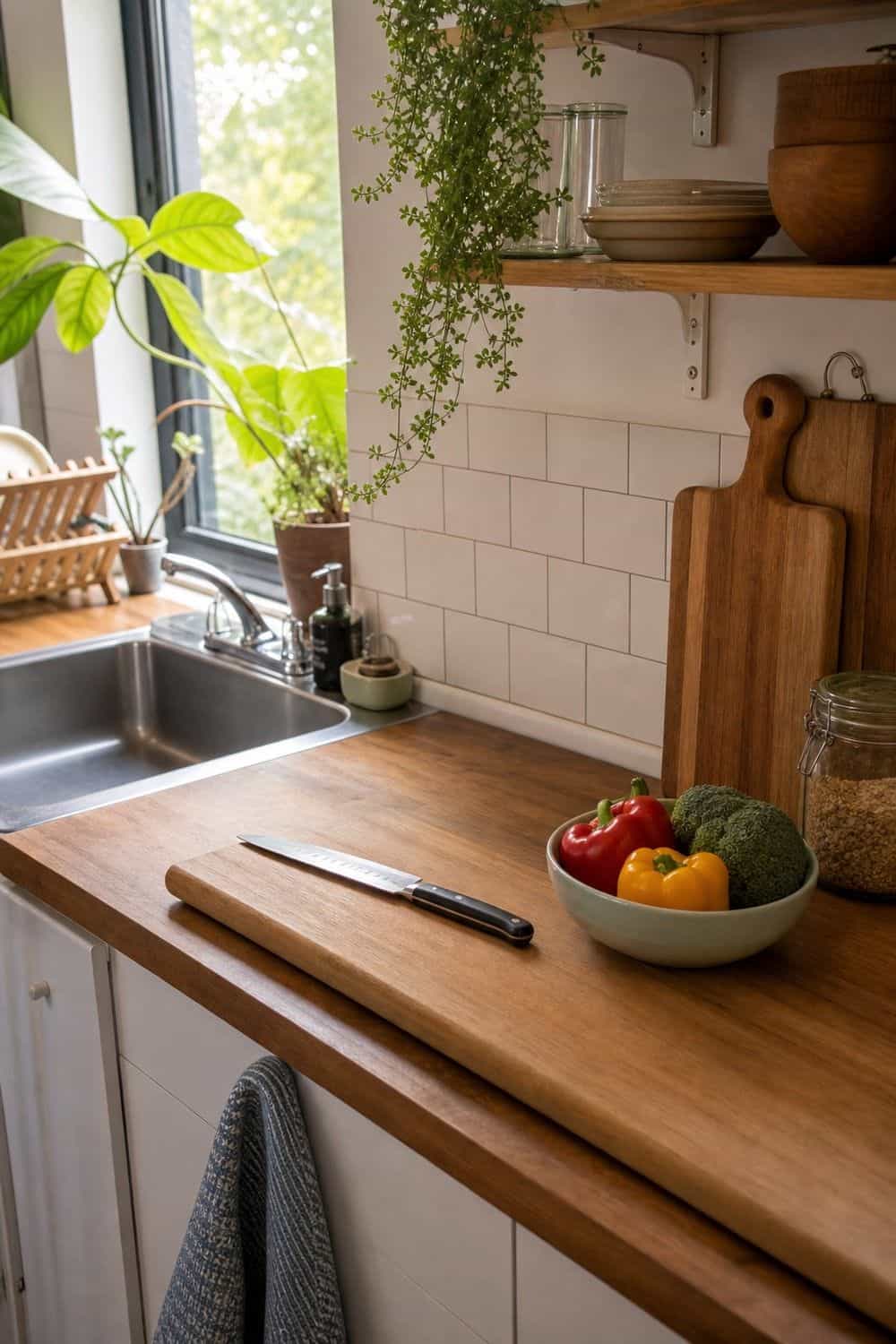
One clear prep surface matters more than a perfectly styled counter. Choose the stretch where you actually chop, mix, pack lunches, or unload groceries, then protect it from mail, appliances, fruit bowls, and decorative extras. Even a narrow 18-inch workspace can make cooking feel easier if it stays open and wiped down.
Move anything that does not help prep to a tray, cabinet, wall hook, or nearby shelf. A small counter works harder when it has breathing room for a board, bowl, and knife.
4. Add Shelf Risers Inside Cabinets
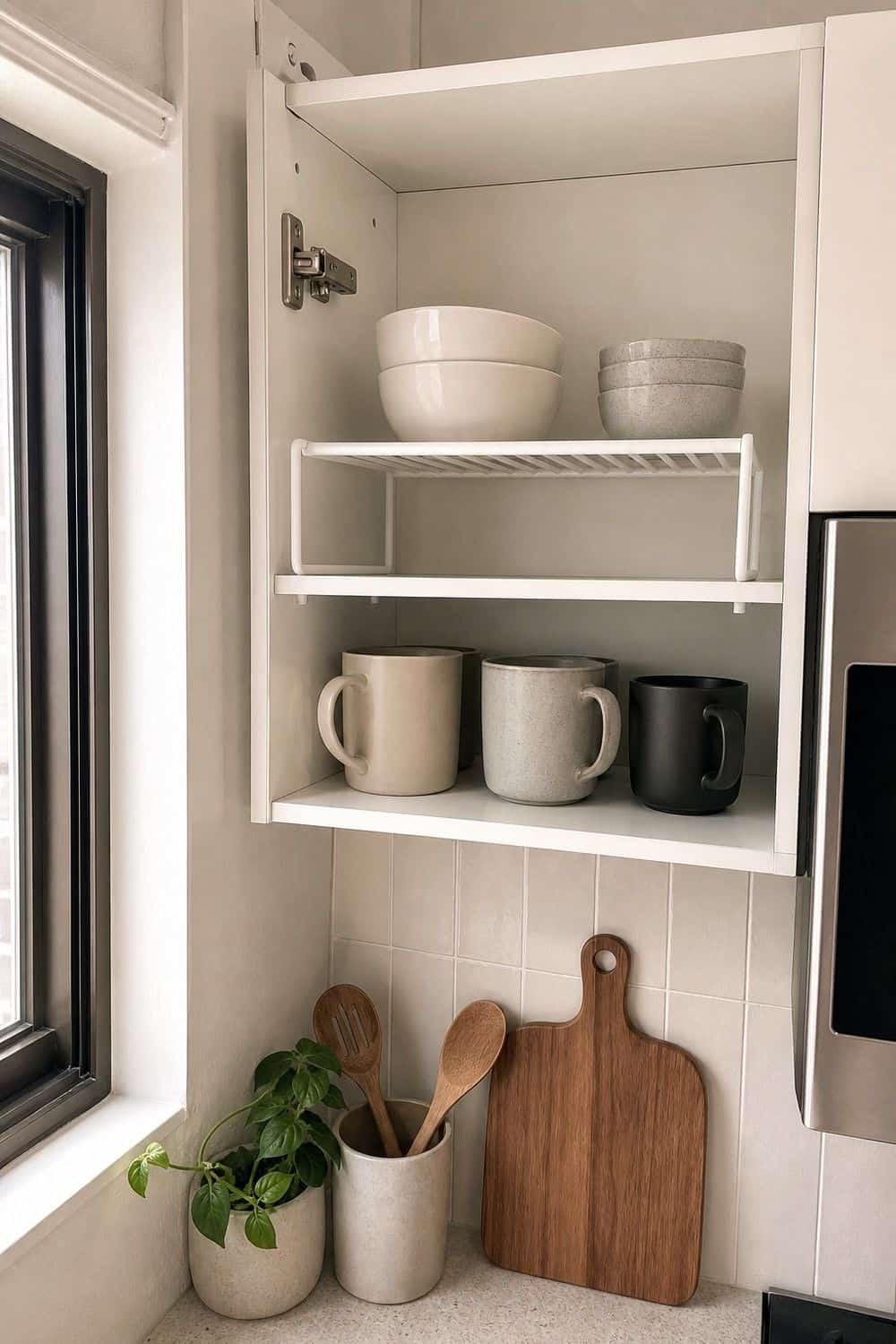
Shelf risers help cabinets when plates, bowls, mugs, or pantry cans are stacked too high to reach safely. Use them to create two short levels instead of one leaning tower. Measure the cabinet height first so the riser leaves enough hand space above each stack. The best setup lets you pull one plate or mug without lifting the whole pile, which is especially useful in narrow upper cabinets where every awkward movement feels bigger during dinner prep. Keep heavy stacks on the lower level.
5. Install Pull-Out Shelves in Deep Cabinets
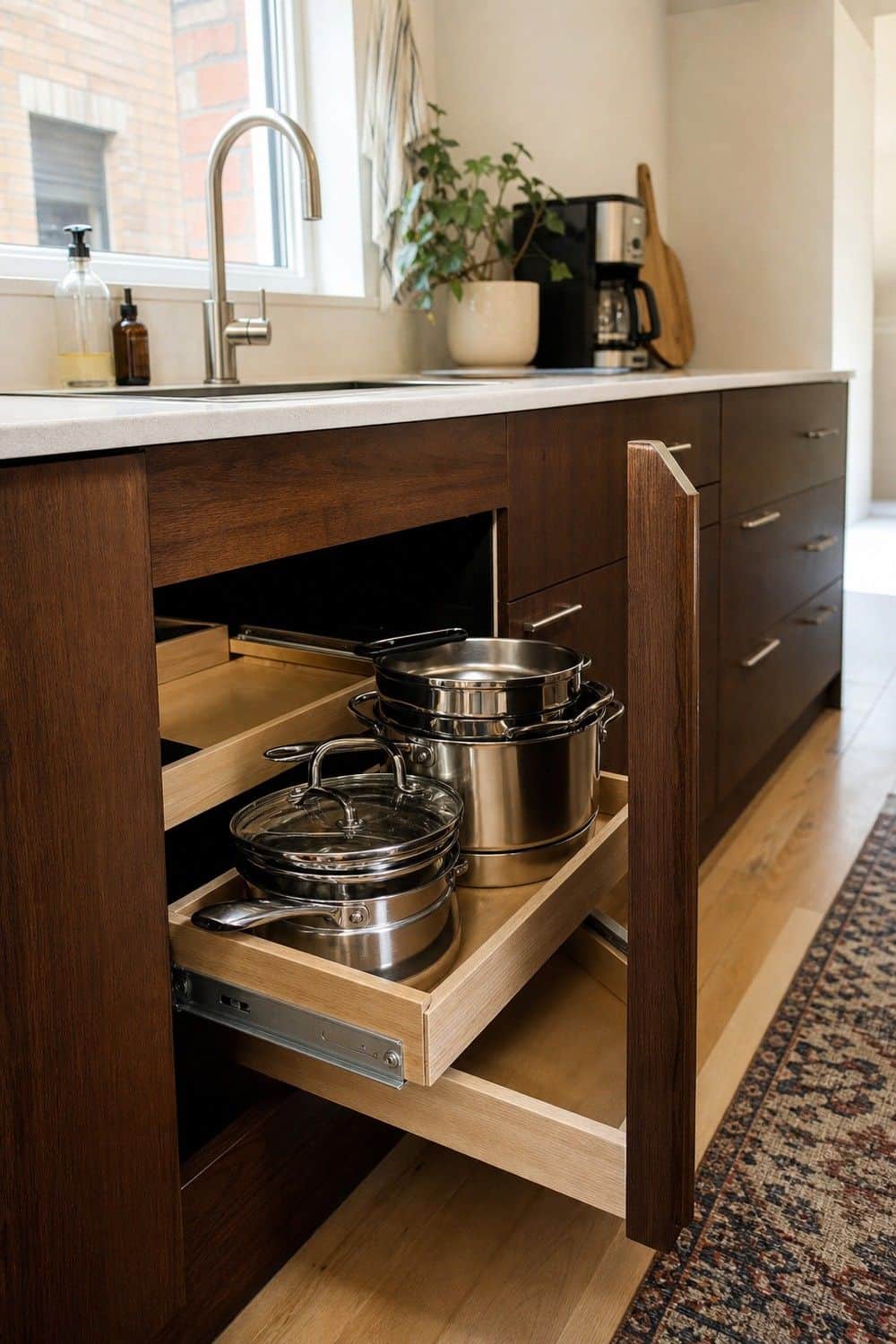
Pull-out shelves make deep cabinets easier because they bring the back row forward. They are especially helpful for pots, mixing bowls, small appliances, pantry staples, or cleaning supplies that disappear behind other things. Choose a drawer or shelf insert that can handle the weight, then leave enough clearance for the cabinet door hinges and any tall handles.
Do not fill the pull-out completely on day one. A little open space keeps items from catching when the shelf slides and makes restocking less annoying.
6. Use a Lazy Susan for Awkward Corners
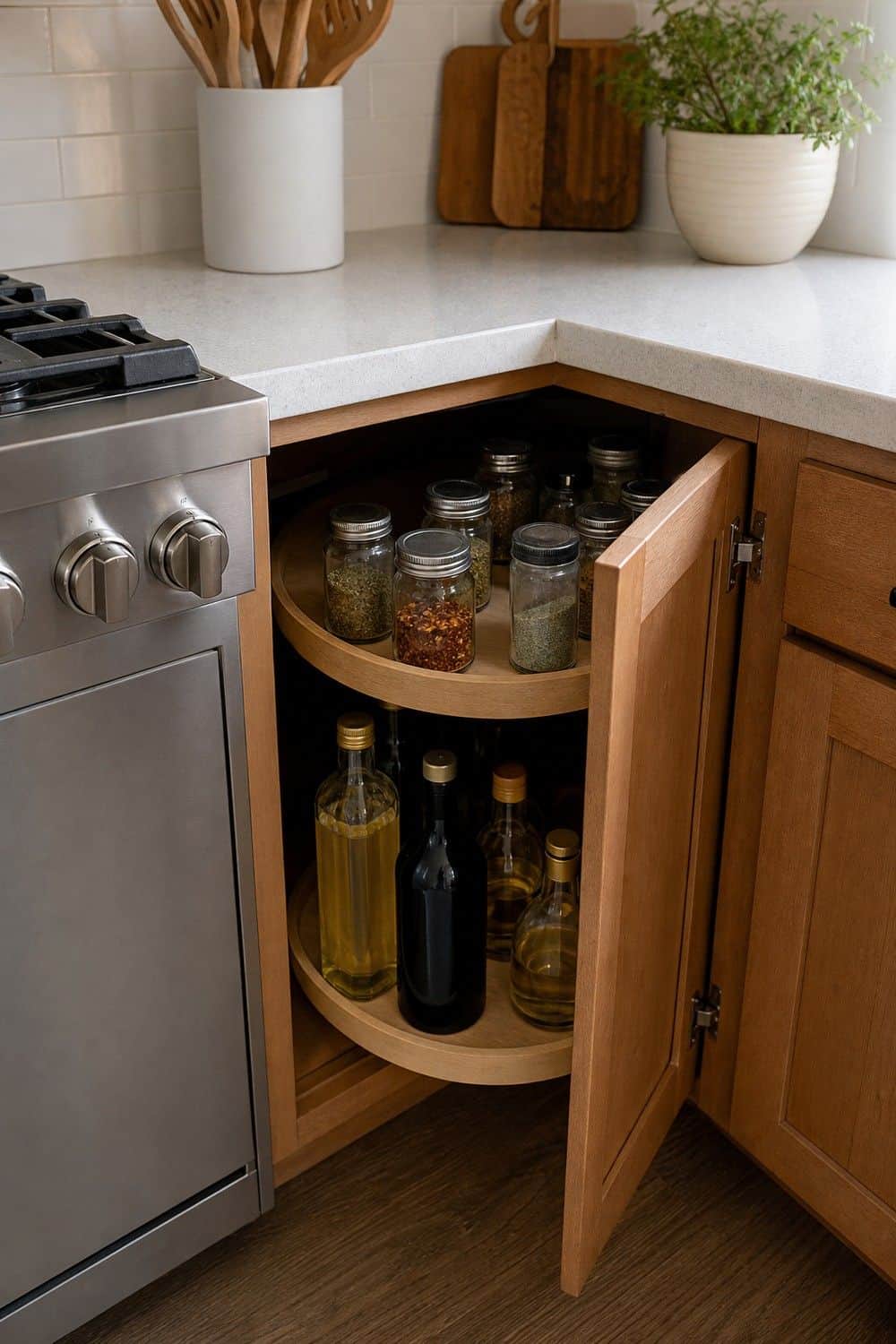
A lazy Susan is useful in awkward corners where bottles, oils, vinegars, sauces, or spices usually get lost. It works best with items of similar height, so the taller pieces do not knock over smaller jars every time it turns. Use one turntable for one category rather than mixing medicine, snacks, and condiments together. If the corner is very deep, choose a larger divided turntable or use two smaller ones with the most-used items in front and labels facing out.
7. File Pans and Cutting Boards Vertically
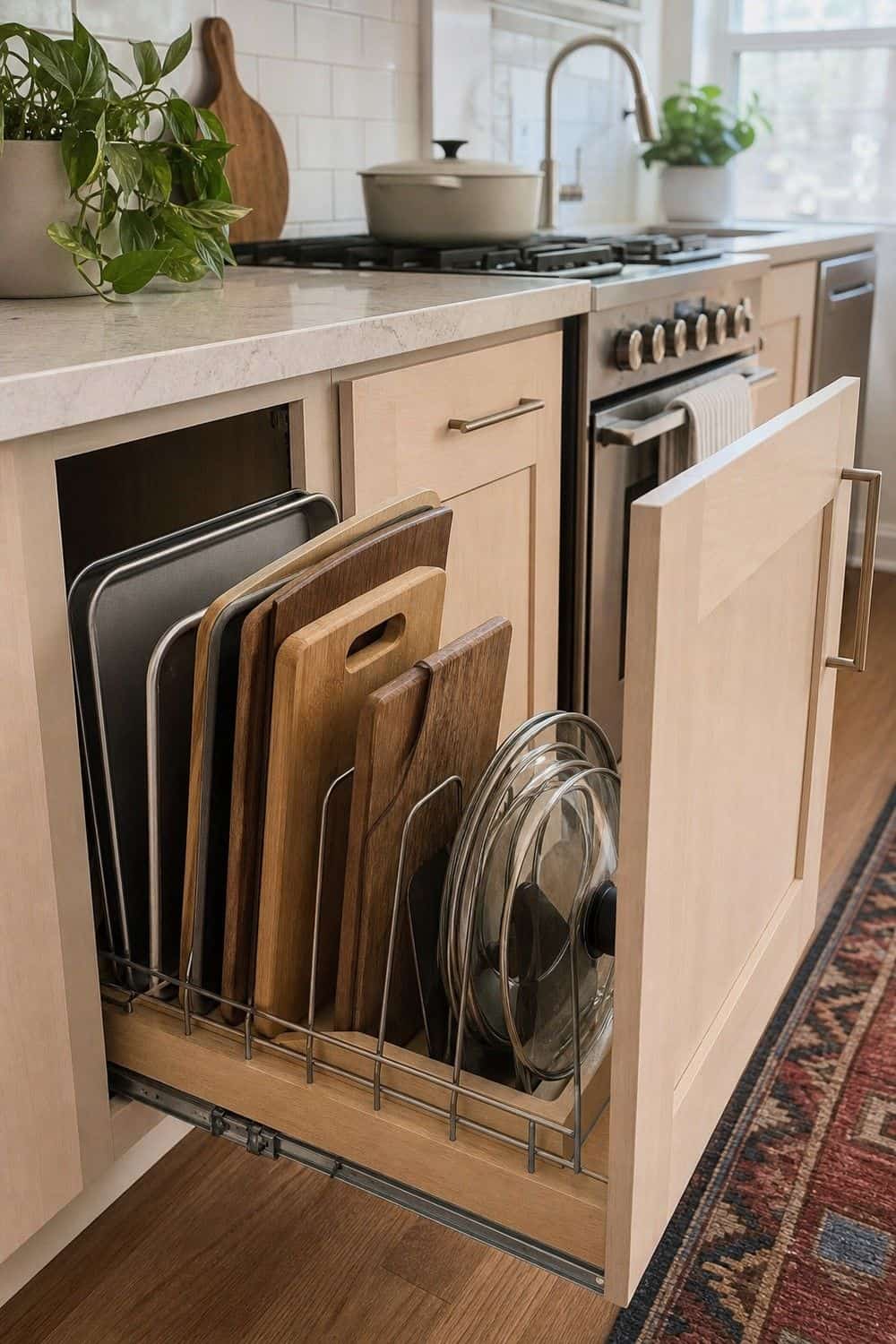
Vertical storage is one of the fastest ways to calm pans, baking sheets, cutting boards, and trays. A file rack or sturdy divider lets you pull one piece without lifting a heavy stack. Put the pieces you use most in the easiest slots and keep specialty pans toward the back. Check the cabinet height before buying a rack, because handles and raised rims can keep doors from closing even when the organizer technically fits on the shelf. Wider slots help prevent scraping.
8. Use Adjustable Drawer Dividers
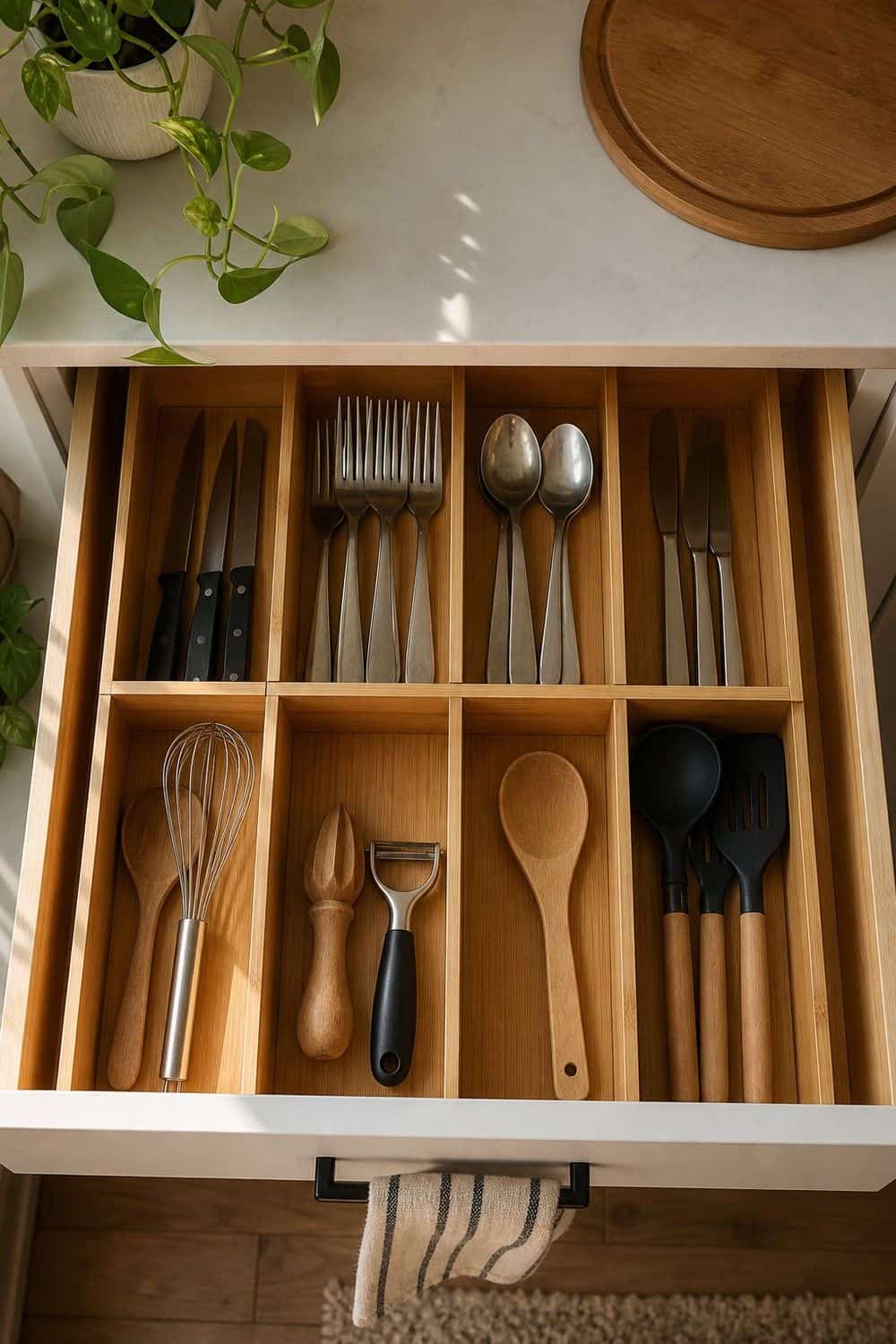
Adjustable drawer dividers are better than fixed trays when the drawer holds mixed tools. Use one lane for everyday utensils, one for prep tools, and one for longer pieces such as tongs, whisks, or spatulas. The dividers should fit tightly enough that they do not slide every time the drawer opens. If a tool is too tall, sharp, or rarely used, move it elsewhere instead of forcing the drawer to hold every kitchen category at once. Test the layout with the drawer fully open.
9. Move Spices Into a Drawer or Door Rack

Spices are easier to use when the labels can be seen at a glance. A shallow drawer insert works well if you cook near a counter, while a door rack is better when drawer space is limited. Keep everyday seasonings in the easiest row and move baking spices or refills higher. Before transferring jars, toss stale duplicates and combine half-empty bottles where it makes sense. Small spice zones fail quickly when they become a museum of old containers with no cooking purpose.
10. Replace a Knife Block With Wall or Drawer Storage
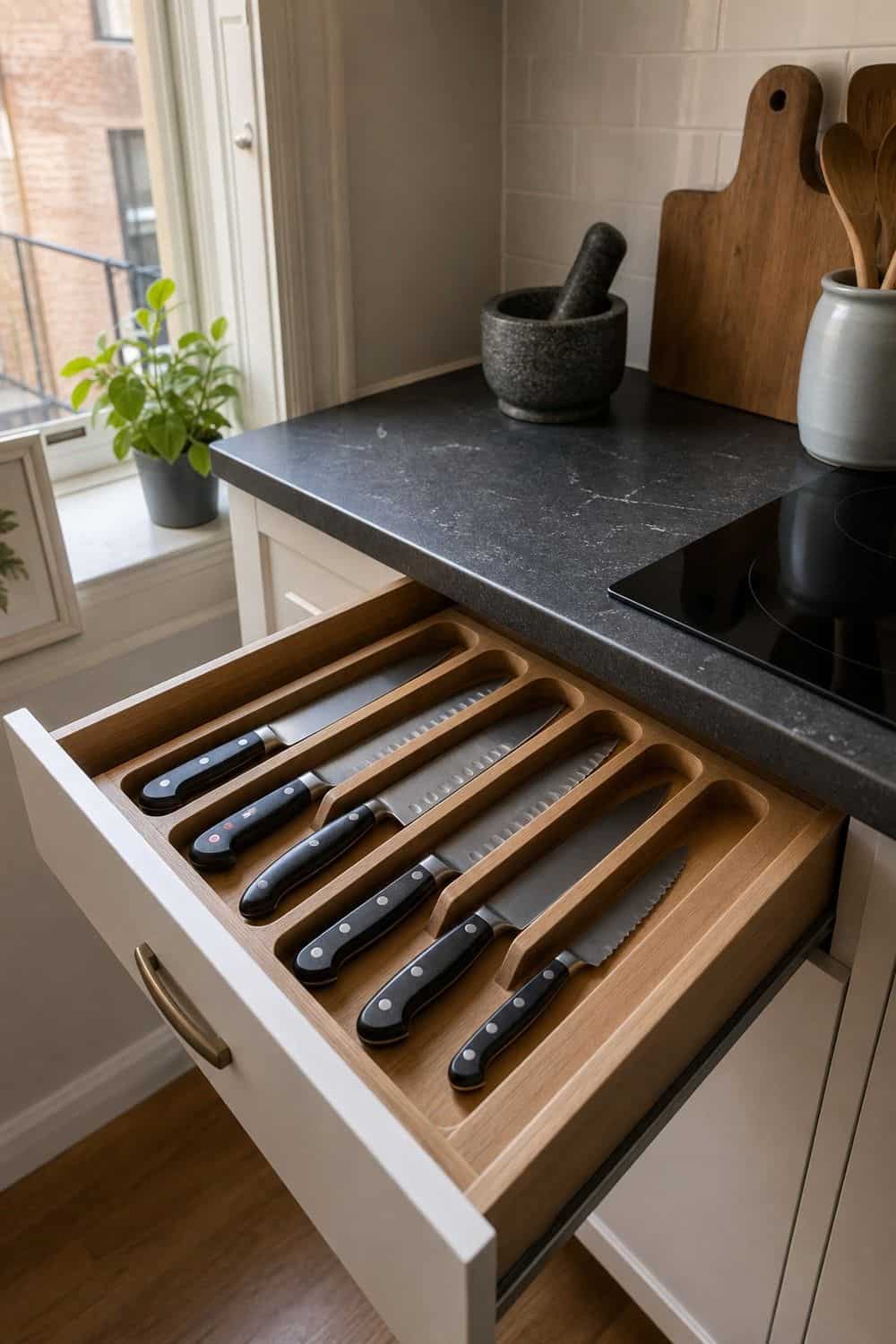
A countertop knife block can steal valuable prep space, especially in a narrow kitchen. Move knives to an in-drawer organizer if you have a safe drawer near the prep area, or use a wall-mounted magnetic strip where blades can sit out of the way. Keep the placement practical: knives should be reachable while cooking but not exposed where children, pets, or crowded traffic can bump them. If you only use three knives, store three knives; empty slots in a block are less useful than open counter space.
11. Add a Pegboard for Flexible Wall Storage
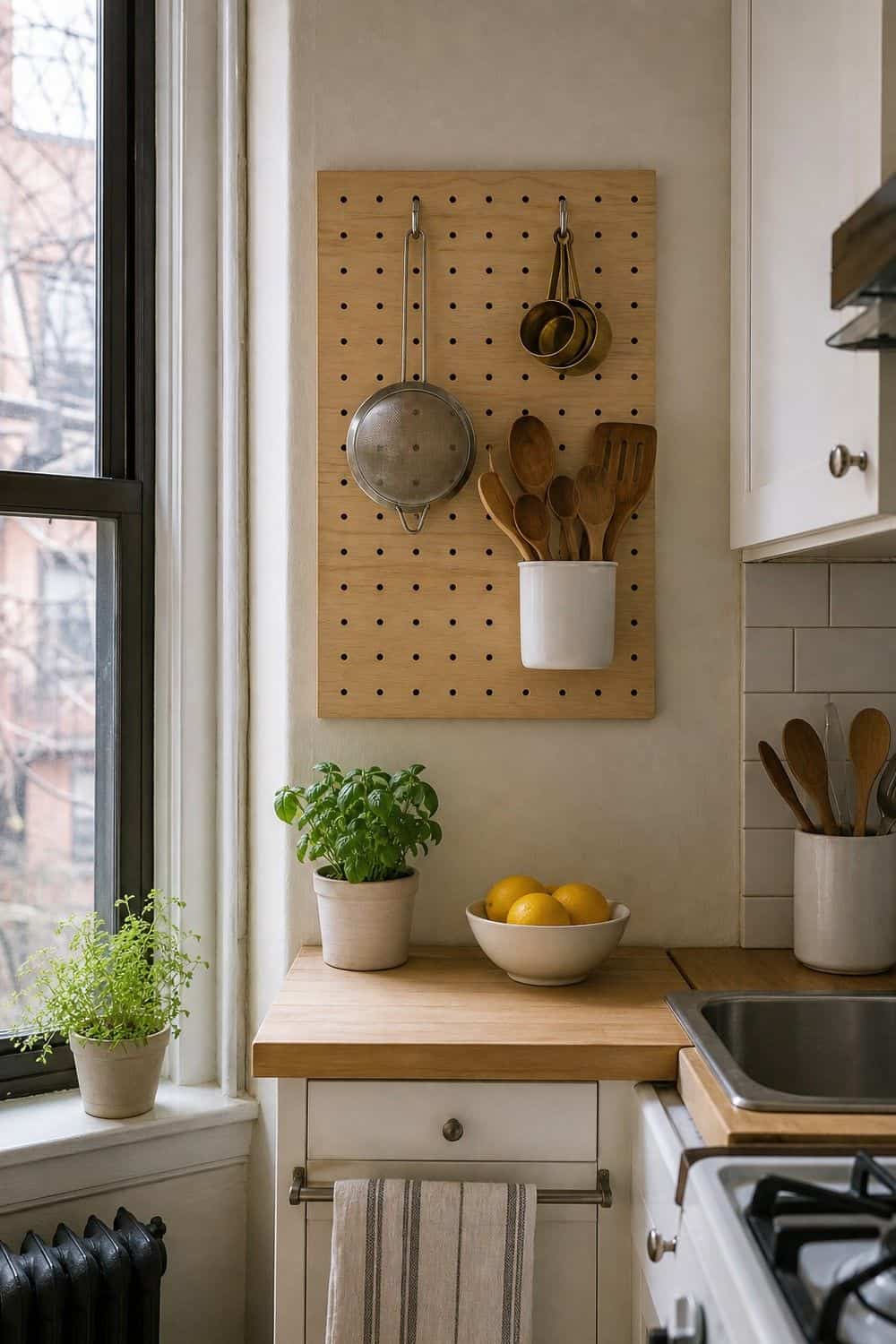
A pegboard works when it holds tools that are light, visible, and genuinely useful near the wall. Try measuring cups, scissors, small pans, strainers, pot holders, or a tiny shelf for salt and oil. Keep heavy cast iron, glass, and rarely used gadgets somewhere sturdier.
Plan the pegboard before drilling or mounting. Trace the tools on the floor first, leave space for hands to lift items off hooks, and keep the lowest row clear of splashes if it sits near the sink or stove.
12. Use S-Hooks Under Shelves or Rails
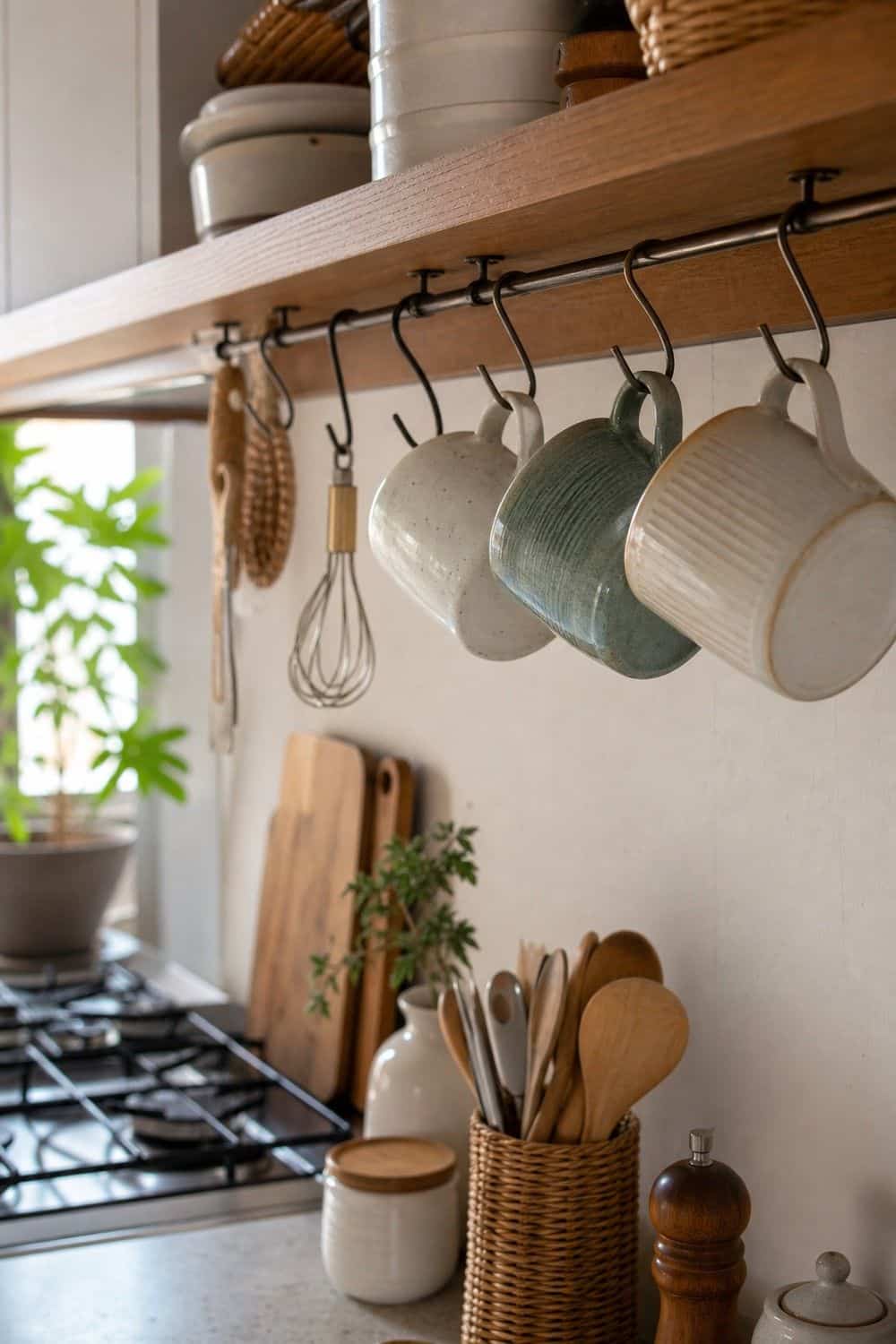
S-hooks under shelves or rails are best for mugs, measuring spoons, small strainers, towels, or lightweight utensils. They make use of empty air, but they can also become visual clutter if every hook is full. Hang only the pieces that are used often and look tidy from the main doorway. Check that cabinet doors, heads, and handles will not hit the hanging items, especially in a tight walkway or near an open shelf by the sink. Leave one empty hook for flexibility.
13. Use Cabinet Doors for Thin Items
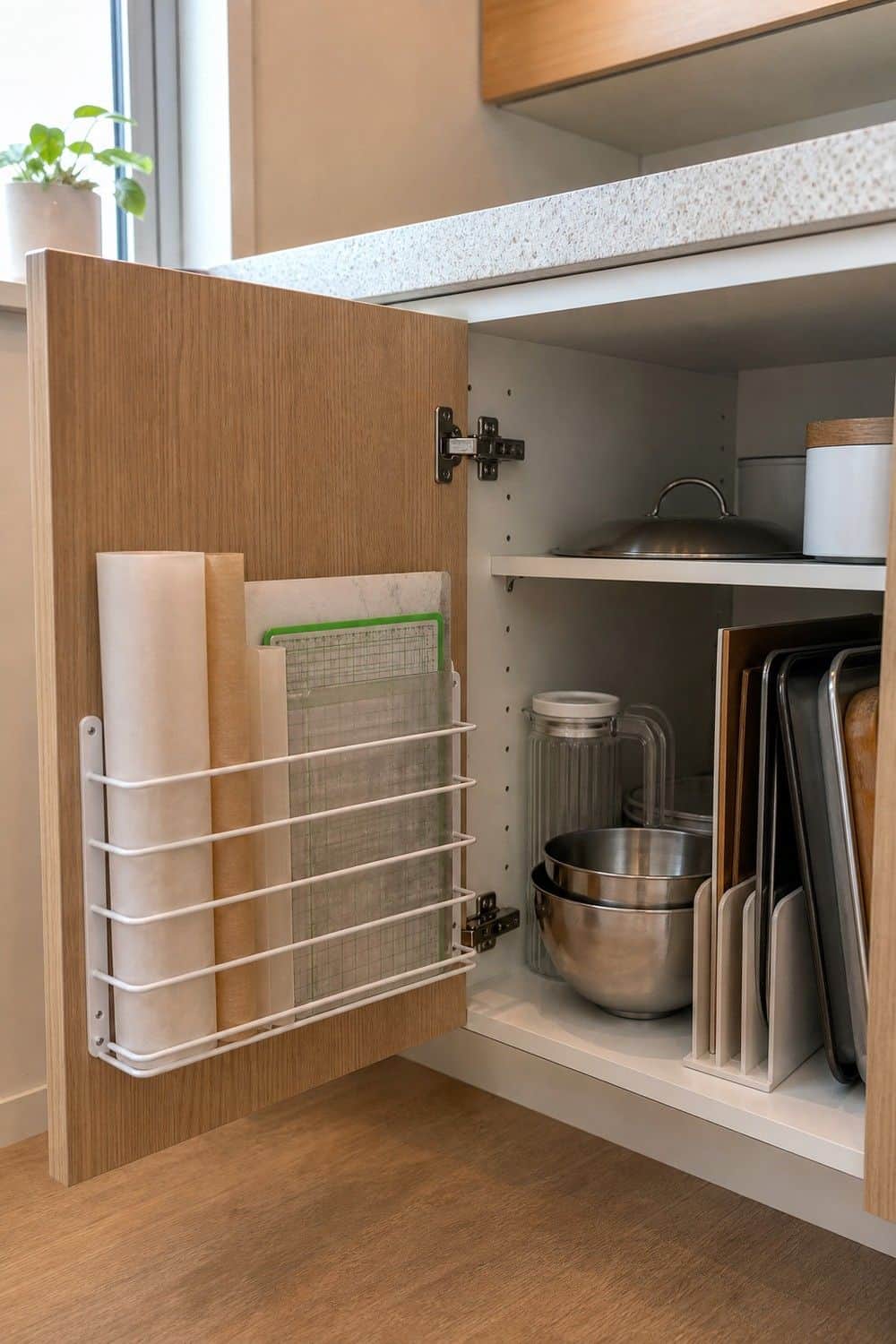
Cabinet doors can hold thin items that otherwise float around drawers. Use adhesive or screw-in racks for cutting boards, pot lids, foil boxes, measuring spoons, or cleaning gloves, depending on the cabinet. Measure the inside depth with the shelves full before adding anything; a door organizer that bumps into jars or plumbing will become frustrating fast. Keep the load light so hinges do not sag and the door still closes without a shove or rattle. Test it before filling the rack.
14. Add a Slim Rolling Cart for Overflow
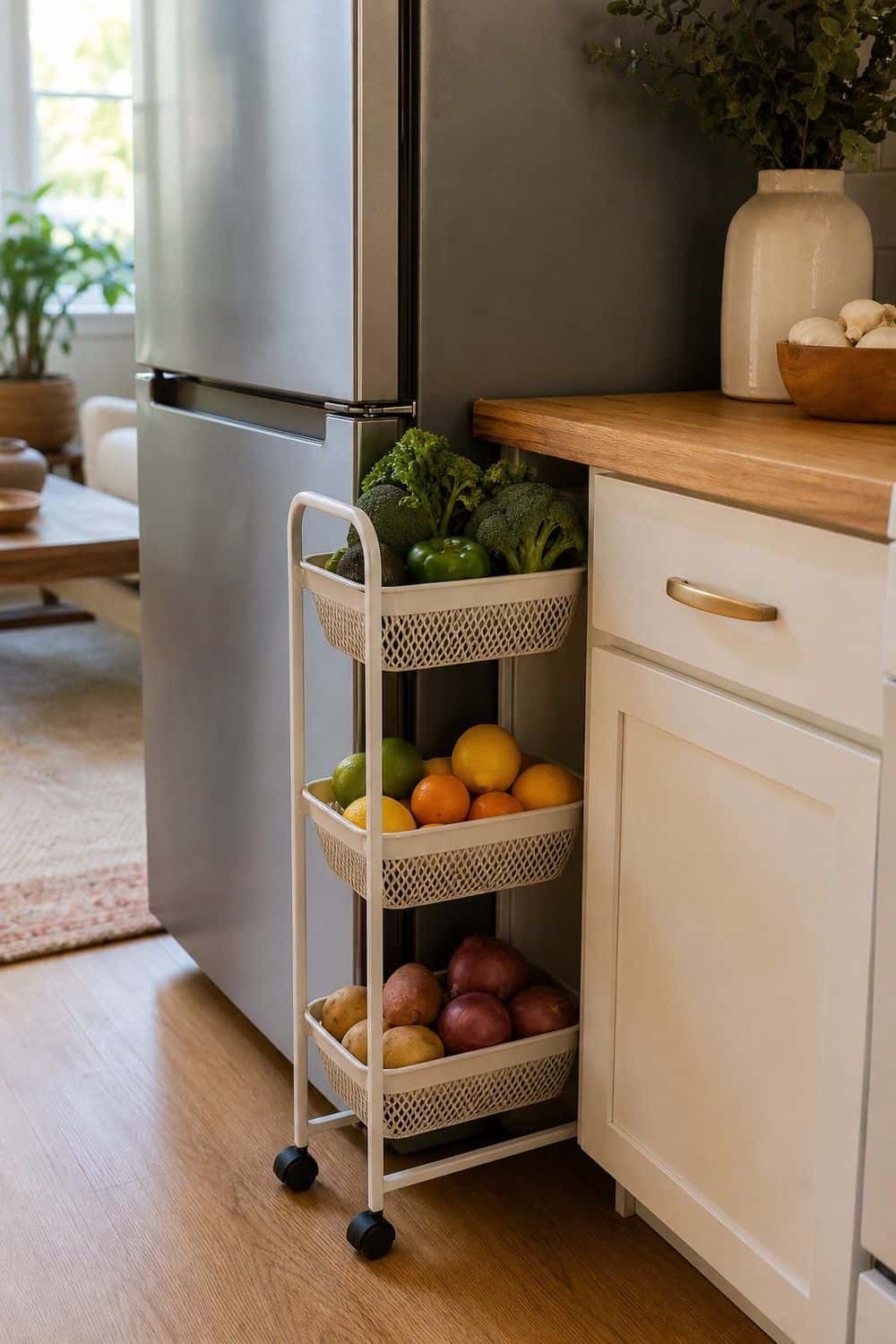
A slim rolling cart is helpful when a small kitchen has a narrow gap beside the fridge, stove, or end cabinet. Use it for oils, onions, lunch supplies, baking extras, or coffee refills, not a random mix of everything that lacks a home. Measure the gap, wheel clearance, and handle height before buying.
The cart should roll out easily and return fully. If it scrapes the wall or blocks a cabinet, it will become another awkward object instead of flexible storage.
15. Use Freestanding Furniture as a Mini Pantry
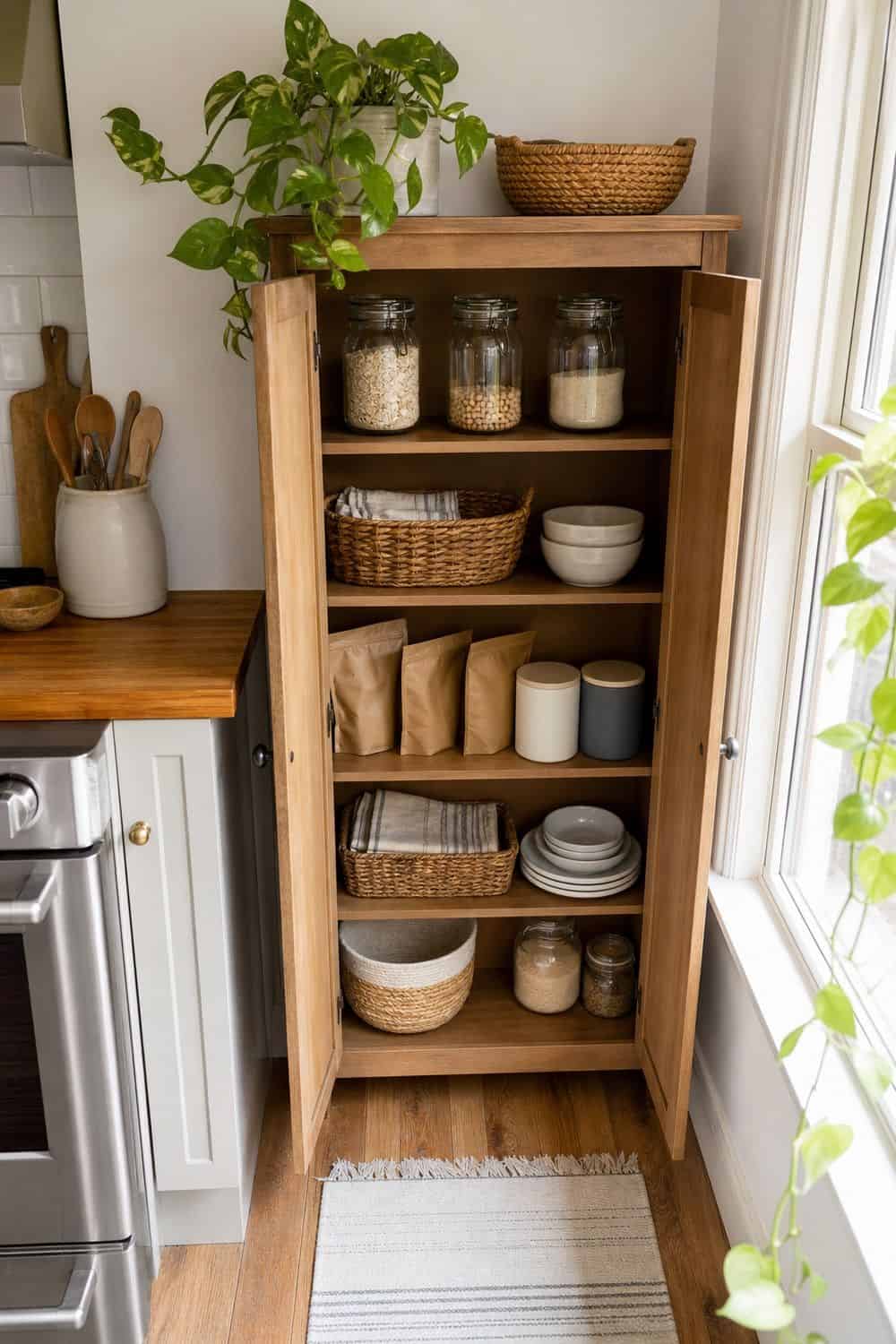
Freestanding furniture can act like a mini pantry when built-in storage is limited. A shallow bookcase, small hutch, wall cabinet, or narrow dresser can hold dry goods, dishes, linens, or small appliances. Choose closed storage for messy categories and open shelves for pieces that stay neat without constant styling.
Anchor tall furniture if needed and keep heavy items low. In a small kitchen, a freestanding piece should add useful storage without narrowing the main walking path or crowding appliance doors.
16. Put Clear Bins on High Shelves
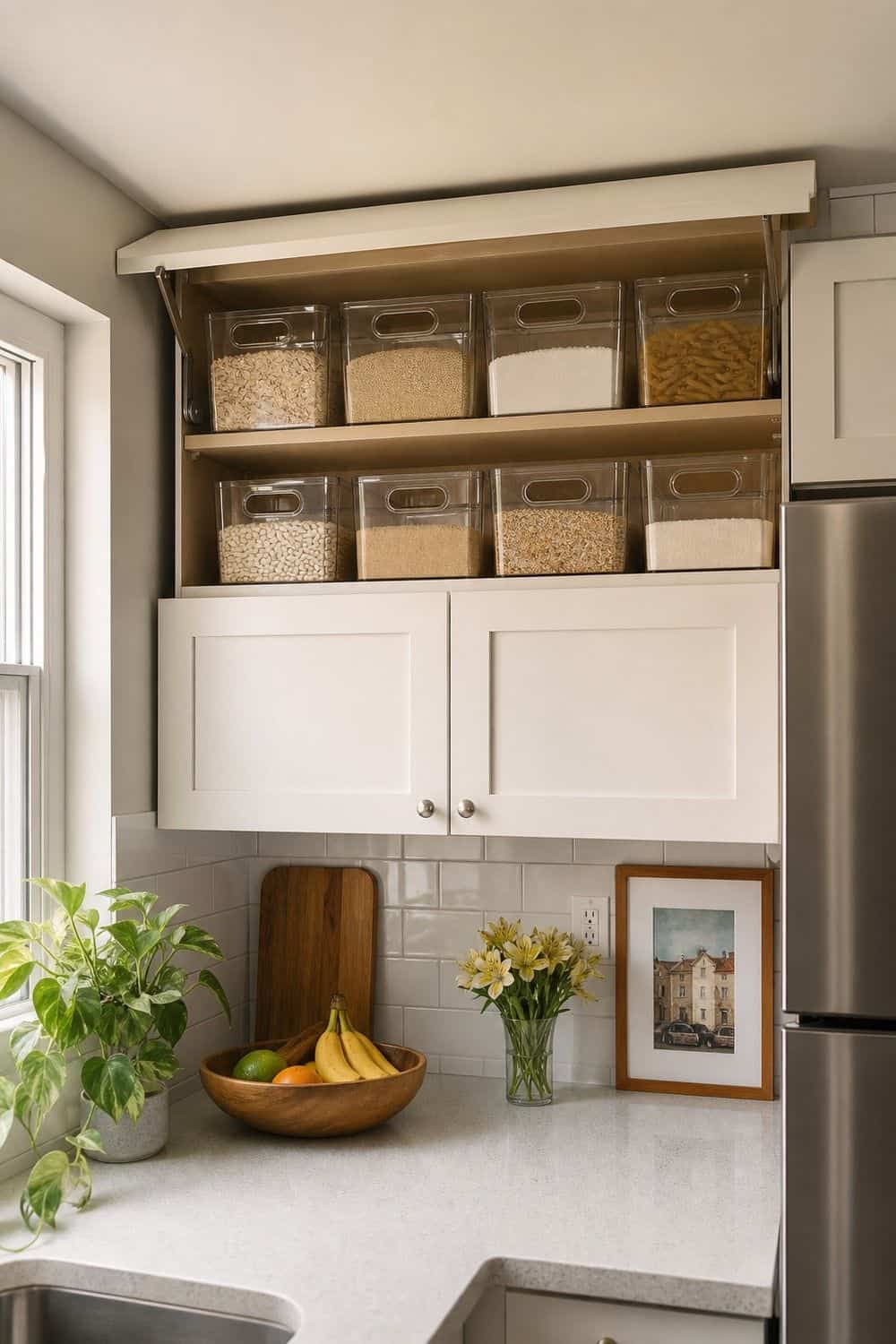
Clear bins on high shelves make backup items easier to pull down safely. Use them for light categories such as paper goods, extra tea, baking decorations, snack refills, or seasonal pieces. Choose bins with handles and label the front so nobody has to pull down three boxes to find one thing during a busy cooking moment.
Avoid storing heavy cans, glass jars, or appliances overhead. High shelves are for lightweight overflow, not anything that could be dangerous or annoying to lift.
17. Decant Only the Staples You Actually Use
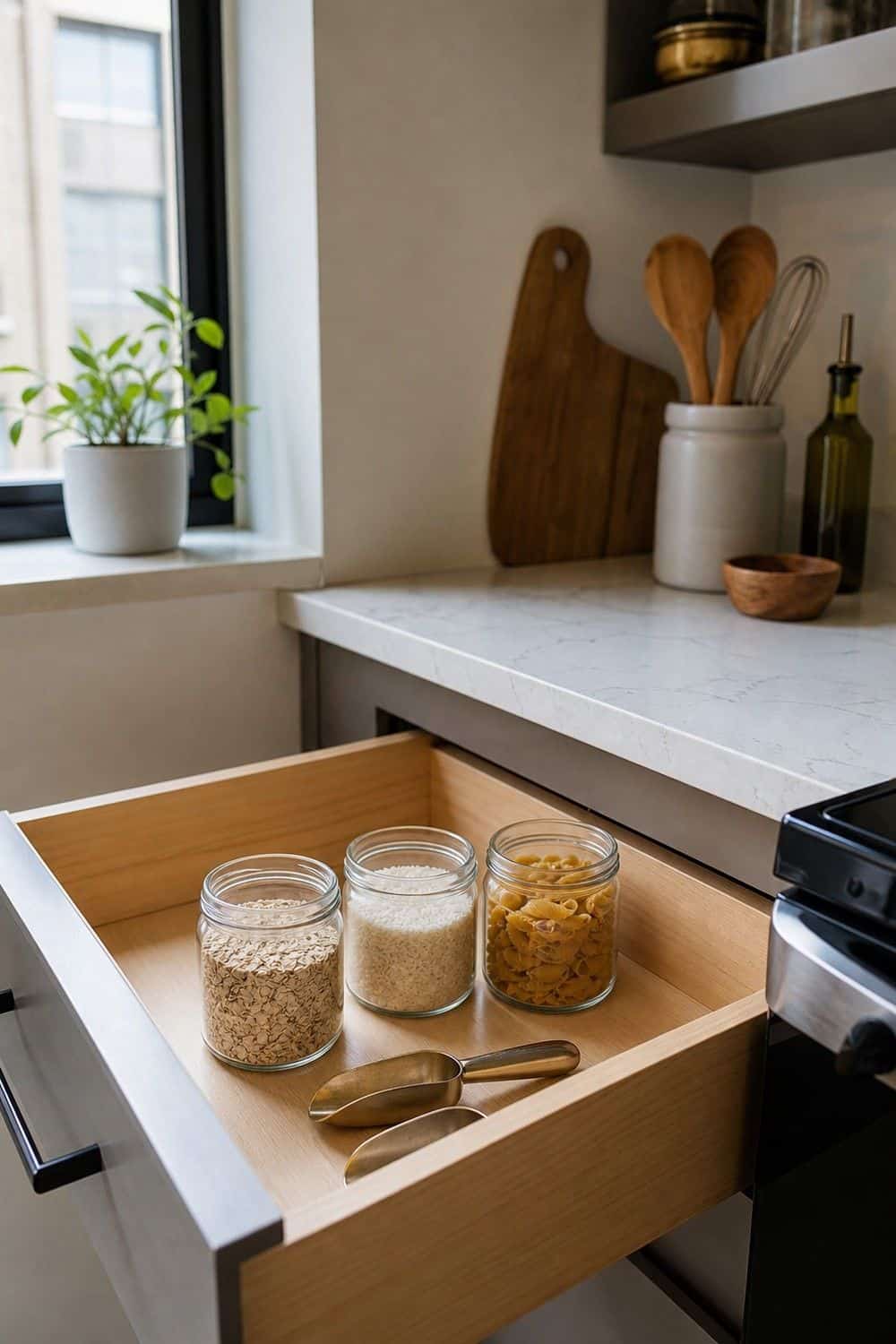
Decant only the staples you refill often, such as rice, oats, flour, sugar, coffee, lentils, or pasta. Matching containers look nice, but they waste space when they hold foods you rarely cook or cannot identify later. Choose square or rectangular containers if the shelf is tight, and label both the ingredient and any cooking instructions you tend to forget. Keep backup packages in one place so the pretty containers do not hide how much food is actually left before shopping.
18. Make the Under-Sink Cabinet Pull-Out Friendly
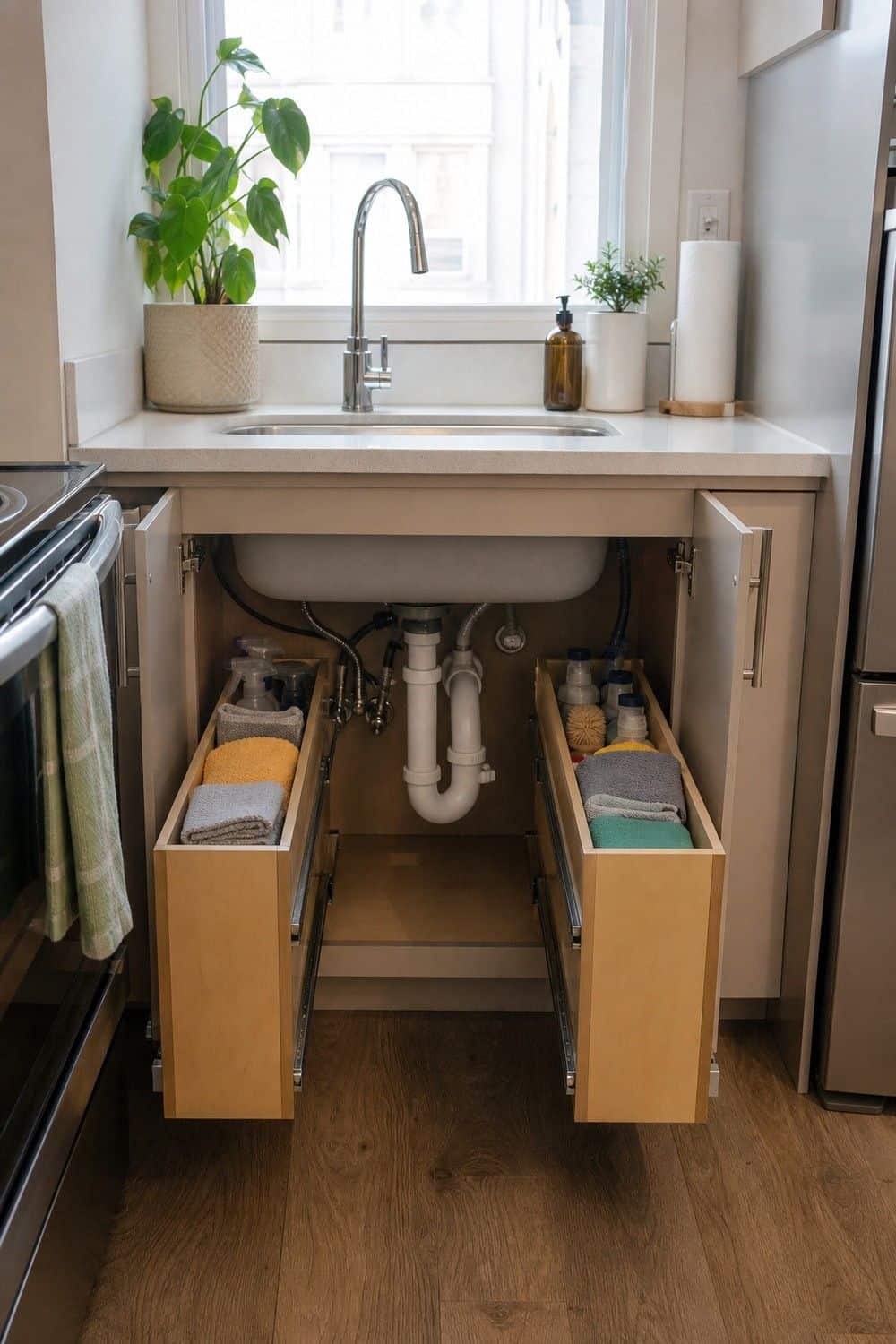
The under-sink cabinet works better when everything can slide forward. Use a pull-out caddy, shallow bin, or small drawer for dish soap, dishwasher tabs, sponges, trash bags, and cleaning sprays. Keep the heaviest bottles low and avoid storing extras around plumbing where leaks would be hard to spot.
Leave space around the pipes and check the cabinet monthly. A clean under-sink zone should make supplies easier to grab while still letting you see drips, dampness, or warped shelf liner early.
19. Use an Over-Sink Drying Rack
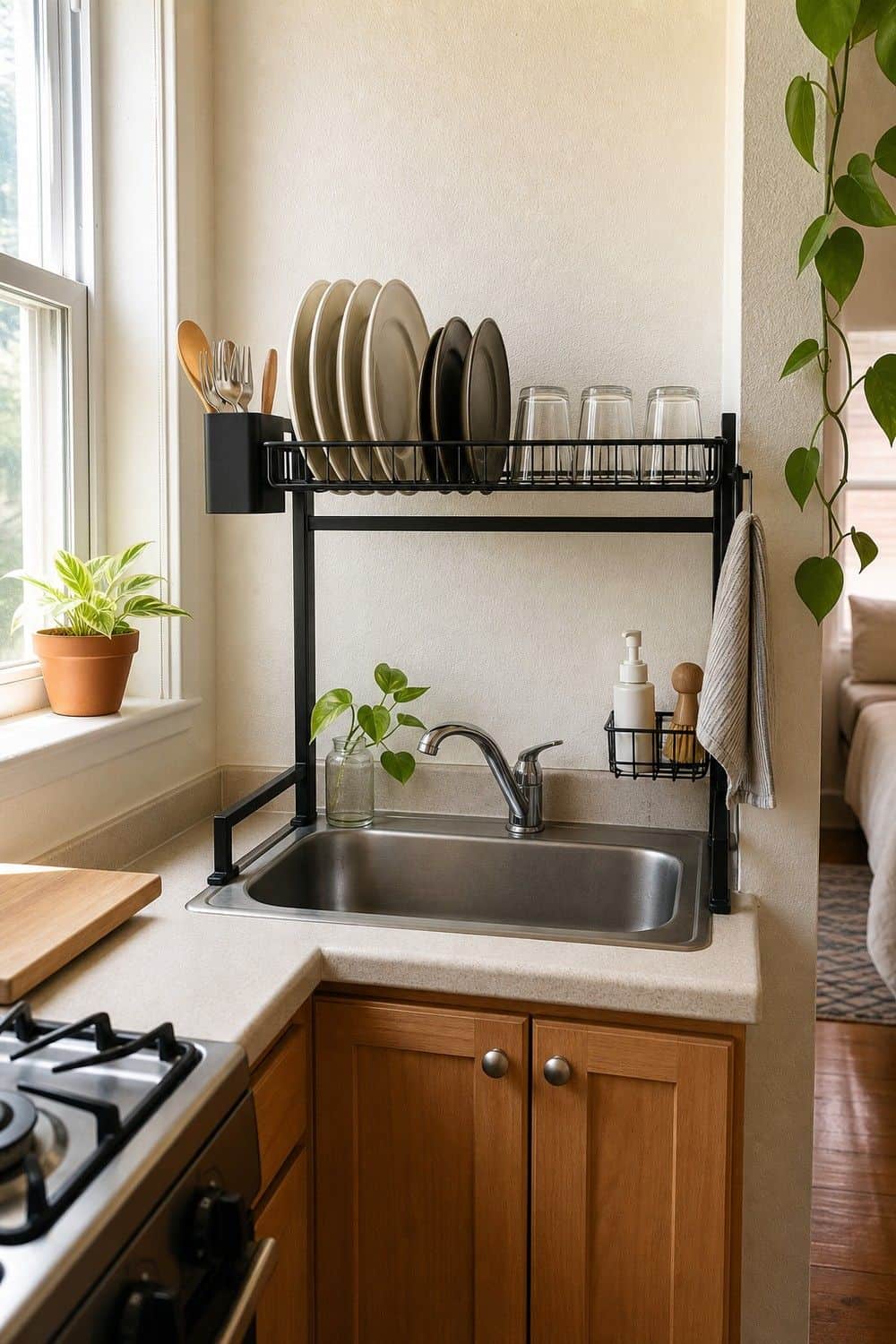
An over-sink drying rack can free counter space, but only if it fits the sink and the way dishes are washed. Measure the sink width, faucet height, and cabinet clearance before choosing one. The rack should hold daily plates, glasses, and utensils without blocking the faucet or making it hard to rinse pans.
This idea works best when dishes are put away often. If the rack becomes permanent storage, it can make a small kitchen feel more crowded than a simple mat or compact dish rack.
20. Store Appliances by Frequency
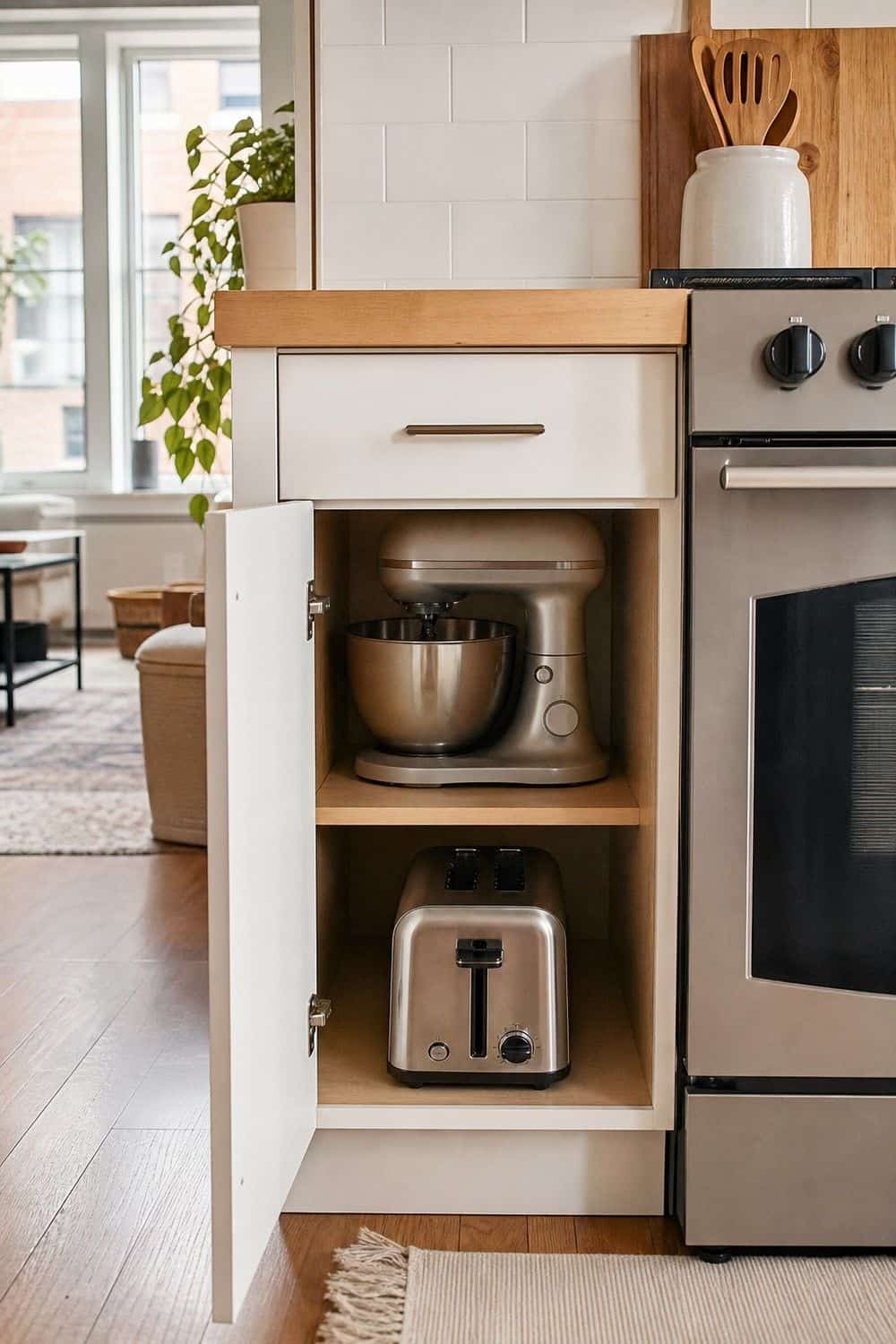
Sort appliances by frequency instead of size alone. The coffee maker, toaster, blender, or rice cooker can stay easier to reach if it is used daily, while the stand mixer, waffle maker, or holiday roasting pan can move higher, lower, or outside the main kitchen zone. Keep cords wrapped and accessories stored with the appliance so pieces do not scatter. If an appliance is used once a year, it should not claim the same space as the tools used every morning.
21. Use a Standing Shelf for Appliances or Pantry Overflow
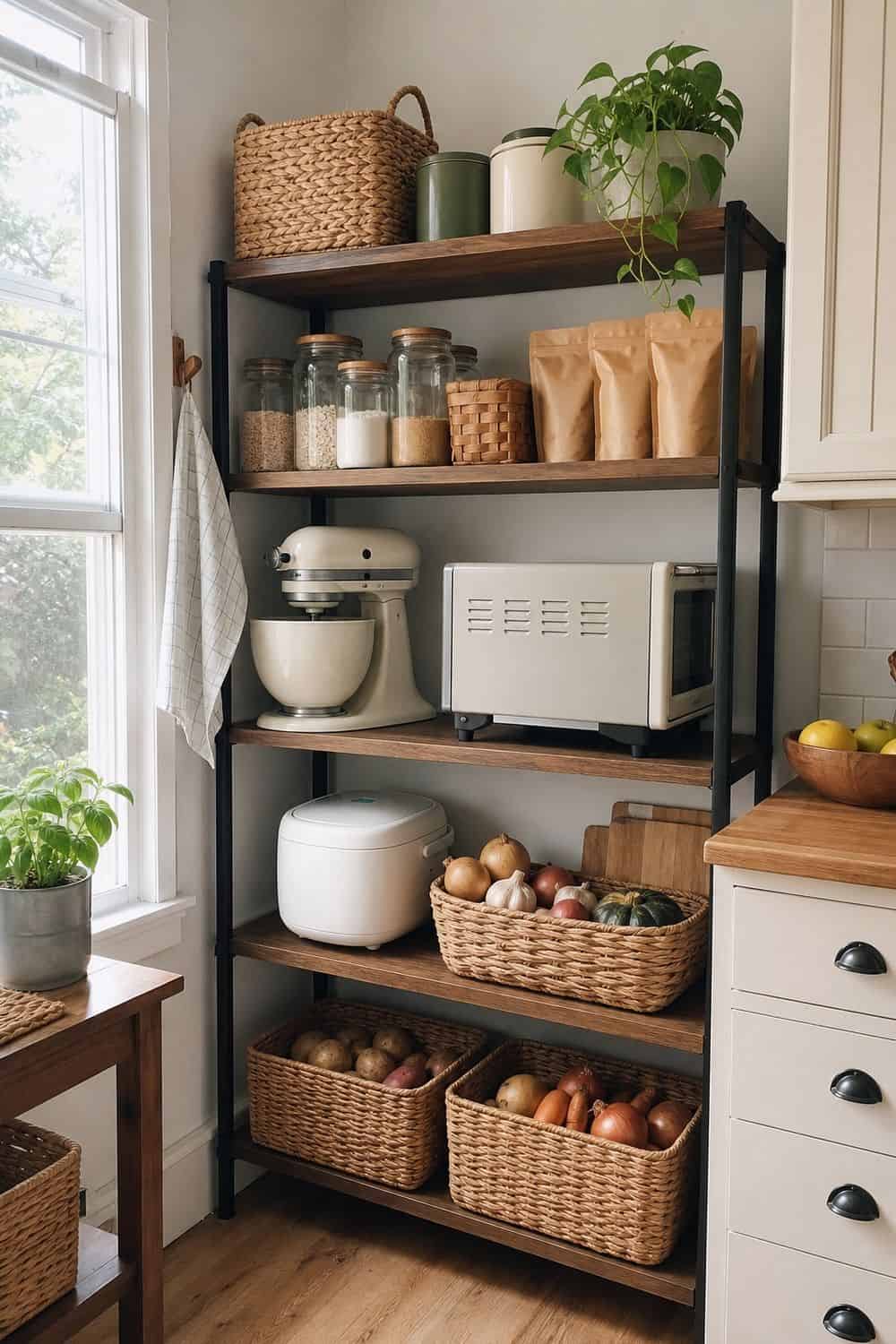
A standing shelf can turn one counter or cabinet floor into two usable levels. It works well for a microwave corner, pantry overflow, mixing bowls, cutting boards, or a small appliance with lightweight items above it. Check heat and ventilation before putting anything over a toaster oven, air fryer, or coffee maker.
Keep the top level easy to lift from. If you have to move three things before using the appliance underneath, the shelf is adding height but not real organization.
22. Add Magnetic Storage to the Fridge Side
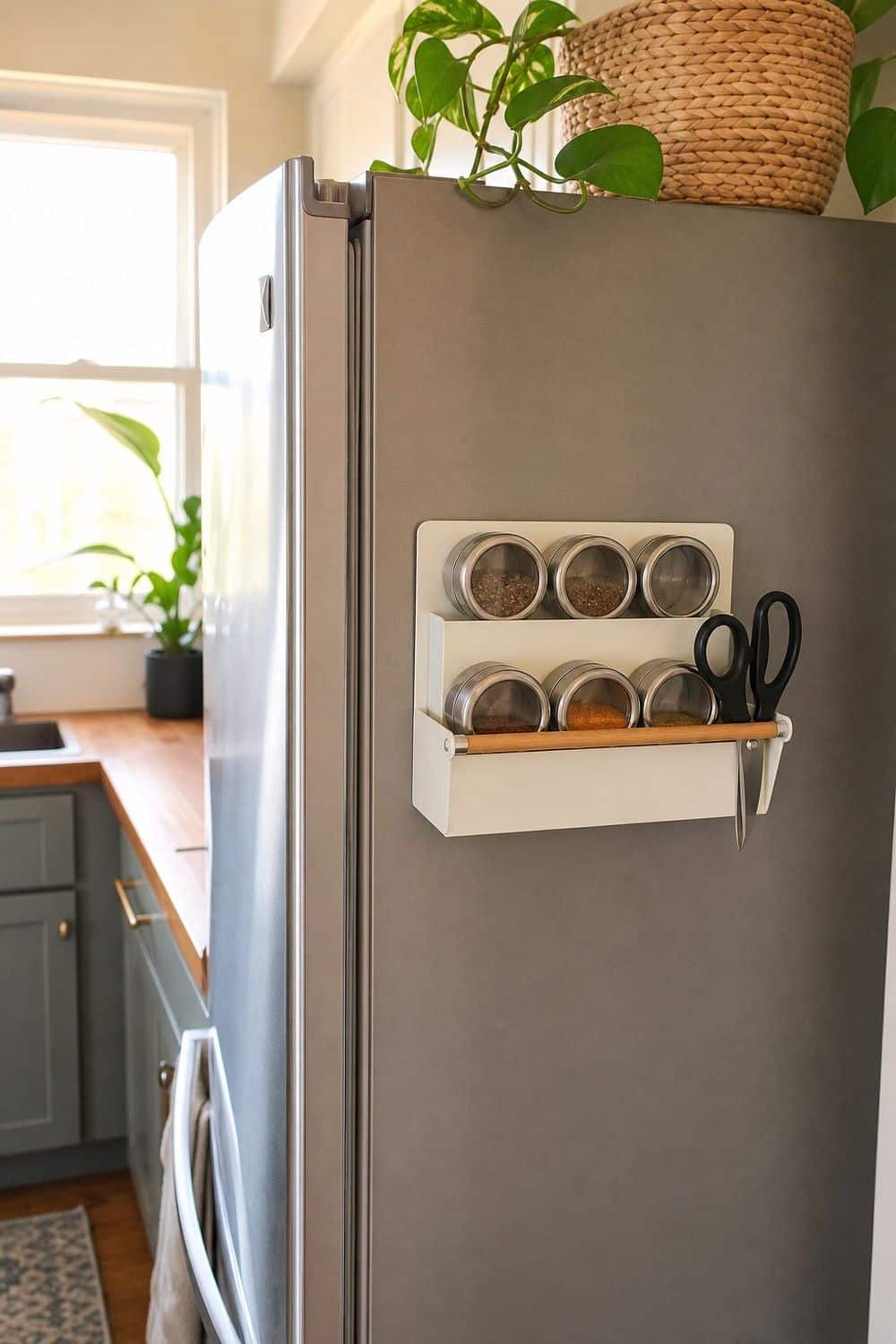
The side of the fridge can hold magnetic storage if it does not face the main walkway. Use it for a paper towel holder, small spice tins, a grocery list, oven mitts, or lightweight baskets for wraps and bags. Keep anything heavy or breakable off the side, especially if the fridge door slams or people brush past it often.
This surface looks better when it has one job. A tiny command zone or one cooking category feels organized; a wall of magnets and random papers usually makes the kitchen feel smaller.
23. Create a Compact Coffee or Tea Station
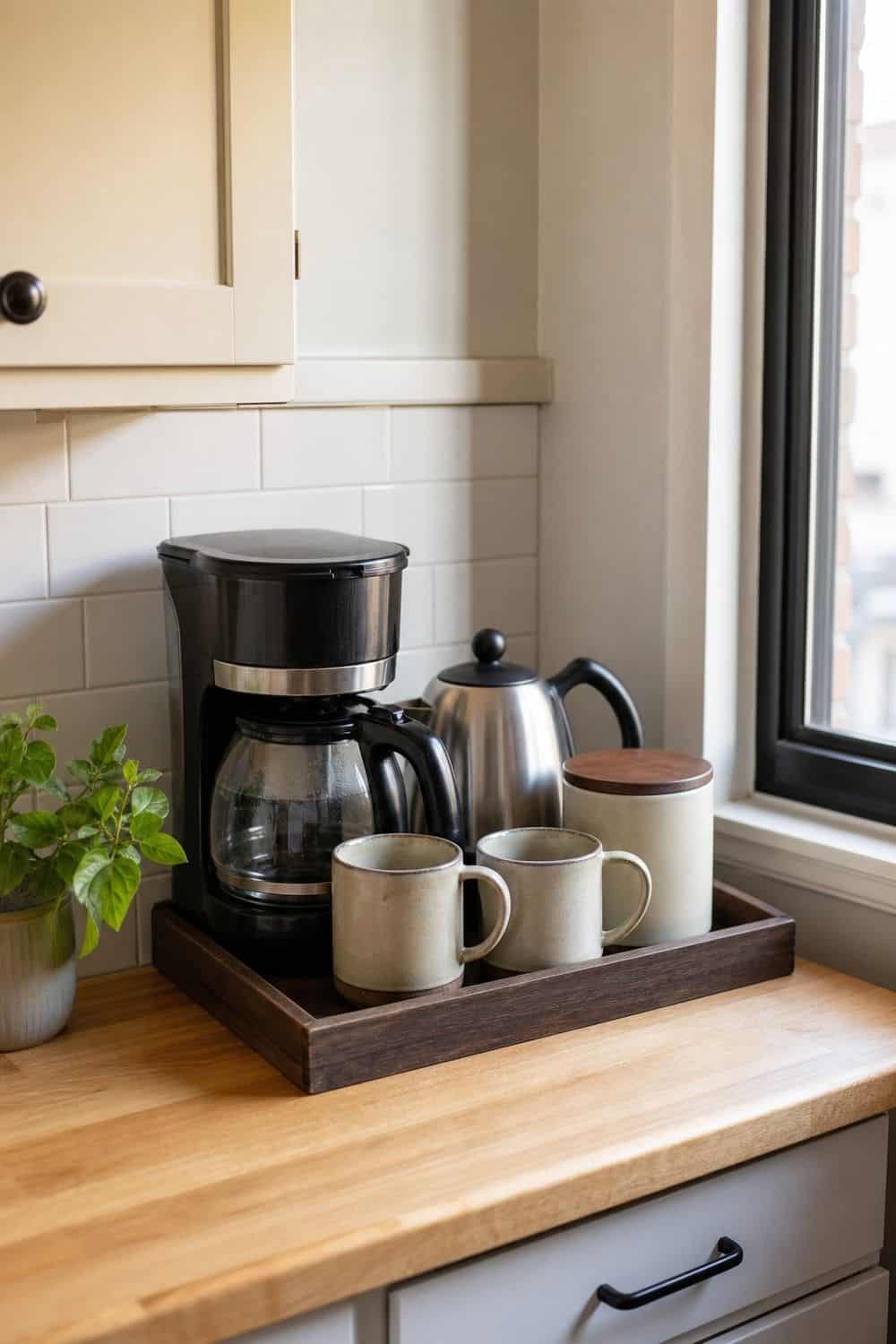
A compact coffee or tea station should gather the pieces used every day without taking over the whole counter. Keep mugs, filters, tea bags, sugar, pods, or spoons in one tray, drawer, or narrow shelf near the machine or kettle. Store refills somewhere else so the station stays light.
If the counter is tiny, choose vertical storage or a cabinet shelf instead of adding more canisters. The goal is a faster morning routine, not a cafe display that blocks prep space.
24. Add a Flat Command Center for Paper Clutter
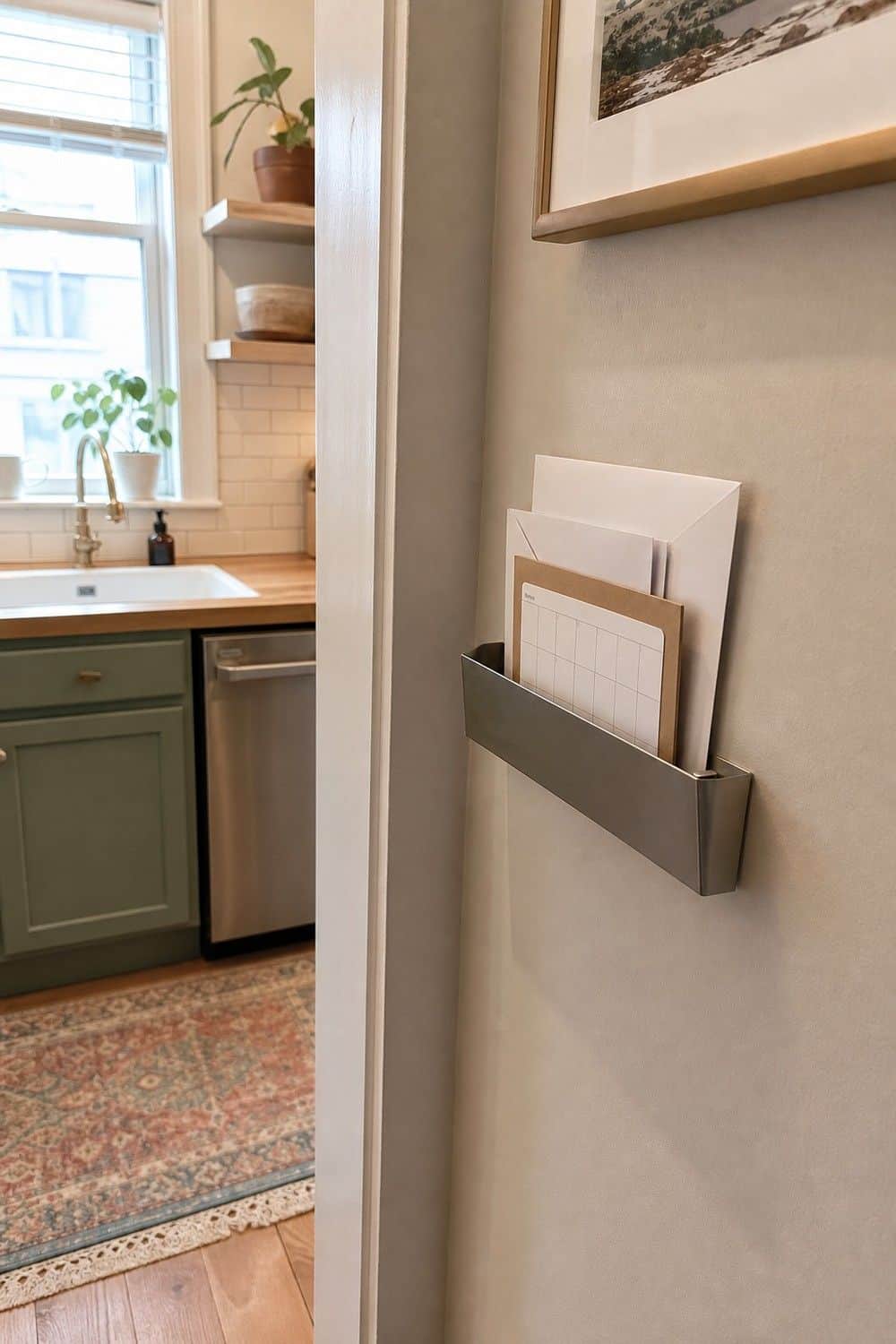
A flat command center can keep paper from landing on the best counter. Use a slim wall pocket, magnetic folder, cork strip, or clipboard for menus, school notes, coupons, and the current grocery list. Place it near the kitchen entrance or fridge side, not above the main chopping area.
Review it weekly. Paper systems fail when old receipts, expired coupons, and mystery notes stay visible forever. A small command center should capture decisions, not become a second junk drawer on the wall.
25. Do a Ten-Minute Small Kitchen Reset Nightly
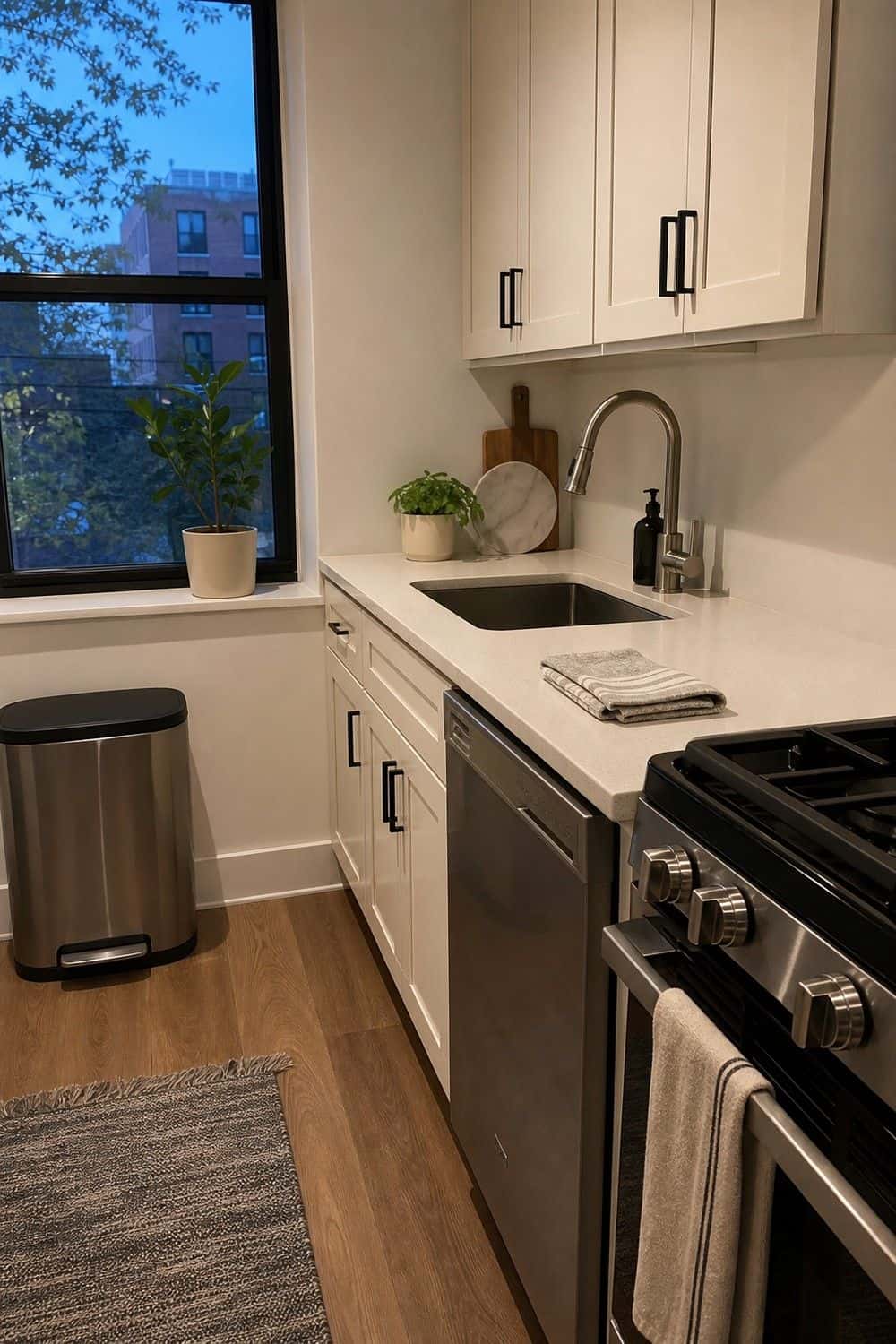
A ten-minute nightly reset keeps a small kitchen from starting the next day already crowded. Clear the prep surface, load or stack dishes, wipe the sink area, return tools to their homes, and move any food that needs attention to the front of the fridge. Keep the routine short enough to repeat even on tired nights.
Do not reorganize the whole kitchen during the reset. The goal is to remove crumbs, clutter, and obvious friction so breakfast, coffee, and the first cooking task have room to happen.
FAQs
How do I organize a very small kitchen?
Start by decluttering, clear one prep surface, organize cabinets with risers and pull-outs, use drawers well, and add vertical or freestanding storage only where needed.
What is the best storage for a small kitchen?
The best storage depends on the problem, but shelf risers, pull-out organizers, drawer dividers, vertical pan racks, clear bins, rolling carts, and freestanding pantry cabinets are often useful.
How do I keep counters clear in a small kitchen?
Store appliances by frequency, use one tray for true counter essentials, move knives off the counter, and do a short daily reset.
How do I organize a small kitchen with no pantry?
Use a freestanding pantry cabinet, slim rolling cart, clear bins on high shelves, door storage, and stackable containers for the staples you use most.
What should not be stored in a small kitchen?
Avoid storing duplicate gadgets, rarely used appliances, excess mugs, oversized bulk buys, and items that belong in another room.
Are open shelves good for small kitchens?
Open shelves can help when they are one-deep and uncluttered, but they look cluttered quickly if used for random overflow.
How do I organize small kitchen appliances?
Keep daily appliances out, store weekly appliances where reachable, move rare appliances to overflow storage, and consider weight, ventilation, cords, and cleanup.
How often should I reset a small kitchen?
Do a short counter reset daily and a weekly check for expired food, excess dishes, crowded drawers, and items that keep landing in the wrong place.
Final Thoughts
The strongest small kitchen organization ideas protect the space you actually cook in. Clear one prep surface, give daily items the best storage, use vertical and door space carefully, and move rarely used appliances out of the way.
A compact kitchen will never have endless hiding places, which can be a good thing. When every item has to earn its space, the kitchen becomes easier to reset, easier to cook in, and much less likely to fill with tools you do not use.
Last update on 2026-09-17 / Affiliate links / Images from Amazon Product Advertising API