

The best produce drawer organization system starts with humidity: use high humidity for foods that wilt, low humidity for ripening fruit that needs airflow, and keep ethylene-producing fruit away from delicate greens. Use bins, liners, labels, and an eat-first area only when they solve a real drawer problem. Check the drawers before grocery shopping so produce gets eaten before it spoils.
Crisper drawers are useful only when they have a job. If lettuce, apples, herbs, berries, cut cucumbers, and grocery bags all land together, the drawer becomes a cold hiding place instead of a freshness tool.
This guide turns produce drawer organization into a simple system: high humidity for wilt-prone vegetables, low humidity for ripening fruit, separate spots for delicate items, and a weekly reset that keeps food visible.

Top Recommended Products


You Might Also Like These Blog Posts
- Fridge Organization
- Aesthetic Fridge Ideas
- Food Container and Lid Organization
- Weekly Fridge Cleanout Routine
- Fridge Organization Bins
1. High-Humidity Drawer for Wilt-Prone Produce

Use the high-humidity drawer for produce that wilts when it dries out: lettuces, spinach, broccoli, carrots, cucumbers, herbs, and many tender vegetables. On most fridges, that means closing the vent or sliding it toward the higher-humidity setting. Keep this drawer loose enough that air can still move around bags and bins. If greens arrive in bulky grocery packaging, remove extra plastic or open the bag slightly so moisture does not turn into trapped condensation. This drawer should protect crispness, not become a damp pile where leaves disappear.
2. Low-Humidity Drawer for Ripening Fruit

The low-humidity drawer is better for ripening fruit that releases ethylene gas, like apples, pears, peaches, plums, avocados, and some melons. Opening the vent gives that gas a way out and helps the drawer stay less damp. Do not treat low humidity as a junk drawer for every loose fruit. Keep sturdy fruit in a single layer when possible, and move anything bruised or very ripe to an eat-first spot. Airflow is the whole point here, so avoid overpacking the vent area with bags.
3. Drawer Labels by Produce Behavior

Labels are most useful when they explain behavior, not just categories. Instead of only writing fruit and vegetables, try high humidity for greens and low humidity for ripening fruit, or add a small note that says keep apples away from greens. That tiny cue helps anyone unloading groceries understand why the system exists. If your drawer fronts are clear, place the label on the inside edge so it is visible without looking decorative. The goal is faster sorting after shopping, fewer mystery bags, and less accidental mixing of delicate vegetables with fruit that speeds up ripening.
4. Moisture-Protective Bin for Leafy Greens
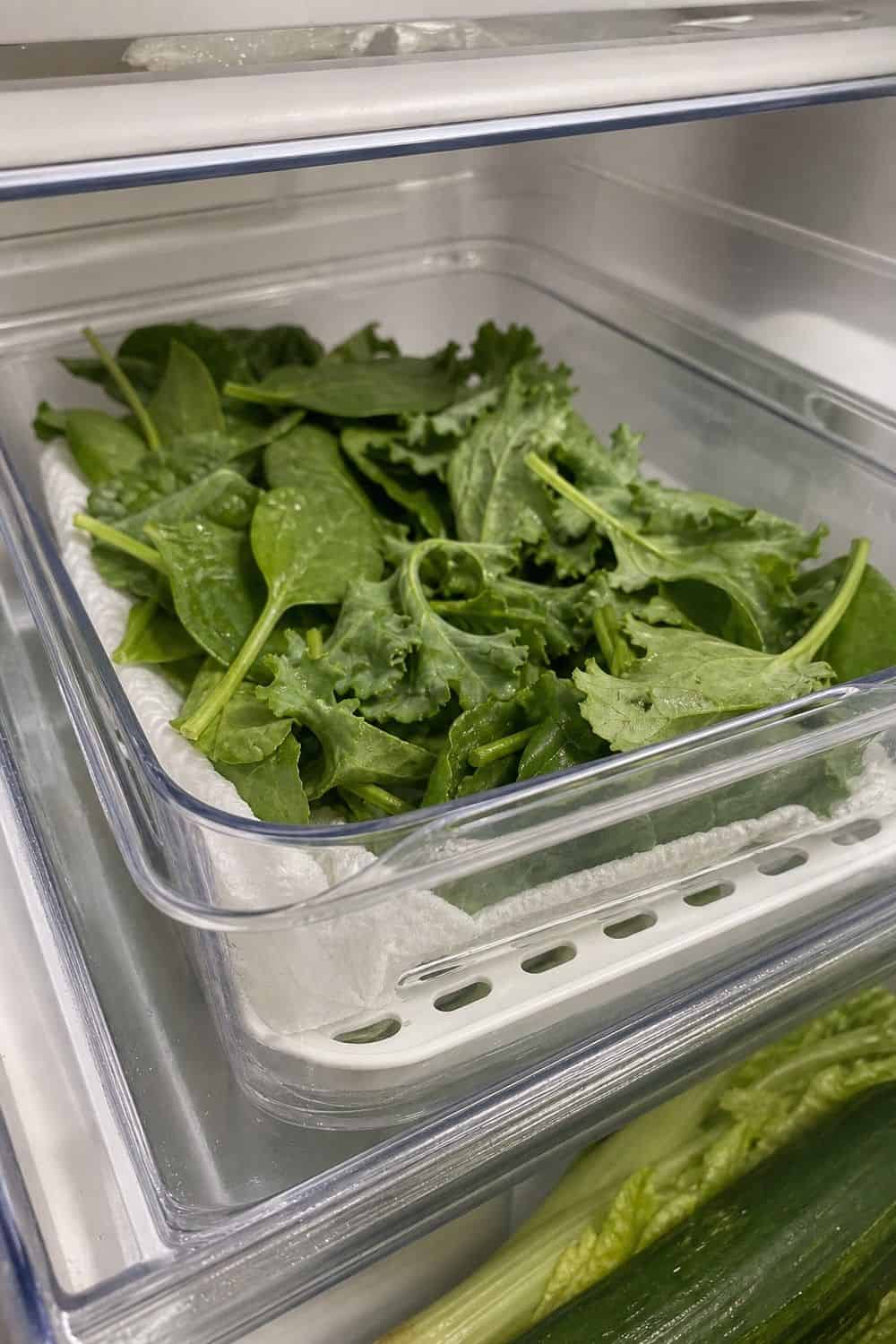
Leafy greens need protection from both drying out and getting crushed. A loose produce bin, lettuce keeper, or container with a paper towel can help spinach, romaine, kale, and salad mixes keep their texture longer. Check the bin after the first day. If you see water pooling, swap the towel or crack the lid slightly so the greens do not sit in trapped moisture. Greens should feel cool and lightly protected, not sealed into a wet packet. Size the bin for what you actually buy so leaves are not pressed flat.
5. Upright or Wrapped Herbs in the High-Humidity Drawer

Soft herbs need gentler storage than sturdy vegetables. Parsley, cilantro, dill, mint, and similar herbs often last longer when the stems are lightly hydrated in a jar or when the bundle is wrapped in a barely damp towel. If your fridge has room, place upright herbs where they will not tip over. If the drawer is a better fit, keep the bundle loose and check it every few days. Remove slimy stems right away. Basil is the common exception and often prefers the counter, especially if the fridge runs very cold.
6. Apples and Pears Away From Greens

Apples and pears can make greens, herbs, and some vegetables age faster because they release ethylene as they ripen. Give them the low-humidity drawer, a vented shelf bin, or a fruit bowl if the variety stores well at room temperature. This one separation habit can make lettuce and herbs feel less mysterious: if your greens keep wilting beside fruit, the problem may not be your container at all. It may simply be that fast-ripening fruit and delicate vegetables are living too close together.
7. Berry Airflow Without Crushing

Berries need a little air and a lot of gentleness. Before storing them, check the container and remove any soft or moldy berries so the rest of the batch has a better chance. Keep them dry unless you plan to wash and dry them carefully.
A vented berry keeper or the original clamshell can work if it is clean and not packed under heavier produce. Store berries where you can see them, preferably near the front of the drawer or shelf. They are too delicate to survive under cucumbers, apples, or a full bag of carrots.
8. Dry Washed Produce Before Storage

Washing produce ahead can make weeknight cooking easier, but wet storage is where things go sideways. Greens, grapes, herbs, and berries need to be dried well before they return to the fridge.
Use a salad spinner for leafy greens and a clean towel for more delicate items. If you are short on time, wait to wash until you are ready to eat instead of putting damp produce away. A drawer that smells fresh usually has less trapped water, fewer sealed wet bags, and fewer forgotten washed items.
9. Crisper Drawer Liners for Damp Spots

Drawer liners are helpful when your crisper tends to collect condensation, grit, herb leaves, or berry drips. They make small messes easier to lift out before the whole drawer needs a deep clean.
Choose a washable liner that lies flat and does not block the vent or make the drawer hard to slide. Check it weekly, especially under carrots, greens, and berries. A liner only helps if it gets cleaned; otherwise it becomes another damp layer sitting under the food you are trying to protect.
10. Dated Containers for Cut Produce

Cut cucumbers, lemon halves, pepper strips, washed grapes, carrot sticks, and leftover tomato need a different system from whole produce. Put them in clear containers with a date so they do not become anonymous bits at the back of the drawer.
Keep cut produce near the front or in an eat-first bin, because it usually needs to be used sooner than whole fruit and vegetables. If the container fogs, leaks, or smells off, handle it immediately. Clear, dated storage turns leftovers into lunch ingredients instead of drawer clutter.
11. Eat-First Bin for Ripening Produce
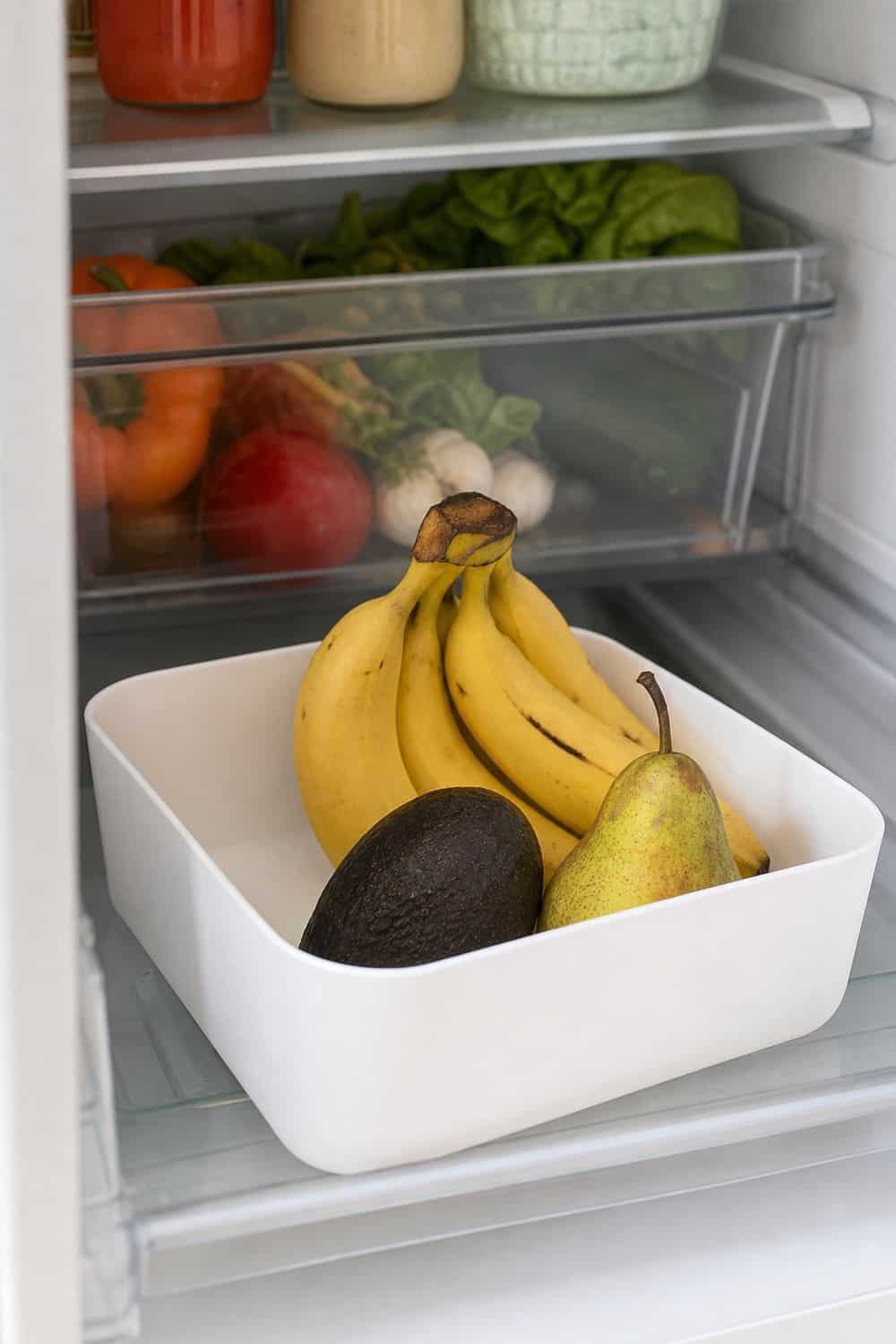
An eat-first bin is for produce that needs attention soon: ripe avocados, soft pears, berries, cut peppers, half cucumbers, herbs with a few tired stems, or greens nearing the end. It can sit in the drawer or on the shelf above.
Check this bin before making a grocery list, packing lunches, or deciding on dinner. The point is not to create another perfect category. It is to make the most fragile food visible at the moment you can still use it in smoothies, salads, omelets, sauces, or snack plates.
12. Tomatoes Outside the Drawer Until Needed
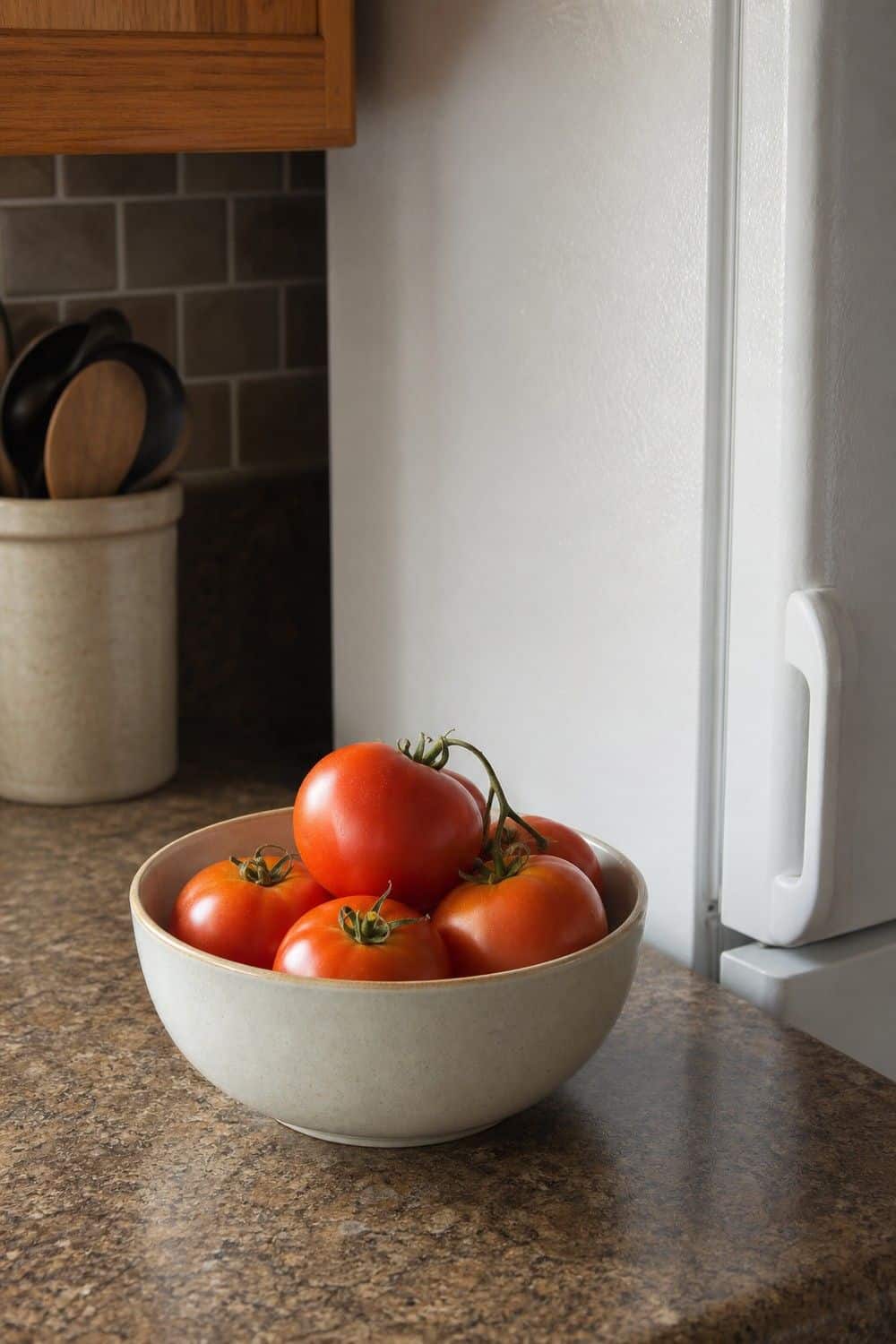
Most whole tomatoes taste better outside the refrigerator until they are very ripe or already cut. The produce drawer should not become the default place for every fresh thing just because it is cold.
If a tomato is cut, leaking, or about to spoil, move it to a small dated container and keep it away from greens. Use it quickly in sauce, toast, eggs, or salad. Leaving tomatoes out also makes room in the drawer for foods that truly need humidity control.
13. Onions, Garlic, and Potatoes Outside the Fridge

Onions, garlic, potatoes, and many sweet potatoes usually belong in cool, dark, dry storage outside the refrigerator. Keeping them out of the produce drawer frees valuable humidity-controlled space for greens, herbs, berries, carrots, cucumbers, and other foods that actually benefit from the crisper. Store onions and potatoes separately when possible, and use breathable pantry bins instead of sealed plastic bags. A produce drawer should not be a catchall for every vegetable in the house; it should handle the foods that need cold storage.
14. Heavy Produce Below Tender Produce
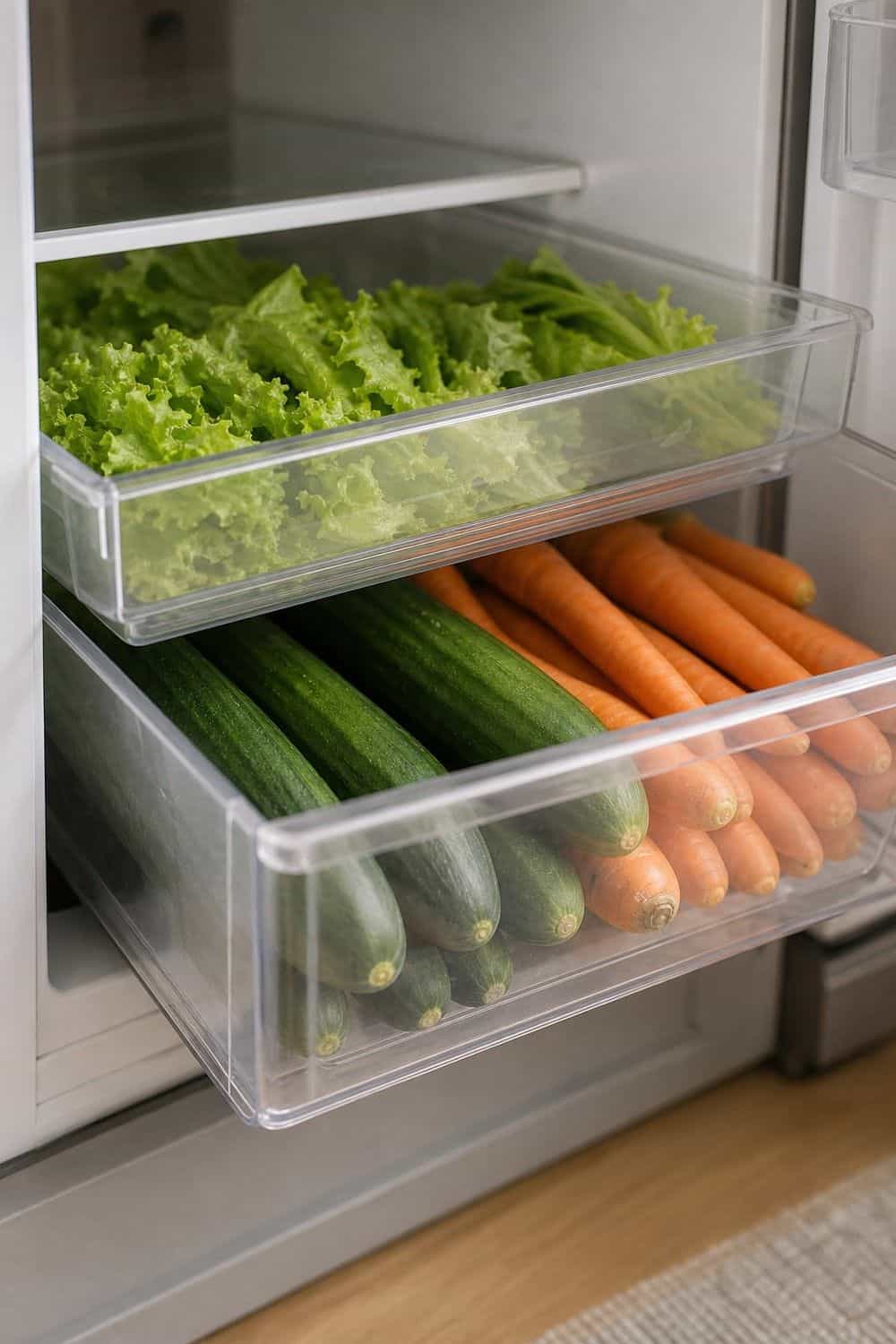
Weight matters in a produce drawer. Cabbage, large carrots, cucumbers, and squash can bruise peaches, flatten herbs, and crush lettuce if everything lands in one pile after shopping.
Put sturdy produce along the bottom or in one lane, then keep tender items in a bin, keeper, or upper layer where they will not be pressed. If your drawer is deep, a shallow bin can keep delicate items from sliding underneath heavier vegetables. The drawer should protect texture, not test how much produce can fit.
15. Breathing Room Around Drawer Vents

Crisper vents need space to work. If bags of fruit, bulky containers, or loose greens are jammed against the slider, the humidity setting becomes more like a decoration than a useful feature.
After a big grocery trip, check whether the drawer closes easily and whether the vent is still exposed. If not, move overflow to a shelf bin or plan to use the ripest produce first. A slightly less full drawer will usually keep food fresher than a perfectly stocked drawer with no airflow.
16. Narrow Bins for a Single Drawer
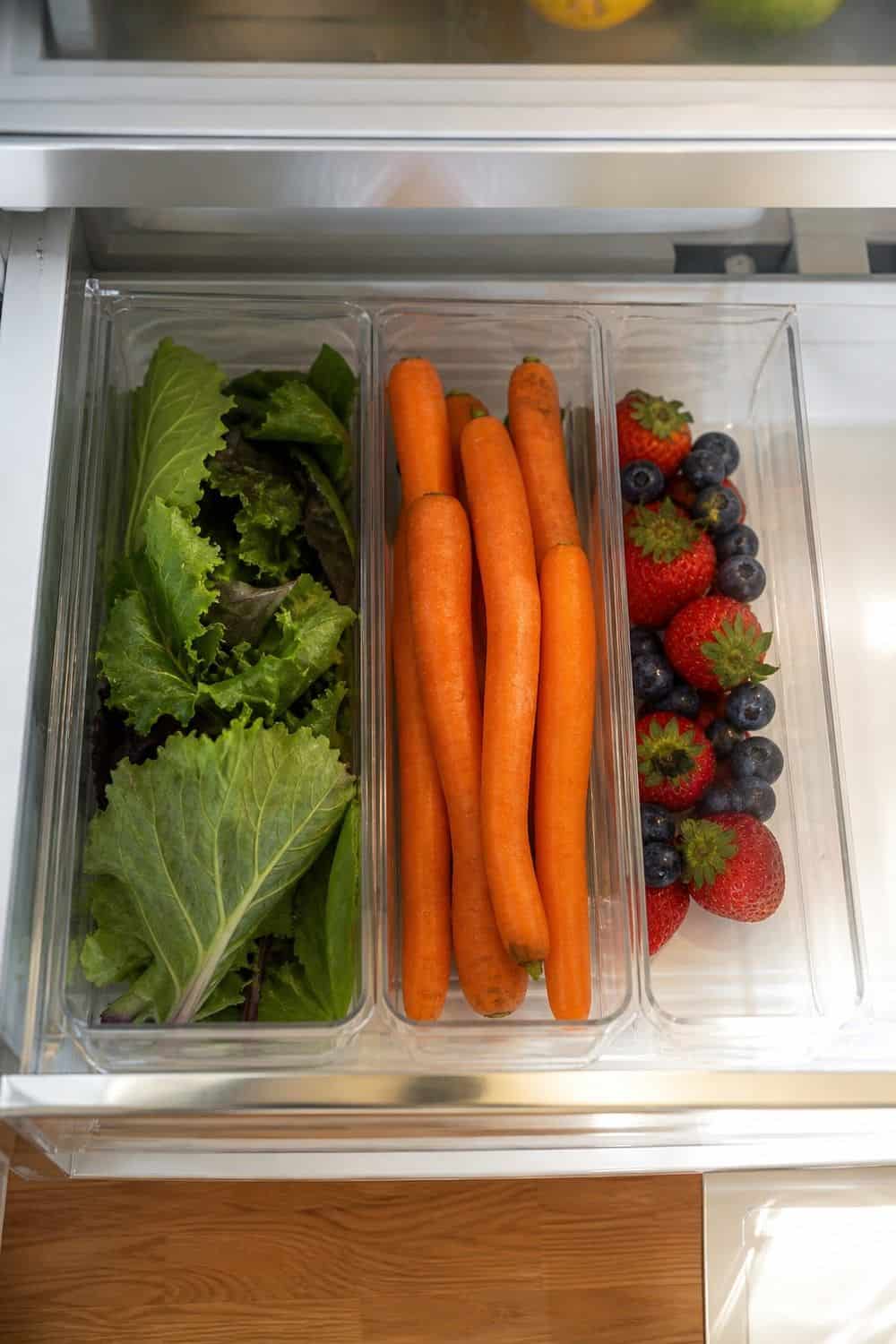
If your refrigerator has only one produce drawer, narrow bins can create mini zones without pretending you have two crispers. Use one bin for greens, one for sturdy vegetables, and one small eat-first area if there is room.
Keep ethylene-producing fruit in a separate shelf bin when the drawer is packed with greens. Choose bins that can be lifted out for cleaning and that do not block the drawer from closing. In a one-drawer fridge, visibility matters even more because everything is sharing the same cold space.
17. Fruit and Vegetable Lanes in Wide Drawers

Wide drawers tend to become mixed heaps unless you give them lanes. Put greens and herbs on one side, sturdy vegetables in the middle, and fruit or eat-first items on the other side if the humidity setting allows it. A divider, narrow bin, or even a clear visual split can make unloading groceries easier. Keep the vent or slider reachable, because a lane system should not cover the feature that controls the drawer. The best version lets you see what is fresh, what is fragile, and what needs using soon.
18. Produce Keepers When the Drawer Is Full
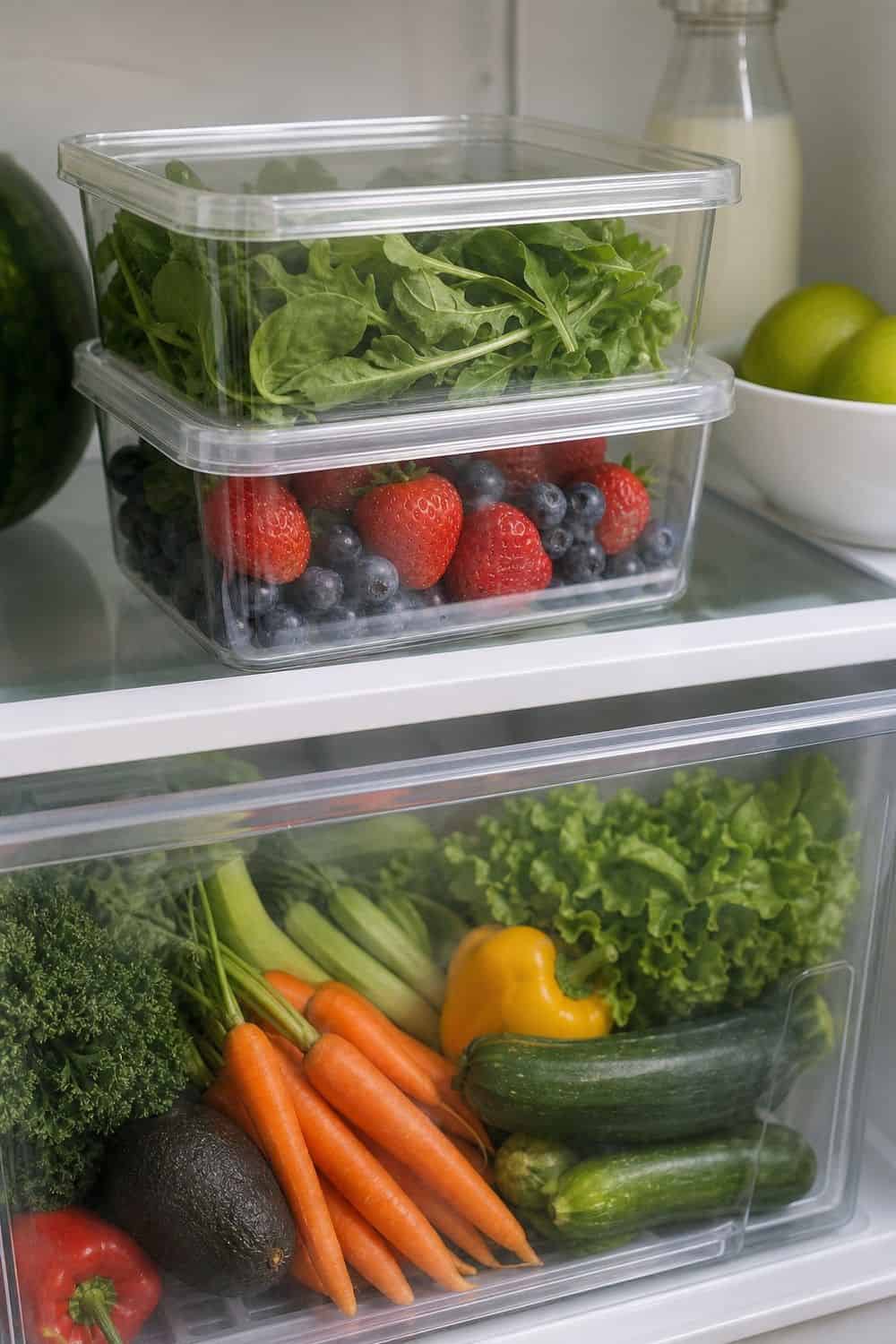
Produce keepers are useful when the drawer is full but you still need a controlled spot for berries, herbs, mushrooms, or greens. Use them for a specific item with a specific storage problem, not as a promise that everything will last longer.
Choose containers that handle airflow or moisture in a way that suits the food inside. A good keeper should also stay visible on the shelf, because hidden produce is still likely to be forgotten. If the container makes washing, drying, or checking the food harder, it is not helping.
19. Sticky Leaks Before They Spread

Berry juice, cucumber slime, wilted herbs, carrot dirt, and condensation can spread quickly in a closed drawer. When you notice a leak, remove the affected item, wipe the spot, and check anything touching it.
This is one of those tiny habits that saves a bigger fridge cleanout later. Keep a washable liner or cloth nearby if your drawers are prone to damp spots, and do not wait until the smell tells you there is a problem. Clean drawers make fresh produce easier to trust.
20. Drawer Check Before Grocery Shopping

Before writing the grocery list, open the produce drawers and see what is already there. This quick check prevents duplicate lettuce, forgotten herbs, too many apples, and berries that spoil before anyone notices. Move ripe or cut items into the next meal plan, check for soft spots, then buy around what remains instead of starting from scratch. A one-minute drawer check can save more food than another container system, because it changes the shopping habit that fills the drawer in the first place.
Produce Drawer Organization Basics to Remember
High humidity helps foods that wilt, while low humidity gives ripening fruit more airflow so ethylene can escape. If your fridge has no adjustable crisper setting, use the drawer for greens and tender vegetables, then store ethylene-producing fruit in a vented shelf bin when needed.
Not every fresh item belongs in the refrigerator. Onions, garlic, potatoes, and most whole tomatoes usually need a dry storage plan outside the produce drawer. Also keep raw meat away from produce so drawer organization does not create a food-safety problem.
Frequently Asked Questions
How do you organize produce drawers?
Assign one drawer to high-humidity greens and vegetables, one drawer to low-humidity ripening fruit, then use bins, labels, liners, and an eat-first area to prevent forgotten produce.
What goes in a high-humidity produce drawer?
Leafy greens, herbs, broccoli, carrots, cucumbers, and vegetables that wilt or dry out usually belong in a high-humidity drawer with the vent closed or mostly closed.
What goes in a low-humidity produce drawer?
Apples, pears, peaches, plums, avocados, melons, and similar ripening fruit usually belong in a low-humidity drawer where airflow can help ethylene escape.
Should fruit and vegetables be stored in separate crisper drawers?
Yes, separation is usually best because some fruits release ethylene gas that can make sensitive vegetables, greens, and herbs spoil faster.
What if my refrigerator only has one produce drawer?
Use the drawer for greens and high-humidity vegetables, then keep ethylene-producing fruit in a vented bin or open area on a shelf when the drawer gets crowded.
Should I wash produce before putting it in the drawer?
You can wash some produce ahead, but it must be dried well before storage. Excess moisture can lead to slime, mold, and limp greens.
What should not go in a produce drawer?
Onions, garlic, potatoes, and most whole tomatoes usually store better outside the refrigerator. Raw meat should also stay away from produce drawers.
How often should you clean produce drawers?
Wipe small leaks immediately and check drawers before every grocery trip. Do a deeper clean whenever liners, bins, or drawer corners look dirty.
Final Thoughts on Produce Drawer Organization
Good produce drawer organization starts with the crisper settings, but it succeeds because of the daily habits around them. Use high humidity for wilt-prone vegetables, low humidity for ripening fruit, and separate ethylene producers from sensitive greens.
Keep the drawer visible, lightly divided, and easy to reset before grocery shopping. When the produce drawer helps you see what needs eating, it becomes one of the simplest ways to waste less food.
Last update on 2026-10-04 / Affiliate links / Images from Amazon Product Advertising API
