The best quiet luxury tablescape ideas use flax linen, cream stoneware, slim glassware, low flowers, unscented candles, warm metal, and useful serving pieces in a calm, restrained way. Keep the centerpiece low, limit shine, choose warm neutral colors, and leave open space for bread, water, serving utensils, and the main platter so the table feels refined without becoming stiff.
An understated dinner table does not need a dramatic centerpiece or a perfect set of formal china. Quiet luxury is softer than that: better textures, fewer pieces, warm neutrals, candlelight, and useful details that make guests feel considered.
The ideas below focus on materials, scale, and dinner flow. Each choice should make the table feel calmer and more layered while still leaving room for water, bread, salt, serving platters, glasses, and real conversation.
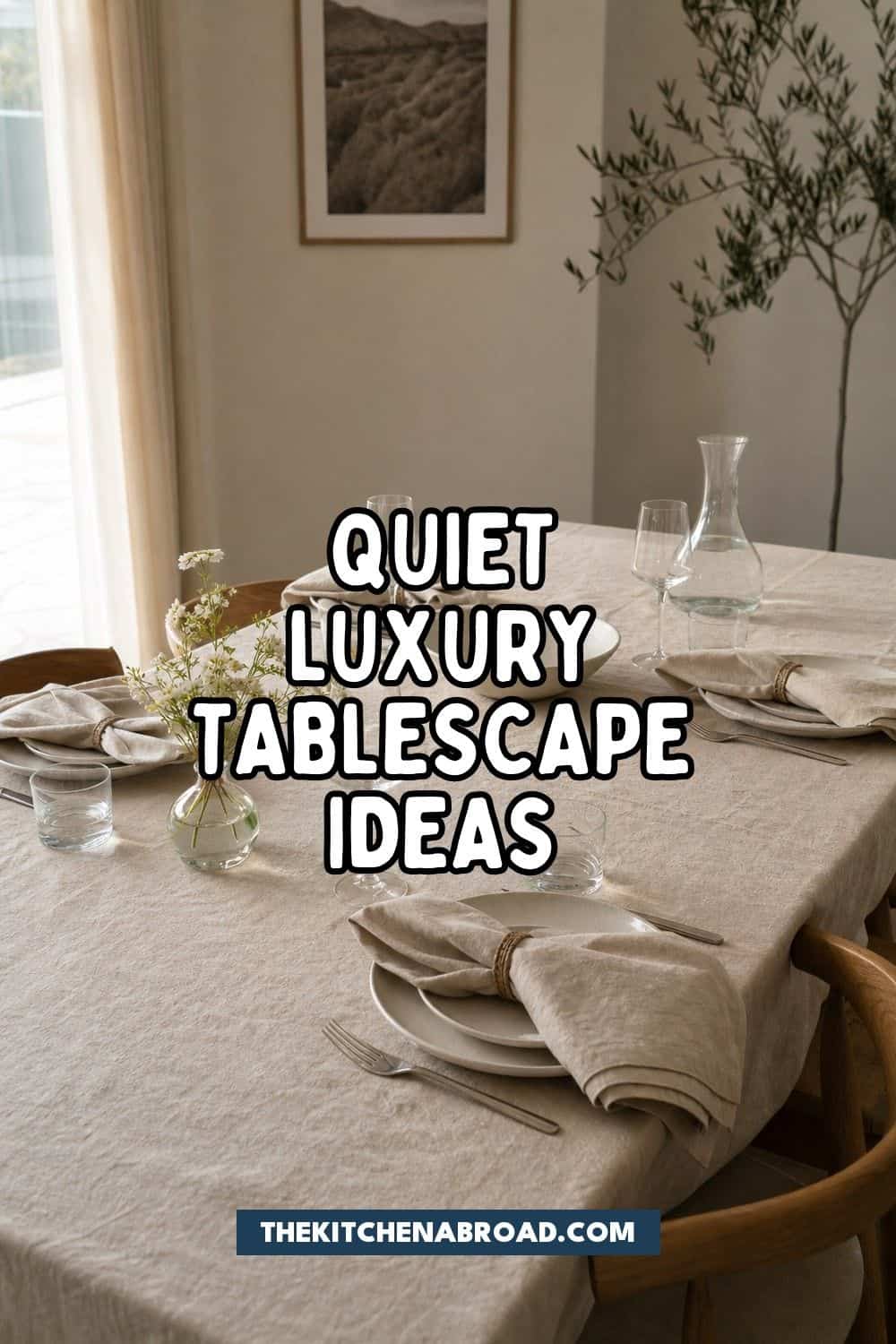
1. Anchor the Table With Flax Linen

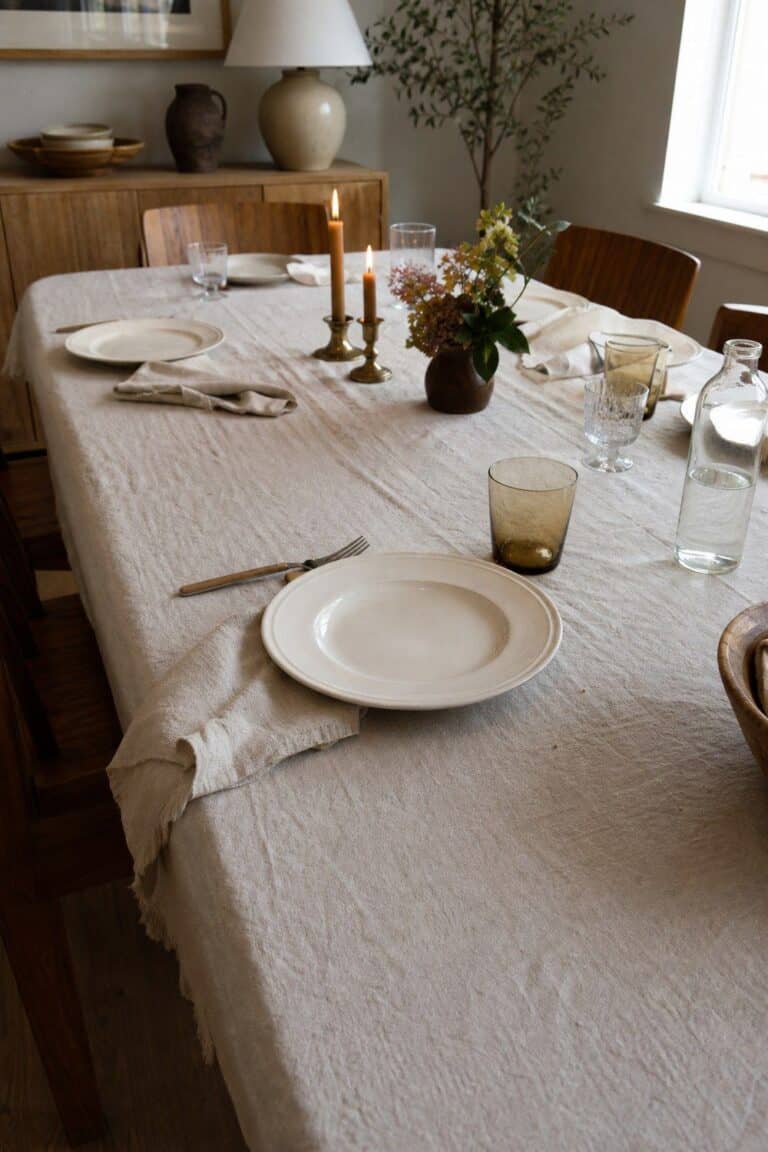
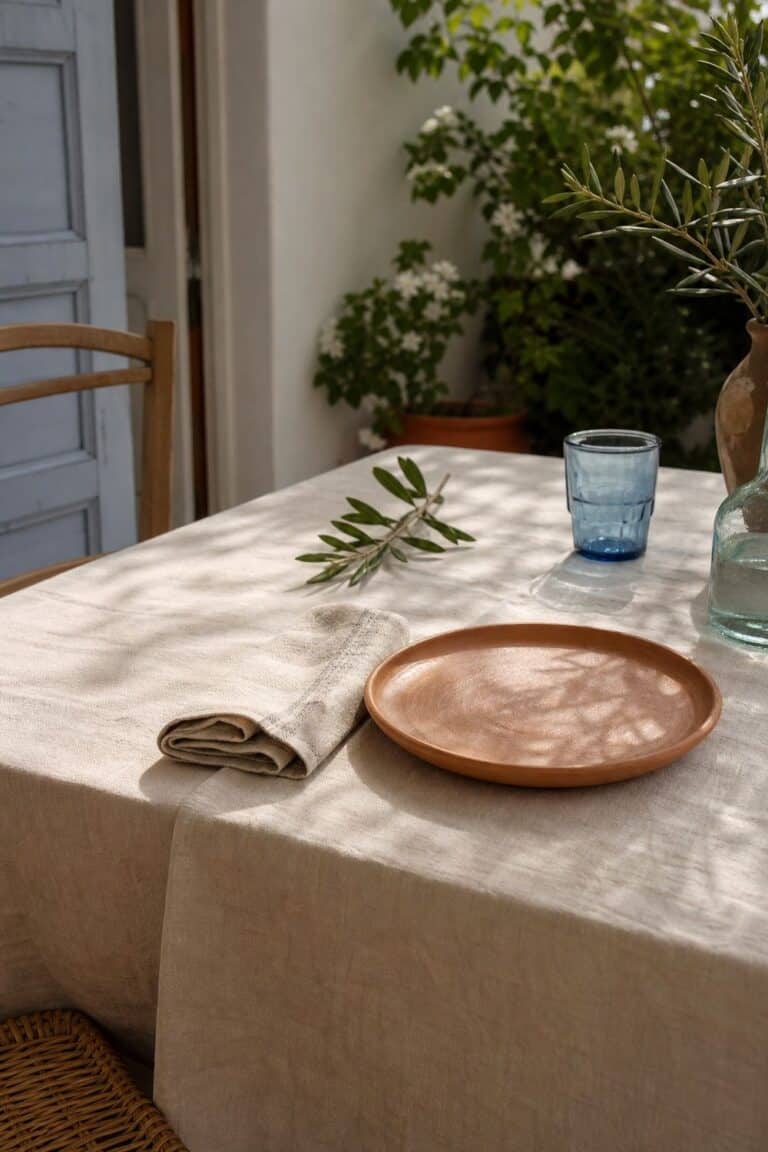
Flax linen gives the table its quiet base before any plates or flowers arrive. Choose flax, oatmeal, warm white, stone, or soft taupe, and let the cloth fall with a little movement instead of pressing every wrinkle out of it.
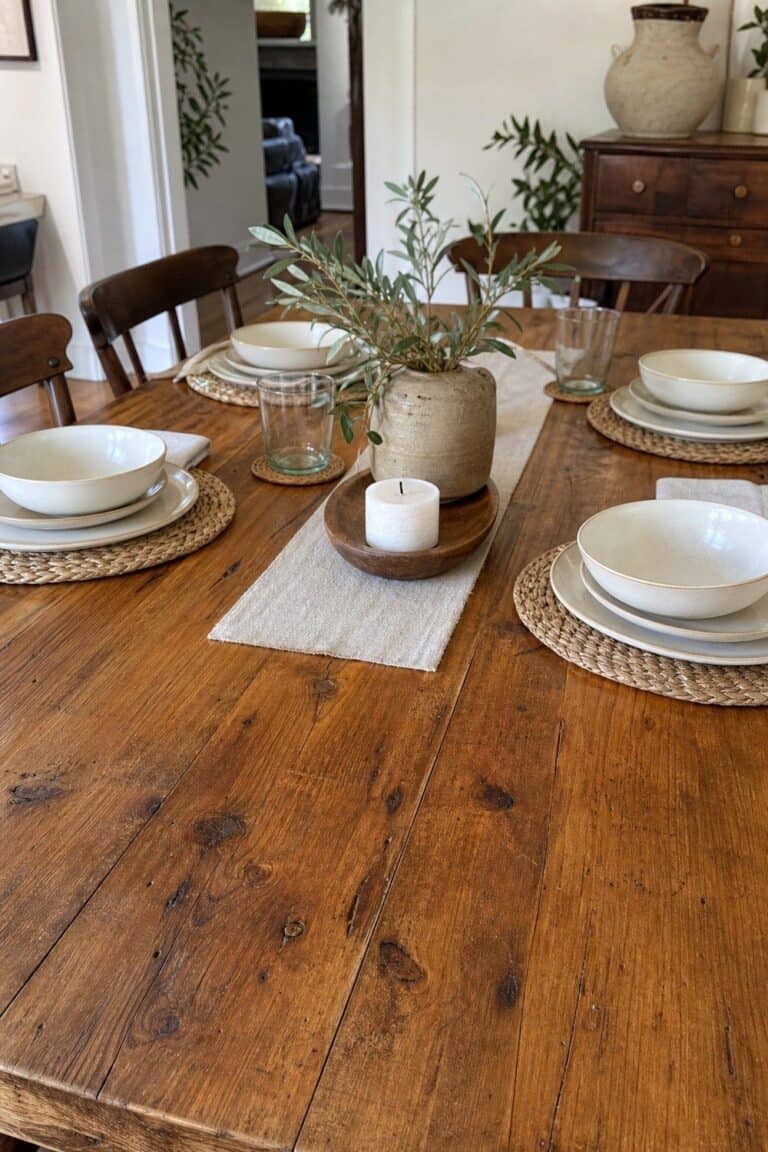
The linen should feel relaxed but cared for. If a full tablecloth hides a wood table you love, use a runner instead and let the grain show at the edges.
Quiet luxury starts with texture that feels touchable, not with something glossy or stiff. A soft linen foundation makes even plain plates and clear glasses look more considered.
2. Layer Tonal Linen Napkins
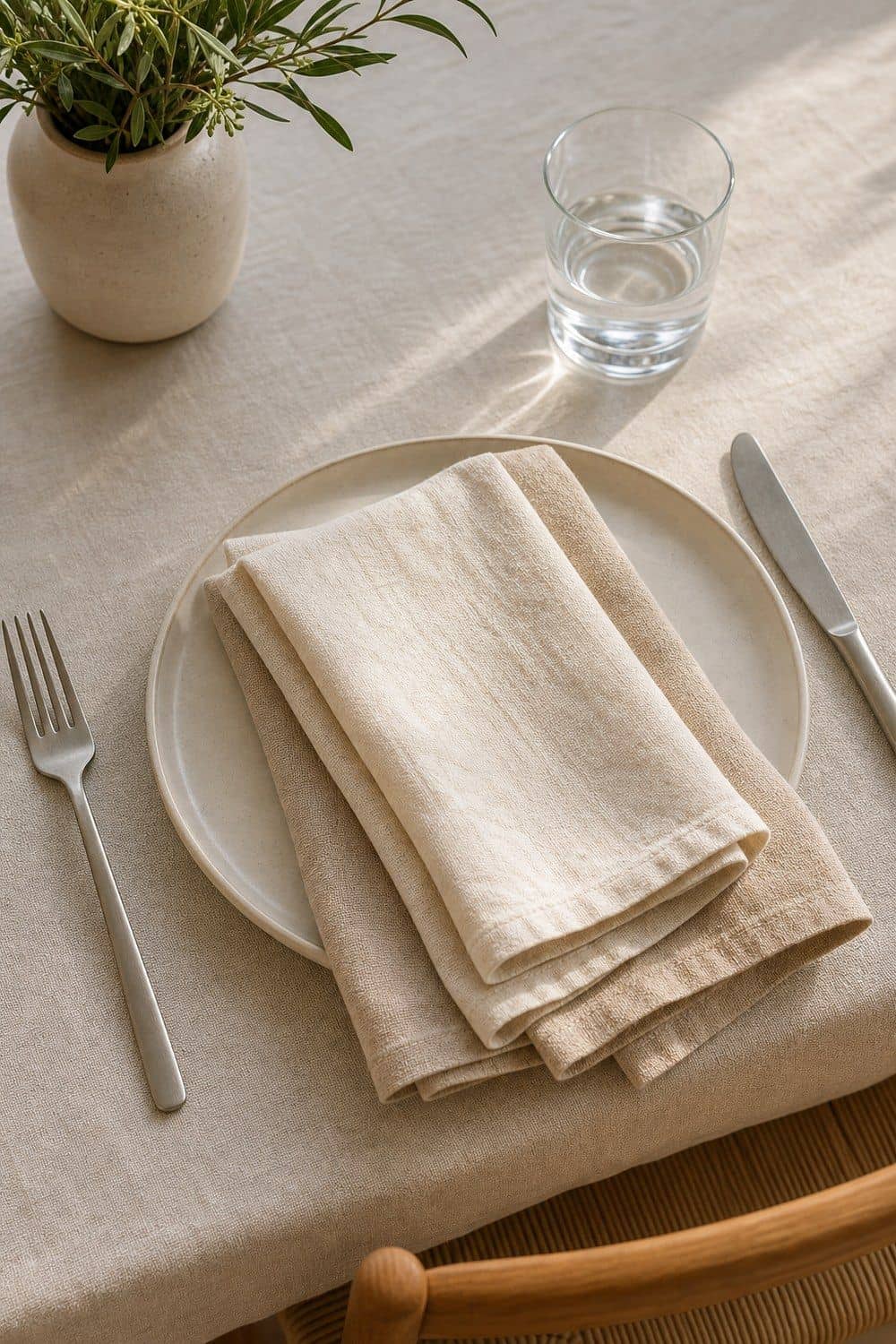
Napkins are the easiest place to add depth without adding color noise. Choose linen that sits close to the tablecloth but not exactly the same: ivory over flax, mushroom over warm white, or stone over cream.
Keep the fold loose and low. A rectangle under the fork, a soft fold over the plate, or a casual knot beside the setting feels more natural than complicated napkin shapes that guests have to dismantle before dinner. A slightly different tone keeps the setting layered without making the table look matched by a showroom.
3. Set Cream Stoneware as the Plate Base

Cream stoneware gives the table weight without making it feel formal. A matte finish, soft rim, or slightly handmade edge pairs beautifully with linen because it looks collected and calm rather than shiny and showroom-perfect.
Use the dinner plate as the grounding layer and let the food bring most of the color. Cream plates are forgiving with roasted vegetables, pasta, fish, salads, bread, and desserts, so the table stays understated even when the meal is generous. If the edges are softly irregular, even better; that small imperfection keeps the setting human.
4. Add a Low-Contrast Salad Plate

A salad plate in taupe, sand, mushroom, ivory, or warm gray gives the setting a second layer without turning the table busy. The contrast should be visible up close, then almost melt into the full table from a few steps away. This is a good place for a soft glaze, faint rim, or gentle handmade shape, but skip bold pattern if the rest of the table is already carrying linen, candles, and flowers. If the dinner plate is plain, this smaller layer can carry the quiet personality of the setting.
5. Choose Slim Wine Glasses

Slim wine glasses bring a little lift to the table without adding ornament. Look for clear glass, a balanced stem, and a bowl that feels fine enough for dinner but not so delicate that everyone is afraid to touch it.
You do not need a different glass for every drink. One good wine glass beside one water glass often looks more confident than a crowded lineup, especially when the table still needs room for bread, candles, and serving dishes. The silhouette should feel light, not fragile.
6. Use Low Clear Water Glasses

Low water glasses keep the setting relaxed and easy to use. They are less formal than tall goblets, easier to refill from a carafe, and visually quieter when every place setting already has plates, flatware, linen, and wine glasses.
Clear glass is the safest choice for this style because it lets the table breathe. If you want a little color, keep it soft: smoke, pale amber, or faint green can work.
The water glass should support the palette rather than announce itself. Set it where the guest can reach it comfortably without crowding the wine glass.
7. Put Water in a Glass Carafe
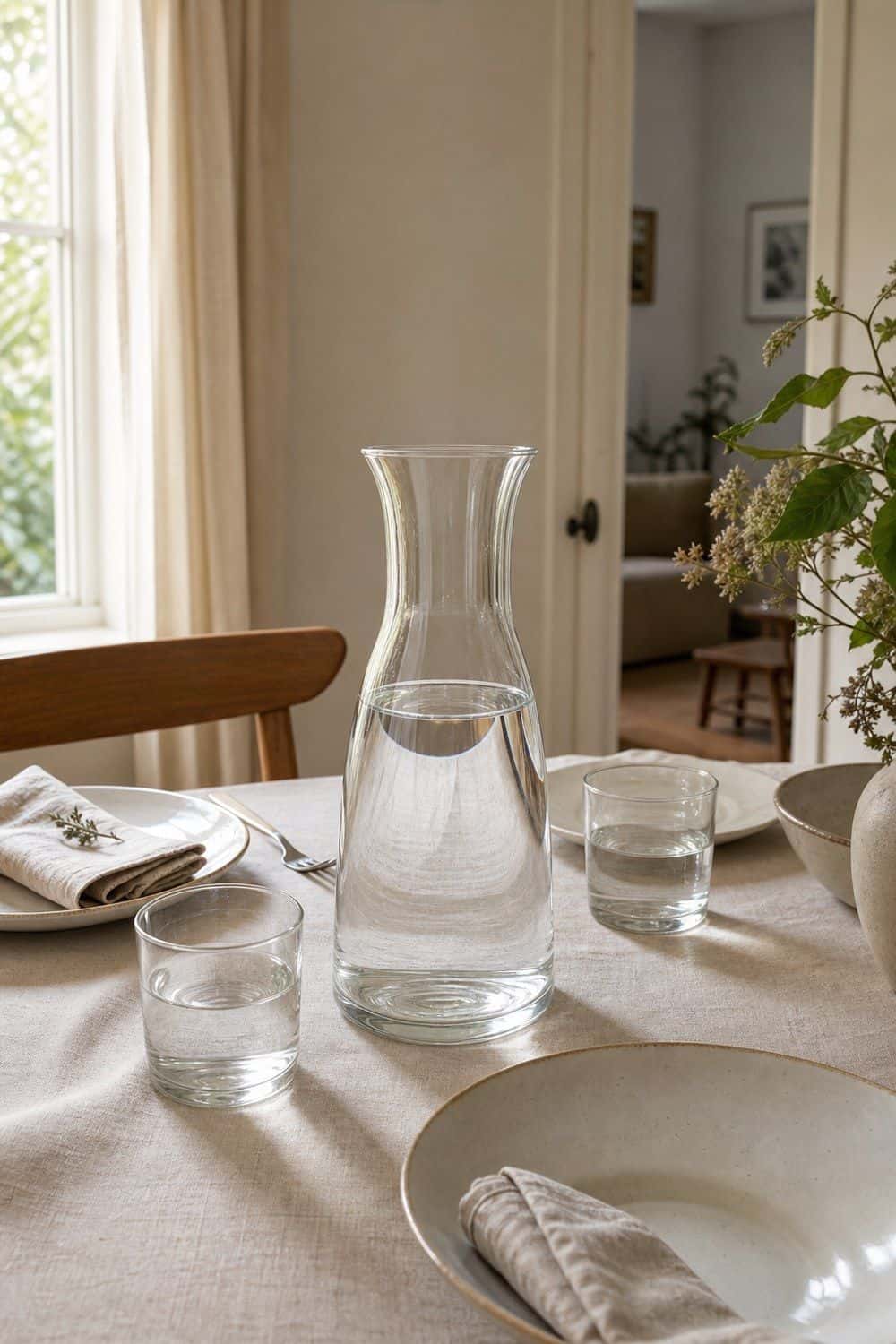
A glass carafe is one of those useful details that quietly changes the whole dinner. It removes branded bottles from the table and lets guests refill their own water without waiting for the host to notice empty glasses. Use one carafe for a small table and two for a longer one, then place them near the ends or between settings where they can be reached without crossing over candles. A narrow neck is usually easiest to pour from, while a wider base feels stable near candles and plates.
8. Keep Flowers in Low Bud Vases
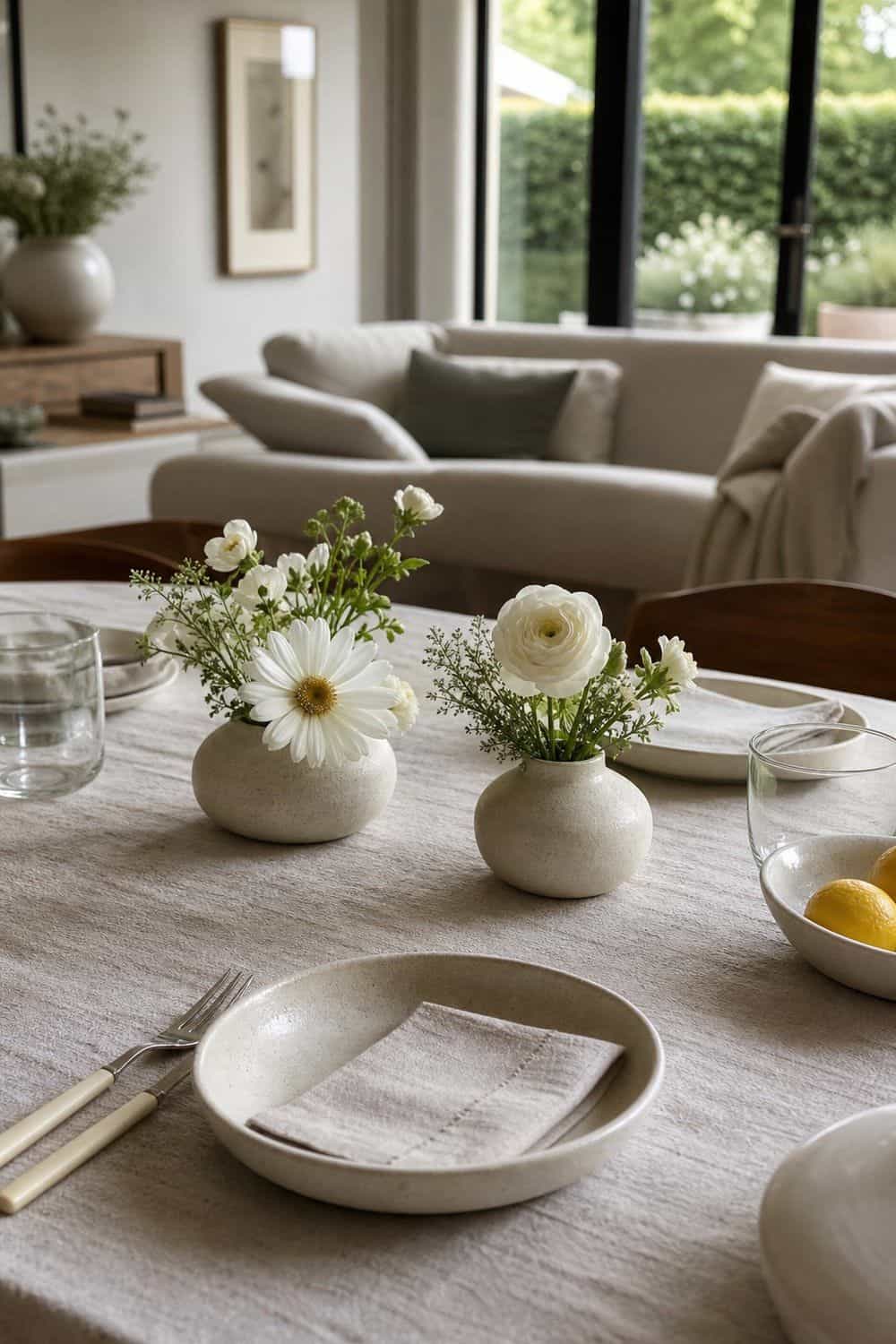
Low bud vases are better than one tall arrangement when the mood is understated. They keep sight lines open, let conversation move across the table, and make a few stems feel special instead of asking flowers to carry the whole room.
Use white flowers, soft greenery, branches, pale blush stems, or a single sculptural bloom in each vase. Leave space between vases so plates and glasses can still move naturally. The flowers should soften the meal, not become the centerpiece everyone has to talk around.
9. Use One Shallow Center Bowl
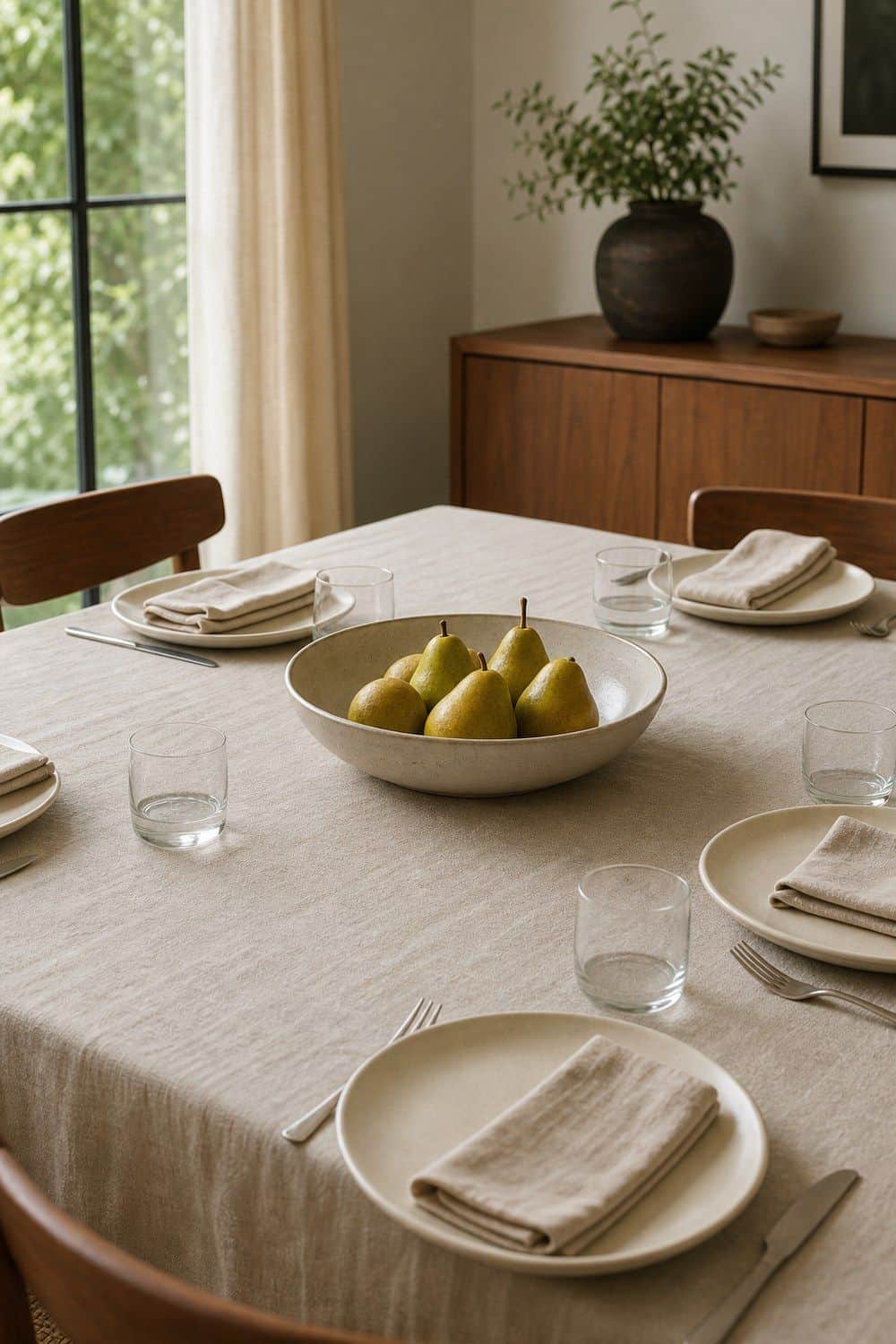
A shallow bowl adds shape without blocking the table. Fill it with pears, figs, walnuts, lemons, artichokes, or nothing at all if the texture of the bowl is enough. Ceramic, stone, wood, or marble all work when the profile stays low.
Keep the bowl centered only if it does not interrupt the meal. On a smaller table, slide it slightly off center or move it to a sideboard once platters arrive.
The point is quiet weight, not a decorative obstacle course. A low bowl should make the center feel grounded while still leaving room for glasses and serving pieces.
10. Add Ivory Taper Candles

Ivory tapers give dinner light without introducing a strong color story. They feel softer than bright white candles and calmer than colored tapers, especially beside cream plates, linen napkins, aged brass, and clear glass. Choose unscented candles near food, then space them with enough room for serving bowls to land between the holders. A few steady flames can do more than a crowded row. Keep the holders steady and check the sight line from a seated chair before guests sit down.
11. Choose Aged Brass Candle Holders
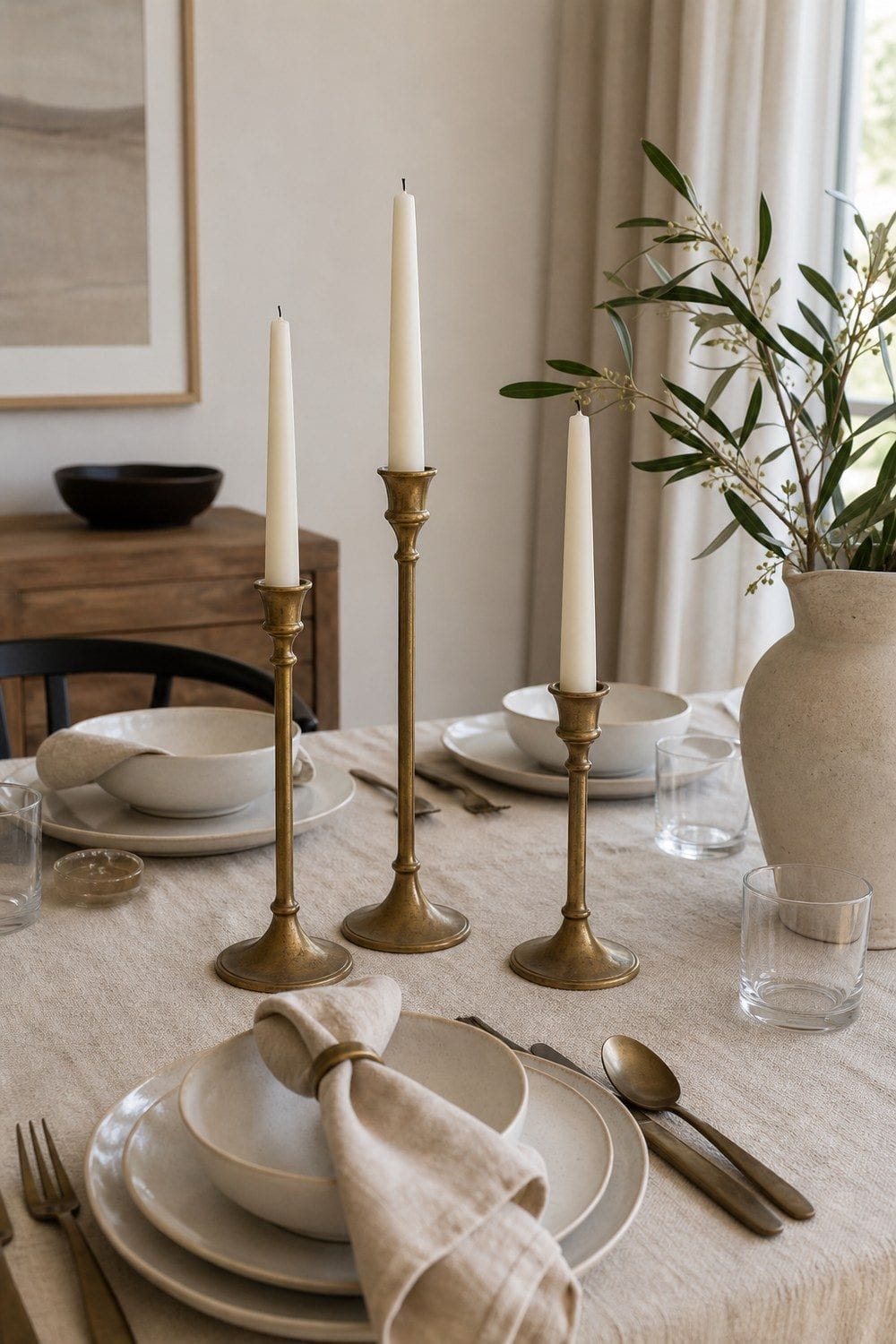
Aged brass adds warmth, but the finish matters. Look for brushed, antique, or softly worn metal instead of a high-shine gold that flashes every time someone moves.
The holders should feel like a quiet glow, not jewelry for the table. Use fewer than you think you need, especially if the glassware and flatware already catch light.
A pair or small staggered group can frame the center beautifully, while a crowded row starts to feel formal and fussy. Let the candlelight do the work.
12. Use Matte Stainless Flatware
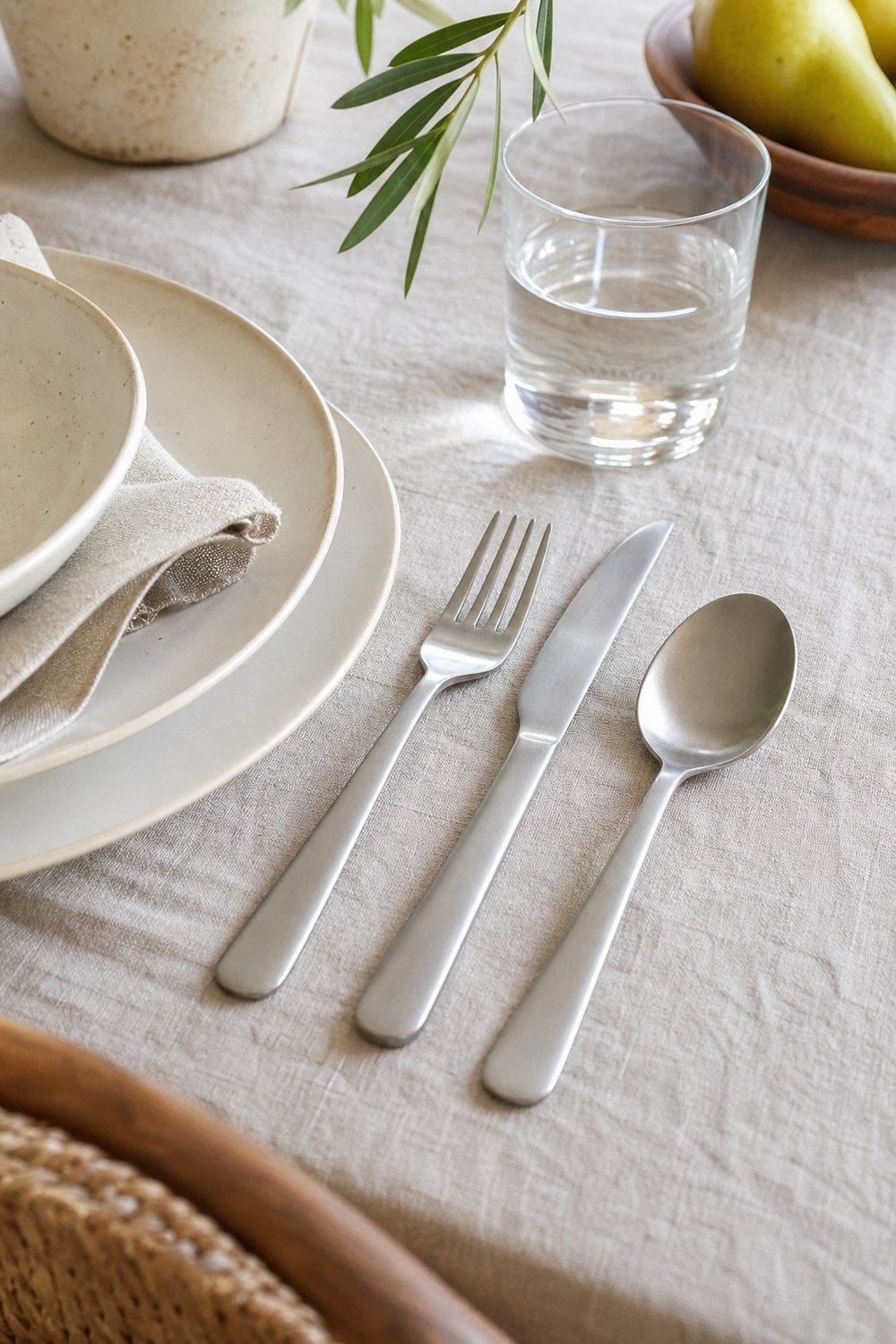
Matte stainless flatware is calm, modern, and easy to use across seasons. It feels less showy than bright gold and less formal than ornate silver, which makes it a good fit for a dinner that wants to feel refined but not stiff.
Choose pieces with comfortable weight and clean lines. Quiet luxury is not only about how the table photographs; it is also about how the fork feels in the hand once everyone stops admiring the setting and starts eating.
13. Add a Small Salt Cellar

A small salt cellar is a lovely tablescape detail because it is useful first. Place it near bread, butter, or the main platter with a tiny spoon or pinch-friendly opening so guests can finish their own plate without asking. Marble, ceramic, stone, glass, or wood can all work, but keep the piece small enough that it does not become another centerpiece. It is a small invitation for guests to season comfortably, which feels quietly generous at dinner. Keep it close enough that guests can reach it without leaning over candlelight.
14. Use a Linen Bread Basket

Bread brings warmth to an understated table, and a linen-lined basket keeps it from feeling like an afterthought. Use it for rolls, sliced sourdough, focaccia, or warm biscuits, then tuck the cloth lightly around the edges.
Keep the basket near butter, olive oil, or salt so the bread service makes sense. This is where quiet luxury feels hospitable: nothing is loud, but the table quietly gives people what they need without sending anyone back to the kitchen. A soft napkin also keeps crumbs contained, which helps the table stay composed between courses.
15. Serve Main Dishes on One Stone Platter
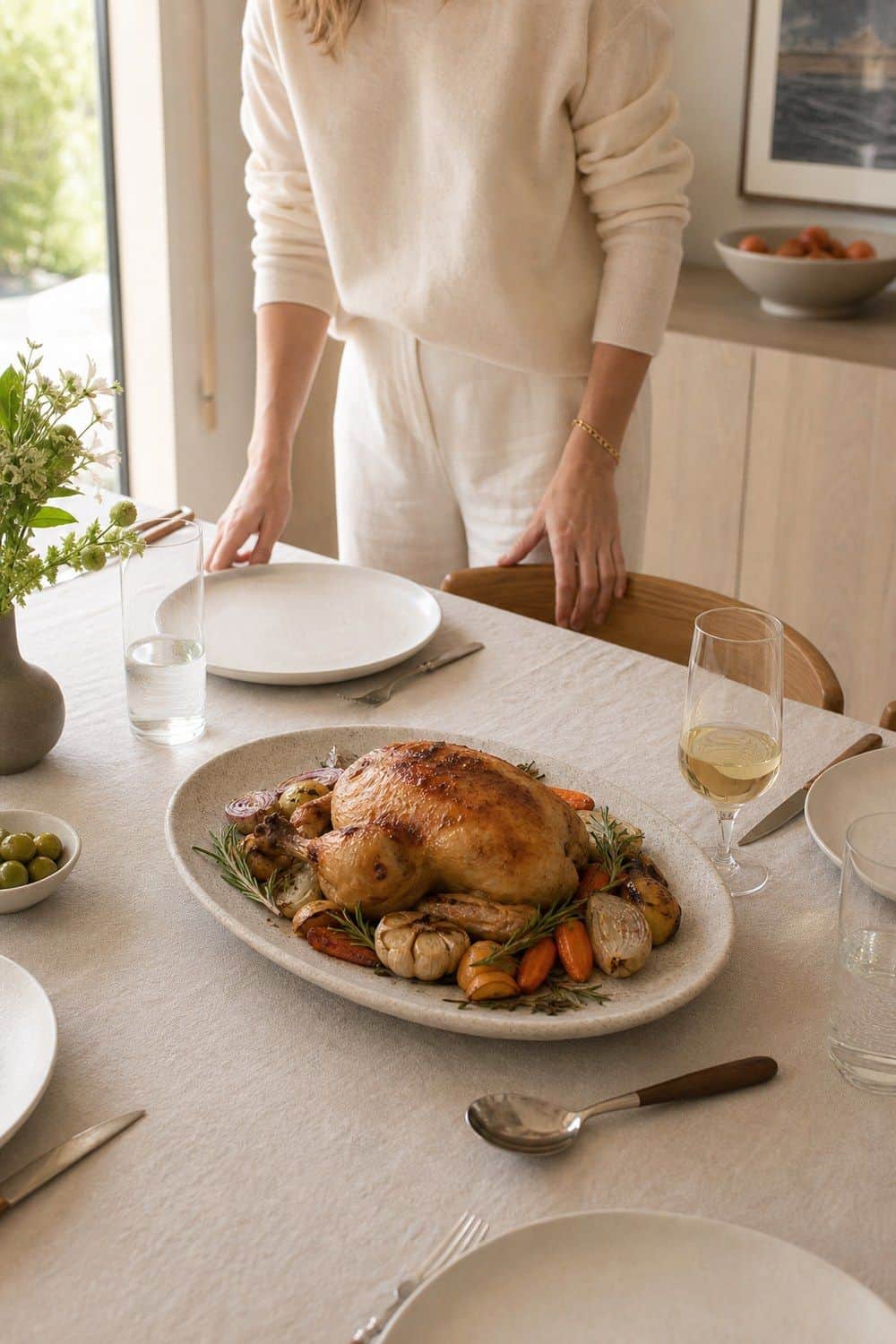
One generous stone platter often looks calmer than several small serving dishes competing for attention. Use it for roast chicken, fish, vegetables, pasta, sliced steak, or a composed salad, and give the food enough room to look abundant. The platter should feel weighty and low, with enough empty rim that serving does not turn messy the moment the dish reaches the table. Set it down once while styling the table so you know exactly where it will land later. A calm platter lets the meal be the generous part of the table.
16. Use a Wooden Board as a Low Riser

A wooden board can lift bread, cheese, a small bowl, or a starter without creating a tall centerpiece. Walnut, oak, or olive wood adds natural depth to a neutral table and keeps the setting from feeling too pale.
Use the board as a low riser, not a giant grazing board that swallows the center. It should add one grounded layer while still leaving space for plates, glasses, candles, and passing dishes. If it holds food, choose a board that can be wiped easily and does not wobble under a knife.
17. Add a Small Butter Dish
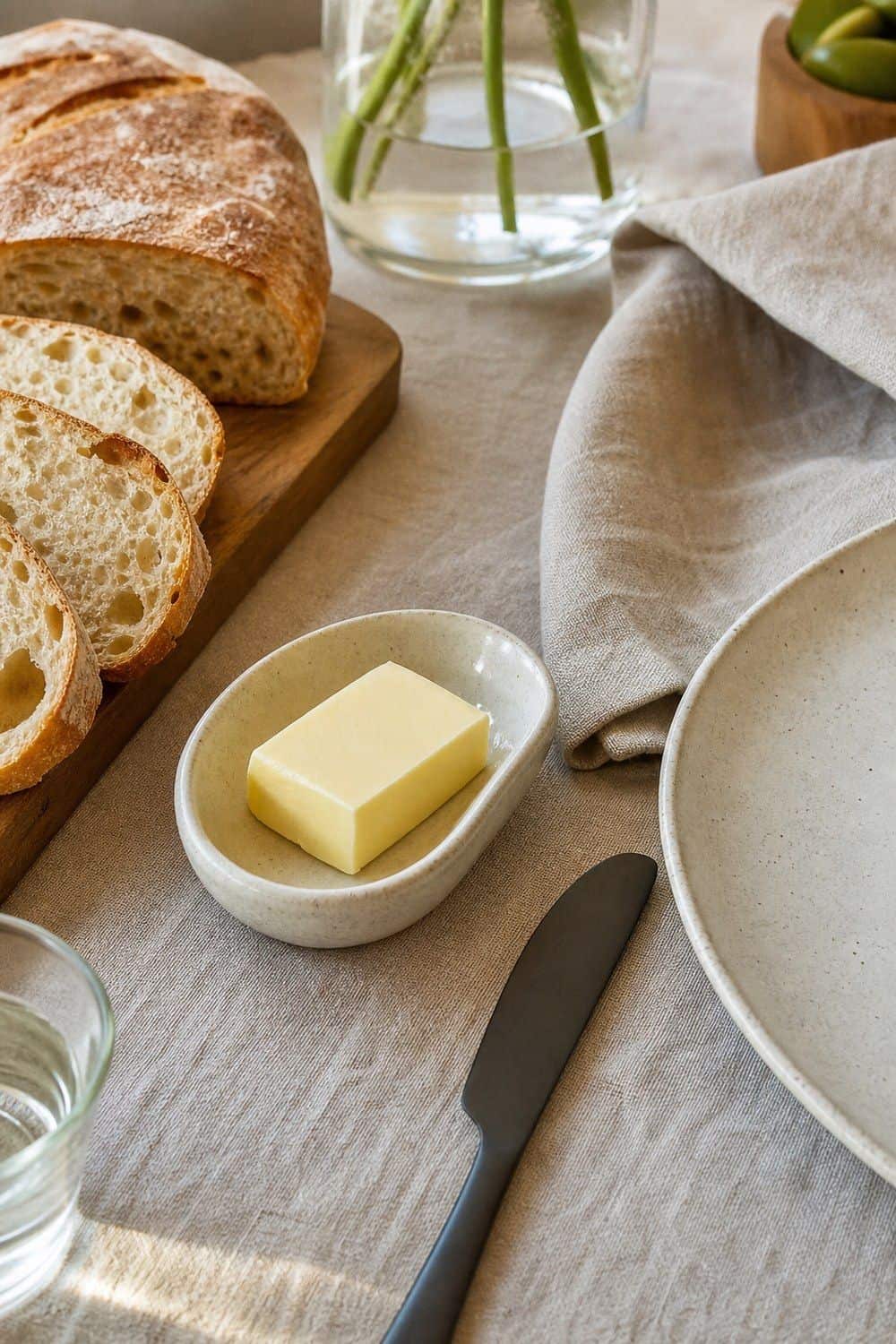
A butter dish is discreet, useful, and quietly generous. Pair it with the bread basket and place it close to the salt cellar so guests do not have to pass three separate pieces around the table. Ceramic, stoneware, or clear glass works well, while novelty shapes can pull the setting in a more playful direction than this style needs. Add a small knife beside it from the start so the bread service is ready without another trip. Keep the dish low so it tucks beside bread rather than interrupting the centerline.
18. Use Place Cards Only If They Are Plain
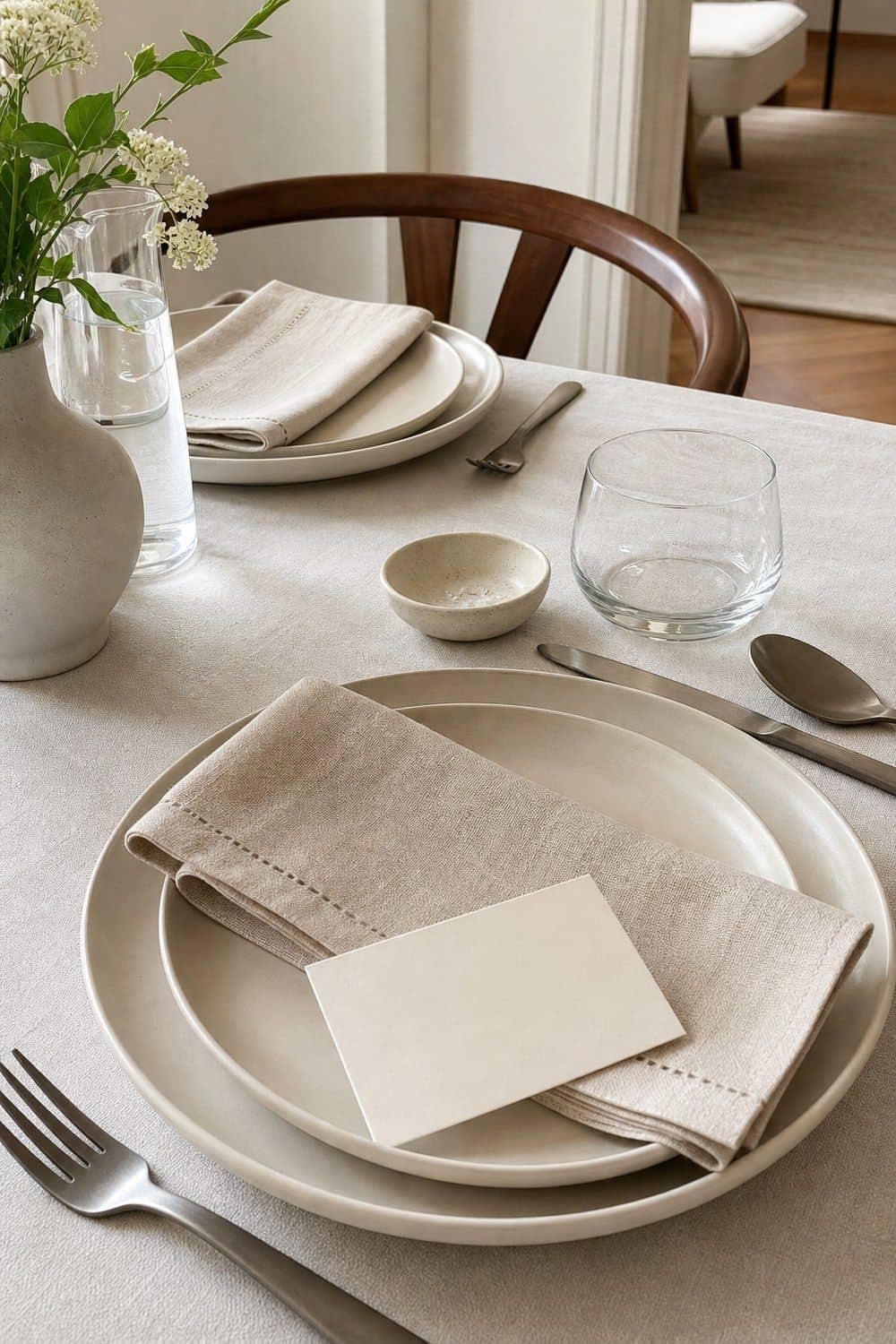
Place cards can work beautifully on a quiet luxury table, but they need to stay small. Cream paper, soft gray card stock, deckle edges, or simple handwriting feel more refined than ornate holders, bows, or metallic labels.
Use them only when seating actually helps the dinner. If the meal is casual, let the place setting breathe without a card. Restraint is part of the mood, and not every plate needs a little extra object on top. The name should be easy to read, not another decorative flourish competing with the plate.
19. Keep the Palette Warm and Tonal

A quiet luxury palette should feel related, not perfectly matched. Warm white, ivory, flax, stone, taupe, mushroom, walnut, clear glass, and aged brass can all sit together because they share a soft temperature. If the table looks flat, add texture before adding bright color: linen, stoneware, wood, flowers, and candlelight create depth without breaking the calm. If you want one deeper note, let it come from wood, candle holders, or the food itself. A tonal table can still feel rich when the materials do the layering.
20. Add Texture With Woven Chargers Sparingly

Woven chargers can add texture when the table feels too smooth, but they need a light hand. Choose a fine natural weave rather than oversized rustic chargers, and use them only if they do not make the place setting feel crowded.
If the linen, bread basket, wood board, flowers, and stoneware already give the table enough texture, skip the chargers. Quiet luxury often looks better when one layer is removed, especially on a smaller table. The charger should frame the plate, not fight the linen or catch on glassware.
21. Put Dessert Plates on a Sideboard
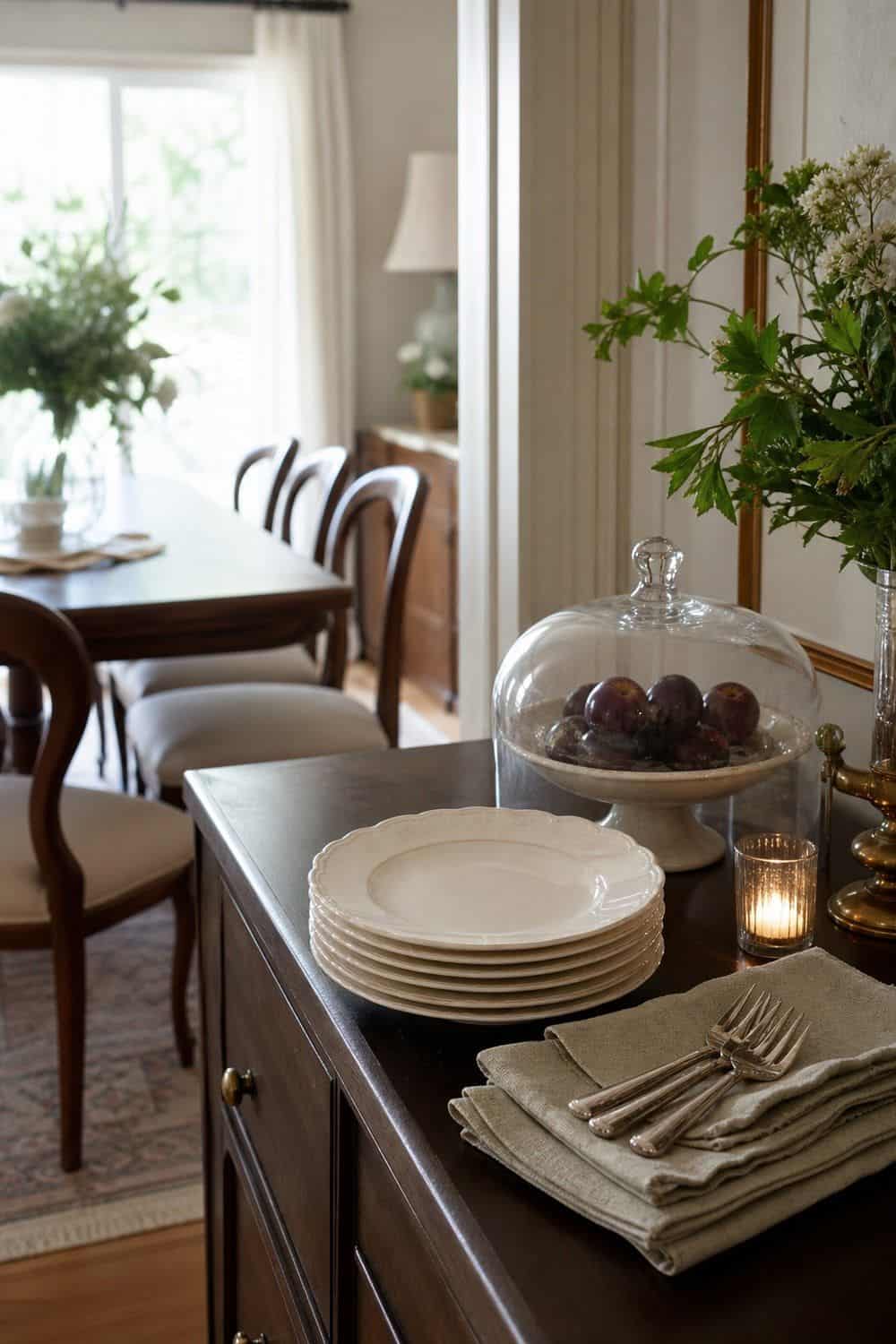
An understated dinner table does not need every course stacked at each place setting. Keep dessert plates on a sideboard, buffet, or nearby shelf until they are needed so the dinner setting has room to breathe. A neat stack of cream plates with a folded linen napkin underneath still feels connected to the table, but it keeps the main place settings lighter through the first course. Add dessert forks or spoons beside them so the transition feels graceful instead of improvised.
22. Keep Serving Utensils Together
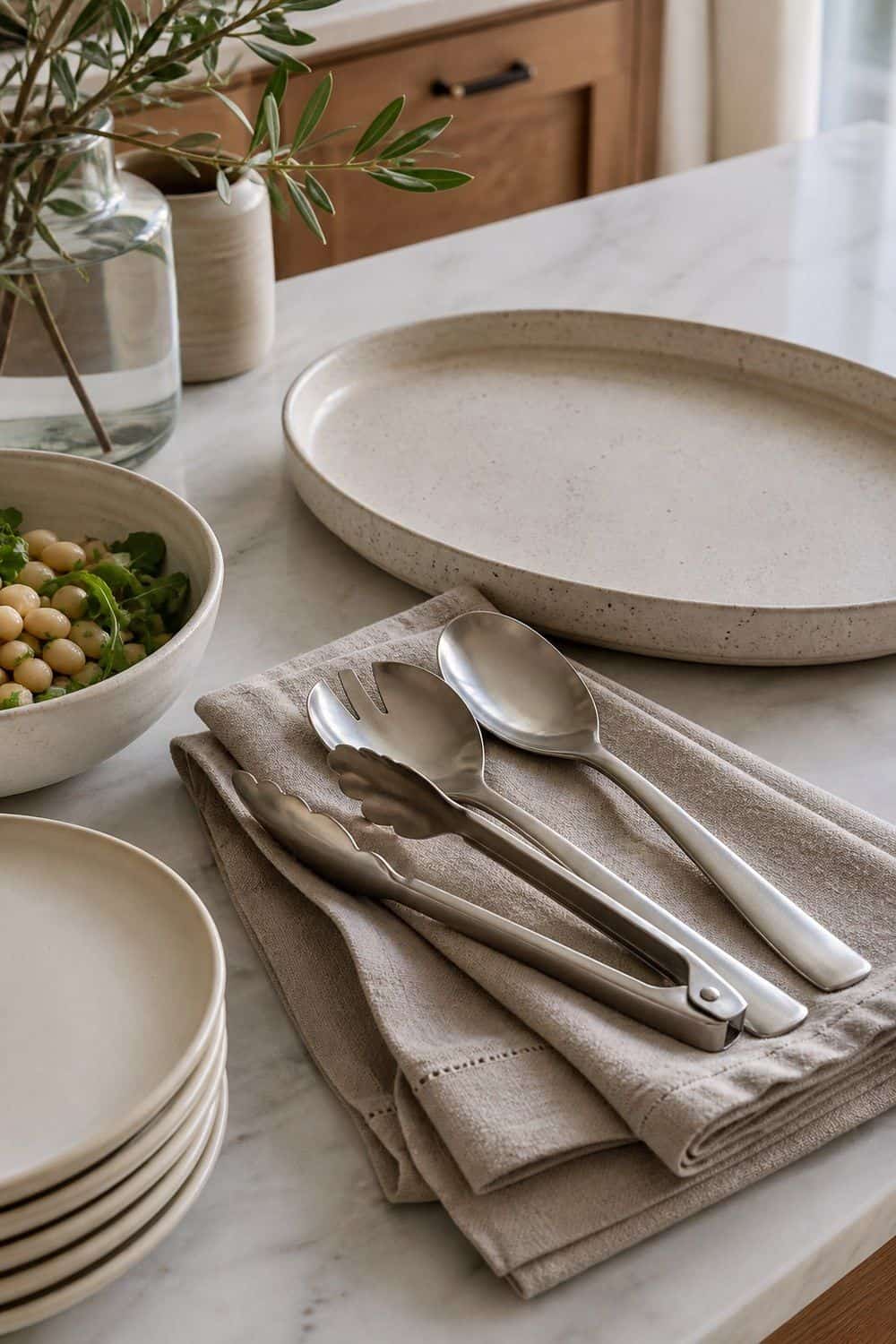
Serving utensils can disappear quickly once platters arrive, so give them a quiet landing place. A small stoneware crock, folded napkin, or shallow tray near the sideboard keeps tongs, spoons, and pie servers from scattering across the table.
This is not the most glamorous detail, but it makes the meal feel smoother. Guests can serve themselves without searching, and the table avoids that awkward moment where a beautiful platter arrives with no spoon beside it. A quiet landing spot also protects the linen from sauce drips and misplaced spoons.
23. Choose Unscented Votives for Soft Glow
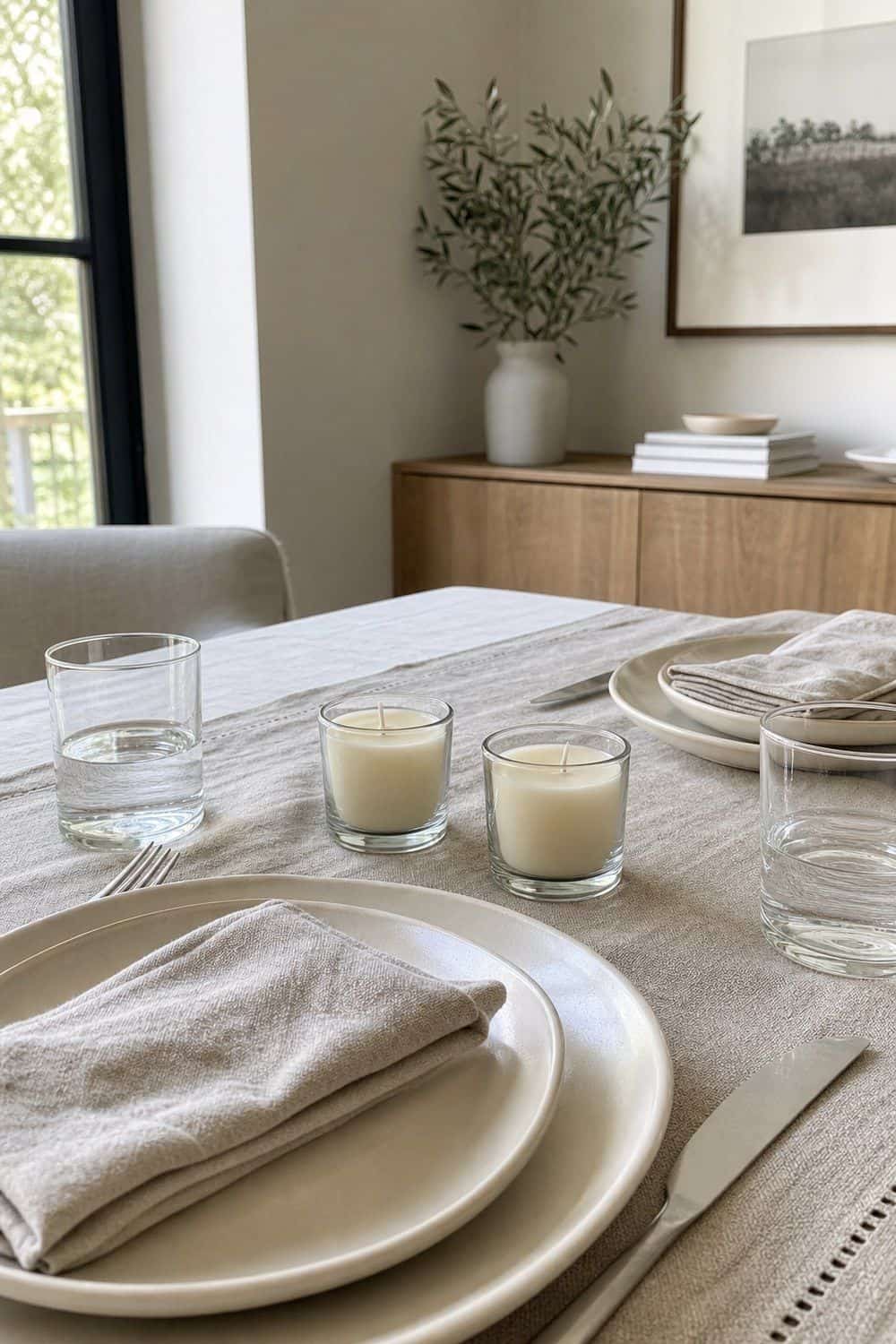
Unscented votives add a lower layer of candlelight than tapers, which is helpful if the room needs warmth but the table is already full. Place them between flowers, near a carafe, or along the centerline in small breaks. Choose clear, smoke, or warm glass holders so the glow feels soft, and keep scented candles away from dinner because fragrance can fight with the food. Low votives are especially helpful near the ends of the table, where tapers can feel too tall.
24. Leave Open Space Around Serving Pieces

The table should still work when dinner arrives. Before you decide the setting is finished, picture the main platter, salad bowl, water carafe, bread basket, butter dish, and serving spoons landing on the table.
If there is no comfortable place for them, pare back one decorative piece. Open space is not empty space here; it is what makes the whole table feel calm once people are actually eating.
This is the difference between a table that photographs well and a table guests enjoy using. Quiet luxury should make dinner feel easier, not more delicate.
25. Remove Anything That Feels Too Shiny

The final quiet luxury check is shine. If one piece suddenly pulls attention from everything else, soften it or remove it. Bright gold chargers, glittered cards, mirrored trays, glossy faux marble, and highly polished decor can make the table feel louder than intended.
Keep the glow in candlelight, glass, and small metal accents instead. The table should feel expensive in a quiet way: good texture, useful pieces, soft color, and enough restraint that the food and conversation still have room.