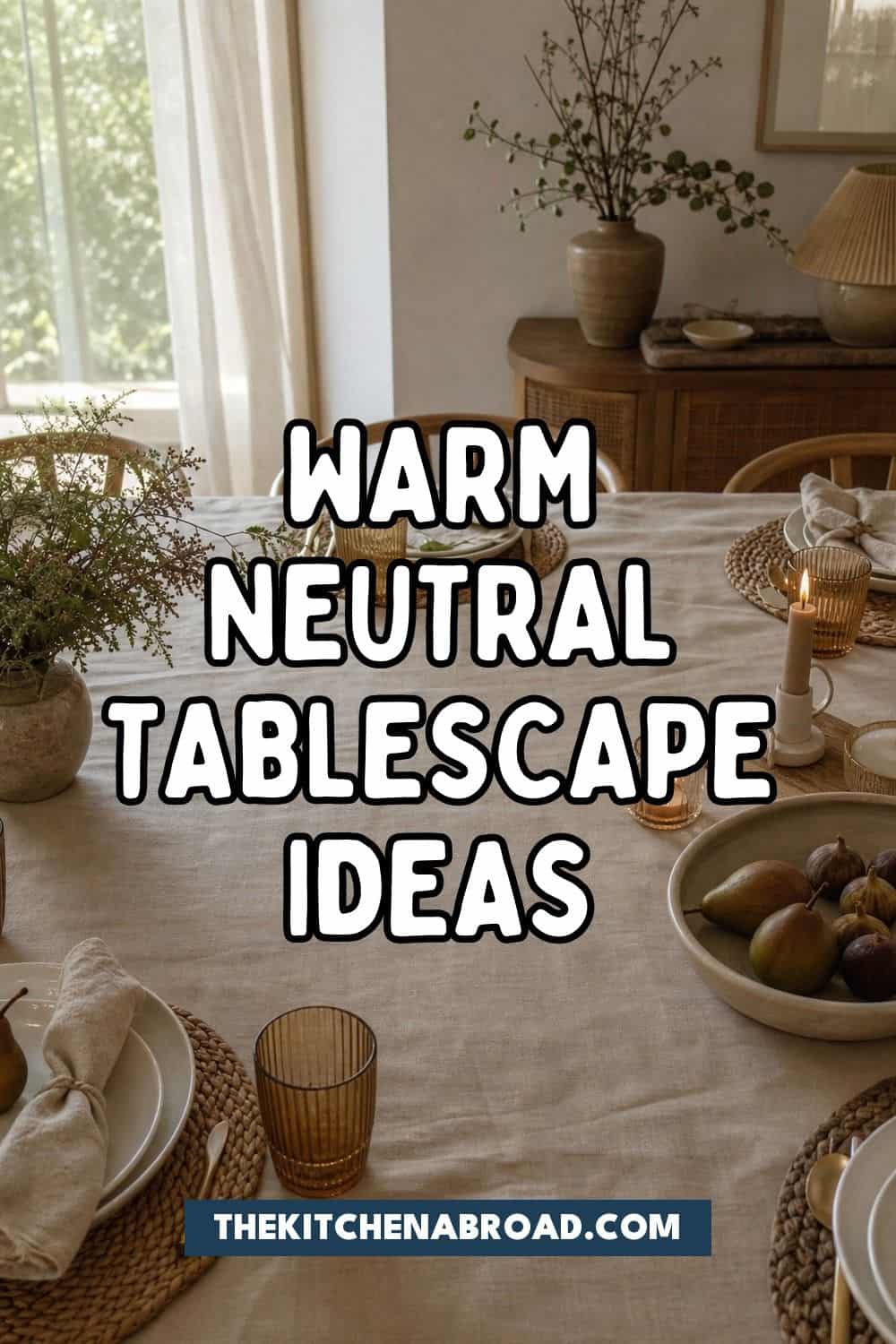
The easiest warm neutral tablescape ideas start with an oatmeal or flax linen base, matte cream plates, woven texture, amber glass, low natural centerpieces, and unscented candlelight. Mix cream, taupe, mushroom, camel, wood, rattan, stoneware, aged brass, and a small espresso accent so the table feels layered instead of flat beige. Keep centerpieces low and leave a clear lane for serving dishes so the table works for dinner, not just photos.
A warm neutral table is calm because the pieces are quiet, but it still needs contrast, texture, and useful space. If every plate, candle, napkin, and flower is the same pale beige, the table can feel washed out before the food even arrives.
A calm warm neutral table comes together in layers: base linens, place settings, glassware, centerpiece pieces, candlelight, serving flow, and a final simplification before everyone sits down. The goal is a dinner table with oatmeal linen, taupe, cream, amber, wood, rattan, stoneware, and soft light that still leaves room for plates, elbows, drinks, and conversation.
You Might Also Like These Blog Posts
- Warm Neutral Dinner Party Ideas
- Quiet Luxury Tablescape Ideas
- French Country Tablescape Ideas
- European Summer Tablescape Ideas
- Cottagecore Tablescape Ideas
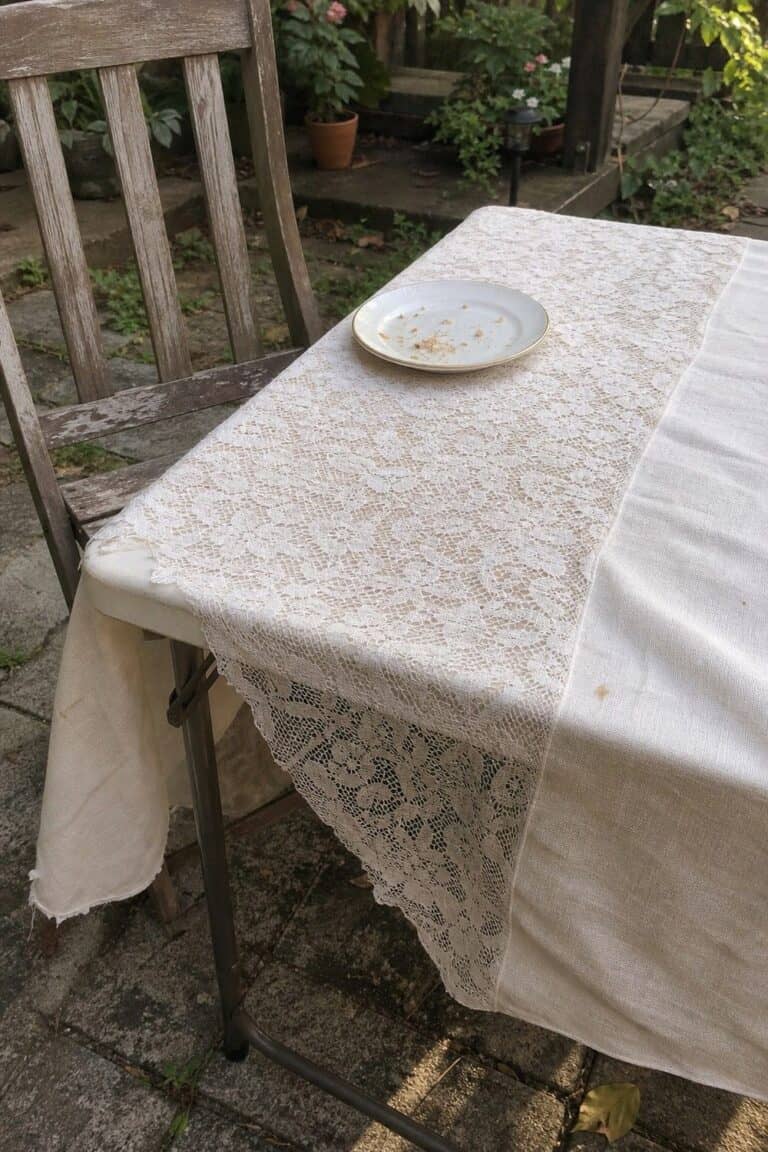
1. Start With an Oatmeal Linen Tablecloth
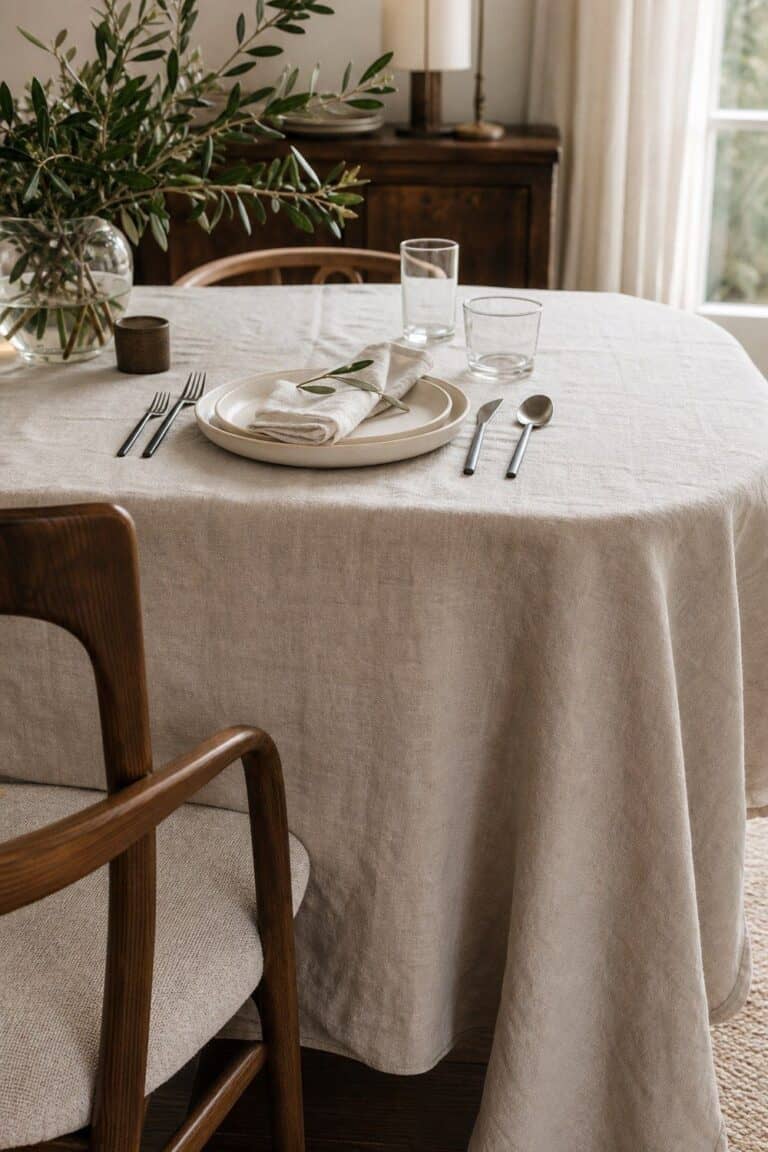
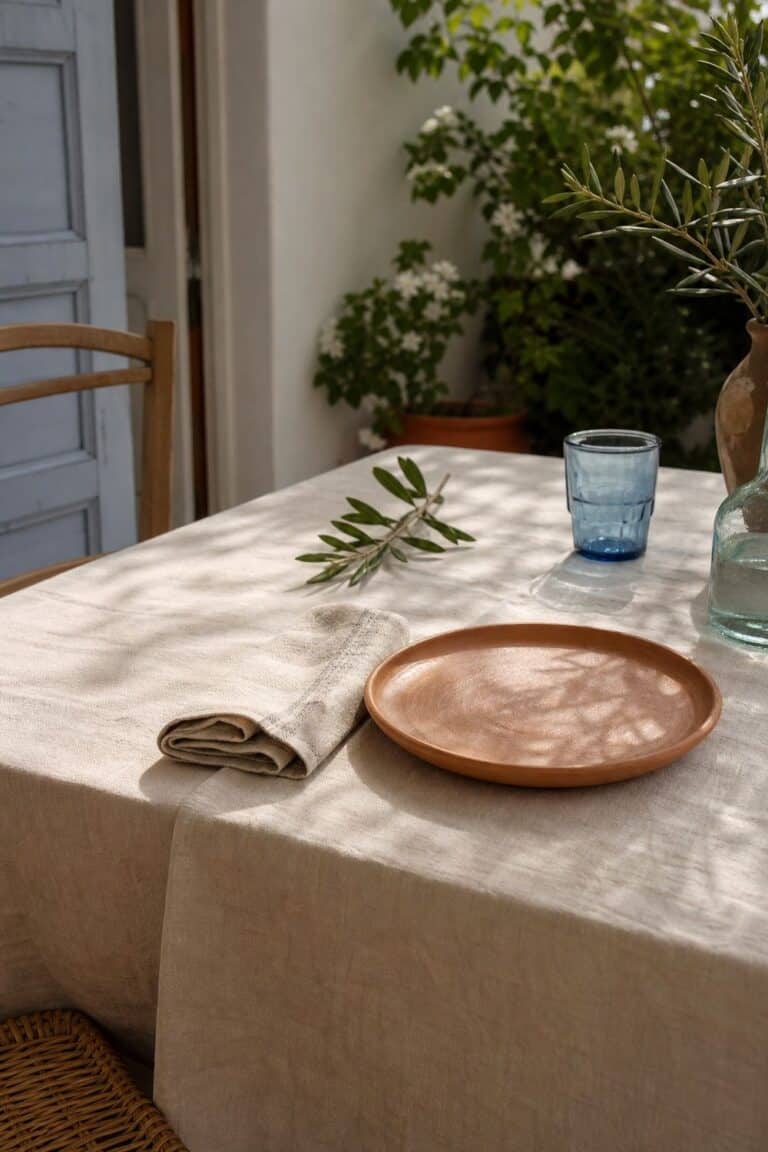
Oatmeal or flax linen gives a warm neutral table a softer foundation than stark white, especially with wood, stoneware, amber glass, and candlelight around it. The color still lets the food and dishes stand out, but it makes the whole table feel less formal and more inviting.
Choose a cloth with enough drop to look relaxed without pooling in anyone’s lap. A washable linen blend is easier for repeat hosting because it can handle oil, wine, crumbs, and wax mishaps.
Let a few natural wrinkles stay. They make the table feel lived-in rather than pressed into a showroom mood.

2. Layer a Taupe Table Runner Down the Center
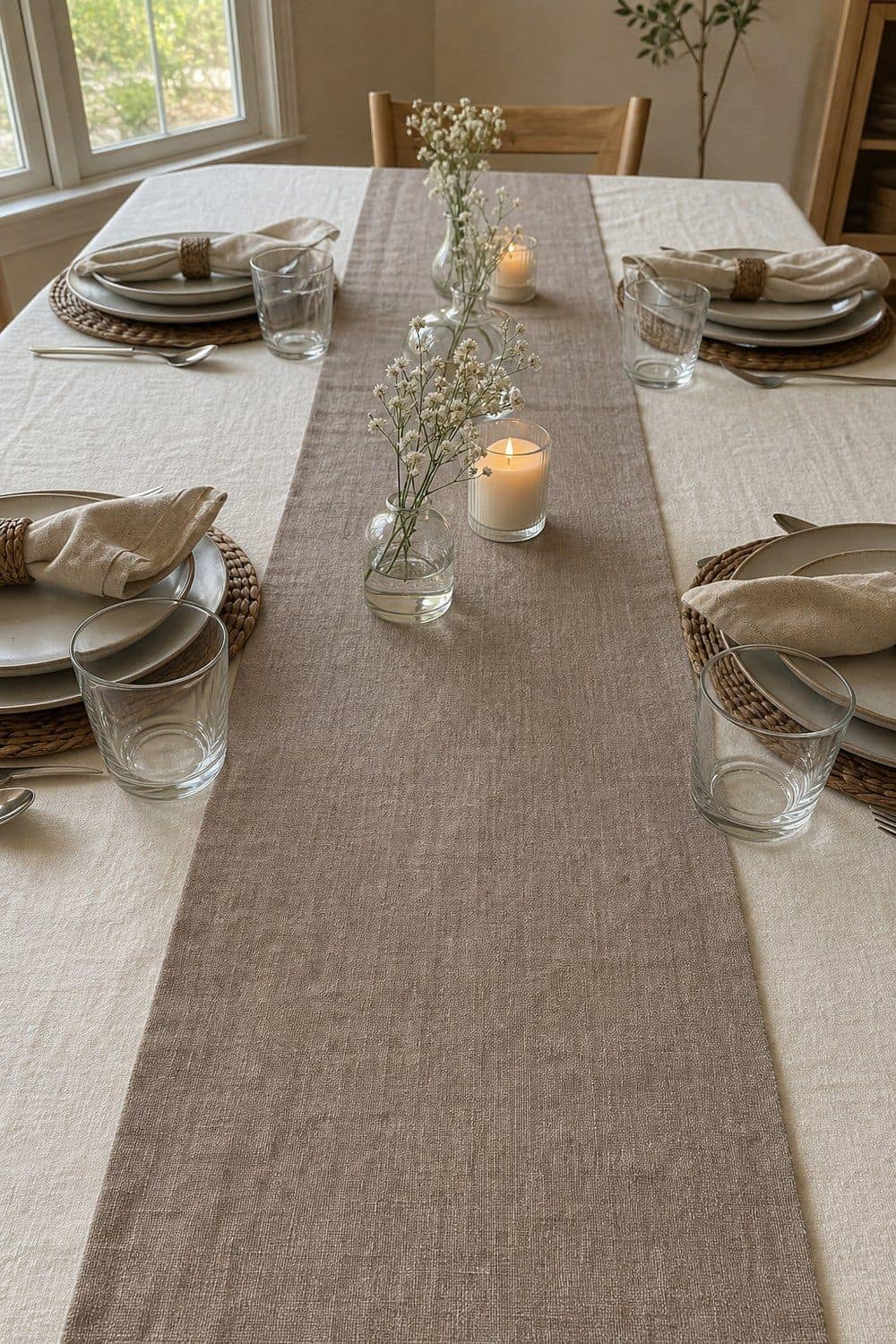
A taupe runner creates a center lane for candles, bud vases, bread, carafes, and low bowls without covering the whole table. It gives cream linen or pale wood a little depth so the centerpiece does not float away visually.
Keep the runner narrow enough that plates and glasses sit flat on either side, with room for elbows and serving utensils.
If it starts fighting with serving dishes, fold it shorter or remove it once dinner begins. Warm neutral layers should support the meal, not make everyone reach around fabric. A runner with a soft weave or washed finish also keeps the table from feeling too crisp.
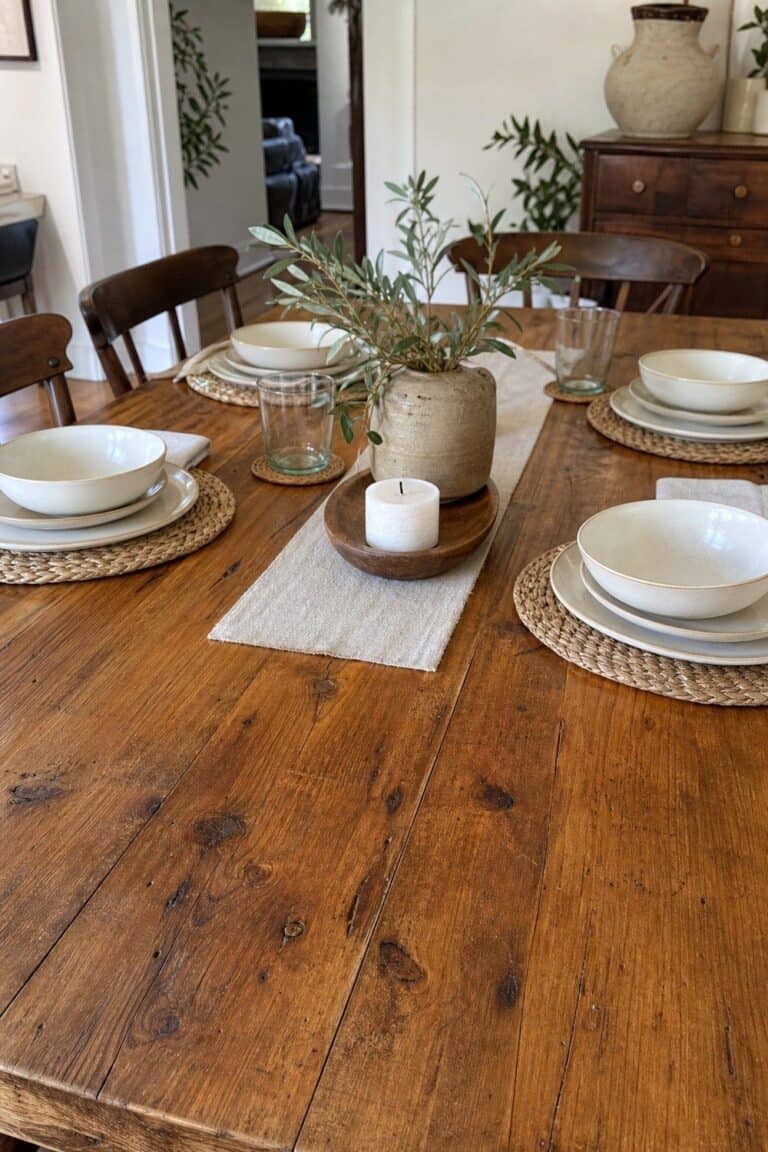
3. Ground Each Setting With Woven Seagrass Placemats
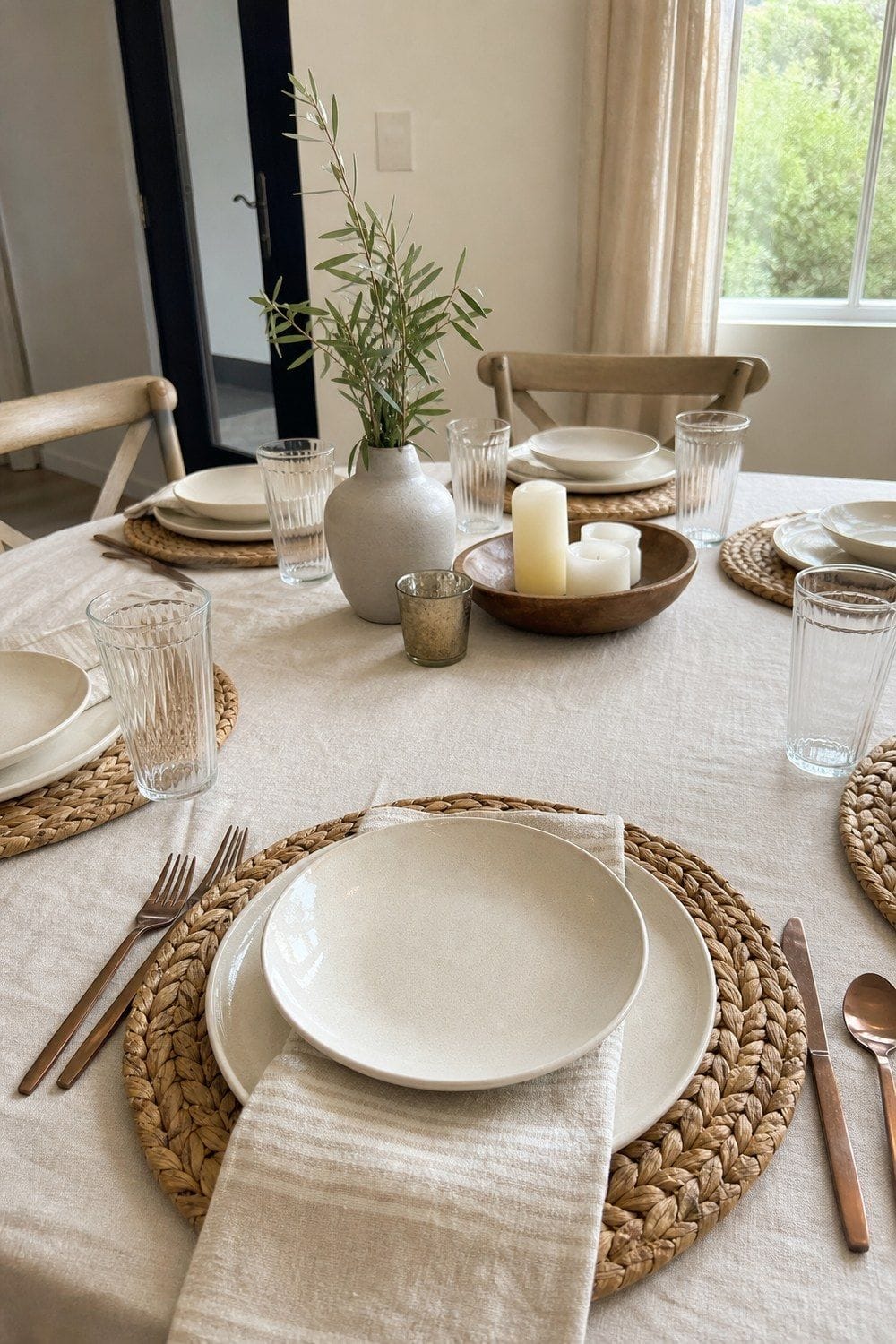
Woven placemats keep cream plates from disappearing into a pale tablecloth. Seagrass, rattan, or water hyacinth brings natural texture that makes the table feel warm without adding a louder color. Round placemats soften square tables, while rectangular ones can make a long table feel more orderly. If the table is small, use placemats only under the dinner plates and skip bulky chargers so glasses and elbows still have room. This is especially helpful when the table has pale linens, because the woven edge gives each setting a visible boundary.
4. Choose Matte Cream Dinner Plates
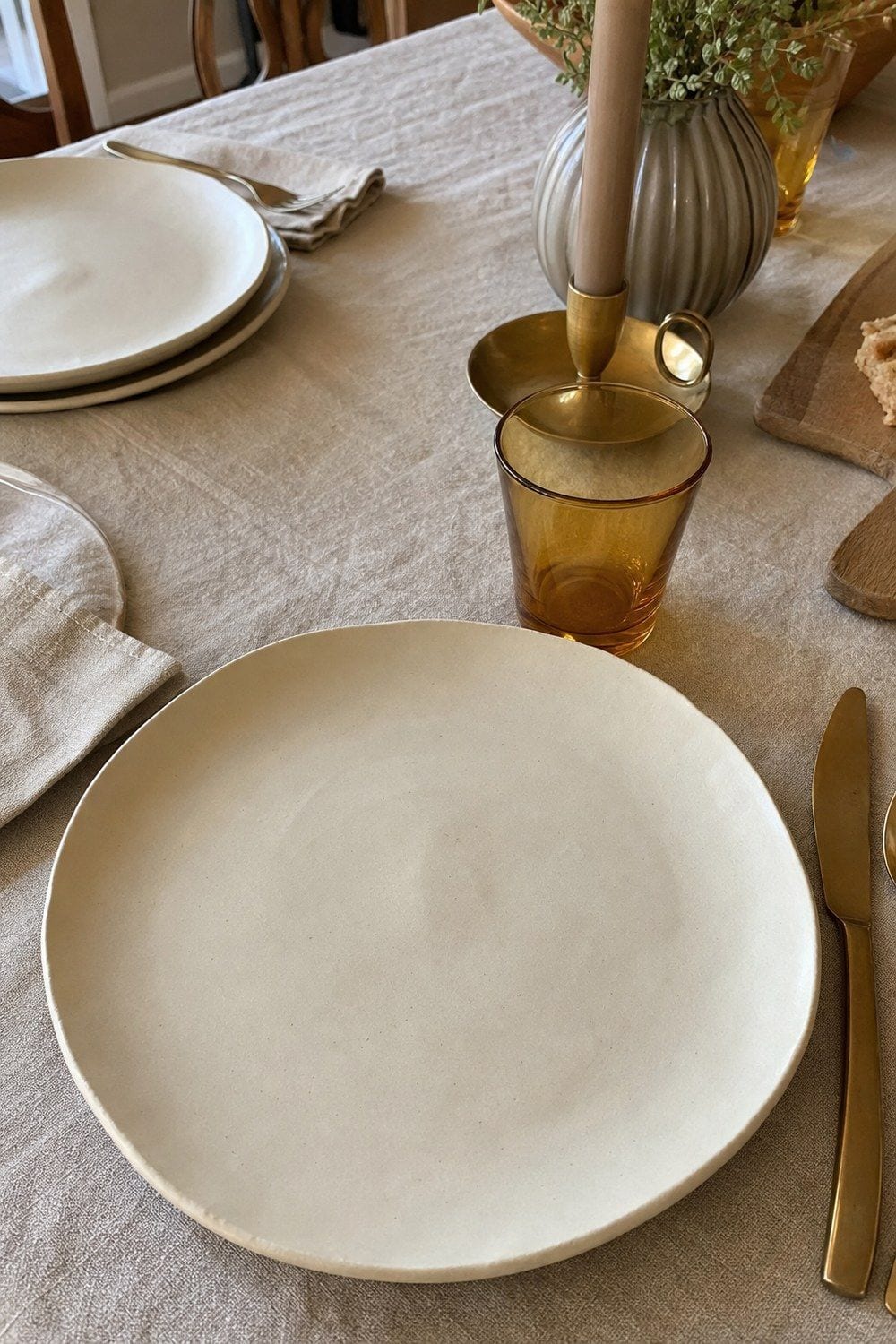
Matte cream plates give the table calm visual weight. Bright white can look cold against oatmeal linen and amber glass, while cream feels softer with wood boards, brass flatware, and taupe candles. Choose plates with a simple rim or handmade-looking edge if you want quiet interest. The plate should still frame the food cleanly, so let it be the smooth pause between all the linen, woven texture, and candlelight. If the meal has sauces, greens, or roasted vegetables, cream plates still show the food clearly without the chill of bright white.
5. Add Stoneware Salad Plates in Mushroom or Sand
Second-tone salad plates add dimension at every seat. Mushroom, sand, greige, clay, or pale taupe plates create a layered place setting without needing pattern or bright color.
Use them over cream dinner plates for contrast, or place them at the side for a more relaxed dinner. The trick is keeping the tones close but not identical. A table looks richer when the neutrals relate like cousins, not copies, so avoid matching every plate to the tablecloth. That slight shift is what makes the setting feel collected instead of bought as one flat set.

6. Fold Fringed Linen Napkins Over the Plates
Fringed linen napkins bring texture right where guests notice it. Oatmeal, clay, flax, warm white, or muted camel napkins can soften a stack of stoneware and make each place setting feel finished without adding a napkin ring.
Fold them over the plate, tuck them under the salad plate, or drape them slightly off-center for a more relaxed dinner. Keep the fold easy; warm neutral tables look better when they feel touched by a person, not pressed into hotel stiffness. A soft crease is fine here.

7. Use Amber Ribbed Glasses for Warm Light
Amber glass adds warmth before the candles are even lit. Ribbed tumblers catch evening light and make a cream and taupe tablescape feel more golden, especially if the rest of the table leans pale. Use them for water, spritzes, iced tea, or a welcome drink, then keep wine glasses clear so the table does not become too heavy. One amber glass at each setting is usually enough to give the whole table a glow. They are also forgiving for casual dinners, because the ribbing hides fingerprints better than perfectly smooth glass.

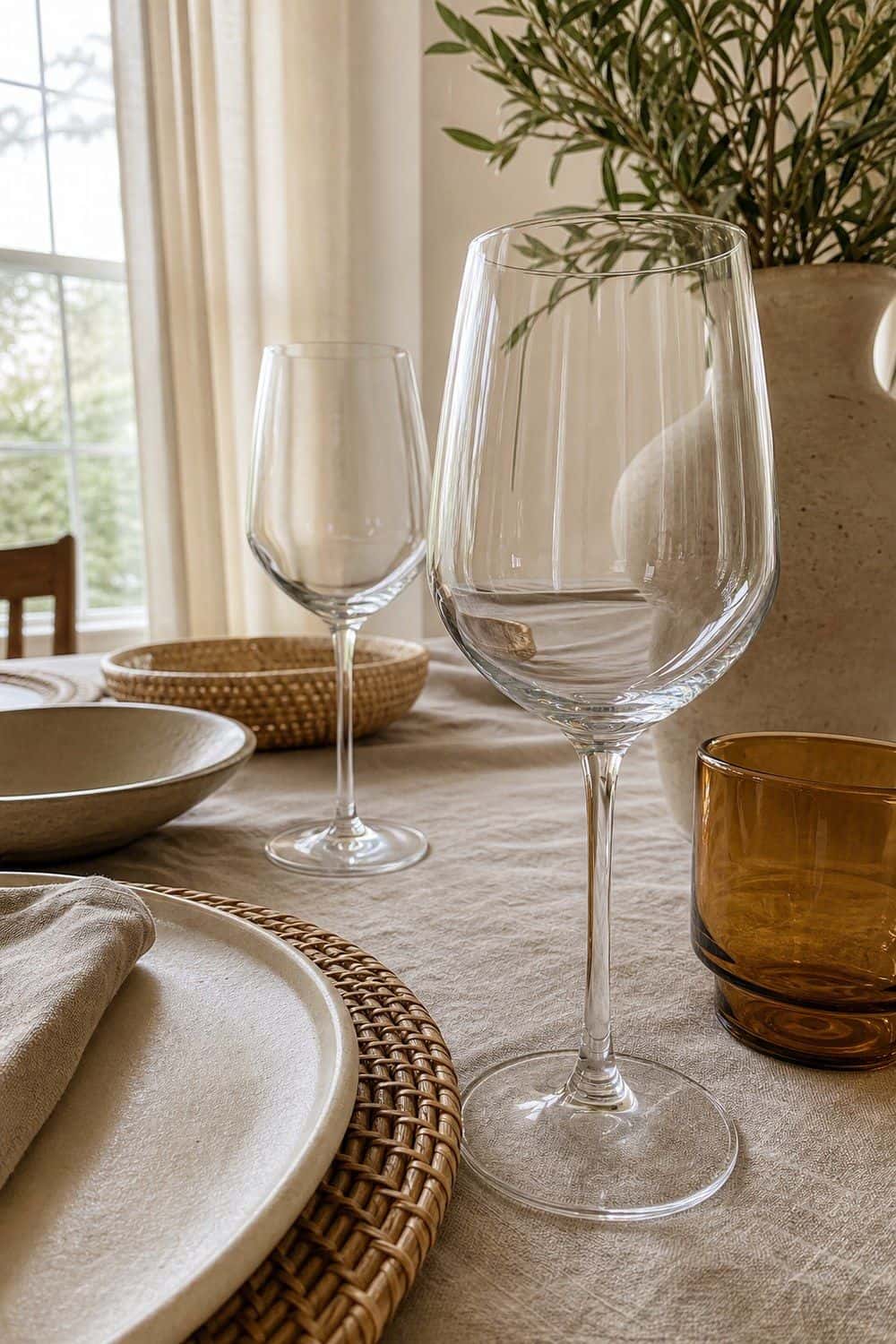
8. Keep Wine Glasses Clear and Simple
Clear wine glasses keep the table from becoming visually heavy. They lighten amber glass, rattan, brass, and wood while staying useful for dinner. Choose simple stems or stemless glasses with clean lines rather than ornate shapes that compete with the plates. This is one of those quiet choices that makes the whole table breathe, because the warm neutral palette already has texture and clear glass gives the eye a little air. If you are using amber tumblers, clear wine glasses also stop the drinkware from feeling like a matched colored set.
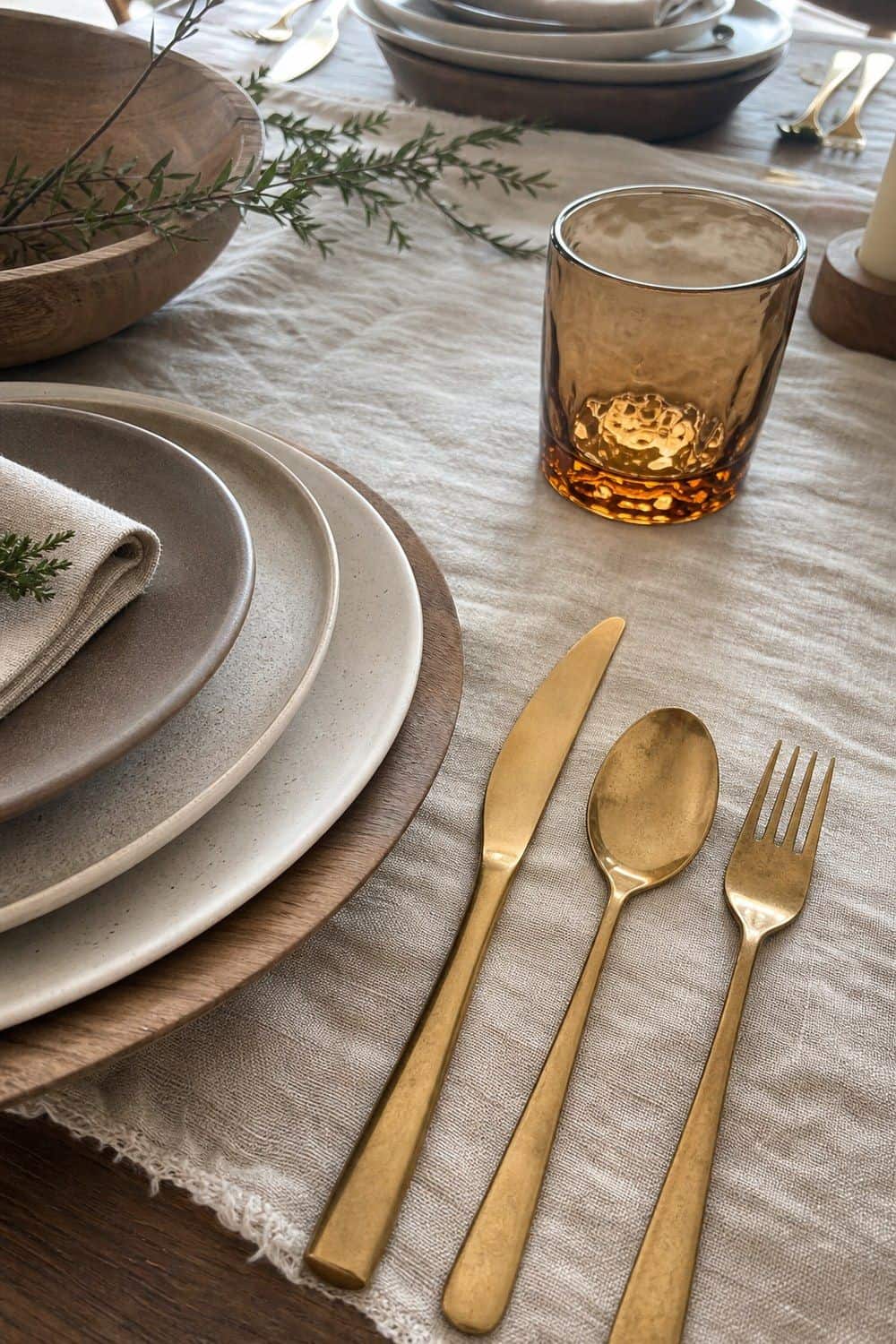
9. Add Aged Brass Flatware
Aged brass, champagne, or softly brushed gold flatware gives the table a warm metal moment. It feels gentler than shiny gold and warmer than stainless steel, especially beside oatmeal linen, mushroom plates, and amber glass. Choose a simple shape so the finish reads elegant instead of flashy. If brass flatware feels like too much, use it only for the main place settings and keep serving utensils in wood or stainless steel. The finish should look softly worn rather than mirror-bright, so it blends into the candlelight instead of stealing attention.
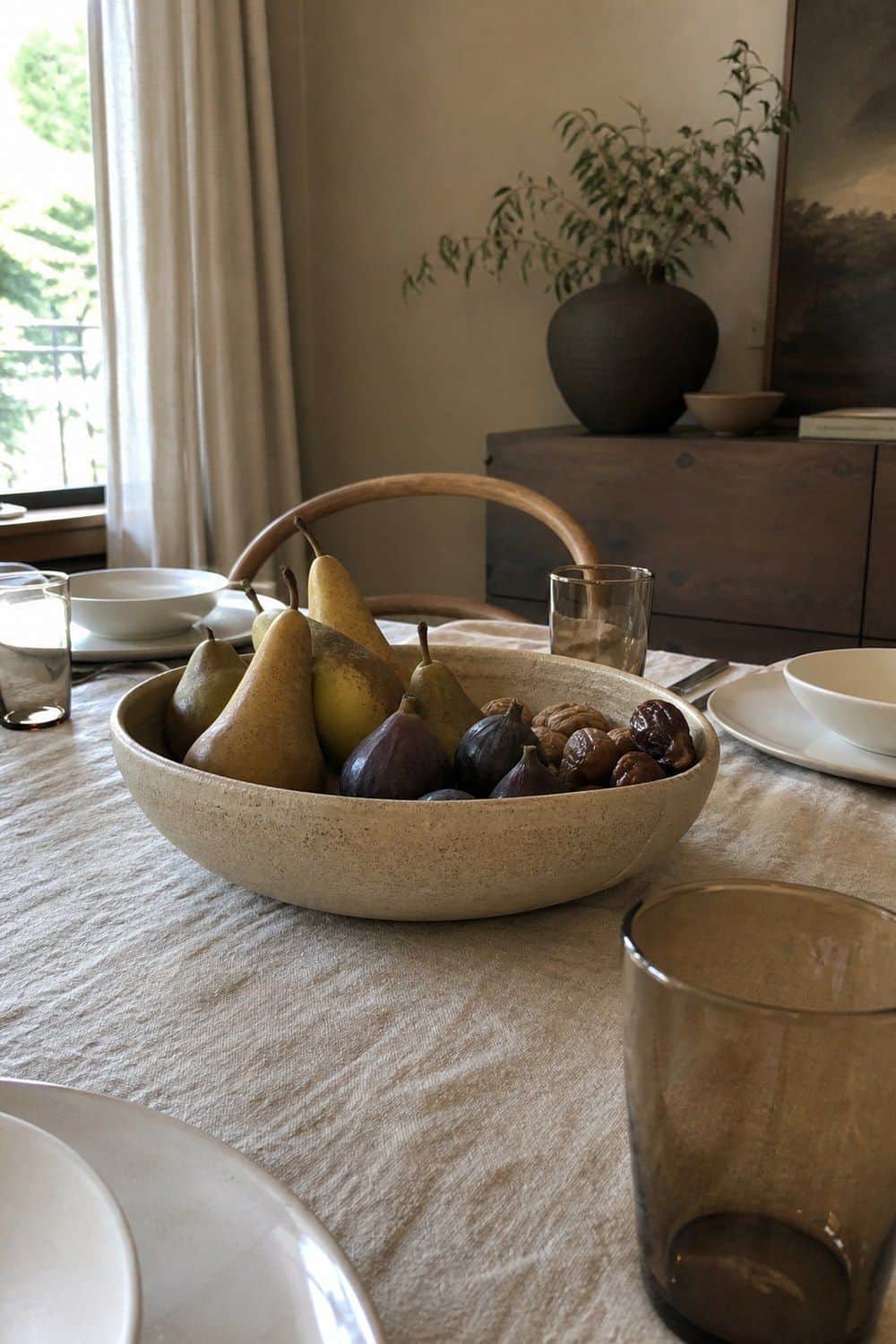
10. Place Low Ceramic Bowls as Centerpieces
Low ceramic bowls keep the centerpiece below eye level while giving the table a real focal point. Fill one with pears, figs, nuts, dates, small apples, or linen-wrapped bread, depending on the meal. Warm stoneware, speckled cream, or soft clay bowls work especially well because they feel useful rather than fragile. Choose one generous bowl instead of several pieces that block the middle, and leave open space for platters. A low bowl can also be moved easily when the main course arrives, which is exactly what dinner tables need.
11. Run Bud Vases in Uneven Small Groups
Small groups of bud vases create movement without one bulky floral arrangement. The table feels more natural when the vases are staggered, not lined up like soldiers. Use three to five slim vessels in glass, stoneware, or warm ceramic, then add single stems, dried grasses, or tiny branches. Leave gaps for bread, candles, and conversation; a little asymmetry keeps all those quiet colors from feeling too perfect. Use fewer flowers than you think; one stem with a nice curve often looks more relaxed than a stuffed vase.

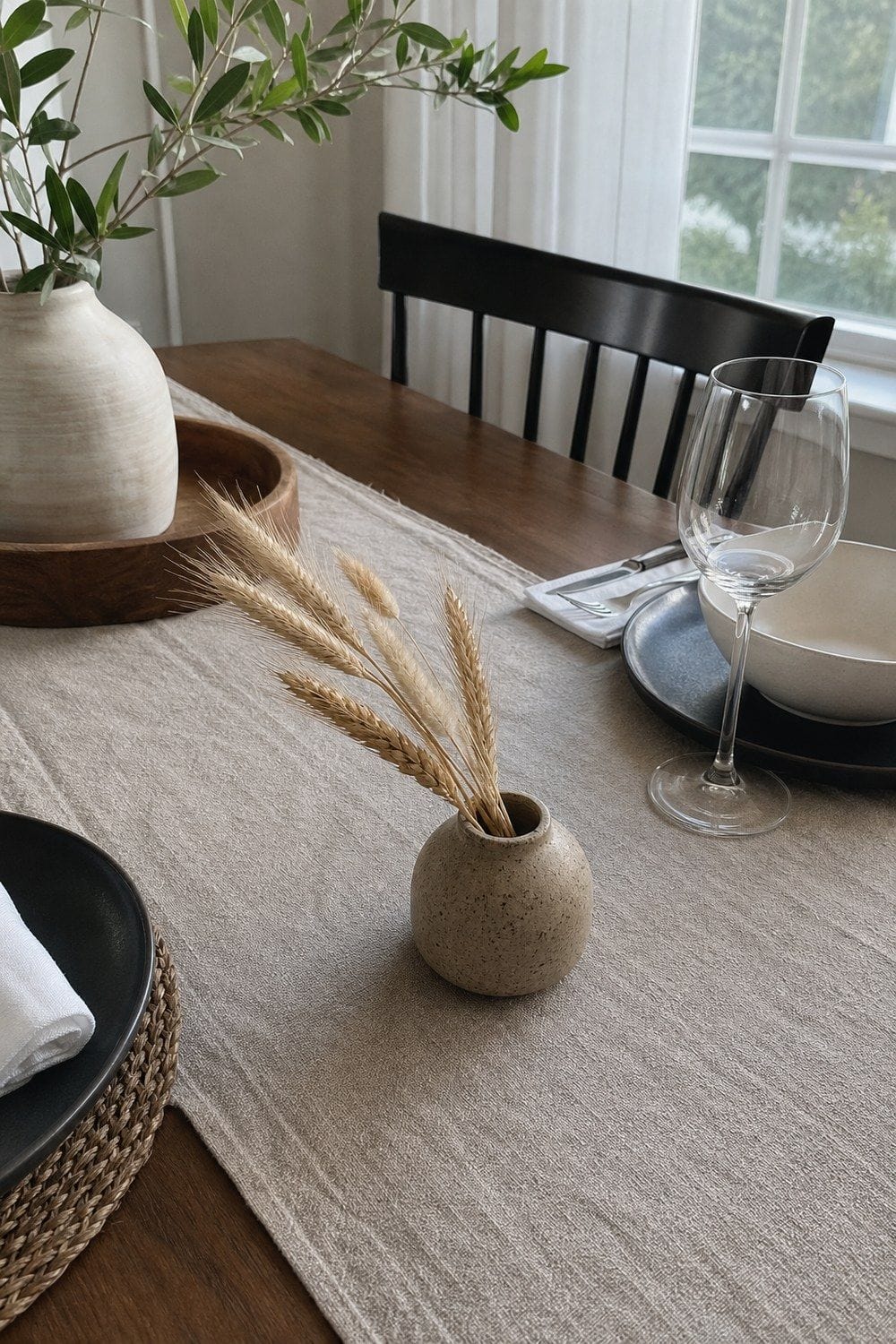
12. Add Wheat Stems or Dried Grasses Sparingly
Dried wheat and grasses can add beautiful natural texture, but they need restraint. A few stems in a small vase or laid along the runner can look earthy and seasonal; a giant bundle can make the dinner table feel dusty or crowded.
Keep dried elements away from flames, wine glasses, and serving dishes, especially if guests will be passing platters across the center.
If the stems shed, use them in one controlled spot rather than scattering them down the whole table. The best version feels quiet and tactile, not like a craft-store display. They look best when they echo the linen and wood tones instead of becoming the loudest thing on the table.
13. Use Unscented Taupe Taper Candles
Unscented candles belong on a dinner table because they add glow without competing with the food. Taupe, ivory, camel, and warm brown tapers look softer than bright white and tie together stoneware, linen, and wood.
Place them where guests can still see each other, and use sturdy holders that do not wobble when someone passes a platter. Scented candles are better for an entry table; dinner candlelight should flatter the food and the faces around it. If the table is narrow, use fewer tapers and let votives carry more of the glow.

14. Mix Candle Heights With Low Votives
Pairing tapers with low votives keeps the table from looking flat. The tapers bring height, while votives add small pools of light near the runner, bowls, or bread boards. Use clear, smoke, stone, or warm metallic holders so the light feels layered. Keep the tall candles sparse and the low ones tucked safely between serving pieces, because a calm table should glow from several small points rather than force guests to dodge a forest of flames. This layered candlelight is especially useful on long tables, where one line of tapers can look stiff.
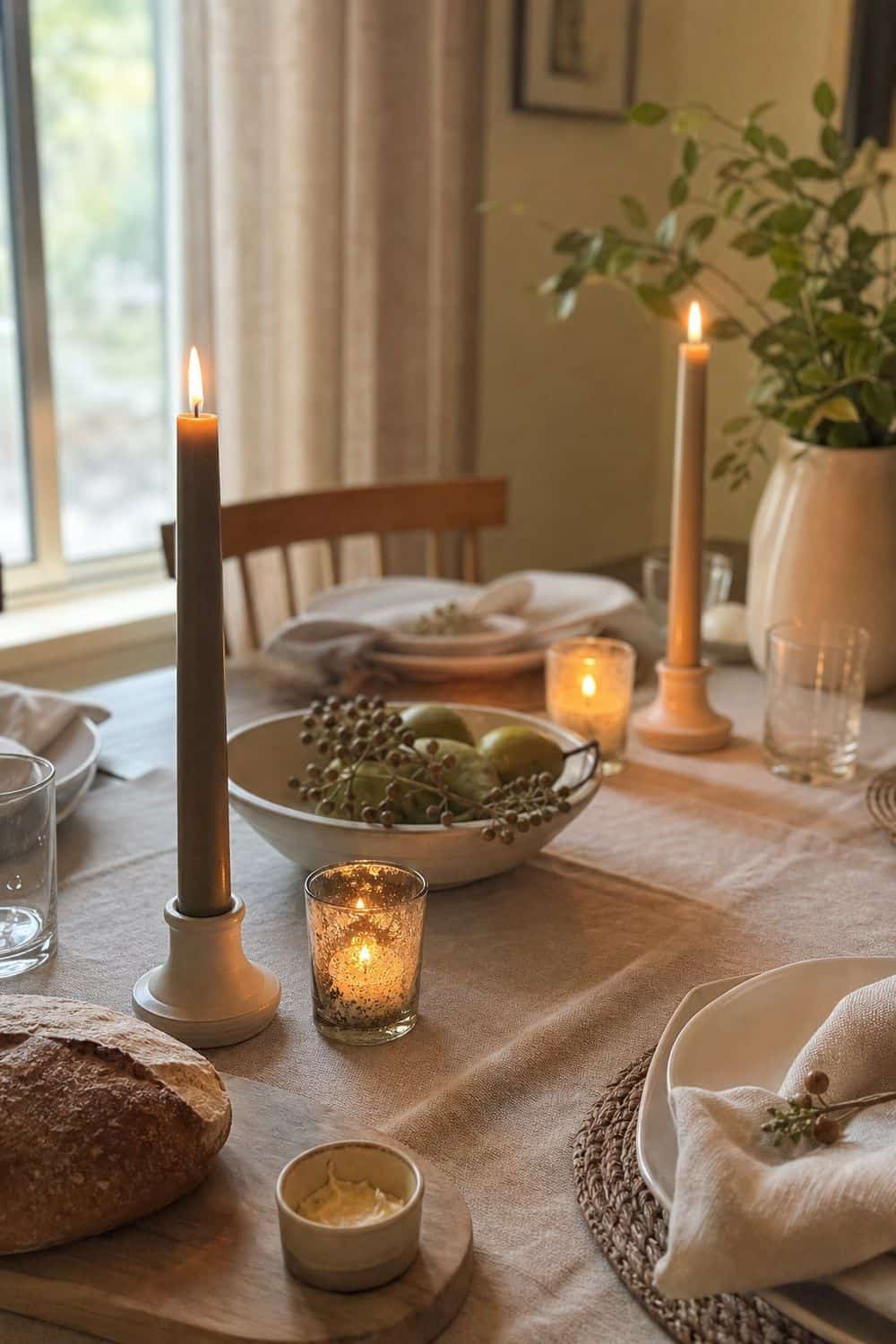
15. Add Wooden Bread Boards for Serving Height
Wood boards add warmth and height while still being useful. They can hold bread, cheese, butter, figs, nuts, little bowls, or sliced cake, depending on the dinner. Walnut, acacia, oak, or mango wood all work with cream plates and taupe linens.
Layer one board over the runner or place it slightly off-center so the table feels collected rather than symmetrical. Just leave enough empty edge for guests to cut, grab, or pass food without knocking into glassware. A board with visible grain gives the table depth even before the bread or cheese comes out.

16. Serve Bread in a Rattan Basket With Linen
A rattan bread basket brings texture in a way that earns its place on the table. Lined with a small linen cloth, it can hold rolls, sliced sourdough, focaccia, or flatbread while tying back to woven placemats and natural centerpiece pieces. Keep the basket low and easy to pass. If the table already has a lot of woven texture, choose a tighter weave or a plain wooden bowl instead so the bread moment feels generous, not visually noisy. Fold the cloth over the bread lightly so it looks relaxed and keeps rolls from drying out during dinner.

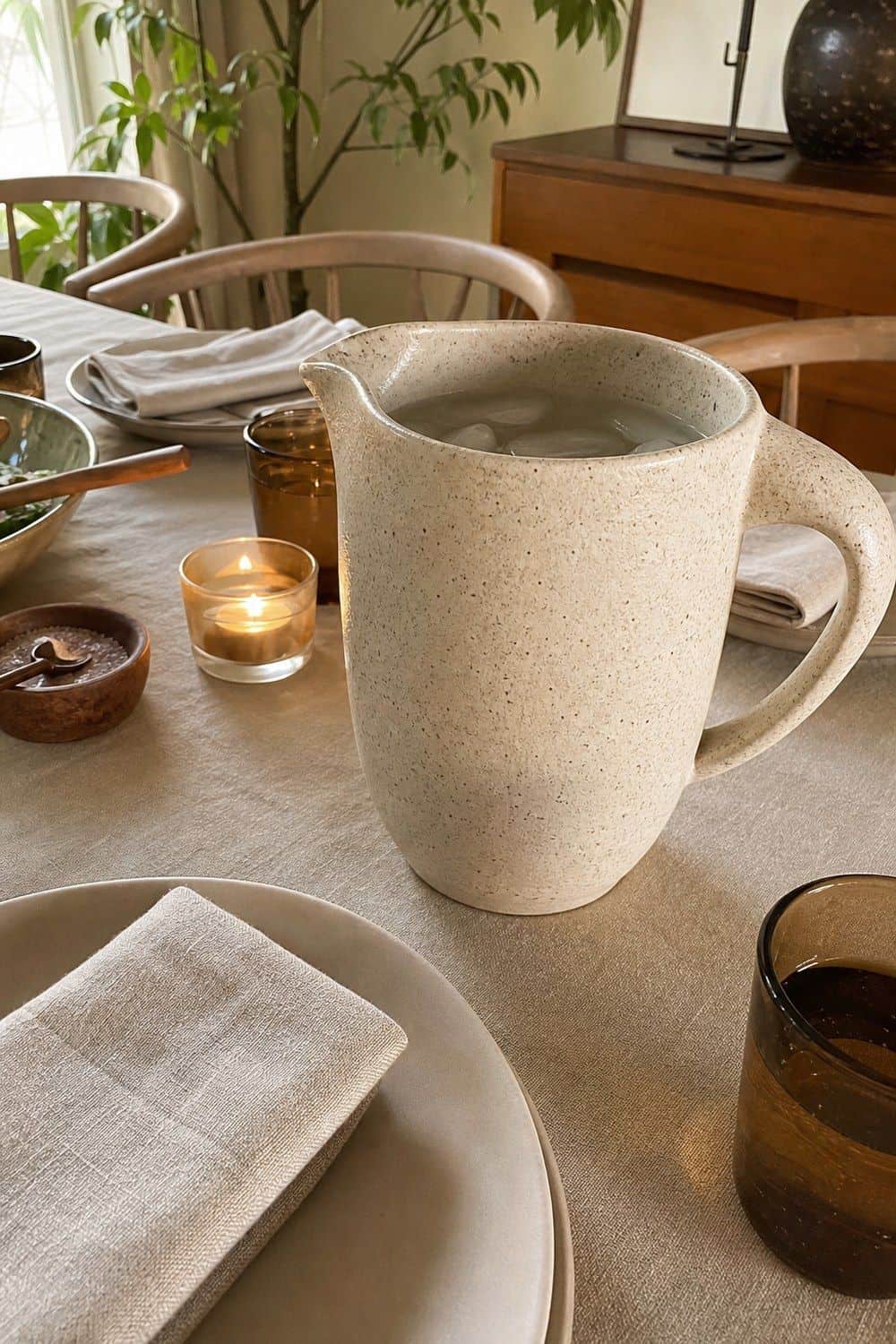
17. Use a Stoneware Pitcher for Water
A stoneware pitcher can act like part of the tablescape while keeping water easy to refill. Cream, speckled beige, warm gray, or pale clay pitchers sit beautifully with matte plates and linen napkins.
Place the pitcher where one person can reach it without lifting it over candles. If you are serving wine or iced tea too, keep the water pitcher visually quieter so it supports the table instead of competing for centerpiece status. A pitcher with a comfortable handle matters too, because someone will actually have to pass and pour it.
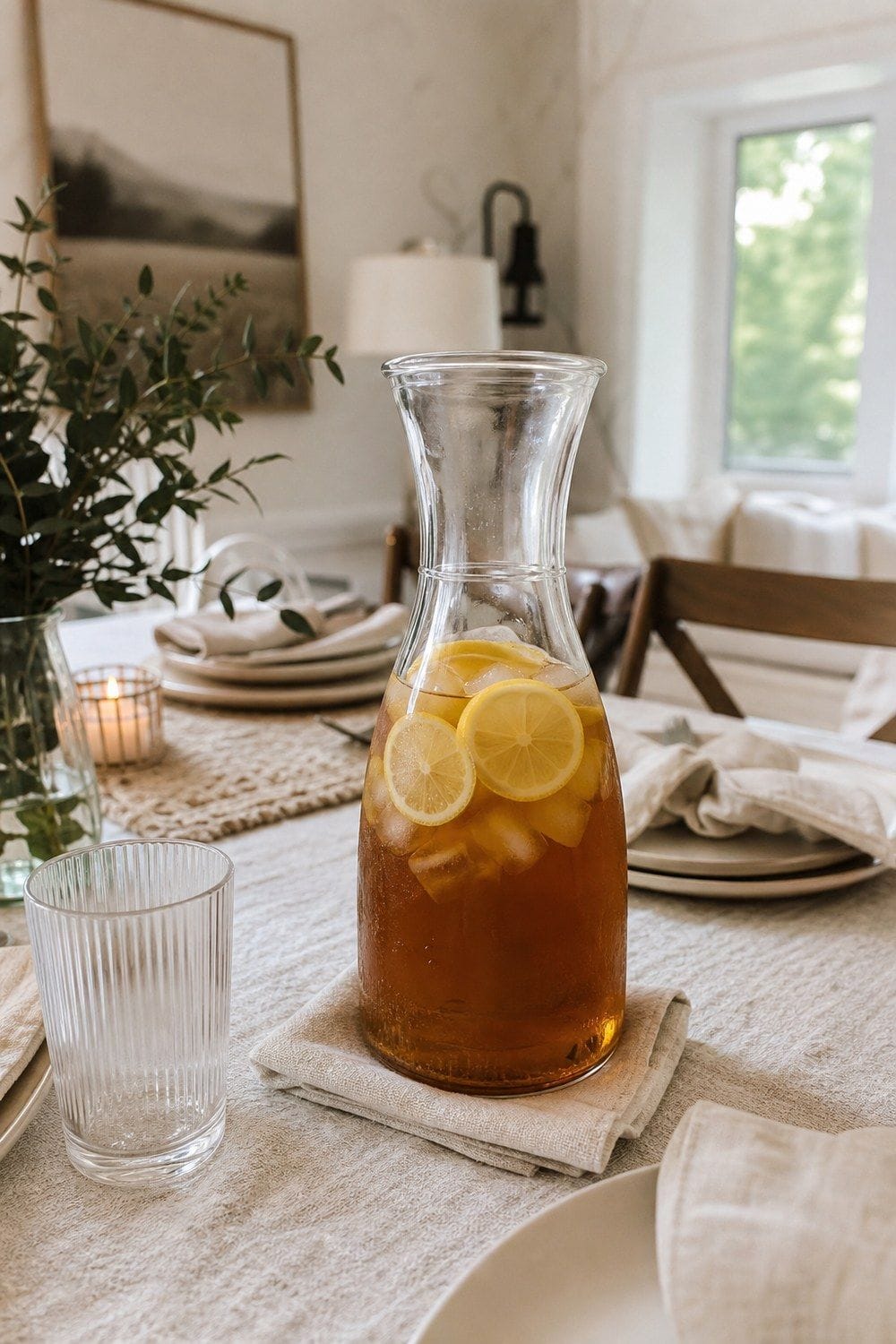
18. Add a Clear Glass Carafe for Wine or Iced Tea
Clear glass lightens a table that already has stoneware, rattan, wood, and brass. Use a carafe for wine, iced tea, lemonade, water, or a batch cocktail, then place it near the end of the table where pouring feels natural. The clear shape keeps the drink visible and adds shine without introducing another color. Pair it with simple glasses and a small coaster or folded napkin underneath if condensation is likely. It also keeps the table practical, since guests can refill without waiting for the host to circle the room.
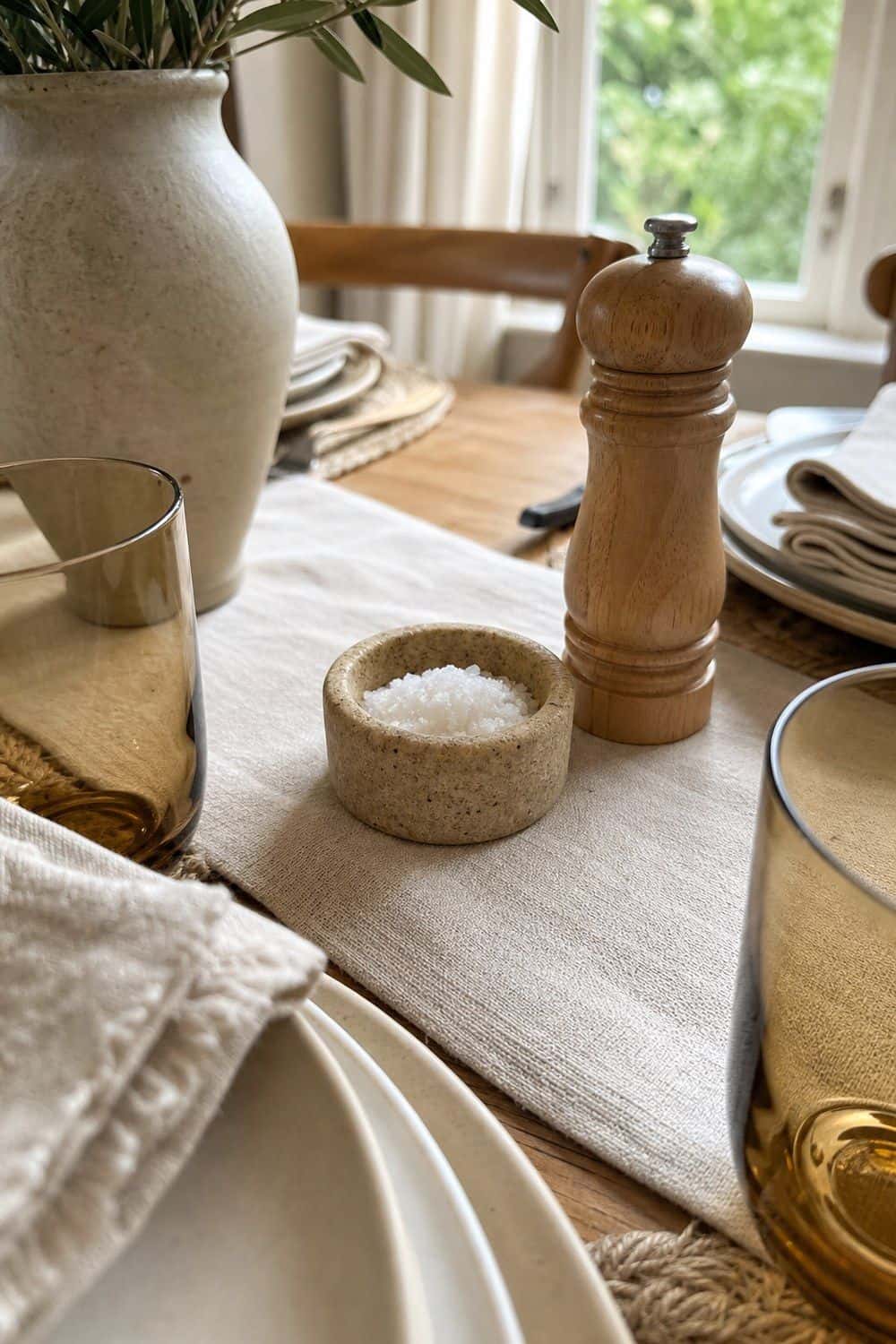
19. Set Out Small Salt Cellars in Warm Stone
Small salt cellars, pepper mills, or tiny condiment bowls can look deliberate when they match the palette. Warm stone, ceramic, wood, or speckled cream pieces make the practical details feel connected to the table instead of tacked on at the last second.
Use only what the meal actually needs. A tiny salt bowl and one pepper grinder may be enough. Too many small dishes can turn a calm tablescape into a tabletop obstacle course. Place them where two people can reach them, rather than scattering a tiny dish at every single seat.
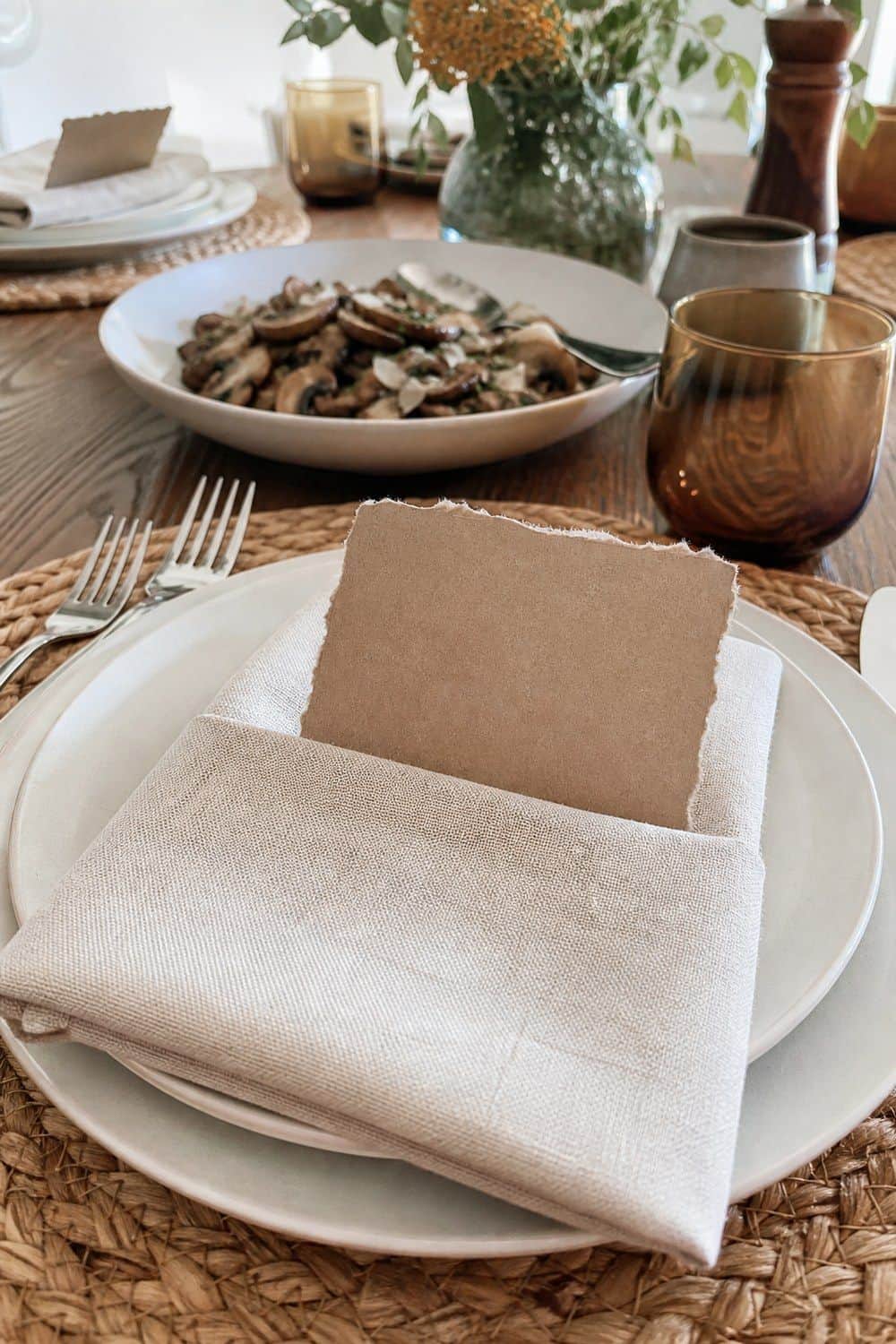
20. Tuck Kraft Place Cards Into Napkins
Kraft, ivory, or handmade-edge place cards add a small personal detail without bringing in a new color. They work for assigned seats, dinner parties, holidays, or any meal where you want the table to feel a little more hosted.
Tuck each card into a napkin fold, lean it against the glass, or slide it under the salad plate edge. Keep the handwriting dark and simple so the card reads clearly against all the soft neutral layers. For a softer look, tear the edge by hand or use a deckled card instead of a glossy printed tag.
21. Keep the Centerpiece Below Eye Level
Centerpiece height can make or break a calm dinner table. Branches, tall flowers, and stacked candleholders may look pretty from a distance, but they can block eye contact once people sit down.
Aim for low bowls, short bud vases, small votives, and tapers placed with breathing room, then test the view from a chair.
If you love one taller piece, move it to the sideboard once dinner starts. The table should help people talk, not make them lean around decor, duck under branches, or move candles just to pass the salad bowl. This matters most at a dinner party, where the real mood comes from conversation across the table.
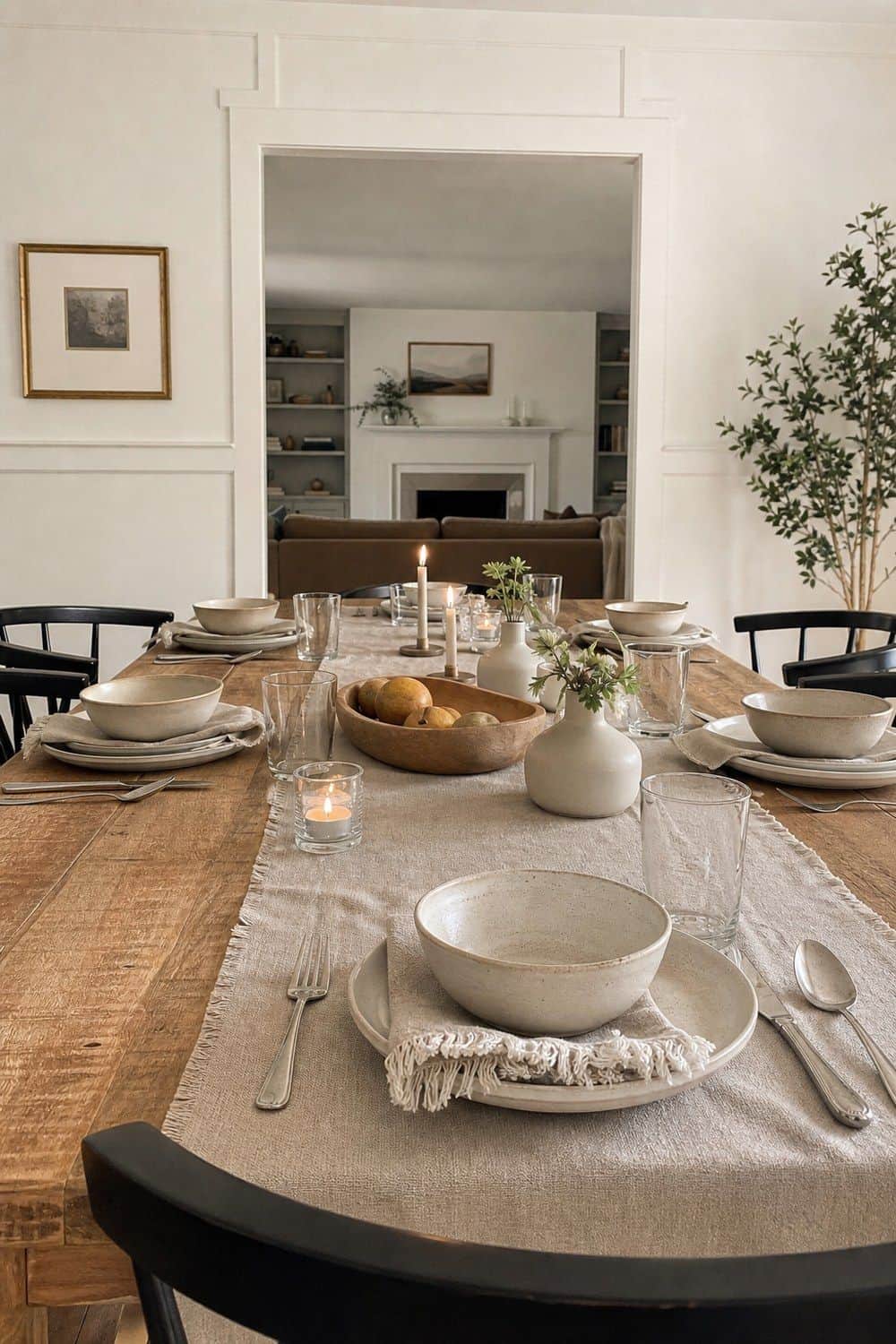
22. Leave a Clear Lane for Serving Platters
Dinner needs a landing place, not just a pretty first photo. Decide where the main platter, salad bowl, bread, and water pitcher will go before the table is full of candles and vases.
A clear serving lane can run down one side, across the center, or near the host’s seat, depending on the meal. This is the difference between a tablescape that photographs well and one people can actually eat at comfortably. Leave that lane empty from the start so you are not rearranging candles with hot dishes in your hands.
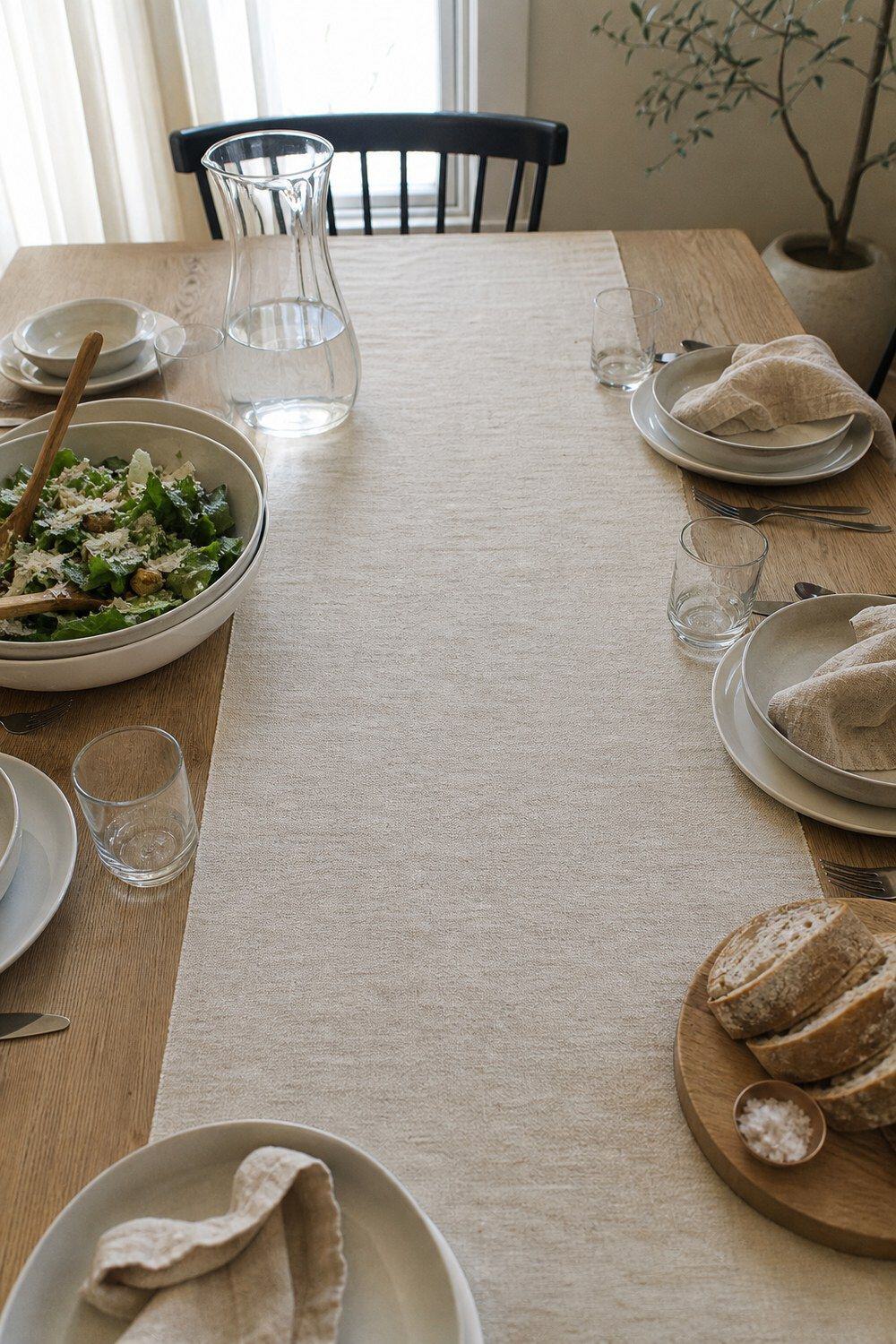
23. Add One Espresso Accent for Contrast
One dark accent keeps a warm neutral table from turning into a blur of beige. Espresso candleholders, a walnut serving spoon, brown linen ribbon, dark figs, or a deep wood bowl can add just enough contrast. Keep it to one or two moments. The point is not to make the table dark, but to give the cream, oatmeal, taupe, and sand tones something to push against so the softer pieces look more layered. That contrast can be tiny, but it keeps the lighter pieces from blending into one pale wash.

24. Use Pears or Figs as Seasonal Warm-Neutral Decor
Pears, figs, dates, nuts, and small apples bring natural warm color without buying extra decor. They add life to the table while staying close to the palette, especially if the rest of the centerpiece is linen, ceramic, wood, and candlelight.
Use fruit in one bowl, on a bread board, or at a few place settings. Keep it edible and clean, and avoid scattering too much produce where plates and glasses need to land. Seasonal details should feel generous, not staged.

25. Simplify the Table Before Guests Sit Down
The final pass is what keeps a warm neutral tablescape from becoming beige clutter. Remove anything that blocks plates, elbows, drinks, serving platters, or conversation. If a vase, candle, or decorative bowl makes dinner harder, move it to the sideboard.
Look at the table from a seated position, not just from above. You should be able to see the person across from you, reach your glass, and pass bread without negotiating with the centerpiece.
A calm table usually needs one less thing than you think. Let the linen, plates, candles, and food carry the mood. If the table feels better after removing a piece, trust that instinct and let the remaining layers breathe.

How to Build a Warm Neutral Table Without Flat Beige
A warm neutral tablescape works best when each layer has a different material job. Linen softens the base, seagrass or rattan adds texture, stoneware gives weight, glass brings lightness, brass adds warmth, wood adds depth, and one espresso accent gives contrast.
Separate the base layer, place-setting layer, centerpiece layer, candlelight layer, and serving layer as you set the table. Use unscented candles so fragrance does not compete with food, keep centerpieces low enough for conversation, and leave space where platters and drinks can actually go. A neutral dinner table should feel calm because it has been pared back, not because every item is the same color.
Frequently Asked Questions
What colors work for a warm neutral tablescape?
Use oatmeal, flax, cream, ivory, taupe, mushroom, camel, amber, wheat, walnut, espresso, and aged brass. The best warm neutral table mixes several of these tones instead of relying on one beige shade. Add clear glass or cream ceramics when the table needs lightness.
How do you make a neutral tablescape not look boring?
Layer texture, vary height, and mix finishes. Use linen, woven placemats, matte stoneware, ribbed amber glass, low ceramic bowls, wood boards, votives, and one darker accent. A neutral table looks boring when every piece has the same color, height, and texture.
What centerpiece works best for a warm neutral table?
Low centerpieces work best because they keep conversation easy. Try a ceramic bowl with pears or figs, small bud vases, olive branches, dried wheat, unscented candles, or a low compote bowl. Avoid tall flowers that block guests across the table.
Should candles on a dinner table be scented?
No. Dinner table candles should usually be unscented so fragrance does not compete with the food. Use taupe tapers, ivory candles, or low votives for glow. Save scented candles for an entryway, powder room, or living area away from the meal.
How do you set a calm dinner table?
Start with a simple linen base, add layered plates, choose restrained glassware, keep centerpieces low, and leave enough room for food and drinks. A calm dinner table should feel pared back and useful, not empty or overly decorated.
What plates look best on a warm neutral table?
Cream, ivory, mushroom, speckled stoneware, and matte ceramic plates work well. They feel softer than cold bright white and layer naturally with linen, rattan, amber glass, wood, and brass. Use salad plates in a slightly deeper neutral for dimension.
How can I make a neutral tablescape feel more expensive?
Use real materials where possible: linen, stoneware, rattan, wood, glass, and aged brass. Keep the palette restrained, avoid flimsy disposable pieces, and leave space around each layer. A few substantial pieces usually look better than many small decorations.
How much decor should be on a dinner table?
Use enough decor to create a clear mood, but leave room for serving platters, drinks, elbows, and conversation. Low bowls, bud vases, candles, and one useful serving layer are usually plenty. Remove anything that has no job once dinner begins.
Final Thoughts
The best warm neutral tablescape ideas are specific, layered, and useful. Start with oatmeal linen, add cream and mushroom plates, bring in woven texture, amber glass, aged brass, low centerpieces, unscented candles, and one darker accent, then simplify the table so dinner still has room. When every material has a job, a calm dinner table feels warm and inviting without turning into flat beige clutter.