

The best rustic farmhouse dinner party ideas start with a sturdy table, simple linens, woven texture, generous family-style food, low greenery, warm candlelight, easy drinks, and pie for dessert. Keep the table useful first, then add charm through real materials instead of themed props.
Rustic farmhouse dinner party ideas work best when the meal feels warm, generous, and easy to sit down to. The style is not about turning the dining room into a barn scene. It is about sturdy pieces, good food, soft texture, candlelight, and a table that makes people want to stay for another serving.
Think of the whole evening as a comfortable flow: guests arrive, nibble on something simple, pass hearty dishes, pour drinks without asking, and linger over pie and coffee. A few beautiful materials can carry the mood, but the real charm comes from making the meal easy to share.

You Might Also Like These Blog Posts
- Dinner Party Ideas
- Tablescape Ideas
- French Country Dinner Party Ideas
- Cottagecore Dinner Party Ideas
- Farmhouse Kitchen Ideas
1. Anchor the Meal With a Solid Wood Table
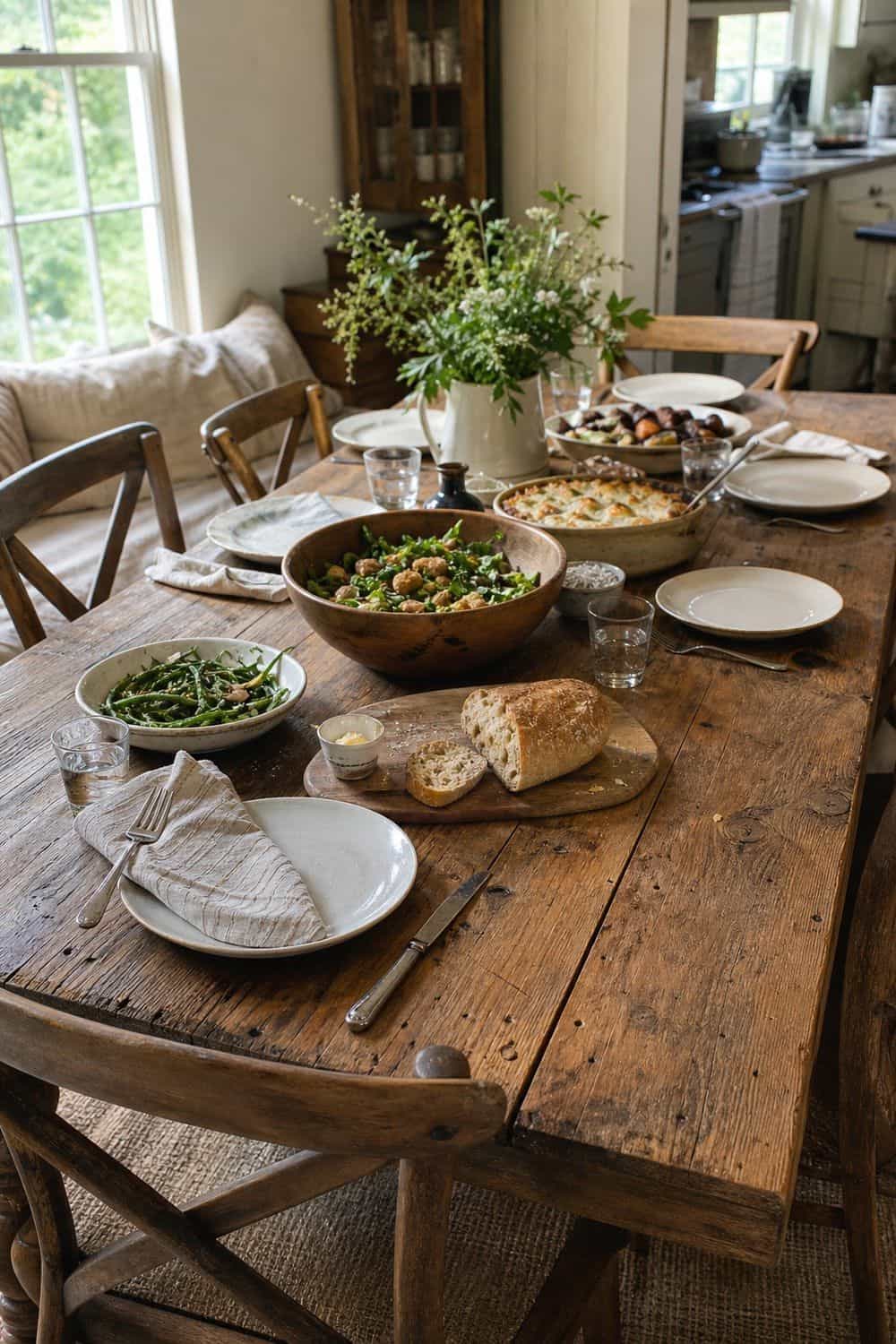
A rustic farmhouse dinner party feels grounded when the table looks like it can handle real serving bowls, elbows, bread crumbs, and another round of coffee. Use the best wood table you have, whether it is new, vintage, inherited, or simply a sturdy modern piece with visible grain. Leave enough room around it for guests to pull out chairs and pass platters without twisting sideways. If the finish has a few marks, let them be part of the warmth instead of hiding every imperfection.
2. Use Benches on the Tight Side

Benches are useful when one side of the table sits near a wall, window, or walkway and chairs would make the room feel pinched. Pair a bench with regular chairs so guests who want back support still have a comfortable option. A thin cushion, folded quilt, or linen throw softens the seat without making it look staged. Keep the bench light enough to slide, because farmhouse seating should feel generous and relaxed, not like everyone has to solve a puzzle before dinner.
3. Start With a Washed Linen Runner
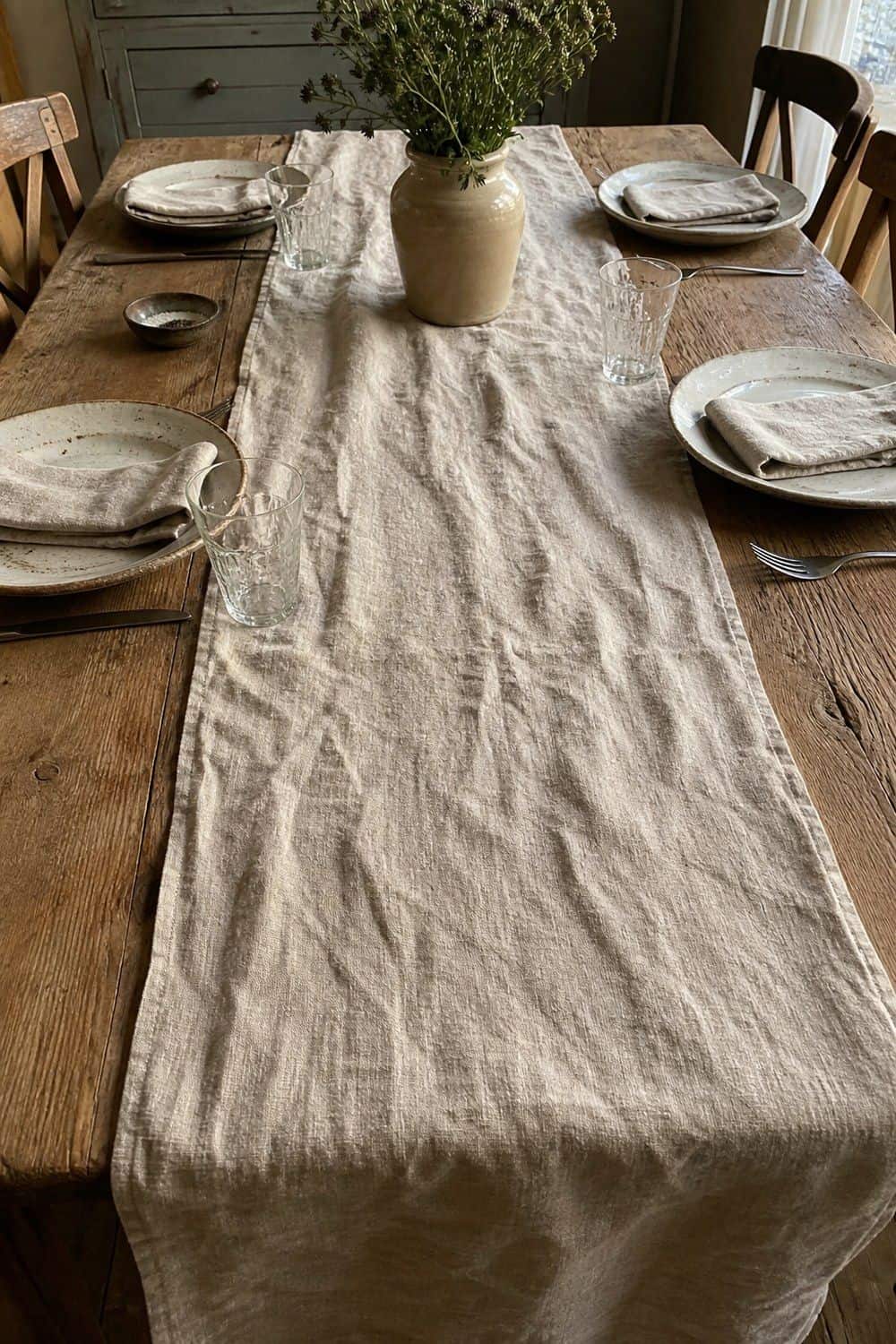
A washed linen runner gives the table softness while still letting the wood show through. Choose oatmeal, flax, cream, faded stripe, or a quiet check if you want pattern without pushing the table into costume territory.
Let the runner fall casually down the center, then leave open wood on both sides for plates, glasses, and warm serving dishes. I like this better than a full tablecloth for farmhouse hosting because it feels easier, more tactile, and less formal. A few soft wrinkles are completely fine here.
4. Layer Woven Placemats Under Simple Plates
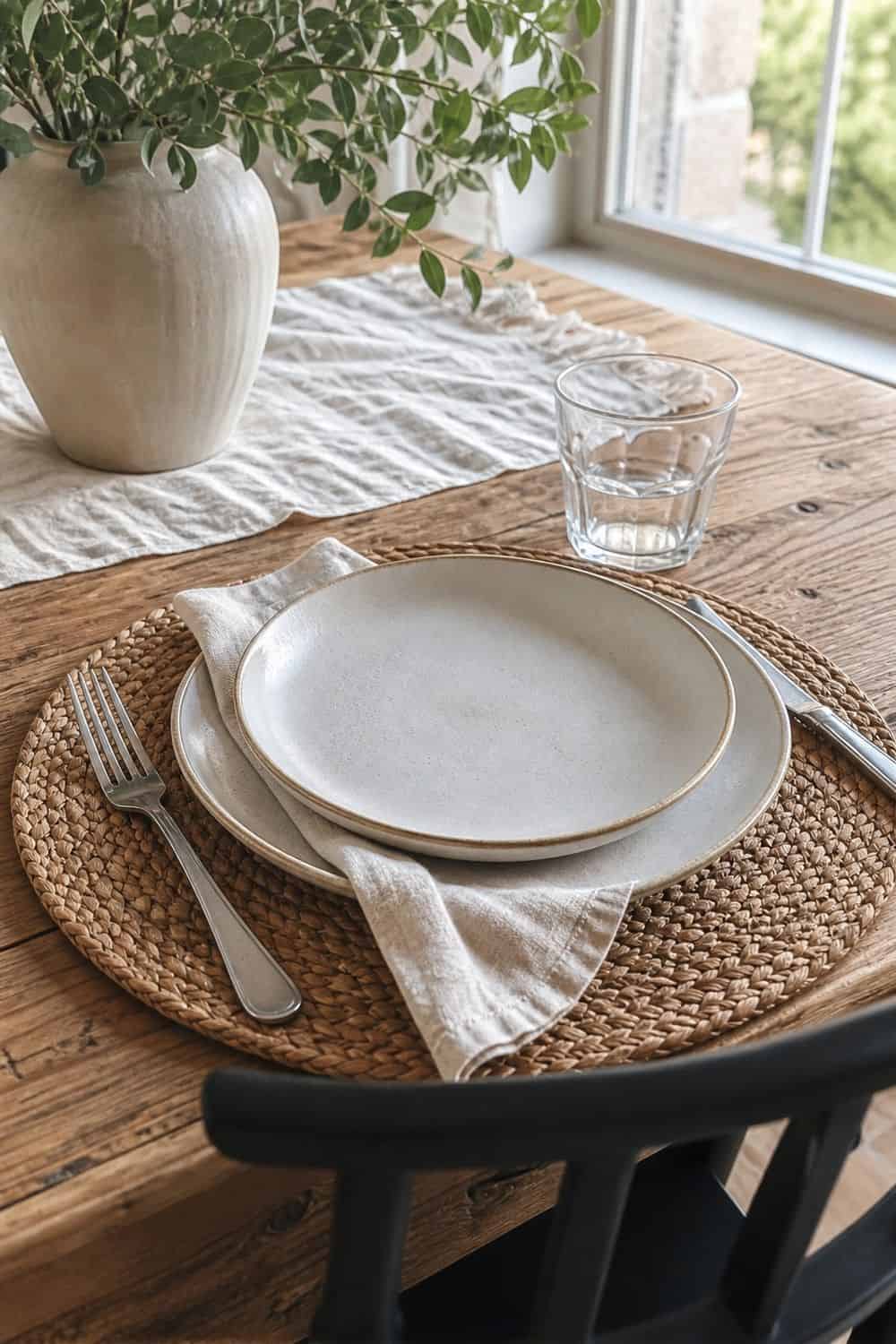
Woven placemats add texture and protect the table from warm plates, sauce drips, and the little scrape of cutlery during a long meal. Keep them natural and unfussy: jute, seagrass, rattan, or a flat woven cotton all work. Pair them with simple cream stoneware, white ceramic, or a few mismatched vintage plates instead of matching every detail. The woven layer should make each place setting feel warm and settled, while still leaving enough center space for family-style dishes and bread.
5. Set Out Heavy Ceramic Dinner Plates
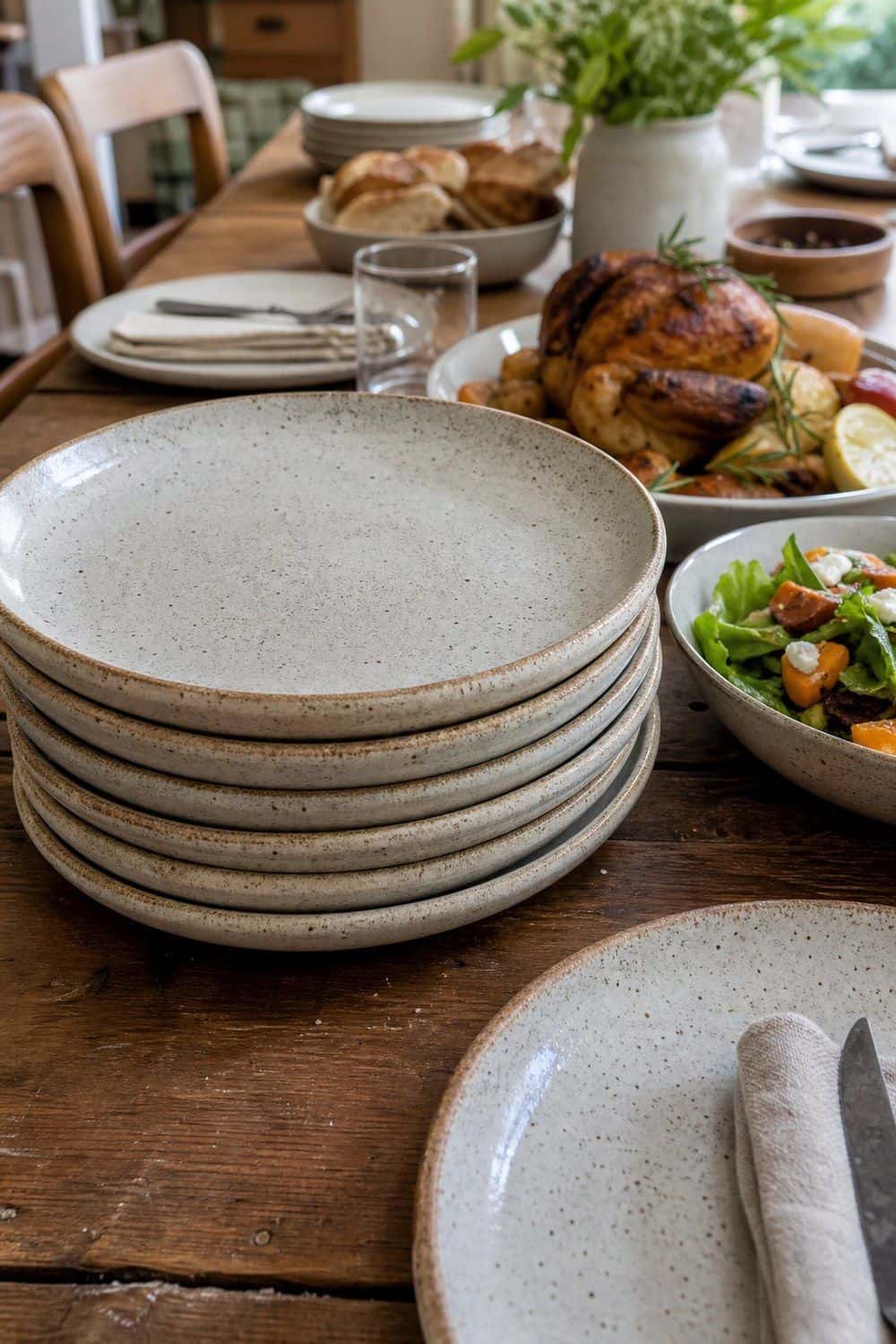
Heavy ceramic plates suit a farmhouse table because they feel steady under roast chicken, braised meat, potatoes, salad, and bread passed from hand to hand. Look for warm white, cream, oatmeal, soft gray, or speckled glaze instead of delicate formal china. A slightly handmade rim feels lovely here, especially if the plates are not all identical. Stack extras near the sideboard if seconds are likely, so the table stays welcoming without crowding every place setting or making refills awkward later.
6. Serve Roast Chicken on a Carving Platter
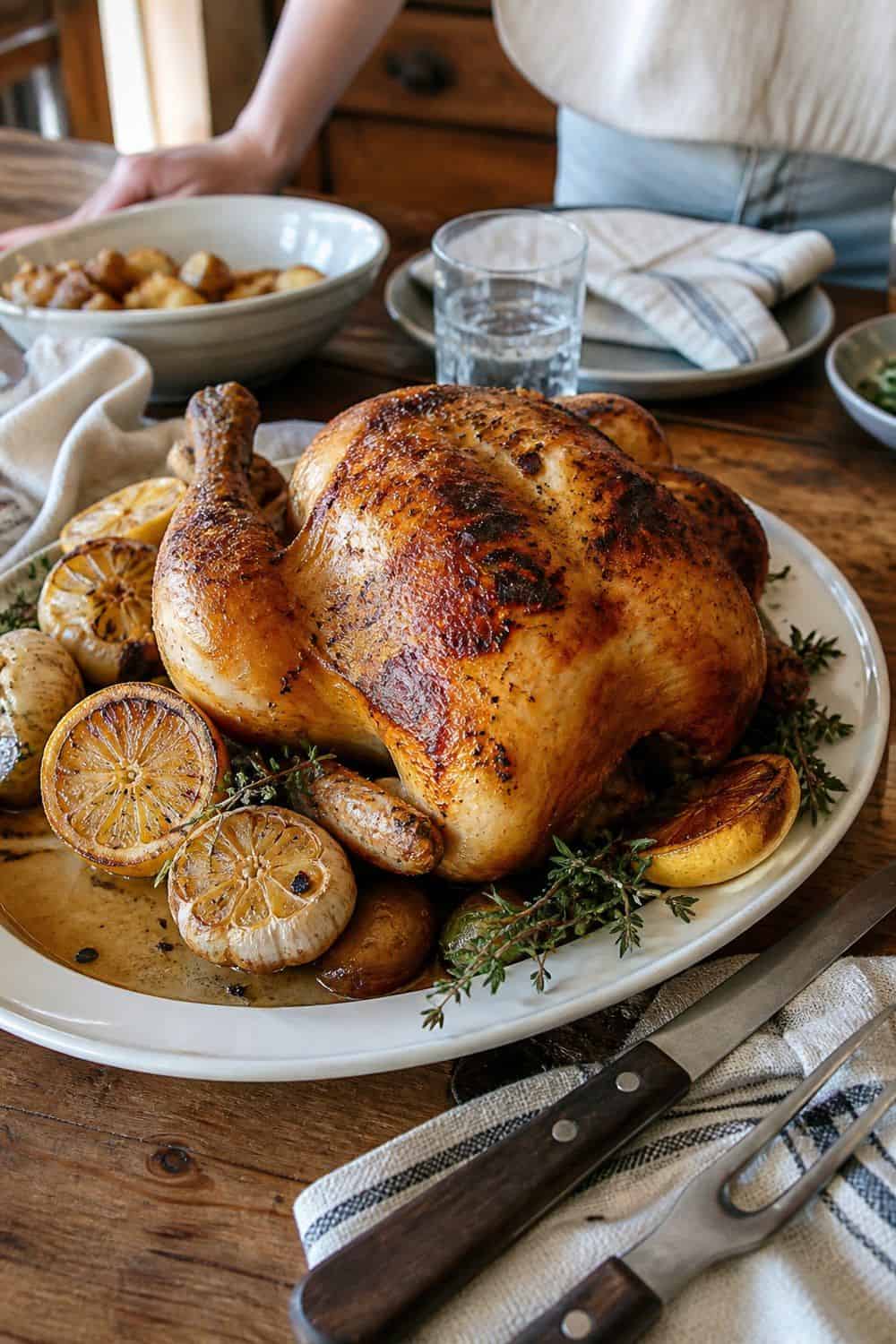
Roast chicken is one of the easiest ways to make the meal feel generous without turning dinner into a performance. Serve it whole for a pretty arrival, or carve it before it reaches the table if guests will be passing plates.
Add roasted garlic, lemon halves, herbs, potatoes, or pan juices so the platter looks abundant and useful at the same time. A large carving platter keeps the main dish contained and gives you room for the good bits everyone wants to spoon over their plate.
7. Make a Dutch Oven Braise
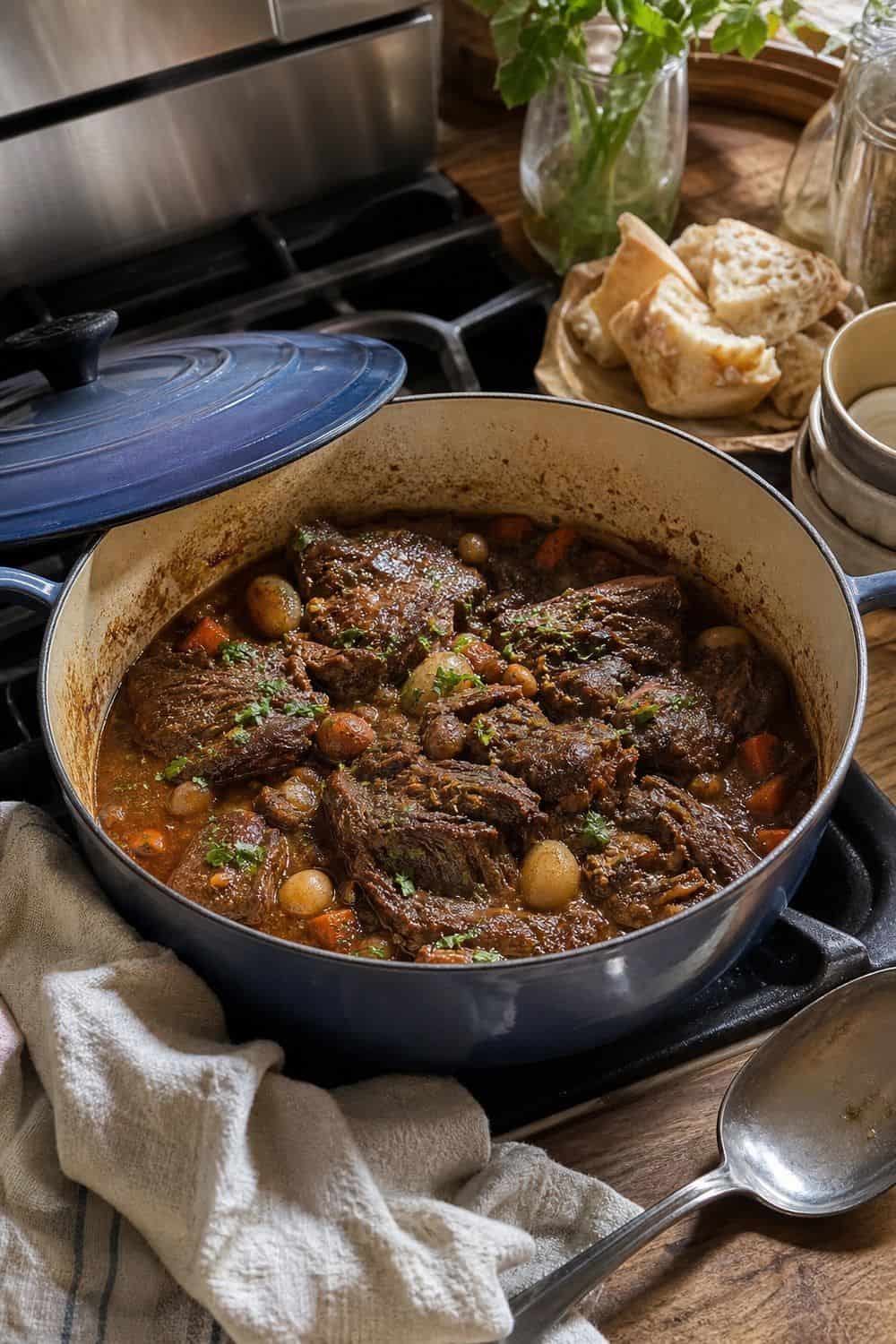
A Dutch oven braise is perfect for a farmhouse dinner because most of the work happens before guests arrive. Think beef, pork shoulder, short ribs, beans, chicken thighs, or a mushroom stew that can sit warmly on the stove until the table is ready. Bring it out in the pot if it looks good, or transfer it to a wide serving bowl for easier passing. Either way, the point is a main dish that tastes slow and comforting without making you disappear into the kitchen.
8. Serve Soup or Chili From One Pot
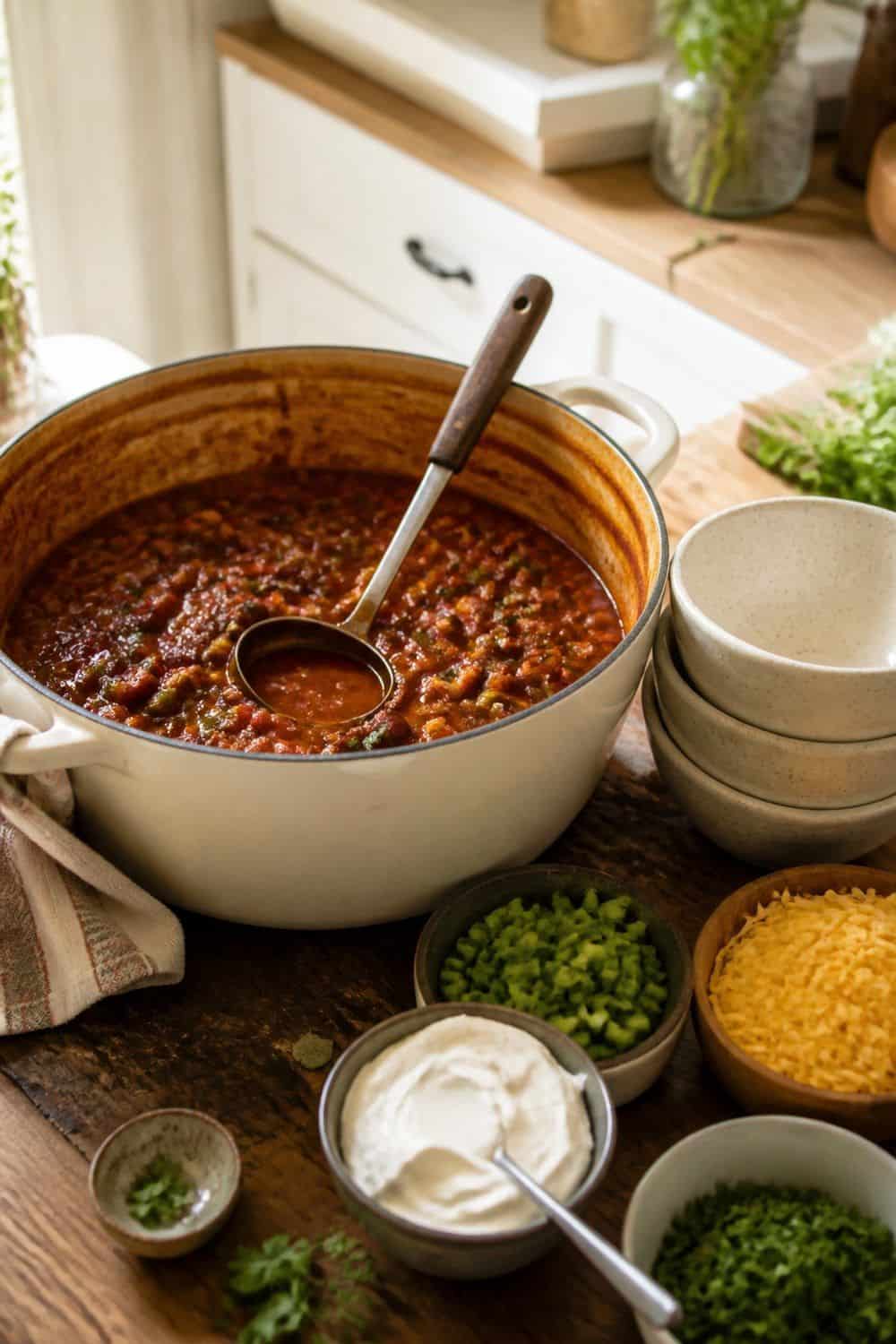
Soup or chili turns the whole dinner into something cozy and low-pressure, especially when the weather is cool or the guest list is casual. Set bowls near the pot, add a ladle rest, and keep toppings together in small bowls: scallions, cheese, herbs, sour cream, crackers, or chopped pickles. This is different from a braise because the rhythm is ladle, top, sit, and settle in. It also gives the host a little breathing room once everyone starts serving themselves and talking.
9. Put Biscuits in a Linen-Lined Basket
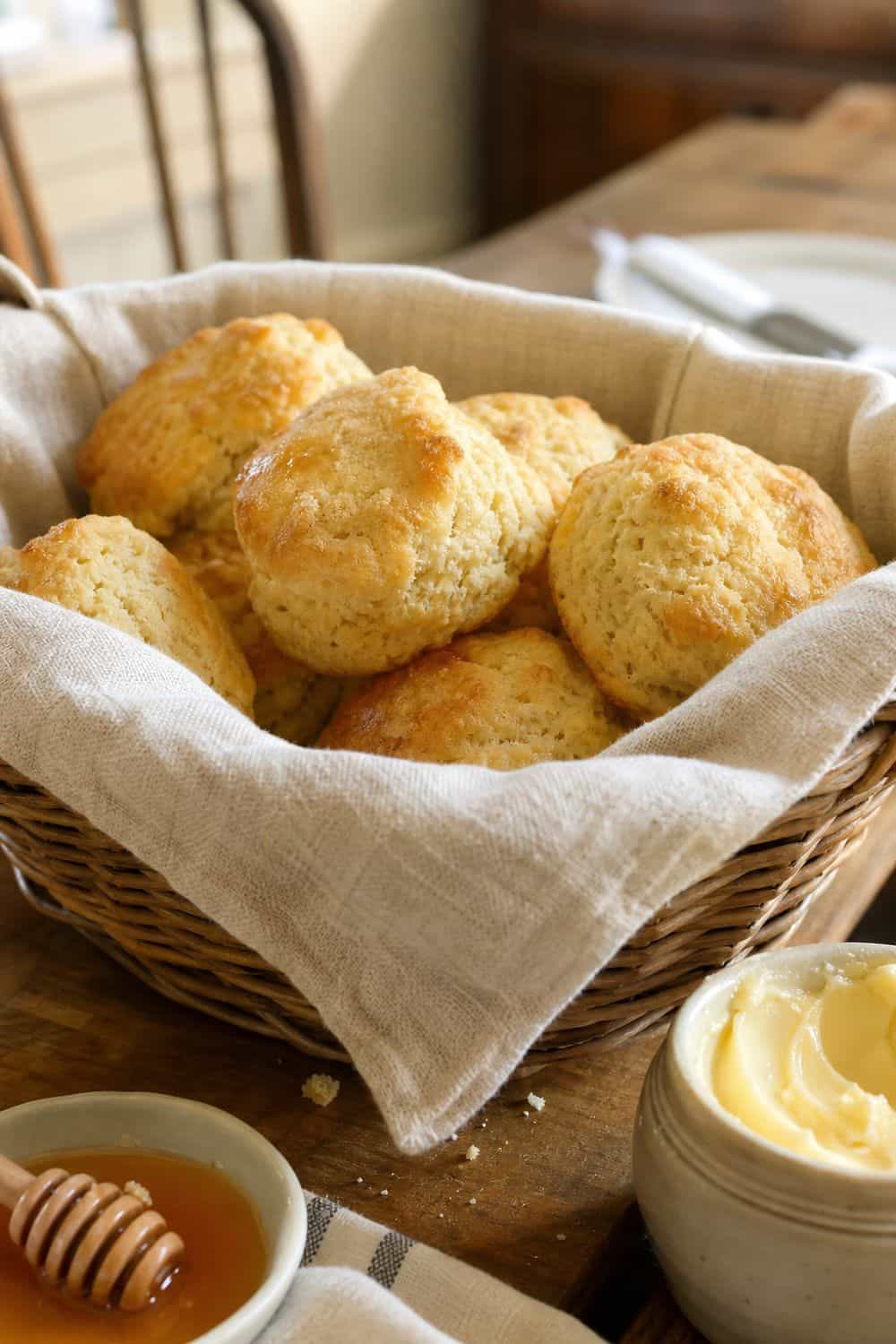
Bread is one of the first things people reach for, so give it a proper little moment. Line a basket with a linen towel and fill it with warm biscuits, cornbread muffins, rolls, or sliced country bread. Add softened butter, honey, jam, or herb butter nearby so guests are not hunting through the kitchen. Keep the towel folded over the top until dinner starts, then open it at the table like a small invitation for passing around together as dinner begins.
10. Bake Cornbread in a Cast Iron Skillet
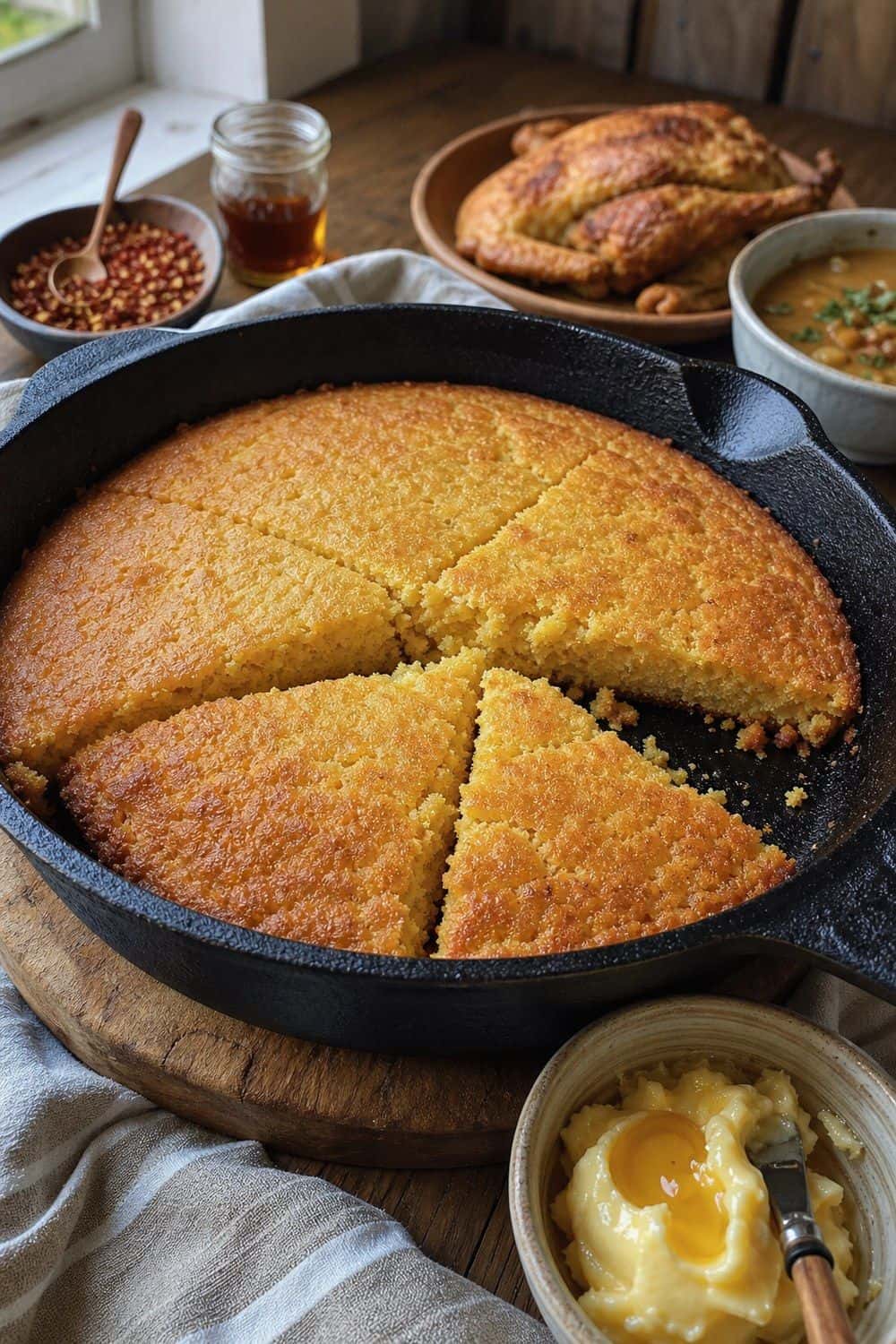
Cast iron cornbread brings crisp edges, a golden top, and that oven-to-table feeling farmhouse dinners do so well. Set the skillet on a sturdy trivet and slice it before guests begin passing food.
Honey butter, hot honey, chili, soup, roast chicken, and braised greens all make sense beside it, so cornbread can support several menu directions. If the skillet is heavy, place it where guests can reach with a serving knife rather than asking everyone to lift it across the table.
11. Roast Seasonal Vegetables on Sheet Pans
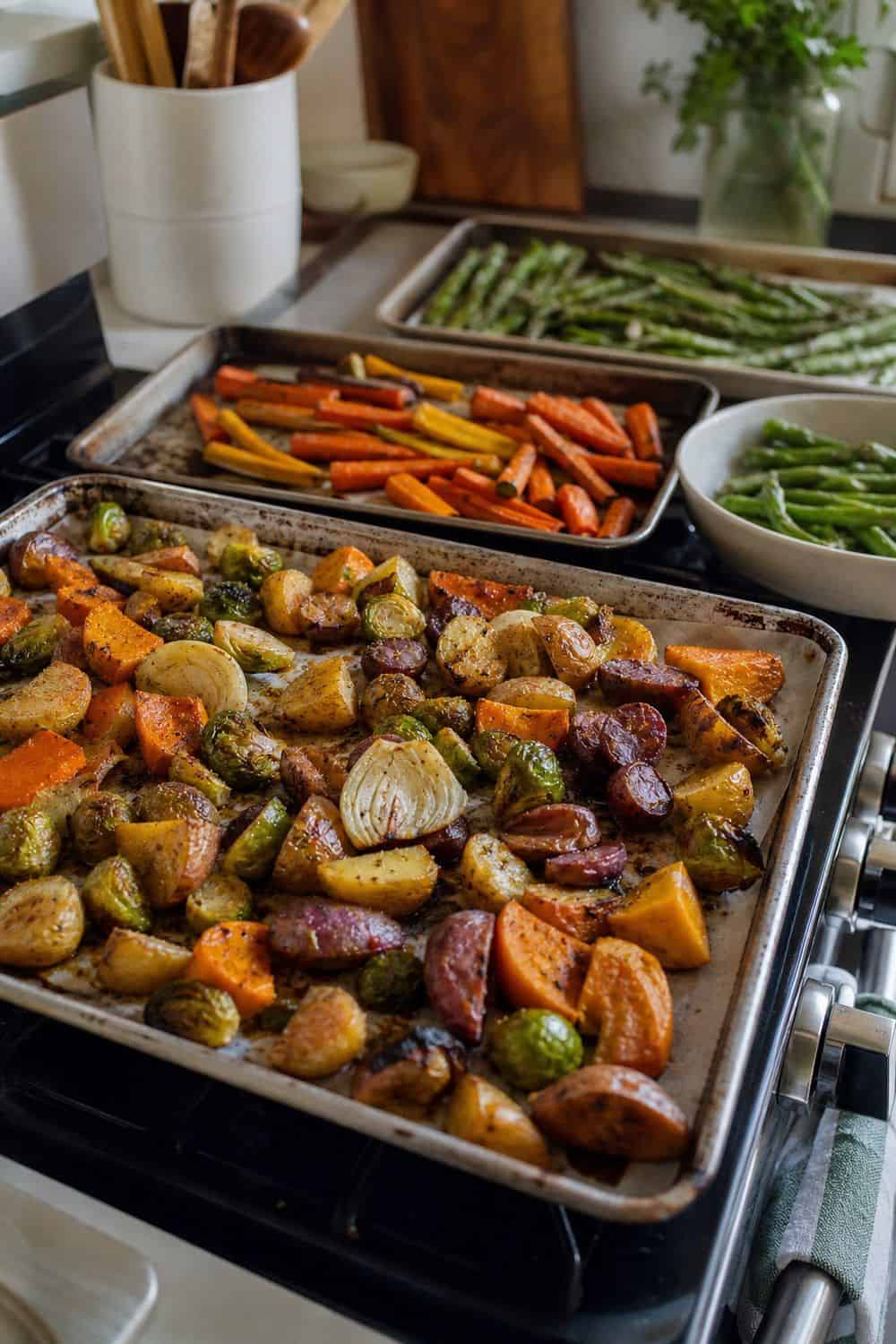
Roasted vegetables keep the menu grounded in the season and make the table feel abundant without needing much decoration. Use carrots, squash, potatoes, onions, Brussels sprouts, green beans, asparagus, or whatever looks good that week. Roast on sheet pans for color and crisp edges, then move everything into a wide bowl or platter so the vegetables are easy to pass. Finish with herbs, flaky salt, lemon, or a spoon of pan juices right before serving dinner to guests at the table.
12. Make One Big Green Salad
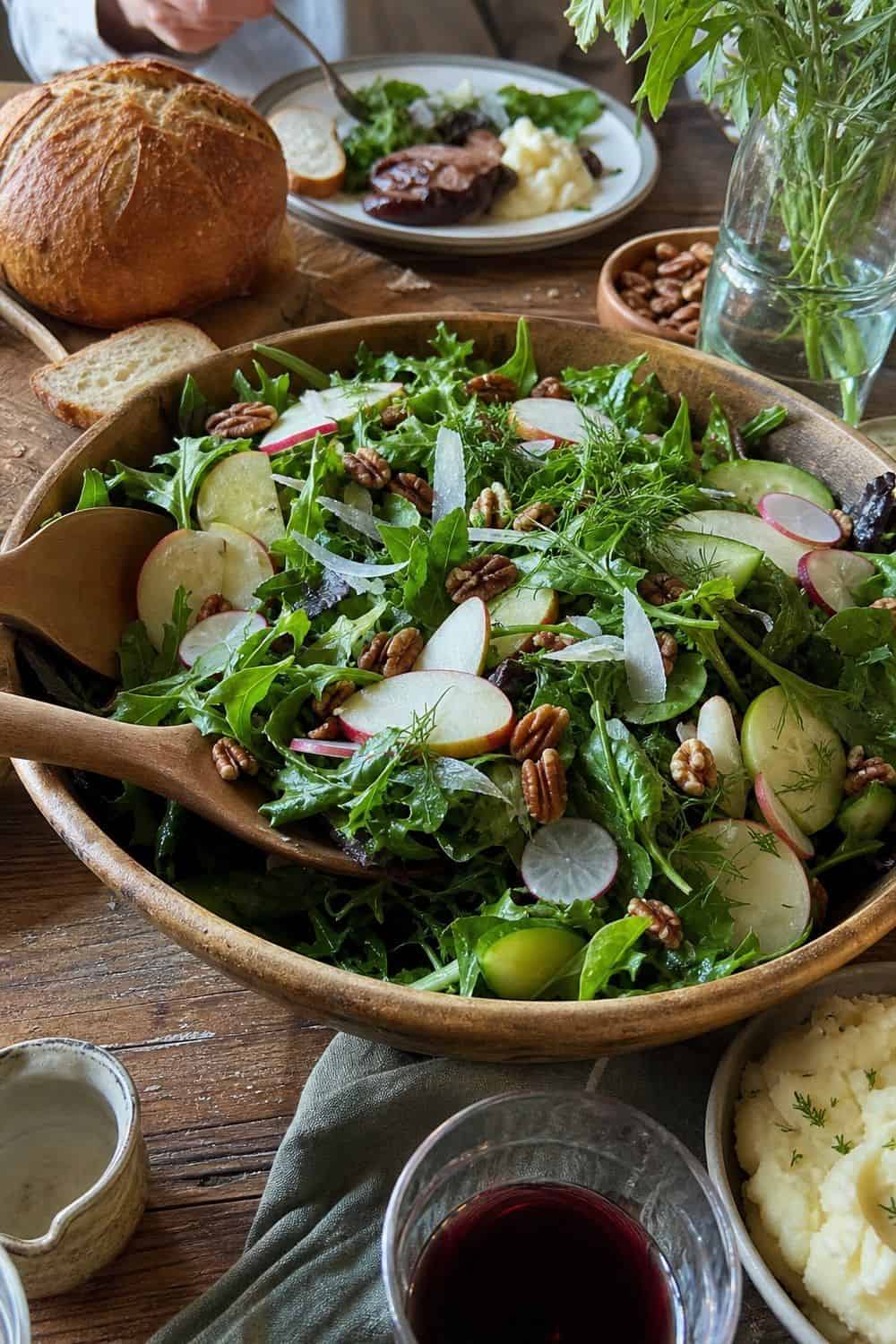
A big green salad brings freshness to a menu that may already have braised meat, bread, potatoes, and pie waiting in the wings. Use sturdy greens, sliced apples or pears, toasted nuts, herbs, shaved cheese, radishes, or cucumbers so the bowl feels full but not fussy. Keep the dressing on the side until the last minute if dinner might linger. A wooden salad bowl looks beautiful here and gives the whole meal a lighter, brighter pause between rich bites too.
13. Use Wooden Boards for Starters
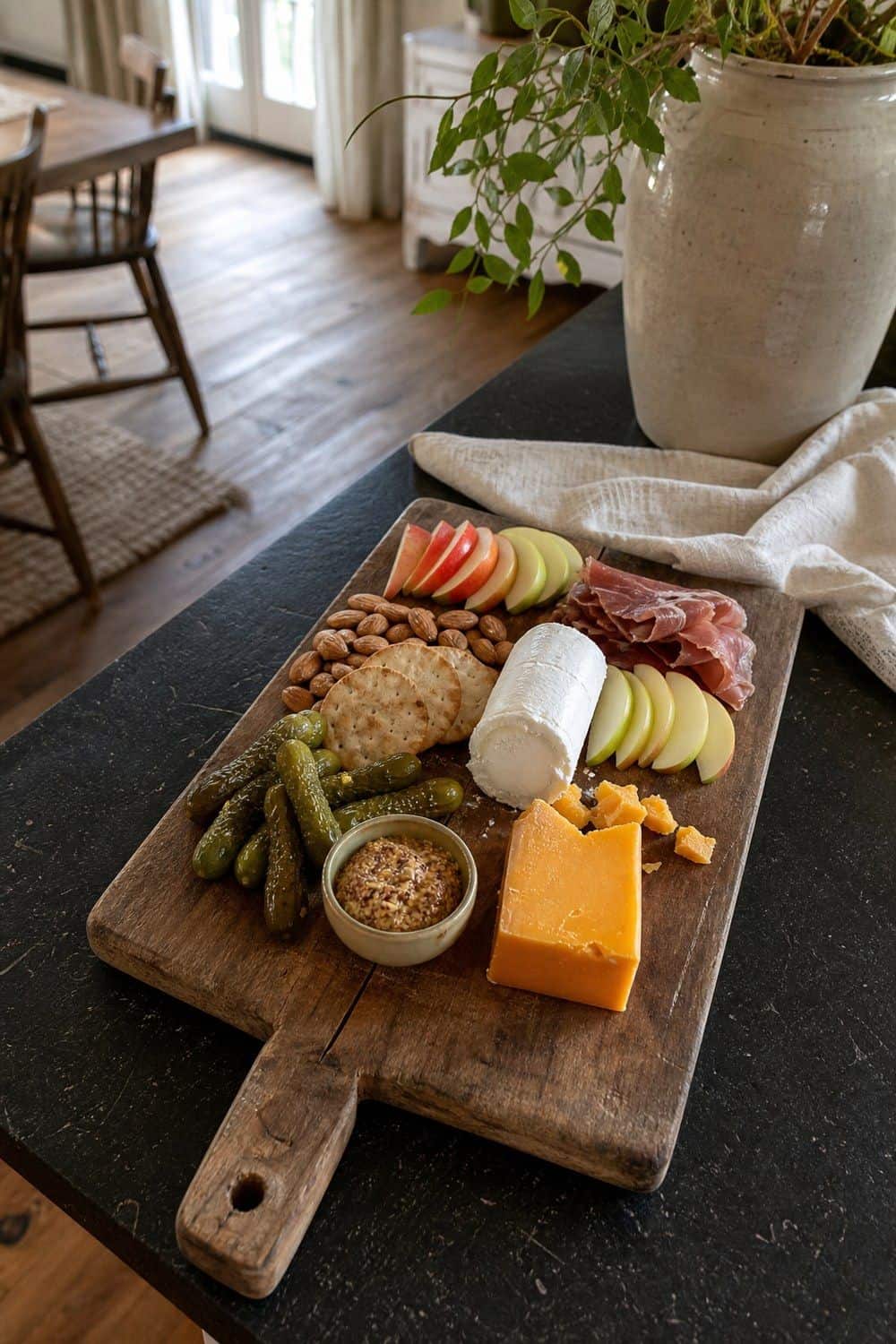
A wooden board can welcome guests without becoming an enormous grazing table that spoils the main meal. Keep it restrained: sharp cheddar, goat cheese, apples, pickles, nuts, crackers, smoked meat, or a little dish of mustard.
Place the board somewhere people can nibble while the final dishes come together, then clear it before dinner if the table needs space. Farmhouse starters work best when they feel hearty and casual, not like a separate event before the real hosting begins at all.
14. Put Pickles and Jams in Small Crocks
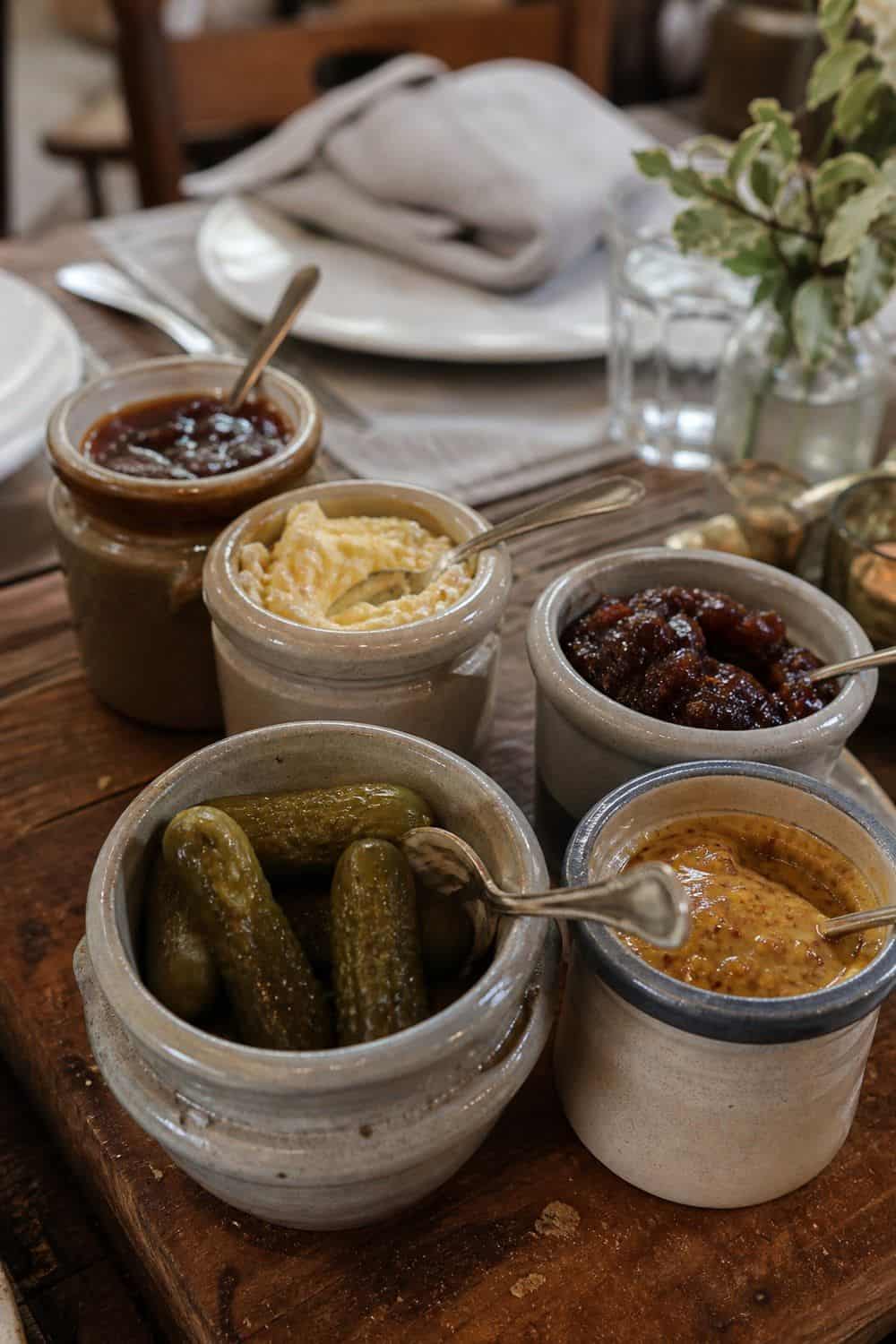
Small crocks make condiments feel intentional and keep jars from cluttering the table. Use them for pickles, onion jam, apple butter, chutney, mustard, honey butter, pepper jelly, or extra flaky salt. Add tiny spoons or spreaders so guests are not dipping knives into every dish. This little detail gives the meal farmhouse character because it feels homemade and useful, but it also keeps sticky lids, labels, and half-empty jars off the dinner table itself during service tonight for everyone comfortably.
15. Use Enamel or Stoneware Serving Bowls
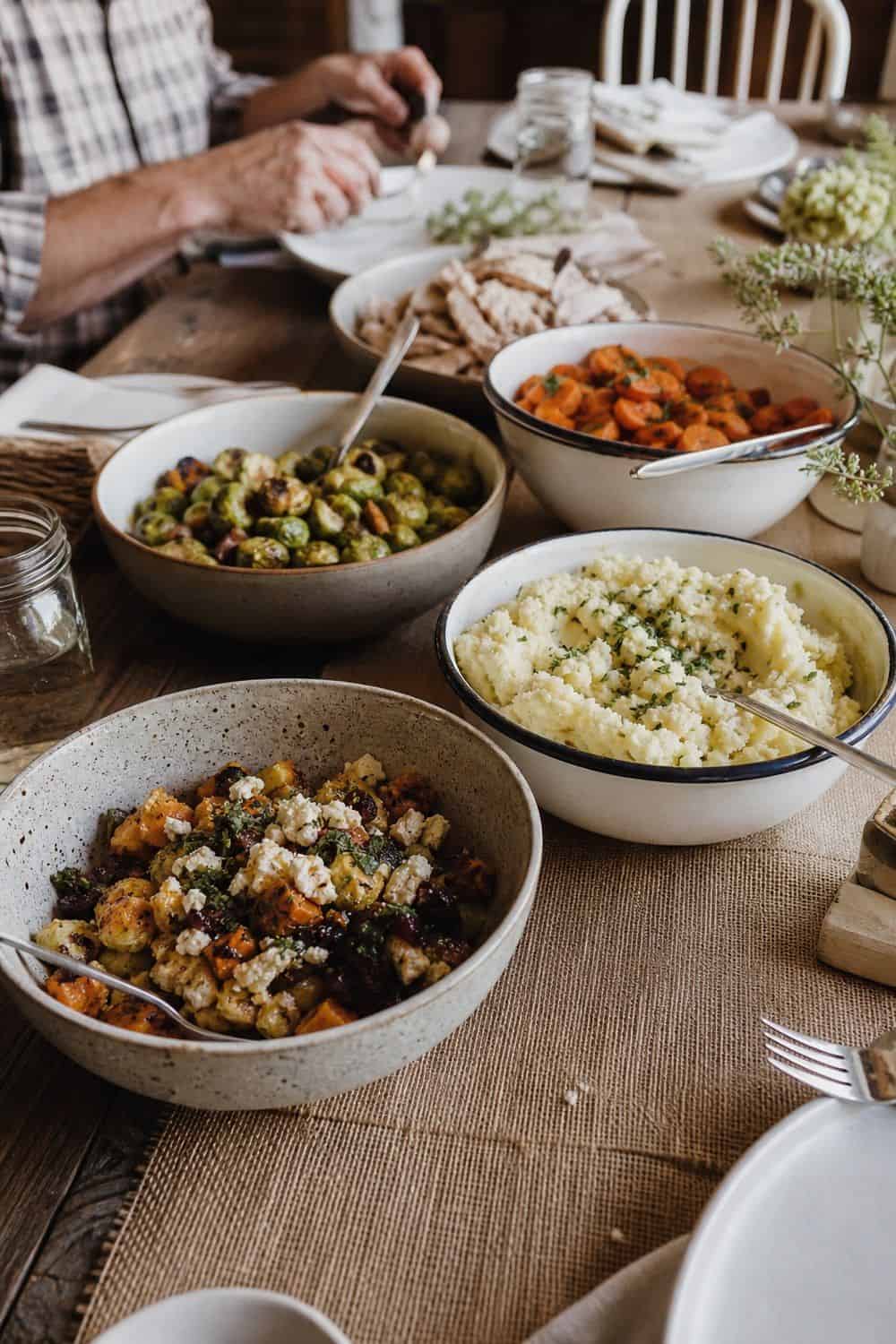
Enamel, stoneware, and ceramic serving bowls look at home with rustic food because they have weight, texture, and a little everyday charm. Choose sizes that guests can actually pass, even if that means using two medium bowls instead of one dramatic bowl that needs both hands. Warm sides, salad, rolls, vegetables, and chips all feel better in real serving pieces than in disposable trays. The table immediately looks more cared for without becoming precious, stiff, or overly formal for supper.
16. Keep the Centerpiece Low With Herbs and Branches
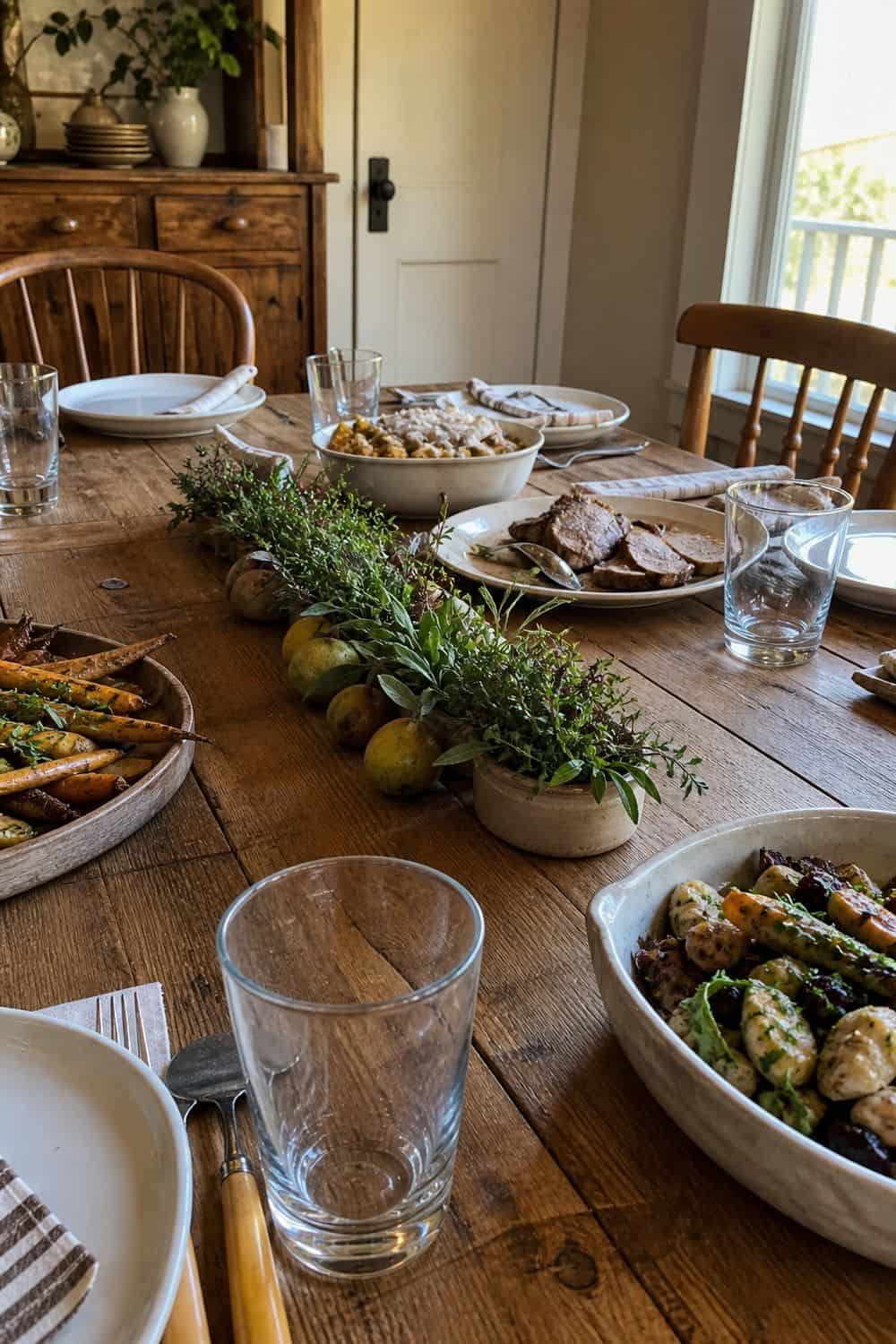
A farmhouse centerpiece should never make it hard to see the person across from you or pass the potatoes. Use a low crock of herbs, a few clipped branches, dried grasses, small pears, or a narrow row of simple greenery.
Keep the center open enough for platters, candles, and elbows. Rosemary, thyme, olive branches, wheat, or backyard clippings can all work when they look natural and low. The table should feel gathered, not arranged for a photo shoot instead of dinner.
17. Add Candlelight in Simple Iron Holders
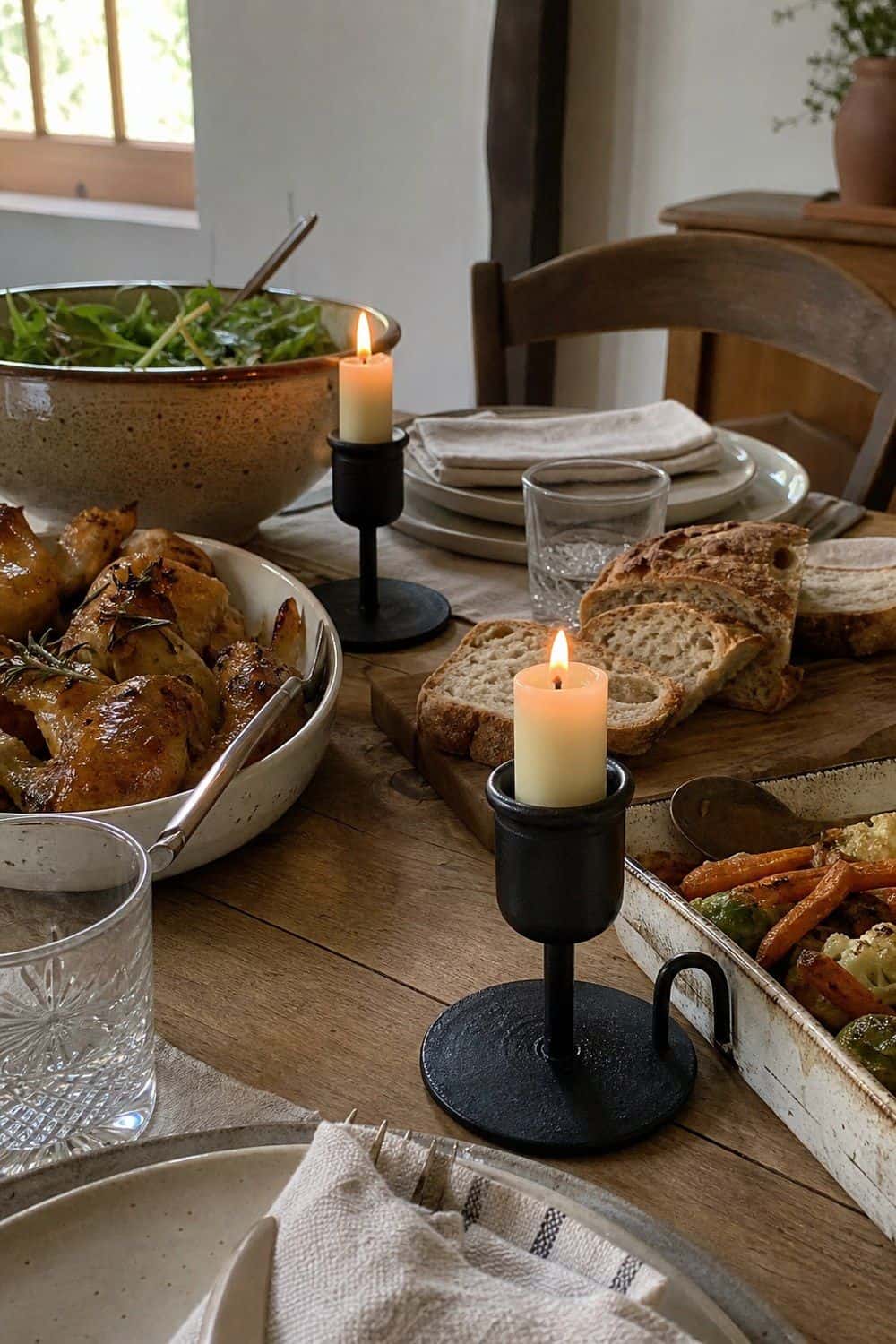
Candlelight gives a farmhouse dinner its glow, but it should stay easy around food. Use short tapers, sturdy black iron holders, aged brass, or simple wooden candlesticks with unscented candles. Keep flames away from sleeves, bread baskets, tall branches, and the path of passing platters. I would rather use fewer candles in the right spots than scatter them everywhere. The mood should feel warm and lived-in, with enough light for guests to actually see what they are eating clearly together.
18. Pour Drinks From a Self-Serve Dispenser
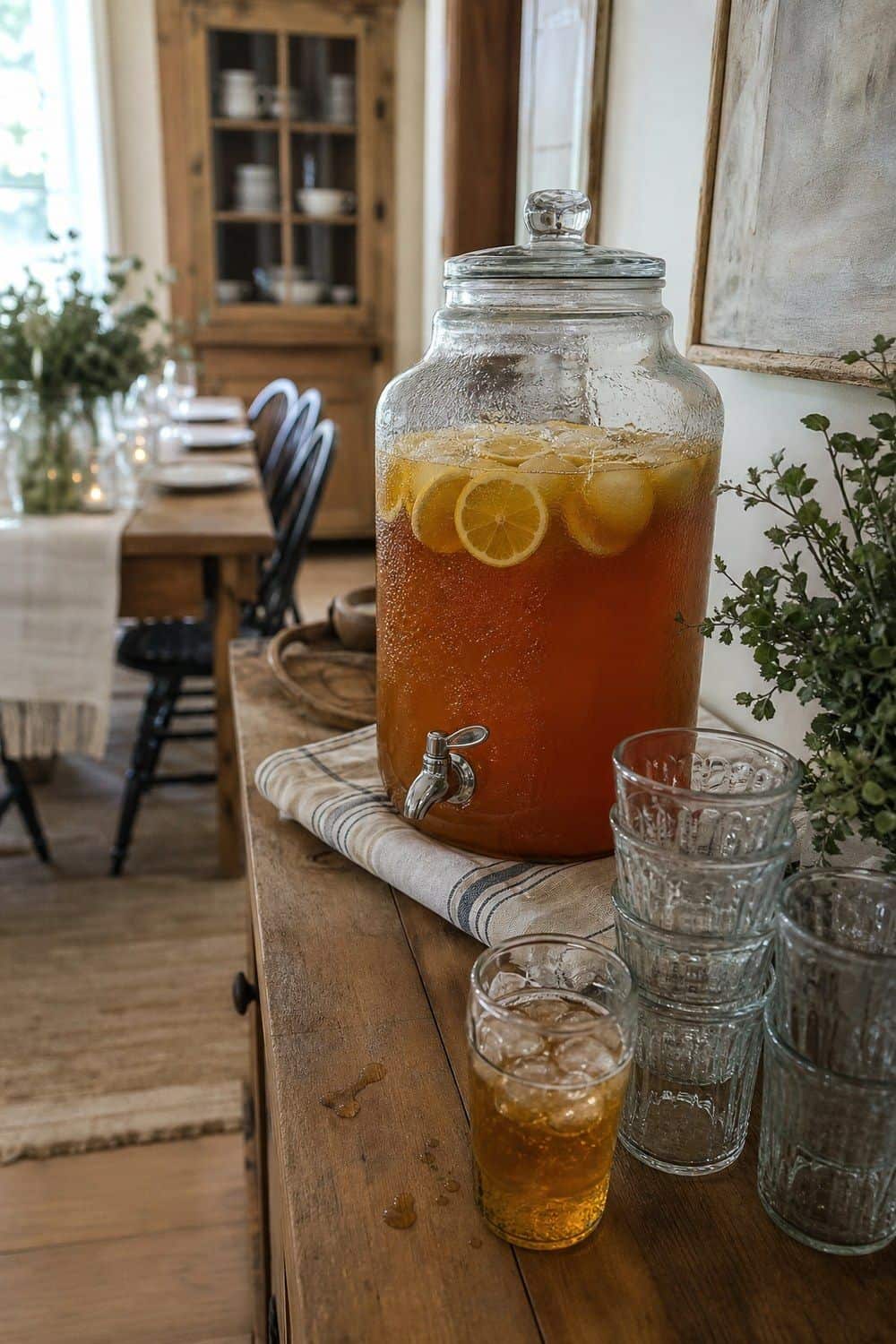
A self-serve drink station keeps the table from filling up with pitchers and half-empty bottles. Put cider, lemonade, iced tea, citrus water, or a simple seasonal punch in a glass dispenser on a sideboard, counter, or small table near the dining area.
Set cups, napkins, ice, and a towel nearby so guests can help themselves without asking where everything is. This keeps the dinner table focused on plates and platters, while the drinks still feel welcoming and easy to refill.
19. Keep Water in Glass Carafes on the Table
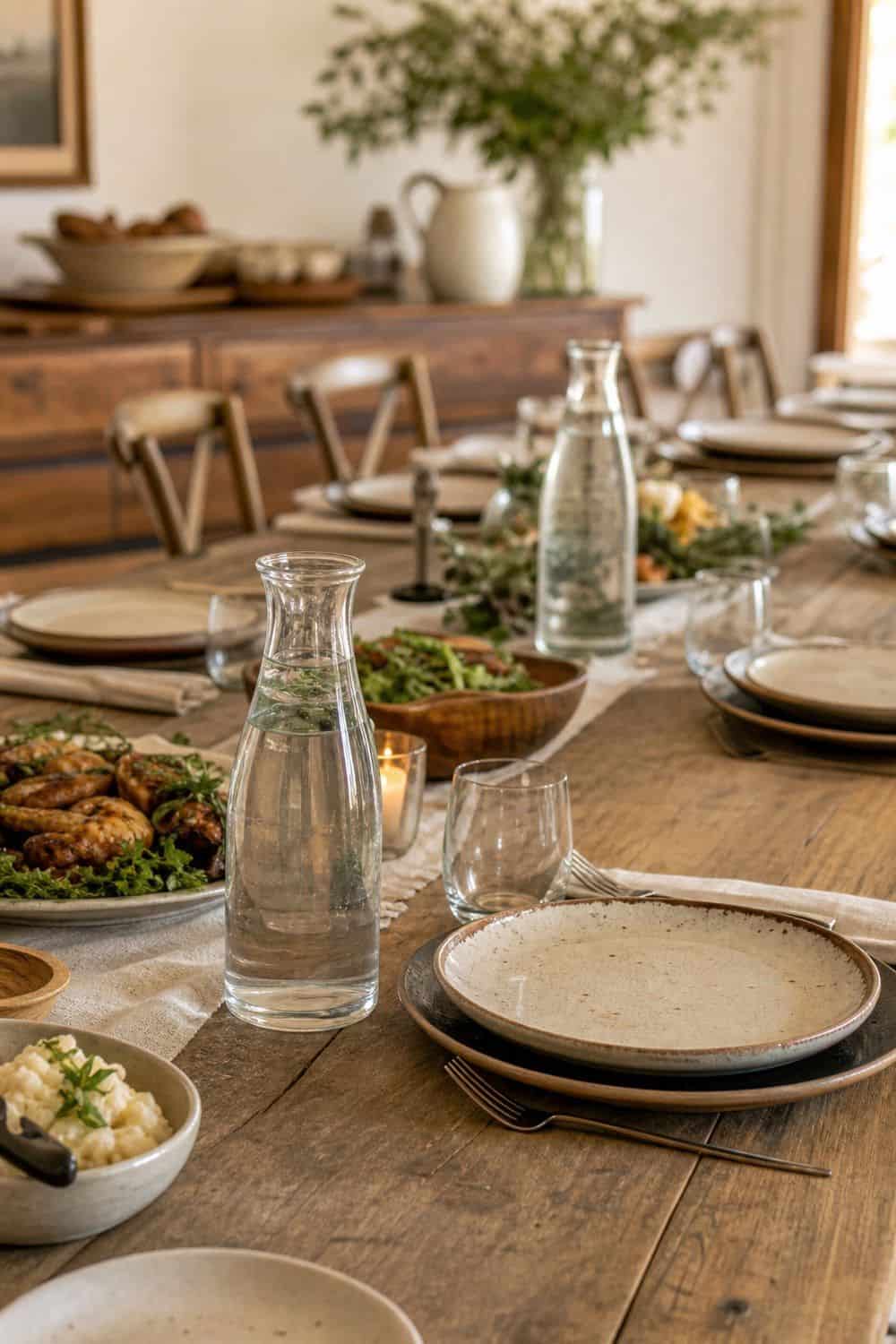
Water should be the one drink that stays easy to reach through the whole meal. Use two smaller glass carafes instead of one heavy pitcher, especially if guests are seated along a long table. Fill them before dinner and refresh them when you clear the main course. A few lemon slices, cucumber ribbons, or herbs are nice, but plain cold water is perfectly enough. The point is that no one has to leave the conversation just to refill a glass.
20. Offer a Baked Pasta or Casserole Backup

A baked pasta, gratin, chicken casserole, or vegetable bake is a generous backup when appetites vary or the guest list includes kids, vegetarians, or people who may not love the main dish. Serve it in a ceramic or enamel baking dish with a wide spoon.
Keep it warm but not buried in the center of the table. It can sit on the sideboard until someone wants seconds, which keeps the table easier to manage and gives the meal that unfussy, everyone-is-covered feeling.
21. Make Pie the Dessert Centerpiece
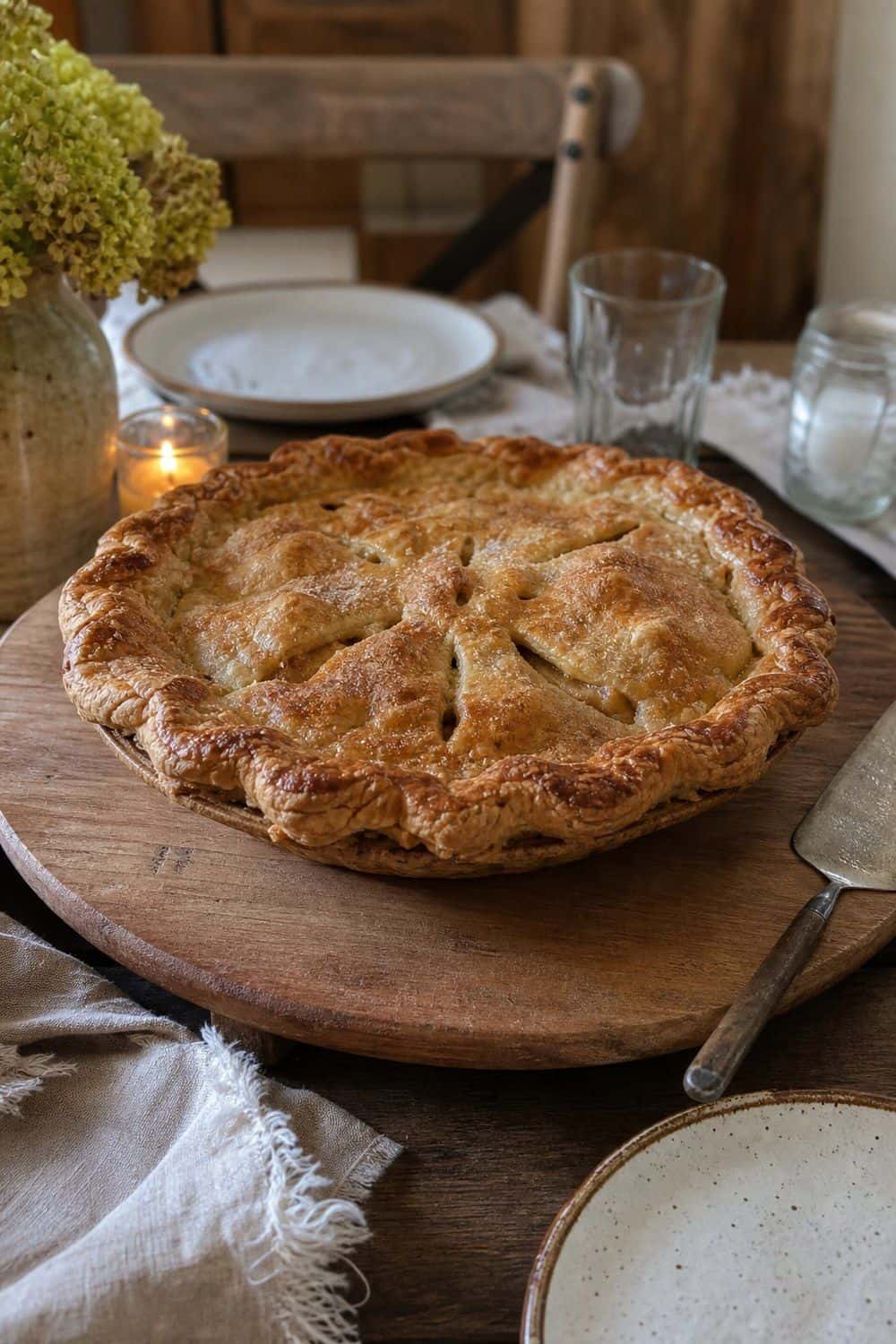
Pie is the dessert that understands a farmhouse dinner. Apple, berry, pecan, chess, pumpkin, peach, or a rustic galette all feel right because they can sit proudly on the table without much styling. Place the pie on a cake stand, wooden board, or folded linen and bring whipped cream, ice cream, or creme fraiche out when it is time to serve. Let dessert be simple and generous; after a hearty meal, that feels more charming than a fussy plated course.
22. Set Up Coffee Cups Before Dessert
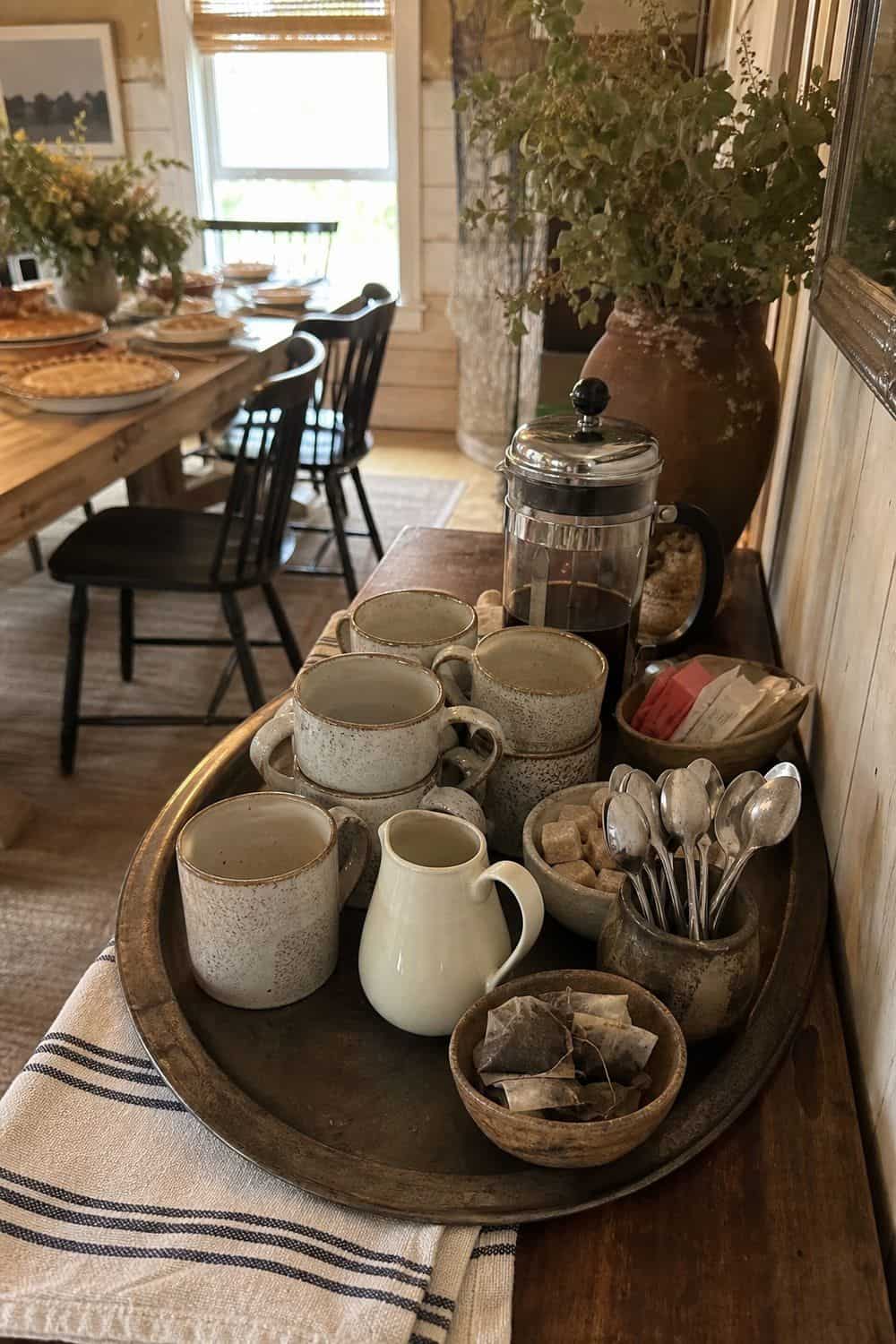
Set up coffee before dessert so the end of the meal feels relaxed instead of rushed. Put mugs, spoons, sugar, cream, decaf, tea bags, and a small waste bowl on a tray or sideboard while dinner is still happening. When pie comes out, you can brew, pour, and sit back down without searching for cups. Stoneware mugs look especially at home here, and mismatched ones are fine as long as they feel clean, sturdy, warm, and comfortable to hold after dinner.
23. Leave a Sideboard for Overflow Platters
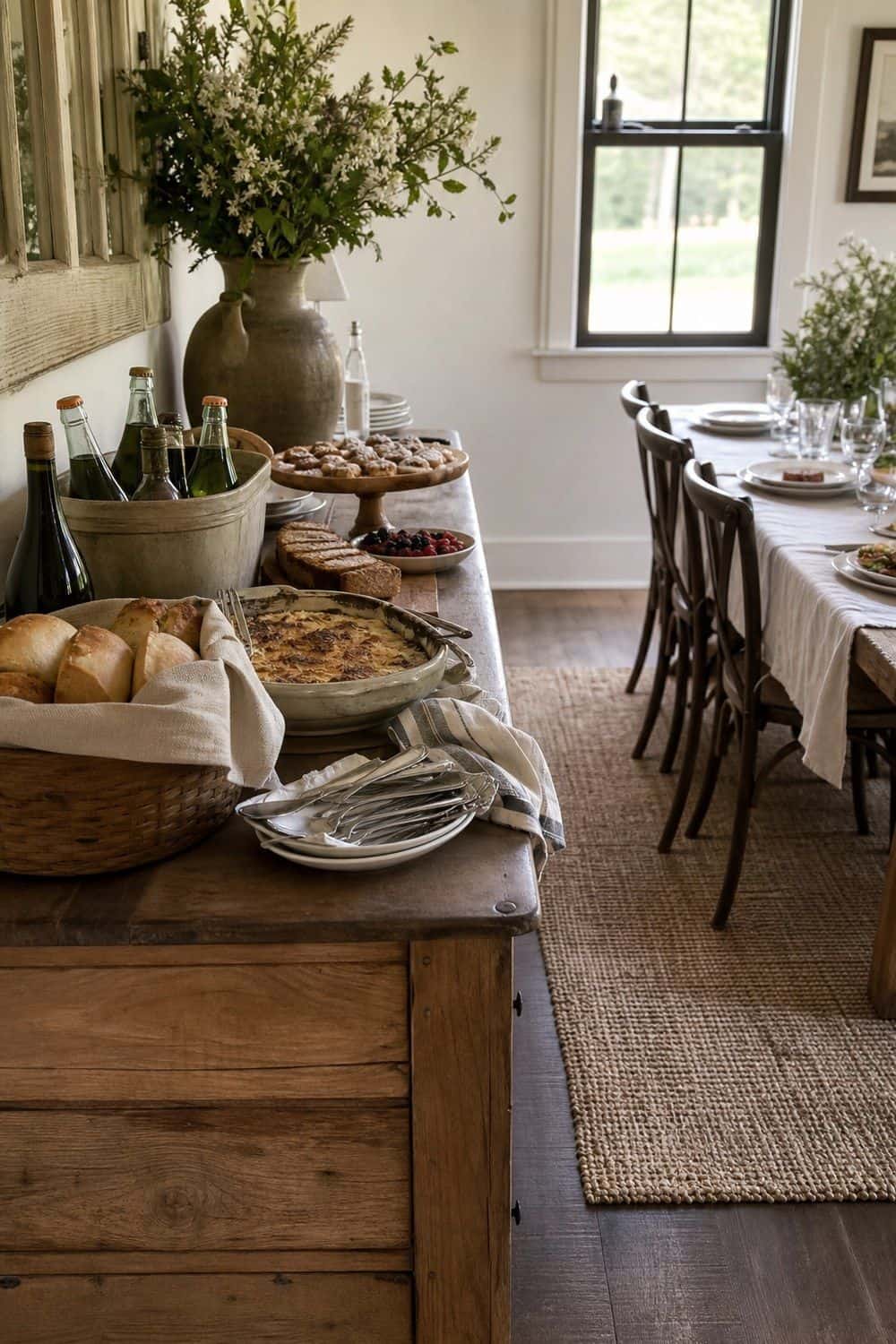
A rustic farmhouse table can only feel relaxed if it has somewhere to breathe. Use a sideboard, counter, console, or cleared shelf for extra bread, backup drinks, dessert plates, casserole dishes, and anything that has already made its first pass.
This keeps the center of the table from becoming a traffic jam of bowls. Leave a clear path between the table and the overflow spot, and keep serving utensils with the dishes so guests know they are welcome to help themselves.
24. Make the Decor Collected, Not Themed
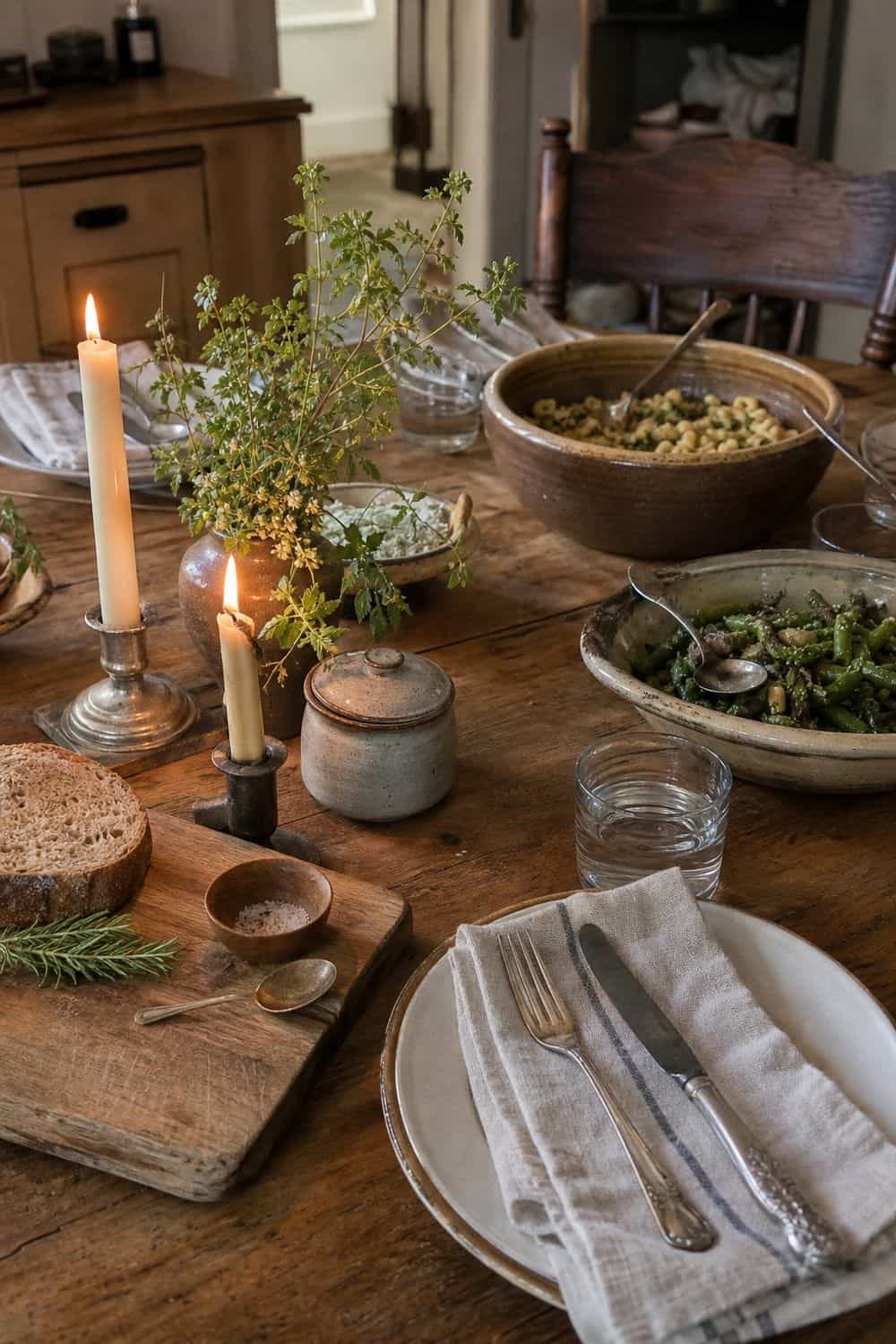
The prettiest farmhouse dinners rarely shout farmhouse. Skip novelty signs, fake hay, too many mason jars, and props that do not help the meal. Use real pieces instead: linen napkins, a wooden board, a few stoneware bowls, simple candles, old silver, herbs, or a chipped crock that still looks loved. A collected table lets the food and the people feel like the point. When in doubt, remove one decorative thing and make room for another serving dish or glass instead.
25. Send Guests Home With Wrapped Pie Slices
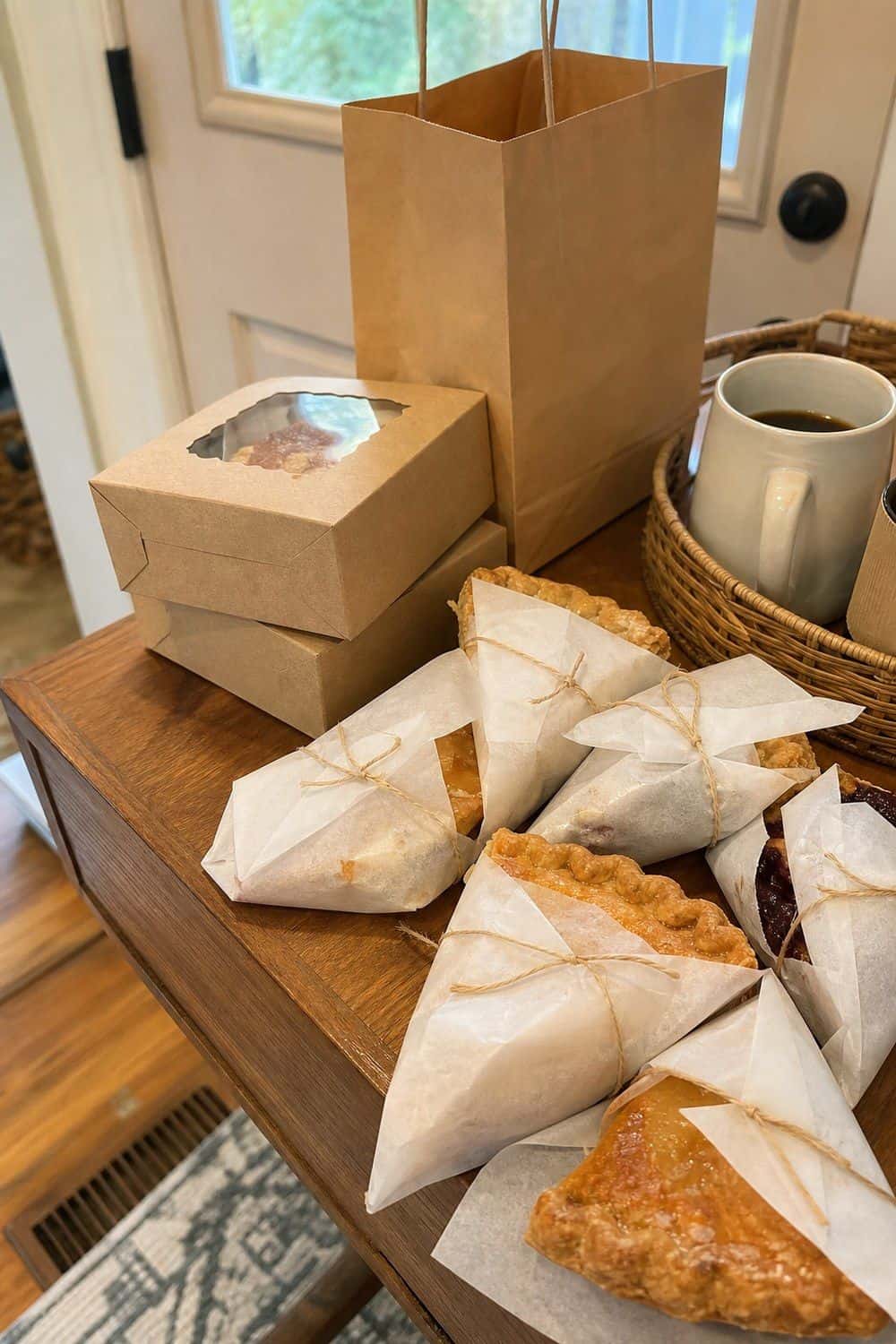
Wrapped pie slices make a sweet ending when there is extra dessert, but keep it casual. Use parchment, small pie boxes, or plain bakery bags, and label flavors if you served more than one. Set the wrapped slices near the door or coffee tray so guests can grab one on the way out. This should feel like a generous afterthought, not a craft project. A simple leftover slice says more about the warmth of the meal than any themed favor ever could.
Frequently Asked Questions
What is a rustic farmhouse dinner party?
A rustic farmhouse dinner party is a relaxed meal built around warmth, sturdy materials, family-style food, and simple hospitality. It usually includes a wood table, textured linens, ceramic plates, generous platters, bread, seasonal sides, candlelight, and a dessert that feels homemade rather than overly formal.
What food should I serve at a farmhouse dinner party?
Serve one hearty main, a bread basket, seasonal vegetables, a big salad, and a simple dessert like pie or a galette. Roast chicken, braised beef, chili, soup, baked pasta, cornbread, biscuits, and roasted vegetables all fit the mood because they are easy to share and comfortable to eat.
How do I decorate a rustic farmhouse dinner table?
Start with a wood table or a washed linen runner, then add woven placemats, simple ceramic plates, low greenery, and unscented candles. Keep the centerpiece below eye level and leave enough open space for serving bowls, because the table should support the meal instead of competing with it.
How do I keep a farmhouse table from looking too themed?
Use real materials and fewer novelty pieces. Linen, wood, stoneware, iron, herbs, branches, and warm candlelight feel more natural than signs, fake hay, or too many decorative jars. If the table starts looking staged, remove one prop and make more room for food or glasses.
What drinks work for a rustic farmhouse dinner?
Cider, lemonade, iced tea, citrus water, simple wine, beer, or a seasonal punch all work well. Put a drink dispenser or pitchers on a sideboard so guests can serve themselves, then keep water carafes on the table for easy refills during the meal.
How do I serve family-style food without crowding the table?
Use a sideboard for overflow dishes and bring the most important platters to the table first. Two medium bowls are often easier to pass than one oversized bowl, and drinks can live off the table. Keep centerpieces low and narrow so platters have room to move.
What dessert fits a farmhouse dinner party?
Pie is the easiest fit because it feels generous, nostalgic, and simple to serve. Apple, berry, pecan, pumpkin, peach, chess pie, or a rustic galette can all work. Add coffee, whipped cream, or ice cream if you want dessert to feel a little more special.
Can a rustic farmhouse dinner party be modern?
Yes. Modern farmhouse entertaining works best when the shapes are simple and the materials are warm. Use cleaner plates, fewer decorative pieces, streamlined candles, and one or two natural textures so the meal still feels rustic but not cluttered or overly themed.
Final Thoughts
A rustic farmhouse dinner party should feel like a table full of good food, not a table full of decorations. Start with one sturdy foundation, choose pieces that make serving easier, keep the centerpiece low, and let bread, braises, vegetables, salad, pie, and coffee do the real mood-setting. When guests can pass dishes comfortably and settle into the evening, the whole meal feels warmer.


