
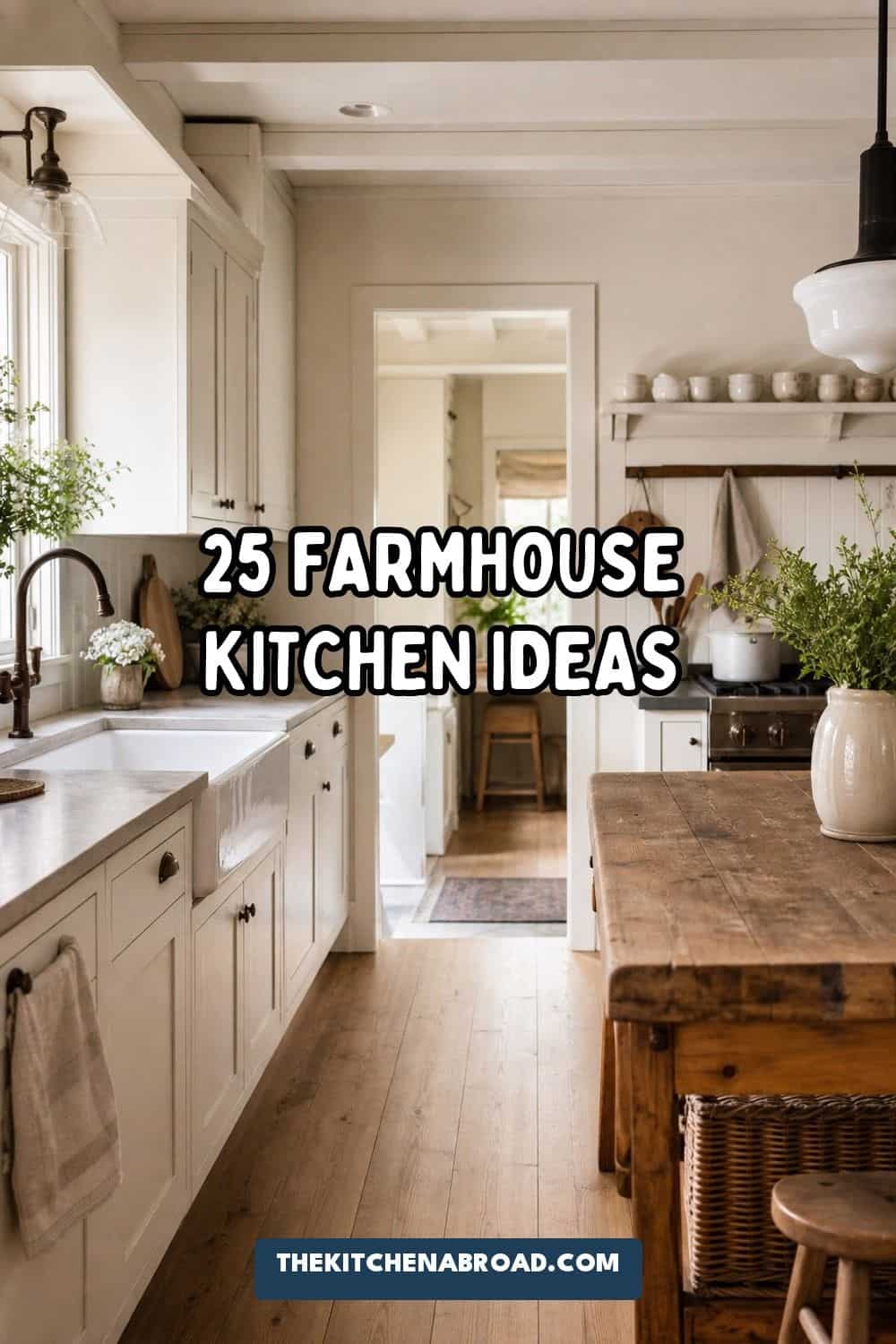
Farmhouse kitchen ideas feel current when they support real cooking: shaker cabinets, an apron-front sink, warm wood, durable counters, pantry storage, useful lighting, and pared-back everyday details. The best version is not all-white, sign-filled, or packed with decorative clutter. It feels warm because the materials, storage, and work zones make baking, cleanup, family meals, and daily prep easier.
A farmhouse kitchen should feel like a room that can handle flour on the counter, a sink full of mixing bowls, coffee before school, and dinner prep at the end of a long day. That usefulness is what keeps the style from feeling like a theme.
The strongest farmhouse kitchen ideas now lean warmer, quieter, and more personal. Think natural wood, muted cabinet colors, aged metals, practical pantry pieces, useful vintage objects, and storage that hides the less-pretty parts of daily cooking. A few classic details go a long way when the room keeps enough clear space for actual work.
Top Recommended Products


You Might Also Like These Blog Posts
- 25 Modern Farmhouse Kitchen Ideas for Clean Rustic Style
- 25 Cottage Kitchen Ideas for Soft, Collected Charm
- 25 European Kitchen Ideas for a Collected Everyday Space
- 25 Cream Kitchen Ideas for a Soft, Warm Space
- 25 Warm Neutral Kitchen Ideas for a Cozy, Timeless Space
1. Shaker Cabinets With a Warm Finish

Shaker cabinets set a farmhouse kitchen foundation because they are plain enough for daily use but detailed enough to feel crafted. Warm white, cream, mushroom, putty, stained oak, or soft green can feel more current than a stark white cabinet wall.
The inside matters as much as the door style. Add deep drawers for pots, tray dividers for sheet pans, pull-outs for pantry items, and a trash pull-out near prep if the layout allows. Farmhouse style works better when the kitchen actually stores cooking tools well.
Look at the finish in natural and evening light before choosing the final color. A creamy white can feel warm beside wood floors, while the same color may look dull under cool bulbs. If you already have flat cabinet fronts, warmer paint, simpler hardware, or a single freestanding cupboard can add farmhouse character without replacing every door.
2. Apron-Front Sink for Daily Cleanup
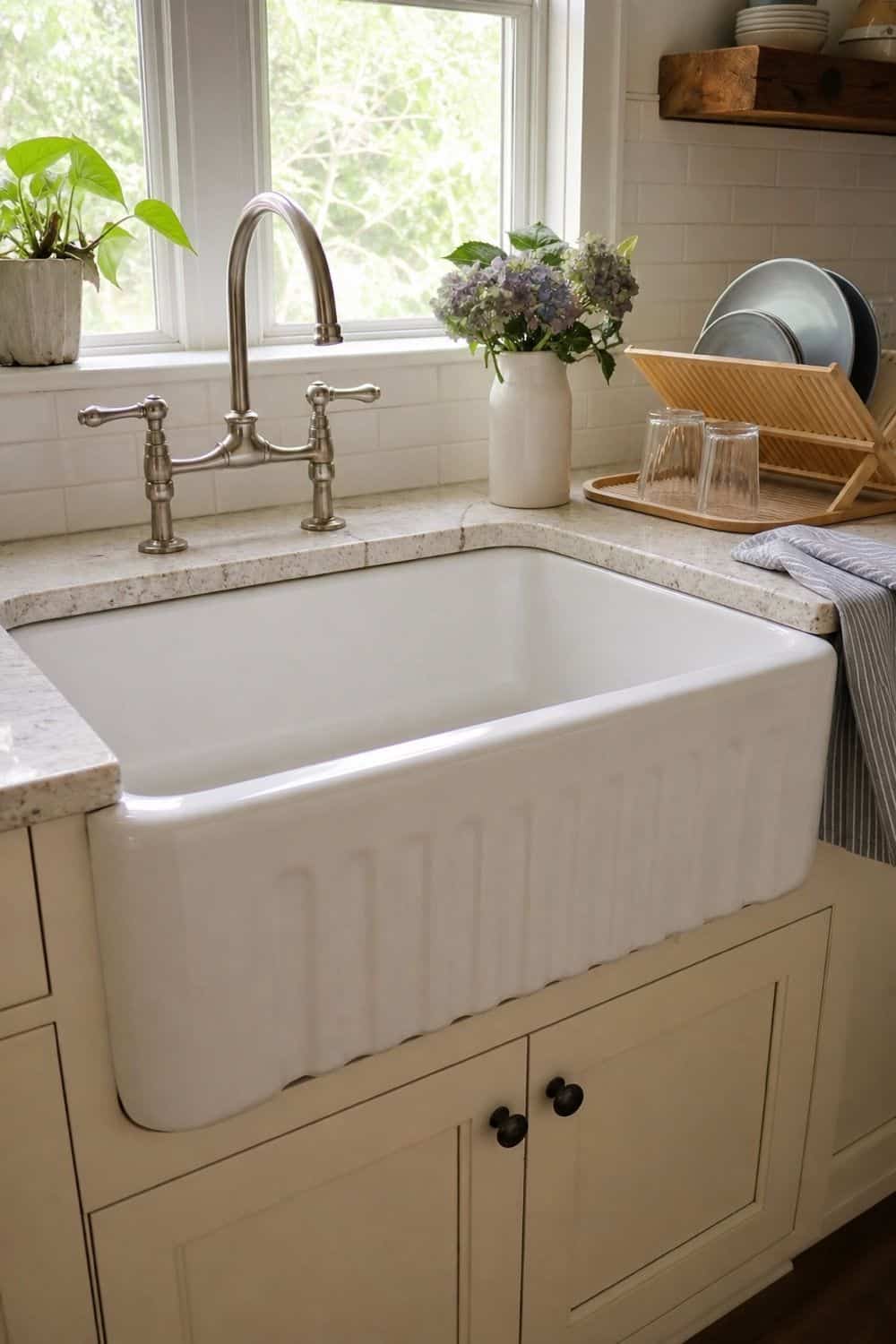
An apron-front sink is one of the most recognizable farmhouse kitchen features, but it should earn its place through cleanup. It is useful for sheet pans, mixing bowls, produce, canning jars, and big family dishes. Fireclay feels classic, stainless is forgiving, and cast iron has a traditional weight. Check cabinet support before choosing a heavy sink, and pair it with a faucet that reaches the corners so the large basin is easy to rinse.
Think about splashing too. A deep sink is helpful, but the counter and backsplash around it should handle water, soap, and daily wiping without becoming a maintenance headache. If a full sink replacement is not realistic, copy the working rhythm instead: a deep single basin, a pull-down faucet, a good drying mat, and a clear landing zone beside the sink.
3. Butcher Block Prep Zone

Butcher block brings warmth to a farmhouse kitchen, especially when the rest of the room has painted cabinets or stone counters. It works well on an island, baking area, coffee corner, or one short counter run where wood can be cared for properly.
Use cutting boards for messy prep and oil the wood as recommended so water and stains do not take over. Around sinks and dishwashers, stone or quartz may be easier than wood because those areas see constant moisture.
4. Wood With Honed Stone or Quartz

A farmhouse kitchen can start to feel heavy if every major surface is wood. Pairing wood with honed stone, soapstone, limestone-look quartz, or marble-look quartz gives the room a softer working surface and a cleaner visual break.
Honed finishes often feel more relaxed than glossy counters, which suits a warm farmhouse kitchen design. They also need realistic care. Use trivets for heat, wipe spills promptly, and choose a surface that matches how you cook rather than only how it photographs.
If you bake often, a cool stone stretch near the mixer can be more useful than adding wood everywhere. Let each material have a job.
5. Brick or Brick-Look Backsplash
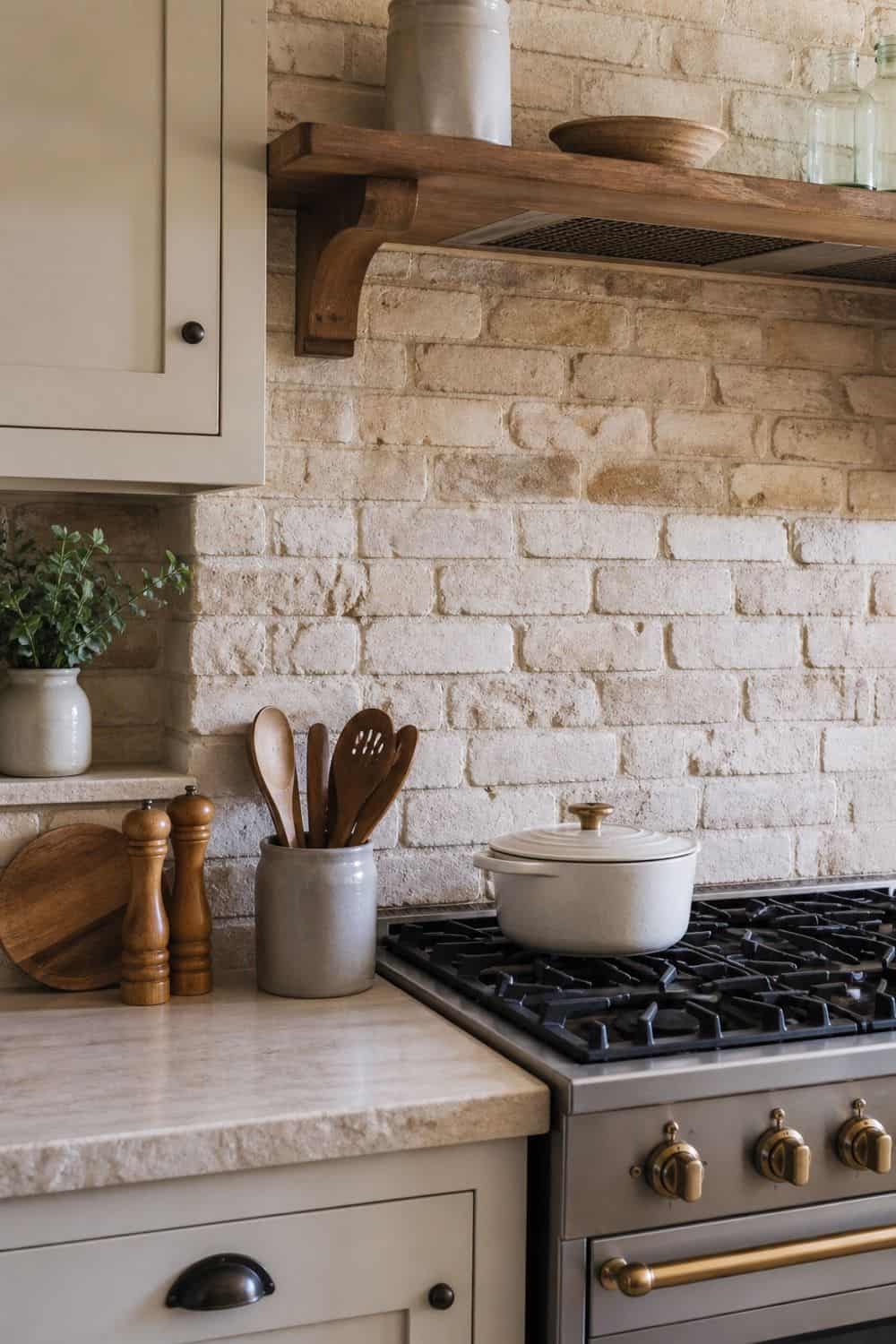
Brick can add age and texture to a farmhouse kitchen, but it needs to be chosen with cleaning in mind. Sealed brick, thin brick veneer, or brick-look porcelain can give the look without making grease and sauce splatters impossible to manage. Use brick where it fits the architecture: behind a range, on one wall, or in a pantry nook. A whole kitchen wrapped in fake brick can feel forced, especially in a newer home.
Grout color changes the mood. Soft warm grout feels quieter than high-contrast lines, and it usually works better with cream cabinets, wood shelves, and aged metal hardware. In a tighter room, brick can be strongest as one focused moment. A shorter run behind the range may feel richer than covering every wall.
6. Vertical Plank in Measured Places

Vertical plank walls can look fresh when they are used with restraint. Try them on an island back, breakfast nook wall, pantry cabinet side, or one quiet wall rather than wrapping the entire kitchen in planks.
Choose a wipeable finish near food prep and avoid deep grooves where grease can settle. Soft cream, warm white, muted green, or mushroom paint usually feels more current than bright white boards with heavy black accents. If the kitchen already has brick, open shelves, and rustic lighting, skip the plank wall and let those materials carry the farmhouse feeling.
7. Practical Range Hood

A farmhouse range hood should support cooking before it tries to be a statement. The scale needs to fit the range, cabinet height, and room size, and the ventilation should match how often you sear, fry, simmer, or bake.
Wood-trimmed, plaster-look, or painted hoods can all work. Avoid an oversized hood that blocks storage, overwhelms the room, or makes the range wall feel theatrical.
Keep the area around it easy to wipe. Farmhouse texture is lovely until it sits directly in the path of cooking grease, so choose trim and nearby backsplash materials that can handle real weeknight cooking.
8. Worktable-Style Island

A worktable-style island feels more farmhouse than a massive block of cabinetry. It can offer prep space, a few drawers, open shelves, stools, or a baking surface while keeping the room lighter and easier to move around.
Measure clearance for the oven, dishwasher, refrigerator, and main walkways before choosing an island. A charming island that blocks appliance doors will make daily cooking worse.
For a smaller kitchen, a movable table or narrow island can give the same working rhythm without pretending the room is larger than it is. Keep one side open for prep and use the lower shelf only for items you reach for often, such as mixing bowls, baking sheets, or a basket of linens.
9. Farmhouse Table Beyond Dining

A farmhouse table can carry more daily life than formal dining. It may handle breakfast, homework, lunch packing, food prep overflow, folding napkins, or a casual Sunday baking project.
Choose a finish that can handle real use. A table that shows every water ring or crumb may look charming once but become stressful fast. Benches can save space, but chairs are often more comfortable for long meals. If the table sits close to the kitchen, leave enough chair clearance so it does not block the oven, pantry, or dishwasher path.
10. Freestanding Farmhouse Cupboard
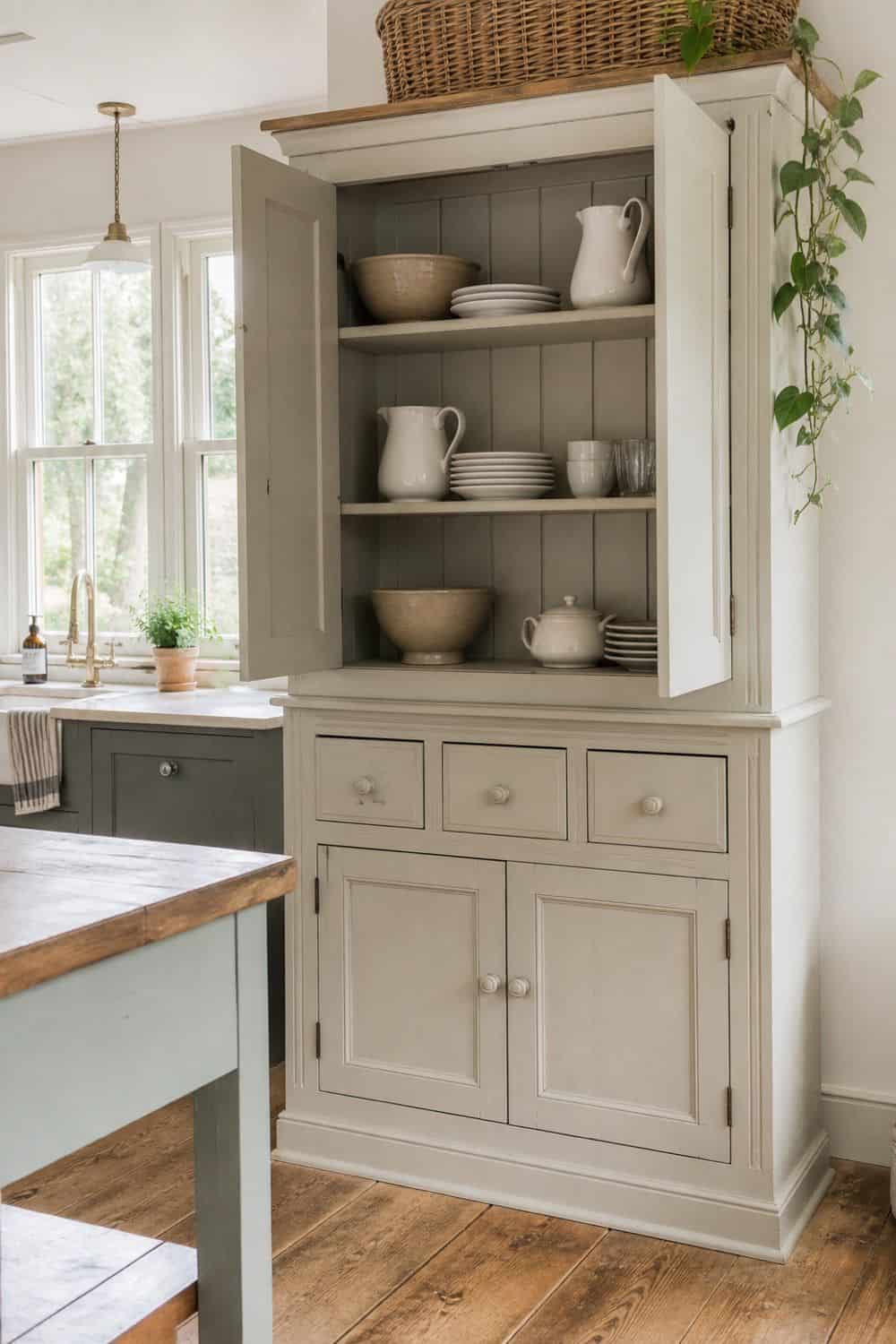
A freestanding cupboard, pie safe, or painted cabinet can make a farmhouse kitchen feel collected instead of fully built-in. It is especially useful in a newer kitchen that needs age, texture, or a less perfect edge.
Use closed doors for less-attractive storage: small appliances, baking pans, lunch boxes, backstock, or serving pieces. Glass doors can work for dishes, but only if you are comfortable keeping that section tidy. Aged paint, simple knobs, beadboard doors, or visible wood grain add character without requiring fake distressing on every surface. This is also a good place to use a piece with history, because one collected cupboard often feels more convincing than a full set of matching farmhouse decor.
11. One Open Shelf for Daily Dishes

Open shelves feel farmhouse when they are useful, not when they become a stage for decorative clutter. One shelf for daily bowls, plates, mugs, or glasses can lighten a wall and keep everyday dishes close. Choose sturdy brackets and a shelf depth that actually fits your dinnerware.
Place the shelf at a height people can reach comfortably. If the dishes are used every day, dust is less of a problem. If the shelf holds only display pieces, it will need more cleaning and may not be worth the visual noise.
Leave breathing room. Crowding the shelf with pitchers, signs, baskets, jars, and plants is where farmhouse style starts to feel dated.
12. Peg Rail for Towels and Aprons

A peg rail gives farmhouse storage a real job when it holds aprons, dish towels, market bags, a small basket, or a cleaning brush near the sink, pantry, or breakfast nook. Keep it pared back so it does not become a wall-mounted junk drawer. Three useful items look better and work better than ten decorative pieces that have to be moved before cooking. Mount it where the hanging pieces will not brush against food prep, cabinet doors, or the main path through the kitchen.
13. Aged Brass or Soft Iron Hardware
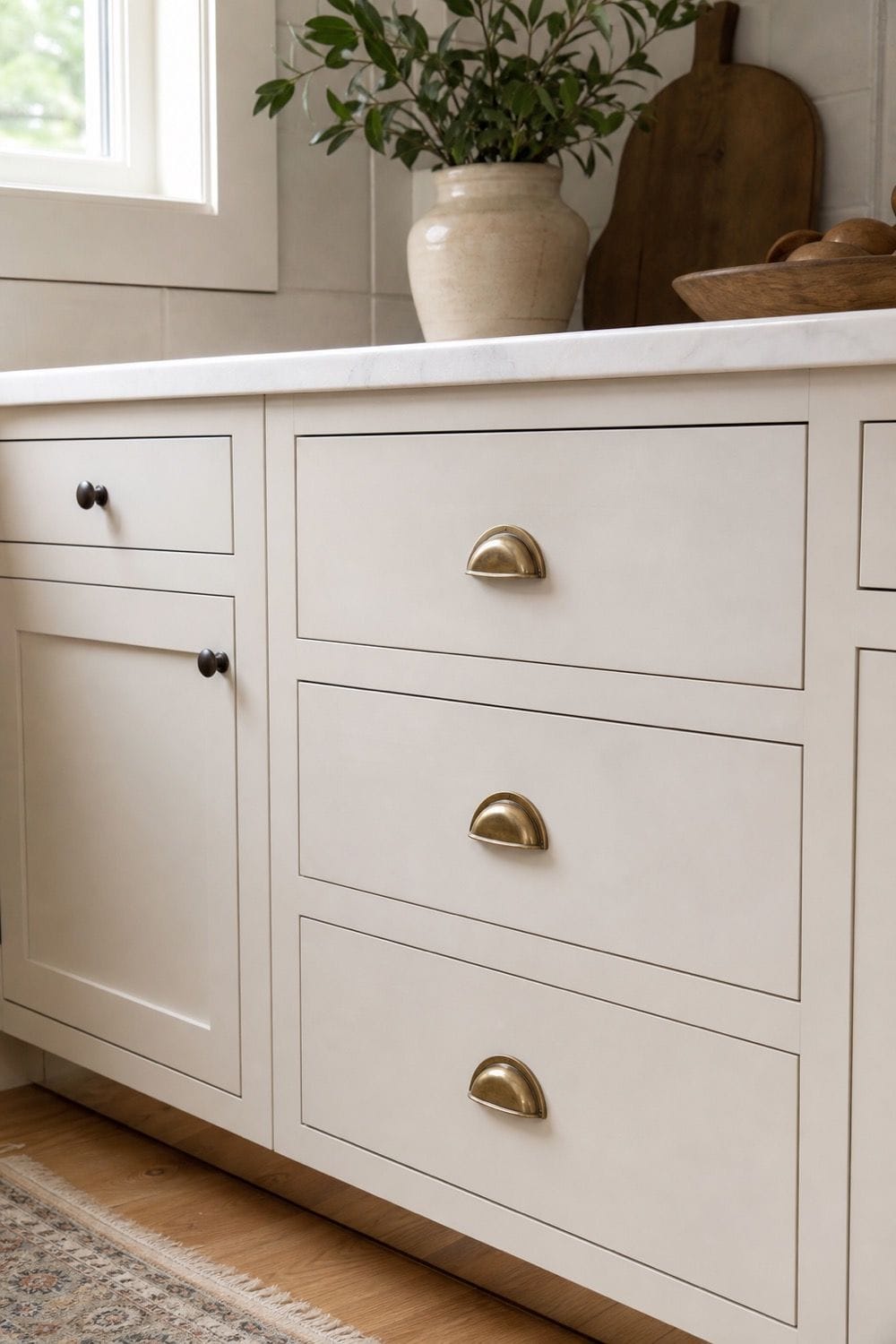
Hardware can quietly update a farmhouse kitchen. Aged brass, soft black iron, pewter, wood knobs, or unlacquered finishes feel warmer than a room covered in harsh matte black. Limit the number of finishes so the kitchen feels layered rather than scattered. For example, aged brass pulls can pair with a simple stainless faucet, or soft iron latches can work with wood shelves and cream cabinets.
Function still matters. Pulls should feel comfortable with floury hands, wet fingers, and the kind of drawers you open all day. If you are unsure, test one drawer bank before changing the whole room. Hardware looks different once it is repeated twenty times.
14. Lantern Pendants Over the Island

Lantern pendants can give a farmhouse kitchen a warm gathering point, especially over an island or worktable. Choose the scale carefully so the fixtures light the surface without blocking sightlines across the room.
Warm bulbs are important. A cold bulb can make cream cabinets, wood, and brick look flat. Dimmers help the same fixtures shift from prep lighting to dinner cleanup to a quieter evening mood.
In a tighter kitchen, one modest pendant may be better than two oversized lanterns. Farmhouse lighting should make the room easier to use, not harder to see through.
15. Warm Cabinet Color

Warm cabinet color is one of the easiest ways to move farmhouse style away from stark black-and-white formulas. Cream, mushroom, sage, olive, muted blue, deep green, and warm taupe all work with wood and aged metal.
Color does not have to cover every cabinet. Try lower cabinets, the island, a pantry cabinet, or a freestanding cupboard if you want a calmer change.
Test samples in morning and evening light. Farmhouse kitchens rely on warmth, and a color that looks gentle at noon can go gray or muddy at night.
16. Washable Runner in the Work Zone

A runner can bring softness to a farmhouse kitchen while helping with standing comfort at the sink, range, or island. Choose a low-pile washable style that can handle crumbs, spills, and muddy traffic.
Place it where you stand most often rather than where it only looks good: between the sink and range, along an island, or in front of a long work run. Use a rug pad if the floor is slick, skip thick edges that catch under cabinet doors, and choose a pattern forgiving enough for flour, coffee drips, and everyday crumbs.
17. Woven Texture With Purpose

Woven baskets can add farmhouse texture, but each one needs a real job. Use them for potatoes, onions, linens, lunch bags, pantry overflow, napkins, or market bags.
A basket with no category becomes clutter with handles. Label pantry baskets if they sit behind doors, and keep food baskets breathable so produce does not spoil.
For open shelves, choose fewer baskets in similar tones. Too many mixed weaves can make the kitchen feel busy, especially beside wood cabinets and brick or tile.
18. Farmhouse Baking Counter

A baking counter can be a small farmhouse moment if it stays usable. One or two stoneware canisters, a wooden rolling pin, a marble board, or a stand mixer can signal baking without covering the whole counter.
Keep flour, sugar, or tools close only if you bake often. If the canisters are purely decorative, they may be stealing the space you need for mixing bowls and cooling racks. Place the baking moment near an outlet if a mixer lives there, and keep a washable surface nearby for dough, crumbs, and sticky measuring spoons.
A small tray can collect the baking pieces, but leave enough open counter for rolling dough or setting down a hot pan.
19. Morning Coffee and Toast Corner
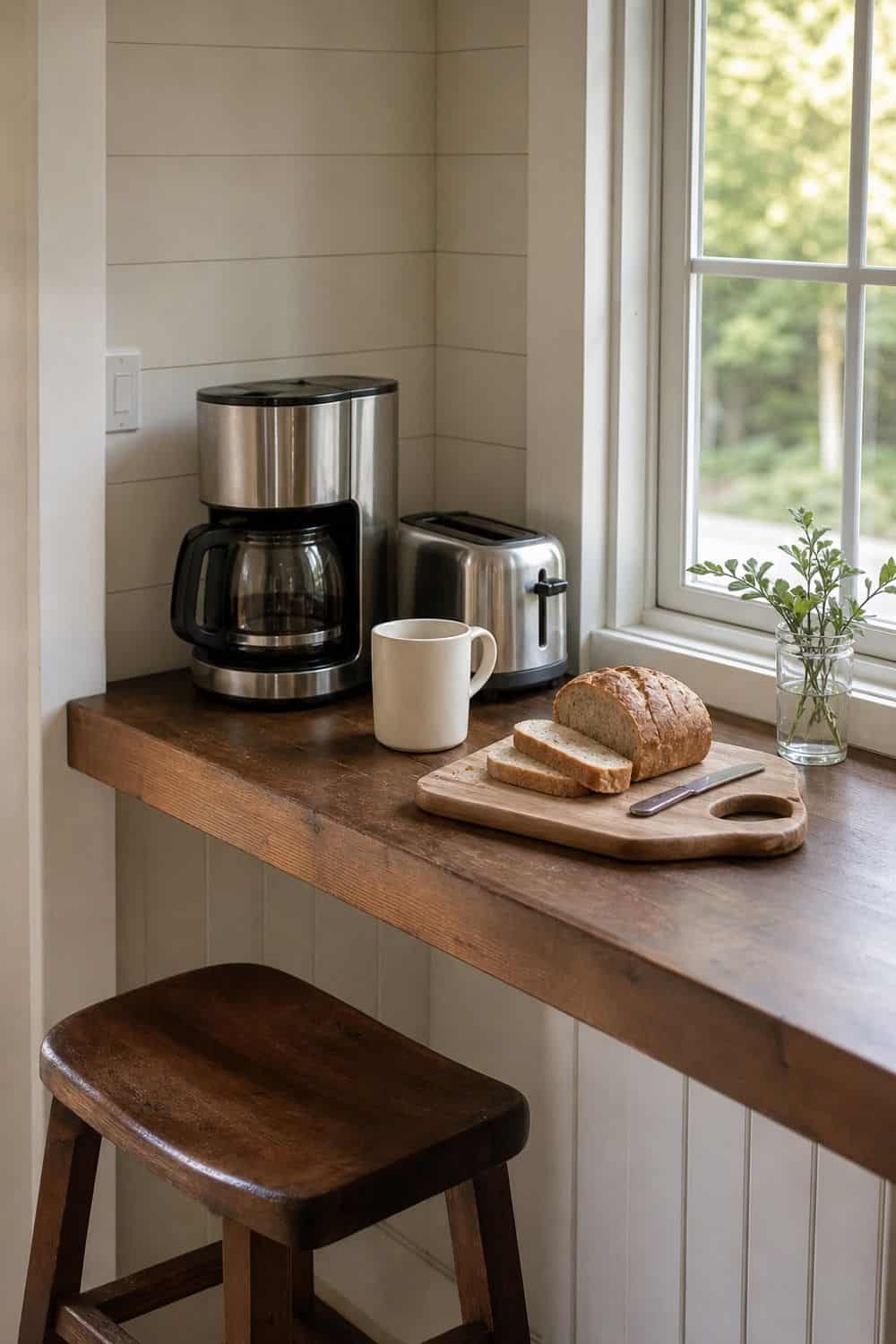
A farmhouse kitchen often works hardest in the morning. A breakfast and coffee corner can gather mugs, coffee, tea, toaster, cereal, napkins, sweeteners, and school breakfast items into one daily-use spot.
If counters are crowded, tuck the toaster or grinder into a cabinet between uses. The station should speed up mornings, not become a display of every mug and syrup bottle you own.
For a family kitchen, keep the lowest shelf or drawer simple enough for kids to grab bowls, napkins, or cereal without crossing the cooking zone. That keeps breakfast traffic away from hot pans and open dishwasher doors.
20. Appliance Garage for Small Appliances
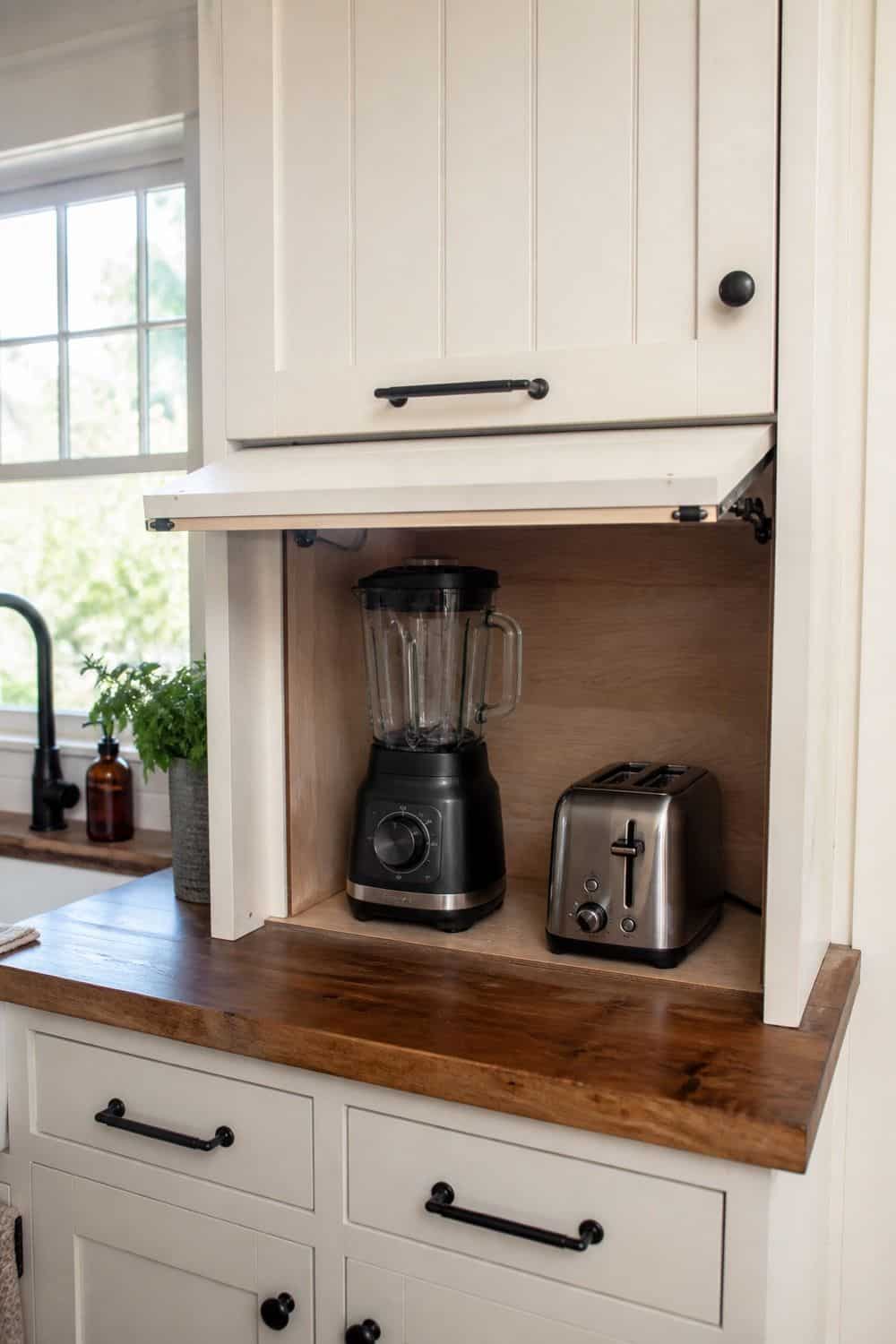
An appliance garage keeps frequently used tools accessible without leaving them visible all day. It can hold a toaster, blender, coffee grinder, mixer, charging cords, or breakfast appliances.
This is especially useful in a farmhouse kitchen where the goal is warmth, not counter clutter. Closed storage lets the wood, sink, lighting, and work surfaces carry the room instead of a lineup of machines. Make sure the appliance garage has enough outlet access and ventilation for the items you plan to use there. If it is awkward to open, the appliances will migrate back to the counter.
21. Vintage Cutting Boards as Working Decor
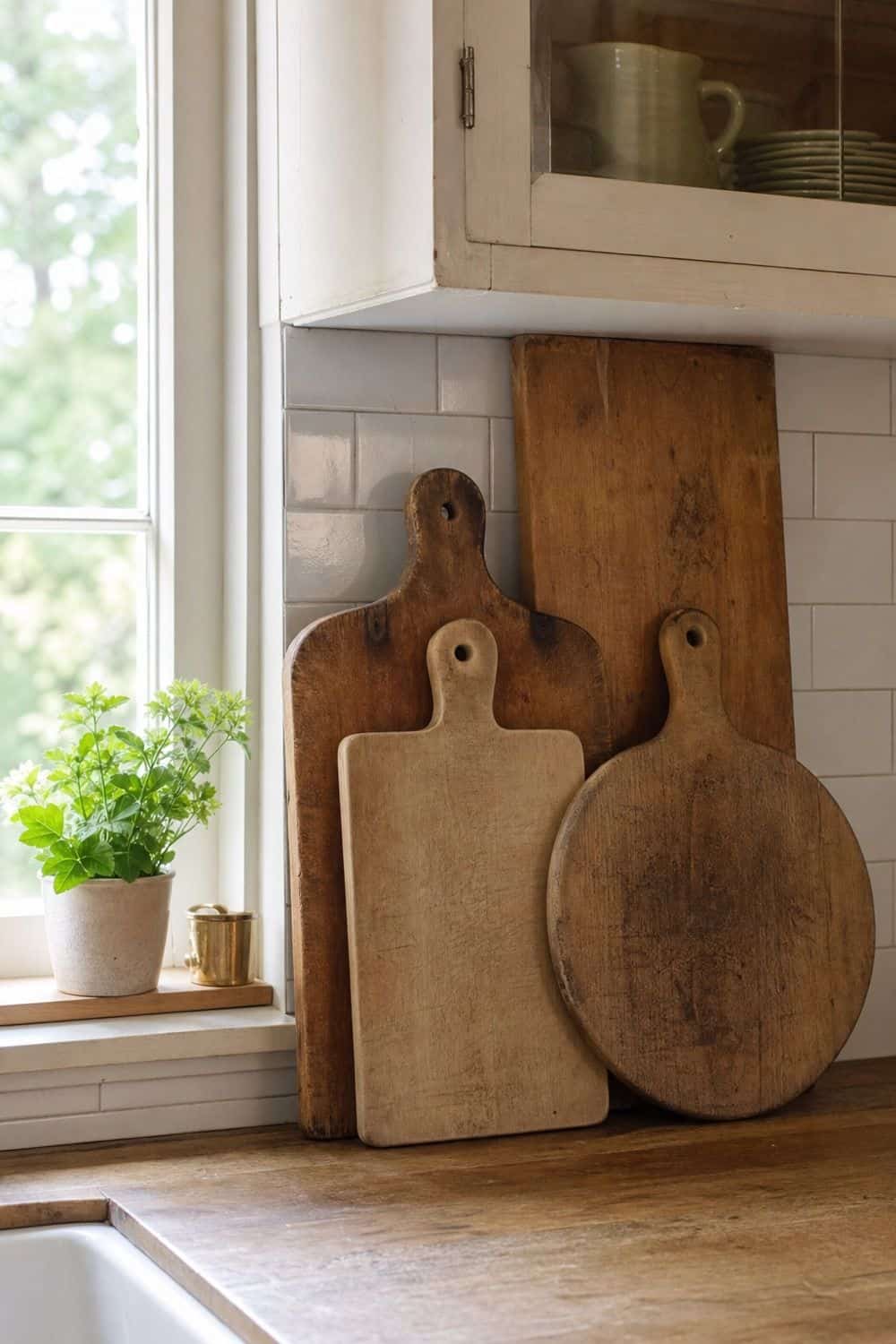
Vintage cutting boards add the worn wood texture farmhouse kitchens are known for, but they should still be useful: bread, cheese, serving, or protecting counters from casual prep. Lean two or three boards near the backsplash rather than creating a whole board wall. Wash and oil boards properly, and do not use questionable vintage pieces for wet raw-food prep. If a board is purely decorative, keep it out of the main splash zone so it does not make cleanup harder later.
22. Dish Hutch or Cupboard

A dish hutch can make a kitchen or dining area feel more collected while reducing cabinet crowding. Use it for serving bowls, pitchers, cake stands, platters, table linens, or seasonal dishes. Choose a hutch that fits the room scale. A heavy piece can overwhelm a tight layout, while a narrow cupboard can add storage without closing in the walkway.
Closed lower storage is helpful for less attractive pieces. Open or glass sections are better for dishes you genuinely like seeing. Keep the most-used serving pieces at waist to chest height. The top shelf can hold lighter seasonal items that do not need weekly access.
23. Mudroom Landing Near the Kitchen
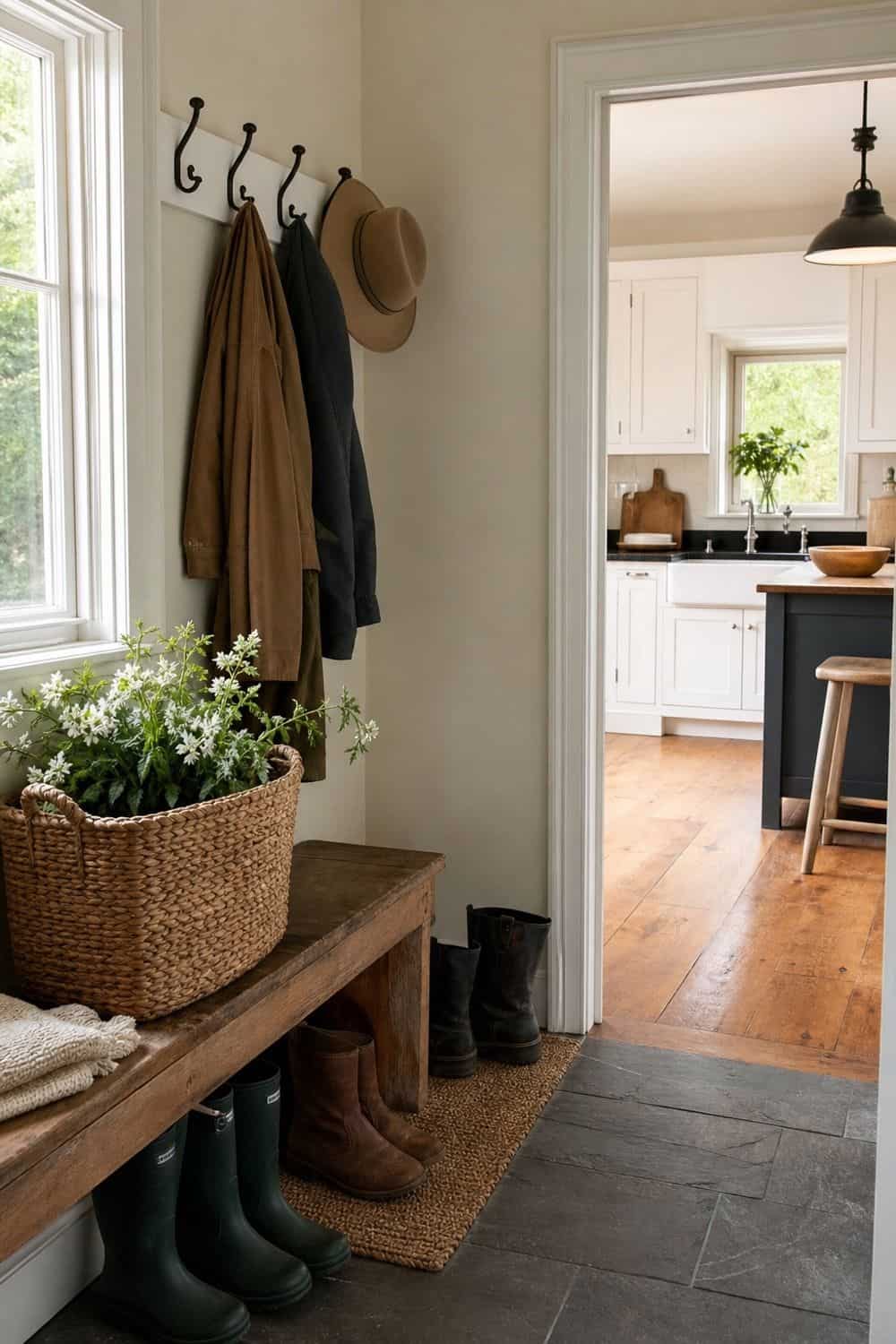
Farmhouse kitchens often connect to family entries, back doors, or garage paths. A small mudroom landing can keep bags, shoes, lunchboxes, mail, dog leashes, and aprons from landing on the kitchen island. Use a bench, hooks, baskets, or a narrow cabinet close to the entry but separate from food prep. The goal is not to decorate a mudroom. It is to stop daily drop-zone clutter before it reaches the cooking surfaces. A small tray for keys and mail can save the island from becoming the household inbox.
24. Fruit, Herbs, and Produce as Decor
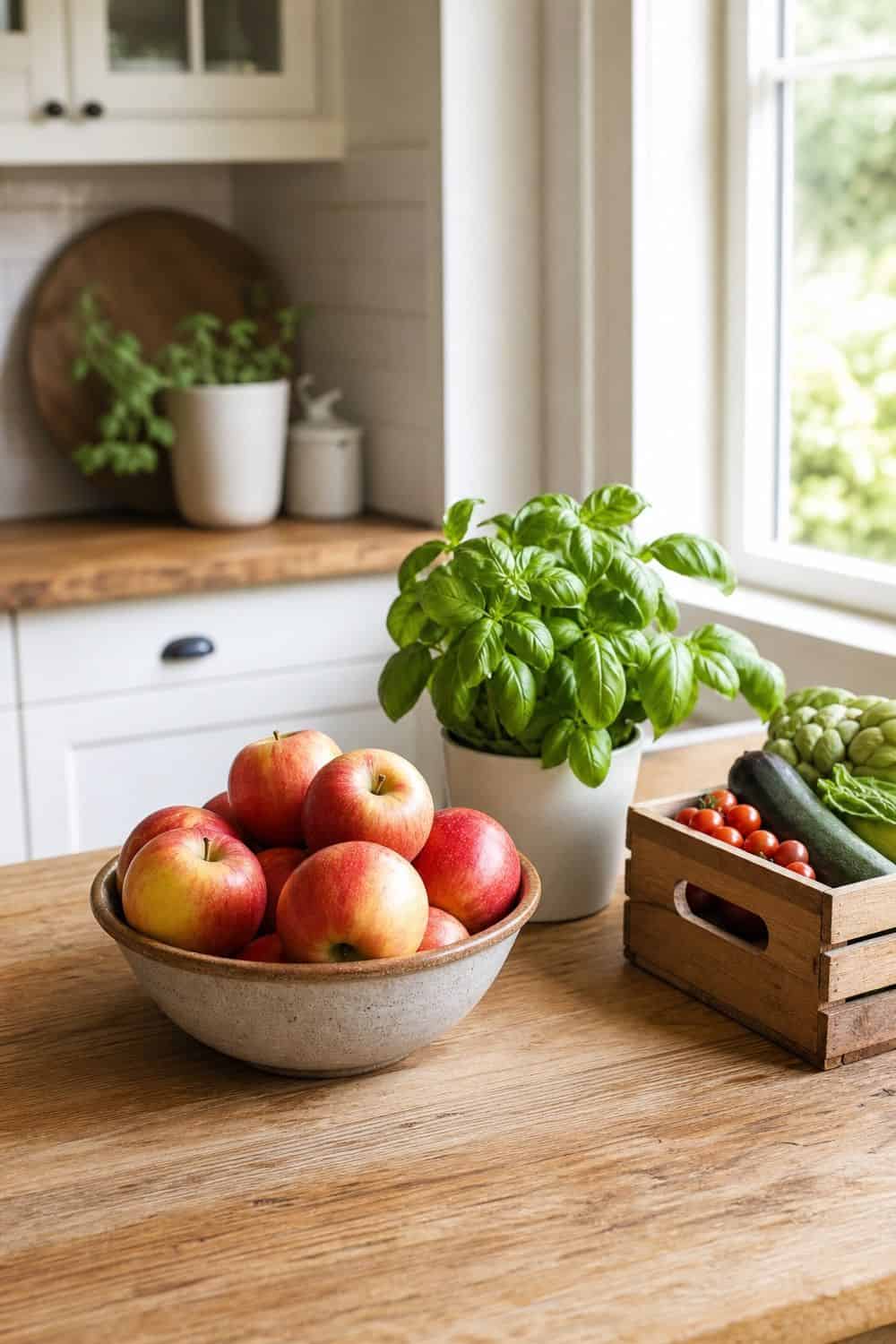
Food can be the best farmhouse kitchen decor when it is fresh, edible, and actually used. Apples, citrus, tomatoes, herbs, onions, eggs, or a small bowl of garden produce can bring life to the room. Keep airflow and sunlight in mind. Do not place delicate produce in direct sun or near the range, and refresh the bowl before it becomes a soft-fruit graveyard. Herbs look best near a bright window, while onions and potatoes need a cooler, darker basket with room to breathe.
This kind of styling works because it belongs in a kitchen. It adds color without signs, faux greenery, or extra objects that need dusting.
25. Farmhouse Cliches in Check

The fastest way to make a farmhouse kitchen feel current is to remove the pieces that are only announcing the style. Fewer word signs, faux-distressed objects, oversized clocks, decorative-only shelves, and matte black accents can make the room feel calmer.
Keep one tray for items that truly live on the counter, such as oils, salt, coffee pieces, or a small vase of herbs. Leave the rest of the prep space open.
A warm farmhouse kitchen does not need to prove itself with labels. Wood, light, storage, good counters, and a table that gets used will do that work better.
Farmhouse Details to Use Carefully
Current farmhouse kitchen style is warmer and more functional than the old black-and-white formula. Natural wood, muted color, aged metal, closed storage, useful vintage pieces, and real cooking zones feel more lasting than a room built from signs, barn doors, and decorative shelves.
Use shiplap, barn doors, matte black hardware, and open shelving only where they solve a design or storage problem. A plank island back can add texture. A single open shelf can hold daily dishes. A soft iron latch can ground cream cabinets. The trouble starts when every surface repeats the same cue.
Material maintenance matters too. Butcher block needs oil and water awareness, brick needs sealing or easy-clean alternatives, apron sinks need splash planning, honed counters need realistic care, runners need washing, and baskets need categories. Farmhouse style feels best when it holds up to the way the kitchen is actually used.
Frequently Asked Questions
What makes a kitchen farmhouse style?
A farmhouse kitchen usually combines shaker cabinets, warm wood, an apron-front sink, practical counters, pantry storage, simple lighting, family dining, and everyday details that support cooking. The style feels strongest when the room is useful first, with natural materials, aged finishes, and storage that can handle real meals and cleanup.
Are farmhouse kitchens still in style?
Warm, functional farmhouse kitchens still work, especially when they feel collected and cooking-centered. What feels dated is the formulaic modern farmhouse look: too many barn doors, word signs, stark white surfaces, heavy matte black hardware, and decorative clutter. A current farmhouse kitchen uses warmth, craftsmanship, storage, and restraint.
What colors suit a farmhouse kitchen?
Cream, warm white, mushroom, sage, olive, muted blue, navy, taupe, and natural wood tones all work well in a farmhouse kitchen. The best color depends on the light and materials in the room. Warmer undertones usually feel more inviting than stark white or cold gray.
What countertops are best for a farmhouse kitchen?
Butcher block, honed quartz, soapstone, limestone-look quartz, and marble-look surfaces can all suit a farmhouse kitchen. Butcher block brings warmth but needs oiling and water care. Quartz is easier for busy cleanup. Soapstone and honed finishes feel softer, but each material should match how you cook, clean, and prep.
Do farmhouse kitchens need open shelves?
No, farmhouse kitchens do not need open shelves. One useful shelf for daily dishes can work well, but closed cabinets, pantry cupboards, and hutches are often better for real family kitchens. If open shelving becomes dusty, crowded, or purely decorative, closed storage will usually serve the room better.
What backsplash works in a farmhouse kitchen?
Sealed brick, brick-look porcelain, handmade tile, simple ceramic, vertical plank away from heavy splash zones, and stone-look surfaces can all work. Choose based on cleaning needs as much as style. A backsplash behind a range should handle grease, moisture, and daily wiping without becoming fussy.
How do I make a modern farmhouse kitchen less dated?
Warm up the palette, soften black hardware, remove word signs, reduce decorative-only shelving, and add natural wood, aged metal, closed storage, and practical cooking zones. A less dated farmhouse kitchen feels personal and useful rather than like a checklist of barn doors, shiplap, and black-and-white contrast.
How can I add farmhouse style without renovating?
Try new hardware, a washable runner, a peg rail, cafe curtains, useful baskets, vintage cutting boards, warmer lighting, a freestanding hutch, or a small pantry cupboard. Focus on pieces that help the kitchen function. You do not need a remodel to add warmth, storage, and farmhouse character.
Final Thoughts
The best farmhouse kitchen ideas make the room warmer and easier to cook in at the same time. Choose materials with texture, storage that hides real-life mess, lighting that helps prep and gathering, and vintage details that still earn their place. When the kitchen supports baking, cleanup, pantry storage, and everyday meals, farmhouse style feels lived-in instead of overdone.
Last update on 2026-09-18 / Affiliate links / Images from Amazon Product Advertising API