
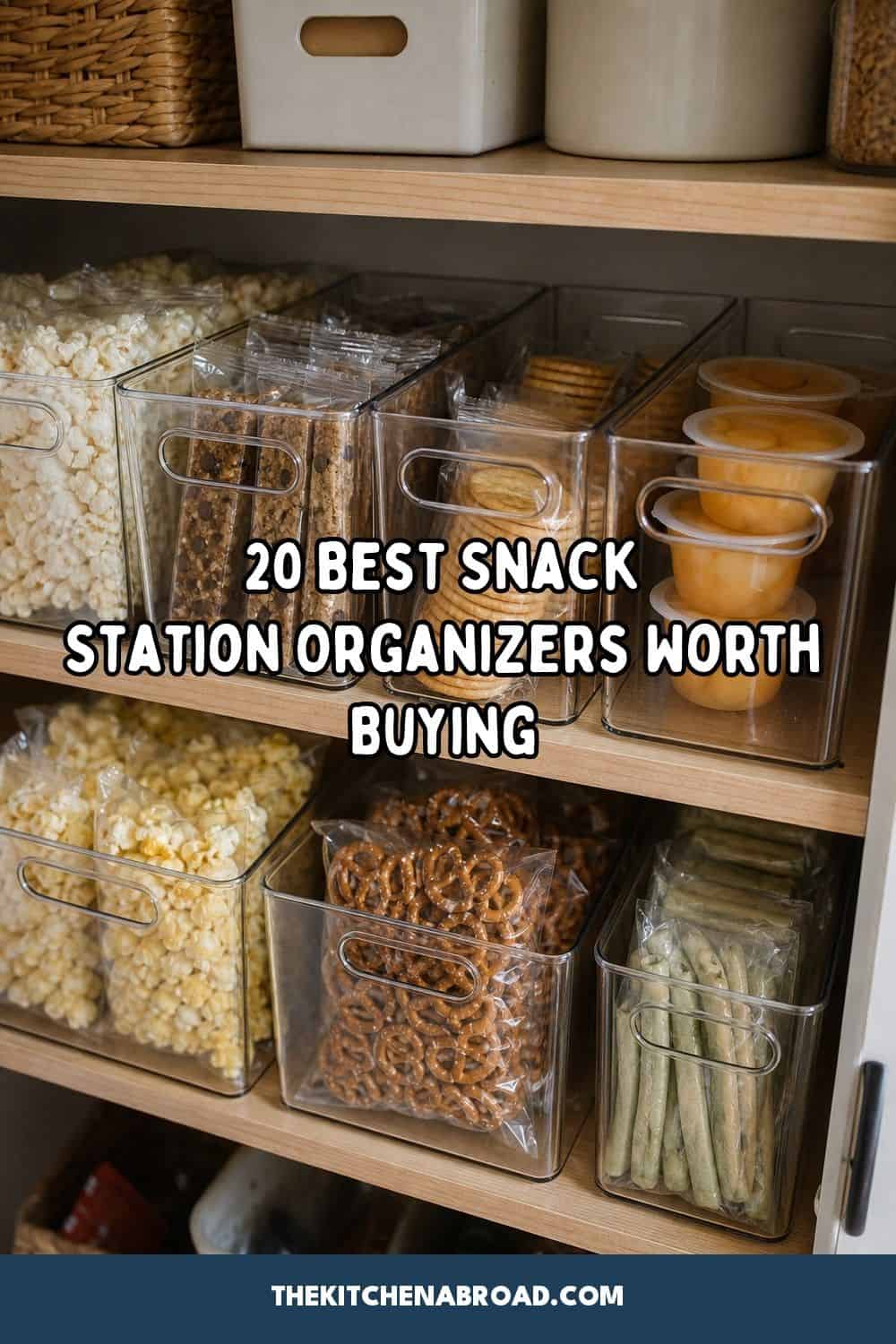
The best snack station organizers match how your household actually grabs snacks: clear pantry bins for packaged snacks, fridge bins for cold items, drawer dividers for bars and pouches, and carts or door racks when shelf space is tight. A strong setup makes snacks visible, easy to restock, and simple enough for kids or busy adults to use without unpacking the whole pantry. Choose organizers by snack job first, then by size, handles, labels, and where the organizer will live.
Snack traffic can make a kitchen messy faster than almost anything else. Lunch packing, after-school hunger, sports bags, work snacks, younger kids grabbing independently, and half-opened multipacks all compete for the same shelves and drawers.
This guide focuses on the best snack station organizers worth buying for real household routines. Instead of treating one clear bin as the whole answer, it separates pantry snacks, fridge snacks, lunch add-ons, after-school choices, sports grab bags, treat boundaries, and bulk backstock.
Top Recommended Products


You Might Also Like These Blog Posts
- After School Snack Prep
- Meal Prep Snack Box Ideas
- School Lunch Prep
- Healthy Fridge Prep
- Pantry Organization Containers
Best Snack Station Organizers Worth Buying
1. Clear Pantry Snack Bins for Everyday Grab-and-Go Snacks

Clear pantry snack bins are the easiest starting point for granola bars, crackers, fruit cups, popcorn bags, pretzels, and school-safe packaged snacks. Open-top bins work better than closed boxes when the snack rotation changes often because everyone can see what is left. Look for bins with handles, straight sides, and enough depth for upright packages. The mistake this prevents is losing half-empty snack boxes behind cereal, then buying duplicates while the old snacks go stale. If the pantry shelf is deep, choose a bin that pulls forward smoothly.
2. Divided Snack Drawer Organizer for Bars and Pouches
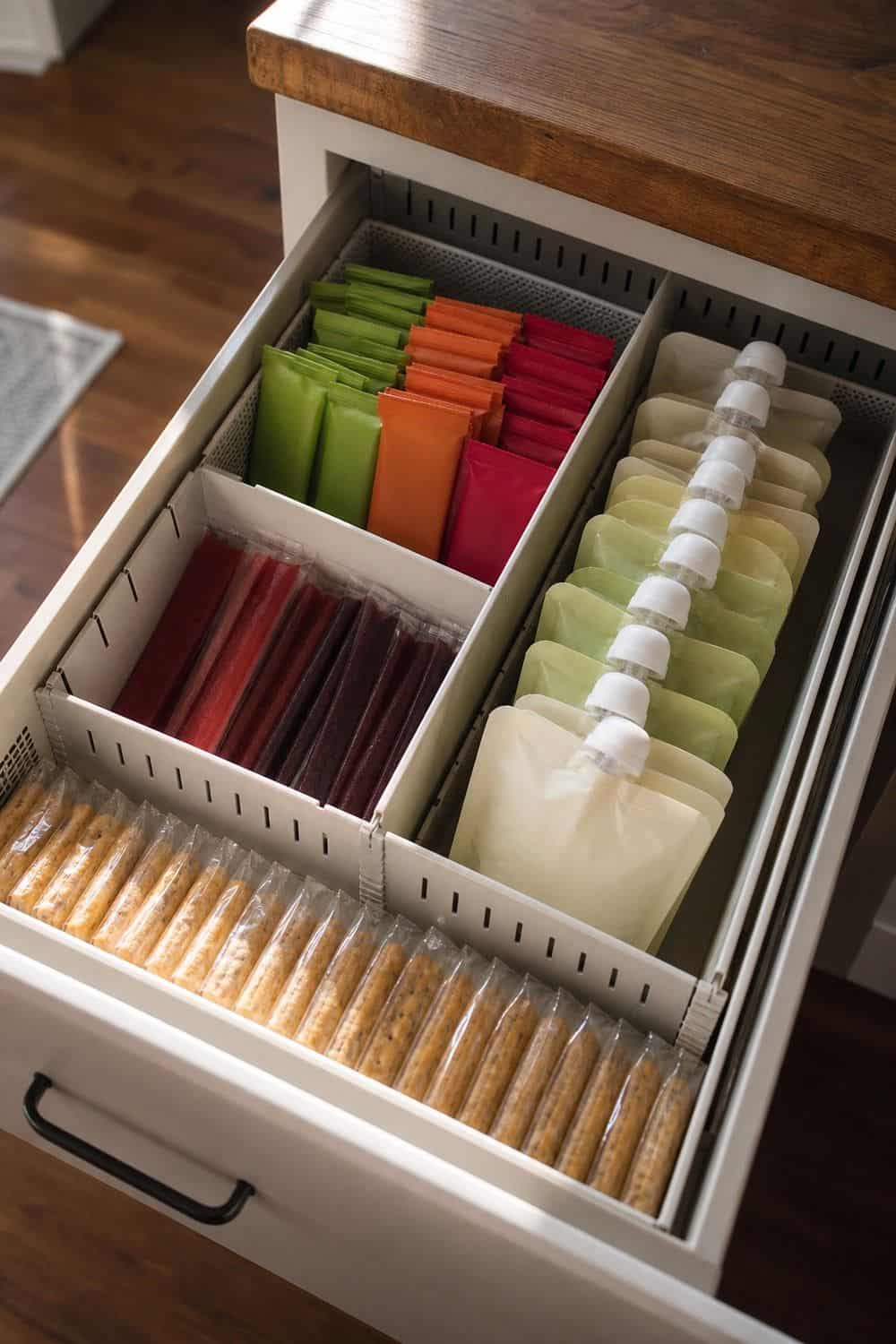
A snack drawer organizer is useful for protein bars, applesauce pouches, fruit strips, cheese crackers, breakfast bars, and small lunch add-ons. Flat storage keeps thin packages from becoming a pile that has to be dug through every morning.
Measure the drawer height before buying, especially if bars stand upright. Adjustable dividers are helpful because snack sizes change often, and a fixed tray can become useless after one grocery switch. Choose shallow dividers for kids who need to see every choice at once.
3. Refrigerator Snack Bin for Cold Grab Snacks
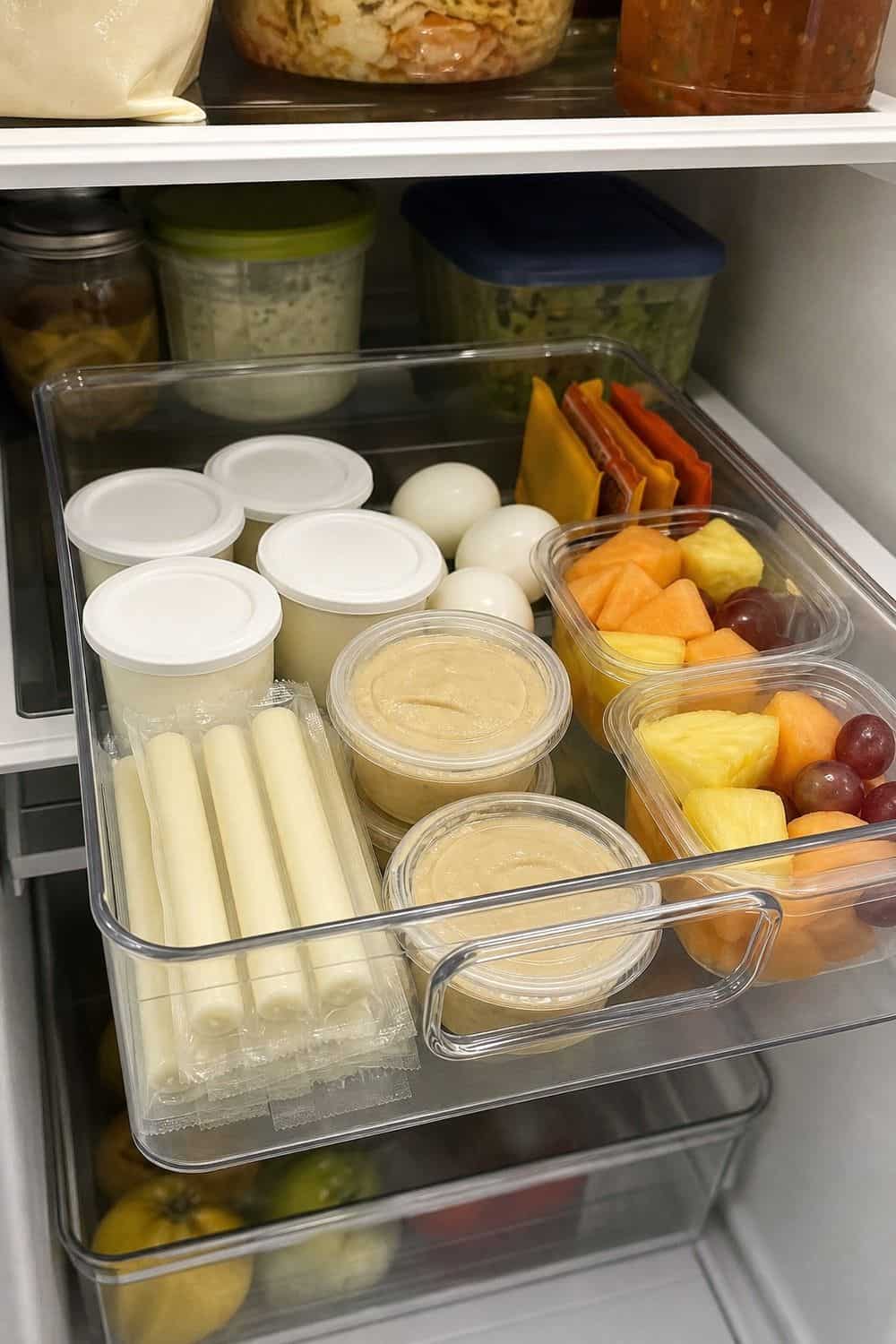
Clear refrigerator snack bins turn a fridge shelf into a quick snack drawer for yogurt cups, cheese sticks, hummus cups, cut fruit, boiled eggs, and chilled snack packs. A handled bin is especially useful because it can slide out without knocking over drinks or leftovers.
Choose clear plastic over opaque baskets so cold snacks do not disappear. This organizer prevents the common fridge problem where one person eats the visible snacks while the rest expire behind jars.
Check that the bin fits your shelf height with yogurt cups inside. A too-tall bin forces the shelf up and usually steals space from leftovers or milk.
4. Stackable Snack Containers for Shelf-Space Saving

Stackable snack containers help when snacks live on narrow shelves, in cabinets, or in a pantry without much width. They work best for similar categories, such as bars in one container, crackers in another, and fruit cups in a third.
Check lid stability and footprint before buying. If containers are too tall or too mixed, the stack becomes annoying to use, and people will stop returning snacks to the right place. Square corners usually waste less shelf space than rounded baskets.
5. Over-the-Door Snack Organizer for Tiny Pantries

An over the door pantry organizer is helpful when shelf space is limited but the pantry door has room to work. Use it for chips, bars, fruit snacks, drink packets, and lunchbox add-ons that can handle vertical storage.
Measure door clearance before ordering, including the gap between the door and shelves. Baskets should be deep enough to hold snacks, but not so bulky that they hit pantry contents every time the door closes. Put heavier snacks lower so the door does not swing awkwardly.
6. Rolling Snack Cart for Homework and After-School Snacks
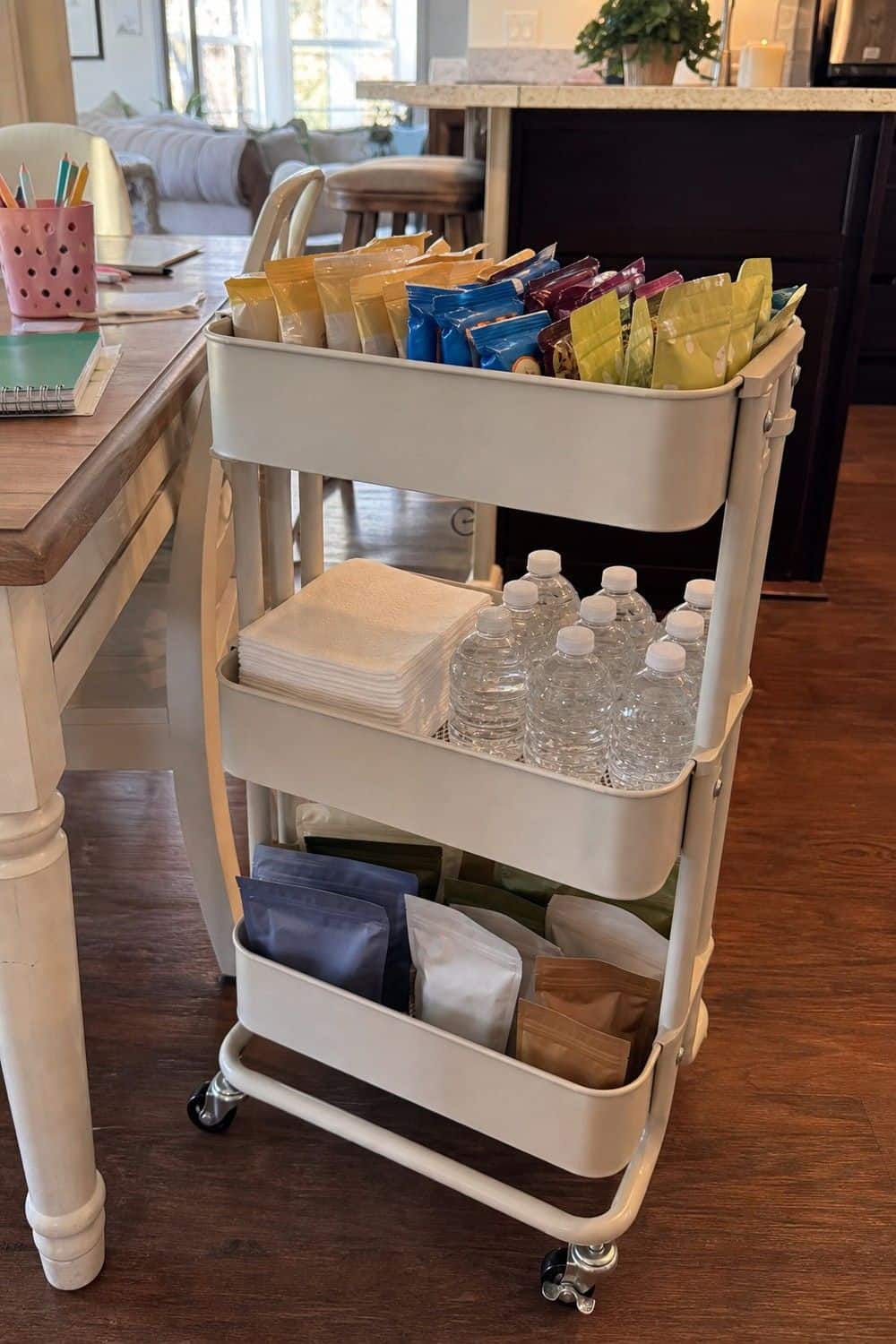
A rolling snack cart works well for homework tables, art rooms, family rooms, or flexible snack stations near the kitchen. It is best when each tier has a clear job: daily snacks, drinks or napkins, and backstock.
Choose a cart with raised edges and wheels that lock if younger kids will use it. The cart should solve traffic flow, not become a traveling pile of random open bags.
Before buying, decide where the cart parks when snacks are not being served. A cart without a home tends to block walkways or collect unrelated kitchen overflow.
7. Countertop Snack Basket for Daily Lunch Packing
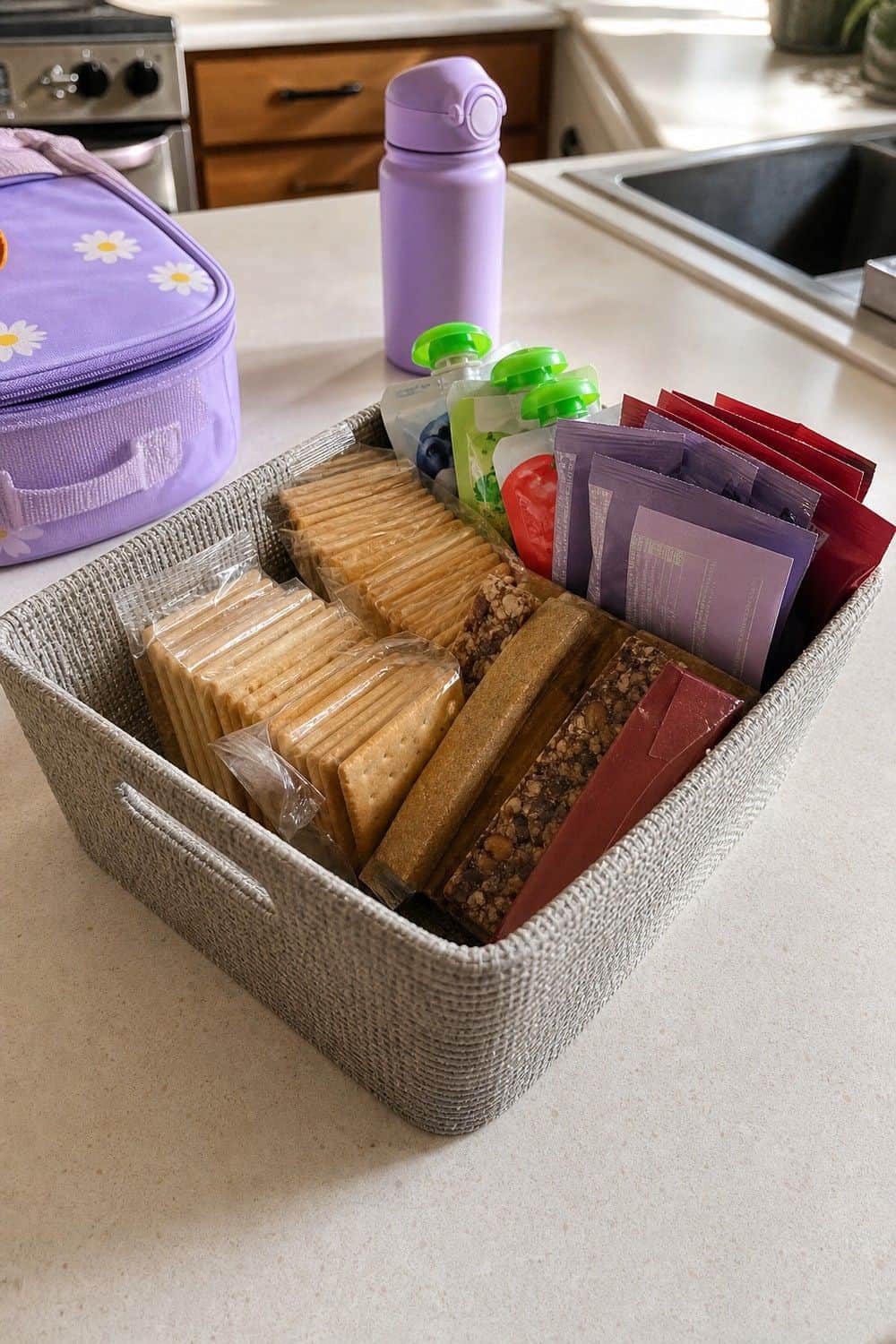
A countertop snack basket should hold only the snacks that actually go into lunches every morning. Think crackers, bars, fruit snacks, dried fruit, or school-approved packaged items that need to be grabbed quickly. Keep this basket small on purpose. If every open snack box lands here, the counter turns into a catchall, and the lunch-packing station becomes harder to use than the pantry shelf. A low basket is better than a deep one because lunch snacks should be visible from above.
8. Snack Bag Organizer for Chips and Mini Bags
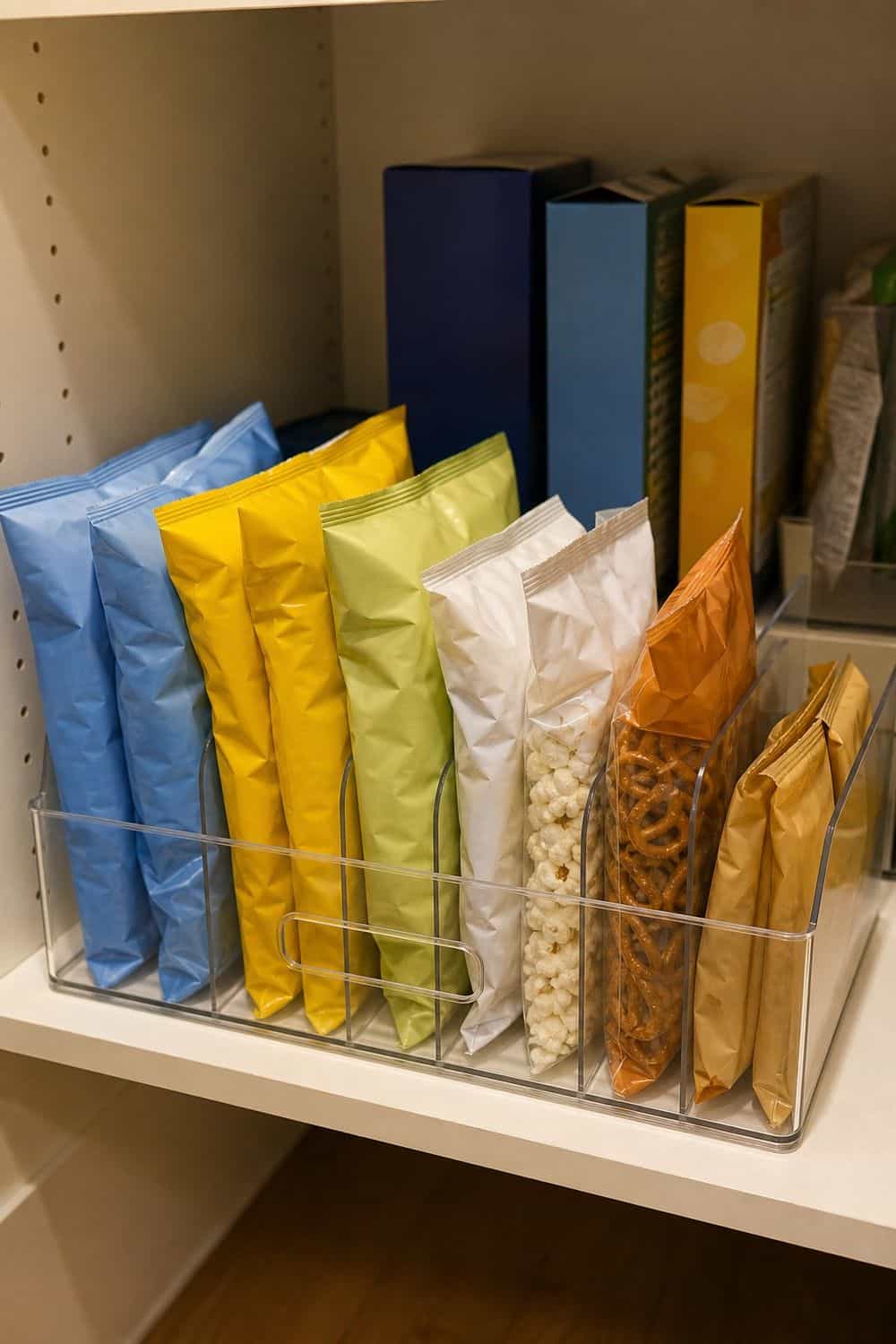
A snack bag organizer is made for chips, popcorn, pretzels, veggie straws, crackers, and multipack bags that collapse into messy piles. Upright or divided storage keeps bags from sliding behind cereal boxes and getting crushed.
Look for compartments that fit your usual bag size, not just the prettiest sorter. If the slots are too narrow, families will tear boxes open and pile bags beside the organizer instead. For big multipacks, keep unopened extras in backstock and refill the organizer weekly.
9. Airtight Snack Containers for Decanted Crackers and Mixes
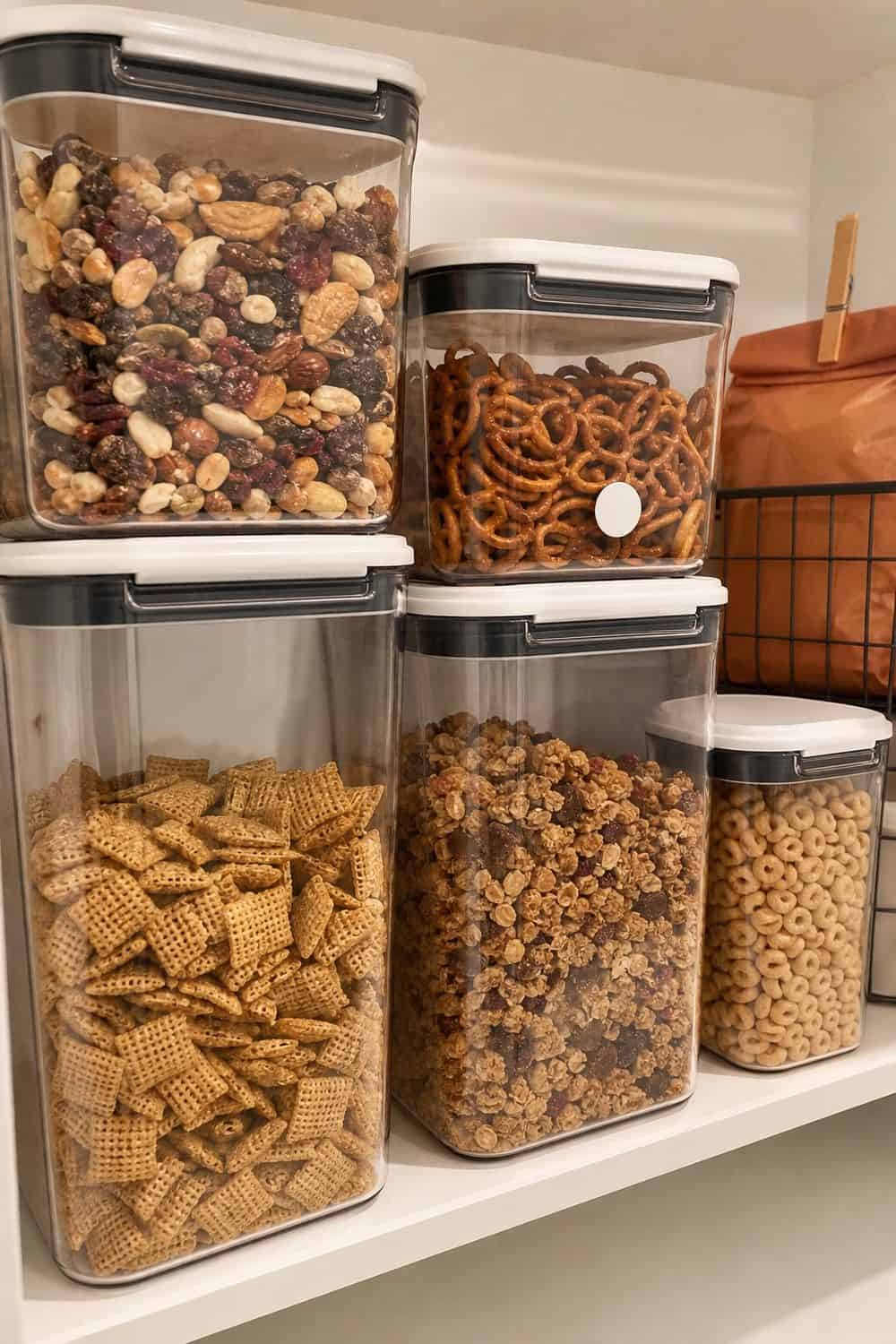
Airtight snack containers are useful for crackers, pretzels, trail mix, granola clusters, cereal snacks, and snack mixes after the package is opened. They protect texture better than a rolled bag clip, especially for snacks that go stale quickly.
Do not decant everything automatically. Original packaging may include allergy notes, cooking details, or dates, so airtight containers make the most sense for snacks your household eats often and recognizes easily. Add a date label if a mix will sit for more than a few days.
10. Lazy Susan Snack Organizer for Deep Cabinets
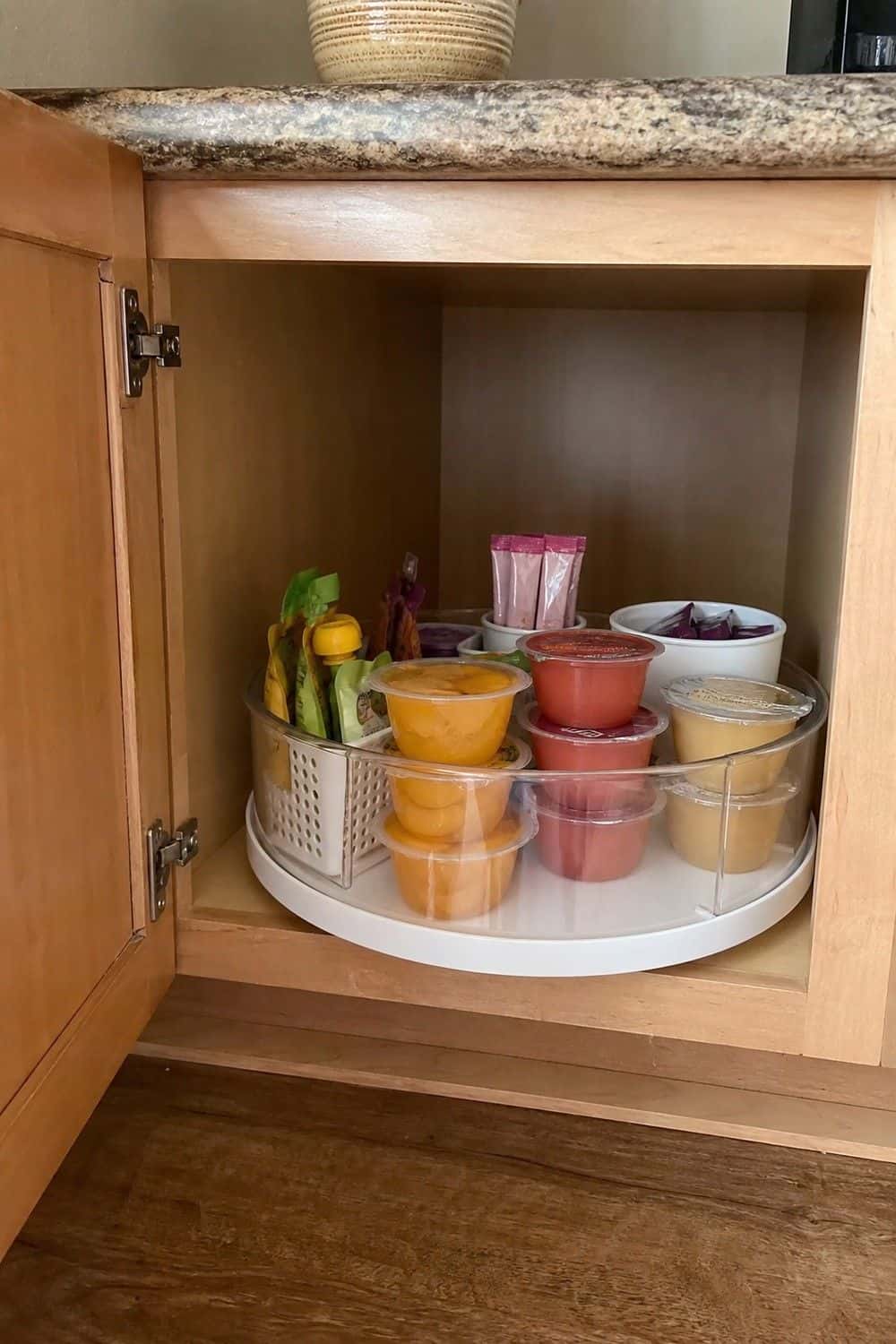
A lazy susan snack organizer helps in deep cabinets where small items vanish at the back. Use it for fruit cups, nut butter packets, applesauce cups, drink mix packets, and small snack containers that can rotate forward.
Choose a turntable with a raised rim so little packets do not slide off. This works best on higher or awkward shelves where pulling out a full bin would be frustrating.
Avoid overloading the turntable with tall bags. Rotation works best with short containers and packets that will not tip into the cabinet wall during a quick spin.
11. Tiered Snack Shelf for Small Packages
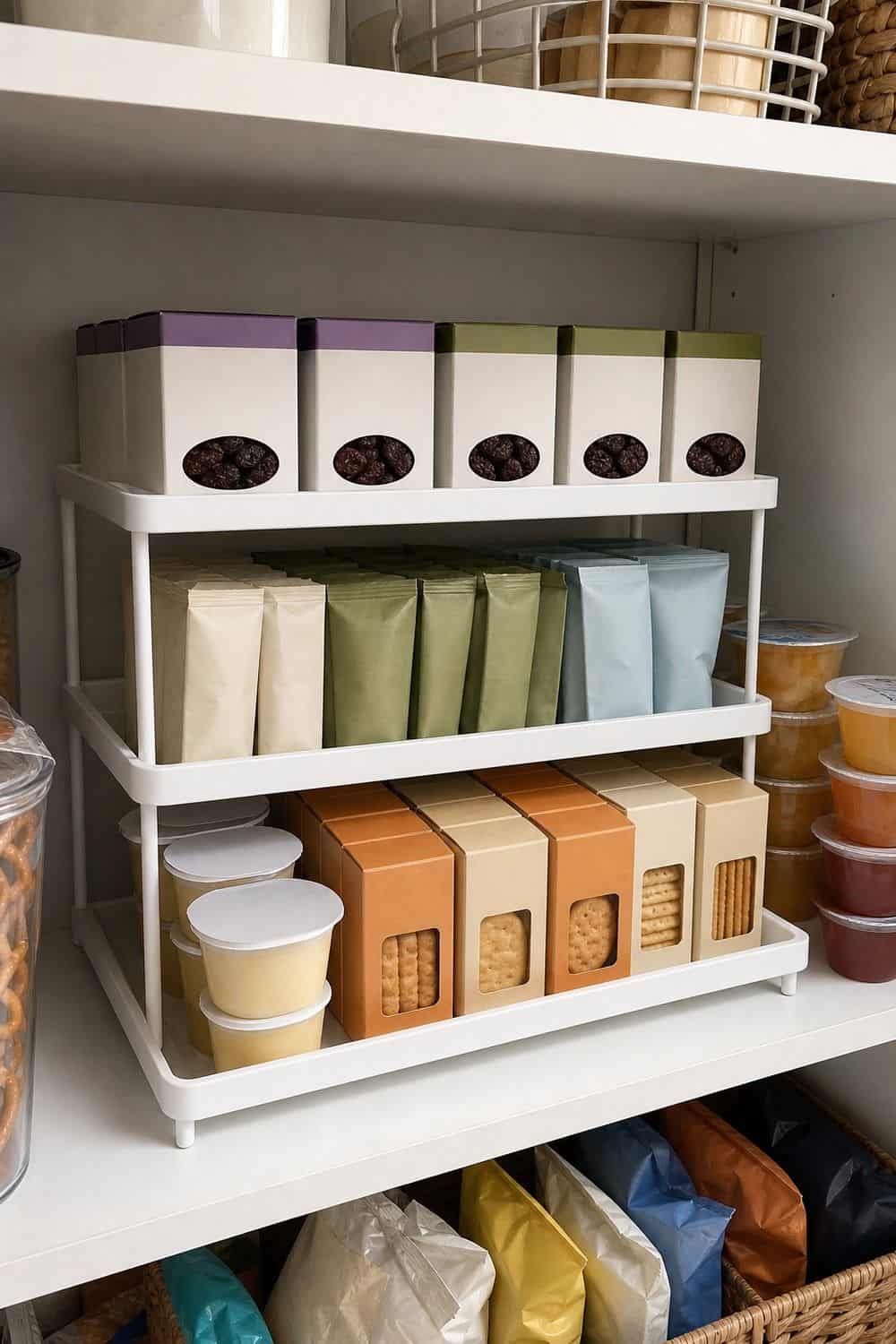
A tiered pantry shelf organizer gives small boxes and cups visibility by height. It works for raisins, seaweed packs, pudding cups, mini cracker boxes, snack cups, and short packages that get buried in a standard bin. Use this where you want to see everything at once, not where snacks need to be carried across the kitchen. The mistake it prevents is dumping tiny items into one container and forgetting half of them exist. Check shelf height so the top tier does not scrape the shelf above.
12. Kid-Friendly Snack Organizer Basket for Lower Shelves
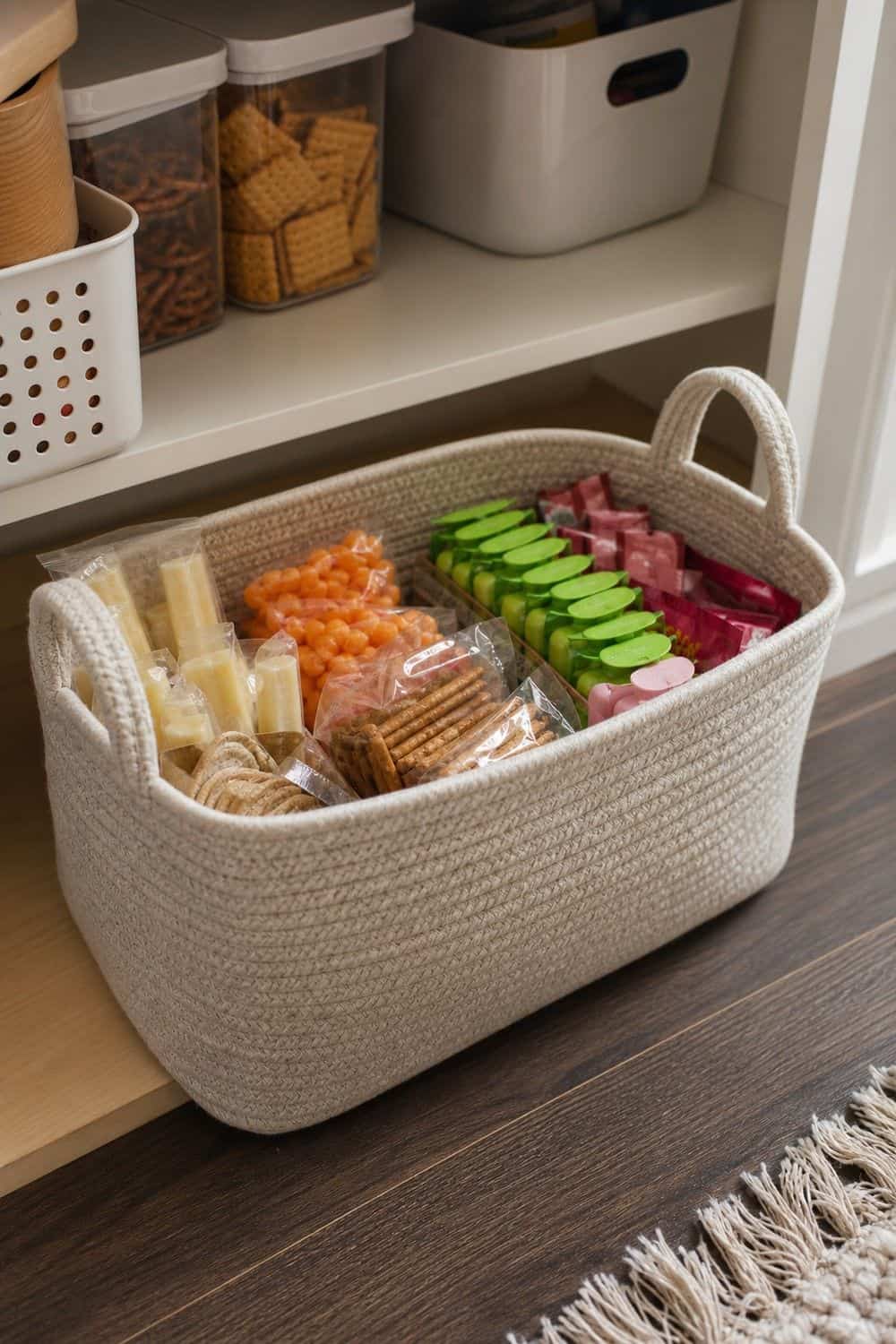
A kids snack organizer basket belongs on a lower shelf with parent-approved choices already separated. Use it for snacks younger kids can grab independently without pulling down heavy containers or climbing pantry shelves.
Choose a soft or lightweight basket with easy handles. The best version limits choices without hiding them, so kids can pick from the basket instead of rummaging through the entire pantry. Avoid heavy acrylic bins on low shelves if a younger child might pull the whole thing forward.
13. Lunchbox Snack Organizer for School Add-Ons
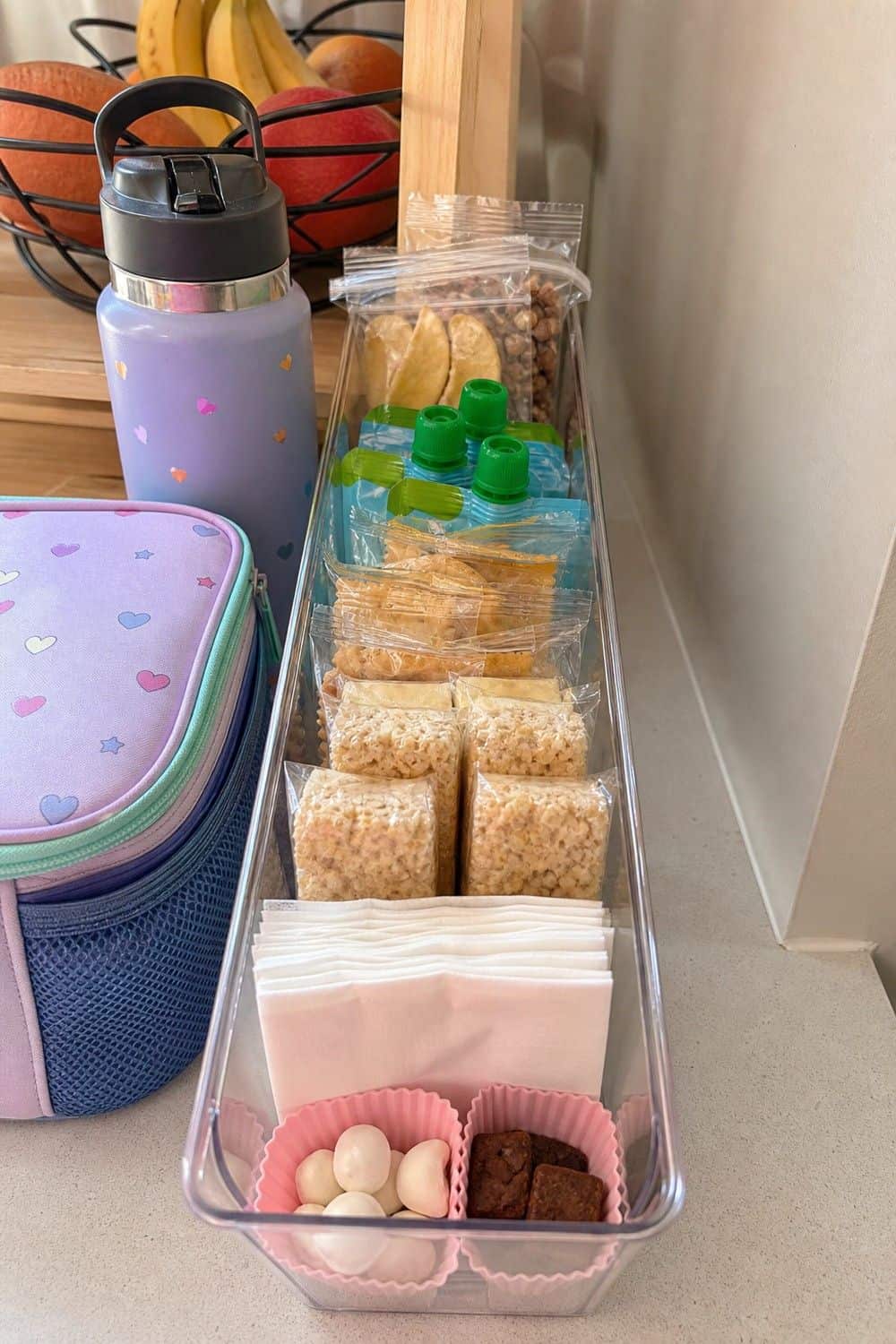
A lunchbox snack organizer supports the packing routine without becoming a full meal-prep system. Use it for nut-free bars, crackers, fruit snacks, dried fruit, napkins, and treat-day items that belong with school lunches.
Place it near lunchboxes, water bottles, or the part of the pantry used in the morning. Keeping lunch snacks separate prevents after-school grazing from emptying the items you need before school. A narrow bin or drawer insert is usually better than a deep basket for this job.
14. Sports Snack Bin for Practice Bags
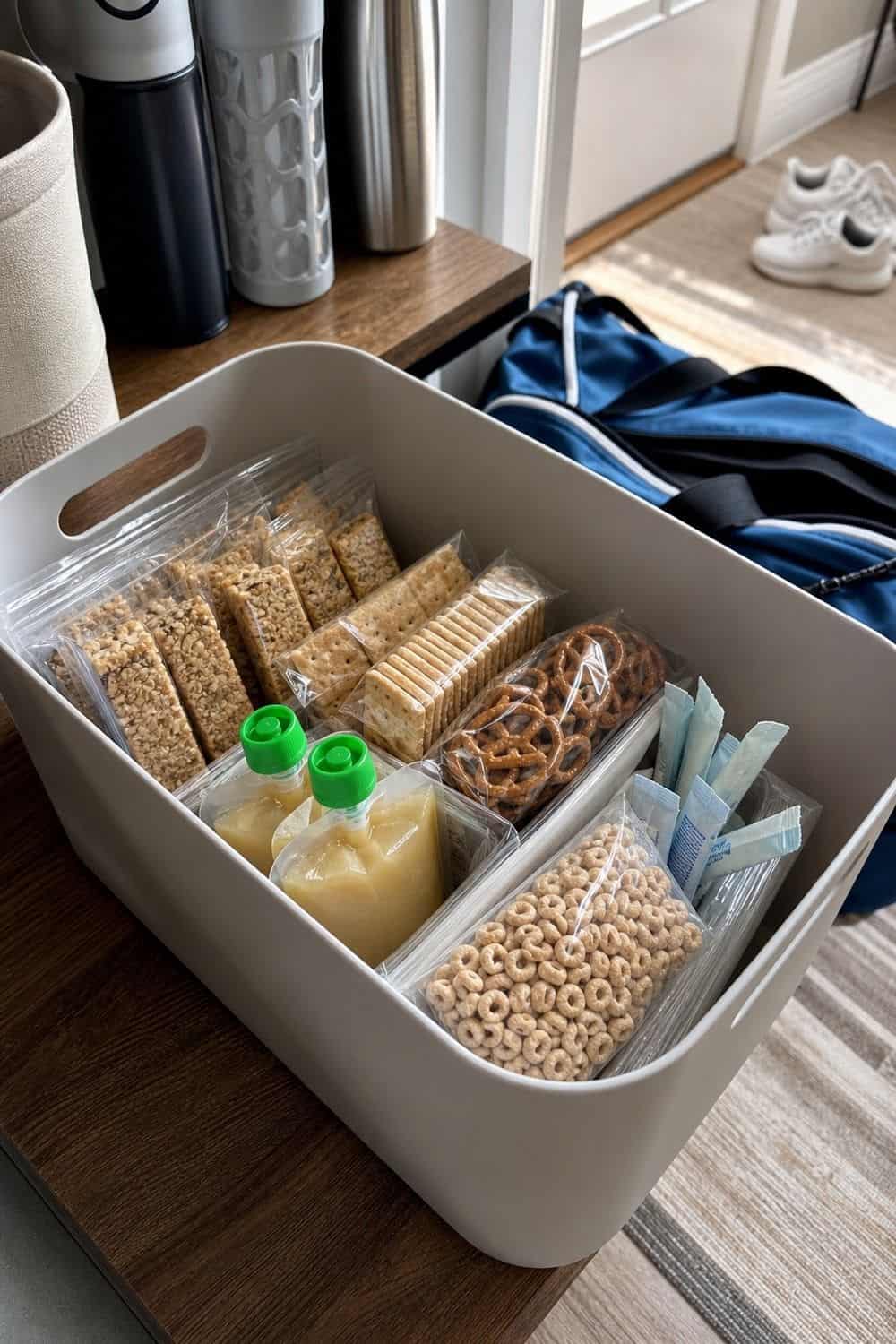
A sports snack bin is for shelf-stable snacks that can go straight into practice bags. Fill it with granola bars, pretzels, crackers, applesauce pouches, electrolyte packets, and dry cereal packs.
Place it near water bottles, lunch bags, or the door if the family is always rushing out. This prevents the last-minute pantry scramble that ends with crushed chips or forgotten snacks.
Choose a sturdy bin with handles so it can move to the car packing area when needed. Keep chocolate or heat-sensitive snacks out of this station.
15. Backstock Snack Bin for Multipack Extras
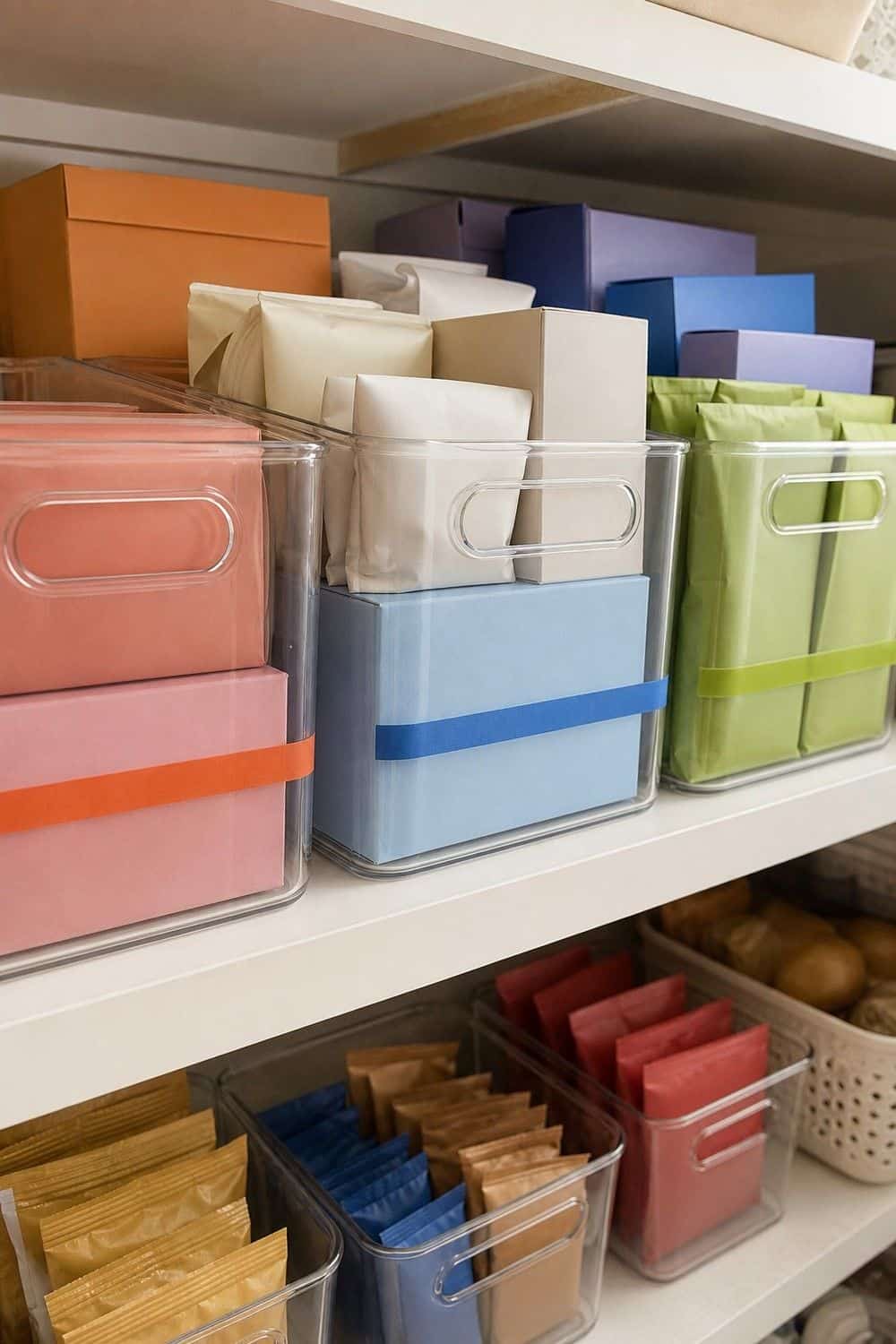
Large pantry storage bins are best for warehouse multipacks and extra snack boxes that should not crowd the daily grab zone. Backstock needs a home, but it should not sit in the same bin as open everyday snacks.
Separate backstock by broad category, such as bars, crackers, pouches, or chips. That makes restocking easier and helps stop kids from opening three new boxes before the first one is finished. Put backstock above or behind daily snacks so the grab zone stays current.
16. Treat Snack Box for Boundaries and Visibility

A treat storage box gives cookies, candy, chocolate, dessert bars, and special snacks a defined place. It helps families see what is available without mixing sweets into the everyday snack bin. Choose a box that fits the actual amount you want accessible, not every treat in the house. A clear lid is useful because it shows when the box needs refilling or when it is already full enough. Keep it separate from lunch snacks if treats are not meant for everyday packing.
17. Clear Snack Containers with Labels for Restocking
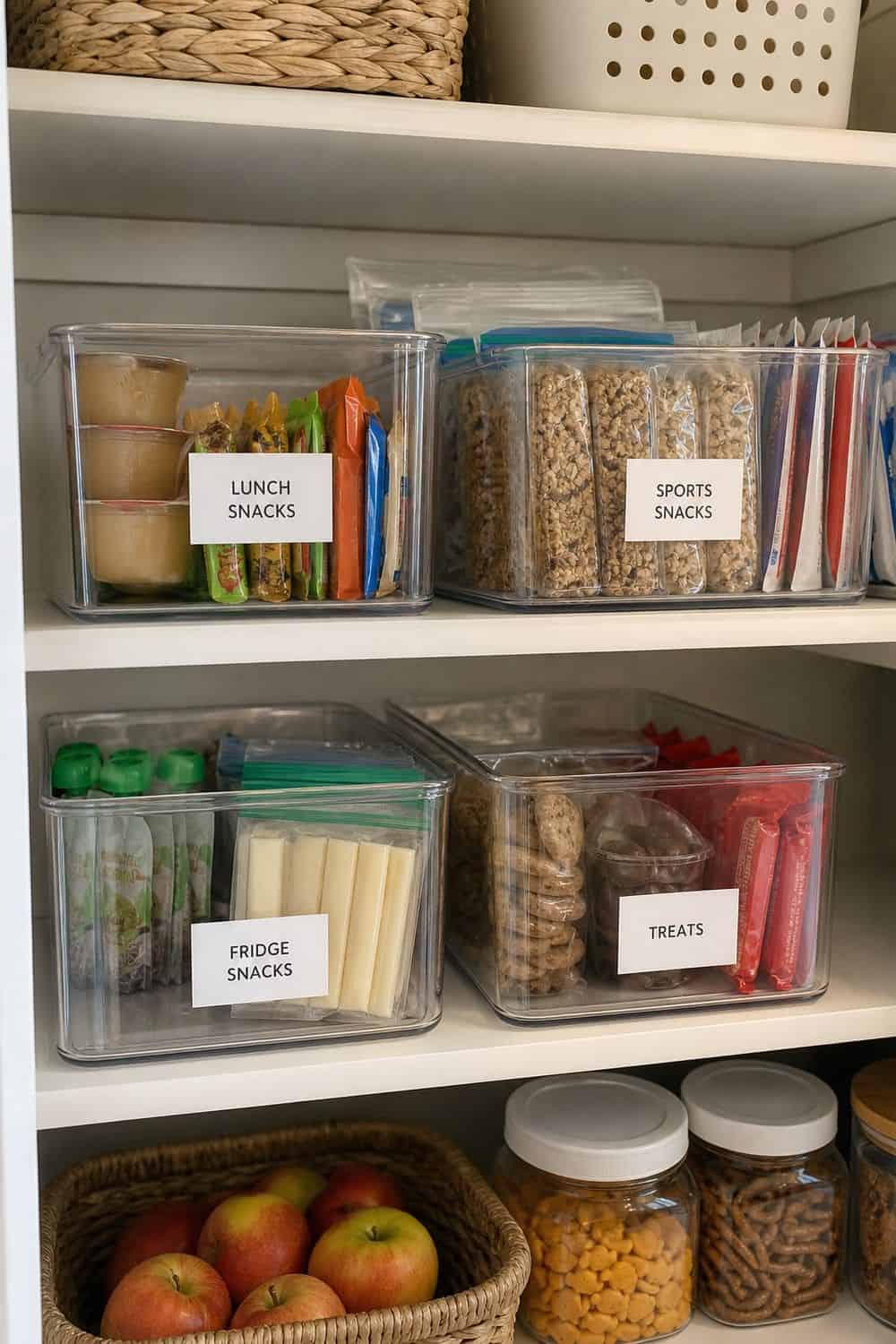
Snack container labels are most useful when multiple people restock or pack snacks. Label the job, such as lunch snacks, sports snacks, fridge snacks, or treats, instead of over-specific items that change every week.
Place labels where they can be seen while the bin is on the shelf. This prevents well-meaning restocks from turning every container into a mixed pile after one grocery trip. Broad labels are easier to maintain than exact product names that change every week, especially for changing snack brands.
18. Divided Snack Tray for Countertop Self-Serve Moments
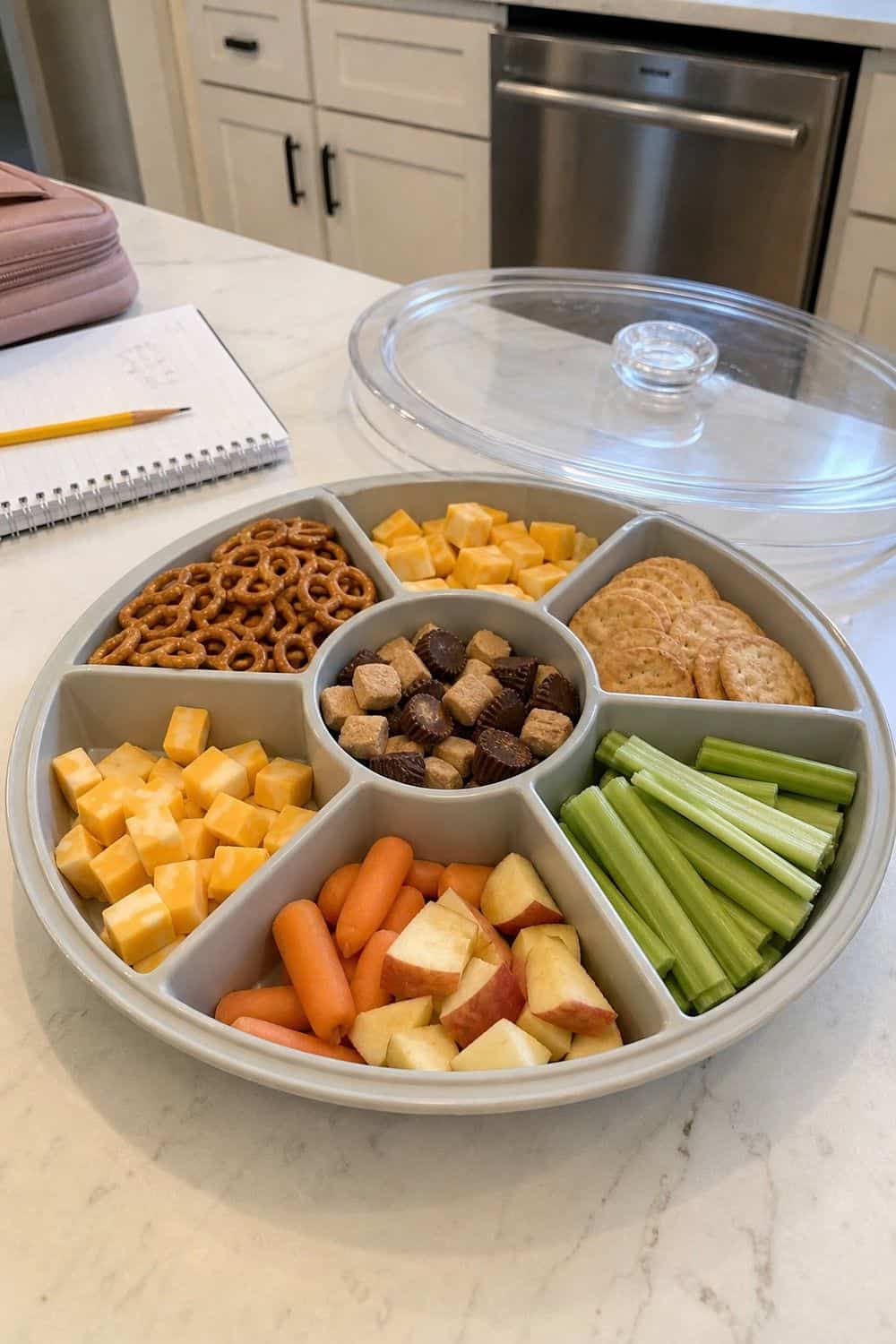
A divided snack tray with lid is a serving organizer for weekend grazing, playdates, homework time, or quick snack choices from the pantry and fridge. It is not meant to replace pantry storage.
Choose a lidded tray if it moves between the counter and fridge. Use it for a temporary snack moment, then empty or wash it rather than letting old snacks sit out all day.
This organizer is best for serving, not storage. It shines when you want a few choices available during homework, playdates, or weekend grazing without opening several pantry bins.
19. Slim Snack Bin for Narrow Cabinets
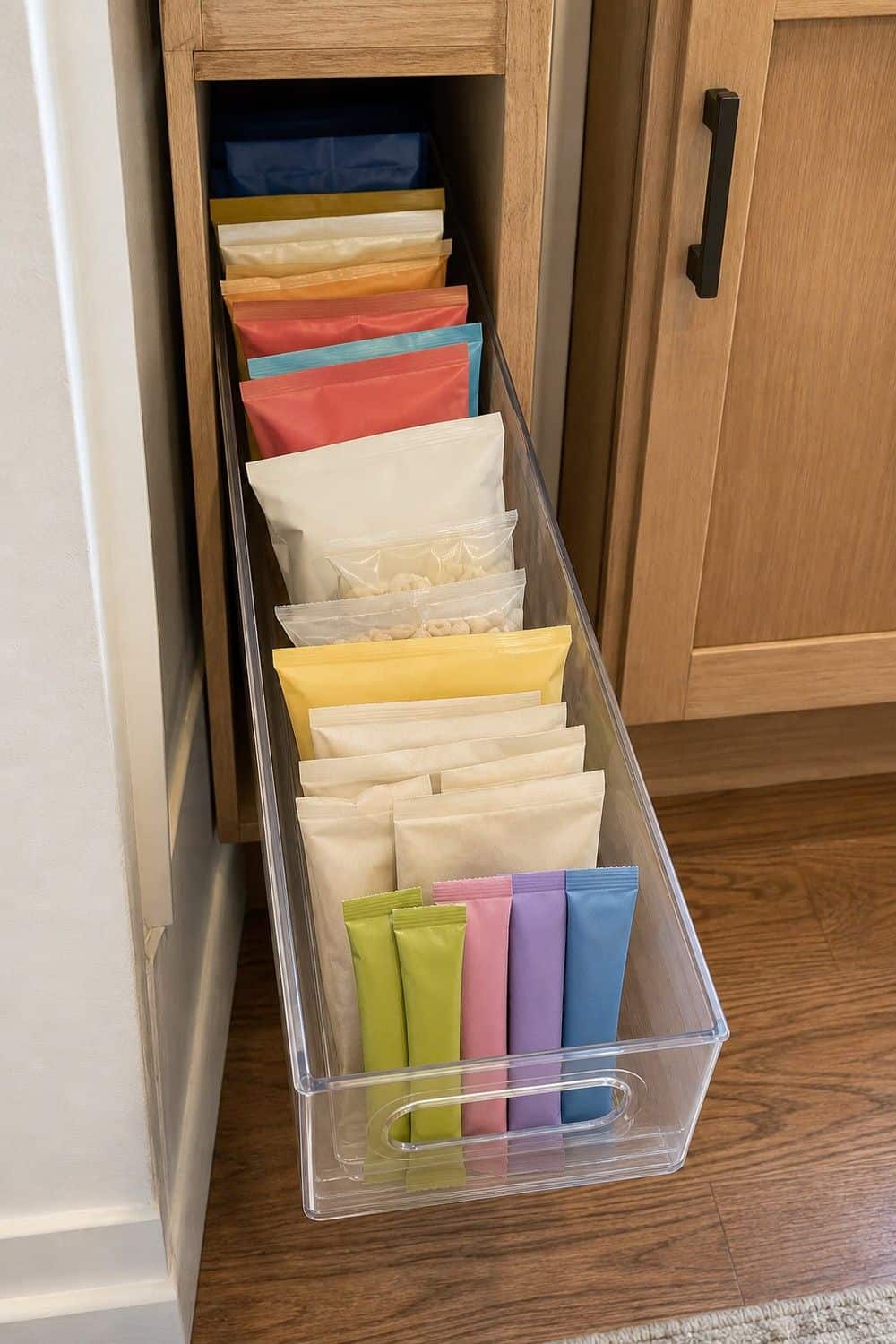
Narrow pantry storage bins are helpful in tight shelf gaps, shallow cabinets, and limited-space kitchens where a wide bin wastes space. Use them for bars, pouches, drink packets, or small snack bags that need to pull forward easily.
Measure shelf depth and height before buying. A slim bin should slide out like a drawer, not get wedged behind hinges, pipes, or awkward cabinet frames. Handles matter here because narrow bins are usually pulled from the front, often several times a day.
20. Snack Inventory Notepad for Weekly Restock Planning
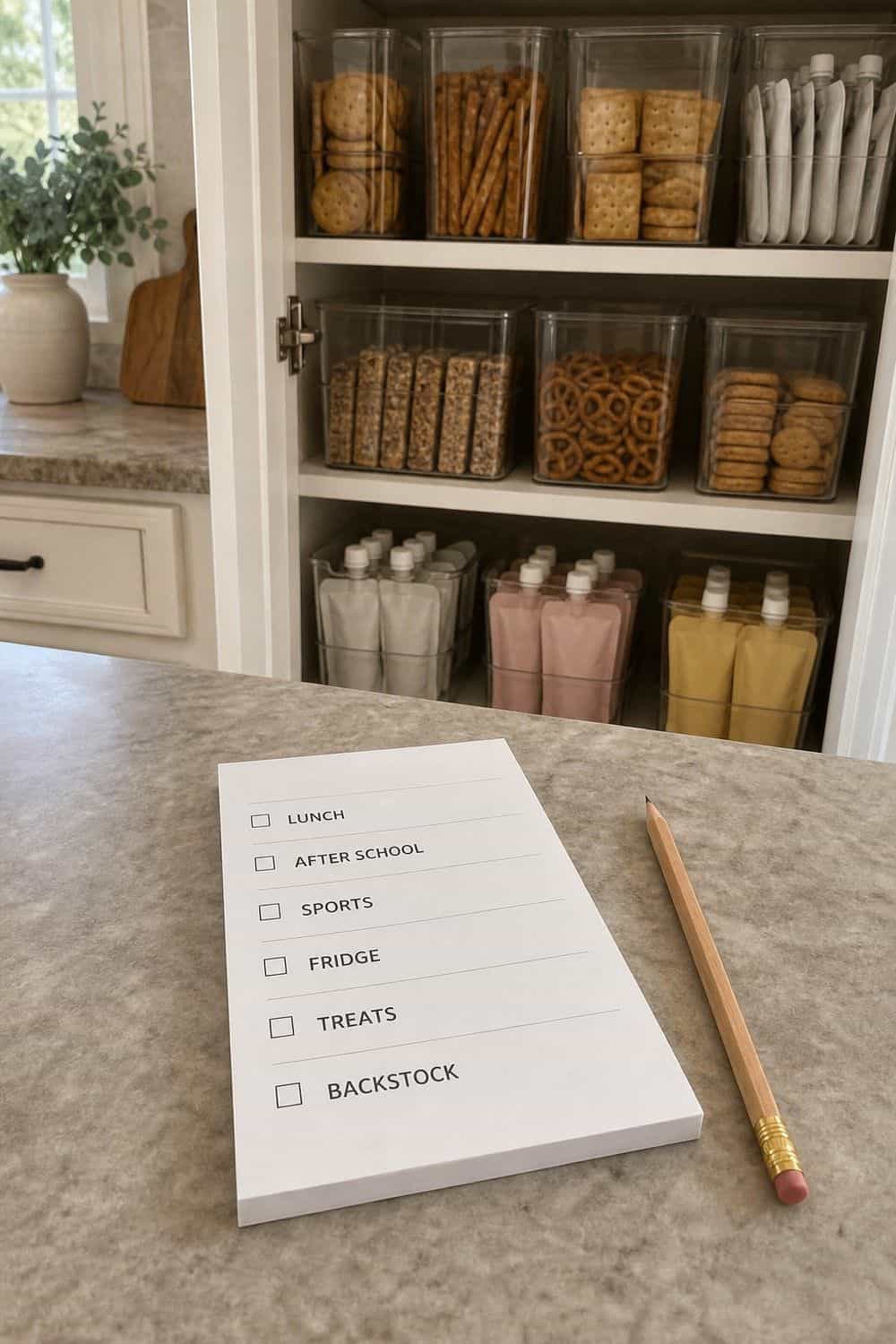
A snack inventory notepad is not a bin, but it can prevent the overbuying that makes snack stations messy again. Use it to track what ran out, what nobody ate, and what needs fridge refills. Organize the list by snack job: lunches, after school, sports, fridge, treats, and backstock. That keeps grocery planning tied to real use instead of random snack cravings in the store aisle. Keep the notepad near the pantry door so empty bins can be noted immediately.
How to Choose Snack Station Organizers
Snack station organizers are not the same as snack prep, pantry containers, or lunch packing systems. Organizers decide where snacks live and how they are grabbed; prep decides what is portioned; lunch packing decides what leaves the house.
Choose open bins for changing packaged snacks, airtight containers for opened dry snacks, drawer dividers for flat packages, carts for flexible stations, and door racks for vertical overflow. Clear sightlines help with restocking and reduce duplicate purchases.
Set zones by use case: lunch, after school, sports, fridge, treats, backstock, and younger-kid access. Avoid buying matching containers before measuring, mixing daily snacks with backstock, hiding perishables in opaque bins, or making kids dig through the whole pantry.
Frequently Asked Questions
What is the best way to organize a snack station?
The best way to organize a snack station is to group snacks by use case, not just by package type. Keep lunch snacks, after-school snacks, fridge snacks, sports snacks, treats, and backstock in separate bins or zones so each routine has an easy place to start.
What organizers work best for kids snacks?
Kids snacks usually work best in lightweight baskets, clear pantry bins, lower-shelf bins, drawer organizers, or divided trays. Choose organizers with easy handles and visible contents, then stock them with parent-approved choices so kids do not need to pull down heavy bins.
Should snacks stay in their original packaging or go into containers?
Snacks can stay in original packaging when the package has useful information, individual portions, or allergy details. Use airtight containers for opened crackers, pretzels, trail mix, cereal snacks, and mixes that go stale quickly. You do not need to decant every snack.
How do I organize snacks in a small pantry?
In a small pantry, use narrow bins, stackable containers, door racks, lazy Susans, and tiered shelves. Measure first, then choose organizers that pull forward easily. Keep daily snacks separate from backstock so limited shelf space is used for what people grab most.
What is the best organizer for fridge snacks?
The best organizer for fridge snacks is usually a clear handled refrigerator bin. It keeps yogurt, cheese sticks, hummus cups, fruit, boiled eggs, and snack packs together while still making the contents visible. Avoid opaque bins for perishables because they are easy to forget.
How do I keep lunchbox snacks separate from after-school snacks?
Use separate labeled bins or drawers for lunchbox snacks and after-school snacks. Place lunch add-ons near lunchboxes or morning packing supplies, then keep after-school choices at kid height or near the homework area. This keeps one routine from emptying the other.
How do I stop a snack station from getting messy again?
Stop a snack station from getting messy again by limiting each organizer to one job, labeling broad categories, separating backstock, and checking what actually gets eaten before buying more. If the system is hard to restock, it will not stay tidy for long.
What should go in a snack station organizer?
A snack station organizer can hold bars, crackers, pouches, fruit cups, popcorn, pretzels, dried fruit, snack bags, yogurt cups, cheese sticks, hummus cups, sports snacks, treats, or backstock. Choose contents based on the station’s job and where the organizer will live.
Final Thoughts
The best snack station organizers are the ones that make your real routines easier: lunch packing, after-school grabbing, fridge snacking, sports bags, treat storage, and weekly restocking. Measure first, choose visibility where it matters, separate daily snacks from backstock, and keep each organizer tied to one clear job. A snack station stays useful when the whole household can see it, use it, and refill it without rebuilding the pantry every week.
Last update on 2026-09-17 / Affiliate links / Images from Amazon Product Advertising API