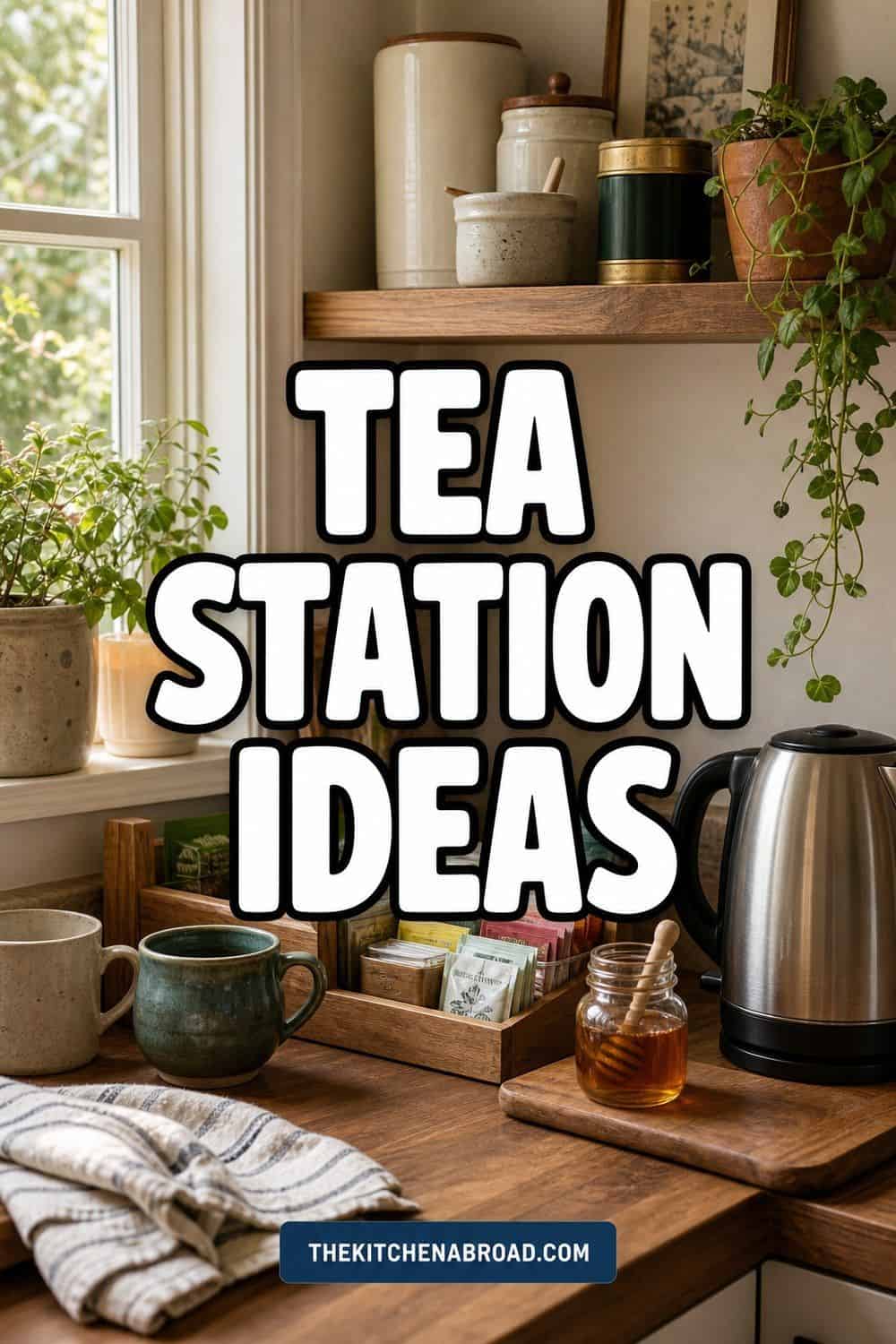
The best tea station ideas group your kettle, tea bags or airtight tins, mugs, sweeteners, steeping tools, towel, and cleanup pieces into one calm daily zone. Keep tea dry, dark, airtight, and away from heat, moisture, light, and strong odors so the setup protects freshness as well as routine. A good station can live on a tray, in a drawer, inside a cabinet, on a hutch shelf, or on a slim kitchen cart.
A tea station works best when it feels quiet in the morning and easy at night. Instead of scattering tea boxes, mugs, honey, strainers, and spoons across the kitchen, the right setup gives every part of the ritual a small job.
The tea station ideas below focus on flavor, storage, and the small daily movements that make tea easier. Tea bags need sorting, loose leaf needs airtight storage, sweeteners need a washable landing place, and brewing tools need to stay close enough that making tea does not turn into a cabinet search.
You Might Also Like These Blog Posts
- Coffee Station Organization
- Small Kitchen Coffee Station Ideas
- Mug Organization
- Kitchen Drawer Organization
- Small Kitchen Organization
Tea Station Ideas for a Calmer Daily Ritual
1. Choose One Daily Tea Zone
A tea station works best when it has one clear home: a tray near the kettle, a drawer under the counter, a cabinet shelf, a hutch nook, or a slim cart beside the kitchen wall. The best spot is not always the prettiest one; it is where your hand already reaches for tea, water, mugs, and sweetener.
Keep the zone limited to what you use most days, then move seasonal blends, guest mugs, and backup honey jars elsewhere. A good station feels calm because it holds the ritual, not the whole tea collection.
If you can make your usual cup without opening more than two doors or drawers, the placement is probably working. That quick path matters most on sleepy mornings and late nights.
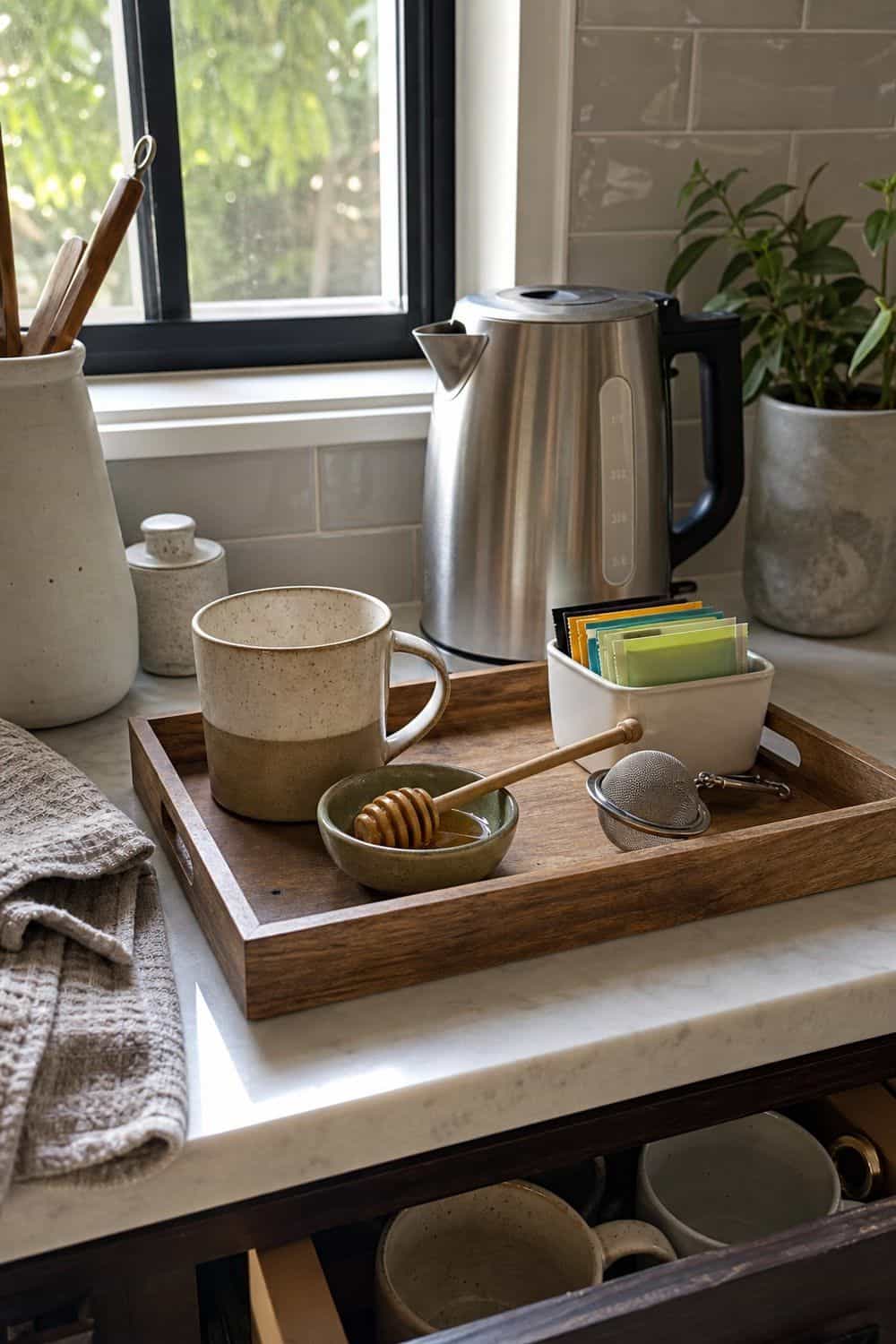
2. Put the Kettle on a Heat-Safe Landing Spot
The kettle needs a safe, sensible landing place near an outlet and away from anything that traps steam. If upper cabinets sit low over the counter, pull the kettle forward while boiling or choose a spot where steam will not soften finishes over time.
Pay attention to the cord path, the water splash zone, and where the hot kettle goes after pouring. A washable mat or heat-safe tray can catch rings and tiny drips without making the counter look busy.

3. Sort Tea Bags in a Divided Organizer
Tea bags become easier to use when they are sorted by how you actually drink them. Try black tea, green tea, herbal, decaf, morning, evening, or guest blends instead of keeping half-empty cardboard boxes stacked sideways in a cabinet. Individually wrapped bags can sit in a divided organizer, while unwrapped bags need a covered container or a folded inner packet so flavor is not exposed to air and kitchen smells. The goal is quick choosing, not a museum of every box you own.
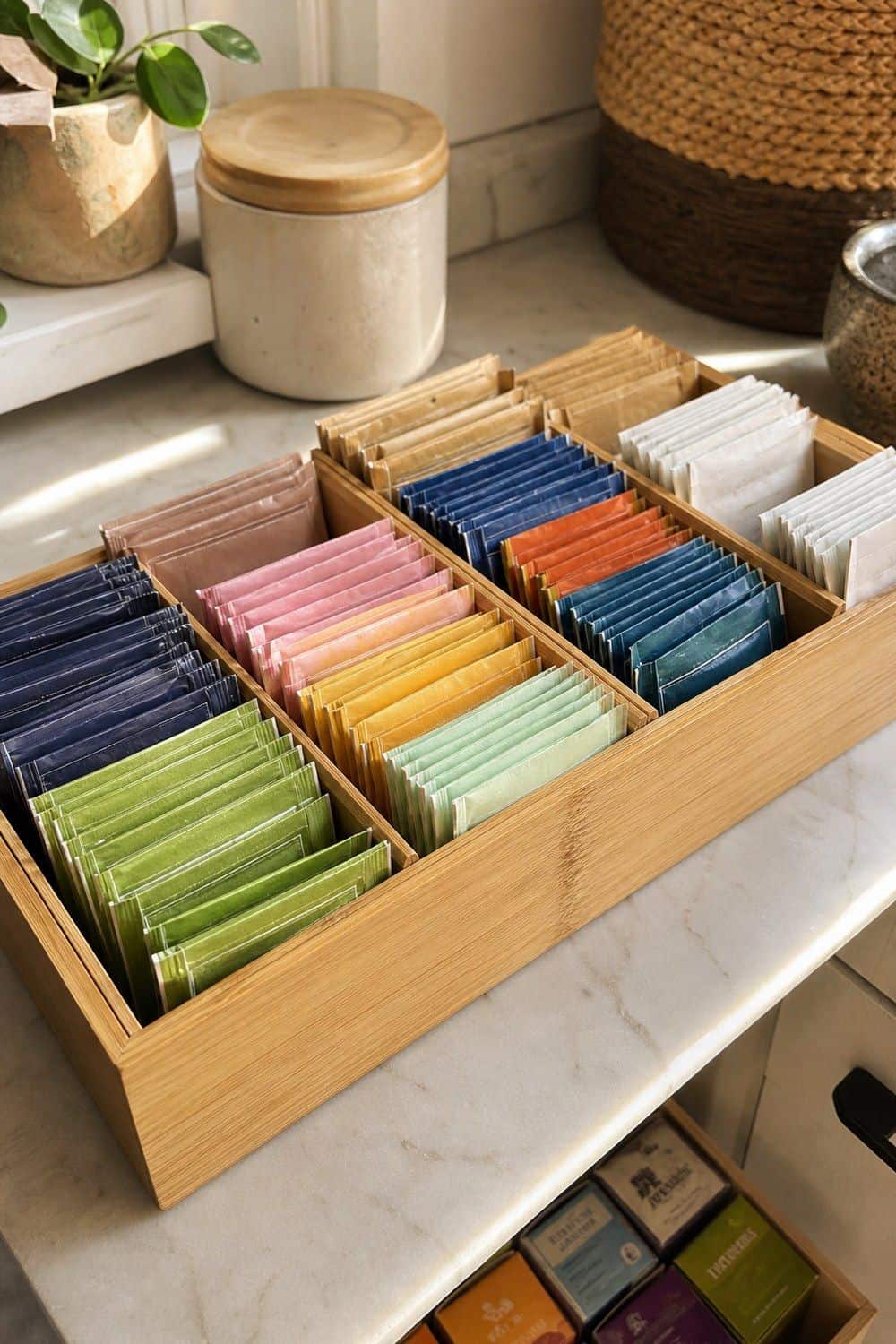
4. Build a Drawer-Based Tea Station
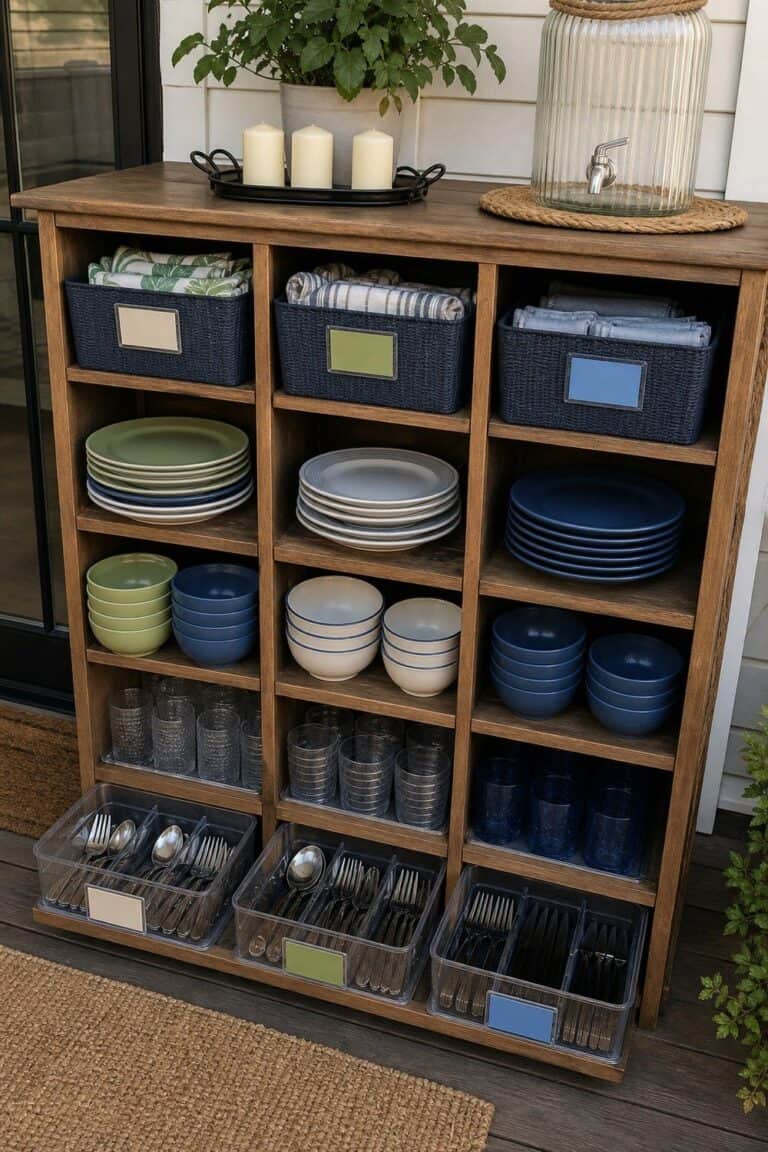
A drawer-based tea station is perfect when you want a calm counter and still need everything close. Use dividers for tea bags, filter bags, spoons, honey packets, a small timer, and loose-leaf tools, then check that the drawer opens fully without hitting the kettle cord.
Put daily teas in the front row and occasional blends toward the back, with labels facing up so the drawer reads quickly in the morning.
Drawers work beautifully for tea because shallow categories stay visible, and little packets do not slide into one messy pile. Add one low label row if guests use the drawer too, so no one has to lift every divider to find peppermint or breakfast tea.

5. Store Loose Leaf Tea in Airtight Tins
Loose leaf tea needs more protection than boxed tea bags, so store it in airtight tins or opaque canisters instead of clear jars beside the stove. Keep those containers in a dry cabinet or drawer away from direct light, steam, and heat. Label each tin with the blend name and, if you buy in bulk, the date you opened it. Tea may not spoil like fresh food, but it loses aroma and strength when air, moisture, heat, and light reach it too often.
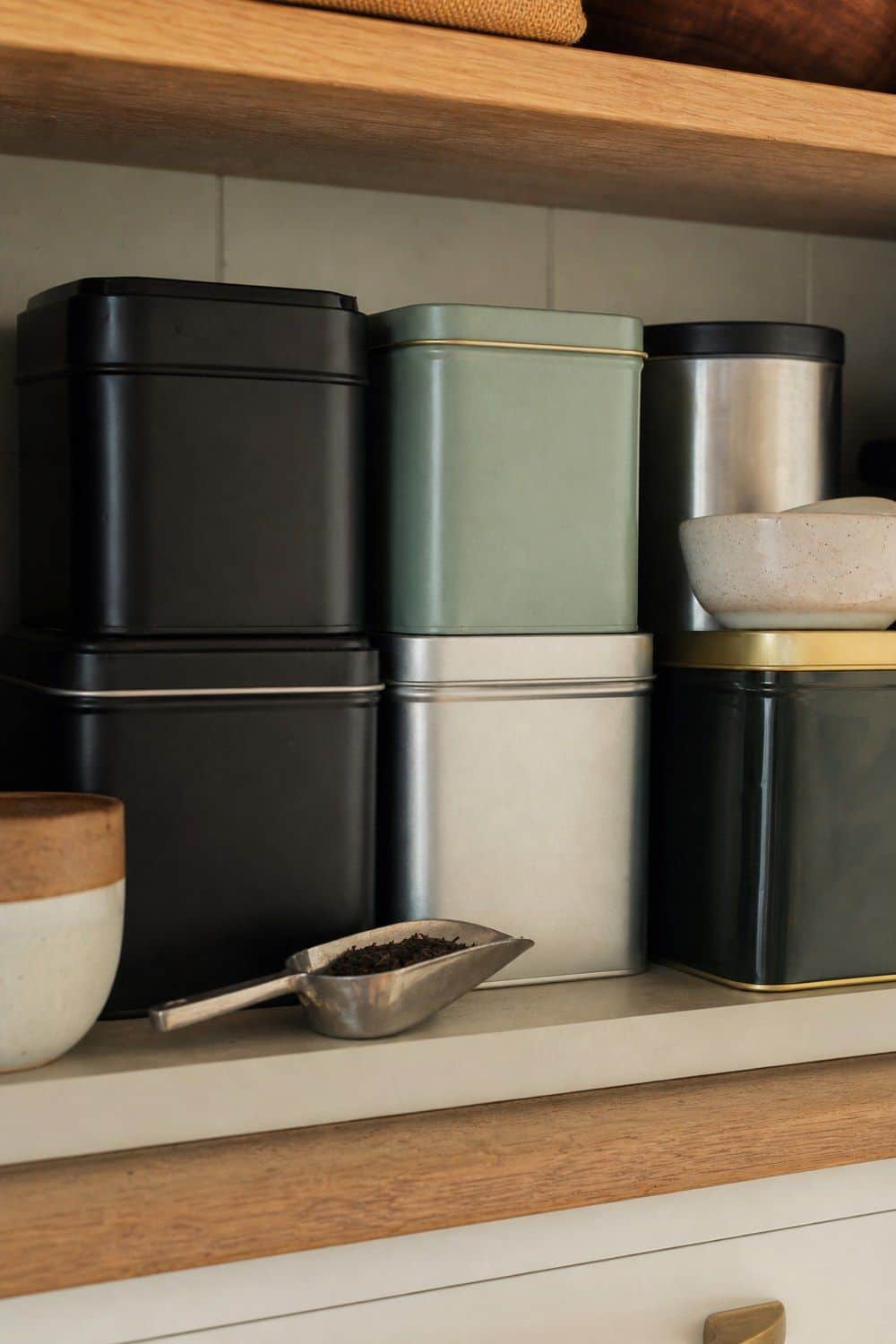
6. Keep Tea Away From Strong Pantry Smells
Tea absorbs surrounding odors more easily than people expect, so a pretty open jar beside coffee, spices, onions, or cleaning supplies can quietly dull the flavor. Strong herbal blends can also scent delicate teas if everything sits open together. Use opaque canisters for loose leaf or unwrapped bags, then keep them in a dry tea cabinet rather than next to fragrant pantry items. A little separation keeps the tea station fresher and makes the cup taste more like the blend you chose.
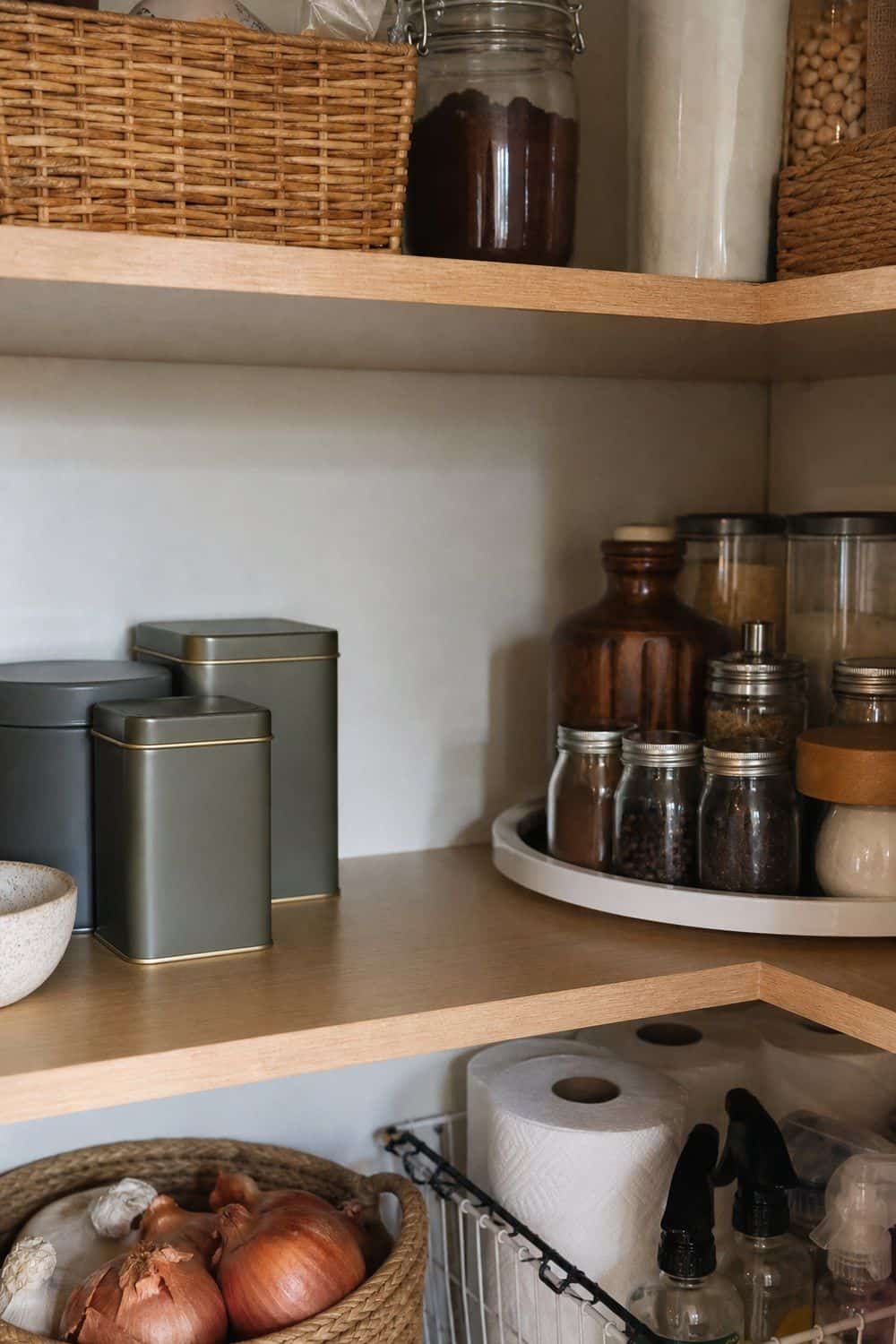
7. Add a Loose Leaf Infuser Cup
A basket-style infuser or mug infuser makes loose leaf tea feel like a regular weekday option. Tiny tea balls can be charming, but larger infusers usually give leaves more room to open and are much easier to rinse clean.
Store the infuser right beside the loose leaf tins, not in the general utensil drawer. When the tool lives with the tea, loose leaf stops feeling like a special project and becomes as easy as grabbing a bag. Keep a small rinse spot or towel nearby so the infuser does not drip across the counter afterward.

8. Keep Disposable Tea Filters Nearby
Disposable tea filter bags are useful for loose leaf drinkers who want less cleanup or need to take tea to work. Place them in a narrow box, drawer slot, or small lidded container beside the loose leaf tins. This is especially helpful if more than one person uses the station. Filters make the brewing method obvious, so the loose leaf collection does not sit untouched simply because no one wants to hunt for the right tool. They are also handy for guests who know the tea they want but not your usual brewing setup.

9. Add a Tea Timer for Better Steeping
A timer keeps the station from becoming guesswork. Black tea, green tea, herbal tea, and delicate loose leaf blends all behave differently, and a forgotten mug can turn bitter before you remember it. Use a small digital timer, hourglass, magnetic timer, or phone timer if that is what you will actually use. The point is not to make tea fussy; it is to remove the tiny decision that makes the cup less reliable. Keep the timer visible, because a hidden timer turns right back into guessing.

10. Store Mugs Above or Beside the Station
Keep daily mugs close to the tea station so the routine stays contained. A small shelf, cabinet riser, mug rail, or nearby cabinet works better than sending everyone across the kitchen while the kettle is hot.
Limit the station to the mugs you reach for most. Guest mugs, oversized seasonal cups, and chipped backups can live elsewhere, because a tea area feels calmer when it holds favorites rather than the entire mug collection. If mugs stack awkwardly, use a riser or rail before adding more cups to the same shelf.
11. Set Up a Sweetener and Honey Tray
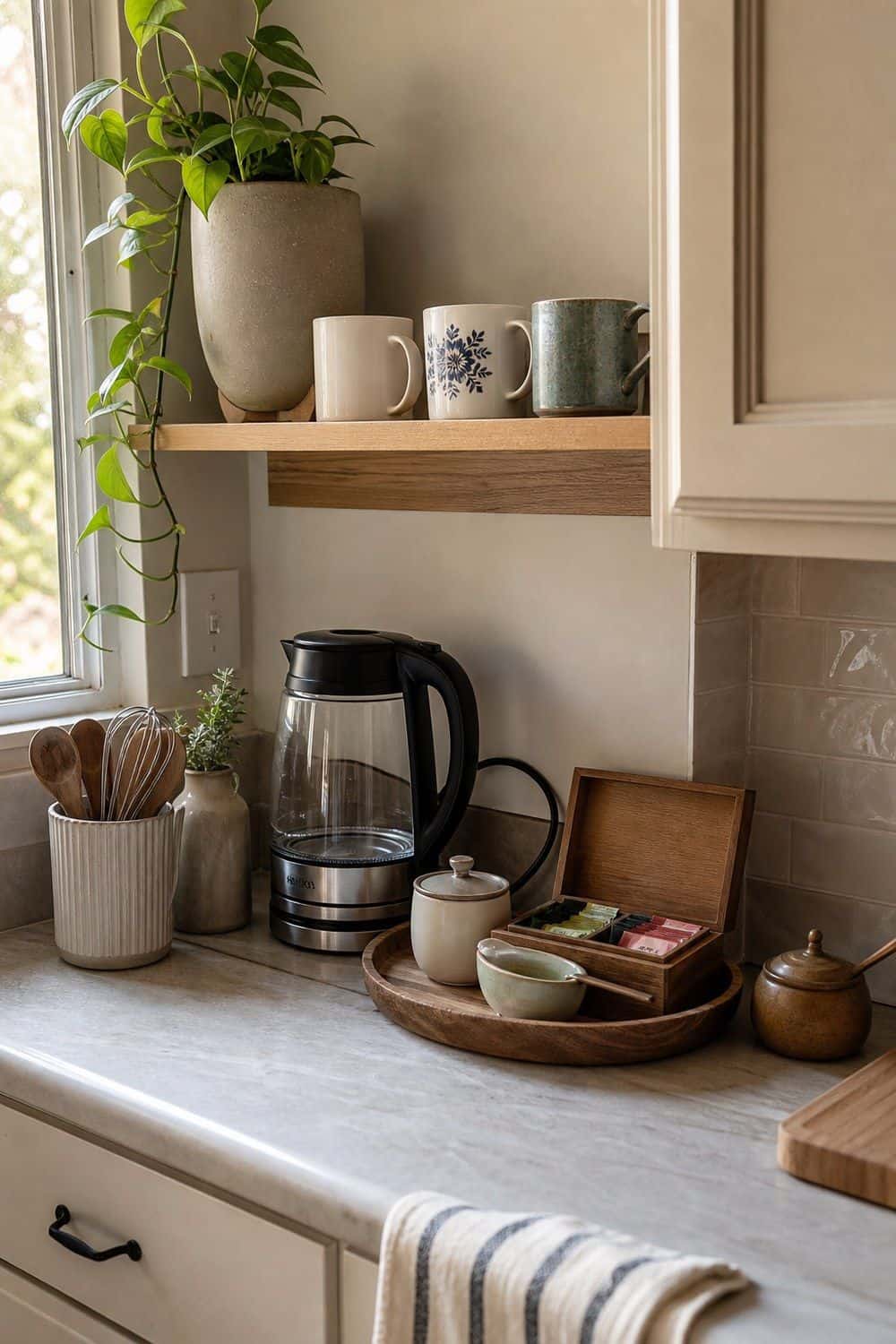
Honey, sugar cubes, cinnamon, lemon packets, and small spoons need a contained spot because they create the stickiest part of the ritual. A washable tray keeps jars from drifting across the counter and makes wiping easier. Keep only the sweeteners you use every week in the daily station; extra syrups, backup sugar, and holiday add-ins can stay in the pantry so the tea area does not quietly become a dessert shelf. Put sticky jars on a tray with a lip, especially if kids or guests make their own cups.
12. Use a Small Spoon Rest
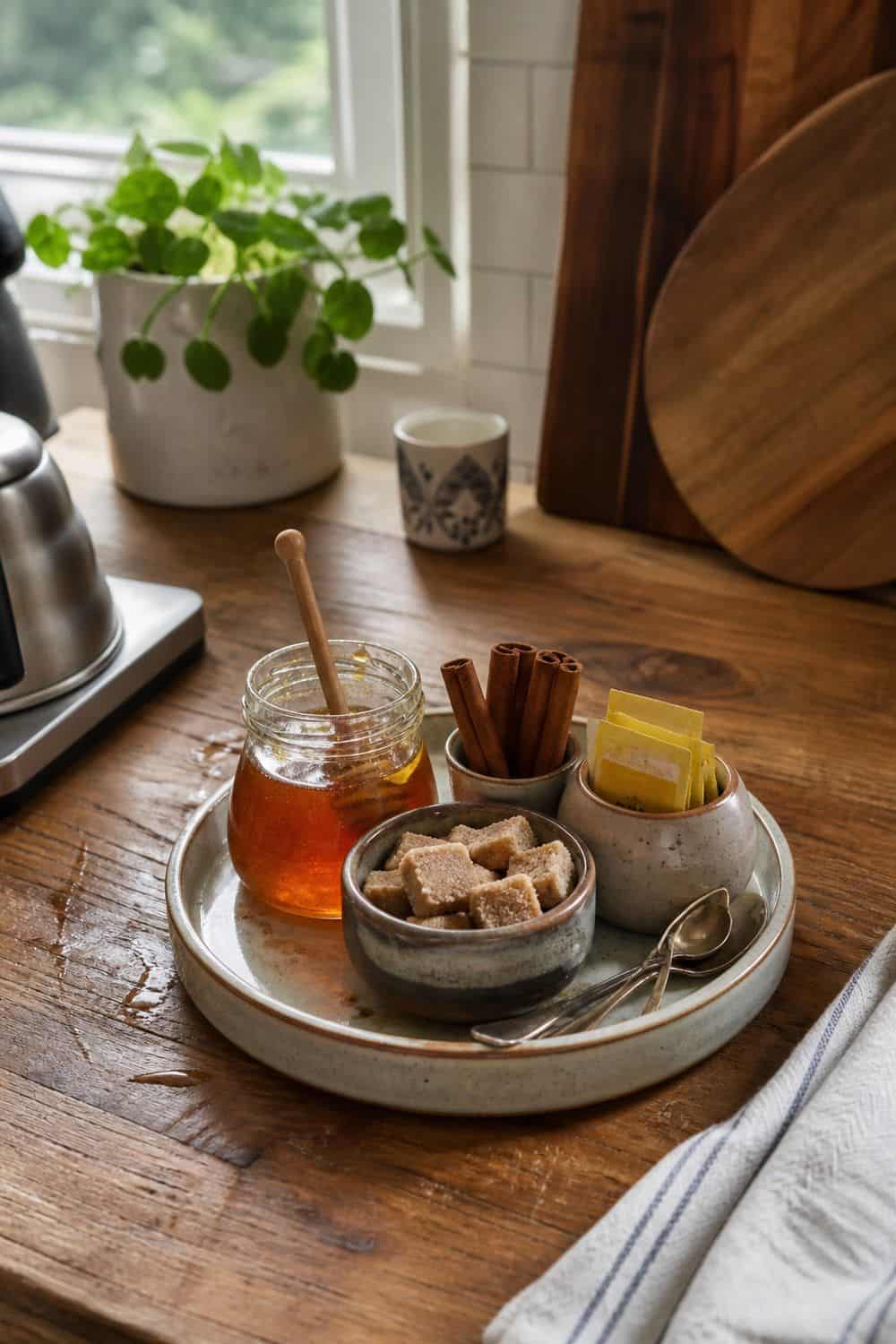
A small spoon rest or shallow dish gives wet spoons, infusers, and honey dippers a place to land. Without one, the station usually ends up with tea rings, honey streaks, or a damp paper towel sitting beside the kettle. Choose something easy to rinse and small enough to leave out. It is a tiny detail, but it makes the station feel calmer because cleanup is built into the brewing flow instead of arriving later as a sticky surprise. A spoon rest also protects wood counters from wet infusers.
13. Keep Lemon and Fresh Add-Ins Separate
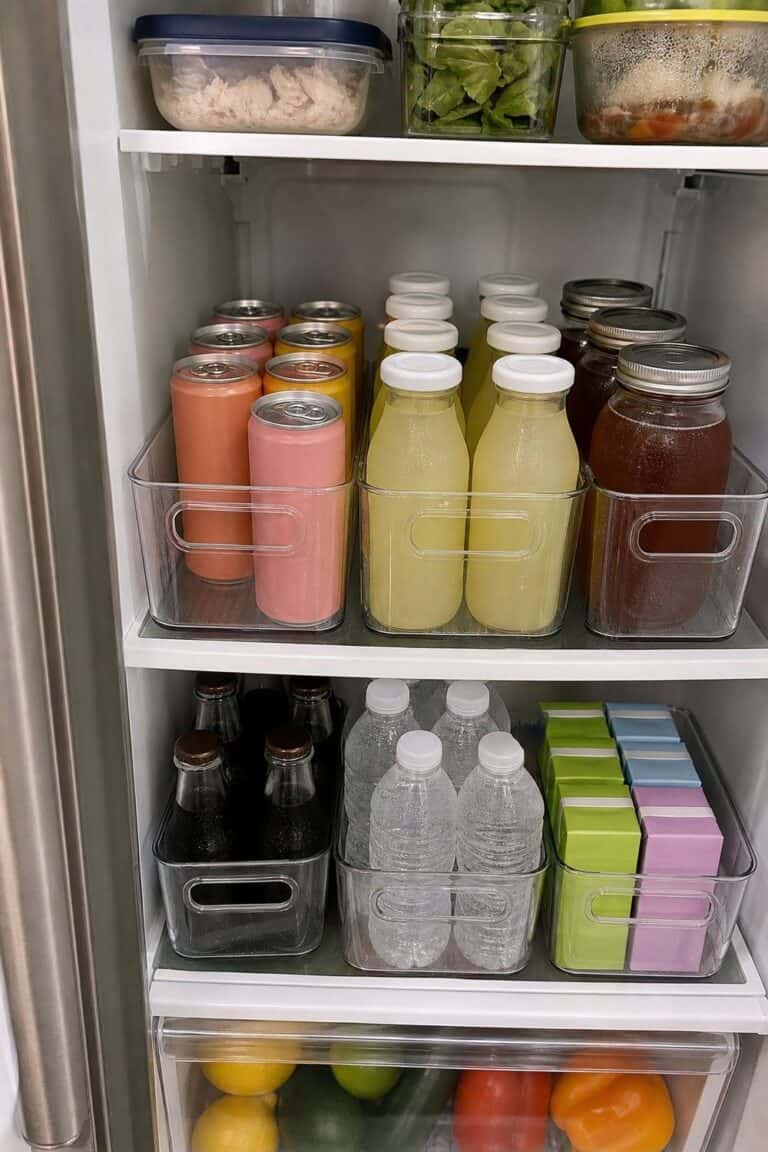
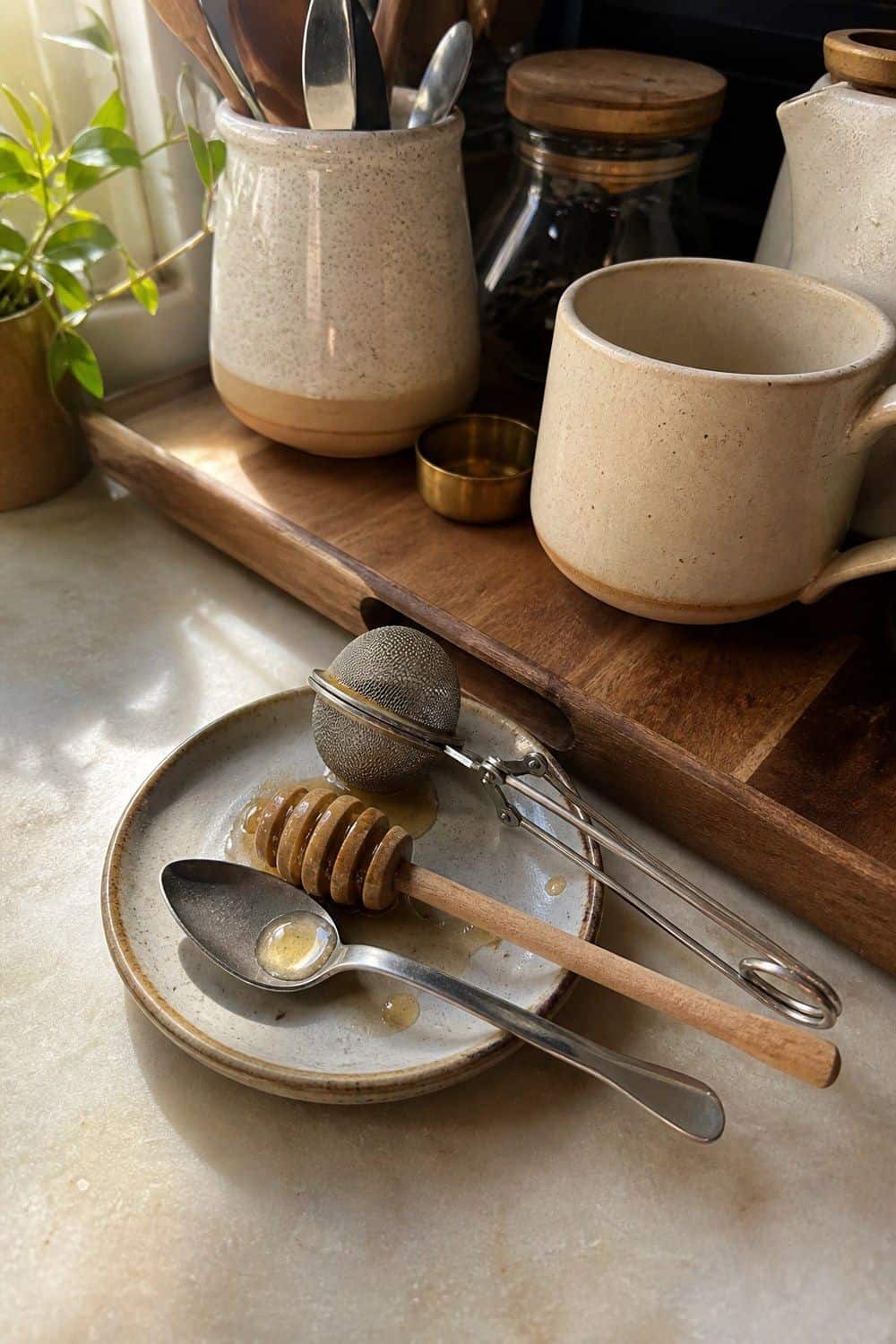
Fresh lemon, ginger, milk, cream, and opened syrups should not sit on the tea tray. Give those add-ins a small fridge bin if you use them daily, so they are grouped without being stored at room temperature.
This keeps the tea station cleaner and protects dry tea from moisture. It also makes the fridge part of the ritual quicker because lemon, milk, and ginger are in one small container instead of scattered across shelves. Pull the bin out only when needed, then return it before the dry tea area picks up moisture.
14. Use a Tiered Shelf for Counter Tea Bars
A tiered organizer helps a counter tea station use height instead of spreading sideways. Put heavier pieces like tins or mugs on the lower level and lighter packets, filters, or sweetener jars above. Leave breathing room around the kettle and mug landing area. A tiered shelf should make tea easier to see and grab, not create a crowded tower you have to dismantle before brewing. If it blocks the pour, it is too much. Keep the front edge open enough for a mug, spoon, and the little pause that happens while tea steeps.

15. Make a Decaf Evening Section
An evening section keeps caffeine-free tea from getting buried behind breakfast blends. Group herbal, decaf black tea, mint, chamomile, rooibos, or bedtime blends in one labeled row or small container.
This supports the calmer daily ritual because no one has to read every box at night. Morning teas can stay in a separate section, while the evening choices remain easy to find when the kitchen lights are low. This is especially nice if one person wants tea while the rest of the kitchen is already cleaned for the night.

16. Add a Small Waste Bowl for Tea Bags
Wet tea bags and used loose leaves need a landing place. A small bowl, compost crock, or washable dish near the station keeps drips from crossing the counter on the way to the trash or compost bin.
Empty it daily if you drink tea often. The bowl should make cleanup easier, not become a damp container that sits by the kettle for days, so choose something small enough that it reminds you to clear it. If you compost tea leaves, keep the bowl near that path instead of beside the sink.

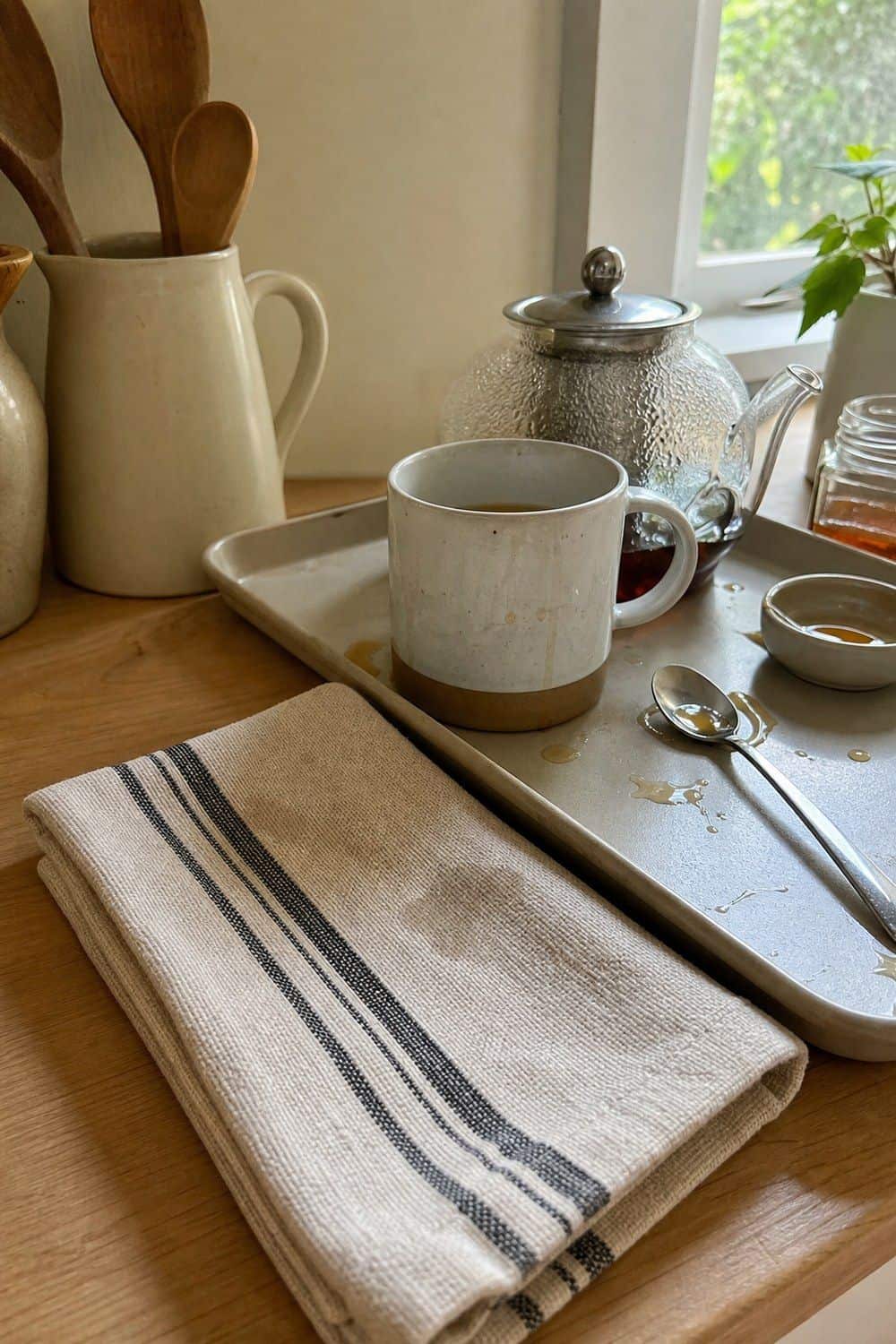
17. Keep a Tea Towel in the Station
Hot water, steam, honey, and mugs create small messes even in a tidy tea station. Keep one cotton towel folded nearby for water rings, sticky jar edges, and quick counter wipes.
A dedicated towel also helps the station feel finished without adding decor. Replace it often enough that it stays useful, especially if it sits near a kettle or sink. The towel should feel like part of the routine, not a prop. A darker or patterned towel is often more forgiving around black tea and honey than a perfect white one.
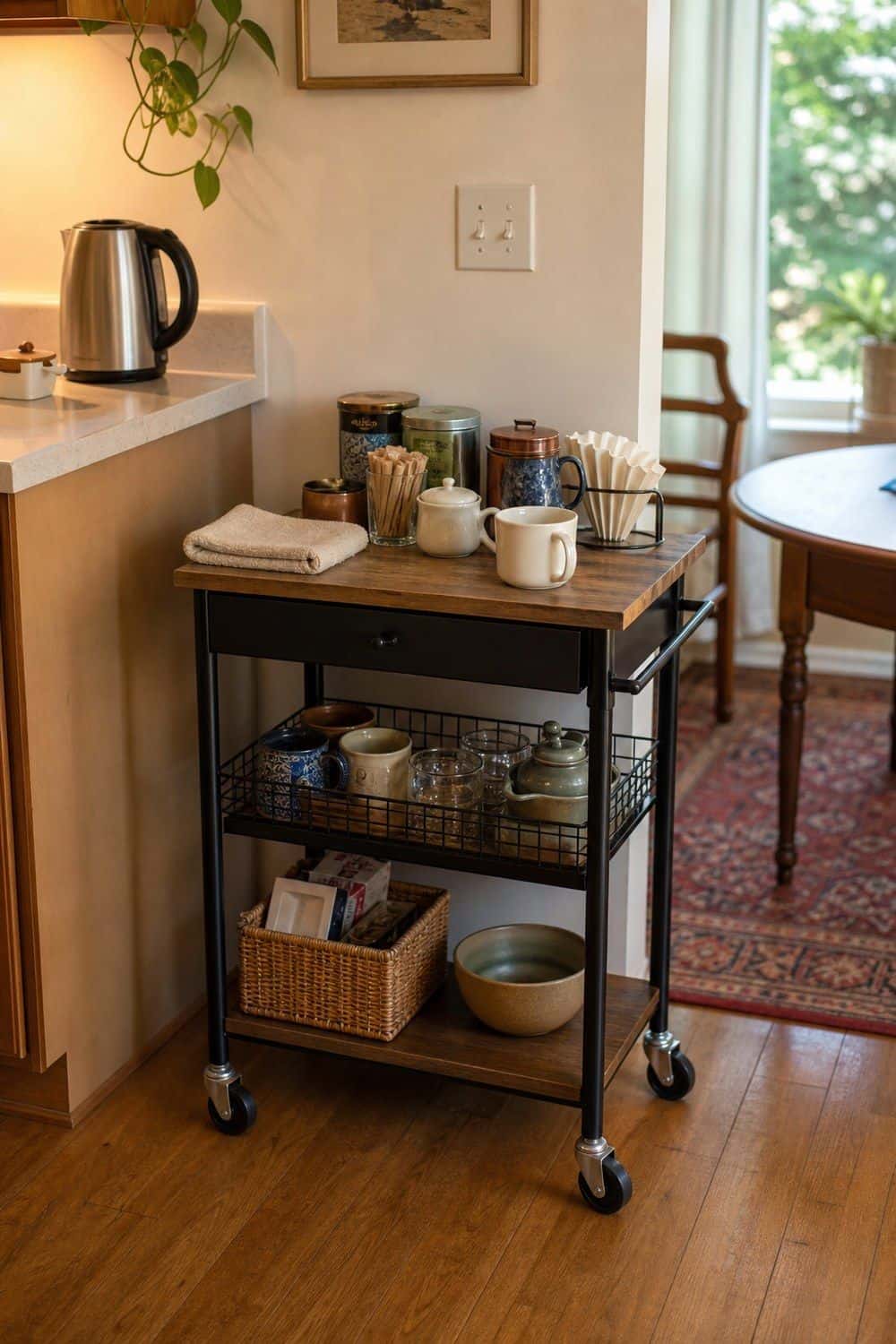
18. Roll Out a Compact Tea Cart
A compact tea cart works when counter or cabinet space is tight. Use the top for tins, mugs, sweeteners, towels, and filters, then keep the kettle there only if the cart has a safe outlet position and locking wheels.
Watch the cord path, wheel locks, and the walkway before you commit to brewing on the cart. A cart that shifts while you pour hot water is not worth the extra surface.
If a hot kettle would sit where people pass through the kitchen, keep brewing on the counter and use the cart as storage. The cart should borrow space, not create a new tripping hazard.
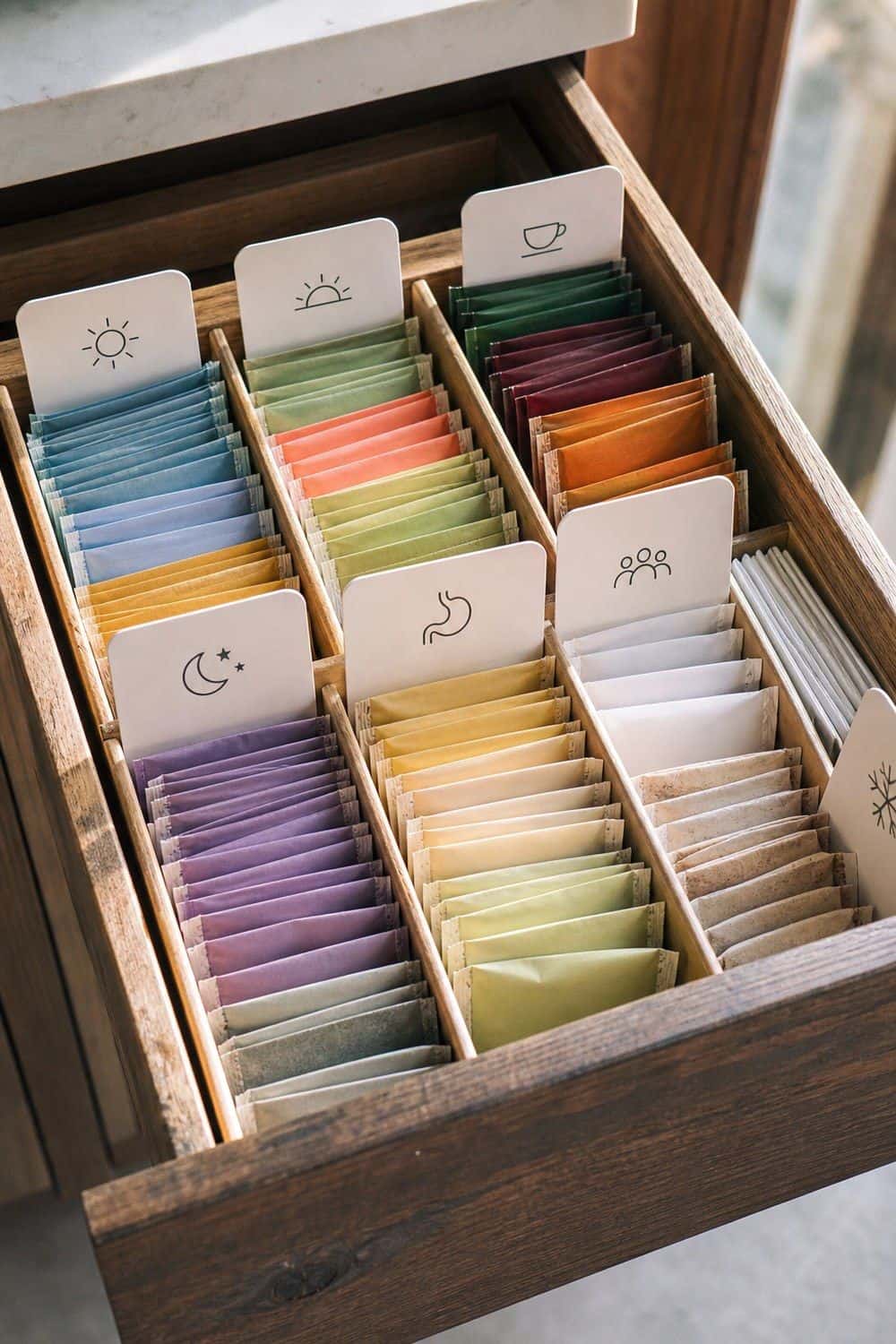
19. Label Teas by Mood or Time of Day
Labels can be more useful than alphabetizing. Try morning, afternoon, caffeine-free, sleep, digestion, guests, seasonal, or iced tea if those categories match how your household actually chooses tea.
This makes the station easier for guests and family members without over-organizing. It also helps you notice which blends are stale, ignored, or always running out, which is much more useful than a perfect-looking row of boxes. Use plain labels if decorative ones make the station harder to change later, because tea habits shift with seasons, guests, and whatever blend you are suddenly obsessed with.
20. Reset the Tea Station Weekly
A weekly reset keeps the tea station from turning into a pile of empty packets and sticky spoons. Wipe the tray, refill tins, wash the spoon rest, toss stale samples, and move rarely used teas back to storage.
Use the reset to check freshness, too. If a tea has lost its scent, sat open near heat, or picked up pantry smells, replace it with a smaller amount you will finish sooner.
Keep the reset short enough that you will actually do it. Two minutes once a week is enough for most tea stations. Keep the reset tied to a real habit, like taking out compost or wiping the counters.

Other Tea Station Details to Get Right
Tea station organization is partly about layout and partly about freshness. Dry tea should stay away from moisture, light, heat, and strong odors. That means the prettiest open display is not always the best choice for loose leaf or unwrapped tea bags.
Tea bags, loose leaf, sweeteners, strainers, mugs, towels, and cleanup pieces each need a different type of storage. A counter station can feel generous, a tea drawer can feel calm, a cabinet can protect flavor, and a cart can help a kitchen borrow space where it needs it.
Frequently Asked Questions
What is a tea station?
A tea station is a small kitchen zone that groups tea, kettle, mugs, sweeteners, steeping tools, towels, and cleanup items so making tea feels easier and calmer. It can be as compact as one tray or as roomy as a cabinet, drawer, or cart.
How do you organize a tea station?
Choose a location near the kettle, sort tea bags or tins, keep mugs close, group sweeteners, add infusers or filters, include a spoon rest, and keep one cleanup towel nearby. The easiest station follows the order you actually make tea.
How should tea be stored to stay fresh?
Store tea in airtight, opaque containers in a dry cabinet or pantry away from heat, light, moisture, and strong smells. Loose leaf tea and unwrapped tea bags need especially careful storage because they lose aroma faster when exposed.
Should tea be stored in the refrigerator?
No, not for daily storage. Dried tea can absorb refrigerator moisture and odors, so a dry cabinet, drawer, or pantry shelf is usually better. Keep fresh add-ins like lemon, milk, cream, and ginger in the fridge separately.
What should go in a tea drawer?
A tea drawer can hold tea bags, loose-leaf filters, small tins, spoons, honey packets, labels, a tea timer, and a small infuser if the drawer is protected from moisture and heat. Use dividers so packets do not slide into a pile.
How do you organize loose leaf tea?
Keep loose leaf tea in airtight tins or opaque canisters, label each blend, store it away from strong odors, and keep infusers or filter bags beside the tins. Only keep the blends you drink often in the daily station.
How can I make a tea station in a small kitchen?
Use a drawer, slim cart, tiered shelf, cabinet shelf, or small tray with only daily teas, mugs, sweetener, a towel, and one cleanup spot. Keep backup tea elsewhere so the station stays useful instead of becoming general storage.
How often should you reset a tea station?
Reset a tea station weekly by wiping the tray or drawer, refilling tins, washing the spoon rest, removing stale packets, and checking that the daily teas are still fresh. A short reset is easier to keep than a big monthly overhaul.
Final Thoughts on Tea Station Ideas
The most useful tea station ideas make the daily ritual easier while protecting the flavor of what you drink. Group the kettle, mugs, tea bags, loose-leaf tins, sweeteners, steeping tools, towels, and cleanup pieces in a way that matches your real routine.
Keep the setup pared back, dry, and easy to reset. A calmer tea station is not about displaying every blend you own. It is about making one good cup feel natural, tidy, and ready when you want it.