
Kitchen drawer organization works when every drawer has one job, the contents sit near the matching cooking zone, duplicate tools are removed, and dividers or inserts fit the exact items inside. Start with purpose first, then buy organizers for cutlery, utensils, knives, spices, wraps, baking tools, utility items, cookware, or dish drawers.
Kitchen drawers get messy quickly because they are easy to open, easy to overfill, and often asked to hold unrelated tools. A cutlery drawer, prep drawer, wrap drawer, spice drawer, and utility drawer all need different organizers, so the best system starts with how the kitchen is actually used.
For practical kitchen drawer organization, place items close to the task they support. Cutlery belongs near the dishwasher or table setting zone, cooking utensils near the stove, prep tools near the cutting board, and deep cookware drawers near the cooktop whenever the layout allows it.

Top Recommended Products


You Might Also Like These Blog Posts
- Kitchen Cabinet Organization Ideas
- Food Container and Lid Organization Ideas
- Kitchen Organization Ideas
- Small Kitchen Organization Ideas
- No-Pantry Kitchen Organization Ideas
Kitchen Drawer Organization Ideas for a Tidier Cooking Zone
1. Drawer Jobs Before Organizers
Before buying kitchen drawer labels, decide what each drawer is supposed to do. One drawer might hold cutlery, another cooking utensils, another prep tools, knives, spices, wraps, baking supplies, kids’ lunch items, or deep cookware. The organizer should follow the job, not the other way around. This prevents one convenient drawer from absorbing every loose kitchen item, which is how utility tools, takeout packets, spare screws, and random gadgets end up mixed with the tools you actually cook with daily.
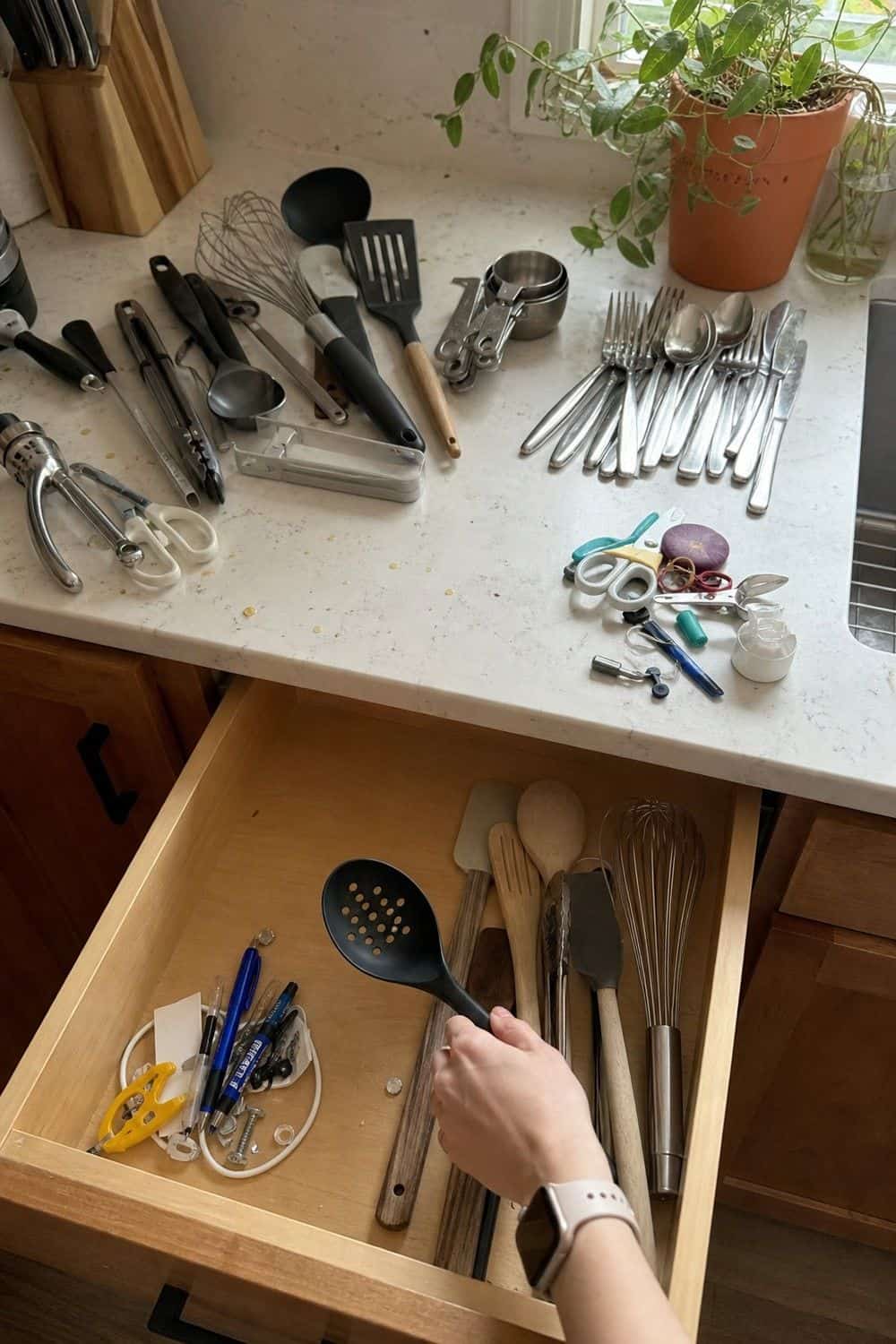
2. One-Drawer Cleanout
Drawer cleaning cloths make the reset easier because crumbs, dust, and sticky spots collect under dividers faster than most people expect. Work one drawer at a time so the project does not become a whole-kitchen mess. Empty the drawer, wipe the bottom and sides, check for spills, then sort what came out before anything goes back in. This is also the moment to remove broken tools, duplicate utensils, stretched rubber bands, and anything that belongs somewhere else. A clean drawer immediately shows whether the problem is clutter, poor placement, or the wrong organizer size.
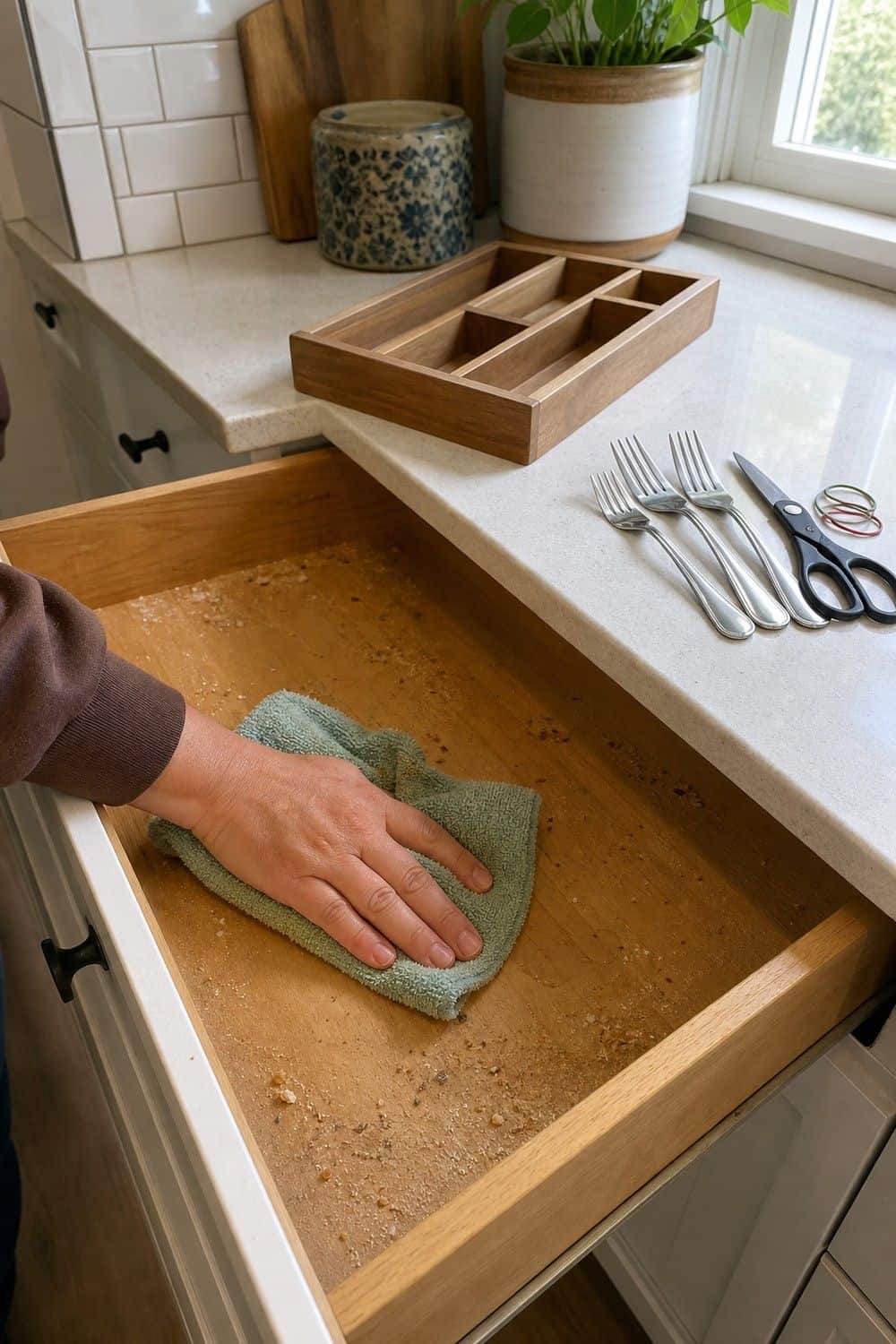
3. Cutlery Near the Dishwasher
An expandable cutlery tray is most useful when the drawer is close to the dishwasher or the dining area. That placement makes unloading forks, knives, spoons, and serving spoons faster, and it also makes setting the table easier. If the drawer is narrow, use a compact tray that stacks or angles the cutlery without forcing pieces into the wrong slots. The tray should fit the drawer width and the flatware you actually own, not an idealized set you never use for meals.

4. Long Dividers for Cooking Utensils
Bamboo drawer dividers are better than short cutlery slots for spatulas, tongs, wooden spoons, ladles, whisks, and turners. Long tools need full-length sections so handles do not cross over each other every time the drawer opens. Place this drawer near the stove if possible, because those tools are usually grabbed while cooking. Before adding dividers, check for duplicates. Three spatulas might be useful; seven usually means the drawer is too full to function. Keep the tools that match the way you cook most often.
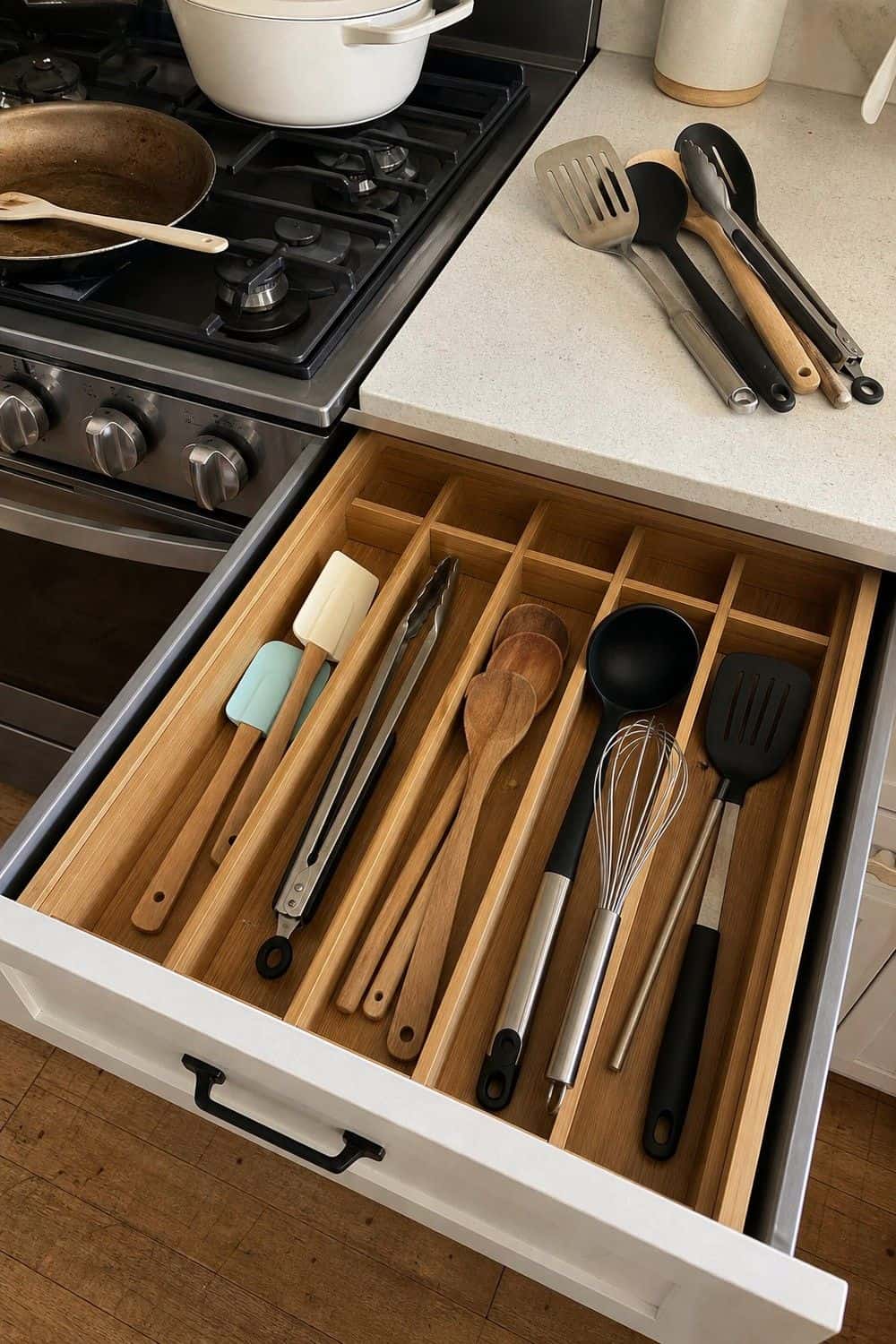
5. Prep Tool Drawer Near the Cutting Board
A kitchen tool drawer organizer can make prep faster when it sits near the main cutting board or island. Use this drawer for peelers, microplanes, thermometers, measuring spoons, bench scrapers, small strainers, prep knives, and other tools used before food hits the stove. This drawer should support chopping, peeling, measuring, seasoning, and checking temperature without trips across the kitchen. Keep it separate from the cooking utensil drawer so stove tools and prep tools do not compete for space during dinner.
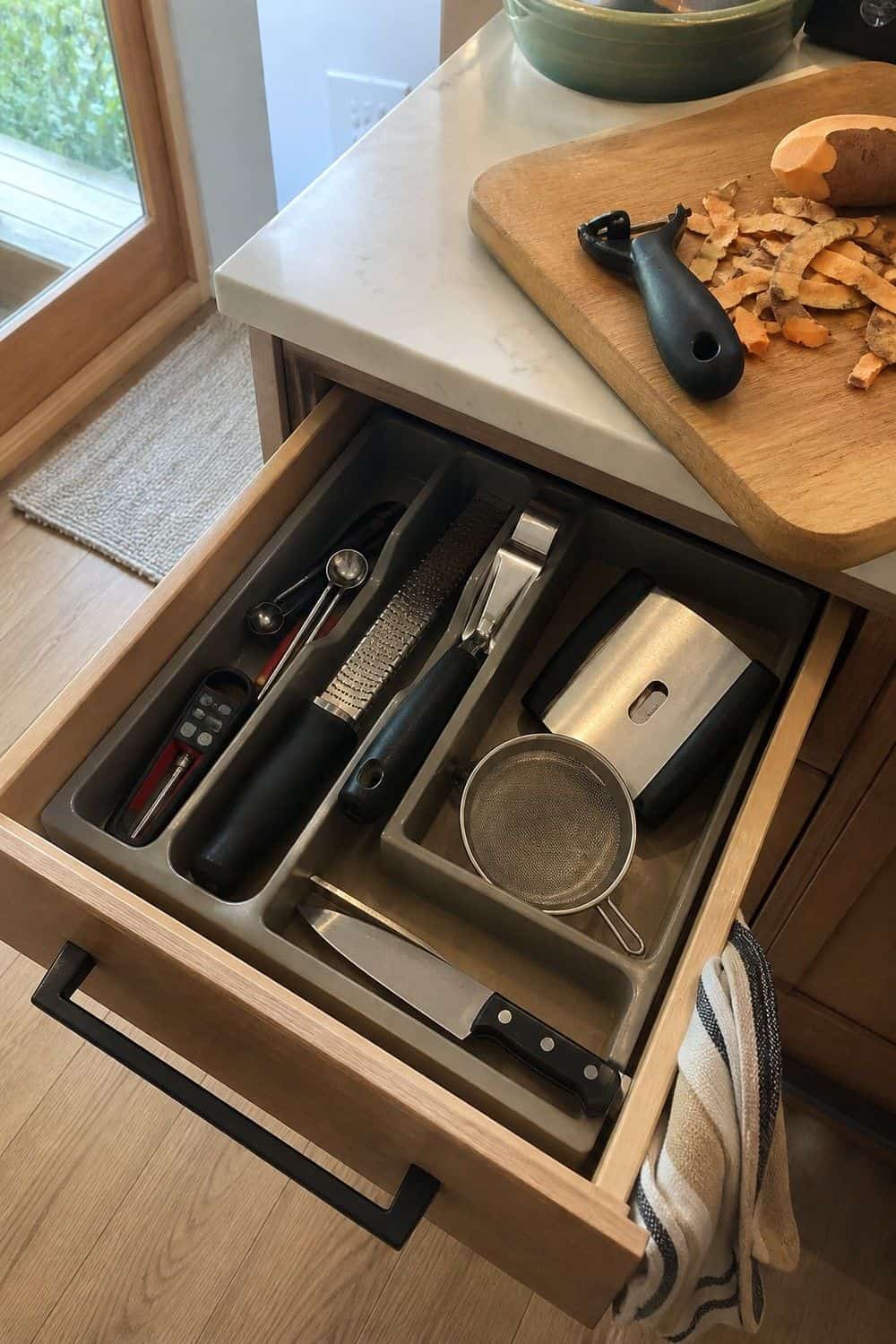
6. Dedicated Knife Drawer Insert
An in drawer knife organizer protects blades and fingers when counter space is limited or a wall strip is not safe for the household. It keeps knives visible but contained, which is especially helpful in a smaller kitchen where a knife block takes up valuable prep space. Measure drawer depth and handle height before buying, because some knife handles sit too tall for shallow drawers. Keep only the knives used often. Extra dull or specialty knives can make the insert crowded and harder to use safely.

7. Utility Drawer Instead of Junk Drawer
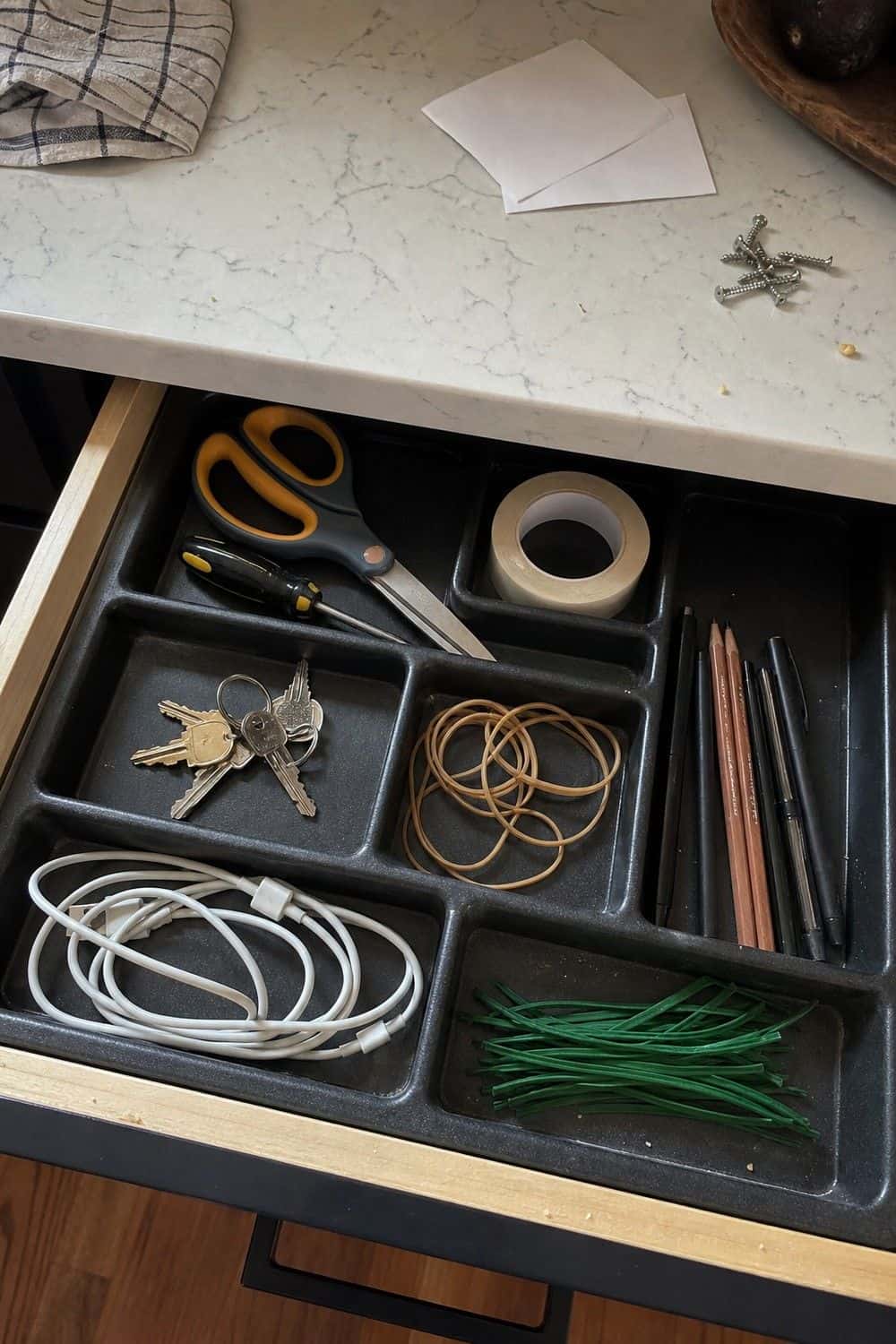
A utility drawer organizer works when the drawer is treated as a real household tool drawer, not a place for everything without a home. Keep scissors, tape, pens, batteries, spare keys, rubber bands, twist ties, small tools, or chargers only if they are actually used near the kitchen. Remove receipts, mystery screws, old coupons, broken pens, and takeout clutter. Small labeled compartments help because each utility item needs a visible home or the drawer turns back into a junk drawer within days.
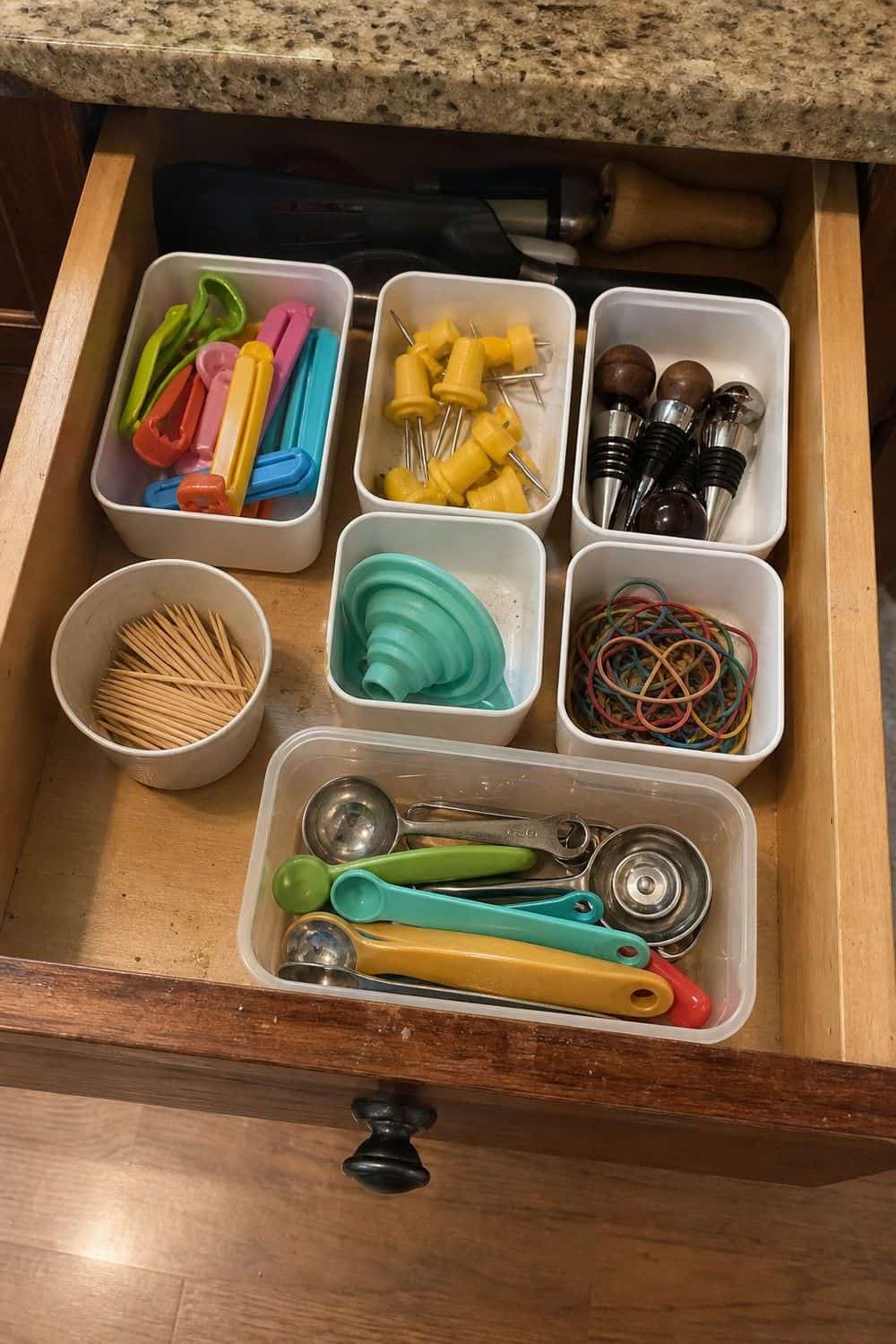
8. Modular Cups for Tiny Drawer Items
Modular drawer organizer bins are useful for tiny items that migrate through a drawer: corn holders, bag clips, birthday candles, wine stoppers, toothpicks, chip clips, mini funnels, rubber bands, or extra measuring pieces. Those small categories do not need one large bin together.
Separate cups let the drawer change over time. If one category disappears, the cup can be moved or repurposed. This is more flexible than a fixed tray that only works for one exact layout and drawer size.
9. Angled Spice Drawer Tray
A spice drawer organizer makes labels visible as soon as the drawer opens, which is the main advantage over a crowded cabinet shelf. Angled or tiered trays work well when jar height fits the drawer and the drawer is not directly beside a heat source that gets warm.
Group spices alphabetically, by cuisine, or by cooking frequency. The best system is the one you can maintain while cooking. If jars are mismatched, label the tops or fronts so you are not lifting every bottle to find paprika.

10. Flat Storage for Foil, Parchment, and Bags
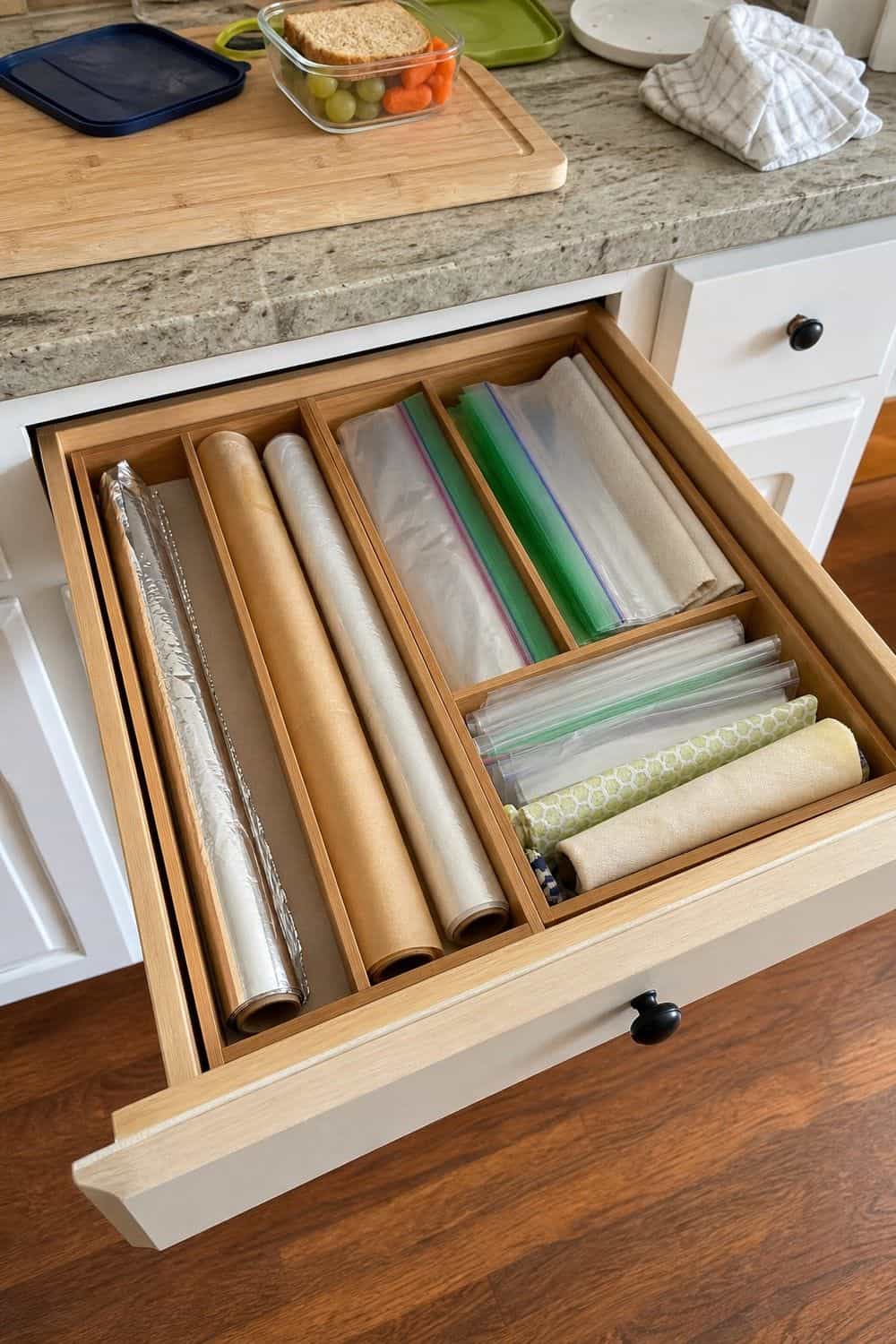
A kitchen wrap organizer keeps foil, parchment, wax paper, plastic wrap, freezer bags, sandwich bags, and reusable wraps from sliding into utensil drawers. Long boxes need a dedicated horizontal space because they do not fit naturally with spoons, tongs, or baking tools. Place the drawer near the prep counter, lunch packing area, or leftovers zone. If the organizer includes cutters, make sure they are easy to use and not so sharp that the drawer becomes awkward for kids or guests.
11. Baking Tool Drawer
A baking drawer organizer helps keep cookie cutters, piping tips, pastry brushes, cupcake liners, bench scrapers, rolling pin rings, food coloring, and small baking tools from spreading into prep drawers. This drawer should sit near baking supplies if possible, or at least near the counter where dough and batters are made.
It should stay distinct from the everyday prep drawer. Baking-only tools are often small and oddly shaped, so bins or divided cups usually work better than a standard utensil tray.

12. Measuring Cups and Spoons Together
A measuring cup organizer keeps measuring cups, measuring spoons, a small scale, and leveling tools in one place. The pieces often drift into multiple drawers, which slows down cooking and baking because you are always looking for the missing tablespoon or one-cup measure. Use hooks, divided compartments, or a shallow tray if the drawer allows it. You should be able to see the whole measuring set at once, not dig through a mixed utensil drawer while ingredients are out on the counter.

13. Deep Drawers for Pots and Pans
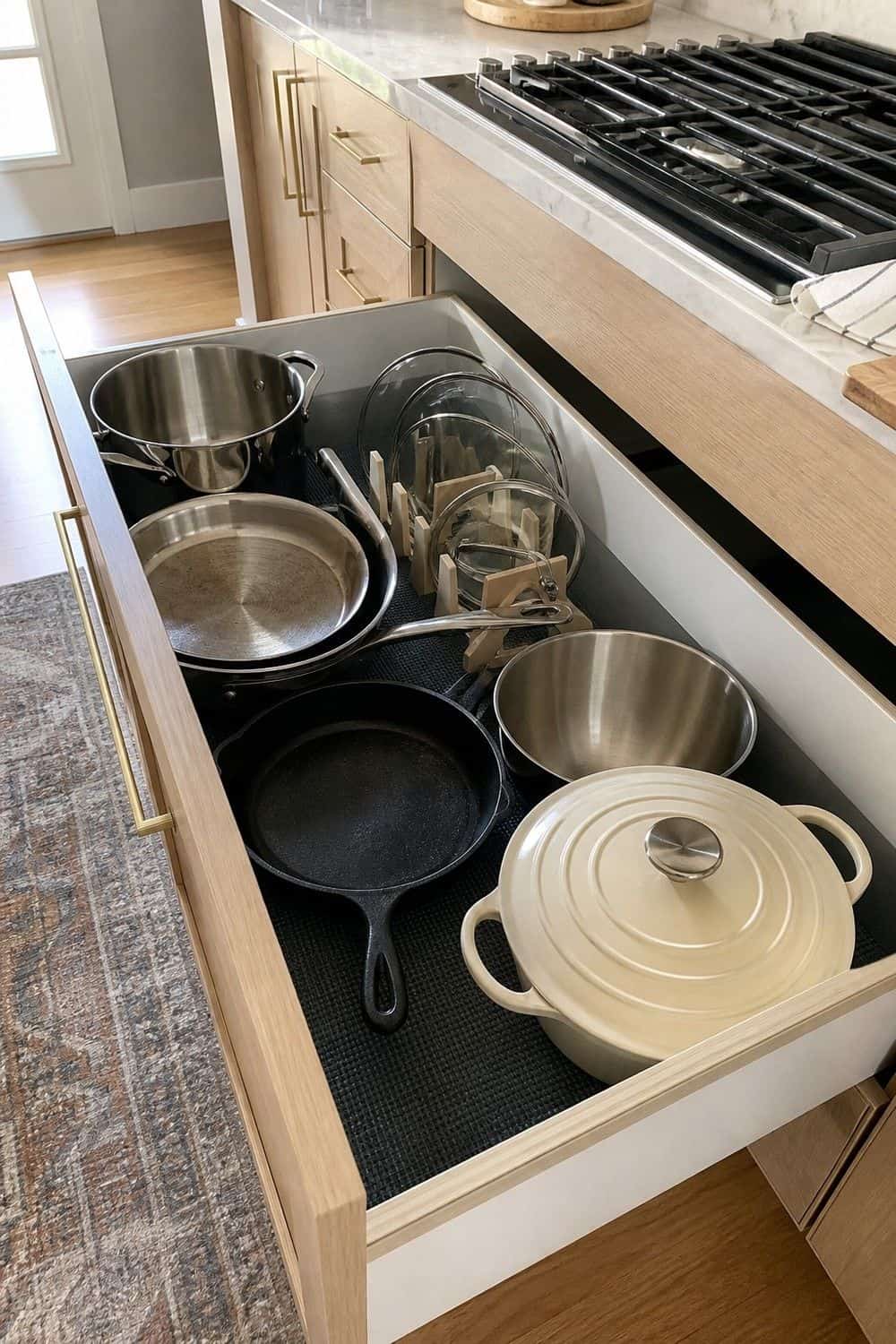
A deep drawer cookware organizer can make pots, pans, lids, Dutch ovens, and mixing bowls easier to reach than a low cabinet. This works especially well near the cooktop, where heavy cookware is used most often.
Check drawer weight limits before loading it with cast iron or heavy pots. Protective liners help prevent rattling and scratches, while lid dividers keep lids from sliding under pans. Deep kitchen drawer organization should make heavy items safer to lift, not simply hide them lower down.
14. Peg Systems for Dishes in Deep Drawers
A peg drawer organizer can turn a deep drawer into storage for plates, bowls, mugs, or serving dishes. This can be easier than high cabinets, especially near the dishwasher or for households where kids help unload dishes.
Adjustable pegs let the layout fit your actual dish sizes. Heavy stacks should be stable and not too tall. If children use the drawer, keep the heaviest dishes in the safest lower position and avoid overcrowding the pegs or drawer front when unloading.

15. Non-Slip Liners Under Heavy Items
Non slip drawer liner helps pans, dishes, utensils, and modular bins stay put when drawers open and close. It is especially useful in deep drawers, utility drawers, and drawers with heavy items that slide or rattle.
Washable liner should be cut to fit the drawer exactly. This is not mainly a decorative layer; the job is grip, drawer protection, and quieter movement. If the liner bunches up, it will make the drawer more annoying to use and clean after spills.

16. Kids’ Cups and Lunch Items Low
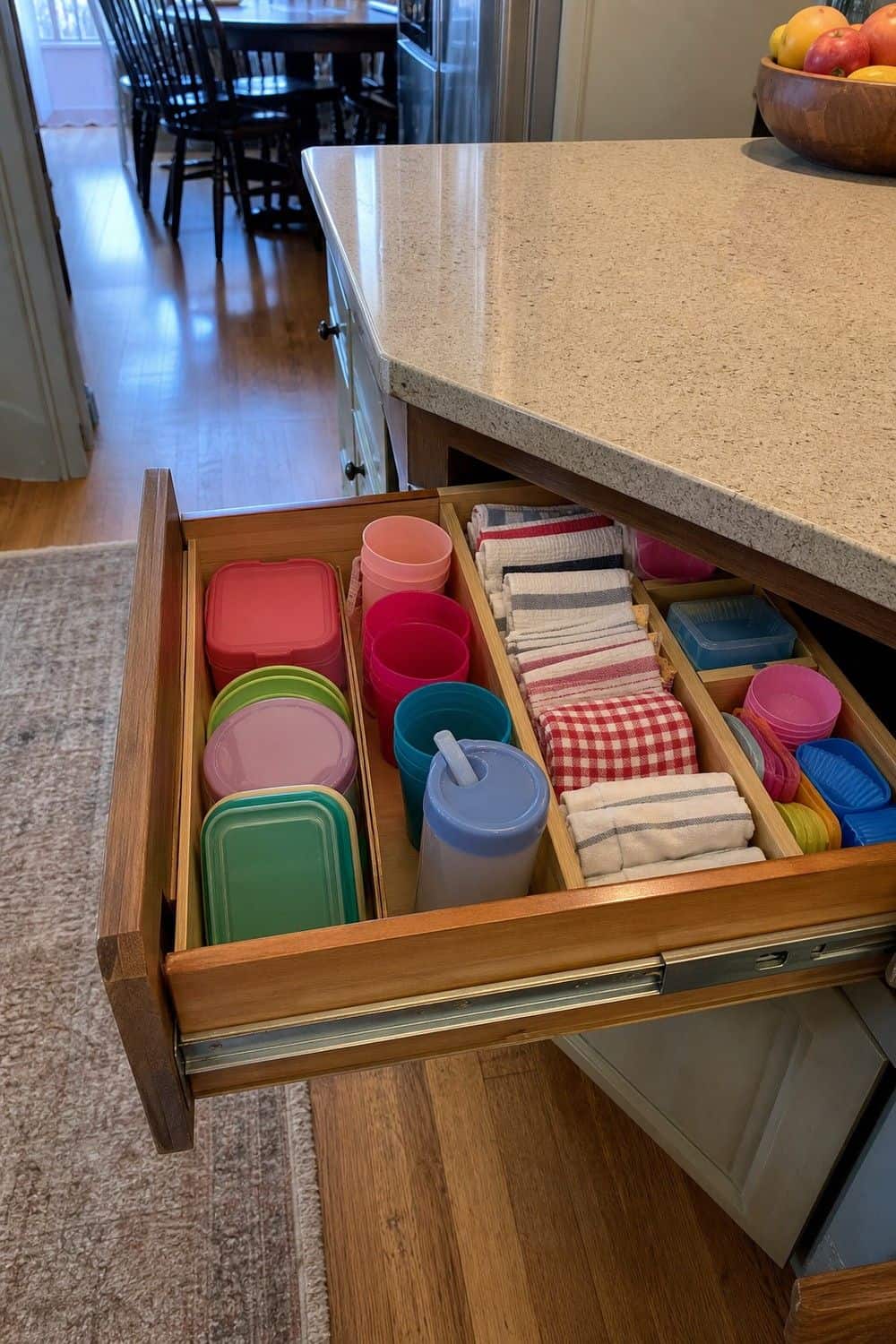
A kids cup drawer organizer can make mornings smoother when cups, snack containers, lunch boxes, napkins, and approved lunch-packing items sit in a lower drawer. The drawer should be simple enough that kids can use it without unloading everything. This can reduce cabinet climbing and help children participate in packing lunches or getting water. Keep the categories limited, because a child-access drawer that holds too much quickly becomes another mixed bin before school or snack time at home each day.
17. Duplicate and Single-Use Tool Cleanout
A kitchen decluttering checklist can help identify the items that make drawers feel crowded: extra peelers, duplicate spatulas, rarely used garlic presses, random takeout tools, dull gadgets, and pieces that do not match the drawer’s purpose. Drawer organization works better when the drawer is not packed edge to edge. Keep the tools used weekly, relocate specialty items, and donate or discard what no longer earns space. Fewer tools make every divider and tray work harder during cooking and cleanup each week.

18. Monthly Drawer Workflow Reset
A kitchen organization checklist can turn drawer maintenance into a quick monthly reset. Return misplaced tools, wipe crumbs, remove duplicate gadgets, check the utility drawer, and move items closer to the zone where they are actually used.
This habit helps because cooking routines change. A drawer that worked during a busy school month may need a different setup during holidays, baking season, or summer lunches. Resetting by workflow keeps drawers useful instead of slowly turning into catchalls again between bigger cleanouts.

How to Choose the Right Kitchen Drawer Organizer
Measure drawer width, depth, and height before buying anything. A tray that almost fits will waste space, slide around, or block the drawer from closing. Drawer height is especially important for knives, spice jars, deep cookware, and stacked dish drawers.
Match the organizer to the drawer type. Shallow drawers usually need cutlery trays, long dividers, modular cups, knife inserts, spice trays, or wrap organizers. Deep drawers need dividers, peg systems, liners, and weight-aware placement for dishes, cookware, or lunch items.
Placement is just as important as the insert. Put cutlery near the dishwasher, cooking tools near the stove, prep tools near the cutting board, baking tools near baking supplies, and utility items near the kitchen entry point if that is where they are used.
Frequently Asked Questions
What is the best way to organize kitchen drawers?
The best way to organize kitchen drawers is to assign every drawer a purpose, place items near the matching task zone, remove duplicates, measure the drawer, and use dividers or inserts that fit the contents. The organizer should support the drawer’s job.
What should go in kitchen drawers?
Common kitchen drawer categories include cutlery, cooking utensils, prep tools, knives, spices, wraps and bags, baking tools, measuring tools, utility items, dishware, pots, and kids’ lunch items. Each drawer should hold one clear category or a small group of related categories.
How do you organize a kitchen junk drawer?
Empty the drawer, remove random clutter, and redefine it as a utility drawer. Keep only frequently used household tools such as scissors, tape, pens, batteries, spare keys, and small tools. Use small labeled compartments so every item has a visible home.
Are kitchen drawer dividers worth it?
Kitchen drawer dividers are worth it when they match the drawer contents. They are especially useful for cooking utensils, prep tools, deep drawers, and utility items because they stop categories from sliding together every time the drawer opens.
How do you organize deep kitchen drawers?
Deep kitchen drawers are useful for cookware, dishes, mixing bowls, food containers, or kids’ lunch items. Peg systems, dividers, non-slip liners, and weight-aware placement help keep heavy items stable and easier to lift.
Where should cutlery go in a kitchen?
Cutlery should usually go near the dishwasher, dining area, or table-setting zone. This makes unloading and setting the table faster. If the drawer is narrow, use a compact or expandable cutlery tray that fits the drawer dimensions.
How do you organize spices in a drawer?
An angled spice drawer organizer keeps labels visible when the drawer opens. Group spices alphabetically, by cuisine, or by cooking frequency, and make sure jars fit the drawer height before buying a tray.
How often should kitchen drawers be reorganized?
Kitchen drawers should get a quick monthly reset, or any time they stop closing easily. Return misplaced tools, wipe crumbs, remove duplicate gadgets, and move items closer to the zone where they are actually used.
Final Thoughts
Kitchen drawer organization is less about buying matching trays and more about making each drawer support a real cooking habit. Give every drawer a job, measure before buying inserts, remove duplicates, and reset the system often enough that drawers stay useful.
Last update on 2026-09-17 / Affiliate links / Images from Amazon Product Advertising API