
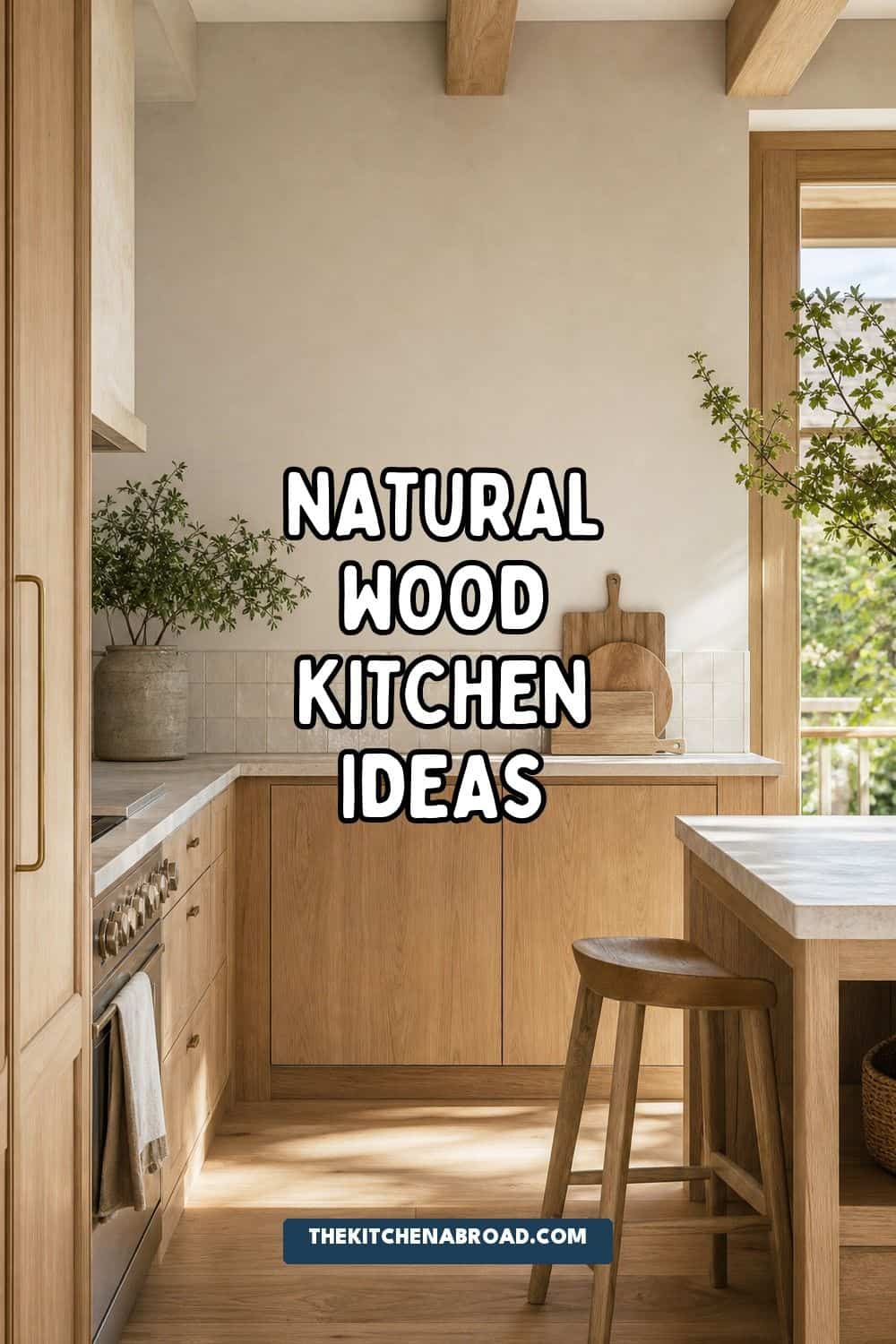
The easiest natural wood kitchen ideas start with one dominant wood tone, calm stone or handmade tile, updated hardware, and lighting that keeps the grain warm but not orange or heavy. White oak, walnut, pale Scandinavian wood, and carefully modernized honey oak can all work when the undertones, counters, backsplash, and wall color support the wood.
Natural wood belongs in kitchens because it gives cabinets, islands, shelves, stools, and small accents a warmth that paint alone cannot create. The trick is knowing which wood tone should lead, which finishes should stay quiet, and where the room needs stone, tile, cream paint, or black detail for balance.
This guide focuses on practical wood decisions rather than generic rustic styling. You will find cabinet ideas, honey oak updates, backsplash pairings, wood tone rules, lighting notes, small-space options, and daily-use details that keep a wood kitchen from feeling orange, heavy, glossy, or flat.
Top Recommended Products


You Might Also Like These Blog Posts
- 25 Earthy Kitchen Ideas with Natural Warmth
- 25 Warm Wood Kitchen Ideas for a Beautiful Kitchen
- 25 White Oak and Black Kitchen Ideas for a Beautiful Kitchen
- 25 Warm Neutral Kitchen Ideas for a Cozy Home
- 25 Modern Organic Kitchen Ideas for a Beautiful Kitchen
Natural Wood Kitchen Ideas That Feel Warm and Livable
1. Start with a White Oak Cabinet Base
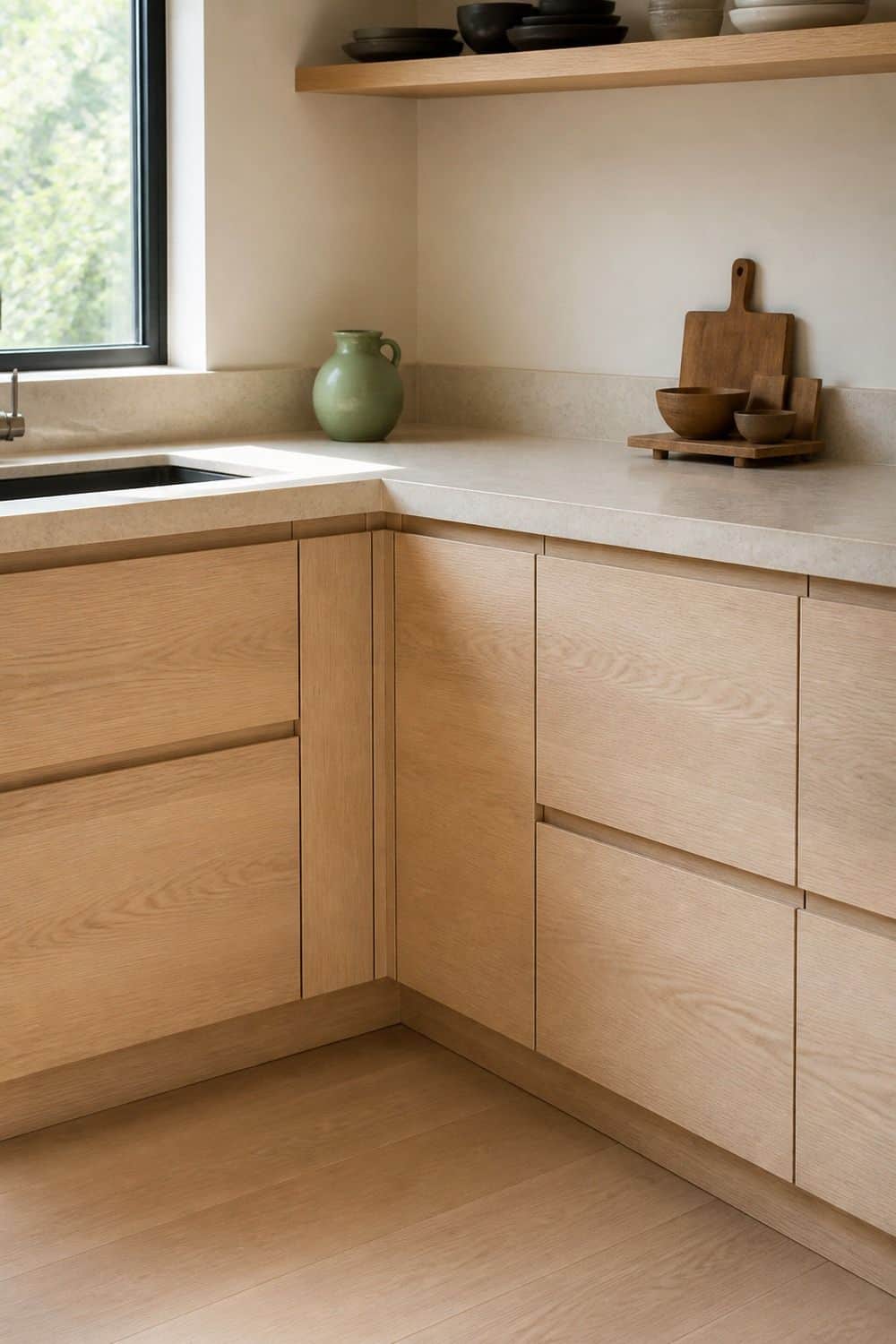
White oak is the cleanest starting point for many natural wood kitchen ideas because it brings visible grain without making the room dark. It works with flat-front doors, slim shaker profiles, and simple cabinet lines, so the wood feels current instead of heavy. A white oak cabinet door sample helps you judge whether the tone leans pale, golden, or slightly gray in your own light. Pair it with cream stone, warm white walls, sage accents, or matte black details for definition. Check the sample against the floor as well as the counter, since oak can look calm beside stone but too yellow beside warm flooring.
2. Try Walnut for a Richer Natural Wood Kitchen
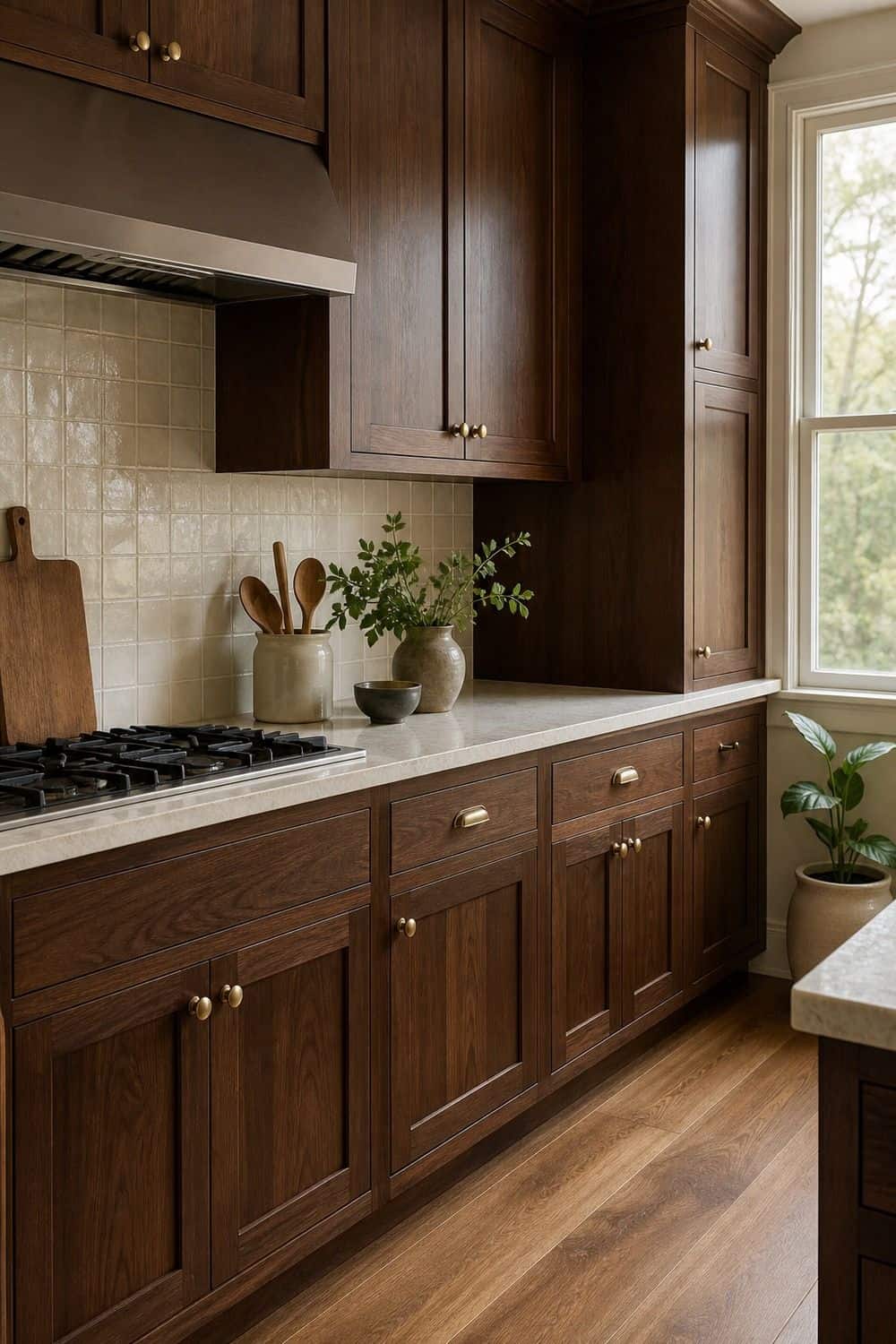
Walnut creates a deeper, moodier natural wood kitchen than white oak. It is useful when the room has plenty of light, pale counters, or simple architecture that can handle a richer cabinet tone. A walnut cabinet door sample lets you see whether the finish reads chocolate, red-brown, or almost black beside your flooring and countertops.
Walnut looks especially good with creamy stone, aged brass, bronze, warm under-cabinet lighting, and quiet backsplash tile. Keep the cabinet profile simple so the grain stays elegant. The mistake is adding too many other dark pieces at the same height, which can make the kitchen feel closed in. Use lighter backsplash tile or a pale wall color nearby so the walnut reads rich rather than visually heavy.
3. Use a Wood Island Instead of Full Wood Cabinets
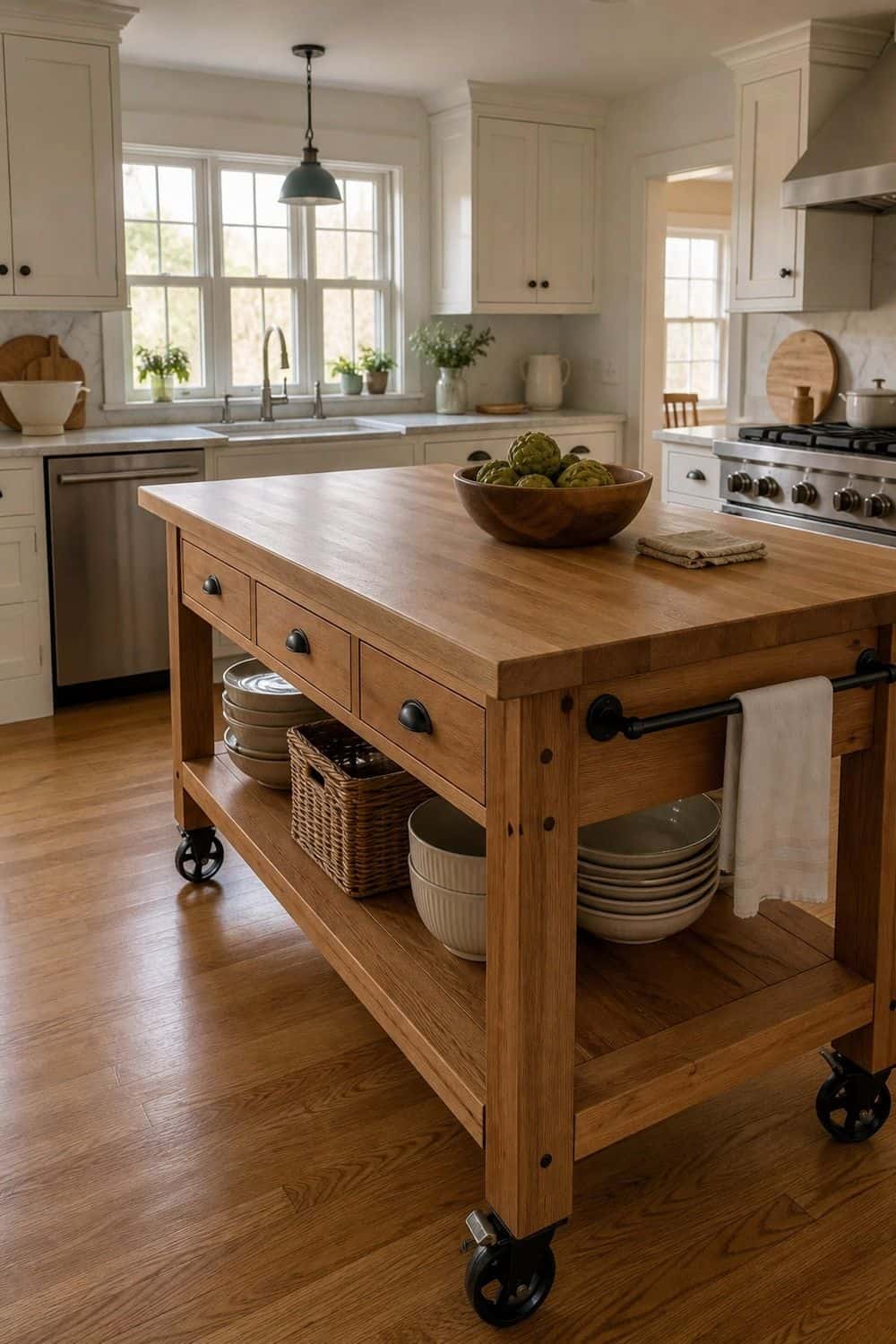
A wood island is a smart middle ground if full natural wood kitchen cabinets feel like too much commitment. It warms painted perimeter cabinets, gives the room a furniture-like center, and lets you introduce grain without replacing every door.
A butcher block kitchen island works best when the size fits the walking path and the top has a finish suited to real prep. Use it with cream, mushroom, sage, black, or warm white cabinets for contrast.
If the island is on wheels, check stability before using it for chopping. Avoid choosing a very orange wood if the surrounding floors are already warm. If the island top will see water, kids, or constant prep, confirm the sealing plan before treating it like a decorative furniture piece.
4. Add Natural Wood Lower Cabinets Only
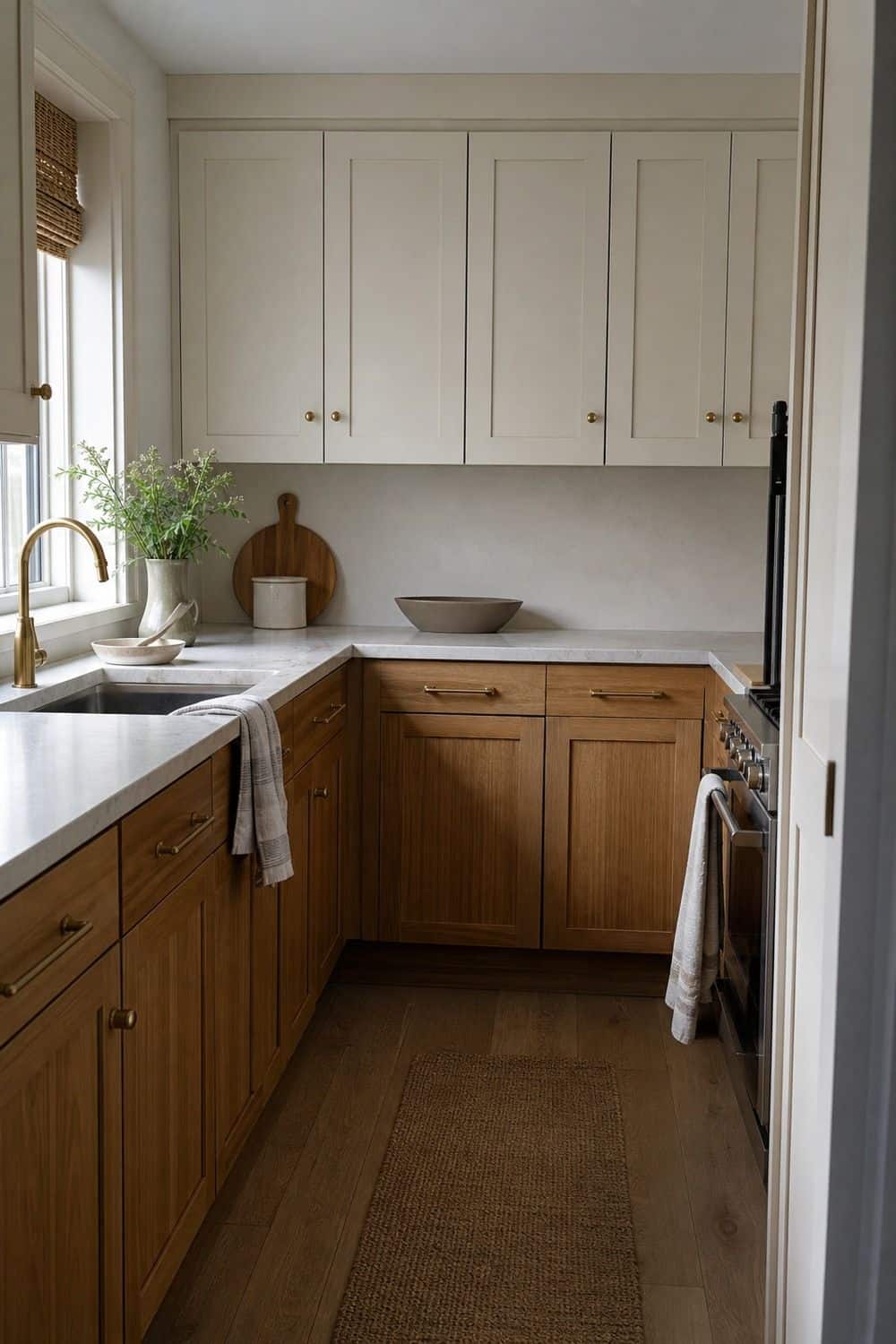
Lower wood cabinets can ground a kitchen while painted uppers keep the room light. This layout is especially useful in smaller kitchens, galley layouts, and rooms with limited natural light because the wood sits low instead of wrapping every wall. An oak base cabinet door sample helps you compare wood tone against flooring, counters, and wall color. Use warm white, cream, taupe, or muted green above to keep the contrast soft.
The lowers should feel like the anchor, not a mismatched afterthought. Avoid pairing busy wood grain with a busy backsplash and patterned floor, since the lower half can start to feel visually crowded. This also gives you flexibility later, because uppers can be repainted without changing the entire wood story.
5. Pair Wood Cabinets with Cream Walls
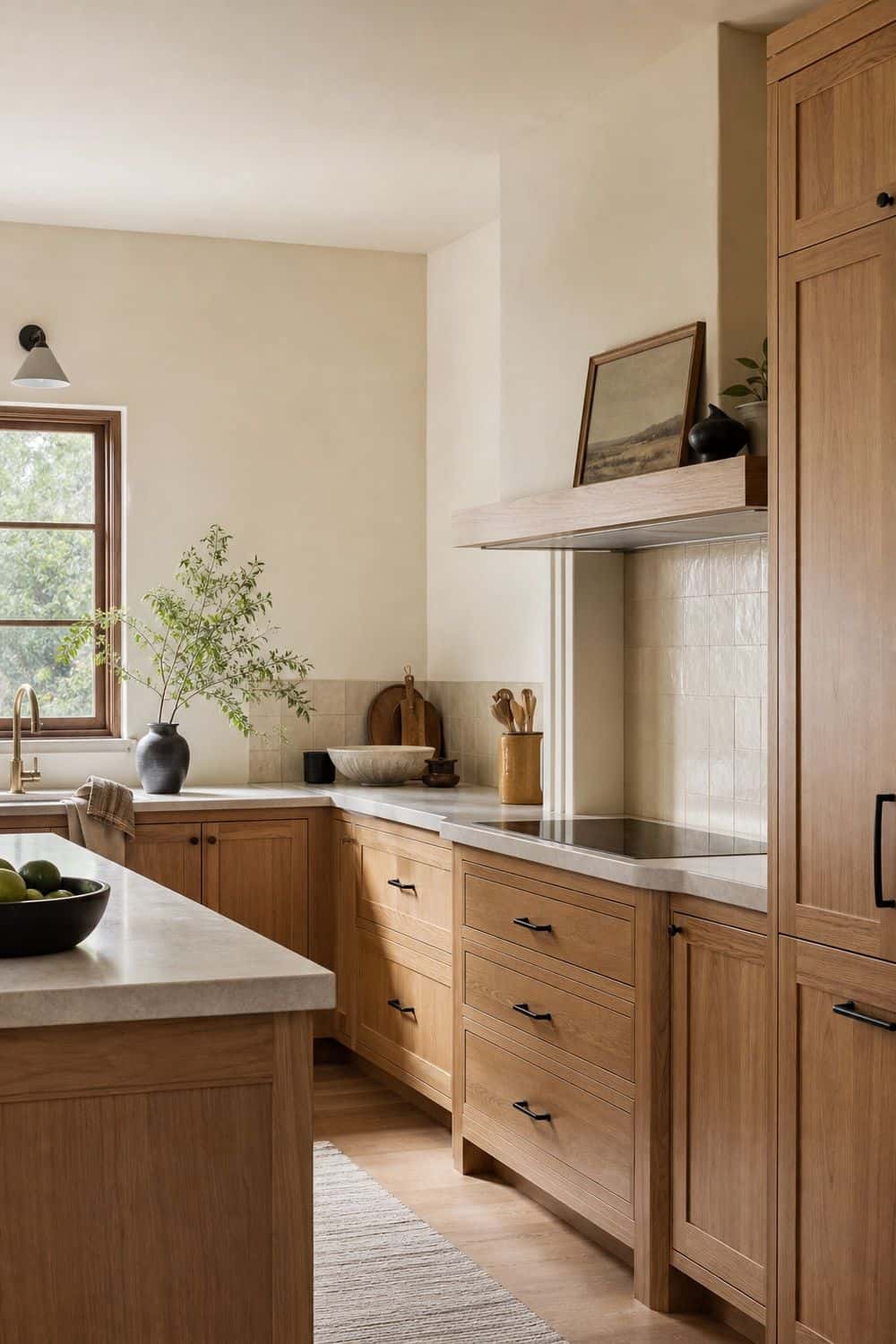
Cream walls flatter natural wood better than stark white in many kitchens. Warm white, soft putty, and pale mushroom tones reduce harsh contrast and make oak, walnut, ash, or birch look intentional.
A warm white paint sample is worth testing directly beside the cabinet face, not across the room, because undertones shift quickly. Some creams go yellow against honey oak, while others calm the orange.
This pairing works with stone counters, handmade tile, linen shades, and bronze or black hardware. Avoid cold gray paint if the goal is warmth. It can make the wood look more orange by comparison. If the kitchen faces north, test a slightly warmer cream so the wood does not look dull on cloudy days. A cream that matches the counter undertone will usually feel more finished than one chosen only from a wall chip.
6. Add Stone Counters to Balance Wood Grain
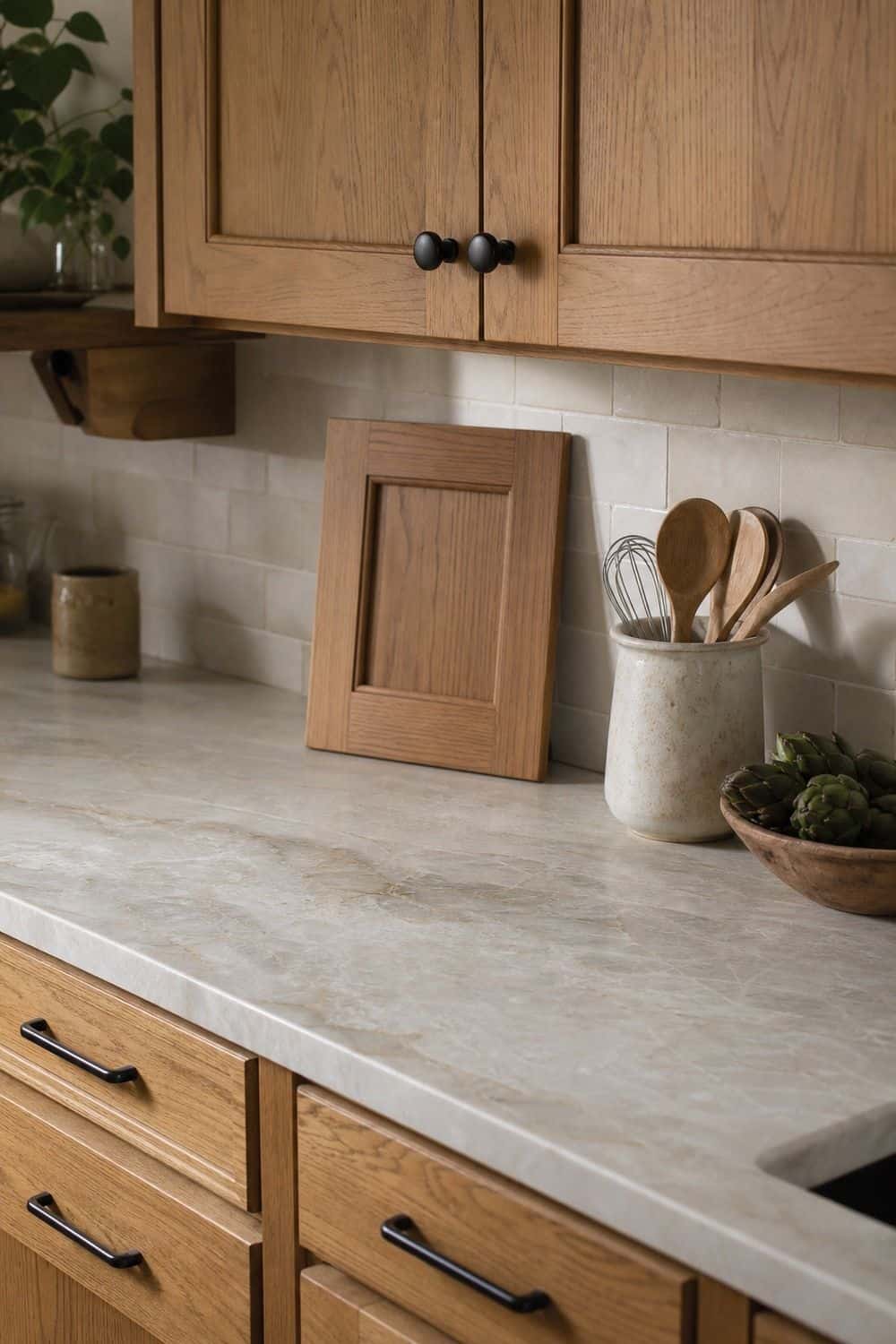
Stone counters give a natural wood kitchen polish and a little breathing room. Wood grain brings movement, so the counter should either calm it down or coordinate with it clearly.
A quartzite countertop sample helps you see veining, background color, and undertone beside the cabinet door. Creamy quartzite, soft granite, marble-look quartz, or honed stone can all work if the pattern does not fight the wood.
Use quieter counters with busy oak or walnut, and slightly stronger stone with very plain cabinet fronts. The mistake is choosing a counter with heavy movement and then adding a backsplash that competes again. Ask for a larger sample when possible, because small chips can hide dramatic veining that becomes obvious across a full counter.
7. Use a Slab Backsplash Behind Wood Cabinets

Slab backsplashes feel current with natural wood because they reduce grout lines and give the eye one calm surface behind the grain. This is especially helpful behind a range, sink, or long counter run where wood cabinets already create movement. A stone backsplash sample should be viewed beside both the cabinet and countertop. Matching the counter can look seamless, while a coordinated slab can add gentle contrast.
Choose soft veining if the wood is busy, and warmer stone if the wood leans pale. Avoid shiny, high-contrast slabs unless the rest of the kitchen is very simple and well lit. Plan outlet placement early so the slab remains calm instead of being interrupted by awkward cuts across the most visible vein.
8. Pair Wood with Handmade Tile
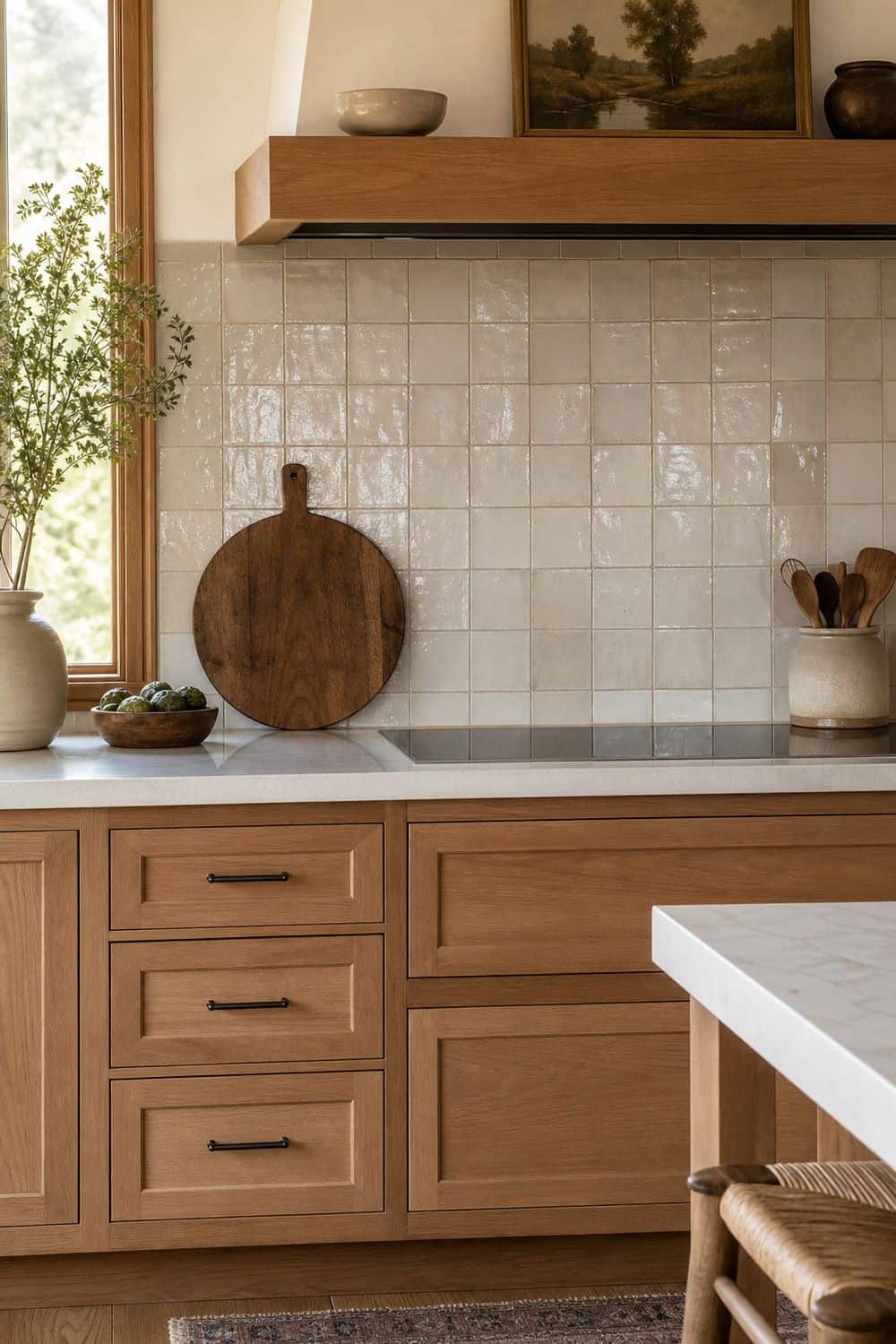
Handmade tile gives wood kitchens a softer, less formal backsplash option than slab stone. Warm white, cream, sage, clay, or muted zellige-style tile can add texture without competing with the cabinet grain. A handmade backsplash tile sample helps you check glaze variation, edge movement, and grout color in your actual kitchen. Keep the tile shape simple if the wood has strong grain, and use a close grout color when you want the wall to feel calm. Bring tile samples home with a cabinet sample and a cutting board so you can see whether the texture supports the wood or competes with it.
9. Choose Fluted Wood for Subtle Texture
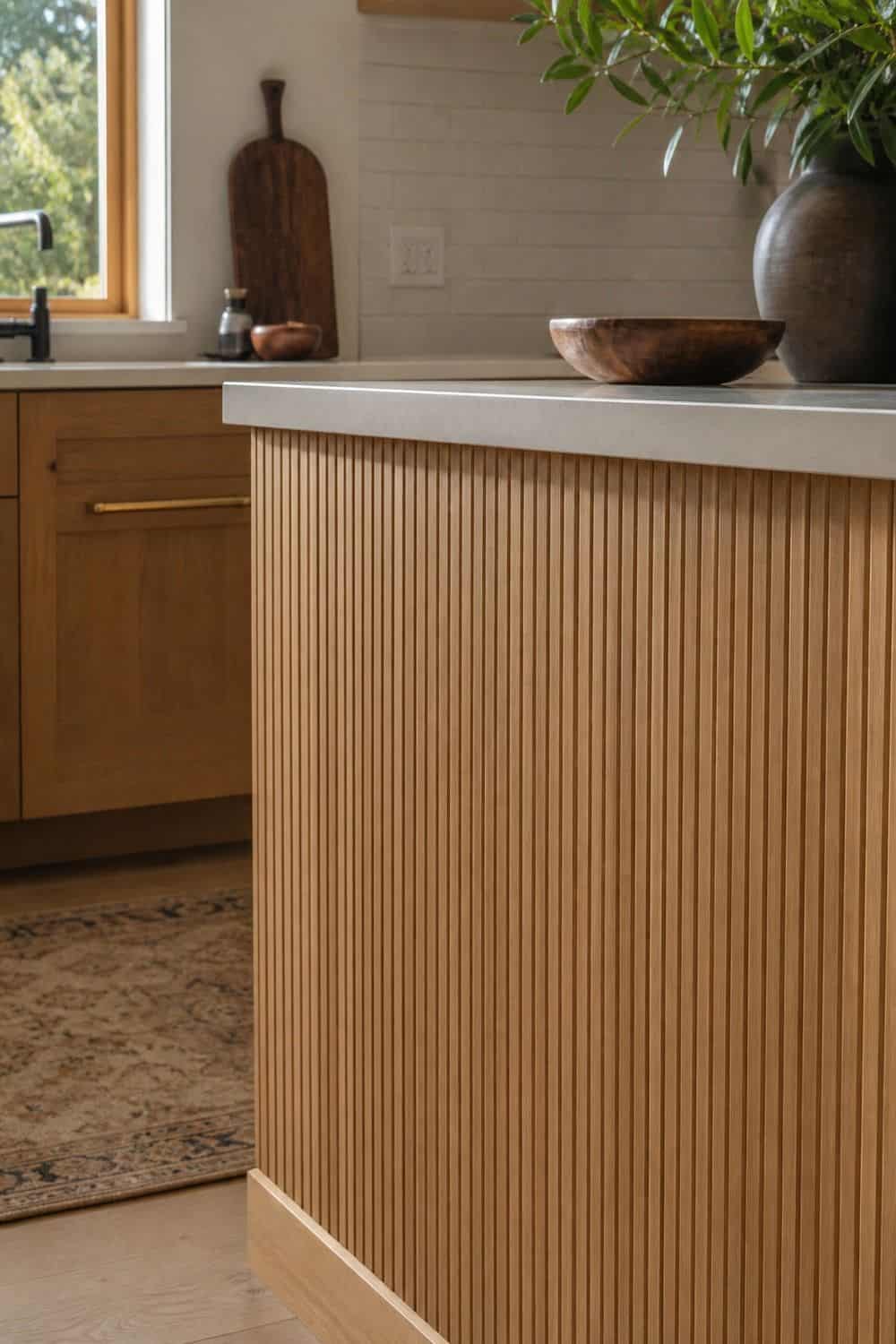
Fluted wood can add texture without adding another color, which makes it useful for a natural wood kitchen that feels too flat. Use it on an island face, a cabinet accent, a range wall detail, or one furniture-style panel instead of every surface.
A fluted wood panel should match or intentionally contrast with the main wood tone. Vertical lines can make a small area feel taller, while heavy fluting across too many doors can become hard to clean and visually busy.
Pair fluting with plain counters and simple hardware. The goal is quiet shadow and grain, not a wall of ridges fighting the rest of the kitchen. Keep fluted areas away from the messiest cooking zones unless the grooves are easy to wipe and not likely to catch grease.
10. Use Wood Veneer for a Budget-Friendly Look
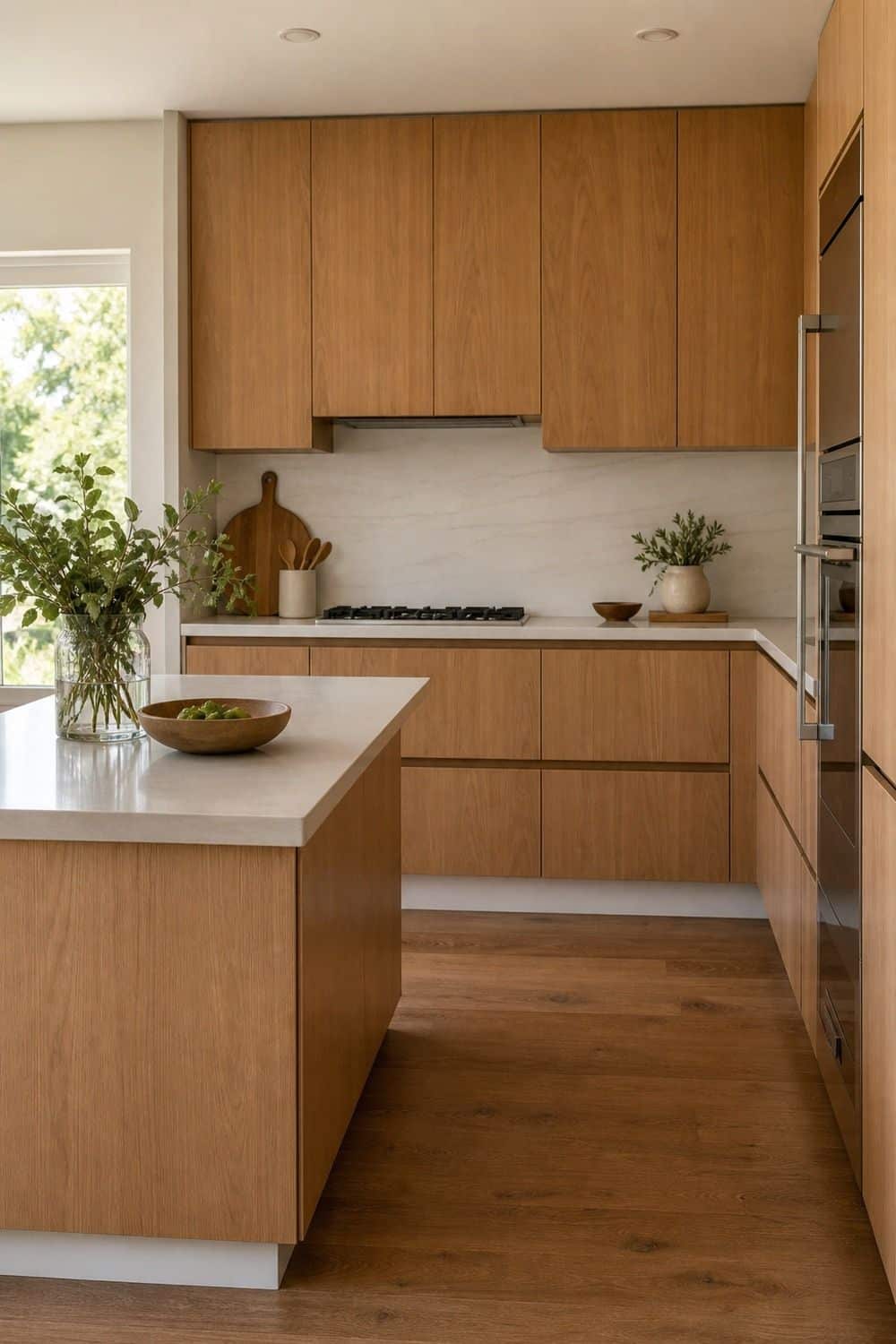
Real-wood veneer can offer natural grain with more stable construction and a lower cost than solid wood doors. It is common in modern cabinetry, especially flat fronts, because the surface can look clean and consistent. A wood veneer cabinet panel helps you judge grain scale, color, and finish before ordering a large run. Look for quality edges, simple profiles, and a tone that works with the floor.
Veneer is not a shortcut if the product looks fake, glossy, or poorly matched at the seams. Avoid mixing several veneer patterns in one kitchen unless the manufacturer has planned the grain sequence carefully. For a high-use kitchen, ask how the edges are banded because exposed or mismatched edges can make veneer look cheaper than it is.
11. Modernize Honey Oak Without Painting It
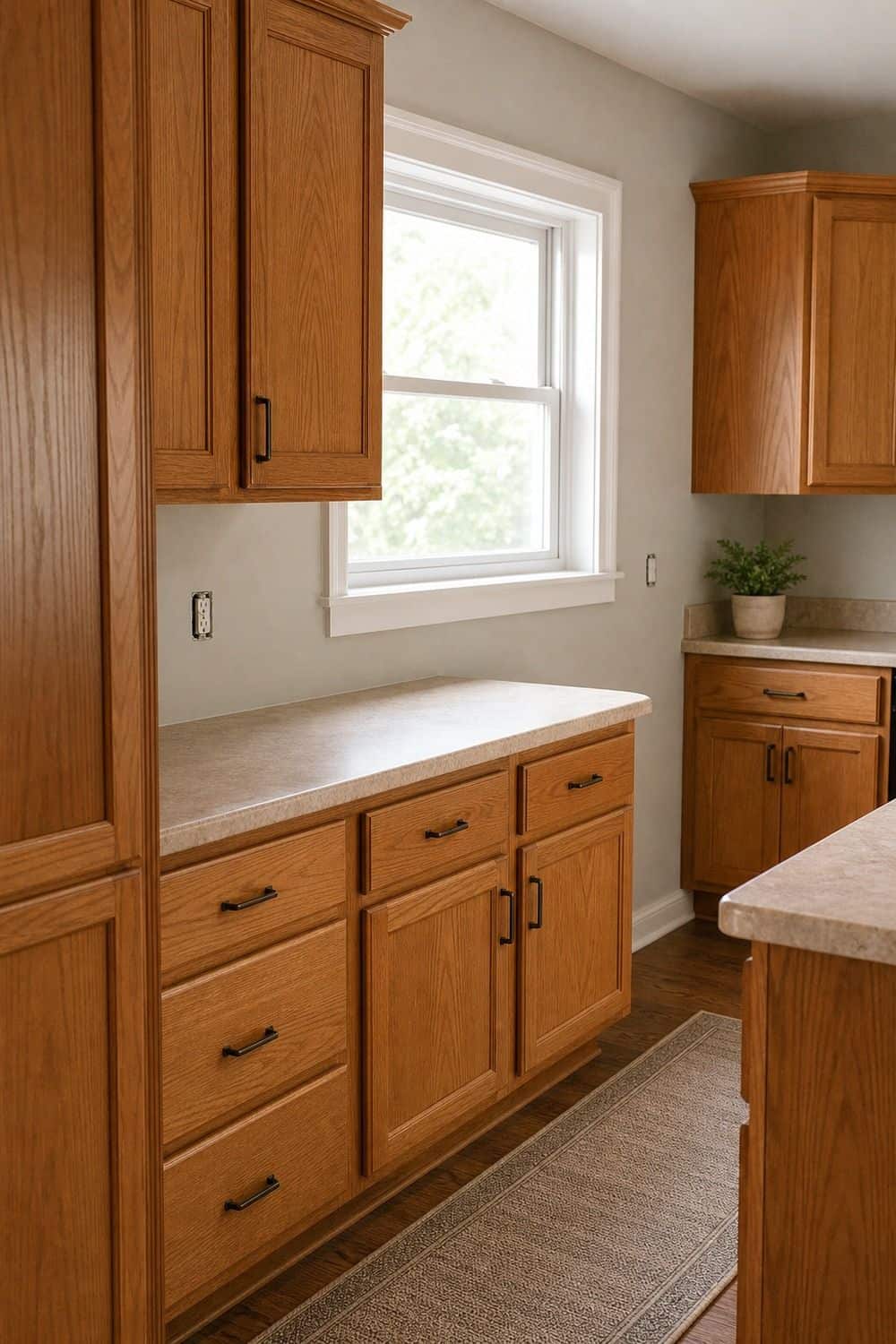
Existing honey oak can look current when the surrounding choices stop fighting it. Instead of painting everything, try calmer wall color, updated hardware, better lighting, a grounded runner, and fewer orange accents.
Honey oak cabinet hardware in bronze, black, or aged brass can make older doors feel more intentional if the shape is simple. Balance the warm wood with cream, greige, stone, olive, or mushroom rather than bright white.
Remove dated clutter before judging the cabinets. The mistake is adding more yellow wood, orange decor, or glossy finishes, which makes the undertone feel louder. A new runner and simple lighting can change the read of honey oak before you spend money on bigger cabinet changes. Swap bulbs and remove orange-toned accessories before deciding the cabinets themselves are the problem.
12. Cool Down Orange Wood with Greige or Taupe Walls
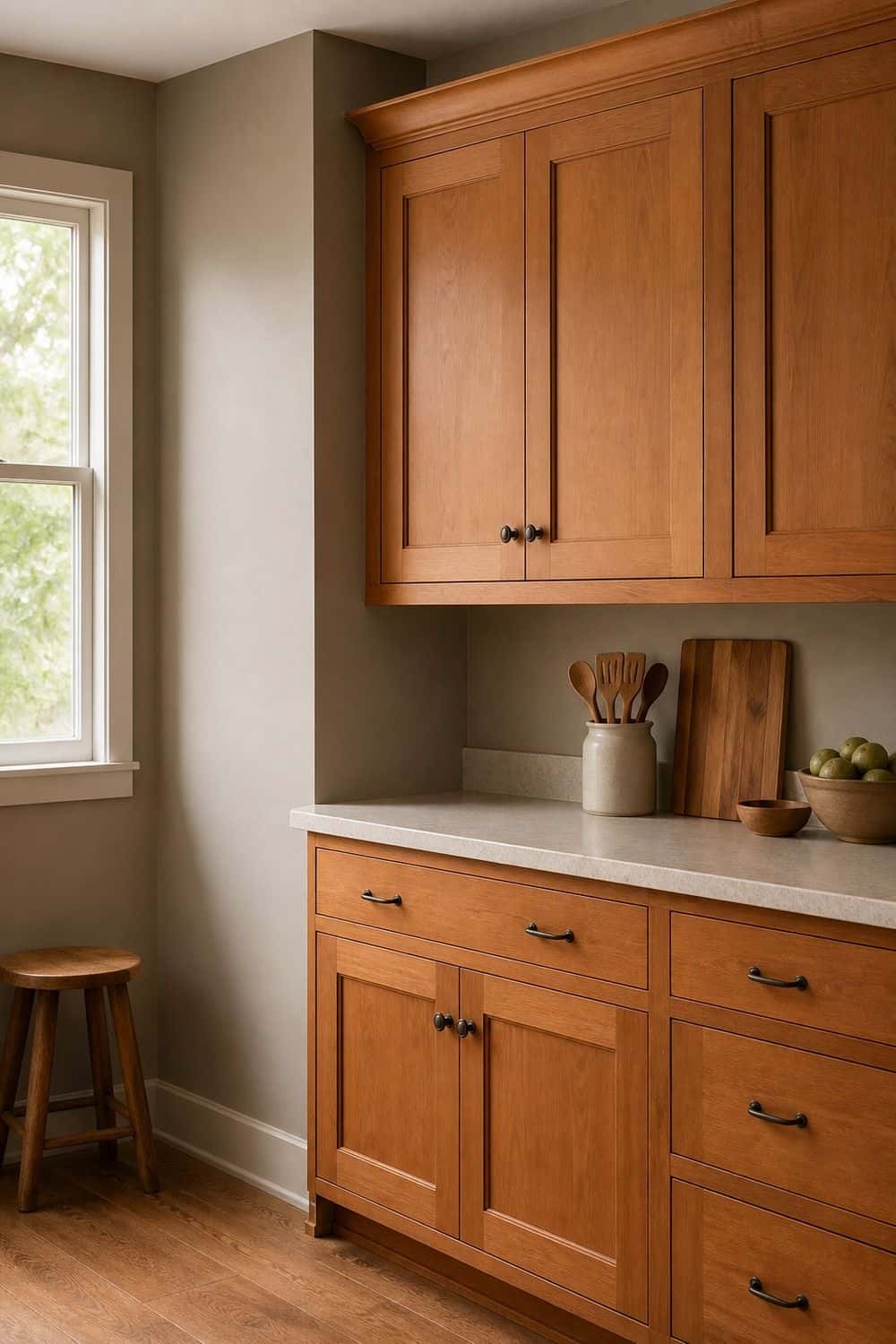
Some wood kitchens need a cooler wall color to calm strong orange undertones. Greige, taupe, mushroom, or soft putty can reduce the contrast without making the room feel cold. A greige paint sample should be tested at several times of day because the wrong greige can turn purple, pink, or flat beside honey oak. This is especially helpful when floors, cabinets, and trim are all warm.
Keep counters and backsplash simple so the wall color can do its balancing work. Avoid bright white walls with orange wood if the contrast makes the cabinets look even stronger. Use the sample behind a cabinet door and near the floor trim, because orange wood often reflects color onto nearby paint. Keep the trim color in the same family so the walls do not look like a patch between warm cabinets and cooler paint.
13. Add Matte Bronze Hardware to Wood Cabinets

Hardware updates can shift a wood kitchen quickly without changing the cabinets. Matte bronze, aged brass, black, or restrained nickel can all work depending on the wood tone, but bronze is especially good when you want warmth without shine. Matte bronze cabinet pulls pair well with oak, walnut, cream counters, sage walls, and handmade tile. Measure existing hole spacing before ordering and test one pull on the actual door. If the wood is very busy, choose a quieter pull shape so the hardware does not add another layer of visual noise.
14. Use Black Accents Sparingly with Wood
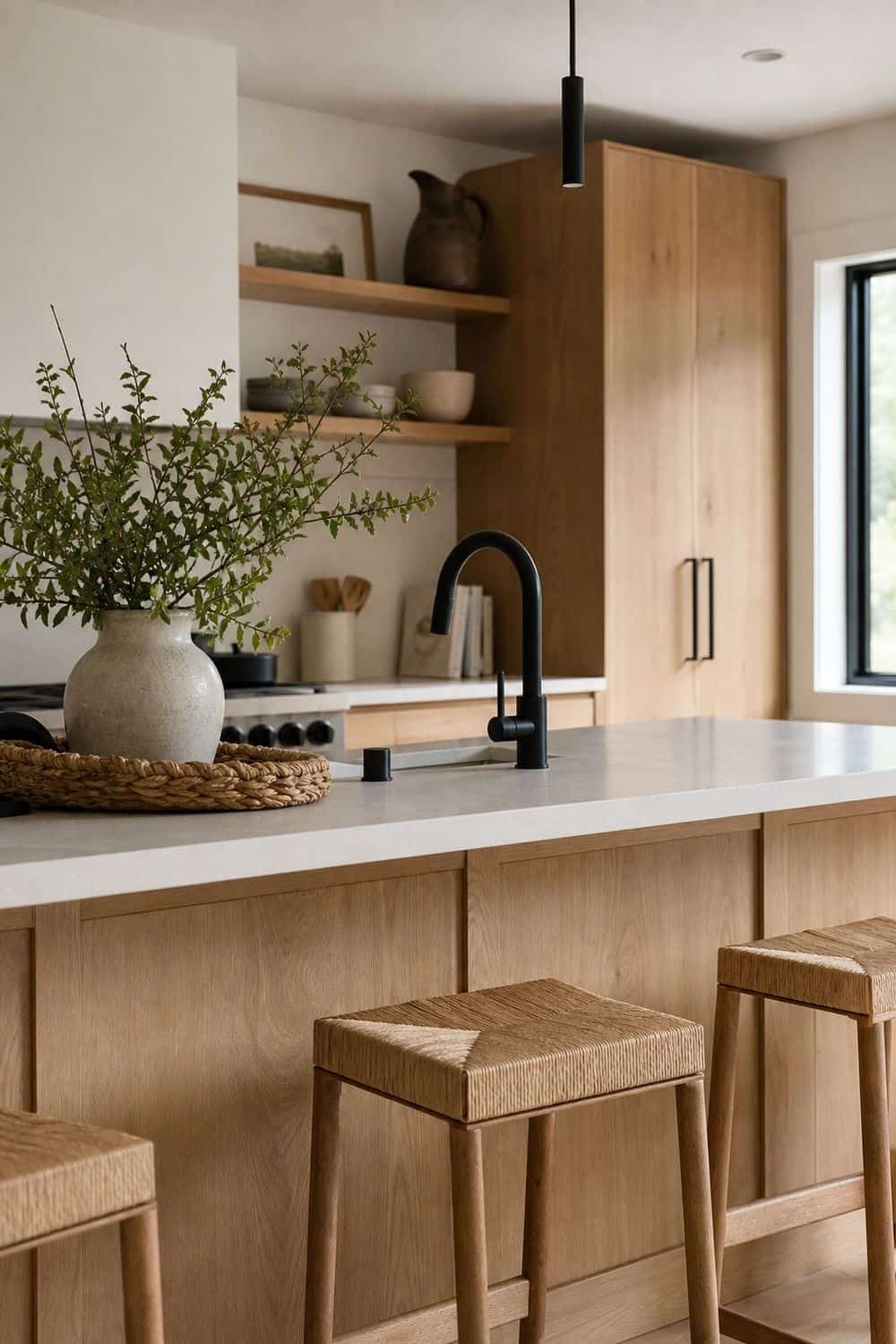
Black can make a natural wood kitchen feel crisp, but it should act as a small outline rather than the main event. A matte black kitchen faucet, thin sconce, stool frame, or a few knobs can sharpen pale oak or walnut beautifully.
Use black with light counters, warm walls, and enough softness so the contrast does not feel harsh. If the kitchen already has dark floors or dark counters, keep black accents minimal.
Matte finishes usually look more natural than glossy black beside wood grain. Avoid filling the room with black metal, black tile, and black lighting all at once. Repeat black once more in a frame, pendant, or appliance detail so the faucet does not look like a random replacement.
15. Add Pale Scandinavian Wood for Small Kitchens
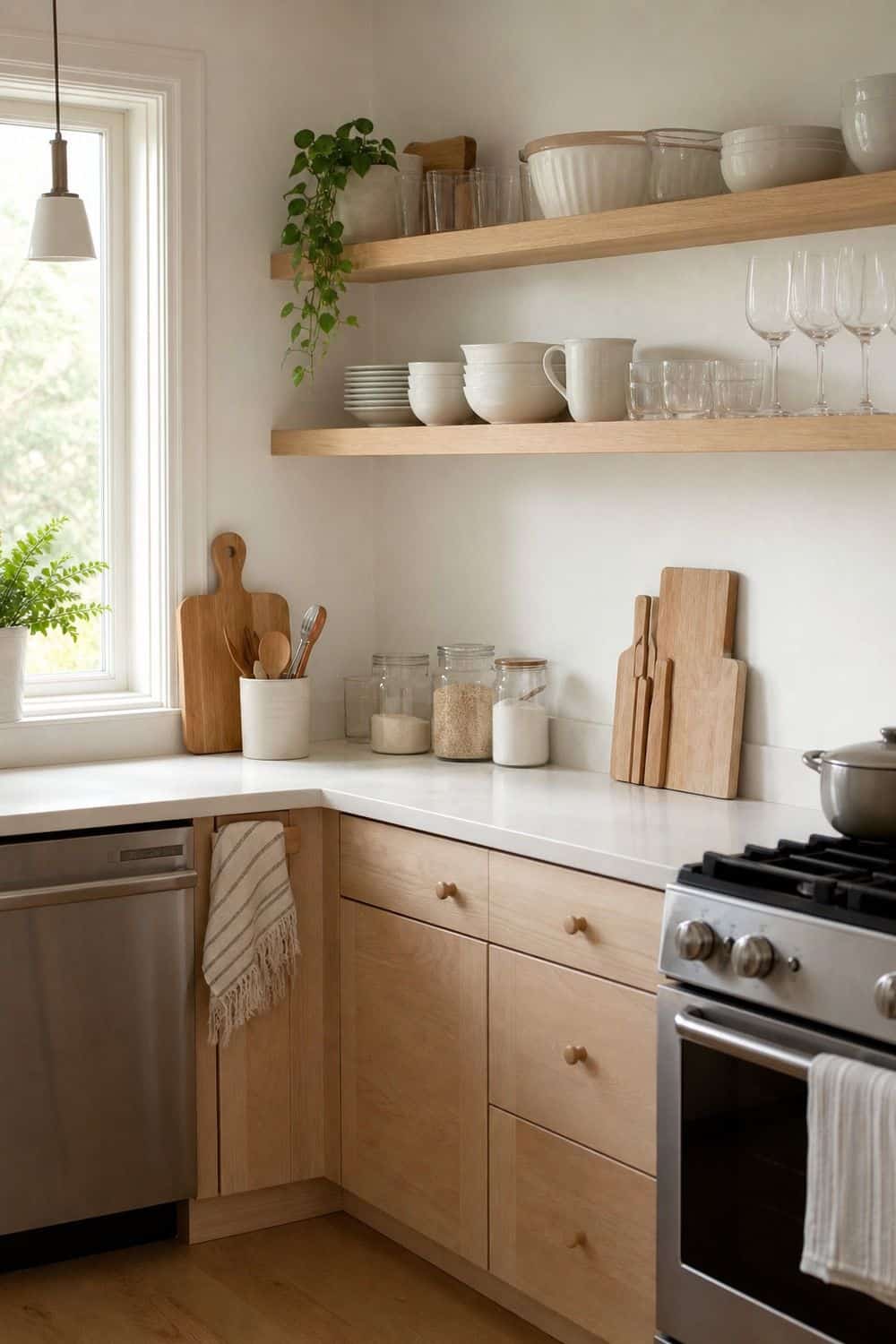
Pale wood keeps small kitchens airy while still adding natural texture. Blonde oak, ash, birch, and light maple can warm a compact room without the visual weight of walnut or dark-stained cabinets. Blonde oak floating shelves are a good way to add the look above a counter, breakfast nook, or sink wall. Keep the shelf styling spare: daily dishes, clear glasses, one plant, or a few bowls.
Warm white walls and simple hardware help the wood read clean. Avoid thick chunky shelves in a tiny kitchen, since they can make the wall feel heavy even if the wood is light. This approach is strongest when the shelves are styled lightly and the cabinet fronts stay simple rather than heavily paneled.
16. Try Reclaimed Wood as an Accent, Not the Whole Room
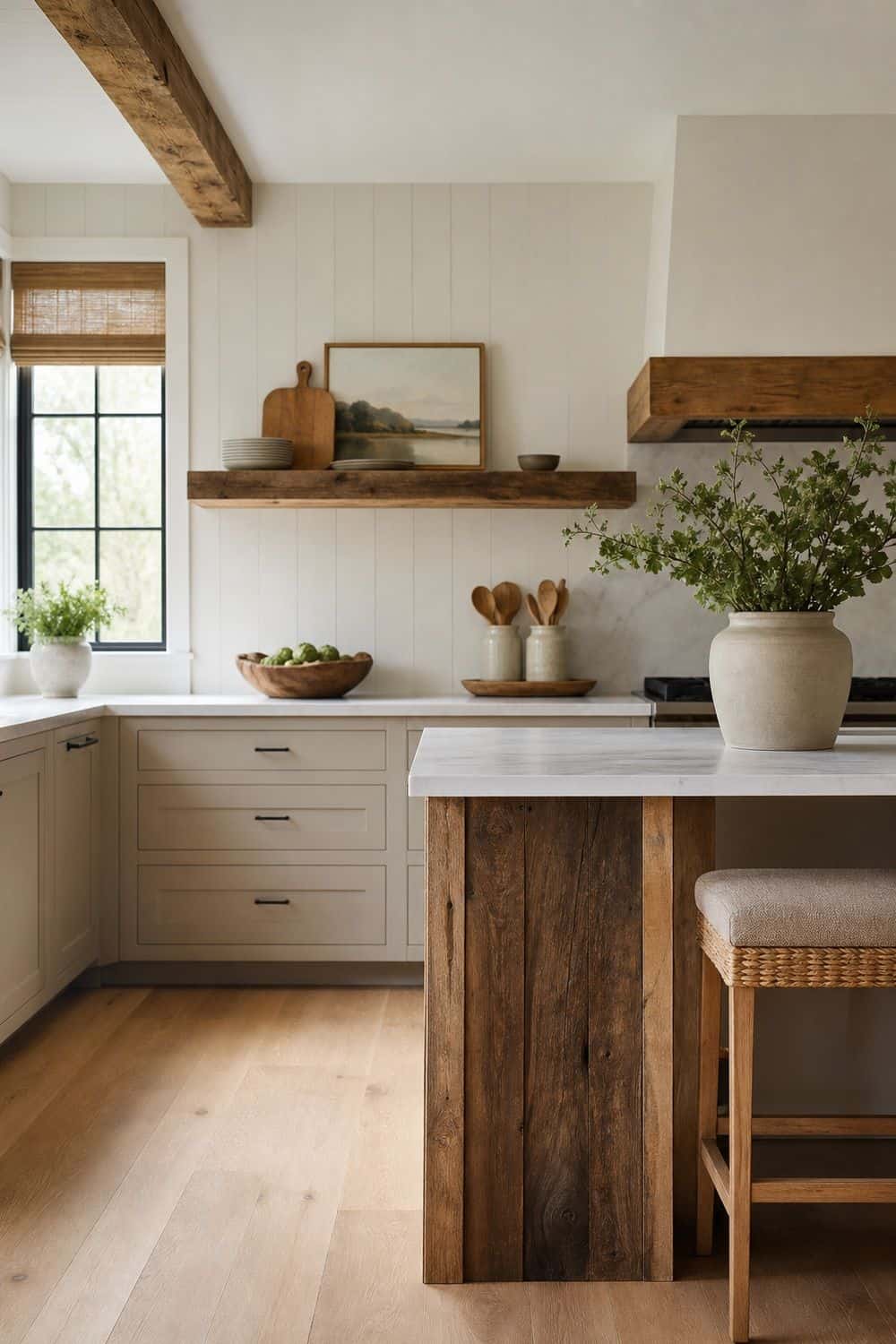
Reclaimed wood brings age, texture, and variation, but it can turn rustic quickly if it covers too much of the kitchen. Use it as shelves, an island face, a dining nook bench, or a single accent instead of every cabinet door.
Reclaimed wood floating shelves should be sealed, smooth enough to clean, and strong enough for dishes. Pair them with plain stone, simple tile, and quiet hardware so the wood remains the feature.
Check for splinters, uneven surfaces, and food-zone practicality before buying. Avoid combining reclaimed wood with too many farmhouse signs, rough baskets, and distressed finishes. If the boards are very textured, keep dishes plain so the shelving looks intentional instead of like salvage piled on a wall.
17. Mix Two Wood Tones with a Clear Rule
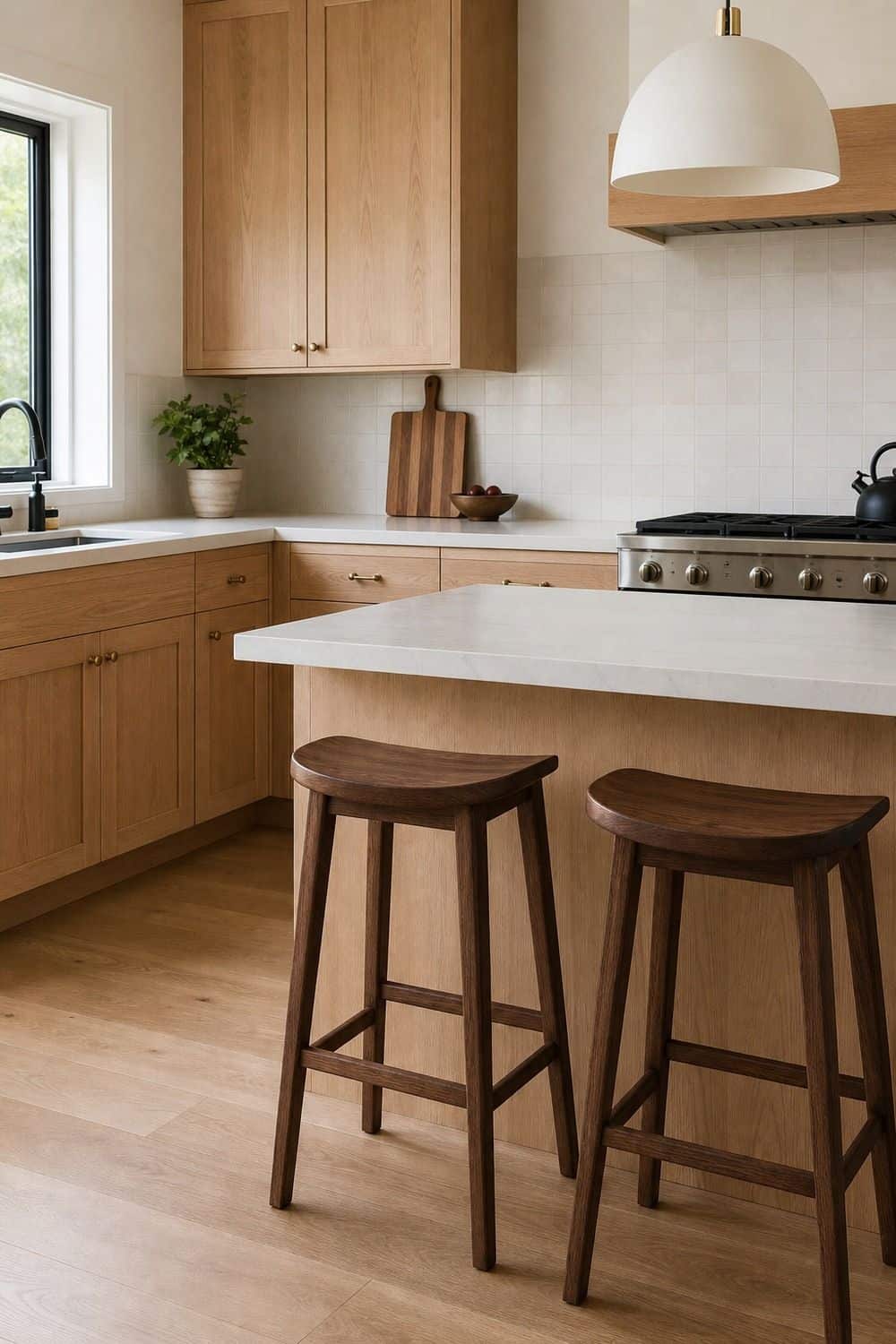
Mixed wood tones can look layered when there is a clear rule. Choose one dominant wood for cabinets, floors, or the island, then use a second wood as an accent on stools, shelves, boards, or a hutch. A wood tone sample kit helps compare undertones before buying pieces that clash. Warm oak and walnut can work together when each appears more than once. When in doubt, let floors or cabinets be the main tone and repeat the accent wood through smaller, movable pieces.
18. Add a Natural Wood Pantry or Hutch
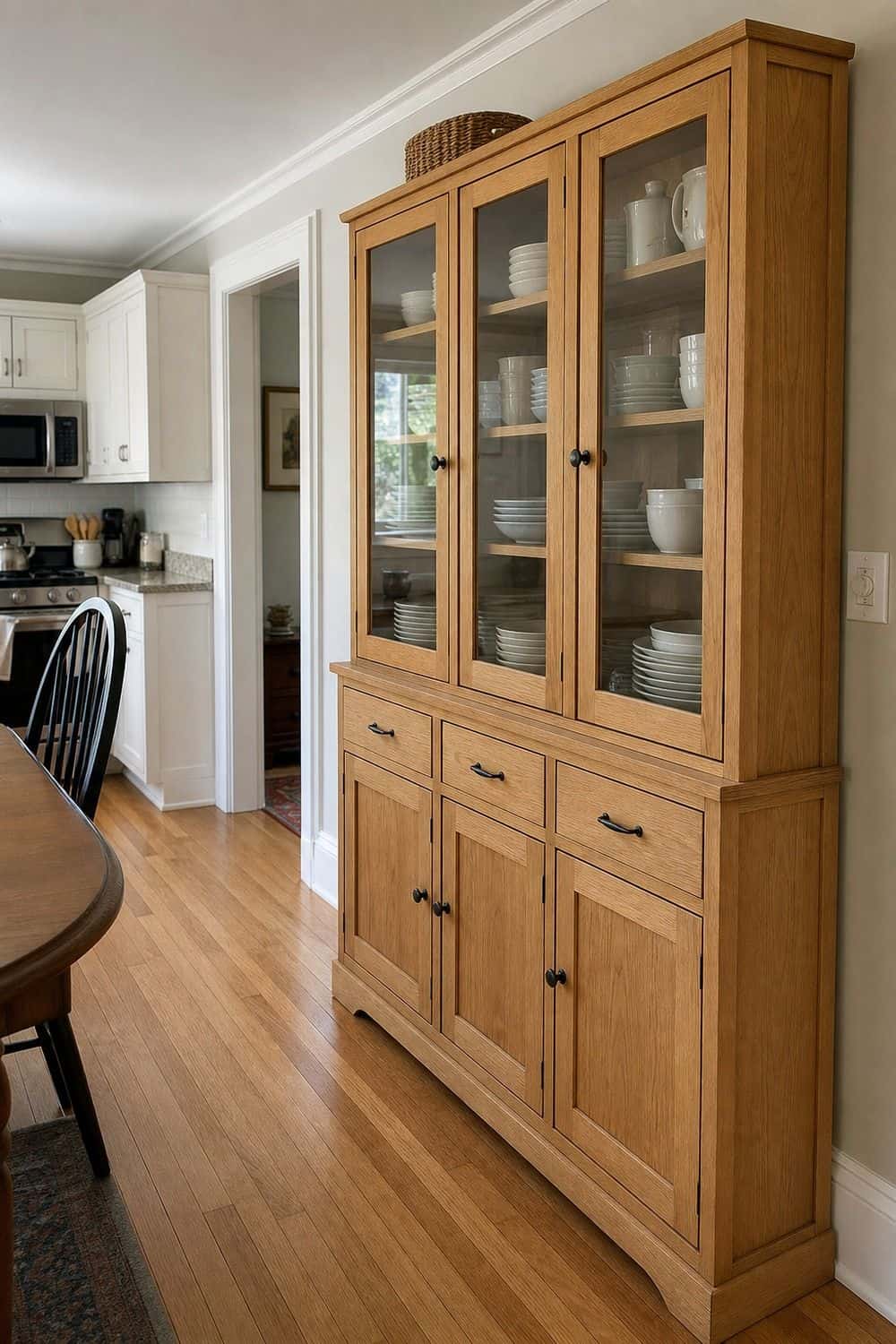
A freestanding pantry or hutch can add natural wood without changing built-in cabinets. This is useful in older homes, dining-side kitchens, or rooms where painted cabinets need warmth without another built-in project. A natural wood kitchen hutch should fit the wall width, door swing, and storage need before style comes into play. Use it for dishes, linens, baking tools, or pantry overflow so it earns the footprint.
Furniture-style storage looks best when the finish relates to floors, shelves, or stools. Avoid a bulky dark piece in a narrow kitchen unless the surrounding walls and counters stay light. Measure depth carefully, because a hutch that blocks a walkway will feel frustrating no matter how beautiful the wood is. If the hutch has glass doors, use it for calmer dishes rather than every colorful mug in the house.
19. Style Wood Open Shelves with Everyday Dishes

Wood open shelves look best when they hold things the kitchen actually uses. Everyday plates, bowls, glass jars, stoneware mugs, cutting boards, and one small plant can make the shelves feel warm without becoming a display wall.
Natural wood floating shelves should be deep enough for dishes but not so deep that items disappear. Match the tone to another wood in the room or repeat it through boards and stools.
Leave open space between stacks so the grain can breathe. Avoid decorative-only clutter, too many baskets, and heavy items that exceed the shelf rating. Use the shelves for items that come down often, since dusty display pieces quickly make open storage feel fussy. Keep heavier pieces low and lighter pieces high so the shelves look balanced and stay easier to use.
20. Add Wood Cutting Boards as a Small Warm Layer

Cutting boards are the easiest natural wood layer for anyone who wants warmth without changing finished cabinets. A wood cutting board set can warm a white, cream, gray, or painted kitchen while still being useful for prep and serving. Choose boards in slightly different sizes so they lean neatly without looking like a stack of props. Keep the ones you use most near the prep zone, and store decorative extras elsewhere.
Oil and clean boards according to their material so they do not dry out or warp. Avoid filling the whole backsplash with boards if the counter needs working space. If the boards sit near a range, leave enough space that oil splatter and steam are not constantly hitting the wood. A board rail or narrow slot can keep them upright without taking over the whole counter.
21. Use Wood Counter Stools to Repeat the Finish

Counter stools can repeat a wood tone from cabinets, shelves, floors, or cutting boards, which helps the kitchen feel connected. Wood counter stools are especially useful when the cabinets are painted but the room needs warmth at island height.
Choose a simple silhouette so the stools do not compete with cabinet grain, pendant lights, or a patterned backsplash. Check seat height, footrest comfort, and how far the stools tuck under the counter.
If the kitchen has several wood tones already, match the stools to the dominant one. Avoid orange-toned stools beside cooler white oak unless the contrast is intentional. A stool with a woven or upholstered seat can soften the wood repeat if the kitchen already has strong cabinet grain.
22. Keep Wood Kitchens from Looking Too Heavy
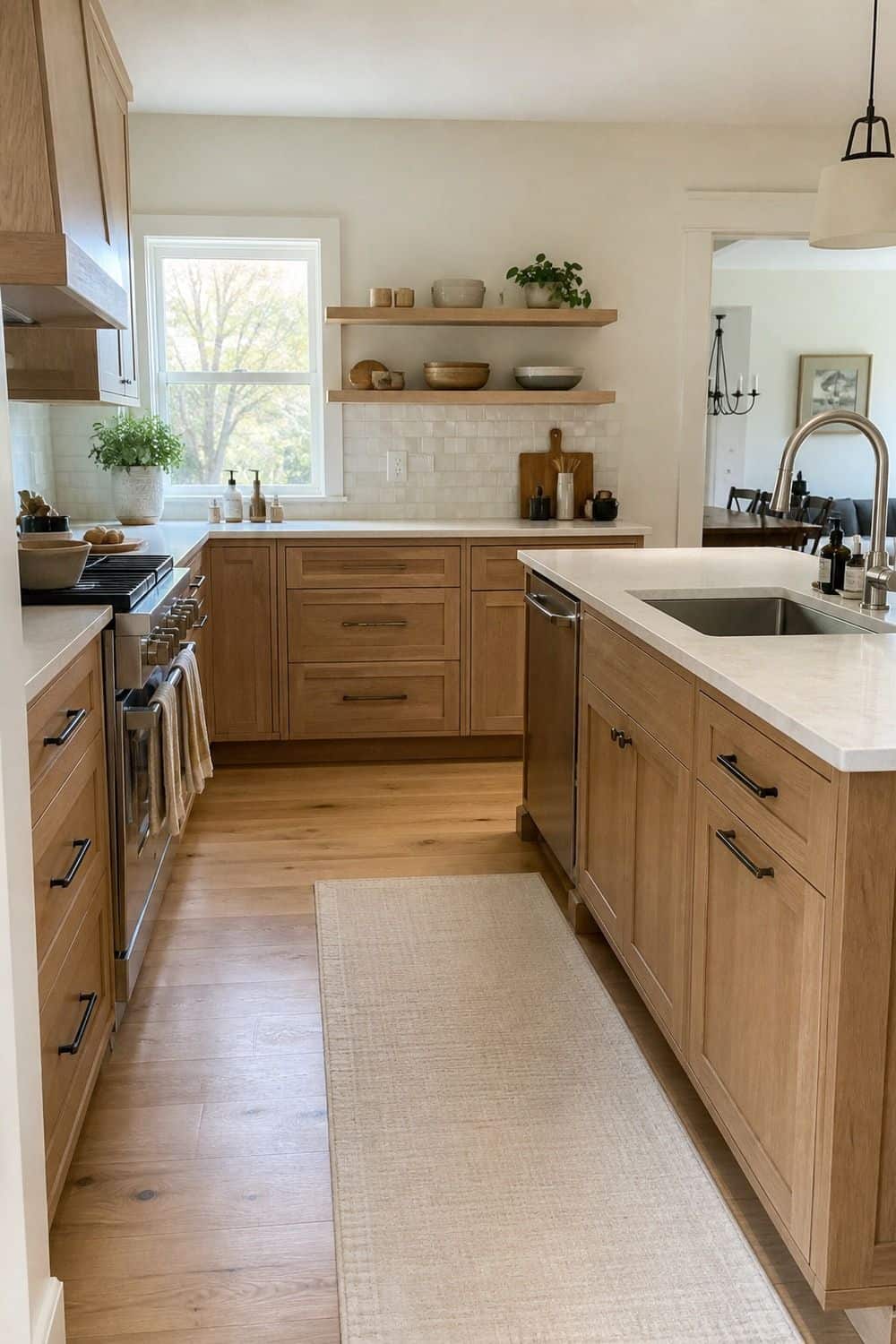
Wood kitchens can feel heavy when every surface is dark, glossy, or visually full. Balance comes from lighter counters, warm white walls, pale backsplash tile, open visual breaks, and lighting that shows the grain clearly. A cream kitchen runner can brighten the floor plane and soften the stretch between cabinets without adding another wood tone. Choose a washable or low-profile style near the sink and stove. Good balance often comes from removing one dark layer, not adding more pale decor to fight it. Cream textiles, pale counters, and under-cabinet light all help wood feel warm without closing in the room.
23. Use Warm Under-Cabinet Lighting on Wood Grain
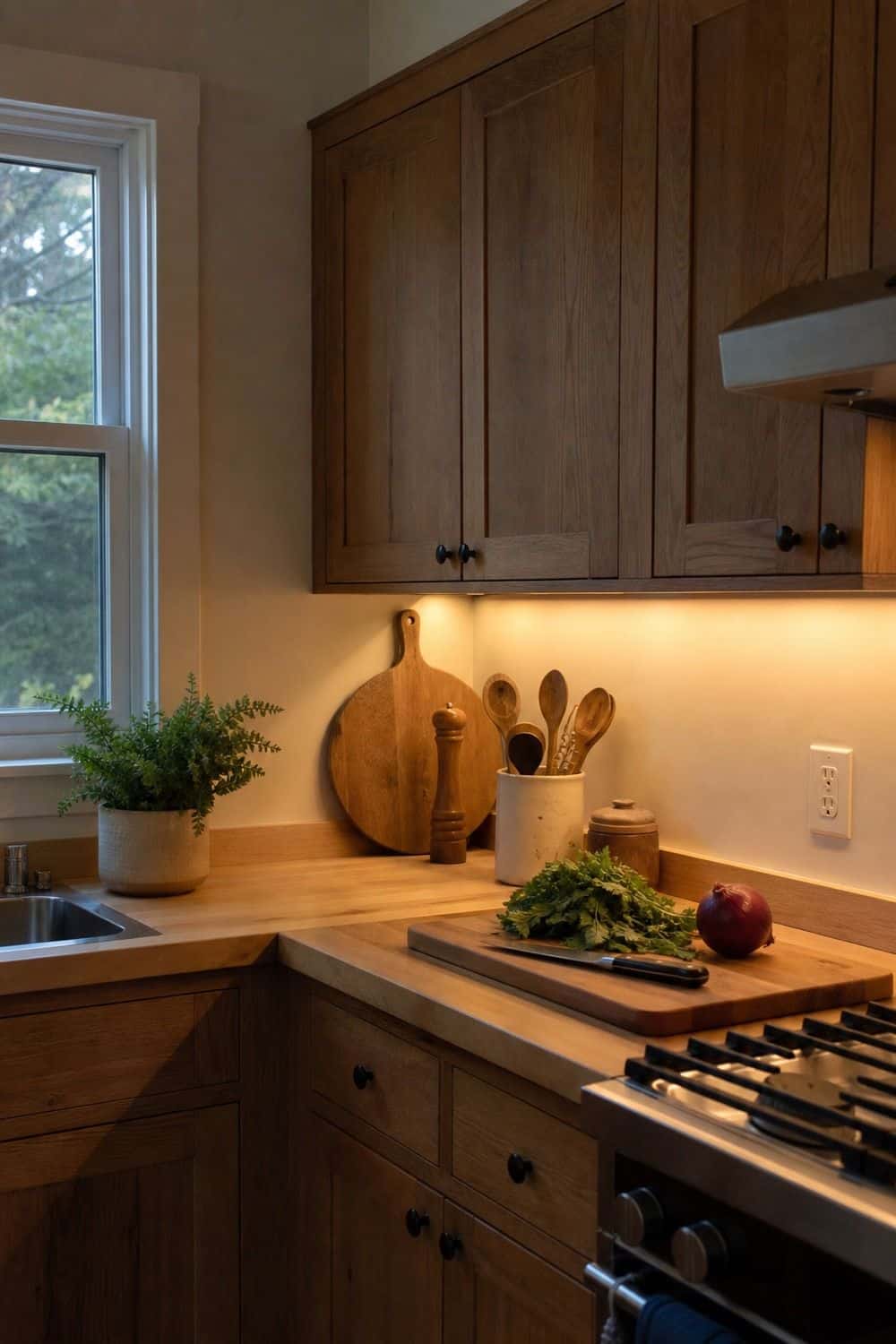
Lighting changes how wood grain reads more than people expect. Poor light can make oak look orange, walnut look flat, or pale wood look dull. Warm under cabinet lighting adds even task light where counters, backsplash, and lower cabinets meet. Choose a warm but not overly yellow color temperature so the wood feels rich and the prep surface still looks clear.
Place lighting where you chop, pour, and cook, not only where it looks nice at night. Avoid mixing very cool overhead bulbs with warm task lights, since the cabinet color can shift across the room. Use dimmable lights if possible so the wood looks clear for cooking and softer during evening cleanup. This is especially important under upper cabinets, where shadows can make even good wood look tired.
24. Choose a Low-Sheen Wood Finish

Finish is a major reason some wood kitchens look current and others feel dated. Satin, matte, and low-sheen finishes usually let the grain read naturally, while glossy varnish can make cabinets look orange, reflective, or older than they are.
A matte wood cabinet finish should still be practical for cleaning, especially near handles, the sink, and the range. Ask how the finish handles wiping, fingerprints, and moisture before choosing it for the whole kitchen.
Low-sheen does not mean fragile. It means the surface should look soft while still working hard. Avoid high-gloss finishes if the rest of the kitchen is calm and natural. Test cleaner on a hidden spot and avoid harsh scrubbers that can make a low-sheen finish look patchy.
25. Make Natural Wood Practical for Daily Cooking
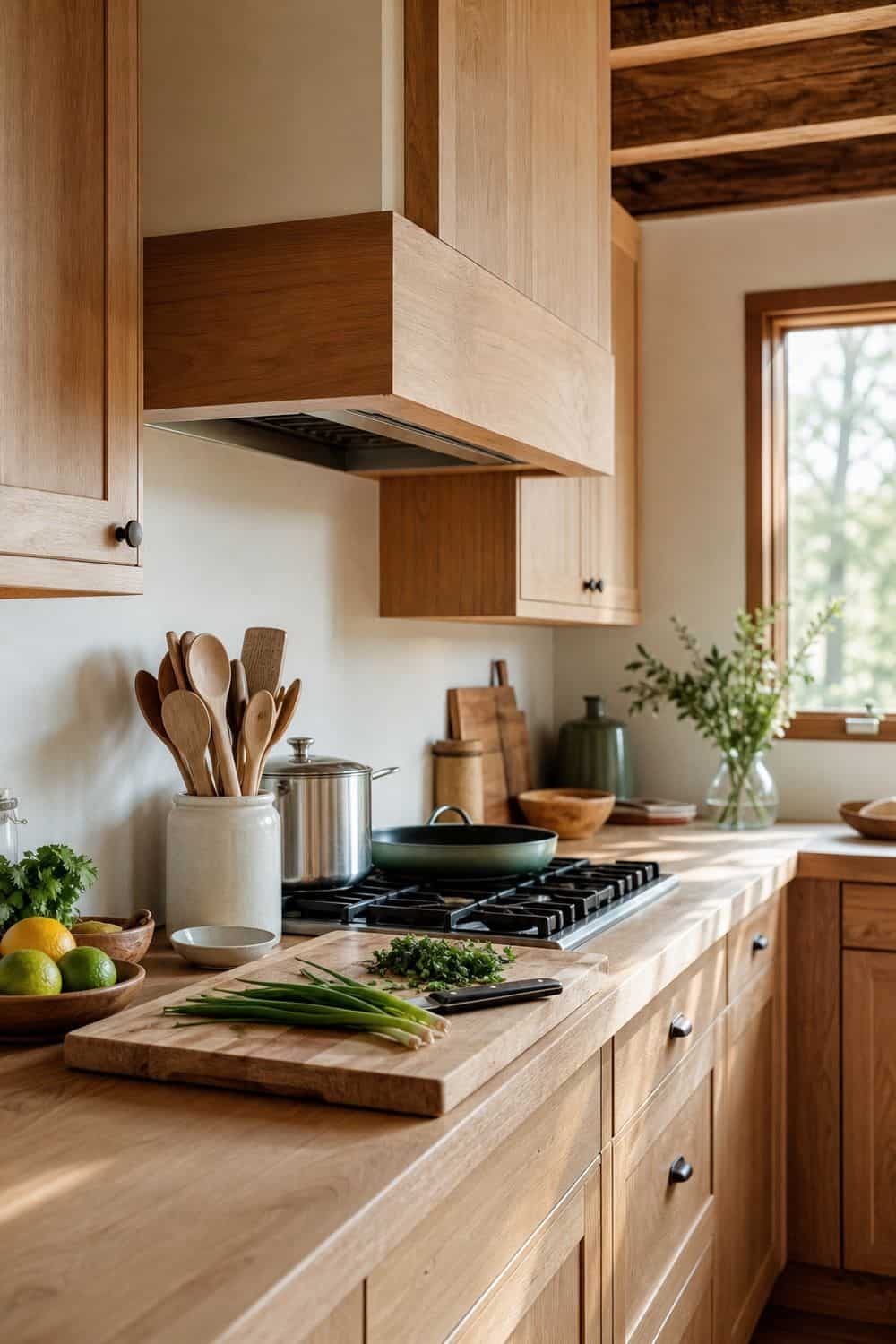
A natural wood kitchen still has to handle steam, spills, fingerprints, and everyday cooking. Use wipeable finishes, protect areas near the sink, vent well over the range, and keep oils, cutting boards, towels, and cleaners organized instead of scattered. Wood cabinet cleaner belongs in the kitchen only if it matches the finish and manufacturer guidance. Keep it with microfiber cloths or a small cleaning caddy so maintenance is easy.
Watch for water sitting near toe kicks, seams, and sink cabinets. The final mistake is treating wood as too precious to use. Good wood choices should make the kitchen warmer and still livable. If a finish needs special care, keep that care simple enough that the kitchen can handle weeknight cooking. Daily practicality is what keeps a wood kitchen feeling timeless instead of precious.
FAQs
Are natural wood kitchens back in style?
Yes. Natural wood kitchens fit current interest in stained wood, white oak, walnut, visible grain, warmer materials, and kitchens that feel softer than all-white or cold gray rooms. The most current versions use simple profiles, calm counters, and practical lighting.
What color goes best with natural wood kitchen cabinets?
Warm white, cream, mushroom, sage, olive, taupe, soft black, and stone colors work well with natural wood kitchen cabinets. The best choice depends on whether the wood leans pale, golden, red, gray, or dark brown.
Is white oak good for kitchen cabinets?
White oak is a strong choice for kitchen cabinets because it is warm, versatile, and current without feeling overly rustic. It works with modern flat fronts, slim shaker doors, organic kitchens, Scandinavian rooms, and more traditional spaces.
How do you modernize honey oak cabinets?
Modernize honey oak cabinets with updated hardware, balanced greige or warm white walls, better lighting, quiet textiles, and surfaces that complement the wood. You do not always need to paint the cabinets if the surrounding choices calm the orange undertone.
What backsplash goes with wood cabinets?
Stone slab, warm white tile, handmade zellige-style tile, muted green tile, cream ceramic, or a simple stone-look surface can all work with wood cabinets. Keep the backsplash calmer when the wood grain is busy.
Can you mix wood tones in a kitchen?
Yes, you can mix wood tones if one wood is dominant, undertones are related, and each tone appears more than once. A kitchen with oak cabinets, walnut stools, and a walnut board can feel intentional when the darker wood repeats.
What hardware works with wood cabinets?
Matte bronze, aged brass, black, and simple nickel can work with wood cabinets. Bronze and brass warm up oak and walnut, black adds contrast, and nickel can work when the counters and appliances are cooler.
How do you keep a wood kitchen from looking too dark?
Use light counters, warm white walls, pale backsplash tile, under-cabinet lighting, open visual breaks, and fewer dark accessories. If the cabinets are rich walnut or dark-stained oak, keep the surrounding surfaces lighter.
Final Thoughts
The best natural wood kitchen ideas make the grain feel intentional, not overwhelming. Choose one leading wood tone, balance it with calm stone or handmade tile, update the hardware, and use lighting that shows the wood clearly.
Whether you are planning white oak cabinets, adding a walnut island, or modernizing honey oak, the goal is the same: a kitchen that feels warm, practical, and current without becoming orange, heavy, or overly rustic.
Last update on 2026-09-18 / Affiliate links / Images from Amazon Product Advertising API