
The best winter kitchen decor ideas begin by packing away Christmas-specific pieces while keeping the warmth: plain greenery, bare branches, soft light, wood, ceramics, washable textiles, and useful counter moments. Remove ornaments, Santa mugs, glitter, and bright red novelty decor, then let the kitchen feel calm for January and February. Keep prep space clear so the room supports soup nights, baking, tea, and everyday winter cooking.
After the holidays, the kitchen can feel oddly empty or still a little too festive. A good winter reset sits in the middle: less Christmas, more texture, softer lighting, warmer neutrals, and useful pieces that make dark mornings and early evenings feel easier.
These winter kitchen decor ideas are meant for counters, shelves, windows, sinks, pantry doors, islands, and breakfast corners. The goal is a warm seasonal kitchen that still has room for chopping vegetables, simmering soup, making coffee, and cleaning up.

Top Recommended Products


You Might Also Like These Blog Posts
- 25 Cozy Holiday Kitchen Decor Ideas for a Soft Festive Glow
- 25 Christmas Kitchen Decor Ideas for a Warm Holiday Kitchen
- 20 Hot Chocolate Station Ideas for Cozy Winter Nights
- 25 Cream Kitchen Ideas for a Soft and Timeless Space
- 25 Natural Wood Kitchen Ideas for a Warm and Organic Space
1. Remove Overt Christmas Pieces and Keep the Winter Texture
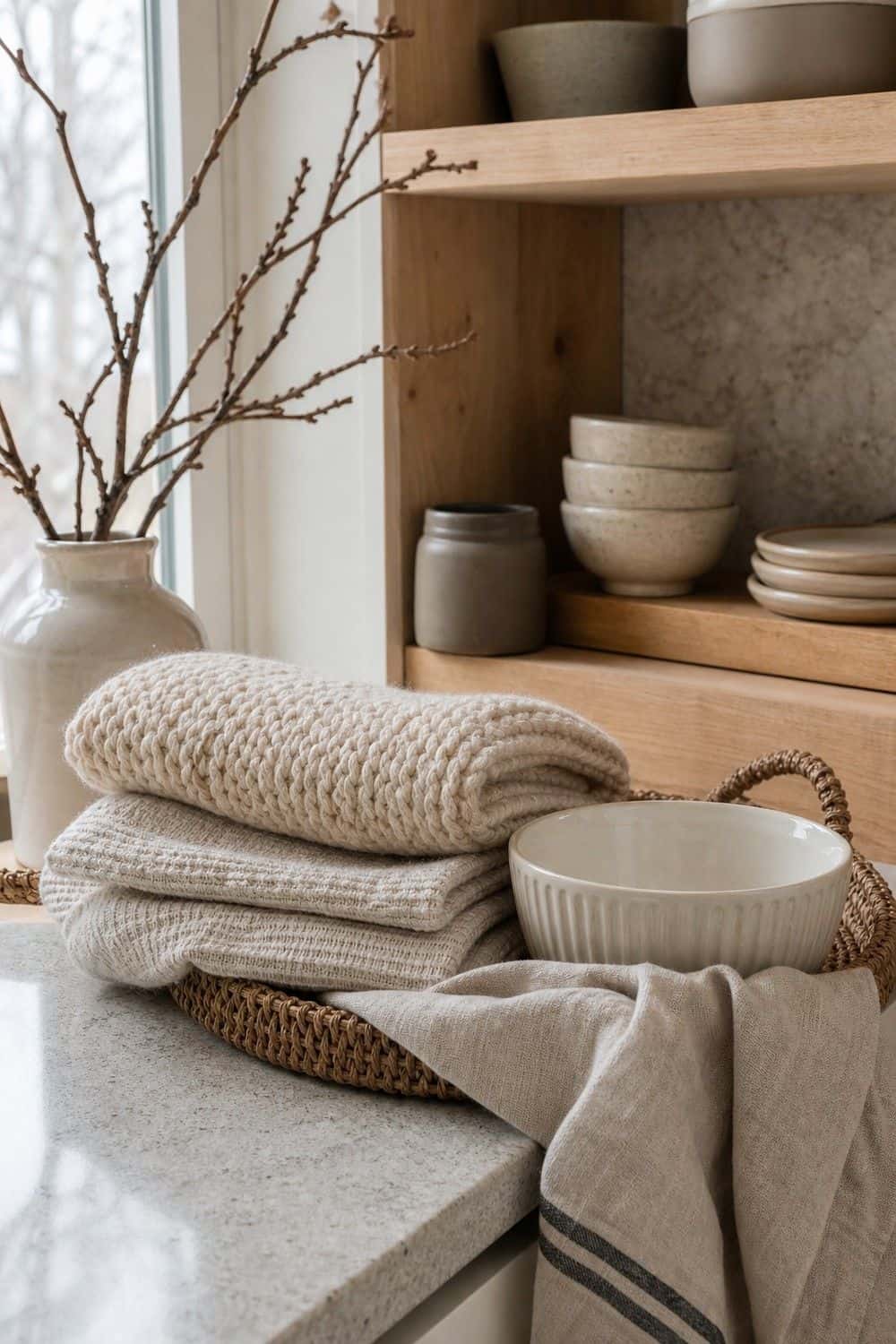
Start the reset by taking the Christmas story out of the kitchen. Santa mugs, ornament bowls, glittery picks, bright red novelty towels, and word signs can make January feel like a holiday hangover instead of a quieter season. Keep the materials that still make sense after the tree comes down: warm wood, cream ceramics, plain greenery, soft light, stoneware, and washable fabric.
Do this before buying anything new. A winter kitchen usually feels better after the loud holiday pieces are packed away and the useful textures have room to breathe. Leave counters open enough for soup, coffee, baking, and weeknight cooking.
2. Keep Plain Greenery Without the Holiday Extras
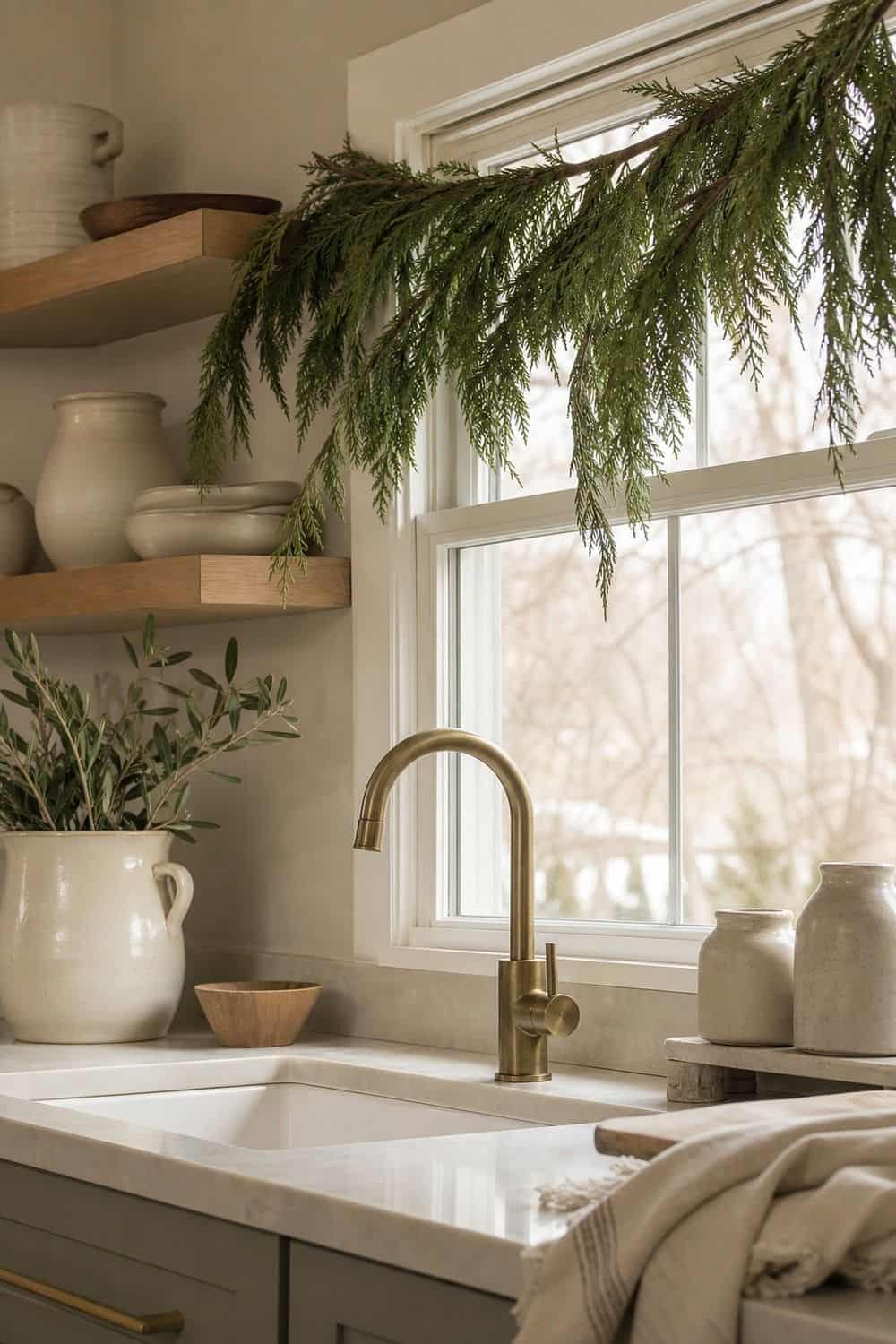
Plain cedar, pine, eucalyptus, or olive branches can stay in a winter kitchen if the obvious Christmas pieces are gone. Remove bows, bells, ornaments, red ribbon, and anything frosted with glitter. A short length over a window, a few stems in a crock, or a simple line above open shelves feels wintry without looking leftover. Keep greenery away from heat, steam, and wet zones. It should soften the room, not become one more thing to move before making dinner or wiping the sink.
3. Add Bare Branches in a Tall Vase
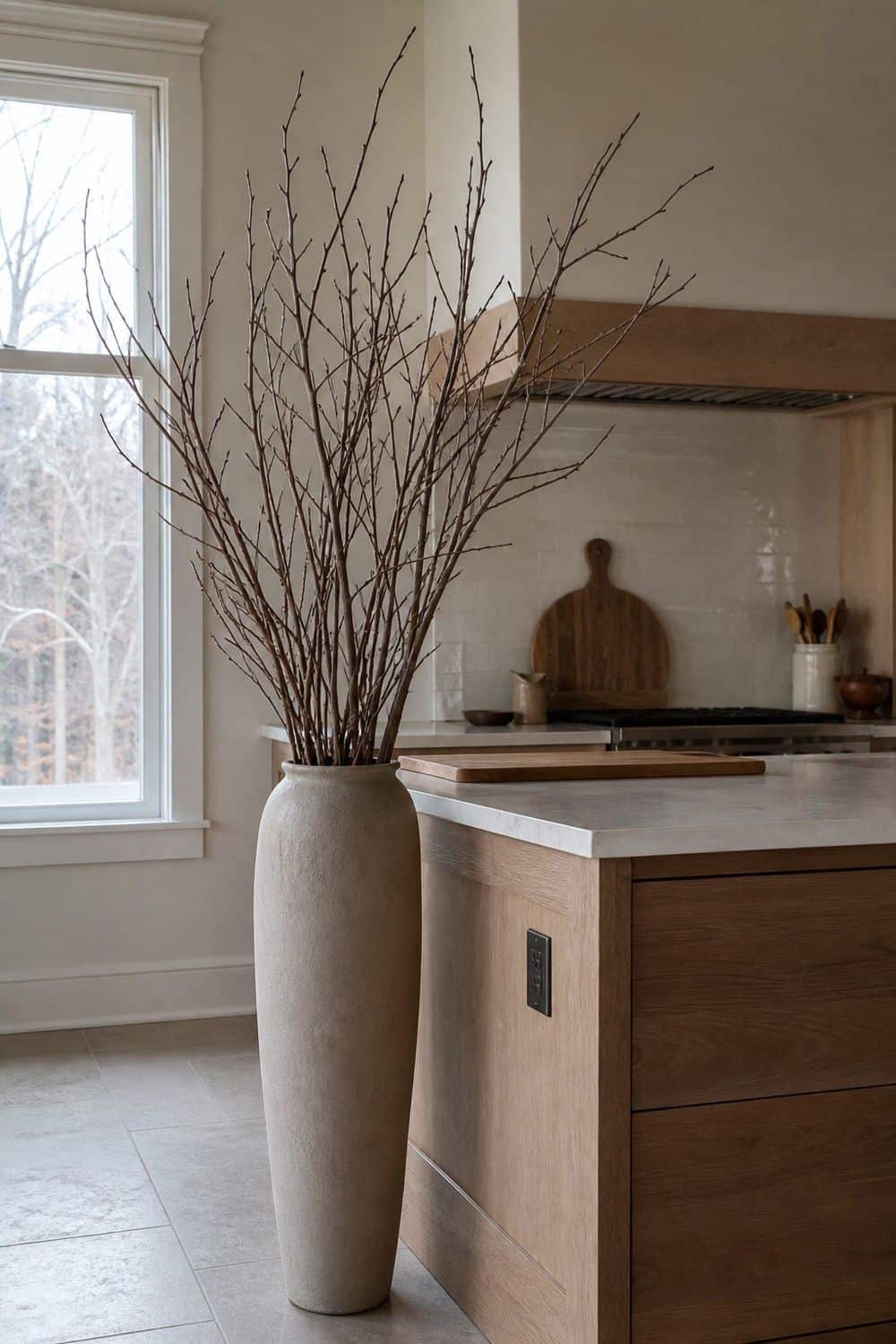
Bare branches are a graceful after-Christmas swap when the kitchen needs height but not more color. Place one tall vase at a real pause point: the end of an island, a hutch, a breakfast table, or an empty corner near a window. Let the branches replace several smaller pieces so the surface feels calmer.
Keep the arrangement out of the prep path and choose branches that are tall enough to feel sculptural without brushing cabinets or pendant lights. The nicest version is visible from the doorway but still leaves space for chopping, coffee, dishes, and ordinary winter cooking.
4. Use Pinecones in a Low Bowl
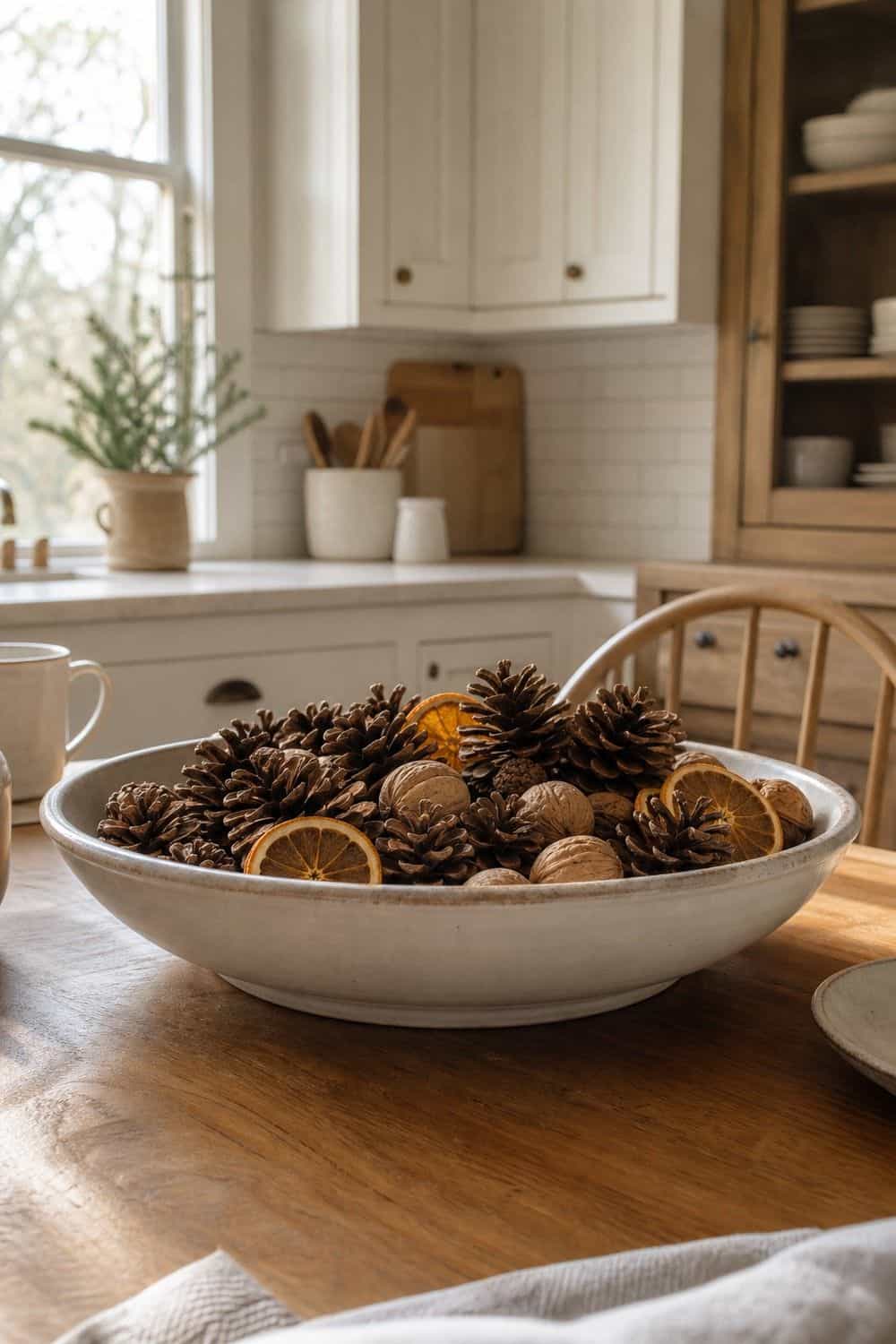
A low bowl of pinecones, walnuts, seed pods, or dried orange slices gives the island or breakfast table a winter note that still feels close to food and nature. Skip glittered pinecones or anything scented strongly enough to compete with cooking. Low and wide is the better kitchen shape because it will not block conversation across a table. Use the bowl like a quiet seasonal anchor, not a catchall. It should be easy to slide aside when you need more room for baking, lunch packing, or serving soup.
5. Switch to Winter Neutral Kitchen Towels
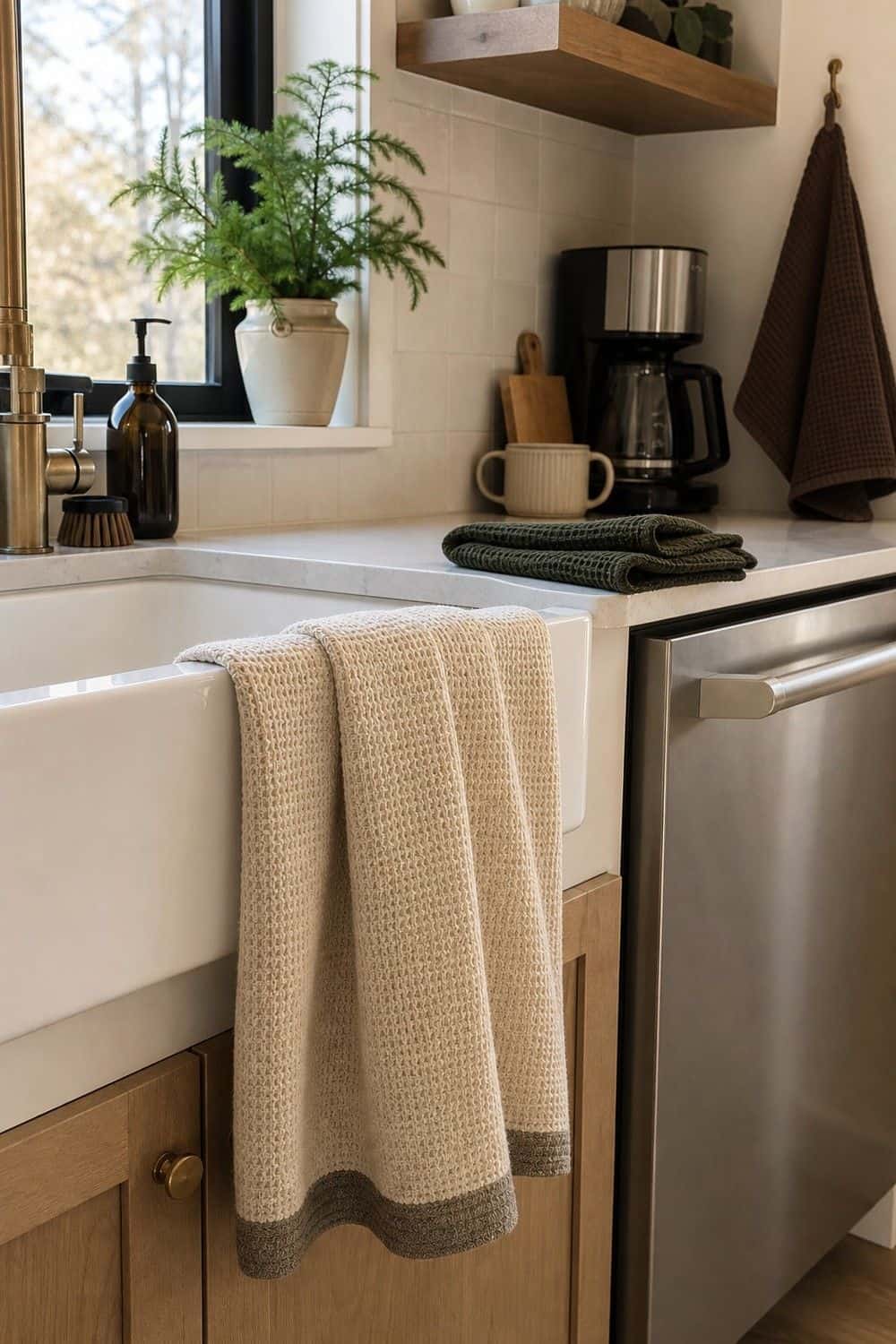
Towels are one of the safest seasonal swaps because they are useful, washable, and easy to rotate. Trade red plaid and novelty prints for oatmeal, cream, clay, charcoal, forest green, chocolate, or a narrow stripe. Put them where they work: one by the sink, one folded near the coffee area, or one on a hook near the dishwasher. Avoid hanging fabric from the range handle if it sits close to active burners. If the kitchen already has a lot of color, choose a towel that matches the quietest tone in the room. Winter kitchen decor does not need to announce itself loudly.
6. Add a Washable Runner for Cold Floors
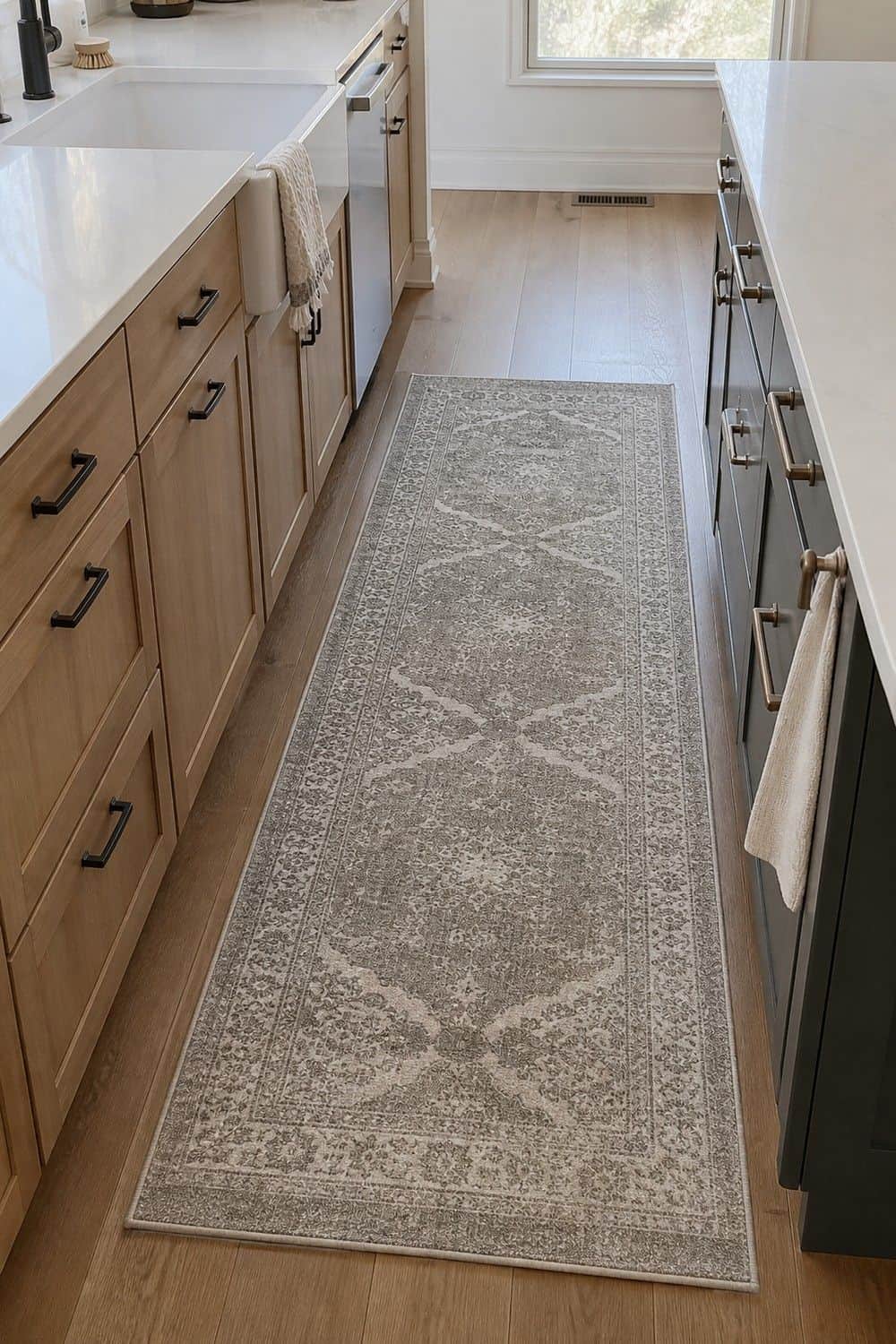
Winter makes hard kitchen floors feel colder, especially at the sink and island. A runner can help, but it needs to behave like a kitchen item rather than a living room layer. Choose low pile, washable construction, and a backing that does not slide underfoot. Warm gray, oat, clay, or a patterned neutral is usually more forgiving than cream when crumbs and wet footprints arrive. Check drawer and appliance clearance before buying or placing it, especially near the dishwasher, refrigerator, and the spot where everyone stands to make coffee.
7. Bring in Warm Wood Cutting Boards
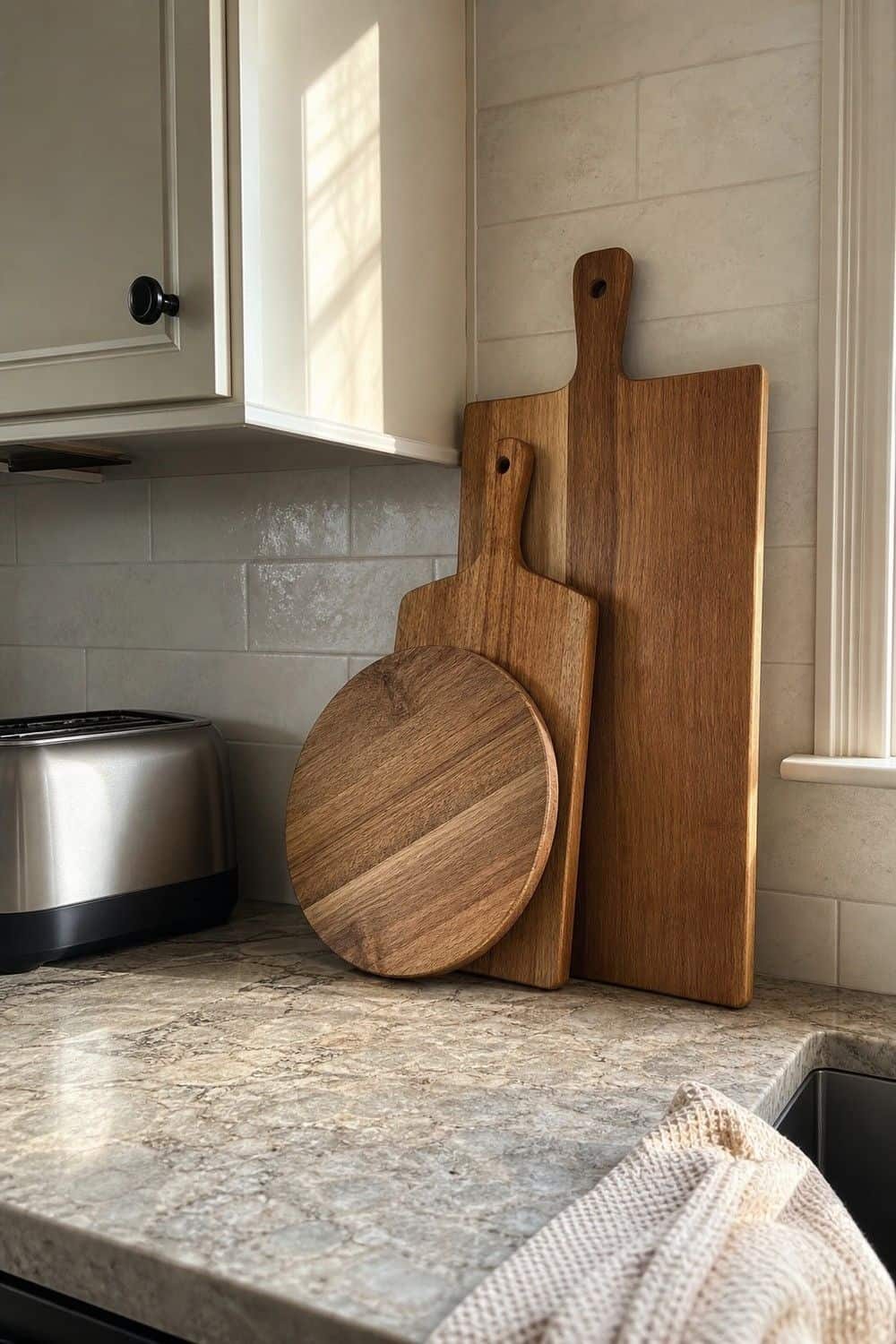
Wood boards leaning against the backsplash can warm up tile, stone, and painted cabinets after the holiday layers disappear. Use two or three boards in different heights rather than a crowded stack. The key is keeping them useful. A board beside the toaster can hold bread, one near the stove can handle soup toppings, and one by the prep zone can come down for citrus or herbs. Wash and dry boards fully before leaning them back. Winter decor should not hide damp wood or crumbs behind the counter display. Keep the warm element out of the busiest prep path.
8. Display Stoneware Mugs for Everyday Warm Drinks

Stoneware mugs suit winter because they connect decor to daily coffee, tea, broth, and cocoa. Choose muted colors like cream, oat, clay, brown, sage-gray, or charcoal instead of printed holiday mugs. A small mug rail, open shelf stack, or coffee-corner row is enough. Keep the display modest so it feels useful rather than like storage overflow. Repeat a color or texture already in the kitchen, such as wood shelves, brass hardware, cream tile, or stone counters, and leave the mugs easy to reach on dark mornings.
9. Layer Warm Light Under Shelves
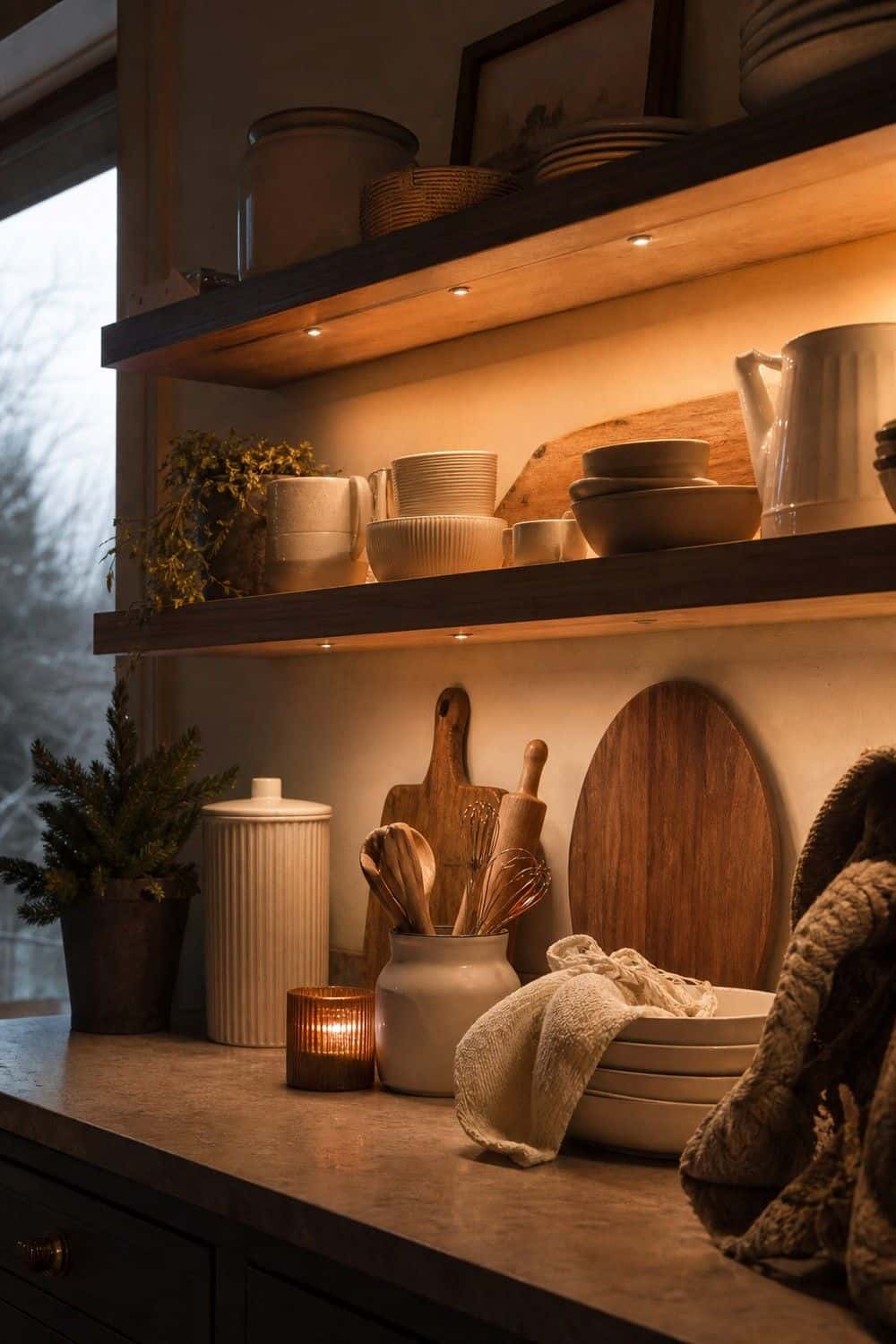
Under-shelf and under-cabinet light helps a winter kitchen feel warmer without adding objects to the counter. It is especially useful near coffee zones, open shelves, baking corners, and dark sink runs. Use warm white light rather than a blue-toned bulb so wood, cream ceramics, and winter textiles look softer at night.
Battery or plug-in options can work beautifully when you want a low-commitment lighting layer, as long as cords are controlled and the lights stay away from steam, splashing, and greasy prep areas. The goal is a gentle evening glow, not a task-light glare.
10. Use a Small Counter Lamp for Evening Cooking
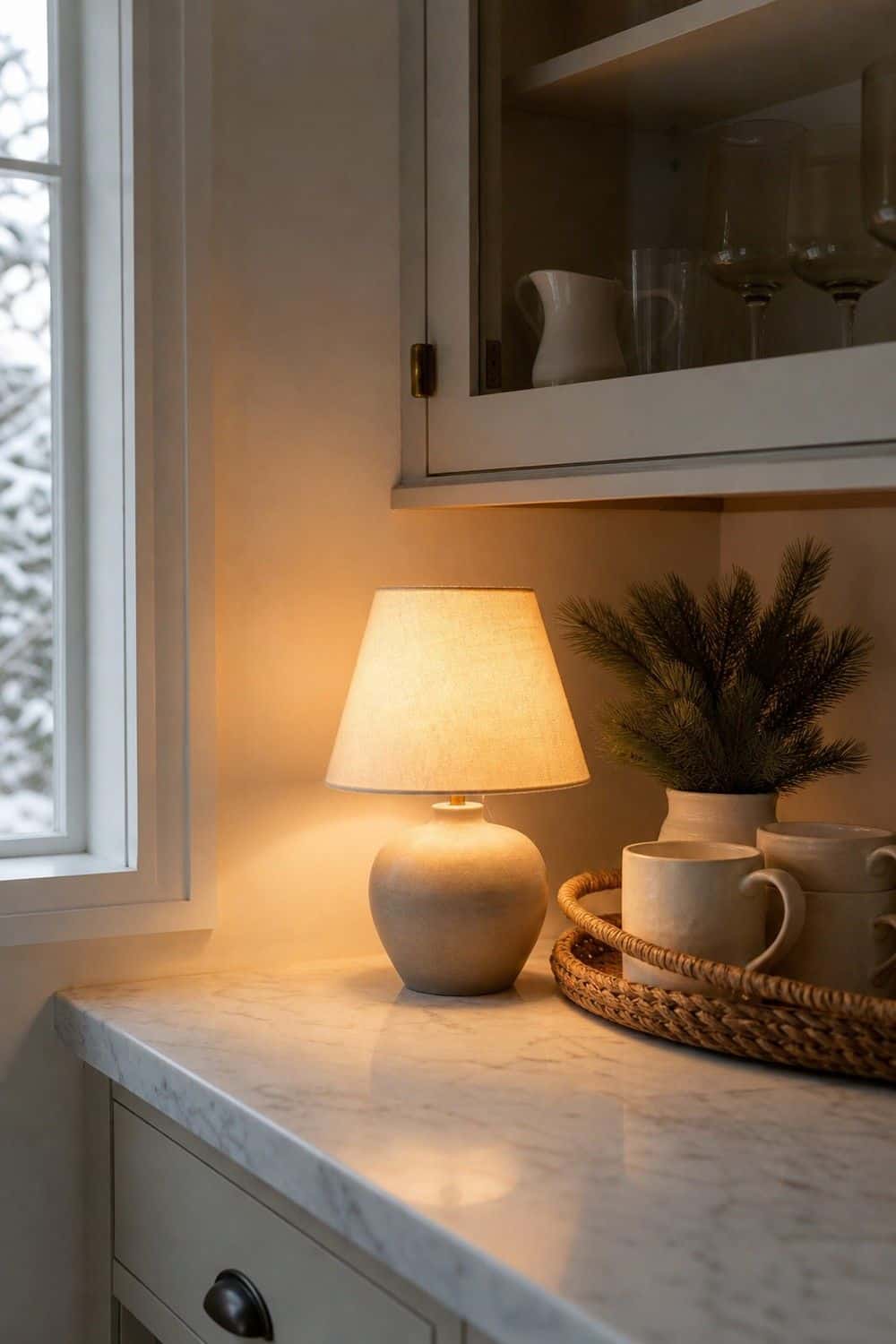
A counter lamp works only if the kitchen has a quiet corner for it. Think hutch, bar area, butler pantry, coffee station, or the end of a counter that is not used for chopping. The purpose is evening softness, not decoration for its own sake. If the lamp crowds the sink, sits near splashes, or blocks a landing zone, switch to under-cabinet lighting instead. Keep the shade simple and the bulb warm. A small pool of light can make winter dinner prep feel less harsh even when the overhead lights are still on. Check the small choice in morning and evening light.
11. Add Brass or Copper for Warm Reflection
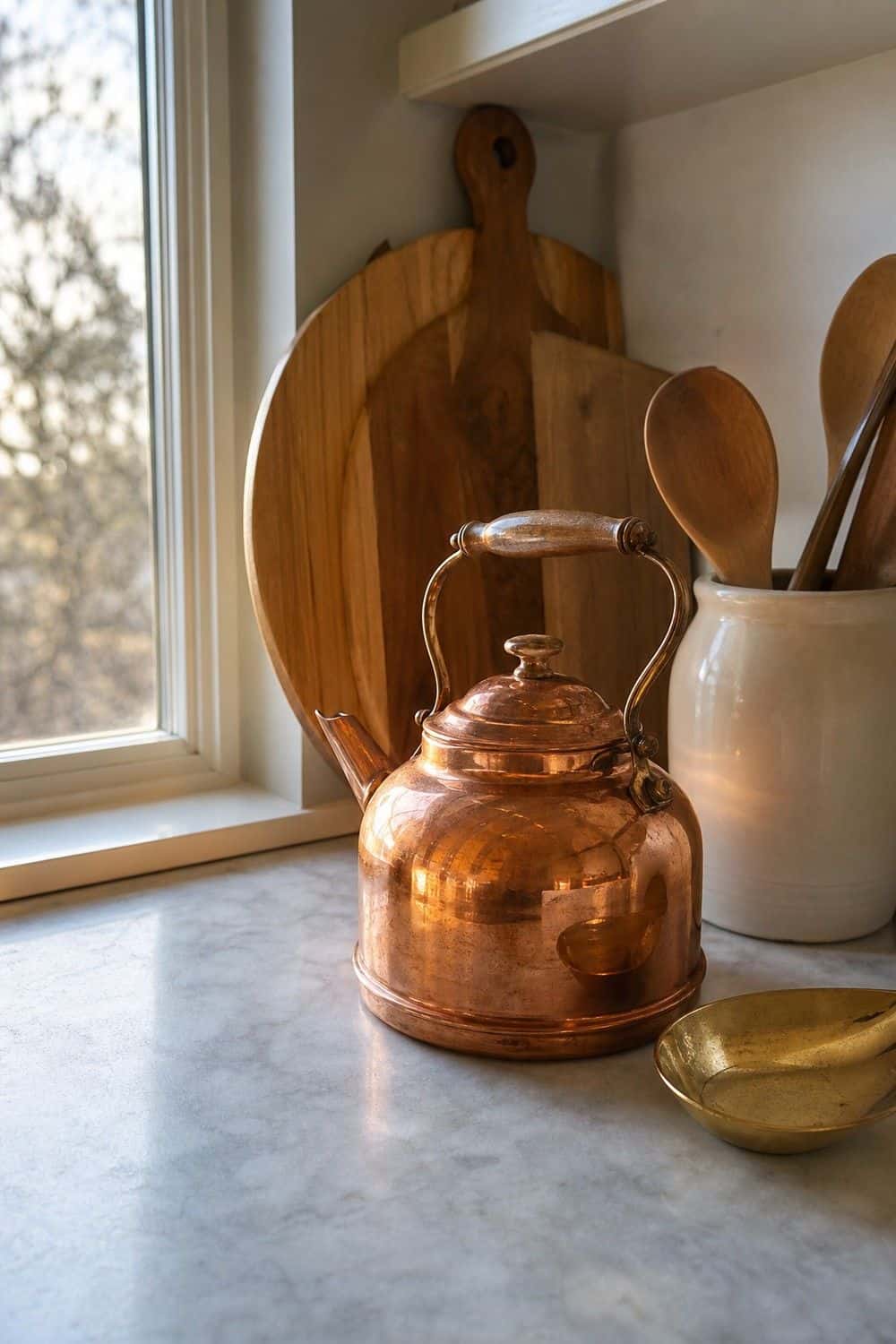
Brass and copper reflect light in a way that feels welcome during darker months. A spoon rest, kettle, utensil crock, oil bottle detail, or small bowl can be enough. One warm metal note near wood boards or cream ceramics will read more refined than scattering metallic accents across every surface.
Place the piece where it catches light but does not crowd the work zone. A copper crock beside cutting boards or a brass tray near the coffee corner can make the kitchen feel warmer without turning the reset into a hardware renovation.
12. Style Open Shelves With Ceramics and Bowls
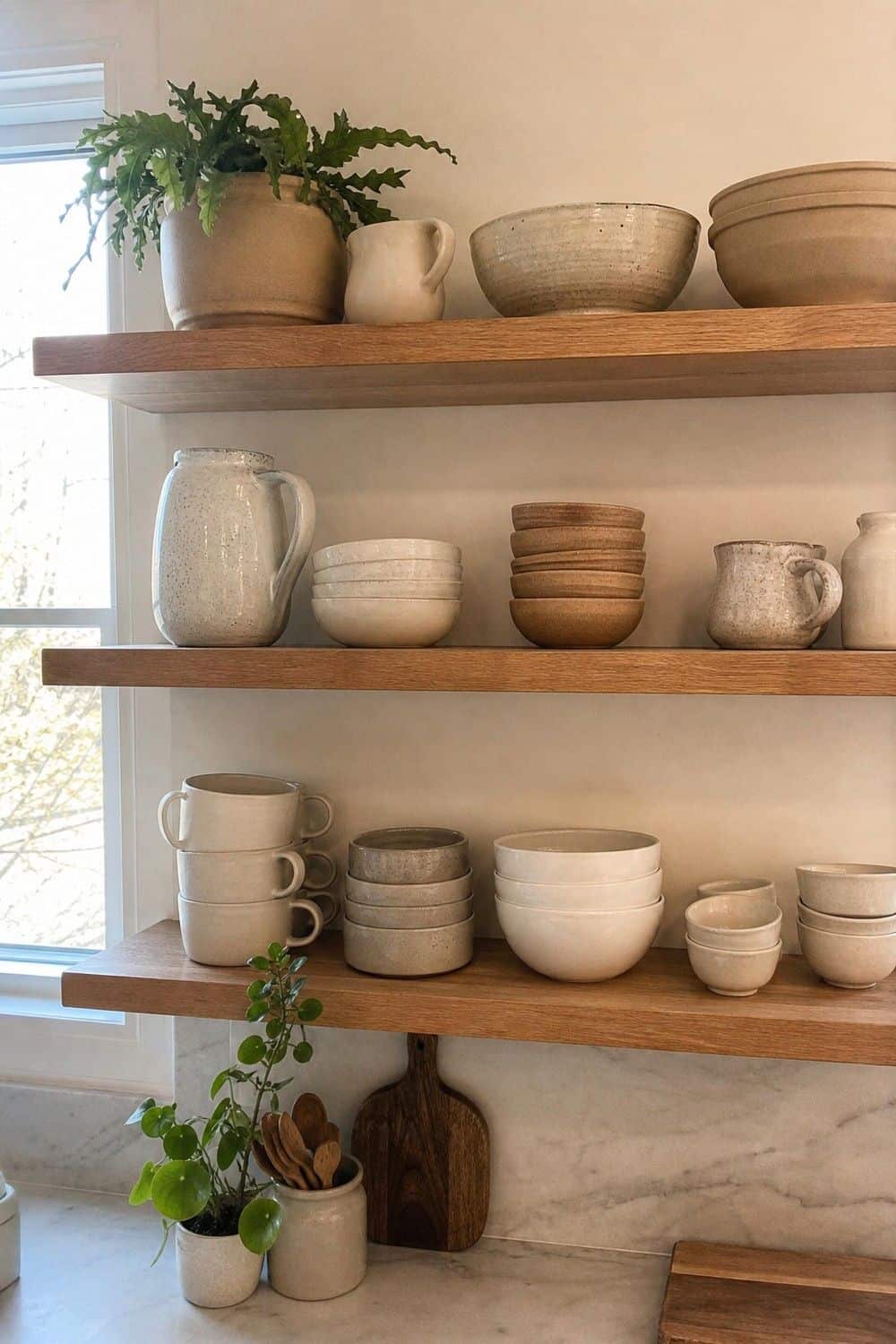
Open shelves can calm down quickly after Christmas when they hold useful ceramics instead of seasonal clutter. Try soup bowls, pitchers, serving bowls, mugs, and small crocks in cream, warm gray, clay, or stone. Stack by function, not by color alone, so the shelves still make sense during real cooking.
Leave a little breathing room between groups. Bowls near bowls, mugs near the coffee area, and pitchers near glassware look relaxed while still helping the kitchen work. A single wood board or small vase can bridge the shelves back to the rest of the room.
13. Add a Soup Night Corner
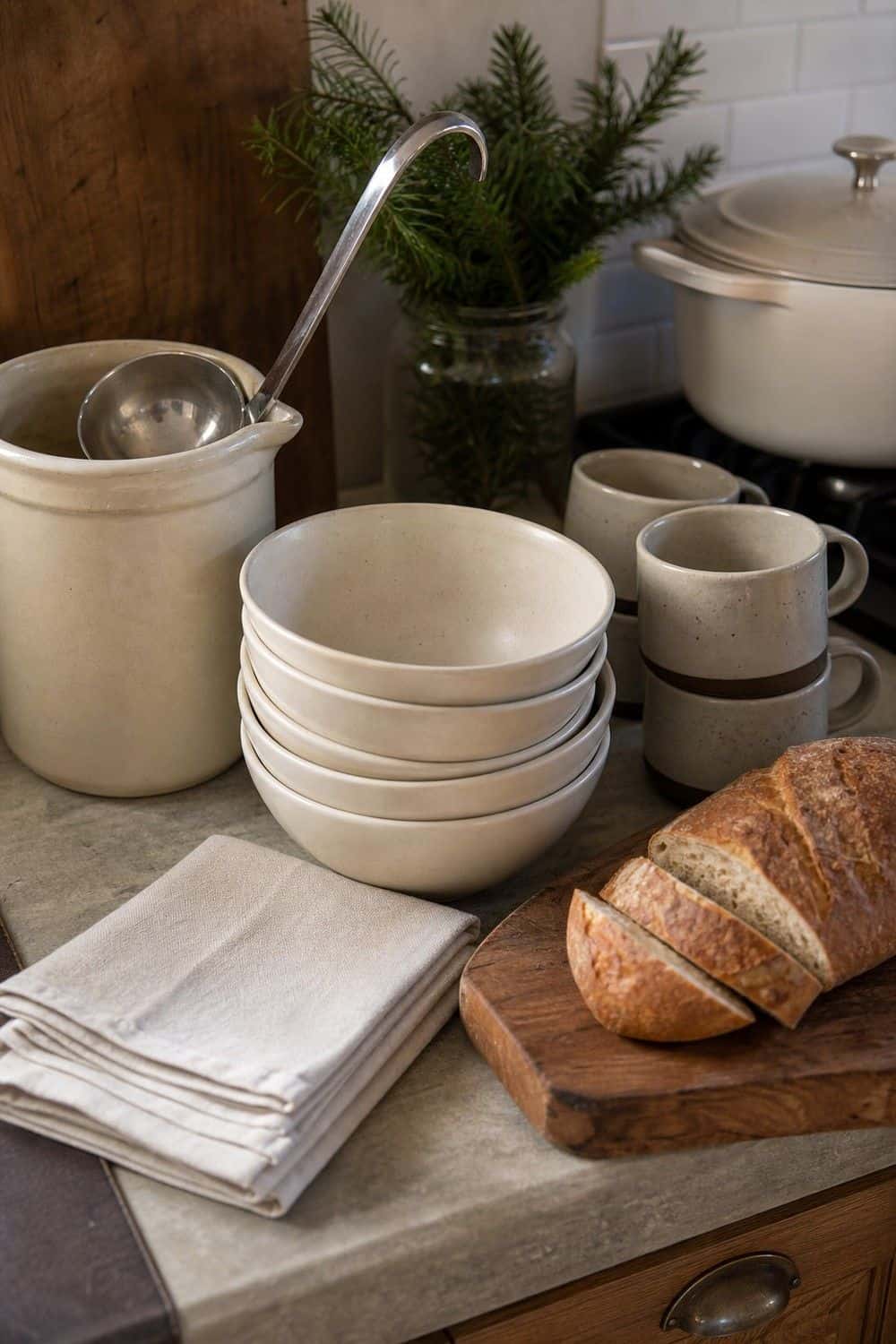
A soup night corner makes winter kitchen decor feel lived in rather than staged. Group soup bowls, a ladle, a bread board, napkins, and a few mugs near the part of the kitchen where broth, chili, or stew naturally happens. It can be a shelf, hutch, or one tidy counter spot.
Keep the arrangement useful. If the ladle is only decorative or the bowls are hard to reach, the corner becomes clutter by the second week of January. A small stack of bowls and one warm wood board is usually enough.
14. Use Cafe Curtains to Soften the Sink Area
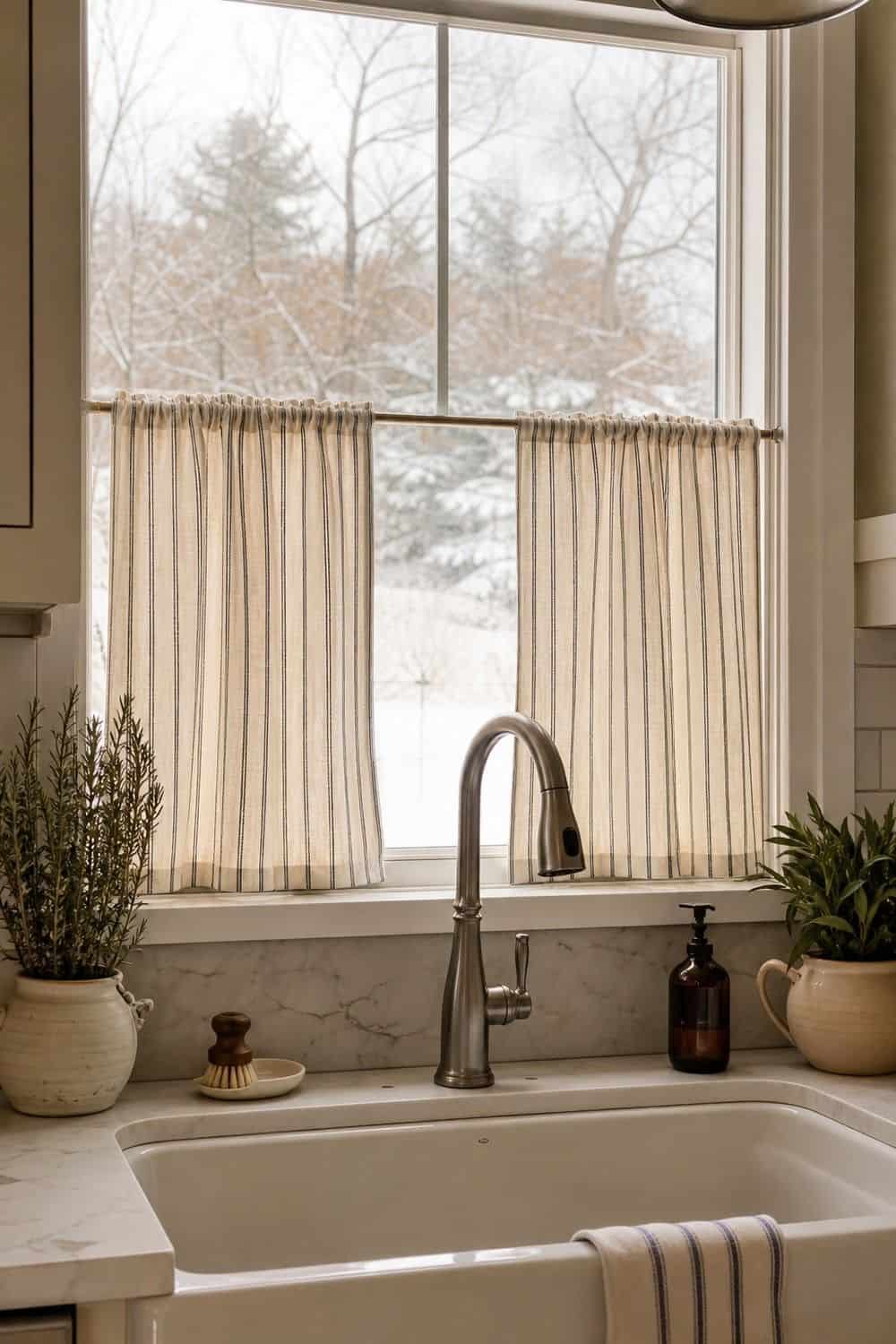
Cafe curtains can make the sink area feel less stark in winter, especially if the window faces a dark yard or street. Cream linen, a soft check, or a narrow stripe works better than anything holiday printed. Measure the window so the fabric clears the faucet, backsplash, and anything sitting on the sill.
Choose washable fabric because sink curtains live near water spots, soap, and steam. The right pair should soften the view without getting in the way of rinsing greens, filling pitchers, or wiping down the counter.
15. Add a Skirted Sink or Fabric Detail Where It Fits
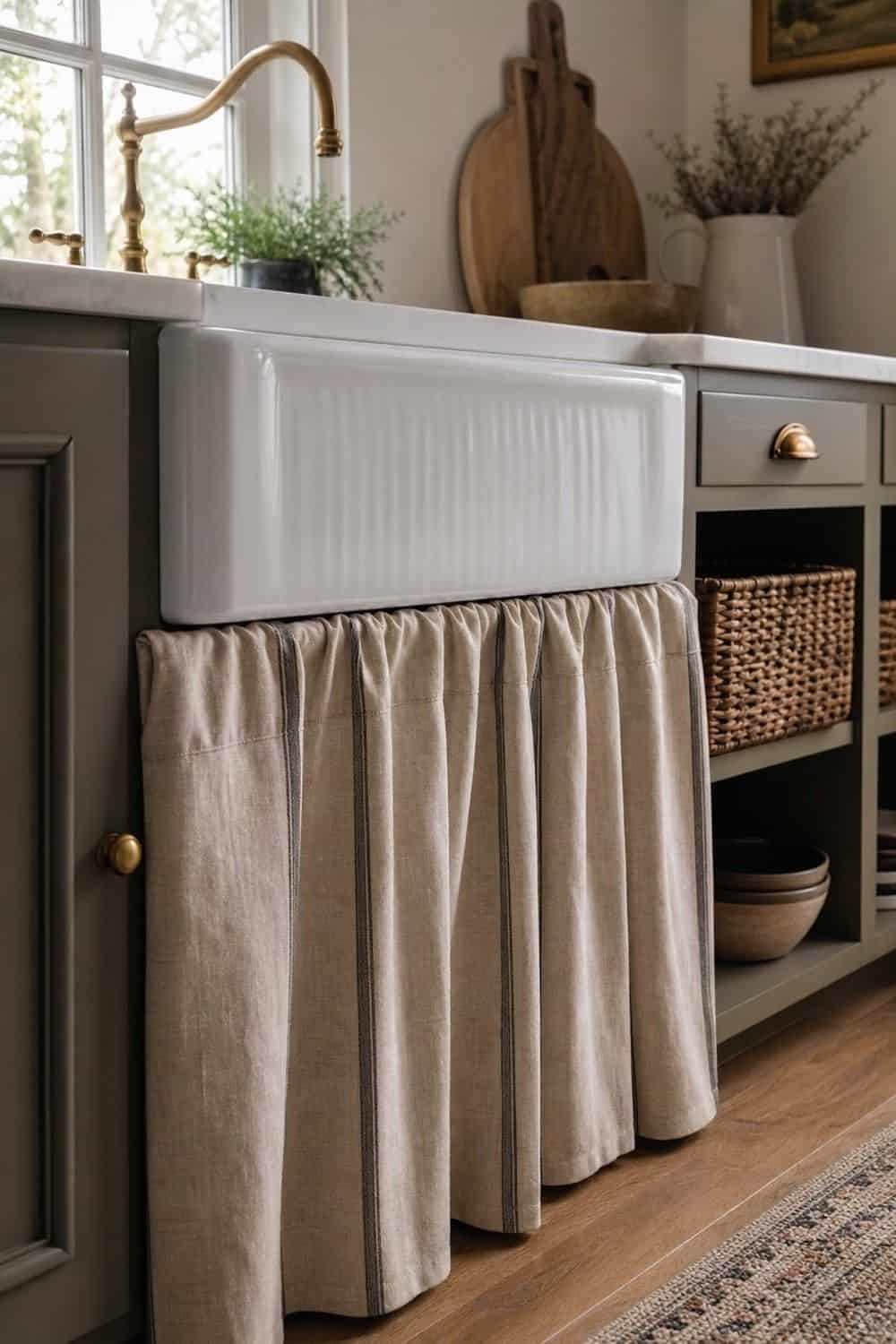
A skirted sink or fabric panel belongs in certain kitchens, not all of them. It can soften open storage in a cottage, farmhouse, or vintage-leaning space, but it may feel wrong in a very modern kitchen. Use washable fabric and a simple pattern: ticking stripe, oatmeal linen, warm white cotton, or a muted check. Avoid anything so delicate that one splash ruins the mood. If a skirt is too much, repeat the same softness with a towel on a hook or a bench cushion in the breakfast nook. Keep the sink element out of the busiest prep path.
16. Bring in a Winter Fruit Bowl
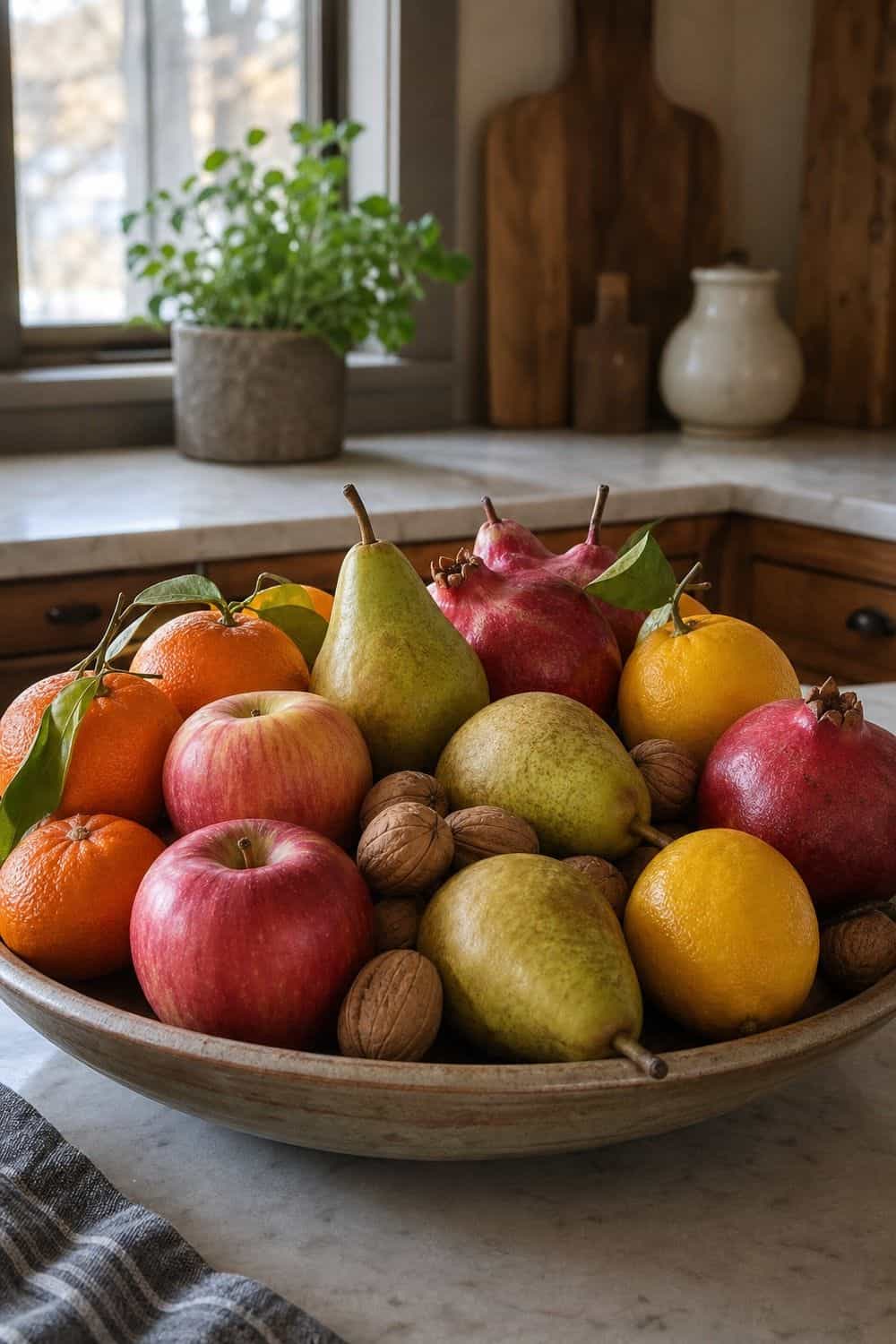
A fruit bowl is one of the most kitchen-appropriate winter displays. Pears, citrus, pomegranates, apples, lemons, or walnuts add color and texture while still being edible. Choose fruit that looks good with the room. Citrus brightens cream kitchens, pears soften wood-heavy kitchens, and pomegranates or apples add deeper winter color without feeling like Christmas ornaments. Keep the bowl away from heat and direct sun. Rotate fruit as it ripens so the display does not become wasteful.
Keep the fruit bowl where it earns its space: near breakfast, beside a baking area, or on a table that needs color without another decorative object. Pears, citrus, pomegranates, apples, and walnuts look wintery because they belong in the kitchen, and the bowl can be cleared quickly when you need the surface.
17. Use Amber or Smoke Glass Jars
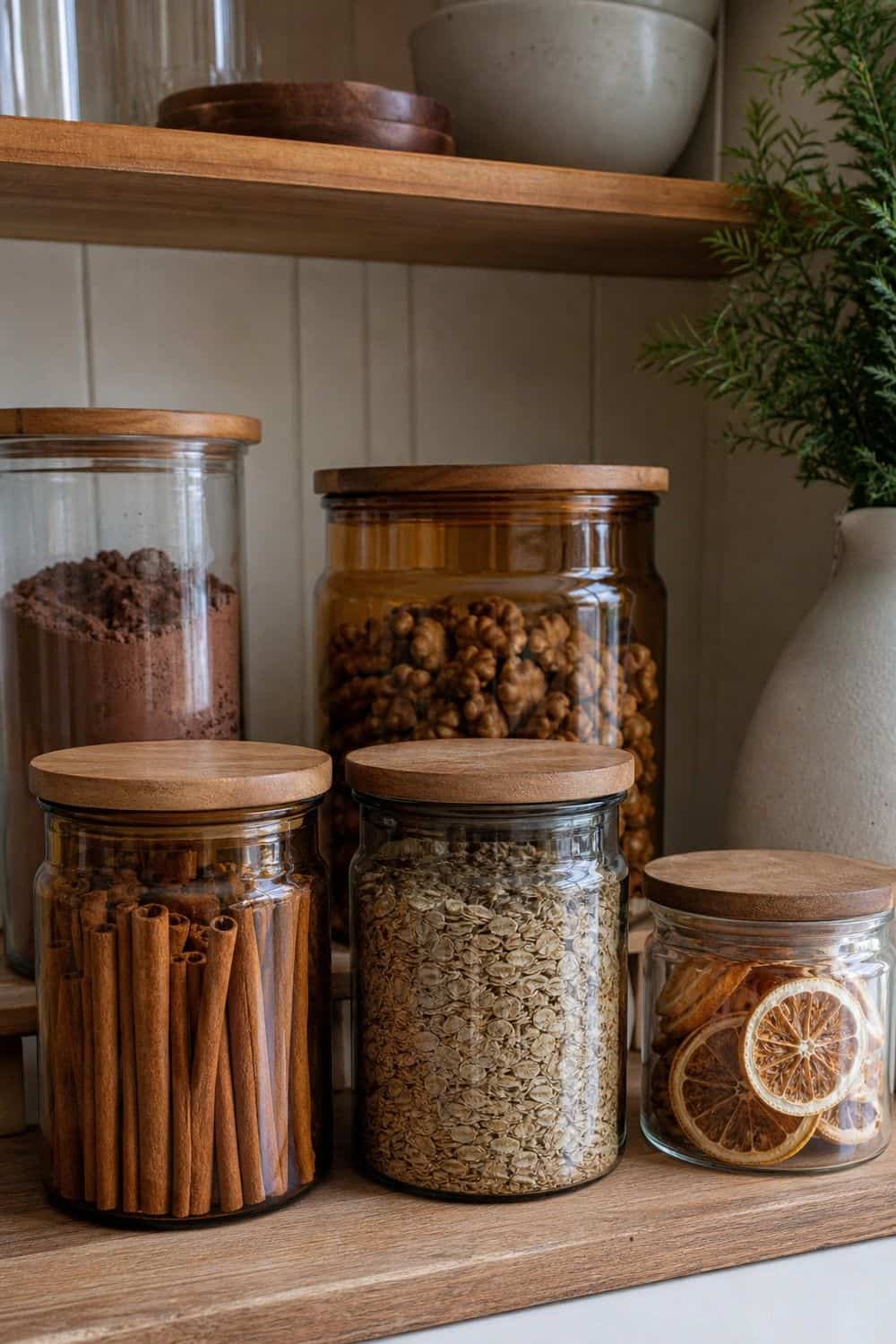
Amber, smoke, or clear glass jars can warm a shelf without leaning on novelty decor. Fill them with tea bags, cinnamon sticks, oats, cocoa, nuts, dried citrus, or baking ingredients you actually use. Labels matter if the contents are not obvious, because winter styling should not make the pantry harder to read.
Keep the jars where they support a real routine, such as tea near the kettle or baking ingredients near the mixer. The glass adds color and glow, but the kitchen still needs room for hands, lids, scoops, and cleanup.
18. Add a Breakfast Nook Cushion or Bench Pad
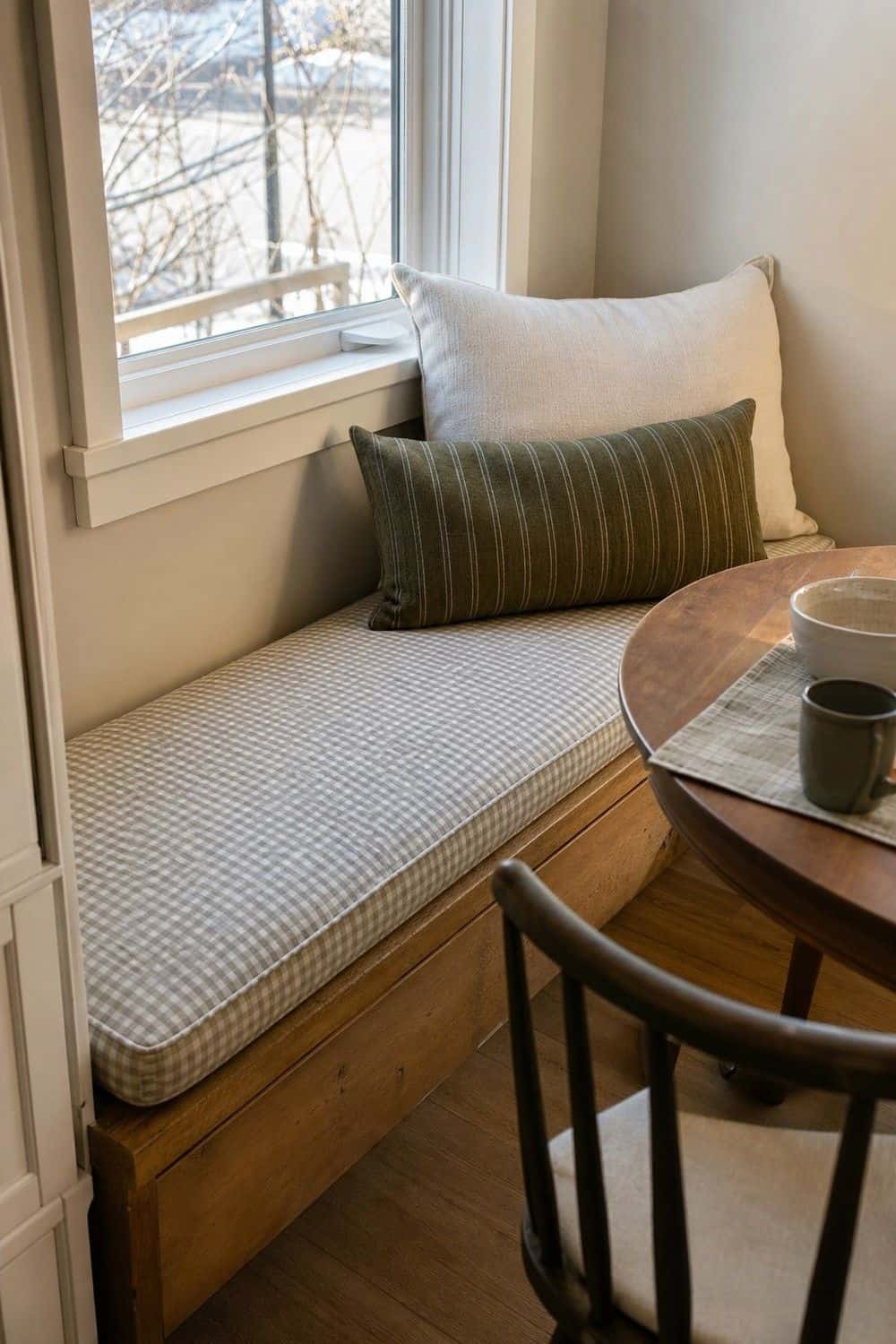
A breakfast nook cushion or bench pad can make the kitchen feel warmer on dark mornings. Choose washable fabric in oatmeal, warm gray, olive, stripe, or small check, then keep the shape tailored enough that crumbs do not disappear into deep seams. The seating should stay easy to slide into. Use one cushion or a few simple pillows, not a pile that has to be moved every time someone sits with coffee, homework, or a bowl of soup. A subtle stripe or nubby neutral fabric is enough to make the corner feel softer.
19. Use Earthy Winter Accent Colors
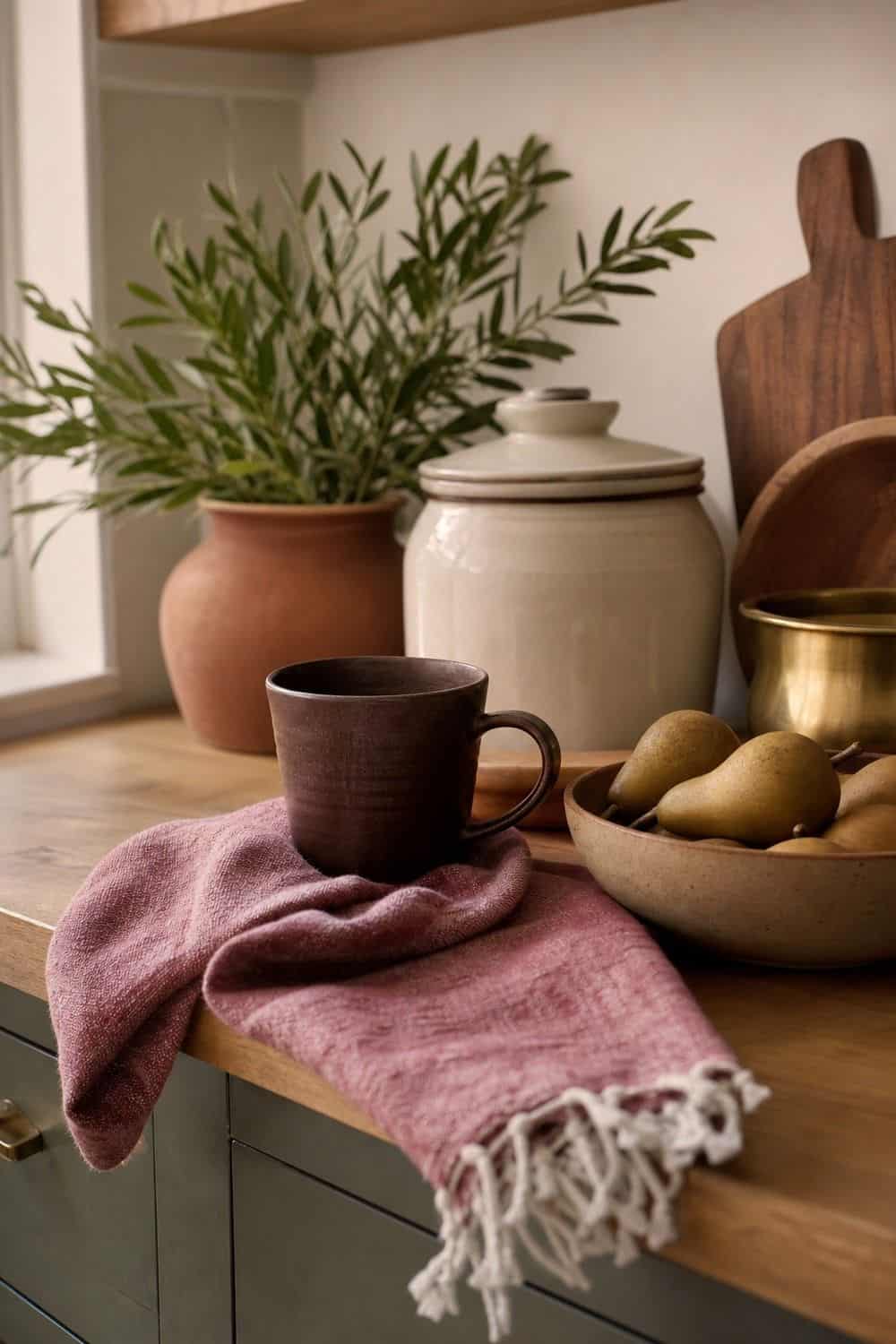
Winter color can move beyond red and evergreen. Chocolate, oxblood, clay, earthy pink, forest green, slate, cream, brass, copper, and warm wood all feel seasonal in a kitchen. Use these colors in small, useful pieces: a towel, mug, bowl, runner, canister, or fruit display. That keeps the palette flexible after February. The safest formula is one deeper accent plus one warm neutral. For example, chocolate towels with cream ceramics, oxblood fruit with wood boards, or forest green textiles with brass.
Keep the accent color moving in small repeats rather than one loud block. A clay bowl near a walnut board, a slate towel beside cream stoneware, or a copper utensil cup near warm wood can make the room feel layered without turning the kitchen into a seasonal display.
20. Add a Woven Basket for Winter Linens
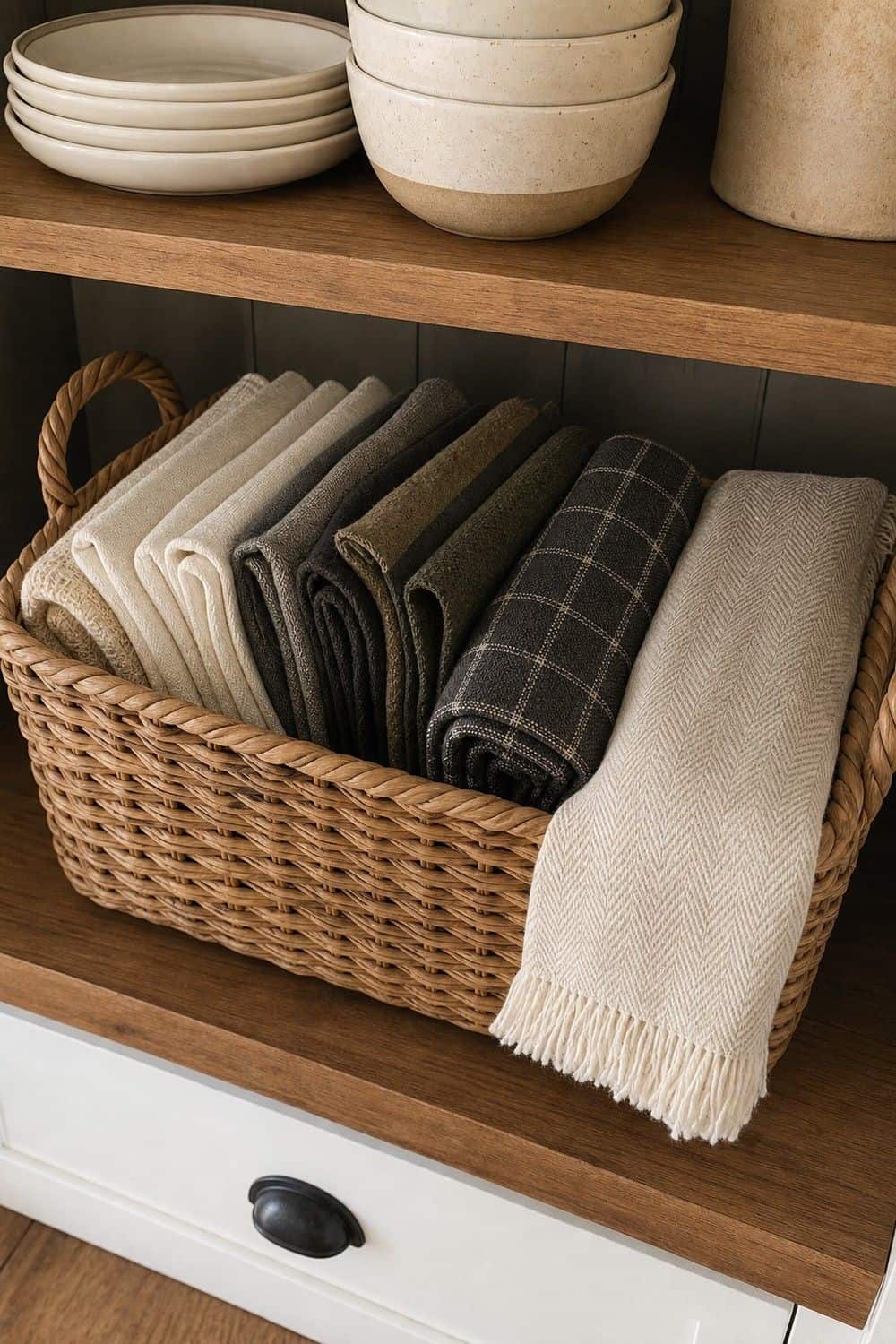
Winter linens can gather quickly: napkins, tea towels, bread cloths, runners, and extra dish towels. Give them one home so the counter does not become a folded-fabric landing zone. A basket can work on a pantry shelf, inside a hutch, or under a bench if it does not block traffic.
If baskets read too decorative in your kitchen, use a drawer, lidded bin, or cabinet shelf instead. The point is texture with a job: winter fabric close enough to use, but not spilling across every chair and counter.
21. Display One Piece of Winter Art or a Small Framed Print
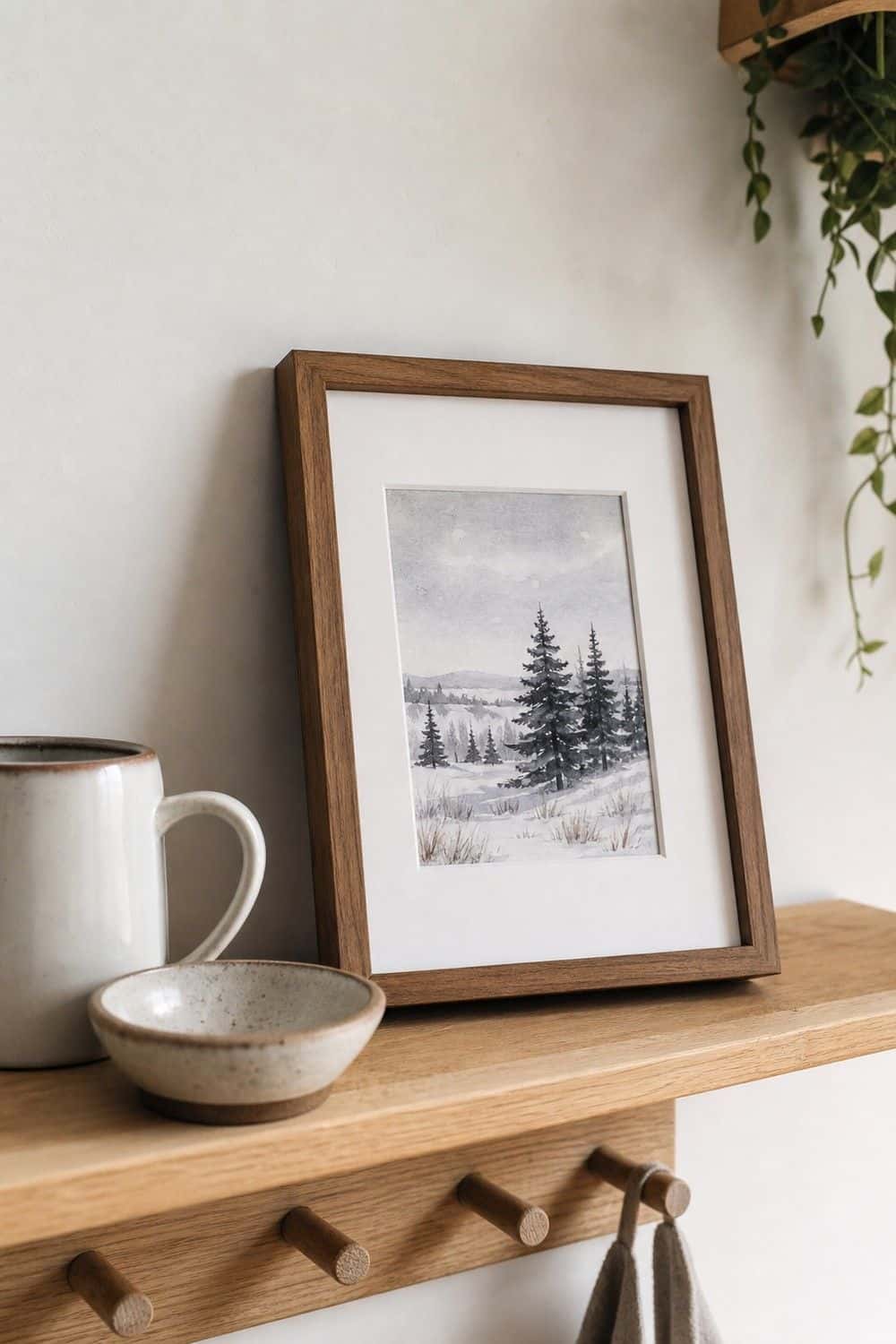
A single small framed print can help a kitchen feel lived in during winter, but this is the place for restraint. Choose a quiet landscape, botanical, food illustration, or winter-toned sketch. Set it on a shelf, peg rail, or narrow wall where it will not collect grease or block a cabinet door.
Large gallery walls and word signs can make a working kitchen feel busier than it needs to be. Lean a small frame on a shelf or counter ledge for a low-commitment layer, and repeat one color from nearby towels, ceramics, or wood so the print feels connected.
22. Keep a Plain Winter Wreath on the Pantry Door
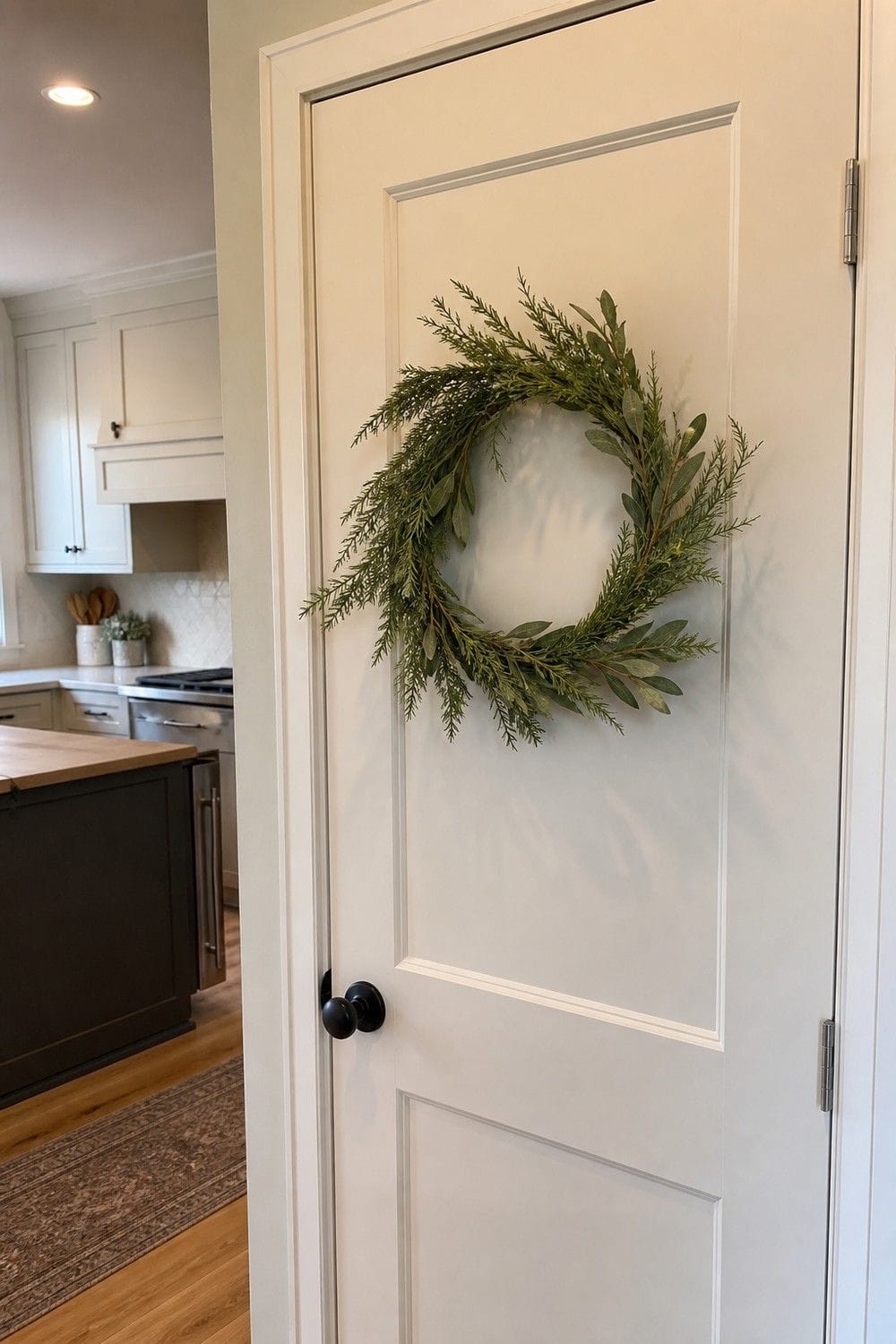
A pantry-door wreath can stay after Christmas when it looks like winter greenery, not holiday decor. Eucalyptus, olive, cedar, pine, or mixed greens work best without ornaments, red bows, bells, or signs. Check the swing of the door before hanging anything.
A pantry door gets used constantly, so a slim wreath with a secure hanger is better than a full wreath that bumps the wall. Keep it plain, light, and easy to remove when the kitchen starts to feel ready for spring.
23. Add a Candlelit Look With Flameless Candles
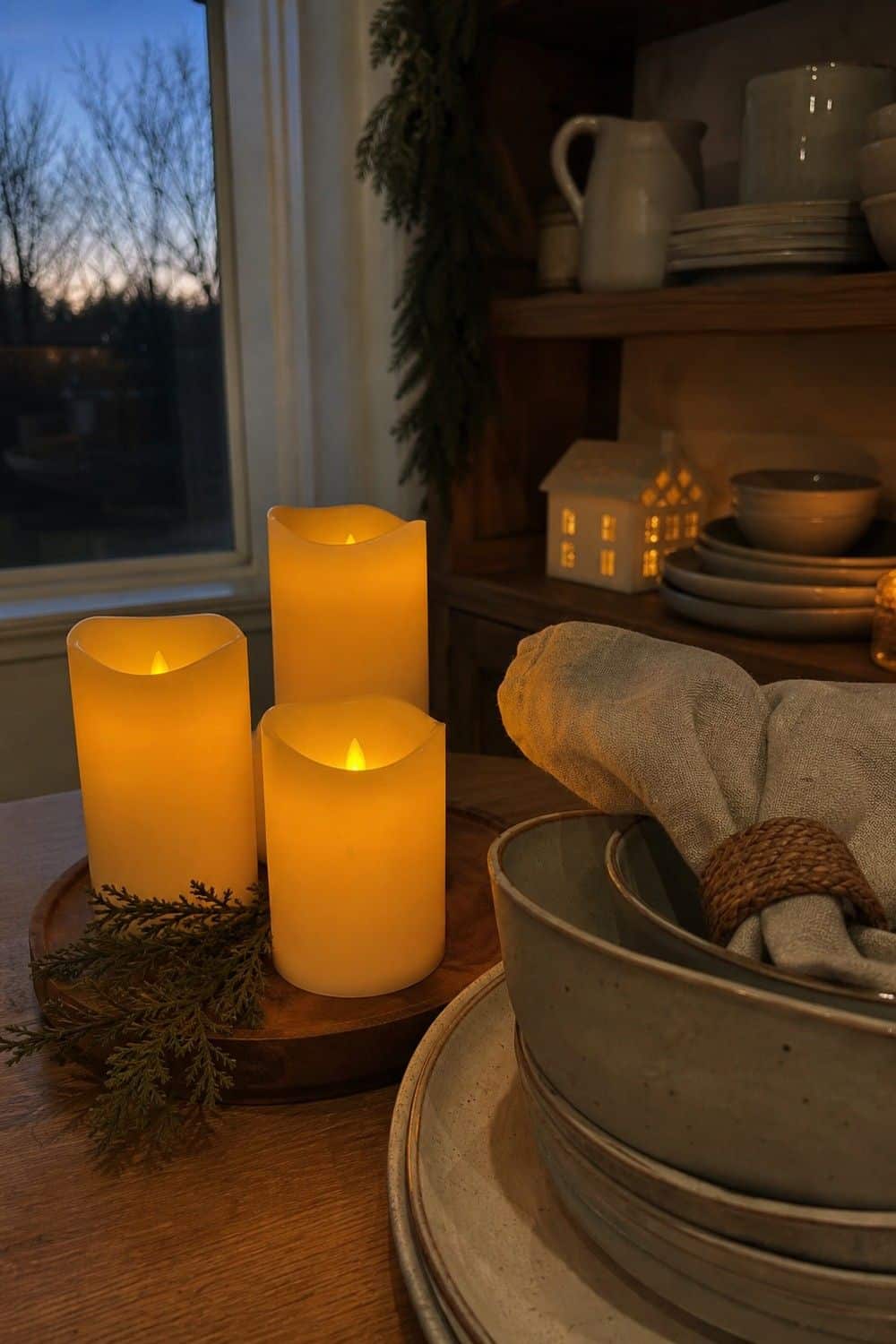
The kitchen can have a candlelit mood without using open flames near towels, paper, garland, or cooking zones. Warm under-shelf lights or battery lights are safer for busy counters. Use the glow on a breakfast table, hutch, open shelf, or coffee area. Keep it away from the range and from any spot where someone drops mail, recipes, or grocery bags. The result should feel like gentle evening light that still respects the working parts of the room.
Choose flameless candles with a warm tone, then group them sparingly so the glow feels soft rather than staged. A pair on a hutch or one small cluster on a breakfast table is plenty, especially if the kitchen already has under-cabinet light or a small lamp.
24. Refresh the Coffee or Tea Corner for Winter
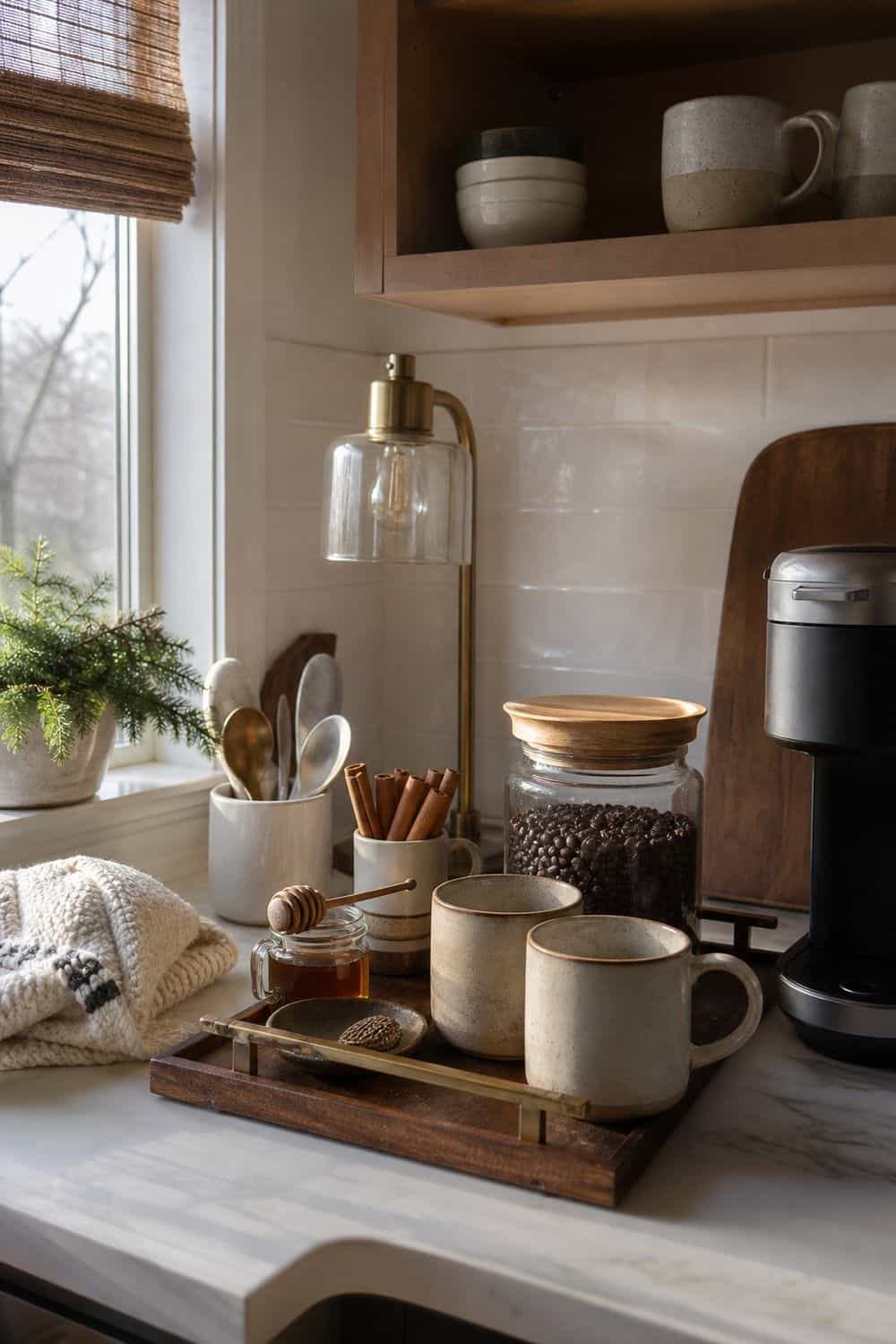
A winter drink corner should be smaller and more useful than a holiday hot chocolate station. Keep tea, coffee, cocoa, honey, cinnamon, mugs, and a spoon rest together in one compact area. Keep only what your household actually drinks; if no one uses cocoa packets after December, they do not need to stay out for the sake of the theme.
Finish by removing anything that makes the counter harder to use. A few open inches beside the stove, sink, and coffee maker will do more for the room than one more seasonal accent.
25. Keep Counters Quiet After the Holiday Clutter
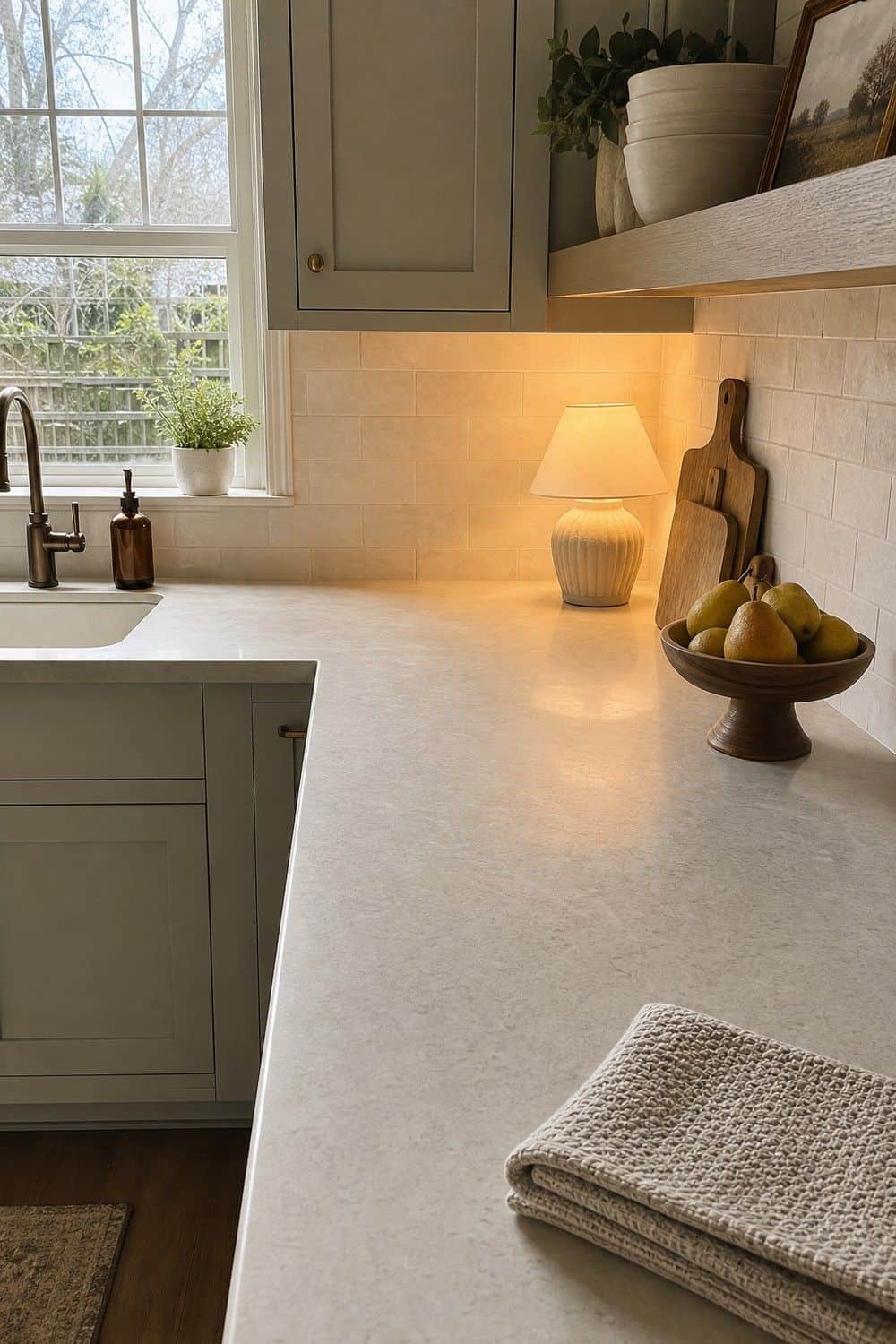
A winter kitchen should still be easy to cook in. Before adding another bowl, lamp, runner, or branch arrangement, clear the spot you use for chopping, coffee, dishes, lunch packing, and weeknight cleanup. The room can feel seasonal without making every task slower.
Use the final pass as a reset: one warm texture, one useful display, one soft light, and enough open counter to make dinner. That is what keeps winter decor feeling like a calm friend in the room instead of another chore.
Winter Kitchen Decor Guardrails
A few winter kitchen choices work better as short supporting notes than as more numbered ideas. Use these as guardrails when you are moving from holiday decor into quieter winter styling, choosing a seasonal palette, or keeping decorative pieces safe around real cooking zones.
Related Christmas to Winter Kitchen Transition
The easiest transition is to remove the clearly Christmas pieces first: ornaments, Santa mugs, red novelty towels, glitter, and anything that names the holiday. Then keep the quieter winter layers that still make sense in January, such as plain greenery, warm wood, stoneware, amber light, washable runners, and bowls of citrus or nuts.
This keeps the kitchen from feeling abruptly bare after December while still giving the room a cleaner reset. If one piece only made sense for Christmas morning, pack it away; if it supports winter cooking, coffee, or everyday meals, it can probably stay a little longer.
Winter Kitchen Palettes That Feel Seasonal
A winter kitchen palette feels calmer when it starts with the finishes already in the room. Cream cabinets, wood boards, brass hardware, stainless appliances, stone counters, and dark floors can all guide the seasonal colors. Add one deeper tone and one soft neutral instead of layering every winter shade at once.
For a warm kitchen, try clay, chocolate, oatmeal, copper, and cream. For a cooler kitchen, use slate, forest green, charcoal, warm white, and natural wood. The palette should show up in movable pieces like towels, bowls, mugs, runners, fruit, and small art so it can shift again when spring arrives.
Kitchen-Safe Winter Decor Cautions
Winter decor has to respect the kitchen first. Keep fabric, paper, branches, garland, baskets, and battery lights away from burners, toaster ovens, wet sink edges, greasy prep zones, and spots where hot pans land. Anything near food should be washable, wipeable, or easy to move before cooking begins.
Scale matters too. A low bowl, short runner, washable towel, or small lamp usually works better than tall arrangements that block sight lines or crowded shelves that collect dust. The room should feel warmer, but it still needs clear counter space for chopping, coffee, dishes, and weeknight cleanup.
FAQs
How do I decorate my kitchen for winter?
Start by removing obvious Christmas pieces, then keep the textures that still feel seasonal: plain greenery, warm wood, stoneware, soft light, washable textiles, and useful bowls or boards. The kitchen should feel warmer for January and February without losing prep space.
How do I decorate after Christmas without keeping Christmas decor up?
Pack away Santa mugs, ornaments, glitter, red novelty towels, and holiday signs first. Keep undecorated greenery, branches, candles, ceramics, runners, and warm neutrals so the room feels like winter rather than leftover Christmas.
What colors work for winter kitchen decor?
Good winter kitchen colors include cream, oatmeal, warm gray, clay, chocolate, oxblood, forest green, slate, brass, copper, and natural wood. Use them in towels, mugs, bowls, runners, fruit, or small accents instead of repainting the whole kitchen for one season.
How can I make my kitchen feel warmer in winter?
Layer warm lighting, add a washable runner, display wood cutting boards, use stoneware mugs, and bring in a few softer textiles. Small changes near the sink, coffee corner, shelves, and breakfast nook can make the kitchen feel warmer without crowding the counters.
What winter decor works in a small kitchen?
Small kitchens do best with useful winter decor: a mug row, one low bowl, a small lamp, a runner, a framed print, or a few branches in a narrow vase. Avoid bulky garland, oversized trays, and anything that blocks prep, sink, or appliance space.
Can I keep greenery up after Christmas?
Yes, greenery can stay if it is plain and wintery. Remove bows, bells, ornaments, red ribbon, and glitter, then place cedar, pine, eucalyptus, or olive branches away from heat, steam, and wet sink zones.
How do I make winter kitchen decor practical?
Choose pieces that support the way the kitchen works: washable towels, reachable mugs, labeled jars, bowls you use, lighting near dark counters, and runners that do not block appliances. Winter decor should make the kitchen feel better, not slower.
What should I avoid in winter kitchen decor?
Avoid glitter, strong scents, fabric near burners, greenery near heat, slippery rugs, oversized counter displays, and anything that makes cleaning harder. The best winter kitchen decor feels calm, useful, and easy to move when real cooking starts.
Final Thoughts
Last update on 2026-09-18 / Affiliate links / Images from Amazon Product Advertising API