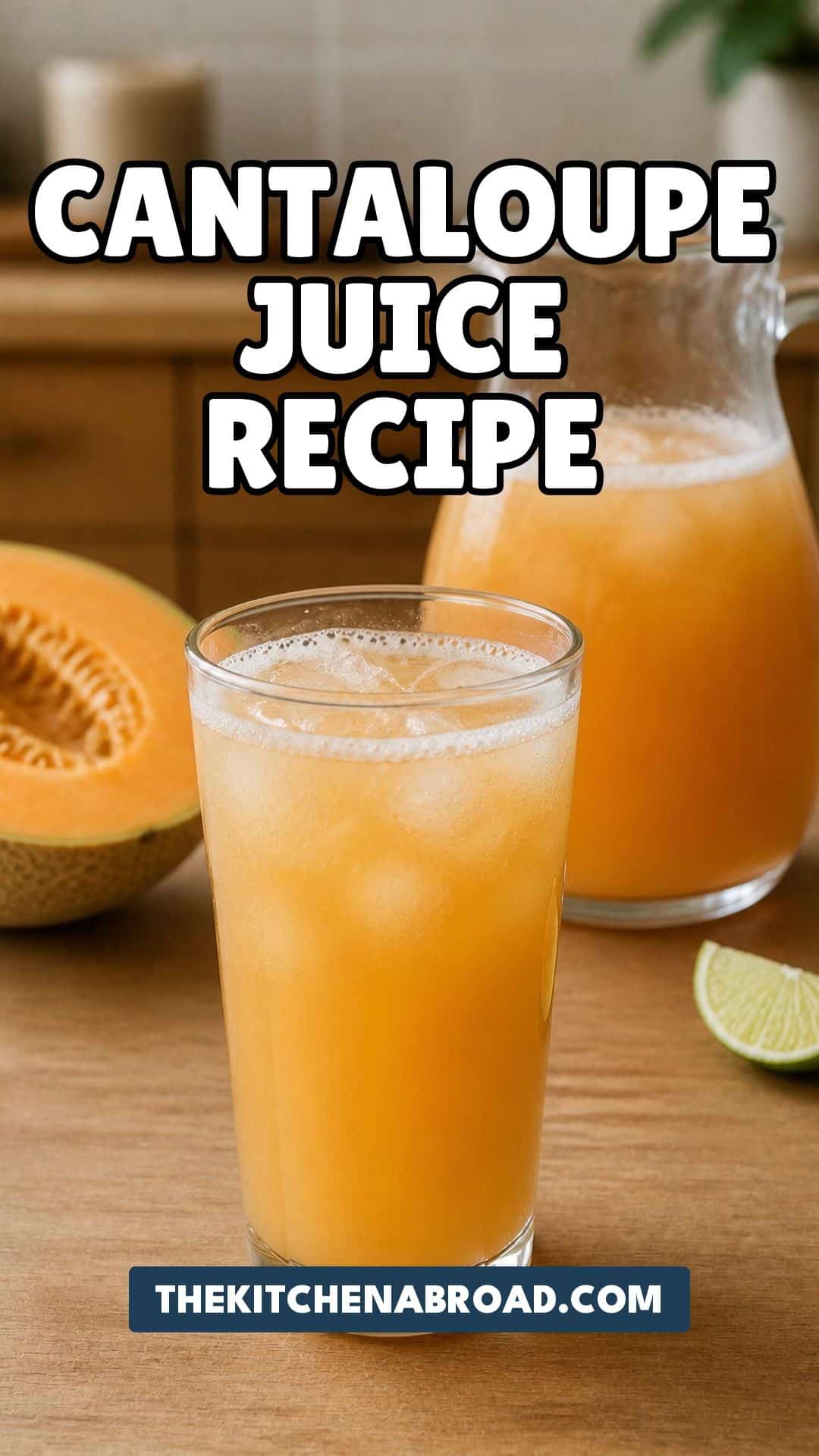
Cantaloupe juice is ripe melon blended with cold water, lime, a little fresh ginger and some salt, then strained through a sieve. You need a blender, not a juicer, and about five minutes. One melon makes roughly 1 liter (4 glasses), and it tastes best poured over ice the same day.
The most common way to ruin cantaloupe juice happens at the store, not in the blender: you grab the prettiest melon instead of the one that smells like anything. A blank melon makes blank juice, and no amount of honey fixes it (sorry, honey). This cantaloupe juice recipe starts with picking the right one and then does very little to it, which is the whole point.
If you’re here because you have half a melon going soft in the fridge, or you want something cold that isn’t soda, this is for you. You’ll get the recipe with the original amounts, how to tell when a cantaloupe is worth juicing, when to strain and when not to bother, a cocktail version, and what to do when the juice comes out bitter or flat.
Gear That Helps

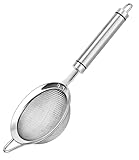


A regular blender and a fine-mesh sieve do all the real work here. A wide pitcher makes the straining less messy, and a small grater handles the ginger, so you don’t need to buy anything special to start.
Recommended Reads
- Cantaloupe Salad with Chili-Lime and Crispy Prosciutto
- Spicy Watermelon Salad with Thai Prik Glua
- Buffalo Mozzarella Salad
- Coconut Rice in a Rice Cooker
- Banana Buckwheat Pancakes
A Quick Note on Agua de Melón
Agua de melón is the Mexican agua fresca made from cantaloupe, one of the classic fruit waters next to jamaica, horchata and tamarindo. Agua fresca literally means fresh water, and that tells you the priority: it’s meant to be light and thirst-quenching, with the fruit doing most of the talking. Thick bottled “cantaloupe juice” is closer to a smoothie, and a lot of it is mostly sugar.
Cantaloupe on its own tastes sweet in a flat, one-note way, so this version leans on three small helpers. Lime cuts the sweetness, ginger adds a peppery top note, and a pinch of salt makes the melon taste more like itself. If the melon is properly ripe, you can skip sugar completely.
One more thing, because labels get confusing. What supermarkets in the US sell as cantaloupe is technically a North American muskmelon, with the rough netted skin, and the smoother European cantaloupe you see in French or Italian markets is a little more perfumed. Both work here.
Recipe: Cantaloupe Juice
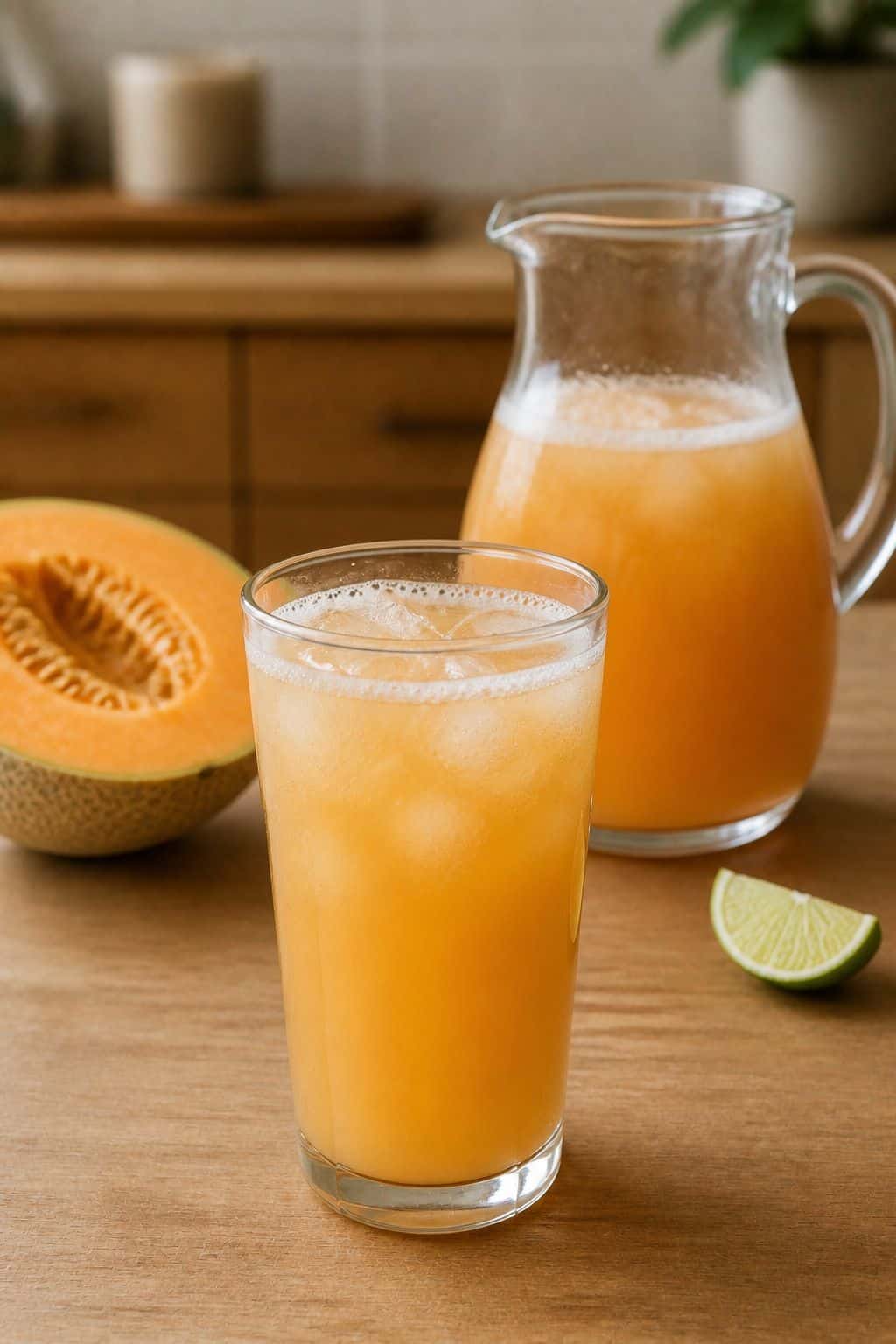
Prep time: 5 minutes. Total time: 5 minutes. Makes: about 1 liter (4 cups), enough for 4 tall glasses over ice.
Ingredients
- 1 whole ripe cantaloupe, peeled and seeded. The stem end should smell sweet and slightly floral; the skin should give a little under thumb pressure. A hard, scentless melon will give you flat juice no matter what you do to it.
- 240 ml (1 cup) cold filtered water. Cold water keeps the juice from foaming and helps it chill faster when poured over ice. Adjust up or down depending on how thick you want the finished drink.
- 1/2 fresh lime, juiced. Lime is the non-negotiable. Without it, the juice tastes like watered-down melon. Bottled lime juice is a downgrade you can taste.
- 1 cm (1/2 inch) nub of fresh ginger, peeled. The ginger is what makes this version different from the basic agua de melón you see online. It adds a peppery top that lifts the melon out of one-note territory.
- A tiny pinch of fine sea salt. Less than you think you need. Salt amplifies the melon’s aromatics the way it does on a fruit plate at a roadside stand.
- 1 teaspoon honey or simple syrup, optional, only if the melon is underripe. A ripe cantaloupe needs nothing.
- Plenty of ice, for serving. Cantaloupe juice is meant to be drunk cold over ice, not chilled in the fridge and poured neat.
Instructions
- Halve the cantaloupe and scoop out the seeds with a spoon. Cut the flesh away from the rind in rough chunks, aiming for pieces no larger than about 3 cm (1 inch) so the blender can handle them without straining. You should end up with around 900 grams (2 lb) of melon flesh from a standard supermarket cantaloupe.
- Drop the melon chunks into the blender along with the cold water, the juice from half a lime, the nub of fresh ginger, and the pinch of salt. Blend on high for about 30 to 45 seconds, until completely smooth and a little foamy on top. Stop and taste. If the melon is ripe, it should already be balanced and lightly tropical. If it tastes flat, add a few more drops of lime; if it tastes too sharp, add a small splash of water.
- Set a fine-mesh sieve over a wide pitcher and pour the juice through, pressing gently on the pulp with the back of a spoon to push the liquid through without forcing the fibers. The strained juice will be a clean, peach-orange color with a soft foam on top. Discard the pulp or save it for a smoothie. Pour over plenty of ice and serve immediately. Cantaloupe juice oxidizes quickly, so a glass that sits on the counter for an hour will taste duller than one drunk straight out of the blender.
Tips and Variations
Pick a ripe melon or accept the consequences
Ripeness decides about 90 percent of this drink, because there’s nothing else in the glass to hide behind. Smell the stem end first. A ripe cantaloupe smells sweet and a bit floral right through the skin, and if you have to push your nose into it and still get nothing, put it back. Then press near the stem with your thumb, and it should give a little, the way a barely ripe avocado does.
Look at the netting too. The raised web on the skin should look tan or golden underneath, not green, and the melon should feel heavy for its size. A heavy melon is a juicy melon, which matters a lot when the whole recipe is basically melon and water.
Skip the sweetener unless the melon is off
Most agua de melón recipes add sugar by default, and some use a lot of it. A ripe summer cantaloupe doesn’t need any, and sugar flattens everything the lime and ginger are doing, so taste the juice straight from the blender first. I treat it like a sauce before service: taste, adjust one thing, taste again. Flat usually means it wants lime, not sugar. Only when it still tastes thin and a bit vegetal (that’s an underripe melon talking) should you stir in the teaspoon of honey or simple syrup from the ingredient list, and then stop.
Strain or leave it pulpy
Straining gives you the classic agua fresca: thin, clean and easy to drink in big gulps over ice. Leave the pulp in and you get something thicker and almost creamy, more like a breakfast smoothie than a juice.
Neither one is wrong. They’re two different drinks that happen to start in the same blender, so pick based on when you’re drinking it.
- Strain it for a hot afternoon, a pitcher on the table at a barbecue, or when kids are involved and “bits” are a dealbreaker.
- Leave it pulpy for breakfast, a post-workout drink, or as a base for a frozen blended drink.
- Press gently in the sieve either way, because forcing the fibers through makes the juice cloudy and a little grassy.
The cocktail version
For a grown-up glass, add 45 ml (1.5 oz) of white rum or blanco tequila per serving and a small extra squeeze of lime. The ginger in this recipe is what makes it work as a cocktail, because it gives the spirit something sharp to lean on instead of just disappearing into sweet melon.
Top it with a splash of sparkling water if you want it lighter, more like a spritz, and pour it over plenty of ice since melon drinks taste best really cold. Tequila is my pick here (sorry, rum people), but both are good. And if you’re making a pitcher for a party, keep the booze on the side and let people add their own, so the non-drinkers get the same pretty glass.
Stretch one melon further
One ripe cantaloupe gives you about a liter of juice, which is four tall glasses. Need a full pitcher for a crowd? Add an extra cup of cold water and a second squeeze of lime. The dilution is barely noticeable, because the salt and ginger hold the flavor together.
What you shouldn’t do is stretch it with sugar water. It makes the juice taste cheap fast, and you end up with melon-flavored syrup instead of a drink. If you really need more volume, blend a few chunks of watermelon or a handful of peeled cucumber in with the cantaloupe, which keeps it light and doesn’t fight the lime.
Making it for a party? Blend it no more than an hour ahead and keep the pitcher covered in the fridge. Put the ice in the glasses, not in the pitcher, so the juice doesn’t water itself down while people are still finding their seats, and give it a quick stir before every pour, because the pulp that sneaks through the sieve settles at the bottom.
Pairings and Other Uses
Cantaloupe juice is a good brunch drink because it doesn’t fight the food. Pour it next to banana buckwheat pancakes, eggs with chorizo or a plate of melon and ham. For a hot-day lunch, serve it with the cantaloupe salad with chili-lime and crispy prosciutto, which happily uses up the other half of a big melon.
The juice works past the glass too. Freeze it in an ice cube tray and blend the cubes into a quick sorbet, use a splash in a summery vinaigrette for a spicy watermelon salad, or top it with sparkling water and a lime wedge for an easy mocktail.
Why Does My Cantaloupe Juice Taste Bitter or Flat?
Bitter juice usually comes from cutting too close to the rind. The pale green layer right under the skin tastes grassy and a little bitter, so leave about half a centimeter of it behind when you cut the flesh away. Too much ginger can also read as bitter, so stick to the small nub.
Flat juice means the melon was underripe or the juice sat around too long. Fix the first with a few more drops of lime and a tiny pinch of salt, and avoid the second by blending right before you pour.
Frequently Asked Questions
How do you make cantaloupe juice without a juicer?
Use a blender and a fine-mesh sieve. Blend the melon flesh with cold water, lime, ginger and salt for 30 to 45 seconds, then pour it through the sieve into a pitcher. You get clean juice without a juicer.
Do you have to strain cantaloupe juice?
No, straining is optional. Strained juice is thin and easy to drink over ice, while unstrained juice is thick and closer to a smoothie, so it comes down to the texture you want.
What does cantaloupe juice taste like?
It tastes sweet, lightly floral and a little musky, with lime and ginger adding brightness on top. A ripe melon makes juice that tastes like summer fruit, not like sugar water, and the salt pulls the melon flavor forward without tasting salty.
Is cantaloupe juice good for you?
Cantaloupe is about 90 percent water and a good source of vitamins A and C plus potassium. Made like this, with no added sugar, the juice is basically hydrating fruit water. Bottled versions with added sugar are a different story.
How long does fresh cantaloupe juice last?
It’s best within a few hours of blending. Covered in the fridge it keeps for up to 24 hours, but the flavor dulls and the color fades as it oxidizes, so stir it before pouring.
Key Takeaways
- Pick the melon by smell and weight, because ripeness decides the flavor.
- Lime, a small nub of ginger and a pinch of salt fix the flat sweetness of plain melon.
- Strain for agua fresca, skip straining for a thicker breakfast drink.
- Blend right before serving and drink it the same day.
Smell the Melon Before You Buy It
If you only do one thing from this whole post, smell the stem end of every cantaloupe before it goes in your cart. A melon that smells sweet makes juice that needs nothing but lime, ginger and that pinch of salt, and a melon that smells like nothing will make you blame the recipe. So sniff, press, pick the heavy one, and the five minutes in the blender take care of the rest.
Last update on 2026-11-18 / Affiliate links / Images from Amazon Product Advertising API