
To make this almond buttermilk, whisk 1 cup (240 ml) of unsweetened almond milk with 1 tablespoon of apple cider vinegar or lemon juice, then let the mixture sit at room temperature for 5 to 10 minutes until it curdles. Use it 1:1 in any recipe that calls for buttermilk: pancakes, biscuits, muffins, scones, and cake batters. Stays good in the fridge for 3 days.
Almond buttermilk is the substitute that works the same way real buttermilk does in pancakes, biscuits, and a tender cake crumb. Acid hits the almond milk, the milk curdles in five minutes, and the dairy-free version activates baking soda in the batter the same way the cultured original would. The ratio is the whole recipe: one cup unsweetened almond milk to one tablespoon acid.
Tools You’ll Want
This is a measuring-cup-and-whisk job. A liquid measuring cup with clear milliliter and ounce markings, a small whisk, and a glass jar for storage are all you need.


Recommended Reads
- How to Make Crème Fraîche
- Banana Buckwheat Pancakes
- Oat Muffins with Berries and Coconut
- Apple Sour Cream Slice
- Buckwheat Cookies
Why It Works
Real buttermilk is the tangy liquid left over after churning butter. Bakers love it for two reasons: the lactic acid tenderizes gluten and gives the crumb a soft, fine texture, and the acidity reacts with baking soda to throw off carbon dioxide for lift. Almond milk has no casein, so it does not curdle into thick clumps the way dairy does, but the acid still drops the pH enough to do both jobs in a baked good.
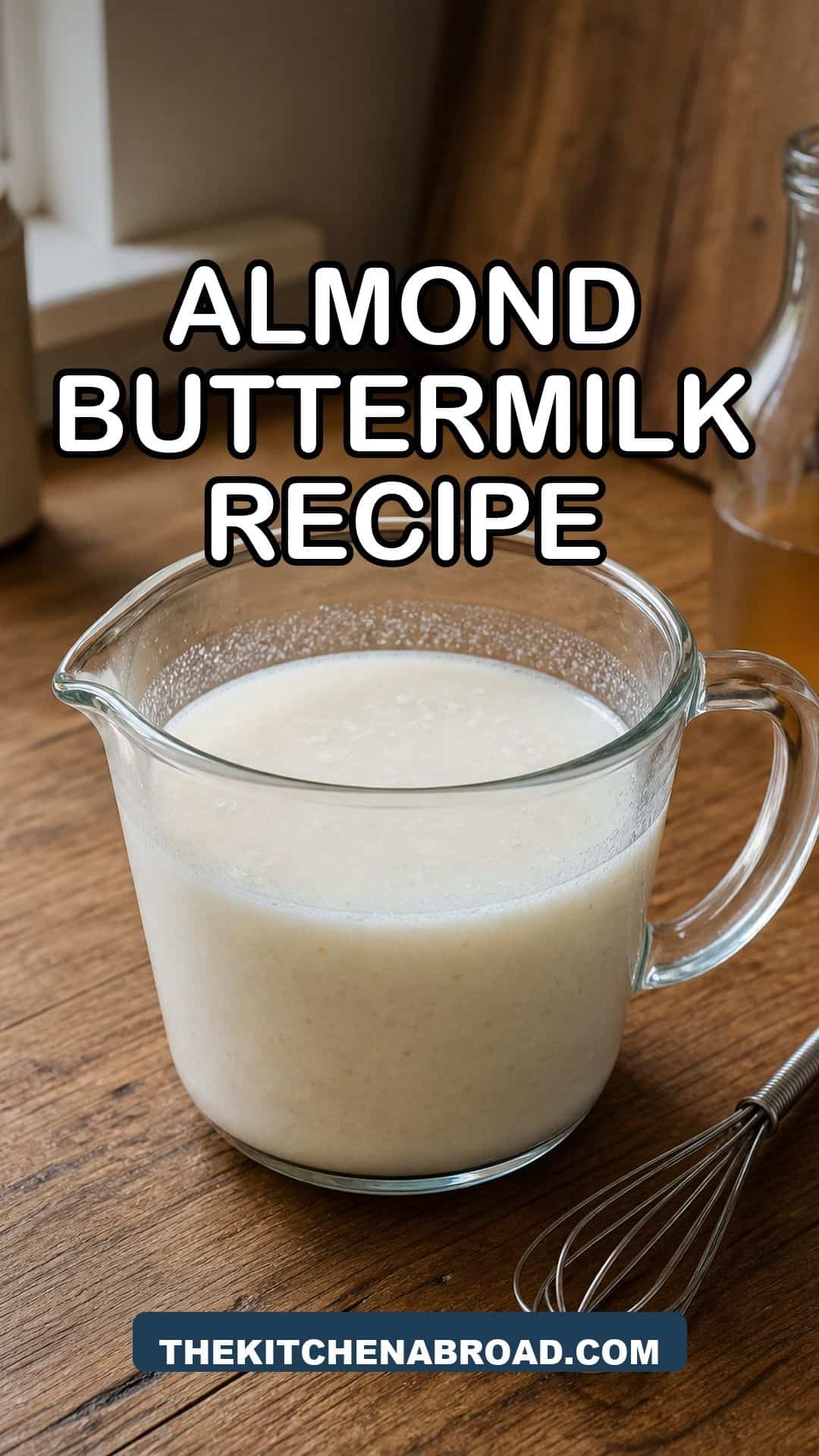
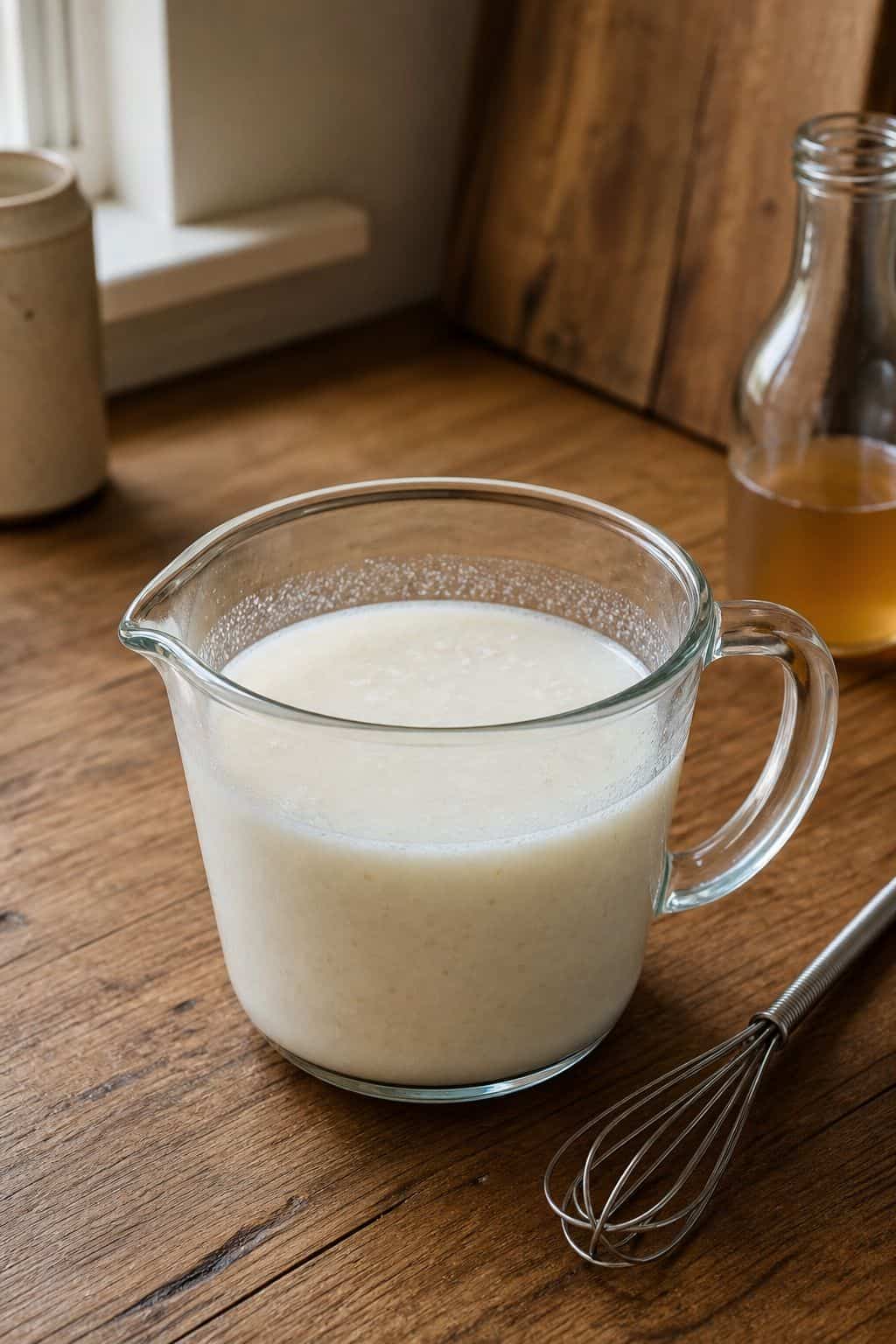
The visible curdle in the cup is the proof of concept. Tiny flecks of separated protein and fat show up after about 5 minutes, the mixture thickens slightly, and the smell turns faintly tangy. Once you stir that into a batter with baking soda, the bubbles fire the same way they would with cultured dairy. This is the same principle behind a vegan red velvet cake or a dairy-free biscuit. The dairy-free swap context lines up with how the Apple Sour Cream Slice uses a tangy dairy element to keep the crumb tender.
The American South built its biscuit and pancake traditions on real buttermilk because butter-churning was a weekly kitchen task. By the 1950s, commercial cultured buttermilk took over and the chemistry shifted: modern buttermilk is no longer the leftover liquid from churning, but skim milk cultured with lactic acid bacteria. That cultured version is what most baking recipes are written around, which is exactly the kind of acid-and-protein behavior an almond milk plus vinegar mixture can mimic well enough for the home baker to never notice the difference.
Recipe: Almond Buttermilk
Ingredients
- 240 ml (1 cup) unsweetened almond milk, at room temperature. Sweetened or vanilla versions will throw off the sugar balance in baked goods.
- 15 ml (1 tablespoon) acid. Apple cider vinegar gives the cleanest neutral tang. Lemon juice brightens the result for sweet bakes. White vinegar works for savory uses like biscuits or a fried protein dredge.
Instructions
- Pull the almond milk from the fridge about 30 minutes before you plan to use it. Room temperature milk curdles faster and more visibly than cold milk straight from the carton. If you forgot, set the measuring cup in a bowl of warm water for 5 minutes to take the chill off.
- Pour the almond milk into a 2-cup liquid measuring cup or a small glass jar. Add the tablespoon of acid right on top and give it a quick stir with a whisk or a fork. The mixture will look unchanged at first.
- Let it sit, undisturbed, for 5 to 10 minutes at room temperature. You will see fine flecks of curdled protein appear on the surface and the body of the liquid will thicken slightly. Give it one more gentle stir before you measure it into a recipe. It is now ready to use 1:1 in any recipe that calls for buttermilk. Pour it into pancake batter, scone dough, or muffin batter the same way you would real buttermilk and proceed with the recipe.
- To store, pour it into a glass jar with a tight lid and keep it in the fridge for up to three days. Shake before each use because the curdled solids will settle.
Tips and Variations
Picking the right acid for the recipe
Apple cider vinegar is the safest default and reads as neutral once baked. Lemon juice is the brightest option and complements sweet bakes like scones, lemon poppy seed muffins, or vanilla cake. White vinegar is the most assertive and pairs well with savory uses like biscuits, cornbread, or a tofu marinade.
Scaling up or down
The ratio holds at any volume. For half a cup, use 1.5 teaspoons of acid. For two cups, use 2 tablespoons. The rest time stays the same. A heaping tablespoon of acid will not break the recipe but can leave a noticeable tang in the finished bake.
Swapping in other plant milks
Soy milk curdles the thickest because it contains protein that behaves more like dairy. Oat milk gives the closest mouthfeel to real buttermilk but can read sweet. Cashew milk works but separates less visibly. Coconut milk works in tropical or coconut-forward bakes but adds noticeable flavor. Stick to unsweetened versions across the board.
When the curdle is weak
Some brands of barista-style almond milk contain stabilizers that suppress visible curdling. The acid is still doing its job chemically, so the baked goods still rise. If you want a more dramatic curdle, switch to a less-stabilized brand or use soy milk instead.
For thicker buttermilk-style dressings
If you are making a dressing or marinade that needs the body of real buttermilk, whisk a tablespoon of cashew butter or unsweetened almond yogurt into the curdled mixture. The fat and protein push the texture closer to dairy buttermilk and the dressing clings better to lettuce. For ranch dressing specifically, a tablespoon of plain coconut yogurt mixed in gives the closest tangy, thick result.
Skipping the curdle for fast bakes
In a pinch you can pour the almond milk and acid straight into the wet ingredients without resting, especially in a recipe that already calls for the wet and dry to be combined quickly. The reaction still happens inside the bowl. You lose the visible confirmation that the acid is active, but for muffin and quick-bread batters that get into the oven within five minutes, the result is almost identical.
What to Use It In
Use almond buttermilk 1:1 in pancakes, waffles, biscuits, scones, banana bread, cake batters like red velvet or devil’s food, ranch dressing, and marinades for fried tofu or chicken. It slides directly into the Banana Buckwheat Pancakes batter without any adjustment, and it works equally well in the Oat Muffins for a softer crumb. The one place it falls short is recipes that lean on buttermilk’s fat content, like some old-fashioned ice creams, where the missing milkfat is part of the texture.
For fried chicken, fried tofu, or any dredge that calls for an overnight soak in buttermilk, almond buttermilk works but reads a touch less tenderizing because there is no casein to soften the protein. Adding a tablespoon of cornstarch or a pinch of baking soda to the marinade restores most of that effect. For pancakes and waffles, almond buttermilk often gives a slightly lighter, less dense result than dairy buttermilk, which is a feature for breakfast batters. For cakes, the result is almost indistinguishable, especially under frosting.
Frequently Asked Questions
Can you make buttermilk with almond milk?
Yes. Add 1 tablespoon of an acid like apple cider vinegar or lemon juice to 1 cup of unsweetened almond milk and let it sit at room temperature for 5 to 10 minutes. The result behaves like buttermilk in any standard baking recipe.
What’s the ratio of vinegar to almond milk?
1 tablespoon of acid for every 1 cup of almond milk. The same ratio holds whether you are making half a cup or a quart.
Does almond milk buttermilk curdle like dairy?
Not quite. Almond milk has no casein, so the curdle is finer and the mixture stays thinner than real buttermilk. You will see flecks of separated protein and the liquid will thicken slightly, which is enough to confirm the acid is active and the baking soda reaction is ready to go.
Lemon juice or vinegar, which is better?
Both work. Vinegar is more neutral once baked and is the safer pick for cakes and muffins where you do not want a citrus note. Lemon juice is the better pick for scones, pancakes, and any recipe where a bright finish is part of the dish.
Can I use sweetened almond milk?
Not recommended. Sweetened and vanilla-flavored almond milks add roughly 7 to 10 grams of extra sugar per cup, which throws off the sugar balance in baked goods and can leave a noticeable vanilla flavor in savory recipes like biscuits or dressings. Unsweetened is the safer default.
How long does almond buttermilk last in the fridge?
Up to three days in a sealed jar. Shake before each use because the curdled solids settle. After three days the tang gets noticeably sharper and the texture breaks down further than most bakes can absorb cleanly.
Key Takeaways
- The ratio is 1 cup (240 ml) unsweetened almond milk to 1 tablespoon (15 ml) of acid.
- Use room-temperature almond milk for a stronger, faster curdle.
- Apple cider vinegar is the most neutral. Lemon juice is best for sweet bakes. White vinegar handles savory uses.
- Substitute 1:1 in pancakes, biscuits, muffins, scones, and cake batters.
- Stores for up to three days in the fridge. Shake before each use.
Final Thoughts
This is a backup recipe more than a destination recipe. The real value is that it covers the gap when there is no buttermilk in the fridge, when a guest is dairy-free, or when a recipe calls for half a cup and a full quart of buttermilk feels like a waste.
Keep a jug of unsweetened almond milk and a bottle of apple cider vinegar in the pantry and you have buttermilk on demand. It takes longer to walk to the fridge than it does to actually make the swap, and the result holds up across the full range of baking soda recipes that depend on the acid for lift.
The same logic works with soy, oat, or cashew milk, which is worth knowing for anyone juggling household allergies or just trying to use up whatever is in the fridge. Each plant milk shifts the curdle and the final mouthfeel a little, but the underlying chemistry holds. Once you have run the swap a few times, it stops feeling like a substitute and starts feeling like the default version of buttermilk that lives in your kitchen.
Almond Buttermilk
To make this almond buttermilk , whisk 1 cup (240 ml) of unsweetened almond milk with 1 tablespoon of apple cider vinegar or lemon juice, then let the mixture sit at room temperature for 5 to 10 minutes until it curdles.
Ingredients
- 240 ml (1 cup) unsweetened almond milk, at room temperature
- 15 ml (1 tablespoon) acid
Instructions
- Pull the almond milk from the fridge about 30 minutes before you plan to use it. Room temperature milk curdles faster and more visibly than cold milk straight from the carton.
- Pour the almond milk into a 2-cup liquid measuring cup or a small glass jar. Add the tablespoon of acid right on top and give it a quick stir with a whisk or a fork. The mixture will look unchanged at first.
- Let it sit, undisturbed, for 5 to 10 minutes at room temperature. You will see fine flecks of curdled protein appear on the surface and the body of the liquid will thicken slightly. Give it one more gentle stir before you measure it into a recipe.
- To store, pour it into a glass jar with a tight lid and keep it in the fridge for up to three days. Shake before each use because the curdled solids will settle.
Last update on 2026-08-09 / Affiliate links / Images from Amazon Product Advertising API