Cottagecore kitchen ideas use plate racks, floral textiles, herb pots, beadboard, baskets, baking jars, and freestanding furniture to make a kitchen feel garden-inspired and lived in. The best version still works for daily cooking, with useful pieces on display and messier supplies tucked behind soft storage.
A cottagecore kitchen is not only about pretty shelves. It should make the room feel closer to home routines: baking, tea, herbs on the sill, produce on the counter, cloth aprons on hooks, and dishes that come down for real meals. That is what keeps the style from turning into a display set.
The most useful cottagecore kitchen ideas balance softness with storage. Use floral fabric where it can be washed, open shelves only where they help, and baskets or hutches for the things that do not need to be seen every day.

You Might Also Like These Blog Posts
- Cottage Kitchen Ideas
- English Cottage Kitchen Ideas
- Vintage Kitchen Ideas
- Collected Vintage Kitchen Ideas
- Cottage Kitchen Decor Finds
Cottagecore Kitchen Ideas That Still Work for Real Cooking
1. Plate Rack for Everyday Dishes

A wall plate rack gives cottagecore kitchens a classic storage detail that still earns its space. Use it for dinner plates, small serving dishes, or saucers that come down often, not a dusty set saved only for display. Keep the rack near a breakfast table, hutch, or dishwasher path so the dishes remain part of the daily routine. Leave a little breathing room between plates and repeat one color from nearby textiles or shelves so the wall feels charming without looking packed.
2. Open Shelf for Mixing Bowls
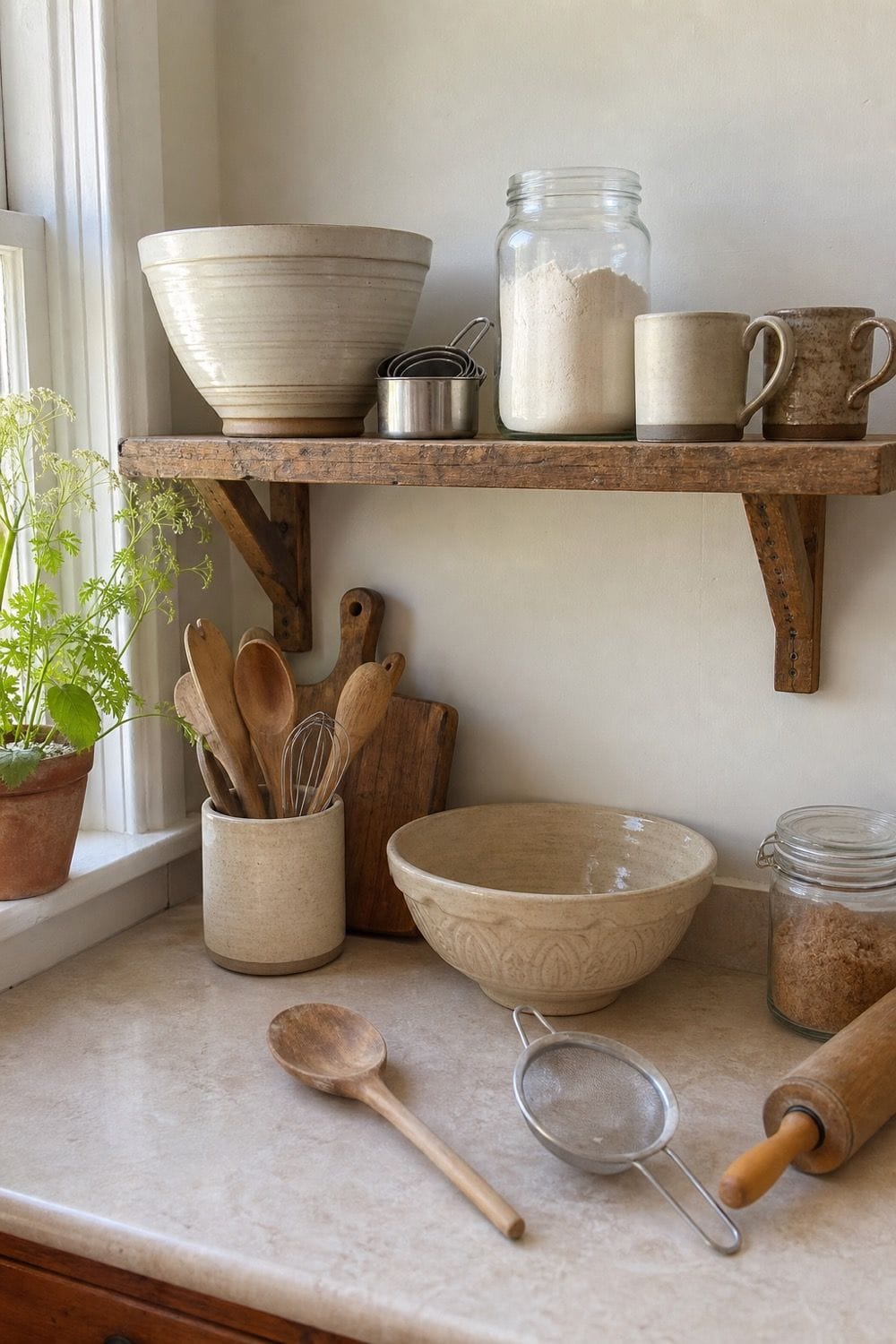
A short open shelf can make baking bowls, measuring cups, jars, and tea pieces feel like part of the room. Choose one or two shelves rather than a full wall, especially near a range where grease collects. Cottagecore kitchen shelves look best when they hold tools with real jobs, such as a mixing bowl used for batter, a flour jar, or the mugs used every morning. Leave extra space around heavier bowls so they can be lifted down safely instead of becoming unreachable display pieces.
3. Freestanding Hutch for Collected Storage

A freestanding hutch brings the unfitted feeling that cottagecore kitchens need. Use the upper shelves for plates, pitchers, jars, or folded linens, then keep less attractive baking tools or pantry extras in closed lower storage. Measure the depth before adding one so it does not crowd the table, sink path, or appliance doors.
A painted hutch can soften newer cabinets, while a wood hutch adds age and warmth. Either way, it should solve storage, not only fill a wall.
Use the top as a serving surface only if it stays clear enough for tea things, flowers, or a tray during small gatherings. If the surface becomes a landing spot for mail and grocery overflow, the hutch will lose the quiet furniture feeling that makes it useful.
4. Beadboard Backsplash
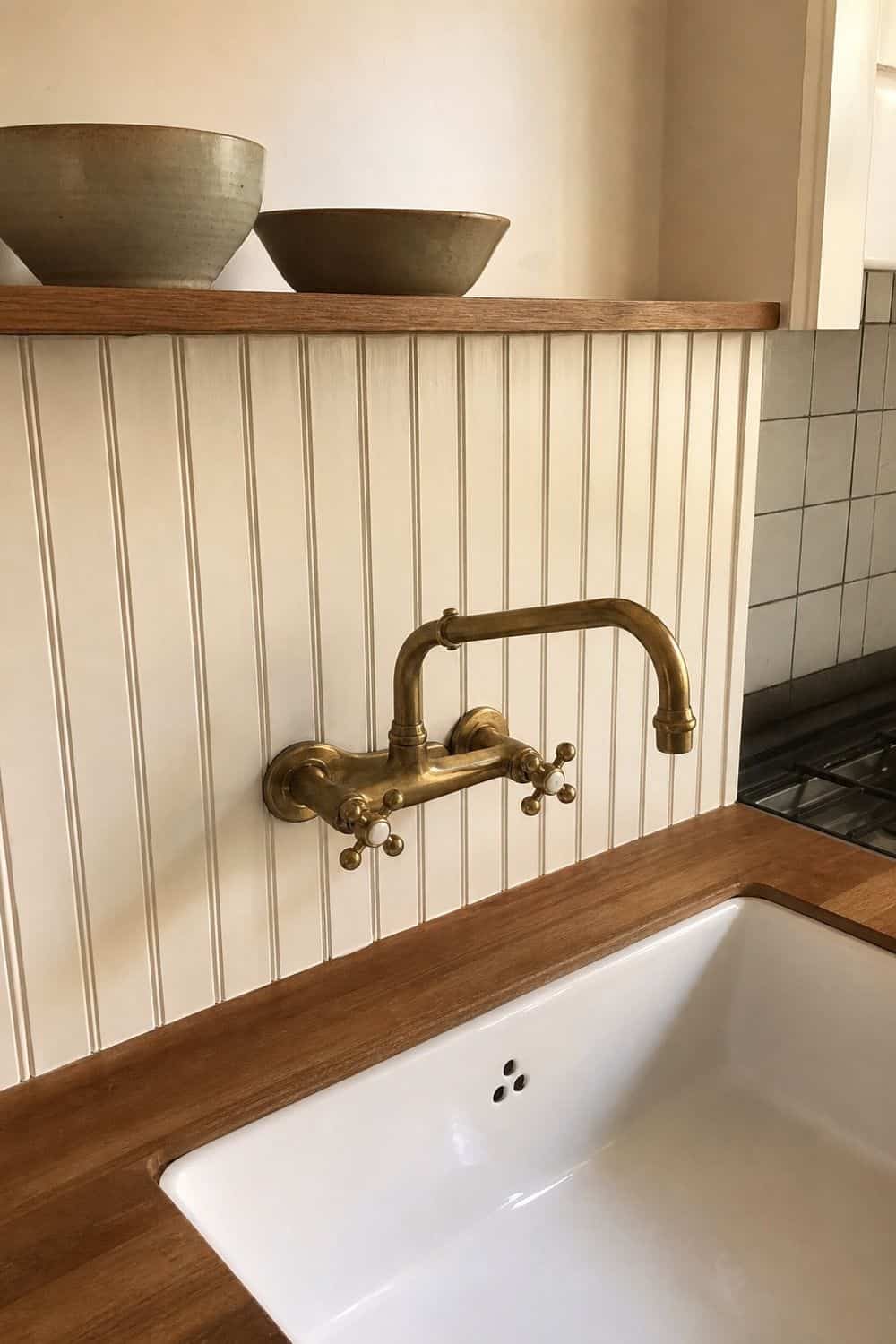
Beadboard gives a cottagecore kitchen quiet wall texture behind shelves, a sink, a breakfast corner, or a pantry niche. It works especially well when flat drywall makes the room feel too new or plain. Paint it in wipeable warm white, cream, sage, pale blue, or butter yellow so splashes can be cleaned without losing the soft cottage look. Vertical boards can make a low wall feel taller, while a short beadboard run behind open shelves adds texture without covering the whole room.
Use tile or another tougher surface directly behind heavy cooking if that area gets constant oil and steam. Beadboard shines in lower-splash zones where the texture can stay clean, painted, and easy to touch up over time.
5. Skirted Sink Cabinet

A fabric skirt under the sink hides cleaning bottles, bins, awkward plumbing, or a missing cabinet door while adding softness. Choose washable cotton or linen in a small floral, stripe, check, or plain natural fabric. The skirt should slide or lift easily so the storage behind it remains reachable during real kitchen cleanup. A tension rod or removable hardware can make this a low-commitment update. Keep the fabric off the floor so it does not drag through spills, and choose a print that can repeat in a tea towel or curtain.
6. Floral Cafe Curtains

Floral cafe curtains bring the garden feeling indoors without using counter or shelf space. Hang them at a sink window, breakfast nook, or small side window where the pattern can soften hard cabinets and tile. Small-scale florals usually work better than large dramatic prints because they feel more like everyday fabric and less like a feature wall. If the kitchen already has patterned wallpaper or a busy rug, choose a quieter floral with more background space.
Repeat one curtain color in a plate, rug, pitcher, or botanical print. That small link keeps the fabric from looking random and helps the window feel connected to the rest of the kitchen instead of being a separate decorating moment.
7. Gingham Kitchen Runner
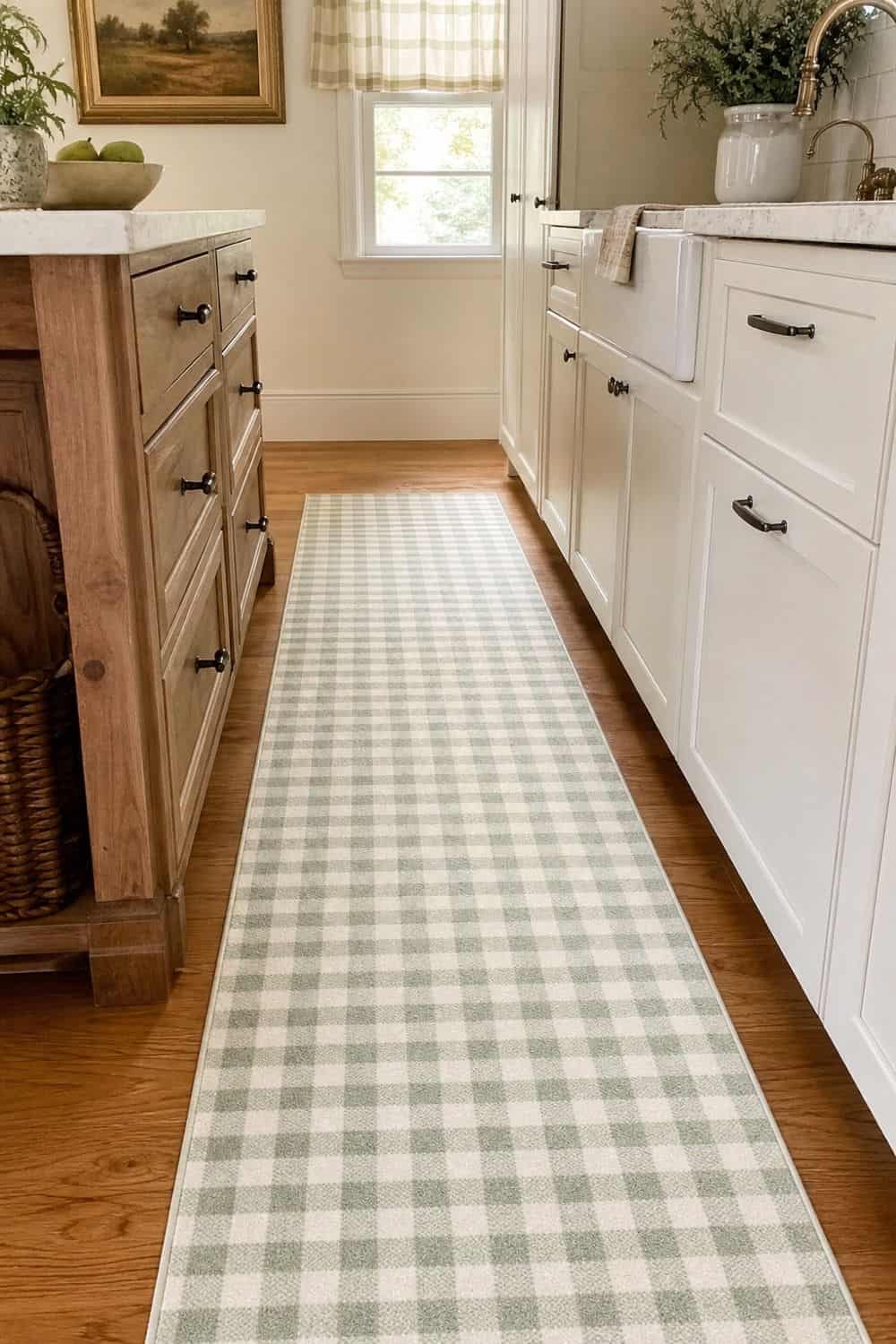
A gingham runner adds cottage pattern underfoot and softens the long line of cabinets. Use it in front of the sink, along a galley run, or beside an island where you stand often. Low-pile and washable materials matter in a kitchen, especially if the rug sits near water, crumbs, or cooking traffic. Use a rug pad so the runner stays flat. A soft green, blue, red, or brown check can connect to curtains or dishes without overwhelming the floor or competing with floral fabric nearby.
8. Herb Pots on the Windowsill

Herb pots are one of the clearest ways to make cottagecore feel tied to cooking instead of surface decor. Basil, parsley, thyme, mint, chives, and rosemary can sit on a bright sill if the window gets enough light. Keep the pots close to the prep area so trimming herbs for soup, eggs, salad, or tea feels natural.
Choose saucers that catch water and avoid overcrowding the sill. A few healthy plants look better than a crowded row that is hard to care for.
Rotate the pots when they lean toward the sun, and trim leaves often enough that the herbs stay compact and useful. If a plant starts struggling, replace it with one healthy herb rather than keeping a sad row for the sake of the look.
9. Hanging Drying Rack for Herbs

A small hanging drying rack can hold herbs, lavender, seed bundles, or tiny flowers from the garden. Place it near a pantry wall, breakfast corner, or side of the kitchen where air can move, but keep it away from greasy range zones. A few useful clippings are enough; the ceiling does not need to disappear under bundles. Use the dried herbs in cooking, tea, or simple drawer sachets. When the bundles become dusty or brittle, replace them instead of letting them linger.
10. Baking Station with Jars
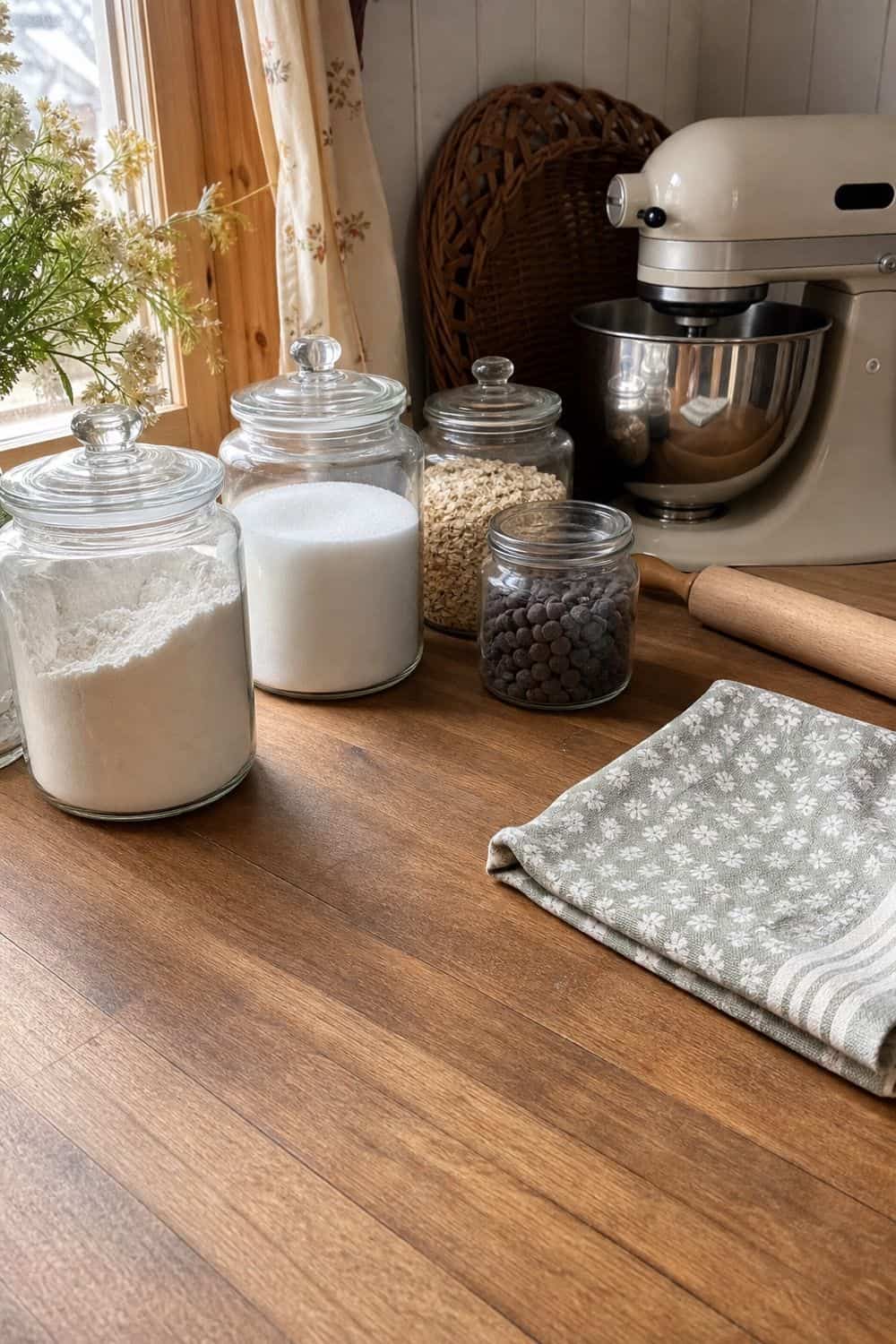
A baking station gives cottagecore style a real kitchen purpose. Keep flour, sugar, oats, chocolate chips, biscuits, or tea cookies in clear jars near the mixer, rolling pin, or prep counter. Only decant ingredients you use often, and keep dates or cooking instructions somewhere nearby so the jars do not create confusion later.
Leave room to work in front of the jars. A baking corner should make scones, muffins, and everyday cakes easier, not steal the whole counter.
Use scoops only when they fit inside the jars cleanly. A sticky rim or loose scoop can make the whole station feel messy fast, especially with sugar and flour. Keep a small cloth nearby if this area is used for frequent baking.
11. Wooden Bread Box

A wooden bread box suits the baking-and-tea side of a cottagecore kitchen while keeping the counter tidier. Use it for bread, muffins, scones, bagels, or toast supplies that otherwise spread across the worktop. Check the lid clearance before buying, especially under upper cabinets, and choose a size that fits the bread your household actually keeps. A flat top can hold a butter dish or tea tin, but avoid stacking so much on it that opening the box becomes annoying during breakfast.
12. Enamel Canister Set
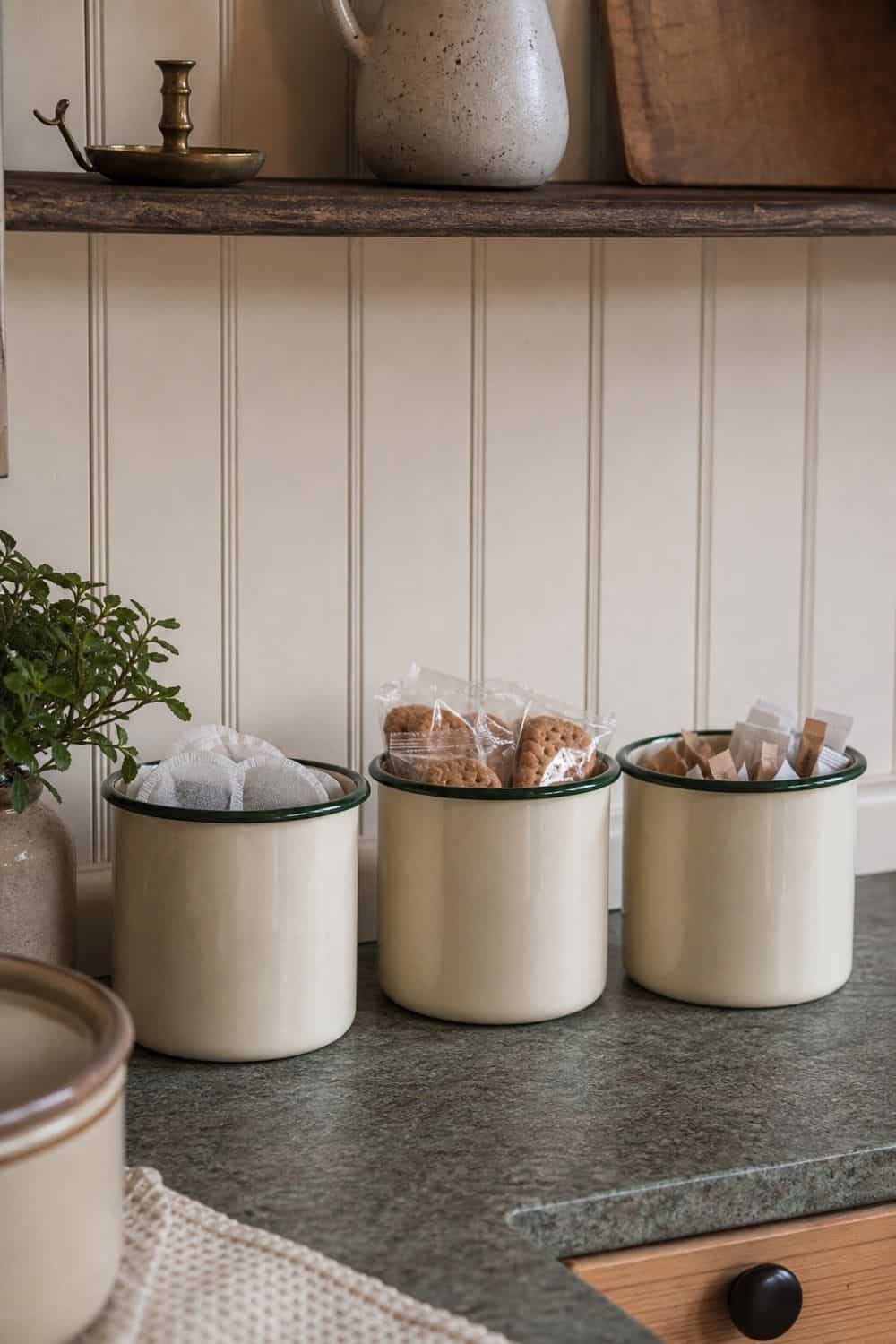
Enamel canisters add a nostalgic counter detail for tea, coffee, sugar, flour, or biscuits. Keep the set limited to items used every week so the counter does not turn into a row of decorative containers. Cream, white, green, or soft blue enamel mixes easily with beadboard, wood shelves, and floral fabric. If the lids seal poorly, use the canisters for wrapped tea, sugar packets, or biscuits rather than moisture-sensitive staples.
If the labels are fixed, use the canisters as labeled. A sugar tin full of random packets becomes visual clutter in disguise, while accurate labels make the nostalgic set easier for guests and family members to use without opening every lid.
13. Peg Rail for Aprons and Towels

A wooden peg rail gives aprons, tea towels, market bags, brushes, and small baskets a clear landing spot. Place it near the pantry, back door, baking zone, or breakfast area rather than in the middle of a splatter-heavy wall. The rail should help with actual kitchen movement, especially when hands are full or towels need to dry. Use sturdy pegs for heavier market bags and lighter pegs for linens so the wall stays balanced.
Limit each peg to one or two items. Overfilled pegs can quickly turn cottage softness into a tangled wall of fabric, especially when aprons, market bags, and towels all compete for the same hook near the door.
14. Floral Apron on Display

A floral apron can act like useful decor when it is truly part of baking, preserving, dishwashing, or weeknight cooking. Hang it on a peg, cabinet knob, or pantry hook where it can be grabbed easily. Choose fabric that can handle flour, berry juice, and sink splashes, because cottagecore should still survive a messy recipe. A darker floral hides stains better than a pale novelty print, especially if the apron is used around jam, tomatoes, or cocoa.
One apron is usually enough for display. Store extras in a drawer or basket so the hook does not become a fabric pile, and wash the visible apron often enough that it still feels like a working kitchen piece.
15. Wicker Basket Pantry Shelf

Wicker baskets soften pantry shelves while hiding categories that look messy in the open. Use them for onions, tea towels, packets, snacks, baking extras, cloth napkins, or small produce. Choose baskets that slide easily and fit the shelf depth, because a basket that catches every time will not stay useful. Line rough baskets when they hold linens or packets that snag, and keep heavier food on lower shelves. Add small labels when the contents are not obvious so baskets do not become mystery storage before dinner or baking.
16. Vintage-Style Wall Sconce

A wall sconce with an older-looking finish can warm up shelves, a sink wall, or a baking corner while adding real task light. Choose aged brass, enamel, ceramic, or milk-glass details when they relate to the rest of the kitchen. A shade that points downward is helpful over a counter, while a softer shaded sconce works near a breakfast nook. Warm bulbs make beadboard, wood shelves, and floral fabric look softer at night.
Plug-in sconces are useful when wiring is not an option. Keep cords tidy and away from water, burners, and heavy prep zones, and mount the fixture high enough that bowls, jars, and shelf objects can move underneath it.
17. Glass-Front Cabinet with Fabric Backing
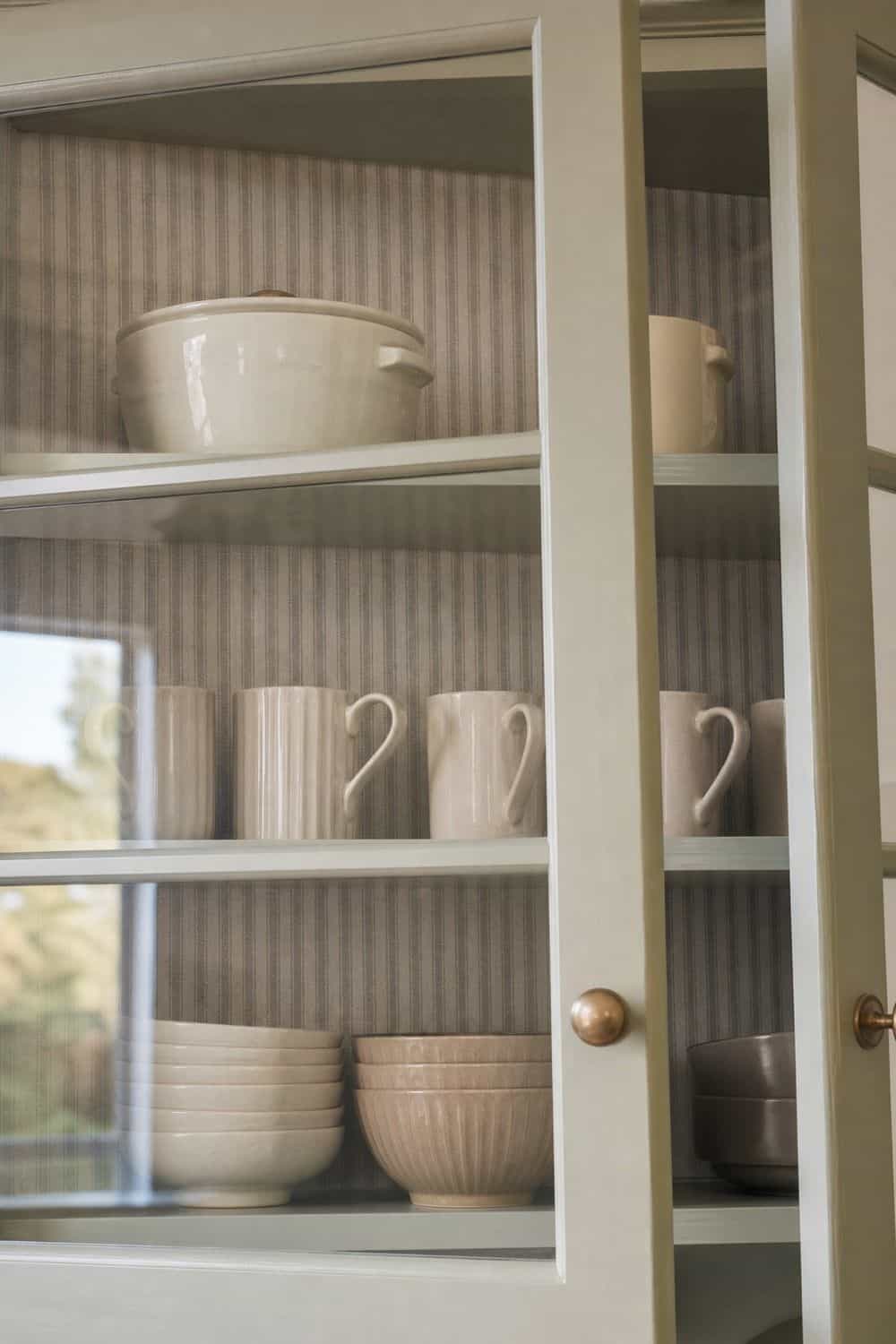
Fabric behind glass cabinet doors can soften visible storage and hide less-than-perfect dish stacks. Use removable panels, gathered fabric, or flat fabric inserts in a small floral, stripe, or linen texture. This works well when you want the lightness of glass without exposing every mug, jar, or pantry backup. Keep everyday dishes easy to reach behind the fabric. If the cabinet becomes hard to use, the soft detail will feel fussy instead of helpful, so save fabric panels for doors where the contents are still simple to grab and return.
18. Floral Wallpaper in a Breakfast Corner

Floral wallpaper can make a breakfast corner, pantry wall, or small side wall feel like part of a garden room. Use it away from heavy steam and grease so the pattern ages well. A peel-and-stick version is helpful for low-commitment updates, especially if you want a small cottagecore moment without covering the entire kitchen. Smaller walls are often better than wrapping every surface, because the print can stay special.
Let the wallpaper carry one clear color story. If the print is busy, keep nearby dishes, cushions, and curtains quieter so the nook feels garden-like rather than crowded. A narrow wall can still give the room plenty of pattern.
19. Stoneware Pitcher for Utensils

A stoneware pitcher or crock keeps wooden spoons, spatulas, whisks, and small tongs ready near the stove. The shape feels more handmade than a plain metal cup, but the piece still has a job. Choose enough weight that it will not tip when tools are pulled out during cooking. A wide mouth is helpful because utensils can spread slightly instead of leaning in one tight bundle. Keep only daily tools inside so the pitcher makes stirring, whisking, and serving easier instead of becoming another crowded container beside the stove.
20. Copper Pot Rail

A copper pot rail adds visible cookware storage with a softer cottage glow than stainless steel. Use it for one or two pans, a small strainer, or a few tools that look good and get used. Secure mounting is important because cookware adds weight, especially when the rail sits above a prep zone or range-adjacent wall. Copper also changes over time, so choose it when a little patina fits the rest of the kitchen.
Leave space between pieces so the rail looks useful rather than crowded. Too many hanging pans can make a compact cooking area feel noisy, and closely packed cookware is harder to lift down safely when the stove is already in use.
21. Cottagecore Tea Shelf

A small tea shelf gives cottagecore style a quiet daily ritual. Keep mugs, tea tins, honey, a spoon rest, and a kettle nearby so the setup supports real use. This is different from a full coffee bar; the mood is gentler and more compact, with just enough storage for afternoon tea, breakfast, or a late-night cup. Place it near water or the kettle if possible so the shelf does not become a display far from the actual routine.
Use a lidded box or small tin for tea bags so packaging does not take over the shelf. A mug or two is enough, especially if the kettle, honey, and spoons already give the area a clear tea routine.
22. Botanical Wall Art

Botanical prints bring garden references to blank kitchen walls without adding more objects to the counter. Herb illustrations, fruit studies, flower sketches, or vegetable prints work near shelves, a pantry door, or a breakfast nook. Choose frames that relate to the kitchen finishes, such as warm wood, aged brass, black, or painted white. A print of herbs or fruit feels especially at home near pantry storage, open shelves, or a tea corner.
A small pair often looks better than a large gallery. The art should support the garden feeling, not compete with every shelf and fabric. Leave space around the frames so the wall still feels restful beside open storage.
23. Painted Freestanding Island

A small freestanding island or work table can add prep space and furniture-style character. Painted legs, a wood top, a lower shelf, or a towel rail can make the piece feel more cottage than built-in. Keep at least comfortable walkway clearance around it so the island helps cooking instead of blocking the sink, fridge, or oven. A butcher-block or scrubbed wood top suits baking prep, while a painted base can echo the hutch or lower cabinets.
Use the lower shelf for a basket, mixing bowl, or folded linens. Avoid loading it with every overflow item from the cabinets, because the island should read as a prep table first and extra storage second.
24. Market Basket by the Door

A market basket near the back door, pantry, or breakfast nook can hold farmers market produce, cloth bags, garden herbs, or a loaf waiting to be put away. It gives the kitchen a lived-in harvest cue, but it should still have a real job. Empty it often so it does not become floor clutter.
Choose a basket with sturdy handles if it leaves the house. If it stays indoors, use it for produce that can breathe, such as onions or apples.
Keep it off the main cooking path so it feels like a landing spot, not something everyone steps around. If the basket starts collecting shoes, mail, or random returns, move it closer to pantry storage.
25. Cottagecore Shelf Clarity Rule

The easiest way to keep cottagecore shelves from feeling crowded is to give every visible item a reason. It should be used often, loved deeply, or tied to a season. Everyday plates, herb pots, tea tins, baking jars, and a favorite pitcher make sense; random props usually make the room harder to read. Small labels can help baskets and pantry shelves stay clear when categories are easy to forget, but keep them plain so the shelves do not turn into an office system.
How To Keep Cottagecore Kitchen Ideas Useful
Cottagecore kitchens feel strongest when softness supports cooking. Plate racks should hold dishes, herb pots should be clipped for meals, jars should store real baking staples, and baskets should hide categories that need a home. When every pretty piece also helps the room function, the style feels natural.
Open shelving needs the most restraint. A small shelf with mixing bowls, mugs, or tea tins can feel charming, while too many exposed surfaces collect dust, grease, and visual clutter. Use curtains, hutches, drawers, and baskets for the less attractive supplies.
The strongest cottagecore cues are plate racks, beadboard, floral fabric, herb pots, baking jars, wicker baskets, freestanding furniture, peg rails, warm lighting, and botanical details. Let those pieces connect to baking, tea, gardening, storage, or daily meals so the kitchen feels handmade rather than staged.
Frequently Asked Questions
What is a cottagecore kitchen?
A cottagecore kitchen is a soft, home-centered kitchen style inspired by baking, gardens, vintage pieces, handmade texture, and everyday domestic routines. It often includes plate racks, open shelves, beadboard, floral fabrics, herb pots, baskets, hutches, and warm lighting. The room should feel lived in, but still easy to cook in.
How do you make a kitchen look cottagecore?
Start with useful cottage details: a plate rack for dishes, cafe curtains at the window, herbs on the sill, a basket pantry shelf, or a hutch for collected storage. Add floral, gingham, linen, wood, stoneware, enamel, and botanical details slowly so the kitchen feels gathered instead of themed.
What colors suit a cottagecore kitchen?
Warm white, cream, sage green, butter yellow, soft blue, dusty rose, natural wood, aged brass, copper, and gentle brown tones all work well. The best palette depends on the existing cabinets, counters, and floor. Repeat one or two colors through curtains, dishes, rugs, and art for a calmer look.
How do you do cottagecore in a rental kitchen?
Use removable, low-commitment layers: floral cafe curtains, a washable runner, herb pots, a market basket, framed botanical art, a freestanding hutch, a peg rail where allowed, or peel-and-stick wallpaper away from steam. Focus on pieces you can take with you rather than changes that require built-in installation.
Are open shelves good for a cottagecore kitchen?
Open shelves can work well when they are limited and useful. Use them for mixing bowls, mugs, jars, cookbooks, or tea pieces that get used often. Avoid turning every wall into open storage because dust, grease, and visual clutter can work against the soft cottage look.
What should you display in a cottagecore kitchen?
Display pieces that support cooking, baking, tea, gardening, or storage. Good choices include everyday plates, stoneware pitchers, wooden spoons, glass baking jars, herb pots, enamel canisters, tea tins, cookbooks, baskets, aprons, and botanical prints. Keep purely decorative pieces limited so the kitchen still feels usable.
How do you keep cottagecore decor from looking cluttered?
Give each visible item a reason and leave empty space around displays. Use baskets, skirted cabinets, hutches, drawers, and closed pantry storage for messy supplies. Limit open shelves, repeat a few colors, and remove pieces that no longer support cooking, baking, tea, gardening, or daily meals.
What is the difference between cottage and cottagecore kitchen style?
Cottage kitchen style usually describes a broader traditional look with painted cabinets, wood, vintage pieces, and comfortable details. Cottagecore is more romantic and routine-focused, with stronger garden, baking, floral, tea, handmade, herb, and pastoral cues. A cottage kitchen can be simple and classic; cottagecore leans more storybook and domestic.
Final Thoughts
The best cottagecore kitchen ideas make everyday cooking feel softer without making the room harder to use. Start with one useful layer, such as a plate rack, herb planter, floral curtain, baking jar shelf, or freestanding hutch, then let the kitchen grow around real routines.