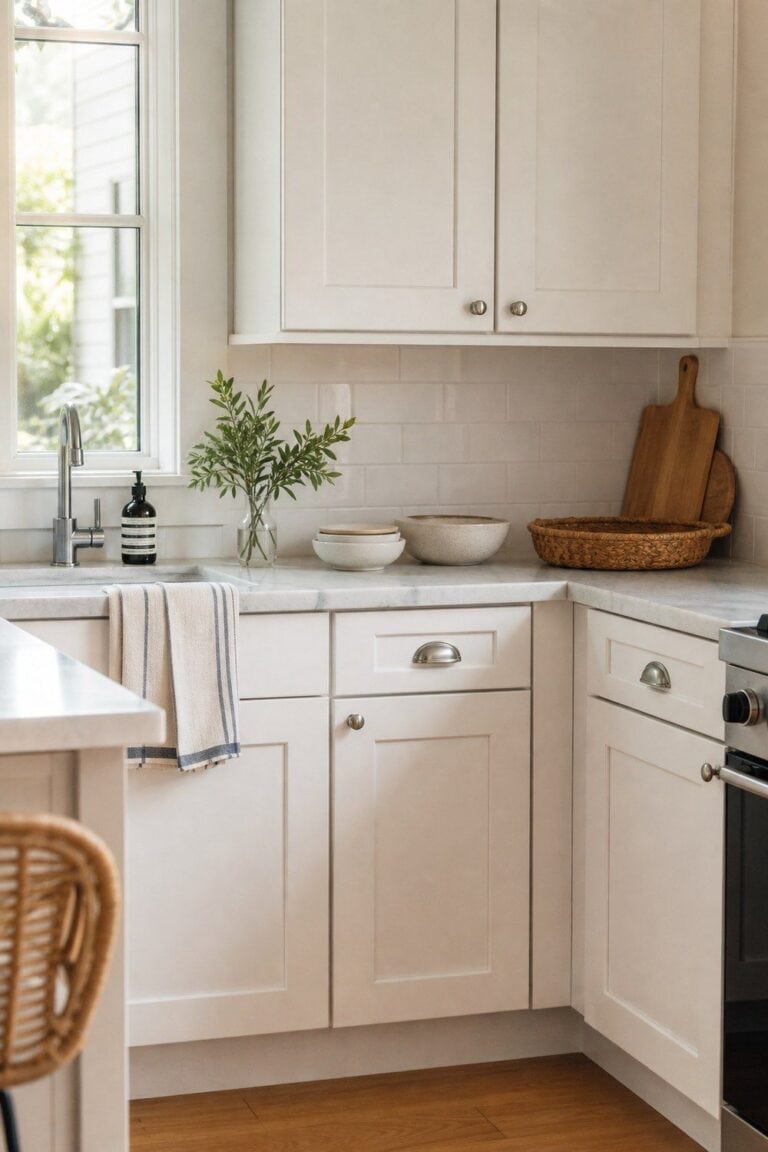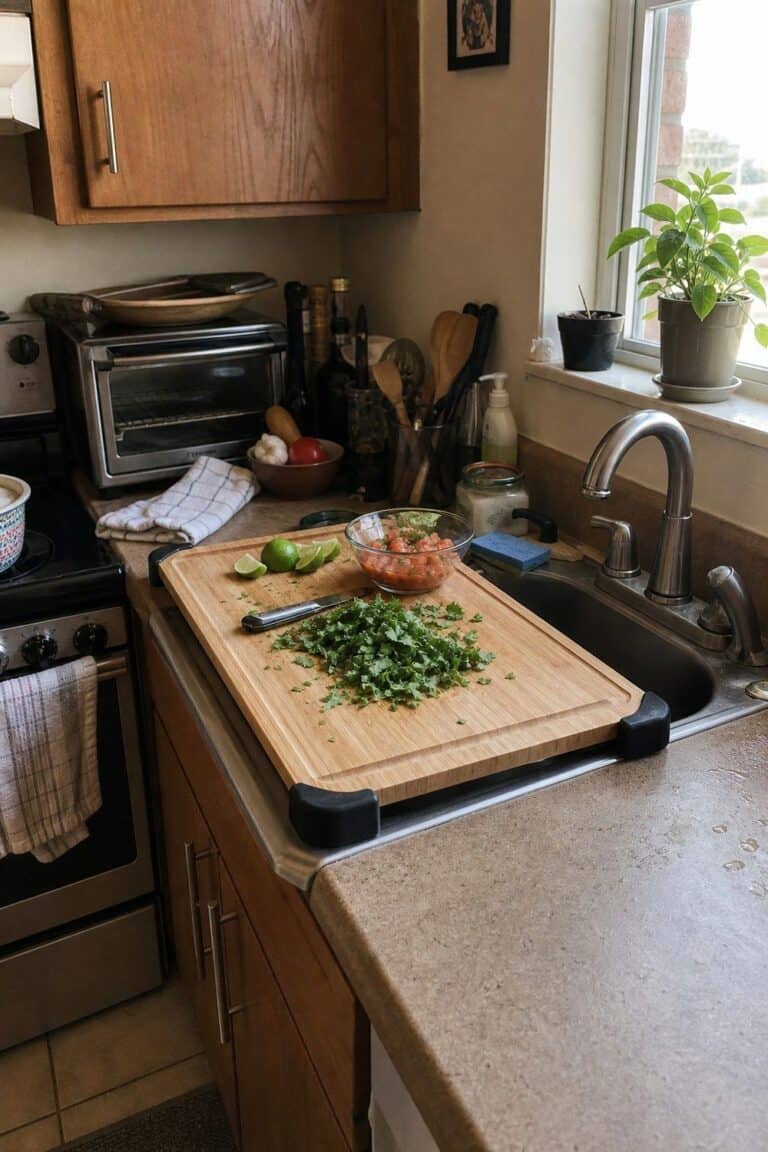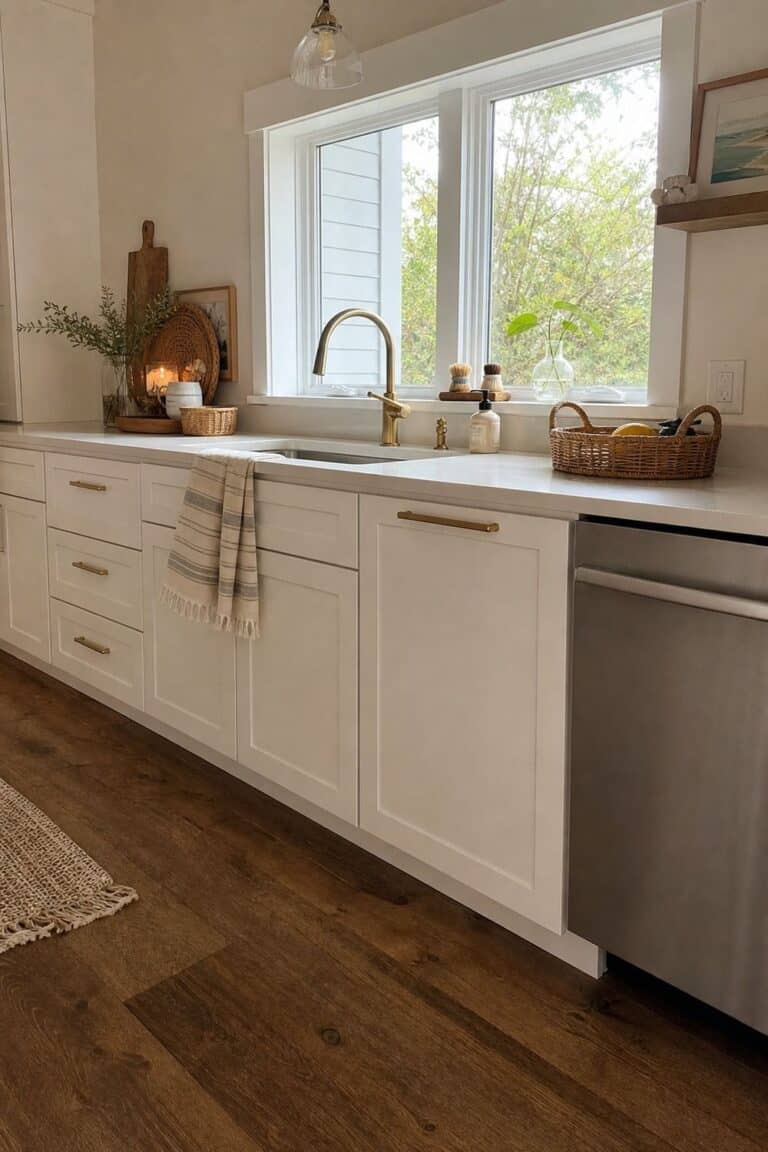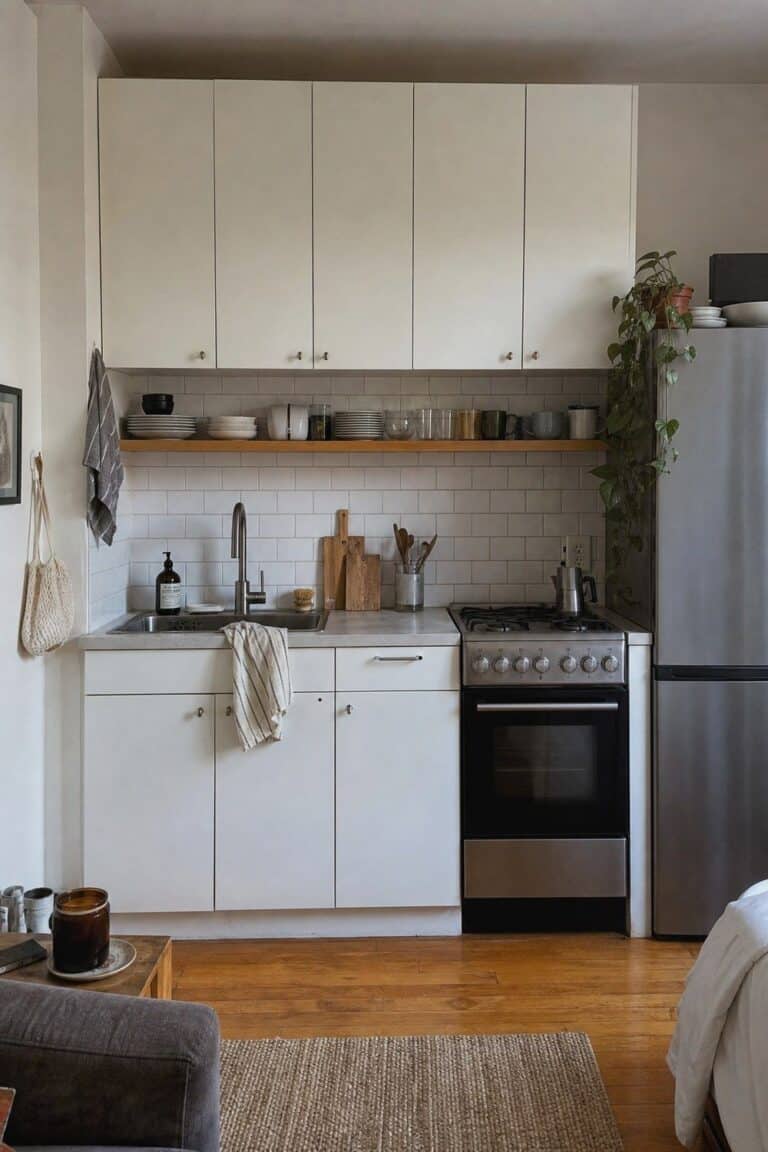
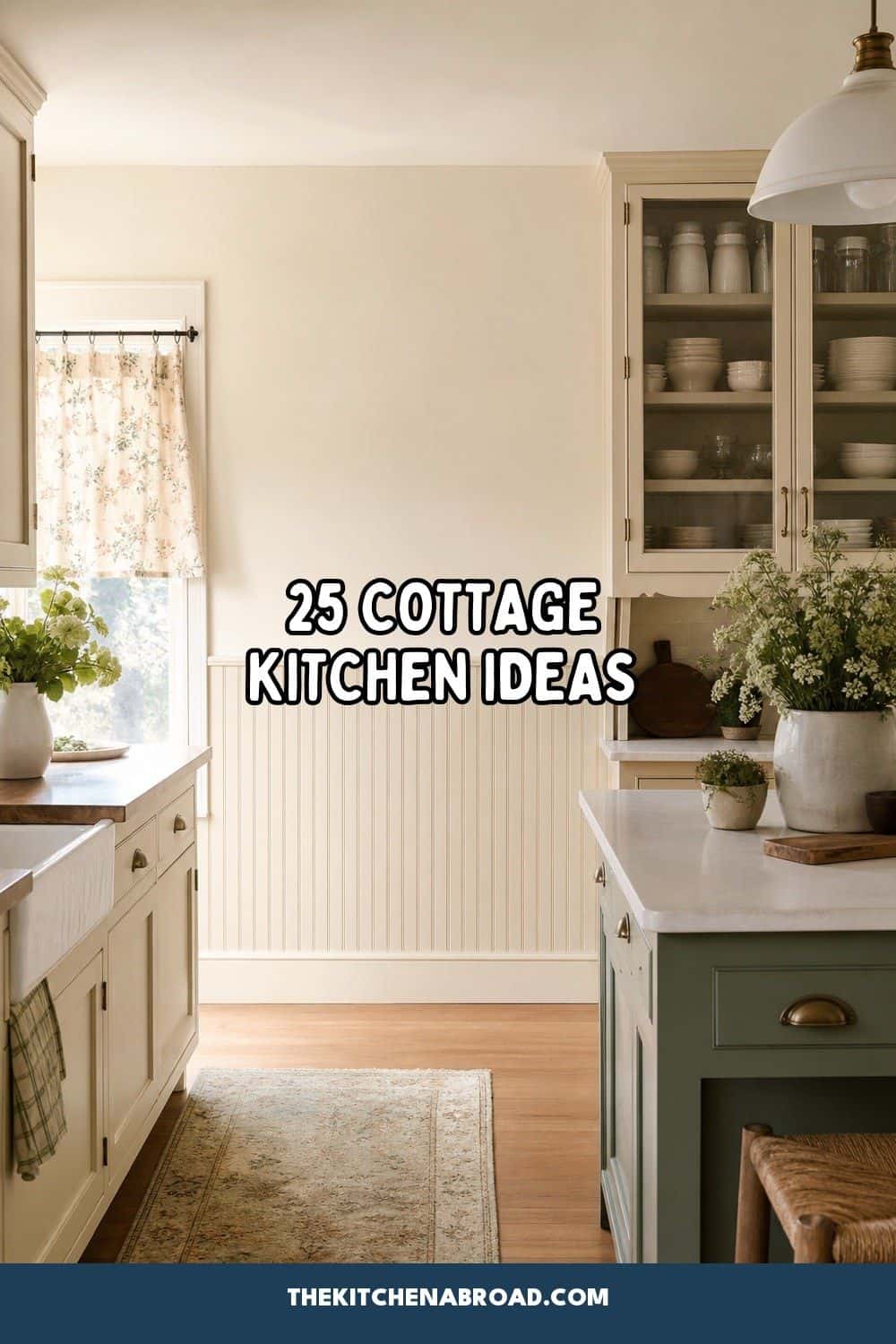
The best cottage kitchen ideas use soft cabinet colors, beadboard, vintage-style hardware, a plate rack or small shelf, freestanding furniture, floral or linen textiles, warm lighting, wicker baskets, collected ceramics, and a few practical vintage details. A cottage kitchen should feel lived-in and charming without losing counter space, storage, or everyday cooking flow. Keep the display pared back, give every visible piece a job, and use soft materials instead of random decorative clutter.
Cottage kitchens work because they feel like rooms people actually use. The charm comes from soft color, useful old-fashioned details, gentle texture, and a few collected pieces that make cabinets and counters feel less rigid.
For this style to stay fresh, cottage kitchen decor needs restraint. A plate rack, a small shelf, a hutch, floral curtains, and a few ceramics can look lovely, but the kitchen still needs clear prep space, closed storage, washable textiles, and practical lighting.
You Might Also Like These Blog Posts
- 25 English Cottage Kitchen Ideas for Storybook Storage and Style
- 25 Farmhouse Kitchen Ideas for Warm Everyday Cooking
- 25 Cream Kitchen Ideas for a Soft, Warm Space
- 25 Natural Wood Kitchen Ideas for Warm Organic Texture
- 25 European Kitchen Ideas for a Collected Everyday Space
1. Beadboard on a Wall, Island, or Cabinet Back
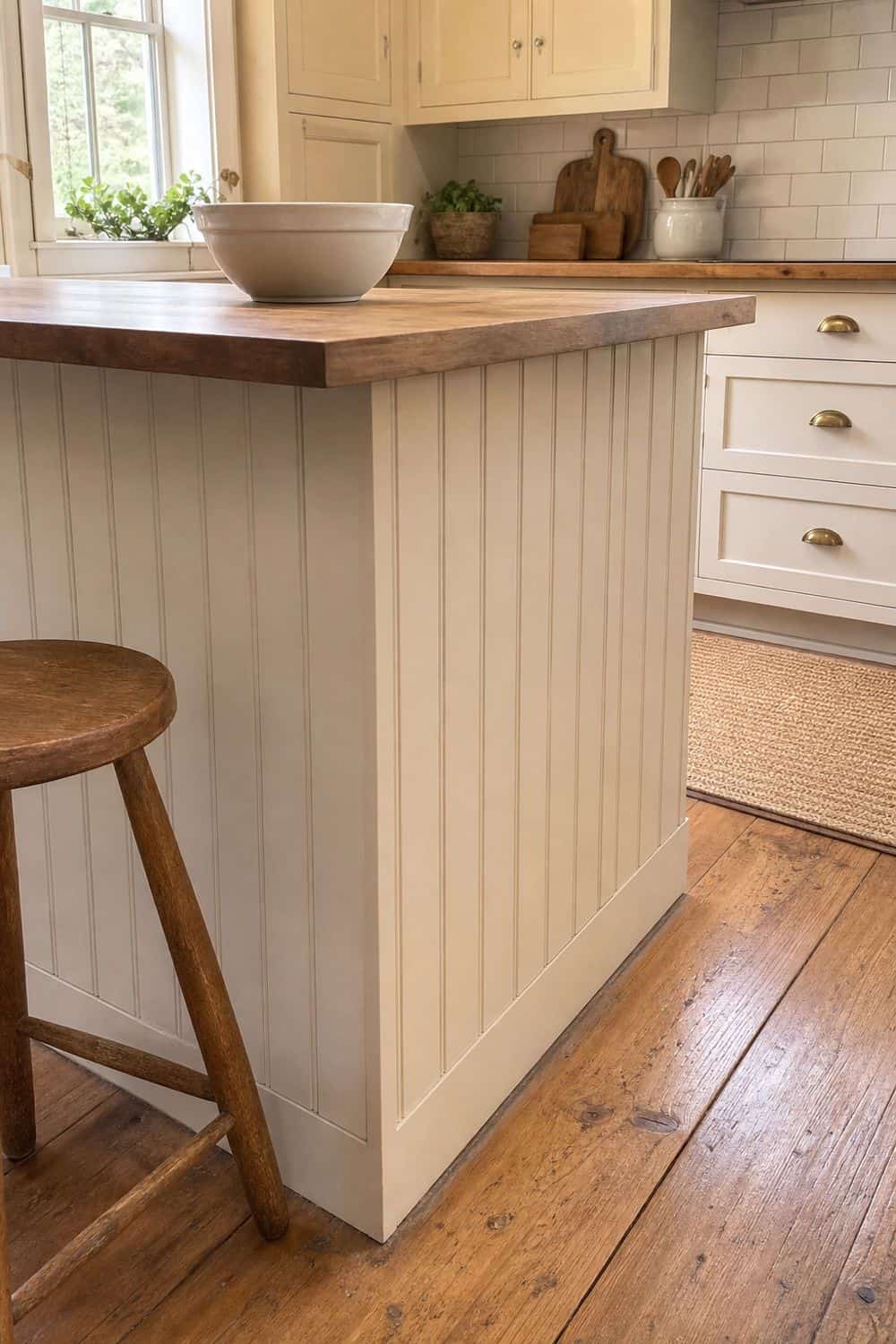
Beadboard is one of the quickest ways to make a cottage kitchen design feel more built-in and gentle. Use it on an island face, the back of open shelving, a breakfast nook wall, or a short cabinet end panel. Paint it cream, warm white, pale blue, muted green, or putty so the detail feels soft instead of busy. Paintable beadboard wallpaper can be a useful low-commitment or budget option when real paneling is not realistic, especially on a plain cabinet end that needs texture.
2. Wall Plate Rack for Everyday Dishes
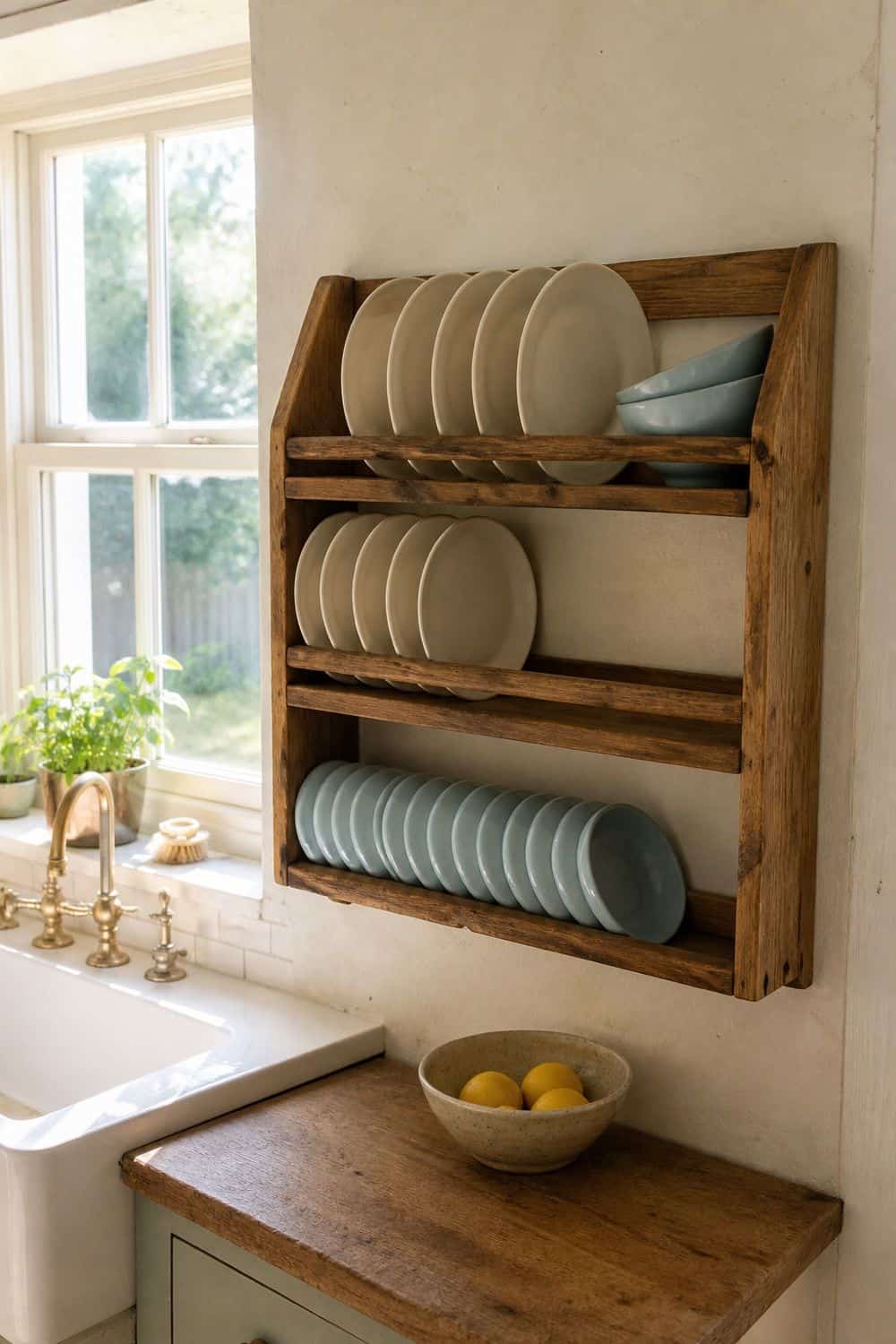
Wall plate racks are most useful when they hold plates and shallow bowls you reach for often. Place one near the dishwasher, sink, breakfast table, or main serving area so the display supports the way dishes move through the room.
Keep the rack shallow and secure, especially in a narrow kitchen. A small row of cream plates, blue-and-white dishes, or mixed vintage plates can look collected without becoming a wall of fragile decor. If the rack starts holding random platters, mail, or seasonal pieces, it will lose the practical cottage feeling.
3. One Small Open Shelf Moment
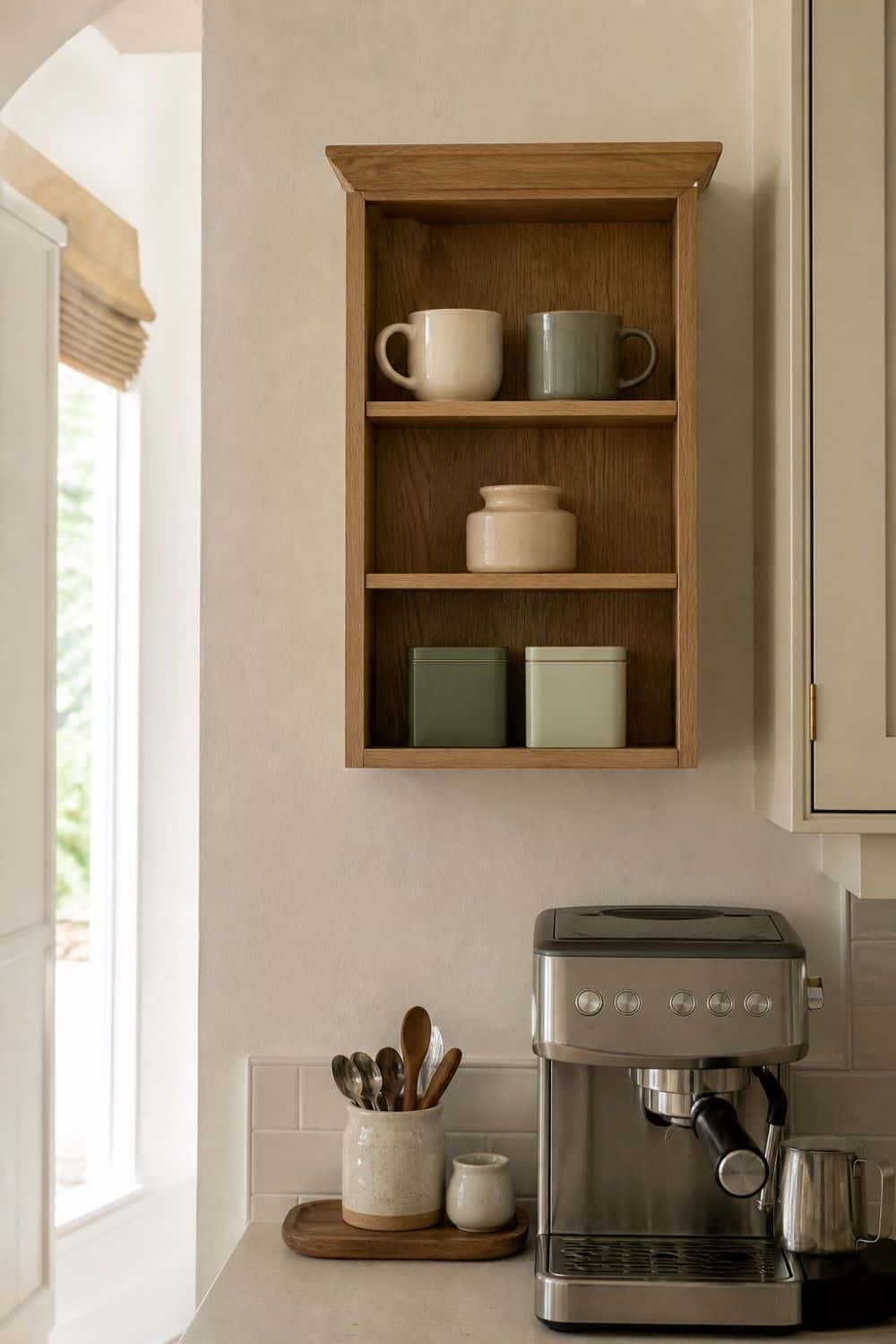
Cottage kitchen shelves feel best when they are small, pared back, and close to the routine they serve. A short shelf near a coffee corner can hold mugs and tea tins, while a shelf beside the range can hold salt, oil, and one small crock. Leave gaps between objects and keep pantry packaging behind closed doors. The point is a useful cottage moment, not a storage wall that has to be dusted constantly, so choose a shelf depth that fits your real dishes.
4. Freestanding Hutch
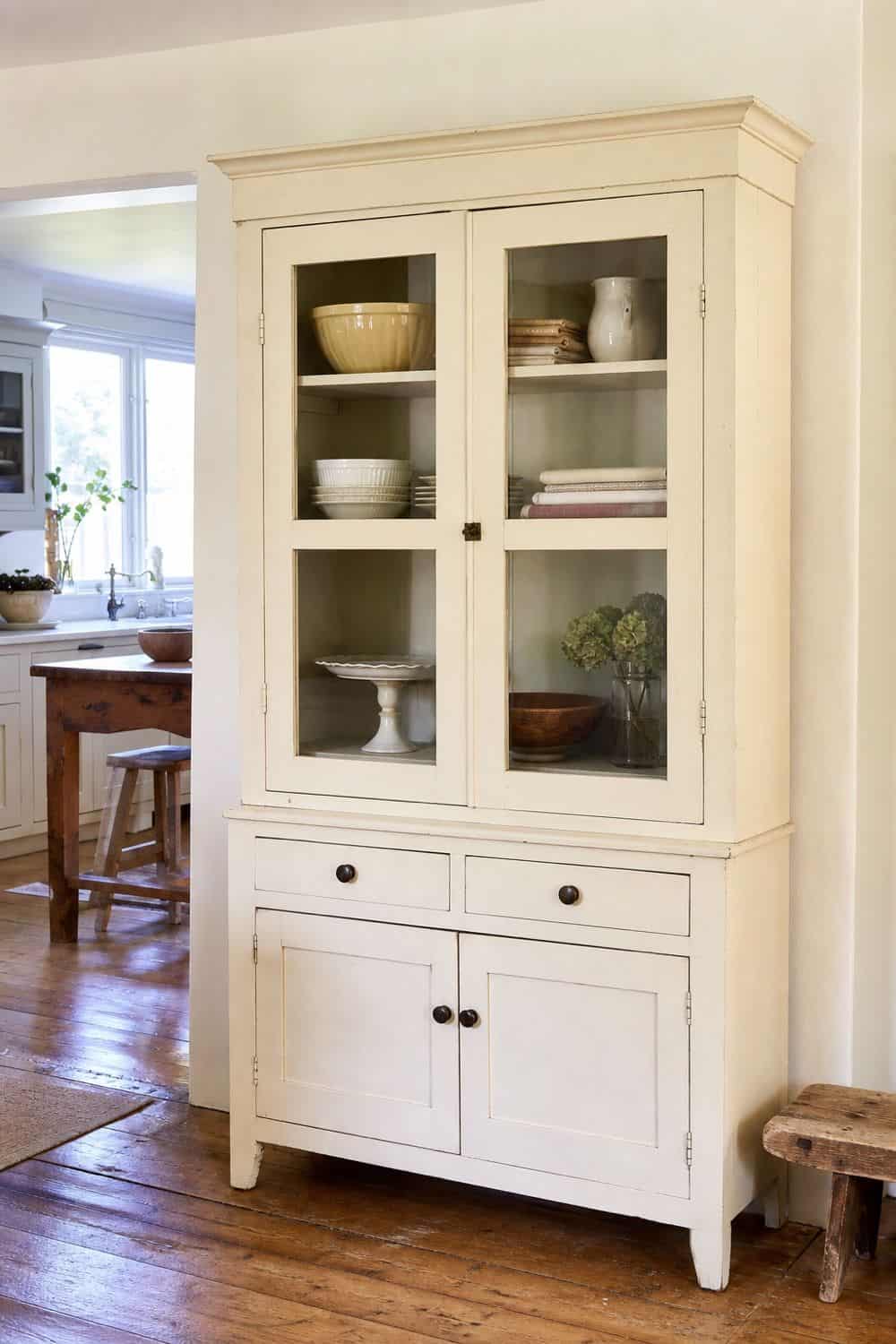
Freestanding hutches can soften a kitchen full of fitted cabinets. Use one for dishes, linens, serving bowls, cake stands, cookbooks, or pantry overflow, depending on what your built-ins do not handle well.
Scale matters more than charm. A tall hutch needs enough wall space and door clearance, while a lower hutch can double as a serving surface. Painted finishes feel light and cottage-like, while warm wood can ground a cream kitchen.
If the hutch has glass doors, choose what shows through them carefully. Group dishes by color or use, leave a little empty space between stacks, and hide mismatched storage containers somewhere else so the hutch reads as storage furniture rather than a crowded display case.
5. Antique Sideboard or Buffet

A sideboard is different from a hutch because it gives you a lower surface to use during real kitchen moments. It can hold a lamp, bread board, fruit bowl, coffee supplies, extra napkins, or serving pieces for dinner.
Mix old wood with painted cabinetry for a layered cottage kitchen effect. The contrast keeps the room from looking like one matching cabinet order. In a tighter kitchen, choose a narrow sideboard with drawers so it adds storage without blocking traffic.
Check the top height before buying. It should feel usable for setting down plates or trays, not just decorative, and the drawers should be deep enough for linens, candles, extra flatware, or serving tools that otherwise drift into kitchen counters.
6. Bin Pulls and Latches
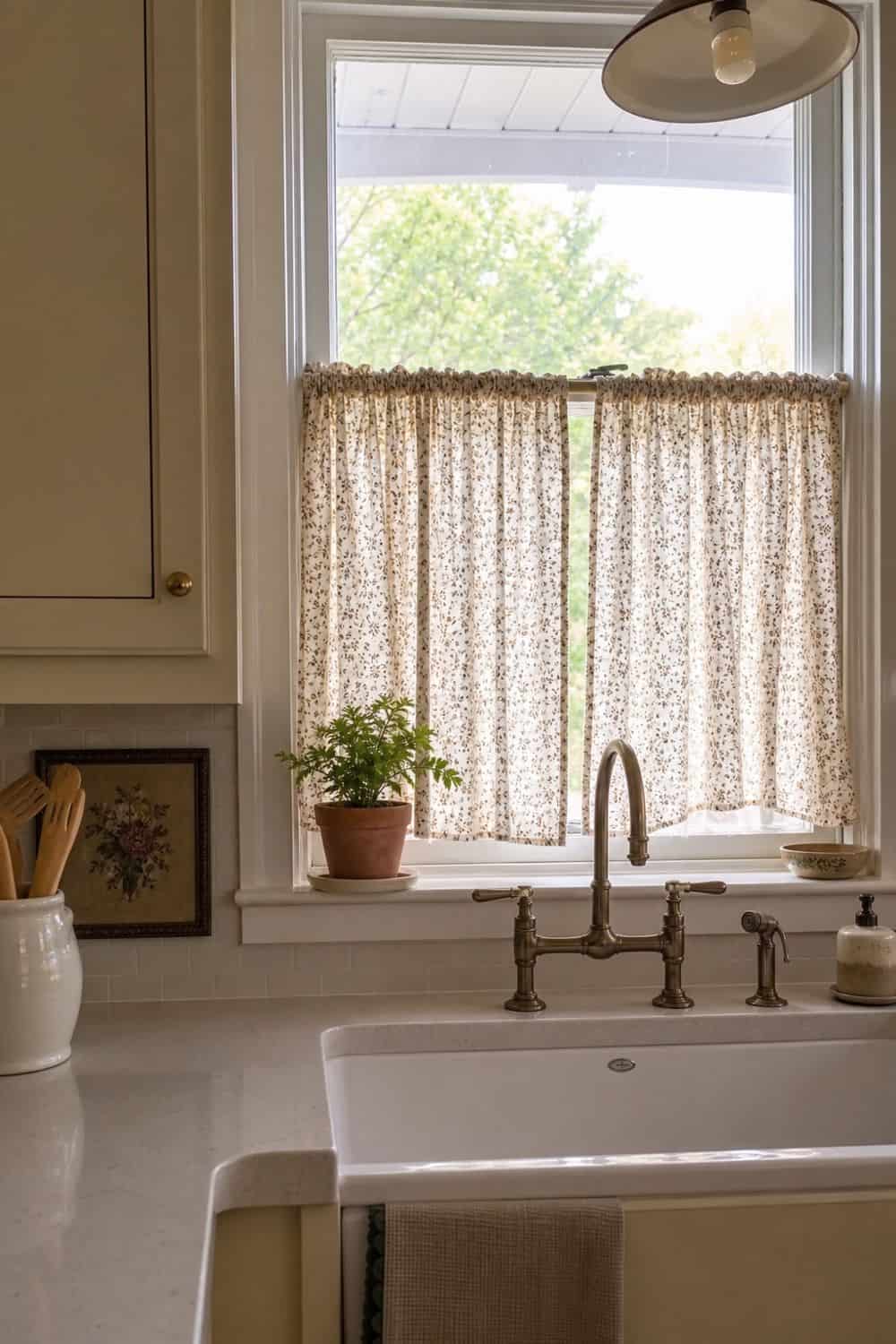
Bin pulls, cup pulls, glass knobs, and latch-style hardware can make plain cottage kitchen cabinets feel more furniture-like. Aged brass feels warm, polished nickel feels lighter, and oil-rubbed bronze can work when the palette has deeper wood or green. Keep the shapes comfortable for cooking hands, and avoid mixing so many hardware styles that the cabinets start to look pieced together by accident. If you mix knobs and pulls, repeat each finish at least twice so the choice feels deliberate.
7. Floral Cafe Curtains
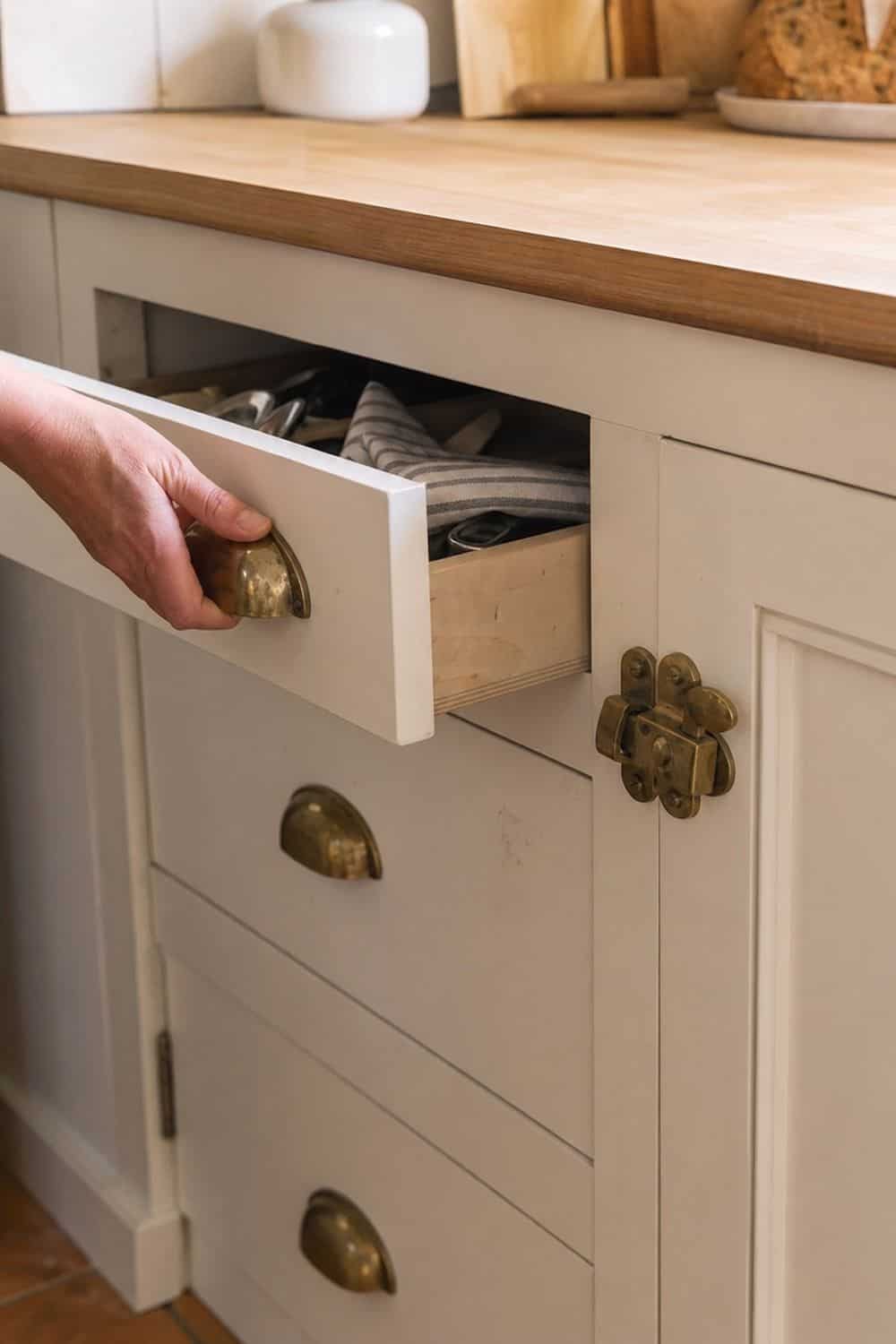
Floral cafe curtains are a classic cottage kitchen textile, especially over a sink window, street-facing window, or small breakfast nook. The lower-half coverage gives privacy without blocking all the light.
Choose a muted floral, small check, ticking stripe, or faded botanical pattern rather than a large high-contrast print. Keep the fabric washable and hang it on a plain rod so the window feels relaxed. If the kitchen already has patterned tile or a busy rug, use a quieter curtain to avoid visual competition.
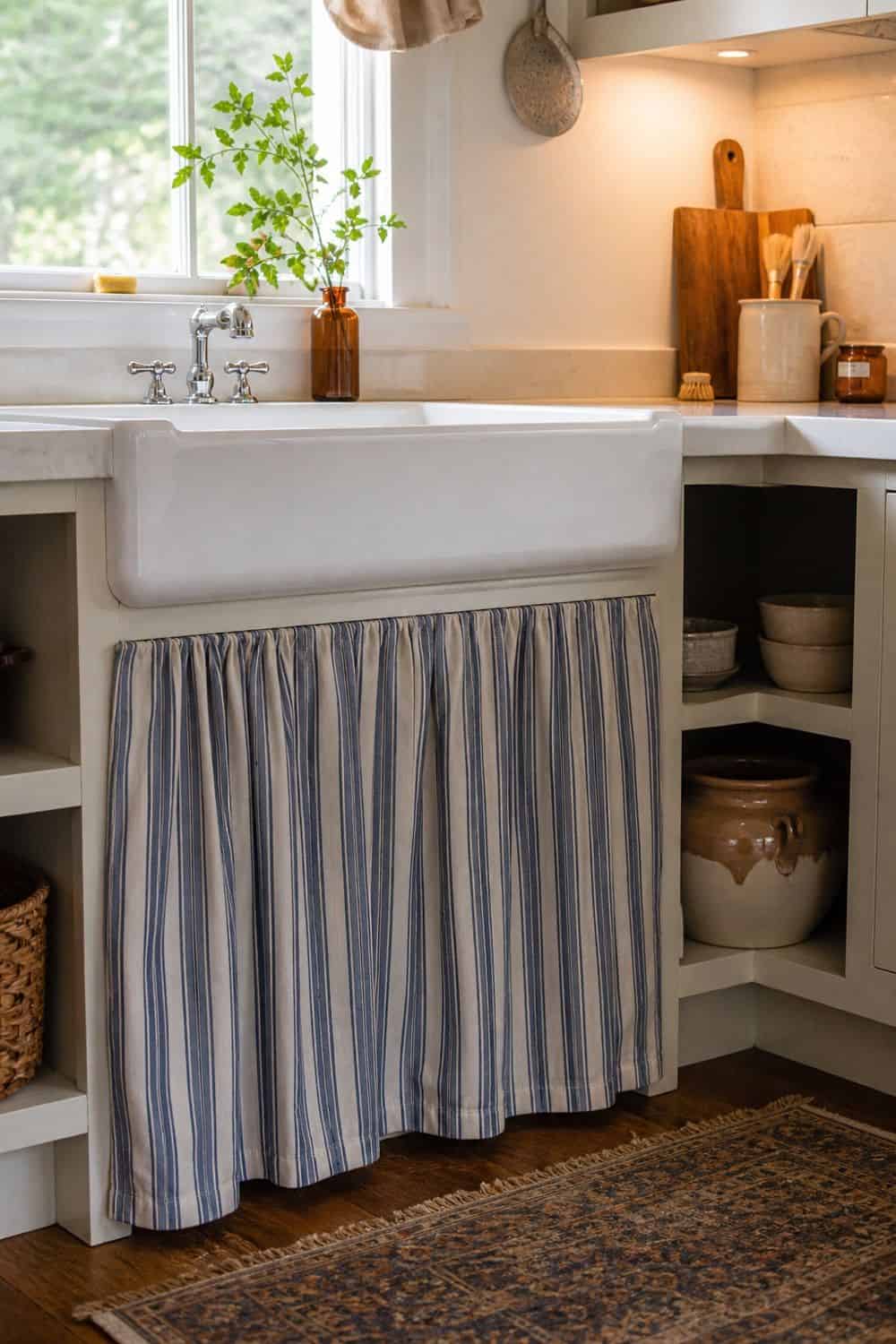
8. Sink Skirt Under an Open Base
Sink skirts can look charming in a cottage kitchen, but they have to work like kitchen details rather than costumes. Use one under an open sink base, utility counter, or small prep area where the fabric can hide cleaning supplies or awkward plumbing.
Linen, gingham, ticking stripe, or a tiny floral can all work if the fabric is washable. Mount the skirt so it slides or lifts easily, because daily access matters more than a perfect gather.
If the sink zone gets wet often, choose a darker or patterned fabric that will not show every splash. Keep the hem off the floor for easier cleaning.
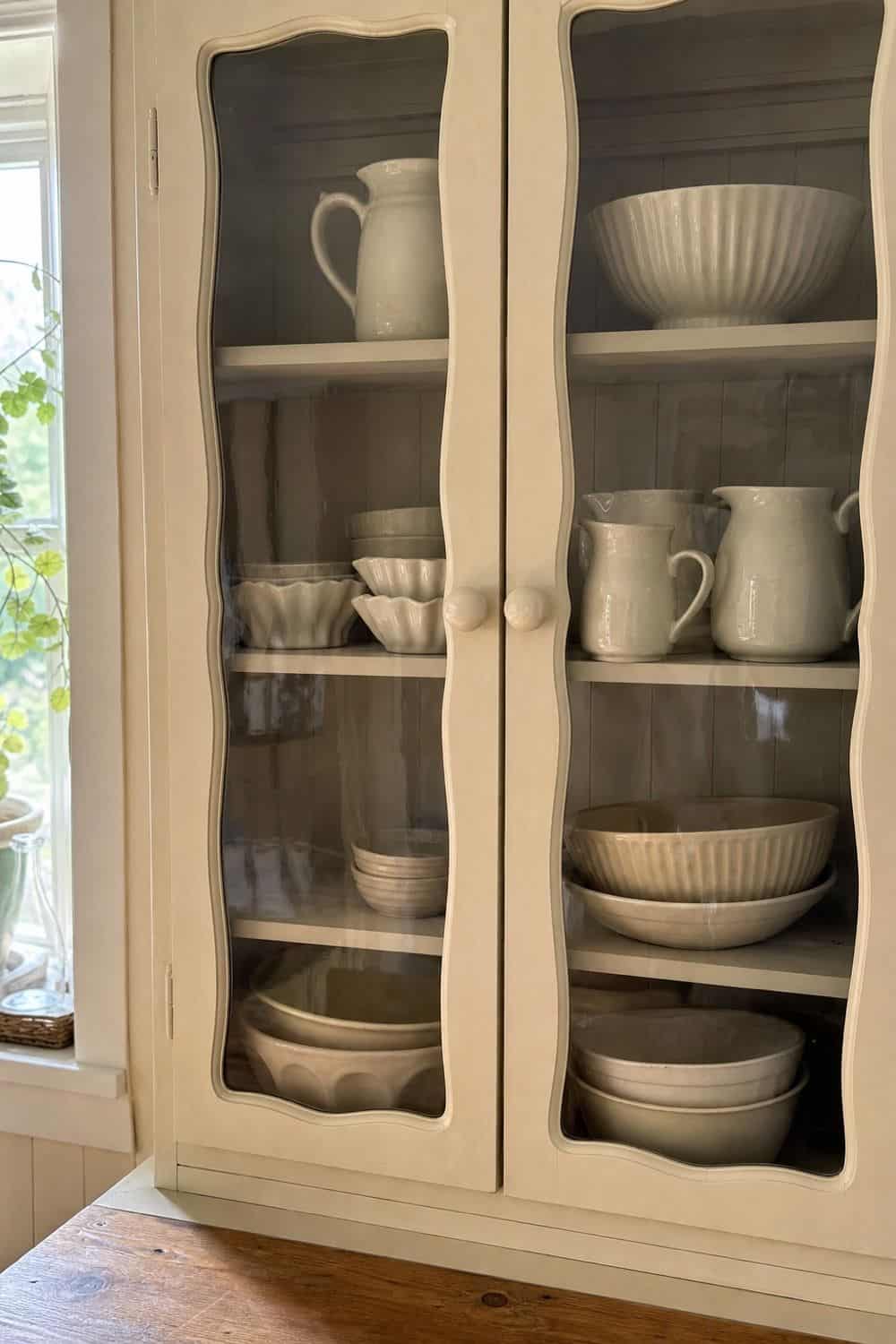
9. Display Cabinet Doors
Glass-front cabinet doors are a good middle ground between fully open shelves and closed storage. They let cottage dishes, pitchers, glassware, or mixing bowls become part of the room without exposing everything to grease and dust. Clear glass works if the inside stays tidy and useful, while seeded, ribbed, or slightly wavy glass is more forgiving when stacks are not perfect. Use glass fronts where the contents are naturally pretty and frequently used. Pantry goods, plastic containers, and backstock usually belong behind solid doors.
10. Soft Cream or Warm White Cabinets
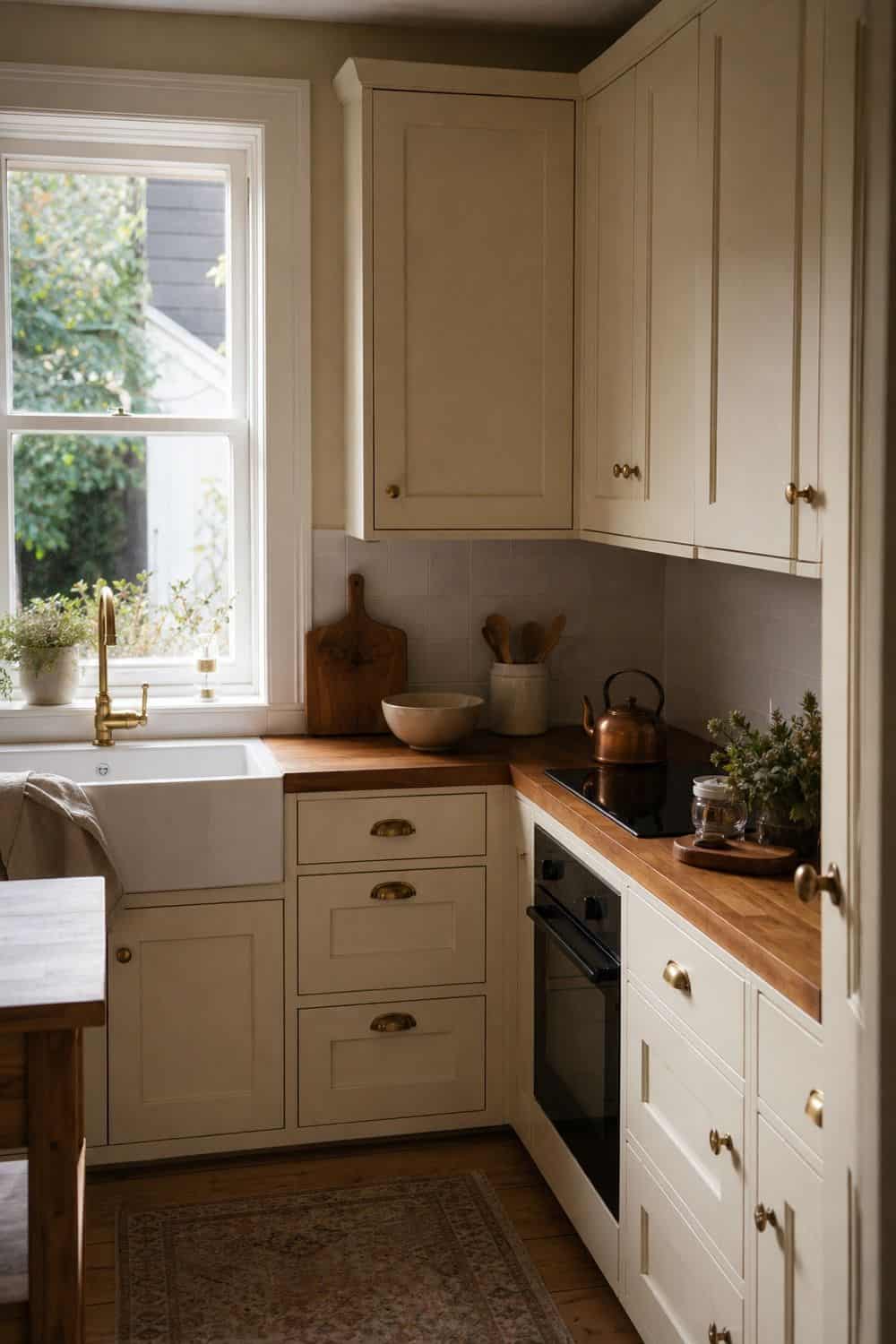
Soft cream, ivory, warm white, and putty are easy cottage kitchen colors because they let hardware, dishes, wood, and textiles add character. They feel softer than stark white but still keep a tighter kitchen bright.
Test the paint beside your counters and floor before repainting everything. Some creams turn yellow next to cool stone, while some whites look gray beside warm wood. A cottage palette should feel gentle in real light, not just pretty on a paint card. If you are unsure, try the color on a cabinet end or pantry door first.
11. Muted Blue or Green Island
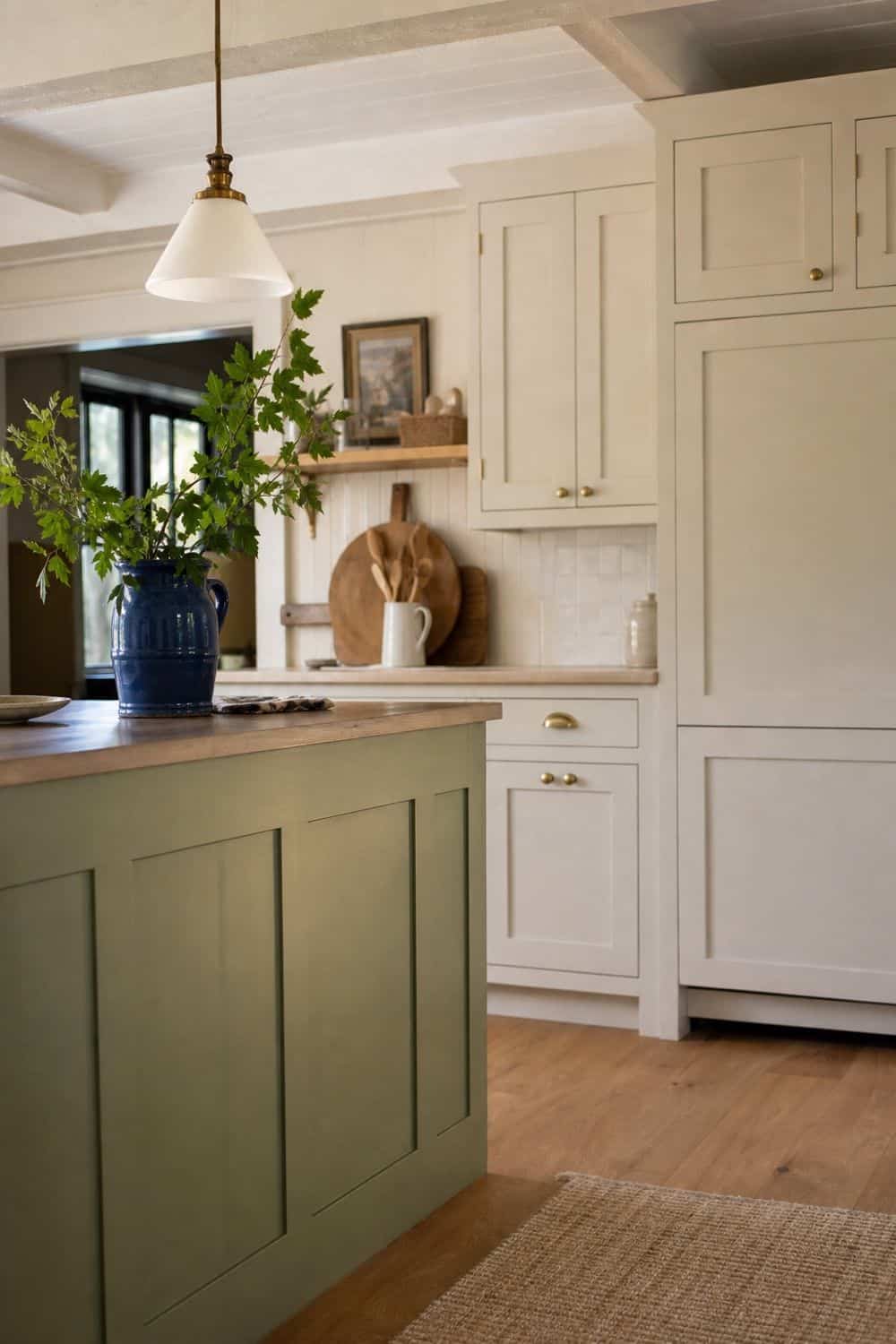
A muted island or lower cabinet color can add cottage charm without overwhelming the room. Sage, celadon, pale blue, dusty aqua, and soft gray-green all work well with cream cabinets, wood counters, brass hardware, and floral textiles. Keep the color softened and slightly aged so it feels collected rather than bright or coastal-themed. This is also a lovely place to use a braver color because the surrounding cabinets can stay quiet. Repeat the shade once in a curtain, crock, or small artwork so it feels connected.
12. Butcher Block or Warm Wood
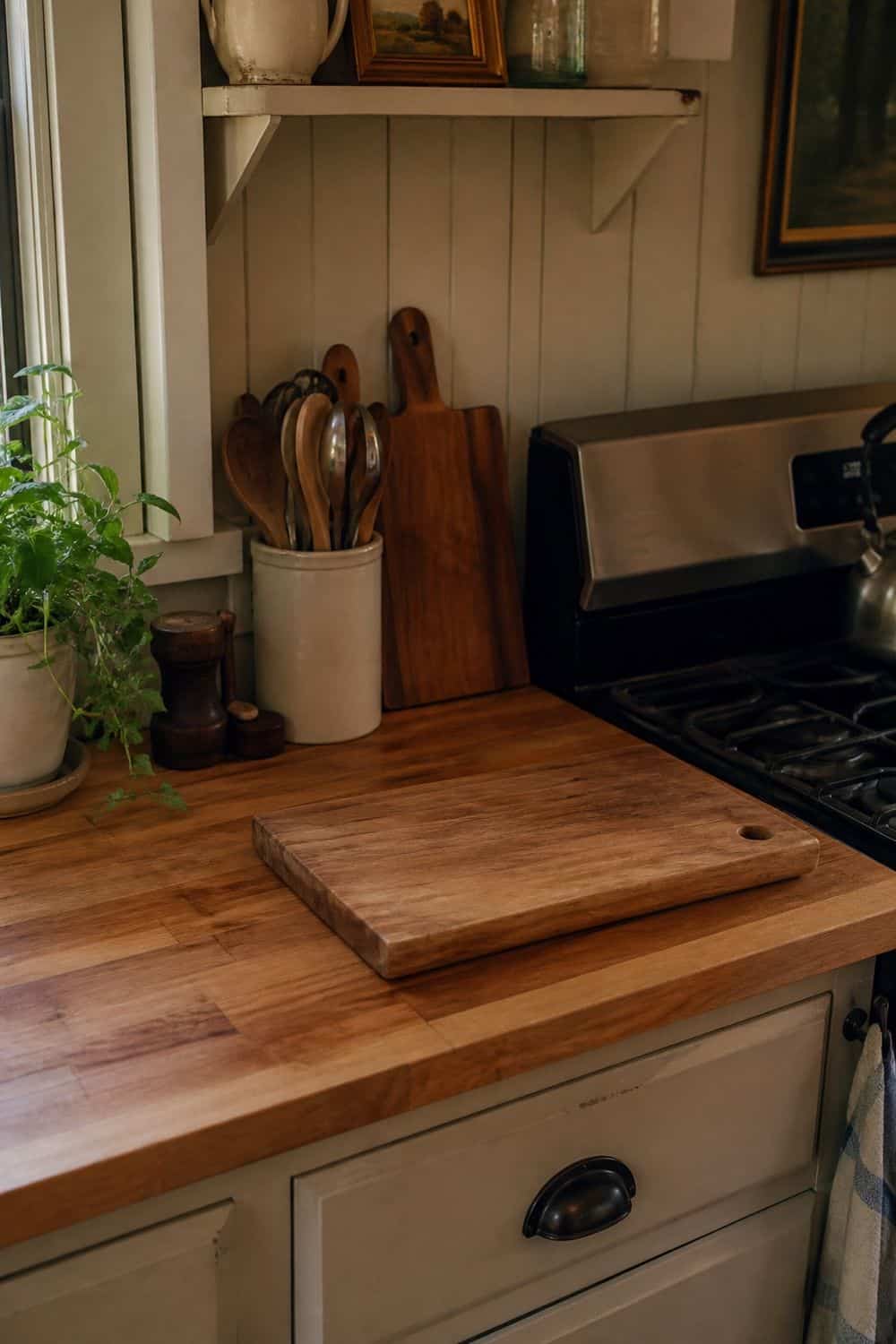
Butcher block, a small wood prep table, wood shelves, or a freestanding work surface can make a cottage kitchen feel warmer and less fitted. Wood pairs especially well with cream paint, beadboard, vintage hardware, and soft green or blue accents.
Use wood where it helps the kitchen function: beside the range as a landing zone, near the sink for prep, or on a small table where you set down groceries. If you cook heavily, pay attention to sealing, oiling, and water exposure.
A single wood surface is often enough. Too many wood tones can make a soft cottage kitchen feel heavier than intended, so repeat one finish deliberately or separate different woods with painted cabinets, cream walls, or a soft runner.
13. Small Table Lamp on the Counter
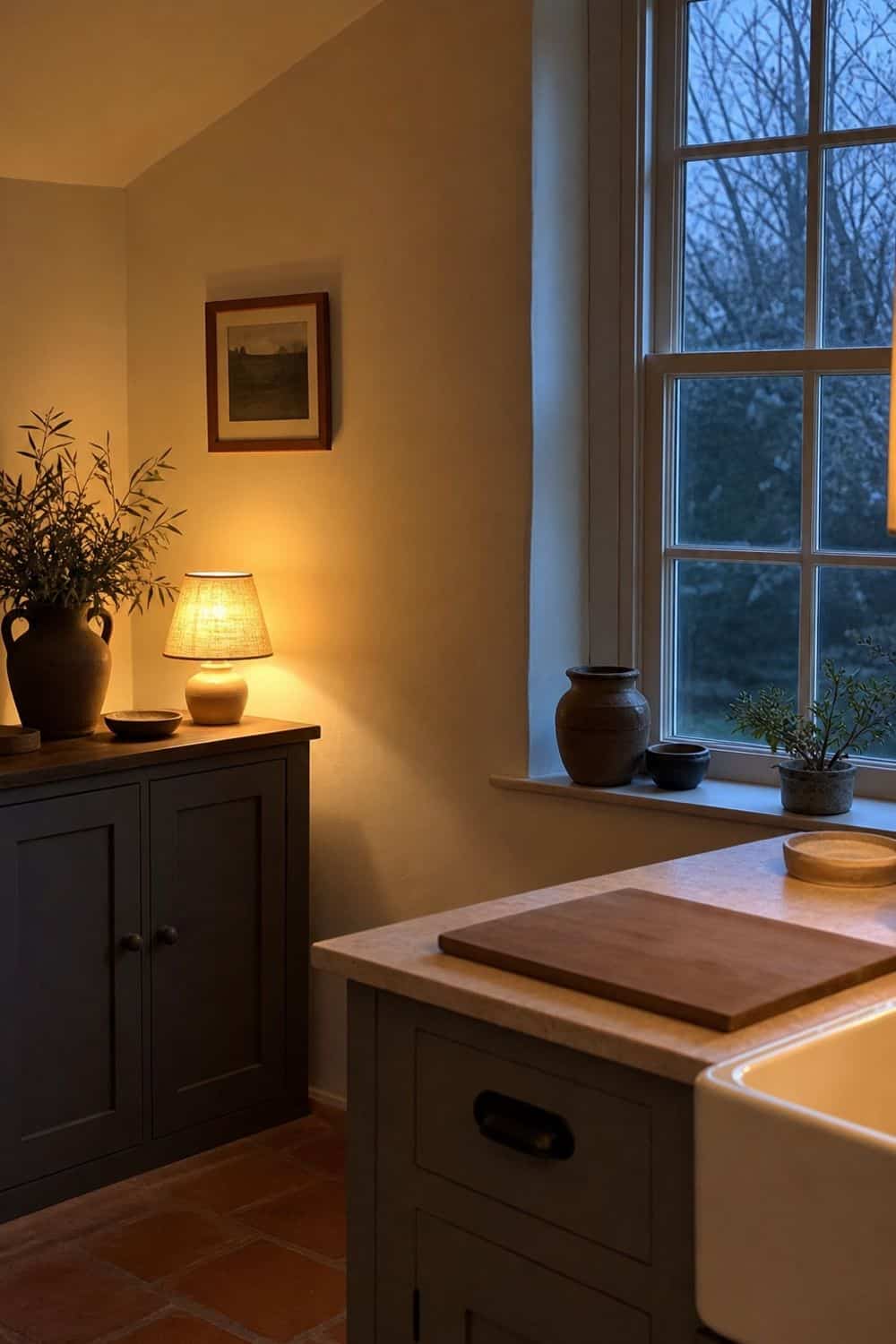
Small table lamps can make a cottage kitchen feel softer at night, especially on a sideboard, hutch surface, deep counter corner, or shelf near the breakfast area. They are not a substitute for task lighting over knives and hot pans, but they help the room feel less harsh after dinner.
Use a washable shade or a small cordless lamp where cords would look messy. Keep it away from splatter zones, steam, and the main prep counter. The lamp should make the kitchen feel like a room, not steal space from cooking.
14. Warm Pendant Lighting
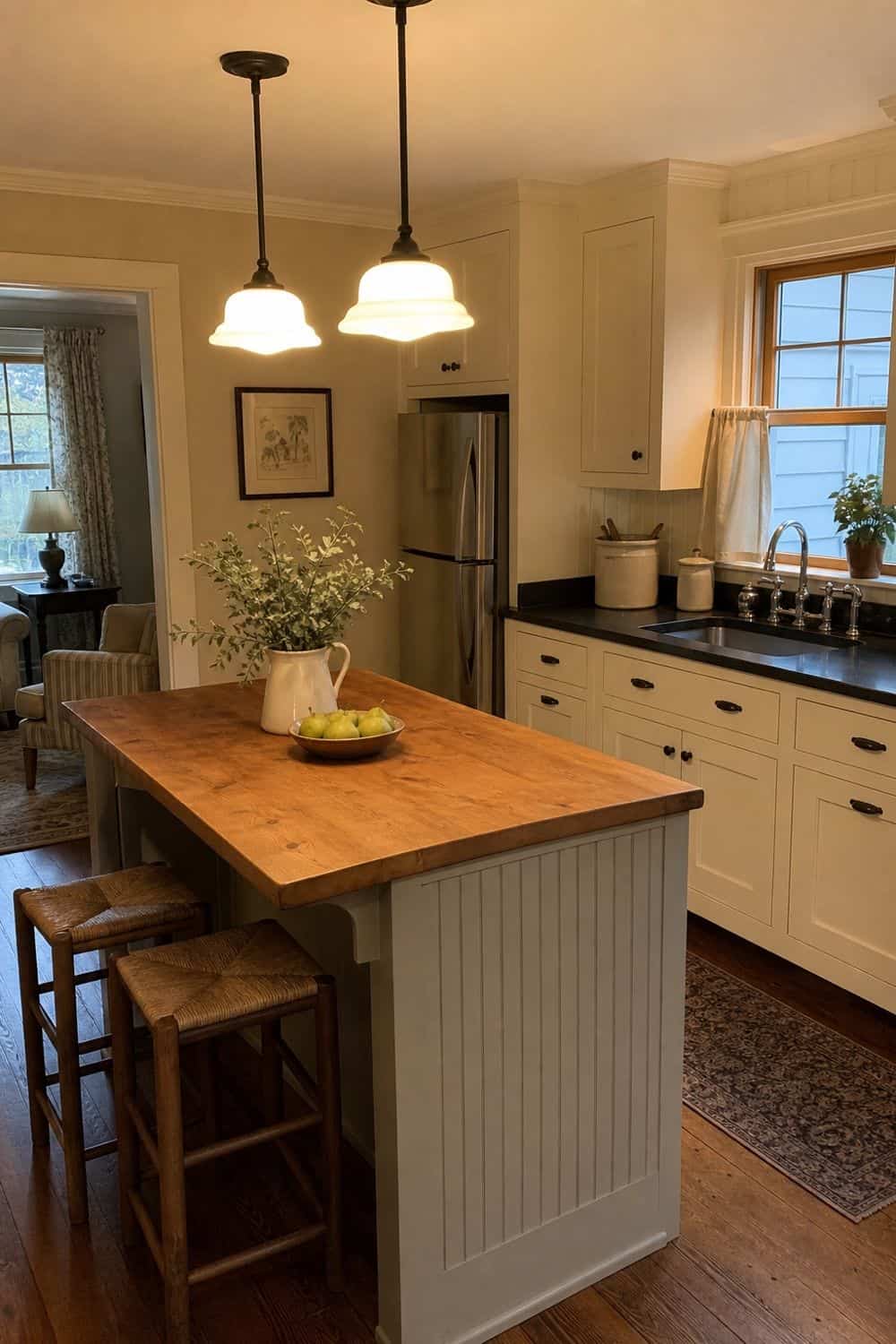
Milk glass, aged brass, enamel, ceramic, or pleated-shade pendants can fit a cottage kitchen better than stark industrial fixtures. The shape should feel soft, but the light still needs to support cooking and eating.
Over an island, keep pendants high enough that they do not block sightlines. Over a small table, one pendant can make the dining corner feel settled.
Use warm bulbs and dimmers when possible. Cold light can make cream cabinets, beadboard, and vintage pieces look flat, while warm layered light helps the kitchen feel softer after dinner.
15. Collected Ceramics With Restraint
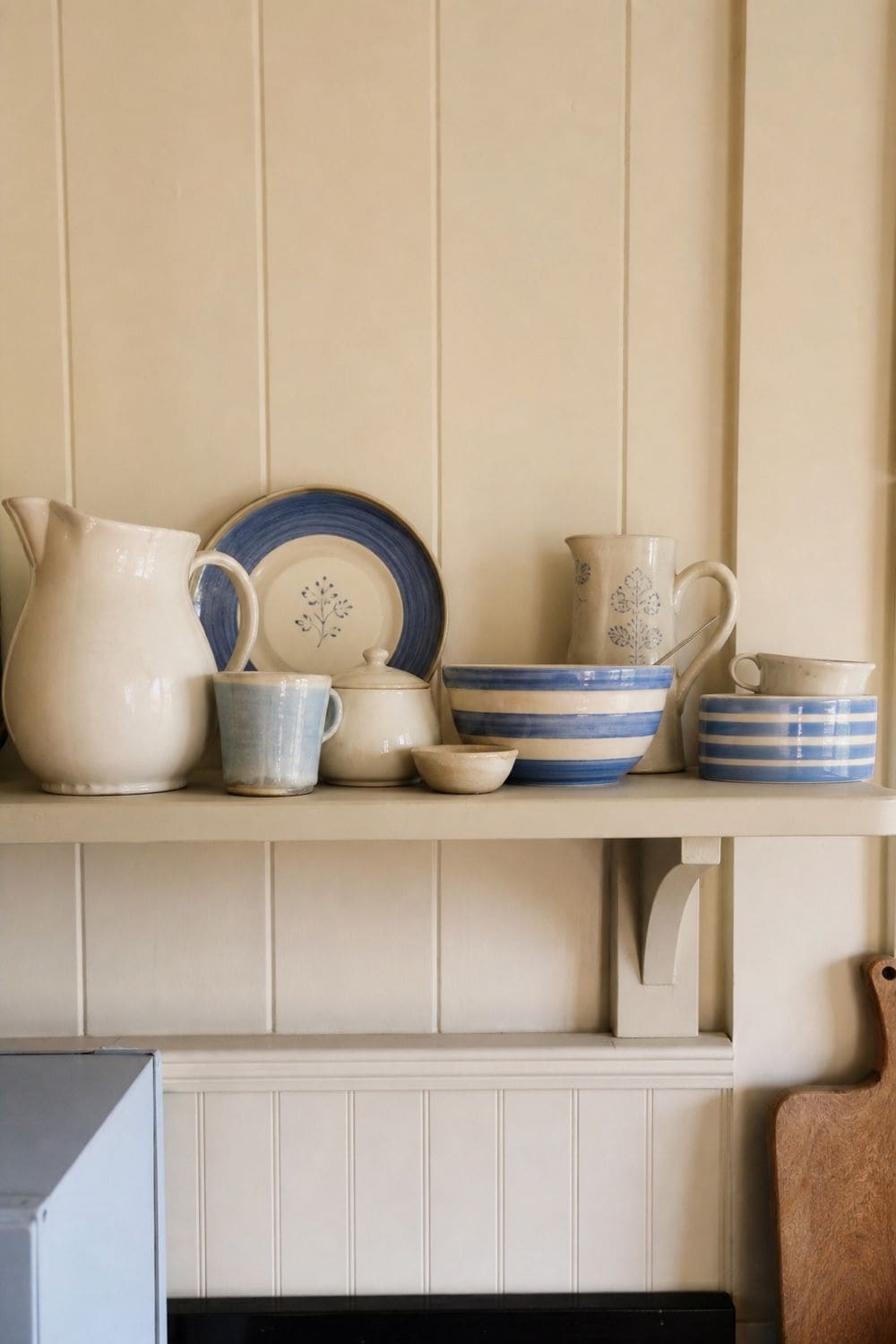
Collected bowls, pitchers, plates, and mugs can give cottage kitchen shelves a lived-in feeling. The trick is choosing a narrow color story, such as cream and blue, white and green, or soft floral pieces mixed with plain dishes.
Group by shape or use rather than sprinkling single pieces everywhere. A small stack of bowls near breakfast supplies is more believable than a random pitcher in every corner. Rotate pieces seasonally if you love collecting, and keep the everyday shelf easy to wipe.
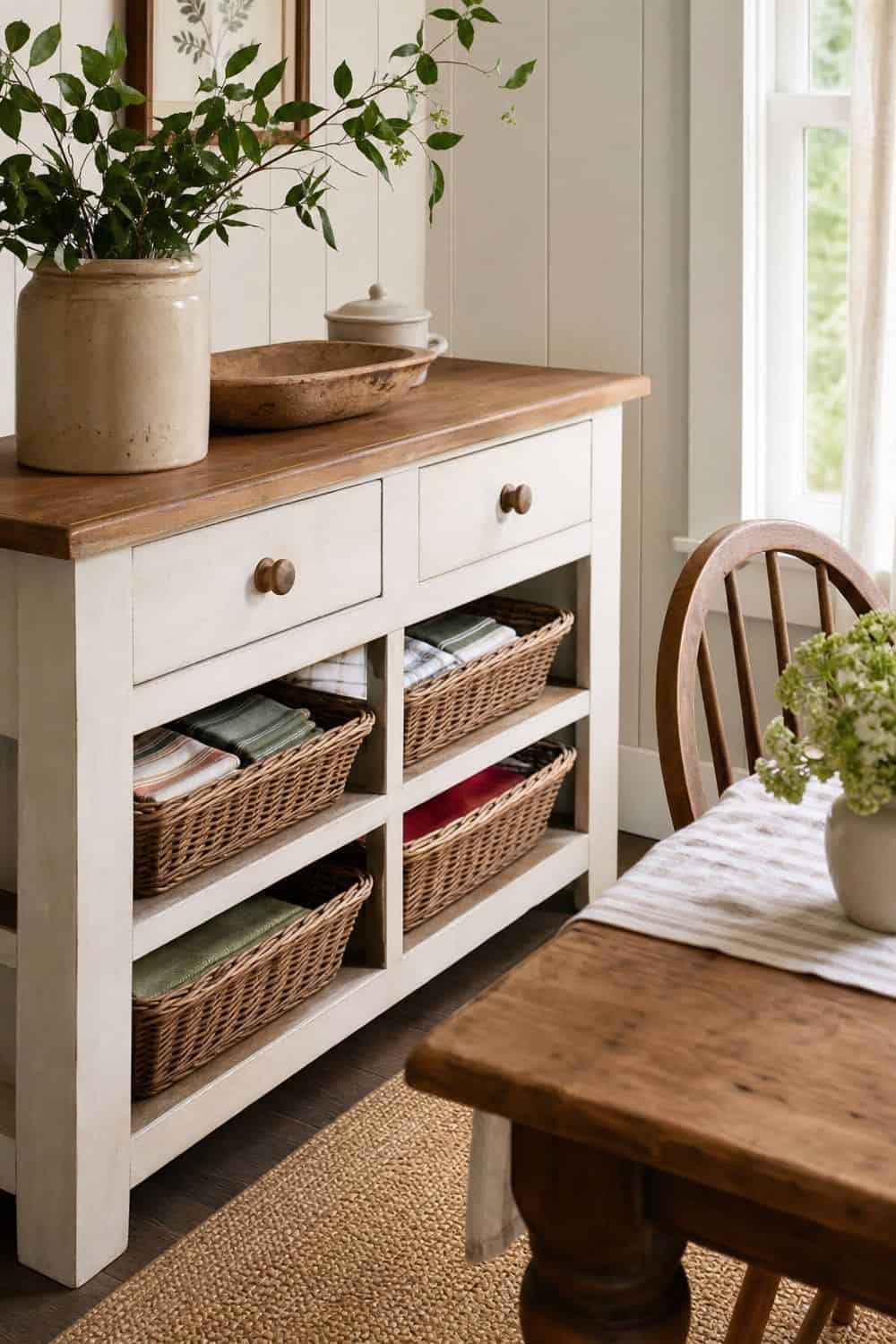
16. Wicker Baskets for Soft Storage
Wicker baskets can hold linens, produce, pantry overflow, lunch supplies, or open-shelf odds and ends. They add cottage texture, but they should fit the shelf or cabinet properly and have one specific job. Avoid using baskets as vague catchalls, because that is how a charming kitchen starts to feel messy. Labels can help if the baskets live in a pantry cabinet or under a sideboard where several people reach for them. Choose handles if the basket needs to move often.
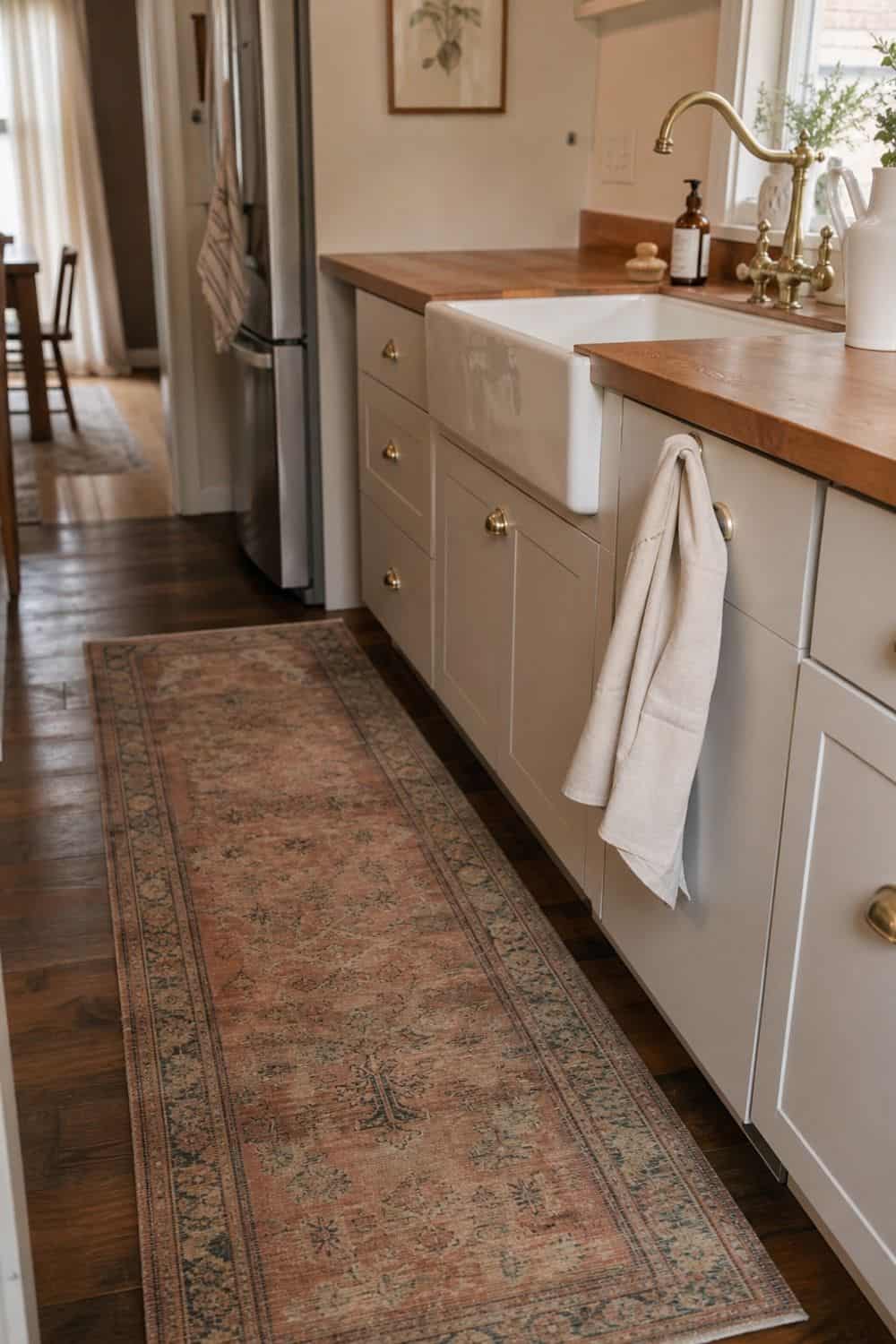
17. Vintage-Style Rug Runner
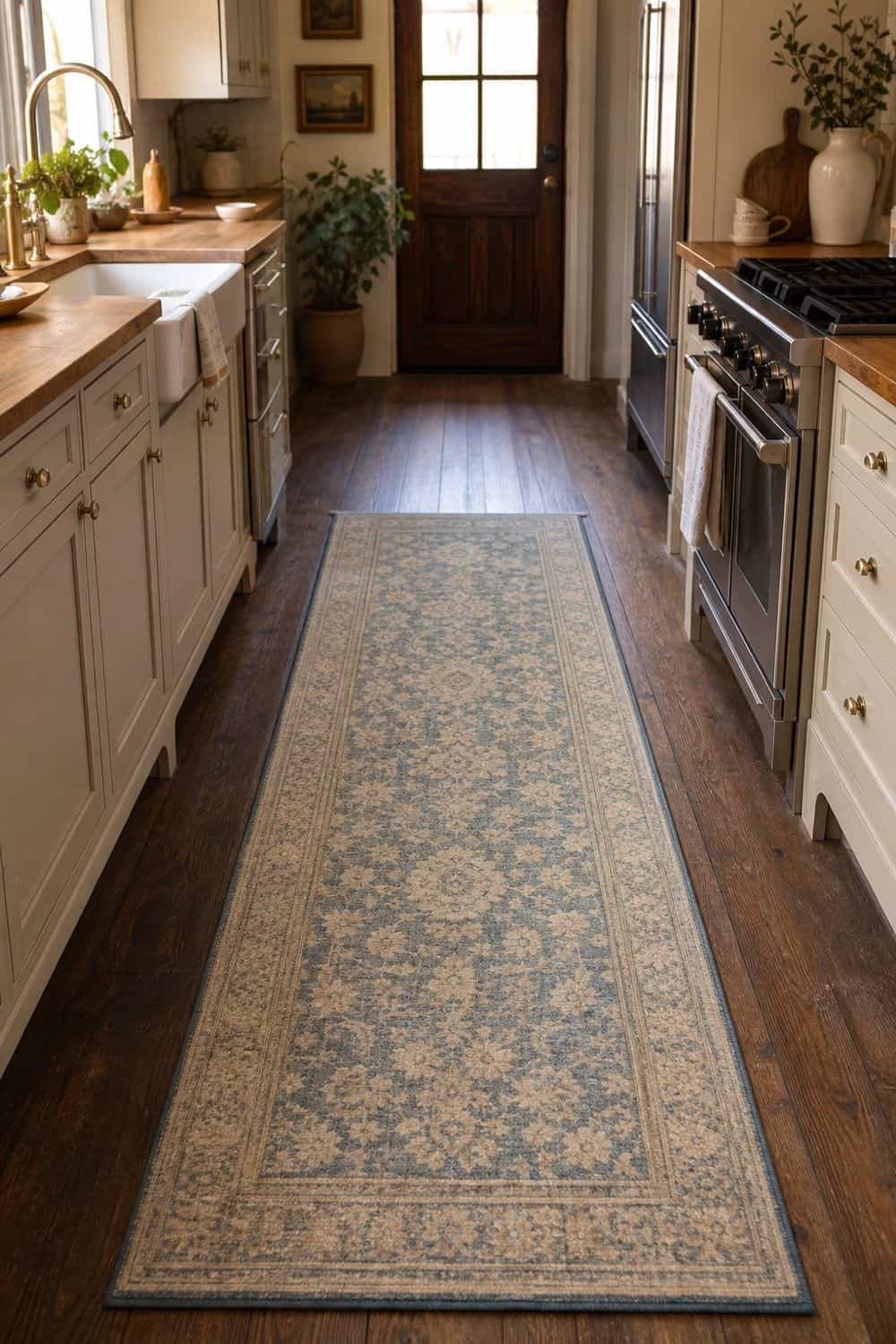
A faded runner can make a cottage kitchen feel less hard, especially in front of the sink, along a galley run, or between the island and cabinets. Muted florals, faded red, soft blue, green, cream, and worn Persian-style patterns can all work.
Choose low-pile or washable options that will not catch cabinet doors or become a trip hazard. A rug pad matters, especially near a sink where the floor can get damp. If the kitchen already has floral curtains or patterned dishes, choose a quieter runner so the room stays layered rather than crowded.
18. Shutters or Roman Shades
Cafe shutters, linen Roman shades, and small floral shades all suit cottage kitchen windows when they match the room’s privacy needs. Shutters feel crisp and classic, while fabric shades soften the space and can add a gentle pattern.
Think about splashes before choosing fabric near a sink. Washable or wipeable materials are easier to live with, and a shade mounted slightly higher can stay clear of faucet spray. For a tighter kitchen, keep the shade color close to the wall or cabinet color so the window does not feel heavy.
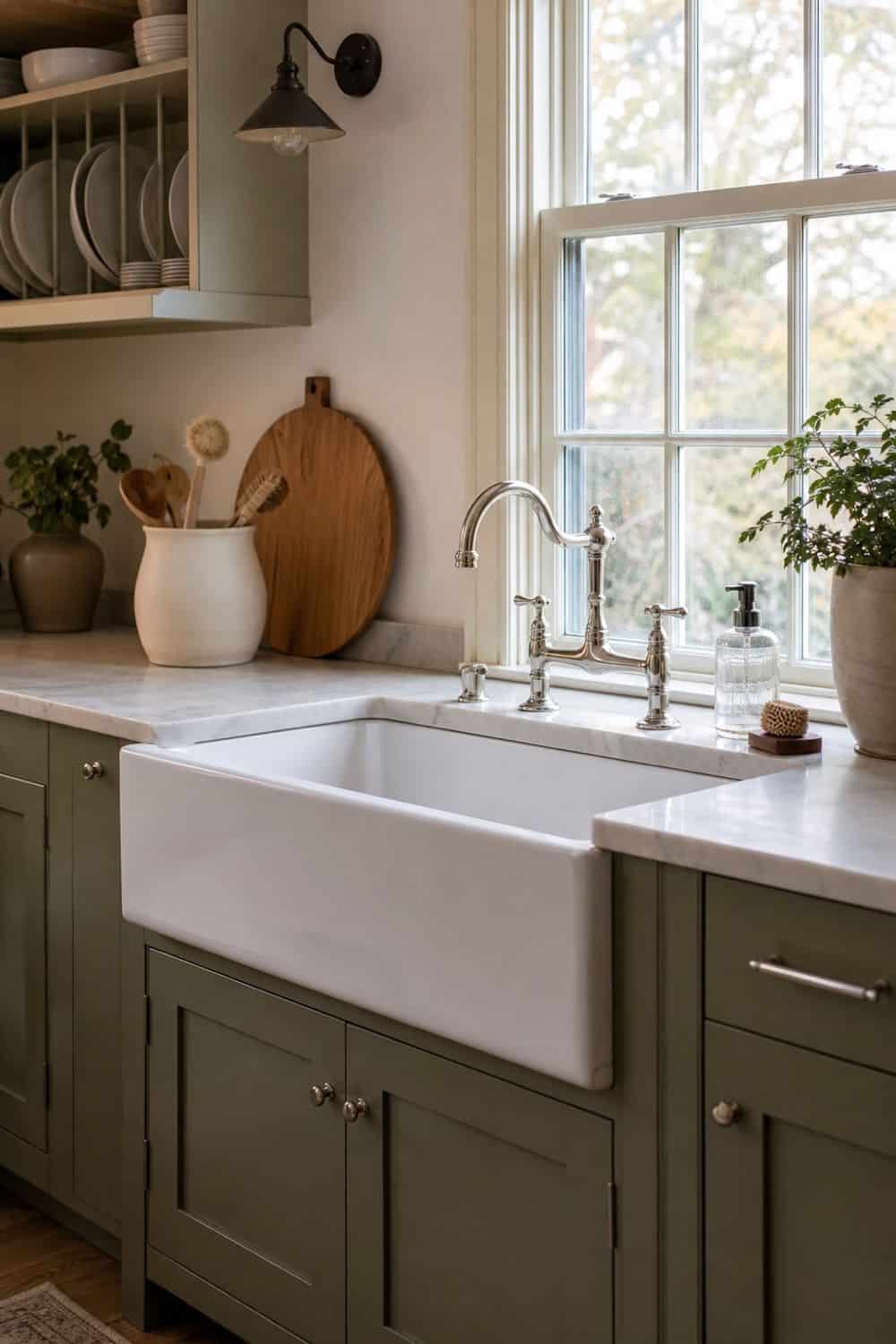
19. Apron-Front Sink as a Focal Point

An apron-front sink can anchor a cottage kitchen, especially with beadboard, a bridge faucet, cafe curtains, wood counters, or cream cabinets. It gives the sink wall a clear focal point without needing extra decor, and it makes everyday washing up feel a little more cared for.
This is not always a simple swap because apron-front sinks often require cabinet changes, counter adjustments, and careful measurements. If you are not renovating, borrow the feeling in smaller ways: a skirted sink base, polished nickel faucet, beadboard behind the sink, or a simple curtain can still soften the area. Keep the surrounding counter clear so the sink remains the feature.
20. Bridge Faucet or Vintage-Style Tap

Bridge faucets can make a cottage kitchen sink feel more traditional without adding clutter. Unlacquered brass feels aged and warm, polished nickel feels bright and classic, and chrome can look crisp in a lighter kitchen. Match the finish to your cabinet hardware or repeat it in one other place so the sink zone feels deliberate. Check spout height and reach carefully, especially if you wash large pans or use a deep farmhouse-style sink. A side sprayer can be worth it if the basin is wide.
21. Art Instead of Extra Decor
A small landscape, botanical print, still life, framed recipe, or tiny oil-style piece can do more for cottage character than a counter full of decorative objects. Art makes the kitchen feel connected to the rest of the home, which is exactly what keeps the room from feeling like a showroom.
Place it away from heavy steam and grease. A breakfast nook, pantry wall, open shelf ledge, or sideboard is usually safer than the range wall. One or two pieces are enough; if every blank wall gets a frame, the kitchen can start to feel themed instead of collected.
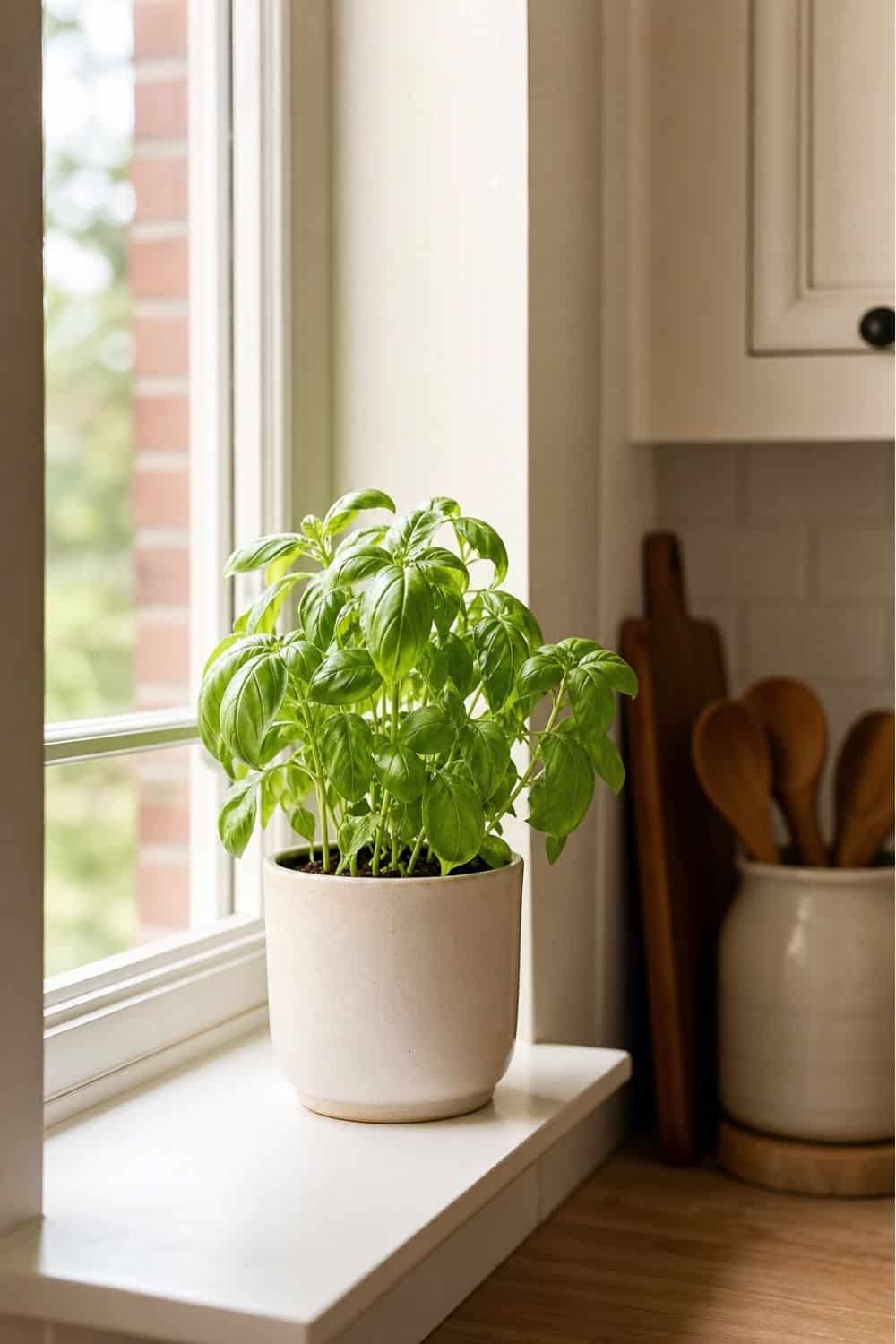
22. Small Herb Pot or Flower Jug

Fresh herbs, a flower jug, or a seasonal branch can add cottage softness without requiring another shelf of decor. Put it on a hutch, breakfast table, windowsill, or sideboard where it will not interrupt chopping or dishwashing.
Keep the scale modest. A huge bouquet on the only prep counter will be moved every day, which means it is not really working for the kitchen. Use a ceramic pitcher, simple crock, or glass jar that already fits the room’s palette. Fresh herbs are especially useful because they look pretty and support cooking, and when the arrangement fades, clear it quickly so the cottage look stays cared for.
23. Furniture Feet or Toe-Kick Detail
Furniture feet, skirted toe kicks, simple molding, or end panels can soften a run of flat base cabinets. This detail is especially helpful on an island, sink base, or visible cabinet end where the kitchen would otherwise look boxy.
Keep the profile modest. Cottage cabinet details should feel like quiet joinery, not ornate furniture pasted onto every base cabinet. For a low-commitment version, a freestanding island or hutch can give you the furniture feeling without changing built-ins or existing cabinet fronts.
24. Pantry Cabinet That Feels Like a Larder

A larder-style pantry cabinet gives cottage utility a real home. Use it for dry goods, baking supplies, breakfast items, tea, snacks, or small appliances that would otherwise crowd the counter. Look for shelves, drawers, door racks, and enough depth for the items you buy most often, because a pretty pantry that cannot hold cereal boxes or flour is not very helpful.
Closed doors are part of the charm because they let the kitchen look soft while hiding practical packaging. If the cabinet has glass, use baskets or matching containers only for the visible shelves. This is also a good place to store the extra floral linens and serving pieces that do not need to be on display every day.
25. Cottage Look That Stays Useful and Calm
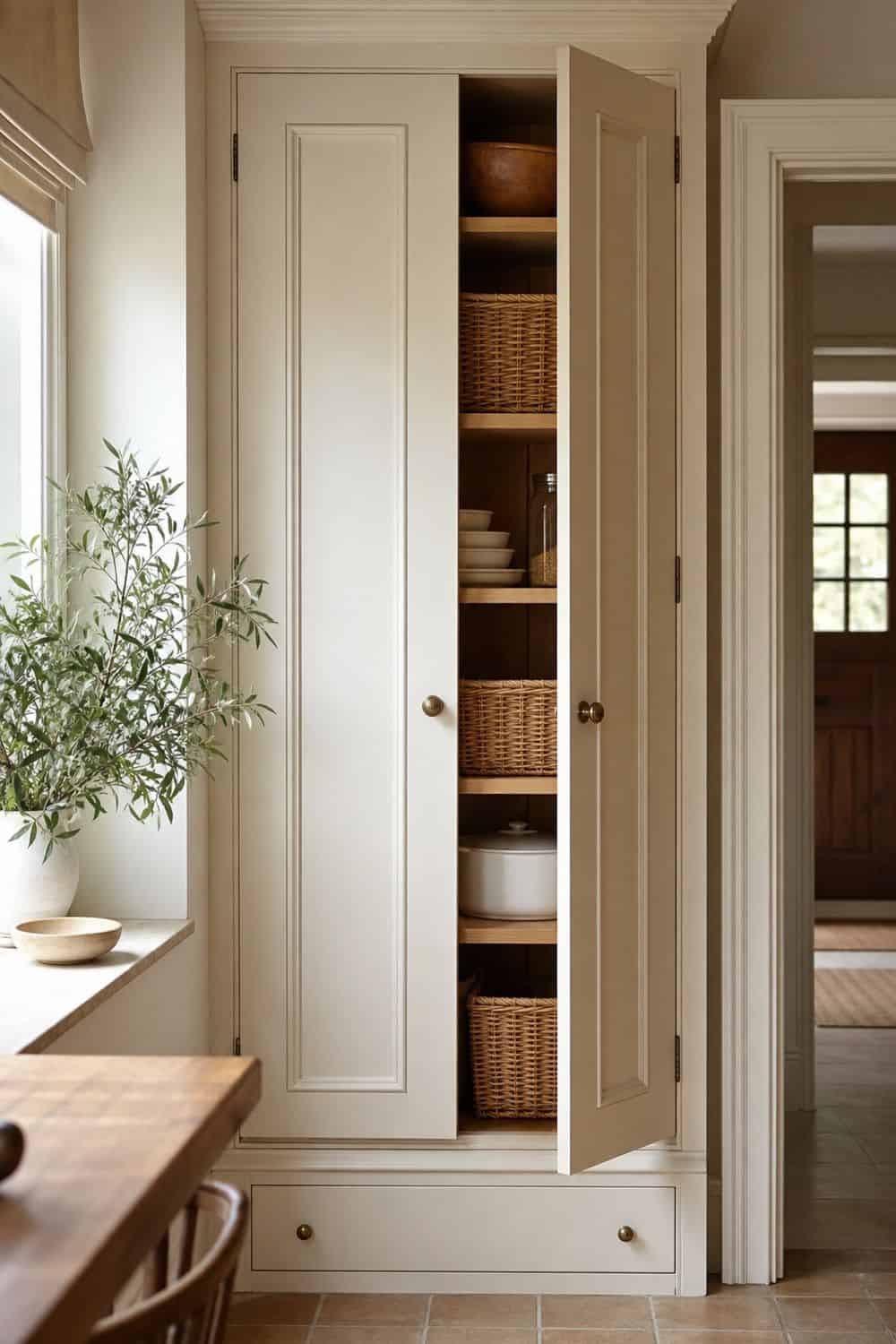
Cottage style can turn messy quickly when every vintage find, floral textile, and ceramic piece stays visible. Use a tray for oils, salt, or coffee items so the counter has one controlled grouping instead of scattered objects. Limit open shelves, group ceramics by color, hide pantry overflow, and keep textiles washable so the softness still feels practical.
When deciding what stays out, ask whether it supports cooking, serving, cleaning, storage, or a small daily ritual. If it only announces the style, it may belong somewhere else. The best cottage kitchens feel collected because the room has breathing space, not because every surface is full.
Cottage Kitchen Formula Notes
A balanced cottage kitchen usually includes soft color, beadboard or wood texture, one display moment, one vintage or freestanding furniture piece, warm lighting, practical textiles, and carefully chosen ceramics. If the room starts to feel too themed, remove the pieces that do not help with storage, cooking, lighting, or daily comfort.
Small Updates and Bigger Renovation Details
Small updates include hardware, cafe curtains, beadboard wallpaper, a rug runner, a plate rack, a small lamp, art, and a few vintage ceramics. Renovation-level cottage details include an apron-front sink, larder cabinet, furniture feet, wood floors, glass-front cabinets, and a bridge faucet.
Cottage is softer and more textile-driven than farmhouse style. It can still be practical, but it usually leans lighter, more collected, and less rustic-heavy.
Frequently Asked Questions
What makes a kitchen cottage style?
A cottage kitchen usually has soft colors, beadboard or wood texture, vintage-style hardware, freestanding furniture, plate racks, textiles, warm lighting, and collected ceramics. It should feel lived-in and gentle, but still practical enough for cooking, storage, and cleanup.
How do I make my kitchen look cottage without remodeling?
Start with small changes such as brass bin pulls, floral cafe curtains, beadboard wallpaper, a plate rack, a vintage-style runner, a small lamp, framed art, baskets, and a simple open-shelf display. One freestanding hutch or sideboard can also change the room without replacing cabinets.
What colors suit a cottage kitchen?
Warm white, cream, ivory, putty, sage, soft blue, muted green, pale yellow, and gentle wood tones work well in cottage kitchens. The colors should feel softened and livable rather than stark, glossy, or overly bright.
Are open shelves good for cottage kitchens?
Open shelves can work in cottage kitchens when they are used sparingly and deliberately. A short shelf for daily mugs, bowls, jars, or ceramics is easier to maintain than a long wall of exposed storage. Plate racks and glass-front cabinets are often more practical alternatives.
What hardware suits a cottage kitchen?
Brass bin pulls, cup pulls, glass knobs, latch hardware, polished nickel, aged bronze, and small traditional knobs all suit cottage kitchen cabinets. Choose hardware that feels comfortable in your hand and repeats the kitchen’s metal story.
How do I decorate cottage kitchen shelves?
Decorate cottage kitchen shelves with a limited palette of dishes, pitchers, jars, bowls, mugs, and one or two small decorative pieces. Keep the items useful, leave space between groups, and avoid filling shelves with objects that have to be moved every time you cook.
What is the difference between cottage and farmhouse kitchen style?
Cottage kitchen style is usually softer, lighter, more layered, and more textile-rich. Farmhouse kitchens often lean more rustic and utilitarian, with heavier wood, larger fixtures, and stronger workroom cues. The two styles can overlap, but cottage should feel more collected than rugged.
How do you make a cottage kitchen feel less cluttered?
Keep counters clear, limit patterns, use closed storage for pantry goods, choose one or two display zones, and rotate vintage finds regularly. Trays, baskets, glass-front cabinets, and plate racks can help organize visible pieces so the kitchen still feels calm and usable.
Final Thoughts
The strongest cottage kitchen ideas are the ones that make the room softer while still supporting real cooking. Start with color, texture, hardware, lighting, and one useful display moment, then add vintage pieces slowly.
If the kitchen begins to feel crowded, simplify before buying more. Cottage charm feels strongest when every shelf, textile, tray, and collected piece has a reason to stay.