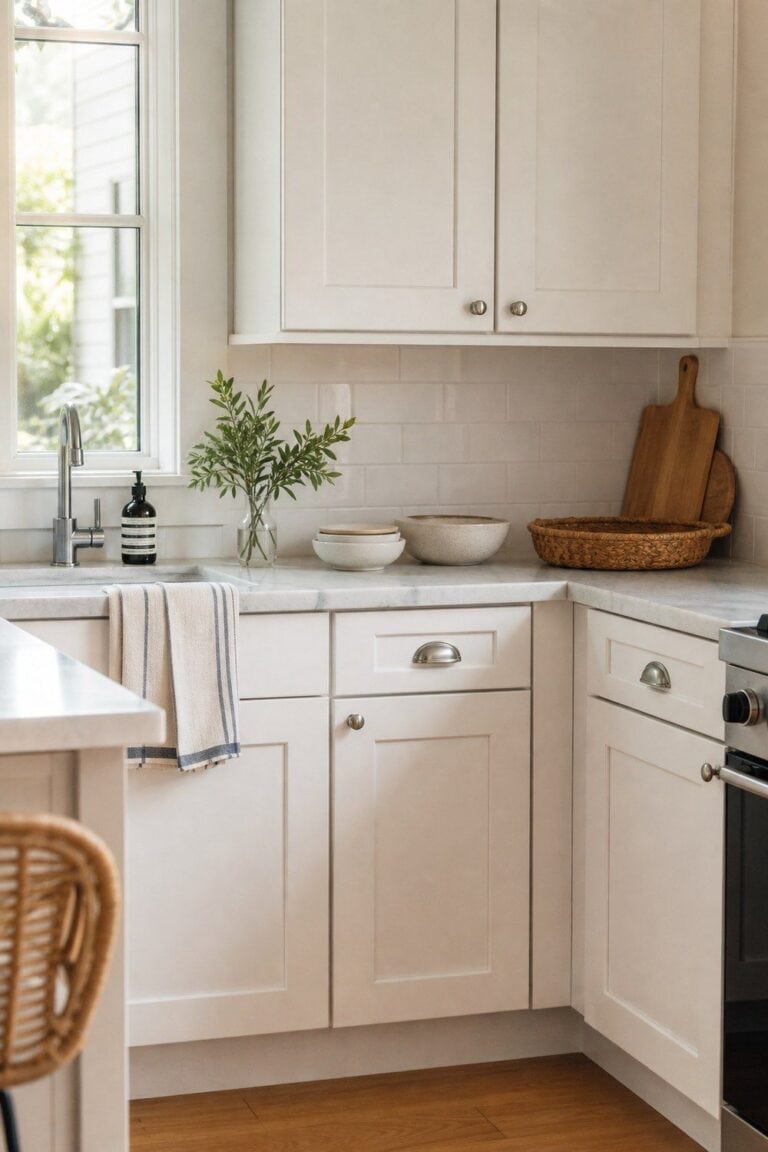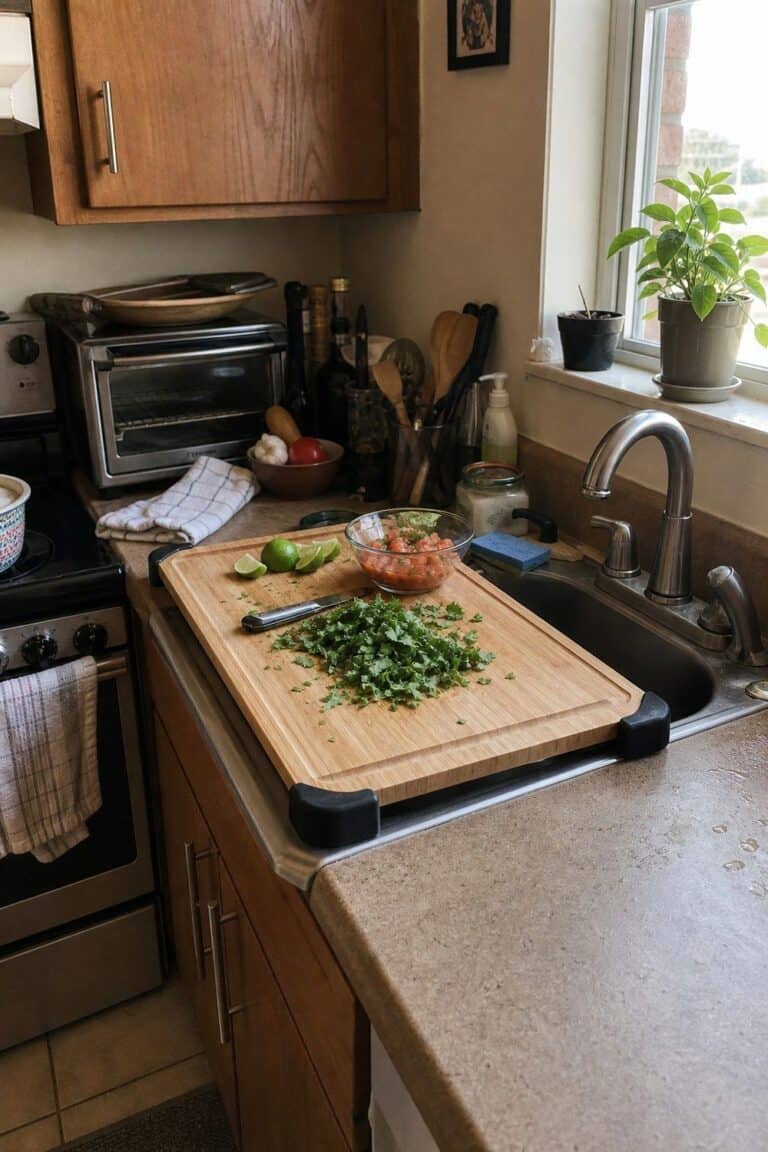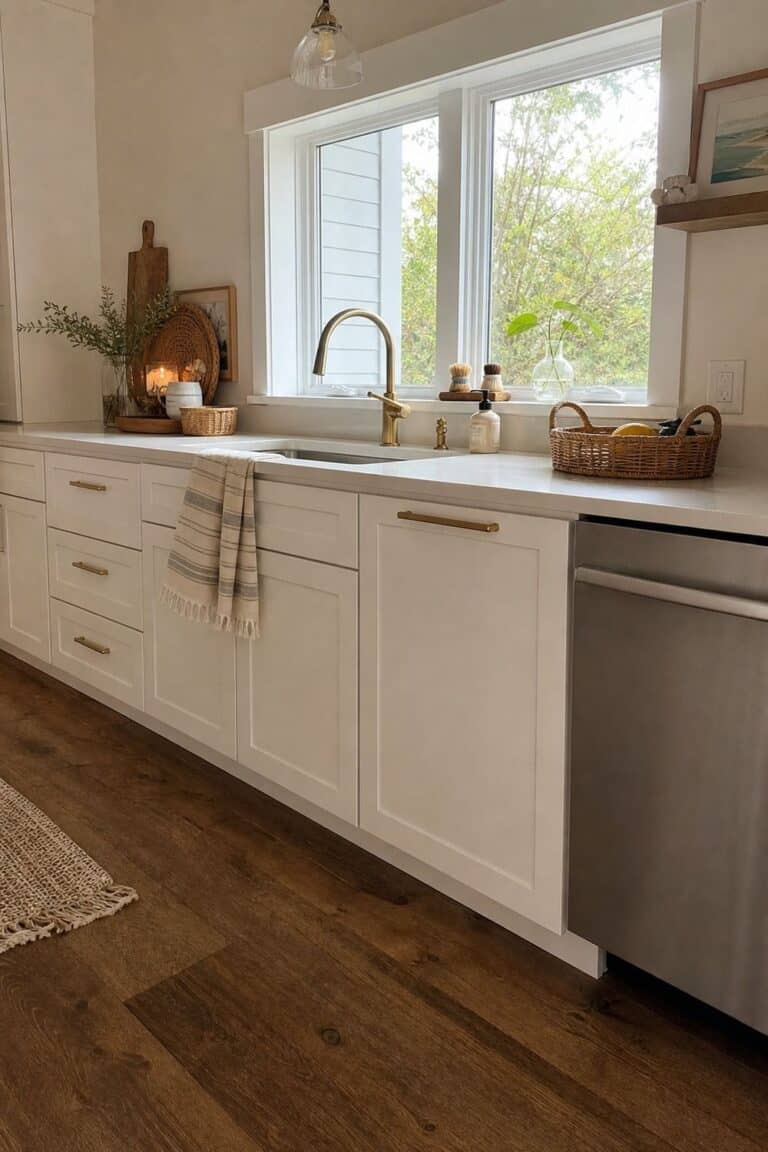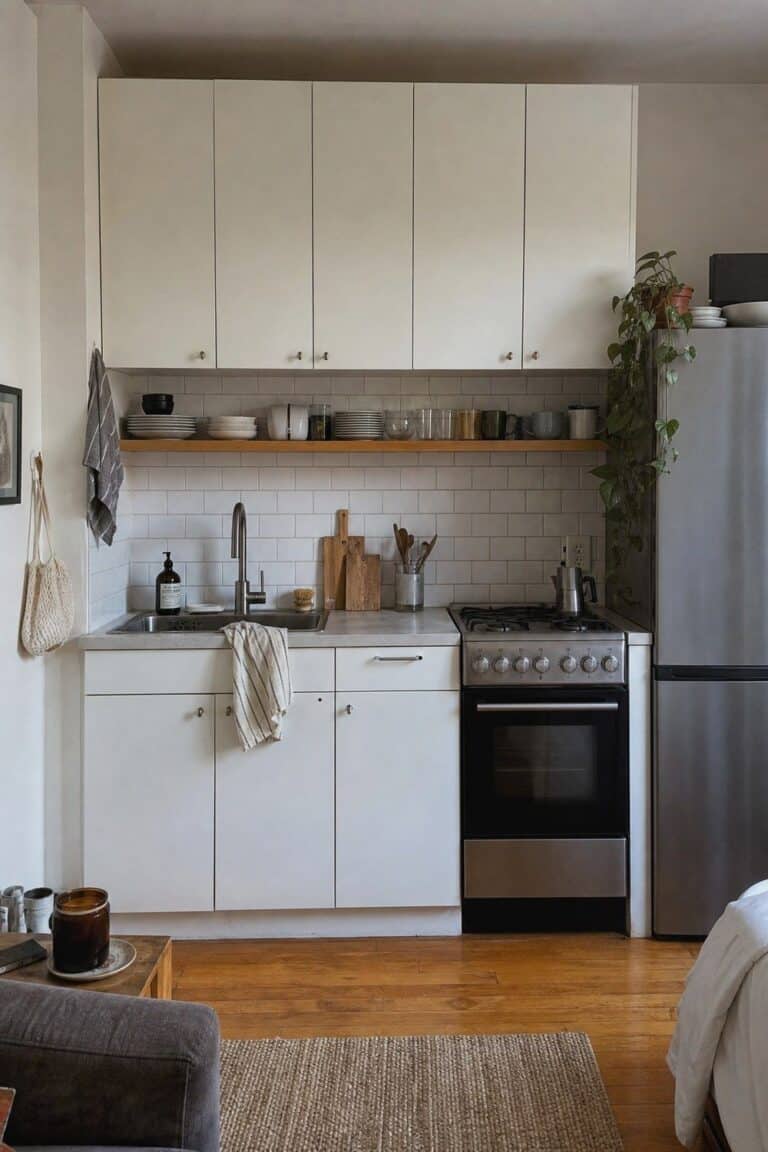
The best English cottage kitchen ideas combine useful freestanding storage, a larder or dresser, a Belfast sink, plate racks, wall lights, muted heritage colors, stone or wood surfaces, and a few collected everyday pieces. The room should feel practical first, with storybook character coming from working details that help with cooking, washing up, breakfast, storage, and light.
An English cottage kitchen feels different from a generic cottage mood board because the charm comes from use. A pine dresser holds daily plates, a larder hides tea and baking supplies, a Belfast sink handles big pans, and wall lights help when low ceilings make pendants awkward. The prettiest details still have a job.
That is why English cottage kitchen ideas work in more than old stone houses. Some homes can take bigger changes like sinks, flooring, range moments, or built-in larders, while smaller updates can come from curtains, hardware, peg rails, open shelves, art, and freestanding furniture. The key is restraint: collected, useful, and a little worn-in, not crowded with props.
You Might Also Like These Blog Posts
- 25 Cottage Kitchen Ideas for Soft, Collected Charm
- 25 European Kitchen Ideas for a Collected Everyday Space
- 25 Farmhouse Kitchen Ideas for Warm Everyday Cooking
- 25 Cream Kitchen Ideas for a Soft, Warm Space
- 25 Best English Cottage Kitchen Decor Finds
1. Freestanding Larder Cupboard as the Anchor
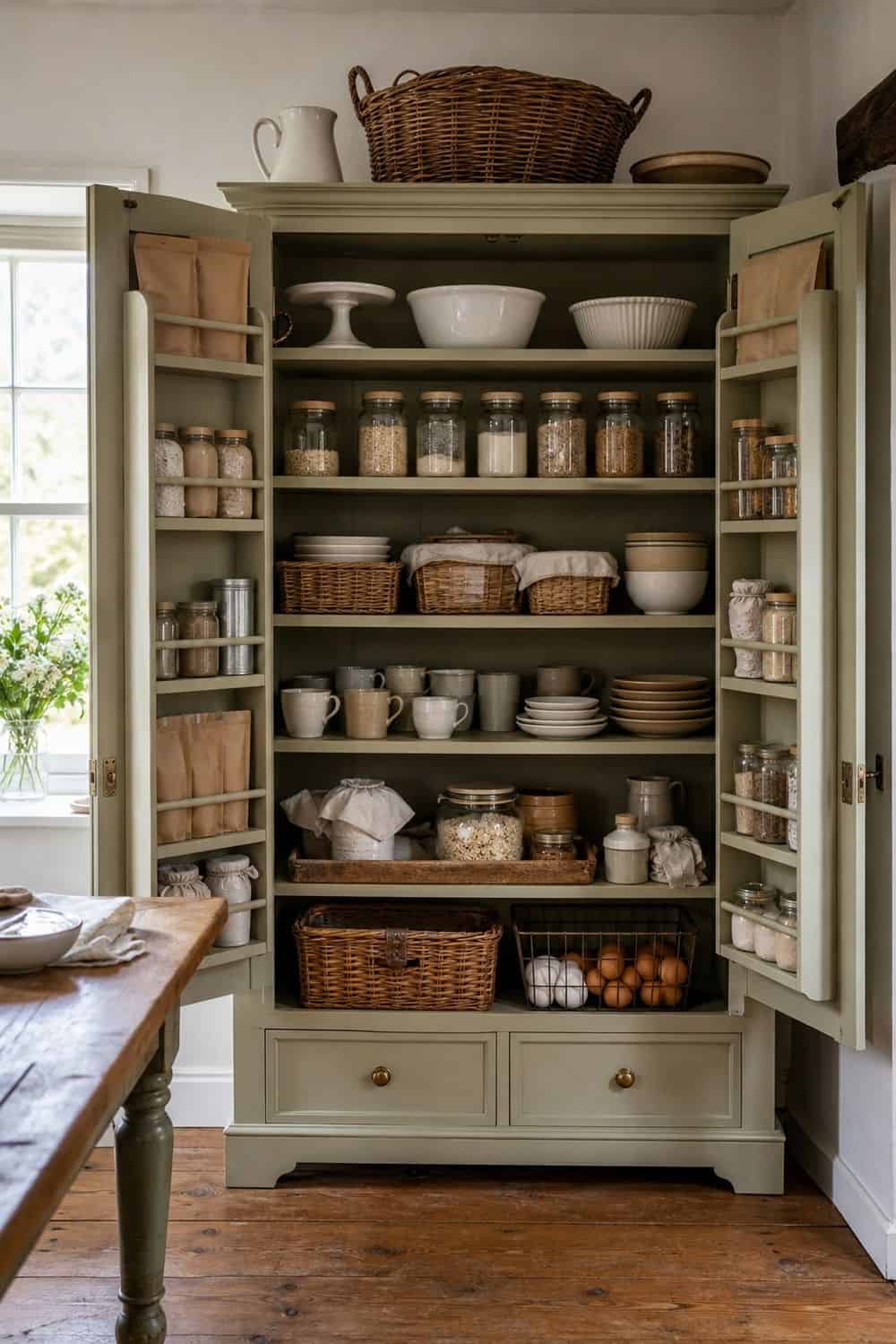
A freestanding larder cupboard gives an English cottage kitchen that lovely furniture feeling while quietly handling the messiest storage job in the room. Use it for tea, baking staples, cereal, oils, snacks, and the small extras that never sit neatly in a shallow wall cabinet.
The trick is to make the inside as considered as the outside. Shallow shelves, labeled jars, door racks, and one tray for breakfast bits keep it from becoming a beautiful black hole. If the cupboard is painted, choose a muted shade that sits easily beside your counters and floor.
2. Belfast Sink With Aged Brassware
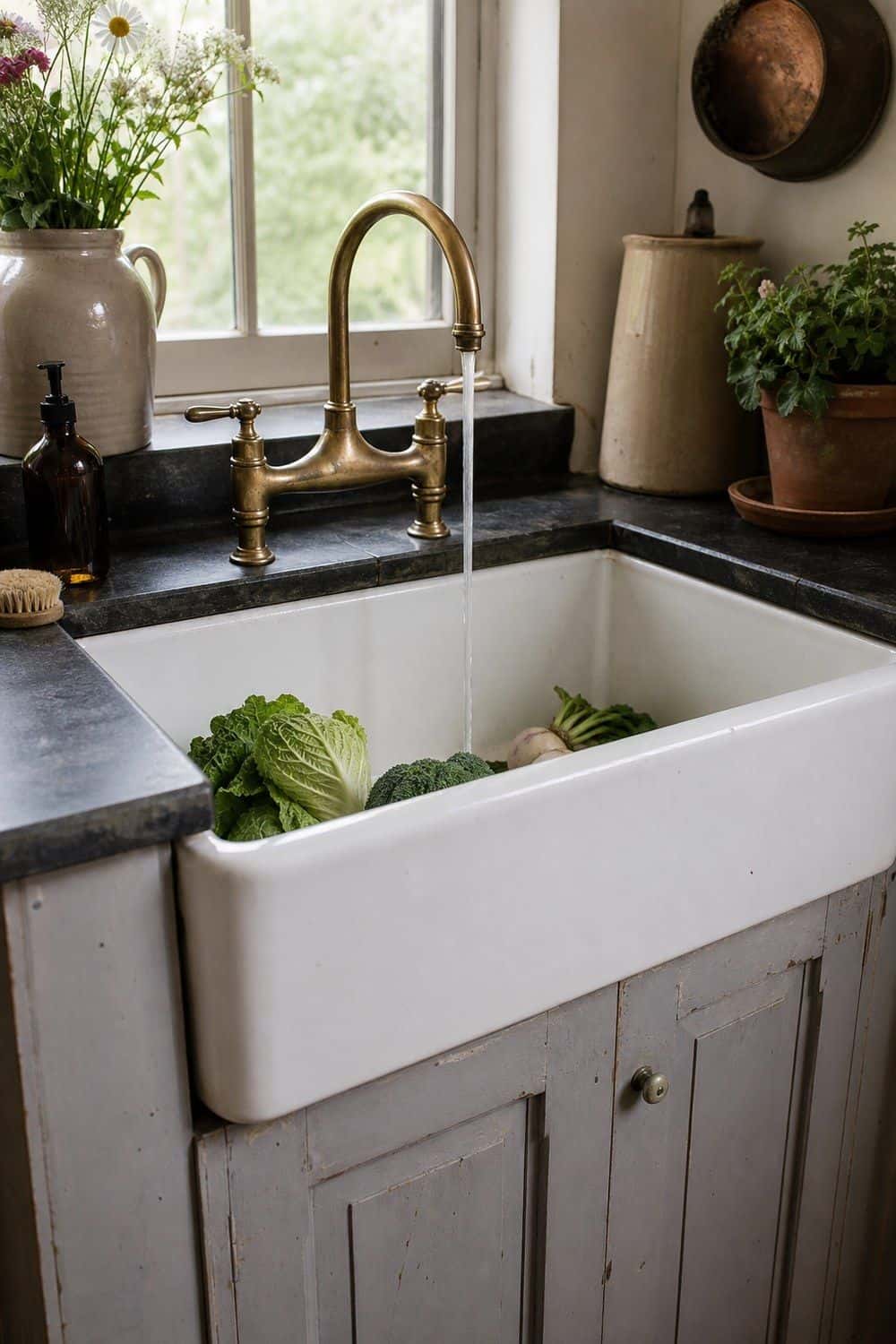
Belfast sinks bring instant cottage character because they look sturdy, honest, and ready for real washing up. They are especially good if you cook often, bring in garden produce, wash big pans, or like a sink area that feels more like a working scullery than a sleek appliance zone.
Pair it with aged brass or unlacquered-style taps for warmth, but check the practical details before falling in love. The faucet needs enough reach, the counter edge needs protection from splashes, and the cabinet below should be built to carry the sink’s weight without looking bulky.
3. Cook’s Table Instead of a Blocky Island
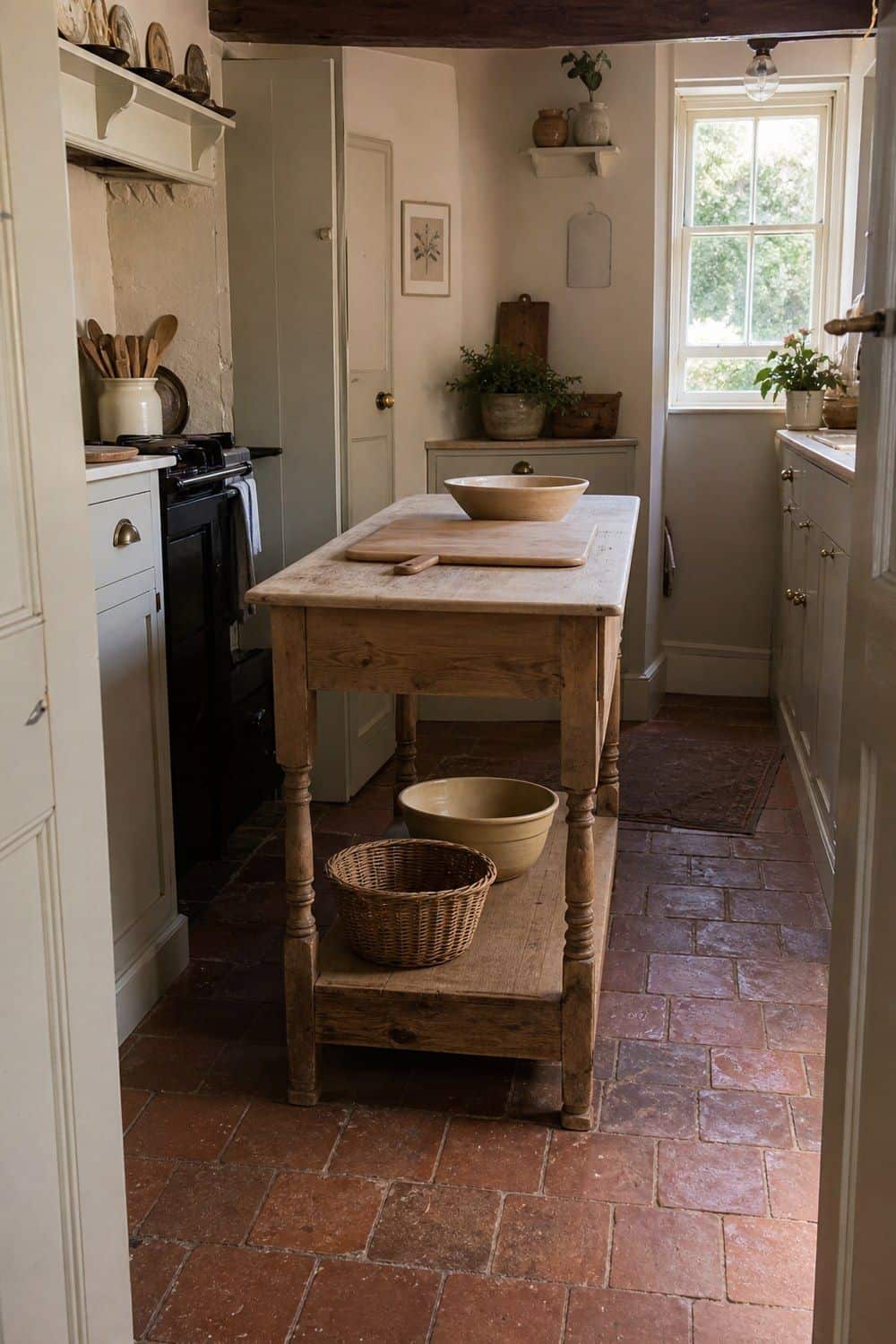
A cook’s table often suits an English cottage kitchen better than a heavy island, especially when the room is narrow, old, or full of charming uneven corners. It gives you a landing spot for chopping, pastry, coffee cups, and flower buckets without making the kitchen feel boxed in. Look for turned legs, a scrubbed wood top, or a simple painted base with enough clearance around every side. A lower shelf can hold mixing bowls or baskets, but leave some breathing room so the table still feels graceful. The goal is useful furniture, not another wall of cabinetry.
4. Pine Dresser for Crockery
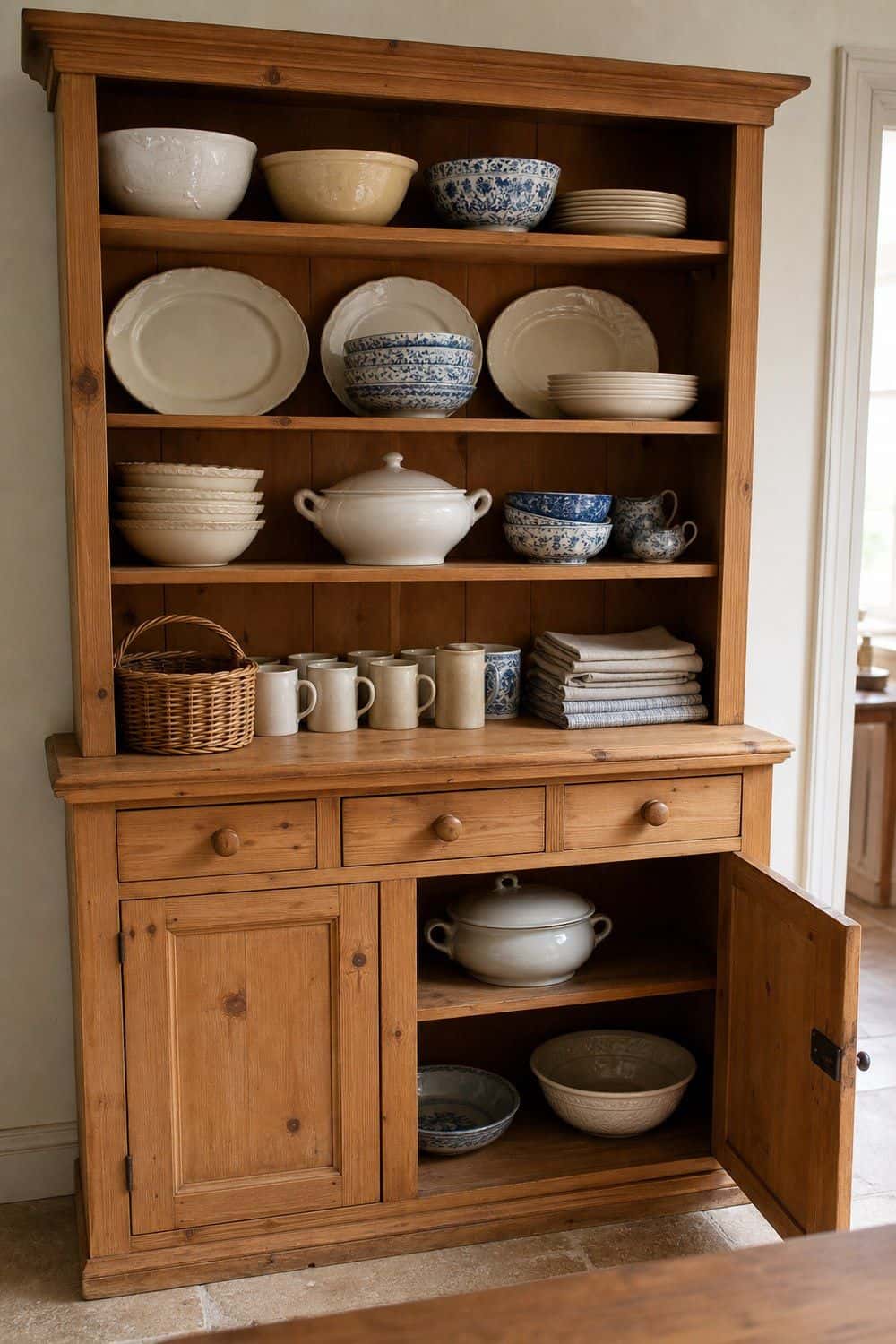
Pine dressers are one of the easiest ways to make a kitchen feel collected rather than newly installed. They can hold everyday plates, serving bowls, mugs, linens, candles, and the odd chipped platter that somehow makes the room feel more loved.
Keep the display useful so it does not turn into a dusting project. Put daily crockery on the open shelves, heavier serving pieces below, and only a few decorative objects between them. If the pine feels too orange, soften it with creamware, blue-and-white pieces, willow baskets, or a muted wall color behind it.
5. Sink-Wall Plate Rack
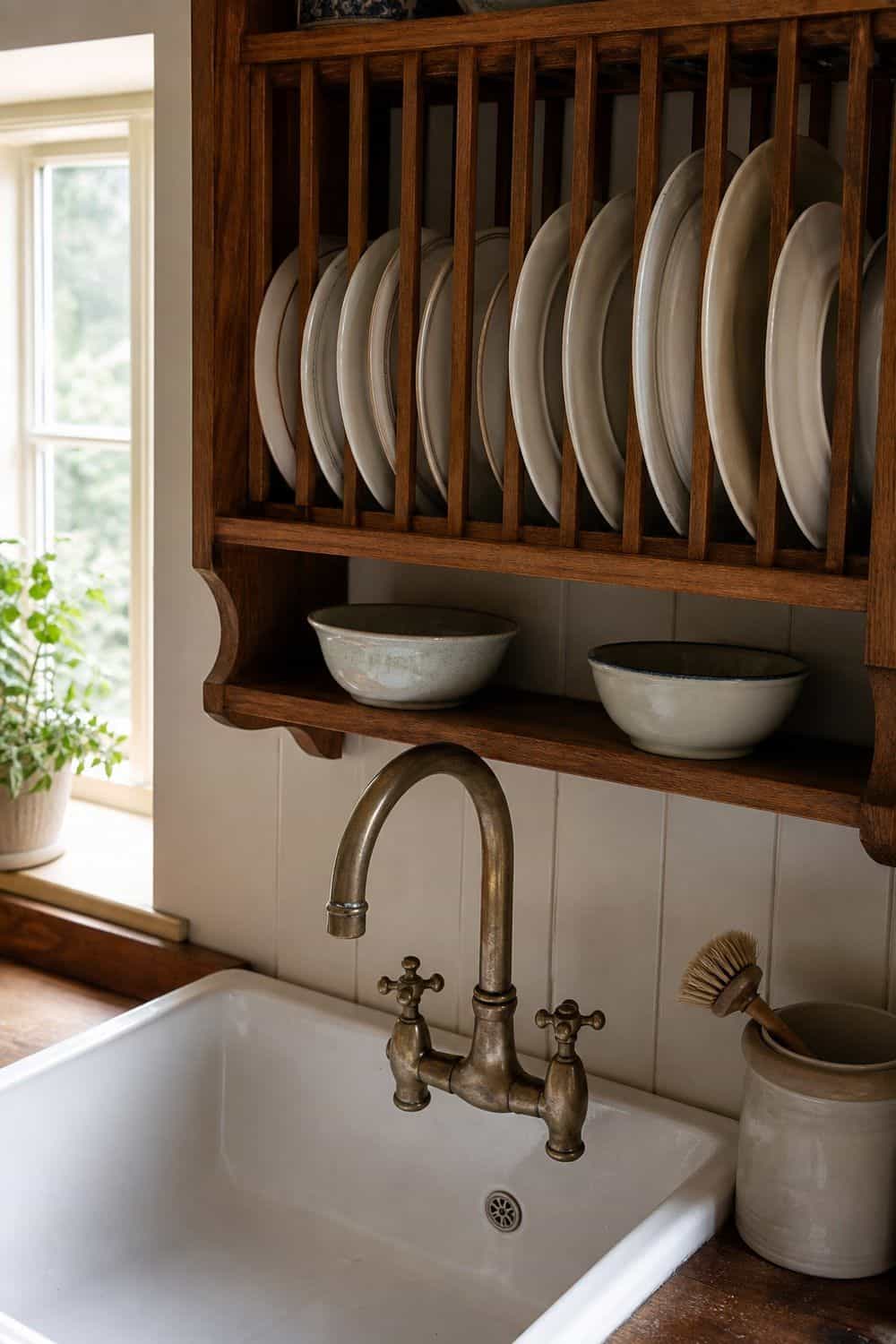
A plate rack above the sink feels sweet, but it also earns its place because clean plates can dry, stay visible, and move straight back into rotation. That practical rhythm is what keeps the detail from feeling like stage dressing. Choose a rack that fits the plates you actually use, then mount it securely into the wall or cabinetry. A small rail for cups or a narrow ledge for bowls can be helpful, but do not overload the area. Leave enough space for the faucet, splash zone, and your hands when you are washing up.
6. Peg Rail for Tea Towels and Copper Tools
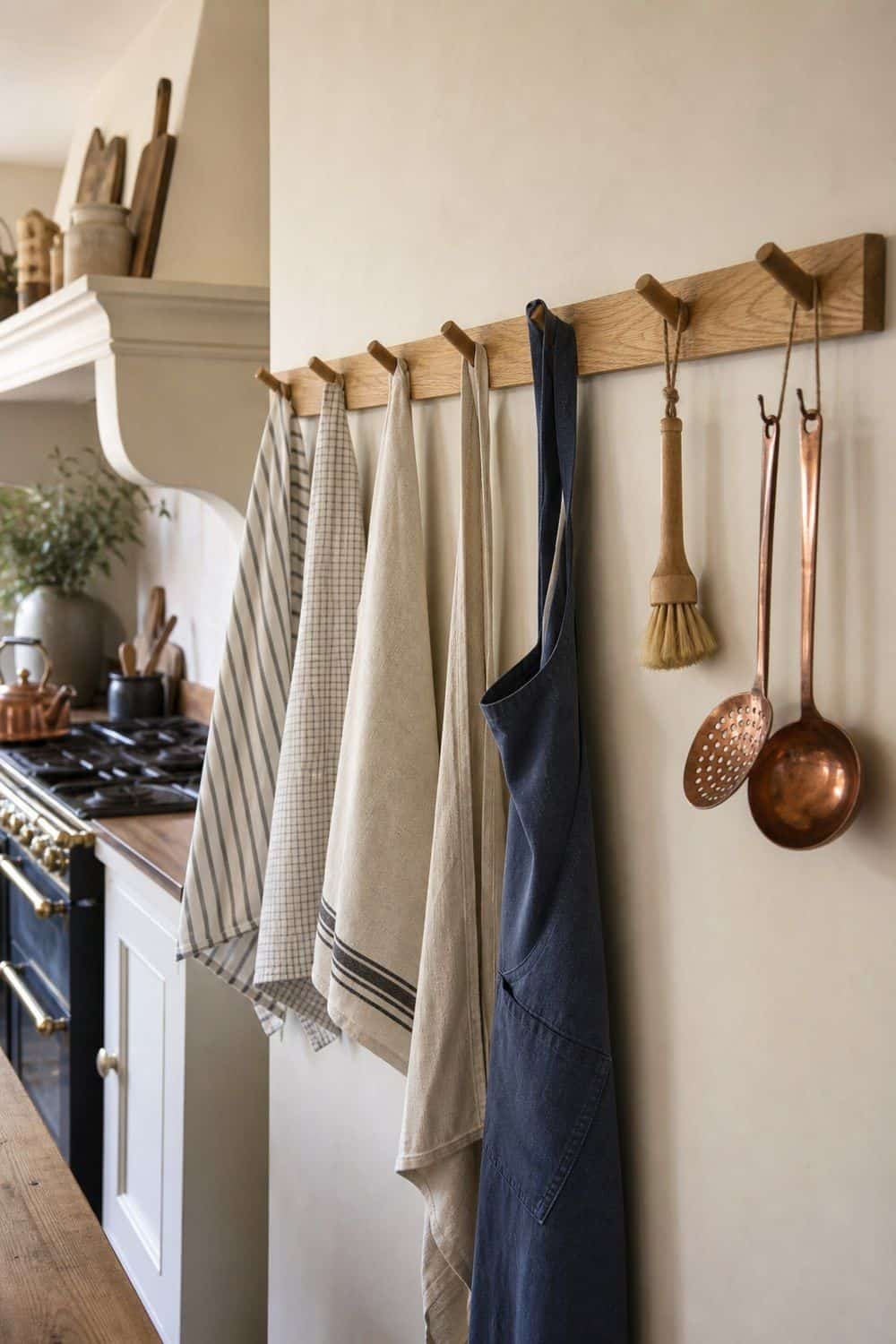
Peg rails bring that relaxed cottage rhythm to a wall that might otherwise sit empty. Hang tea towels, an apron, a small brush, a measuring cup, or one or two copper tools you reach for often, and the wall suddenly feels warm without needing a big display.
Restraint matters here. Too many hanging pieces can look busy fast, especially near a range. Keep the rail close to the task it supports, choose hooks deep enough for daily use, and leave space between items so fabric can dry and metal does not clang every time someone walks by.
7. Delft-Style Tile Behind the Range

Delft-style tile gives an English cottage kitchen a little storybook romance without needing the whole room to be patterned. A blue-and-white panel behind the range, a short backsplash behind the sink, or a framed patch above a prep counter can be enough.
Let the tile be the special moment rather than repeating it everywhere. Handmade edges, soft white grout, and a slightly irregular layout feel more natural than a glossy, perfect sheet. Because the range wall gets splattered, choose a tile and finish you can wipe down without treating the area too delicately.
8. Aga-Style Range Moment
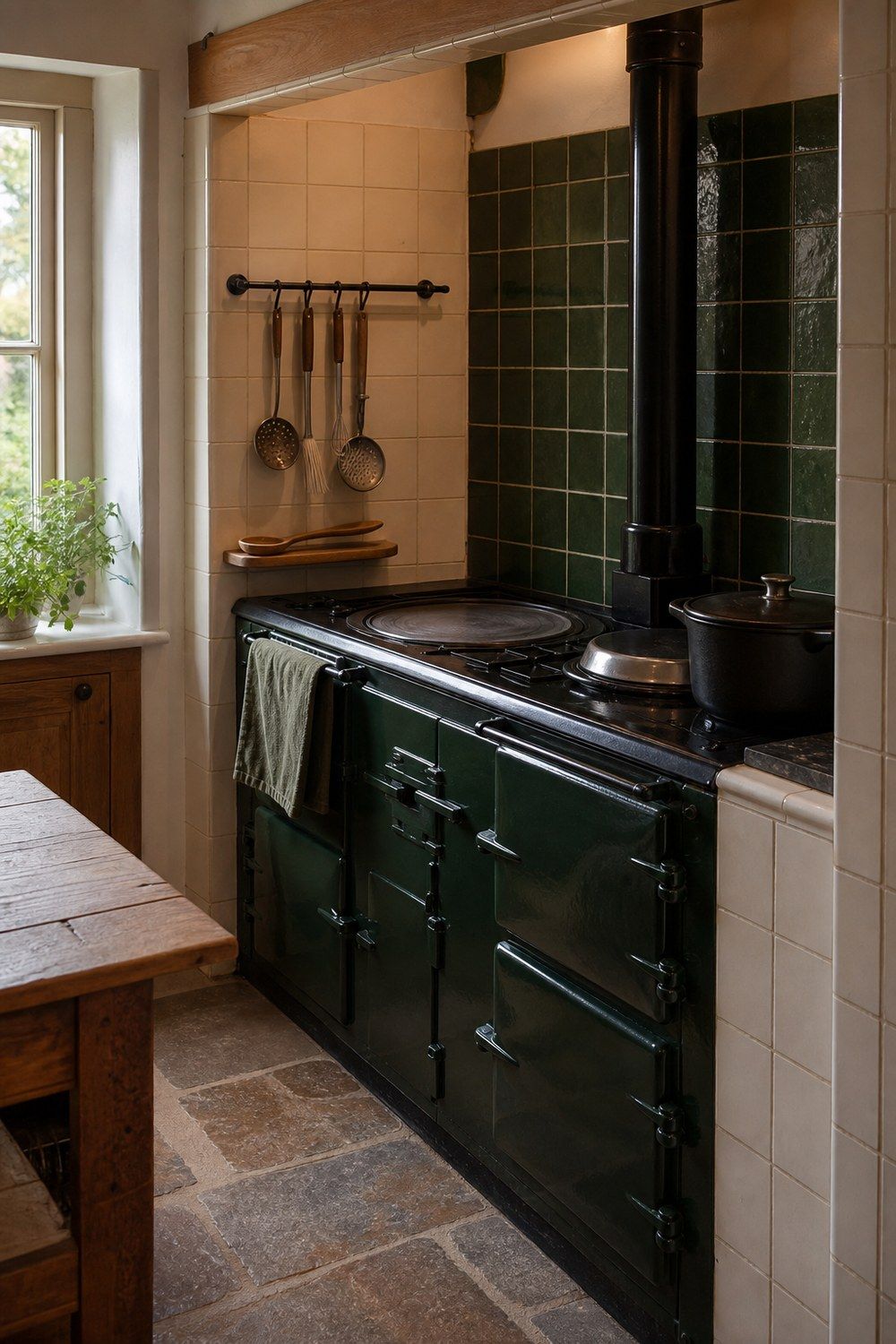
An Aga-style range, or simply a range wall that borrows that feeling, can become the heart of an English cottage kitchen. The point is not only the appliance; it is the cozy cooking zone around it, with a sturdy backsplash, nearby tools, warm lighting, and somewhere to set a spoon. If a true range is not practical, create the mood with a classic stove, a simple hood, a tiled surround, and a rail for the pieces you use most. Keep safety clearances honest, because cottage charm loses its magic quickly when the cooking area feels cramped or overheated.
9. Wall Lights for Low Ceilings

Low ceilings can be beautiful in a cottage kitchen, but they do not always love pendant lights. Wall lights, shaded sconces, and under-shelf lighting usually feel more natural because they bring light down to the work surface without crowding the headspace.
Place them where you truly need help: beside a sink, over a dresser, near a prep counter, or tucked above a breakfast nook. Warm bulbs flatter stone, wood, brass, and cream paint, while dimmers let the kitchen shift from chopping carrots to late-night tea without feeling harsh.
10. Under-Stair or Alcove Pantry Storage
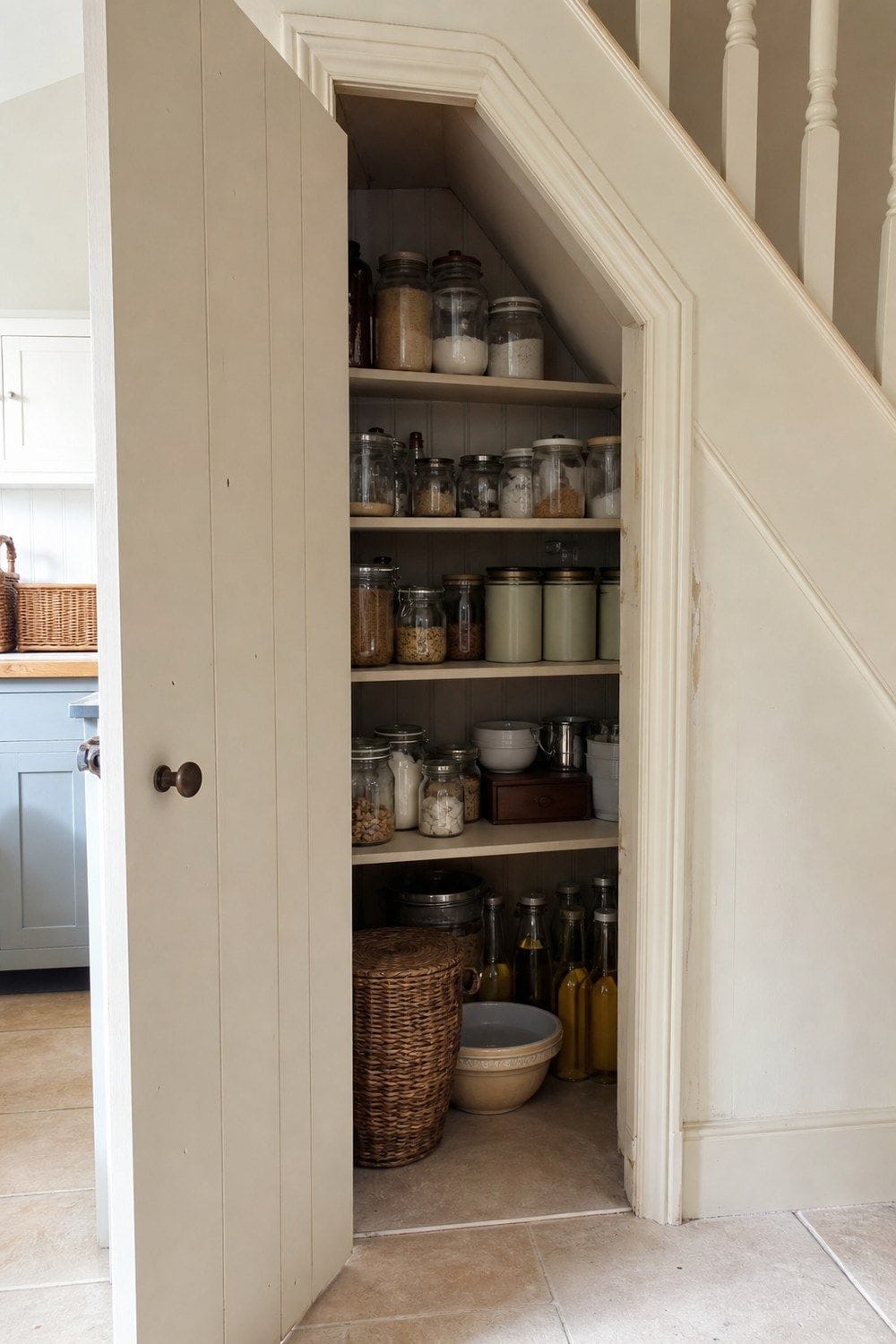
Old cottage rooms often come with awkward alcoves, sloping corners, and under-stair spaces that look inconvenient until you give them one clear storage job. A shallow pantry there can hold jars, tins, baking supplies, oils, picnic pieces, or extra serving dishes without stealing a full wall from the kitchen.
Use narrow shelves so nothing disappears at the back, and keep heavier items between waist and knee height. A curtain, beadboard door, or simple latch can make the corner feel finished. Good lighting helps too, because even the prettiest pantry is annoying when you cannot read labels.
11. Cotswold Stone or Stone-Look Flooring
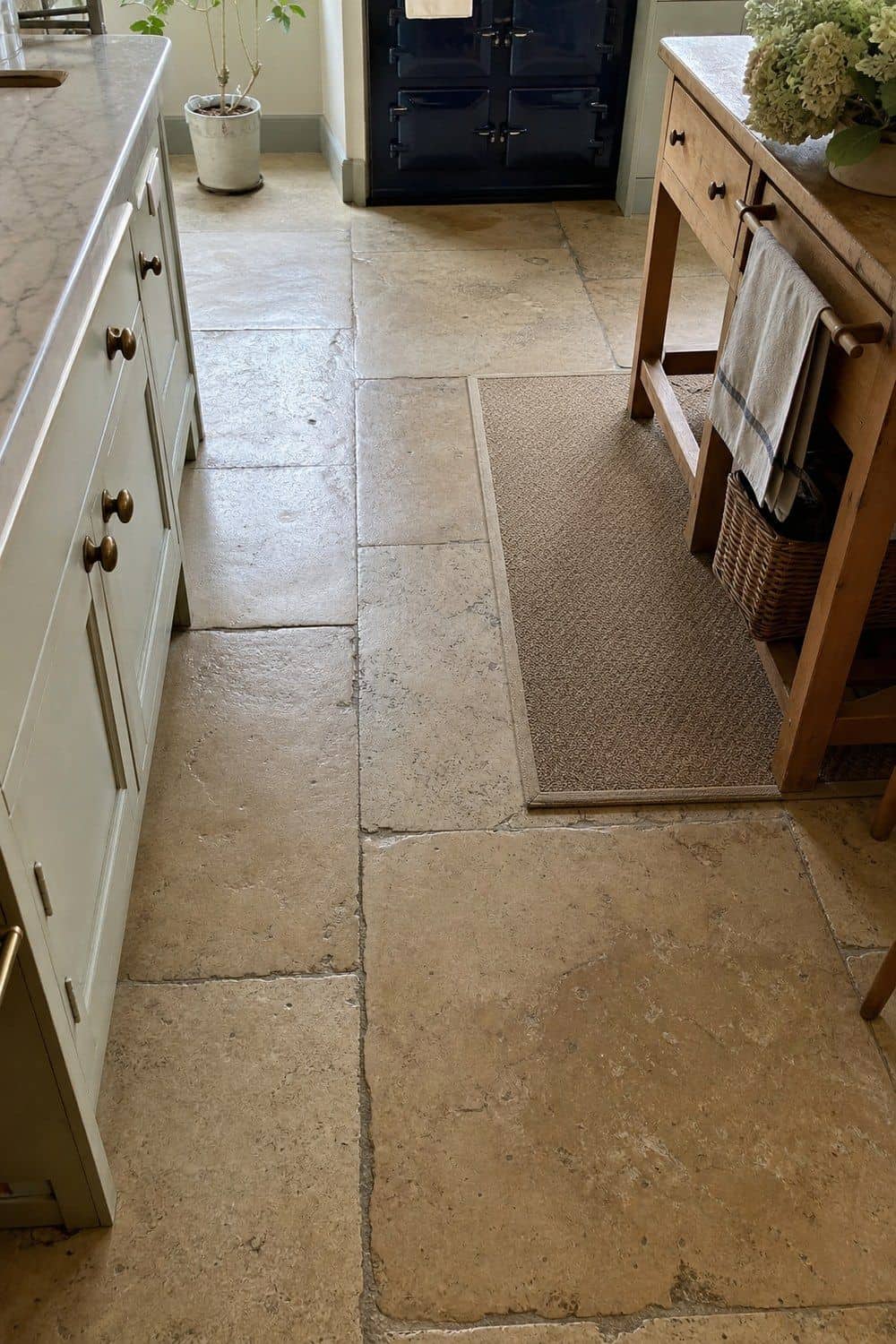
Warm stone flooring gives an English cottage kitchen its grounded, lived-in feeling. Cotswold-style limestone, tumbled stone, or a convincing stone-look porcelain can all work if the color leans soft rather than icy: think honey, mushroom, cream, putty, or weathered grey. Before choosing the prettiest tile, think about feet, spills, and cleaning. A honed or textured surface is usually more forgiving than anything polished, and larger flags can make a tighter kitchen feel calmer. Add a washable runner where you stand longest so the floor feels welcoming, not punishing.
12. Lace or Cafe Curtains at the Window
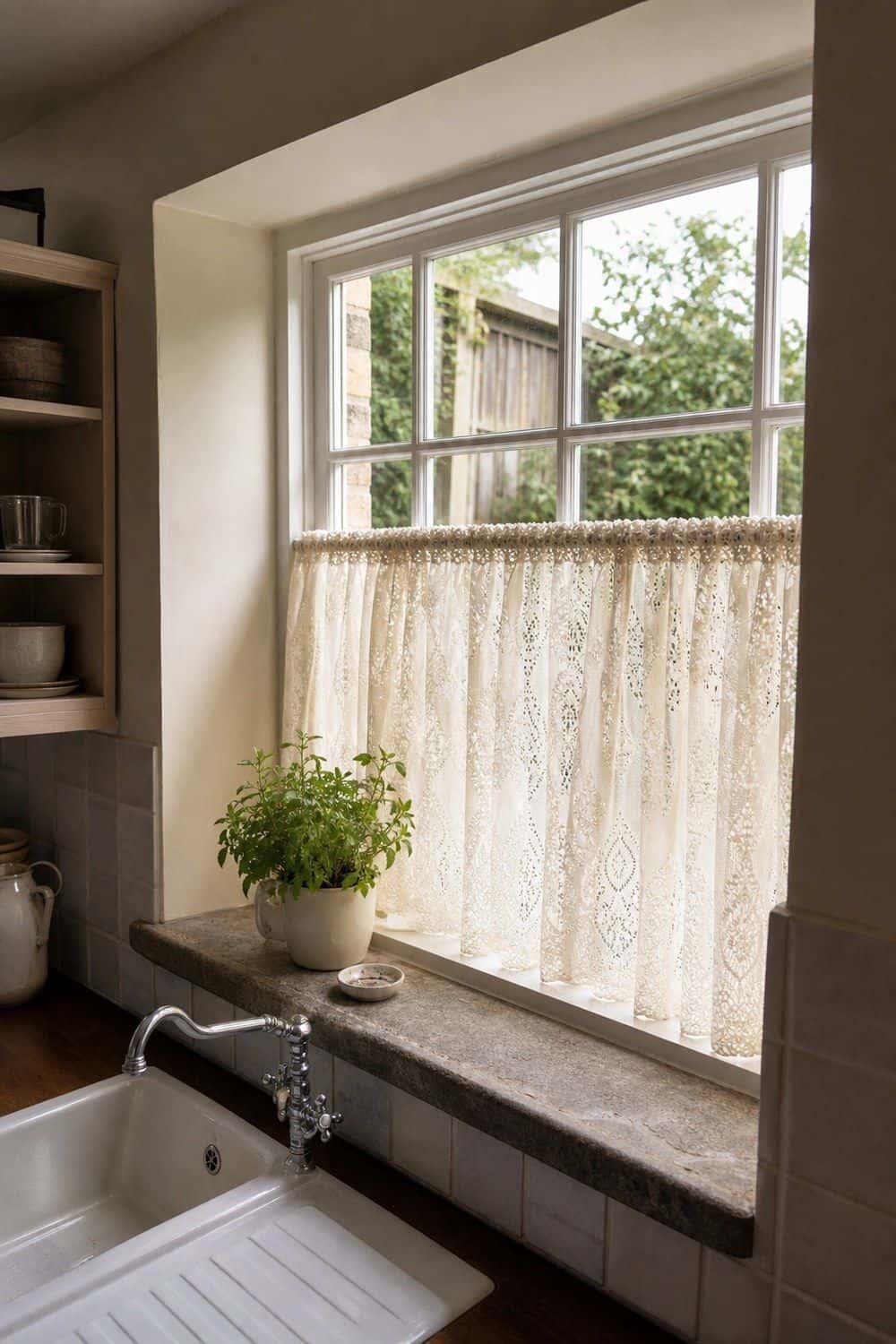
Lace or cafe curtains soften a kitchen window in a way blinds rarely can. They filter light, add privacy, and give the sink or breakfast corner that gentle cottage feeling without asking for a renovation or a new cabinet plan.
Choose washable cotton, linen, or a simple sheer that can handle steam and the occasional splash. Half-height curtains are especially useful because they keep the lower view private while leaving daylight at the top. If the room already has pattern, stay plain; if the room is very quiet, a tiny stripe or lace edge can be lovely.
13. Under-Sink Curtain for Soft Utility
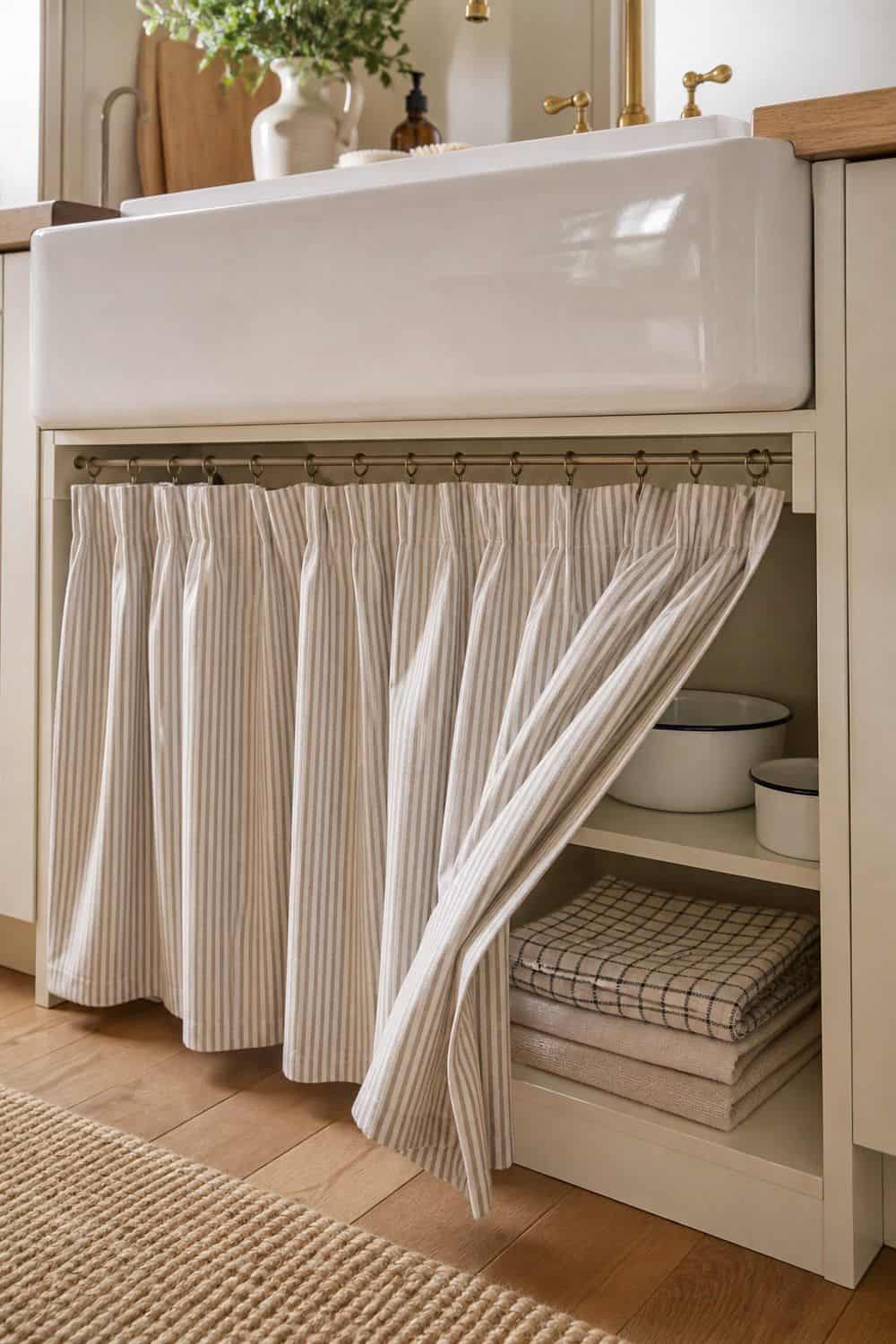
An under-sink curtain is practical cottage softness at its best. It hides plumbing, bins, cleaning cloths, or a stack of enamel bowls, and it breaks up all the hard cabinet lines that can make a tighter kitchen feel too fitted.
Use a washable fabric and hang it on a tension rod or neat rail so it can come down easily. Linen, ticking stripe, gingham, or a tiny floral all work, depending on the room. Keep the area behind it tidy enough that you can reach things quickly, and avoid storing anything that hates damp air.
14. Open Shelves With Everyday China

Open shelves feel most English cottage when they hold pieces that actually get used: breakfast bowls, mugs, side plates, mixing bowls, a teapot, or a stack of linen napkins. That kind of display has movement, so it never feels too precious. Keep the palette calm and repeat materials gently. Creamware, blue-and-white china, clear glass, wood, and a few brass or copper details are plenty. Leave small gaps between stacks, and avoid placing rarely used pieces near the stove unless you enjoy washing a fine layer of cooking dust off everything.
15. Soft Historic Paint Palette

Muted heritage paint colors make an English cottage kitchen feel settled instead of freshly themed. Soft sage, mushroom, cream, warm white, putty, faded blue, and small touches of oxblood or deep green all sit beautifully with pine, stone, aged brass, copper, and old china.
Test the color beside the surfaces that are staying, especially counters and floors. A shade that looks charming on a card can turn cold under LED light or muddy beside orange-toned wood. If you are nervous, paint one dresser, pantry door, or lower cabinet run before covering the whole room.
16. Cupboard Latches and Wooden Knobs
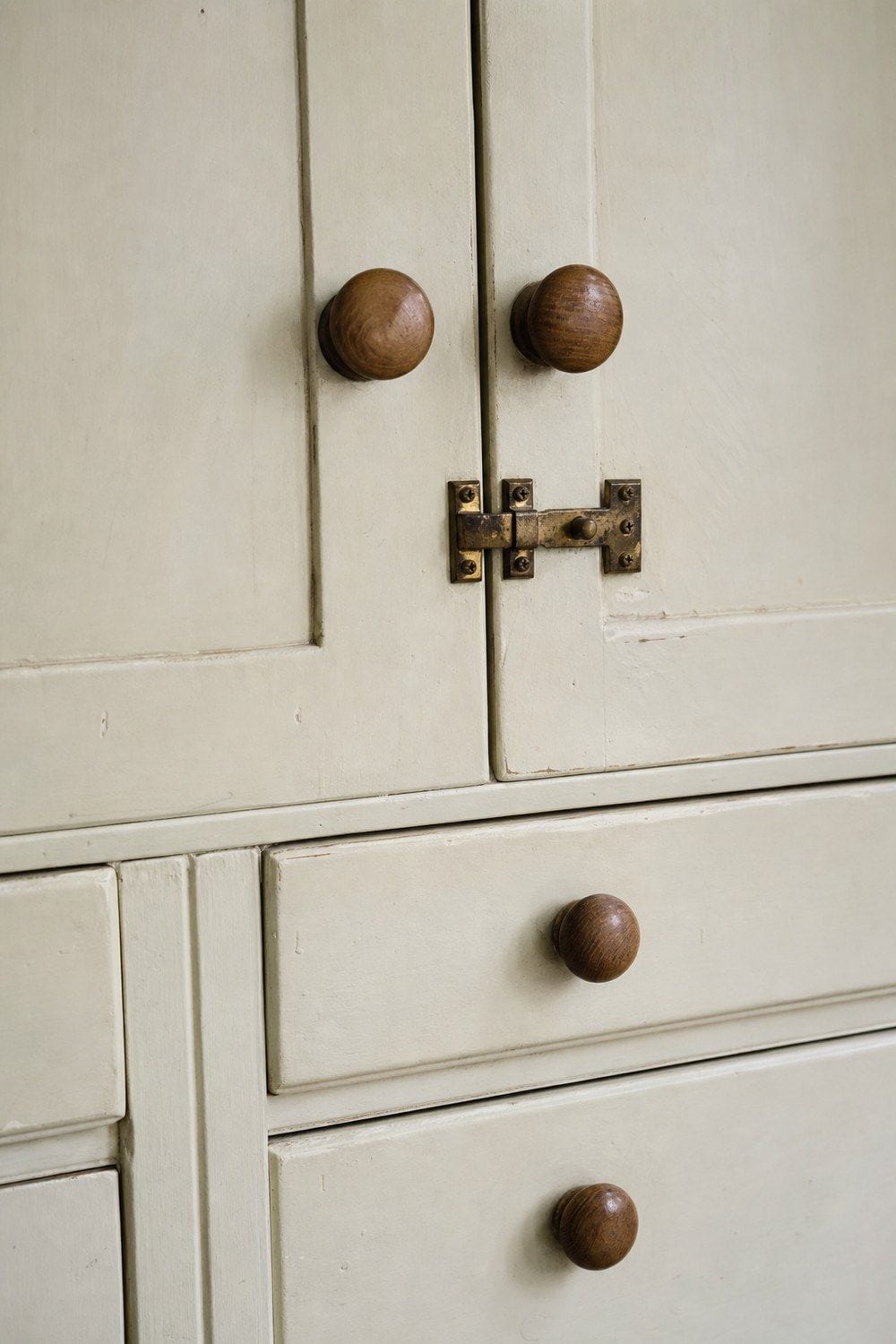
Small hardware changes can make plain cabinetry feel much more cottage, especially when the shapes look tactile and a little old-fashioned. Cupboard latches, wooden knobs, aged brass pulls, or simple ceramic knobs can soften a kitchen that feels too flat or builder-basic.
Mixing is fine, but give the mix a reason. Latches might go on upper cupboards, knobs on drawers, and a sturdier pull on the dishwasher panel or pantry door. Check how each piece feels in your hand, because pretty hardware becomes irritating fast if it pinches, snags sleeves, or fights daily cooking.
17. Copper Pans Visible but Controlled
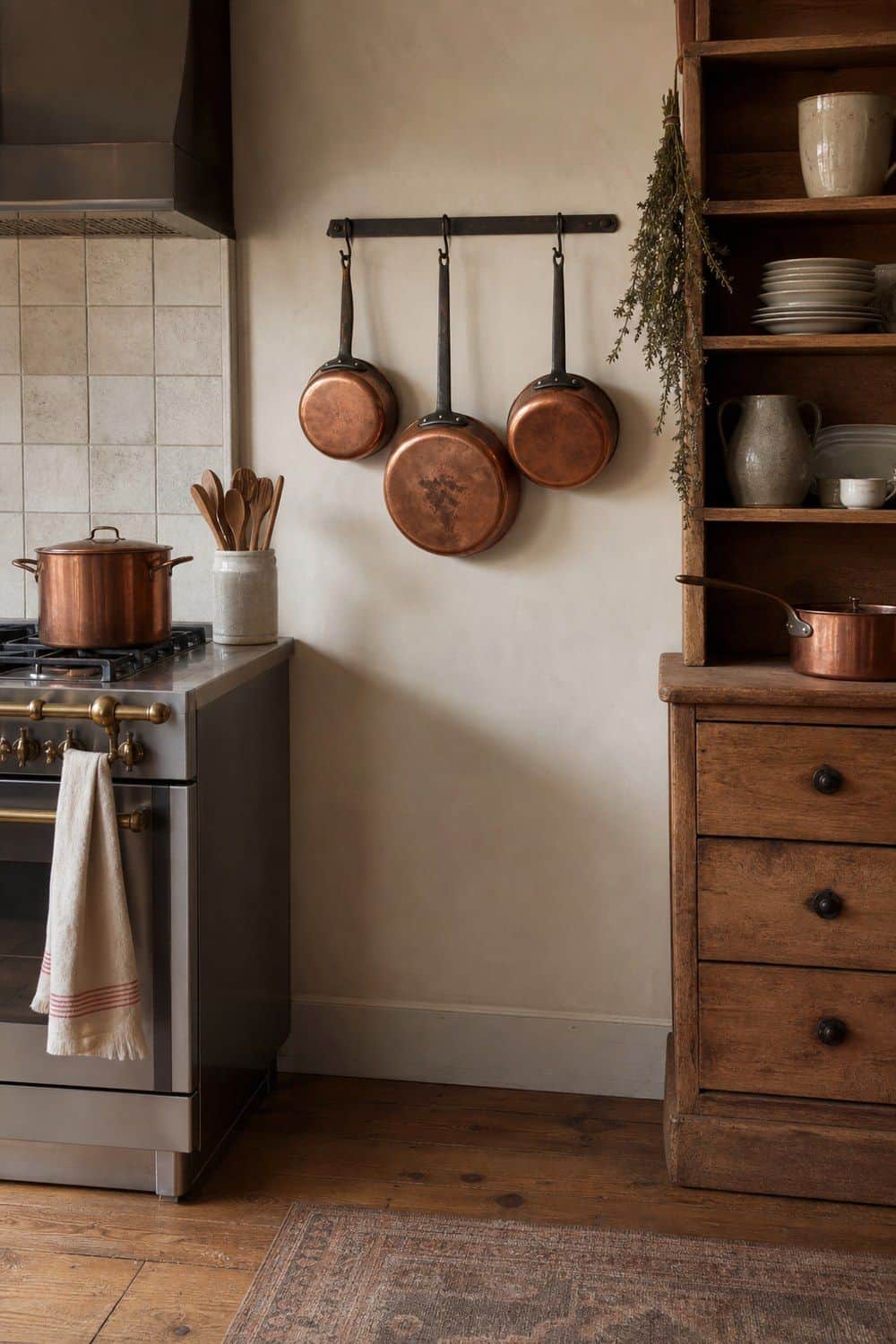
Copper pans are gorgeous in an English cottage kitchen, but they look best when the display feels useful rather than crowded. Hang the pieces you cook with, or place one beautiful pan on a shelf where its warm metal can catch the light. A rail near the range works well if the wall can handle the weight and the pans will not bump into anyone. Otherwise, try a small rack, dresser shelf, or open cabinet. Patina is part of the charm, so do not feel bullied into constant polishing unless a gleaming look makes you happy.
18. Scullery-Inspired Cleaning Corner
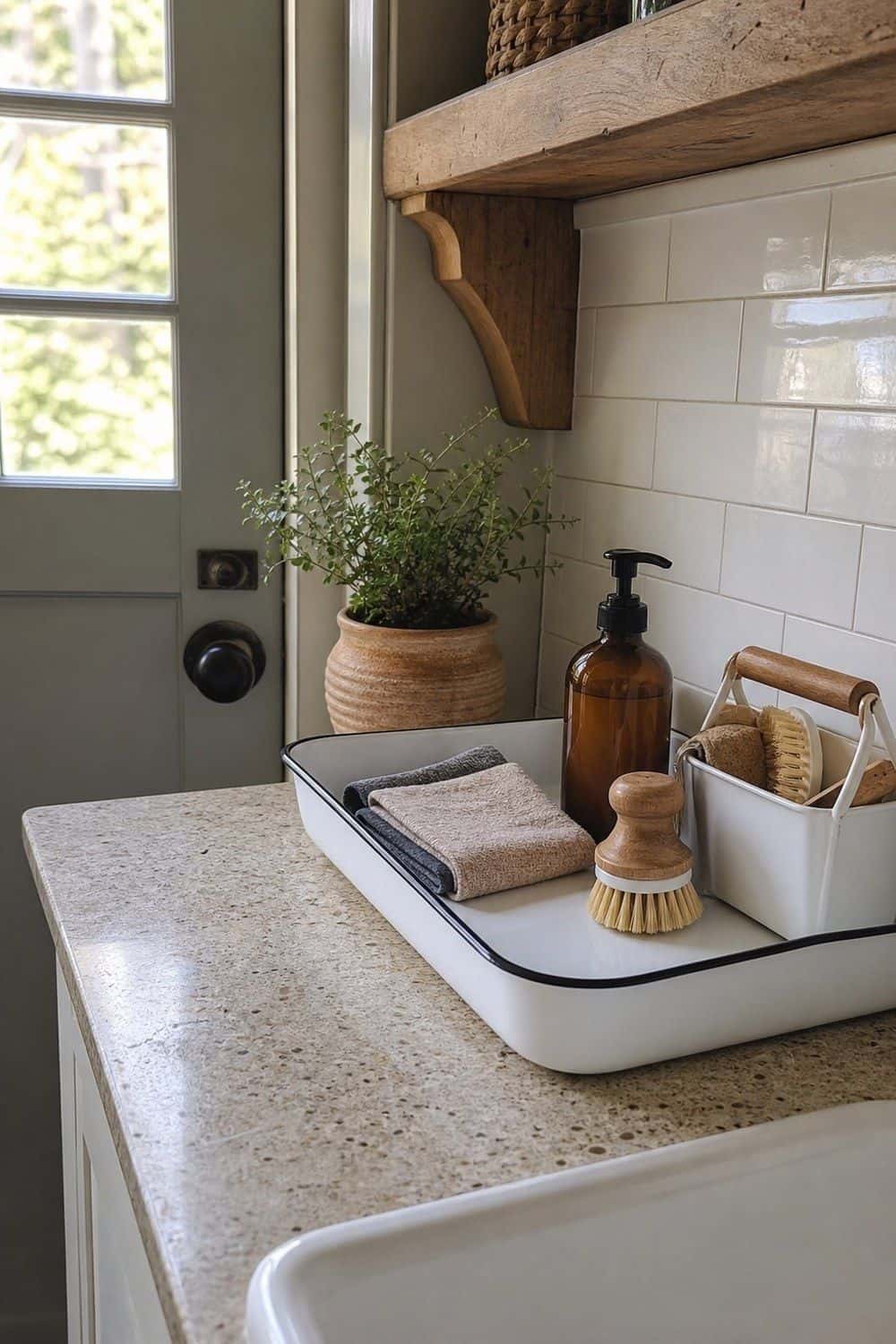
Cleaning supplies feel more orderly when they have a scullery-inspired corner instead of being shoved under the sink. Give brushes, cloths, dish soap, laundry soap, spare sponges, and everyday sprays a defined place near the sink or back door, then make that place pleasant enough to maintain.
A small caddy, wall hook, enamel tray, wooden brush, and washable cloths are usually enough. Keep backup bottles out of sight so the corner does not become a shop shelf. The charm comes from making daily cleanup easier, with humble tools that look good because they are used well.
19. Marble or Marble-Look Prep Surface

A small marble prep surface feels right at home in a cottage kitchen, especially if you bake, roll pastry, make scones, or want one cool spot for dough. It can be a full counter, a pastry slab, or the top of a cook’s table.
Real marble will mark, etch, and soften over time, which can be lovely if you like materials that age. If that would make you anxious, choose a marble-look quartz, porcelain, or removable slab instead. Either way, keep the surface clear enough that it remains a working area, not a decorative tray.
20. Breakfast Nook With Cushioned Seating

Breakfast nooks bring the friendly, tucked-in feeling that makes English cottage kitchens so appealing. The nook does not need to be large; a small table, a bench, two chairs, and a cushion can turn an unused corner into the place where tea, toast, homework, and late-night chats happen. Choose washable cushion covers and a table size that lets people slide in without knocking elbows on cabinetry. Storage under the bench can be useful, but keep it for things you do not need every day. The nook should feel inviting first, with storage as a quiet bonus.
21. Framed Art and Postcards on One Wall

Framed art, postcards, pressed botanicals, or small landscapes can make a cottage kitchen feel personal in a way new finishes alone cannot. Choose one wall or a narrow strip beside a dresser rather than scattering tiny frames over every surface.
Keep artwork away from heavy steam and grease, especially near the range. A mix of old frames is charming when the colors speak to the room: wood, brass, black, cream, or muted green. The best pieces do not need to be valuable; they just need to feel like they belong to the people who cook there.
22. Baskets Under Open Furniture

Baskets under a cook’s table, bench, dresser, or open pantry shelf can solve awkward storage without making the kitchen feel heavy. They are especially good for onions, linens, picnic pieces, paper bags, pet supplies, or the baking tools you want nearby but not on display.
Give each basket one category and choose shapes that slide in and out easily. Breathable woven baskets suit produce and linens, while sturdier handled baskets are better for heavier items. A basket that has to be dragged out with both hands will be ignored, no matter how charming it looks.
23. Pantry Door With Character
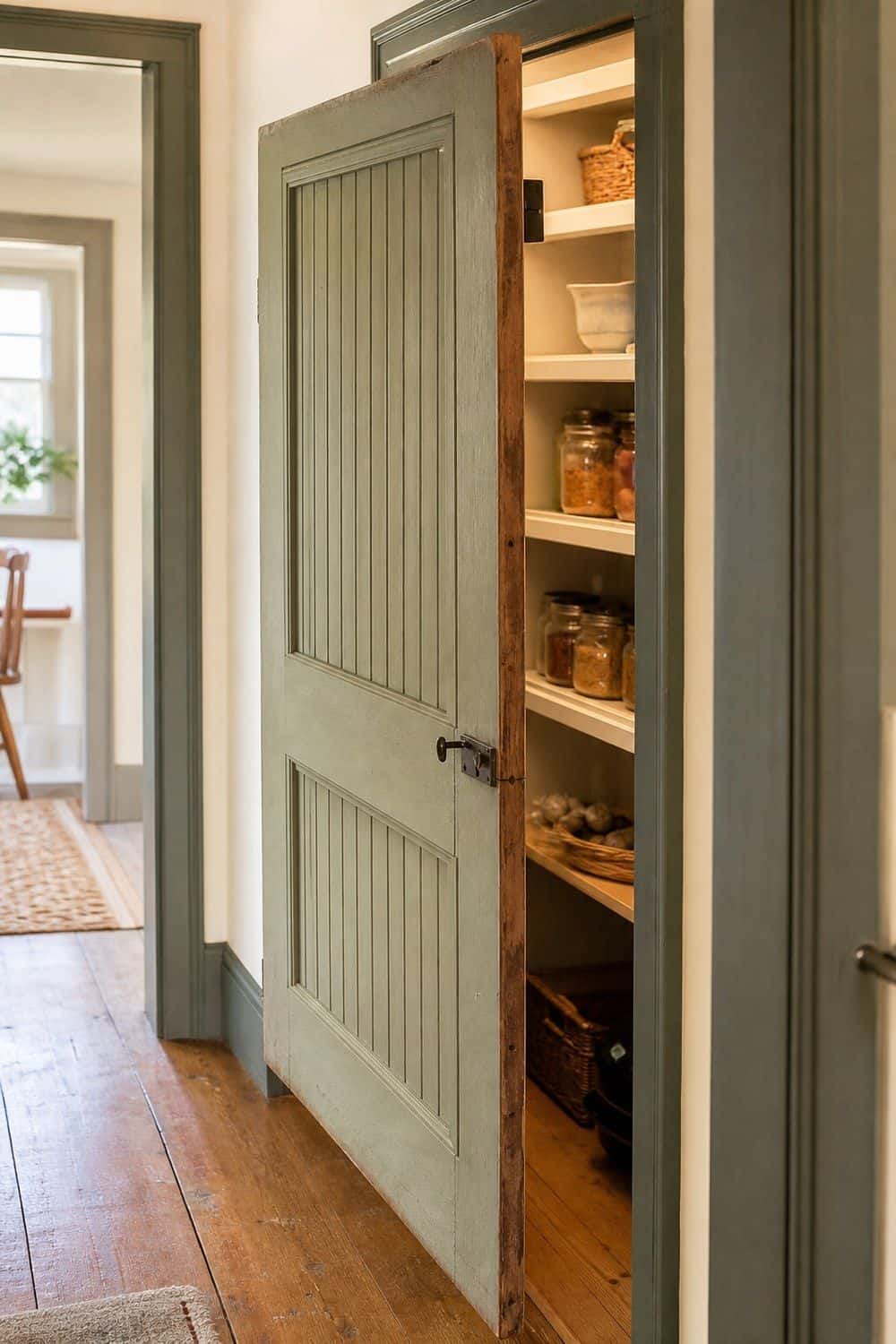
The pantry door is a lovely place to add English cottage character because it is visible, hardworking, and easy to distinguish from standard cabinet fronts. Beadboard, old wood, a simple latch, a fabric panel, reeded glass, or a painted door can all make the pantry feel like part of the story.
Keep the door practical. It should open fully, avoid blocking the main walkway, and hide what needs hiding. If you use glass, consider the shelves behind it carefully, because the view becomes part of the kitchen. A small label or hook can be charming without making the door too busy.
24. Small Wall Shelf for Cookbooks

A cookbook shelf makes a cottage kitchen feel lived in, especially if it holds the books you actually open with floury hands. Place it near a prep area, breakfast nook, or dresser rather than directly beside steam or frying oil. Keep the shelf shallow and secure, with just enough space for a few favorites, a recipe notebook, or a small framed card. Too many books can look heavy and collect dust. A little rail or raised lip helps, and a nearby wall light turns the shelf into a useful reading corner after dark.
25. Storybook Look With Practical Limits

The most beautiful English cottage kitchens still make everyday cooking easier. Before adding another patterned plate, copper pan, curtain, basket, or antique stool, ask what job it will do and whether it makes the room simpler to use.
Charm should build from routines: where tea is made, where pans dry, where bread is sliced, where linens live, and where someone can sit without being in the cook’s way. Leave a little empty space around the prettiest details. That pause is what lets the room feel collected, warm, and genuinely useful instead of crowded.
How to Adapt English Cottage Style Without Renovating
If you want to start small, choose one storage piece, one textile change, one lighting or hardware detail, and one everyday display zone. A dresser, cafe curtains, a peg rail, brass-style knobs, or a plate rack can shift the feeling of the room without rebuilding the kitchen.
In narrow kitchens, skip heavy upper cabinets where possible and use wall lights, plate racks, shallow shelves, and a larder-style cabinet at the end of the room. In low-ceiling kitchens, keep pendants minimal and let sconces or under-shelf lighting do more work.
Open storage needs maintenance. Rotate dishes so they do not gather dust, wash towels and curtains regularly, clean copper only if you are willing to keep it visible, and give every basket a job. The room can be charming and still have a weekly reset.
Frequently Asked Questions
What makes a kitchen English cottage style?
An English cottage kitchen usually includes practical, character-rich details such as freestanding storage, larder cupboards, Belfast sinks, pine dressers, plate racks, muted paint colors, natural stone or wood, wall lights, and everyday pieces on display. It should feel collected and useful, not just decorated.
How do I make my kitchen look like an English country kitchen?
Start with one storage piece, one material change, one lighting change, and a few useful display items. A larder cupboard, dresser, peg rail, cafe curtains, brass hardware, wall sconce, or plate rack can add the look before you consider bigger renovations.
What colors are used in English cottage kitchens?
Common colors include cream, stone, mushroom, muddy green, muted blue, soft brown, warm white, and small oxblood or deep red accents. Those shades pair well with pine, oak, aged brass, copper, ceramic, and stone.
What is a larder cupboard?
A larder cupboard is a pantry-style storage cabinet for dry goods, baking ingredients, tea, breakfast items, snacks, and sometimes small appliances or serving pieces. In an English kitchen, it often looks like a freestanding furniture piece rather than a standard built-in pantry.
Are Belfast sinks practical in kitchens?
Belfast sinks can be very practical because they are deep and useful for large pans, produce, flowers, and everyday washing up. They are also heavy and can splash, so they need sturdy support, a durable counter edge, good taps, and nearby towel storage.
How do you style a plate rack in a kitchen?
Style a plate rack with daily plates first, then add a few patterned pieces if there is room. Mount it securely, leave enough space between plates, and place it near the sink, dresser, or dining flow so it supports real dish storage.
What lighting suits a low-ceiling cottage kitchen?
Wall sconces, shaded wall lights, under-shelf lighting, and small task lights usually suit a low-ceiling cottage kitchen. Use pendants only where there is safe clearance, and place lighting where it helps with chopping, washing, and reading labels.
How can I get English cottage kitchen style without renovating?
Use low-commitment changes such as cafe curtains, an under-sink skirt, peg rails, open shelves, freestanding storage, framed art, better hardware, a small plate rack, or heritage paint on one movable piece. Focus on useful details instead of filling the room with decorative objects.
Final Thoughts
English cottage kitchen ideas feel strongest when they make the kitchen more useful, not just more picturesque. A larder should store food, a dresser should hold dishes, a sink area should support washing up, and open shelves should keep daily pieces close.
Choose the details that suit your actual room first: wall lights for low ceilings, a plate rack for a small sink wall, a cook’s table for flexible prep, or curtains and hardware for a lighter update. When the storage, light, and working routines are right, the storybook character feels natural instead of staged.