

Quick answer: A proper potatoes au gratin recipe needs no flour, no roux, and no milk. It is the French gratin dauphinois tradition built on three loadbearing ingredients: Yukon Gold potatoes sliced 1/8 inch on a mandoline, heavy cream seasoned with garlic and nutmeg, and a Gruyere-Parmesan crust broiled to deep bronze in the final minutes. The potato starch does the thickening on its own. One 9 by 13 ceramic dish, 75 minutes in the oven, eight generous servings.
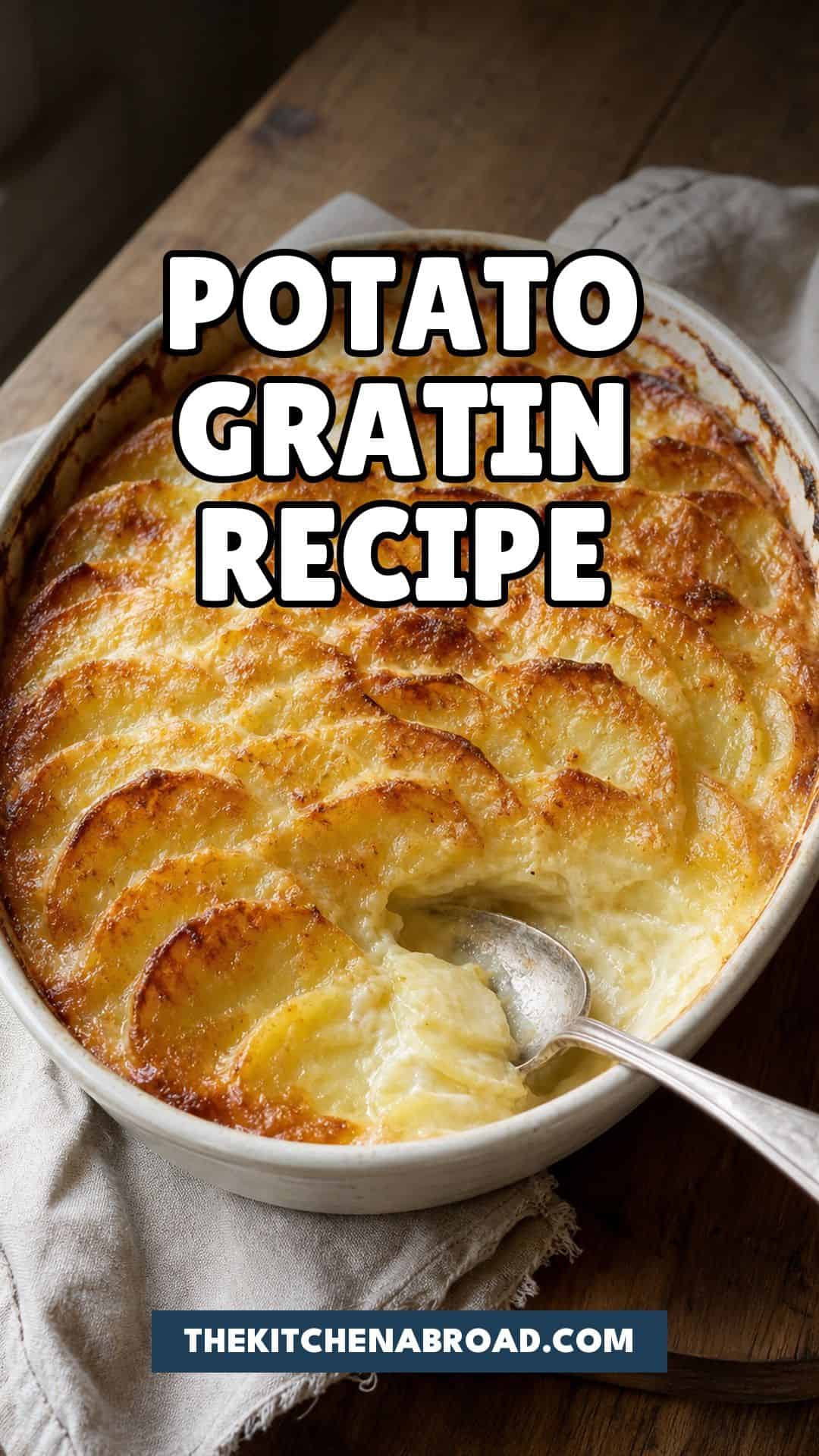
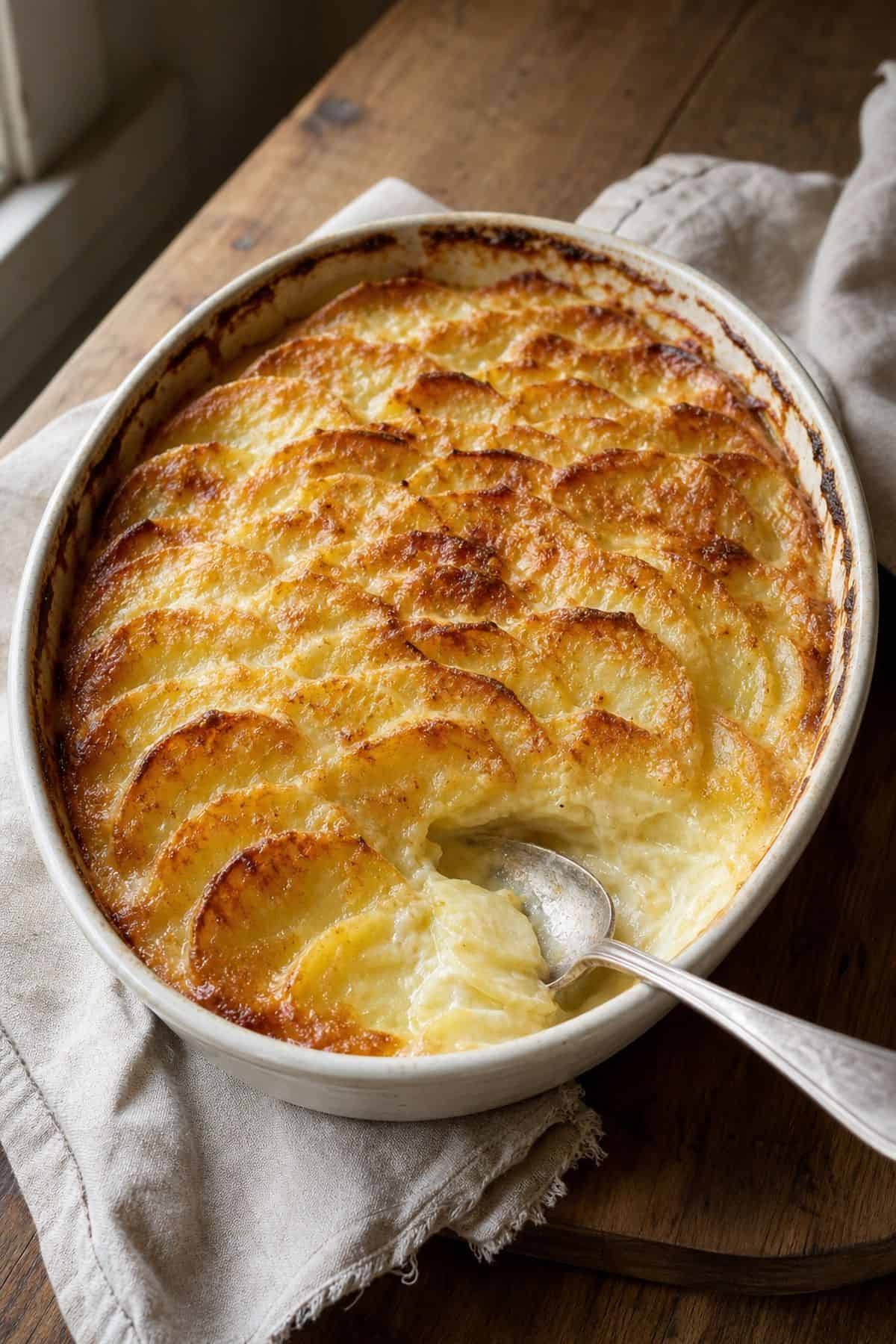
The dish lands on the table and the room goes quiet for a beat. The first spoon cuts through the bronze top, and what comes up is a cross-section of fanned potato discs, cream still loose at the edges, Gruyere stretching from the lip of the dish. You can hear the audible bubble at the corners where the broiler caught the cream. This is the baked, creamy, holiday-roast lane of the potato world, a French gratin dauphinois with the cheese the American table expects. No flour, no roux, no shortcut, no apology.
Recommended Products
An oval ceramic baking dish for the long, even heat and the magazine-cover presentation, a mandoline for the 1/8-inch slice that makes every layer cook through at the same time, a box grater for the cheese, a sharp chef’s knife for the garlic and trimming, and an instant-read thermometer to confirm the center hits 200 to 205 degrees before the broiler step.


Recommended Reads
- Roasted Garlic Parmesan Baby Potatoes
- Crispy Smashed Potatoes
- Best Easter Dinner Ideas
- Best Easter Side Dishes
- Best Thanksgiving Side Dishes
Where Gratin Dauphinois Came From
Gratin dauphinois belongs to the Dauphine, the old French province tucked between the Alps and the Rhone Valley. Hardy potatoes from the foothills, cream and butter from the alpine dairies above, garlic from the lower slopes. The dish was first documented on July 12, 1788, served at a banquet hosted by Charles-Henri, Duc de Clermont-Tonnerre, lieutenant-general of the Dauphine, for the municipal officials of Gap. It sat on the table alongside ortolans, a now-illegal songbird that says a great deal about late-Bourbon dining. The gratin survived; the ortolans did not.
Julia Child carried the dish into American kitchens with Mastering the Art of French Cooking in 1961, page 523, where she included a note that has guided the recipe ever since: although authorities on le vrai gratin dauphinois would violently disagree, she wrote, you may omit the cheese. That single line marks the fork in the road. In France, true gratin dauphinois is cream, garlic, potato, salt, and nutmeg, with no cheese at all. In the United States, the same dish picked up Gruyere or cheddar and a new name, scalloped potatoes. The American au gratin sits in between: more cheese than the French original, less flour-thickened than the Midwestern casserole. This recipe lives in that middle, French in technique, American in finish.
A Few Notes on the Ingredients
- Yukon Gold potatoes: The medium-starch variety with enough starch to thicken the cream and enough waxy structure to hold the disc shape through 70 minutes in the oven. Russets fall apart and turn grainy. Reds stay too firm and never absorb the cream.
- 1/8-inch slices on a mandoline: Non-negotiable. Hand slicing produces irregular thicknesses, so some discs go raw while others go to mush. Uniform 1/8-inch slices give you the fanned cross-section that makes the dish look magazine-shot.
- Heavy cream: 36 percent milkfat or higher, full stop. No milk and no flour. Milk curdles at sustained 375-degree heat. Heavy cream protects the emulsion through the long bake, and the potato starch handles the thickening on its own.
- Gruyere: Brings the nuttiness and the long, polite melt. Aged white cheddar (one to two years) works as a one-for-one swap if Gruyere is hard to find, though the dish reads slightly more casserole than Continental.
- Parmesan: Brings the salt-savory edge that turns deep bronze under the broiler. Use a roughly 3:1 Gruyere-to-Parmesan ratio. Grate from the block on the box grater; pre-shredded bagged cheese carries anti-caking cellulose that refuses to melt smoothly.
- Garlic and fresh nutmeg: Three minced cloves of garlic and a small pinch of freshly grated nutmeg warmed into the cream. The nutmeg is the one ingredient that signals dauphinois even before the first bite.
Recipe: Creamy Potatoes au Gratin
Prep time: 20 minutes | Cook time: 75 minutes | Total time: 1 hour 35 minutes | Serves: 8
Ingredients
- 3 lb (1.4 kg) Yukon Gold potatoes, peeled and sliced 1/8 inch on a mandoline
- 2 cups (480 ml) heavy cream
- 3 cloves garlic, minced
- 1 tsp fine sea salt
- 1/2 tsp black pepper, freshly ground
- 1 pinch freshly grated nutmeg
- 1 1/2 cups (150 g) Gruyere, grated on the box grater
- 1/2 cup (50 g) Parmesan, grated on the box grater
- 2 tbsp (28 g) unsalted butter, for the dish
Instructions
- Heat the oven to 375°F (190°C) with a rack in the middle position. Rub the inside of an oval ceramic baking dish (roughly 9 by 13 inches or 23 by 33 cm) generously with the 2 tablespoons of butter, walls included. The butter is insurance against any sticking at the corners.
- In a medium saucepan, combine the 2 cups (480 ml) heavy cream, 3 cloves minced garlic, 1 tsp salt, 1/2 tsp black pepper, and the pinch of nutmeg. Warm over medium-low heat just until you see steam rising and the edges of the pan begin to bubble; do not let it boil. Pull off the heat and let it sit for 5 minutes so the garlic infuses.
- Peel the 3 lb (1.4 kg) Yukon Gold potatoes and run them across the mandoline at the 1/8-inch (3 mm) setting. Work straight into the baking dish so they do not oxidize. Lay the discs in overlapping rows like roof shingles, slightly fanned. Two even layers is the goal; if a third partial layer forms, that is fine.
- Pour the warm seasoned cream slowly over the potatoes, letting it work down through the layers. The cream should come up to roughly the top of the potatoes but not submerge them; tilt the dish to confirm it is reaching the bottom corners.
- Scatter the 1 1/2 cups (150 g) Gruyere and 1/2 cup (50 g) Parmesan evenly across the top, edge to edge. Do not press down.
- Bake uncovered on the middle rack for 60 to 70 minutes, until a thin knife slides through the center with no resistance and the cream visibly bubbles around the edges. An instant-read thermometer in the center should register 200 to 205°F (93 to 96°C).
- Move the oven to broil and slide the dish to the upper third of the oven for the final 3 to 5 minutes, until the top turns deep amber and the edges blister. Watch it; the line between bronze and burnt is roughly 45 seconds.
- Rest the gratin on a wire rack for 10 minutes before serving. The cream tightens as it cools, and cutting too early gives you a soupy slice.
Notes
Stored covered in the refrigerator, the gratin keeps 3 to 4 days. The flavor deepens overnight and the texture firms; many cooks prefer day-two slices to day-one.
To reheat without drying the dish out, cover the baking dish (or individual portions) tightly with foil, splash a tablespoon of heavy cream across the top, and warm at 325°F (160°C) for 15 to 20 minutes until heated through. Skip the microwave; it dries the crust and goes through the cream unevenly.
To scale for 12, multiply every ingredient by 1.5 and use a larger 11 by 15-inch (28 by 38 cm) oval dish or a deep 9 by 13 (23 by 33 cm) with two-inch sides. Add 10 to 15 minutes to the bake time and confirm the center reads 200 to 205°F (93 to 96°C) before broiling.
Tips and Variations
How to Pick the Right Cheese for the Crust
Gruyere plus Parmesan is the editorial answer: Gruyere for the nutty, long-pulling melt and Parmesan for the savory bronze on top. Aged white cheddar (one to two years) is the closest American substitute and works as a one-for-one swap for Gruyere, though the dish reads slightly more casserole than Continental. Avoid mozzarella, which goes rubbery, and pre-shredded bagged cheese, which contains anti-caking starch that refuses to melt cleanly. Grate from the block on the box grater the day you bake.
The Make-Ahead Strategy for Easter
Assemble the entire gratin up to 24 hours in advance, stopping after the cream is poured and the cheese is on top. Cover tightly with plastic wrap and refrigerate. Pull the dish 30 minutes before baking to take the chill off, then bake at 375°F (190°C) for 70 to 80 minutes, adding the broiler step at the end. This is the strategy worth using for Easter and Christmas: the dish goes into the oven while the ham or roast rests, and the timing lines up cleanly with the rest of the meal.
Why Yukon Gold Beats Russet
Yukon Gold is a medium-starch potato (about 16 percent starch) with a waxy outer structure that holds the disc shape through a long bake. Russets are high-starch (about 22 percent) and built to fall apart, which is what makes them great for mashing and terrible for gratin. A Russet gratin reads grainy, almost sandy, with a layer of weeping liquid at the bottom. Yukon Golds release just enough starch to thicken the cream and keep their geometry. Reds and fingerlings are too waxy and never integrate.
The Bacon-and-Leek Variation
For a heartier winter version, cook 6 ounces (170 g) of bacon until crisp, drain, and chop. Slice 2 leeks (white and pale-green parts) thin and sweat them in 1 tablespoon of the bacon fat until soft, about 5 minutes. Layer the bacon and leeks between the two potato layers before pouring the cream. The smoke from the bacon and the gentle sweetness of the leeks turn the dish from holiday-side to main-course territory, especially served with a green salad and bread on a cold Saturday night.
Scaling for a Crowd of 12
For 12 guests, multiply every ingredient by 1.5: 4.5 lb (2 kg) potatoes, 3 cups (720 ml) heavy cream, 4 cloves garlic, 2 1/4 cups (225 g) Gruyere, 3/4 cup (75 g) Parmesan. Use a larger oval baking dish (11 by 15 inches / 28 by 38 cm) or a deep 9 by 13 with two-inch sides. Add 10 to 15 minutes to the bake time. Skip doubling the entire recipe into two dishes unless you have a double oven; the second dish always comes out unevenly.
What to Serve It With
This gratin was built for the holiday roast table. Glazed Easter ham is the canonical pairing because the sweetness of the glaze cuts the cream beautifully. Christmas prime rib or a standing rib roast picks up the same balance with more savory weight. Roast leg of lamb with rosemary works for Easter or a spring dinner party. Beef tenderloin reads right for New Year’s Eve. For balance on the plate, set a sharp green salad alongside (frisee, arugula, a lemony vinaigrette) and pour an unoaked Chardonnay or a light Pinot Noir.
FAQ
What is the difference between au gratin and scalloped potatoes?
Au gratin includes cheese; scalloped potatoes traditionally do not. The original French gratin dauphinois has no cheese at all and relies on cream and potato starch alone. American scalloped potatoes added a roux-based cream sauce, and American au gratin added cheese on top of that. This recipe sits between the two: the cheese of au gratin, the no-roux purity of dauphinois.
Can I make potatoes au gratin ahead of time?
Yes. Assemble the dish up to 24 hours ahead, cover tightly, and refrigerate. Let the dish sit at room temperature for 30 minutes before baking, then bake at 375°F (190°C) and add 10 to 15 minutes to the total cook time. Finish under the broiler as written.
What kind of potatoes are best for au gratin?
Yukon Gold. The medium-starch profile holds the disc shape, releases enough starch to thicken the cream, and keeps a buttery yellow color in the cross-section. Russets turn grainy and weep liquid. Reds stay too firm and never integrate with the cream.
Why did my au gratin curdle?
Usually one of two reasons: the cream had milk in it, or the oven was set too hot. Milk and half-and-half curdle under sustained heat above 375°F. Heavy cream at 36 percent milkfat protects the emulsion and stays smooth through a long bake. Hold the oven at 375°F (190°C) for the main bake and only switch to broil at the end.
Can I freeze potatoes au gratin?
Technically yes, practically no. Cream-and-potato bakes lose texture in the freezer; the cream separates on thaw and the potatoes turn mealy. If you must, freeze in individual portions, thaw overnight in the refrigerator, and reheat covered at 325°F (160°C). The dish is best made fresh or up to 24 hours ahead unbaked.
How do I reheat au gratin without drying it out?
Cover the dish tightly with foil, splash a tablespoon of heavy cream across the top, and reheat at 325°F (160°C) for 15 to 20 minutes. The foil traps steam and the extra cream restores the smooth layer that the first bake set. Skip the microwave; it dries the crust and warms unevenly.
Key Takeaways
- Skip the flour and the roux. Potato starch released during baking thickens the cream on its own.
- Use heavy cream only, no milk. Milk curdles at sustained 375°F heat; heavy cream holds the emulsion.
- Yukon Gold is the right potato. Russets turn grainy, reds stay too firm.
- Slice on a mandoline at 1/8 inch (3 mm). Uniform thickness means uniform doneness.
- Gruyere plus Parmesan, grated from the block, no pre-shredded bag.
- Bake at 375°F (190°C) for 60 to 70 minutes, then broil 3 to 5 minutes for the bronze top. Rest 10 minutes before serving.
Final Thoughts
What sets this version apart from the casserole on most American holiday tables is restraint. No flour, no milk, no roux, no shortcut. The French dauphinois technique trusts the potato to do its own thickening, and that trust pays out in a cleaner cross-section, a silkier layer of cream, and a finish that does not break on the second day.
The single move that changes the dish most is the mandoline. Hand-sliced potatoes give you a gratin that cooks unevenly and looks rustic in the wrong way. Discs cut at a uniform 1/8 inch fan into the magazine cross-section that makes this side worth photographing. The broiler step at the end is the second non-negotiable; that deep amber crust is the visual signature of the dish.
Make it for Easter ham, Christmas prime rib, or a roast leg of lamb in early spring. Make it the day before if the kitchen is going to be full. Pour the wine, let the dish rest, and bring it to the table with a serving spoon already laid across the top. The first spoon through the bronze is the moment everyone came for.
Creamy Potatoes au Gratin
Potatoes au gratin are thinly sliced potatoes baked with cream, garlic, and cheese until tender underneath and browned on top. Use waxy or all-purpose potatoes, slice them evenly, cover the dish until the potatoes soften, then uncover so the cheese crust can brown.
Ingredients
- 3 lb (1.4 kg) Yukon Gold potatoes, peeled and sliced 1/8 inch on a mandoline
- 2 cups (480 ml) heavy cream
- 3 cloves garlic, minced
- 1 tsp fine sea salt
- 1/2 tsp black pepper, freshly ground
- 1 pinch freshly grated nutmeg
- 1 1/2 cups (150 g) Gruyere, grated on the box grater
- 1/2 cup (50 g) Parmesan, grated on the box grater
- 2 tbsp (28 g) unsalted butter, for the dish
Instructions
- Heat oven to 375°F / 190°C. Butter a 2 quart / 2 liter baking dish.
- Slice potatoes about 3 mm / 1/8 inch thick.
- Warm cream, milk, garlic, salt, pepper, and nutmeg in a saucepan until steaming but not boiling.
- Layer half the potatoes in the dish. Add one third of the cheese. Repeat with remaining potatoes and another third of the cheese.
- Pour warm cream mixture over the potatoes. Press gently so the slices settle.
- Cover tightly with foil and bake 45 minutes.
- Uncover, add remaining cheese, and bake 20 to 25 minutes more until browned and bubbling.
- Rest 15 minutes before serving so the cream settles.
Notes
If a knife does not slide easily through the center, keep baking covered for another 10 minutes before browning the top.
Last update on 2026-10-03 / Affiliate links / Images from Amazon Product Advertising API
