
The best earthy kitchen decor finds add texture plus utility: wood boards, ceramic crocks, terracotta vases, stoneware dishes, woven baskets, linen towels, earth-tone table textiles, amber glassware, warm metal candle holders, natural lighting, rugs, botanical art, clay prep pieces, stone tools, and small herb planters. Choose pieces that serve, store, soften, light, or style the kitchen without making it feel flat beige.
Earthy kitchen decor feels strongest when the materials do real work. A wooden board can serve bread, a ceramic crock can hold spoons, a linen towel can soften the sink area, and a stone bowl can hold fruit while adding natural weight to the counter.
This guide focuses on shoppable earthy kitchen decor finds, not cabinet colors or renovation decisions. It brings in terracotta, clay, olive, moss, mushroom, taupe, chocolate, ochre, linen, wood, stone, ceramic, woven fiber, brass, amber glass, and greenery through pieces that earn their spot.
Top Recommended Products


You Might Also Like These Blog Posts
- Warm Modern Kitchen Ideas
- Modern Organic Kitchen Decor Finds
- Natural Wood Kitchen Decor Finds
- Sage Green Kitchen Decor Finds
- Terracotta Kitchen Ideas
Best Earthy Kitchen Decor Finds
1. Wooden Serving Board for Warm Counter Texture

A wooden serving board is one of the easiest earthy kitchen decor finds because it adds warmth without asking you to change the room’s color. Use it for bread, cheese, fruit, pastries, snacks, or leaning behind a crock near the backsplash. The board should feel useful, not just propped up for display.
Choose a size you can lift and clean easily. A rich grain, rounded edge, or worn finish can soften a plain counter, while a very oversized board may steal prep space.
2. Olive Wood Utensils for Everyday Cooking
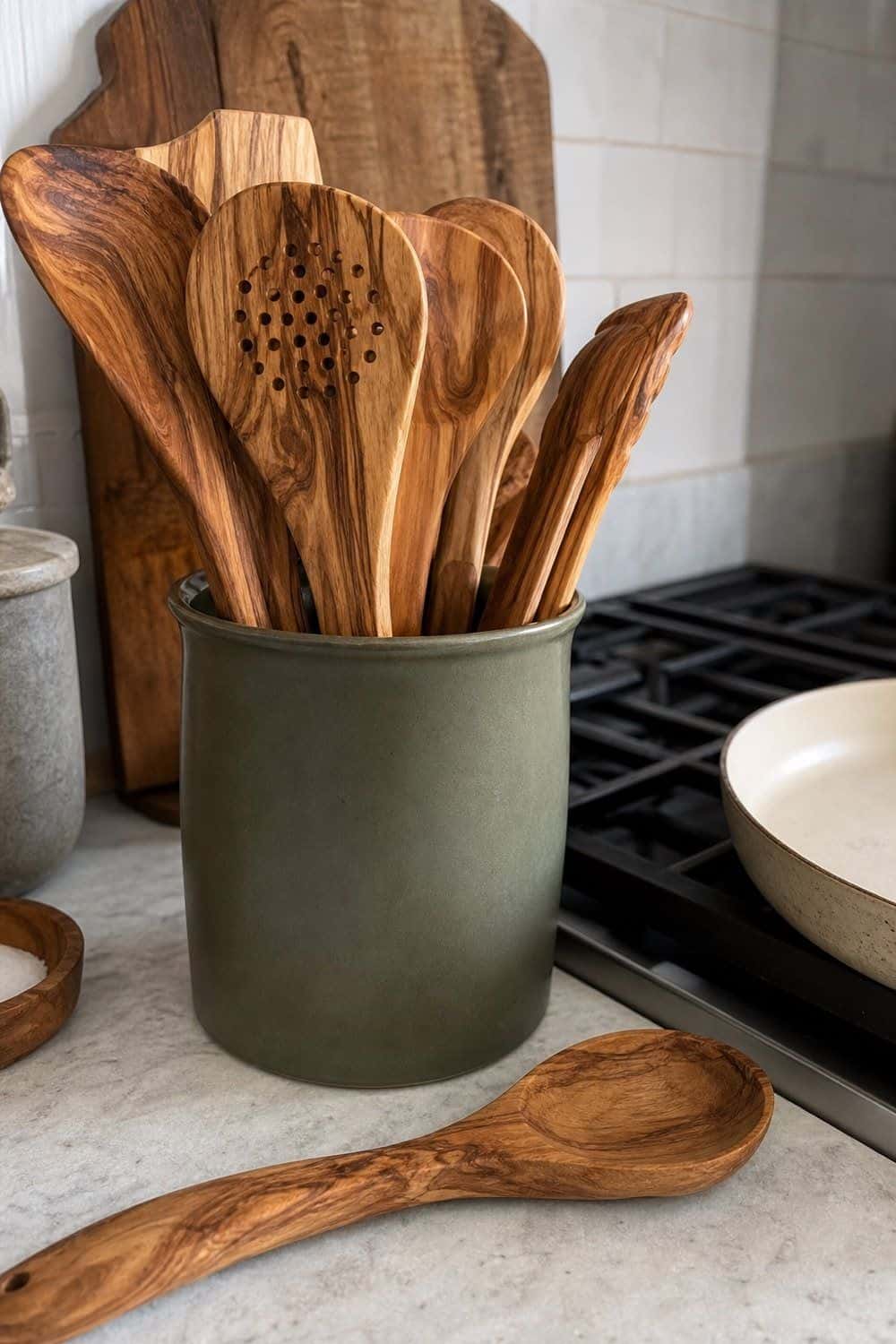
Olive wood utensils bring visible natural grain into the cooking zone. Spoons, spatulas, salad servers, and small prep tools look good in a crock, but they still need to be comfortable enough for everyday cooking. The variation in the wood helps the counter feel warmer and less sterile.
Hand wash olive wood, dry it fully, and oil it when it starts to feel dry. If you cook often, buy pieces with handles that feel good in your hand, not only the prettiest grain.
3. Ceramic Utensil Crock for Counter Tools

A ceramic utensil crock stores wooden spoons, whisks, spatulas, and tongs while adding an earthy counter piece near the stove. Clay, taupe, terracotta, cream, olive, or speckled glaze all work well because they bring grounded color without looking glossy or cold. Look for a crock with enough weight that it will not tip when full. Keep only the tools used often, since an overfilled crock becomes visual clutter and makes cooking slower. A wider opening also makes tools easier to grab while a pot is already on the stove.
4. Terracotta Vase for Herbs or Stems
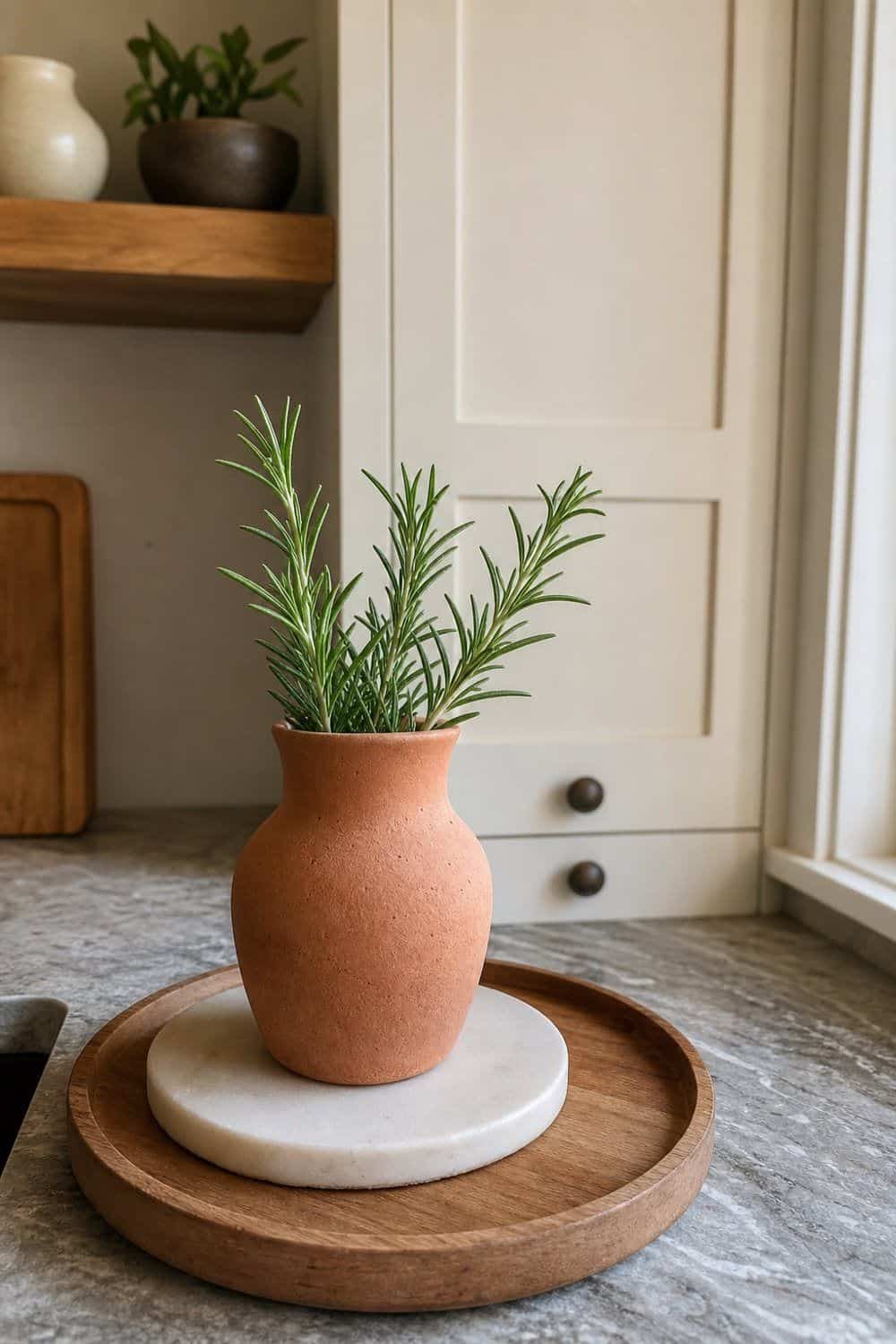
A terracotta vase adds clay warmth and an organic shape to counters, shelves, tables, or a coffee corner. Fill it with rosemary, eucalyptus, branches, dried stems, tulips, or simple greenery. The color brings depth even if the kitchen is mostly cream, white, or wood.
Choose a watertight liner or use dried stems if the vase is unglazed. Terracotta can be porous, so protect wood shelves and stone counters from moisture rings. A medium height is usually easiest because it can hold stems without blocking cabinet doors or conversation.
5. Stoneware Dinner Plates for Earthy Open Shelves
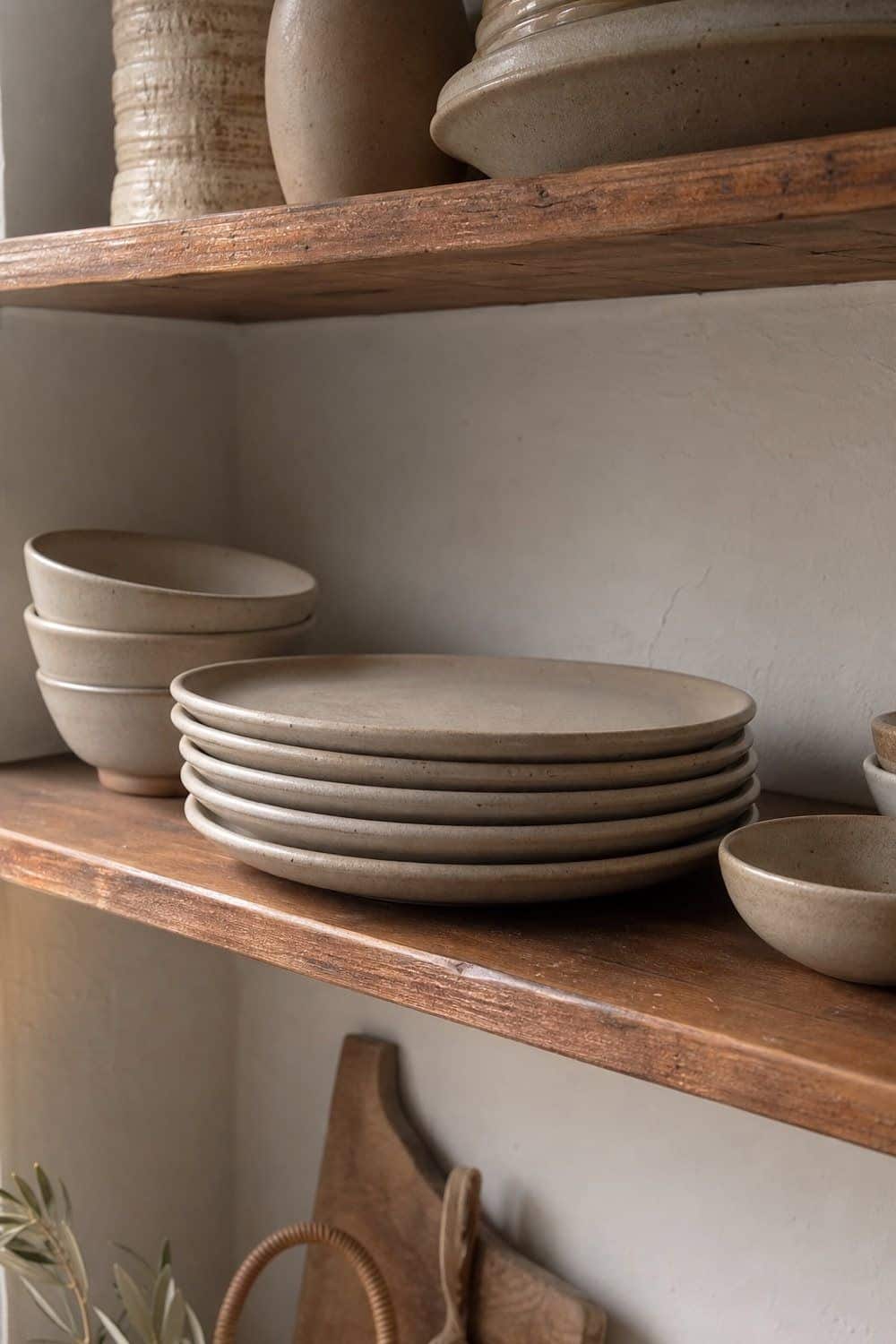
Stoneware dinner plates make everyday dishware part of the decor, especially on open shelves or inside glass cabinets. Matte, speckled, clay-toned, cream, mushroom, or olive plates usually feel more earthy than glossy white dishes. A repeated stack can make shelves look calm and useful. Check weight, dishwasher guidance, and how the plates stack before buying. Earthy dishes should make daily meals feel better, not create a second set that is too fragile to use. If shelves are shallow, measure plate diameter first.
6. Speckled Ceramic Bowls for Warm Everyday Meals
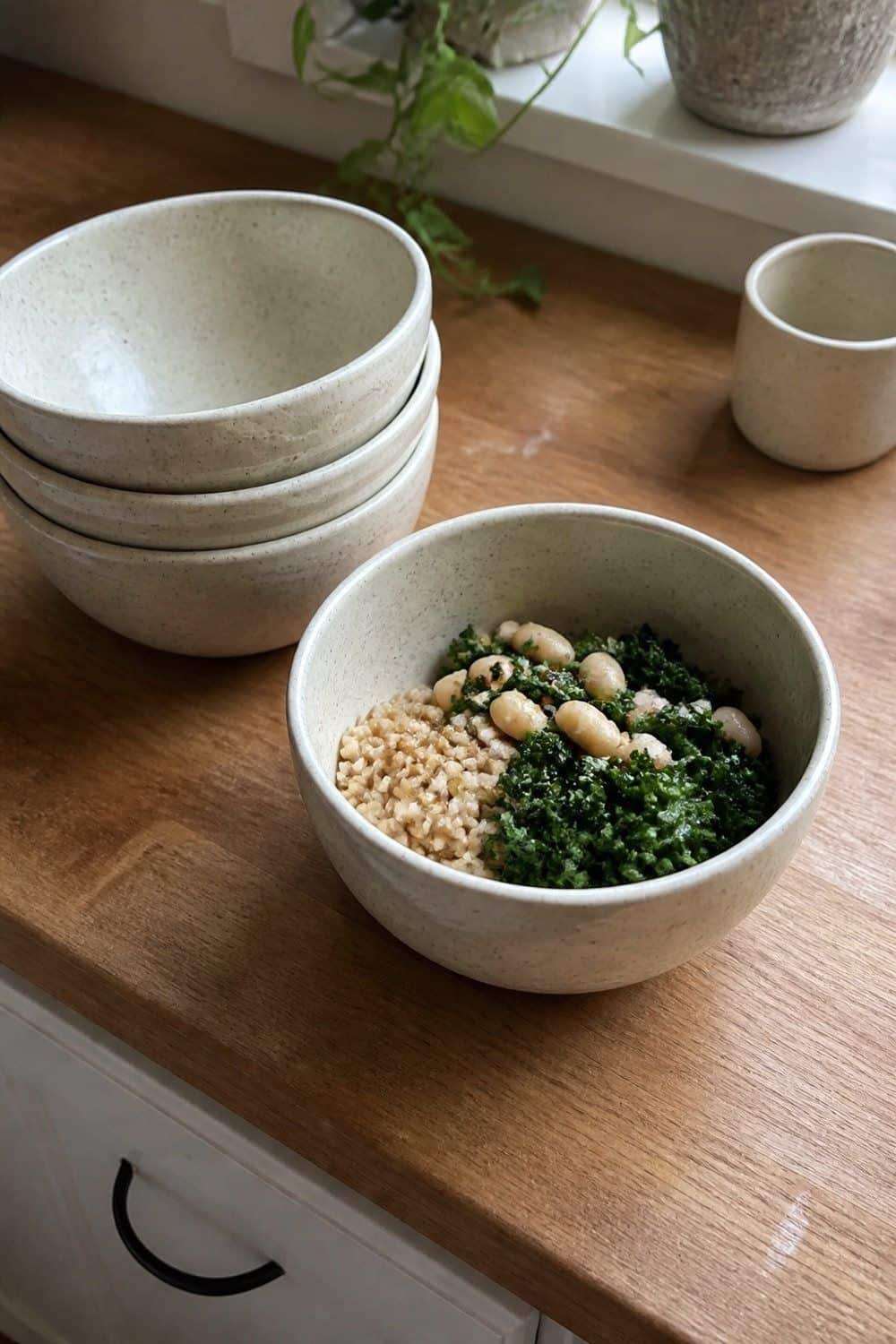
Speckled ceramic bowls add handmade texture to meals and shelf stacks. Use them for grain bowls, soup, salads, fruit, snacks, oats, or simple serving. A stack of bowls can bring earthy texture without adding separate decorative objects to the kitchen.
Look for a shape that nests well and feels easy to hold. Speckles, uneven glaze, and muted clay tones help the bowls feel collected, but they still need to suit the food you eat most. A slightly deeper bowl is often more versatile than a shallow decorative shape.
7. Stone Fruit Bowl for a Natural Counter Centerpiece
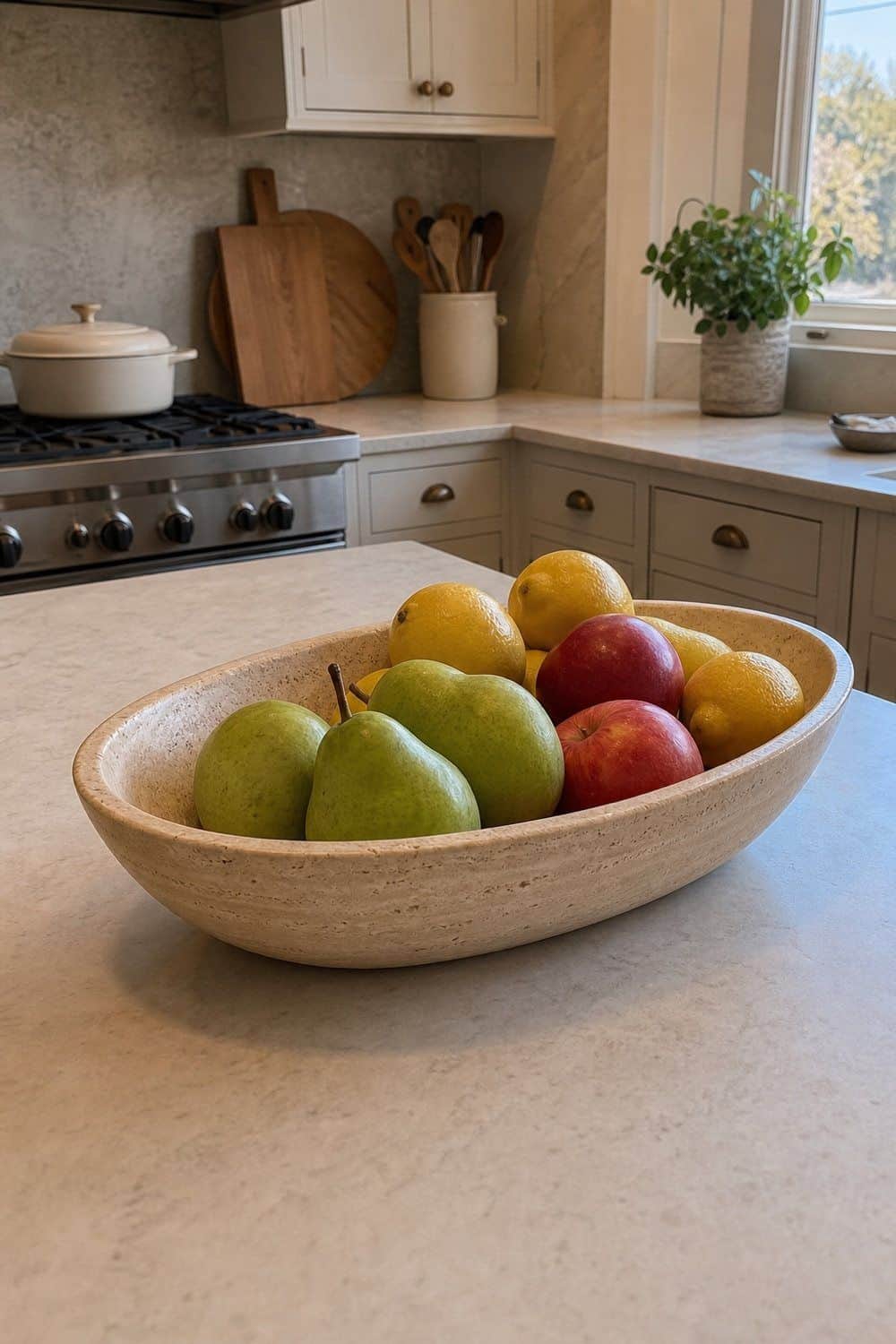
A stone fruit bowl creates a natural focal point that still holds food. Travertine, marble, soapstone, or stone-look bowls can ground a counter, island, or breakfast table with real weight. Use one for lemons, pears, apples, oranges, onions, or seasonal fruit. Before buying, think about lifting and cleaning. A heavy bowl can look beautiful but become annoying if it is hard to move. Keep produce visible and rotated so the centerpiece stays useful, especially with fruit that ripens quickly on the counter.
8. Terracotta Kitchen Canisters for Dry Goods
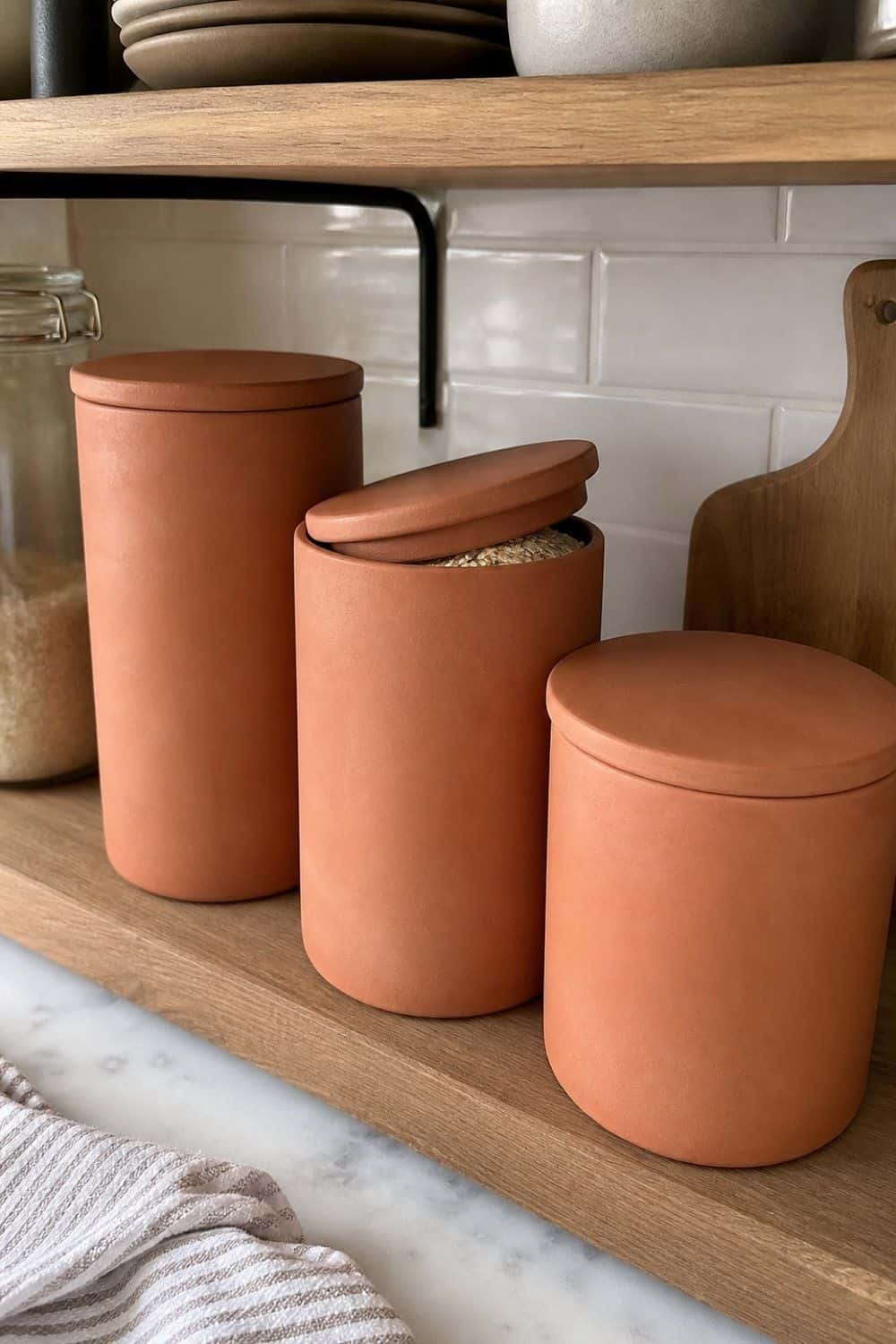
Terracotta kitchen canisters bring warm color to coffee, tea, sugar, flour, snacks, or baking supplies. They work well on counters, open shelves, or a small baking zone because the clay tone adds depth without feeling loud. A few canisters are usually stronger than a large matching set.
Check the lids and seals if food will be stored inside. Decorative canisters are not helpful if sugar hardens or coffee goes stale. Label the underside if the containers look similar, and choose sizes that match the way you actually restock pantry staples.
9. Glass Jars With Wood Lids for Open Storage
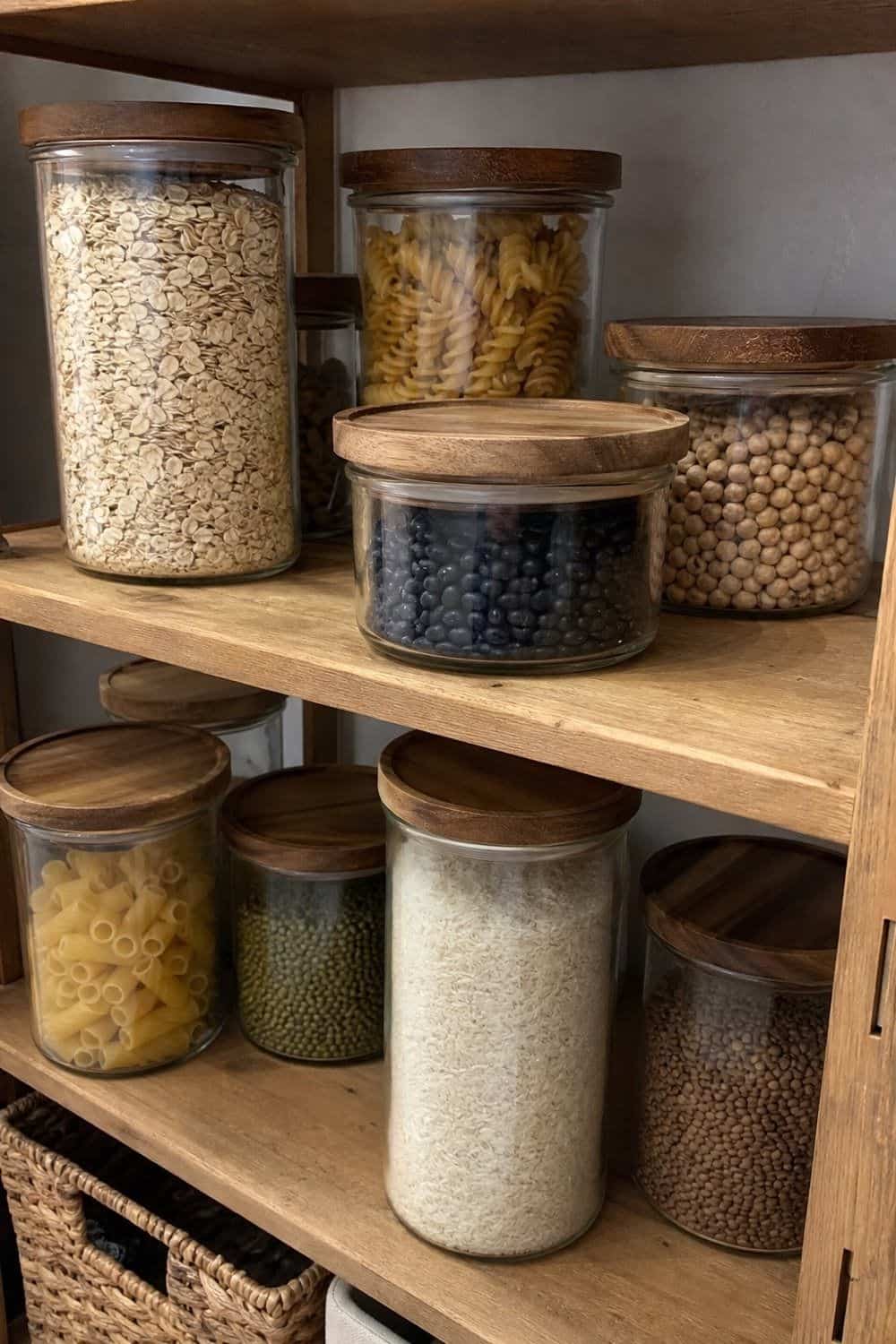
Glass jars with wood lids mix visibility with natural texture. Use them for oats, rice, pasta, beans, granola, cookies, nuts, tea, or baking staples. The glass keeps contents easy to scan, while the wood lid softens the storage so it feels less clinical. Buy only for dry goods you replenish often. A row of identical jars can look tidy, but it becomes wasteful if the sizes do not match your grocery habits or shelf height. Measure before decanting a whole pantry.
10. Woven Storage Baskets for Lower Shelves
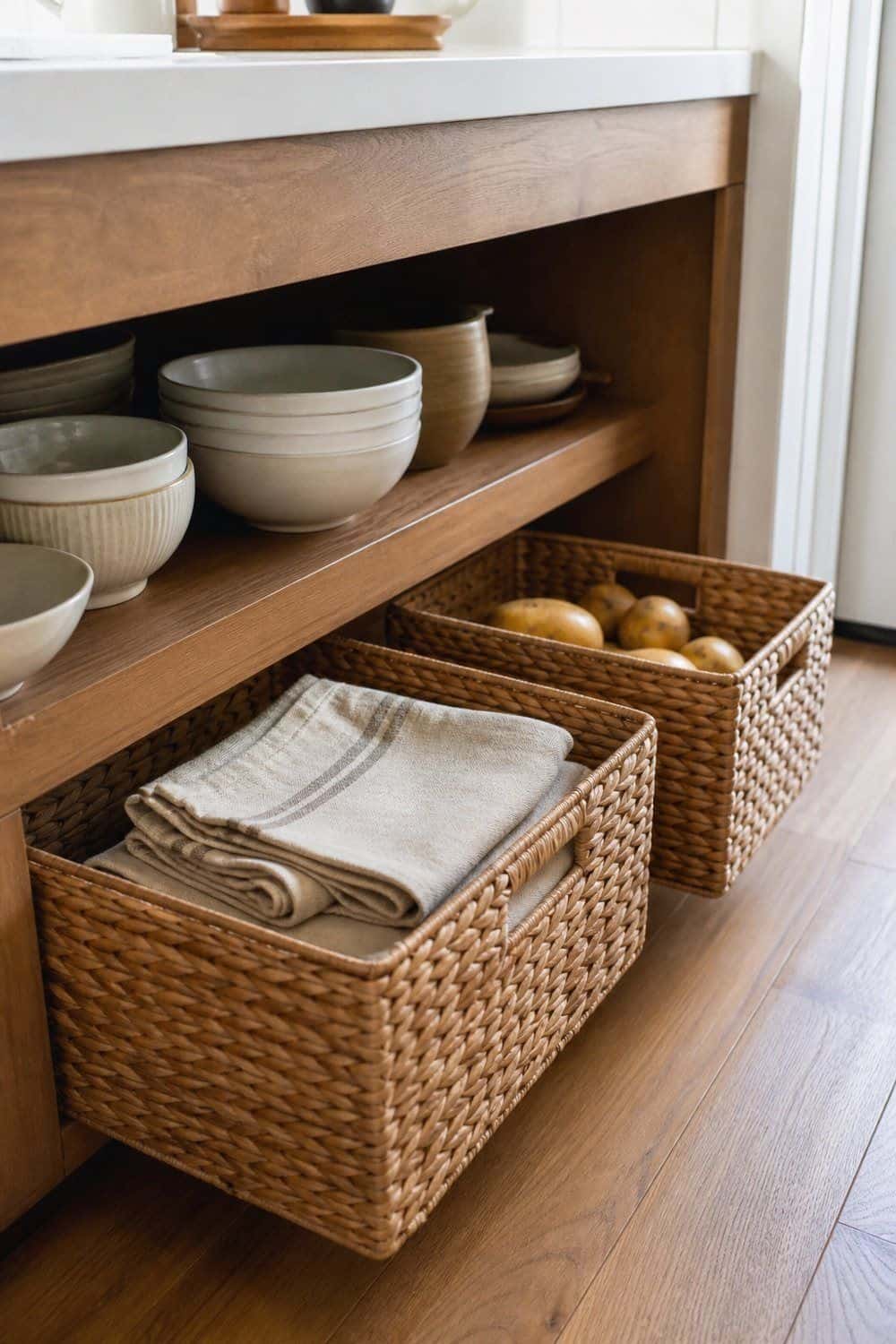
Woven storage baskets hide practical items while adding natural texture to lower shelves, pantries, islands, and open cabinets. Use them for linens, potatoes, onions, snacks, paper goods, backstock, or serving cloths. Handles help if the basket sits low or deep.
Choose baskets that pull out smoothly and do not snag shelf edges. Avoid hiding produce you need to rotate. Woven storage should make the shelf calmer, not turn food into forgotten clutter. Straight sides are often better for shelves because they waste less space than round baskets.
11. Seagrass Tray for Coffee or Oil Bottles

A seagrass tray corrals coffee supplies, olive oil, vinegar, salt, pepper, mugs, or a small plant so the counter does not look scattered. The woven texture reads earthy while the tray creates a boundary around small everyday items. Use it where grouping helps the routine: beside the coffee maker, near the stove, or on a side counter. Keep liquids on a wipeable coaster or dish if spills could stain the fibers. Leave space around the tray so it reads as a tidy grouping.
12. Linen Kitchen Towels for the Sink Area

Linen kitchen towels soften the sink, stove, dishwasher, or baking zone with natural textile texture. Flax, oatmeal, olive, rust, clay, mushroom, and warm white all fit an earthy palette. The towel should still dry dishes, wrap bread, or handle light kitchen work.
Avoid buying towels that only look good folded. Linen usually improves with washing, but absorbency and size still matter. Keep a few in rotation so the kitchen feels lived-in, not overloaded with fabric. A darker olive or rust towel can also hide daily wear better than pale cream.
13. Earth Tone Table Runner for a Kitchen Table
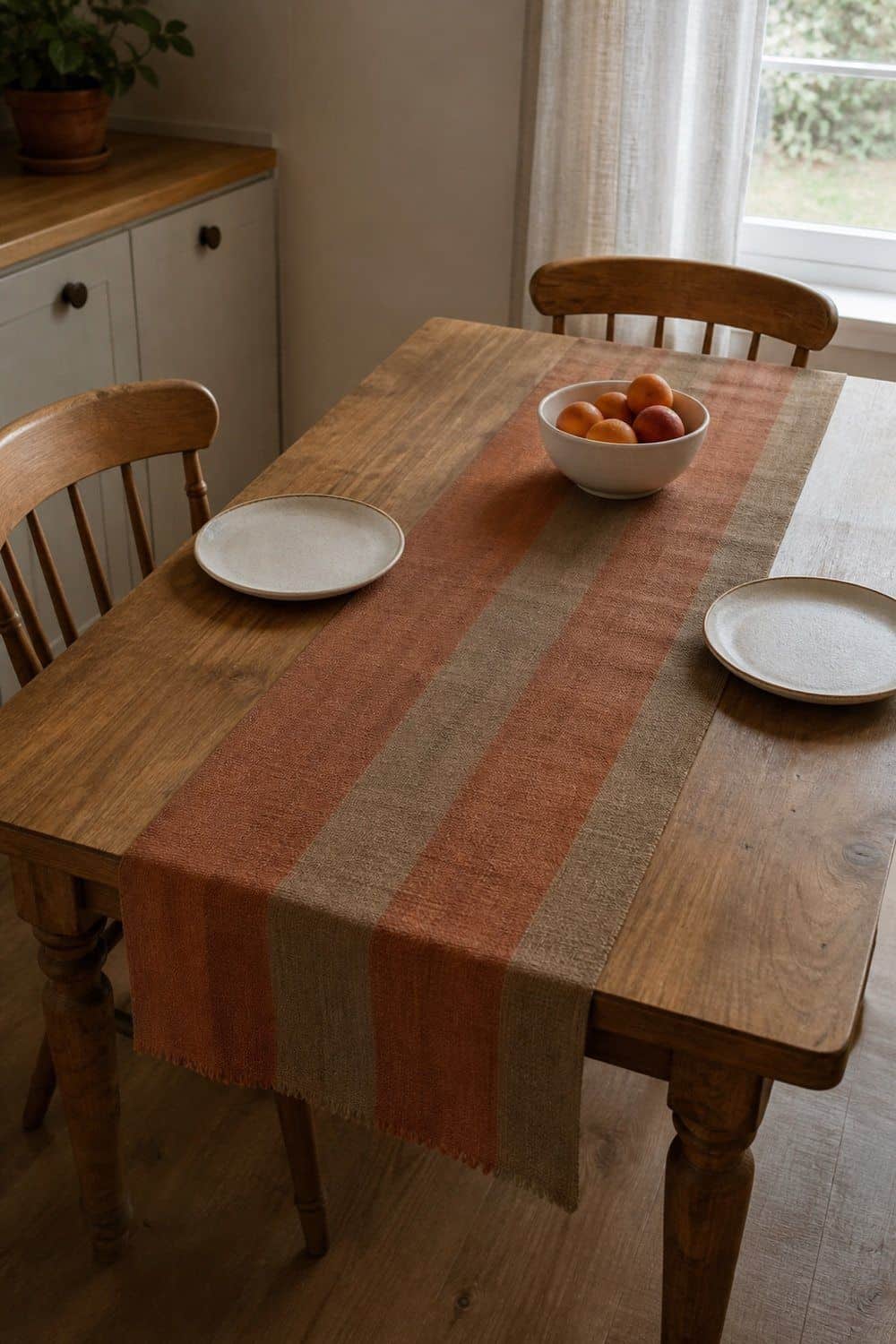
An earth tone table runner can introduce terracotta, olive, ochre, taupe, rust, or chocolate without replacing dishes. Use one on a breakfast table, island, sideboard, or buffet counter. It adds softness and color where the kitchen connects to meals. Choose a washable fabric and a length that does not hang into chairs or cabinet paths. A runner is especially useful when the room needs color but the counters should stay clear. Pair it with plain dishes if the fabric has a strong pattern.
14. Olive Green Cloth Napkins for Place Settings
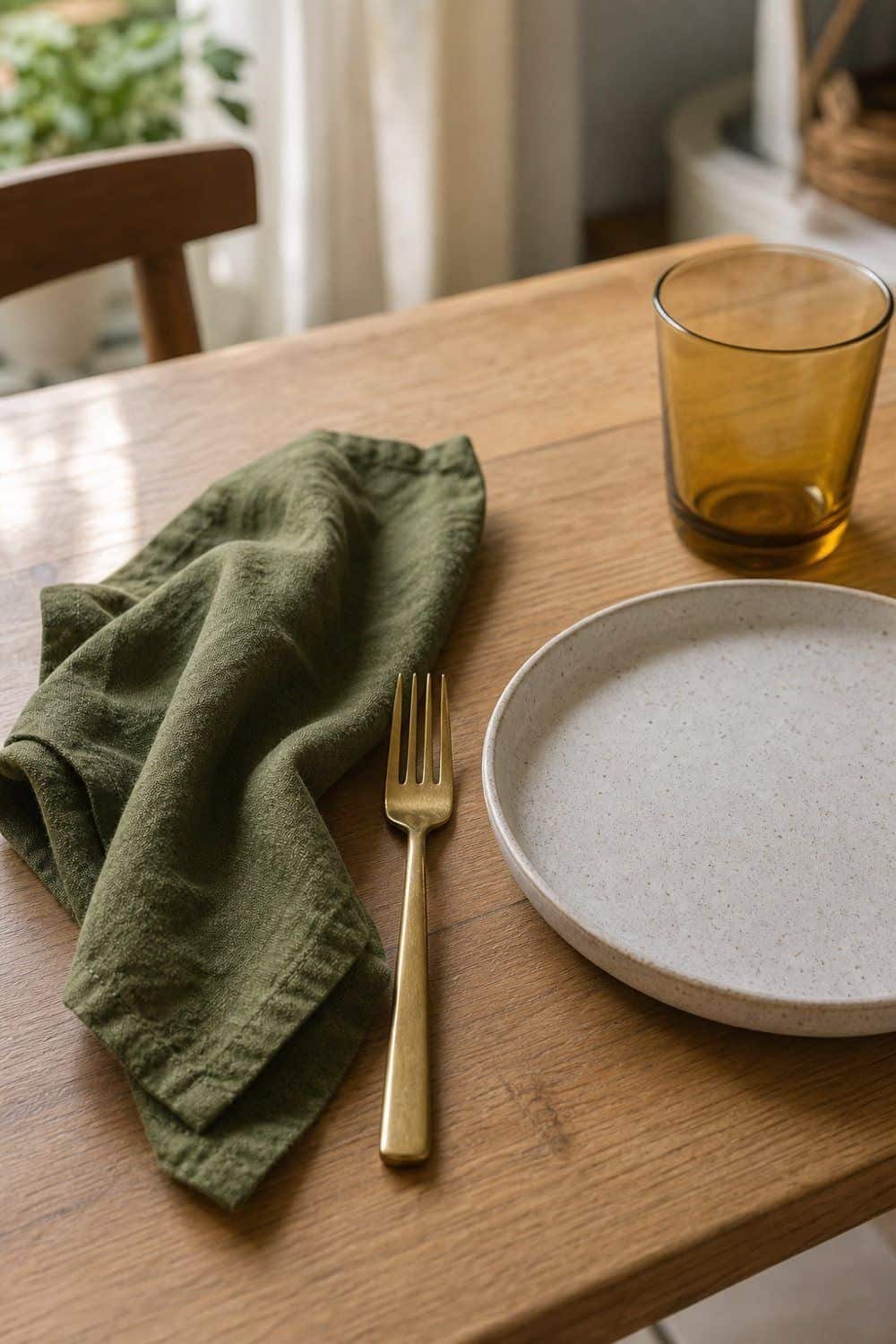
Olive green cloth napkins add nature-inspired color to everyday place settings. They pair well with stoneware, wooden boards, cream dishes, brass flatware, amber glasses, and woven placemats. Olive reads earthy without relying on beige, which helps the table feel more layered.
Look for fabric that can handle repeat washing and casual meals. Napkins are a low-commitment way to test deeper green before buying larger textiles, dishes, or artwork. Keep a matching or tonal set close to the table so they are used often.
15. Jute Placemats for Natural Texture
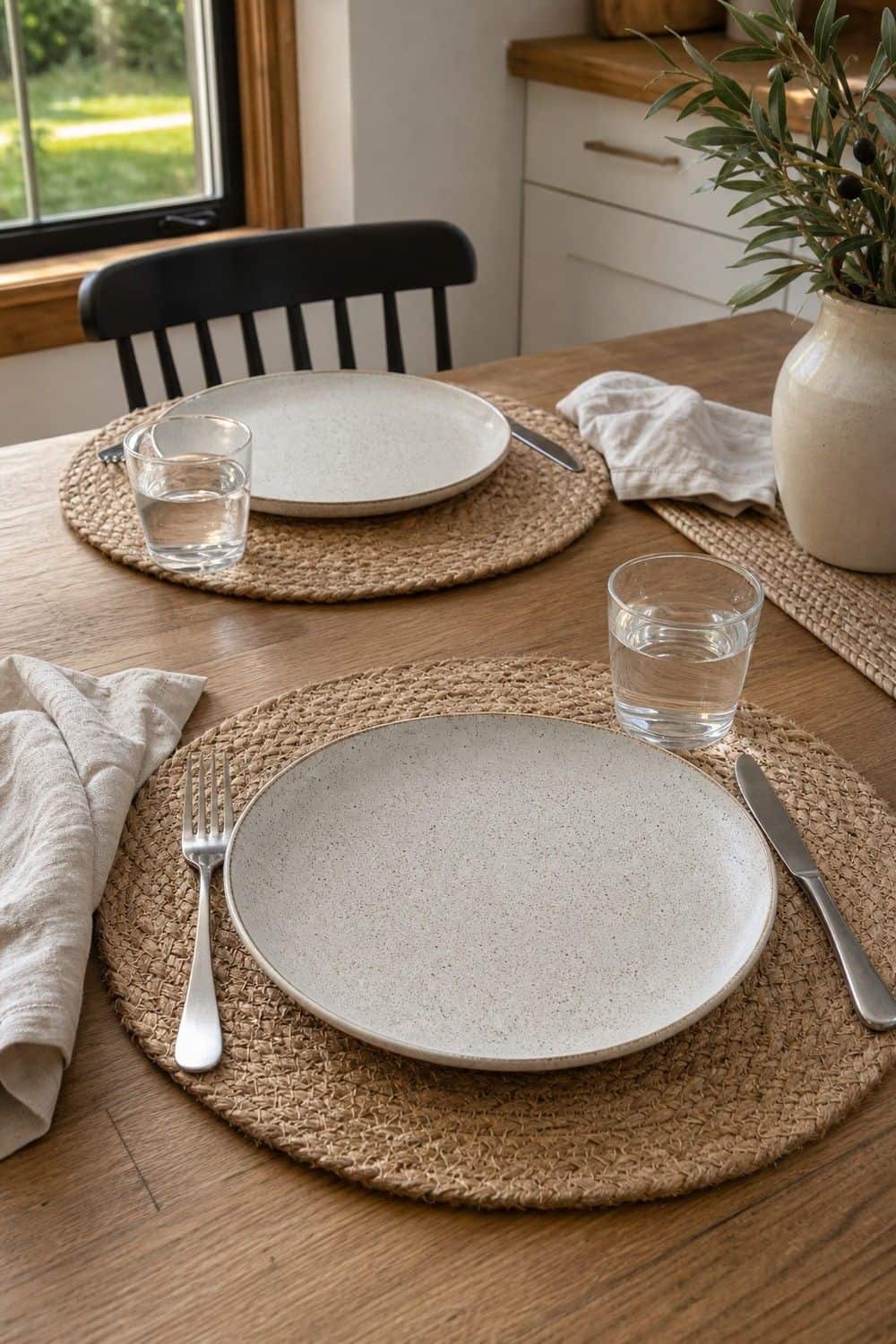
Jute placemats ground table settings with woven material. They work for casual breakfasts, simple dinners, and hosting when the table needs texture but not a full tablecloth. The natural fiber pairs easily with stoneware, wood, linen, amber glass, and brass. Check thickness and cleaning instructions before buying. Some woven placemats trap crumbs, so choose a weave that can be shaken out or wiped. Use them where they add texture without making the table fussy, especially under everyday plates rather than only special table settings.
16. Amber Glassware for Warm Drink Service
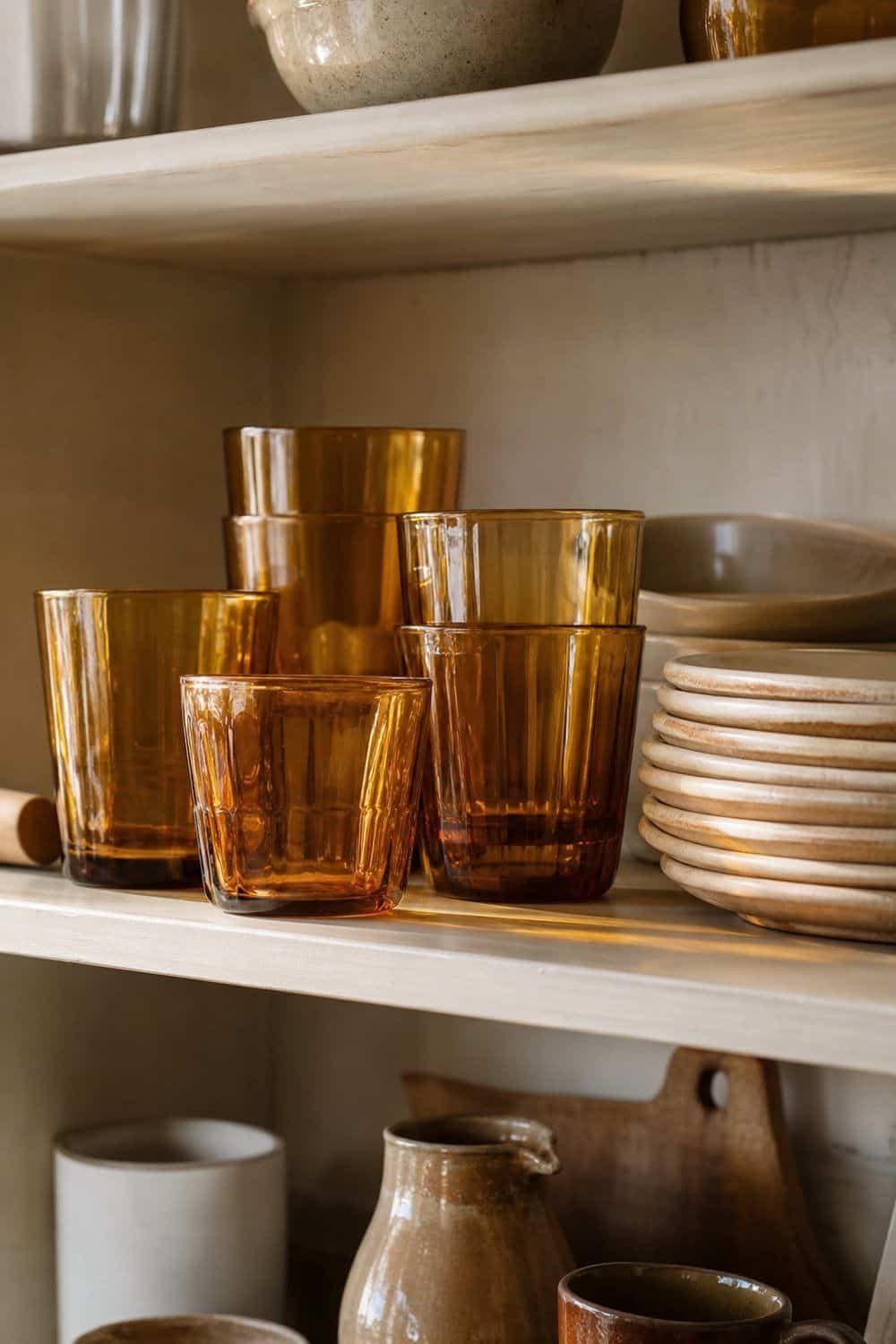
Amber drinking glasses add warm translucent color to water, iced tea, juice, wine, mocktails, or brunch drinks. They bring an earth tone into the kitchen without paint, tile, or new cabinets. The color looks especially good beside stoneware, linen, wood, and olive napkins.
Choose a shape that works for daily drinks, not only styled tables. If open shelves are already busy, clear amber glass can add color while still feeling lighter than solid ceramic. Repeated glassware also helps an open shelf look planned without adding another decorative object.
17. Matte Black Candlestick Holders for Contrast
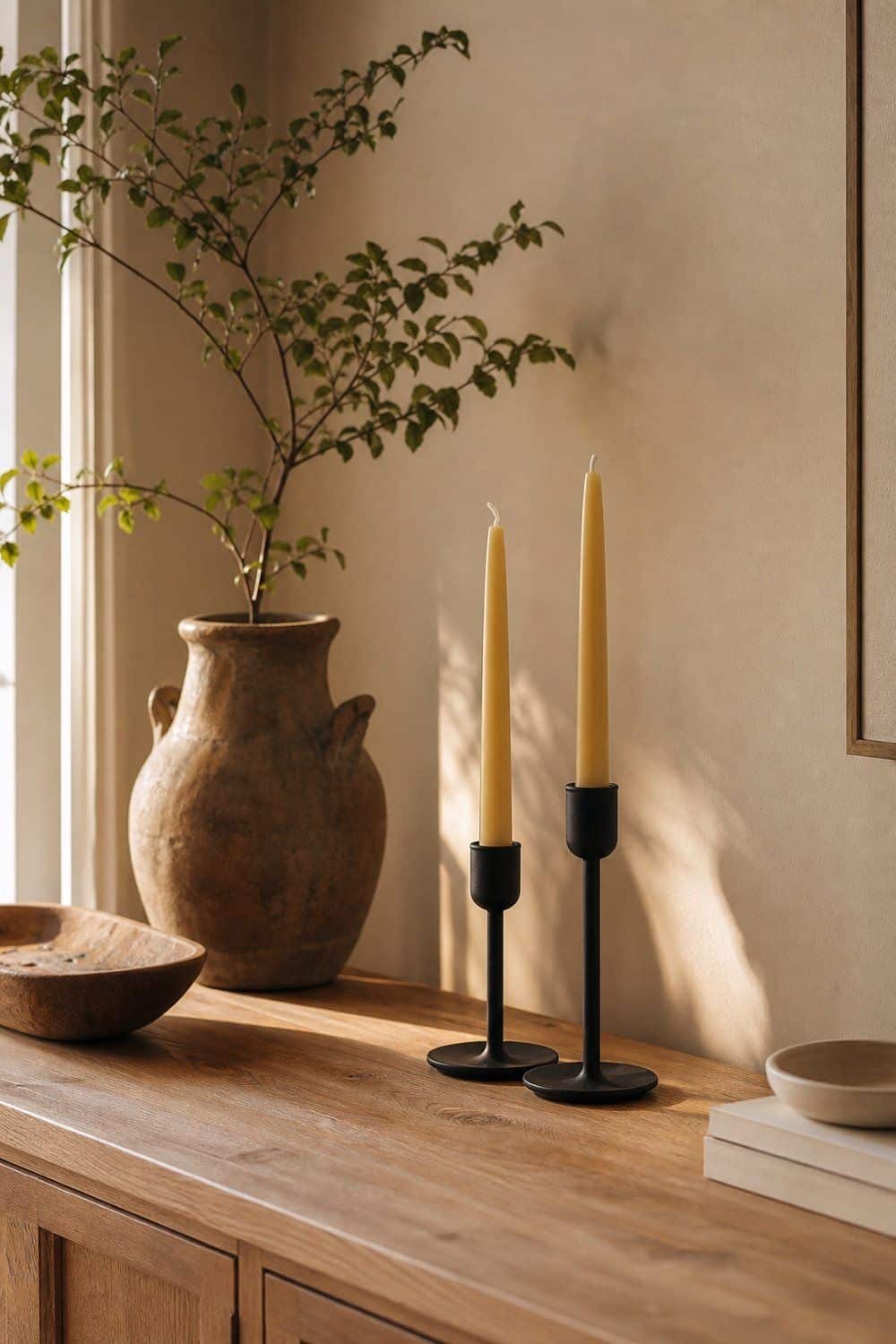
Matte black candlestick holders add grounding contrast to earthy neutrals. A small amount of black can make wood, terracotta, linen, and stone feel more defined. Use them on kitchen tables, sideboards, open shelves, or dinner setups where they will not crowd prep space. Keep the scale modest. Tall holders can block conversation or feel formal in a casual kitchen. Pair them with cream, rust, olive, or beeswax tapers for a warmer table, and keep the grouping small enough for regular meals.
18. Brass Taper Candle Holders for Warm Metal

Brass taper candle holders bring aged metallic warmth to dinner tables, shelves, hutches, and seasonal centerpieces. Brass works well with olive, terracotta, chocolate brown, cream, wood, and stone because it adds glow without feeling shiny when the finish is softened.
Use a pair or small mixed group rather than a crowded row. If the kitchen already has brass hardware, candle holders can repeat the finish at table height and make the room feel more connected. They are also easy to move when the table needs to become a prep or serving surface.
19. Ceramic Pendant Light for a Natural Focal Point

A ceramic pendant light brings earthy material above an island, sink, breakfast nook, or small dining table. It is a larger decor find, so scale and bulb warmth matter. A clay, cream, taupe, or speckled shade can soften overhead lighting.
Check fixture size against the table or island before buying. A pendant that is too large can overwhelm the kitchen, while one that is too small may feel like an afterthought. Warm bulbs keep the ceramic from looking harsh, and a dimmer can make evening meals feel softer.
20. Woven Pendant Light for Soft Texture
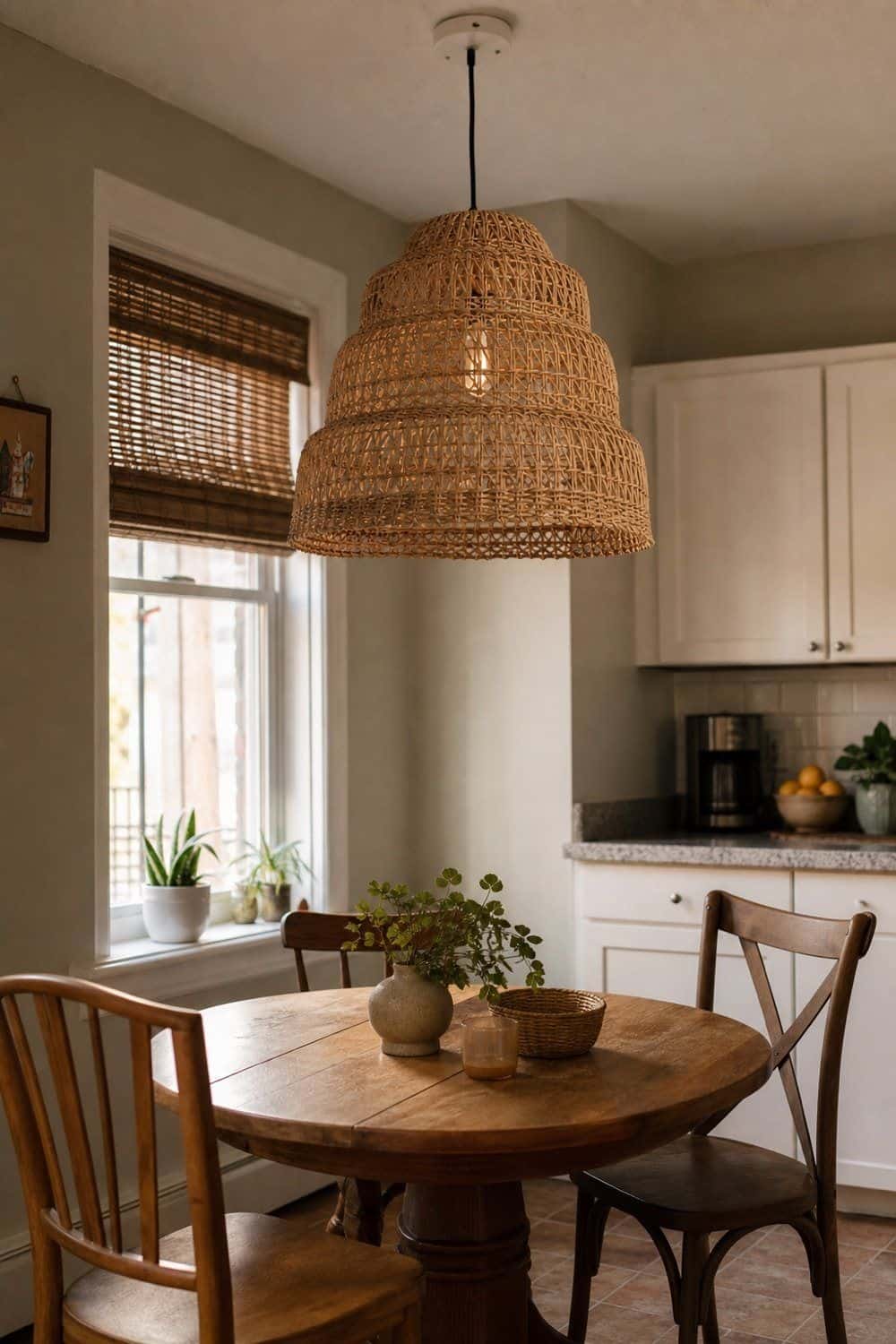
A woven pendant light adds natural fiber overhead, especially above kitchen tables, islands, or breakfast nooks. Rattan, seagrass, wicker, or similar textures can warm a plain room and make the lighting feel less clinical. The shade also adds texture without using counter space.
Keep woven shades away from heavy grease or steam zones when possible. They can be harder to clean than metal or glass, so placement needs care. Choose a weave that filters light softly without making the work area dim.
21. Earth Tone Kitchen Rug for Floor Warmth

An earth tone kitchen rug adds softness and color underfoot by the sink, island, stove zone, or galley walkway. Rust, olive, brown, clay, mushroom, and muted mineral tones can ground the room without making the palette feel flat.
Choose washable or low-pile options with a secure rug pad. Kitchen rugs need to handle crumbs, splashes, and traffic. A pattern with several earth tones can hide wear better than a very pale solid rug, especially near the sink or stove area.
22. Botanical Kitchen Art for Wall Warmth
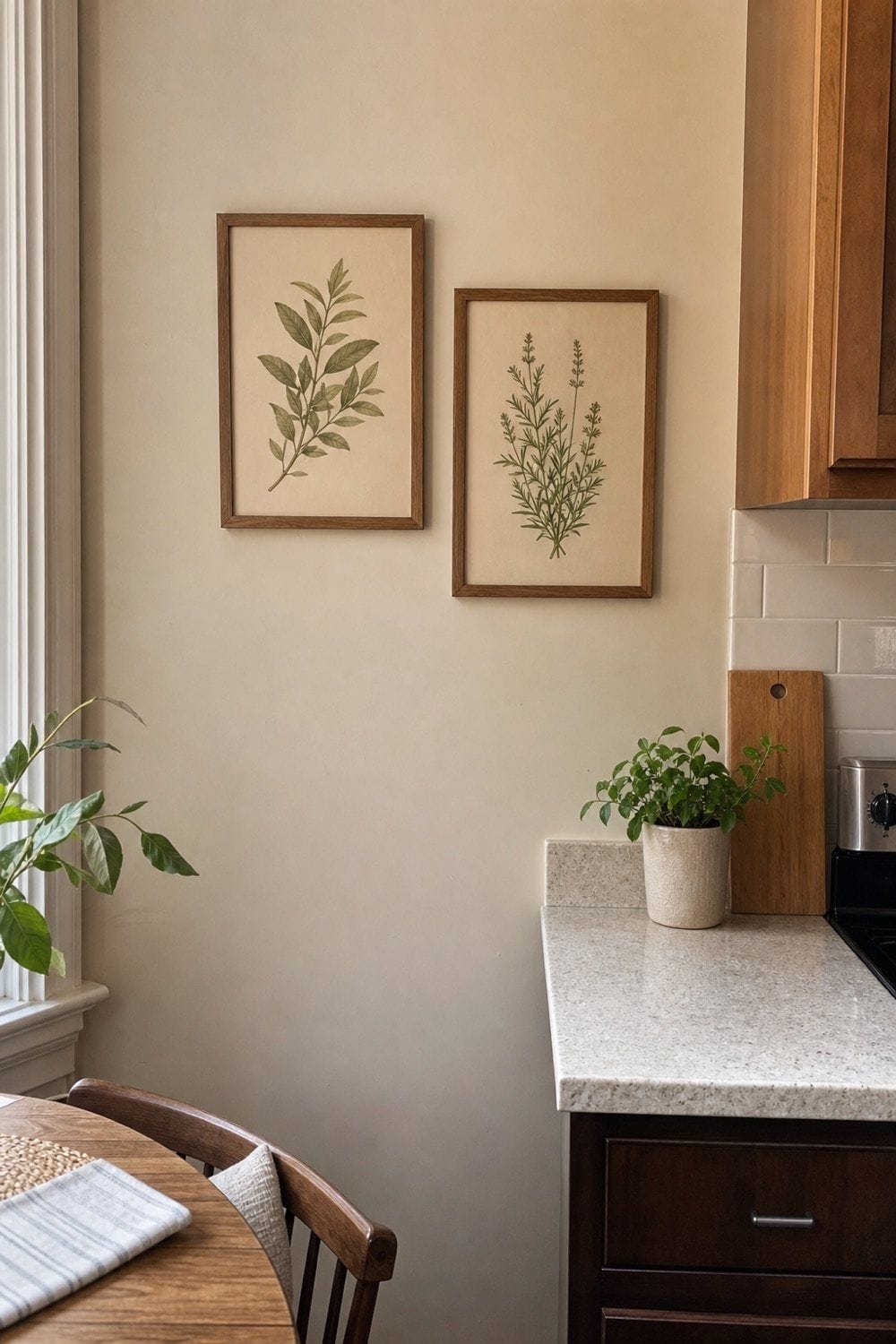
Botanical kitchen art adds nature references without taking counter space. Herb prints, vegetable illustrations, fruit art, landscape sketches, or muted botanical sets can warm a blank wall near a breakfast nook, pantry, sideboard, or doorway.
This is a good choice when the kitchen already has enough objects on the counter. Choose frames that connect to the room’s materials, such as wood, brass, black, or warm white, and keep art away from heavy steam. A pair of prints often looks calmer than a crowded wall.
23. Clay Salt Cellar for Prep Counters
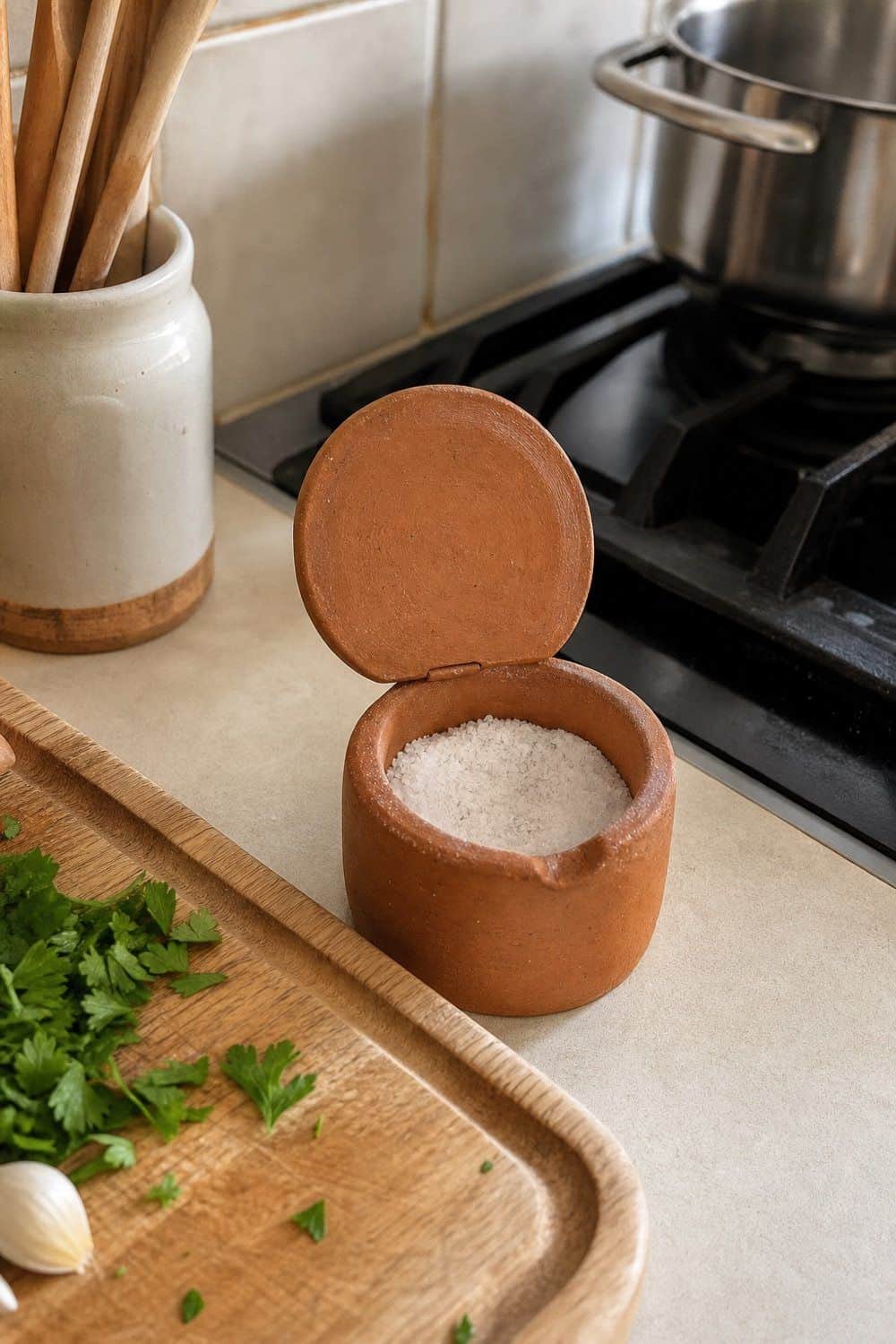
A clay salt cellar adds handmade texture to a daily cooking spot. Keep it near the stove or prep board for kosher salt, flaky salt, or a finishing blend. Small functional objects like this can carry earthy kitchen decor better than extra decor with no job.
Choose a cellar with an opening wide enough for pinching and a lid if the counter gets dusty or splattered. The piece should make seasoning easier while adding clay color and shape to the work zone.
24. Stone Mortar and Pestle for Display and Use
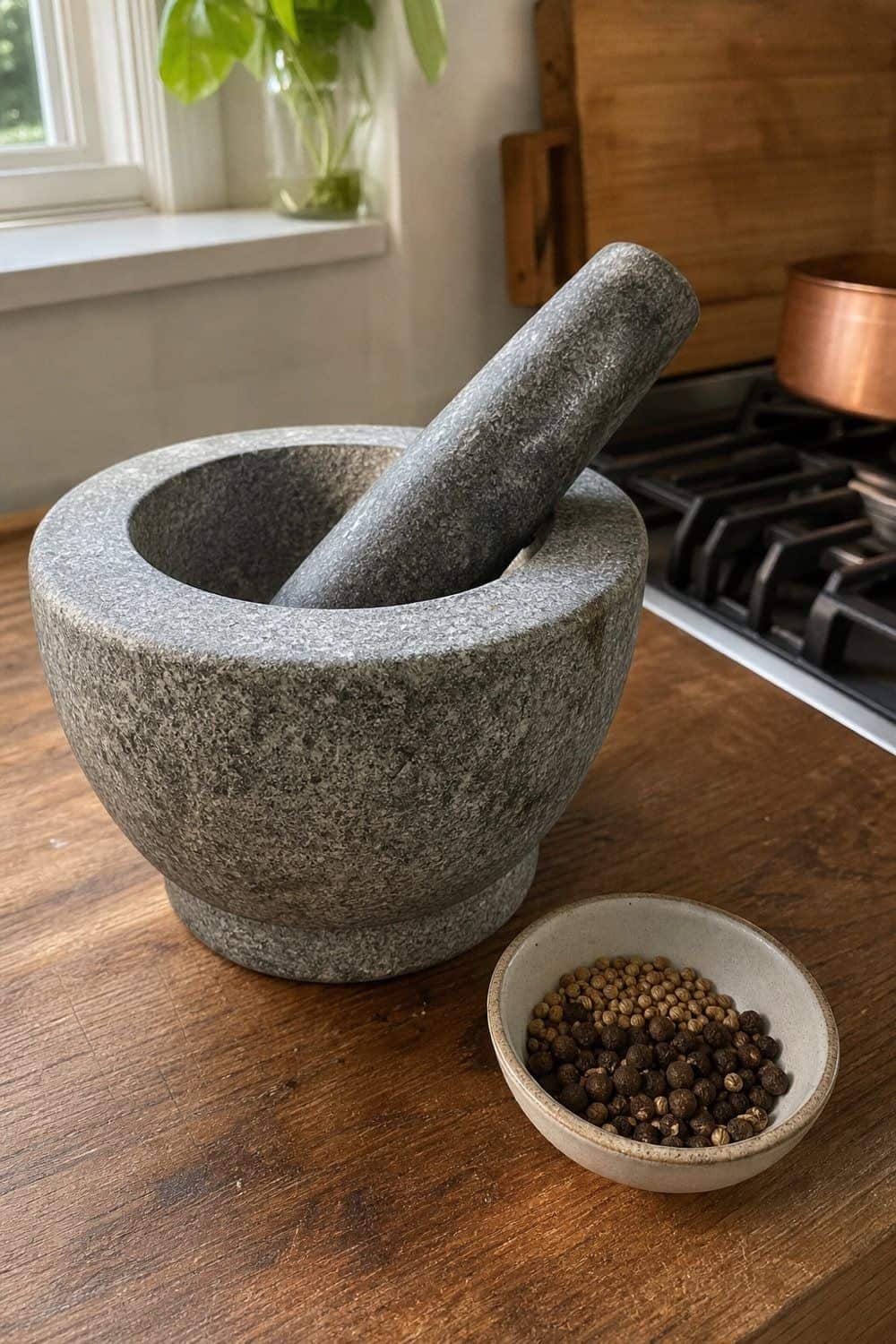
A stone mortar and pestle adds natural weight to a working counter. Use it for herbs, spices, garlic, pesto, sauces, dressings, or small seasoning blends. It can sit near the prep area and look sculptural between uses.
Buy one for real use or style it deliberately. If it is too heavy to move, too small to grind well, or difficult to clean, it may become only a rustic-looking object. Check material care before using acidic ingredients, and choose a bowl size that fits the sauces or spice blends you make.
25. Small Potted Herb Planter for Fresh Greenery
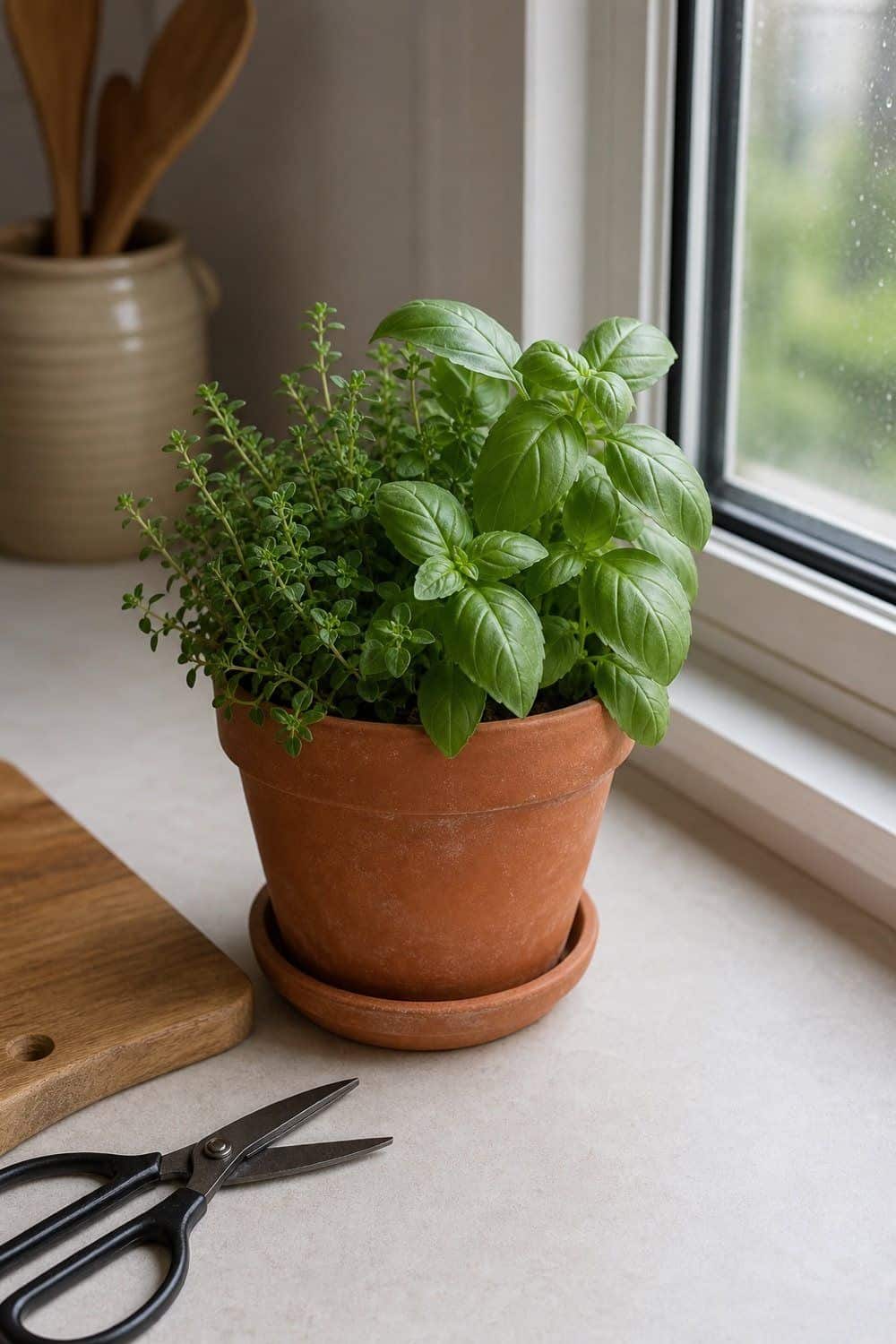
A small potted herb planter brings living texture to an earthy kitchen. Basil, parsley, mint, thyme, chives, or rosemary can sit near a bright window and support real cooking. Greenery is one of the most direct ways to make natural kitchen decor feel alive.
Light and drainage decide whether this find works. Use pots with holes, protect the sill or counter with a tray, and choose herbs you actually cook with. If the kitchen is dim, botanical art may be a better choice.
How to Keep Earthy Kitchen Decor From Looking Flat Beige
Earthy decor does not have to mean beige on beige. Mix wood, stone, ceramic, linen, woven fiber, clay, brass, amber glass, and greenery so the room has texture. Then add deeper tones, such as olive, moss, terracotta, ochre, chocolate, rust, or matte black.
The safest way to shop is to choose pieces with a kitchen job first. Serving boards, crocks, baskets, towels, dishes, trays, lighting, art, and herb planters can all add earthy warmth while still helping the kitchen cook, serve, store, soften, or light better.
Frequently Asked Questions
What is earthy kitchen decor?
Earthy kitchen decor uses natural materials, grounded colors, and tactile textures to make a kitchen feel warmer and more collected. Common pieces include wood boards, ceramic crocks, terracotta vases, stoneware plates, woven baskets, linen towels, amber glasses, botanical art, and herbs.
What colors suit an earthy kitchen?
Terracotta, clay, olive, moss, sage, mushroom, taupe, chocolate brown, ochre, rust, flax, cream, warm white, amber, and soft black all work well. Use a mix of light neutrals, deeper earth tones, and natural materials so the palette does not feel flat.
What earthy kitchen decor is worth buying first?
Start with a piece that will be used often, such as a wooden serving board, ceramic utensil crock, linen kitchen towels, stoneware plates, woven storage basket, or terracotta vase. Useful pieces usually blend into the kitchen better than decor bought only to fill a gap.
How do I make a kitchen feel earthy without remodeling?
Add natural-material accents in visible places: wood boards on the counter, linen towels by the sink, stoneware dishes on shelves, a woven tray near the coffee maker, botanical art on a wall, and herbs near a bright window.
What materials make a kitchen feel more natural?
Wood, stone, ceramic, terracotta, clay, linen, jute, seagrass, wicker, rattan, brass, amber glass, and living greenery all make a kitchen feel more natural. Matte or speckled finishes usually read warmer than glossy, cool, or plastic-looking surfaces.
How do I keep earthy kitchen decor from looking too beige?
Use beige or taupe as only one part of the palette. Add olive, moss, terracotta, rust, ochre, chocolate, amber glass, warm brass, matte black, stone texture, and real greenery so the kitchen has contrast and depth.
What earthy decor works in a small kitchen?
Choose useful pieces that do not steal prep space: linen towels, a narrow tray, a small herb planter, botanical art, stackable stoneware bowls, amber glasses, a clay salt cellar, or one wooden serving board leaned near the backsplash.
Can earthy kitchen decor still feel modern?
Yes. Keep the shapes clean, the palette refined, and the materials tactile. A modern earthy kitchen can use stoneware, wood, linen, woven lighting, matte black contrast, olive textiles, and ceramic pieces without becoming rustic or overly themed.
Final Thoughts
The best earthy kitchen decor finds bring natural texture into the room while still helping with real kitchen life. Start with one useful material, such as wood, stone, ceramic, linen, woven fiber, clay, brass, amber glass, or herbs, then layer deeper earth tones so the space feels warm, grounded, and personal without becoming cluttered.
Last update on 2026-09-18 / Affiliate links / Images from Amazon Product Advertising API