
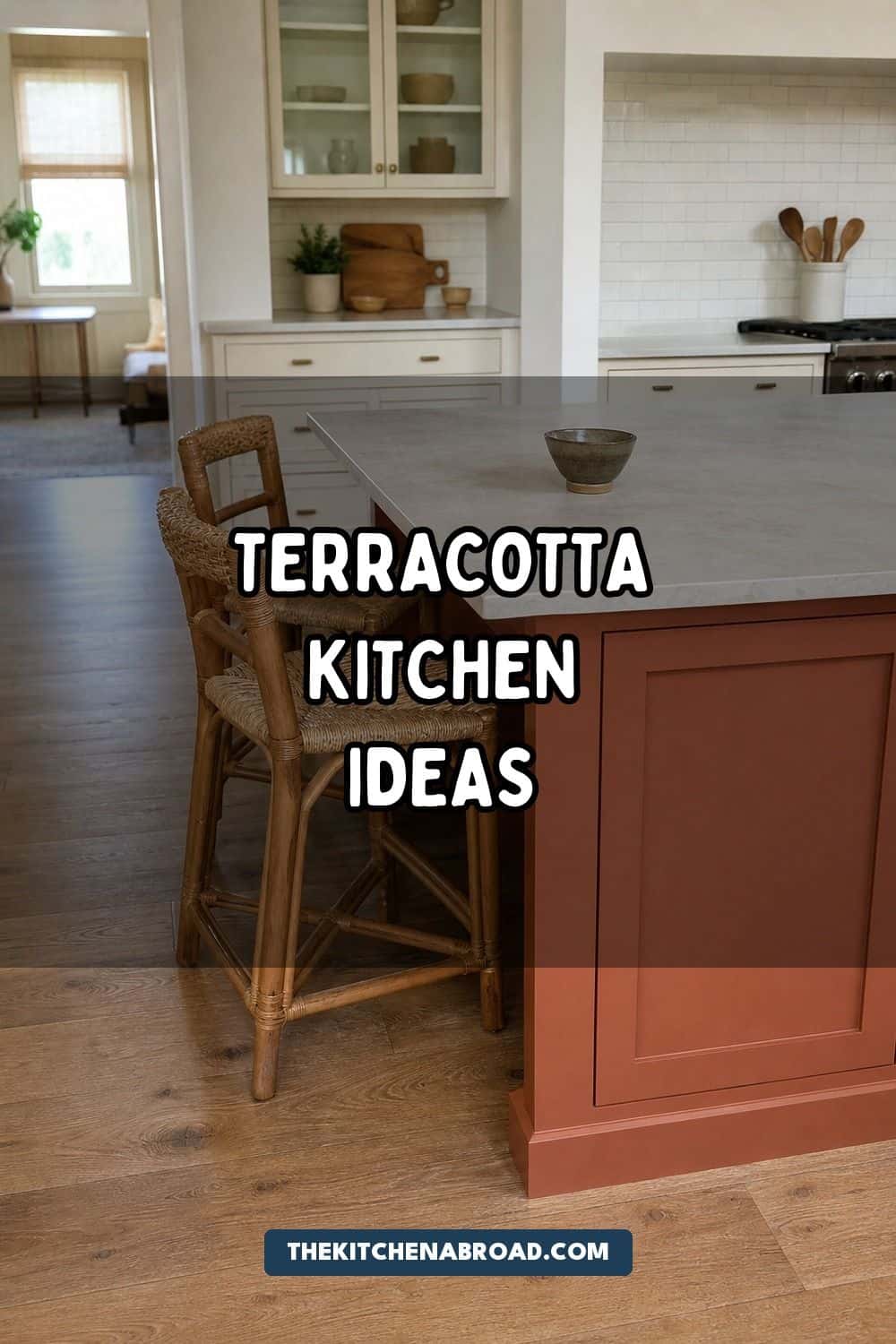
Terracotta kitchen ideas work best when the color is treated as warm clay, not bright orange. Use muted cabinets, a kitchen island, handmade-look tile, floor tile, doors, runners, ceramics, or herb pots, then balance the warmth with cream, natural wood, stone, bronze, black, green, blue, and restrained Mediterranean details.
Terracotta sits between burnt orange, dusty red, brown, and baked clay. In a kitchen, that makes it warmer and more characterful than a beige neutral, but also easier to overdo if every surface leans orange.
The strongest terracotta kitchen ideas choose a clear commitment level. You might use the color on cabinets, tile, floors, or a range hood, or you might keep it to stools, pottery, runners, and herb pots. The right balance lets the kitchen feel sunbaked and tactile without becoming dark, themed, or too saturated.
Top Recommended Products


You Might Also Like These Blog Posts
- 25 Warm Neutral Kitchen Ideas for a Softer Modern Look
- 25 Earthy Kitchen Ideas for a Warm and Natural Home
- 25 Natural Wood Kitchen Ideas for a Warm and Organic Space
- 25 Olive Green Kitchen Ideas for Rich, Earthy Color
- 25 Cream Kitchen Ideas for a Soft and Timeless Space
1. Soft Clay Cabinet Color
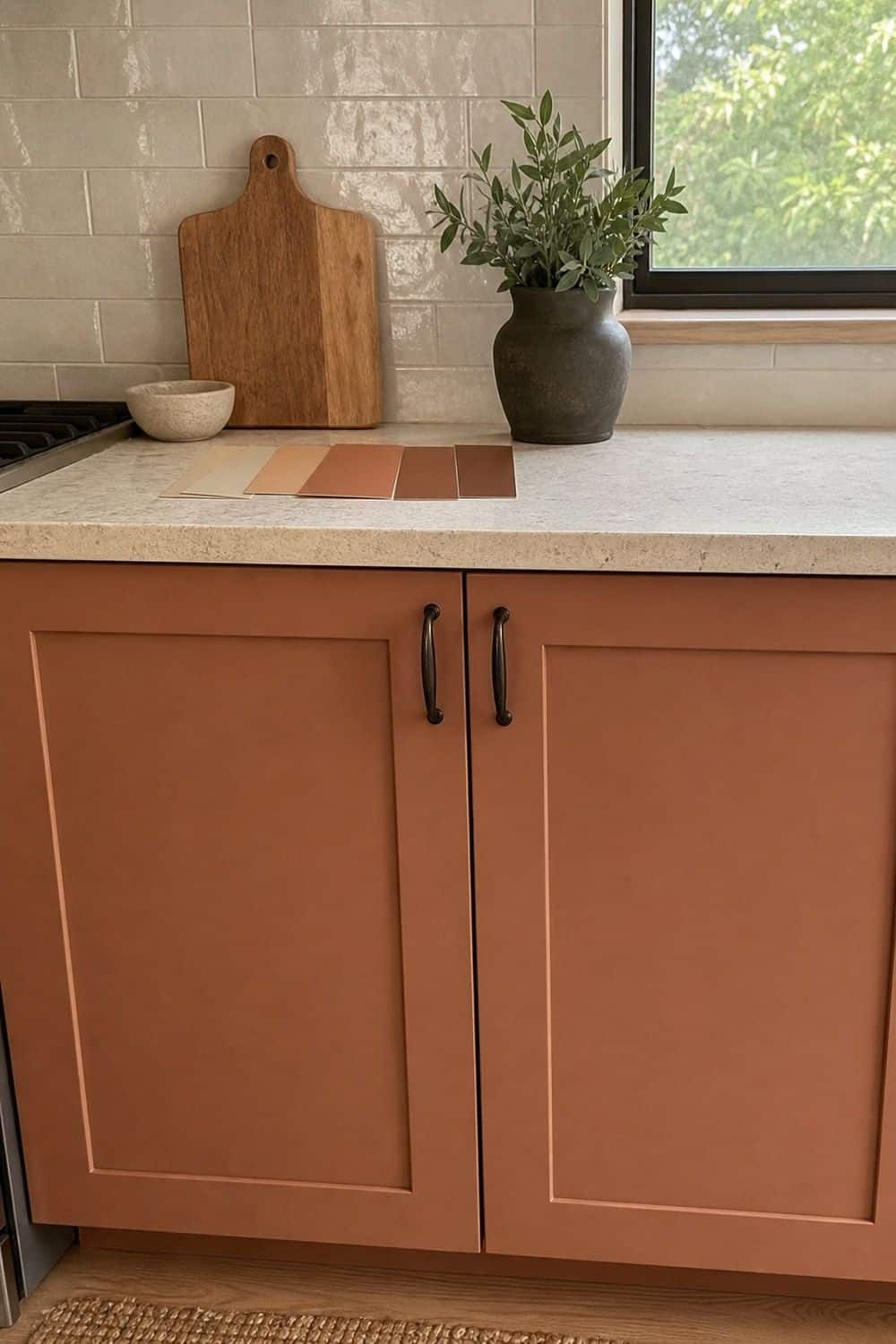
Muted terracotta cabinets work best when the color has brown, clay, or tobacco undertones instead of bright orange. Try the shade on two cabinet doors first, because vertical paint can look much stronger than a small swatch. Keep the nearby finishes quiet while the color settles in: cream counters, natural stone, simple hardware, and warm wood are usually enough. If the kitchen gets strong afternoon sun, check the sample at dinner time too, when terracotta can turn either beautifully earthy or suddenly too hot.
2. A Terracotta Kitchen Island
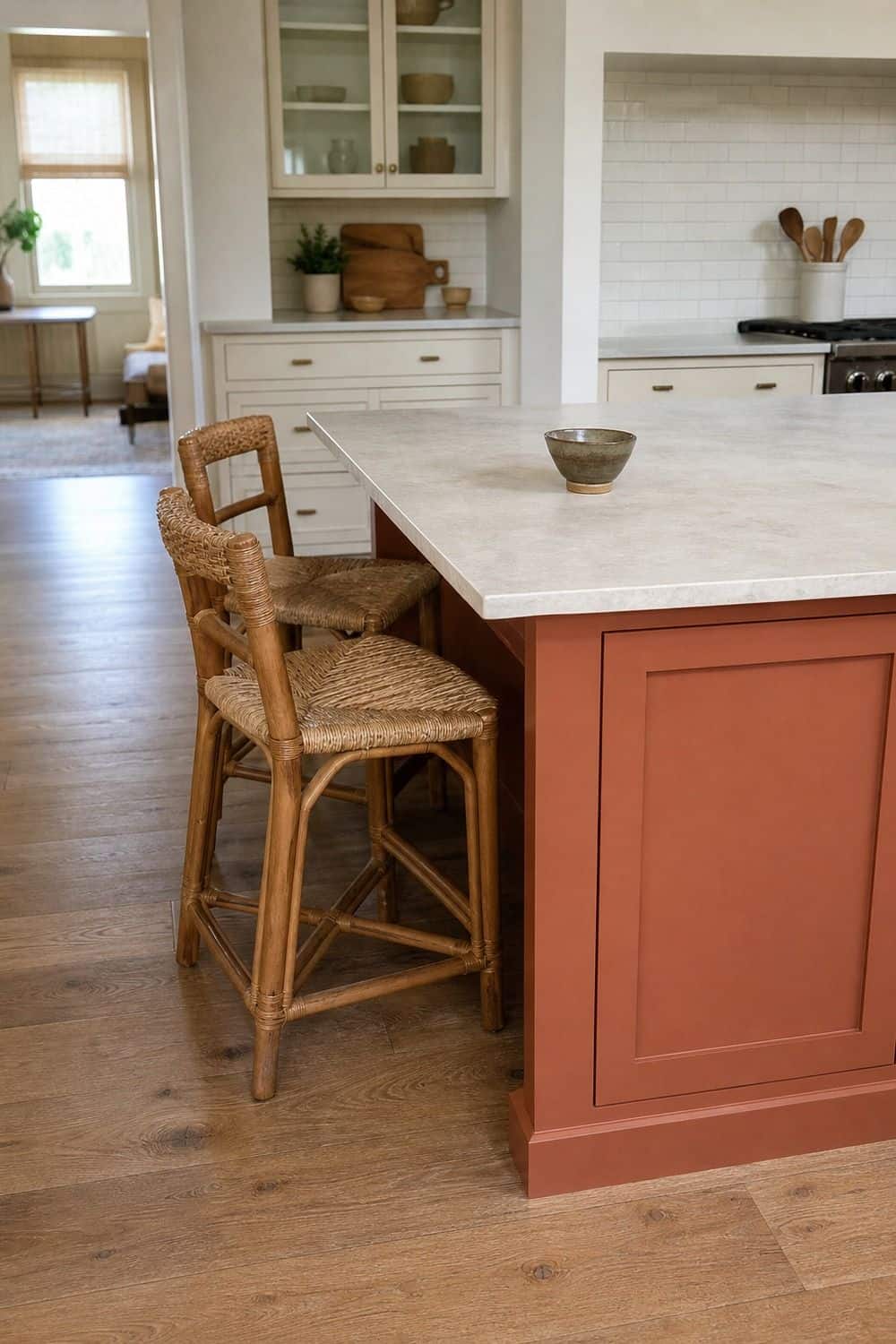
A terracotta island brings warmth into a neutral kitchen without painting every cabinet the same color. It looks especially good with cream perimeter cabinets, pale stone, woven stools, plaster walls, or wood flooring that already has a sunbaked feeling. Treat the island as the main color moment. Repeat the tone once in pottery, a runner, or artwork, then stop before the room starts matching itself too tightly. A terracotta island should feel grounded and generous, not like the first piece in a full orange set.
3. Old-World Clay Floor Tile
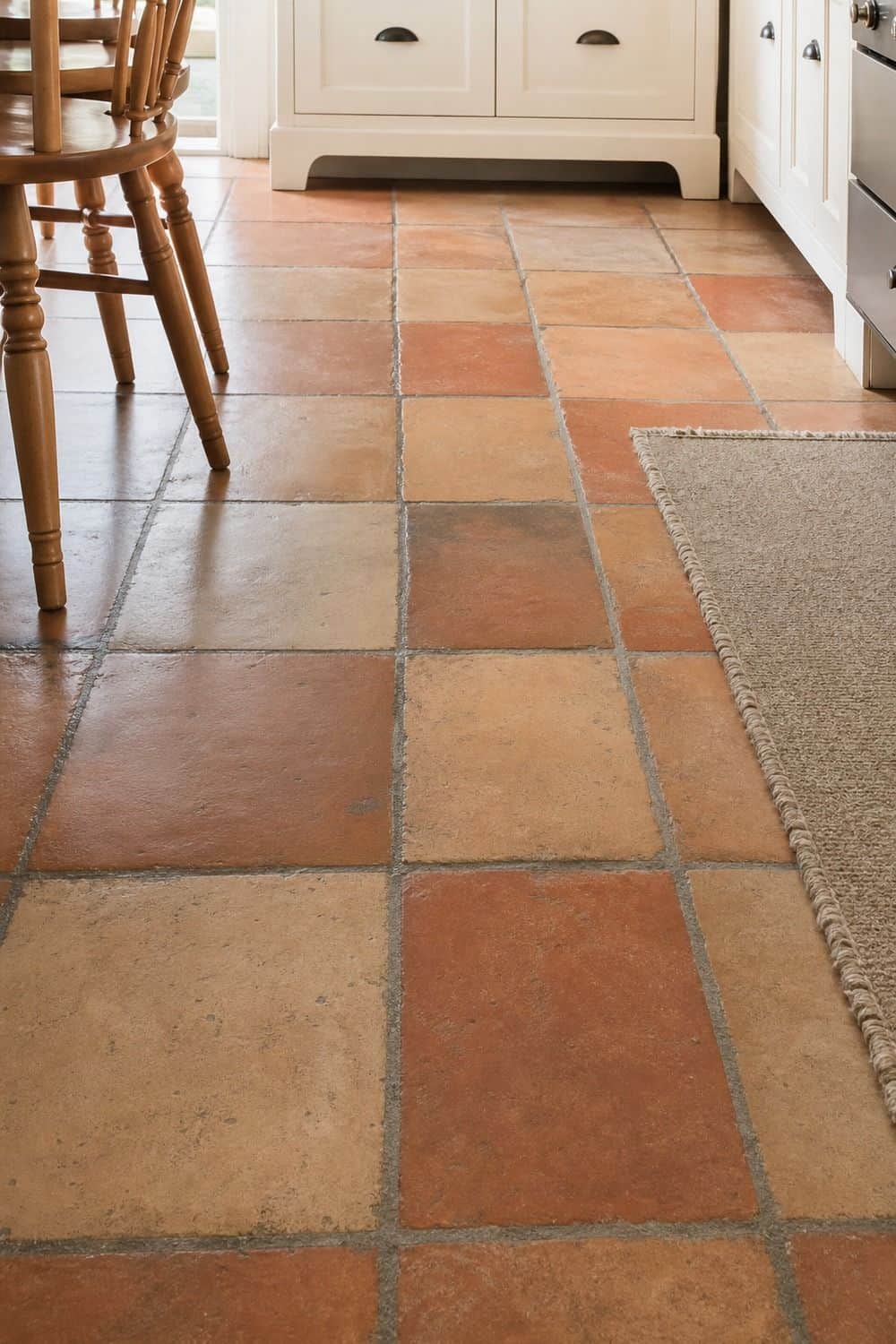
Traditional terracotta floor tile gives a kitchen texture that paint cannot fake. Square tiles feel classic, brick and herringbone feel a little more old-world, and reclaimed-look tile adds softness when the rest of the kitchen is new.
Ask about sealing, slip resistance, and grout before falling for the color alone. Terracotta floors are beautiful because they have variation, but kitchens also have water, oil, chairs, and daily traffic. Pair the floor with lighter cabinets or quiet walls so the room does not feel heavy from the ground up.
4. Terracotta Zellige Backsplash

Terracotta zellige makes a backsplash feel alive because each tile catches light a little differently. It works beautifully behind a range, around open shelves, or in a short sink wall where the handmade surface can be noticed up close. Keep the layout simple if the clay color is strong. A square grid, vertical stack, or soft running bond usually lets the variation do enough. Choose grout that blends with the tile rather than outlining every edge, especially if the kitchen already has open shelving or visible cookware nearby.
5. A Color-Drenched Kitchen Nook
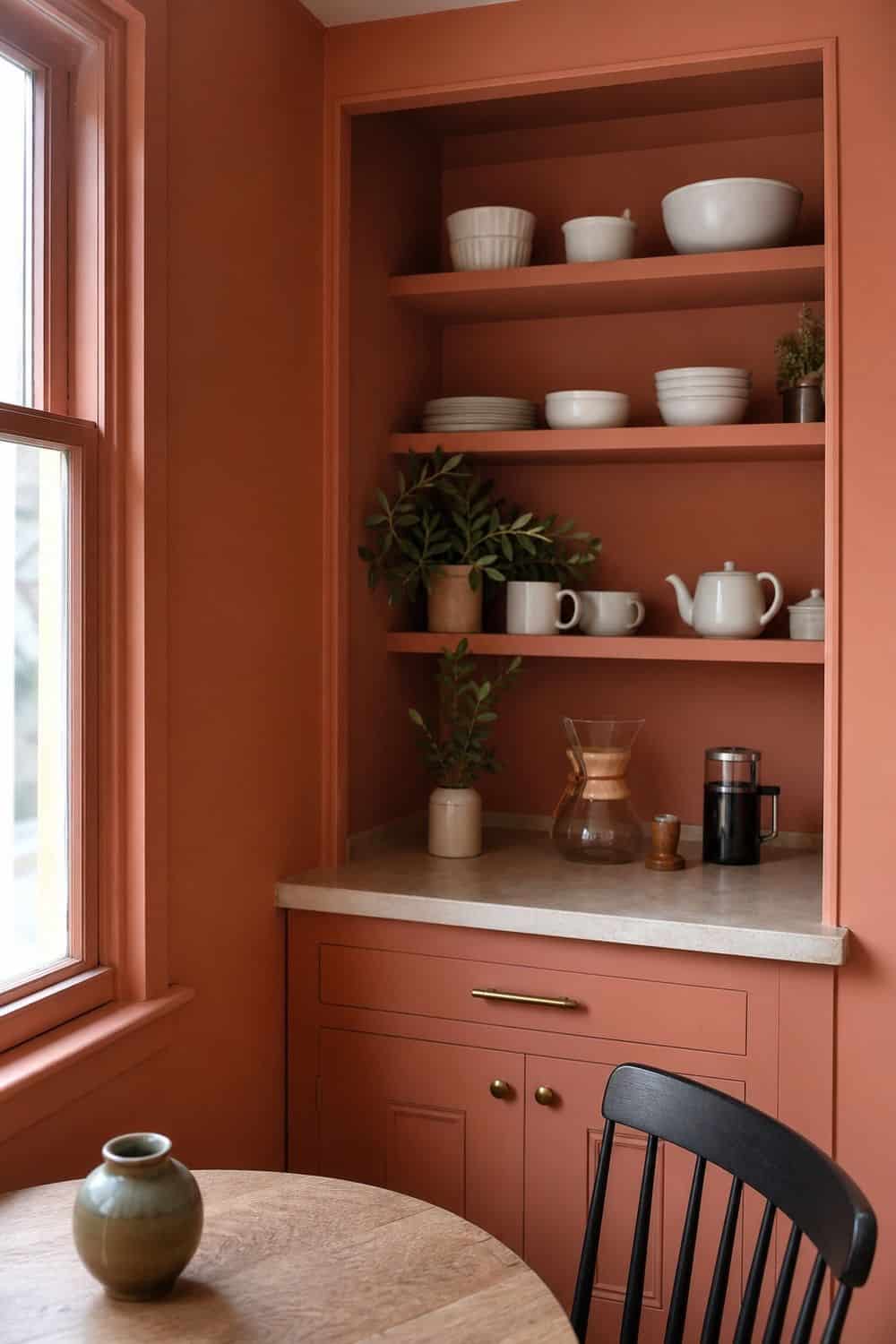
Color drenching works best in a contained nook, not across every surface by default. A breakfast corner, pantry alcove, coffee wall, or small built-in area can handle terracotta walls, trim, and shelving because the edges of the idea are clear.
Balance the depth with pale counters, simple dishware, and a little natural wood. If the nook is tiny, use a dusty clay tone rather than a saturated rust. The goal is a cozy pocket of color, not a corner that feels darker every time the sun goes down.
6. Terracotta With Cream Cabinets
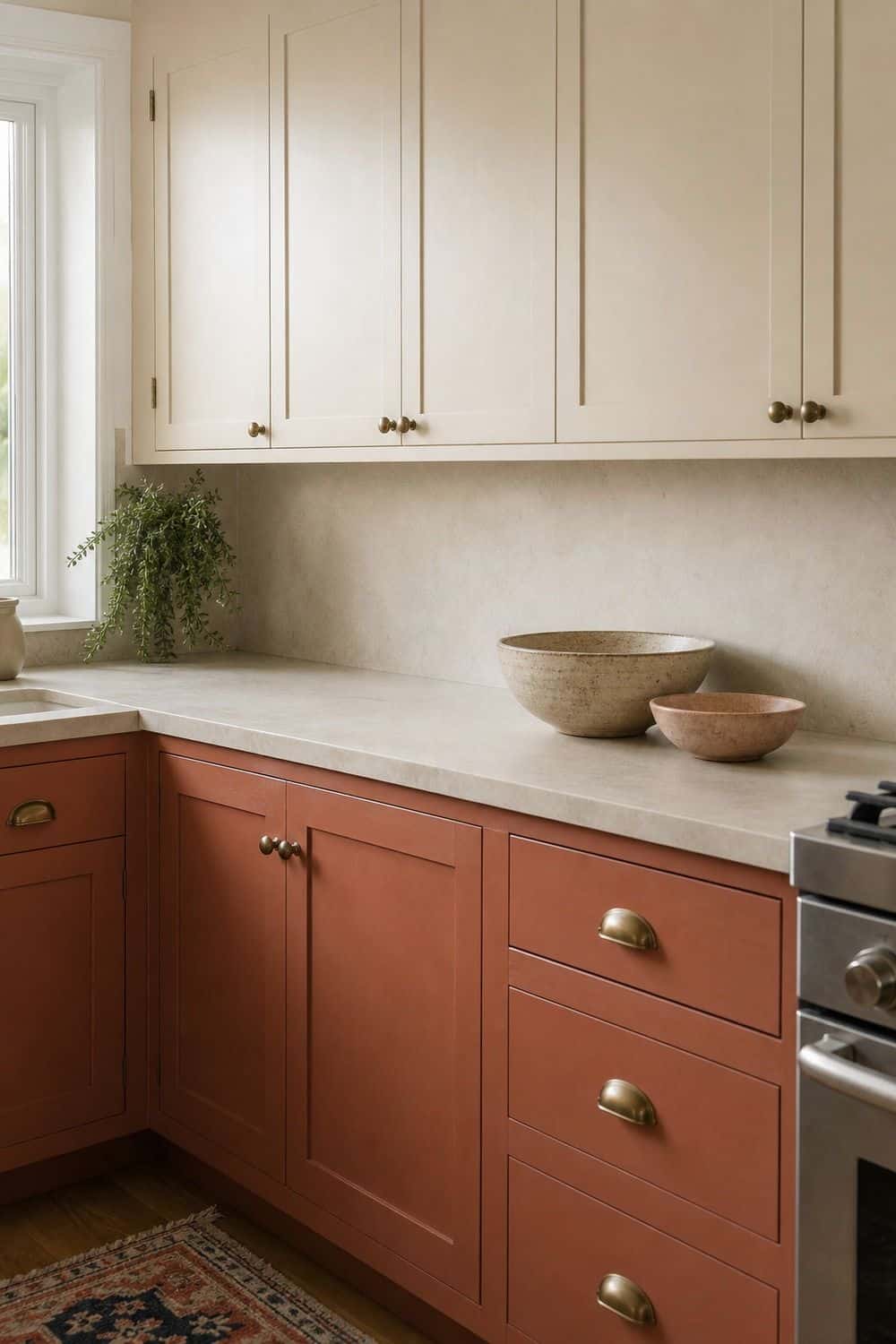
Cream cabinets soften terracotta better than stark white because they share the same warm base. Use cream on uppers, perimeter cabinets, or walls when terracotta appears on the island, backsplash, floor, or lower cabinets.
Watch undertones closely. A yellow cream can make orange clay look louder, while a mushroom cream or soft ivory often feels calmer. Bring paint and tile samples together near the actual counter so the palette reads sunbaked and relaxed rather than high contrast.
This pairing is strongest when the cream still has depth, so avoid anything too icy or blue beside handmade tile, clay paint, or warm stone. A softer white lets terracotta feel earthy instead of loud.
7. Terracotta With Natural Wood
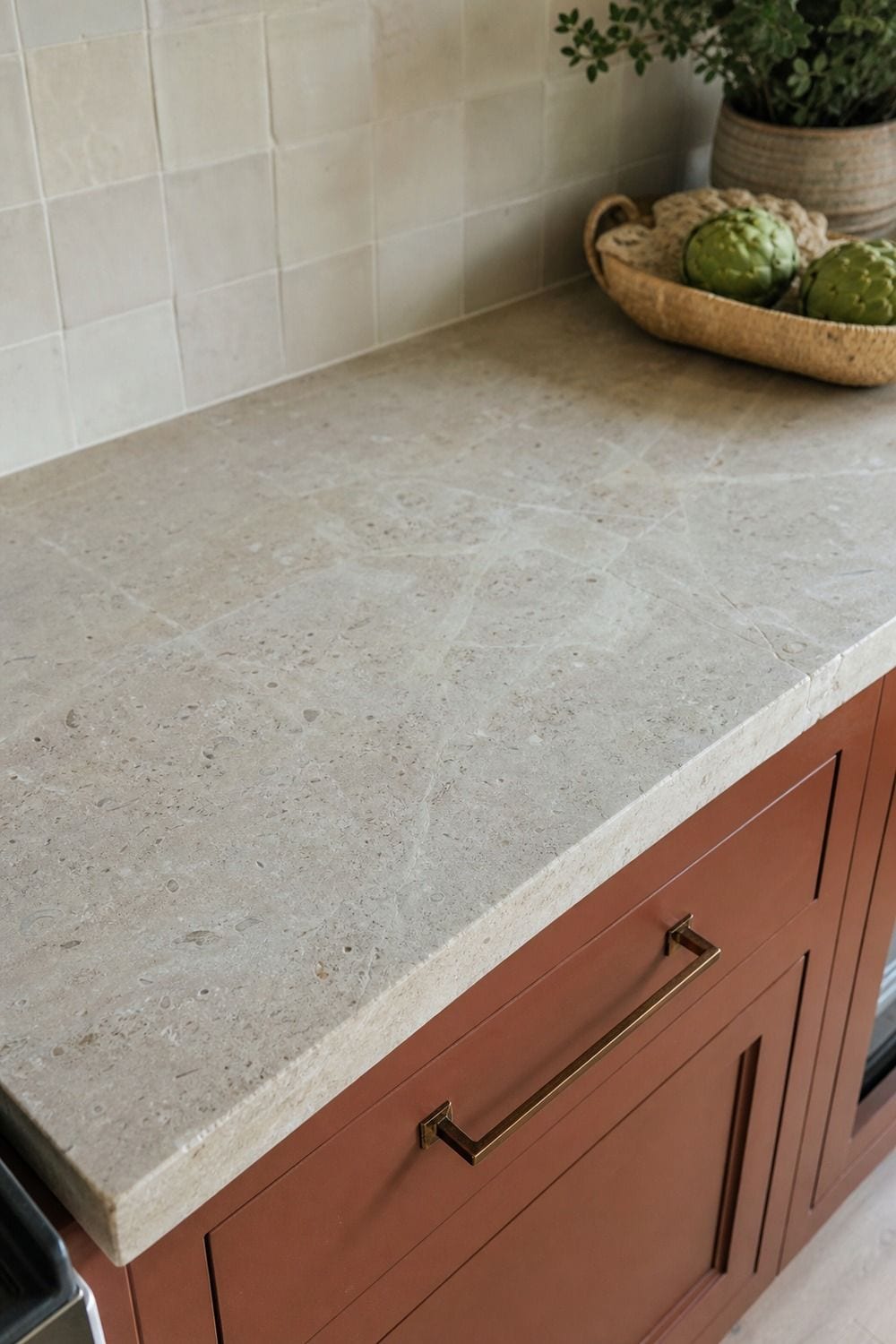
Natural wood gives terracotta a tactile, lived-in quality. White oak shelves, walnut stools, butcher block, ceiling beams, wood cutting boards, or simple cabinet fronts can all make clay color feel grounded instead of flat. The key is avoiding too much orange warmth at once. If the terracotta is saturated, choose quieter wood with a neutral or slightly brown undertone. If the clay is dusty and soft, warmer oak can make the room feel welcoming without tipping into a single-color wash.
8. Limewash Wall Finish
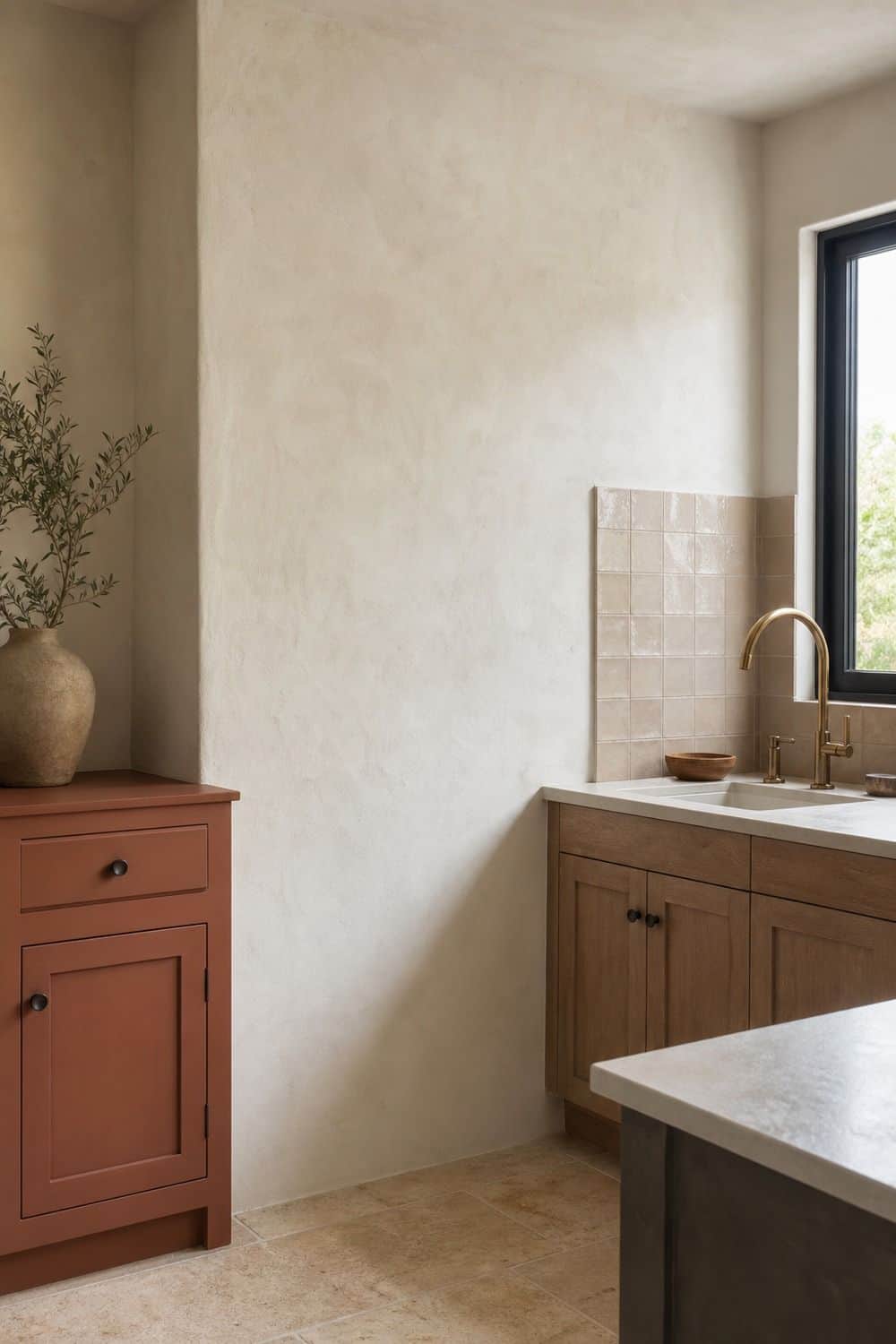
Limewash, plaster, or a plaster-look paint can make terracotta feel architectural rather than decorative. Warm white, beige, mushroom, pale clay, and soft rust finishes all work depending on how much color the cabinets or tile already carry. Use it where the wall can stay reasonably protected. Behind a range or sink, pair the finish with tile, stone, or another wipeable surface so the romance survives real cooking. A slightly imperfect wall looks lovely; grease marks and water streaks are less charming.
9. Stone Counters to Cool the Warmth
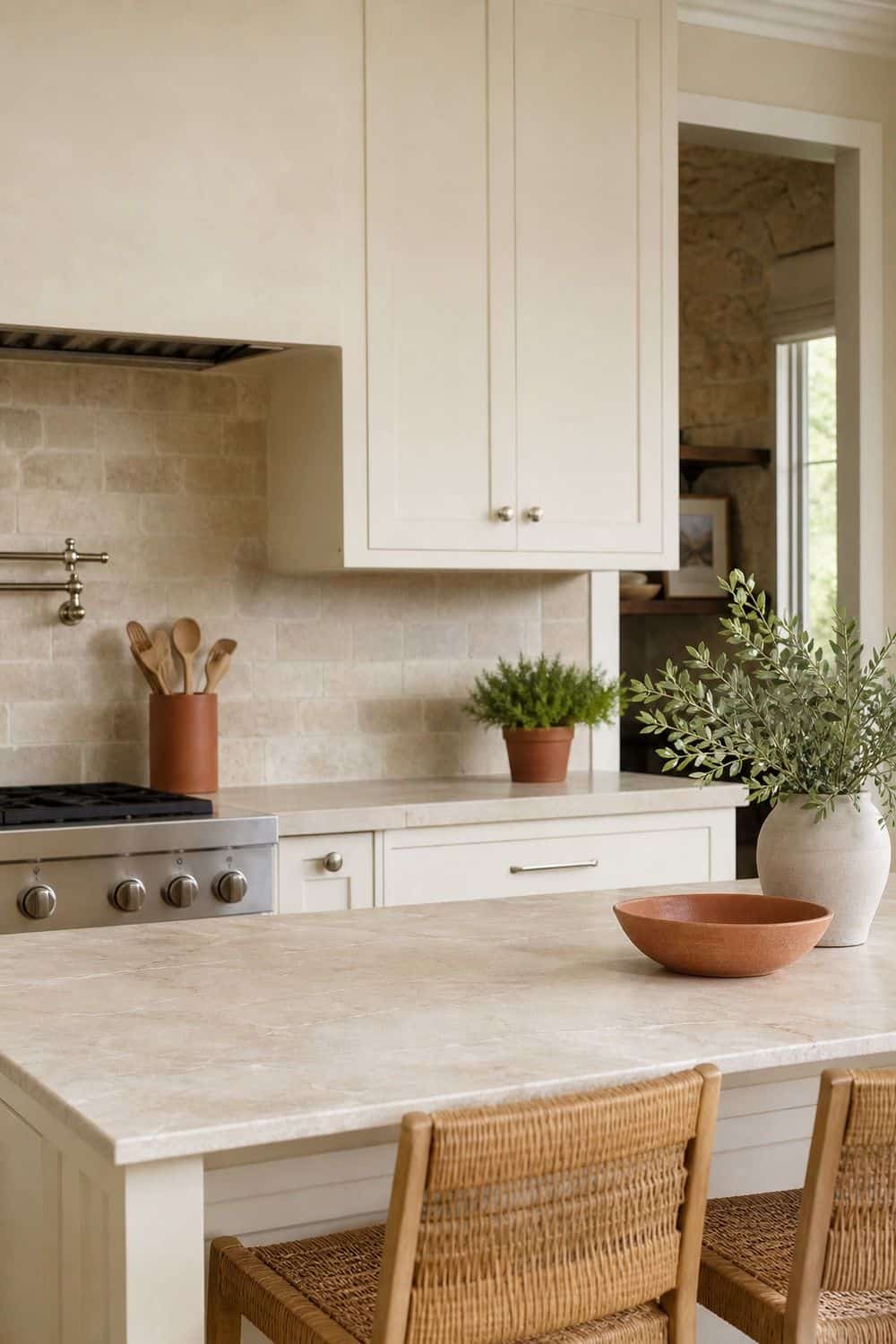
Stone counters cool terracotta down by adding mineral tones, movement, and a little visual weight. Travertine, limestone, marble, quartzite, soapstone, and stone-look surfaces can all work if the veining connects to cream, taupe, gray, or rust in the room.
Bring samples home before choosing, because warm bulbs can change everything. A counter that looks calm in a showroom may turn pink, yellow, or too busy beside clay cabinets. The best stone makes terracotta feel layered and old-world, not louder or overly polished.
10. Oil-Rubbed Bronze Hardware
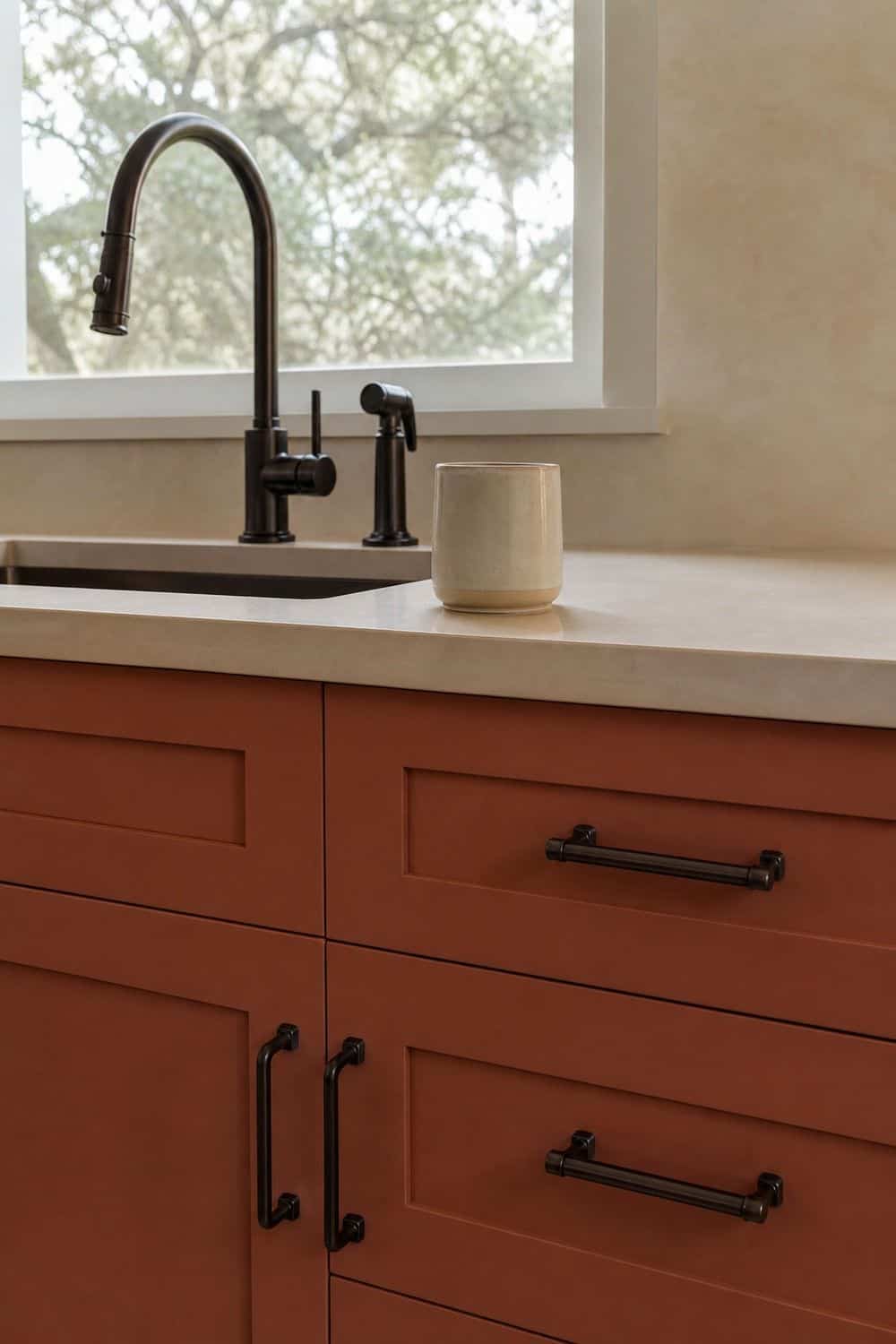
Oil-rubbed bronze is a natural partner for terracotta because it adds depth without the sharpness of bright black. Use it on cabinet pulls, knobs, faucets, shelf brackets, or pendant details when the room needs a little definition.
Do not force every metal to match. Terracotta kitchens often look better with softened mixes: bronze with aged brass, copper with dark iron, or warm stainless near appliances. Keep the shapes simple so the finish supports the clay tone instead of competing with it.
11. Matte Black Details for Balance
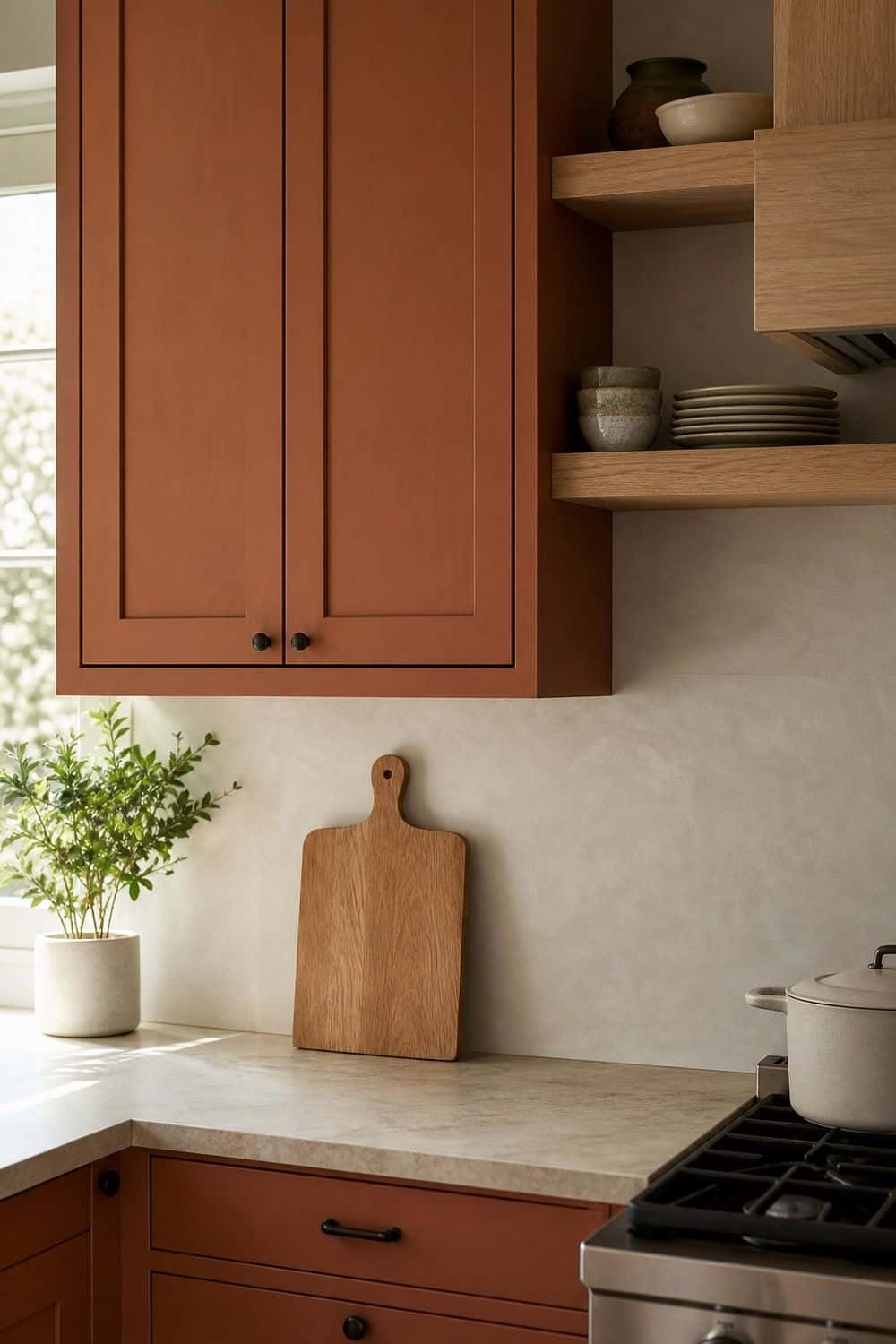
Matte black details can ground terracotta when the palette starts feeling too warm. Try black window frames, a slim pendant, cabinet hardware, a range, a faucet, or a few simple chair legs rather than covering every accent in black. Use the contrast like punctuation. A little black sharpens clay cabinets, tile, or textiles, but too much can flatten the Mediterranean warmth into something harsher. If the room has stone, wood, and cream already, one or two black notes may be plenty.
12. Deep Green Accents

Deep green makes terracotta feel earthy and complete. Olive, moss, sage, and forest green can appear through pottery, artwork, plants, seat cushions, tiles, or a small pantry accent without turning the kitchen into a two-color theme.
Let one color lead. If terracotta is on cabinets or tile, keep green smaller and softer. If terracotta is only in accessories, a deeper green wall or island can hold more weight. The pairing feels best when both colors have a natural, slightly muted quality.
13. Ochre and Clay Layers
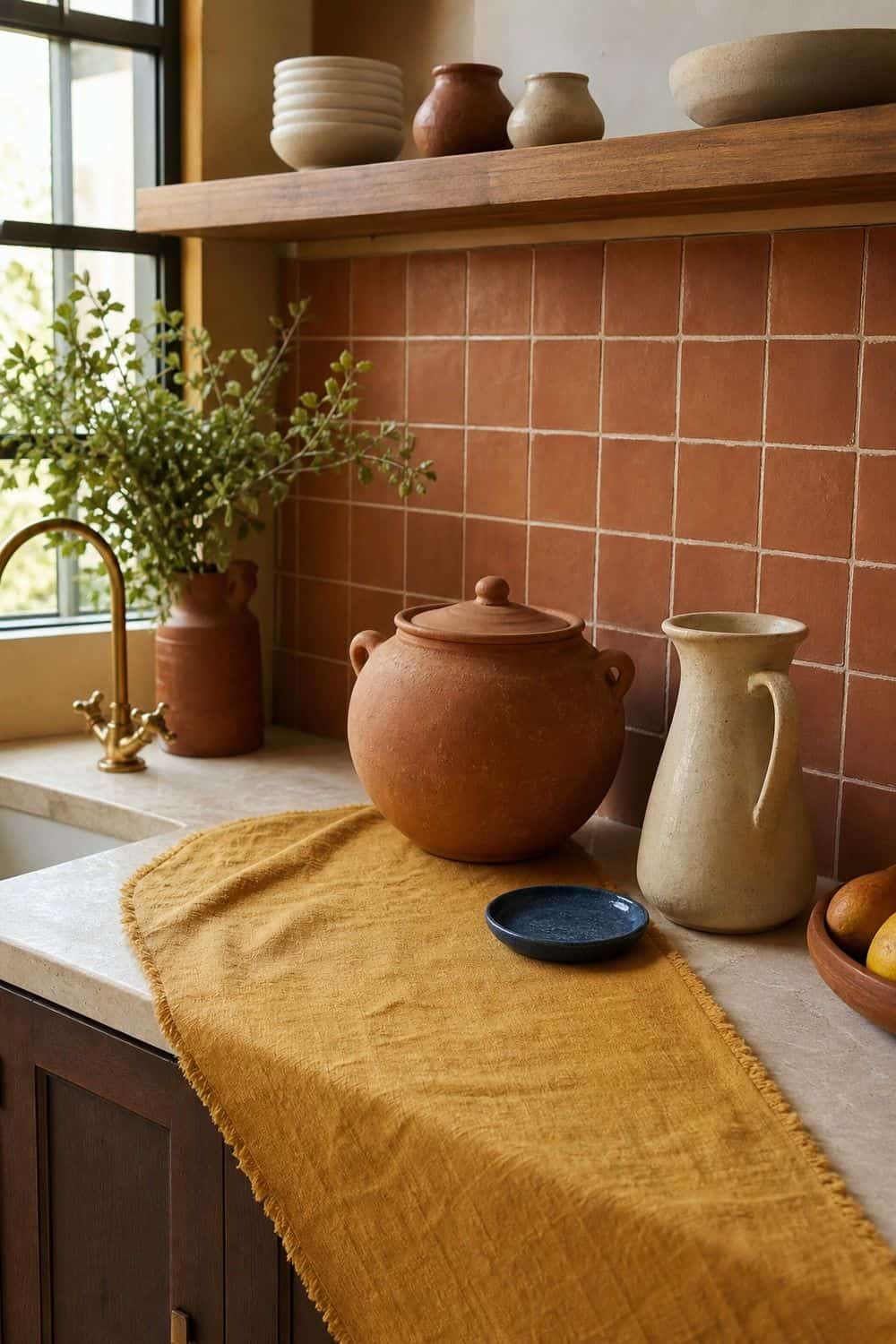
Layering terracotta with ochre, clay, tobacco, blush, mushroom, and warm beige creates a tonal kitchen that feels collected. Give each color a different job: one on tile, one in textiles, one in pottery, one in paint.
Avoid scattering every warm tone evenly around the room. Terracotta should stay the anchor, while ochre or clay accents add depth in smaller amounts. Bring in cream, stone, black, or wood so the palette has a place to rest.
If the palette starts feeling dusty, add one clearer note, such as green herbs, blue dishes, or polished metal, to wake up the warmth. That small contrast keeps the tonal look from going flat.
14. Clay-Colored Range Hood

A terracotta range hood can become the warm focal point of the kitchen, especially when the cabinets stay cream, wood, or soft neutral. Plaster, tile, or paint all work, depending on whether you want the hood to feel rustic, smooth, or handmade. Keep the surrounding backsplash restrained so the range wall does not become too busy. A terracotta hood already has presence; let its shape, matte texture, or subtle tile variation carry the moment. Repeat the color lightly elsewhere, not on every visible object.
15. Terracotta Open-Shelf Ceramics
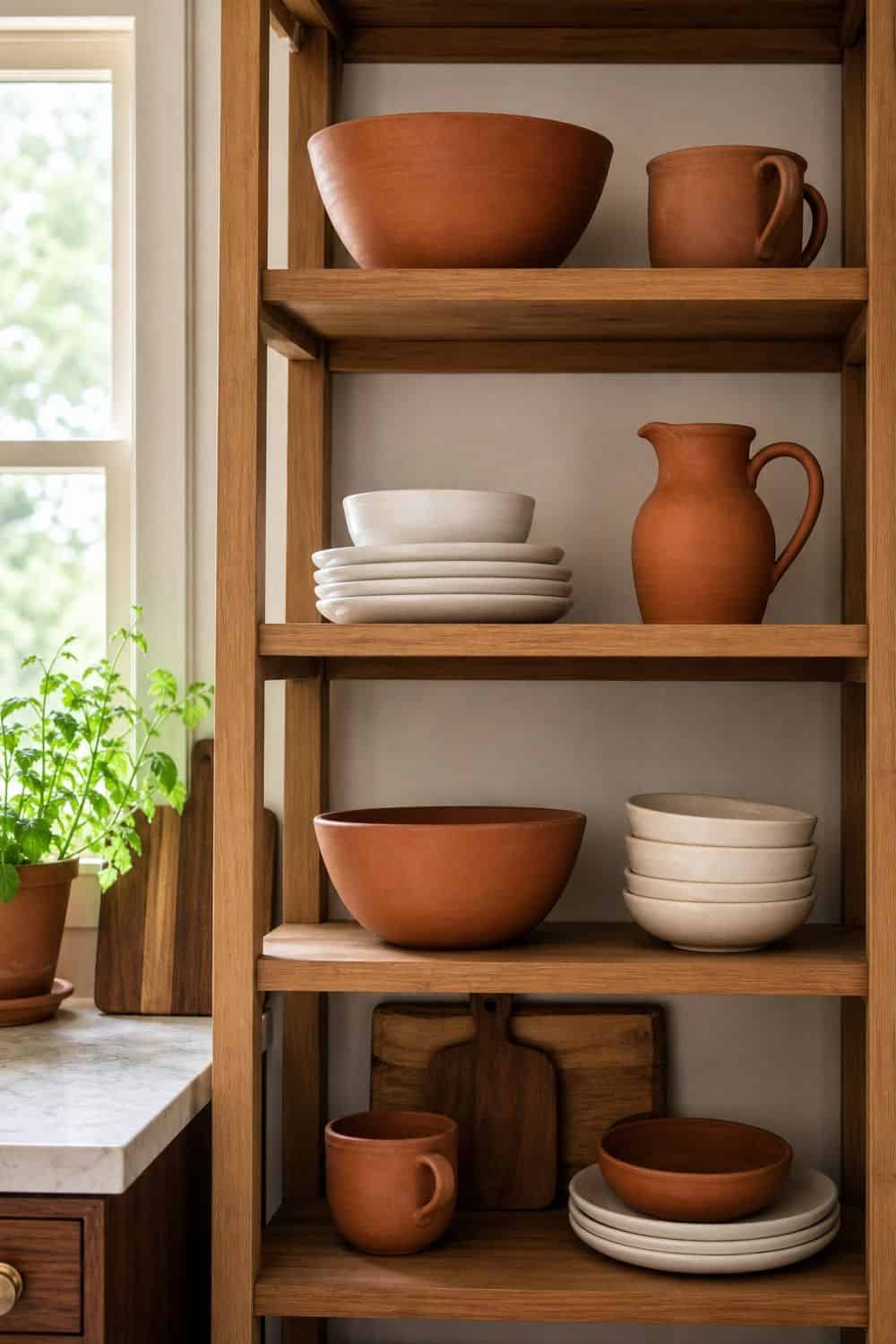
Terracotta ceramics are a gentle way to bring clay color onto open shelves. Bowls, pitchers, mugs, crocks, and small planters look best grouped in a few confident clusters with white dishes, glass, wood boards, or stoneware around them.
Leave breathing room between pieces so the shelves still feel useful. If the backsplash or cabinets are already terracotta, use fewer ceramics and choose larger shapes rather than lots of tiny orange objects. Open shelves should feel warm and easy to live with, not like a pottery shop window.
16. A Terracotta Kitchen Runner
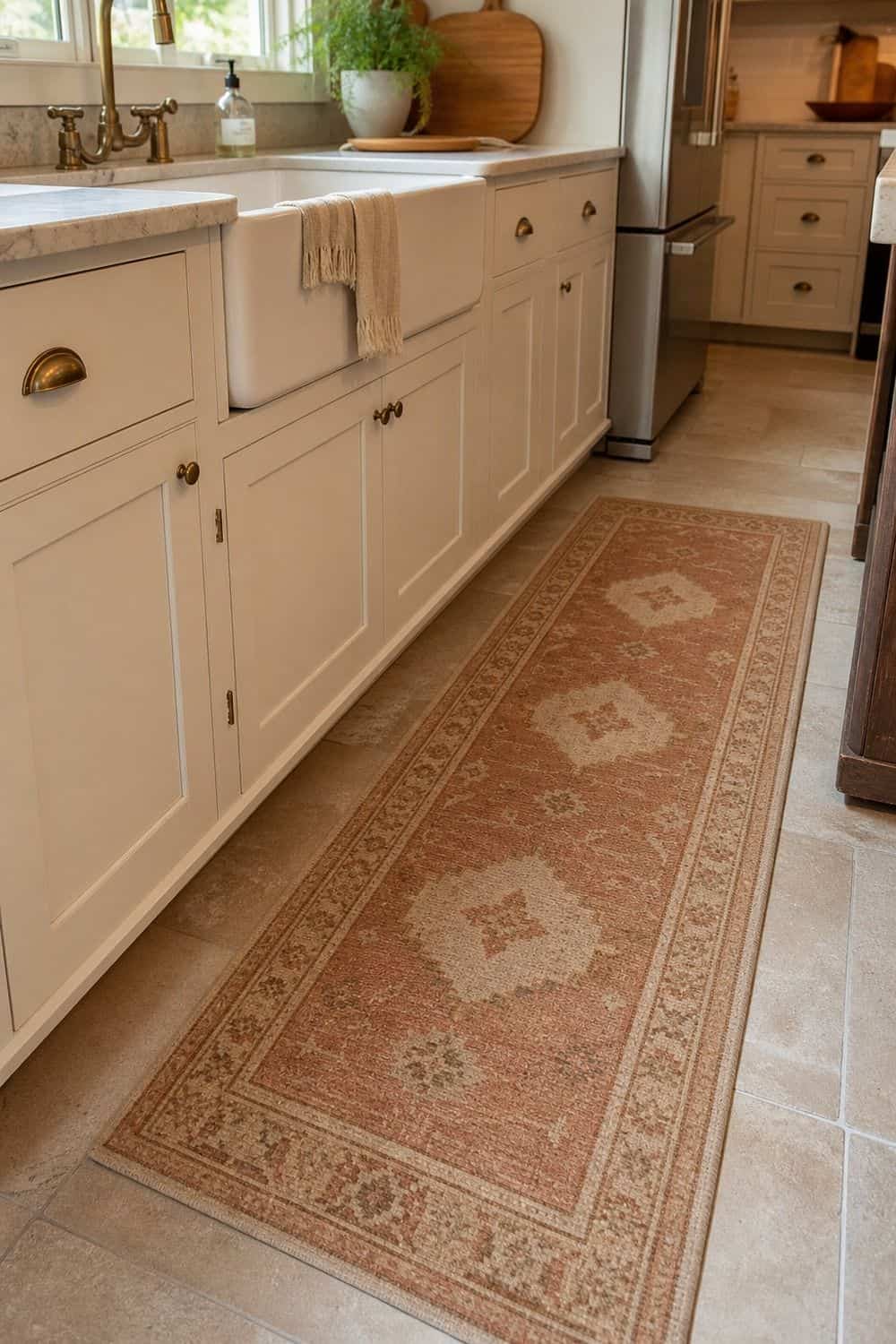
A terracotta runner can warm up the floor in front of the sink, island, or range without paint or tile. Look for washable, low-pile materials that can handle crumbs, water, chair legs, and real kitchen traffic.
Choose a tone that relates to something already in the room, such as pottery, art, brick, wood, or copper. Pattern can help hide wear, but the runner should not fight the floor underneath. Live with it for a few weeks before making bigger terracotta choices.
17. A Terracotta Pantry or Back Door
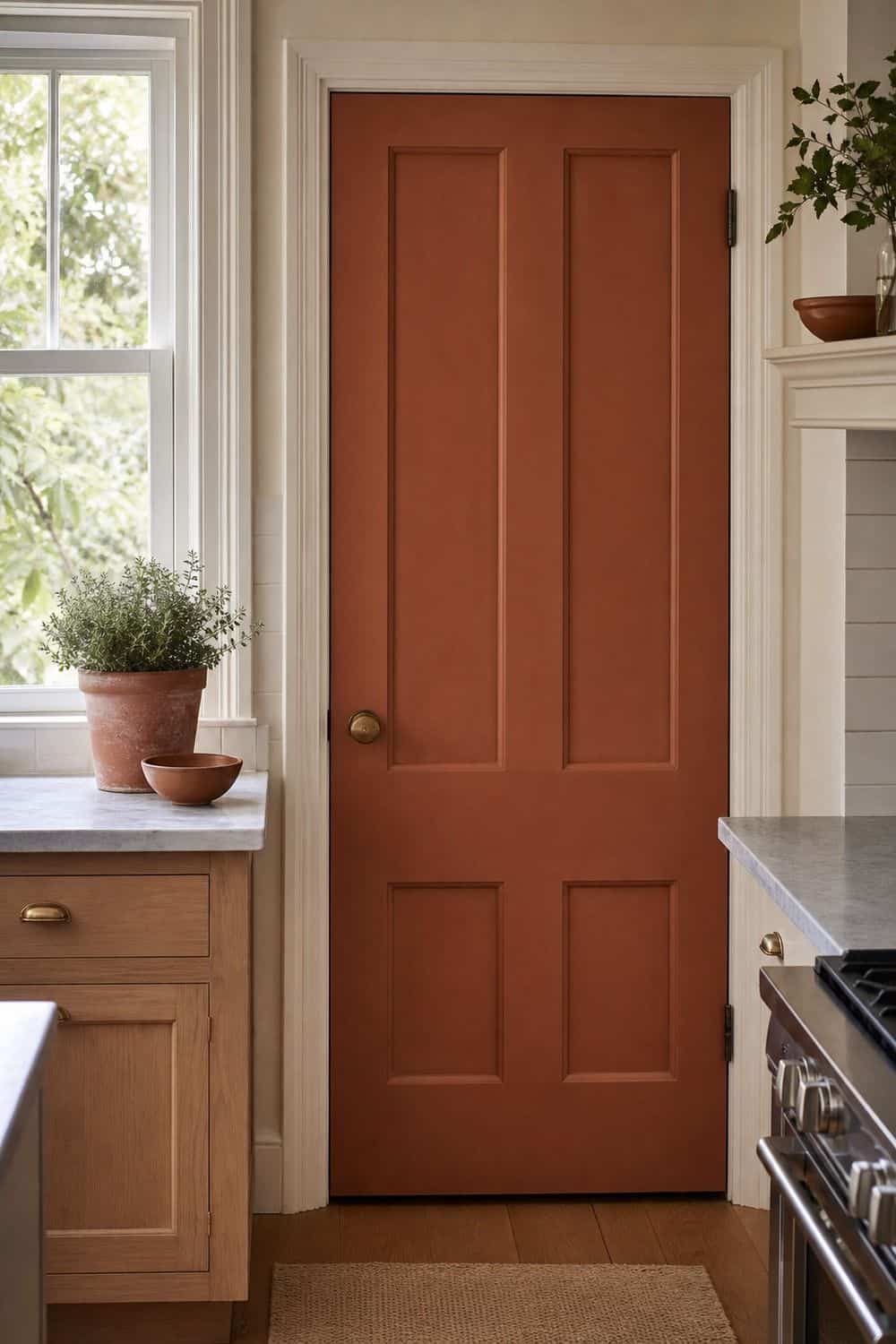
A pantry door, back door, or mudroom door is a smart place to use terracotta when full cabinets feel like too much. It gives a neutral kitchen a warm focal point without changing the main work surfaces.
Tie the door back to the room with one or two small repeats, such as a bowl, runner, print, or herb pot. Keep the trim color calm so the door feels integrated. This is a lovely place for a bolder clay shade because the dose stays contained.
18. Counter Stools in Clay Tones
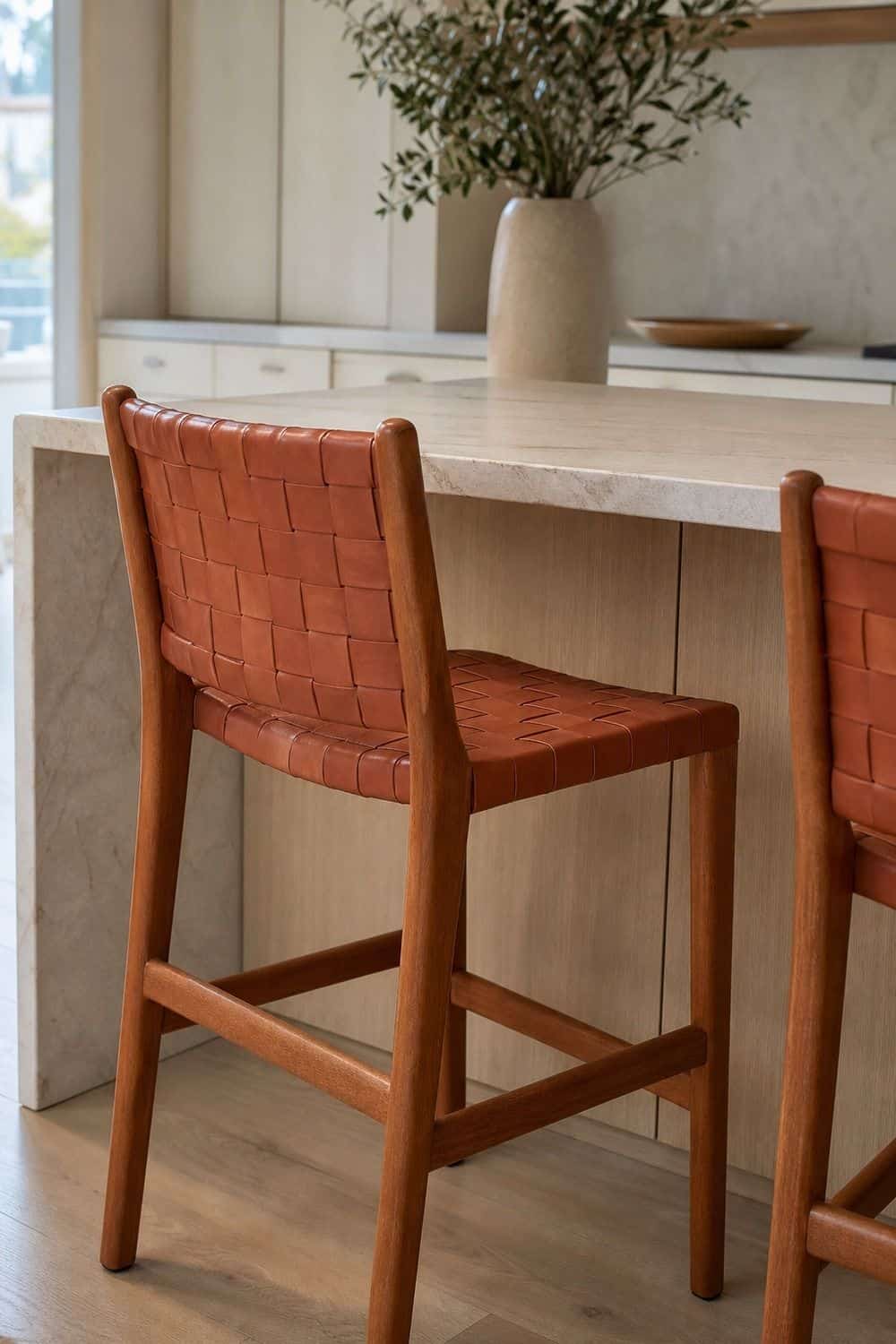
Clay-colored counter stools add warmth at the island without repainting cabinetry. Terracotta leather, painted wood, woven seats, or muted rust upholstery can all work, especially with cream cabinets, stone counters, or simple pendants overhead.
Think about durability before color. Kitchen stools take spills, denim, crumbs, and repeated sliding, so choose a finish that wipes clean or ages well. Let the stools echo the palette without matching the cabinets exactly; a slight shift in tone often looks more natural.
Check the stool height and footrest finish too, because the prettiest clay seat will still feel wrong if knees crowd the counter. Comfort matters most when the island is used every day.
19. Copper Cookware and Warm Metal Notes
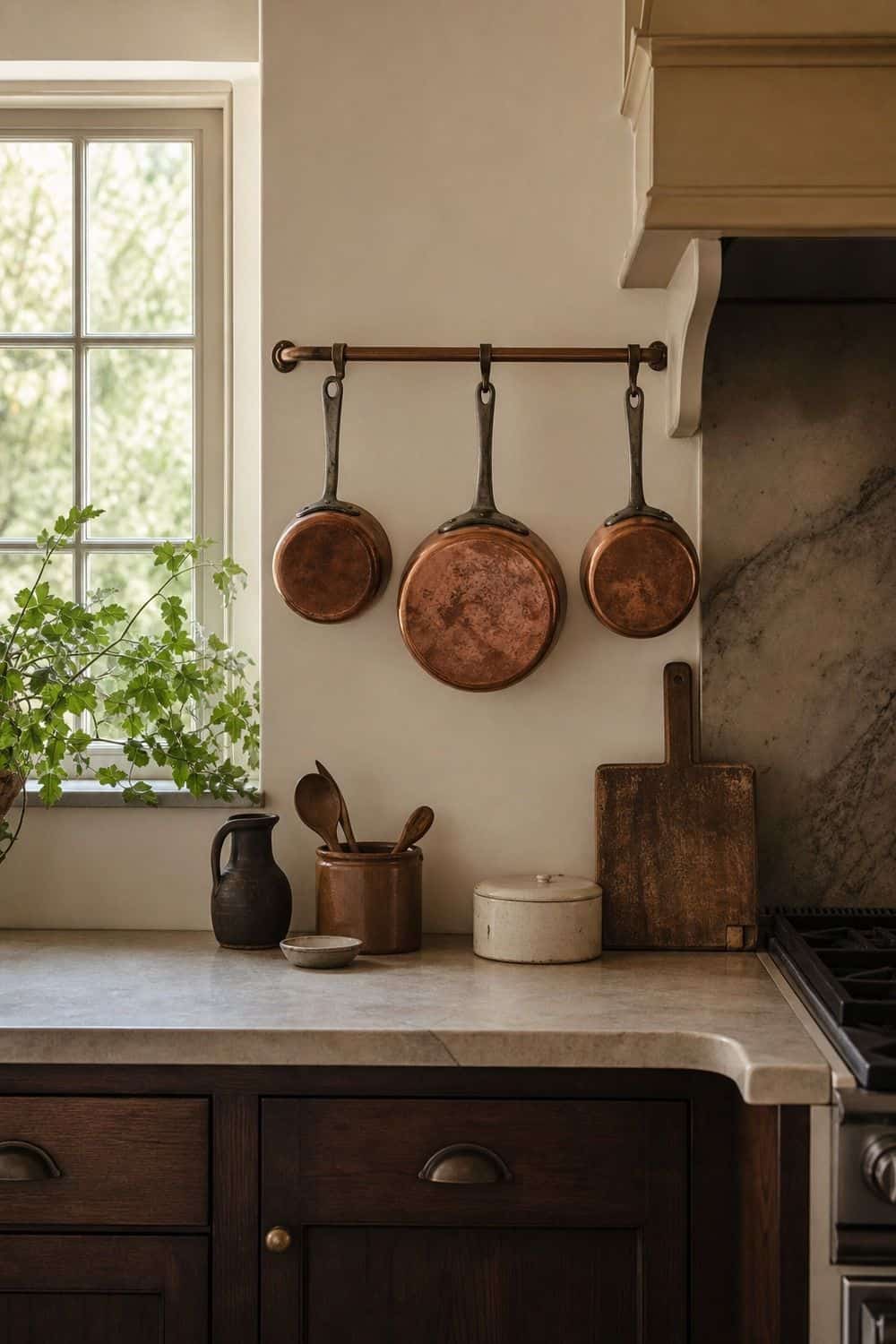
Copper cookware and warm metals can echo terracotta beautifully, but they need restraint. A copper pan rail, utensil crock, pendant detail, or a few visible pieces can add glow without turning the whole kitchen orange.
Balance copper with cream, stone, black, or dark wood so the warmth has contrast. If the cookware is decorative only, keep the display small. A few useful pieces with patina look richer than a wall of shiny pans that never move.
Let age work in your favor here. Slight patina, brushed brass, or darker bronze often sits beside terracotta more naturally than mirror-bright metal. The softer shine keeps the room warm without making it flashy.
20. Herbs and Pottery in a Mediterranean Corner
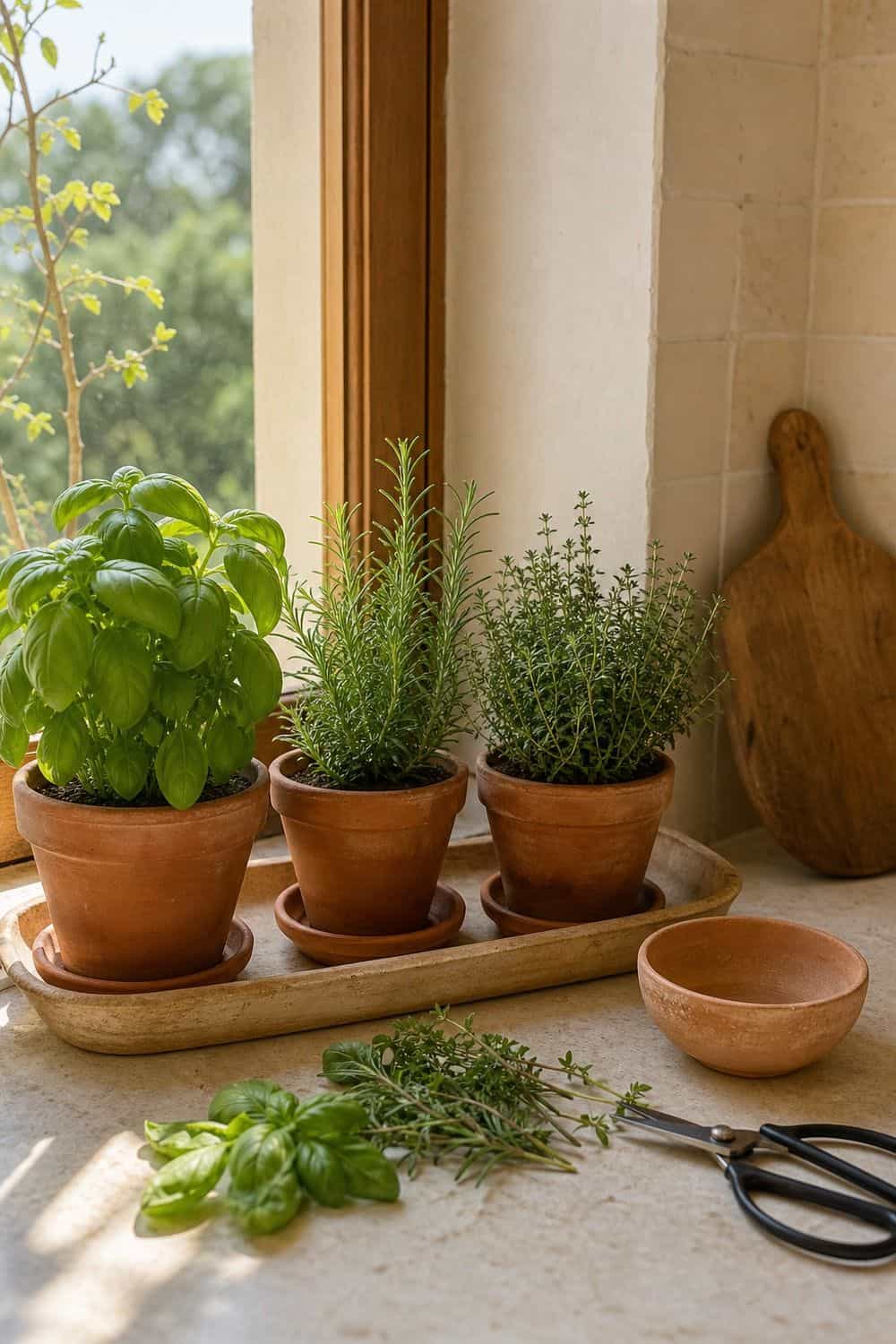
A Mediterranean herb and pottery corner makes terracotta feel connected to cooking, not just color. Use clay pots for basil, rosemary, thyme, oregano, or mint near a sunny window, shelf, or counter where the herbs can actually be snipped.
Protect the surface with saucers or a shallow tray, and keep the group small enough to water easily. A few healthy herbs are stronger than a crowded line of empty pots. Add one small bowl or oil bottle nearby if it supports the way you cook.
21. Peel-and-Stick Tile in Terracotta
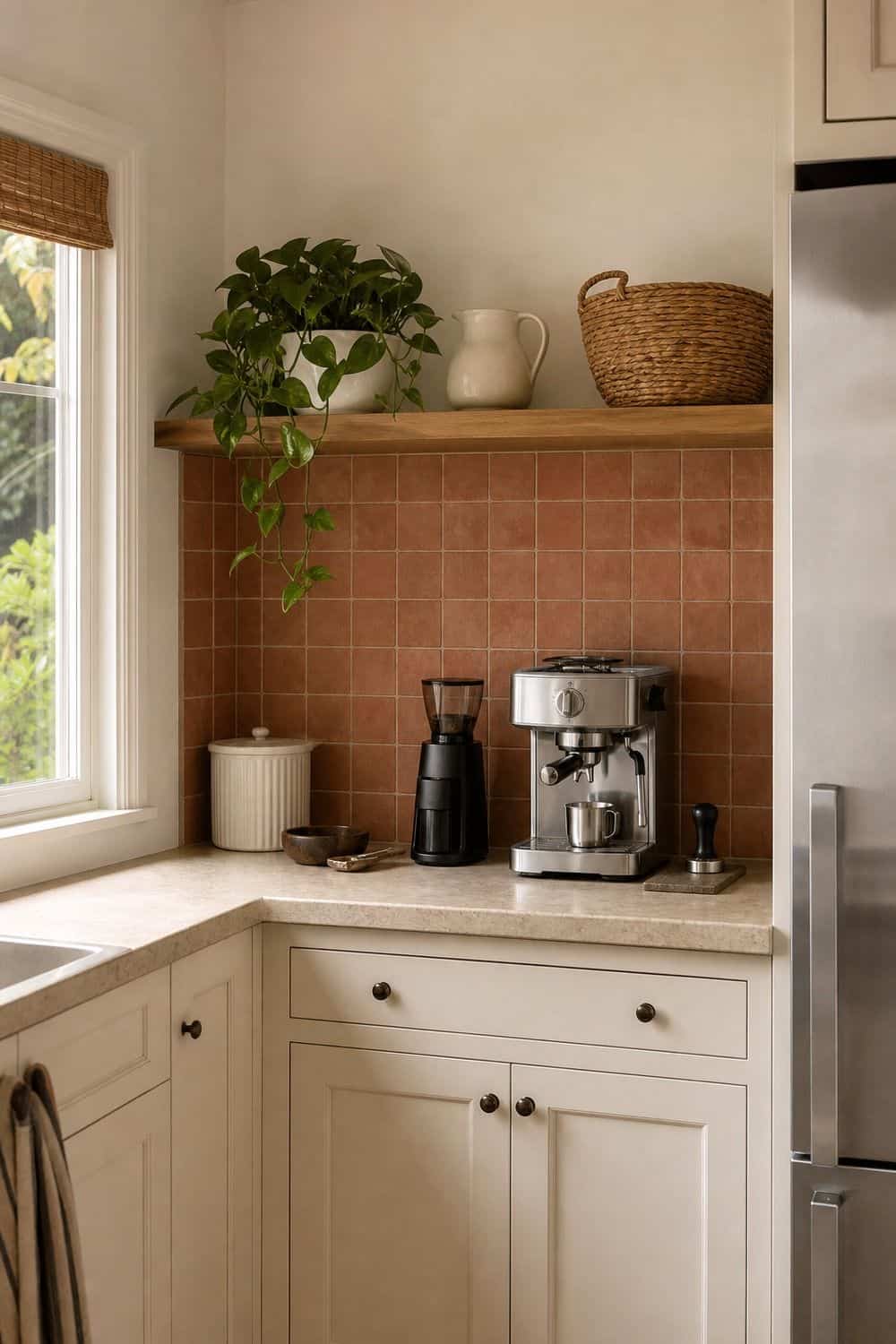
Terracotta peel-and-stick tile is best for a contained, low-commitment color test. Try it behind a coffee nook, on a shelf back, in a pantry alcove, or on a small backsplash area where the edges stop naturally and look finished from the room.
Choose matte, clay, or handmade-look finishes instead of glossy faux patterns. Check heat, moisture, and removal instructions before placing it near a stove or sink. A small application usually looks more believable than wrapping a whole kitchen in temporary tile.
22. Arched or Curved Details
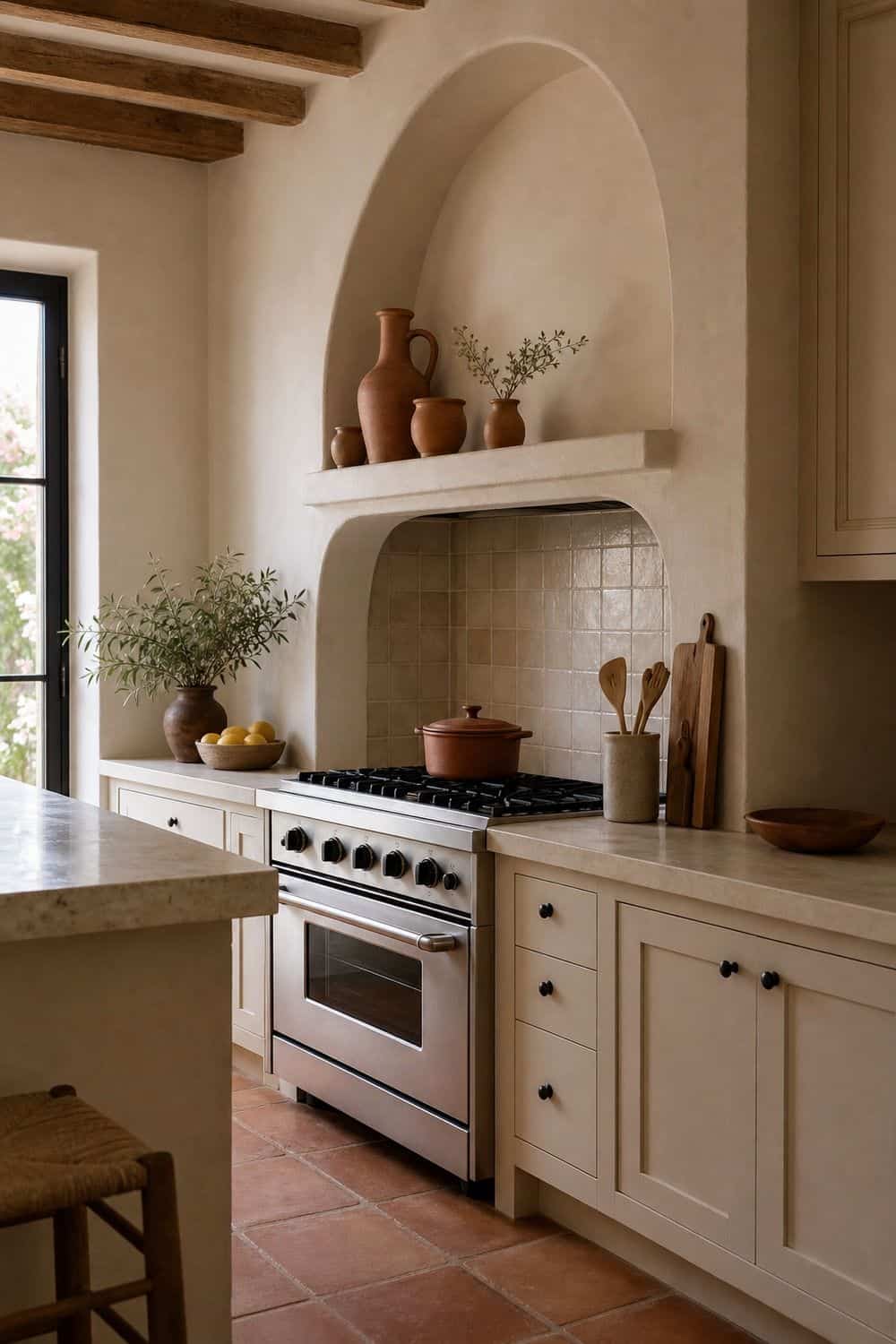
Arches and curves support a terracotta palette without adding more orange. A curved range hood, arched shelf, rounded cabinet cutout, small niche, or softly shaped doorway can make the kitchen feel Mediterranean in a quieter way.
Use one or two curved details rather than repeating the shape everywhere. The effect should feel architectural, not themed. Pair curves with straight cabinet lines, simple stone, and plain walls so the softness reads clearly.
This is especially helpful in a kitchen with many hard rectangles, where a single curved shelf or hood can make the clay tones feel softer. Keep the curve simple so it reads as architecture, not novelty.
23. Blue Accents Beside Terracotta
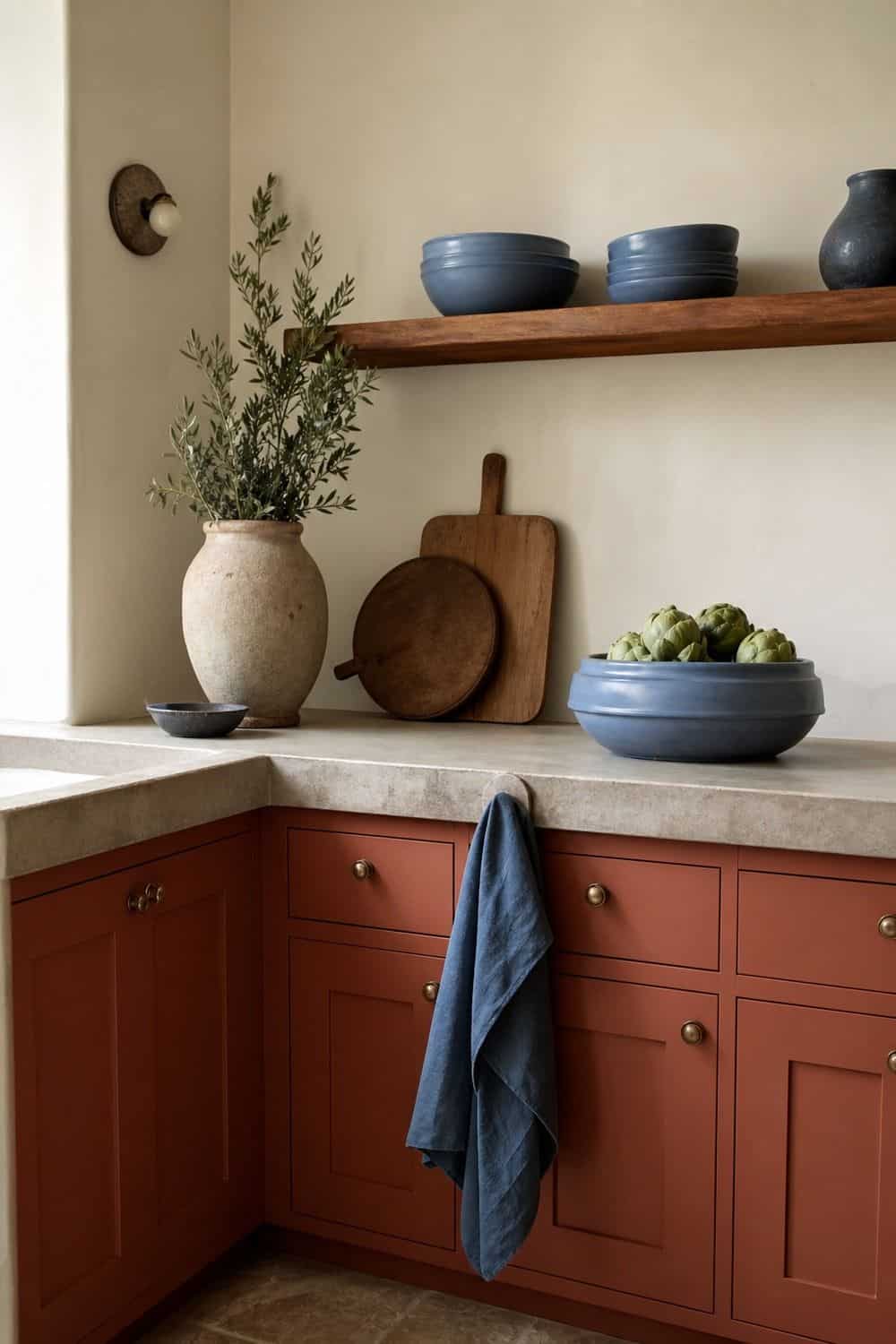
Blue accents can freshen terracotta when the kitchen needs a cooler counterpoint. Dusty blue, denim, Mediterranean blue, or deep navy can appear through dishes, artwork, textiles, or a small tile accent.
Keep the blue slightly softened so it does not fight the clay. This pairing works especially well with cream walls, wood shelves, and stone counters because the neutral pieces give both colors room. Use blue as a breath of air, not a second dominant color.
Sample the blue in a movable piece first, such as a bowl or print, before using it on tile or cabinetry beside terracotta. If it feels too nautical, shift toward smoky denim or slate.
24. Layered Lighting With Warm Bulbs
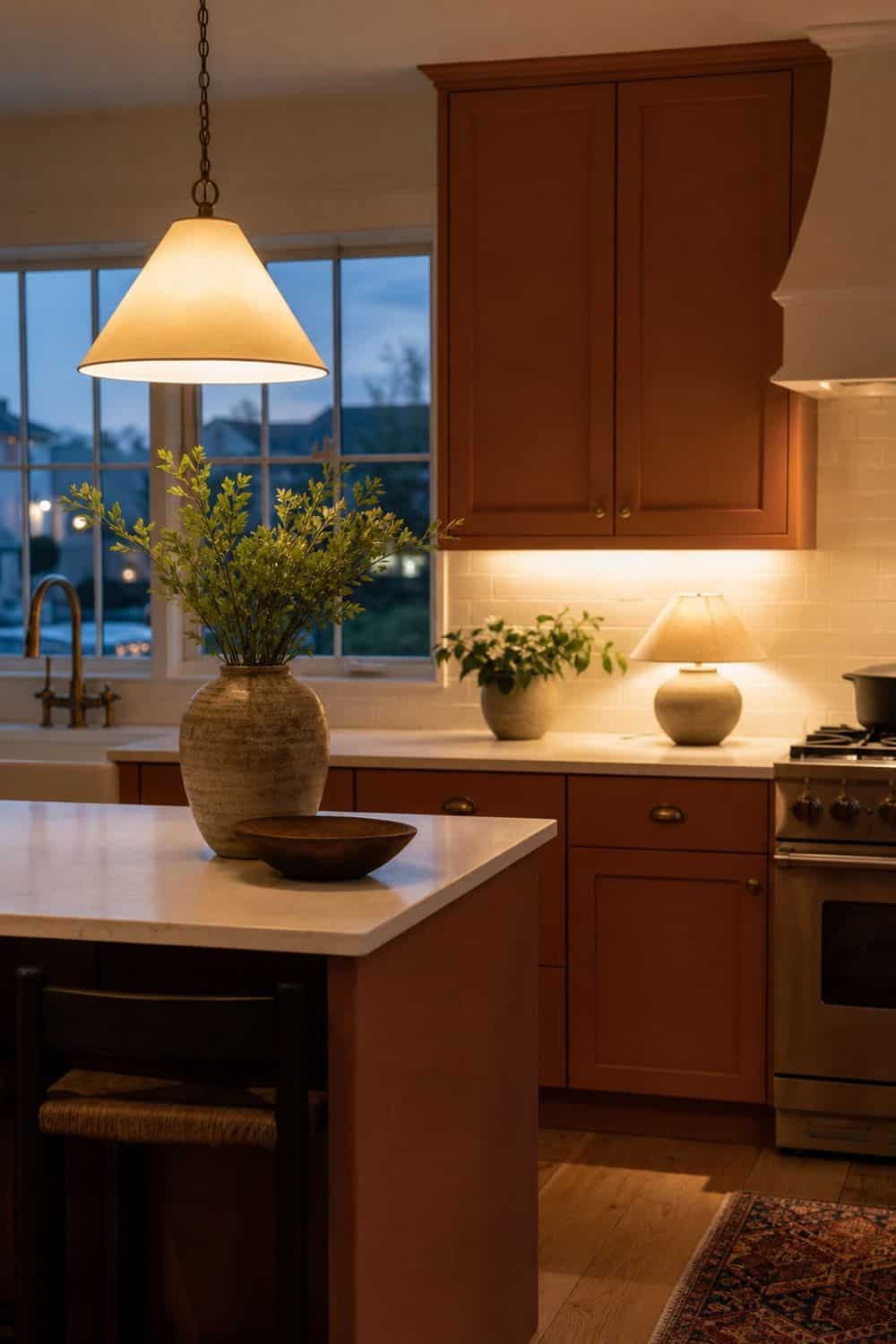
Warm layered lighting keeps terracotta rich in the evening instead of muddy. Pendants, sconces, under-cabinet lighting, and even a small counter lamp can help clay paint, tile, and pottery glow after sunset.
Check bulb temperature before changing the palette. Cool light can make terracotta look harsh, while very yellow bulbs can push it too orange. Aim for warm, clear light that lets the brown, rust, and clay undertones show without flattening the room.
Dimmer switches are worth considering if the kitchen shifts from prep space to dinner backdrop, because terracotta responds strongly to evening light. Softer lighting can make clay tones feel enveloping instead of heavy.
25. A Final Terracotta Accent Layer
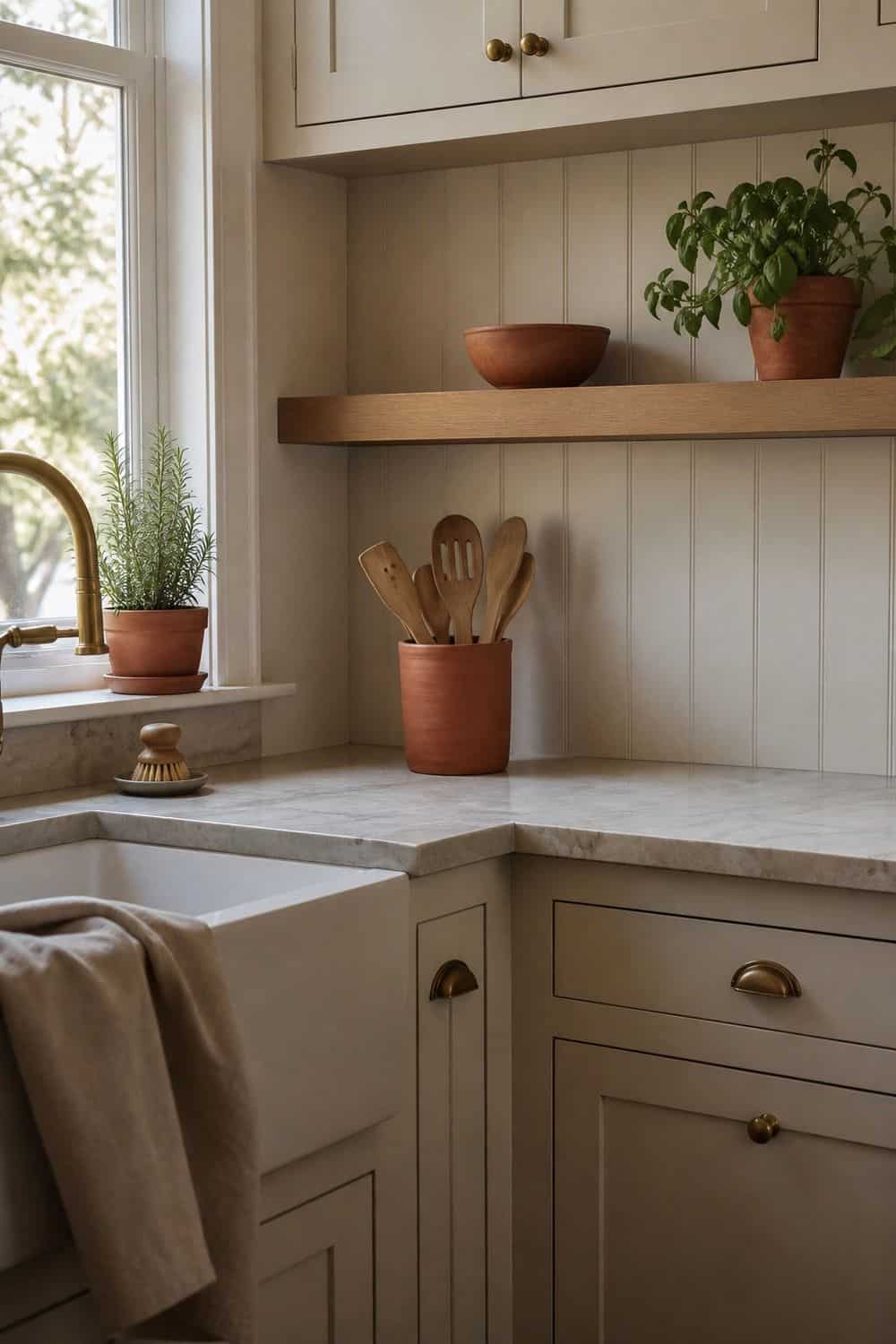
The room usually needs a small terracotta accent layer, not a dozen tiny repeats. If the main surfaces are neutral, add the color through a utensil crock, bowl, planter, towel, artwork, or one piece of pottery. If the cabinets, floor, or backsplash already carry terracotta, pull back on extra accessories. The color looks more sophisticated when the eye finds it a few times and then rests. Remove anything that makes the kitchen feel themed instead of warm, material-rich, and easy to use.
Frequently Asked Questions
Is terracotta a good color for a kitchen?
Yes, terracotta is a good kitchen color when it is balanced with natural wood, stone, cream, limewash, and simple hardware. It adds warmth, character, and a grounded clay tone.
What colors go with terracotta in a kitchen?
Cream, warm white, mushroom, taupe, olive green, deep blue, black accents, natural wood, brass, copper, stone, and ochre all work well with terracotta.
How do you use terracotta without making a kitchen too orange?
Choose muted clay undertones, use small-to-medium doses, add cream or stone contrast, keep finishes matte, and avoid too many other orange elements.
Are terracotta kitchen cabinets trendy?
Terracotta cabinets are current, but the color is rooted in historic clay and Mediterranean materials. Muted versions can feel long-lasting rather than short-lived.
What backsplash works with terracotta cabinets?
Handmade cream tile, terracotta zellige, warm stone slabs, limewash walls with a practical splash zone, or simple clay-toned tile can all work.
Does terracotta work in a limited-space kitchen?
Yes, terracotta can work in a limited-space kitchen when used in controlled areas such as an island, lower cabinets, runner, backsplash, or accent door with light counters and warm lighting.
What style is a terracotta kitchen?
A terracotta kitchen can lean Mediterranean, rustic, farmhouse, retro, or contemporary depending on the cabinet style, tile, stone, lighting, and hardware.
What is the easiest way to add terracotta to a kitchen?
The easiest options are runners, ceramics, herb pots, utensil crocks, counter stools, art, peel-and-stick tile, or a painted pantry door.
Final Thoughts
The best terracotta kitchen ideas make the color feel like baked earth rather than bright orange decor. Choose one main surface or a few smaller accents, then let cream, wood, stone, bronze, black, green, or blue give the palette shape.
Terracotta is strongest when it feels tactile and reduced. A clay island, handmade backsplash, warm runner, herb pot, or muted cabinet color can add Mediterranean warmth without making the room feel heavy or overly themed.
Last update on 2026-09-18 / Affiliate links / Images from Amazon Product Advertising API