
Natural wood kitchen decor finds are an easy way to make a kitchen feel warmer without changing cabinets, counters, or flooring. Start with pieces that do real work, such as shelves, boards, trays, stools, canisters, and sink-side accessories, then choose wood tones that connect to the surfaces already in the room.
A kitchen can feel flat when every surface is white, gray, glossy, or metal. Natural wood changes that quickly because it adds grain, variation, and a material that looks at home beside stone, ceramic, linen, glass, and everyday cookware.
The best natural wood kitchen decor finds are not just decorative fillers. They should make one part of the kitchen easier to use, easier to style, or more pleasant to see every day, whether that is a shelf above the coffee station, a tray beside the stove, or a set of stools that softens the island.
Top Recommended Products


You Might Also Like These Blog Posts
- Natural Wood Kitchen Ideas
- Natural Wood Kitchen Organization
- Warm Neutral Kitchen Ideas
- Japandi Kitchen Ideas
- Kitchen Rugs
Best Natural Wood Kitchen Decor Finds
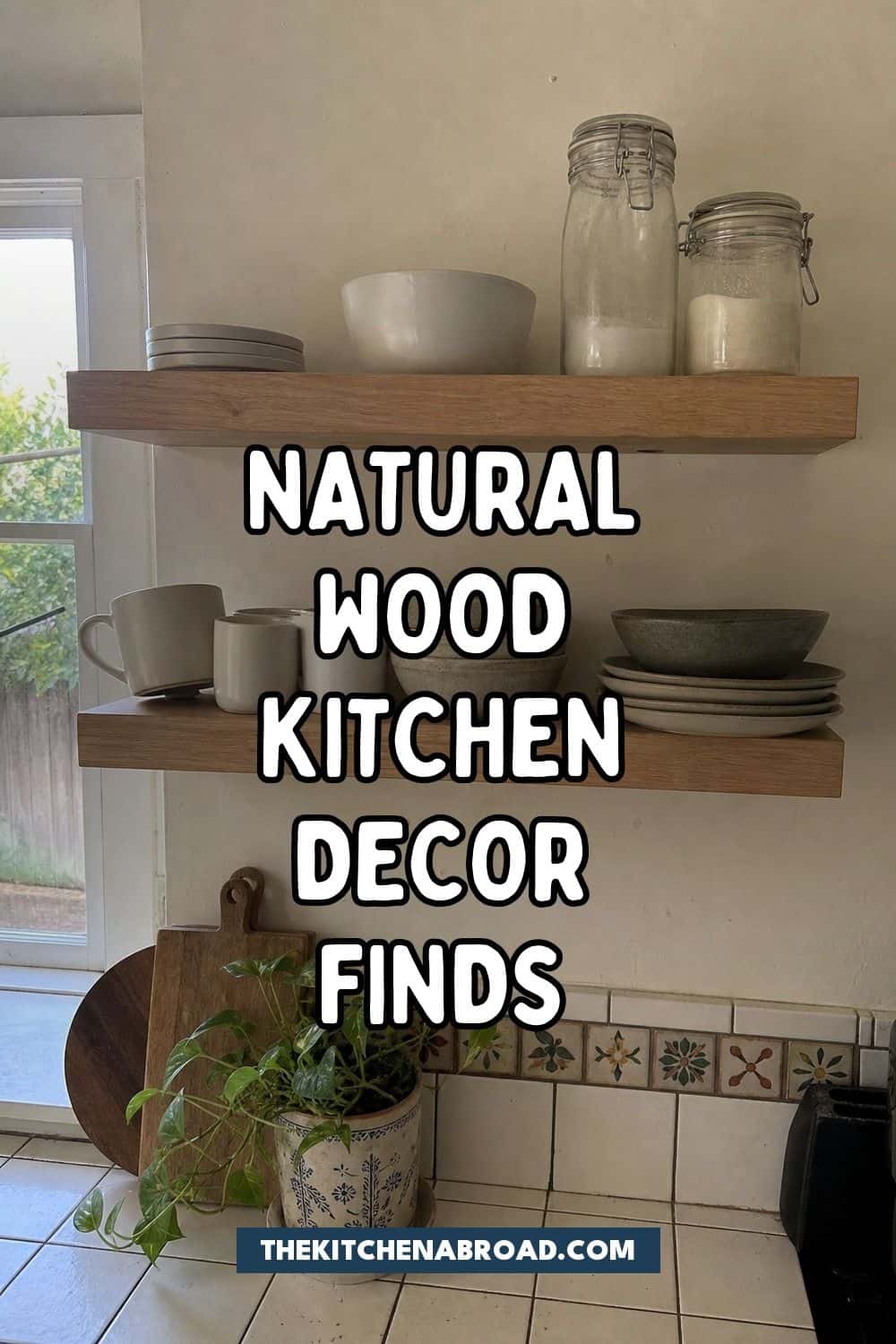
1. Oak Floating Shelves for Open Kitchen Display
Pale oak shelves are one of the clearest ways to add wood grain to a blank wall without making the kitchen feel heavy. They work especially well above a coffee area, near a breakfast nook, or on a short wall that needs storage but not another cabinet. Choose a depth that can hold real dishes, not just tiny objects, and check the weight rating before loading plates or bowls. For a calmer look, style the shelves with items you already use: white mugs, stoneware bowls, small plates, or glass jars. Oak is forgiving because it brings warmth while staying light enough for white, cream, sage, or stone kitchens.
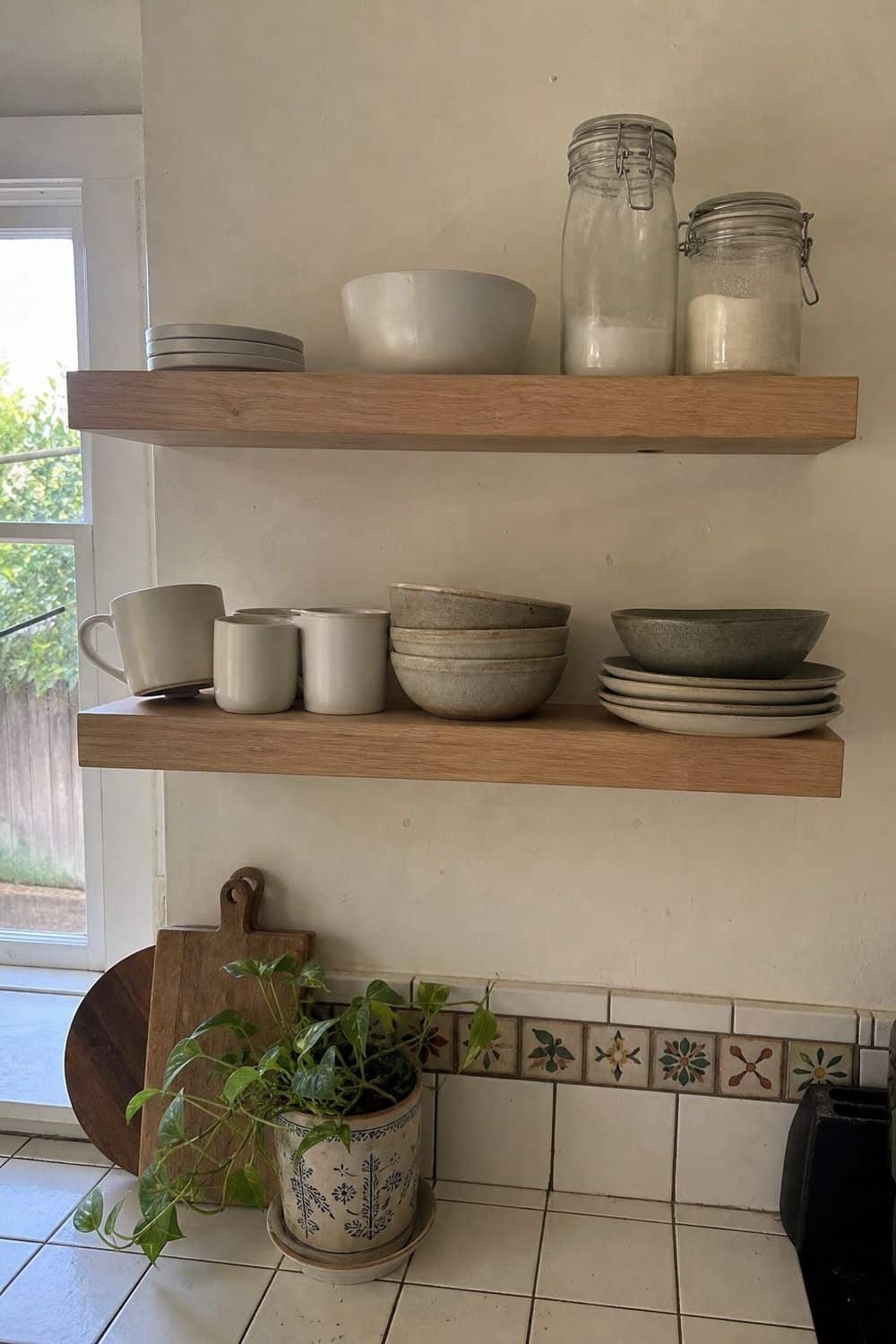
2. Acacia Cutting Board Set for Counter Layering
Acacia has a varied grain that looks good leaning against a backsplash, so a board set can become both a prep tool and a counter accent. Mix one rectangular board with a round or paddle shape to avoid a flat lineup. Standing two boards behind the counter keeps the wood visible while leaving the main work surface open for cooking. Look for smooth edges, a comfortable thickness, and sizes you will actually wash by hand. Oil the boards when they start to look dry, wipe them promptly after food prep, and avoid letting them soak in the sink.
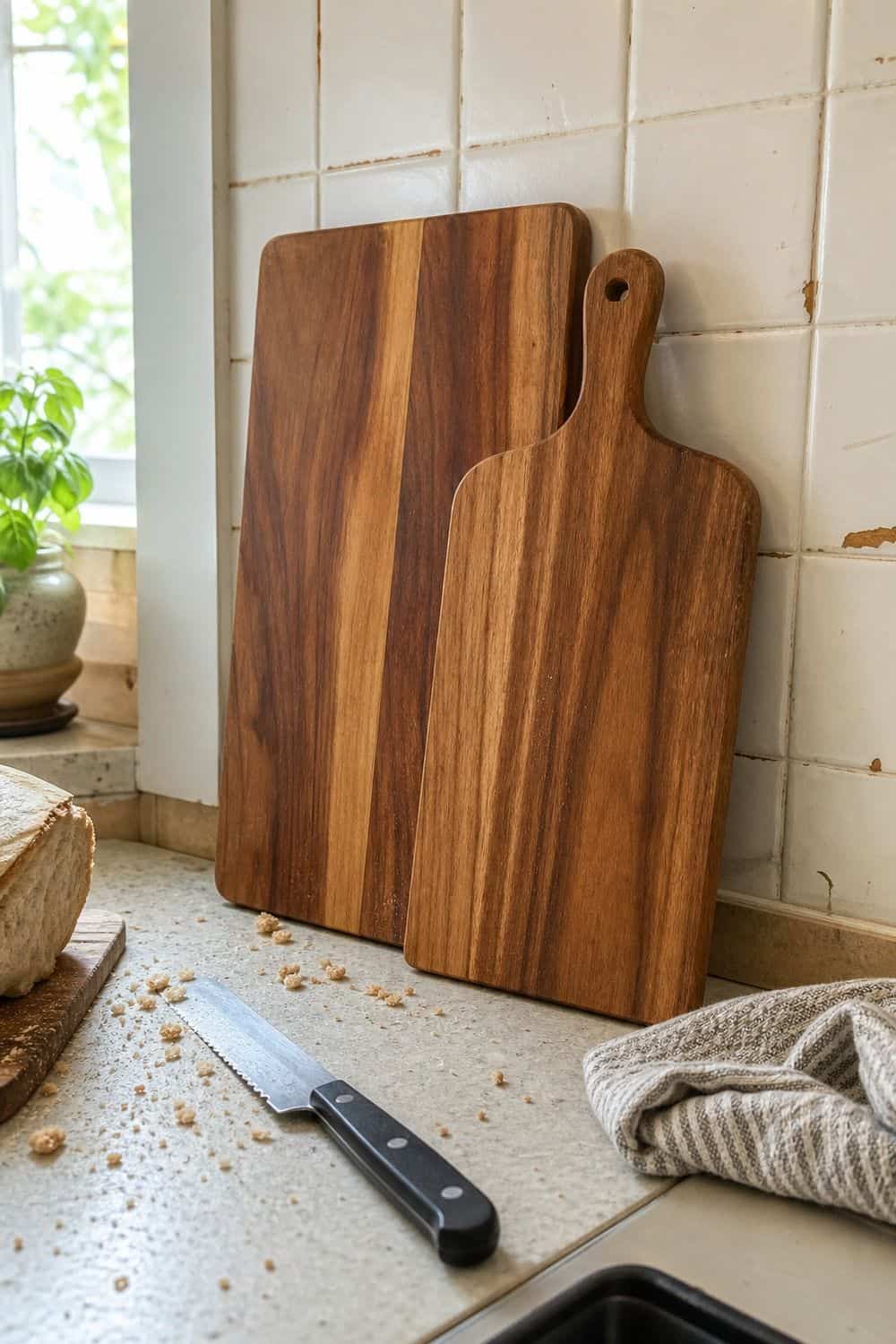
3. Walnut Serving Board for Richer Contrast
A darker walnut board adds contrast when the rest of the kitchen is pale, especially against white cabinets, cream tile, sage paint, or light stone. Use it for bread, fruit, cheese, or a small weekend snack board, then leave it out on an open shelf when it is clean. The deeper tone makes the room feel more layered than a full set of matching pale wood pieces.
Choose a board with enough width for serving, not just slicing. Walnut looks best when the shape is simple and the grain can stand on its own.

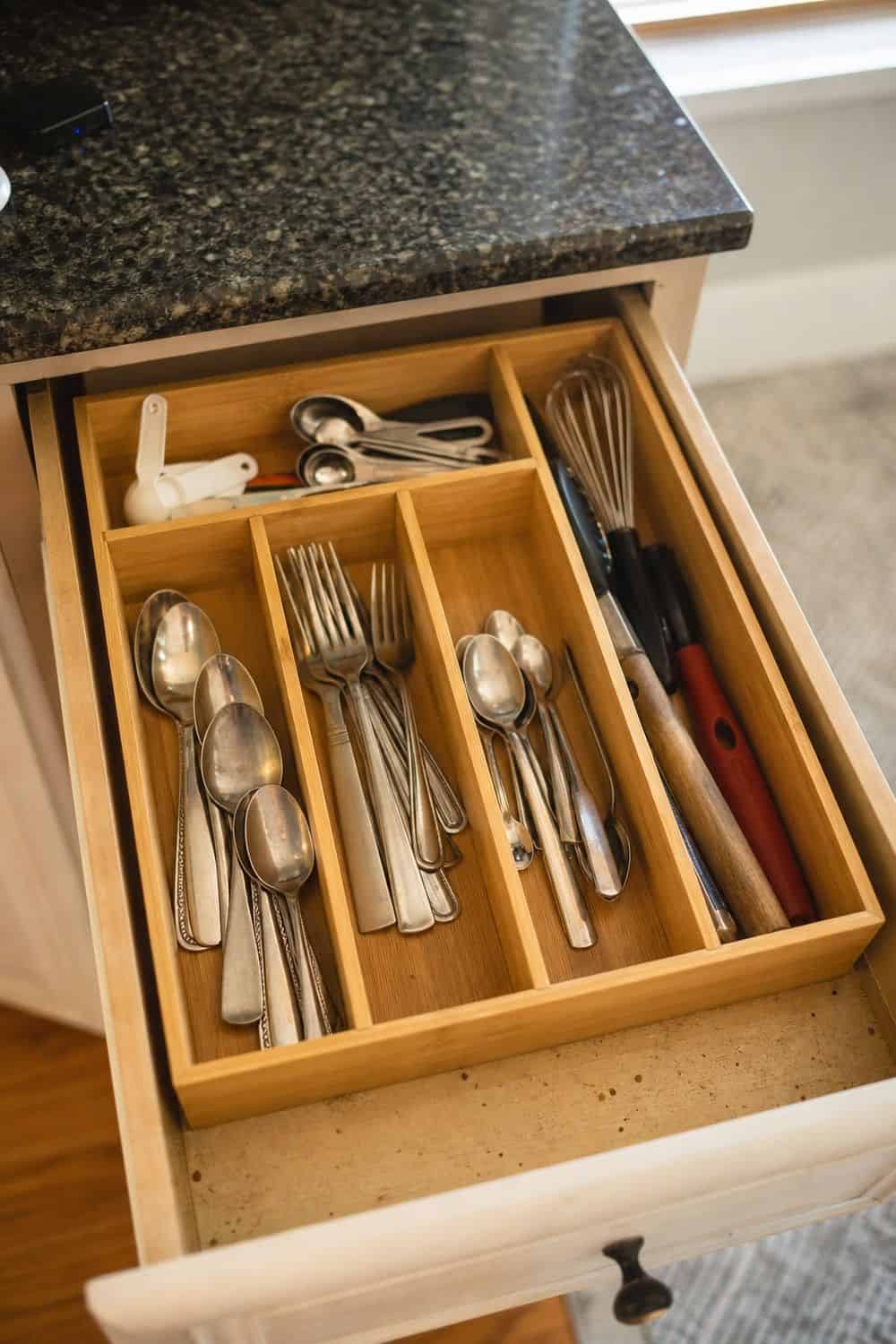
4. Bamboo Drawer Organizer for Natural Hidden Order
Drawer organization still affects how a kitchen feels, even when it is hidden most of the day. A bamboo insert makes utensil storage look warmer than plastic and gives everyday forks, spoons, spatulas, and small tools a defined place. Measure the drawer width, depth, and height before buying, especially if you want an expandable style. Bamboo is a good budget-friendly choice for this job because it looks clean without needing to be displayed. Choose compartments based on the tools you own instead of forcing the drawer into a perfect grid.
5. Countertop Tray for Oils and Seasoning
A low wood tray can make the busiest counter items look collected instead of scattered. Place one near the stove for olive oil, salt, pepper, honey, or vinegar, or use it beside a coffee maker for syrups and small jars. The tray should be shallow enough that bottles are easy to grab and finished well enough to wipe after cooking. This is most useful when it creates a boundary. If the tray becomes a landing spot for receipts, supplements, and spare lids, pare it back to the few things that belong in that exact zone.

6. Utensil Crock for Cooking Tools
A wooden crock suits kitchens where spoons, spatulas, and small whisks stay beside the range. Choose a heavy base and a wide opening so the tools do not fan out awkwardly or tip the container. It looks best with a focused group of wooden spoons, silicone spatulas, and the few tools you reach for constantly.
Keep it close enough to grab while cooking, but not so close that steam and oil hit the wood every day. A slightly taller crock helps hide tool handles that do not match.

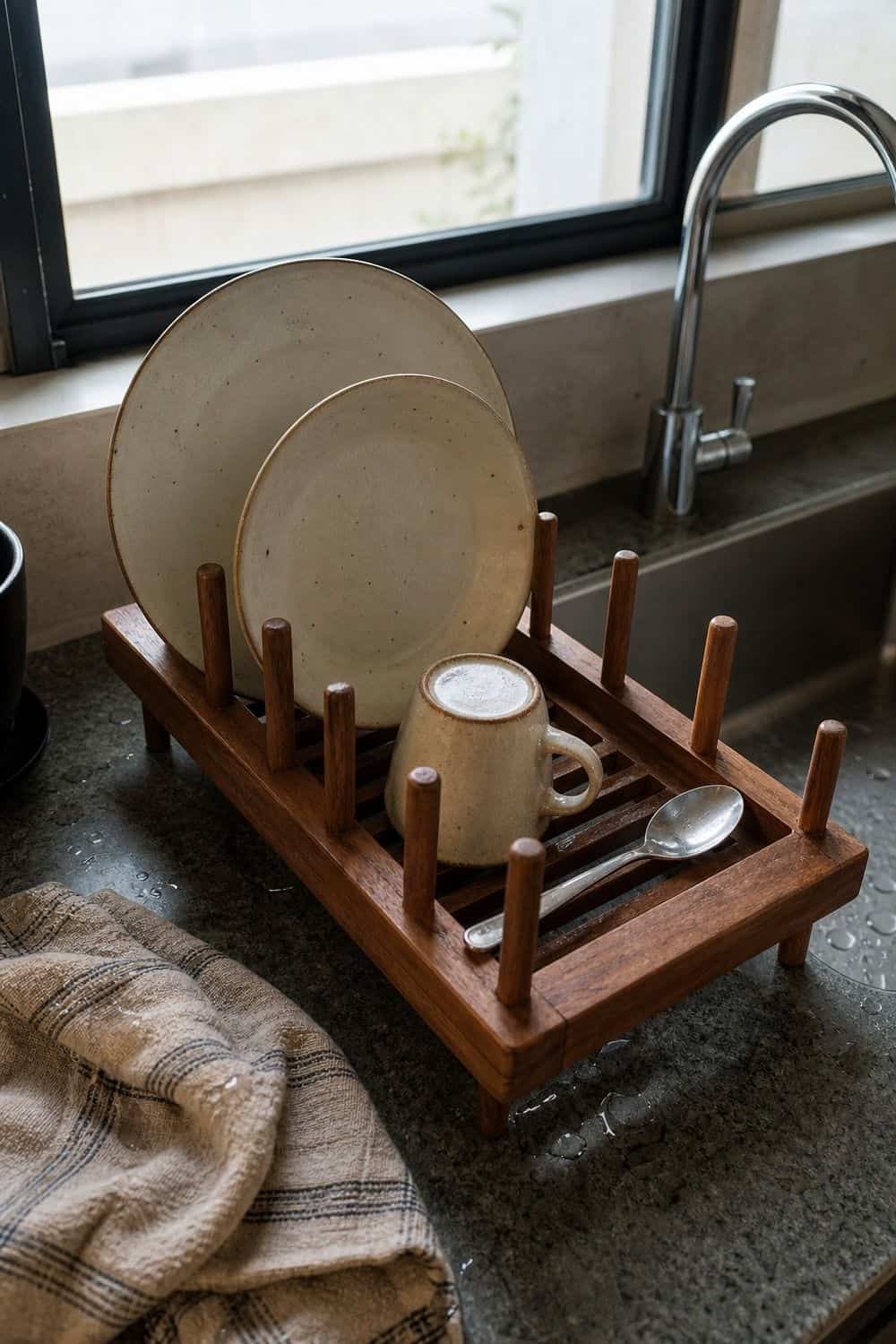
7. Teak Dish Rack for the Sink Zone
The sink area often becomes the coldest-looking part of the kitchen because it is full of metal, soap bottles, and hard surfaces. Teak adds a warmer material in a spot that deals with moisture better than many softer woods. Look for slats with enough airflow, a stable base, and a design that sends water toward the drain instead of under the rack.
Keep the size realistic for your counter. A compact teak rack is useful for glasses, mugs, and a few plates, while a large rack can dominate a small sink run.
If you hand-wash often, pair it with a plain absorbent mat rather than a busy patterned one so the wood remains the main visual detail.
8. Glass Canisters With Wood Lids for Pantry Shelves
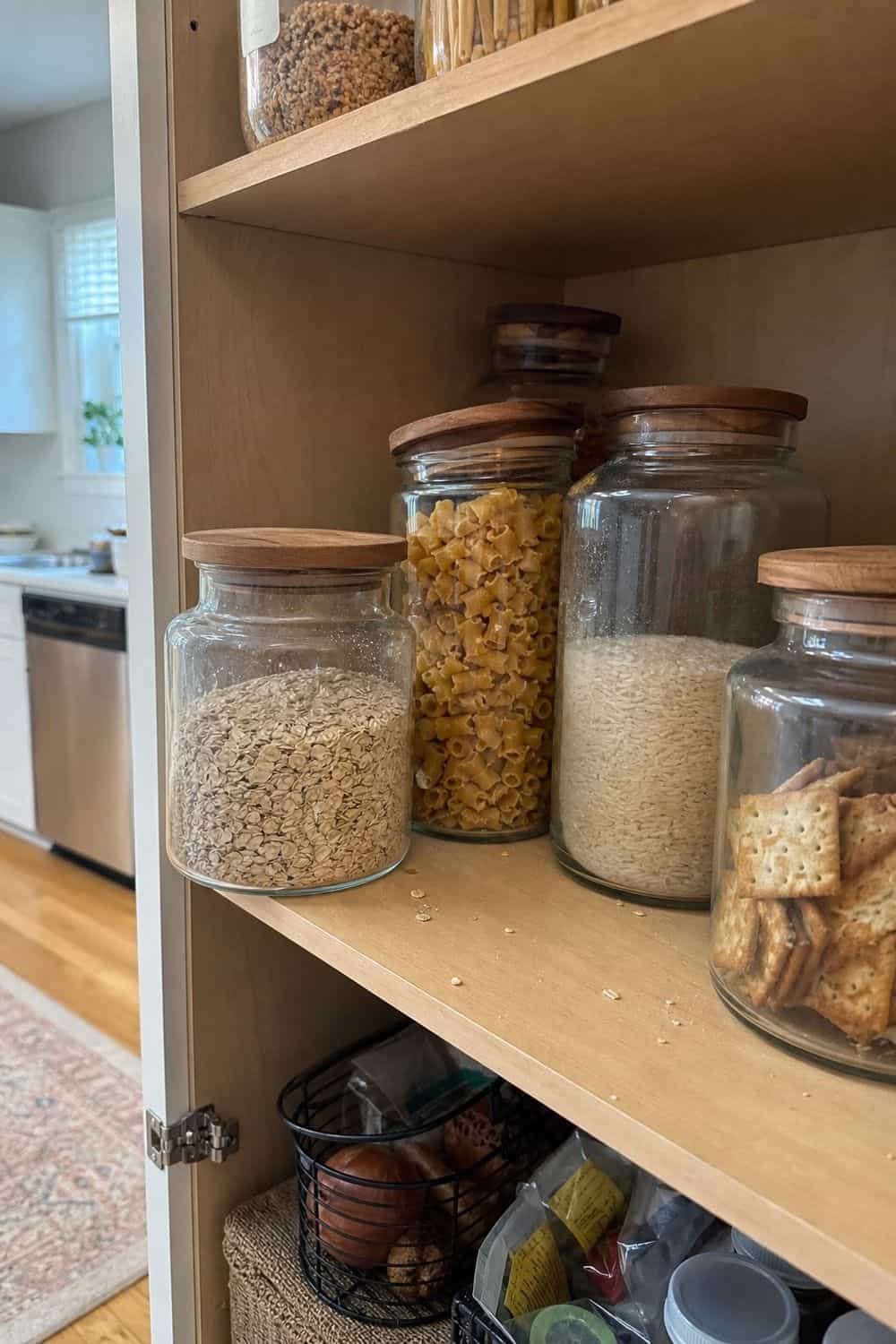
Clear canisters with wood lids make staples feel calmer without hiding what is inside. They work well for oats, rice, pasta, coffee, tea bags, baking chocolate, or snacks that are messy in their original packaging. Repeated shapes matter more than buying a huge matching set, so start with the ingredients you refill most often. Check that the lids seal well if the food needs to stay fresh. On open pantry shelves, wood lids help the storage feel more like part of the kitchen than a row of utility containers.
For a mixed pantry, use labels only where they help. Visible ingredients are often enough when the containers hold different shapes, colors, and textures on the shelf.
9. Mug Tree for a Coffee Corner
A vertical mug stand can free up shelf space while turning a few favorite mugs into part of a breakfast nook or coffee corner. Choose mugs that look good together in color, shape, or scale. If every mug in the cabinet moves onto the stand, the counter can feel crowded quickly.
Check the base width if the mugs are heavy, and leave room around the stand so handles do not knock into the coffee maker. Four to six mugs usually look more considered than a fully loaded tree.

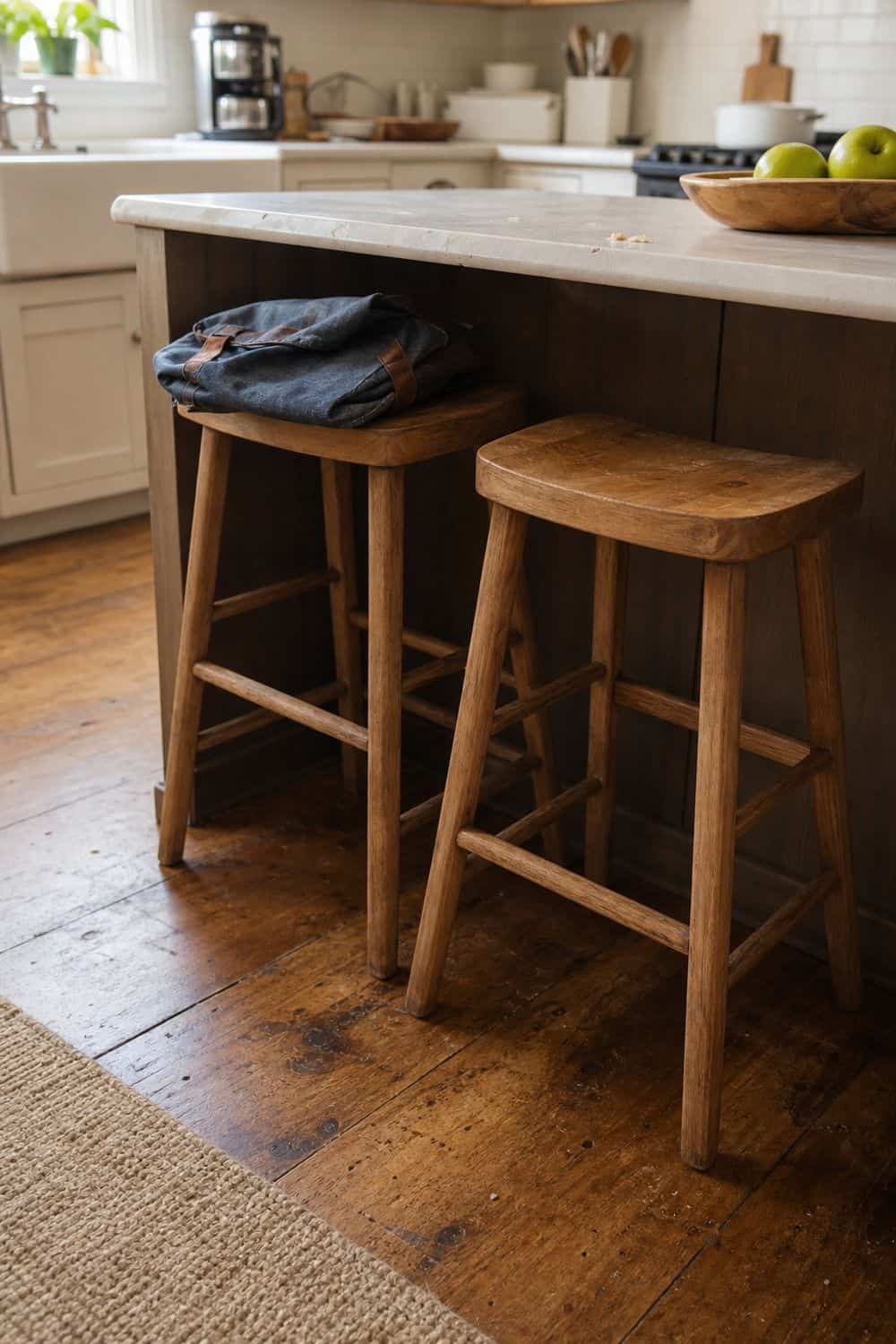
10. Bar Stools for Island Warmth
Island seating can shift the whole room because stools sit at eye level and repeat across a wide surface. Wood bar stools add an anchor that feels more relaxed than metal or acrylic seating. Before choosing a style, confirm the seat height for your counter or bar, the space needed between stools, and whether the foot rail is comfortable for daily use.
The finish does not have to match the floor exactly. It only needs to relate to another wood moment, such as shelves, cutting boards, a dining table, or a nearby cabinet tone.
For family kitchens, also look at the seat finish. A wipeable wood seat is easier around breakfast, snacks, and homework than unfinished rush or pale fabric.
11. Cane Counter Stools for Woven Wood Texture
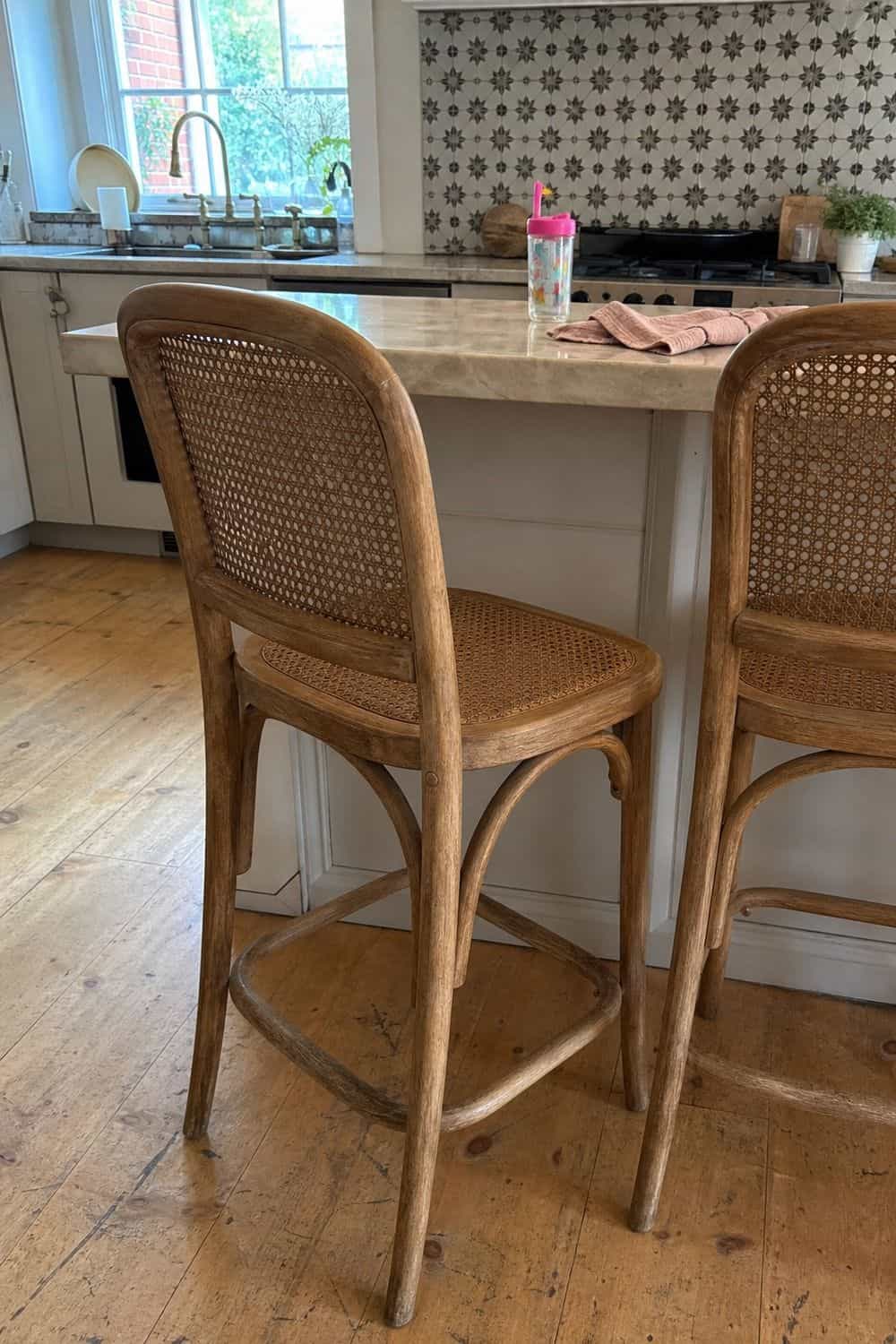
Cane seating gives an island a lighter look than solid wood stools because the woven surface lets light through. It is a good choice when the kitchen already has wood cabinets or dark floors but still needs a natural texture. Check the counter height, frame strength, and seat shape, since cane can feel delicate if the stool is poorly built. Use cane when you want warmth without a bulky silhouette. It pairs nicely with white walls, pale oak shelving, linen curtains, and stoneware on open shelves.
12. Pendant Light as a Natural Focal Point
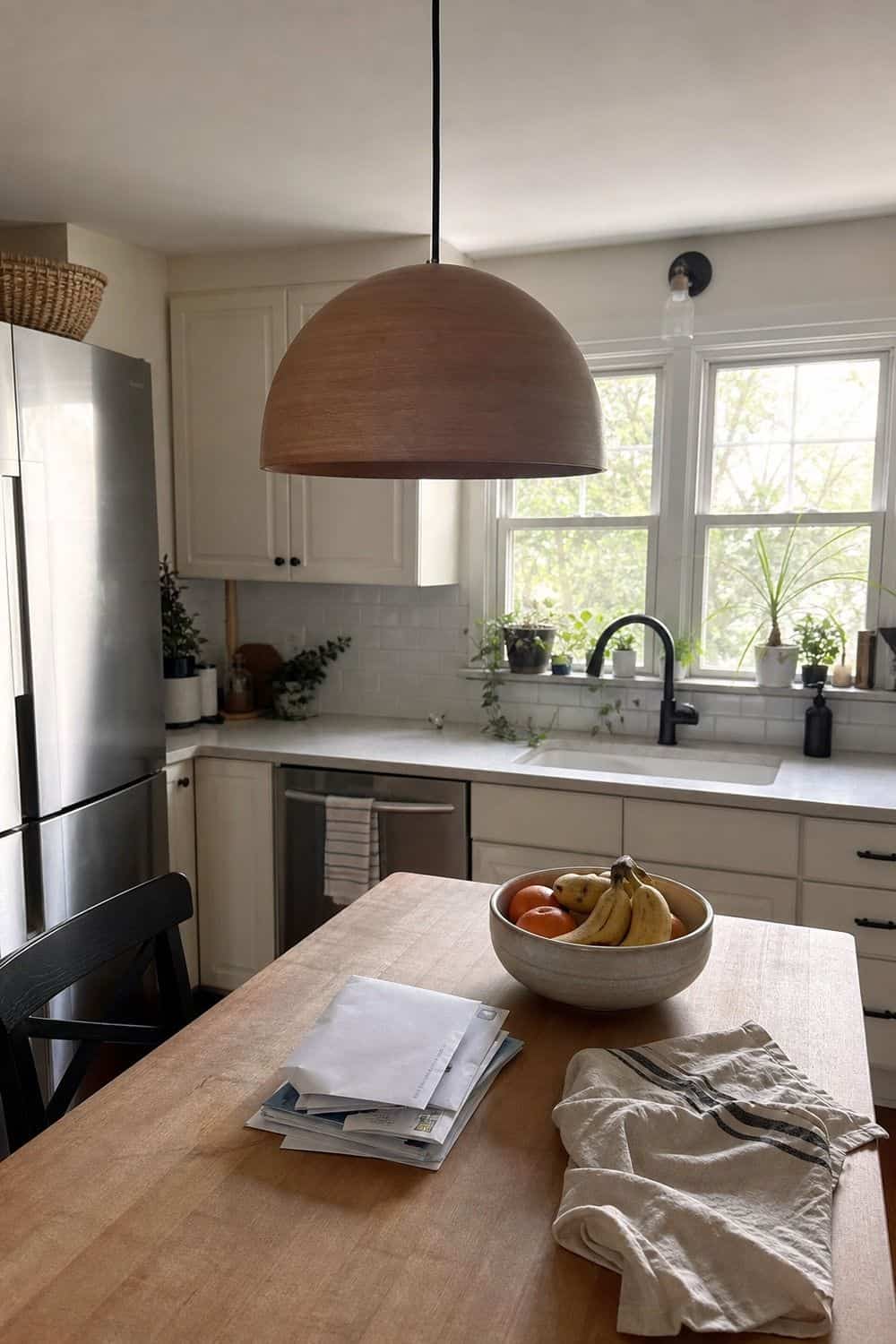
Overhead lighting is a smart place to repeat wood because it connects the island, sink, or dining nook to the rest of the kitchen. A wood pendant can echo shelves, stools, or boards without adding another item to the counter. Pay attention to shade scale, ceiling height, and bulb warmth, since a too-small pendant can look accidental and a too-large one can crowd the sightline. A pale wood shade keeps the effect soft. A deeper walnut or smoked finish creates more contrast above light counters.
If you are hanging more than one pendant, check the spacing before ordering. Wood shades need enough room between them for the grain and shape to read clearly.
13. Rattan Pendant Light for Soft Wood-Tone Texture
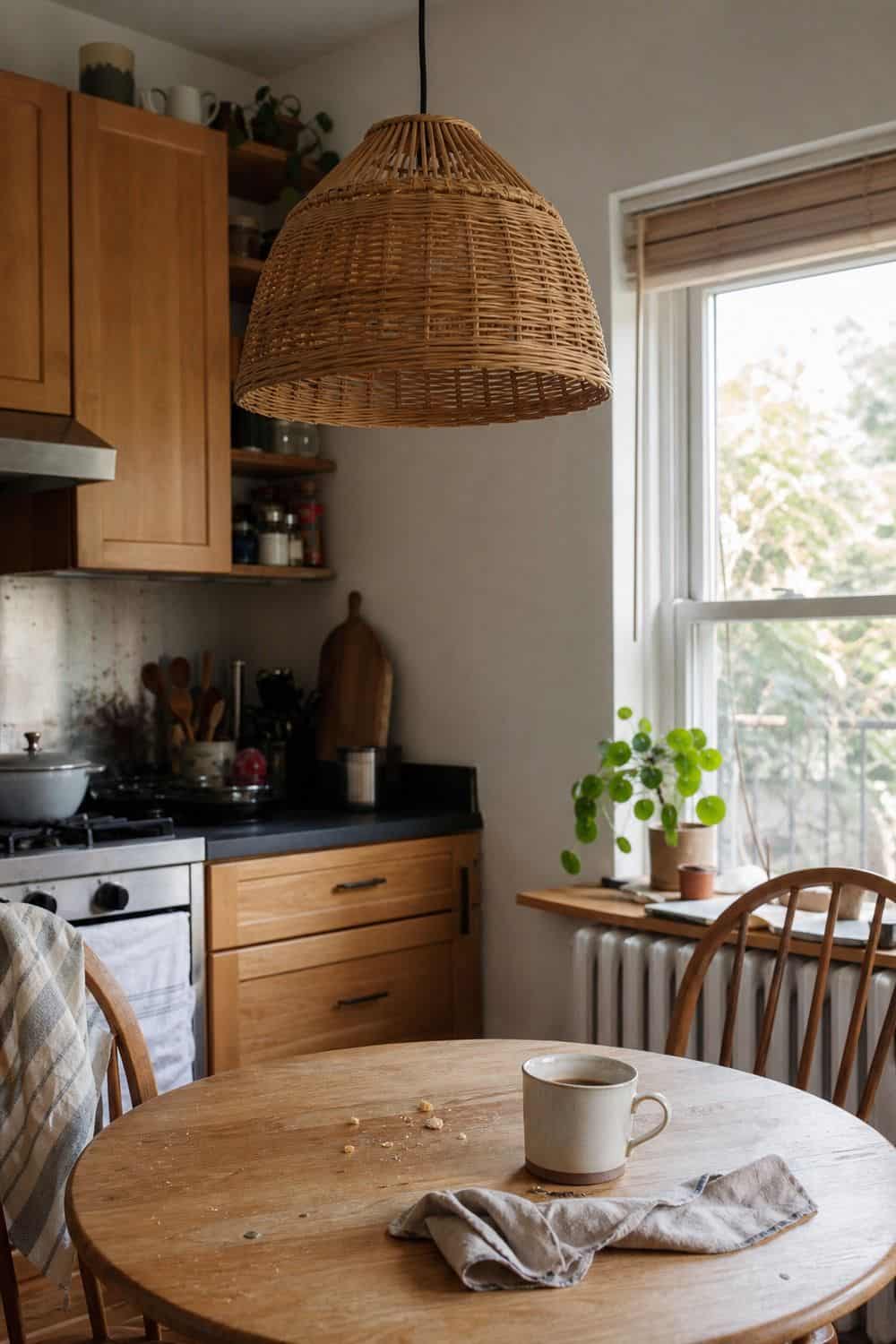
Rattan brings a woven, wood-toned texture rather than a solid plank or carved shade. That makes it useful above a small table, breakfast corner, or sink where the room needs softness more than weight. Look at the weave density before buying because it affects how much light comes through and what kind of shadow lands on nearby walls. It is especially helpful in kitchens with flat cabinet fronts or smooth stone counters. The weave adds movement without asking you to add more objects to the work surfaces.
14. Fruit Bowl for Island Produce
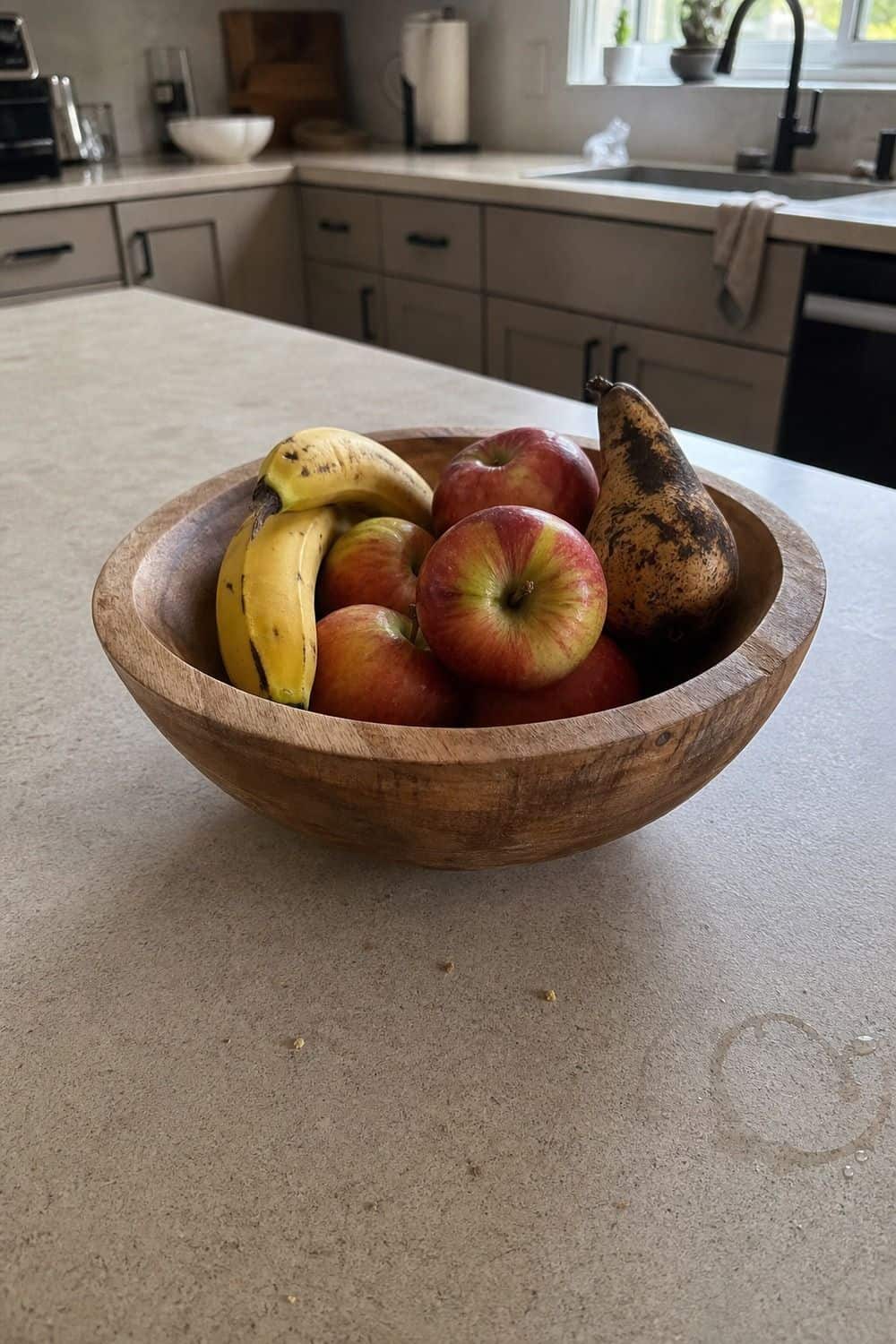
A wide wood bowl turns everyday produce into a useful counter detail. Apples, citrus, pears, and bananas look more generous when they are easy to see, and the wood keeps the display from feeling like a metal storage bin. Choose a shallow shape so fruit does not pile too deeply and bruise at the bottom.
This piece belongs where people naturally grab snacks: an island, dining table, or open counter. If the bowl is too deep, it will hide older fruit and become harder to keep fresh.
For a smaller kitchen, pick an oval bowl that can sit against a wall or backsplash. It gives the same wood note with less lost prep space.
15. Bread Box for Cleaner Counter Storage
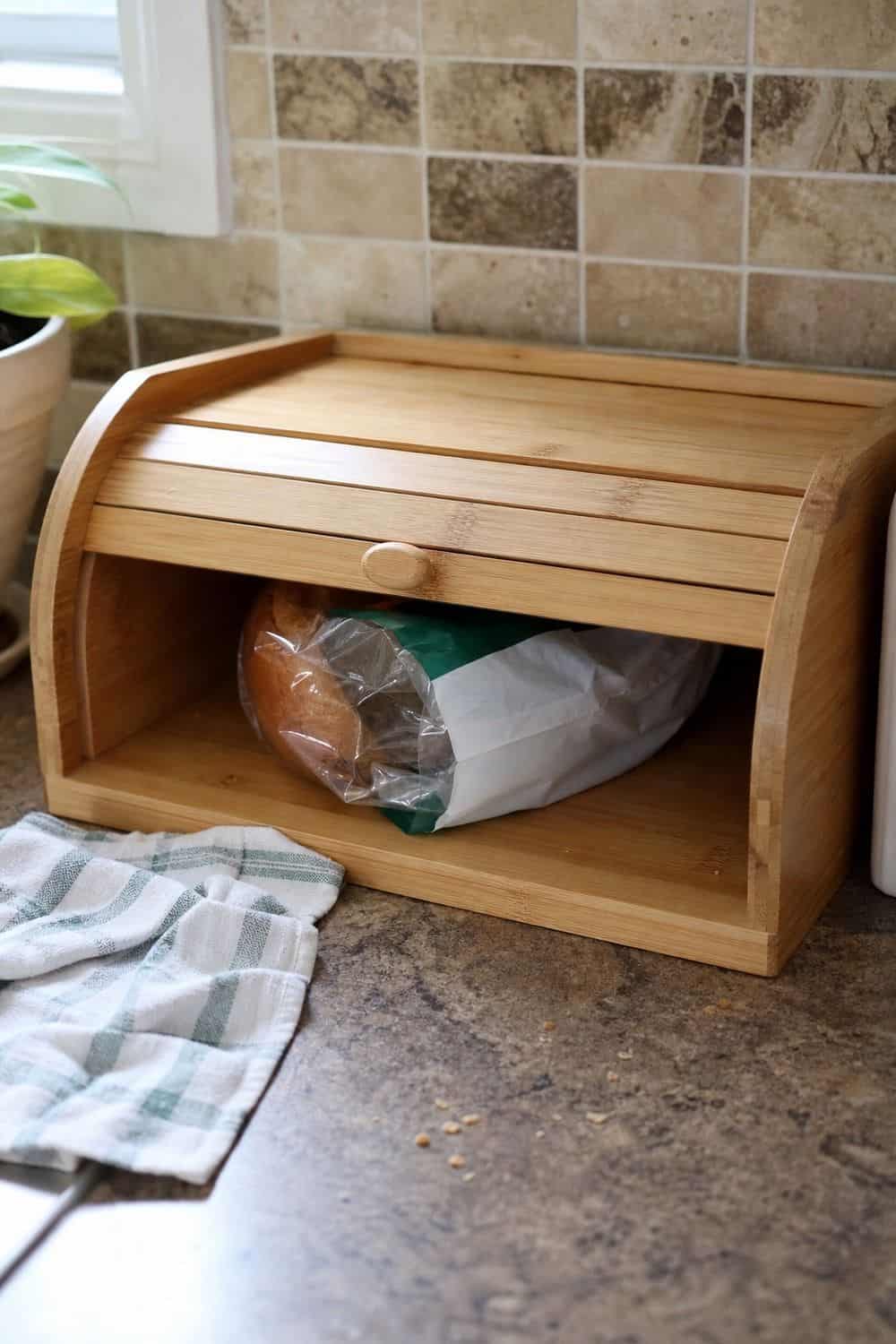
Bread bags, rolls, and pastries can make a counter feel messy even when the rest of the kitchen is tidy. A wood bread box hides packaging while adding a furniture-like accent to the counter. Check the interior capacity, ventilation, and door swing so it fits the bread you actually buy and opens without hitting cabinets or small appliances. It should replace loose packaging rather than add another container beside it. Measure the counter depth so the box can sit flat without crowding the toaster or coffee maker.
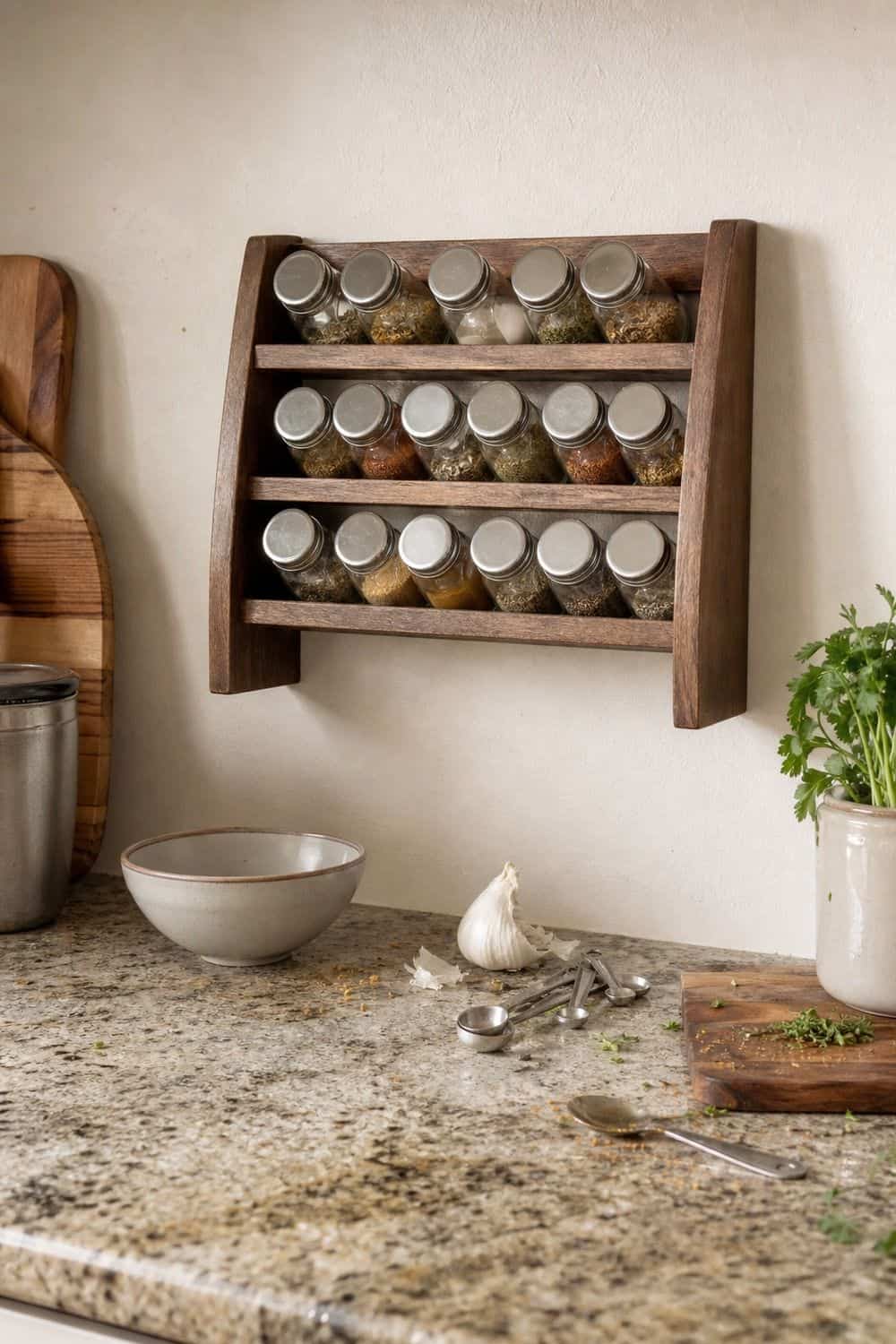
16. Spice Rack for Wall or Counter Storage
A spice rack can be decorative when the jars are readable, consistent, and close to the cooking zone. Wall-mounted wood racks save counter space, while small counter racks work better for low-commitment layouts or anyone who changes layouts often. Keep the rack near prep and cooking, but not directly beside heat, steam, or strong sunlight. Choose a style based on how you cook. If you use spices daily, easy label visibility matters more than a perfectly styled display.
For narrow kitchens, a single-tier wall rail can be easier than a deep counter rack. It keeps spices visible without taking over the worktop or blocking prep space.
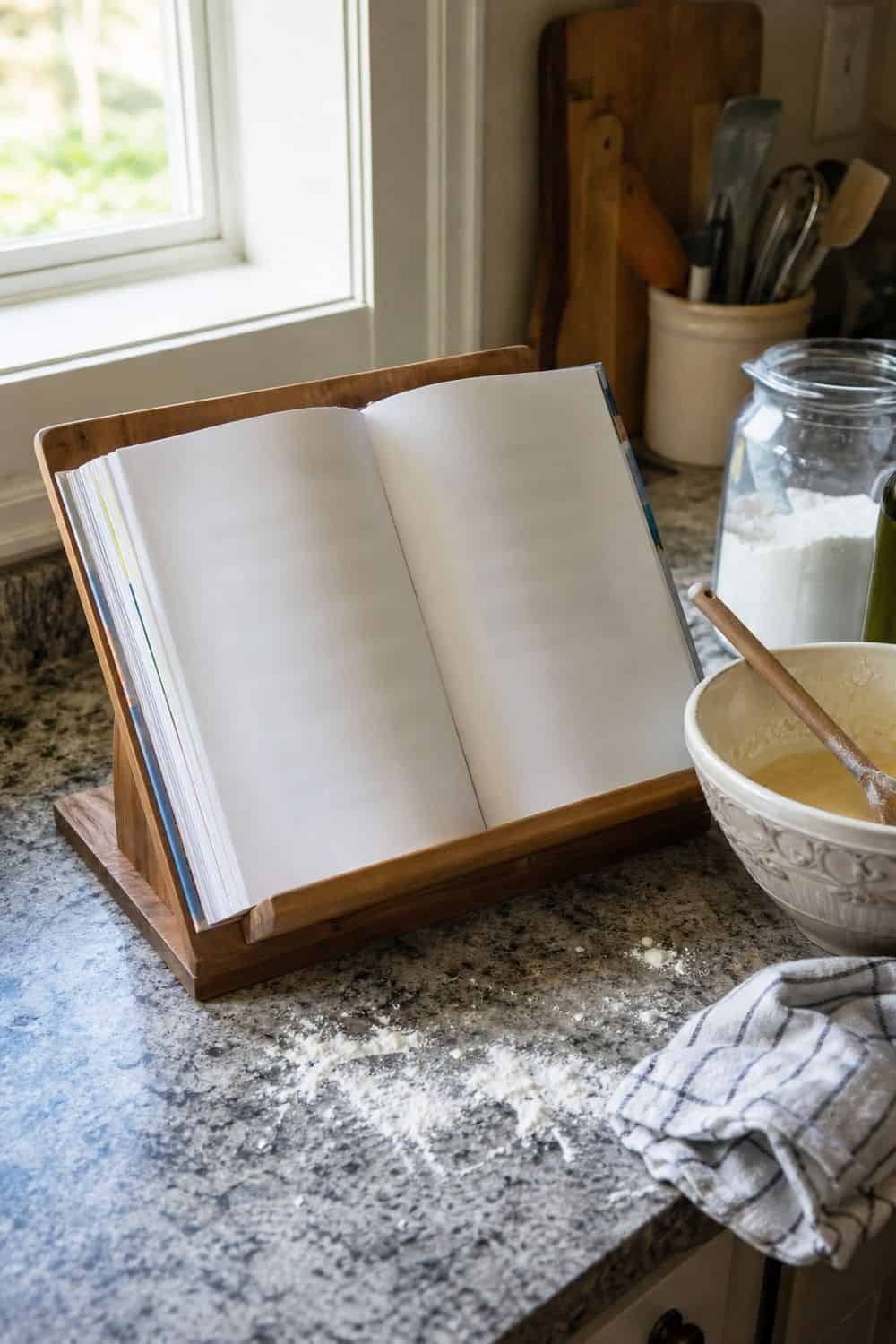
17. Cookbook Stand for Recipe Prep
A cookbook stand is useful when you cook from printed recipes, tablets, or favorite books that deserve to stay off a wet counter. Wood makes the prep area feel less technical than a metal stand, but the design still needs to work. Look for a stable back angle, a ledge deep enough for thick books, and clips or a front lip that can hold pages open. A wipe-clean finish matters near flour, sauce, and oil. Store it upright against the backsplash when it is not holding a recipe.
If you mostly cook from a tablet, check that the ledge is wide enough for the case. A narrow lip can make the stand frustrating during actual prep.
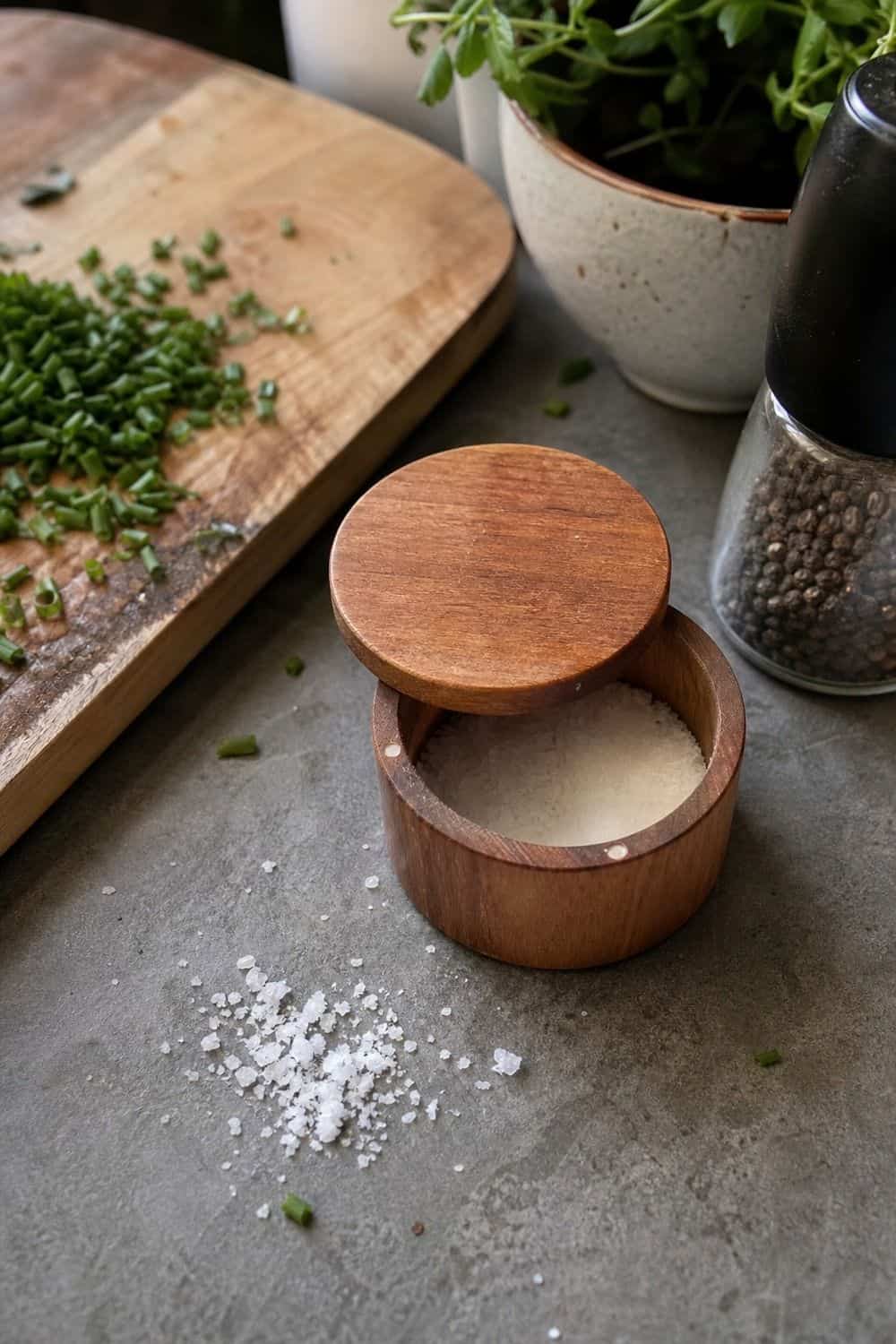
18. Salt Cellar for Daily Cooking
A small salt cellar gives the prep zone a tactile piece that earns its spot every day. Keep it beside the stove or cutting board so seasoning is easy while cooking, and choose a lid if dust, steam, or splatters are likely. The best size is large enough for daily use but small enough that the salt stays fresh and easy to pinch. Look for a smooth interior and a lid that opens with one hand. Those details matter more than ornament because this piece is handled while food is moving.
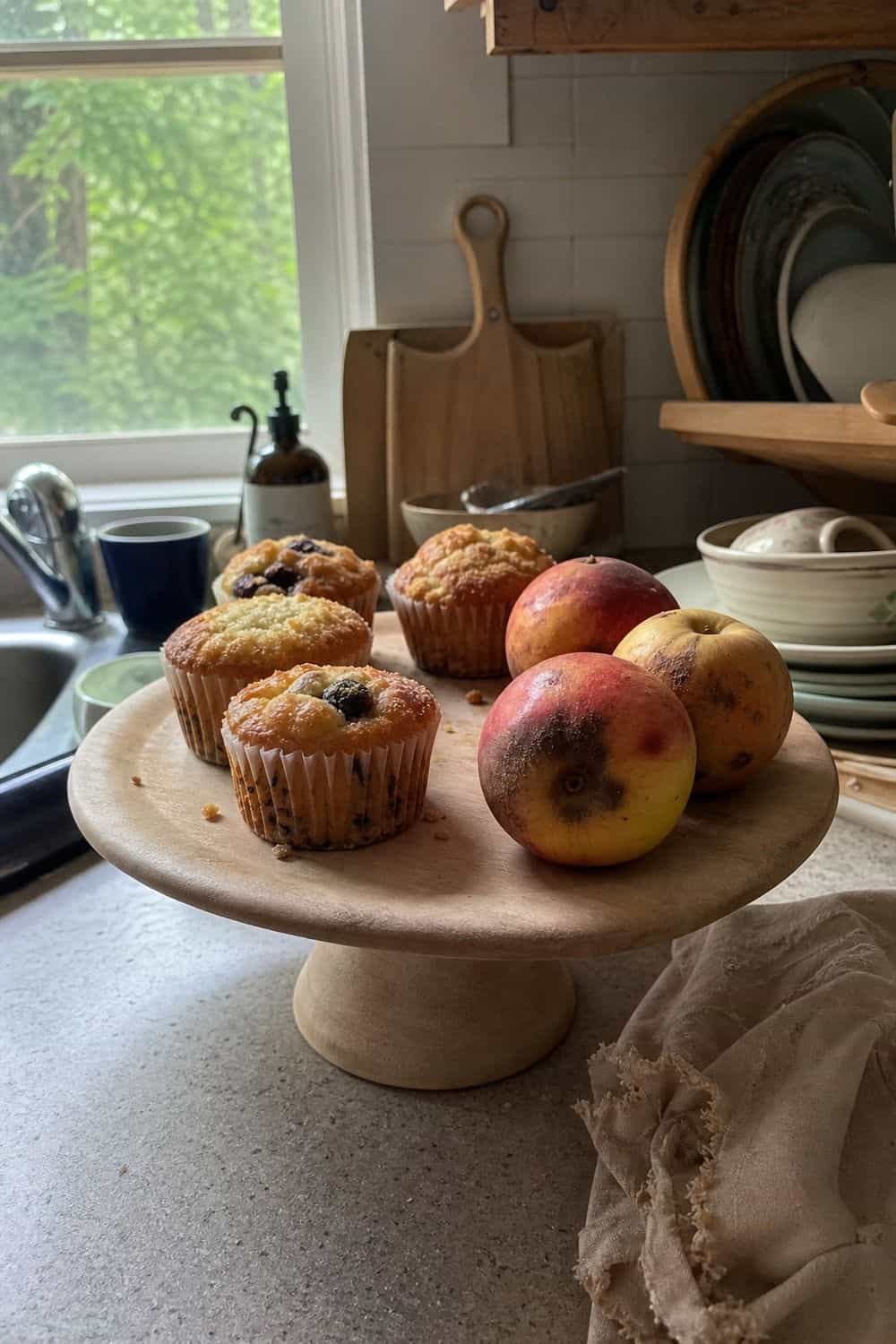
19. Cake Stand for Bakes and Fruit
A wood cake stand adds height where a counter or table feels too flat. Use it for muffins, banana bread, a small cake, citrus, or a casual brunch setup rather than filling it with unrelated decorative objects. The raised profile makes baked goods easier to serve and gives the kitchen a more finished look during gatherings. Check the diameter before buying. A stand that is too large can steal prep space, while a smaller one can live comfortably near a coffee area or dining corner.
If the stand will hold uncovered food, choose a finish that can be wiped clean easily and avoid rough carved surfaces that trap crumbs after serving.
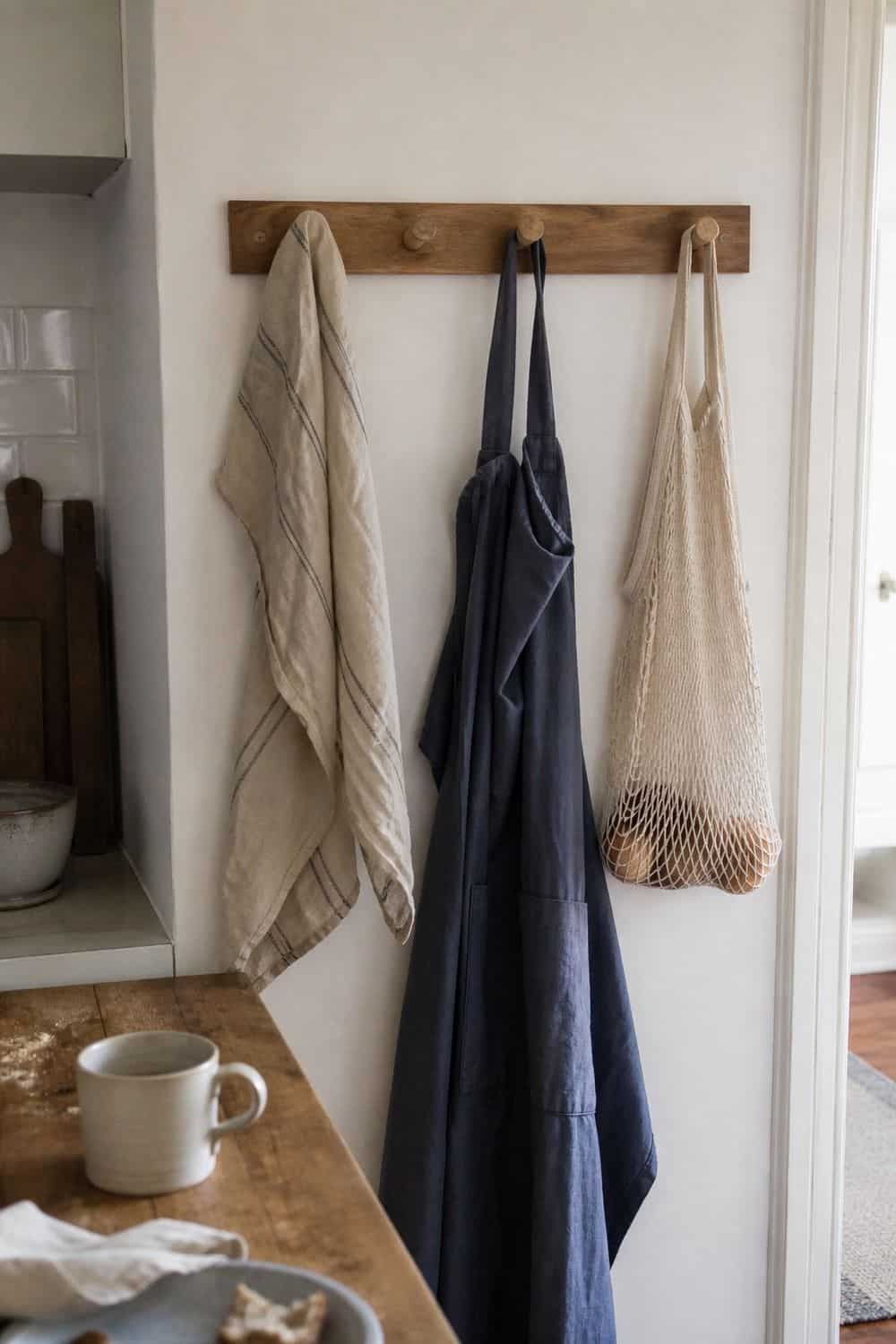
20. Wall Peg Rail for Towels and Aprons
A peg rail uses vertical space in a way that feels natural rather than purely utilitarian. Mount one near a pantry wall, breakfast nook, side entry, or unused kitchen edge for aprons, tea towels, baskets, or market bags. Before installing, test the height with the longest item you plan to hang so it does not drag on a counter or chair.
Spacing matters too. Pegs that sit too close together make everything overlap, while wider spacing lets linen and woven bags hang with more breathing room.
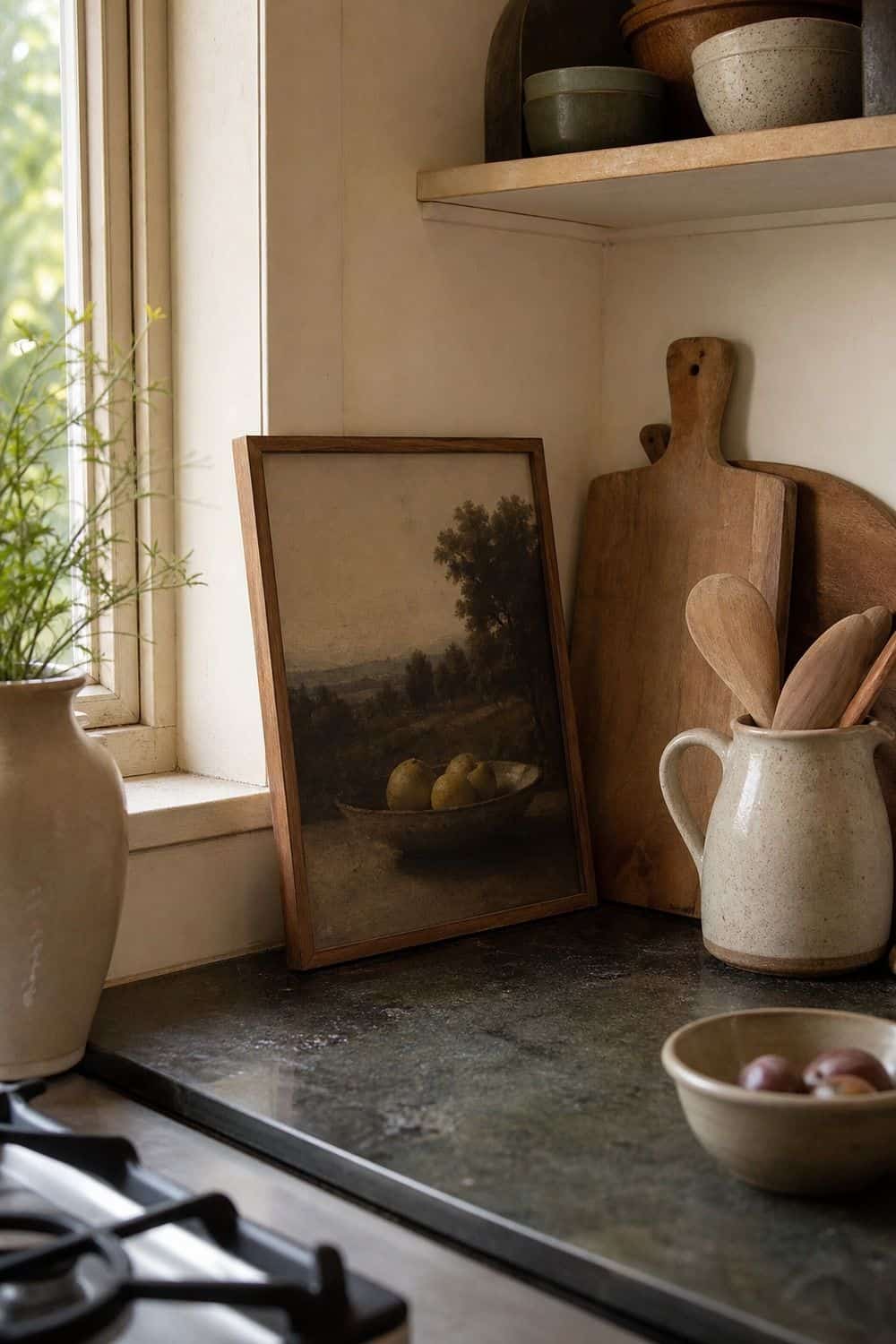
21. Framed Kitchen Wall Art for Natural Warmth
Framed art is a good option when the kitchen needs wood but not more storage. A wood frame can echo shelves, stools, or a dining table while the print brings in food, botanical, or still-life detail. Choose art that feels related to the kitchen, such as herbs, fruit, market scenes, simple sketches, or quiet food photography.
The frame is the wood decor here, so avoid glossy black or plastic frames if your goal is natural texture. Hang it where it will not be hit by steam or grease.
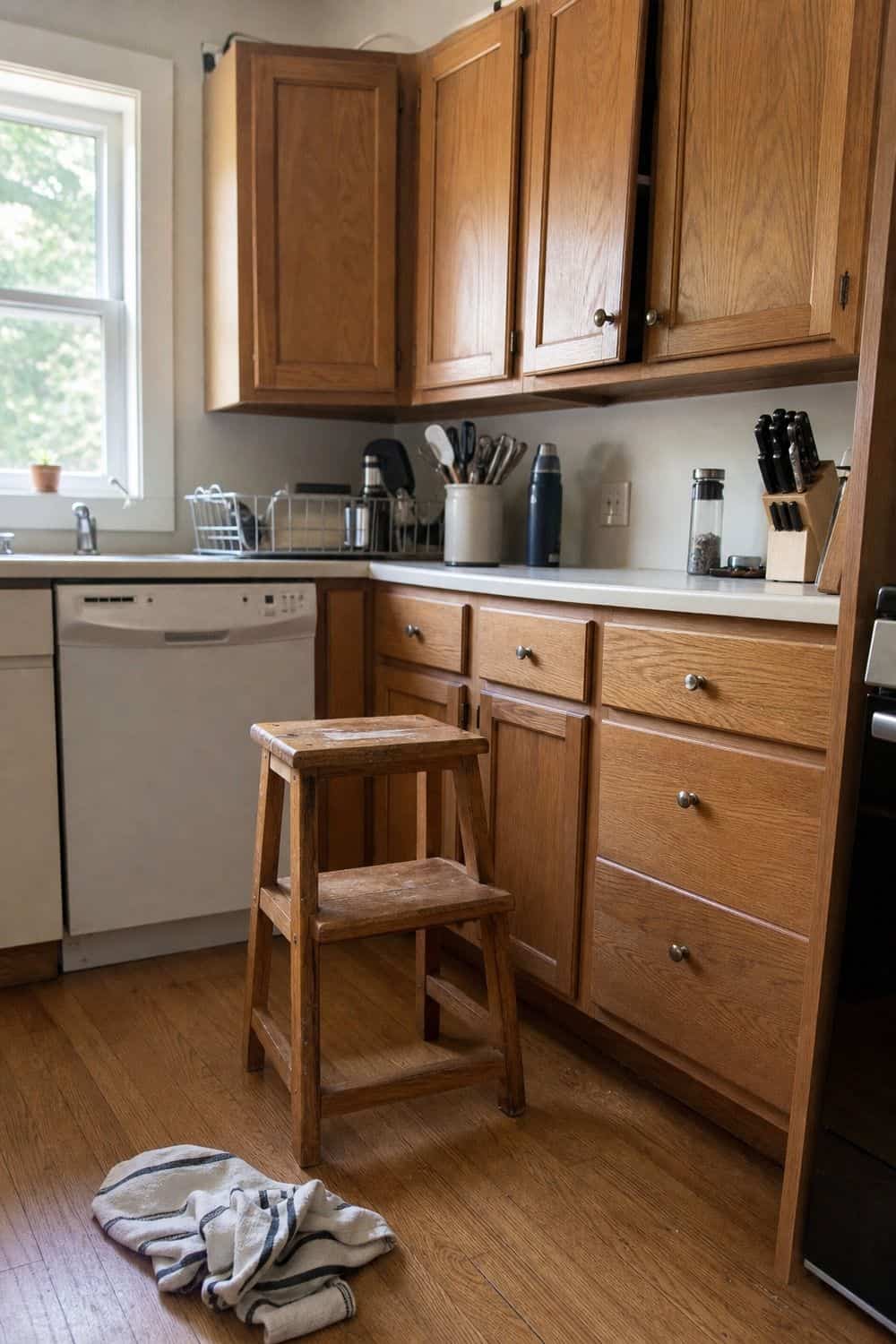
22. Step Stool for Upper Cabinet Reach
A small step stool is one of the most useful natural wood kitchen decor finds for rooms with tall cabinets, high shelves, or pantry storage. It can tuck beside an island, under a console, or near the pantry edge when not in use. Look for stable legs, nonslip feet, and a height that helps you reach without feeling wobbly.
Because it is visible, the finish should relate to the rest of the room. A pale stool feels casual and airy, while darker wood can look more furniture-like.
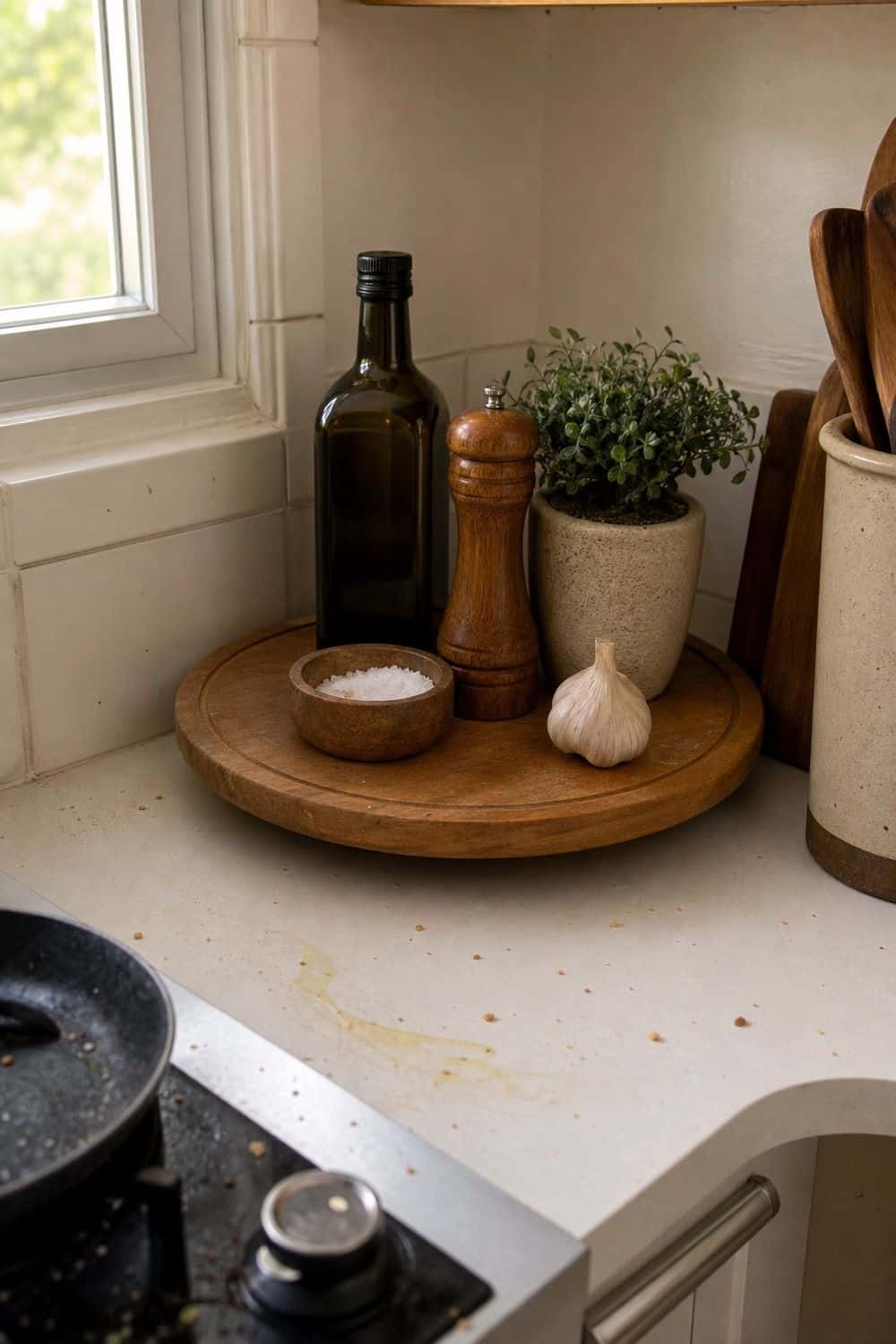
23. Lazy Susan for Corner Counters
Corner counters, breakfast stations, and pantry shelves can swallow small bottles and jars. A wood lazy Susan makes condiments, coffee syrups, oils, or spreads easier to rotate forward without digging through a cluster. Check the diameter before buying so it fits the corner and still leaves room for nearby appliances or cabinet doors.
A raised edge is helpful if you store taller bottles. For open counters, keep the contents limited so the rotating tray looks like a deliberate wood accent instead of a crowded catchall.
24. Plant Stand for Kitchen Greenery
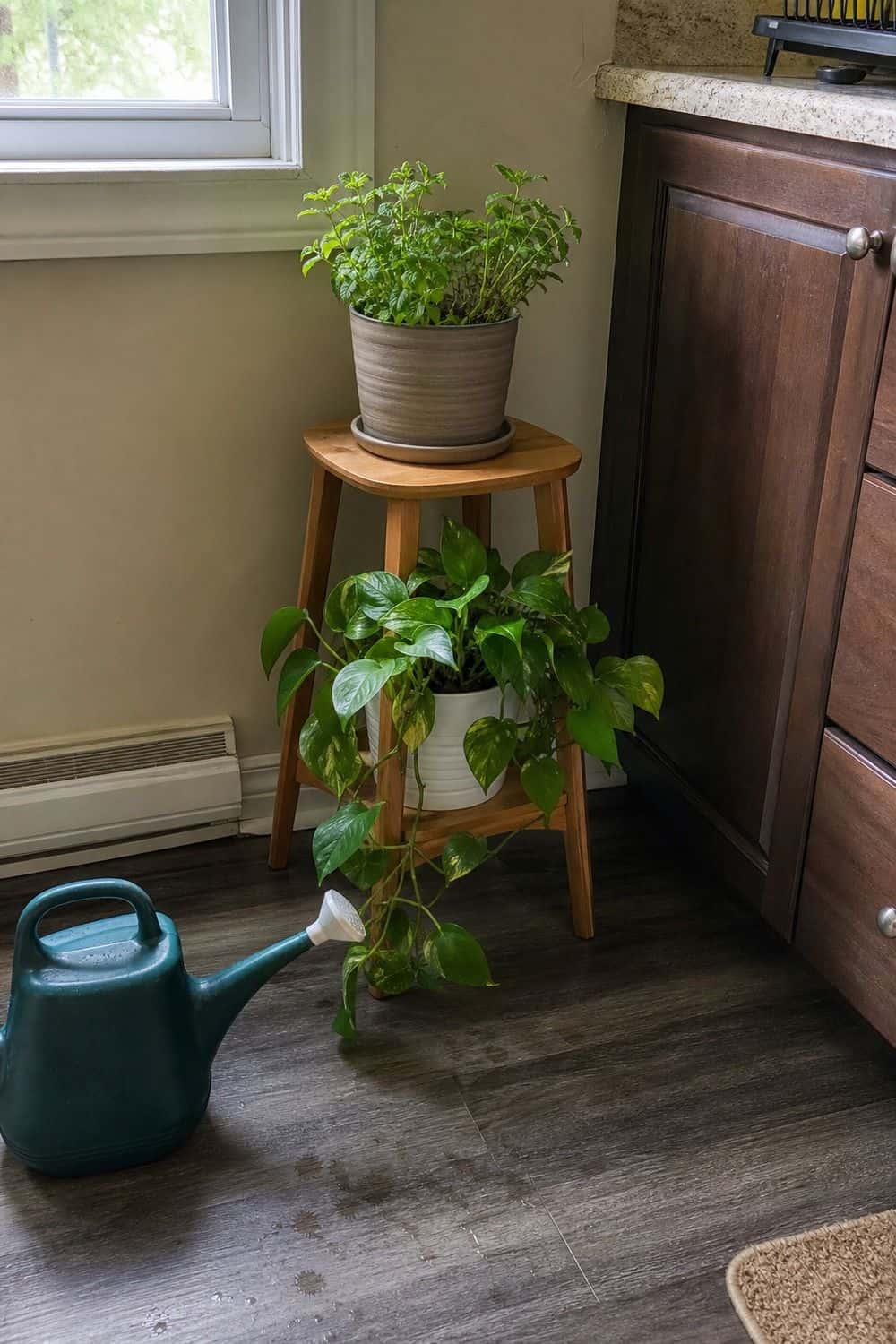
A small wood plant stand lifts herbs or greenery near a window without crowding the sill. It works for basil, mint, pothos, or a compact plant that can handle the kitchen light. Choose a height that clears the counter edge but does not block the window, and place a saucer or liner under the pot to protect the wood from watering marks. This is also useful when the window ledge is too narrow for a pot. The raised stand gives the plant light while keeping the sill easier to wipe.
25. Knife Block for a Warmer Prep Zone
A knife block keeps prep tools visible and close, but the material changes how the counter reads. Wood feels warmer than metal or plastic and can connect to cutting boards, shelves, or stools nearby. Check that the slots fit your actual knives, including larger chef knives or kitchen shears, before choosing a compact block.
Place it away from sink splashes and give it enough counter room that knives can slide out safely. This is best for readers who prefer counter storage over drawer inserts or magnetic strips.

How to Choose and Style Natural Wood Kitchen Decor
Choose the Wood Tone for the Job
Pale oak is useful when the kitchen needs warmth but still feels airy. Walnut adds contrast beside white cabinets, cream tile, or pale stone. Acacia brings visible grain variation, bamboo works well for affordable organization, and teak is a better choice near moisture-prone areas such as the sink.
Mix Wood Tones with a Clear Repetition
Mixed woods can look natural when each tone appears more than once. If you have oak shelves, repeat a pale wood in a stool, tray, or frame. If you add walnut, let it show up in one or two darker pieces instead of scattering many unrelated finishes across the room.
Use Wood Where It Has the Biggest Visual Impact
Shelves, island seating, pendant lighting, counters, sink zones, and dining corners are the strongest places for small wood upgrades. These areas are visible from across the room, so even one well-chosen piece can shift the kitchen away from feeling cold or unfinished.
Balance Wood with Other Kitchen Materials
Too much wood can make a kitchen feel heavy, especially if the cabinets, floors, stools, and shelves are all similar tones. Break it up with stoneware, linen, glass, ceramic, metal hardware, painted finishes, and open counter space. Natural wood should add depth, not cover every surface.
Care for Wood Pieces Based on How You Use Them
Food-contact pieces need more attention than display pieces. Oil cutting boards when they dry out, wipe serving boards promptly, keep wood from sitting in standing water, and let sink-side accessories dry with airflow. Decorative shelves and frames usually need only dusting and an occasional gentle wipe.
Frequently Asked Questions
What natural wood kitchen decor should I buy first?
Start with a piece that fixes a visible part of your kitchen. For many people, that means a cutting board set, counter tray, floating shelf, fruit bowl, or canisters with wood lids. These pieces are affordable compared with furniture or lighting, and they add warmth where you see the kitchen most often.
Which wood tones look best in a kitchen?
Oak works well in light, airy kitchens because it adds warmth without strong contrast. Walnut is better when the room needs depth or a darker accent. Acacia suits boards and serving pieces because the grain variation feels lively, while bamboo is a smart choice for organizers and drawer inserts.
Can I mix oak, walnut, acacia, and bamboo in one kitchen?
Yes, but the mix should look deliberate. Keep one main wood tone for larger pieces, then use one or two secondary tones in smaller accessories. It helps to repeat each tone at least twice and keep the rest of the palette calm with white, cream, stone, glass, or soft metal finishes.
How do I add natural wood decor without remodeling?
Focus on items that sit on existing surfaces or mount simply: shelves, trays, boards, stools, pendant shades, canisters, spice racks, peg rails, and framed art. These natural wood kitchen decor finds change the feel of the room without replacing cabinets, floors, counters, or backsplash tile.
What natural wood pieces work best in a small kitchen?
Small kitchens usually benefit from pieces that combine storage and warmth. Try a bamboo drawer organizer, wood tray, compact mug tree, narrow floating shelf, wood bread box, or small lazy Susan. Avoid oversized bowls, bulky stools, or deep shelves if they reduce prep space or block traffic.
How do I care for wooden kitchen accessories?
Keep wooden accessories dry, wipe spills quickly, and avoid soaking boards, bowls, or racks. Cutting boards and serving boards may need food-safe oil when they look dull or dry. For shelves, frames, stools, and lighting, regular dusting and gentle spot cleaning are usually enough.
Does natural wood kitchen decor work with white cabinets?
Natural wood works especially well with white cabinets because it keeps the room from feeling too cold. Oak, acacia, and light bamboo soften a white kitchen, while walnut adds stronger contrast. Repeat the wood tone in at least two places so it feels connected rather than random.
How do I keep a natural wood kitchen from looking too rustic?
Choose cleaner silhouettes and balance the wood with glass, linen, ceramic, stone, or metal. Avoid overloading the room with distressed finishes, heavy signs, or too many farmhouse-style accents. A few smooth wood pieces with open space around them can feel modern, organic, or European rather than rustic.
Final Thoughts
Natural wood kitchen decor finds feel strongest when they are chosen for a real surface, routine, or storage need. A shelf, tray, board, stool, canister, or light can add warmth, but the most successful pieces also make the kitchen easier to use and more pleasant to live with every day.
Last update on 2026-09-18 / Affiliate links / Images from Amazon Product Advertising API