
The best European kitchen ideas rely on natural materials, warm color, freestanding or furniture-style storage, tactile tile, stone or marble, patinated metals, modest dining, useful open storage, and a collected look shaped around daily cooking. European kitchen style is not one exact country theme. It feels strongest when old and new pieces support real cooking, storage, eating, and cleanup.
A European kitchen often feels appealing because it looks like it has been used, adjusted, and improved over time. Cabinets may not all match, stone may have movement, shelves may hold daily dishes, and a small table might be part of the room instead of an afterthought.
European kitchen ideas can borrow from English utility, French country restraint, Mediterranean tile and plaster, Nordic function, and Italian stone or cafe habits without turning the room into a costume. The goal is a collected everyday space with good materials, useful storage, and enough restraint to keep the kitchen easy to cook in.

Top Recommended Products


You Might Also Like These Blog Posts
- 25 English Cottage Kitchen Ideas for Storybook Storage and Style
- 25 French Country Kitchen Ideas for Rustic Elegance
- 25 Mediterranean Kitchen Ideas with Tile, Wood, and Sunlit Color
- 25 Cottage Kitchen Ideas for Soft, Collected Charm
- 25 Warm Neutral Kitchen Ideas for a Cozy, Timeless Space
1. Mixed Material Palette

The room feels more layered when it starts with materials instead of a perfectly matched cabinet package. European kitchen design usually feels collected because the materials do not all come from one flat finish family. Stone, wood, plaster, tile, linen, brass, iron, and ceramic can sit together in a layered way, but the room still needs a clear hierarchy.
Choose two dominant materials first, such as painted cabinetry with stone counters or warm wood with plaster walls, then add one accent material like brass hardware, terracotta flooring, or zellige kitchen tile so the room has depth without looking busy. In a newer kitchen, one honest material decision often does more than a dozen small decorative pieces.
2. Freestanding Pantry Cupboard
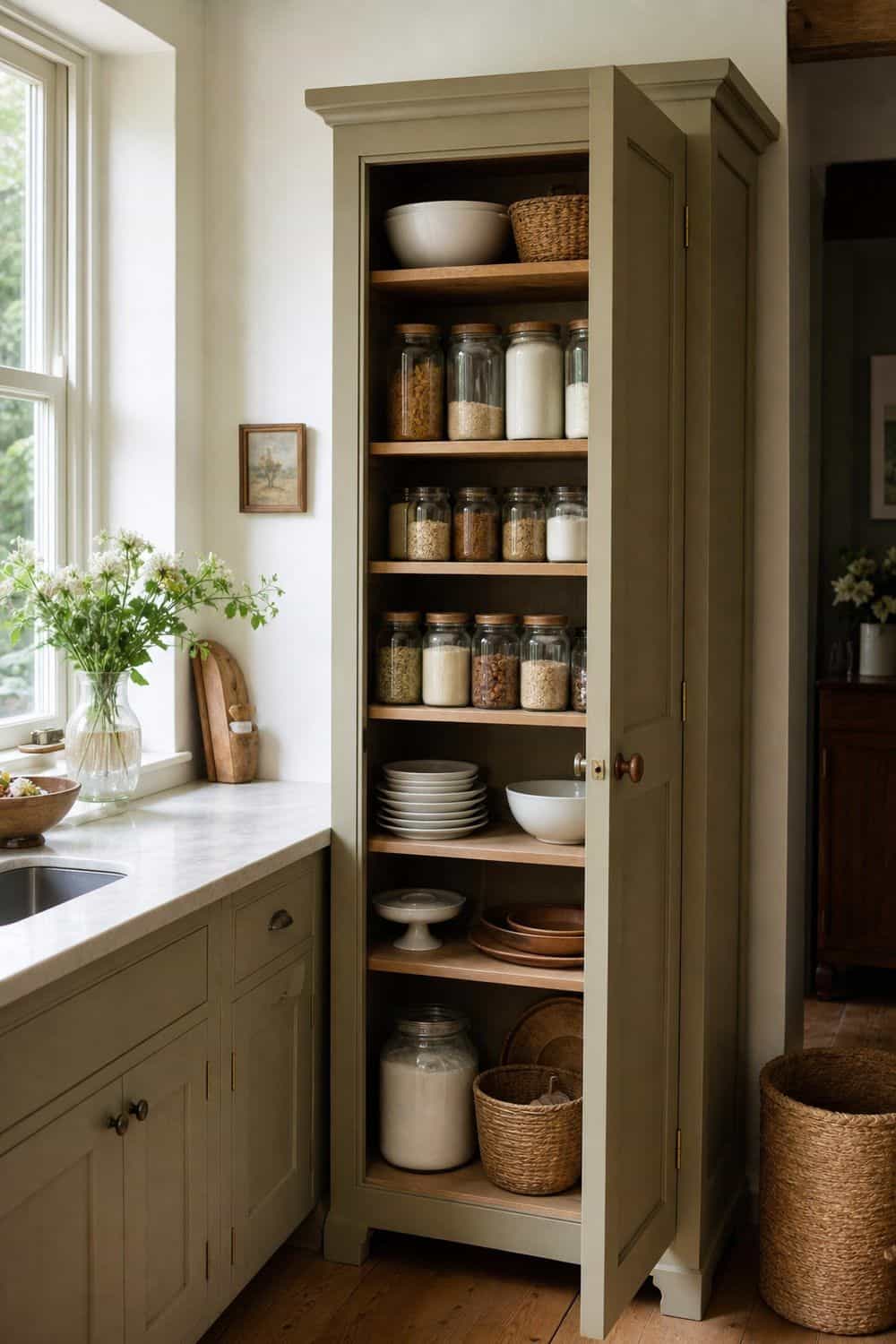
Storage can feel like furniture and still solve a real pantry problem. A freestanding pantry cupboard is one of the clearest links to unfitted European kitchens. It can hold dry goods, breakfast supplies, baking ingredients, extra dishes, or serving pieces while breaking up a wall of matching cabinetry.
Look for adjustable shelves, sturdy doors, and enough interior depth for the items you actually store. Interior door racks can help with spices, tea, oils, or small packets, but the main shelves should not become so deep that food disappears at the back.
In a newer kitchen, a painted or wood pantry cupboard can soften the room fast. It gives the space a slower, more lived-in rhythm without requiring a full renovation.
3. Marble or Quartzite Backsplash Moment

Stone feels strongest in one focused area, where the kitchen can look material-rich but still calm. A marble backsplash kitchen can feel very European when the stone is treated as part of the working room, not as a showpiece for every wall. Use it behind the range, behind the sink, or along a short counter run where the veining can catch the light without taking over.
Full-height slabs reduce grout lines, while marble tile can be more accessible and easier to fit into an existing kitchen. Honed finishes usually read softer than glossy ones, especially beside cream cabinets, wood shelves, or unlacquered brass, and quartzite or a calmer stone-look surface can give a similar material note with less daily anxiety.
4. Zellige Tile for Handmade Texture
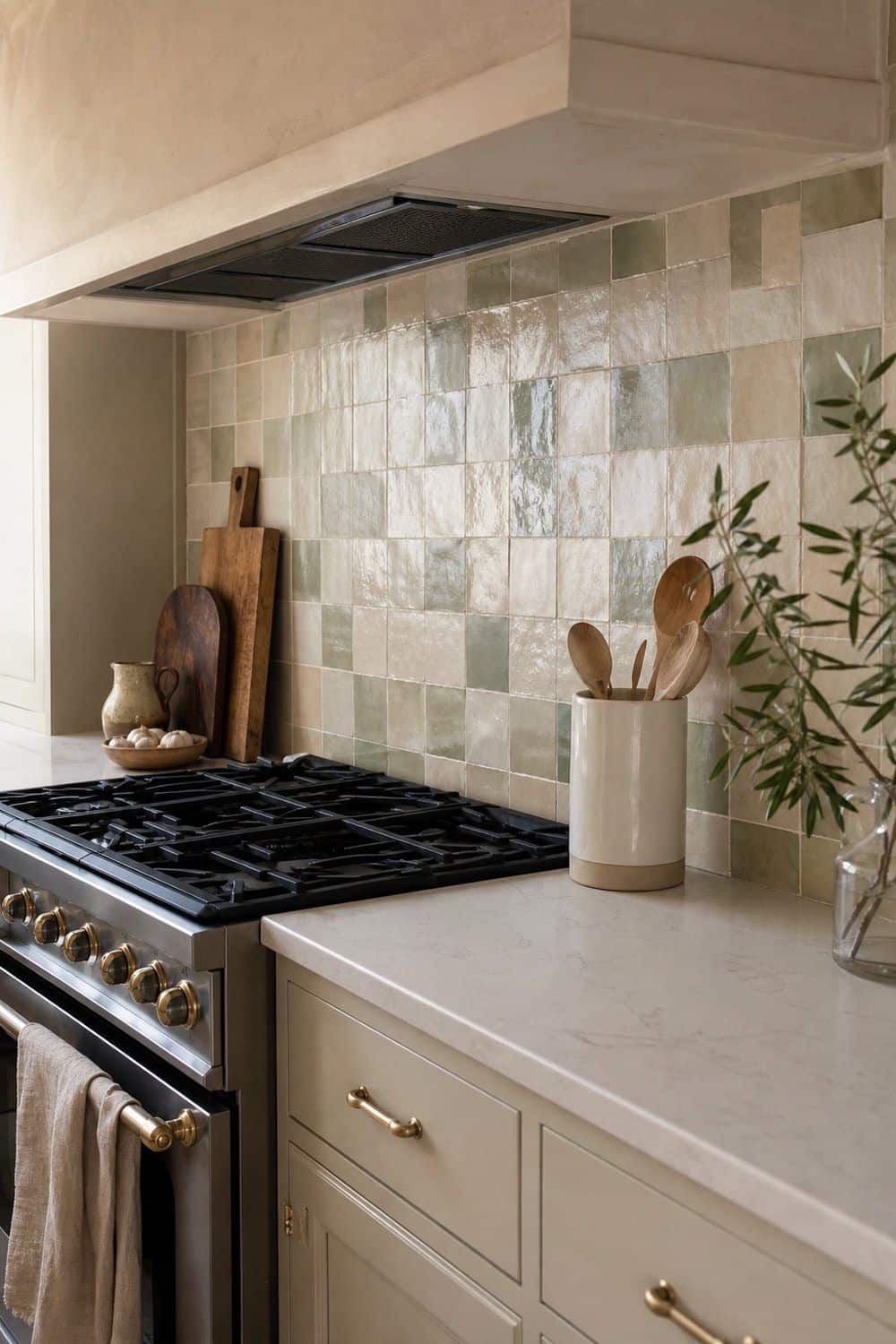
Tile variation should read as texture, not as loud pattern. Zellige tile belongs in a European style kitchen when its uneven glaze and tonal variation support the rest of the room. It works well in warm white, cream, green, clay, blue-gray, or muted stone tones.
Keep nearby finishes calm if the tile has a lot of movement. A zellige backsplash behind a range can look rich with plain painted cabinets and a simple counter, but it may feel busy beside strong veining, patterned floors, and open shelves all at once.
Think through grout and cleaning before installation. Texture is part of the appeal, but a heavy cooking zone still needs surfaces you can wipe without dread.
5. Terracotta or Terracotta-Look Flooring

Let the floor add old-world warmth under the cabinets and table. A terracotta kitchen floor gives the room instant warmth, especially with plaster walls, cream cabinets, warm wood, and brass or iron accents. True terracotta has an earthy depth that can make even a plain kitchen feel older and more grounded. The tradeoff is maintenance. Real terracotta usually needs sealing, thoughtful grout, and some comfort with natural wear. Terracotta-look porcelain can be a smart alternative if you want the color and shape with easier cleanup.
Check slip resistance, especially near sinks and exterior doors. A floor can look perfect in photos and still be frustrating if it is slick during everyday cooking. For a tighter room, a narrow terracotta-look runner pattern or a single threshold area can add the color without covering every inch of floor.
6. Cafe Table for Everyday Meals
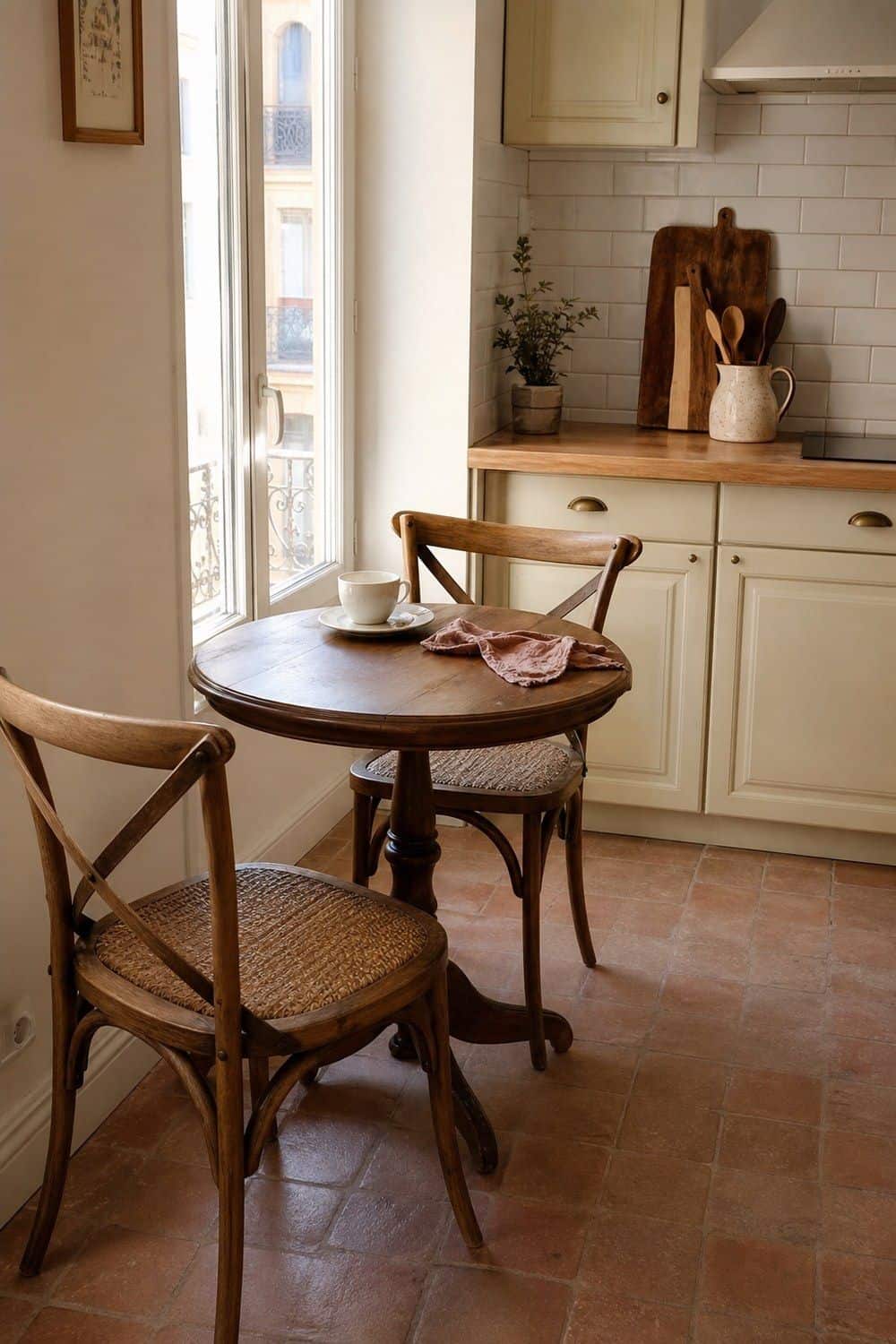
Small daily rituals deserve room instead of saving the kitchen only for prep. A round bistro table can make a kitchen feel more European because it supports coffee, breakfast, homework, wine while cooking, or a small weeknight dinner. Round tables are forgiving in tighter rooms because they soften corners and make chair movement easier, but the table still needs a clear spot near a window, open wall, or corner where it does not block pantry doors, appliance doors, or the main prep path.
If space is tight, a wall bench on one side can save clearance and make the table feel built into the kitchen rhythm. Choose chairs that tuck in neatly so the table feels inviting rather than in the way.
7. Furniture-Style Legs on an Island
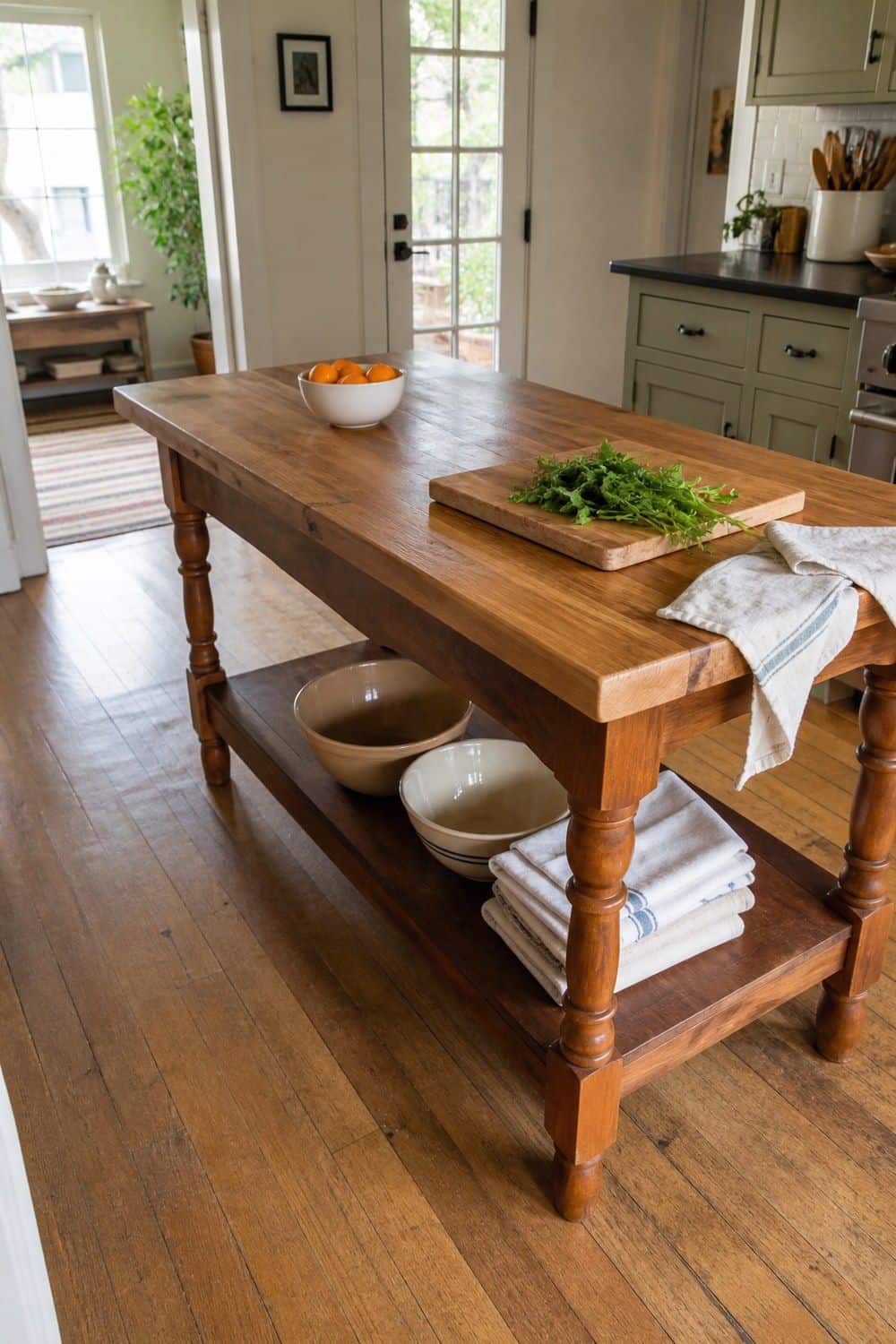
A table-like island can feel more collected than a solid cabinet block. Furniture-style legs, open lower shelves, or a table-like island base can help a kitchen feel less fitted and more collected. This is useful when the surrounding cabinets are newer or very symmetrical, especially if the island can carry mixing bowls, baskets, or linens below.
Use the island for a real job: prep, serving, mixing, breakfast, or extra landing space near the range. A freestanding worktable may be better than a heavy island if the kitchen needs flexible circulation or if the room is long and narrow.
Leave breathing room around all sides. European-inspired does not mean cramped; the worktable feeling only works if people can move naturally around it.
8. Brass Rail for Utensils and Linens
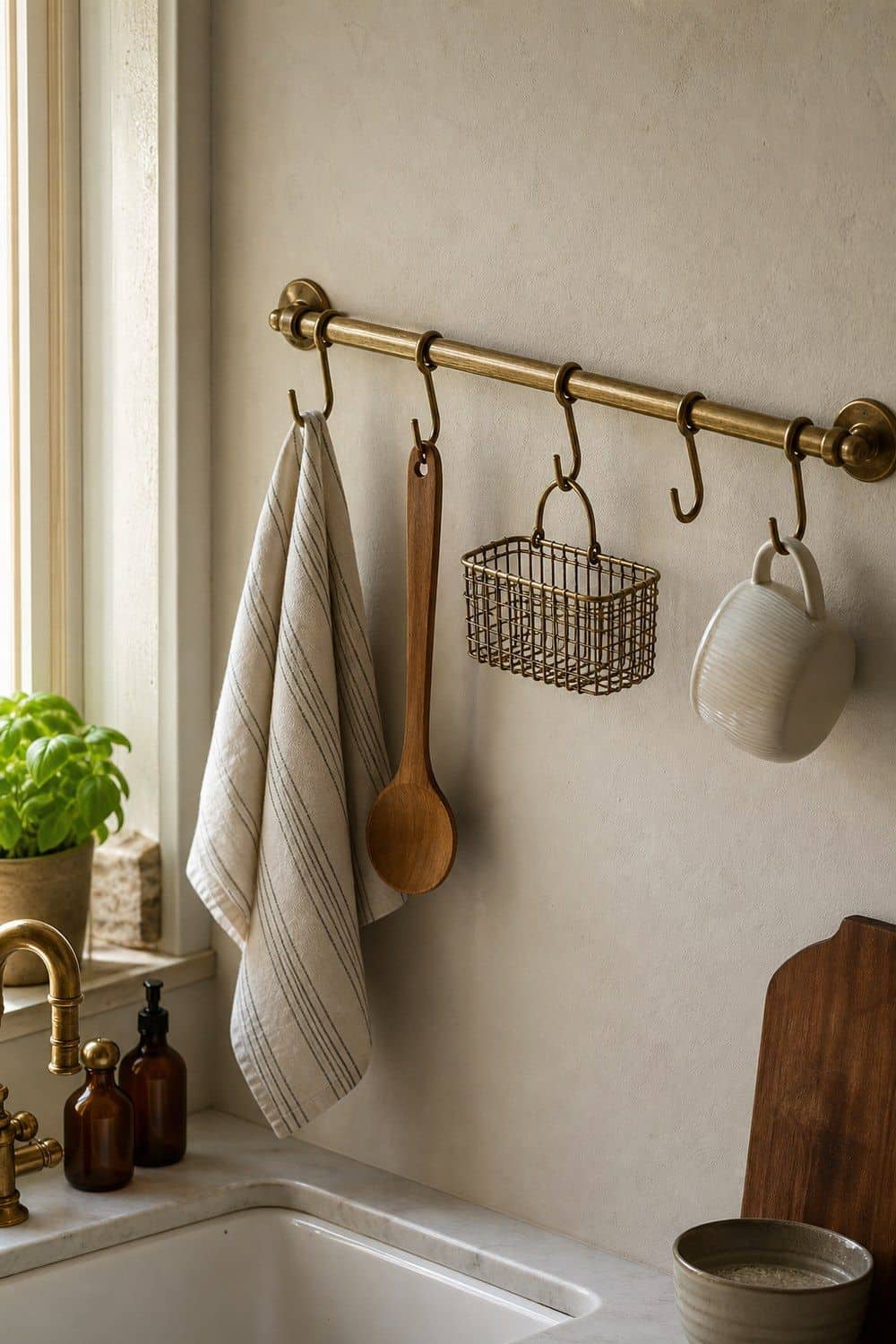
Turn a small wall area into useful old-world storage. A brass kitchen rail can hold cooking utensils near the stove, a towel by the sink, small baskets, mugs, or a few often-used tools, but its main purpose should be workflow. Mount it where your hand naturally reaches during cooking or cleanup, not on a random empty wall. Leave breathing room between hooks, choose pieces that can handle daily wiping, and avoid hanging every pan or towel you own because the rail should read as useful old-world storage, not visual clutter.
9. Plaster-Like Wall Finish

Matte wall texture can support the materials without taking over the kitchen. Soft mineral-finish walls can give a European kitchen decor scheme a quiet plaster-like backdrop. Chalky paint, limewash-style finishes, and muted matte walls feel most natural when they sit behind stronger materials like wood, brass, stone, and ceramic.
Use kitchen-safe washable alternatives where splatter, steam, and fingerprints are part of daily life. Tile or stone is still better behind a range or sink, while mineral-look walls can shine around a dining corner, pantry wall, or open doorway. Keep the finish subtle so it supports the room instead of becoming a faux-aged feature.
10. Closed Cabinets With One Open Shelf Run
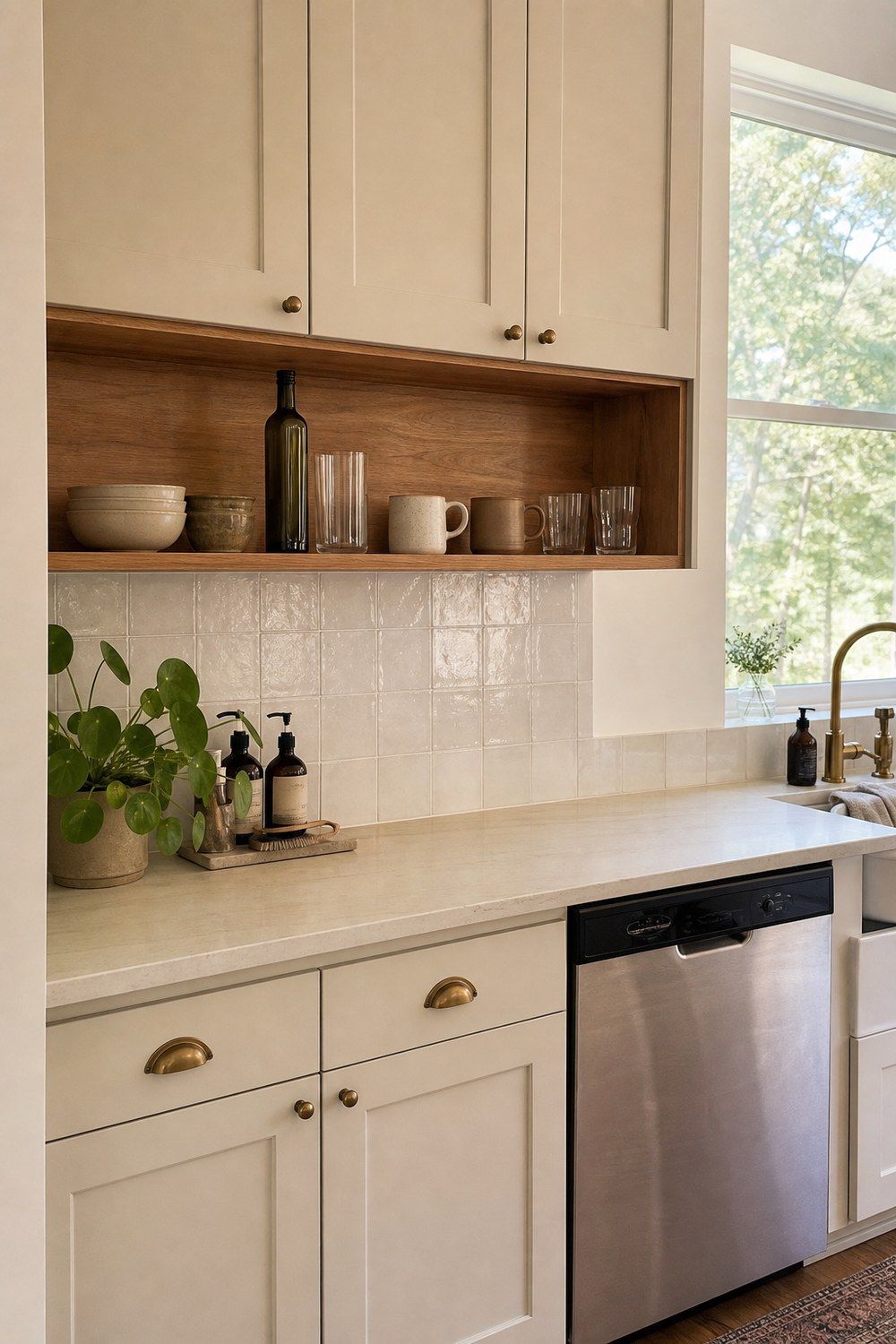
Open shelving belongs with daily pieces, not as a replacement for all storage. One open shelf run can make a kitchen feel lighter and more collected when it holds things you actually use. Bowls, glassware, olive oil, coffee cups, and a few ceramics are better choices than decorative stacks that gather dust. Keep the shelf near the dishwasher, sink, or coffee zone so it earns its place.
Keep bulk storage, plastic packaging, extra appliances, and rarely used serving pieces behind closed doors. That mix is what keeps the room useful rather than chaotic.
Install shelves at a reachable height and leave visual gaps between objects. Empty space is part of the look, especially in a tighter kitchen.
11. Warm Metal Finishes With Patina
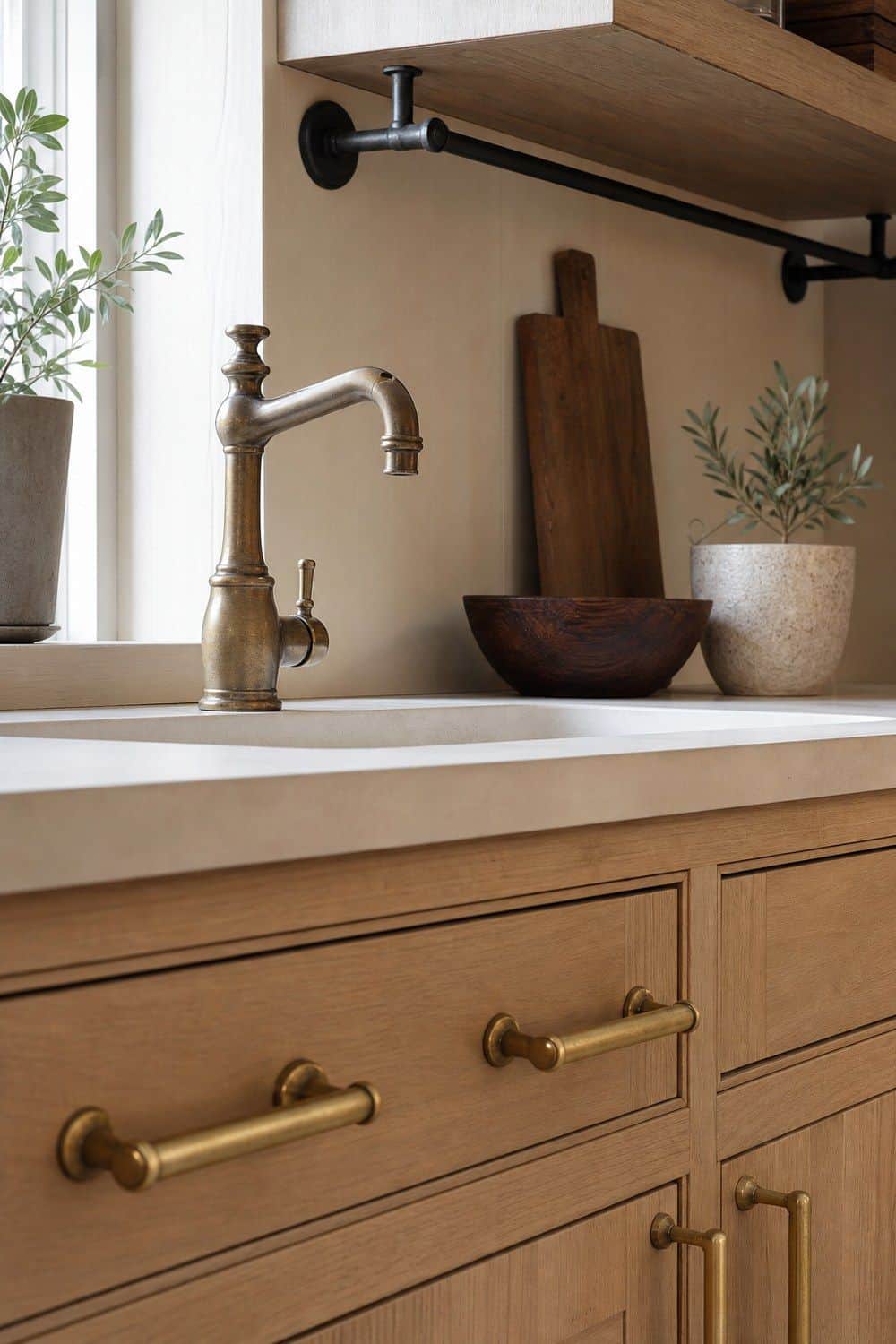
Let hardware add age, grip, and depth without turning into mixed-metal clutter. Unlacquered brass, aged brass, iron, and bronze can make cabinets feel less flat and more furniture-like, but restraint is what keeps the mix from looking random. Brass pulls, an iron rail, and a stainless appliance can work together when they repeat deliberately; five different metals can make the kitchen feel assembled from leftovers. Test the shape in your hand if possible because a pretty pull that is awkward during cooking will become annoying quickly. Use the finish in a few confident places rather than sprinkling it everywhere.
12. Range Hood Built Into the Room
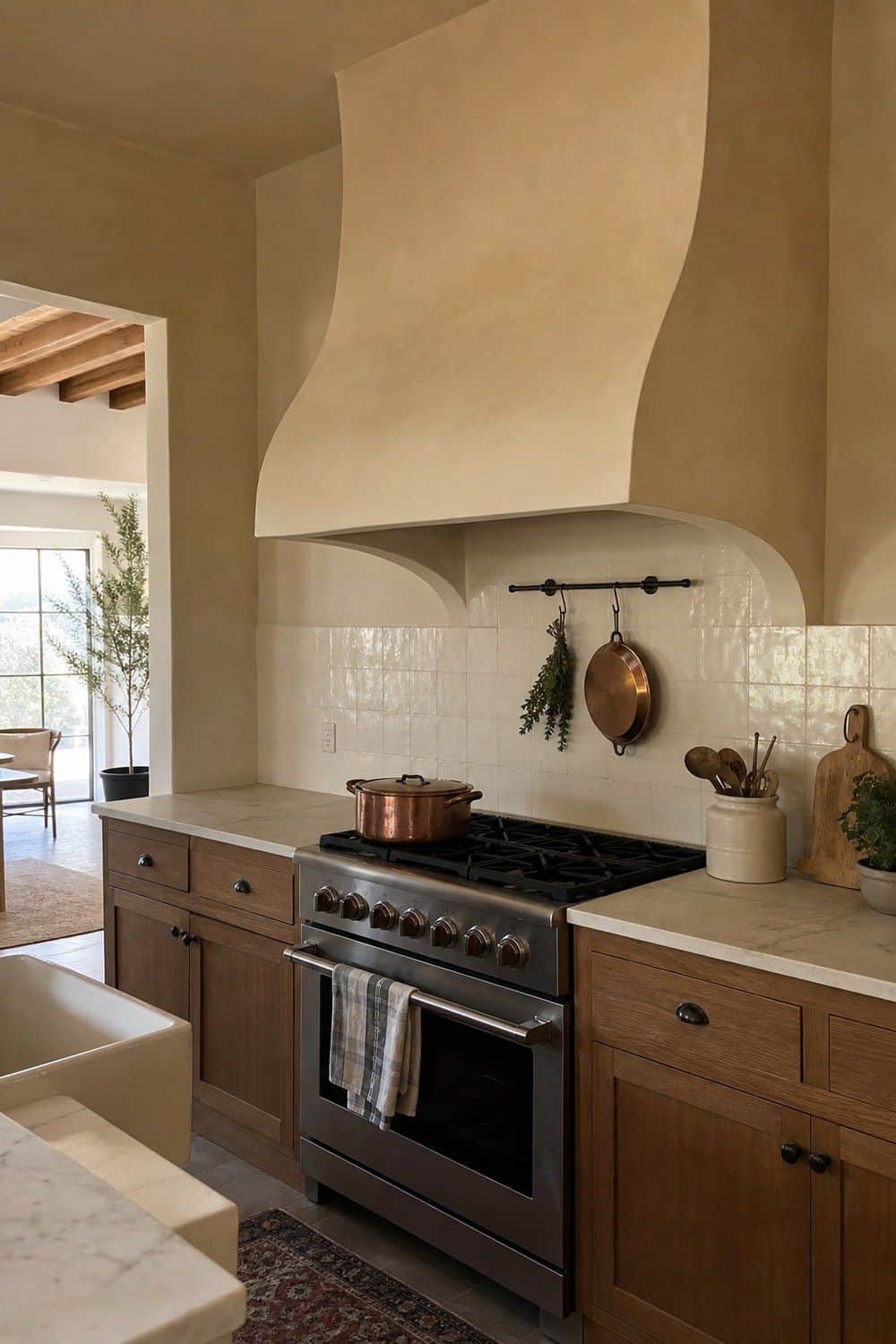
Treat the hood as architecture instead of a shiny appliance box. A plaster range hood, tiled hood, wood-trimmed hood, or softly curved hood can anchor a European kitchen without making the range wall feel too commercial. It gives the cooking area a built-in presence. Scale is everything. A hood that is too bulky can crowd the room, while one that is too small may look like an afterthought. Check clearance, ventilation requirements, and sightlines before choosing the shape.
For a no-renovation version, painting an existing hood surround to match the wall or cabinets can make it feel quieter. If the hood wall already has strong tile or stone, keep the hood shape plain so the two features do not compete.
13. Small Antique Cabinet on the Counter
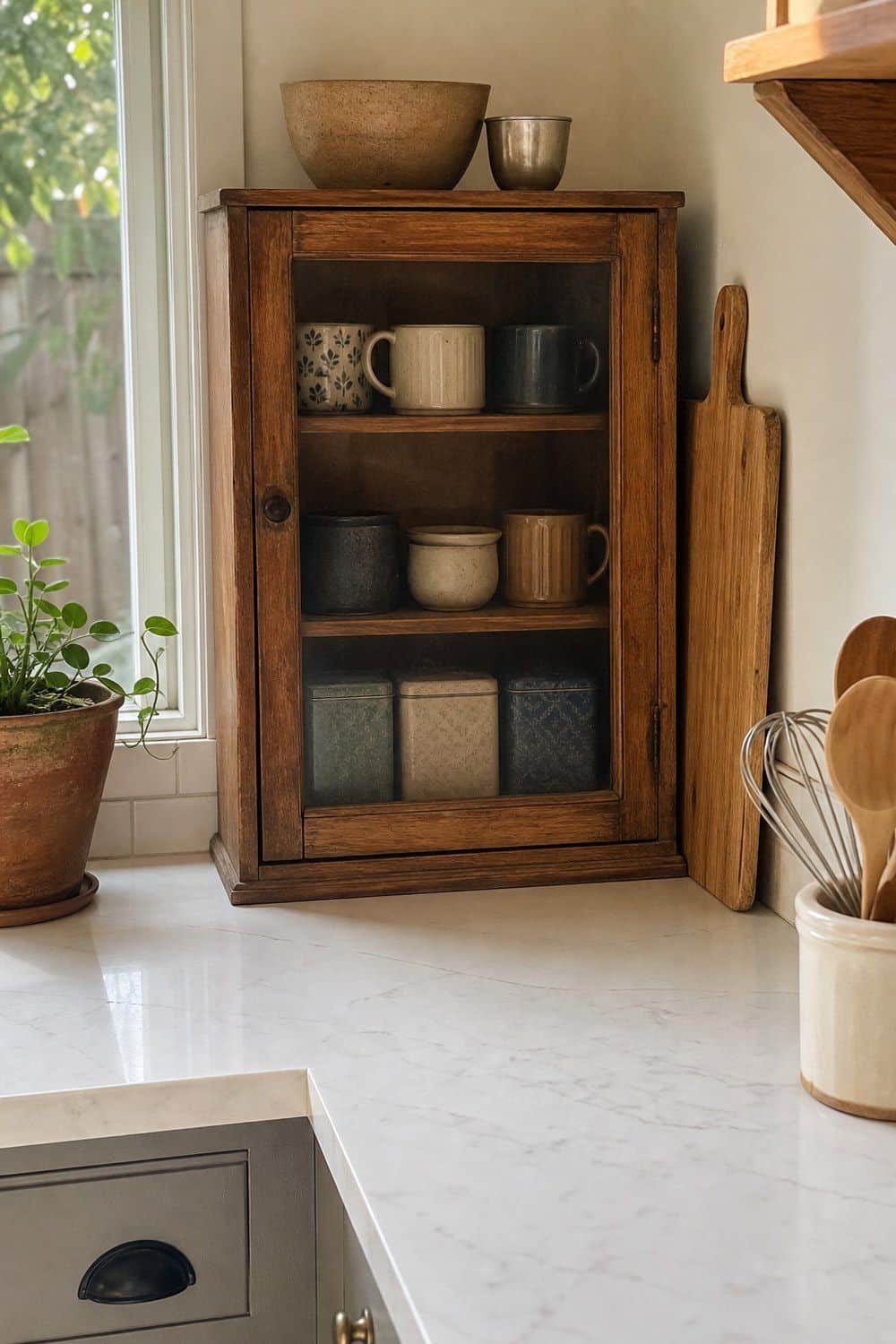
One small aged piece can provide useful storage, not just atmosphere. A small antique countertop cabinet can hold mugs, tea, spices, glassware, napkins, or coffee supplies. It adds history in a controlled way, which is often better than trying to make every cabinet look old.
Measure depth carefully and place it outside your main chopping zone. If the cabinet eats up the only prep counter, it will feel like clutter no matter how charming it looks. Keep the contents useful and tidy because a glass-front antique cabinet with random objects inside can make the whole counter feel busy.
14. Built-In or Hidden Pantry Wall
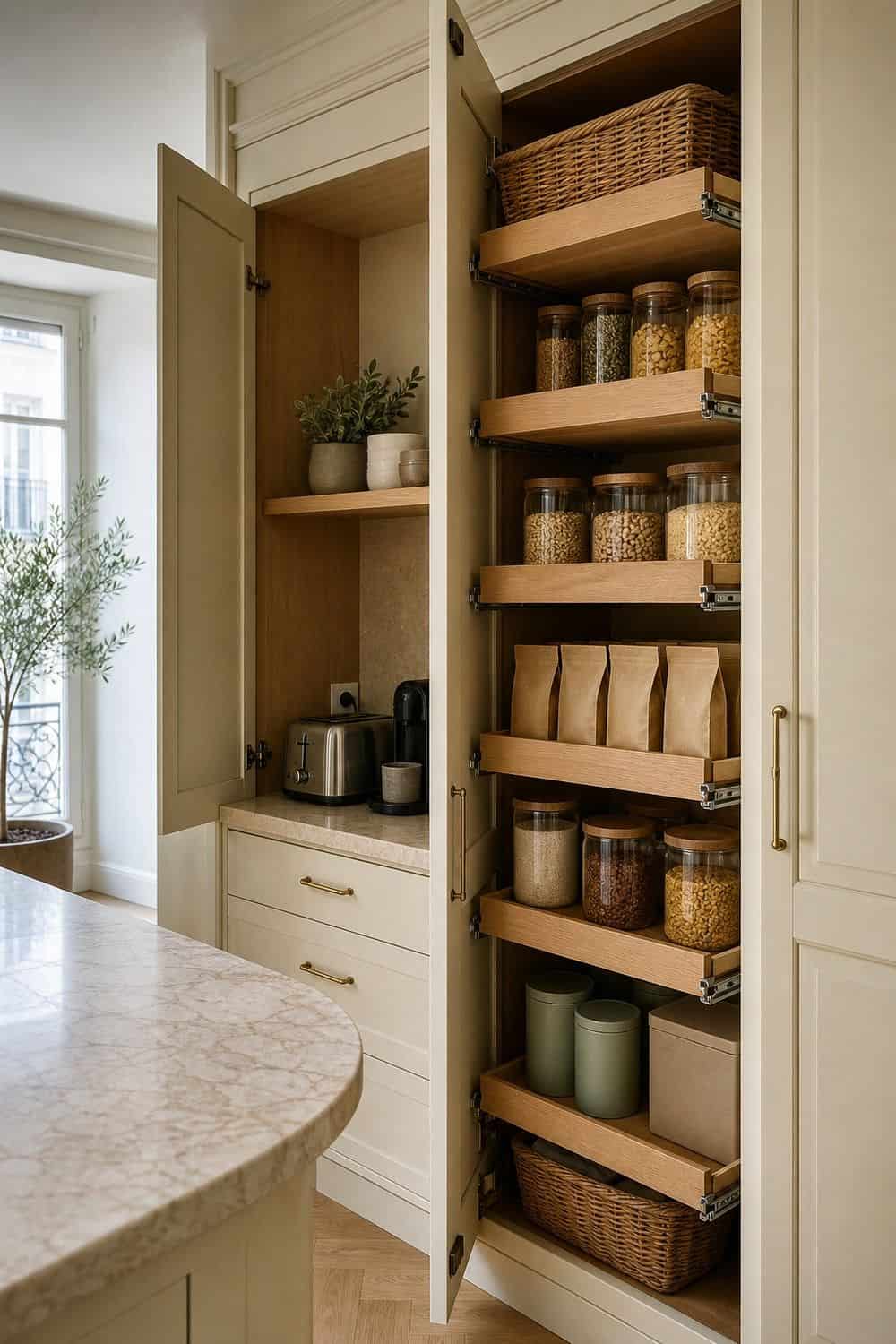
Balance collected style with modern food storage that works hard. Not every European pantry idea needs to be freestanding or antique. A built-in pantry wall with tall doors, pull-out shelves, breakfast zones, and appliance storage can look quiet while handling the messier parts of daily cooking. Use labeled zones inside rather than adding more visible containers outside. Baking supplies, oils, snacks, coffee, lunch items, and backstock all need their own logic if the kitchen is going to stay calm.
This is a good place to hide the modern pieces that do not fit the collected look, such as small appliances, extra packaging, and bulk pantry items.
15. Checkerboard in a Subtle Way
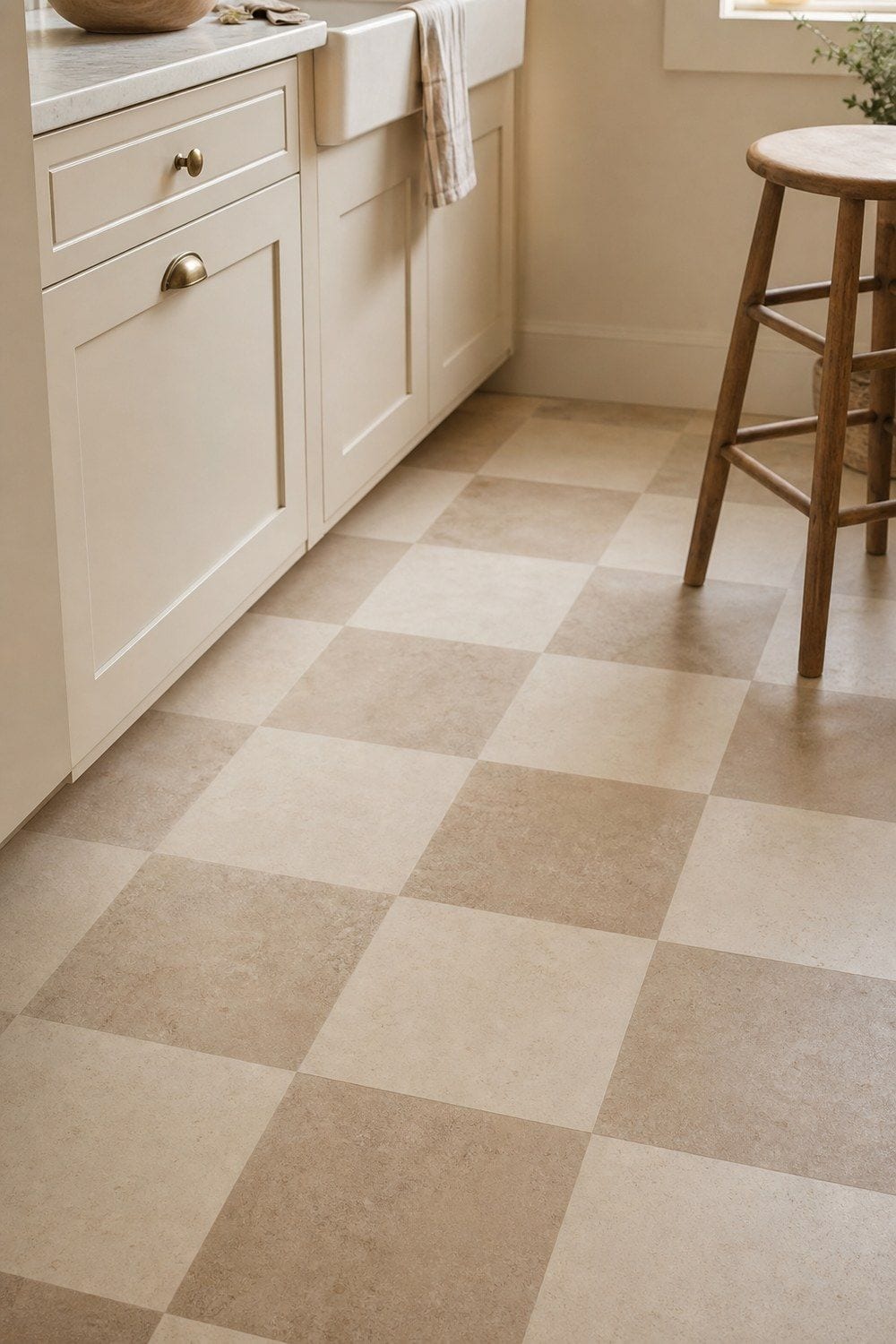
Soften the classic pattern with muted colors and the right scale. Checkerboard can feel European when the contrast is softened. Instead of sharp black and white, try stone and cream, terracotta and ivory, muted gray and warm white, or clay and limestone tones.
Tile size changes the mood. Larger squares feel calmer and more architectural, while smaller checks can become busier. If the floor is too big of a commitment, a small backsplash zone or mudroom-adjacent kitchen area can carry the pattern more gently. Keep grout close to one of the tile colors so the pattern does not become too graphic.
16. Cafe Curtains for Soft Privacy

A small textile detail can soften windows without heavy drapery. Linen cafe curtains work beautifully in tight kitchens, street-facing rooms, and sink windows where you want privacy without blocking all the light. Covering only the lower half keeps the room bright while softening hard cabinets and tile.
Plain linen, cotton, a subtle stripe, or a small check can all fit, but the fabric should be washable near the sink or breakfast area. Use a simple rod so the curtain feels like an easy household detail instead of a costume piece.
17. Coffee or Espresso Corner
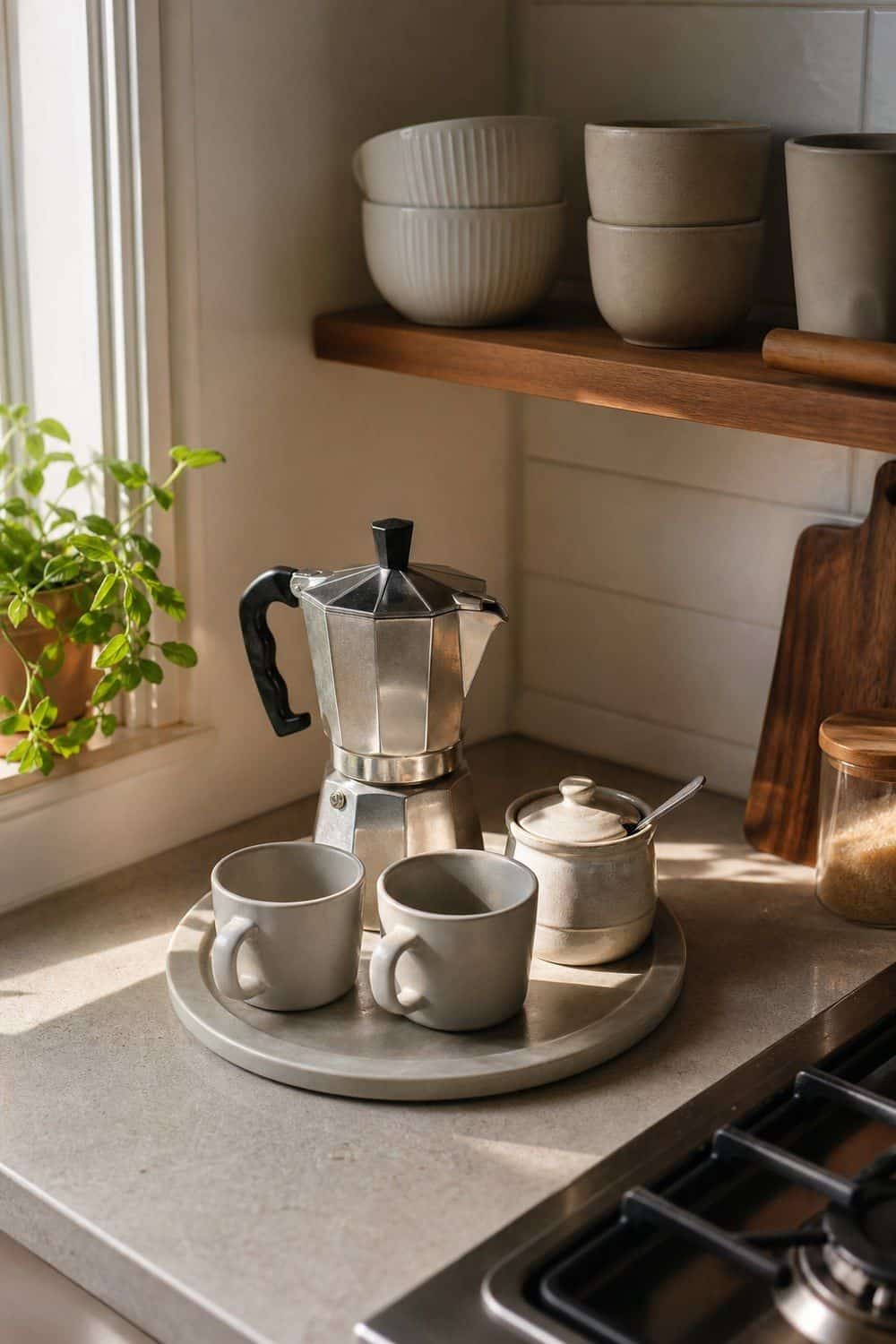
Give the morning routine a small, useful home without building a cluttered station. A stovetop espresso maker, a few cups, a sugar bowl, and a small tray can create a European-feeling coffee corner without turning the counter into a display shelf. The setup should serve the routine first. Place it near the pantry, breakfast table, or an outlet if you use a grinder or electric kettle. Keep extra beans, filters, and refills behind a cabinet door so the visible area stays calm.
If you have very little counter space, use a shallow shelf above the coffee maker for cups instead of spreading items sideways. The best version feels like a morning habit, not a themed coffee bar.
18. Glass-Front Cabinets for Collected Dishes

Show daily dishes with more control than open shelving. Glass-front cabinets are a useful middle ground between fully closed cabinets and open shelves. They let dishes contribute to the collected kitchen feeling while still protecting them from dust and cooking grease.
Use them for daily plates, serving bowls, glasses, or a few ceramic pieces. Ribbed, seeded, or restoration-style glass can soften the view if you do not want every stack to be perfectly visible. Avoid crowding the shelves behind the doors because glass fronts make storage visible, so the inside needs enough space to breathe.
19. Art That Looks Collected Over Time
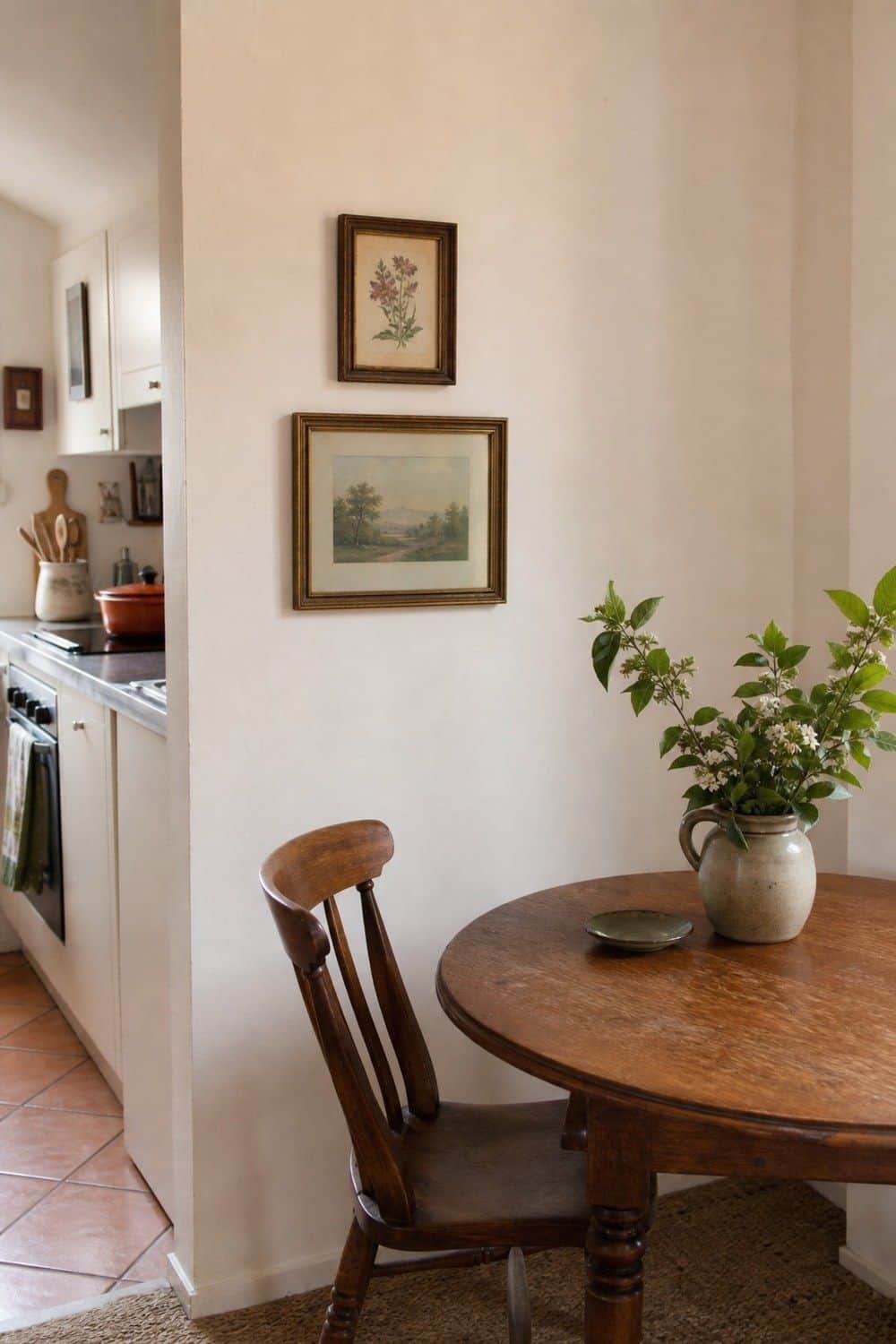
One or two pieces of art can make the kitchen feel lived in, not decorated for a theme. Small landscapes, market prints, oil-style pieces, framed menus, and botanical art can make a kitchen feel like part of a home rather than a purely utilitarian room. The best pieces look like they could have been found over time.
Keep art away from heavy steam and grease. A dining nook wall, shelf ledge, pantry wall, or narrow blank space near a doorway is usually safer than the wall directly beside the range. One wall is enough because filling every blank spot can push European kitchen decor into theme-room territory.
20. Warm Wood Counter or Prep Table
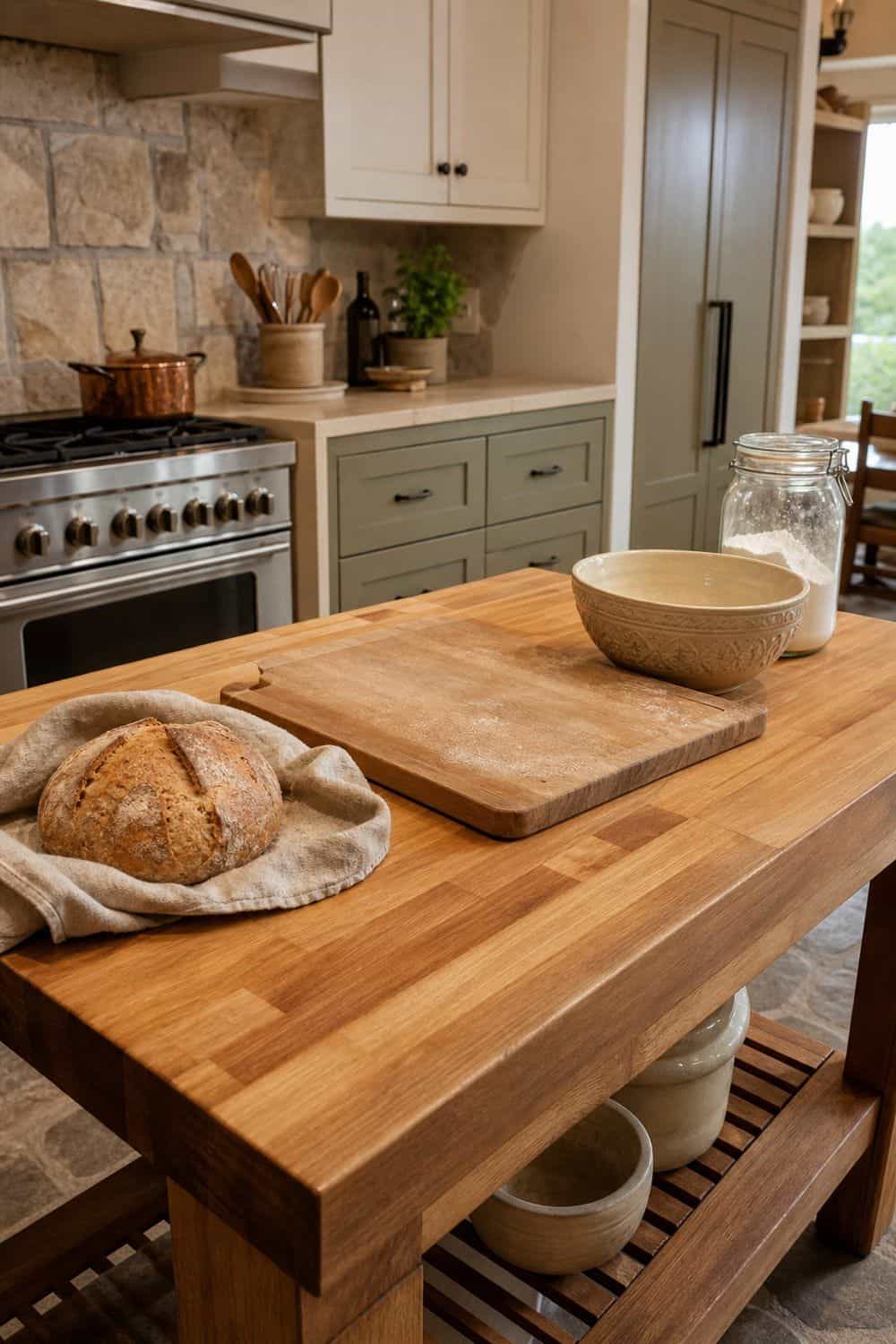
Wood belongs where it helps with prep, landing space, or bread and pastry work. A warm wood counter or butcher block work table can soften stone, tile, and painted cabinetry while giving the kitchen a real surface for mixing bowls, chopping boards, bread prep, or setting down groceries.
Wood needs care, so oil it when needed, wipe spills quickly, and use separate cutting boards if the surface is not meant for direct chopping. If a full wood counter is too much commitment, a small worktable can bring the same feeling with more flexibility and a lower-commitment footprint.
21. Slim Plate Rack or Dish Rail
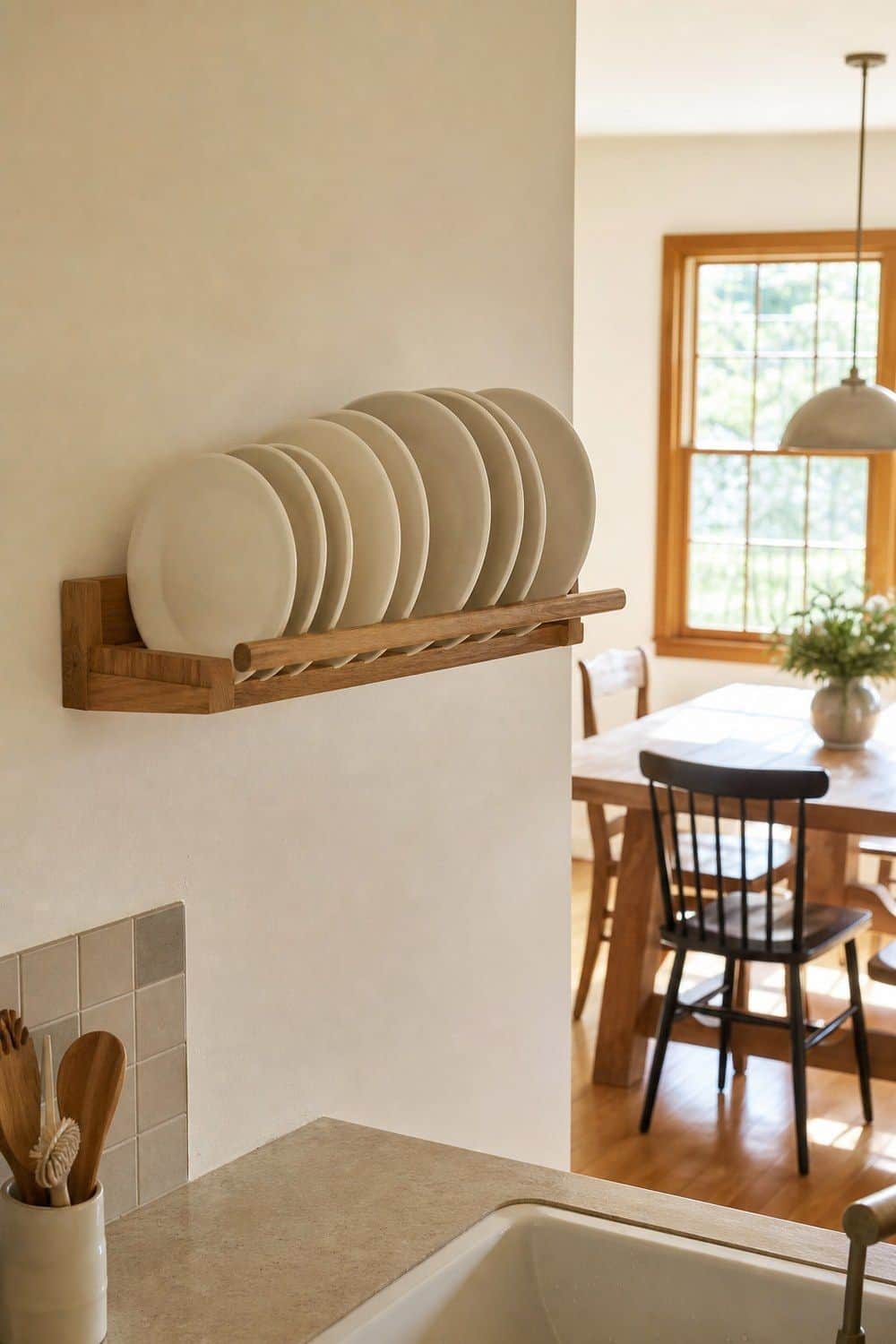
Everyday plates can be useful and visible in a controlled way. A slim wall-mounted plate rack can feel very European when it holds the plates you actually reach for. Place it near the sink, dishwasher, or dining area so the storage supports the way dishes move through the kitchen.
Depth and mounting matter. Plates need to sit securely, and the rack should not project so far that it interrupts a walkway or prep surface.
Keep the number of visible plates modest. A dish rail is charming when it serves daily life and fussy when it becomes a wall of fragile display pieces.
22. Warm Tonal Paint Instead of Stark White
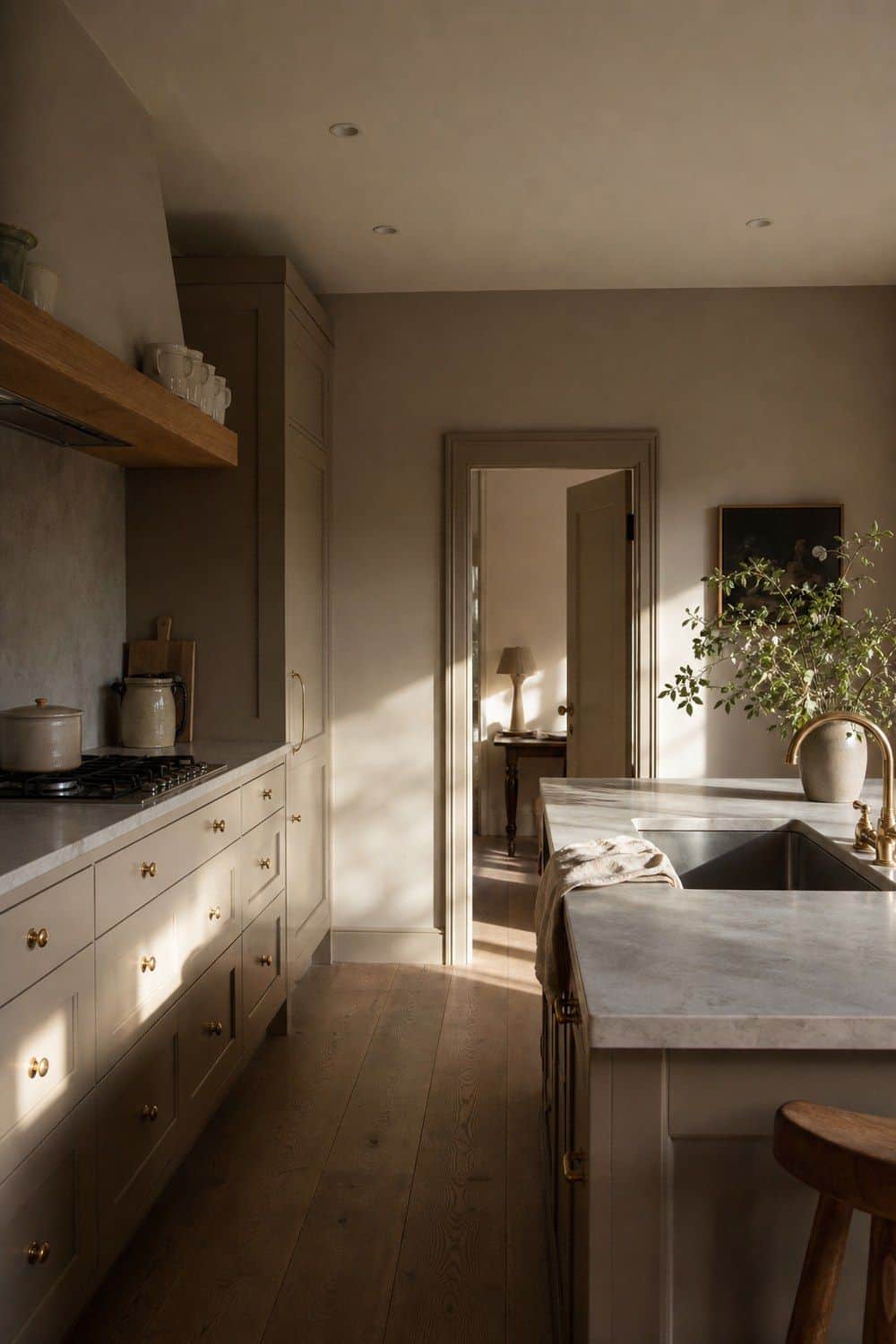
Color should feel aged, softened, and connected to natural materials. European kitchens rarely need a bright white box to feel fresh. Putty, mushroom, cream, clay, faded blue, olive, warm greige, and soft stone colors can make cabinetry and walls feel more settled. Tonal color works especially well with old ceramics, brass hardware, terracotta kitchen floor tile, wood shelves, and marble or quartzite. The palette should feel connected rather than perfectly matched.
Test paint in morning and evening light. A color that looks gentle on a swatch can turn muddy or too yellow once it meets your flooring and counters. Lower-commitment versions can start with wall color, a painted freestanding piece, or even a warmer backsplash-safe peel-and-stick sample before bigger cabinet changes.
23. Arched Shelf or Tile Niche

Turn a small architectural detail into useful storage. A tiled niche or arched shelf can hold oils near the stove, coffee cups, cookbooks, salt, or a few ceramics. It feels European when it looks built into the room and supports a real kitchen routine. Depth is important. A niche that is too shallow becomes decorative only, while one that is too deep can gather grease and dust. Line it with tile, plaster, or stone that already appears elsewhere in the kitchen so the detail feels integrated instead of random.
24. Quiet, Integrated Appliances

Let modern appliances work hard without visually dominating the room. European-inspired kitchens often feel calmer when large appliances blend into the cabinetry. A panel-ready dishwasher, integrated fridge, under-counter appliance, or appliance garage can keep the material palette from being interrupted by too much shiny metal.
You do not have to hide every appliance. One sculptural range, espresso machine, or kettle can stay visible if it supports the design and earns its counter space.
For a budget version, use consistent appliance finishes and reduce the smaller visible gadgets first. A quiet counter often does more than a hidden refrigerator in a busy kitchen.
25. Collected Look Around Daily Use
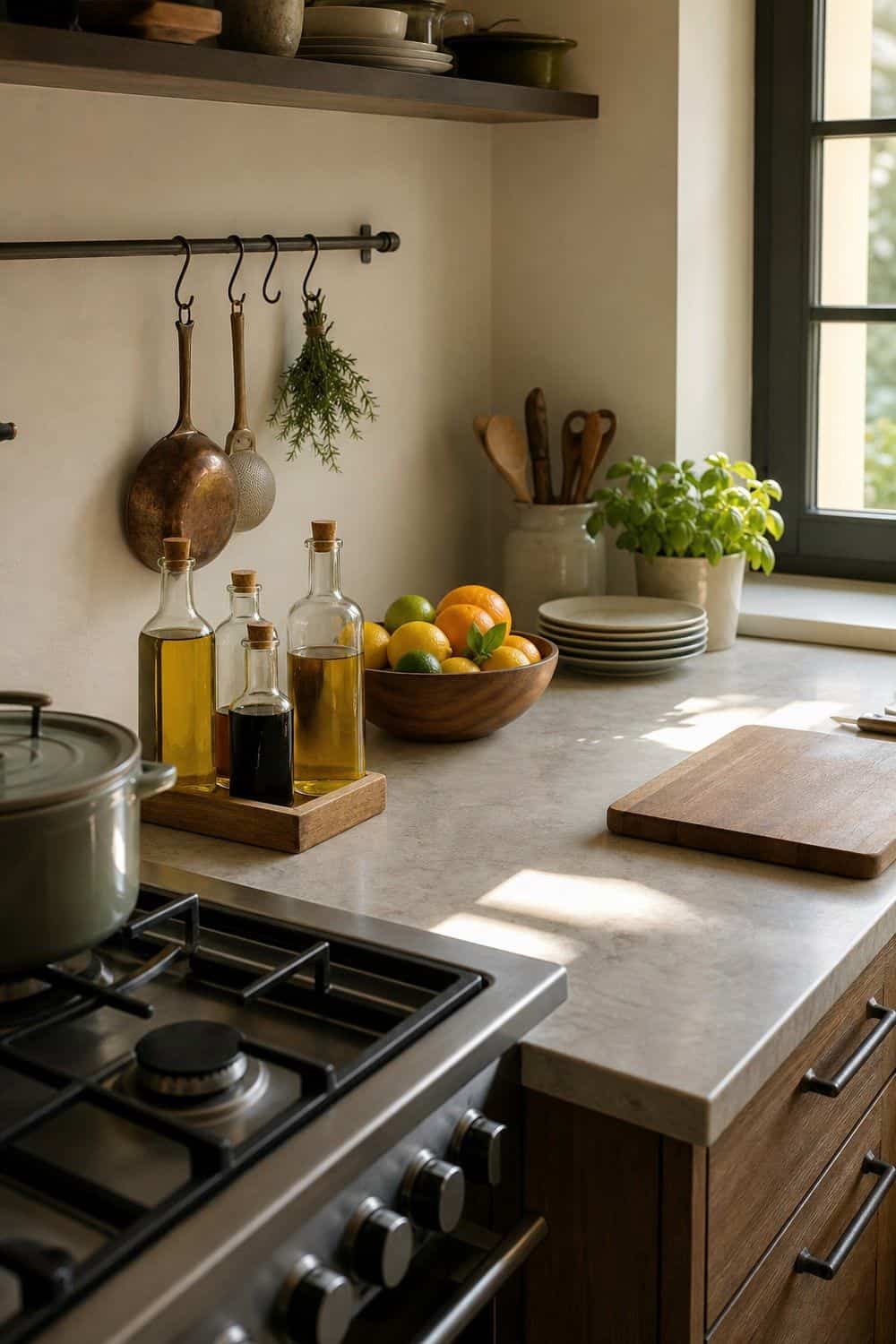
Every visible object should support cooking, serving, storage, or cleanup. The collected look only works when the kitchen still functions. A tray for oils, a bowl for fruit, a stack of plates, a rail of utensils, or a small antique cabinet can all belong if they support a daily habit. Rotate open-shelf pieces instead of letting everything stay visible forever, keep prep space clear, wipe rails and shelves regularly, and move purely decorative objects out of splash zones. That is what keeps the room old-world, layered, and personal while still being easy to cook in on a Tuesday night.
If a piece is only there to announce a style, remove it for a week and see whether the kitchen works better without it.
Renovation and No-Renovation Ways to Get the Look
Full renovation changes include flooring, backsplash, cabinetry, a plaster-style hood, integrated appliances, and a real pantry plan. Those choices shape the architecture of the kitchen and can make the European influence feel built in.
No-renovation swaps can still change the mood. Try cafe curtains, warm hardware, a brass rail, a small shelf, framed art, one freestanding cabinet, a bistro table, or a more material-rich countertop arrangement. In an American builder-grade kitchen, it is usually better to add one honest material accent and remove decorative clutter than to fake age everywhere.
Material Maintenance Notes
Marble, terracotta, zellige, brass, plaster, and wood all bring texture, but each needs a little care. Marble can etch, terracotta may need sealing, zellige has uneven surfaces and grout, brass patinas, plaster-style walls need the right finish for wet zones, and wood counters or tables need oiling and quick wipe-downs.
That maintenance is not a reason to avoid the materials. It is a reason to place them carefully, choose the right version for your household, and avoid using delicate finishes in the messiest zones if you know they will bother you.
Frequently Asked Questions
What makes a kitchen European style?
A European style kitchen usually feels material-rich, useful, and collected rather than perfectly matched. Common elements include natural stone, plaster-like walls, tactile tile, freestanding or furniture-style storage, patinated hardware, modest dining, useful open shelving, and everyday objects that look good because they are used often.
How can I make my kitchen look European?
Start with changes that add material and age without creating clutter. Warm paint, patinated cabinet hardware, one stone or tile feature, cafe curtains, a brass rail, open daily storage, vintage-style art, and one antique or freestanding piece can all make a kitchen look more European without a full renovation.
What colors are common in European kitchens?
Common European kitchen colors include cream, warm white, putty, mushroom, olive, faded blue, terracotta, clay, walnut, stone gray, and soft brown. The palette usually feels a little softened, so even stronger colors look grounded beside wood, stone, tile, brass, or iron.
What tile suits a European kitchen?
Zellige, terracotta, limestone-look porcelain, checkerboard tile, handmade ceramic tile, and stone-look tile can all work. The best choice depends on the zone: floors need slip resistance and durability, while backsplashes need a surface and grout plan that can handle cooking splatter.
Are European kitchens usually small?
Many European kitchens are modest in scale, which is why efficient storage matters so much. Smaller dining tables, wall rails, one open shelf, integrated appliances, freestanding pantry cupboards, and practical pantry planning can make a tighter kitchen feel collected instead of crowded.
How do you mix old and new in a European kitchen?
Mix old and new by repeating materials, limiting metal finishes, and giving each visible piece a job. One antique cabinet, vintage art piece, wood table, or aged brass detail can sit beside modern appliances if the appliances stay visually quiet and the palette feels connected.
What is the difference between European and farmhouse kitchen style?
European kitchen style can include farmhouse elements, but it is usually less theme-driven. It often leans more toward stone, plaster, tile, patina, modest dining, freestanding furniture, and mixed regional influences rather than one rustic farmhouse look.
Can I create a European kitchen without renovating?
Yes. Focus on hardware, lighting, textiles, wall rails, framed art, countertop organization, cafe curtains, open shelves, and a freestanding pantry or cabinet. These changes can make the kitchen feel more collected while keeping the existing layout, cabinets, and appliances.
Final Thoughts
European kitchen ideas feel strongest when they make the room useful, layered, and personal without pretending to be something it is not. Natural materials, modest dining, freestanding storage, warm metals, and tactile tile all help, but the real difference is how they support daily cooking.
Start with one material or storage change that solves a real problem, then build slowly. A collected kitchen should feel lived in because it is used well, not because every corner has been decorated.
Last update on 2026-09-18 / Affiliate links / Images from Amazon Product Advertising API