
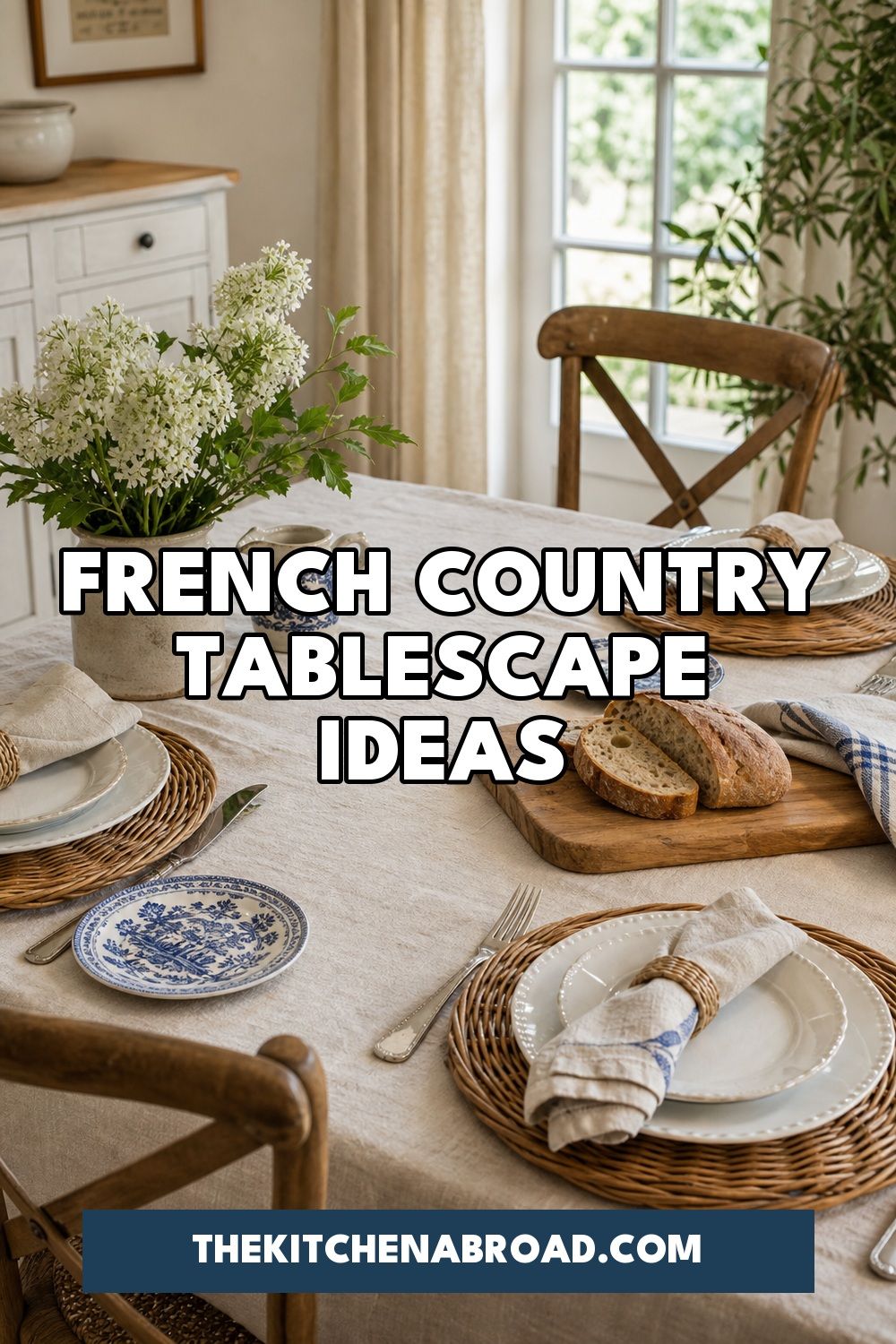
The best French country tablescape ideas balance rustic materials with elegant details: washed linen, rattan chargers, cream plates, one blue-and-white accent, amber glassware, aged brass candleholders, bread, herbs, fruit, wine, and low flowers. Keep the centerpieces low, use unscented candles, and leave enough open space for platters, pitchers, and guests’ glasses. The table should feel relaxed and generous, not overly formal or crowded.
A French country table works because it does not choose between rustic and elegant. Linen, rattan, wood, bread, herbs, and fruit make it feel grounded, while cream crockery, amber glass, aged metal, patterned plates, and candlelight give it polish.
The prettiest version still leaves room for dinner to happen. Think soft layers, a little patina, low pieces that people can see over, and serving pieces that make bread, wine, salad, and cheese feel like part of the table instead of an afterthought.
Top Recommended Products


You Might Also Like These Blog Posts
- French Country Dinner Party Ideas
- Tablescape Ideas
- European Summer Tablescape Ideas
- Rustic Farmhouse Dinner Party Ideas
- Cottagecore Tablescape Ideas
1. Washed French Linen
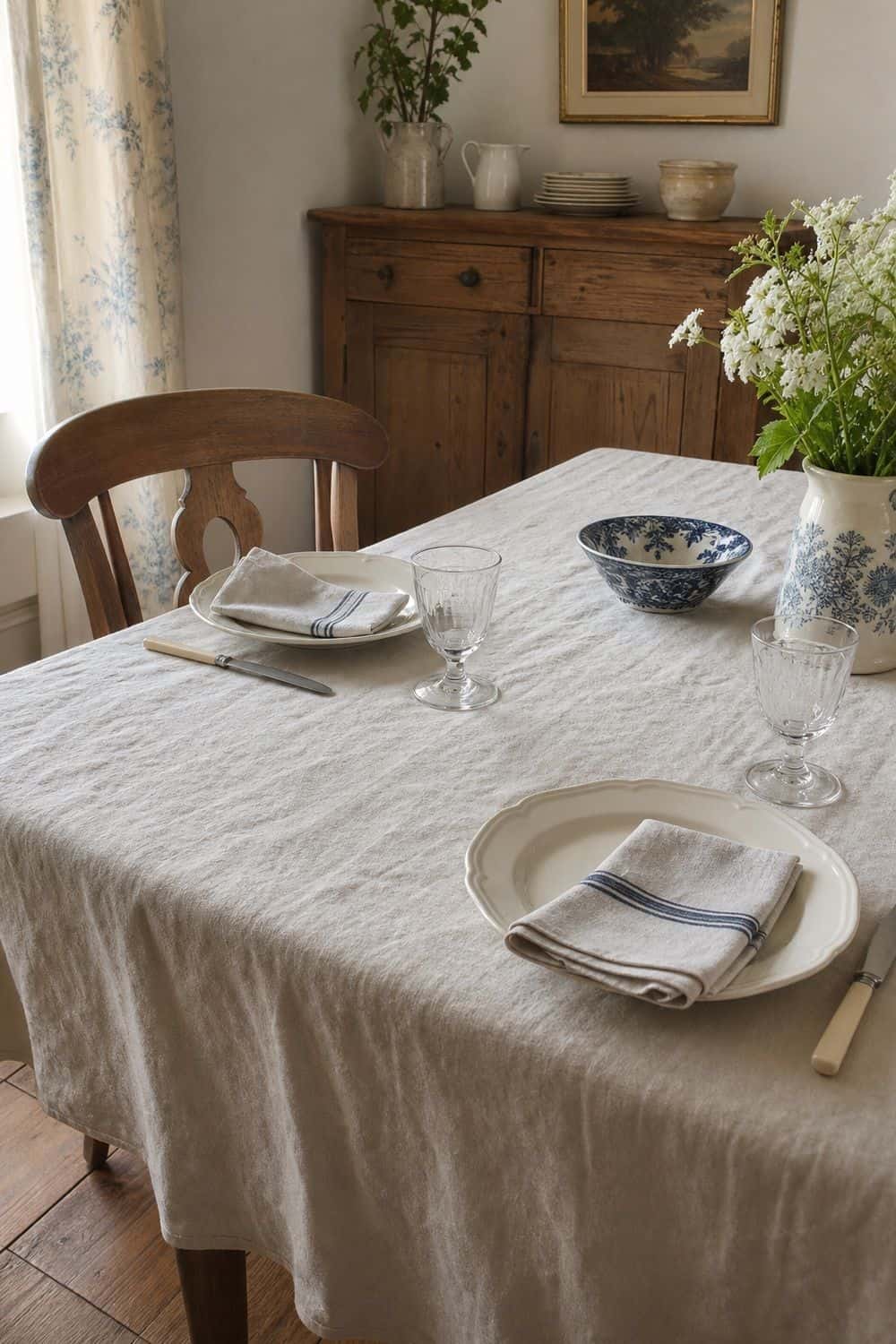
Washed linen gives the whole table that relaxed French countryside feeling before you add a single plate. Choose flax, oatmeal, cream, faded blue, or warm white, and let the cloth fall naturally instead of pressing every wrinkle out of it. The little slouch is part of the charm, especially once you add rattan, stoneware, bread, herbs, and candlelight. If the table is busy with food, keep the linen plain; if your dishes are simple, a subtle stripe or frayed edge can carry the mood without making the setting feel dressed for a showroom.
2. Rattan Chargers for Country Texture
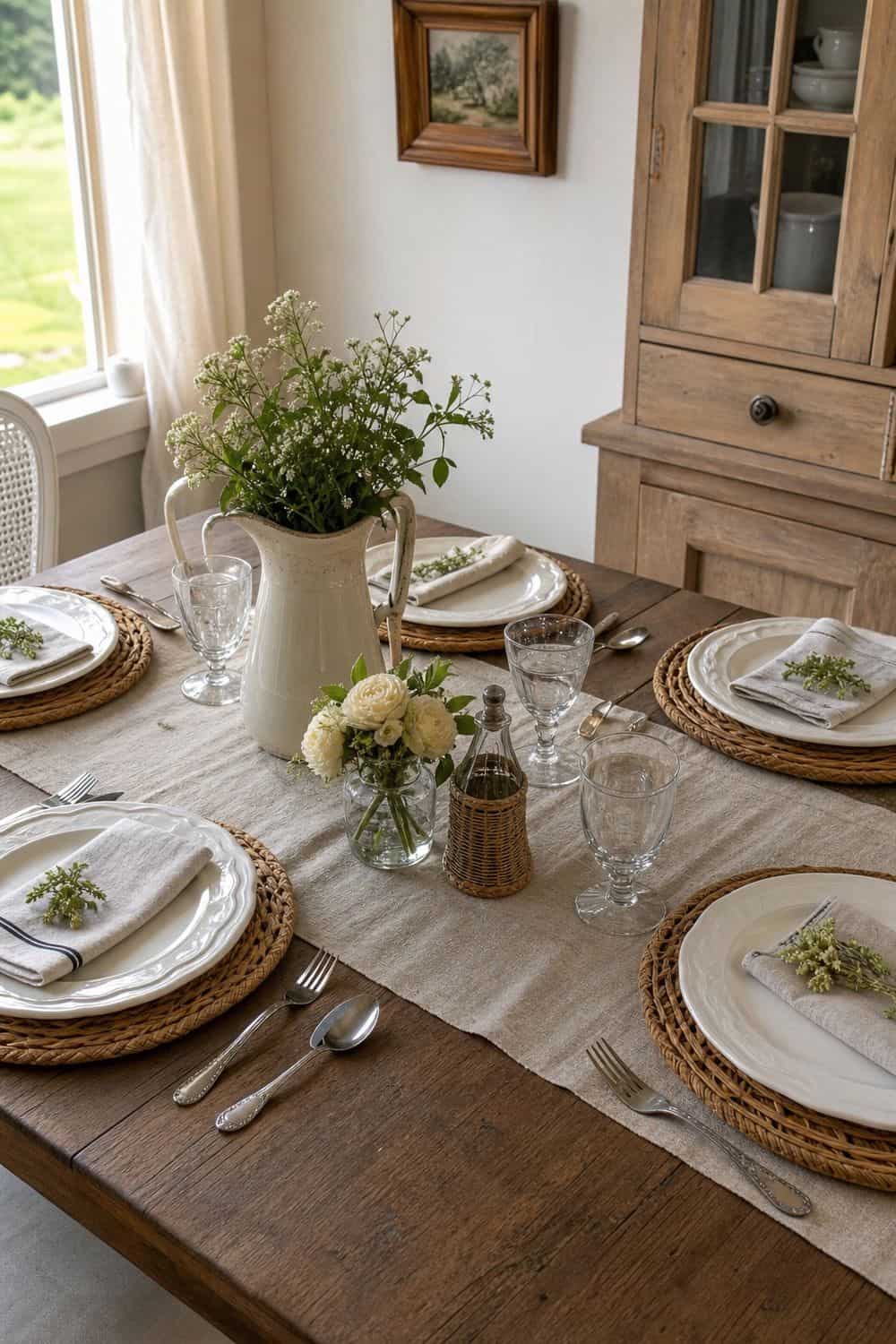
Rattan chargers are an easy way to make cream plates feel grounded rather than formal. They add a woven, sunroom kind of texture that works beautifully with linen napkins, amber goblets, bread boards, and old brass candleholders. Use them as the main rustic layer so you do not need extra baskets, props, or too many decorative pieces down the center.
For a softer look, choose chargers with a natural uneven weave instead of glossy lacquer. They should frame the plate quietly and leave enough space between settings for glasses and elbows.
3. Cream Country Plates
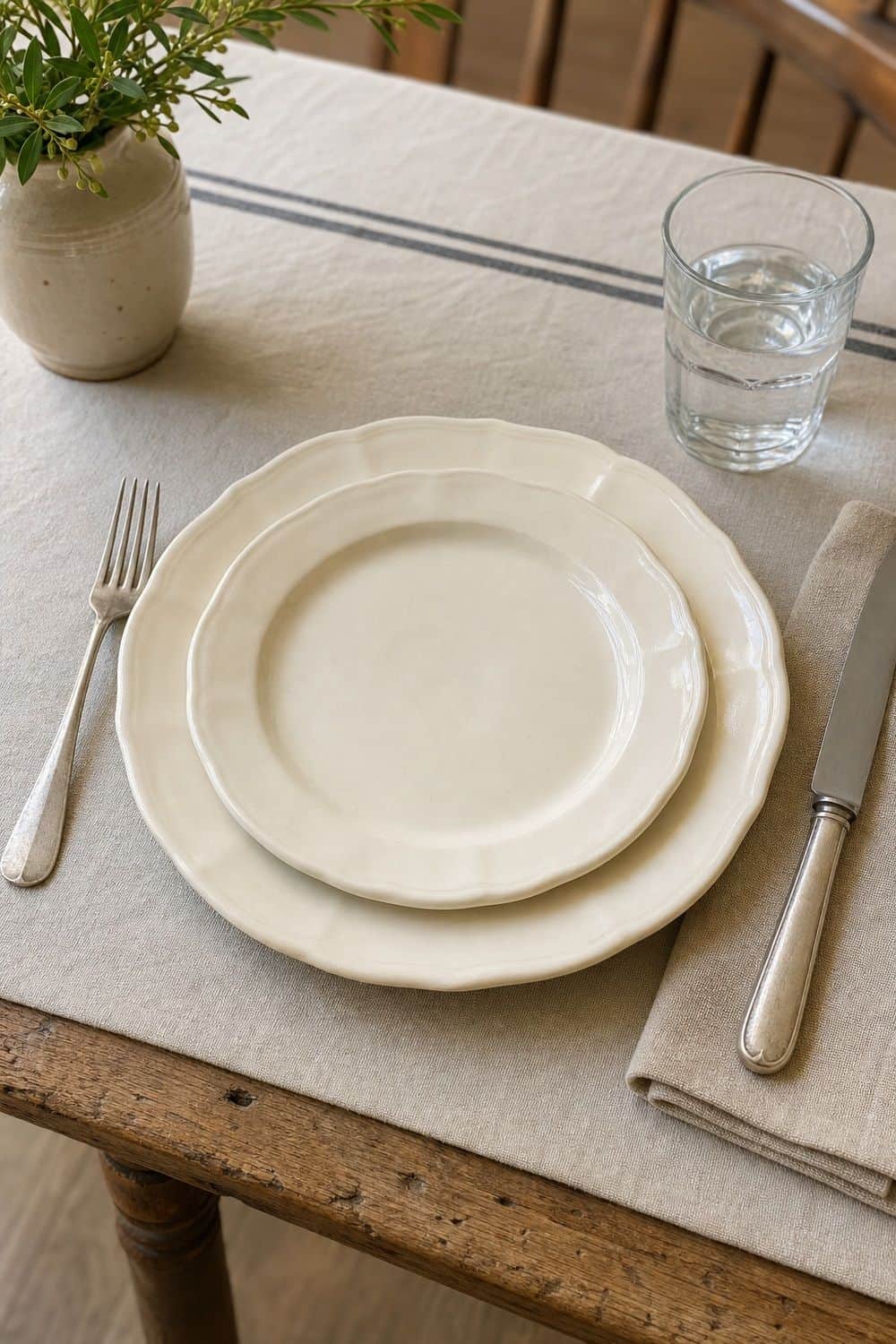
Cream stoneware has a warmer, more lived-in feeling than bright white china, which is why it works so well for a French country tablescape. Look for plates with a soft glaze, a slightly irregular rim, or a handmade feel. They make roast chicken, salad, bread, and fruit look generous without asking the table to become overly formal. When you want pattern elsewhere, keep these plates quiet. They are the calm base that lets blue-and-white accents, linen texture, and candlelight do their work.
4. Blue Transferware Accent Plates
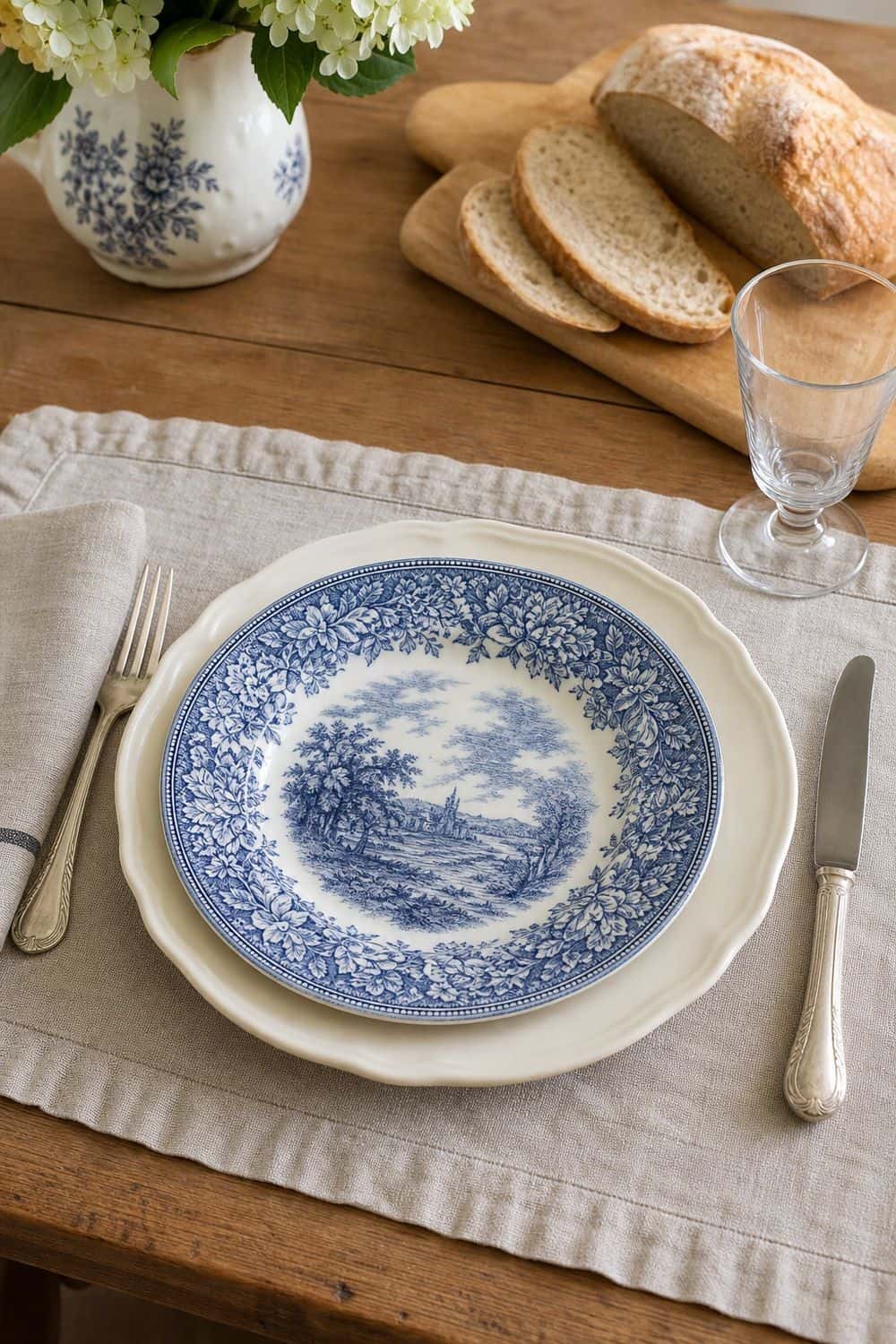
Blue-and-white salad plates bring in the French country pattern without taking over the whole table. Toile-inspired scenes, transferware borders, botanical motifs, or even a simple painted rim can all work, as long as the rest of the place setting gives the pattern breathing room. They look especially good over cream dinner plates with plain linen nearby, because the quiet layers make the blue feel more collected. Treat the pattern as the little wink, not the entire personality of the table.
5. Oatmeal Linen Napkins
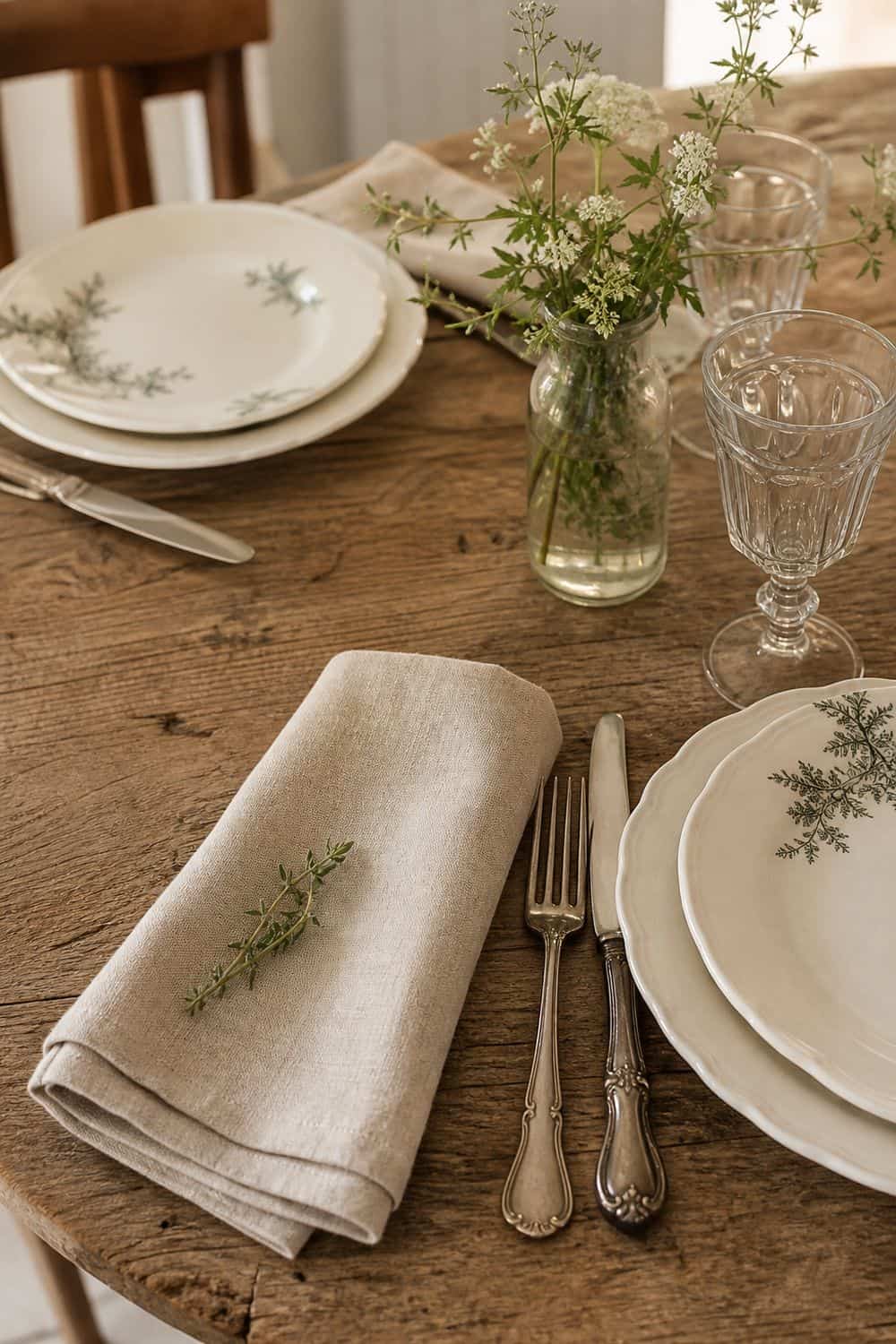
Oatmeal linen napkins soften the table without competing with patterned plates, which is why they are such an easy French country layer. They look relaxed beside cream stoneware, amber glass, bread boards, and old brass.
A loose fold is usually enough. Tuck the napkin under the fork, lay it across the plate, or knot it casually if the setting needs movement.
Color can wander a little here. Cream, tobacco, faded blue, sage, and mustard all work when they echo the flowers, fruit, or menu instead of matching every piece exactly.
6. Amber Goblets for Warmth
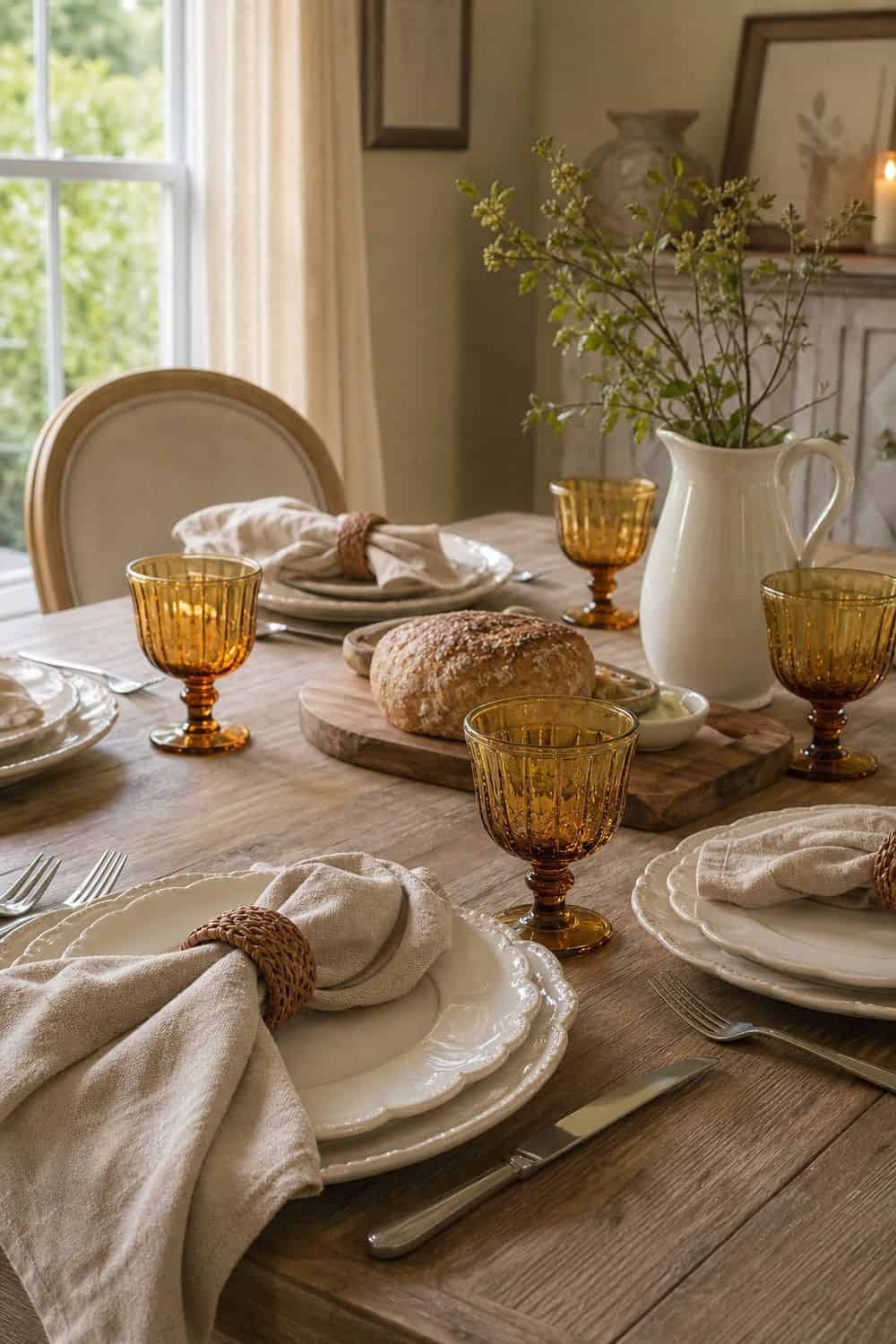
Amber goblets bring warmth to all the pale linen, cream dishes, and blue-and-white pattern that often show up on a French country table. The honey color catches candlelight in a quiet way and looks especially good beside bread, pears, wood boards, aged brass, and stoneware. Keep the glass shape simple if your plates already have a lot of detail.
For a fuller table, mix amber wine glasses with clear water glasses. The amber still gives you glow, but the setting does not become heavy or overly color-blocked.
7. Vintage-Style Flatware
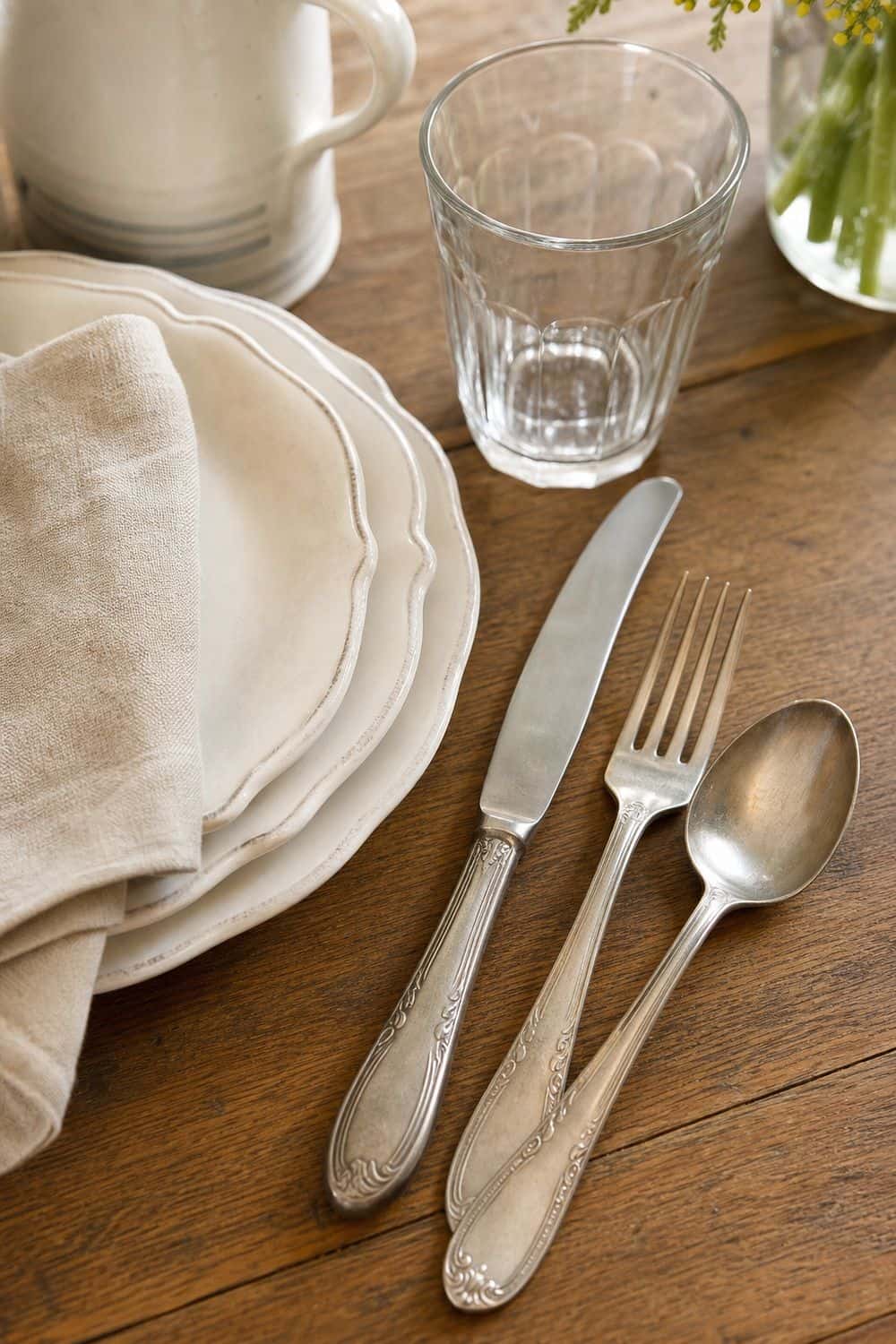
Vintage-style flatware adds polish, but it should still feel comfortable in the hand. Brushed silver, pewter tones, aged stainless, or lightly ornate handles all suit the rustic-elegant mood better than mirror-bright gold. The goal is a table that feels collected from cupboards, markets, and family dinners, not a table that feels too precious to touch. When plates and glasses are already detailed, calmer flatware keeps the place setting balanced; when the setting is plain, a little pattern on the handle adds quiet character.
8. Aged Brass Candleholders

Antique brass taper holders add height without needing a bulky centerpiece, which is exactly why they work on a generous French country dinner table. Mixed heights feel collected and old-world, especially with linen, cream plates, and amber glass.
Spread the holders between serving pieces instead of crowding them in the middle. You want candlelight traveling down the table, not a bright cluster that fights the bread board or flowers.
Stability matters as much as mood. Set each holder where it will not wobble, lean into greenery, or sit too close to a napkin, sleeve, or passing platter.
9. Ivory Unscented Candles
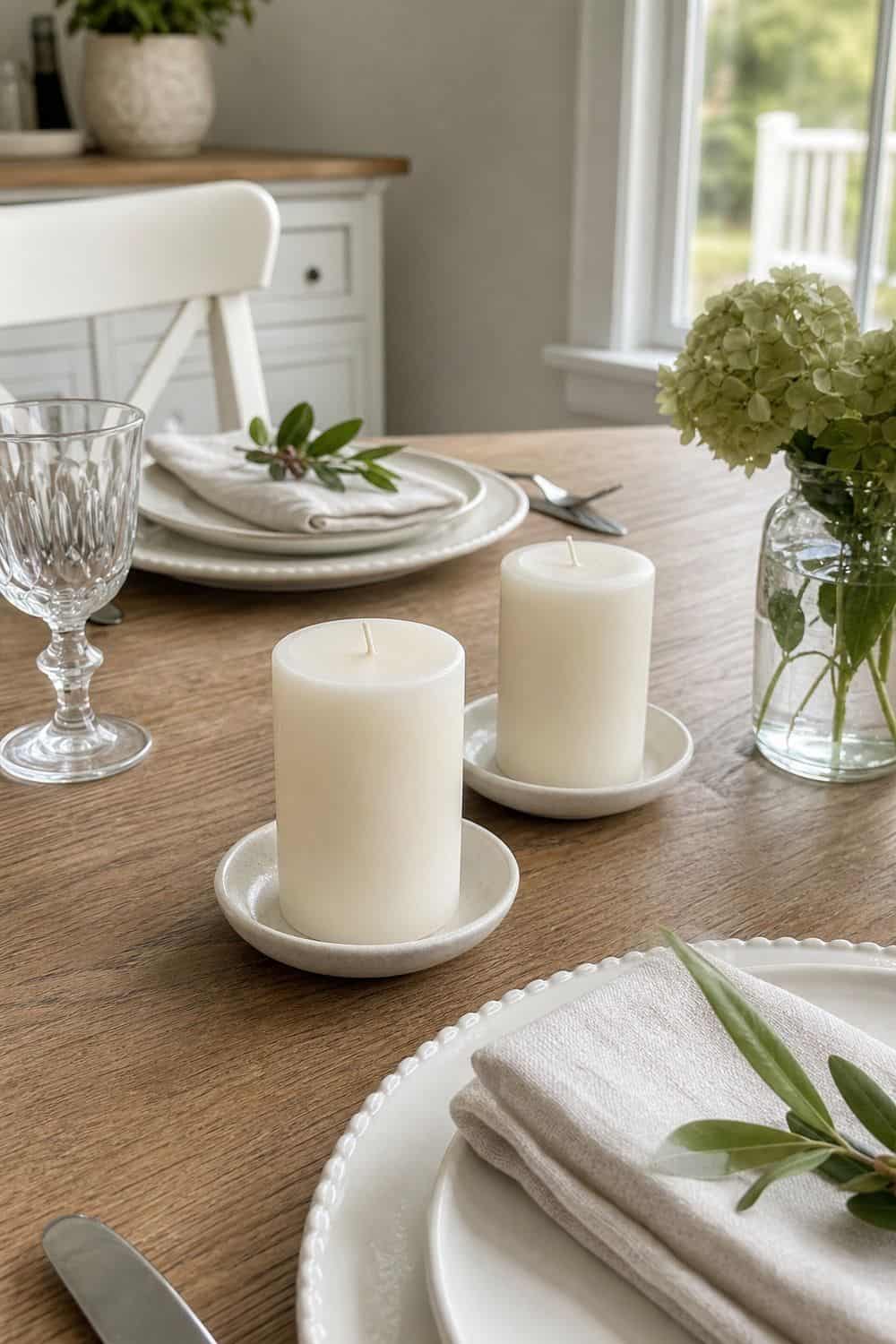
Ivory candles look softer than stark white tapers, especially against flax linen and cream stoneware. Choose unscented candles around food so the table smells like roast herbs, bread, cheese, wine, or dessert instead of fragrance. That one choice makes the whole dinner feel more thoughtful in a very practical way.
Trim the wicks, keep flames away from olive branches and napkins, and stop before the table starts looking like a candle shop. A few warm points of light are enough for the French country mood.
10. Wood Bread Board at the Center
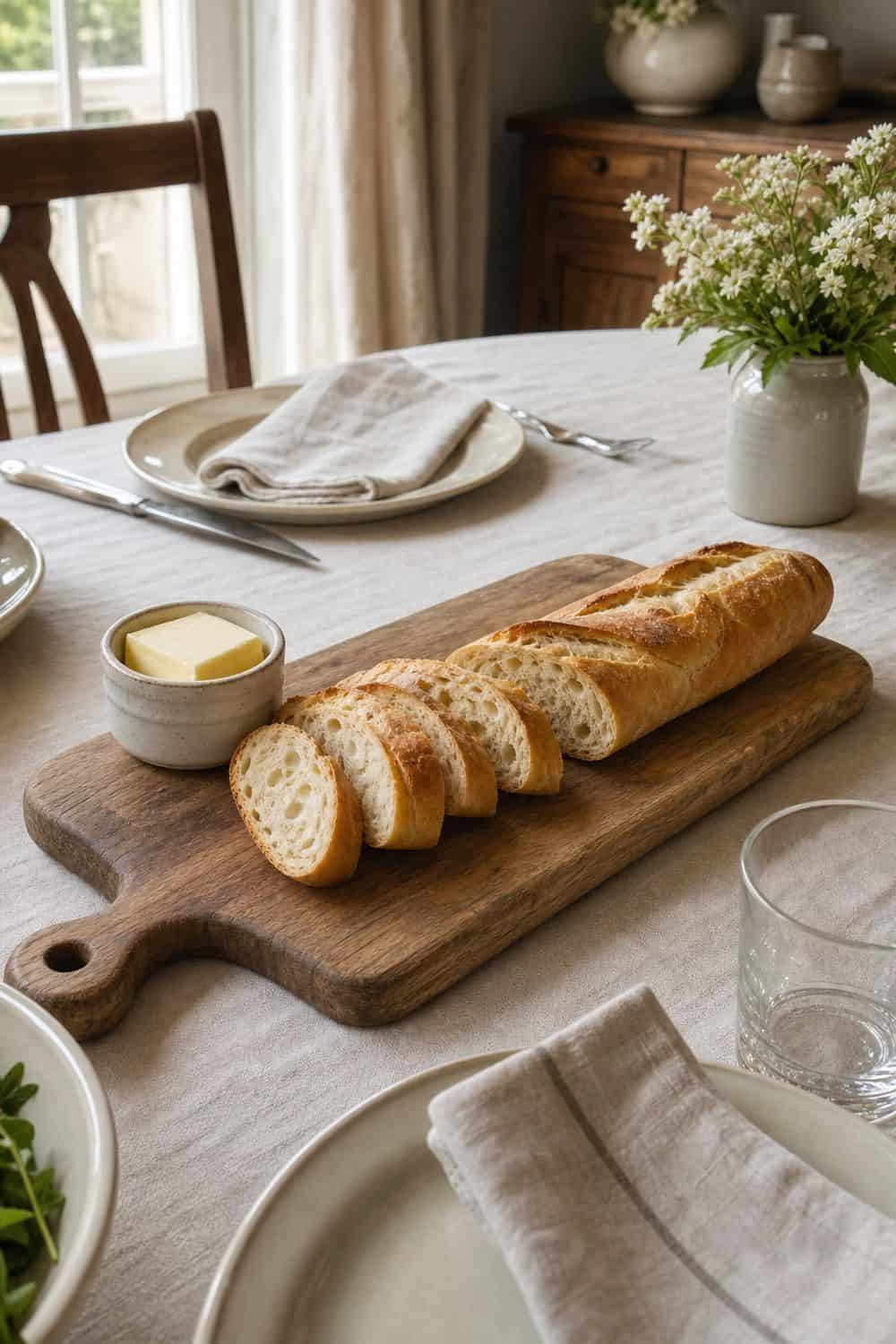
A wood bread board makes the table feel generous before dinner even begins. Use it for baguette, a country loaf, fougasse, or rolls, then add a bread knife and a folded linen cloth if guests will cut their own pieces. The board brings in that rustic kitchen feeling that keeps French country tables from looking too polished.
If the board is large, slide it slightly off center or toward one end. Bread should invite people in, not block the water pitcher, cheese plate, or main platter.
11. Baguette Slices in a Wicker Basket
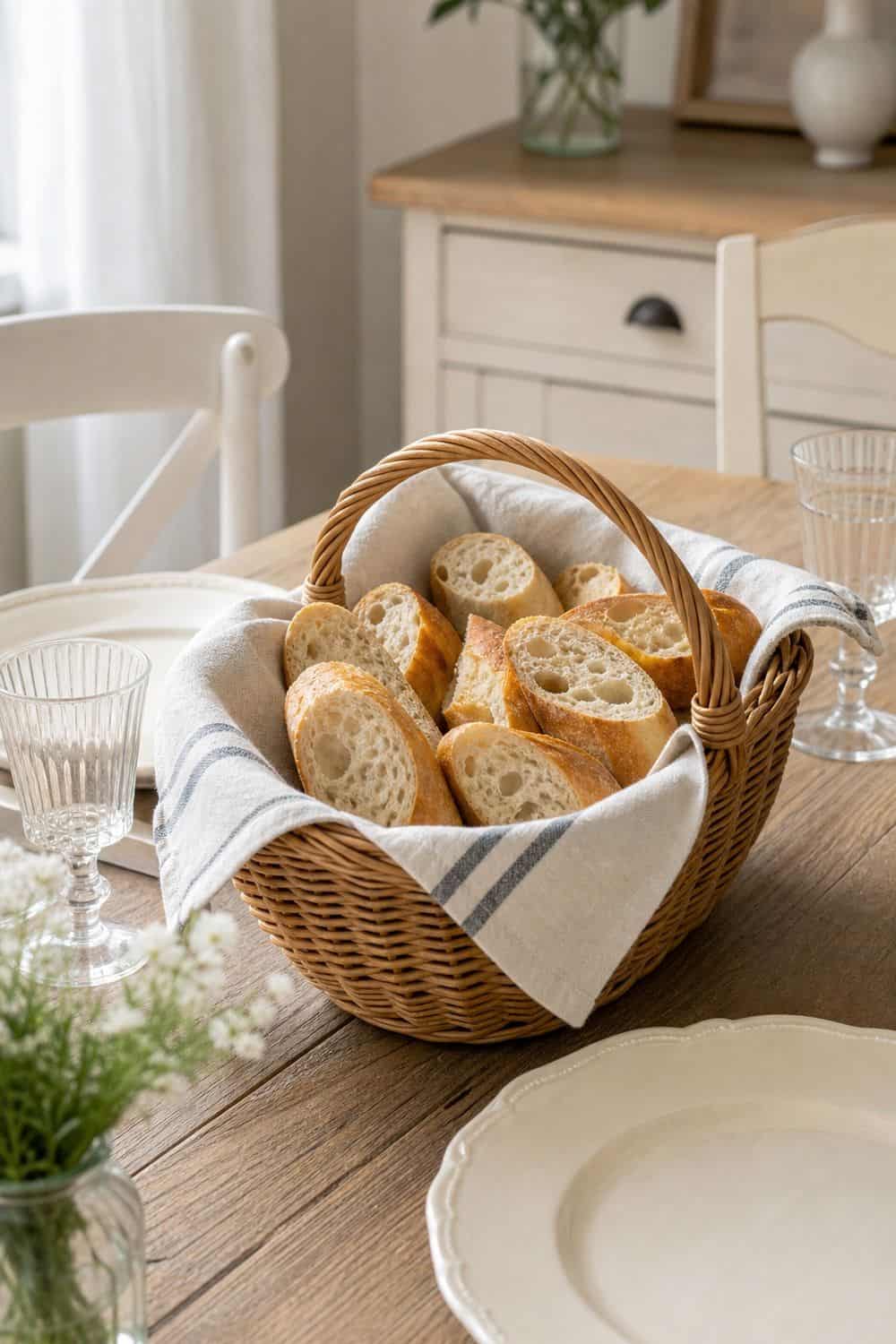
For a narrow table, a wicker basket can be better than a big bread board. It contains baguette slices neatly, adds woven texture, and makes it easy to pass bread without rearranging the whole centerpiece. Line the basket with a napkin so crumbs stay mostly contained and the bread looks softened rather than tossed in. Keep it near butter and cheese, but give it its own little breathing space so it does not have to compete with every candle, flower, and carafe.
12. Small Cheese Course Zone
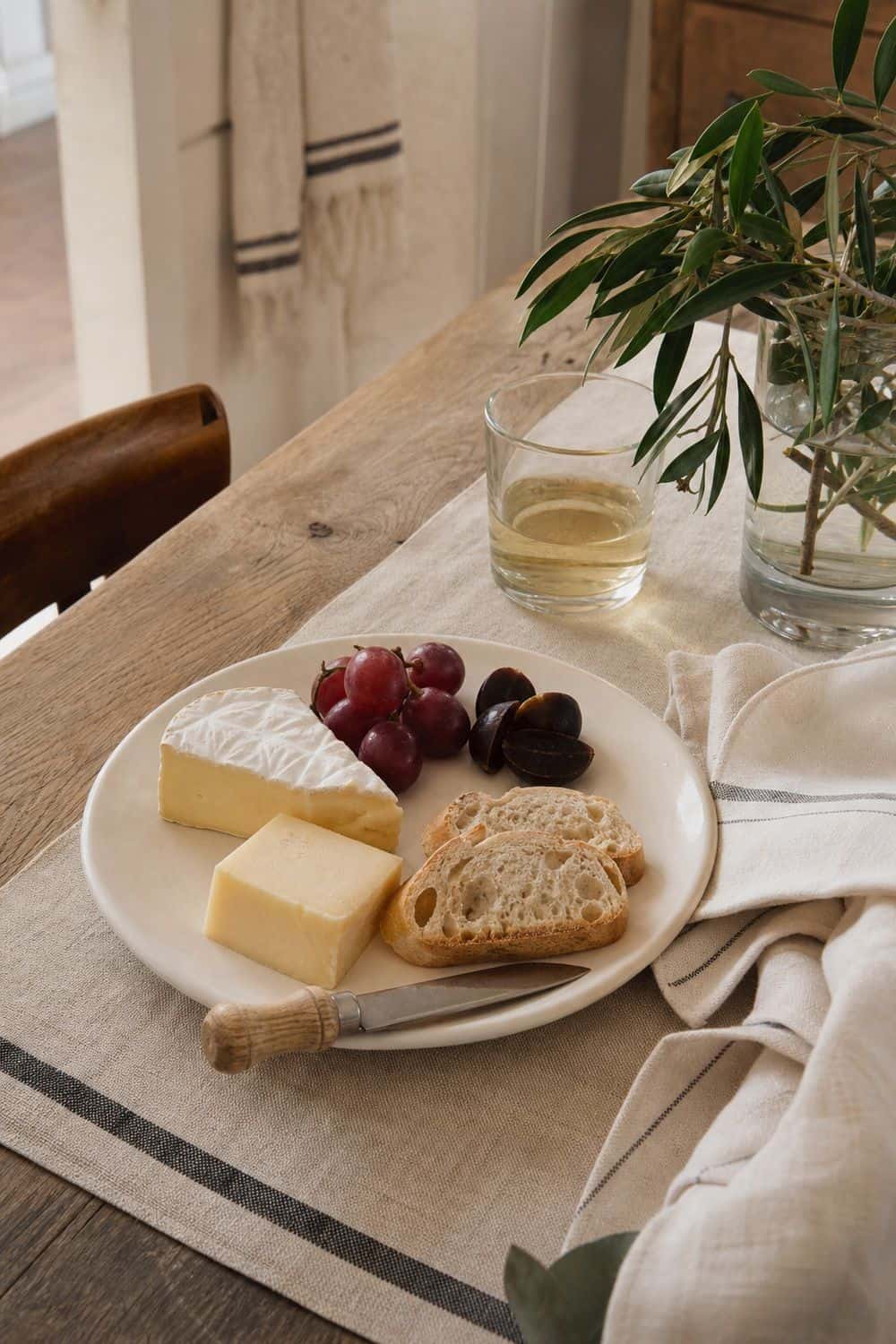
A small cheese course feels French without turning the table into a grazing board. One modest board, one to three cheeses, and a knife for each cheese are usually enough for the mood.
Add only the extras that make sense with the meal: figs, grapes, nuts, olives, honey, or a few crackers. A restrained board looks more elegant than one that sprawls into every glass.
If cheese comes after the main course, wait to bring it out. The table feels more graceful when each course has its moment instead of crowding the linen from the start.
13. Stoneware Butter Crock
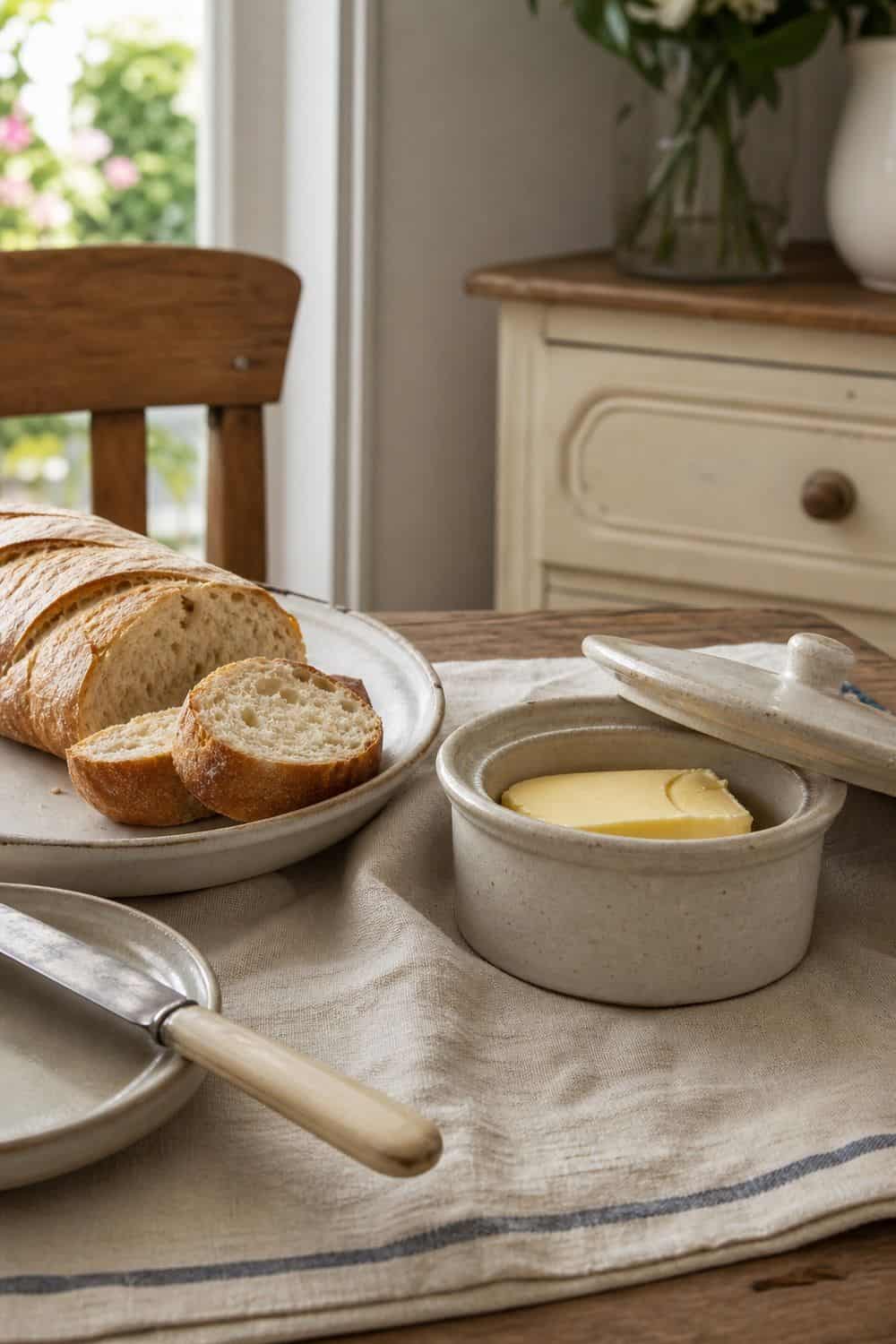
Butter is a small detail, but it can make the table feel wonderfully considered. Put salted butter, herbed butter, or softened cultured butter in a stoneware crock and set it near the bread with a dedicated knife. That little piece of service feels rustic, useful, and quietly elegant at the same time. If cheese is also on the table, give the butter its own nearby spot so knives do not cross and guests are not reaching over candles for something so simple.
14. Water in a Ceramic Pitcher
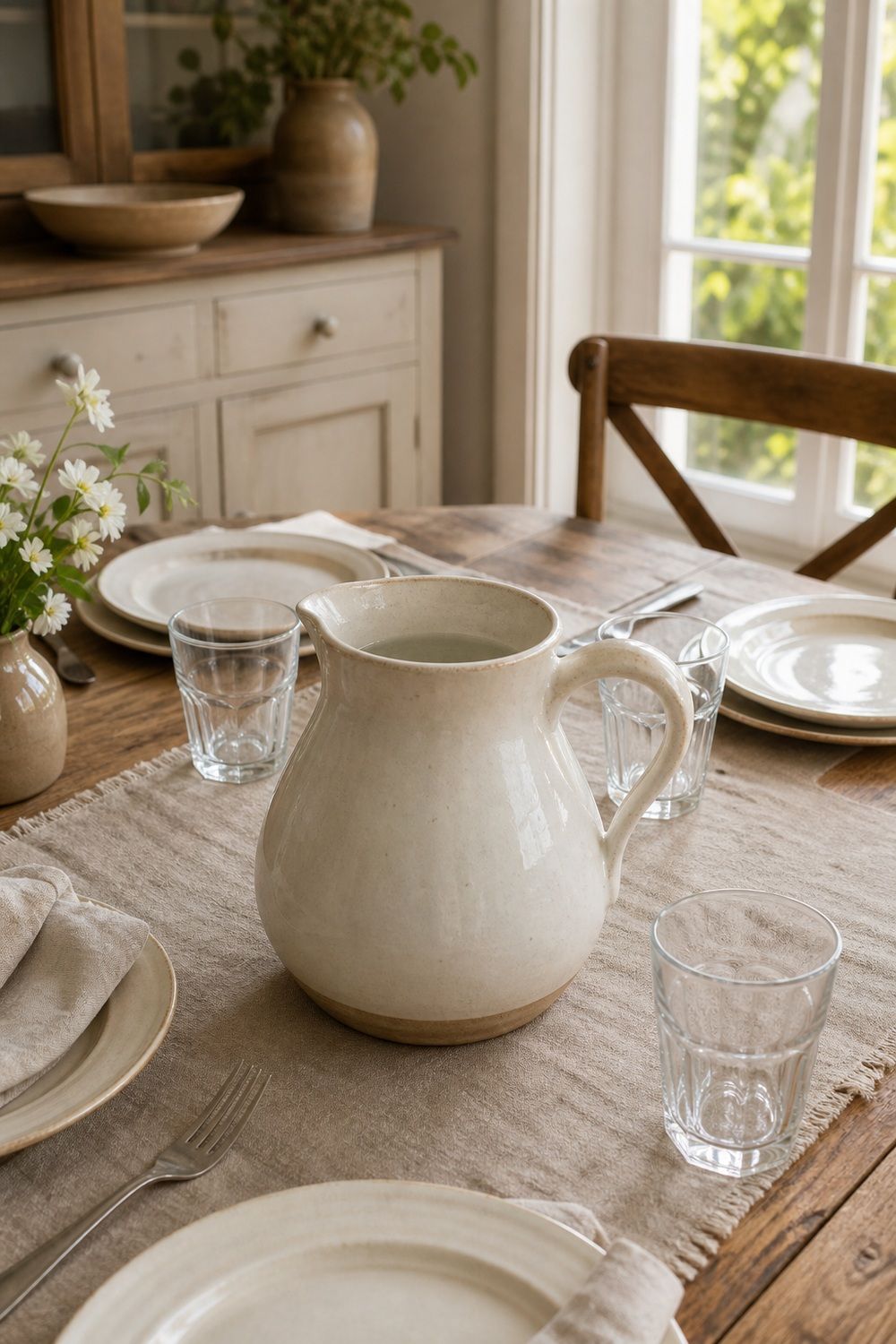
A ceramic pitcher makes water service feel like part of the table instead of a plastic bottle parked at the edge. Choose cream, blue, terracotta, or a subtle hand-painted piece, then place it where guests can reach it without leaning through candlelight. For a longer table, two smaller pitchers usually work better than one heavy one. This is the kind of detail that looks decorative because it is genuinely useful, which is very much the spirit of French country hosting.
15. Wine in a Glass Carafe
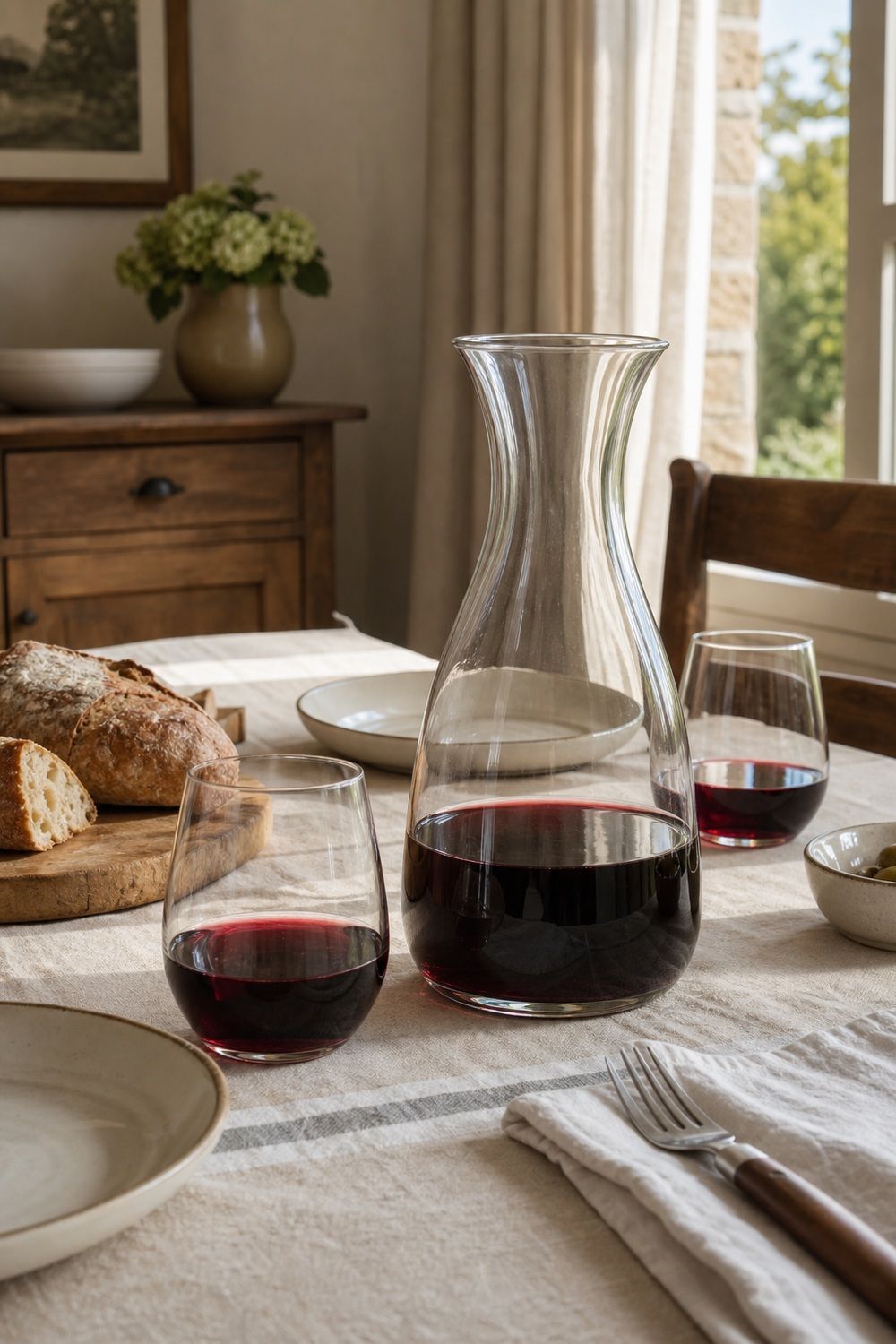
A plain glass carafe suits a French country tablescape better than a very ornate crystal decanter. It feels relaxed, communal, and ready for dinner, whether you fill it with wine, water, lemonade, or a simple spritz.
Give the carafe a steady home near the glasses, but away from the plate stack and main platter. People should be able to pour without dodging candles or leaning across the salad.
When more than one drink is on the table, make the carafes easy to tell apart with placement, color, or a small tag. Quiet clarity always feels more elegant than confusion.
16. Potted Herbs in Terracotta
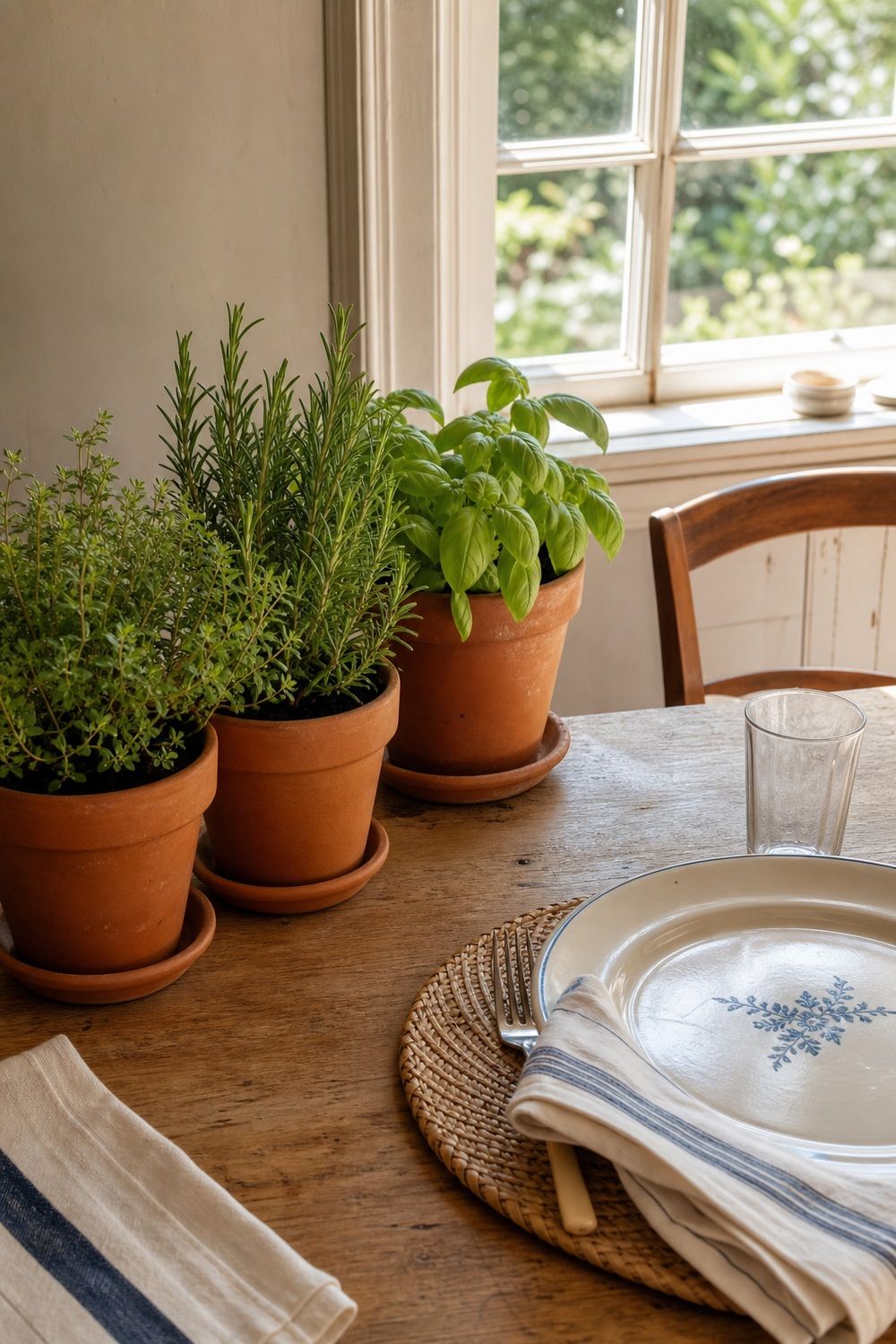
Terracotta herb pots bring Provencal texture to the table without another floral arrangement. Thyme, rosemary, basil, sage, or lavender can look casual and alive beside linen and stoneware. Clean the outside of each pot, use a saucer, and choose smaller pots so soil and moisture stay away from the tablecloth. If the herbs fit the menu, let them be useful too; rosemary near roast vegetables or basil near tomatoes makes the table feel connected to the food in a quiet, kitchen-garden way.
17. Pears or Figs as Edible Decor
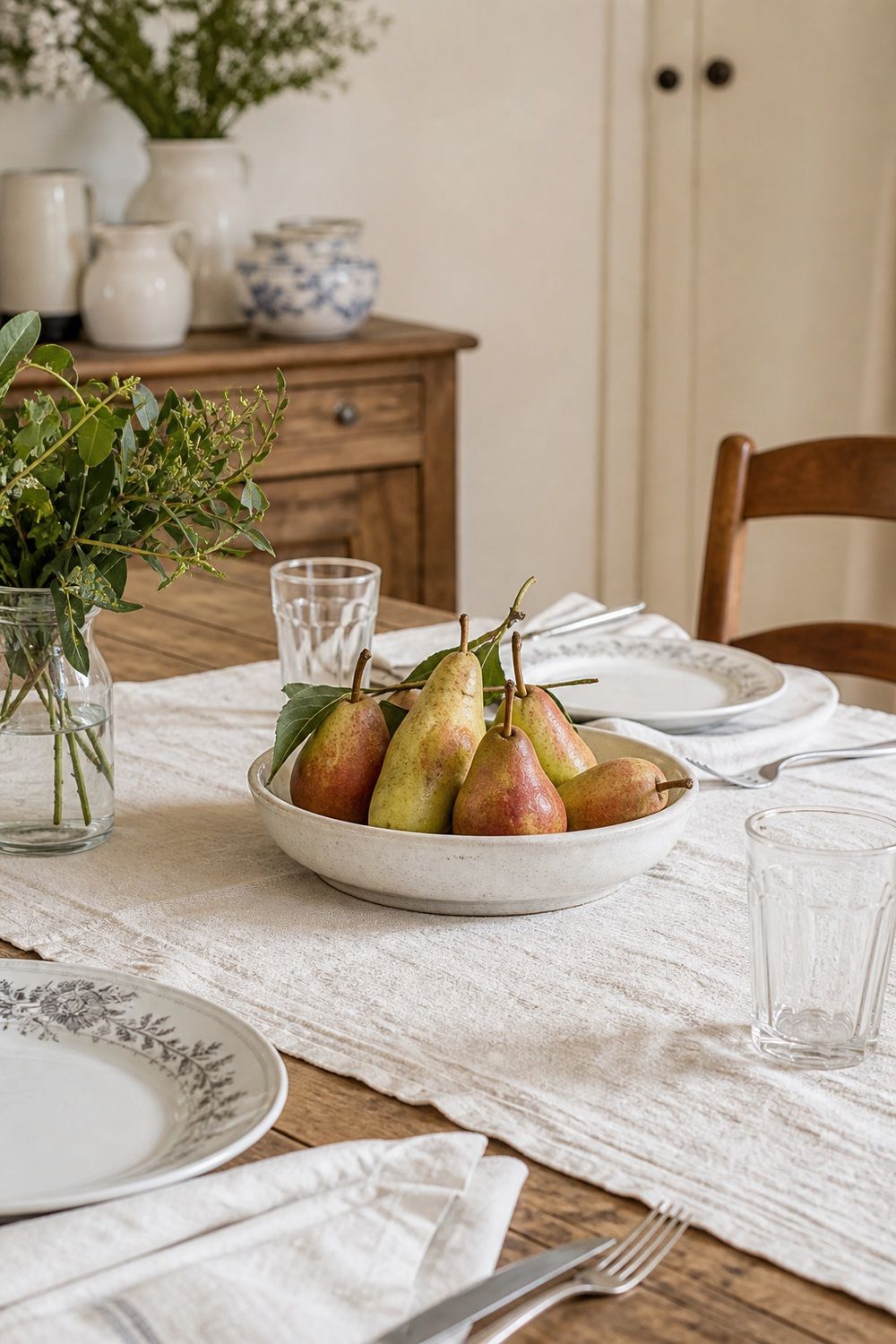
Pears, figs, grapes, apricots, lemons, or small oranges add color in a way that still belongs to the meal. Pile them loosely in a low footed bowl or scatter a few near greenery where they will not roll into plates. Fruit is especially helpful when you want the table to feel seasonal without buying a huge bouquet.
Keep it edible and believable. A few ripe pieces look more French country than a perfect mound of decorative fruit no one is allowed to touch.
18. White Flowers in Bud Vases
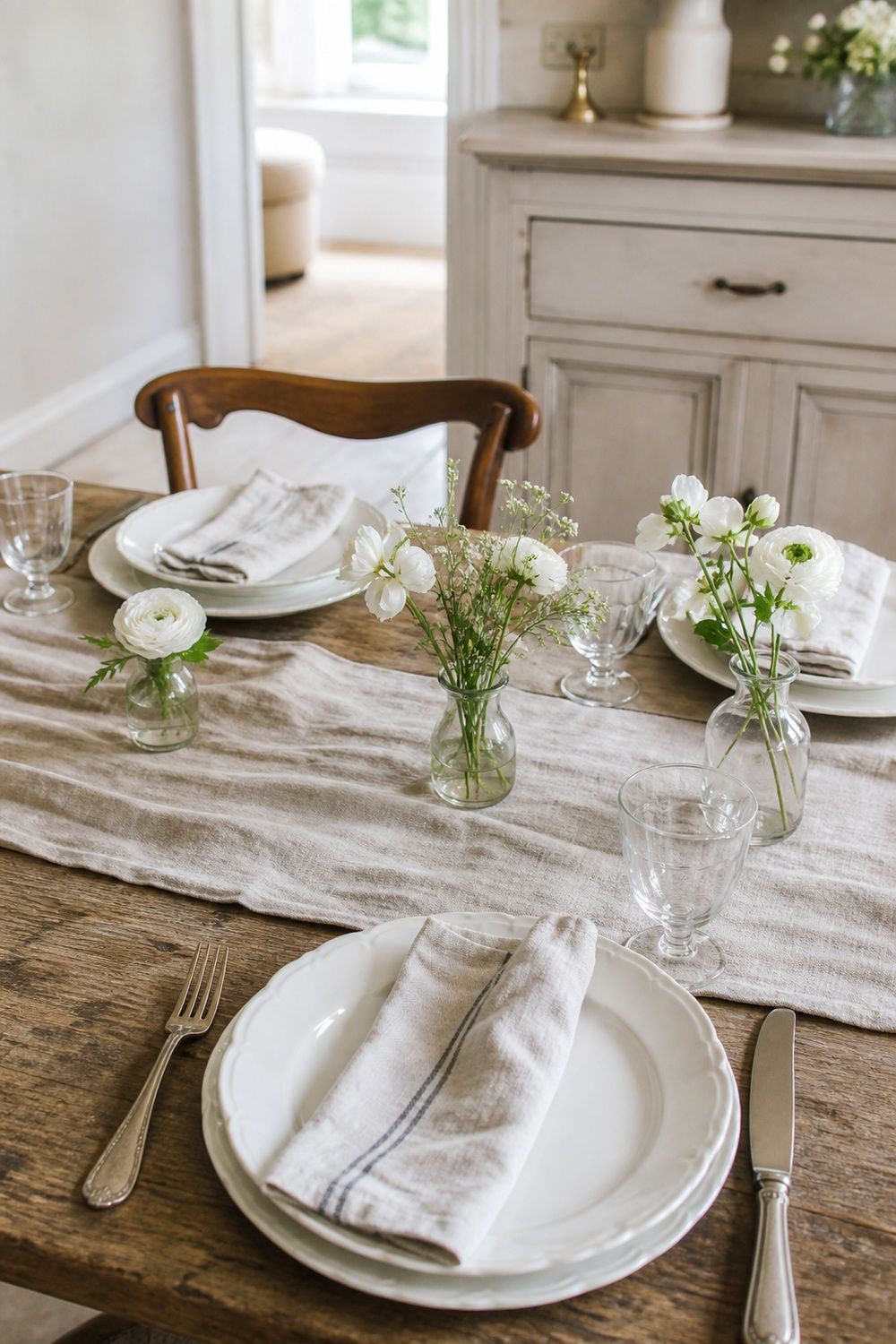
White flowers give the table softness without fighting the rest of the palette. Garden roses, ranunculus, chamomile, cosmos, or simple grocery-store stems can all work when you divide them into small bud vases. Several low arrangements feel more relaxed than one tall bouquet, and they make it easier to keep bread, wine, and serving spoons on the table. Choose lightly scented flowers around dinner so the room still smells like herbs, food, and candlelight instead of a floral perfume note.
19. Olive Branches Down the Table
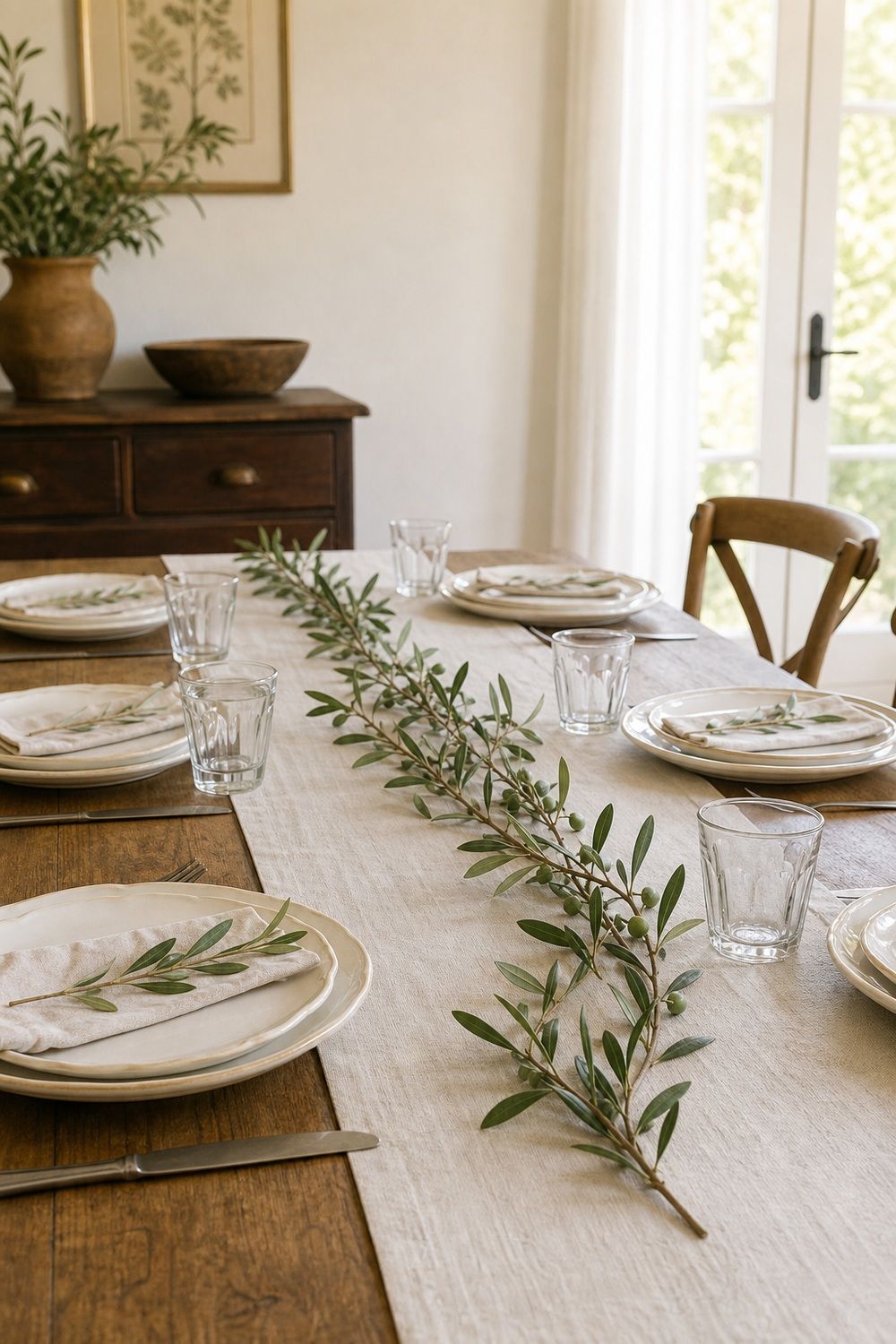
Olive branches make a loose, low runner that feels Provencal without needing a dense centerpiece. Rosemary or clipped greenery can give a similar feeling if olive branches are hard to find, especially when the table already has linen, rattan, stoneware, and simple food.
Tuck the stems around pitchers, fruit bowls, bread baskets, and candleholders, letting the greenery move naturally instead of forcing it into a perfect line. The table should feel gathered, not engineered.
Keep leaves clear of flames and serving utensils. A few airy stems are usually prettier than a thick garland that steals space from dinner, and they are easier to lift away when the main platter arrives.
20. Salad in a Cream Bowl
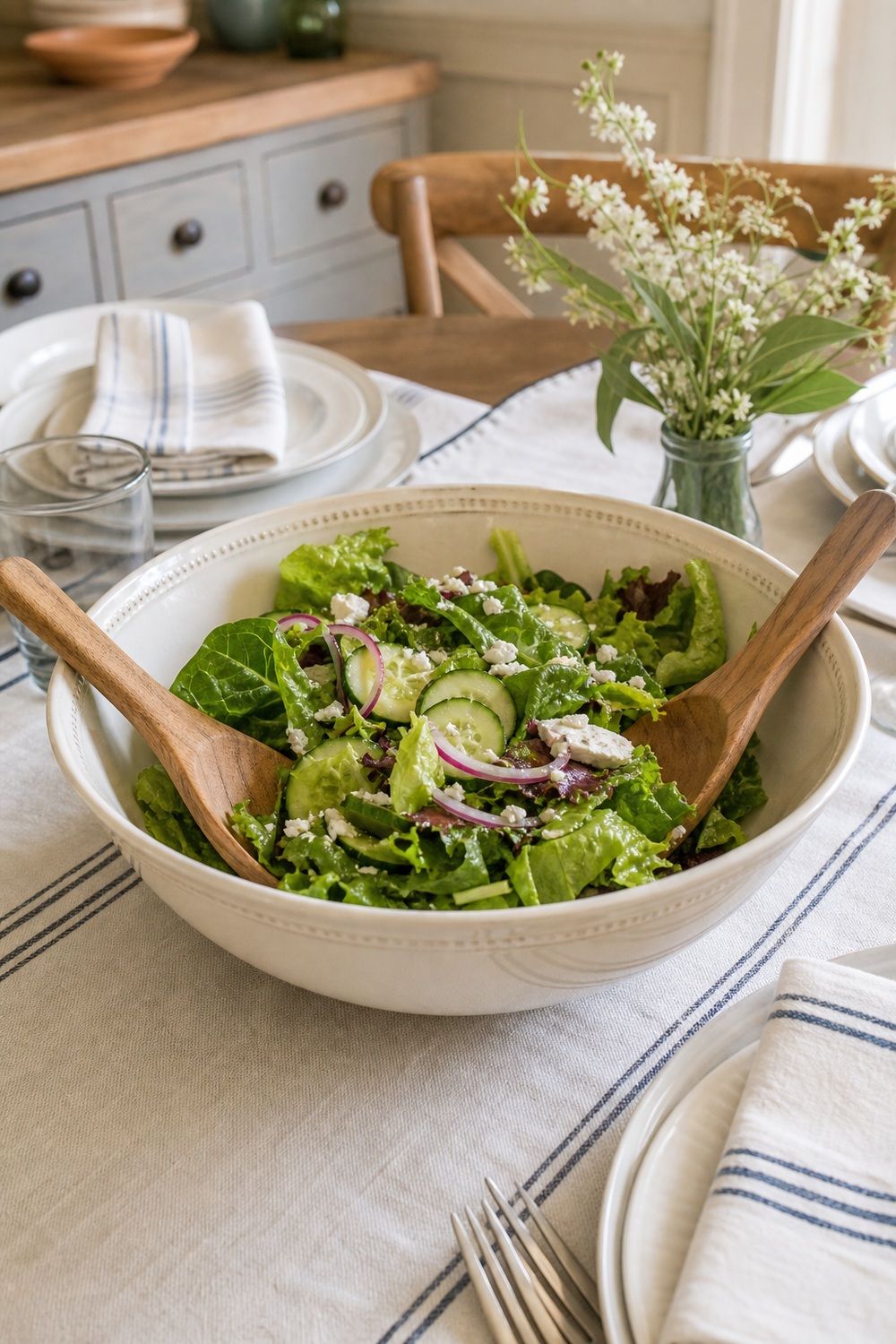
Salad can become part of the tablescape when it arrives in the right bowl. A cream ceramic serving bowl looks beautiful with greens, potatoes, tomatoes, lentils, beans, herbs, or simple vegetables, and it ties back to the plates without needing another decorative object. Add tongs that fit the bowl instead of balancing an awkward spoon across the rim.
If the salad is dressed, place a small plate or folded napkin beneath the bowl to catch drips. It is a tiny hosting move, but it keeps the linen looking cared for.
21. Rustic Platter for the Main Dish
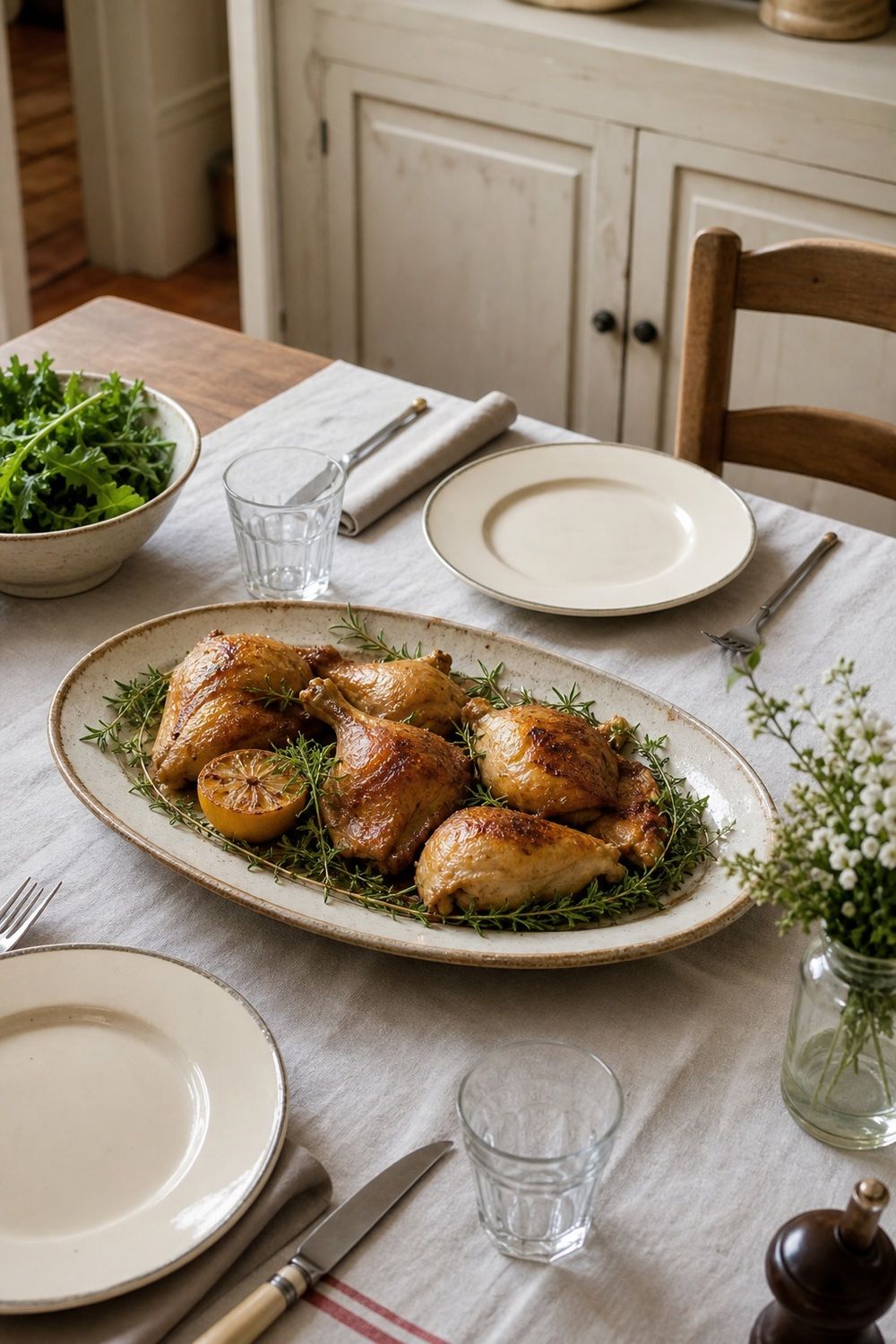
An oval platter keeps the table centered on the food, which is exactly where a French country dinner should land. Use it for roast chicken, fish, tart, grilled vegetables, charcuterie, or whatever main dish you are serving. Put the empty platter on the table while arranging the centerpiece so you do not accidentally fill the best serving spot with candles. For hot dishes, add a trivet that matches the mood: wood, cork, stone, or woven material. The table stays pretty, and serving feels less tense.
22. Toile or Gingham in Small Doses
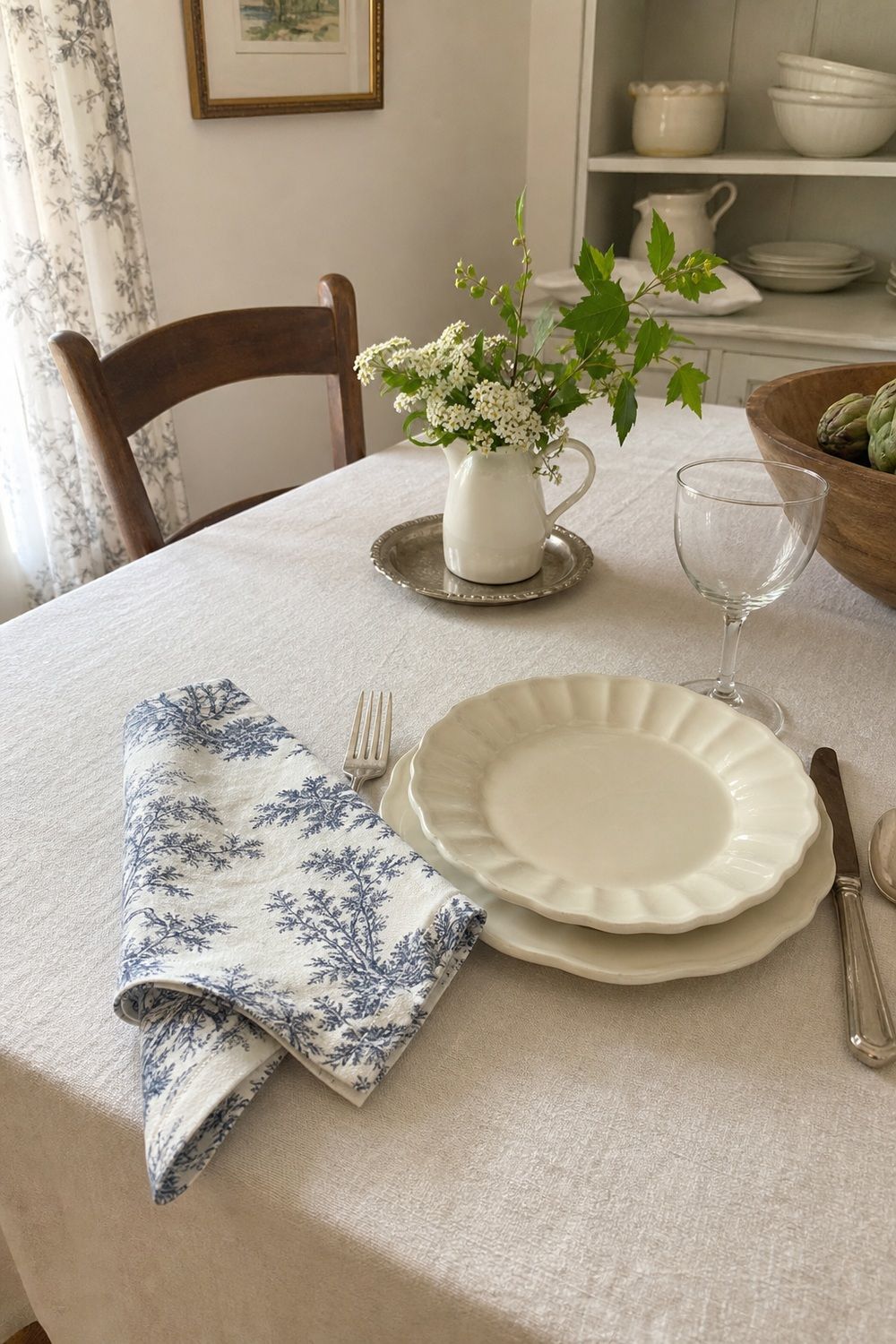
Toile, gingham, ticking stripe, and tiny florals all belong near French country style, but they need restraint. Choose one pattern family and let it have a clear job: napkins, salad plates, a runner, or maybe a small bread cloth. When every layer is patterned, the table starts to feel themed instead of relaxed.
If the plates carry the pattern, keep the napkins solid. If the linens are patterned, let the dishes stay cream. That little give-and-take is what keeps the table elegant.
23. Centerpieces Below Conversation Height
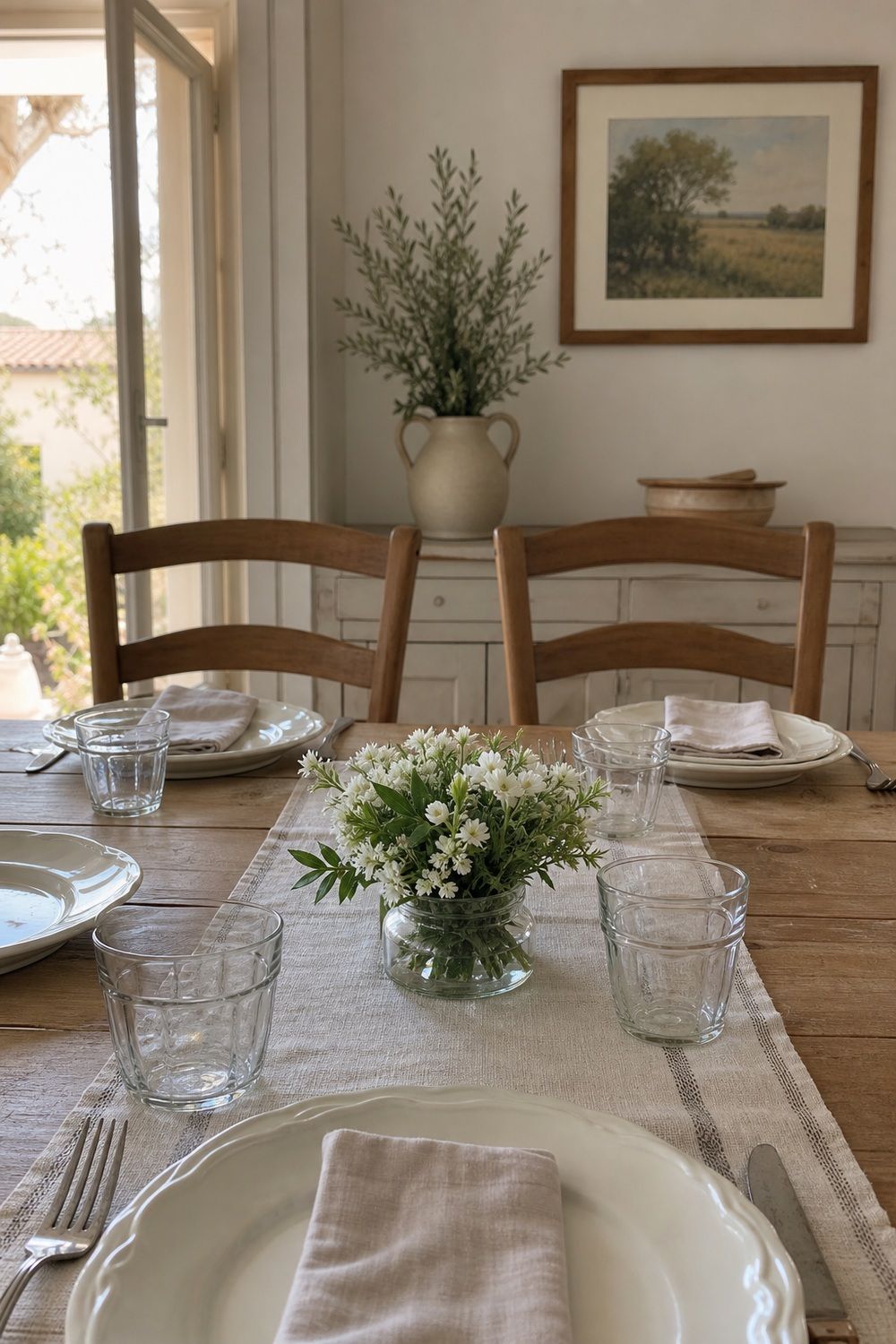
Low centerpieces are nonnegotiable for a table meant to feel easy and generous. Sit in one of the chairs and look across the table before dinner. If flowers, fruit, herbs, or pitchers block faces, move them lower, split them into smaller pieces, or shift the tallest item to a sideboard.
A low ceramic bowl, bud vases, loose olive branches, or a bread board can still anchor the center beautifully. You get the romance without making guests talk around a wall of decor.
24. Room for Bread, Wine, and Platters
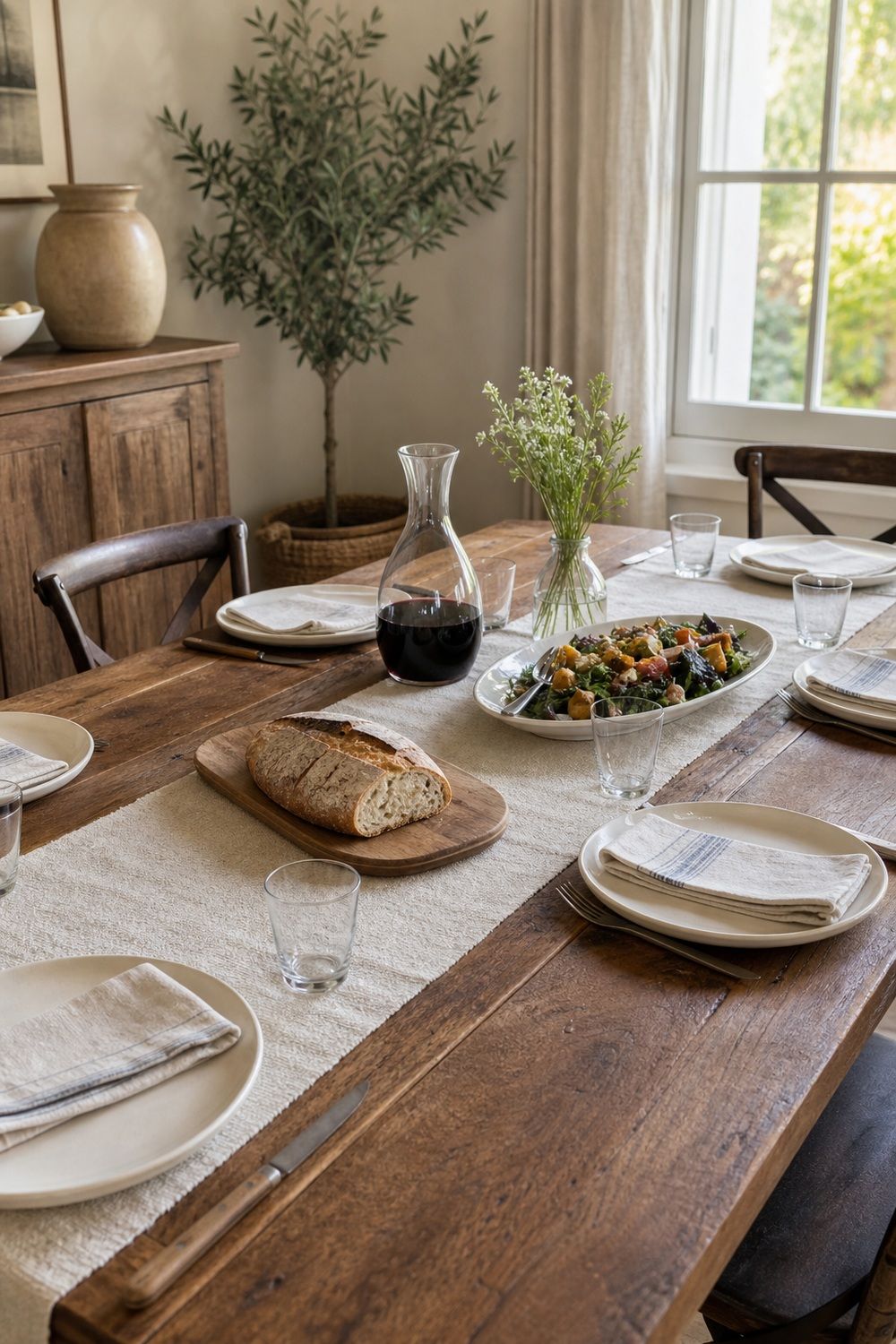
A French country table should feel abundant, but abundance needs breathing room. Place the bread basket, wine carafe, water pitcher, salad bowl, and main platter on the table before you decide the centerpiece is finished. That quick test shows you which decorative piece can go and which serving piece needs a clearer landing spot. Open space is not a lack of style here; it is what lets people pass bread, pour wine, reach butter, and enjoy the table without constantly rearranging it.
25. Too Much Polished Gold
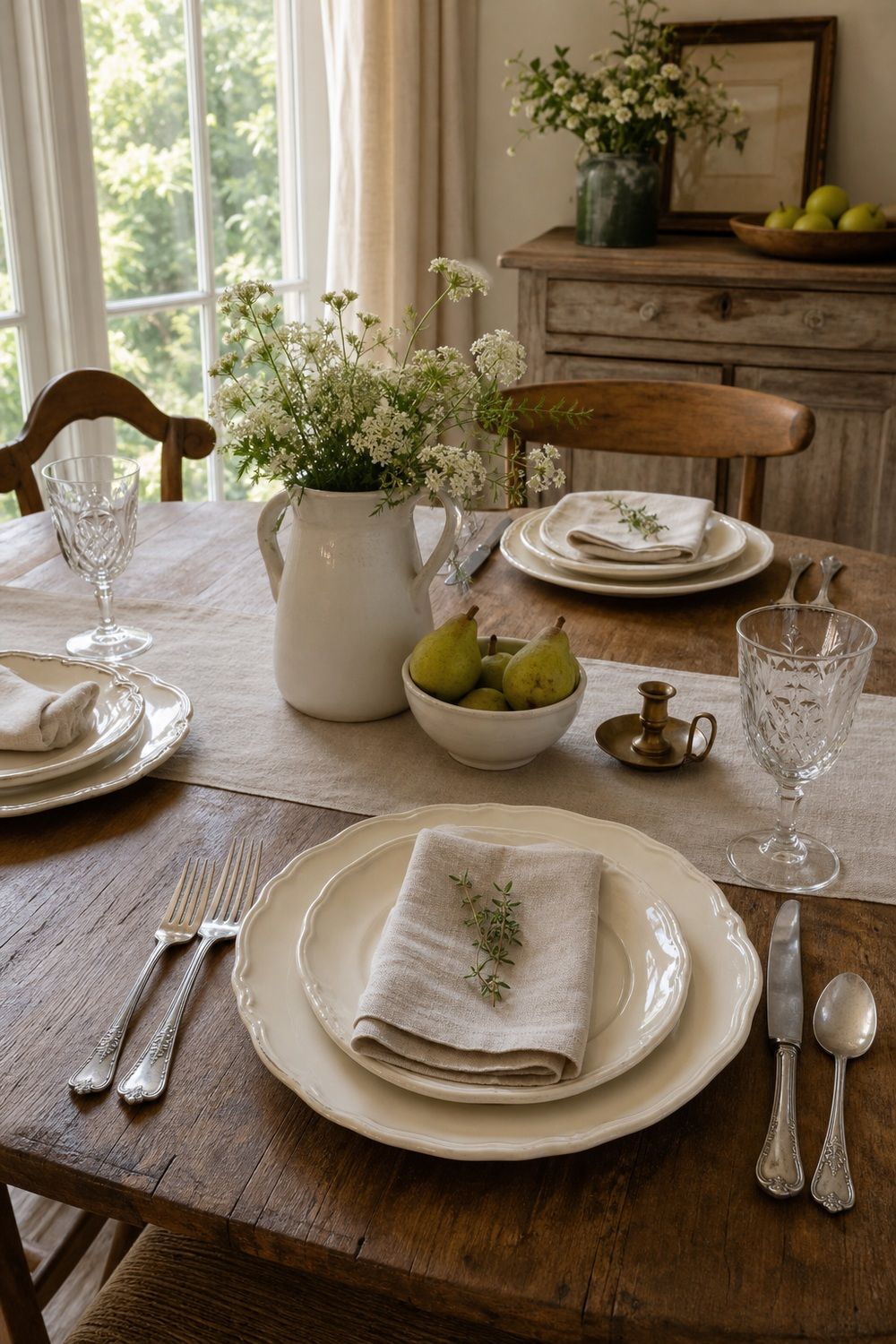
Too much shiny gold can pull a French country table toward glam, which is not quite the feeling you want. Choose aged brass, pewter, worn silver, iron, wood, or ceramic details when you need a little finish. One brass candleholder moment is lovely; matching glossy gold on flatware, napkin rings, chargers, and serving pieces can feel heavy fast.
Let the softer materials do some of the work. Linen, rattan, stoneware, bread, herbs, and fruit keep the table grounded, while a smaller amount of aged metal adds glow.
How to Balance Rustic and Elegant French Country Style
Start with the French country palette: cream, flax, faded blue, oatmeal, warm white, mustard, tobacco, sage, olive, amber, and aged brass. Then choose one pattern, such as toile, blue-and-white, gingham, or a small floral, and support it with solids.
Let food carry some of the decor. Bread, butter, cheese, pears, figs, herbs, wine, salad, and shared platters make the table feel generous without adding fake props.
For hosting, keep centerpieces low, candles unscented, water easy to reach, and platters passable. A French country tablescape should feel abundant and relaxed, but every piece still needs a job.
Frequently Asked Questions
What is a French country tablescape?
A French country tablescape is a rustic-elegant table built from linen, rattan, cream crockery, patterned plates, aged metal, herbs, fruit, bread, wine, and candlelight. It should feel warm and collected while still working for a real meal.
How do you set a French country table?
Start with washed linen, then add rattan chargers, cream plates, one blue-and-white pattern, amber glassware, bread, herbs, low flowers, and candlelight. Keep serving pieces easy to reach and avoid crowding the center of the table.
What colors work for a French country tablescape?
Cream, flax, warm white, faded blue, oatmeal, sage, olive, mustard, tobacco, amber, and aged brass all work well. The palette should feel sun-washed and grounded rather than bright, glossy, or overly matched.
What centerpiece works for a French country table?
Use low herbs, olive branches, white flowers, pears, figs, bread, or a ceramic bowl. Avoid tall arrangements that block conversation, and keep fragrant flowers away from food and wine.
How do you make a French country table rustic but elegant?
Pair casual materials like linen, rattan, wood, stoneware, and herbs with polished details like amber glass, vintage-style flatware, candlelight, and one refined pattern. The mix should feel useful and relaxed, not overly formal.
Can a French country tablescape be budget-friendly?
Yes. Use thrifted plates, simple cream dishes, grocery-store herbs, a bread board, basic linen napkins, fruit, and a few candles. You do not need a matching tableware set for a convincing French country table.
What should you avoid on a French country table?
Avoid too much shiny gold, tall fragrant flowers, crowded decor, overly formal china, and too many competing patterns. Also avoid centerpieces that leave no room for bread, wine, salad, or the main dish.
What food fits a French country table setting?
Bread, butter, cheese, roast chicken, tarts, salad, potatoes, vegetables, fruit, wine, and simple desserts all fit well. Food should feel like part of the table, not something that arrives after the decor is finished.
Final Thoughts
The best French country tablescape ideas are generous but not crowded. Use linen, rattan, cream plates, one patterned accent, amber glass, bread, herbs, fruit, and low candlelight to create a table that feels rustic and elegant at the same time.
When the table leaves room for platters, water, wine, and conversation, the French country style feels natural instead of staged.
Last update on 2026-09-18 / Affiliate links / Images from Amazon Product Advertising API