
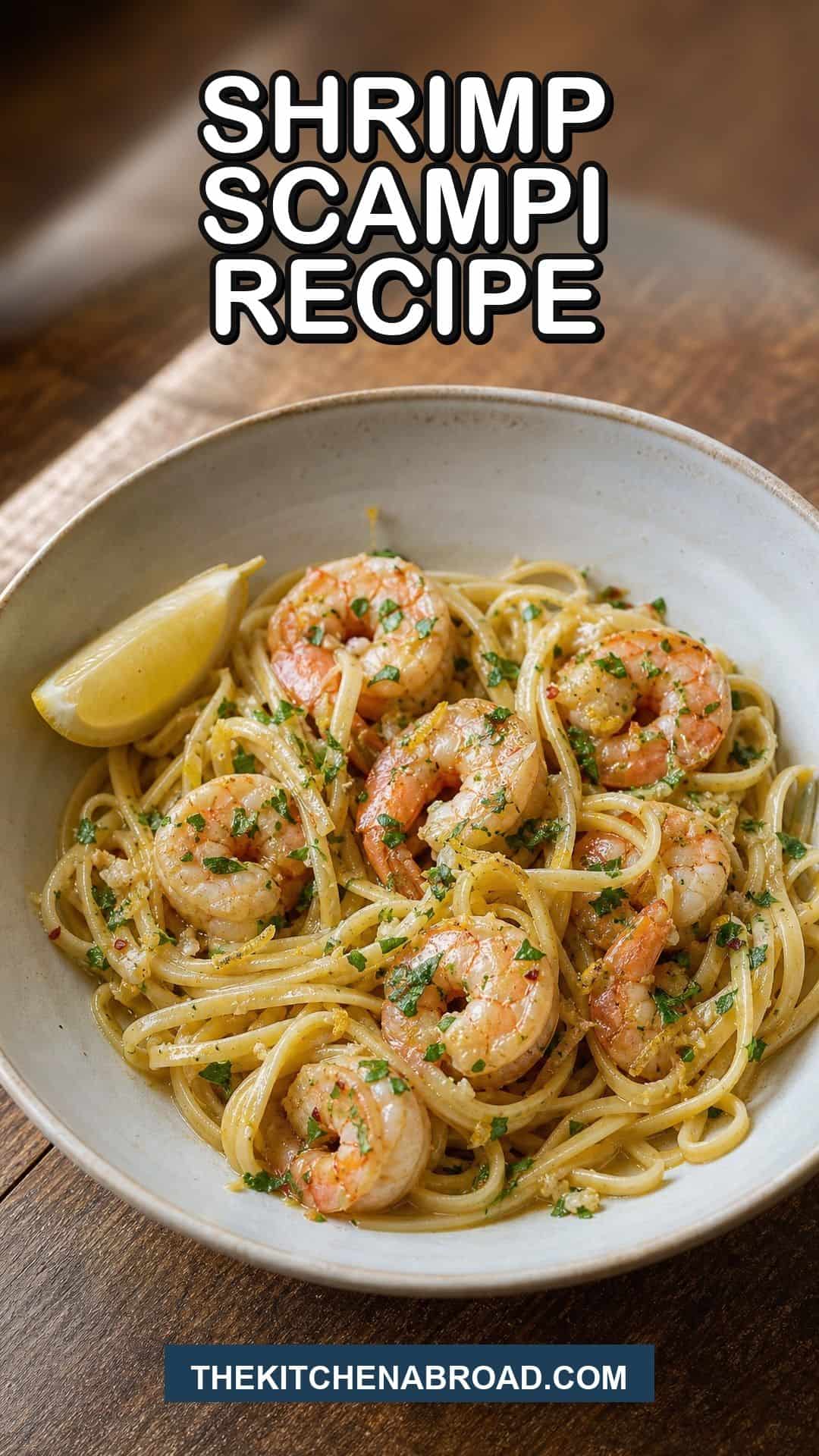
Shrimp scampi tastes restaurant-quality at home when you cook the shrimp in olive oil first (not butter), pull them out, then build the sauce in the same pan with white wine reduced by half before swirling cold butter in off-heat. The oil keeps the butter from burning; the wine reduction concentrates the flavor; the off-heat butter swirl keeps the sauce silky instead of broken. Tossed with linguine in 15 minutes.
Shrimp scampi belongs to that small category of restaurant dishes that actually eat better at home, partly because you can finish the butter swirl off-heat without anyone watching. Fifteen minutes from cold pan to plated dinner, the rest of the bottle of white wine you cooked with poured at the table, and a Tuesday that feels like a small occasion. The cold-butter mount is the only piece of real technique.
Gear That Helps Here
A heavy 12-inch (30 cm) skillet (cast iron, carbon steel, or stainless steel) holds heat for the wine reduction. A wide pasta pot keeps the linguine from clumping. A microplane for grating the garlic fine enough to melt into the sauce.
A citrus juicer for the lemon at the end. A wooden spoon for stirring without scratching the pan.


Recommended Reads
- Creamy Tuscan Shrimp
- One-Pan Honey Garlic Shrimp and Broccoli
- Salmon Burgers with Lemon Dill Sauce
- Baked Chicken Alfredo
- Creamy Tomato Pasta with Spinach and Mushrooms
Where Shrimp Scampi Came From
The name “scampi” refers to small Mediterranean lobster-like crustaceans (Norway lobsters, or langoustines) cooked the Italian way. Olive oil, garlic, white wine, and butter. When Italian immigrants arrived in the U.S. and could not find true scampi at the fishmonger, they substituted shrimp and kept the preparation.
By the 1950s, “shrimp scampi” was redundantly named on Italian-American restaurant menus everywhere. The pasta-tossed version is even more American. In Italy, scampi is usually served as an appetizer over bread, not over linguine.
The version below sits in the Italian-American tradition that became standard at red-sauce joints from Long Island to Los Angeles.
A Few Notes on the Ingredients
Shrimp: 500 g (1.1 lb) large or jumbo (16/20 or 21/25 count), peeled and deveined. Tails on look better on the plate but make eating with a fork harder. Patted very dry on paper towels before they hit the pan, or they steam instead of sear.
Linguine: 400 g (14 oz) quality dried pasta (De Cecco, Rummo, or Garofalo). Cooked 1 minute shy of al dente so it finishes in the sauce. Angel hair or spaghetti work too. Linguine has the surface area for the sauce to cling to.
Dry white wine: 120 ml (1/2 cup). Use a wine you would actually drink. Pinot Grigio, Sauvignon Blanc, or unoaked Chardonnay. Avoid “cooking wine” from the grocery aisle; the added salt throws the balance off and the flavor is flat.
Butter and olive oil (the split medium): 60 g (4 Tbsp) unsalted butter total, plus 45 ml (3 Tbsp) olive oil. The oil cooks the shrimp first because butter alone burns at high heat. The butter goes in cold at the end, off-heat, to emulsify the sauce.
Garlic: 6 cloves, minced fine. Six sounds like a lot. It is right for this dish. Garlic carries the sauce along with the wine.
Fresh lemon: Juice of 1 large lemon (about 30 ml / 2 Tbsp) at the end. Plus the zest of half a lemon for brightness. Bottled lemon juice is the one swap that ruins this dish.
Fresh parsley: 15 g (1/4 cup) chopped flat-leaf parsley, off-heat at the end. Adds color and a fresh herbal lift.
Red pepper flakes: 1/2 tsp for warmth, optional. Kosher salt and freshly cracked black pepper throughout.
Recipe: Garlic Butter Shrimp Scampi
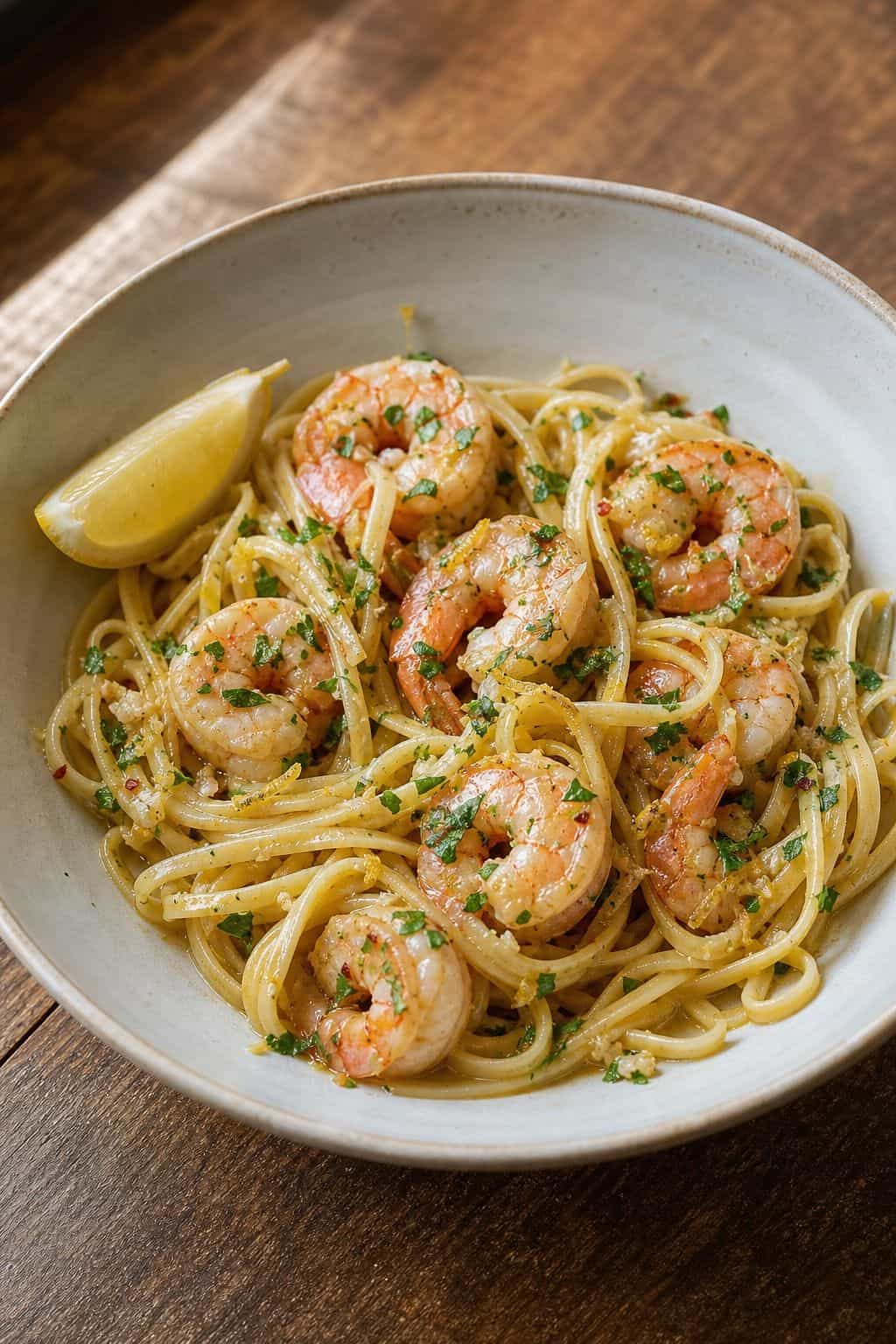
Prep time: 5 minutes | Cook time: 10 minutes | Total time: 15 minutes | Serves: 4
Ingredients
- 500 g (1.1 lb) large shrimp (16/20 or 21/25 count), peeled, deveined, patted dry
- 400 g (14 oz) linguine
- 45 ml (3 Tbsp) olive oil
- 60 g (4 Tbsp) unsalted butter, cold, cut into pieces
- 6 cloves garlic, minced fine
- 120 ml (1/2 cup) dry white wine (Pinot Grigio or Sauvignon Blanc)
- Juice of 1 large lemon (about 30 ml / 2 Tbsp)
- Zest of 1/2 lemon
- 15 g (1/4 cup) chopped flat-leaf parsley
- 1/2 tsp red pepper flakes (optional)
- Kosher salt and freshly cracked black pepper
- 120 ml (1/2 cup) reserved pasta water
Instructions
- Bring a large pot of well-salted water to a boil. Add the linguine and cook for the time on the package, minus 1 minute. Before draining, scoop out 120 ml (1/2 cup) of the pasta water and set it aside. Drain the pasta and set aside.
- While the pasta water comes up to a boil, pat the shrimp very dry on paper towels and season lightly with kosher salt and a few grinds of black pepper.
- Heat a heavy 12-inch (30 cm) skillet over medium-high heat for 60 seconds. Add 45 ml (3 Tbsp) olive oil and swirl to coat. When the oil shimmers, add the shrimp in a single layer. Work in two batches if the pan is too small; crowded shrimp steam instead of sear. Cook for 1 minute on the first side, then flip and cook for 1 more minute on the second side, just until the shrimp turn pink and curl. Transfer to a plate and set aside.
- Reduce the heat to medium. Add 15 g (1 Tbsp) of the cold butter to the same pan. When it melts, add the minced garlic and the red pepper flakes if using. Cook for 30 seconds, stirring constantly, until the garlic is fragrant but not browned.
- Pour in 120 ml (1/2 cup) of the white wine and scrape up any browned bits from the bottom of the pan with a wooden spoon. Let the wine simmer for 2 to 3 minutes until reduced by half. The pan should smell strongly of wine and garlic.
- Remove the pan from the heat. Add the remaining 45 g (3 Tbsp) of cold butter, one piece at a time, swirling the pan continuously so each piece melts into the sauce before adding the next. This is the emulsification step that gives the sauce its silky texture. If the sauce looks too thick, add a splash of the reserved pasta water. Stir in the lemon juice and lemon zest.
- Add the drained linguine to the pan and toss with tongs to coat every strand. Return the seared shrimp to the pan and toss again. If the sauce is tight, add a few more tablespoons of pasta water to loosen it.
- Take the pan off the heat and stir in the chopped parsley. Taste and adjust salt and pepper. Serve immediately, with the shrimp arranged on top of the pasta and an extra wedge of lemon on the side.
Notes
The butter goes in off the heat. Adding cold butter to a screaming hot pan causes it to split and the sauce breaks. Pull the pan off the burner first, every time.
Pasta water is the secret weapon. The starchy water helps the sauce cling to the pasta and adjusts the consistency. Reserve before draining; you almost always need it.
If the sauce breaks anyway, whisk in another splash of cold pasta water vigorously to re-emulsify.
Tips and Variations
Why You Pull the Shrimp Out Before Building the Sauce
Shrimp cook in about 2 minutes total. The sauce needs another 3 to 4 minutes to come together. If you leave the shrimp in the pan during the wine reduction and butter mount, they overcook into rubber.
Pull them out at just-pink. They will finish warming through when they go back into the sauce at the end. This single step is what separates restaurant-tender shrimp from chewy home versions.
The Cold-Butter Swirl That Saves the Sauce
Cold butter added off-heat is the French technique called monter au beurre. The butter melts slowly into the warm wine reduction and forms an emulsion. A creamy, glossy sauce that clings to the pasta.
If you add melted or warm butter, it does not emulsify the same way and the sauce stays thin and broken. Cold and off-heat. Non-negotiable.
What Wine and Pasta Swaps Actually Work
Pinot Grigio is the classic choice. Sauvignon Blanc adds more citrus brightness. Unoaked Chardonnay works but goes slightly buttery on its own. Avoid oaked Chardonnay, Riesling, or sweet wines.
If you do not drink alcohol, swap the wine for 60 ml (1/4 cup) chicken or vegetable stock plus 30 ml (2 Tbsp) fresh lemon juice. The flavor profile shifts but the sauce still works. For pasta, angel hair is faster-cooking and lighter. Spaghetti is a fine substitute. Fettuccine is too heavy for this delicate sauce.
How to Make This Dairy-Free
Swap the butter for a quality plant-based butter (Miyoko’s or Earth Balance) and proceed exactly the same way. The off-heat swirl works with plant-based butter too.
Add an extra tablespoon of olive oil at the end for body. The result is slightly less rich than the dairy version but still excellent.
How Long Leftovers Keep and How to Reheat
Leftovers keep 2 days in the fridge in an airtight container. The shrimp overcook on reheat, so this is a make-and-eat dish more than a meal-prep one.
If you must reheat, do it in a skillet over low heat with a splash of water or wine, 90 seconds total. The microwave is the fast track to rubbery shrimp. This dish does not freeze well.
Frequently Asked Questions
Can I use frozen shrimp?
Yes, but thaw them properly first. Move them to the fridge overnight, or in a pinch, place them in a colander under cold running water for 10 to 15 minutes.
Pat them very dry before cooking. Wet shrimp will steam instead of sear and the dish suffers.
What size shrimp is best?
16/20 count (extra-large) or 21/25 (large) are the right sizes. Smaller shrimp overcook in seconds and get lost in the pasta. Bigger shrimp are showy but harder to twirl.
Can I make this without wine?
Yes. Replace the wine with 60 ml (1/4 cup) chicken or vegetable stock plus 30 ml (2 Tbsp) fresh lemon juice. The flavor changes but the sauce still emulsifies properly with the cold butter swirl.
Why did my sauce break or look greasy?
Either the butter was added with the pan still over heat (it split), or there was not enough liquid to emulsify with (not enough wine reduction or pasta water). Pull off-heat, swirl in cold pasta water, and the sauce often comes back together.
What goes on the side?
Crusty bread to soak up the sauce is the classic move. A simple green salad with a sharp vinaigrette balances the richness.
Roasted asparagus or sautéed spinach also pair well. A crisp white wine, finish the bottle you cooked with, closes the loop.
Key Takeaways
- Cook shrimp in olive oil first, pull them out before building the sauce.
- Use drinkable white wine, not cooking wine. Reduce by half.
- Add cold butter off-heat, one piece at a time, swirling the pan. Non-negotiable.
- Reserve pasta water before draining; you will need it to adjust the sauce.
- Linguine 1 minute shy of al dente finishes in the sauce.
Final Thoughts
Shrimp scampi is one of those Italian-American dishes that punches above its prep time. Fifteen minutes from cold pan to plated dinner, and it eats like something you would order at a red-sauce joint with white tablecloths.
The split-medium cooking (olive oil for the shrimp, cold butter for the sauce) and the wine reduction are the two moves that separate the home version from the restaurant version. Get those right and the rest follows.
Make it on a weeknight when you want something fast that still feels like an occasion. Pair with a crisp white wine and crusty bread. The bottle you cooked with is the bottle you pour at the table.
Garlic Butter Shrimp Scampi
Shrimp scampi tastes restaurant-quality at home when you cook the shrimp in olive oil first (not butter), pull them out, then build the sauce in the same pan with white wine reduced by half before swirling cold butter in off-heat.
Ingredients
- 500 g (1.1 lb) large shrimp (16/20 or 21/25 count), peeled, deveined, patted dry
- 400 g (14 oz) linguine
- 45 ml (3 Tbsp) olive oil
- 60 g (4 Tbsp) unsalted butter, cold, cut into pieces
- 6 cloves garlic, minced fine
- 120 ml (1/2 cup) dry white wine (Pinot Grigio or Sauvignon Blanc)
- Juice of 1 large lemon (about 30 ml / 2 Tbsp)
- Zest of 1/2 lemon
- 15 g (1/4 cup) chopped flat-leaf parsley
- 1/2 tsp red pepper flakes (optional)
- Kosher salt and freshly cracked black pepper
- 120 ml (1/2 cup) reserved pasta water
Instructions
- Bring a large pot of well-salted water to a boil. Add the linguine and cook for the time on the package, minus 1 minute. Before draining, scoop out 120 ml (1/2 cup) of the pasta water and set it aside. Drain the pasta and set aside.
- While the pasta water comes up to a boil, pat the shrimp very dry on paper towels and season lightly with kosher salt and a few grinds of black pepper.
- Heat a heavy 12-inch (30 cm) skillet over medium-high heat for 60 seconds. Add 45 ml (3 Tbsp) olive oil and swirl to coat. When the oil shimmers, add the shrimp in a single layer.
- Reduce the heat to medium. Add 15 g (1 Tbsp) of the cold butter to the same pan. When it melts, add the minced garlic and the red pepper flakes if using. Cook for 30 seconds, stirring constantly, until the garlic is fragrant but not browned.
- Pour in 120 ml (1/2 cup) of the white wine and scrape up any browned bits from the bottom of the pan with a wooden spoon. Let the wine simmer for 2 to 3 minutes until reduced by half. The pan should smell strongly of wine and garlic.
- Remove the pan from the heat. Add the remaining 45 g (3 Tbsp) of cold butter, one piece at a time, swirling the pan continuously so each piece melts into the sauce before adding the next. This is the emulsification step that gives the sauce its silky texture.
- Add the drained linguine to the pan and toss with tongs to coat every strand. Return the seared shrimp to the pan and toss again. If the sauce is tight, add a few more tablespoons of pasta water to loosen it.
- Take the pan off the heat and stir in the chopped parsley. Taste and adjust salt and pepper. Serve immediately, with the shrimp arranged on top of the pasta and an extra wedge of lemon on the side.
Notes
The butter goes in off the heat. Adding cold butter to a screaming hot pan causes it to split and the sauce breaks. Pull the pan off the burner first, every time.
Pasta water is the secret weapon. The starchy water helps the sauce cling to the pasta and adjusts the consistency. Reserve before draining; you almost always need it.
Last update on 2026-08-09 / Affiliate links / Images from Amazon Product Advertising API
10/10!!! This meal came out FANTASTIC! Husband said it was the beast meal I’ve ever cooked 🙌🏽🤪
Great tasting but I had to add extra butter lemon juice a white wine for extra sauce.