

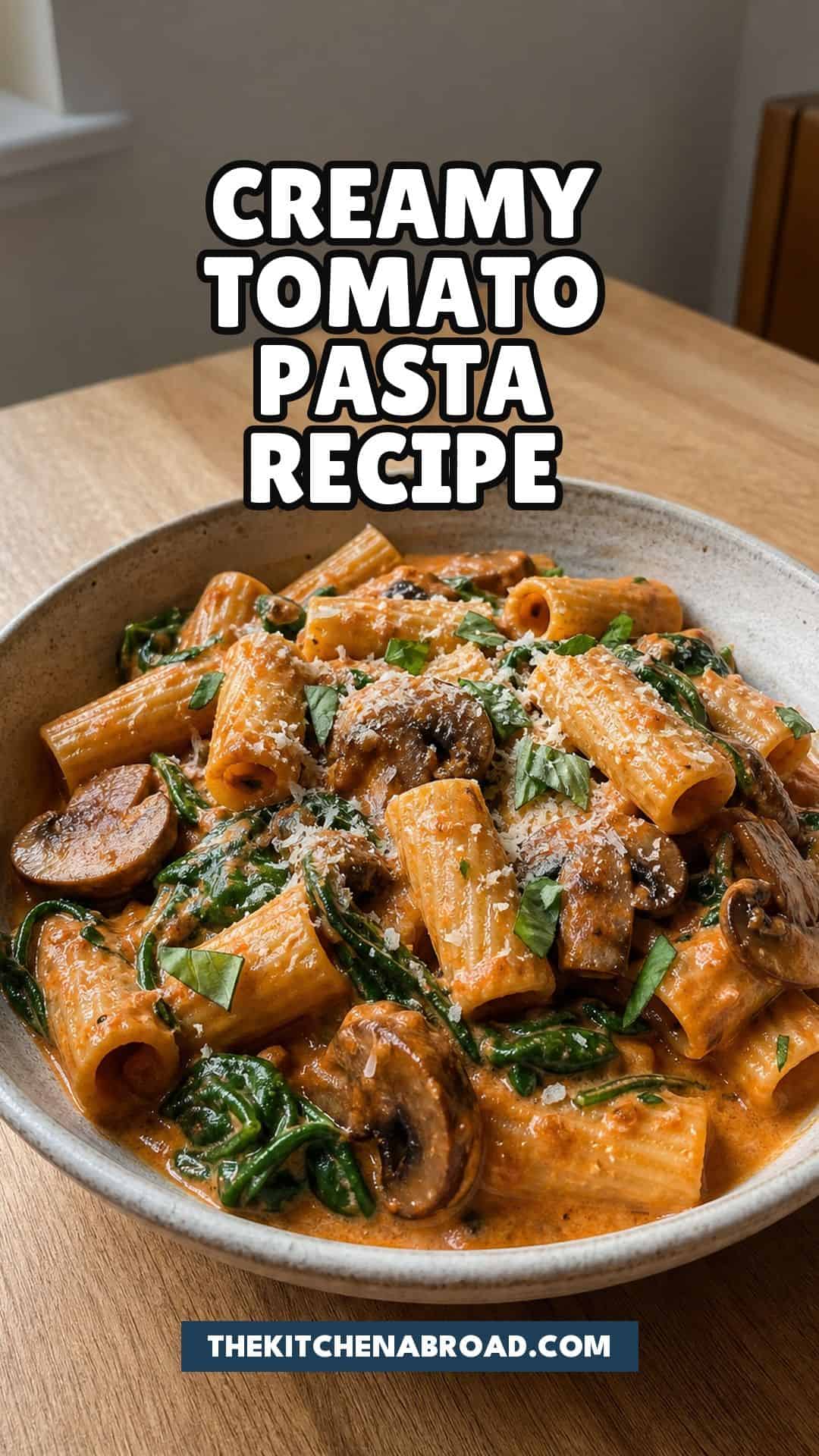
Creamy tomato pasta with spinach and mushrooms is sliced mushrooms dry-sautéed until deeply browned, removed from the pan, then a tomato-cream sauce built with garlic, shallots, tomato paste, crushed tomatoes, and heavy cream. The mushrooms are returned to the sauce, baby spinach wilted last, and the dish finished with parmesan and basil. Total time about 30 minutes. Serves 4.
Most weeknight pasta is fine. This one fixes the two things every home cook does wrong with mushrooms and spinach. The mushroom problem is crowding. Slice mushrooms and dump them into a pan with oil and they release a flood of water that drops the pan temperature, which means the mushrooms steam rather than brown. The fix is dry sautéing: heat the pan empty, add the sliced mushrooms with no oil, and let them release their water and reabsorb it as the pan heats. Only after the mushrooms have fully browned do you add oil, garlic, and the rest of the sauce ingredients. The result is mushrooms with the texture and color of restaurant-roasted mushrooms instead of the pale rubbery ones home cooks usually produce.
The spinach problem is timing. Spinach wilts in 45 seconds at any temperature above a simmer, but home cooks tend to add it early in the sauce build, which means it cooks for 5 to 10 minutes and turns into the army-green stringy mush we all remember from school cafeterias. The fix is adding the spinach in the last 60 seconds of the cook. Stir it through the hot sauce, watch it wilt, turn off the heat. The spinach keeps its color, retains a slight bite, and integrates into the sauce as discrete green leaves rather than dissolving into the cream.
The rest is standard pasta sauce technique with one specific. Tomato paste fried for 30 seconds in oil before the crushed tomatoes go in transforms the paste from sharp acidic concentrate into a sweet, deeply tomatoey base. This is called “blooming” the tomato paste, and it is the difference between sauce that tastes like a can of tomatoes opened five minutes ago and sauce that tastes like it has been simmering for an hour. Then the crushed tomatoes, the cream, the returned mushrooms, the late spinach, and the finishing parmesan and basil. Twenty-five minutes start to finish if the pasta water is boiling when you start. Metric and imperial throughout.
What You’ll Need to Make This Recipe
A heavy 12-inch sauté pan or 6-quart pot for building the sauce and finishing the pasta together. HOMICHEF stainless or any wide heavy pan works. A pasta pot for cooking the pasta itself. A wooden olivewood spoon or spatula for stirring without scratching. A microplane for grating fresh parmesan. Long tongs for tossing the pasta with the sauce. An olive oil dispenser for clean controlled pouring.


Recommended Reads
- Aglio Olio Pasta Recipe
- Gochujang Pasta Recipe (Creamy, Spicy, 20 Minutes)
- Greek Pasta Salad Recipe
- Creamy Tuscan Shrimp Recipe (Sun-Dried Tomato, 20 Minutes)
- Chicken Parmesan Recipe (Crispy, Italian-American Classic)
Why Dry-Sautéing Mushrooms Works
Mushrooms are about 92 percent water by weight, almost identical to cauliflower. When sliced mushrooms hit a hot oiled pan, the cells rupture and release a flood of internal water. That water lowers the pan temperature from sauté range (180 to 200°C) down to simmer range (95 to 100°C), and the mushrooms boil in their own juices instead of browning. Dry sautéing reverses the order. The empty pan is heated to high. The mushrooms go in with no fat. As they heat, they release water that immediately turns to steam and evaporates, taking heat with it but also concentrating the mushroom flavor in what remains. Once most of the water has cooked off (about 5 to 7 minutes), the mushrooms are dry on the pan surface and start to brown through direct conduction. Now add oil, garlic, and the rest.
The remove-and-return technique is the second mushroom-specific move. Once the mushrooms are deeply browned, scoop them out of the pan and set aside on a plate. Build the sauce in the empty pan. The mushrooms re-enter the dish at the end, when the sauce has finished. This prevents the mushrooms from absorbing too much of the tomato cream and turning mushy by the time the dish is plated. Mushrooms held aside stay firm and individually distinct in the finished pasta.
The tomato-paste-bloom is the third technique that elevates a generic creamy tomato sauce into something that tastes properly cooked. After the mushrooms come out, add oil to the pan, then add 2 tablespoons of tomato paste. Stir for 30 seconds over medium heat until the paste darkens slightly from bright red to deep brick red and the raw acidic smell turns into a sweeter caramelized one. This brief fry is what transforms tomato paste from sharp ingredient to deep sauce base. Add the crushed tomatoes next; they cover the paste before it can burn.
Creamy Tomato Pasta Ingredients, Briefly
Pasta. 400 g (about 14 oz) of penne, rigatoni, fettuccine, or pappardelle. Short ridged shapes work best because the ridges hold the sauce. Long flat shapes also work well. Spaghetti and angel hair are too thin for this sauce.
Cremini or baby bella mushrooms. 350 g (about 12 oz), sliced about 5 mm (¼ inch) thick. Cremini have more flavor than white button mushrooms. Shiitake or maitake also work and add a deeper umami note.
Olive oil. 3 tablespoons. Used twice: a small splash to finish the mushroom cook, and the rest for building the sauce.
Aromatics. 1 small shallot finely diced and 4 garlic cloves finely chopped. Shallot and garlic together build a deeper aromatic base than garlic alone.
Tomato paste. 2 tablespoons. The bloom step needs concentrated tomato paste; do not substitute crushed or canned tomato.
Crushed tomatoes. One 800 g (28 oz) can of high-quality crushed tomatoes. San Marzano DOP is the premium choice; Cento or Mutti are solid mid-range options.
Heavy cream. 120 ml (½ cup). Adds the creamy element. Half and half makes a thinner sauce but works in a pinch. Plant-based heavy cream substitutes also work for dairy-free versions.
Baby spinach. 150 g (about 5 oz), washed. Goes in at the very end. Frozen spinach works as a substitute (squeeze dry first); use about half the quantity.
Parmesan cheese. 60 g (about ¾ cup) grated fresh. Some for finishing in the sauce, some for sprinkling on plated portions.
Fresh basil. 10 leaves, torn or chiffonade-cut. Off-heat at the end.
Salt, black pepper, red pepper flakes. Standard seasonings. The red pepper flakes are optional but add background warmth.
Tips and Variations
Dry sauté the mushrooms first. Empty pan, no oil, sliced mushrooms in. Stir occasionally for 5 to 7 minutes until the released water has cooked off and the mushrooms start to brown. Only then add a splash of olive oil and finish browning for 2 more minutes.
Bloom the tomato paste. Add 2 tablespoons of tomato paste to the empty pan after the mushrooms come out. Stir over medium heat for 30 seconds until darkened from bright red to brick red. This is the move most home recipes skip.
Spinach goes in last. 60 seconds before plating. Add the spinach to the finished sauce, stir until wilted (about 45 seconds), turn off the heat. Adding spinach earlier turns it into mushy stringy green.
Pasta water emulsion. Reserve a mug of starchy pasta water before draining. Add a small splash to the finished sauce if it looks too thick; the starch in the water binds the sauce to the pasta. Most home sauces are made too thick because cooks forget this step.
Variations. Add chopped pancetta or guanciale at the start instead of dry sautéing mushrooms first; render the fat and use it for the sauce build. Use crème fraîche instead of heavy cream for a slightly tangier finish. Add a handful of sun-dried tomatoes (oil-packed, sliced) when the crushed tomatoes go in for deeper tomato flavor. Substitute kale or chard for spinach; add 2 minutes earlier since they need slightly more wilting time.
What to serve with creamy tomato pasta. Garlic bread or focaccia for sopping the sauce. A simple arugula salad with lemon vinaigrette. Sautéed broccolini on the side. As a centerpiece dish, the pasta does not need much else.
Storage and reheat. Refrigerated in an airtight container, 3 days. Reheat in a pan with a splash of pasta water or milk over medium heat for 4 minutes, stirring. Microwave reheating works but the sauce can break (separate); stir well before serving.
Recipe: Creamy Tomato Pasta with Spinach and Mushrooms
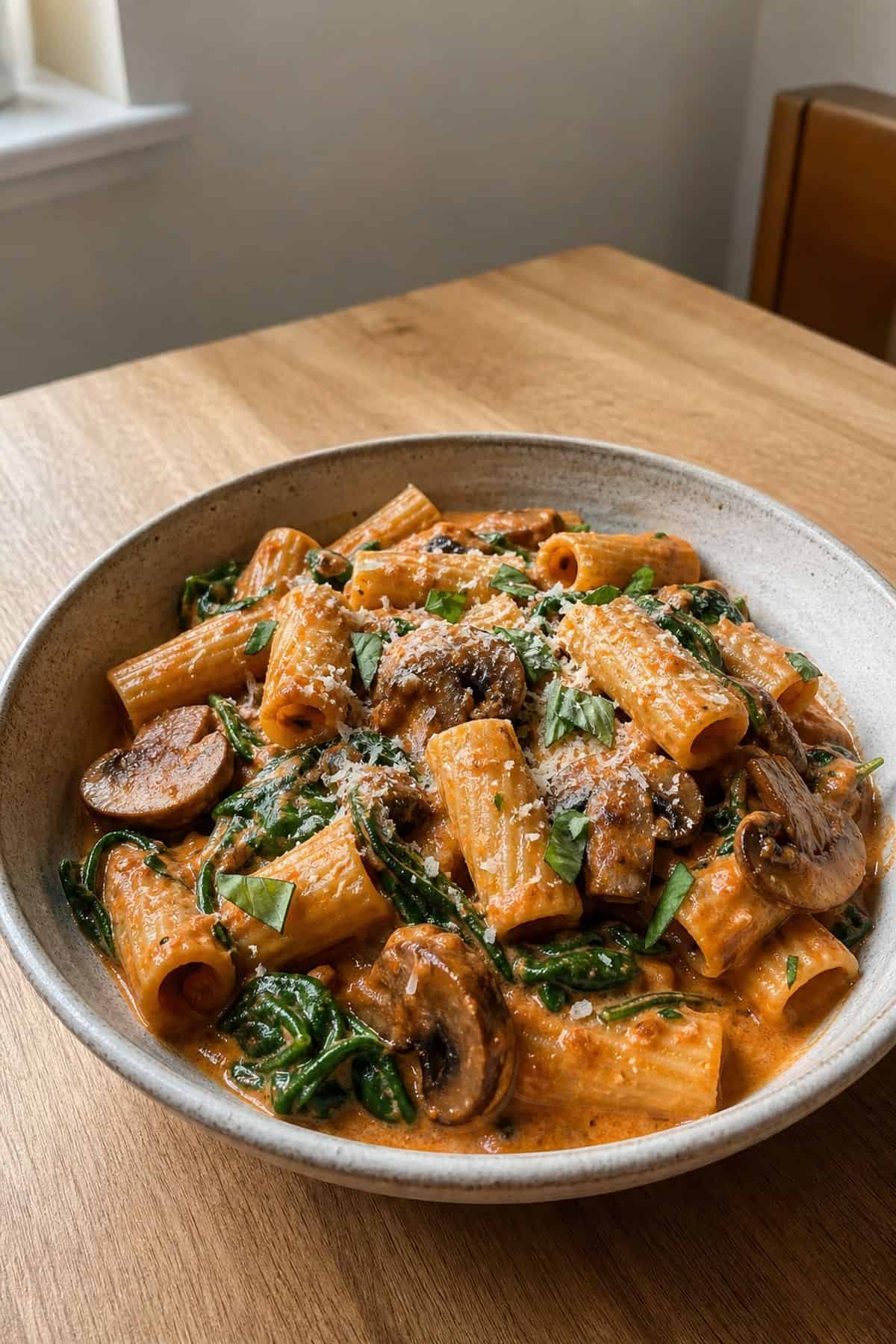
Prep Time: 10 minutes | Cook Time: 20 minutes | Total Time: 30 minutes | Servings: 4
Ingredients
- 400 g (14 oz) penne, rigatoni, or fettuccine
- 350 g (12 oz) cremini mushrooms, sliced 5 mm thick
- 3 tbsp (45 ml) olive oil, divided
- 1 small shallot, finely diced
- 4 garlic cloves, finely chopped
- 2 tbsp tomato paste
- 1 can (800 g / 28 oz) crushed tomatoes (San Marzano if possible)
- 120 ml (½ cup) heavy cream
- 150 g (5 oz) baby spinach, washed
- 60 g (¾ cup) freshly grated parmesan, plus more for serving
- 10 fresh basil leaves, torn or chiffonade
- 1 tsp fine sea salt, plus pasta-water salt
- ½ tsp freshly ground black pepper
- ¼ tsp red pepper flakes (optional)
Instructions
- Bring a large pot of well-salted water to a boil for the pasta.
- Heat a heavy 12-inch sauté pan over medium-high heat for 60 seconds. Add the sliced mushrooms in a single layer with no oil. Stir occasionally for 5 to 7 minutes. The mushrooms will release water, the water will cook off, and the mushrooms will begin to brown.
- Add 1 tablespoon of olive oil to the now-dry mushrooms. Continue cooking for another 2 minutes, stirring, until the mushrooms are deeply golden. Transfer to a plate. Wipe out the pan if it has any burnt bits.
- Add the pasta to the boiling water. Cook for the time on the package, minus 1 minute (for al dente).
- While the pasta cooks, return the sauté pan to medium heat. Add the remaining 2 tablespoons of olive oil. Add the shallot and cook for 90 seconds until softened. Add the garlic and cook for another 30 seconds.
- Add the tomato paste. Stir vigorously for 30 seconds until the paste darkens from bright red to deep brick red.
- Pour in the crushed tomatoes. Bring to a simmer. Stir in the salt, black pepper, and red pepper flakes. Simmer for 5 minutes to reduce slightly.
- Stir in the heavy cream. Simmer for 2 more minutes.
- Return the mushrooms to the pan. Reserve 1 cup of pasta water, then drain the pasta and add it directly to the sauce. Toss with tongs to coat. Add a splash of pasta water if the sauce is too thick.
- Add the baby spinach. Stir for 45 to 60 seconds until just wilted. Turn off the heat.
- Stir in the grated parmesan and torn basil. Taste and adjust salt and pepper.
- Plate immediately. Top each serving with additional grated parmesan and a few extra basil leaves.
Notes
Dry sauté the mushrooms first. Empty pan, no oil, sliced mushrooms in. The dry sauté concentrates flavor and prevents the steamed-out texture that ruins most home mushroom dishes.
Bloom the tomato paste. 30 seconds of stirring in oil transforms the paste from sharp acidic concentrate into a deep sweet sauce base. The single most underused technique in home Italian cooking.
Spinach goes in last. 60 seconds at most. Adding earlier turns spinach into army-green mush.
Reserve pasta water. Salty starchy water binds sauce to pasta. Add a splash if the sauce is too thick.
Storage. 3 days refrigerated. Reheat with a splash of milk or pasta water.
Frequently Asked Questions
Why dry-sauté the mushrooms instead of cooking them in oil?
Mushrooms are 92 percent water by weight. Tossing them into a hot oiled pan causes the cells to rupture and release a flood of water that drops the pan temperature into simmer range, which means the mushrooms steam instead of brown. Dry sautéing in an empty pan allows the water to evaporate first, then the mushrooms brown through direct conduction once dry. The result is deeply browned mushrooms with concentrated flavor instead of pale rubbery ones.
What is blooming tomato paste and why does it matter?
Blooming means stirring tomato paste in hot oil for about 30 seconds until it darkens from bright red to deep brick red. This brief cook transforms the paste from a sharp acidic concentrate into a sweet caramelized base, the difference between sauce that tastes opened-from-the-can and sauce that tastes properly cooked. The bloom is the single most underused technique in home Italian cooking.
Can I use frozen spinach instead of fresh?
Yes, with adjustments. Use about half the quantity by weight (frozen spinach is denser). Thaw fully and squeeze out as much water as possible before adding to the sauce. Add at the same point as fresh spinach (last 60 seconds), just to warm through.
What pasta shape works best for this sauce?
Penne, rigatoni, and other short ridged shapes hold the sauce best because the ridges and tubes catch the cream-tomato mixture. Fettuccine and pappardelle also work well; the wide flat ribbons get fully coated. Avoid spaghetti and angel hair for this sauce; they are too thin to support the heavy creamy tomato coating.
How can I make this dairy-free?
Substitute the heavy cream with full-fat coconut milk or a plant-based heavy cream alternative (Country Crock Plant Cream or similar). Replace the parmesan with nutritional yeast plus a sprinkle of vegan parmesan. The result is slightly less rich but still satisfying. Cashew cream blended from soaked cashews also works as a substitute for heavy cream.
Can I make this ahead of time?
The sauce can be made 1 to 2 days ahead and refrigerated. Reheat in a pan over medium heat, then toss with freshly cooked pasta and add the spinach at the end. Do not combine sauce with pasta and store; the pasta absorbs too much sauce and becomes mushy. Store sauce and pasta separately if making ahead.
Key Takeaways
- Dry-sauté the mushrooms in an empty pan first. No oil until they have released their water and started to brown.
- Remove the browned mushrooms before building the sauce. Return them at the very end to keep them firm and distinct.
- Bloom the tomato paste in oil for 30 seconds before adding the crushed tomatoes. This transforms the paste from acidic concentrate into a sweet sauce base.
- Add the baby spinach in the last 60 seconds of cooking. Earlier and it turns to army-green mush.
- Reserve a cup of pasta water before draining. The starchy water binds the sauce to the pasta and rescues an over-thick sauce.
Weeknight pasta. Thirty minutes, one pan, two lunch portions banked for tomorrow. The trick is to dry-sauté the mushrooms in an empty hot pan before any oil goes in, which lets them actually brown instead of steaming into pale rubber, and then to add the spinach in the very last sixty seconds before plating so it stays green and tender instead of dissolving into the cream.
Final Thoughts
Creamy tomato pasta with spinach and mushrooms is the kind of weeknight dinner that takes thirty minutes and feels like the result of two hours of work. The two small technique upgrades (dry-sauté mushrooms, bloom the paste) are the difference between adequate home pasta and pasta that tastes like a restaurant kitchen made it.
Make a double batch on a Sunday and have lunch boxes for two days plus dinner. The sauce reheats well, the leftover pasta absorbs flavor overnight, and the dish is the kind of comfort food worth keeping in the regular rotation.
Last update on 2026-10-04 / Affiliate links / Images from Amazon Product Advertising API
