

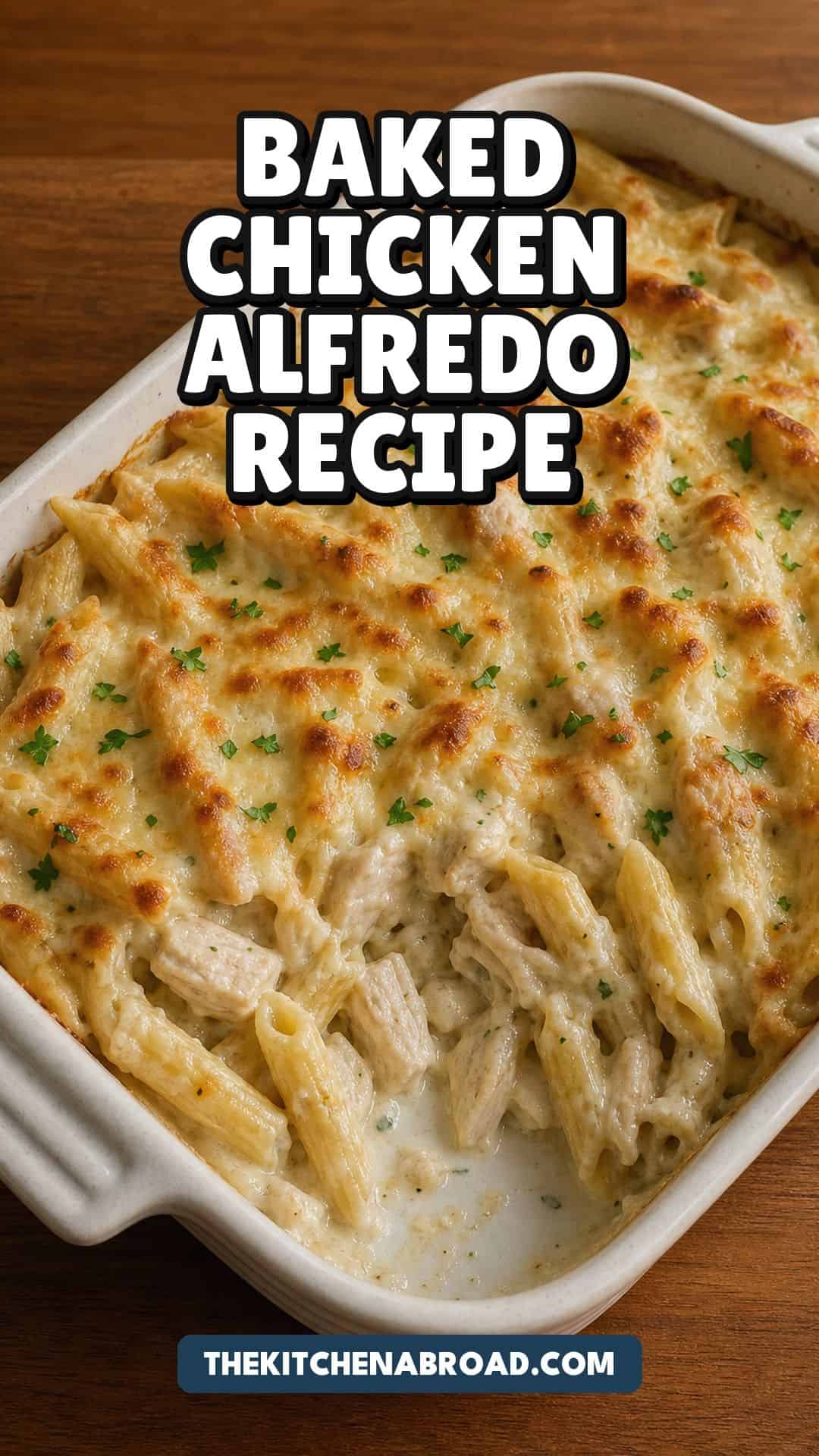
Baked chicken alfredo is penne tossed with a béchamel-stabilized alfredo sauce, cooked chicken, and shredded mozzarella, baked covered for 20 minutes and then uncovered for 10 to brown the top. The roux at the base of the sauce keeps the cream from breaking under oven heat. Total time about 45 minutes. Serves 6.
Final Thoughts
Baked chicken Alfredo is the casserole version of a restaurant indulgence. It scales beautifully for a crowd, holds together as leftovers, and feeds the kind of dinner where everyone wants seconds.
The freshly-grated parmesan rule is the single biggest factor in whether the sauce reads as silky or grainy. Skip the pre-shredded shortcut, even when you are tired. Five minutes of grating saves the whole dish.
Make it for a Sunday family dinner, a casual dinner party, or as the centerpiece of a comfort-food night. A green salad with sharp vinaigrette cuts the richness and rounds out the meal.
Most home alfredo bakes have the same problem: the sauce separates in the oven. Cream and parmesan tossed straight onto pasta and slid into a hot oven will split within twenty minutes. The result is greasy puddles around the pasta and a cheese layer that bubbles into oil.
The fix is a béchamel base. Melt butter, whisk in flour to make a quick roux, then milk to form a thin béchamel before adding the cream and parmesan. The starch in the flour stabilizes the emulsion and the sauce stays silky through a 30-minute bake. A heavy 6-quart pan for building the sauce, a sharp microplane for the parmesan, and a whisk for the roux do the work.
What You’ll Need


Recommended Reads
- Chicken Parmesan Recipe (Crispy, Italian-American Classic)
- Creamy Tomato Pasta with Spinach and Mushrooms
- Creamy Tuscan Shrimp Recipe (Sun-Dried Tomato, 20 Minutes)
- Aglio Olio Pasta Recipe
- Classic Vegetarian Lasagna
The Sauce
An emulsion is a stable suspension of fat in water (or water in fat). Cream and butter are already emulsions. Parmesan whisked into cream is a thicker emulsion. The problem with a straight cream-plus-cheese alfredo in the oven is that the heat over time breaks the emulsion. The fat separates out, the proteins seize into curds, and you end up with greasy pasta. Stabilizers fix this. Cornstarch works. Egg yolks work. A small amount of flour cooked into butter (a roux) works best because it both stabilizes and slightly thickens the sauce in a way that holds up to oven heat.
The roux ratio for this dish is 3 tablespoons of butter to 3 tablespoons of flour, cooked for 60 seconds until the mixture smells faintly nutty and the floury raw taste has cooked off. Whisk in a cup and a half of warm milk slowly to form a thin béchamel. Now add the cream, simmer for a minute or two until slightly thickened, and only then add the grated parmesan off-heat. Adding parmesan to hot cream (over 80°C) is what makes the cheese seize and turn the sauce grainy. Off-heat stirring melts the parmesan smoothly into the sauce. The finished sauce should coat the back of a spoon without pooling at the bottom.
The Italian-American Origin of Alfredo
Fettuccine Alfredo started at a Rome restaurant in 1908 when Alfredo di Lelio created butter-and-parmesan fettuccine for his wife who was struggling with appetite after childbirth. The dish was three ingredients: pasta, butter, parmesan. The cream came later, in America. When Hollywood couple Mary Pickford and Douglas Fairbanks ate at Alfredo’s during their 1920 honeymoon, they brought the recipe back to the U.S., where home cooks added heavy cream to compensate for less-flavorful American butter. The baked, casserole-style Alfredo with chicken is pure American invention, born in the 1970s suburban kitchen and never seen in Italy. None of that makes it bad. It just makes it a different dish than what Alfredo originally cooked.
A Few Notes on the Ingredients
Fettuccine: 1 lb (450 g) quality dried pasta (De Cecco, Rummo, or Garofalo). Cook 2 minutes shy of al dente so it finishes in the sauce during the bake. Skip fresh pasta for this dish; it’s too delicate for the bake and turns to glue.
Heavy cream: 500 ml, full-fat. Half-and-half makes the sauce thinner; milk breaks at the bake temperature and curdles. Heavy cream is the right call.
Freshly grated parmesan (not pre-shredded): The pre-shredded stuff is coated in cellulose to prevent clumping, and that coating prevents the cheese from melting smoothly. Buy a block of Parmigiano-Reggiano (or quality domestic parmesan if budget is tight) and grate it yourself on a microplane. The whole sauce changes.
Chicken: 600 g shredded meat from a standard rotisserie bird is the weeknight win. Pan-seared chicken breasts or thighs work too if you want a slightly more substantial bite; cube them after cooking.
Butter and garlic: Unsalted butter, real, plus 4 cloves of garlic minced fine. The aromatic base of the sauce.
Pinch of grated nutmeg: Non-negotiable. It lifts the cream from heavy to interesting in a way nothing else does.
Kosher salt and freshly cracked black pepper: Salt at every stage. Under-salted cream sauce reads as flat.
Recipe: Baked Chicken Alfredo
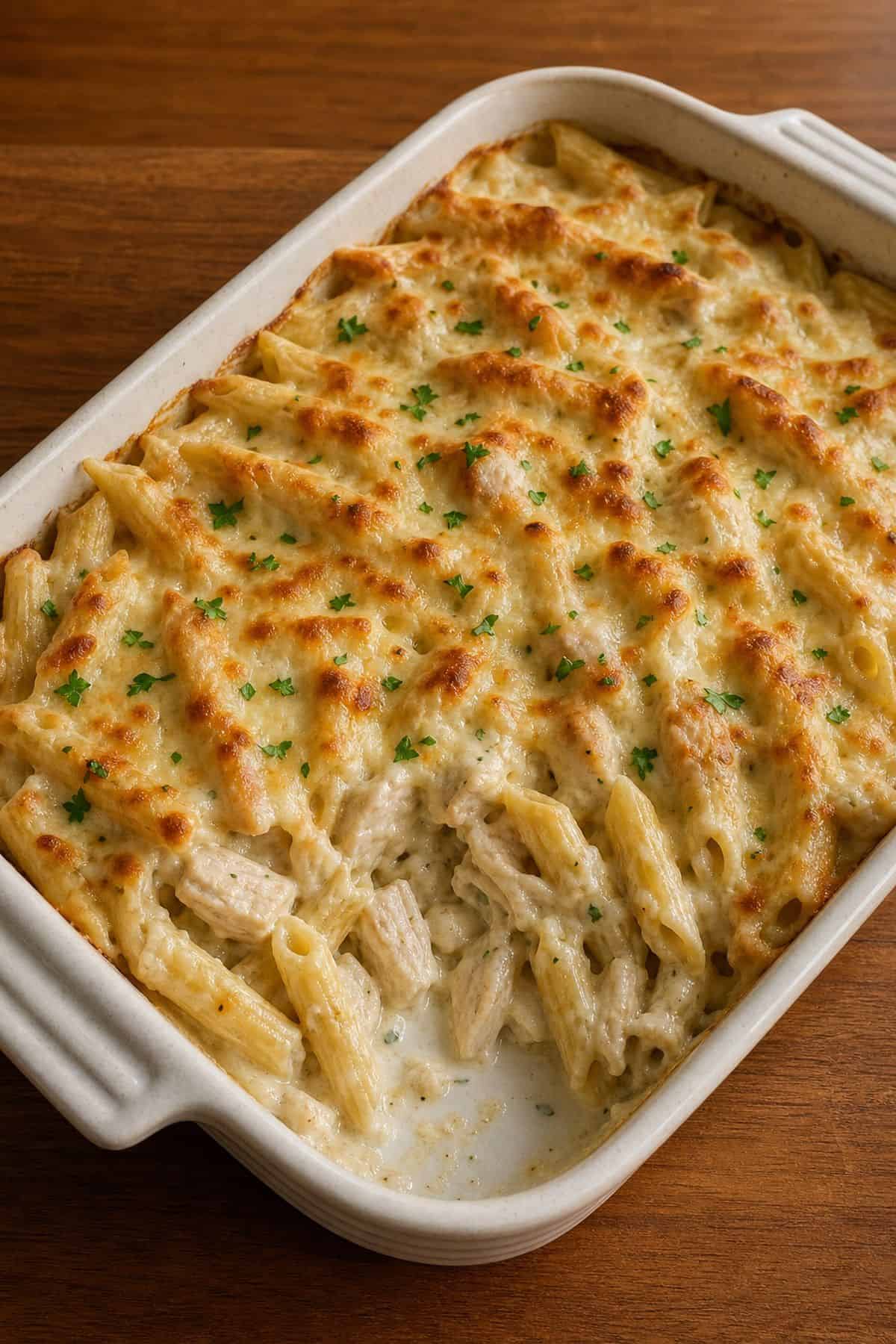
Prep Time: 15 minutes | Cook Time: 30 minutes | Total Time: 45 minutes | Servings: 6
Ingredients
- 450 g (1 lb) penne or rigatoni
- 600 g (about 4 cups) cooked chicken, shredded or cubed
- 3 tbsp (45 g) unsalted butter
- 4 garlic cloves, finely chopped
- 3 tbsp (24 g) all-purpose flour
- 360 ml (1½ cups) whole milk, warmed
- 240 ml (1 cup) heavy cream
- 90 g (1 cup) freshly grated Parmigiano-Reggiano
- 200 g (2 cups shredded) low-moisture mozzarella, divided
- 1 tsp fine sea salt, plus salt for the pasta water
- ½ tsp freshly ground black pepper
- ¼ tsp freshly grated nutmeg
- 2 tbsp chopped fresh parsley or basil for garnish
Make the Sauce
- Bring a large pot of well-salted water to a boil. Add the pasta. Cook 2 minutes less than the package directions for al dente. Drain and set aside.
- While the pasta cooks, melt the butter in a heavy 6-quart pan over medium heat. Add the chopped garlic and cook for 30 seconds.
- Whisk in the flour. Cook for 60 seconds, stirring constantly, until the mixture smells faintly nutty.
- Slowly whisk in the warmed milk in a steady stream. Continue whisking until the sauce is smooth and starts to thicken, about 3 minutes.
- Stir in the heavy cream. Bring to a low simmer. Cook for 2 minutes, stirring, until the sauce coats the back of a spoon. Remove from the heat.
- Off the heat, stir in the grated parmesan. Add the salt, black pepper, and nutmeg. Taste and adjust seasoning.
Assemble
- Preheat the oven to 190°C (375°F).
- Add the drained pasta and cooked chicken to the sauce. Toss to coat everything evenly.
- Transfer half of the pasta mixture to a 9×13 baking dish or shallow Dutch oven. Sprinkle half of the mozzarella over the top.
- Add the remaining pasta on top. Sprinkle the remaining mozzarella over the surface.
Bake
- Cover the dish tightly with foil. Bake for 20 minutes.
- Remove the foil. Continue baking for 10 minutes, until the cheese is bubbling and the top is starting to brown.
- For a more browned top, switch the oven to broil for 90 seconds with the rack in the upper third. Watch closely.
- Remove from the oven. Let rest for 5 minutes before serving. Scatter with chopped parsley or basil.
Tips and Variations
Why Freshly Grated Parmesan Matters More Than Anything Else
The pre-shredded parmesan from the dairy aisle is coated in cellulose to prevent clumping. That coating prevents the cheese from melting smoothly, leaving graininess in your sauce. Buy a block of Parmigiano-Reggiano (or domestic parmesan if budget is tight) and grate it yourself on a microplane or box grater. The whole sauce changes. This is the one shortcut that genuinely costs you the dish.
Why You Cook the Pasta Short and Finish in the Sauce
Cook the fettuccine 2 minutes shy of al dente, drain it, and finish it in the sauce as the casserole bakes. The pasta absorbs the cream and parmesan as it finishes cooking, which means every strand carries flavor instead of acting as a vehicle. If you cook the pasta fully before baking, it overcooks during the bake and turns mushy.
What Cream, Cheese, and Pasta Swaps Work
Half-and-half swaps for heavy cream but the sauce will be thinner; reduce 2-3 extra minutes to compensate. Pecorino Romano subs for parmesan but is saltier, so cut the added salt in half. Penne, rigatoni, or farfalle all work in place of fettuccine and actually catch the sauce better. The one swap that doesn’t work: milk for cream. Milk breaks at the temperature this casserole bakes at and leaves you with a curdled sauce.
How to Make This Vegetarian Without Losing the Body
Drop the chicken and add 8 oz cremini mushrooms, sliced and sautéed in butter until deeply browned, plus 2 cups baby spinach wilted in at the end. The mushrooms give the umami the chicken would have provided; the spinach adds the green-vegetable note. Vegetable broth replaces any chicken broth. The result reads as its own dish, not a chicken Alfredo with the chicken missing.
How Long Leftovers Keep and Whether to Freeze
Refrigerated leftovers keep 3 days in an airtight container. Reheat covered at 325°F with a splash of milk or cream stirred in to loosen the sauce, the microwave splits the cream and turns the texture grainy. Cream-based baked pastas do not freeze well; the sauce separates on thaw and the pasta turns spongy. Make and eat within the 3-day window.
Frequently Asked Questions
Why does my alfredo sauce break in the oven?
A standard cream-and-parmesan alfredo is an unstable emulsion. Held at oven heat for 20 to 30 minutes, the fat separates out and the proteins seize into greasy curds. The béchamel-stabilized version below uses a small amount of flour cooked into butter (a roux) as the base. The starch from the flour stabilizes the emulsion and keeps the sauce silky through the bake.
Can I use rotisserie chicken?
Yes. Shredded rotisserie chicken is the easiest option and works well for this dish. About 600 g (4 cups) of pulled meat from a standard rotisserie bird is the right amount. Pan-seared chicken breasts or thighs work too if you want a slightly more substantial bite; cube them after cooking.
What pasta shape works best?
Penne and rigatoni both work well because the short tubes hold the sauce inside. Rigatoni has slightly wider tubes and holds sauce a touch better. Avoid spaghetti or angel hair; long thin shapes do not hold up to the baking time and turn mushy.
Can I make this dish ahead of time?
Yes. Assemble the dish completely, cover with foil, and refrigerate for up to 24 hours. When baking from cold, add 5 to 8 minutes to the covered bake time. Do not freeze; the sauce texture changes unpleasantly on thawing.
How do I keep the sauce from drying out during the bake?
The covered first stage of the bake is what keeps moisture in. Twenty minutes covered traps steam from the sauce and keeps the pasta from drying. Only after the dish is heated through does the foil come off for the second 10-minute stage, when the top browns. Skipping the covered stage produces a dry top layer and undercooked center.
What do I serve with baked chicken alfredo?
A simple green salad with vinaigrette is the right counterweight to the richness. Garlic bread or focaccia for sopping the sauce. Roasted broccoli or steamed green beans for a vegetable. A glass of dry white wine like Pinot Grigio or Sauvignon Blanc cuts through the cream nicely.
Key Takeaways
- The roux is what stabilizes the sauce. 3 tablespoons of butter plus 3 tablespoons of flour, cooked 60 seconds, then milk and cream.
- Add the parmesan off-heat. Hot cream over 80°C makes parmesan seize and turn the sauce grainy.
- Cook the pasta 2 minutes short of al dente. It finishes in the oven and overcooks if you pre-cook it all the way.
- Layer the mozzarella twice: half in the middle of the assembled dish and half on top for the brown finish.
- Bake covered for 20 minutes, then uncovered for 10. The covered first stage keeps moisture in; the uncovered second stage browns the top.
Last update on 2026-10-04 / Affiliate links / Images from Amazon Product Advertising API
