
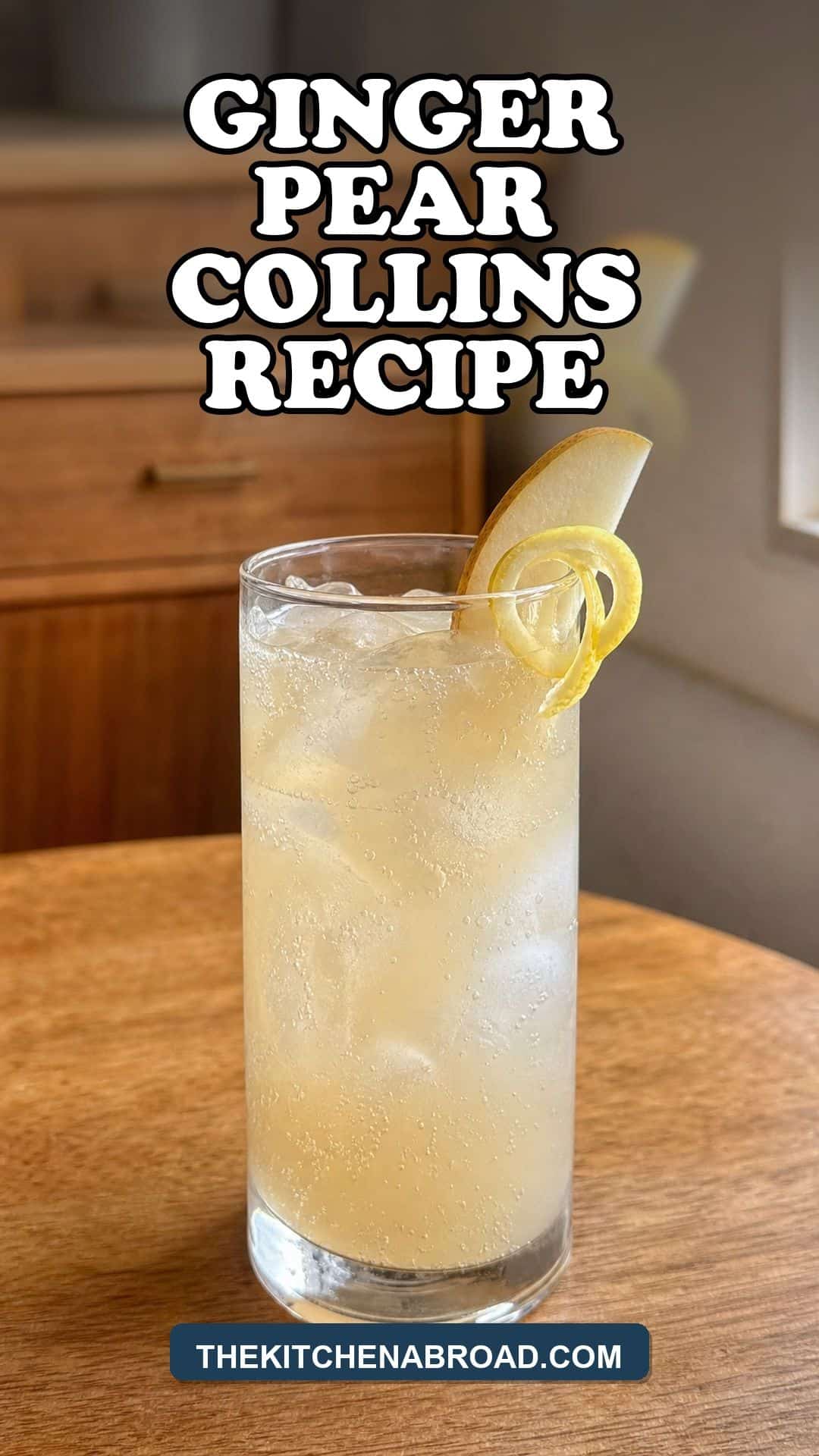
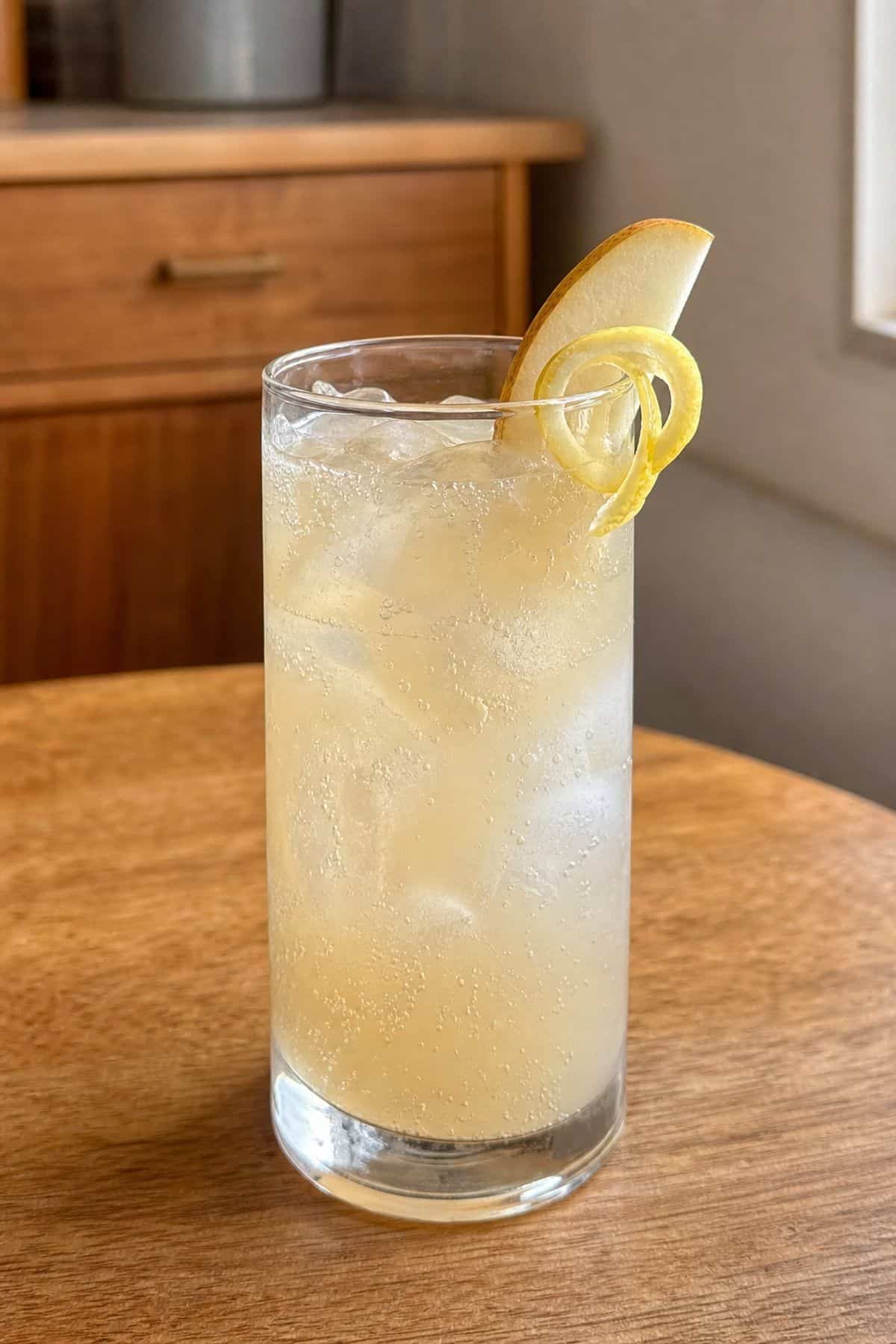
A ginger pear collins recipe is the Tom Collins template swapped for autumn: 1.5 oz London Dry gin, 1 oz fresh pear purée, 0.75 oz fresh lemon juice, 0.5 oz homemade ginger syrup, shaken with ice, strained into a Collins glass over fresh ice, and topped with soda water. Garnish with a pear slice and a lemon twist. The ginger syrup is a 10-minute simmer of fresh ginger, sugar, and water.
The Tom Collins traces back to a London hotel headwaiter named John Collins, who served a gin-lemon-soda highball at Limmer’s Old House in Mayfair in the early 1800s. This version swaps the seasonal sweetener: a fresh-pear purée and a homemade ginger syrup, with the same gin-citrus-soda spine the original used. An autumn aperitif that drinks like late September on a porch.
Gear That Helps
A Boston shaker, a double-sided jigger, and a Hawthorne strainer cover the cocktail build. The ginger syrup needs a small saucepan and a fine-mesh strainer. For the pear purée, a microplane handles small jobs (grating the ginger and zesting lemon for the twist) and a hand blender or fork does the actual pear work. A long Collins glass with vertical sides shows the drink off properly; the Tom Collins is a Collins-glass cocktail for a reason.


Recommended Reads
A Quick History of the Collins
The Tom Collins descends from the John Collins, a gin-and-lemon-and-soda drink served at Limmer’s Old House in Conduit Street, Mayfair, in the early 1800s. The drink was credited to John Collins, the hotel’s headwaiter, who built it with the Dutch genever that was the standard London gin of the period. When the city’s bars swapped genever for the sweeter Old Tom style in the mid-19th century, the drink picked up “Tom” as a prefix to mark the change in spirit.
The first published Tom Collins recipe appears in Harry Johnson’s 1882 New and Improved Bartender’s Manual, with a ratio close to what bartenders still use today: 2 oz gin, 1 oz lemon, 0.5 oz simple syrup, soda. A pre-pours-out-of-a-tap Collins was a fixture of late-19th-century New York and London hotel bars. By the 1900s the family had expanded to include the Rum Collins, the Brandy Collins, and various seasonal sweetener swaps.
A pear-and-ginger Collins lives in that swap-the-sweetener tradition. The gin, the lemon, the soda water, and the long glass stay constant. The simple syrup gets replaced with ginger syrup and the drink picks up a slug of fresh pear purée. Same template, different season.
How to Pick the Right Pear
Bartlett and Anjou are the two pears for cocktails. Bartlett is sweeter, softer, and yields more juice per fruit. Anjou is firmer and more aromatic. Bosc is too dense and grainy for a clean purée; reserve it for poaching and salad work. Comice is too soft and breaks down into mush. For this drink, a ripe-but-firm Bartlett is the default; Anjou is the autumn-aromatic upgrade.
Ripe-but-firm means the pear yields slightly when pressed at the neck but doesn’t dent under your thumb. Rock-hard pears have no flavor; mushy pears go brown and grainy. Peel the pear if the skin is tough; for thin-skinned Bartletts you can usually leave the skin on for a small color signal in the drink. Toss the purée with a squeeze of lemon as soon as it’s blended; pear browns in three minutes if left exposed.
A Few Notes on the Ingredients
London Dry gin is the right gin here. Beefeater, Tanqueray, Bombay Sapphire, or Sipsmith all work. The juniper of London Dry plays cleanly with both pear and ginger. Hendrick’s (cucumber-and-rose) and the modern floral gins fight the ginger; reserve those for other drinks. Old Tom gin would be the historically correct choice and works if you can find a bottle (Hayman’s, Ransom).
Fresh ginger, not powdered or pre-bottled syrup. A 5 cm (2-inch) knob of fresh ginger gives enough rhizome for the syrup recipe below. Peel the skin with the back of a spoon (faster and cleaner than a knife), then grate or thinly slice. The fresh-grated heat is what separates this drink from a pre-bottled-ginger-syrup version.
Fresh lemon juice. Bottled lemon juice flattens the drink’s top. One medium lemon gives 30 ml (1 oz). Reserve the rind for the twist garnish; expressing a strip of lemon oil over the finished drink is the move that ties the cocktail together.
Soda water should be cold, well-carbonated, and added last. Schweppes, Topo Chico, or a SodaStream batch all work. Tonic water sweetens and bitters the drink too much; stick to soda water.
Recipe: Ginger Pear Collins
Prep time: 10 minutes (mostly the syrup) | Total time: 25 minutes including cooling | Serves: 1 (syrup yields 8 servings)
For the Ginger Syrup
- 240 ml (1 cup) water
- 200 g (1 cup) granulated sugar
- 40 g (about a 5 cm / 2 inch knob) fresh ginger, peeled and grated
For the Cocktail
- 1 ripe-but-firm Bartlett or Anjou pear, peeled and cored
- 45 ml (1.5 oz) London Dry gin
- 30 ml (1 oz) fresh pear purée, from above
- 22 ml (0.75 oz) fresh lemon juice
- 15 ml (0.5 oz) ginger syrup, from above
- 60 to 90 ml (2 to 3 oz) cold soda water, to top
- Ice, to fill
- Pear slice and lemon twist, to garnish
Instructions
- Make the ginger syrup. In a small saucepan, combine 240 ml (1 cup) water, 200 g (1 cup) sugar, and 40 g grated fresh ginger. Bring to a gentle simmer over medium heat, stirring until the sugar dissolves, about 3 minutes. Reduce the heat and simmer 10 more minutes. Remove from the heat and let cool to room temperature.
- Strain the syrup through a fine-mesh sieve, pressing the ginger lightly to extract the liquid. Transfer to a sealed jar and refrigerate; the syrup keeps about 2 weeks.
- Make the pear purée. Roughly chop one peeled and cored pear, then blend in a small food processor or with a hand blender until smooth, about 10 seconds. You’ll have more than you need; the purée keeps about 24 hours in the fridge with a small squeeze of lemon on top.
- In a Boston shaker filled with ice, combine 45 ml (1.5 oz) gin, 30 ml (1 oz) pear purée, 22 ml (0.75 oz) fresh lemon juice, and 15 ml (0.5 oz) ginger syrup. Shake hard for about 15 seconds, until the outside of the shaker is frosted.
- Fill a Collins glass with fresh ice. Double-strain the cocktail (through a Hawthorne strainer first, then through a fine-mesh sieve to catch any pear pulp) into the glass. The double-strain keeps the texture clean.
- Top with 60 to 90 ml (2 to 3 oz) cold soda water, pouring slowly down the side of the glass. Give it one slow stir from bottom to top.
- Garnish with a thin pear slice on the rim and a strip of lemon zest expressed over the surface, then dropped in. Serve immediately.
Notes
The double-strain is what makes this drink read clean rather than rustic. Pear purée carries pulp; a single Hawthorne strain leaves visible bits in the glass. The second pass through fine mesh gives the cocktail the look of a bartender’s drink.
If you’re short on time, store-bought pear nectar works in place of fresh purée. Look for a 100% pear product with no added sugar; sweetened pear nectar throws the syrup ratio off. Reduce the ginger syrup to 10 ml (1/3 oz) if you’re using sweetened nectar.
The ginger syrup keeps about 2 weeks refrigerated. After that the flavor flattens and the fresh ginger heat fades. Make in small batches and use it for hot ginger lemonades and ginger margaritas in the meantime.
Tips and Variations
Vodka swap for a softer drink
Replace the gin with a clean neutral vodka (Tito’s, Ketel One). The drink loses the juniper edge and reads softer, more pear-and-ginger-forward. Good option for gin-skeptics at the holiday table.
Sparkling wine top for a spritz
Replace the soda water with cold prosecco or cava. The drink picks up a wine-aperitif quality and reads more aperitivo than highball. Serve in a stemmed wine glass instead of a Collins.
Skip the purée with pear nectar
For a faster build, swap the fresh pear purée for 30 ml (1 oz) 100% pear nectar (no added sugar). The drink loses some pear weight but gains five minutes back. Reduce the ginger syrup slightly if your nectar reads sweet.
Spiced pear version with cinnamon
Add a cinnamon stick to the ginger syrup during the simmer step. The syrup picks up a warm cinnamon note that pulls the drink further into autumn territory. Discard the stick when straining; remember the syrup will read spicier with the cinnamon.
Garnish upgrades
A thin pear slice and a lemon twist is the minimum. For a holiday version, add a small rosemary sprig or a single star anise pod for visual interest. A few crystallized ginger pieces speared on a cocktail pick read both autumnal and signal the drink’s flavor profile.
Pairings for the Aperitif
The ginger pear Collins is an aperitivo, not a meal drink. Pour it before dinner with a cheese board (aged cheddar, manchego, gorgonzola), prosciutto and crackers, salt-cured nuts, or any pre-dinner snack with savory weight. The lemon and the soda water keep the drink brisk; the pear-and-ginger sweetness keeps it autumnal.
For a sit-down dinner, the drink pairs especially well with pork loin, roast chicken, and anything with caramelized onions or roasted root vegetables. For a non-alcoholic counterpart on the same table, the spiced pear lemonade covers the same flavor profile. If gin and bubbles are your thing, the French 75 uses Champagne instead of soda water for a more formal cocktail.
Frequently Asked Questions
What’s the difference between a Tom Collins and a John Collins?
Historically, the John Collins was the original (mid-1800s, Limmer’s Old House in London, made with Dutch genever). The Tom Collins emerged when London bars swapped genever for sweeter Old Tom gin; the new gin gave the drink a new name. Today the two terms are often used interchangeably, though some bartenders still call a whiskey or rye version a “John Collins.”
Can I use vodka instead of gin in a pear Collins?
Yes. Vodka makes a cleaner, softer drink that reads more pear-and-ginger-forward without the juniper edge. Use a neutral mid-shelf vodka. This is a good option if guests don’t like gin.
What kind of pears work best for cocktails?
Bartlett (sweeter, softer, juicier) and Anjou (firmer, more aromatic) are the cocktail pears. Skip Bosc (too dense and grainy) and Comice (too soft, browns fast). Pick a pear that yields slightly at the neck but doesn’t dent under thumb pressure.
Can I make this without fresh ginger?
You can, with quality loss. A high-quality pre-bottled ginger syrup (Liber & Co. or similar) is the next-best option; powdered ginger doesn’t dissolve cleanly in a cold cocktail. The fresh ginger and a 10-minute simmer is the move worth doing.
How long does ginger syrup keep in the fridge?
About 2 weeks in a sealed jar. The fresh ginger heat fades after that, and the flavor flattens. Make in small batches; the syrup also works in hot tea, ginger lemonades, and a ginger margarita variation.
Key Takeaways
- The Collins template is gin, lemon, sweetener, soda. The pear-and-ginger version is a seasonal sweetener swap.
- Bartlett or Anjou pears, ripe-but-firm, not mushy. Bosc and Comice don’t purée cleanly.
- Fresh ginger and a 10-minute simmer make a syrup that beats any pre-bottled option.
- Double-strain the cocktail to keep the texture clean; pear pulp shows in a single strain.
- London Dry gin (Beefeater, Tanqueray) is the right gin. Skip Hendrick’s and floral gins.
- Top with cold soda water at the last second; pour down the side of the glass to keep bubbles.
Final Thoughts
A Collins is one of the most forgiving cocktail templates in the bar canon. The gin-citrus-sweetener-soda spine has carried for two hundred years across changes in gin style, available fruit, and bartender fashion. The ginger pear version is one more sentence in that paragraph.
For other autumn cocktails to try, the autumn sangria covers wine-drinker territory the way this one covers gin-drinker territory. For a non-alcoholic pear option that fits the same dinner-table moment, the spiced pear lemonade works.
Ginger Pear Collins
A ginger pear collins recipe is the Tom Collins template swapped for autumn: 1.5 oz London Dry gin, 1 oz fresh pear purée, 0.75 oz fresh lemon juice, 0.5 oz homemade ginger syrup, shaken with ice, strained into a Collins glass over fresh ice, and topped with.
Ingredients
- 240 ml (1 cup) water
- 200 g (1 cup) granulated sugar
- 40 g (about a 5 cm / 2 inch knob) fresh ginger, peeled and grated
- 1 ripe-but-firm Bartlett or Anjou pear, peeled and cored
- 45 ml (1.5 oz) London Dry gin
- 30 ml (1 oz) fresh pear purée, from above
- 22 ml (0.75 oz) fresh lemon juice
- 15 ml (0.5 oz) ginger syrup, from above
- 60 to 90 ml (2 to 3 oz) cold soda water, to top
- Ice, to fill
- Pear slice and lemon twist, to garnish
Instructions
- Make the ginger syrup. In a small saucepan, combine 240 ml (1 cup) water, 200 g (1 cup) sugar, and 40 g grated fresh ginger. Bring to a gentle simmer over medium heat, stirring until the sugar dissolves, about 3 minutes.
- Strain the syrup through a fine-mesh sieve, pressing the ginger lightly to extract the liquid. Transfer to a sealed jar and refrigerate; the syrup keeps about 2 weeks.
- Make the pear purée. Roughly chop one peeled and cored pear, then blend in a small food processor or with a hand blender until smooth, about 10 seconds.
- In a Boston shaker filled with ice, combine 45 ml (1.5 oz) gin, 30 ml (1 oz) pear purée, 22 ml (0.75 oz) fresh lemon juice, and 15 ml (0.5 oz) ginger syrup. Shake hard for about 15 seconds, until the outside of the shaker is frosted.
- Fill a Collins glass with fresh ice. Double-strain the cocktail (through a Hawthorne strainer first, then through a fine-mesh sieve to catch any pear pulp) into the glass. The double-strain keeps the texture clean.
- Top with 60 to 90 ml (2 to 3 oz) cold soda water, pouring slowly down the side of the glass. Give it one slow stir from bottom to top.
- Garnish with a thin pear slice on the rim and a strip of lemon zest expressed over the surface, then dropped in. Serve immediately.
Notes
The double-strain is what makes this drink read clean rather than rustic. Pear purée carries pulp; a single Hawthorne strain leaves visible bits in the glass. The second pass through fine mesh gives the cocktail the look of a bartender's drink.
If you're short on time, store-bought pear nectar works in place of fresh purée. Look for a 100% pear product with no added sugar; sweetened pear nectar throws the syrup ratio off. Reduce the ginger syrup to 10 ml (1/3 oz) if you're using sweetened nectar.
Last update on 2026-08-09 / Affiliate links / Images from Amazon Product Advertising API