
Gochujang pasta is a Korean-Italian fusion built on the same chemistry as vodka sauce. Rigatoni or paccheri tossed in a butter-bloomed gochujang base finished with heavy cream, pasta water, and parmesan. The Korean fermented chili paste plays the same role tomato paste does in classic Italian cooking. Ready in 20 minutes, serves 4.
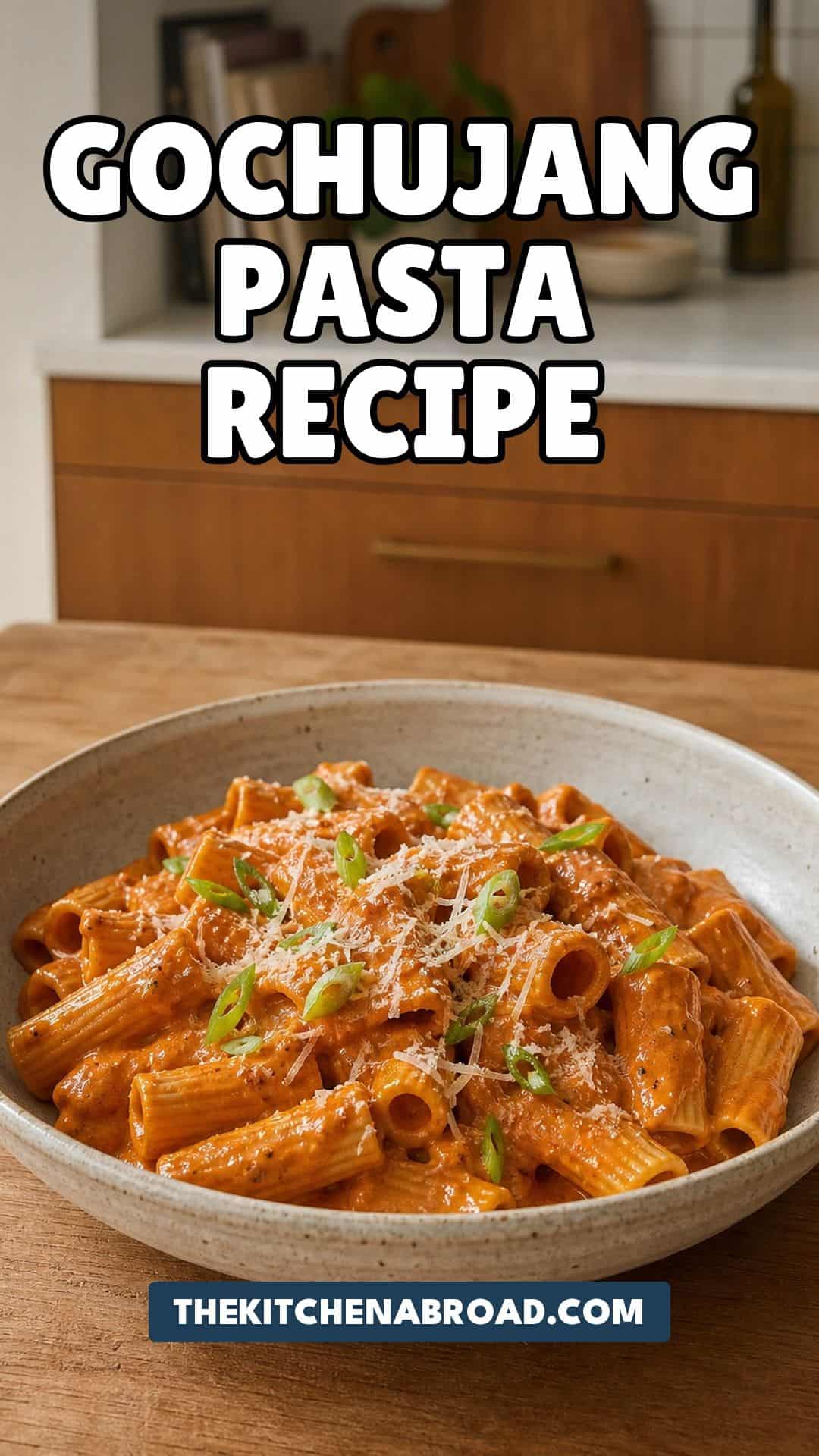
Korean-Italian fusion sounds like a marketing pitch dreamed up by a brand consultant. It is not. The chemistry of gochujang pasta is genuinely the same logic that makes vodka sauce work: a concentrated fermented paste bloomed in fat, opened up with cream, balanced with starchy pasta water, finished with a hard salty cheese. Swap tomato paste for gochujang and you get a sauce that hits the same satisfaction buttons in a completely different language.
The bloom is the move most home cooks skip. Gochujang straight off a spoon tastes harsh and one-note. Sauteed in butter for 30 seconds before any liquid hits it, the paste transforms. The sugars caramelize, the chili oils release, and the umami compounds in the fermented soybeans wake up. Skip the bloom and you get a sauce that tastes flat and aggressive. Bloom it and you get a sauce that tastes like restaurant.
The pasta shape matters more than people expect. Rigatoni, paccheri, and other large ridged tubes catch the sauce in their grooves and inside their tubes. Spaghetti is too smooth and slides past the sauce. The recipe below uses rigatoni for that reason. Metric and imperial measurements throughout.
What You’ll Need to Make This Recipe
A heavy sauté pan with high sides is the ideal vessel, since this is fundamentally a toss-the-pasta-in-the-pan dish, not a serve-sauce-over-pasta dish. Real Korean gochujang (not the dark gloop labeled “chili paste” from a generic Asian section) is the most important ingredient. A microplane for grating parmesan directly over the bowl. A spider strainer for lifting pasta directly into the sauce while preserving the starchy water for emulsion.
![Gochujang – Premium Korean Red Chili Paste [ Medium | 1.1 lb (500g) ] – 0...](https://www.thekitchenabroad.com/wp-content/plugins/aawp/public/image.php?url=YUhSMGNITTZMeTl0TG0xbFpHbGhMV0Z0WVhwdmJpNWpiMjB2YVcxaFoyVnpMMGt2TkRFd2FUUnFhR2gyZUV3dVgxTk1NVFl3WHk1cWNHYz18MTc4NjM5NjE1Mg= "Gochujang Pasta Recipe (Creamy, Spicy, 20 Minutes)")


Recommended Reads
- Gochujang Aioli Recipe (Spicy Korean Garlic Mayo)
- Gochujang Mayo Recipe (Spicy Korean Mayo)
- Crispy Gochujang Tofu Recipe (Baked)
- Gochujang Chicken Wings Recipe (Sticky Korean Glaze)
- Cucumber Kimchi Recipe (Oi Kimchi) with Gochugaru
Why This Gochujang Pasta Works
The vodka sauce comparison is not just a marketing line, it is the actual structural logic of the dish. Vodka sauce works because tomato paste is a concentrated, fermented-leaning ingredient that needs fat to open up its flavor compounds. Cream then carries those flavors into a smooth, emulsified sauce. Pasta water finishes the emulsion. Parmesan adds salt and depth. Gochujang slots into the tomato-paste position perfectly because it is also concentrated, fermented, and chemically wants the same treatment.
The bloom in butter is the chemistry step most online recipes get wrong. Gochujang has three flavor categories that all need different conditions to release: capsaicin (the heat compound, fat-soluble), sugars (caramelize when heated), and fermented soybean umami (volatile and needs gentle heat). Thirty seconds of stirring the paste in melted butter at medium heat hits all three: capsaicin dissolves into the fat, sugars start to caramelize at the edges, and the umami compounds release without burning off. Adding gochujang directly to hot cream or boiling water skips all of this and gives you flat sauce.
The cream off-heat rule is the third detail. Heavy cream poured into an actively boiling pan can split or curdle, especially when there is acidic gochujang and starchy pasta water in play. Lower the heat or remove from heat completely before streaming in the cream. Once the cream is integrated, you can bring the pan back to a gentle simmer without splitting risk.
Gochujang Pasta Ingredients, Briefly
Rigatoni or paccheri. Large ridged tubes are the right shape. The grooves grip sauce, the hollow interiors hold pockets of sauce. Penne works as a smaller substitute. Spaghetti is the wrong shape for this dish, it will not hold the sauce.
Gochujang. Medium heat (Chung Jung One in the red tub is the standard). Use mild if you are heat-sensitive, use hot if you want serious burn. The flavor profile is similar across heat levels, the difference is the capsaicin punch.
Unsalted butter. The base of the bloom. Salted butter pushes the dish into oversalted territory because the parmesan and the gochujang both bring salt.
Shallot and garlic. Aromatic base for the sauce. Shallot has the right sweet-onion profile, white onion is too harsh. Garlic added after the shallot has softened so it does not burn.
Tomato paste. One tablespoon. This is the move that brings the sauce closer to vodka sauce in profile, and the addition is genuinely traditional in modern Korean-fusion cooking. Some recipes skip it. The version with it is better.
Heavy cream. Whole, full-fat, room temperature. Cold cream into hot pan risks splitting. Room temperature integrates smoothly.
Pasta water. The starchy water from the cooking pasta is the emulsion magic. Reserve at least 1 cup before draining. The starch helps the cream and butter form a stable glossy sauce that grips the pasta instead of pooling underneath it.
Parmesan. Real Parmigiano-Reggiano, grated fresh on a microplane. Pre-grated parmesan in a green can is a different ingredient and will not melt into the sauce. The salt and savory depth from real parmesan completes the dish.
Toasted sesame oil and scallions. Finishing touches that pull the dish back toward Korea. A teaspoon of toasted sesame oil drizzled at the end, thinly sliced scallions on top.
Tips and Variations
Add protein. Crispy pancetta, browned ground pork, or shredded rotisserie chicken all work beautifully folded in at the end. The pasta also pairs perfectly with a quick-sear of shrimp.
Add vegetables. Sauteed mushrooms (especially shiitake or oyster) are the most natural addition. Wilted spinach added in the last minute also works. Avoid watery vegetables like zucchini, they thin out the sauce.
Vegan version. Replace heavy cream with full-fat oat cream or coconut cream. Replace parmesan with nutritional yeast plus a pinch of salt. The flavor profile shifts but the dish still works.
Gluten-free version. Use a brown rice or chickpea pasta. The starchy pasta water from chickpea pasta is even better at emulsifying than wheat pasta water, a happy accident.
Dial the heat. Mild gochujang is approachable for kids and the spice-averse. Hot gochujang plus a pinch of crushed red pepper flakes turns this into a sweat-on-the-brow dinner. Adjust to your tolerance.
Squeeze of lemon at the end. A teaspoon of fresh lemon juice off-heat brightens the sauce and lifts the gochujang fermented depth. Optional but recommended.
Recipe: Gochujang Pasta (Creamy, Spicy, 20 Minutes)
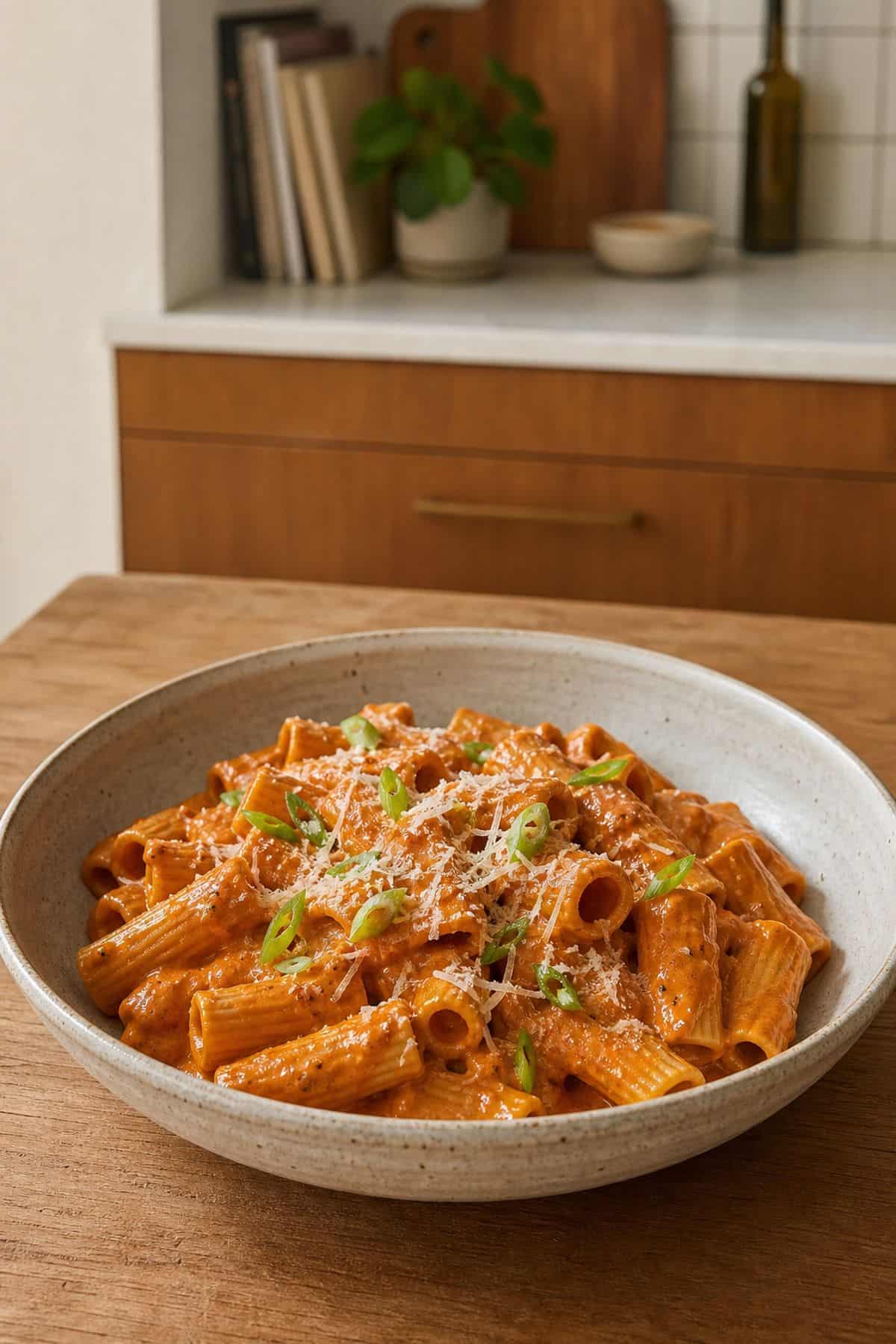
Prep Time: 5 minutes | Cook Time: 15 minutes | Total Time: 20 minutes | Servings: 4
Ingredients
- 340 g (12 oz) rigatoni or paccheri pasta
- 45 g (3 tbsp) unsalted butter
- 1 medium shallot (about 60 g), finely diced
- 3 cloves garlic, minced
- 3 tbsp gochujang (medium heat)
- 1 tbsp tomato paste
- 240 ml (1 cup) heavy cream, room temperature
- 60 to 120 ml (¼ to ½ cup) reserved pasta water
- 60 g (2 oz) Parmigiano-Reggiano, freshly grated
- 1 tsp toasted sesame oil, for finishing
- 2 scallions, thinly sliced
- Fine sea salt and freshly ground black pepper
Instructions
- Bring a large pot of water to a boil. Salt generously (the water should taste like seawater) and add the pasta. Cook to one minute less than al dente per package instructions.
- While the pasta cooks, melt the butter in a wide sauté pan over medium heat. Add the diced shallot and cook 2 to 3 minutes until soft and translucent. Add the minced garlic and cook 30 seconds until fragrant.
- Push the aromatics to the sides of the pan. Add the gochujang and tomato paste to the center of the pan, directly into the butter. Stir continuously for 30 seconds. The paste will darken slightly and become aromatic, this is the bloom step.
- Stir everything together. Reduce the heat to low. Slowly stream in the heavy cream while stirring constantly. Once smooth, return the heat to medium-low and let the sauce simmer gently for 2 minutes to thicken slightly.
- Just before the pasta is done, ladle out 1 cup of pasta water and set aside. Drain the pasta but do not rinse.
- Transfer the drained pasta directly into the sauce pan. Add 60 ml (¼ cup) of the reserved pasta water. Toss everything together over medium heat for 1 to 2 minutes. The sauce should coat each piece of pasta in a glossy emulsion. Add more pasta water if the sauce looks tight.
- Remove the pan from heat. Add half the grated parmesan and toss again. Taste and adjust salt and pepper.
- Plate into bowls. Top each serving with the remaining parmesan, a drizzle of toasted sesame oil, and the sliced scallions. Serve immediately.
Notes
The 30-second gochujang bloom is non-negotiable. Set a timer if you have to. Adding gochujang directly to liquid skips the chemistry that makes this sauce great.
Reserve more pasta water than you think you need. A full cup minimum. The starch is the emulsion. You might use only a quarter cup, but you cannot make more once you have drained the pasta.
Cream goes in off-heat or low-heat only. Pouring cream into an actively bubbling pan with acidic gochujang risks splitting. Lower the heat, stream the cream, return to a gentle simmer.
Storage. Best fresh. The pasta holds in the fridge for 2 days. Reheat over low heat with a splash of cream or milk to bring the sauce back together. The reheat is good, not great, the fresh version is significantly better.
Frequently Asked Questions
What does gochujang pasta taste like?
Gochujang pasta tastes like creamy vodka sauce with a fermented funk and a slow building chili heat. The Korean fermented chili paste adds depth and umami beyond what tomato paste alone can deliver, with a slight sweetness that balances the cream. The finished dish is rich, slightly spicy, deeply savory, and unmistakably Korean-Italian.
What pasta shape works best for gochujang pasta?
Large ridged tubes like rigatoni, paccheri, or mezzi rigatoni work best. The ridges and hollow interiors grip the cream sauce and hold sauce pockets in every bite. Smooth shapes like spaghetti, linguine, or fettuccine are wrong for this dish, they slide past the sauce instead of catching it.
How spicy is gochujang pasta?
Moderate heat with medium gochujang, a slow building warmth more than a sharp burn. Mild gochujang is approachable for most palates and kids. Hot gochujang plus crushed red pepper turns the dish into a sweat-inducing dinner. Adjust to your tolerance.
Can I make gochujang pasta vegan?
Yes. Replace heavy cream with full-fat oat cream or coconut cream. Replace parmesan with 2 tablespoons of nutritional yeast plus a pinch of salt. Verify your gochujang is vegan (most are, but a few brands include anchovy or shrimp). The dish loses some of the Italian roundness but gains a different kind of richness.
Why does my gochujang pasta sauce look thin?
Most likely you skipped reserving the pasta water, or used too little of it. The starch in pasta water is what binds cream, butter, and gochujang into a glossy emulsion. Without it, the sauce stays loose and pools under the pasta. Always reserve at least one cup before draining, and add it tablespoon by tablespoon while tossing the pasta in the sauce.
Can I substitute another chili paste for gochujang?
Not really, not without losing what makes the dish special. Gochujang has a specific fermented umami profile that other chili pastes do not replicate. Sambal oelek is too sharp and lacks the sweetness. Sriracha is too vinegary. Harissa is closer in spirit but the spice profile is North African, not Korean. If you cannot find gochujang, make a different pasta.
Key Takeaways
- Bloom the gochujang and tomato paste in butter for 30 seconds before adding liquid. This is the single biggest flavor lever.
- Add cream off the heat or on very low heat. Active boiling plus acidic gochujang risks splitting the sauce.
- Use rigatoni or paccheri. Large ridged tubes catch the sauce. Spaghetti is wrong for this dish.
- Reserve at least 1 cup of pasta water before draining. The starch is the emulsion that binds the sauce.
- Finish with toasted sesame oil and scallions. The Korean grace notes that pull the dish back from drifting too Italian.
Final Thoughts
Gochujang pasta sits in the rare category of fusion dishes that earn their existence. The chemistry works because it follows the same logic as Italian vodka sauce, the flavor works because gochujang is a genuinely great pantry ingredient, and the dish takes 20 minutes start to finish. There are no compromises here, only a different language for the same kind of pleasure.
Make it on a Tuesday when you want dinner that feels like restaurant. Keep a tub of gochujang in the fridge and a box of rigatoni in the pantry, and you have this dish on the table any night you want it.
Gochujang Pasta Recipe (Creamy, Spicy, 20 Minutes)
Gochujang pasta is a Korean-Italian fusion built on the same chemistry as vodka sauce. Rigatoni or paccheri tossed in a butter-bloomed gochujang base finished with heavy cream, pasta water, and parmesan.
Ingredients
- 340 g (12 oz) rigatoni or paccheri pasta
- 45 g (3 tbsp) unsalted butter
- 1 medium shallot (about 60 g), finely diced
- 3 cloves garlic, minced
- 3 tbsp gochujang (medium heat)
- 1 tbsp tomato paste
- 240 ml (1 cup) heavy cream, room temperature
- 60 to 120 ml (¼ to ½ cup) reserved pasta water
- 60 g (2 oz) Parmigiano-Reggiano, freshly grated
- 1 tsp toasted sesame oil, for finishing
- 2 scallions, thinly sliced
- Fine sea salt and freshly ground black pepper
Instructions
- Bring a large pot of water to a boil. Salt generously (the water should taste like seawater) and add the pasta. Cook to one minute less than al dente per package instructions.
- While the pasta cooks, melt the butter in a wide sauté pan over medium heat. Add the diced shallot and cook 2 to 3 minutes until soft and translucent. Add the minced garlic and cook 30 seconds until fragrant.
- Push the aromatics to the sides of the pan. Add the gochujang and tomato paste to the center of the pan, directly into the butter. Stir continuously for 30 seconds. The paste will darken slightly and become aromatic, this is the bloom step.
- Stir everything together. Reduce the heat to low. Slowly stream in the heavy cream while stirring constantly. Once smooth, return the heat to medium-low and let the sauce simmer gently for 2 minutes to thicken slightly.
- Just before the pasta is done, ladle out 1 cup of pasta water and set aside. Drain the pasta but do not rinse.
- Transfer the drained pasta directly into the sauce pan. Add 60 ml (¼ cup) of the reserved pasta water. Toss everything together over medium heat for 1 to 2 minutes. The sauce should coat each piece of pasta in a glossy emulsion.
- Remove the pan from heat. Add half the grated parmesan and toss again. Taste and adjust salt and pepper.
- Plate into bowls. Top each serving with the remaining parmesan, a drizzle of toasted sesame oil, and the sliced scallions. Serve immediately.
Notes
The 30-second gochujang bloom is non-negotiable. Set a timer if you have to. Adding gochujang directly to liquid skips the chemistry that makes this sauce great.
Reserve more pasta water than you think you need. A full cup minimum. The starch is the emulsion. You might use only a quarter cup, but you cannot make more once you have drained the pasta.
Last update on 2026-08-08 / Affiliate links / Images from Amazon Product Advertising API